Cozy Video Game Review: Dorfromantik

Inspired by tile-laying board games, Dorfromantik offers the relaxing gameplay of creating a pastoral landscape of trees, villages, water, railroads, and fields. Designed by four German and Swiss students (Timo Falcke, Sandro Heuberger, Luca Langenberg, and Zwi Zausch) in a game design master’s program at HTW Berlin, Dorfromantik is a peaceful, minimalist game that lives up to the title, cozy. Hey, hey! Kyra Kyle here. We’re back with another cozy video game review. Even though Dorfromantik has crossed over into an award-winning board game, we’ll be discussing the equally stellar indie video game by Toukana Interactive. Get ready to build a gorgeous landscape with Dorfromantik.

Mechanisms

Game Mechanisms: 7/10

Dorfromantik takes a simple concept of tile laying and does it exceptionally well. I’d wager the idea of Dorfromantik stemmed from playing board games like Carcassonne. Dorfromantik’s game mechanisms lend themselves well to board games, so there is an excellent, cooperative board game by the same name. Sometimes, you don’t need an elaborate set of mechanisms to make a game sing. Sometimes, you just need to do a simple concept well, and Dorfromantik does just that.

Chain similar land types with each other to gain points and finish goals (that the game presents) to score even more points and to increase the number of tiles you have to draw from. Dorfromantik can be played competitively–there is a leaderboard–or you could watch the countryside bloom as you place tiles. Dorfromantik‘s ability to make me invested in a landscape reminds me of another cozy video game we covered, Terra Nil.

Gameplay Loop: 9/10

Whether you play Dorfromantik to get the highest score possible or casually place tiles and find your Zen, you can’t deny Dorfromantik’s gameplay loop. Once you get started, you won’t build just one pastoral scene. You’ll want to go farther with your next run, reveal new tiles like the windmill (pictured above), or watch your boats and trains traverse the landscape. And yes, the scene above is animated. It’s so neat watching your creation come to life.

Because the tiles can come out in different orders, no two scenes in Dorfromantik are exactly the same. This adds spice to the simplistic gameplay. Dorfromantik is an easy game to get into, but a difficult one to master if you want to climb that leaderboard. Or you could be like me. I just want to discover new tiles and watch my landscape get bigger and more diverse. I’m so glad Dorfromantik has been ported over to the Switch. It’s the perfect game to play on the go.

Story or Narrative

Narrative/Storytelling: 1/10

I should’ve excluded this element, but I didn’t with other video games that had little to no story, so narrative/storytelling is staying in the lineup. Let us know what you’d replace this element with for games that have little to no story. Dorfromantik has no story to speak of, so it receives a low mark in this category.

User Interface: 10/10

Dorfromantik has a stripped-down but effective user interface. The tiles feel great to manipulate. They almost feel like placing a board game’s tiles. The picture above shows how Dorfromantik will highlight the spaces where a tile can be placed. Gamers can only place the tile on top of the draw pile. Dorfromantik does an excellent job of not only showing where a tile can be placed, the callouts show where you can gain extra points, and whenever you hover a tile over a space and begin rotating it, Dorfromantik will make the matching tiles shimmer.

Dorfromantik’s elegant and minimalistic user interface makes it accessible. Like I said, Dorfromantik may use a familiar board game mechanism in tile placement, but every element Dorfromantik adds is handled with care and purpose. I had to give Dorfromantik top marks for user interface.

Graphics: 8/10

Dorfromantik has excellent graphics for a top-down isometric video game. The art style works well, and I appreciate the small details. Look at the clock towers, cottages, and windmills in the image above. Like I mentioned before, Dorfromantik uses small animations to denote movement. The boats (if you’ve unlocked the boats) move along the waterways. Smoke puffs from chimneys. While all of this is great, Dorfromantik does venture into cartoony graphics.

These cartoony graphics work well when one zooms out and sees more of the landscape, so I understand why Dorfromantik chose a minimalistic, cartoon-like art style. Players are meant to take a macro view of their village. But I dock Dorfromantik a point or two for graphics because the game doesn’t quite hold up on closer inspection.

Audio: 7/10

Dorfromantik’s music exudes the concept of a cozy game. I’ve listened to Dorfromantik’s soundtrack to fall asleep. It’s that soothing. Unfortunately, the game’s sound effects detract from this calm. The clacking and clicking of the tiles often takes me out of the game’s vibe. I would’ve preferred more pastoral sound effects accompanying the mechanical sounds of turning and placing tiles on the board. Yes, I could reduce the sound effects’ volume or turn them off altogether, but that would eliminate half of Dorfromantik’s audio. We’re grading the game’s entire audio. If we were only grading Dorfromantik’s soundtrack, its audio would score much higher.

Replay Factor: 10/10

Dorfromantik has an addictive gameplay loop, so the replay factor is through the roof. I can see myself playing Dorfromantik on my Switch while waiting in line. Heck, I’m surprised Dorfromantik hasn’t yet made it to the mobile game space. I could see plenty of people playing Dorfromantik on their phones. It may be an even better game for smartphones. The Switch tends to be a game’s first foray into mobile gaming. Fingers crossed that this cozy game classic makes it onto more mobile devices.

Aggregated Score: 8.6

Sure, I gave Dorfromantik a story/narrative score, but I’m not including that score with its aggregated score. Sometimes you need a cozy video game to find your Zen. Dorfromantik is a great game for that. I’m hoping more gamers will have the opportunity to play Dorfromantik on other platforms soon.

Video Game Review: The Survivalists

Team 17 produced The Survivalists as a cooperative adventure game set in the Escapists universe. The player wakes up marooned on a mysterious island. You must adapt to your new surroundings. Prepare your defenses against island threats. Explore, hunt, build, craft, and train monkeys with up to three friends as you do your best to survive.

Hey, hey! Kyra Kyle here. Today’s post is a follow-up of sorts. Months ago, I mentioned during one of our Whatcha Playing segments that I’ve been playing The Survivalists. I finished the game and figured I’d share my thoughts. I played The Survivalists on PlayStation (so most of my comments will reflect that), but The Survivalists is also available for Xbox, Nintendo Switch, and Steam. Typically, it retails for about $25, but The Survivalists tends to go on sale for as low as $5. I snagged a copy when it was this cheap. Let’s see how The Survivalists measures up in our review criteria.

Mechanisms

Mechanisms: 8/10

Full disclosure: I’m not the biggest survival game fan; that’s more Skye’s video game genre. Survival games often frustrate me. It takes a while to make progress (I’m impatient), and your progress can be foiled with a single false move, which causes the game to devolve into a frustration simulator. I usually like to chill whenever I play video games. Most survival games have no chill. That’s where The Survivalists is different.

The Survivalists takes a laid-back approach to the survival game genre. Sure. You can–and most likely will–die in the game, and after respawning, you’ll have to travel back to where you lost your belongings, but The Survivalists is more forgiving. Upgrades don’t take as long, eliminating one of the barriers for me. If you train monkeys, these upgrades take a fraction of the time. Monkeys are The Survivalists’ single best addition. It took me a while to figure out how to train a monkey (the controls are a little wonky), but once you get the knack, you’re no longer alone on this island. Even if you play The Survivalists solo, you have allies.

The Survivalists’ monkeys element is enough to give it an above-average score in mechanisms, but the game doesn’t add too much to the survival video game genre, so I couldn’t give it higher than an eight out of ten. Still, I enjoyed my time with The Survivalists, and the game’s mechanisms kept me engaged.

Gameplay Loop

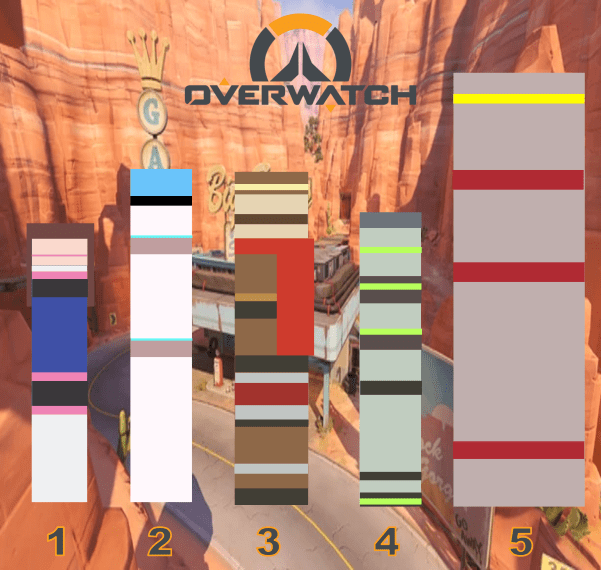
Above Image from GameDesigning.Org

Gameplay Loop: 8/10

The Survivalists has the same addictive gameplay loop as most survival games. While I love the addition of monkeys, you can get stuck waiting for your monkeys to finish constructing key materials. That holds back this score a bit. The missions can also get too specific; one also doesn’t receive credit for a task unless they have the mission in their questline. The Beast Master is notorious for this. Kill 10 Bats. I already have; I guess I must hunt for 10 more. And the Beast Master’s questlines (in particular) don’t appear to have a linear progression. You can go from slaying a mid-level boss to hunting wolves, and then to taming animals, which transitions to killing warthogs (an equivalent animal to wolves). These mission progressions tend to be head-scratching.

Still, The Survivalists has a satisfying gameplay loop. The world resets after every few days (after a blood moon). So, if you must hunt wolves for their pelts (or to finish a quest), you may need to wait for them to respawn after a blood moon. The morning after a blood moon, you’ll be attacked by natives. Perishing during one of these raids isn’t too big of a deal, provided you’re at or near one of your camps. You’ll lose the items in your inventory, but your attackers will vanish, and you’ll respawn at your nearest camp. Easy.

Sailing can be tricky to master. I was fifteen hours into the game before I could navigate the waters well. Once you get the hang of sailing, exploring becomes a blast. I couldn’t wait to discover a new island or the materials I could find on the island. This is a hallmark of survival games. Perhaps I should give more of them a try.

At first, obtaining a new monkey can be exciting, but you’ll end up with well over 15 monkeys. That’s a lot of monkeys. The number of monkey companions will become unruly, and monkeys have a range limit. The Survivalists doesn’t do a good job of marking this range. I lost count of the times I’d task a monkey to do something like chop down trees, only to see the monkey skip a tree to knock one farther away. Make the monkey’s range make sense. I’ll also get a monkey falling me a little too long, and then they’ll randomly swim on the beach on a foreign island. It’s a good thing monkeys can’t die.

Story or Narrative

Narrative: 6/10

The Survivalists has a basic premise with little story beyond that, but it doesn’t need a lot of story beyond a person marooned on a distant island. I do enjoy the ending. It’s not a true ending, because you can continue playing after this moment, and the credits roll. I won’t spoil what happens here, but The Survivalists has an adorable cutscene after the player rebuilds the Galleon and sets off for home.

Storytelling

Storytelling: 7/10

Even though The Survivalists has little story, the story it has is done well. Flavor snippets from the labyrinths and vaults sprinkled through the various islands do a lot to build The Survivalists’ world. My favorite parts of The Survivalists’ story are piecing together a story from the random objects I encountered. This game allows players to fill in certain blanks in its story. As of writing this post, I have yet to play The Escapists. I’ve heard that there are references from the previous games set in this universe. If so, that’s fun.

User Interface: 9/10

The Survivalists’ user interface works well. With few exceptions (I mentioned a lack of showing the player their monkey’s range), the game provides ample information in a digestible manner. The volume of information a survival game needs to convey is staggering. Players can get lost in menus and submenus. While that can happen occasionally with The Survivalists, it doesn’t happen as often as other survival video games. This contributes to The Survivalists‘ ease of play.

The well-laid-out GUI gives players the information they need. Yes. I could locate my missing monkeys if I wanted; I just didn’t want to retrieve them. The map allows for customized markers, which makes remembering where things are easy enough. Furthermore, you don’t really need too many personalized markers because the taskmasters have unique markers, and they spawn on the game’s five islands: Mysterious Strange at the player’s island, Beast Master at the Badlands, Survival Gourmand in the Swamp, The Collector at the Volcano, and The Salesman at the final island shaped like a skull and is a combination of all the biomes. The Survivalists also labels all the labyrinths and vaults, so the randomized map is clearly marked.

One can also mark a recipe and know when they’ve collected the necessary materials. I only have a few gripes, like the lack of a monkey range display. The Survivalists did their homework and included enough features from other survival video games to make playing this game enjoyable.

Graphics: 9/10

In keeping with The Escapists’ universe, The Survivalists uses a cute pixel art style. I don’t tend to like pixel art because the art style sacrifices detail for the sake of the designer not wanting to include detail (it tends to be cheaper), and it taps into nostalgia. A stripped-down look is a key feature of pixel art; it makes the art more abstract, which can allow players to see themselves in the graphics. Somehow, The Survivalists’ graphics maintain a level of detail despite using pixel art. That’s impressive.

As you can see in the image above, The Survivalists uses a mock 16-bit art style, but the shadows from the trees have detail, the water ripples, and the grass shifts. The Survivalists has enough detail to make its world breathe, but it has enough abstraction for players to see themselves in their protagonist. This is pixel art done right.

Audio: 8/10

Truth time. I predominantly played The Survivalists muted. The times when I had the sound on, the effects sounded natural. The music is solid and suitable, except for the sailing tune. That song alone raises the audio score a full two or three points. I would sail from island to island just to hear this tune. The Survivalists’ sailing music feels like an adventure, and that’s what I wanted from this game. Don’t believe me? Check out the audio on YouTube. The track is titled “Adventure Awaits.” That’s so fitting. I can almost smell the salt from the ocean.

Replay Factor: 8/10

The Survivalists’ ability to be played cooperatively raises this score a lot. I don’t know how often I’d play it as a solo experience. If you have no desire to play The Survivalists in co-op mode, I could see you dropping this score a point or two, but I do like playing this game as a co-op experience. Since the game randomly generates the islands each time, The Survivalists becomes a different puzzle. During my solo play, I had plenty of rocks for masonry but not enough trees for lumber at the game’s start. The inverse was true during my co-op playthrough. Plenty of other game elements, like the labyrinths and vaults, change too, so each play of The Survivalists is different.

I enjoyed my time on the island and wouldn’t mind returning after several months. If you need me, I’ll be listening to “Adventure Awaits” while heading out on a road trip.

Aggregated Score: 7

Geekly Casting: Mega Man Film

Happy Monday, Geekly Gang! We’re bringing back the Geekly Casting series, and today’s subject is a live-action Mega Man film. There were talks about a Netflix Mega Man film, but we haven’t heard much about this project since late 2021. A lot has changed since then. Mega Man even had an episode in Amazon Prime’s Secret Level series, a television series based on random video games. But the Blue Bomber deserves a big screen adaptation. Kyra Kyle here. As usual, I’ll start this post and share modern actors who could play the various roles, and Skye, our movie geek, will search Hollywood’s past and present for the best possible actors to play each role.

Our first order of business is figuring out which characters we need to cast. We’ll keep Rock’s supporting cast short: Dr. Light, Roll, and maybe another character or two. We won’t bother casting Rush. He’ll be a robo-dog, so they’ll record random dog noises. Dr. Wily’s an obvious inclusion. We’ll skip casting Yellow Devil; he’ll mostly grunt. The Robot Masters pose a difficult challenge. Skull Man must make the cast because he was a main antagonist in Mega Man’s manga, but the other Robot Masters should have a balanced power set and come from popular games in the Mega Man series. This is a tall order. We’ll do our best.

Mega Man/Rock: Cameron Crovetti

I considered several actors to play the title role in Mega Man. Malachi Barton’s range intrigued me. I could even see an unknown take on the role, but I landed on Cameron Crovetti.

Crovetti is best known for his role on the Amazon Prime series The Boys. He portrays Homelander’s son, so Crovetti has experience with characters with questionable backgrounds. While Mega Man doesn’t go as dark as The Boys, Rock has a conflicted relationship with humanity. Crovetti has several comedic roles under his belt, too, so he has range. I could see him portray the Blue Bomber.

Honestly, the Crovetti family could sport more than one role in Mega Man. Cameron’s twin brother, Nicholas, portrayed Max Wright in Big Little Lies. If Mega Man included Copy Robot, and the production company wanted to avoid using CGI to make Copy Robot look eerily similar to Mega Man, Nicholas Crovetti makes sense. The Crovetti brothers have an older sister, Isabella, who could portray Roll. Roll and Rock (Mega Man) are considered siblings in the Mega Man universe, so it makes sense for Isabella Crovetti to play Roll, but let’s go with a different actor.

Roll: Lulu Wilson

Lulu Wilson is best known for horror films and television series like Ouija: Origin of Evil, Annabelle: Creation, The Haunting of Hill House, and Fall of the House of Usher. Wilson even portrayed a young Gloria Steinem in The Glorias. Despite a short career, she has an impressive filmography. Wilson also has a handful of comedic roles under her belt, specifically the dark comedy Wyrm. So, Wilson has the range to pull off Rock’s older sister Roll.

Typically, Roll comes off as compassionate and patient, but Mega Man 11, the most recent entry in the mainline Mega Man series, shows her giving Auto (another Mega Man side character who could make an appearance) a hard time. Let’s face it. Roll can be brutal toward Auto in Mega Man 11. Roll also doesn’t mind joining Rock (Mega Man) in battle. Lulu Wilson could pull off a Roll who looks overtly demure, but has a hidden edge, begging to be set free.

Dr. Thomas Light: Pierce Brosnan

Honestly, I could’ve gone with the Mega Man fan consensus and picked Jeff Bridges. Bridges has been the lovable bearded man for decades; he would make a great Dr. Light. Instead, I’m going with Pierce Brosnan. Mega Man depicts Dr. Light as a kind-hearted father figure and little else. After all, Light created Rock, Roll, and X. Brosnan has portrayed father figures in the past, but he may bring another layer to the character that a generic fatherly actor wouldn’t. Don’t ask me what that layer is. That’s up to Brosnan to pull deep from his acting experience.

Dr. Albert Wily: Willem Dafoe

Willem Dafoe as Dr. Albert Wily may be typecasting. Who cares? I went off-center with Brosnan as Dr. Light; Dafoe is at his best when his character has a tenuous grasp on reality. Whoever portrays Dr. Wily needs a disconnect with reality. Only a madman would put the world at risk by turning robots (who were minding their own business) against humanity. Dafoe could easily pull off an unhinged Dr. Wily.

Skull Man: Javier Bardem

We’ve reached the Robot Masters. Woo hoo! Whoever fills these roles won’t need to match the look of their counterpart. The Robot Masters will predominantly be CGI.

We begin with Skull Man. Unlike most Robot Masters, Skull Man was designed specifically for combat. Dr. Wily built Skull Man to take down Mega Man. While other Robot Masters have personalities outside of “must destroy Mega Man” (other Robot Masters are coerced or brainwashed), Skull Man is a killer who will stop at nothing to end Mega Man. Again, this may be typecasting, but Javier Bardem has been that level of cold-blooded killer.

Skull Man shows little emotion. He struggles to make a connection with any of the other Robot Masters. He has a hollow, inhuman affect. Like many other actors on this list, Bardem would give Skull Man an extra layer of character.

Metal Man: Peter Dinklage

Even when he isn’t brainwashed, Metal Man is a jerk. Sarcasm is Metal Man’s first language. He treats the other Robot Masters like buffoons, cracking jokes at their expense. To be fair, few of the other Robot Masters figure out they’re the butt of Metal Man’s joke. Yep. Peter Dinklage could easily pull off an affable, wisecracking Metal Man. Dinklage could find the perfect blend of fun and danger. Couldn’t you see Dinklage tossing saw blades like they’re Frisbees?

Splash Woman: Kristen Bell

Splash Woman first appeared in the Mega Man comic book. She began as a hero. The Mega Man comic built up Splash Woman’s stakes ahead of Mega Man 9, so when she gets brainwashed in the game, players would care. Splash Woman is Mega Man’s karaoke-loving bestie. She may have been constructed for underwater repairs, but musical theater is Splash Woman’s passion. Kristen Bell has the musical training and comedic timing to pull off Splash Woman. Bell’s Splash Woman could be a villain in the first Mega Man film, or she could be converted in the sequel. Hmm.

Fire Man: Nikolaj Coster-Waldau

Nikolaj Coster-Waldau and Peter Dinklage could have a mini Game of Thrones reunion. That would be fun. It would also be fun to watch Coster-Waldau take on Fire Man, a Robot Master who believes he’s the hero. That’s right. Fire Man suffers from main character syndrome. Game of Thrones had several “main characters,” so Coster-Waldau as Fire Man works on a meta storytelling level. I can see Mega Man jokingly follow Fire Man as the main character for a scene. I can also see Nikolaj Coster-Waldau playing a hot-headed–a little on the nose–Fire Man.

Elec Man: Joaquin Phoenix

Were some of these Robot Masters brainwashed, or were they nudged? Conceited and egotistical, Elec Man walks a tightrope between kindhearted and sadistic freak. Joaquin Phoenix has portrayed his fair share of characters like Elec Man. I can hear Phoenix pull off a line like, “To watch my beautiful bolts fly to the top of your head. To hear your delightful shrieks.” Woah! Elec Man may have some issues.

Ice Man: Neil Patrick Harris

Ice Man loves to show off for the crowd. The world’s a stage, and he’ll give Splash Woman a run for her money as Mega Man’s best singer. Neil Patrick Harris has a flair for the dramatic. I’ve heard he’s a good singer, too. Wink. Harris’s Ice Man and the actor who I have playing Bomb Man could have more than one musical number. One of them needs to be a Mega Man variant of “Anything You Can Do, I Can Do Better.” Make it happen.

Guts Man: Terry Crews

Built for construction, Guts Man takes his job seriously. While he may perform physical labor, Guts Man is smarter than he looks. He can be over-dramatic with a penchant for sudden outbursts, but Guts Man cares deeply for his coworkers. Underneath his bulky exterior, Guts Man’s a big softy, just like my pick to portray him, Terry Crews. Sure, I want to see Crews in more films. But you read Guts Man’s description. Tell me that doesn’t scream Terry Crews.

Bomb Man: Wayne Brady

Bomb Man is another Robot Master with a flair for the dramatic. While he doesn’t necessarily sing in the Mega Man series, who says he can’t in the movie? I have mixed feelings about How I Met Your Mother, but Wayne Brady and Neil Patrick Harris would be another fun reunion. Brady and Harris’s chemistry is undeniable, and I’d love to see how Bomb Man and Ice Man would interact with each other. They’re too similar, fighting for the same spotlight. Anything you can freeze, I can explode!

That’s the cast I have for Mega Man. Let’s check in with our film geek, Skye.

Skye’s Picks

I’m not well-versed in the Mega Man game series. I’ve beaten the first one and gotten halfway through the second, so my knowledge of the lore and characters is limited. Because of that, all my picks for this post were actors who made me giggle. My version of Mega Man is more kid-friendly and goofy. I hope these picks aren’t blasphemous. Either way, enjoy my picks for a Mega Man feature film adaptation.

Mega Man/Rock: Mark Hamill (Young)

Let’s see, someone who’s fresh-faced, eager to explore, lovable in his ignorance with just the right amount of whininess sprinkled in. I couldn’t help but imagine young Mark Hamill playing Mega Man. I’m unsure if that’s the best representation of Mega Man’s character (please refer to my intro), but it’s at least compelling. If nothing else, we know Hamill started his career playing that exact archetype. Seeing him learn and upgrade himself as he “cuts” (hehe) through the various bosses would be believable. With the tutelage of Obi-Wan–I mean Dr. Light–young Hamill could easily become another iconic sci-fi protagonist.

Roll: Dakota Fanning (Younger)

Roll was tricky for me to cast, but I remembered I had cast Fanning’s sister in a previous casting call (Geekly Casting: X-Men in the MCU). Since I prefer not to repeat actors I’ve already cast, why not Dakota? Like her younger sister, Elle, Dakota Fanning has had a storied acting career. I could see her pulling off Roll’s kind-hearted and bubbly personality. Since I cast young Mark Hamill as Mega Man/Rock, I thought it would make more sense to cast Fanning in her 20s. Rock n’ Roll are meant to be siblings, so it’d be a bit weird if they weren’t close in age. She’s got the look, style, and personality, so let’s give her the Roll. See what I did there?

Dr. Thomas Light: Patrick Stewart

I shouldn’t have to explain this one. Come on, it’s Patrick Stewart. Patrick Stewart is one of the go-to actors for good-natured, smart old dudes. Dr. Light would be no exception. Stewart has unrivaled on-screen charisma, a decades-long career under his belt, and the ability to make any movie he’s in better. Stewart works as Dr. Light. I won’t even bother naming them all, y’all already know. The only issue is his distinct lack of hair, but it’s Hollywood. They can figure out something.

Dr. Albert Wily: Ian McKellen

After casting Patrick Stewart as Dr. Light, it only felt right to go with Ian McKellen as Dr. Wily. If you’re a member of the Geekly Gang, you probably know why I made this choice. Not only are Patrick Stewart and Ian McKellen two peas in a pod, but they work off each other in ways unlike any other acting duo in Hollywood. They’ve had several roles and done countless productions together, but the rivalry between Light and Wily is mostly why I went with McKellen. Given their past playing Professor X and Magneto, Stewart and McKellen would foil each other perfectly for the Light/Wily rivalry. Now, I badly want to watch this Mega Man movie. Make it so, Hollywood!

Skull Man: Ken Page (Posthumously)

If we’re going the kid-friendly and goofy route, Ken Page as Skull Man makes a marketable, mildly intimidating, and memorable choice. I admit it. I was thinking about Page’s role as Oogie Boogie in The Nightmare Before Christmas. Skull Man wouldn’t have to sing, per se, but Ken Page could still bring a unique voice to the character. I can easily imagine kids growing up watching this Mega Man adaptation and having their sense of villainy shaped by Page’s interpretation of Skull Man, like Oogie Boogie. Hopefully, Skull Man would receive more screen time, allowing Page to properly define his character. Rest in peace.

Metal Man: Robert Downey Jr.

Just lean into it. That’s the theme of my picks. Since Robert Downey Jr. is more available than he was 10 years ago, why not take the opportunity to be another metal man? This time literally Metal Man. As soon as I heard about a jerky robot in a metal suit, I picked Robert Downey Jr.. Downey Jr. has also shown interest in expanding his types of characters, as we’ve seen with his new role as Dr. Doom in Avengers: Doomsday. Yes, join Ethan Hawke on the dark side. I hear they have cookies. If they do happen to make a legitimate Mega Man film adaptation, getting Robert Downey Jr. would also be a highly marketable first step. The kids would have to see it then!

Splash Woman: Halle Bailey

Anyone who’s forced to act in a Disney live-action remake deserves a better role. Is Splash Woman that role? Splash Woman could be a better role than Ariel in a live-action Little Mermaid. Splash Woman could also be a good opportunity to set the record straight for Halle Bailey and show how talented she is when Disney isn’t putting her on a self-righteous diversity pedestal. Imagine the not-so-subtle jabs Bailey could take at Disney in the role of a robot mermaid. I’m already laughing!

Fire Man: Jason Lee

This choice is difficult to defend, even for me. After researching boss robot personalities, Jason Lee came to mind. Fire Man is more of a wannabe hero with a short temper. Does that sound like Lee’s character from The Incredibles, Buddy Pines/Syndrome? Lee has experience. Also, Jason Lee hasn’t been given many major roles in recent years. Considering (arguably) his best role was Syndrome in 2004, I’d like to see him make a comeback. Like Brendan Fraser, he has untapped potential for high-profile films. I don’t want to remember him as Dave from Alvin and the Chipmunks. Can I get some brain bleach for those movies?

Elec Man: Tom Hiddleston

Like my last choice, Tom Hiddleston as Elec Man was a fitting conclusion after some light research. And why not one more Marvel actor? Elec Man is an arrogant, overdramatic narcissist, which sounds like Loki in the MCU. While Hiddleston has experience playing these character types, he’s been branching out. I’m confident that Hiddleston would give a good performance as Elec Man. Given my layperson’s perspective, Hiddleston seems like a good fit.

Ice Man: David Bowie (Posthumously)

Ice Man was a fun role to cast. Sure, I still don’t have a solid understanding of his character, but I got the idea after Kyra discussed their pick. They had chosen Neil Patrick Harris for the role in part due to Ice Man’s flair for the theatrical. It doesn’t get more theatrical than David Bowie. That and Ice Man would’ve been a great way to reintroduce Bowie to another generation as a kids’ movie icon. They would need to let Ice Man sing. Bowie would probably write the song too, and I’d buy the vinyl. Rest in peace.

Guts Man: André the Giant (Posthumously)

Here comes another choice influenced by Kyra’s pick. Thanks, Kyra. You helped me out a lot on this one. They described Guts Man as a lumbering meat-head with a soft and gentle side. If he was still with us, I would’ve enjoyed watching André the Giant in this role. The iconic ex-wrestler had both in equal measure, and that was depicted in his personality and role choices. I fell in love with André’s personality after watching The Princess Bride. If he brought the same energy to his portrayal of Guts Man, it would’ve been great. Who knows, he could’ve been as big a star as Dwayne Johnson is today if he were still with us. Rest in peace.

Bomb Man: Dwayne Johnson

Speaking of Dwayne Johnson, he happens to be my pick for Bomb Man. Like Guts Man, Bomb Man is a larger robot intended to carry heavy loads and work primarily in construction. Based on physique alone, Johnson is a solid fit. Although, I mainly picked Johnson for Bomb Man for his personality. Bomb Man seems like a lighthearted robot with a good sense of humor, which would make Dwayne Johnson a great choice. Bomb Man and Guts Man are also supposed to be close friends, because their abilities play off each other. I wanted Dwayne Johnson to play Bomb Man since I think he and André the Giant would make great on-screen friends. I struggle to process the cuteness.

Kyra Kyle here again. That’s all we have for today’s Geekly Casting. Who would you cast in the various roles, Geekly Gang? Would you like to see a part two for any of these castings? Let us know in the comments. Thank you for reading, and wherever you are, I hope you’re having a great day.

Geekly News: November 16, 2025, New Releases

Happy Sunday, Geekly Gang! Kyra Kyle here. I’m still on a pseudo-hiatus with Novel in November. I just shared a writing update a couple days ago, but this means that Geek News will mostly be video game and board game new releases. Let’s begin with board game new releases.

Exactly as Planned Sneaks Onto GameFound

I love it when a publisher/designer allows players to demo their game. Exactly As Planned offers a solo, cake-walk heist to whet gamers’ whistles. You can play the game by checking out Exactly As Planned’s GameFound page. And it won’t take long. Exactly As Planned lasts exactly 5-minutes. Gamers on the clock, attempting to play the correct cards to pull off their semi-coordinated heist.

I love Exactly As Planned’s box art. The off-centered “As” is hilarious. Once gamers become accustomed to Exactly As Planned’s ruleset, they can add a little spice to the proceedings. One team member may be speaking only in questions, a second might have to stare at the ceiling, and a third may be restricted to saying only “yes” and “no.” If Exactly As Planned sounds like chaotic fun, check out its GameFound page.

Arydia: The Paths We Dare Tread Journeys to GameFound

Arydia: The Paths We Dare Tread is another big box, fantasy, open-world, and open-ended exploration board game. So, what separates Arydia from other board games like it that we’ve covered over the past handful of months? Prowess.

Publisher Far Off Games and designer Cody Miller of Xia: Legends of a Drift System are well known for immersive, exploration board games. Despite being over a decade old, Xia maintains a top 200 spot on BGG. And Arydia: The Paths We Dare Tread brings this same scale and grandeur to a fantasy setting. This GameFound campaign is Arydia’s second printing. The game sports a whopping 9.1 out 10 on BGG, where most games are lucky to get a 7. And I love the idea of a “green legacy” game. Far Off Games notes that Arydia features all the hallmarks of a legacy game–packages to open, hidden information, progression, discovery, and exploration–but allows you to reset the game when you complete it so that you can start again or pass it on to someone else.

We need more “green legacy” games. While it can be cool to burn your board game after playing (like I’ve seen others do with Pandemic Legacy), it’s also a waste. And look at the dice. I don’t know if the dice signal how a unit can move or where a spell casts its area of effect, but I’d like to find out. Arydia comes with plenty of detailed miniatures and other game components. If you’re interested in Arydia, check out its GameFound page.

Chants for the Old Ones Lurks on GameFound

Chants for the Old Ones is another second printing making its way onto GameFound, this time with two new expansions: The Eye of Dagon and The New Orders’ Reckoning. Players control unique cults with various paths to earn victory and unleash the power of the Old Ones. Perform dark rituals. Control key areas of the city. Do your worst in this deck-building and worker placement game set in the Cthulhu Mythos.

I like Chants for the Old Ones’ combination of deck building and worker placement. Those are two fantastic game mechanisms. Playing a Lovecraftian cult is a bonus. And I like how The New Orders’ Reckoning expansion adds a playable cult for the King in Yellow (Hastur) himself. If you’d like to get your Cthulhu on, check out Chants for the Old Ones’ GameFound page.

Elements of Truth Launches on KickStarter

Elements of Truth shakes up the traditional trivia game. The game includes four question types for each of its 250 cards: More or Less, Multiple Choice, Number Line, and True or False. Multiple Choice and True and False need no introduction. More or Less has players choose whether one “fill-in-the-blank” has more or less of something than another “fill-in-the-blank” thing. But Number Line has me most intrigued. Players write an answer on the (provided) whiteboard to see if they can get as close to the numerical correct answer.

Elements of Truth offers five expansion packs (four pictured above). Each question pack includes an additional 200 question cards in a particular subject. My history of playing Trivial Pursuit makes me wonder if gamers will want to pick up at least one of these expansion packs. 250 question cards are easy to memorize after a few plays. The base game pledge is $39. Players can get the first question pack (Veritasium, which isn’t pictured above) in addition to the base game for $59. Or go all-in for $99. If you’re interested in Elements of Truth, check out its KickStarter page.

Anno 117: Pax Romana Releases

The Anno series of city-building real-time strategy games continues with the earliest setting for the franchise. Gamers are given the choice to build the Roman Empire (Latium) or the Celtic kingdom (Albion). You’ll have the choice between paths of loyalty or rebellion. You can focus on military might or economic growth. And, for the first time, gamers will be able to play Anno 117: Pax Romana in first-person.

This option alone piques my interest for Anno 117: Pax Romana. I’ve played numerous city-building games and always wondered what it would be like to experience my city at ground level. Anno 117: Pax Romana has received good reviews from critics. Rome has been built (and torn down) in many video games. I may try my hand at building the Celtic Kingdom. Anno 117: Pax Romana is available on PC, PlayStation 5, and Xbox Series X/S.

Lumines Arise Releases on Steam and PlayStation

I’ve been a fan of the Lumines series ever since it was first released on the PlayStation Portable, and Lumines Arise is the first new title in the series since 2012. More than just a Tetris clone, Lumines gives the familiar formula a new twist. Every block is 2×2, but they contain up to two colors. The blocks slide into spaces left in the puzzle, and gamers must match colors (in 2×2 blocks or better) before they explode.

I’ve always enjoyed Lumines’s slick design. At first glance, you may find Lumines confusing, but you’ll get used to the game’s aesthetics soon enough. Lumines Arise includes numerous game modes, ensuring ample replayability. The classic Journey mode returns. Gamers will play over 35 stages, called skins. Each skin has its own theme with music and visuals to match the stage’s vibe. I love the themes that use vegetables. What?

After gamers complete the Journey, they unlock a new mode called Survival. Players play endlessly–or at least until they top out–with the skins transitioning as they reach certain milestones. That could get trippy with Lumines Arise’s bizarre skins. Lumines Arise also offers Training Missions, Challenges (various game states with goals and some variations on gameplay), Time Attack (clear enough blocks in the allotted time), and Dig Down where the blocks come from below. Trippy.

I can’t wait to get my hands on Lumines Arise. It’s received good to great reviews from most critics, with a slight edge given to the PlayStation 5 version over the PC version. Honestly, I always intended to pick up this title for PS5 anyway.

That’s all the Geek News we have for this week. Thank you for reading, and wherever you are, I hope you’re having a great day.

Quirky Video Game Review: Ratropolis

Happy Spooky Season, Geekly Gang! Kyra Kyle here, and while Ratropolis doesn’t exactly fit the horror aesthetic for this month’s theme, it is an interesting blend of deck building, tower defense, and real-time strategy. That’s right, it’s time for another quirky video game review. Relatively new, Korean video game design group, Cassel Games, combines so many disparate themes and mechanisms that they couldn’t possibly work together. Could they? Let’s put Ratropolis against our video game review criteria.

Mechanisms

Game Mechanisms: 9/10

Ratropolis does manage to merge its separate parts into a cohesive whole, but I don’t imagine players unfamiliar with deck building to fare well. Sure, Ratropolis begins with slow waves of enemies. The deck-building is somewhat pared down, but this game retains most of a deck-building game’s complexity, and the time constraint can be intimidating. The real-time strategy meets tower defense work well together. They’re almost seamless.

The deck-building does get streamlined to a point. Ratropolis splits cards into specific leader types: Builder, General, Merchant, Navigator, Scientist, and Shaman. Each leader type has a male and female variant with their own special powers, so this specializes each potential deck even further. You begin the game with the Builder, which allows for upgraded buildings and extra building cards that provide sustained benefits, even resources over time. Ratropolis has addictive gameplay and since it offers so many avenues to customize your deck, once you get hooked, you’ll lose several hours and not even notice.

I can’t believe how well Ratropolis blends its various game mechanisms. Each leader takes advantage of different design spaces, and I love that. Different avenues for victory make a great deck-builder, and Ratropolis is a great deck-building game without the added wrinkles of an RTS and tower defense.

Speaking of tower defense, Ratropolis does an excellent job of ramping up its difficulty from one wave to the next. Gameplay balance like that is difficult to find. Each city run lasts up to 30 waves of enemies. The furthest I’ve ever gone has been level 25 or 27. Each new enemy type adds a new threat for the player to manage, and while these new challenges can feel unfair when first introduced, runs don’t take too long (players can even send in a new wave early to earn extra in-game money), and a quick look at Ratropolis’s card library should reveal a strategy to deal with each one. The only reason Ratropolis doesn’t get top marks in game mechanisms is that the deck-building can–at first–be overwhelming.

Gameplay Loop: 10/10

I spoiled this entry in the last one. Yes! Ratropolis has an addictive gameplay loop. I spent hours playing the game, not knowing I had spent hours playing the game. Not only does Ratropolis start players with one leader type, but you can unlock other leaders and extra cards for each deck by gaining experience. Ratropolis manages to add a little bit of Pokémon to its gameplay. Gotta catch ’em all! These new cards tend to be more complex, but they also break the game in fun ways. Ratropolis is one of those video games where you’ll be arguing to play one more game.

Story or Narrative

Narrative/Storytelling: 6/10

One wouldn’t think a deck-builder, real-time strategy, tower defense video game would have much of a story, but that’s not the case with Ratropolis. The game has a loose story that adapts to the events of your game. Did you recently have a lot of rat citizens die during an enemy raid? You may get approached by grieving parents who want burials for their children. You decide how your rat leader reacts. Do you give them a proper burial? Do you ask the parents for a death tax? Yikes! That got dark, but so does Ratropolis’s story. This game paints its story in its liminal spaces, but there isn’t much in the way of an overarching narrative.

User Interface: 7/10

Ratropolis’s user interface is well designed, but a lot is going on in this game. Too much. I don’t know how Ratropolis could fix this issue, but it is an issue and drags down the game’s user interface score a hair. Currently (I’m writing this review in June 2025), Ratropolis is only available on Windows (and by extension, Steam). I can’t imagine Ratropolis on a console or mobile device, despite deck-building games running well on smartphones. Information pockets form in all four corners. The screen is cut into two sections: the top is the city (which players can scroll from side to side, making this space even larger and unwieldy), and the bottom center shows the player’s hand. Many cards have extensive text, so that adds even more cognitive load (how much information one’s brain must compute at one time).

Throw in the random story elements, and Ratropolis can get overwhelming. Still, Ratropolis has a space for everything. It offers a clean interface for players to find most information. I don’t know how the game could improve on its UI design, but it’s missing something.

Graphics: 8/10

Ratropolis’s graphical details are fantastic. The images on the cards are cartoonish but have a well-defined style. Ratropolis is a pretty game. I may have lowered it to average if it wasn’t for the city, slowly building in the space above the cards. Look at the reflection effects in the water. You can see your entire ratropolis reflected in the river. Depending on the location you build your city (Ratropolis offers a handful of places, which can vary gameplay), you’ll be given flourishes that make every rat city unique.

Audio: 7/10

Typically, I play most video games with the sound off. That makes grading a game’s audio difficult. But I have heard plenty of Ratropolis’s audio, and it’s well above average. While the soundtrack does its job (it doesn’t stand out, but it serves the game well), the sound effects, especially the jingling of merchants entering your city or the growls and grumbles of various enemies invading your rat city raise this score. In fact, it’s these unique sounds–that I grew accustomed to–that made managing my city a lot easier. I won’t go as far as to say that you need to play Ratropolis with the sound on, but the sound mixing immerses me in the game’s world. And that’s what you want from a game’s audio.

Replay Factor: 10/10

Unlocking all the leader types, the cards, and the random city generator that makes each playthrough different gives Ratropolis an infinite replay factor. Not since Civilization have I felt this strong of an urge for “just one more turn” or game or unlock one card in my journey of mastering the Merchant leadership style. Ratropolis combines several game mechanisms that lend themselves to replay (deck-building, tower defense, and a varied enemy and environment for a real-time strategy). These mechanisms work together to form a game you won’t put down for hours.

Aggregated Score: 8.14

Ratropolis does the unthinkable and combines deck-building, tower defense, and real-time strategy into one addictive indie game package. This game may not appeal to everyone, but if you’re interested in two or more of the game’s three main mechanisms, you should try Ratropolis.

Geekly News: November 9, 2025, New Releases

Happy Sunday, Geekly Gang! Kyra Kyle here. I’m still on my pseudo-hiatus for the Novel in November event, so this week’s Geek News will include board games and video games that released this past week. Let’s start this week’s Geek News with board game new releases.

Employee Disposal Program Launches on KickStarter

Who needs political correctness? Employee Disposal Program–awesome name by the way–offers a light, party game, which pokes fun at a corporation’s HR Department. Players begin with two sanity and five action cards. A player’s sanity is their health and once a player loses all their sanity, they’re eliminated from the game.

The above card, “Ethnic Confusion Effect,” is a good example of Employee Disposal Program’s politically incorrectness. Employee Disposal Program won’t be for everyone. I’m not the biggest fan of Take That (backstabby) party games, but Employee Disposal Program plays quickly, and if a card entitled “Karen From Human Resources” tickles your funny bone, Employee Disposal Program may be worth looking into. Pledges range from about $26 (publisher Pleiades Interactive is headquartered in Australia) to about $127. If you’re interested in Employee Disposal Program, check out its KickStarter page.

Zeit Heist Sneaks Onto KickStarter

Publisher Blue Rondo Games has released a couple of quirky, easy-to-learn board games, and Zeit Heist looks to continue that trend. Players build a heist team. The first one to successfully complete a victory condition wins. But Zeit Heist includes multiple victory conditions. You could sneak into the museum before it opens with the Scientist, the Spy, and Lockpicker. Or break into the museum after it opens with the Driver, Muscle, and an Inside Man. Or one could even sway the Police, Detective, and Undercover Cop to confiscate the Zeitnium in your name. Oh, yeah. The object you’re trying to steal is named Zeitnium. Nice!

In Zeit Heist, players can manipulate time. Speed up time. Slow it down. Or freeze it. Time is a Tool. Zeit Heist’s box looks intriguing. A timer comes included in the box lid. Zeit Heist’s production value looks great, and at a swift fifteen-minute playtime, Zeit Heist doesn’t outstay its welcome. If you’re interested in Zeit Heist, check out its KickStarter page.

Snowdonia: Grand Tour Chugs Onto GameFound

The original Snowdonia is a classic, 2012 board game, but many newer board gamers have yet to play Snowdonia. Snowdonia: Grand Tour may be the perfect place to first experience this game. Naylor Games has done a great job giving this dated game a facelift. While most reprints only focus on making the game look nice, Snowdonia: Grant Tour adds a range of scenarios and other game elements to make Snowdonia: Grand Tour enticing for long-time Snowdonia players.

Each scenario comes with its own map board. Snowdonia: Grand Tour streamlines the original’s setup. And there’s a compatibility pack just in case you own the original. What’s not to love? If you’ve ever been interested in this classic worker placement, railroad construction game, Snowdonia: Grand Tour may be perfect. If you’re interested in Snowdonia: Grand Tour, check out its GameFound page.

Restless Journeys Onto GameFound

We’ve seen a lot of roleplaying game in a boxes in recent years. Restless applies this idea to a storybook gameplay, and I’m here for it. Restless looks amazing. I love its idea of quick saves. While Restless plays out over three acts, gamers can save their game within the box and in between each act. Awesome!

Depending on your playstyle and the magical species you plan to play as, a gamer’s experience in Restless greatly varies. This gives me Harmonies vibes. Unlike Harmonies, Restless is semi-cooperative. I don’t know exactly how that works. I imagine players can help each other complete their individual storylines. If so, fun! Restless lasts forty-five minutes per player, per act. And it can be played as a solo experience. If you’re interested in Restless, check out its GameFound page.

Europa Universalis V Releases

The Europa Universalis game series is not for the faint of heart. Gamers guide their chosen country through world history. In the latest game of the series, Europa Universalis V, time spans from April 1, 1337, to January 1, 1837. Typically, Europa Universalis offers greater granular strategic choices than games in the Civilization series. While Civilization has streamlined its gameplay, allowing for a wider audience, Europa Universalis is more like “Git Gud.”

Choosing a starting nation is crucial in Europa Universalis V. Each nation has its own unique skills and benefits, and if you find one of the 314 nations that best suits your playstyle, you can conquer most–if not all–of Europe. Fortunately, Europa Universalis V offers more automation than previous titles in the series. Players can choose to focus on certain aspects of governing, while allowing the game’s AI to tackle parts that interest them less. I like this inclusion. Sometimes, I want to focus on trade over military, or the other way around. It’s great to have options.

One can get lost in the sheer volume of things they can control. Europa Universalis V makes Civilization look like Tic-Tac-Toe. Being able to focus on a couple of things, while automating the rest, is a godsend. I’ll say it again, great addition. Europa Universalis V has received great reviews and is available on PC. I will most likely pick up Europa Universalis V in the future (when it goes on sale), play on the easiest setting, and still find a way to finish in last place. I like this game series a lot, but I am not gud. Womp-womp.

Hyrule Warriors: Age of Imprisonment Releases

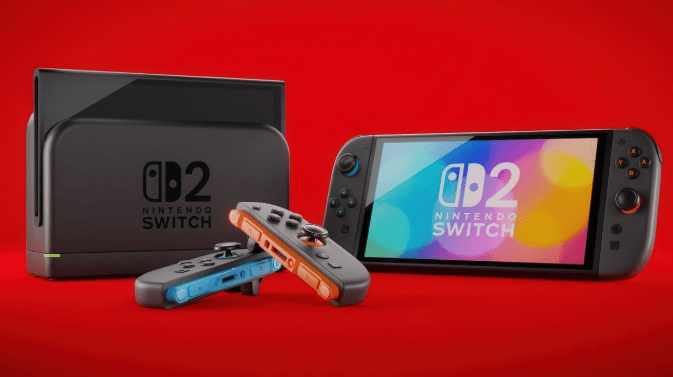
The Warriors series is more my speed, and specifically, the Hyrule Warriors corner of the Warriors series is one of the strongest. Hyrule Warriors: Age of Imprisonment was released exclusively on the Nintendo Switch 2. I’ll have to wait until after I pick up a Switch 2. But look-it! Zelda is a playable character. What?

I love a good hack-and-slash video game, and that’s what the Hyrule Warriors series is. I can’t wait to fight hordes of enemies as Princess Zelda. Hyrule Warriors: Age of Imprisonment has received favorable reviews. Sounds like a great time.

Unbeatable Releases Today on Multiple Platforms

I saved the most interesting video game for last. Unbeatable takes place in a world where music has been outlawed by a fascist agency known as H.A.R.M. (Harmonious Audio Reduction Maintenance). Nice! Gamers take the role of Beat, a mysterious vocalist who spends her time producing new songs and fighting the occasional cop. She plays in a band with guitarist Quaver, keyboardist Treble, and percussionist Clef. Unbeatable blends a rhythm game–naturally–with plenty of adventure.

I love Unbeatable’s aesthetics. We haven’t gotten a great rhythm game in years, so I can’t wait to get my hands on Unbeatable. The theme sounds cool. The graphics and gameplay look amazing. Unbeatable’s demo received great reviews. Rock Paper Shotgun may agree with me as they wrote in their review (of the demo), “Unbeatable has the best hook of any game ever.” Since Unbeatable is releasing the day of this post, we’ll have to wait for full reviews. This one’s a fresh, new game. Unbeatable is available on PC, PlayStation 5, and Xbox Series X/S.

That’s all the news we have for you this week. I’m Geek News short during November. Novel in November has been a slow roll, but I’m making some progress with my edits from this past year’s book. Thank you for reading, and wherever you are, I hope you’re having a great day.

Whatcha Playing, Geekly: November 2025

Happy Sunday, Geekly Gang! Kyra Kyle here with another month of Whatcha Playing. Our writers will be sharing what they’ve been playing–board games and video games–over the past month. Feel free to share what you’ve been playing over the past month, because you’re part of the Geekly Gang, too. I’ll start by sharing my month’s games.

Kyra’s Video Games

I mentioned Slime Rancher 2 a couple of months ago, during one of these lists, but I finally finished the game this past month. In fact, I picked up Slime Rancher 2’s platinum trophy on PlayStation 5. Oh, yeah!

While I like Slime Rancher 2’s new method of farming for materials (just use your vacuum to harvest science material like wild honey or jelly stone), Slime Rancher 2’s map took longer to click than the original’s, and I didn’t care for how rare drones became. I do appreciate Slime Rancher 2 adding drones back into the gameplay; Monomi Park included drones in Slime Rancher 2’s final update. I love automating my ranch.

The original Slime Rancher will always hold a special place for me. Despite eliminating certain features (the speed run mode is missing, and all special gameplay modes like glitch slimes and quicksilver slimes disappeared), Slime Rancher 2 does a great job of building on the original. Still, fewer gameplay elements can make the game repetitive. I never realized how much I’d miss Viktor’s research. I didn’t care for Slime Rancher 2’s puzzles as much. The reflector puzzles within the Gray Labyrinth pulled attention away from the slimes. That’s why I liked the special gameplay modes from the original. The focus never wavered from the slimes.

Slime Rancher 2 is an amazing game. I just don’t see myself returning to the title as much as I did the original.

I don’t know if I’ve played any new video games this past month. I have a few on my to be played list. Looks like they’ll have to wait until December.

Kyra’s Board Games

I played all the monsters in Horrified: Dungeons & Dragons. Each one perfectly captures the monster. Of course, the Red Dragon has a horde. The Beholder is a menace with all of its eyebeam powers. Gamers need to discover the Mimic by revealing treasure. Yes! Similarly, Horrified: Dungeons & Dragons does a great job with hero abilities. The Wizard can zip around the board through teleportation spells. The Fighter gets a boost in combat. And the Bard can beckon villagers to their call. Unfortunately, these powers can place the game on easy mode, especially if you’re facing weaker monsters.

Balance issues can crop up as they did with the previous Horrified entry: World of Monsters. But I’ve had a blast playing Horrified: Dungeons & Dragons. I may have had the most fun against the Red Dragon. We had no chance of winning. Woo hoo!

Deadlines is an interesting party game. It includes over 200 cards with famous people. On one side, you get the person’s name (and a quick description of who they were), and then, you must place them in one of three columns: Birth, Death, or Lifespan. You’ll need to place the person on your card in chronological order based on when they were born, when they died, or how long they lived (going shortest to longest). For instance, Napoleon was certainly born before Princess Diana, so you would place Napoleon’s card before Princess Diana’s. Deadlines was a blast. It’s unlike most trivia games, and you can get some fun interactions.

During one turn, I picked up Janis Joplin. I knew she was a member of the 27 Club (rock ‘n rollers who died at 27 years old), and placed her between someone who died at 23 years old (River Phoenix) and another who passed at 30. Ka-ching! If you screw up the timeline, you keep the card. It counts as a point. The player with the fewest points wins. But some cards, like Janis Joplin’s, will allow you to say (or guess) how they died. If you get the cause of death correct, you can add one of your kept cards to one of the available columns for free. This accelerates the game as a column can only be 12 cards long. We played with columns of 10.

Deadlines won’t be for everyone. But I liked it a lot. We may need to get Deadlines to the table more often.

I love certain elements of Nevermore. The Edgar Allen Poe theme shines through Nevermore, and the game’s better for it. But Nevermore–at its core–is a Take That game. I’m not a big fan of Take That games, especially ones that last longer than twenty minutes or so. Nevermore took over an hour to play with the teach.

Despite my dislike of longer Take That games, Nevermore has one of the most interesting card drafting mechanisms. Most card drafting games (like Sushi Go) have players pick one card, pass the rest, and then play the card they picked. In Nevermore, you draft every card for your hand upfront, and then play your hand of cards. Begin by picking two cards to keep and then pass the other three to the next player. Then, you pick three cards in your hand to keep and pass two. Finally, you pick four cards to keep in your hand and pass one. This final hand is yours. I love building my hand over time.

And I love the idea–in theory–of claiming an action by having the most cards of that action-type. If you have the most daggers, you can stab another player. If you have the most hearts, you can heal damage. And so forth. I just wish there wasn’t so much Take That in Nevermore, or that Nevermore took less time to play. Take That games can get mean, especially when gamers play cutthroat. I don’t like being in that headspace for long.

Still, I love many of Nevermore’s gaming elements.

I check in with Season and Skye, and it looks as if they didn’t play too many new games last month because they were dealing with an illness. Yikes! We’ll give them a week to recover. But feel free to share which games (video games and board games) you’ve been playing this past month, Geekly Gang.

Thank you for reading, and wherever you are, I hope you’re having a great day.
Cozy Video Game Review: Terra Nil

Terra Nil flips the city/civilization builder on its head. The world has been sapped of its resources, and it’s up to the player to return the world to its former lush landscapes, complete with wildlife, and then leave without a trace, allowing life to begin anew. Can you bring the world back to life Hey, hey! Kyra Kyle here. Today’s cozy video game is Terra Nil. I wish listed this one on Steam when its demo dropped, and then forgot about it. It wasn’t until Terra Nil popped up on Netflix, of all places, that I tried the full game. Terra Nil doesn’t have much of a story, so I’ll merge those two elements. Let’s see how Terra Nil rates on our review criteria.

Game Mechanisms: 9/10

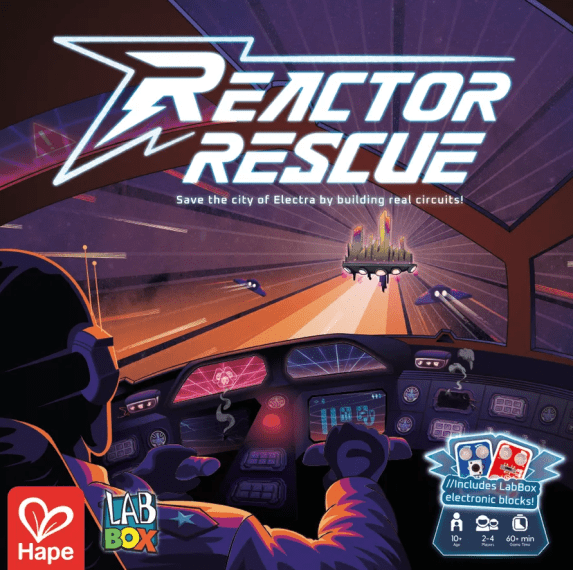
Like I said in the introduction, Terra Nil deconstructs the city/civilization builder video game genre. Players start with a barren wasteland (similar to the picture above), and they must clean the (nuclear?) waste with items like scrubbers and then replenish the Earth using various gadgets like propagators, seeders, and hydroponics. Each stage of Terra Nil plays out like an elaborate puzzle. Depending on the climate you’re trying to achieve, you may need to lower or raise the region’s temperature. Balance between biomes is crucial, and you can monitor animals and the animals’ desires when they return.

This game loop is satisfying and familiar. For being the opposite of a city builder, Terra Nil uses plenty of city builder game tropes. This makes the game easier to get into, even if what you’re doing is the exact opposite of a city builder. Finding the right balance between biomes gets tricky–Who am I kidding? It can be rage-inducing. I lost count of the number of times I was off on a certain biome and had to add an acorn to a tree to create more forest, or I had to burn more green area with a solar panel incinerator. Ugh!

And just when you’ve almost figured out how one region works, Terra Nil will add a twist like adding tundra and lava floes to the mix. I binged Terra Nil on Steam and Netflix (I still can’t get over how Netflix has a video game of Terra Nil’s caliber), and it only took about forty or fifty hours to complete the game. There was a lot of trial and error. Terra Nil’s tutorial level teaches the basics, but you’re on your own after that level, and I got stuck. A lot. But Terra Nil made getting stuck fun.

Gameplay Loop

Above Image from GameDesigning.Org

Gameplay Loop: 7/10

The frustration Terra Nil can create at higher levels keeps the Gameplay Loop score from claiming top honors, but outside of that, it’s fantastic. Terra Nil shuffles the gameplay enough to keep gamers on their toes for a good forty to fifty hours. Later levels combine elements of former levels in intriguing ways, building a super puzzle. Unlocking as many animals as you can for each region is a mini-game unto itself. I forget how many times I was rooting for a frog or otter to populate.

Terra Nil is a good, chill time. I would crank up the sound effects to hear the sounds of the forests, streams, and lakes. Perhaps Terra Nil is a new way to Netflix and chill.

Story or Narrative

Narrative/Storytelling: 3/10

Because Terra Nil doesn’t have much of a story, I’m lumping Narrative and Storytelling into one element. Despite being mostly a straightforward building a green space game, Terra Nil’s premise suggests a greater story. That keeps this score from being any lower than a three. Terra Nil gives hints to what happened to the planet and drives home the idea that humans should be stewards of the environment.

User Interface: 7/10

Terra Nil’s volume of information causes the game to falter with its user interface. Despite an easy-to-navigate heads-up display and well-crafted menus, I got lost in Terra Nil’s mountains of options and data I needed to parse. The game does a good job of easing players into its cavernous menus at first, but after the first three regions, you’re thrown to the wolves. Good luck.

Terra Nil offers a detailed rulebook with phenomenal detail. I would flip through this rulebook even if I weren’t lost on what to do. The page above does a great job of showing and telling gamers how a turbine and a toxin scrubber work. I love Terra Nil’s attention to detail.

Graphics: 8/10

For what it is (a city builder game where you’re not building a city), Terra Nil’s graphics are on point. Despite how pretty Terra Nil can be, it still uses an isometric, top-down view of the environment. Sure, there’s an option to view your creation at the ground level, and that’s fun, but Terra Nil’s graphics stop shy of top marks.

Terra Nil pours in a lot of detail. The geese in the picture above are geese who reinhabited the area. If you look closely at wetlands, you can spot a frog hopping. You can find deer, bears, and wolves roaming the forests and mountains. You don’t even need to zoom in at the ground level, even though I love doing this after I finish a region. Terra Nil works as an interactive background. It’s soothing, cozy.

Audio: 10/10

Terra Nil is one of the few games I will always play with the sound. While the game’s soundtrack is relaxing and memorable in its own way, the sound effects of the environment give Terra Nil a high score. Even the noises the gadgets (like the scrubbers and terraformers) make satisfy. Putting down a ditch borer and listening to it create a future river feels great. The crackling of fire as it makes way for new growth makes me smile.

Terra Nil spares no expense with its audio effects. From the animals to the wind and snow, I’ve spent hours listening to one of my regions, trying to pinpoint which sounds I’m hearing. In short, Terra Nil may have some of the best sound editing I’ve ever heard in a video game.

Replay Factor: 7/10

Even though Terra Nil plays like a puzzle, it’s one of those games I can see replaying after multiple months or years have passed. It won’t take long for me to forget how to complete each region. In fact, I played Terra Nil within the last couple of months, and I’m pretty sure it would take me a couple of playthroughs before remembering how each gadget works and when best to use them. Terra Nil also includes scenarios, variable difficulties, and each region is randomly generated during each playthrough. That last point alone gives Terra Nil better than average replay value. I enjoyed my time with Terra Nil and look forward to playing it again.

Aggregated Score: 8

Even though I gave Terra Nil a story/narrative score, I’m omitting that score from its aggregated score. Terra Nil offers dozens of hours of calming gameplay. It functions like an interactive desktop background. I’m shocked Netflix picked up the rights to Terra Nil. Perhaps this is a sign of things to come for the streaming giant.

Geekly News: November 2, 2025, New Releases

Happy Sunday, Geekly Gang! Kyra Kyle here, and I’m in the middle of some major edits and rewrites with my work in progress–more on that in the coming weeks–so I won’t have as much time to cover Geek News topics like previous months. But we still have some new board game and video game releases to discuss. I’ll try to be brief. Let’s begin with board game new releases.

Punch Bowl Splashes onto KickStarter

Punch Bowl looks amazing. It’s won multiple awards, featuring giant fruits that players must turn into giant punch. All the fruit in Punch Bowl is made of gorgeous acrylic. Throw in some ice cubes and seltzer acrylic game pieces, and you have a party. Players can learn this area management game in less than seven minutes, but Punch Bowl offers plenty of replayability. Just look at these punch glasses.

You’ll be filling your glass like a champ in no time with Punch Bowl. Every player begins with the same hand of cards. You must choose which card you’ll play and which to discard each round. You can gather fruit, but make sure you don’t keep it too long, or else your fruit will rot. I love that twist. Fruit Punch pledges range from $35 to $98. If you’re interested in Punch Bowl, check out its KickStarter page.

Dicey Devices Hatches Its Masterplan on KickStarter

I’ve seen Dicey Devices at numerous Protospiels and even featured a time or two on the Break My Game Discord server, and I’m glad this awesome game is seeing production on KickStarter. Publisher Oragami Whale is new to the tabletop game space, but they’re looking to make a splash, and Dicey Devices certainly does that. Players take on the role of mad scientists.

Activate your laboratory, collect devices, deploy robots, and upgrade your death ray to defeat your mad scientist rivals in Dicey Devices. There’s only room for one ultimate scientist in this engine builder with set collection. If you’re interested in Dicey Devices, check out its KickStarter page.

Bug Fight Takes on KickStarter

Bug Fight reminds me a lot of the classic Battle Line or Schotten Totten. I love these games, so this is a great thing. Players battle for multiple lanes of cards in a tense tug-of-war. The player who controls the most lanes at the end of the game, wins.

Build your team of powerful bugs in Bug Fight. And I just noticed the inclusion of Area Cards. That gives me strong Smash Up vibes, and I’m here for it. These Area Cards may spice up gameplay, causing plenty of potential upsets. Bug Fight looks like a fun, colorful 2-player only game. If you’re interested in Bug Fight, check out its KickStarter page.

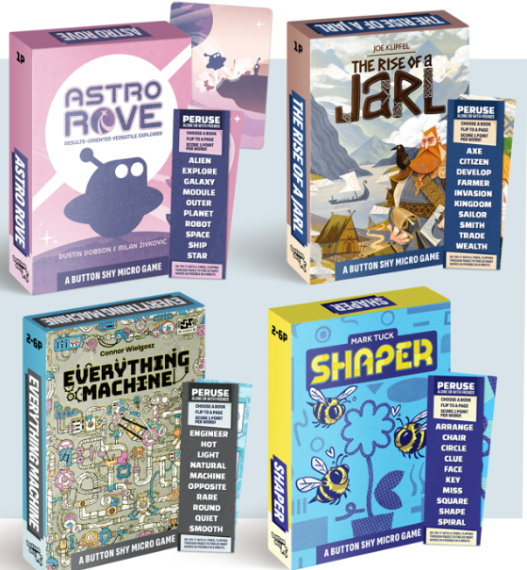
Button Shy Games Reprints Some of Their Out Of Print Games on GameFound

Button Shy Games has a simple premise for its line of games: restrict designers to 18 cards. And the results are amazing. Some of board games’ greatest designers have produced games for Button Shy Games, and each game fits inside a wallet. I have a copy of Tussie Mussie and Skulls of Sedlec, but these are Button Shy Games that can be found in print. Button Shy’s upcoming GameFound campaign will feature plenty of out-of-print games. Yes!

Even better, backers will vote on which games they’d like to see get a reprint. I found a handful in the picture above I wouldn’t mind adding to my collection. Stew is fantastic, and Sprawlopolis has been on my radar for years. Few details exist for this campaign. We’ll know more after Button Shy’s Campaign goes live in a few days. If you’re interested in Button Shy’s Reprint Campaign, check out its page on GameFound.

Terra Mystica Returns on GameFound

Terra Mystica has been a member of BoardGameGeek’s Top 50 games ever since it was first released thirteen years ago (2012), and it’s the latest game to receive the GameFound glow-up. I’m liking this trend. Take a game many players love and give it a definitive version. Agricola’s release earlier this year looked amazing. I’m expecting similar things with Terra Mystica, even though we’ve seen few images of what we should find in the box. What’s in the box?!

Terra Mystica has plenty of expansions, and if its updated version follows Agricola’s footsteps (fingers crossed), we should see a new expansion or two. Steamforged Games has a great track record of giving good old games a fresh coat of paint. If you’re interested in Terra Mystica, check out its GameFound page.

Movers & Shakers Launches on GameFound

You know how I was interested in Sprawlopolis earlier? Publisher Quined Games co-published Sprawlopolis with Button Shy Games, and Movers & Shakers is their latest production. Since Movers & Shakers is a new game, we have plenty of pictures.

Movers & Shakers features plenty of gorgeous set pieces and crunchy strategic play. We’re talking Splotter Game (like Food Chain Magnate) levels of strategy in Movers & Shakers, and I would expect nothing less than a train game, wanting to make a mark.

We know little about Movers & Shakers’ gameplay, but the cards appear to be dual-purpose. Always a plus. I love the idea of contracts in a game of pick up and deliver. And spending resources to move is always appreciated. I may not know much–yet–about Movers & Shakers, but the game piques my interest. If it does the same for you, check out Movers & Shakers’ GameFound page.

The Outer Worlds 2 Releases

I enjoyed my time with Obsidian’s The Outer Worlds. It did a great job fusing elements from Shadowrun (companies took over governments with corporatocracies) and various other sci-fi universes by terraforming distant planets into their own images. Add in a dash of Fallout (some of Obsidian’s founders co-created the Fallout series), and you get a tasty diversion in The Outer Worlds.

I can’t wait to get my hands on The Outer Worlds 2. While the original may not have shaken role-playing games to their core, it was a fantastic, single-player experience. And I love it when modern video game companies commit to single-player experiences. Too many video game companies have gone all-in on video games as a service or live-service games. The Outer Worlds 2 has received good to great reviews. I would expect nothing less from an Outer Worlds’ follow-up. The Outer Worlds 2 is available on PC, PlayStation 5, and Xbox Series X/S.

ARC Raiders Releases

Speaking of live-service games, The Finals developer Embark Studios released its follow-up, ARC Raiders, this past week. While The Finals is a free-to-play title, ARC Raiders is a $40 multiplayer experience. Set in a distant future Earth, where mysterious and deadly “ARC” robots have taken over the surface, ARC Raiders puts gamers in the role of rescuers going topside to collect resources, sell, and ultimately save as many survivors as they can.

Embark Studios jump from looter shooter (in The Finals) to ARC Raiders’ extraction shooter is a logical one. With battle royales losing their luster, first-person shooter gamers have been looking for a worthy replacement. Extraction shooters seem to be a good alternative, but there has yet to be one title to capture the community’s imagination. Time will tell if ARC Raiders will become the definitive extraction shooter. It’s available on PC, PlayStation 5, and Xbox Series X/S.

Dragon Quest I & II HD-2D Remake Releases

SquareEnix has had back-to-back stellar remakes these past couple of months. Last month’s Final Fantasy Tactics: The Ivalice Chronicles and this past week’s Dragon Quest I & II HD-2D Remake prove that SquareEnix has some of the greatest back catalogues in video game history. These titles also show that SquareEnix can go back to basics and deliver a wonderful role-playing experience.

Dragon Quest I & II HD-2D Remake manages to give the older games a facelift while maintaining the originals’ charm. SquareEnix even manages to throw in some added content to pad the games’ short runtime, and Dragon Quest I & II HD-2D Remake completes the original Dragon Quest Trilogy. Last year’s Dragon Quest III HD-2D Remake is available on modern game systems. It’s great seeing these titles available for new gamers. Dragon Quest I & II HD-2D Remake is available on PC, Nintendo Switch, Nintendo Switch 2, PlayStation 5, and Xbox Series X/S.

That’s all the Geek News we have for this week. I’ll be busy with writing and editing on my work in progress, so we may have mostly new releases over the next few weeks. Thank you for reading, and wherever you are, I hope you’re having a great day.

Quirky Video Game Review: Organ Trail

Organ Trail gives a zombie apocalypse twist to the classic Oregon Trail. Not to be confused with the 2023 film of the same name, Organ Trail was developed by Men Who Wear Many Hats in 2010. 2010! That makes this game a decade and a half old. Yikes! Organ Trail began as a web game before a 2012 Kickstarter campaign expanded its release to Steam and iOS. Organ Trail has gone on to sell over half a million copies.

Hey, hey, Geekly Gang! Kyra Kyle here. Today, we’re reviewing the 2013 Organ Trail: Director’s Cut. The developer claims that this version moves past the original’s pure parody of Oregon Trail to become a game in its own right. Trade in your Conestoga wagon for a station wagon. It’s time to see how Organ Trail rates against our criteria.

Mechanisms

Game Mechanisms: 8/10

Organ Trail follows its inspiration’s lead (Oregon Trail) with its game mechanisms, but it differs enough to warrant a higher than average score. The Director’s Cut adds Choose Your Own Adventure aspects to the original’s release. Fighting off biker gangs and avoiding zombie deer stampedes are nice touches. But the bulk of the game (at least for me) was with scavenging. Honestly, I spent most of Oregon Trail hunting, so spending a lot of time scavenging (Organ Trail’s version of hunting) makes sense.

Despite being essentially the same mini-game, scavenging (in Organ Trail) feels far different from hunting (in Oregon Trail). First, the zombies are heading toward you. While you may find the occasional wild animal that will attack you (like a bear), animals like deer in (Oregon Trail) run away from you. Organ Trail even references the bear by having a bear be a boss fight, so there is a tip of the cap there. Second, killing zombies doesn’t give you any resources. Instead, you must pick up randomly generated items in the wilderness. While this makes thematic sense, I kind of miss the push and pull of do I use bullets to kill animals for food, trading one resource for another. But ultimately, the zombies are fun.

I do my best to dodge zombies, which is easy to do if you don’t face a horde. Zombies in the scavenging mini-game will follow your movements, so you can trap them behind fences, walls, trees, and other obstacles. The other mini-games, like avoiding a zombie deer stampede, shake up the doldrums, but repairing your station wagon is the most pervasive mini-game outside of scavenging. Repairing your car is a timing mini-game, and I stink at it. Looks like I’ll have to carry plenty of extra scrap. Even so, the trickiest mini-game to master is the one where a bandit randomly picks one of your friends/family members to kidnap. You’ll only get one shot to shoot the bandit in the head. Don’t miss.

There are 20 stops before you reach your destination, Safe Haven (in the Pacific Northwest), and each stop has some combination of an Auto Shop, Combat Training, and supplies for you to purchase, but every stop has a Job Board. Jobs add even more mini-games. These jobs become more important at higher difficulty settings. If you begin on “Easy” mode, you won’t need to do them beyond the halfway point on your trip. Player choice is paramount in Organ Trail.

Note: I’ve played the PlayStation4 and Steam versions. The PlayStation version is better than Steam’s. Unfortunately, players have fewer options if they play on Steam, so I’d lower the rating by a point for the Steam version.

Gameplay Loop: 9/10

Organ Trail’s core gameplay loop of scavenge, repair, shop, rest, and travel is a satisfying one, especially when you throw in the day/night cycle. You may want to rest or repair during the evening, when zombie activity is higher. This is a consideration when leaving a stop. There’s a percentage chance you’ll encounter a zombie horde, but player choice comes into play. You can sneak past the horde, floor the gas and try to speed past them, or bust out your shotguns and shoot while you drive. Even with a set gameplay, Organ Trail offers micro choices that have a profound impact.
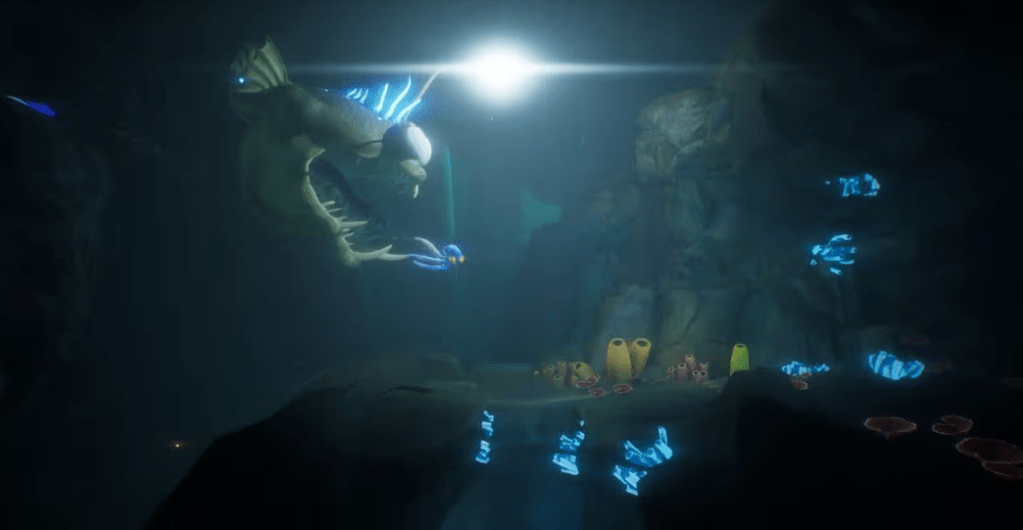
Just like Oregon Trail, random events occur while you drive. Some are silly, like “Mike gets bored and starts making an annoying noise.” Others are more serious, like “Your mom has dysentery,” and you may need to stop and rest or risk her dying. And since Organ Trail is set in a zombie apocalypse, someone, like Jamie, could be bitten by a zombie (which is indicated by a green skull). So long as you keep them healthy with med packs, which aren’t cheap, they won’t turn. I hear there’s a weirdo at Safe Haven who pays for someone who’s infected.

Add in some combat upgrades for yourself and some car upgrades, and Organ Trail has plenty of options for you to explore. This improves Organ Trail’s already stellar gameplay loop.

Story or Narrative

Narrative/Storytelling: 8/10

Organ Trail has a simple but effective narrative. You’re traveling from one side of the United States to the other. The game uses liminal space to tell its story. I could see plenty of gamers missing Organ Trail’s story. To get the most out of Organ Trail (from a narrative perspective), it’s best to talk to strangers at each stop. They fill in the gaps by asking why the government thought nuking its people would “solve” the zombie crisis.

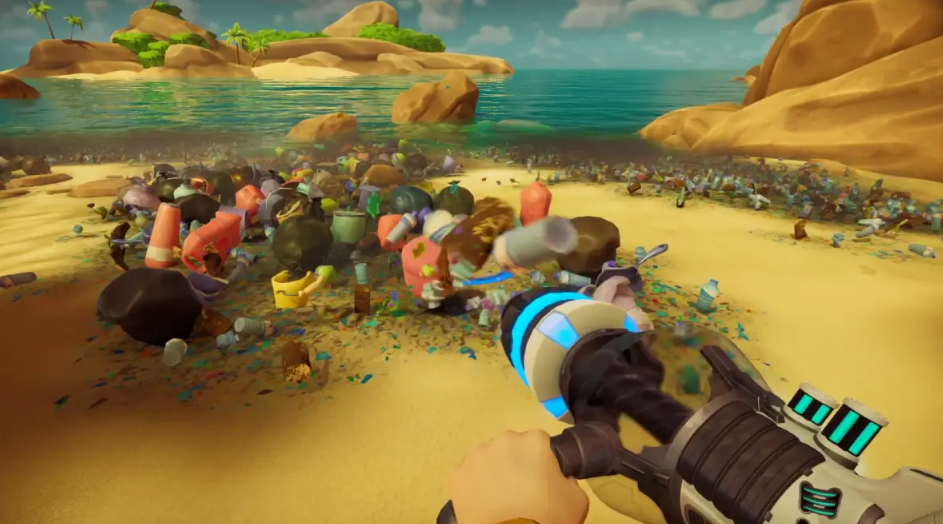
Nuclear strikes are the reason why you must take an indirect route to make it from Washington DC to Safe Haven. Other tidbits of information are sprinkled during these interactions. Organ Trail manages to add in a few more with merchants and the random bandits who abduct your passengers. Organ Trail has an interesting world. How did the disease (if zombism is a disease) cross over from humans to deer and bears?

User Interface: 8/10

While clunky (or outdated) at times, Organ Trail has a simple-to-understand and navigate user interface. If you’ve ever played Oregon Trail, you’ll know how to play Organ Trail. The game keeps players informed with specific details about their party. You can check the map and see how many stops you have remaining, and if you know anything about geography, you can plan when you may need certain upgrades like snow tires. Hint: most likely when you’re traveling through the Rockies.

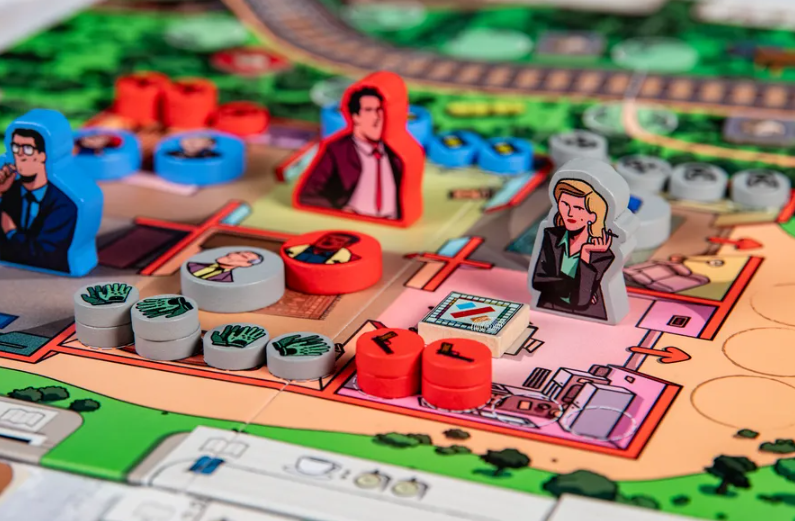
Notifications will pop up on the main screen if any major issues occur. The tabs work and are self-explanatory. I have few issues with Organ Trail’s user interface.

Graphics: 6/10

I struggled with scoring Organ Trail’s graphics. Yes. The graphics aren’t the best, but they’re not meant to be the best. Organ Trail is a retro game, parodying a video game released in the mid-80s. And yet, Organ Trail finds ways to make its graphics unsettling. This works to steep the game in atmosphere.

Audio: 8/10

Organ Trail has a good mix of sound effects meant to mimic Oregon Trail (like clinks and bloops after a stage is complete) and others that subtly suggest a game with a darker subject matter (like splattering brains and cocking a gun). Organ Trail’s soundtrack, by Ben Crossbones, does a lot of heavy lifting. I often play video games on mute; I didn’t with Organ Trail. Crossbones does a great job of capturing the game’s mood and theme without going too over the top. Organ Trail’s soundtrack is the right level of creepy.

Replay Factor: 7/10

Organ Trail plays quickly, no less than five hours, so it’s easy to replay this title. It offers multiple difficulty settings, and the higher ones offer a good challenge. There’s even a leaderboard (Organ Trail grades your accomplishments during each playthrough). I even like the addition of finding your tombstone from a previous playthrough. All of this is fantastic, but I don’t see gamers playing Organ Trail more than a handful of times. I could see replaying it after several years. I sure have. I can only give this game a slightly above-average replay factor.

Organ Trail is typically sold for $5-10. That’s a steal for the amount of game you get. I recommend giving it a try, especially if you like zombie apocalypses and the original Oregon Trail.

Aggregated Score: 7.9