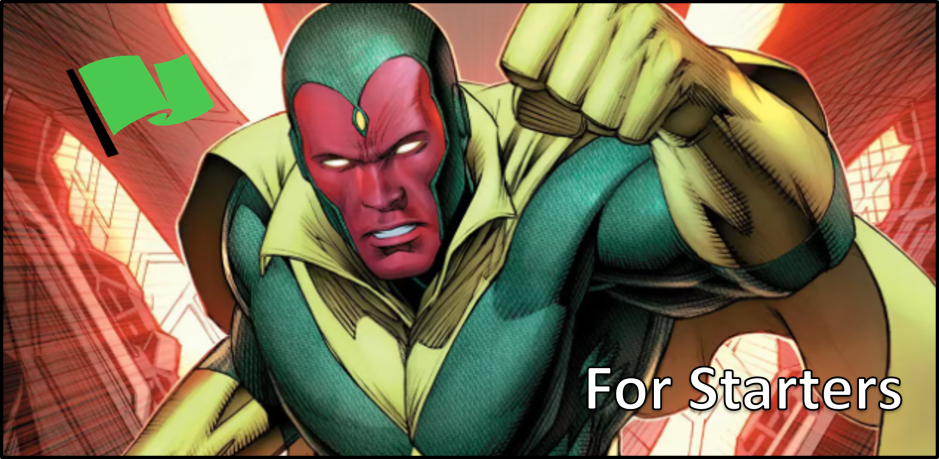
Hey, hey, Geekly Gang! Kyra Kyle here. VisionQuest began airing this week. To celebrate, we’re releasing a Vision starter stories post. Who knows? Someone may want to start reading stories based on the Android Avenger. Looks like it’s time for a Getting Into Comics: Vision Starter Stories post. Vision has a nice mix of single issues and storylines. We’ll begin with the single comic books and progress to comic book storylines. Let’s talk about Vision Starter Stories.
Single Issues
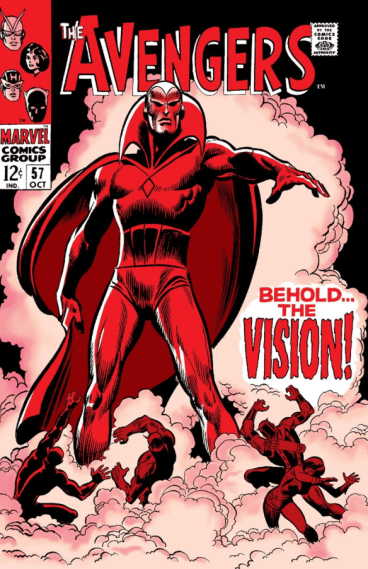
“Behold The Vision” (Avengers Vol 1 #57; Written by Roy Thomas; Art by John Buscema; August 1968)
Usually, we try to include a character’s first appearance on these lists, but Vision had a dynamite first issue. Ultron created Vision to take down the Avengers. When Vision refuses to attack the Avengers, he and his “father” have a falling out. During the course of “Behold The Vision,” Vision proves himself worthy of consideration as a member of the Avengers, and the Avengers and Marvel Comics would never be the same.
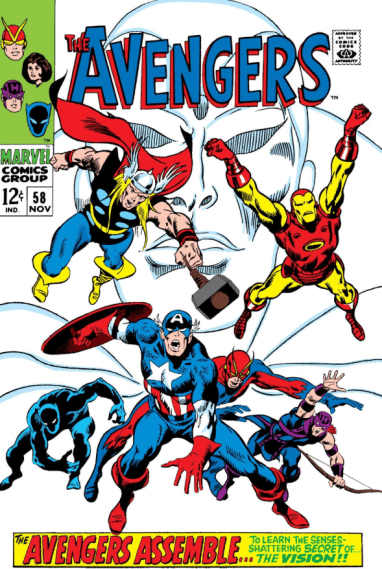
“Even an Android can Cry” (Avengers Vol 1 #58; Written by Roy Thomas; Art by John Buscema; September 1968)
Vision’s second issue was another great one. I wouldn’t say these two comic issues constitute an overarching storyline; that’s why they’re listed separately. Vision wants to join the Avengers, and the team tests his mettle, like any other potential member. While he was presented as an android, Vision is far more than that. “Even an Android can Cry” serves to show Vision’s humanity. After he joins the team, a joyous Vision lets loose one tear. John Buscema does a great job conveying Vision’s emotions, and this single panel has endured as one of the best representations of the character Marvel has ever published.
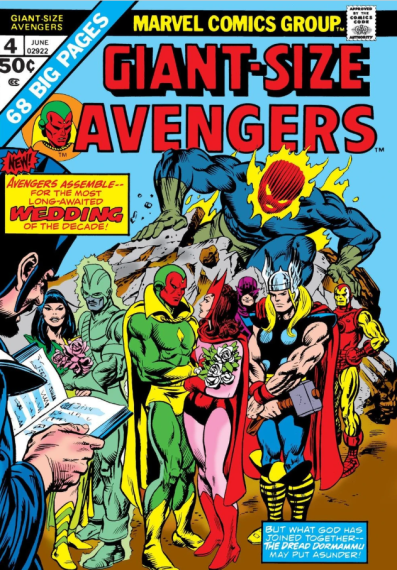
“The Vision and The Scarlet Witch’s Wedding” (Giant-Size Avengers Vol 1 #4; Written by Steve Englehart; Art by Don Heck; February 1975)
You can’t tell Vision’s story without Scarlet Witch. They two fall in love and in Giant-Size Avengers #4, they get married. Of course, there was a ton of prejudice toward both characters and their union. Vision is a robot, and Scarlet Witch is a mutant, who innately see a lot of prejudice. In Giant-Size Avengers #4, the couple stand up to the haters, and tie the knot. During the ceremony, which served as a double wedding with Mantis and Swordsman, Kang showed up to cause a mess, but it all worked out in the end. Or did it?
Storylines
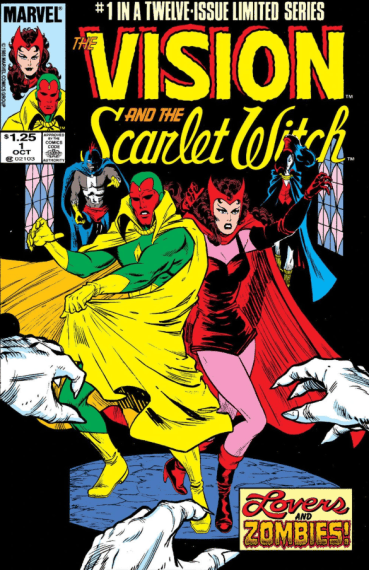
A Year in the Life (The Vision and The Scarlet Witch Vol 2 #1-12; Written by Steve Englehart; Art by Richard Howell; 1985-1986)
Vision and the Scarlet Witch have shared multiple miniseries; we went with the one that included, A Year in the Life. The story focuses on the titular two as they settle in Leonia, New Jersey, shortly after getting married. A Year in the Life is probably the best look at the relationship between the two heroes that we’ve ever seen. After the two settle down, it doesn’t take long for things to go crazy. Vision and Scarlet Witch face obstacles from multiple directions: Ultron, the Grim Reaper, Magneto, and Quicksilver. Looks like everyone from the Visions and Scarlet Witch’s past has it out for them. The couple endures and toward the end of this series, Wanda makes herself pregnant. This results in the birth of the couple’s twin sons: William and Thomas.
Yep. A Year in the Life influenced the WandaVision storyline. There’s a chance we’ll see this story affect the currently airing VisionQuest’s story.
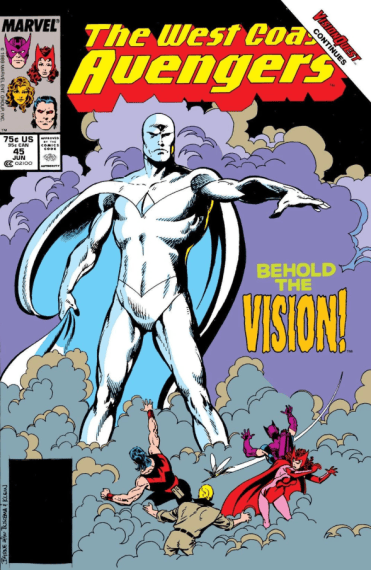
VisionQuest (West Coast Avengers Vol 2 #42-50; Written by John Byrne; Art by John Byrne; 1989)
We had to include the comic book storyline that shares the same name as the VisionQuest TV show. Vision has “died” on more than one occasion, but death seldom means the end for a comic book character. This also makes sense for Vision, because he is a synthoid. Vision’s resurrection came with a cost. When the Avengers rebuild him, Vision returns as a completely different “person.” His humanity is no longer intact. His new look (all white) mirrors his new reality as an unfeeling robot, which is a stark change from his previous persona.
Vision and Scarlet Witch’s romantic relationship is all but dissolved, but that’s only the start. The Vision’s new personality and direction would reshape the Avengers and the rest of the Marvel Universe for decades. When I heard the MCU intended to bring back Vision in WandaVision, I knew Marvel would borrow heavily from VisionQuest. I’m glad the MCU has turned Vision and Scarlet Witch’s saga into a trilogy: WandaVision, Agatha All Along, and VisionQuest. Despite the most recent MCU phases revolving around the multiverse, I’ve enjoyed the fusion of technology and mysticism. Vision and Scarlet Witch are at the core of that combination. VisionQuest is a landmark Marvel comics storyline and a must read for any Marvel fan.
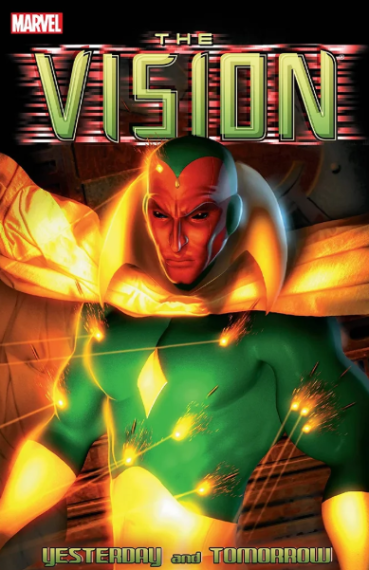
Yesterday and Tomorrow (Avengers Icons: The Vision #1-4; Written by Geoff Johns; Art by Ivan Reis; August-November 2002)
Geoff Johns is known for his work in DC Comics, but he made the leap to Marvel Comics in 2002 to write the miniseries Avengers Icons: The Vision. Johns continued several plot threads, including the one we just discussed: VisionQuest. In this series, the Vision meets the granddaughter of the man who created the original Human Torch (the android from the 1940s, not Johnny Storm). The original Human Torch’s body happens to be the body Ultron installed Vision into back in 1960s. Yesterday and Tomorrow also centers on Vision’s lost humanity being restored. This storyline marks a new era for the synthoid.
Coincidentally, story beats from Yesterday and Tomorrow could find their way into the VisionQuest TV series. That’s conjecture. The series hasn’t yet finished its run.
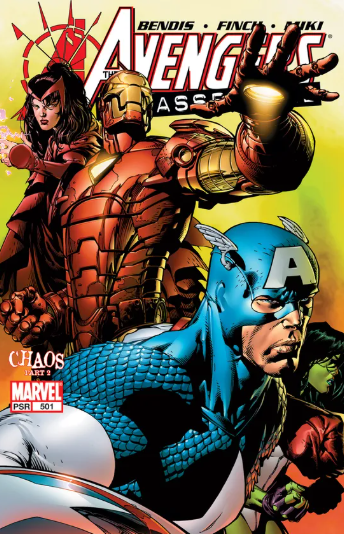
Avengers Disassembled (Avengers Vol 3 #500-503; Written by Brian Michael Bendis; Art by David Finch; 2004)
Full disclosure: Vision doesn’t have a long appearance in Avengers Disassembled. But it is meaningful. In fact, Avengers Disassembled includes the deaths of several popular Avengers: Ant-Man, Hawkeye, Jack of Hearts, and of course, Vision. Who’s behind Vision dying this time? Let’s just say that one of the issues (cover pictured above) is entitled “Chaos.” Scarlet Witch has a history of going rogue.
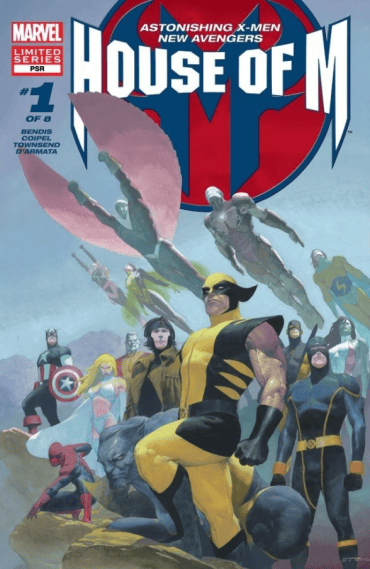
House of M (House of M #1-8; Written by Brian Michael Bendis; Art by Olivier Coipel; 2005)
Remember how I said that Scarlet Witch has a history of going rogue? House of M revolves around Wanda having a mental breakdown. She creates an alternate reality. In this new world, Vision and Scarlet Witch’s children are alive and well in the Vision household. It doesn’t last. House of M explores the mind of a troubled and powerful woman. And if House of M sounds similar to WandaVision, it was the basis for WandaVision. While Scarlet Witch is the main character in House of M, it still contains several great moments for the Vision.
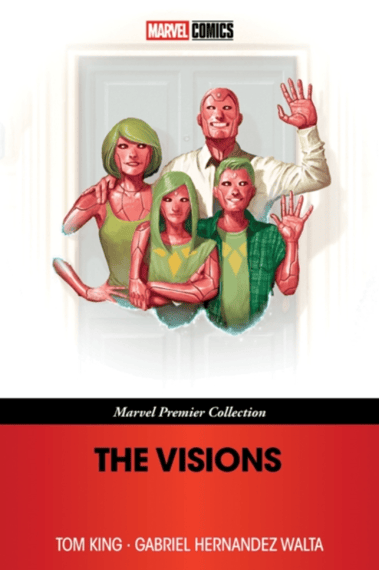
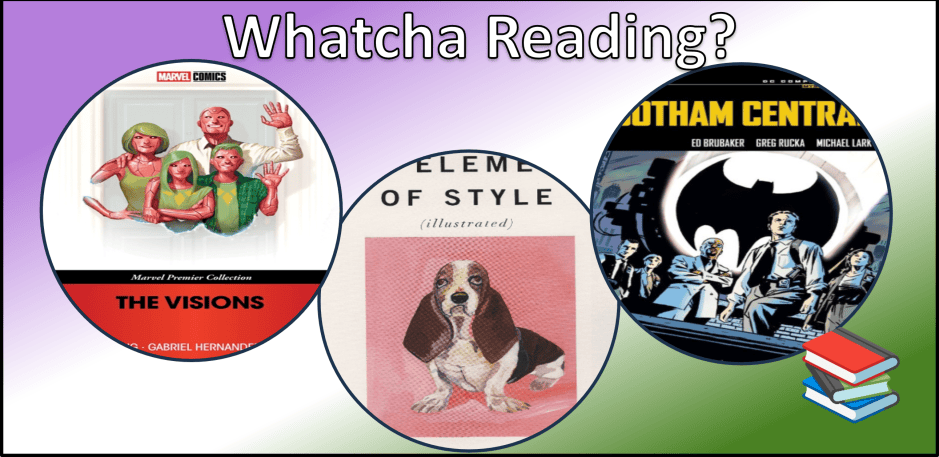
The Visions (The Visions #1-12; Written by Tom King; Art by Gabriel Hernandez Walta; 2015)
We save one of my favorite storylines for last: The Visions. In this story, Vision takes a new job as Avengers liaison in Washington DC. He moves to the United States capital with the family he constructed, a family of synthoids. While WandaVision borrows the scene at the end of The Visions (changed of course, to fit within the MCU’s storyline), I’d like to see more of The Visions in VisionQuest. Obviously, the MCU will continue with Vision and Scarlet Witch’s children, but I could see some moments borrowed from The Visions.
I love The Visions. It’s a page-turner of a mini-series. Of all the storylines on this list, you’ll need to do the least amount of other reading with The Visions. This series does a great job of retelling a lot of Vision’s past. It explores Vision’s quest for humanity, a recurring theme for the character. And I grew to care about this family of synthoids. They’re more than synthoids. If you only wanted to pick up one story from this list, I’d recommend The Visions.
That’s our list of Vision Starter Stories. Which stories would you add to this list? Let us know in the comments. Thank you for reading, and wherever you are, I hope you’re having a great day.