






Happy Sunday, Geekly Gang! Kyra Kyle here with another week of geek news. This week is a little quiet due to the United States Holiday, the Fourth of July, and the upcoming DCU and MCU movies: Superman and Fantastic Four: First Steps, respectively. So, we don’t have any major news to report. Instead, let’s discuss some board game releases for the upcoming week.
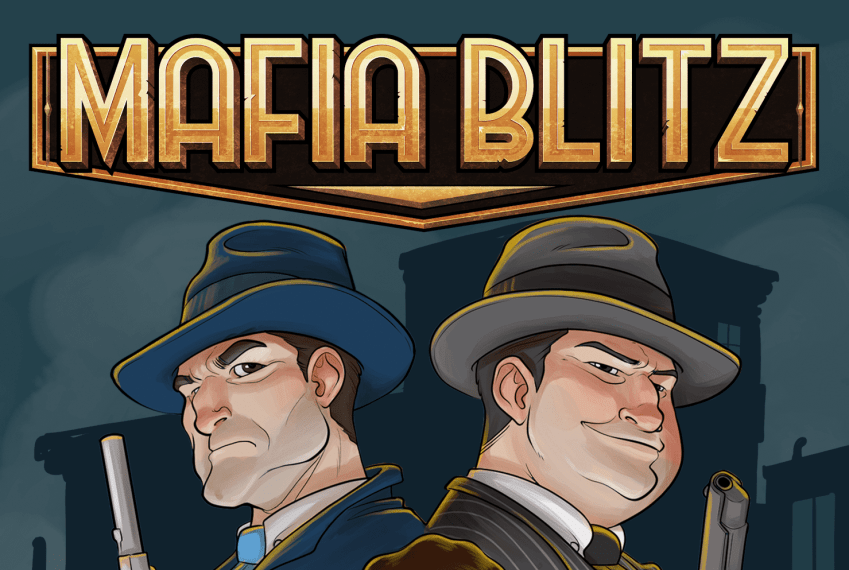
Honestly, I’ve never cared for social deduction games, but fast-paced social deduction games that don’t include player elimination (like One Night: Ultimate Werewolf), I can get behind. That is the premise of Mafia Blitz. Mafia pioneered the social deduction game. Mafia Blitz, designed by frequent Meeple Mountain contributor Mark Iradian, aims to do the same for quick social deduction games. Each role has unique win conditions, with many roles having overlapping win conditions. There are even some roles that include end-game triggers.
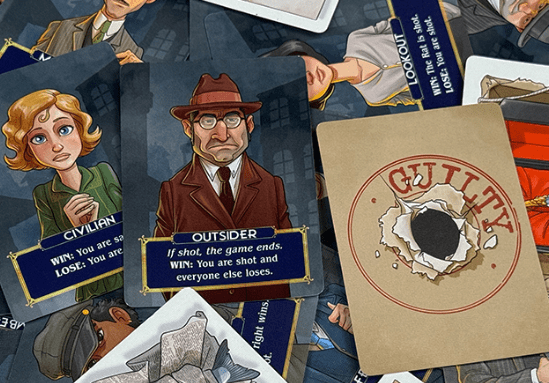
I like Mafia Blitz’s approach of having one price point: $20. Too often, crowdfunding projects include multiple add-ons, which can lead to a different gaming experience from one copy of the same game to the next. Mafia Blitz doesn’t have that issue. If you’re interested in Mafia Blitz, check out their KickStarter page.

Paradise: A Wastepunk Boardgame is another board game type I don’t typically care for (a skirmisher combat game), but it’s another one that has me intrigued. Its setup reminds me of a Memoir ’44 that has character abilities. Coincidentally, Memoir ’44 is one of the few skirmisher games I enjoy.
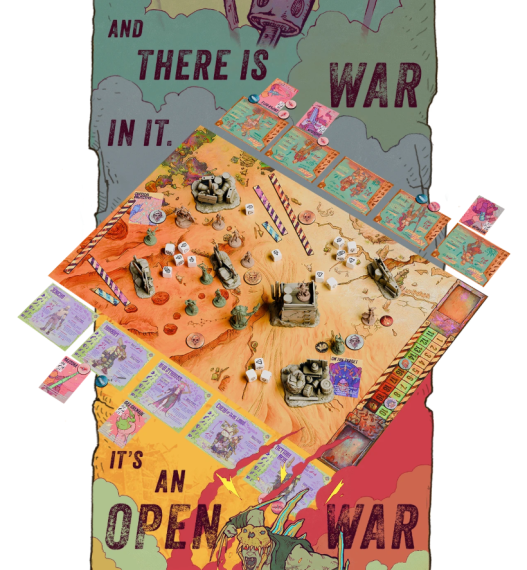
Throw in some quick dice combat, what appears to be gear cards, and detailed terrain pieces, and Paradise: A Wastepunk Boardgame has my attention. I also love the colorful palette Mindwork Games uses. Paradise: A Wastepunk Boardgame is Italian board game design studio Mindwork Games’ first design. They give me strong early CMON vibes. Both companies began as purveyors of awesome miniatures. That fact should let you know the level of detail this game’s miniatures will have. I wonder what the quality difference is between the PVC and resin miniatures. The resin minis are more expensive, and resin minis tend to break more easily than PVC minis. It’s something to consider.
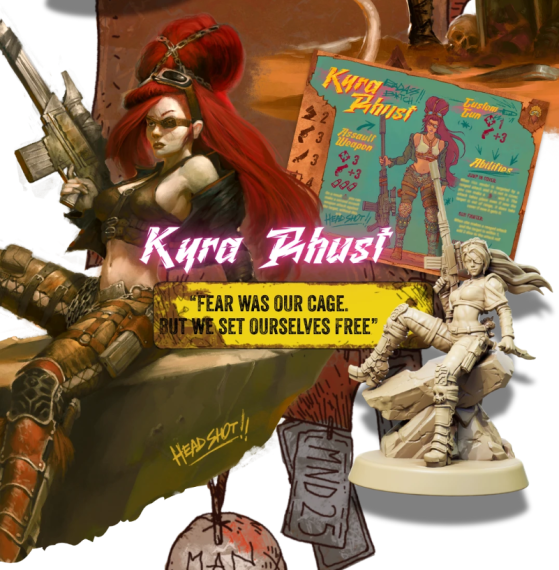
On a personal note, I’m considering backing Paradise: A Wastepunk Boardgame because of the character named Kyra Rhust. We’re both Kyra. And this Kyra looks like she may be a healing sniper like Ana from Overwatch (Ana was one of my mains–yay!). If you’re interested in Paradise: A Wastepunk Boardgame, give its GameFound page a look.

Far Far Out looks fantastic. The Netherlands-based game design group Studio Inifinitus offers multiple ways to win in this Civilization-like board game. The system tiles look amazing. These system tiles interlock and contain planets.

Players then place planets on top of the system tiles. I’m unsure if the planets always spawn on specific systems or if it differs each game. My guess is that players can change up which systems a planet can be placed. Far Far Out is stunning.
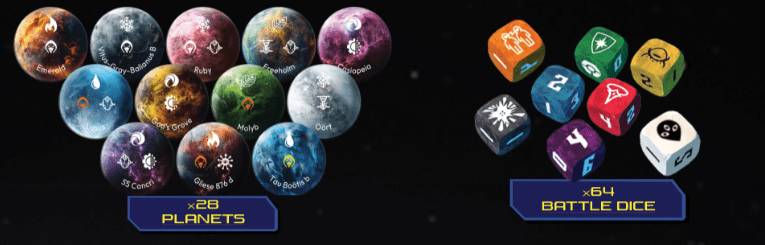
The game lists three ways to win. Far Far Out’s inclusion of 64 battle dice–64!–suggests that one method for victory is military/combat, but Far Far Out insists these battle dice serve multiple purposes. Far Far Out features a lot of exploration. I like that in a game set in outer space. We don’t know too much about the game’s mechanisms, but they have us intrigued.
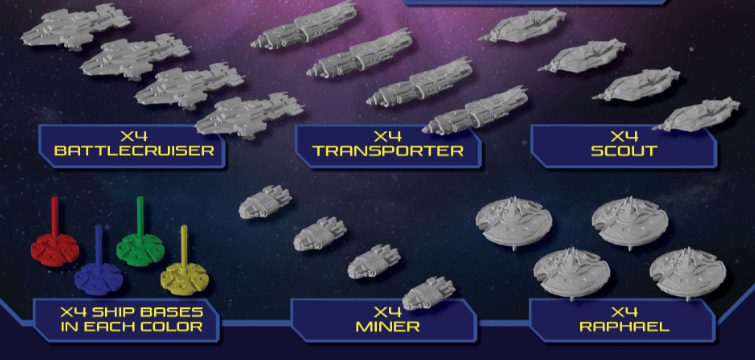
Far Far Out’s more expensive pledge (around $175) includes intricate miniatures, while its less expensive pledge (around $117) includes detailed standees. The only difference I’ve found between the two versions is the unpainted miniatures (pictured above), but Far Far Out leaves the description of its more expensive pledge as “all deluxe content.” The campaign could add more deluxe content, so keep an eye out. The price tag is a bit high because Far Far Out includes a lot of bits. This is a premium game with a premium price. If you’re interested in Far Far Out, zoom to its GameFound page.

Former Marvel Comics Editor-In-Chief and comic book visionary Jim Shooter passed away on June 30, 2025. Shooter has a complicated comic book history. On one hand, he “rescued” the comic book industry. By the mid-1970s to early 1980s, comic books had gone stale. A 13-year-old Shooter would get his start with DC Comics and proceed to pull comic books out of its slump. During his time as Marvel Comics Editor-In-Chief, Shooter orchestrated the massive crossover event, Secret Wars, which is the major event the MCU is currently building toward. But Shooter wasn’t without his share of controversy.
Shooter’s Marvel Comics was openly homophobic, refusing to feature queer stories. Writer/artist John Byrne was forced to conceal Northstar’s sexual orientation for years before the character became the first openly gay comic book character. Instead of letting Northstar out of the closet, Shooter penned the first comic book that featured a queer storyline: two gay men attempt to r*pe Bruce Banner and this caused Banner to transform into The Hulk. Shooter had a “Don’t Say Gay” Policy with Marvel Comics. This restriction prevented positive queer representation in Marvel Comics for over a decade.

Still, Jim Shooter (during his teen years) wrote the first race between Superman and The Flash. This race between titans has become a tradition for DC Comics, and he solidified much of the Legion of Super-Heroes lore during his early tenure. Shooter even created one of my favorite Superman villains, Parasite. And Shooter’s jump to Marvel Comics ended the revolving door of editors after Stan Lee had transitioned to Marvel Films. Shooter was the editor who oversaw the growth of Chris Claremont and John Byrne’s classic run of The Uncanny X-Men, which led to the team becoming a global phenomenon. The Uncanny X-Men also saw the inclusion of many BIPOC stories.
Shooter has an impressive comic book history and a checkered past with queer inclusion. His contributions to comic books, and especially Marvel Comics, will not be forgotten. As a member of the LGBT community, I wish Shooter had done more for LGBT inclusion in Marvel comics. Even so, my thoughts go out to Shooter’s family. Rest in Peace.
That’s all the geek news we have for this week. Thank you for reading, and wherever you are, I hope you’re having a great day.

Hey, hey! Kyra Kyle here. The MCU introduced Marvel Comic’s Illuminati in Doctor Strange in the Multiverse of Madness. I don’t know if the Illuminati will continue in the MCU, but they’ve done a lot of work behind the scenes during major Marvel Comics crossovers. The Illuminati’s first appearance (New Avengers #7, July 2005) features each member of the group protecting one of the Infinity Gems. The Illuminati also factor into 2015’s Secret Wars. So, there’s a chance we’ll see more of them on the big screen. Who are the best characters from this group of Marvel Comic’s most powerful beings working in secret, shaping the superhuman world and protecting Earth from catastrophe?
But first, an honorable mention or two. I like Tony Stark/Iron Man a lot as a character. He’s also done a lot with the Illuminati, but he’s not the first name I think of when discussing the Illuminati, even though he’s a founding member. You’ll find another major exclusion on this list: Doctor Strange. His story may have introduced the Illuminati to the MCU, but I think the Illuminati works best when it’s composed of people who represent different demographics, kind of like a Marvel Comics version of the United Nations. And most of the Illuminati’s members fit this bill.
Let’s see who made the list.
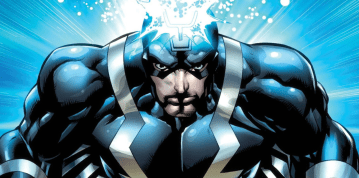
The Inhumans occupy an important part of the Marvel Universe. They may have existed before humanity or at least they had a higher level of intelligence and awareness before humanity during Earth’s earliest history. This history also involved extraterrestrial and cosmic encounters. Enter Black Bolt. He’s the Inhumans’ current monarch and boasts incredible power. Black Bolt was born with a voice so strong that it can obliterate planets. Since this is the case, he seldom speaks, opting to have Medusa, another powerful Inhuman, speak on his behalf.
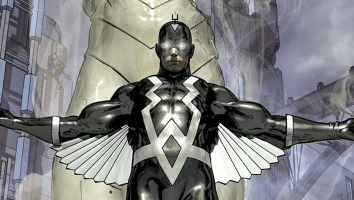
Fortunately, the Illuminati’s creator, Brian Michael Bendis, shared his reasoning for each of the original member’s inclusion. Here’s what Bendis has to say about Black Bolt (I’m paraphrasing to some extent):
“King of the Inhumans, who are an important part of Marvel history and play an important part in events that have not yet come to pass. He also represents a ruler/king archetype.”
The Inhumans television show didn’t fare well, but let’s hope the Inhumans will find new life in some other form. They’re too important to vanish from the MCU entirely.

Namor is yet another monarch. He rules the underwater nation of Atlantis and adds a different perspective for the Illuminati. The ocean claims more area than land on Earth, and Namor is its unquestioned ruler. He’s a member of another ancient civilization, one featured in Black Panther: Wakanda Forever, but missing from the Illuminati’s brief stint in Doctor Strange in the Multiverse of Madness. Like the Inhumans, I hope we get to see more of Namor in future MCU projects.

Let’s see why Bendis included Namor in the original Illuminati:
“Namor is the King of Atlantis and the Seven Oceans and represents the antihero mindset.”
He certainly does that. Namor is an ally to none. His only wish is to have his people’s voices heard. Namor served on Norman Osborn’s Cabal at the same time as his stint on the Illuminati. His role in the Illuminati mirrors his earlier team-up with the Invaders. The Invaders signaled Atlantis’s desire to be known to the outside world, the world of the land dwellers. The Invaders could be another group that could factor into the MCU’s future.
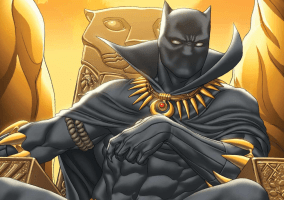
Black Panther is the only member of the Illuminati (on this list) who wasn’t in the original roster, but that wasn’t from lack of trying. Tony Stark recruited T’Challa to become an original member and the representative of Wakanda, but T’Challa turned Stark down. Black Panther would later join the Illuminati to face the Incursions.

Wakanda is one of the most prosperous nations on Earth and the main supplier of the world’s Vibranium. Black Panther is calm, fair, and reasonable while boasting no ego. In short, T’Challa differs from most members of the Illuminati. You can call Tony Stark, Mr. Fantastic, and Dr. Strange many things, but ego-less is not one of them.
T’Challa’s relationship with the others in the group can get strained because of the others’ lack of control. Black Panther isn’t easily manipulated. Again, Black Panther is another character I’d like to see more of in the MCU. If that includes a second incarnation of the Illuminati, so be it.

Professor X needs no introduction. He’s the founder and leader of the X-Men and fights for equal rights for mutant-kind. Charles Xavier boasts a level of intellect and wisdom that’s rarely matched. His ability to read minds, while usually not used against members of the group, proves vital when obtaining intelligence. Because of his role as peacemaker and arbitrator, Professor X often takes a prominent leadership role in the Illuminati.

Eventually, future events in the comics prevent Xavier from participating in the Illuminati, which leads to the group’s gradual demise. Yeah. The comic book version of the Illuminati didn’t dissolve because an omega-powered mutant turned rogue and killed them all in a fit of rage. Spoilers for Doctor Strange in the Multiverse of Madness.
Let’s have Bendis weigh in on why he included Professor X in the Illuminati:
“Leader of the X-Men, Charles Xavier is in the group on behalf of the mutant community.”
Fair enough. And with mutants playing a larger role in the MCU going forward, Professor X’s inclusion in a second Illuminati could prove fruitful.

Reed Richards (Mister Fantastic) is the one entry that doesn’t represent a group of people, a country, or both. Reed is only one of the smartest minds on the planet and the leader of the Fantastic Four. He has a long history in the Marvel Universe. Richards’s scientific capabilities are almost unmatched and his desire to see a better tomorrow makes him a prominent member within the Illuminati. He meshes well with Tony Stark, but the two can often butt heads because they can’t put aside their egos.
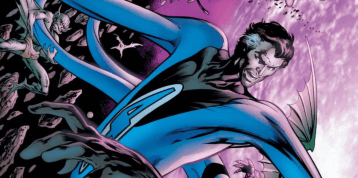
Reed even reasoned with Iron Man’s original proposition for the Illuminati as a “United Nations” of superheroes. Richards argued that the idea presented too many logistical and bureaucratic issues, but he also acknowledged the need for efficient information exchange between the world’s greatest minds. Mister Fantastic represents the scientific community of the Marvel Universe. He knows more about alternate realms and the cosmos than most, usually because he conducts reckless experiments and kicks a hornet’s nest or two. Annihilus wouldn’t know humans or Earth existed if Reed hadn’t bumbled into the Negative Zone. Thanks, Reed.
I can’t wait for the Fantastic Four to make their MCU debut. I wouldn’t mind more Mister Fantastic screen time. A second Illuminati could give us more FF goodness.
Which member of the Illuminati do you think should’ve made the list? Let us know in the comments. And wherever you are, I hope you’re having a great day.




Hey, hey! Kyra Kyle here. For those of us in the northern hemisphere, today is the first day of winter. Let’s celebrate by listing the Top 5 Ice-Powered Characters in comic books.

The first of several DC Comics characters on this list, Ice is the successor to the Ice Maiden. Tora Olafsdotter is the product of Norwegian experiments with Ice Maiden, hoping to replicate her powers. Tora’s arrival in the human world led the original Ice Maiden feeling superfluous. Ice Maiden returned to Norway, while Tora took up the name Ice and joined the Justice League International. She’s had an off-again, on-again relationship with Guy Gardner and developed a friendship with a heroine named Fire.

Leonard Snart, Captain Cold, started life as a gag villain, but over time, Cold has become an impressive DC Universe villain. Snart grew up in an abusive household and turned to a life of crime. He developed a cold gun. The gun has extraordinary power. It can create temperatures to absolute zero. He can freeze objects (and people), create ice patches and icicles, and create a “cold zones” which can slow down anyone, including the Flash.
Snart is one of the founding members of the Rogues. He’s joined the Ice Pack (a group of cold-powered supervillains) and the Secret Society of Super Villains.

There have been two women who bore the Killer Frost moniker. Crystal Frost was a scientist working in the Arctic when an accident gave her the ability to generate extreme cold. She became a supervillain, but her powers were slowly killing her. In an attempt to save herself, she consumed the heat of Firestorm and died.
Following Crystal’s death, her friend Dr. Louise Lincoln became Killer Frost. She recreated the accident that gave Crystal her powers and sought revenge on Firestorm. Able to transmute heat to cold and create gusts of wind and structures made of ice, Killer Frost has teamed up with villains like Captain Cold (who we saw in our previous entry) and Mr. Freeze, who happens to be our next entry.

Dr. Victor Fries (originally a mad scientist Mr. Zero) is another DC villain who began life as a joke villain. The 1990’s Batman: The Animated Series recreated him as a sympathetic villain in its Emmy-winning episode “Heart of Ice.” Mr. Freeze has a sad story behind his frozen smile. His wife Nora fell terminally ill. Dr. Fries dedicated himself to cryogenic research to save her. The head of the corporation funding Fries’s work shuts down his project, and Victor fights them to save his wife. A fight ensues, which results in Victor turning into Mr. Freeze.
Freeze can only survive in sub-zero temperatures. To survive, Victor built himself a cryo-suit. He also developed an ice gun (powered by diamonds) and pursued a life of crime. Freeze’s gun can freeze objects and people, while his suit gives him increased strength and durability. Combined with his intellect, Mr. Freeze is a formidable foe.

Iceman Bobby Drake started as the youngest member of the original X-Men. Most fans ignored him; he was the Spider-Man of that early X-Men team, cracking jokes and acting as the conduit for younger X-Men readers to view the team through.
Fast forward a couple of decades, and Bobby made his weekend appearance on Spider-Man and His Amazing Friends. I know it’s hokey, but I still enjoy watching this Saturday Morning cartoon on Disney+. Little did I, or any of those early readers of X-Men, know that Bobby may be one of the most powerful mutants. Iceman is an Omega-level mutant. As a frame of reference, Magneto is also an Omega-level mutant. Yikes!
Iceman can become ice in an organic form. By doing this, he can change his size and size, becoming an enormous ice man. He can also add spikes of ice on his knuckles or other body part, becoming a living weapon.
Hello, Winter! Let us know who you would add or remove in the comments. And wherever you are, I hope you’re having a great day.
 jkgeekly.com