

Evidently, September 6, 2025, is Beard Day. Who knew? Geekly has celebrated lesser-known observances over the past couple of months, like Shark Day. Why not comic book beards? Sorry, but I couldn’t help but make the Beard Hunter our featured image. Tee hee. Hey, hey, Geekly Gang! Kyra Kyle here. JK Geekly has ignored the important topic of beards in comic books for too long. We aren’t talking about the best comic book characters who wear beards; that’d be a different list. No, we’ll try to break down the best beards. Let’s get to these glorious flavor savers.

Typically, Lobo wears a mustache and mutton chops, which don’t qualify as a beard. I like it when Lobo sports a chin strap. He may always be the “Main Man,” but Lobo works best when he’s the “Mane Man.” What’s the point of surviving decapitation if you’re not sporting a yeard?
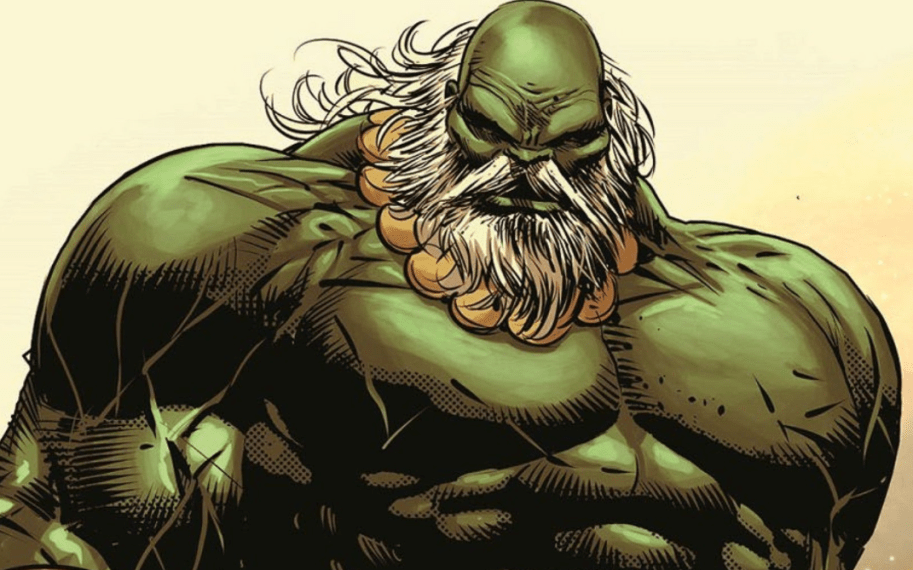
I admit it. I’m partial to Maestro. If you can no longer grow hair on your scalp, grow it on your face. Like I used to say, it’s just one’s hair migrating south for the winter. Look at Maestro’s luxurious beard. You can’t deny how magnificent his chin curtain looks. I wonder if he’d let me run my fingers through his Grizzly Adams. You know what, no. I want to keep my hands.
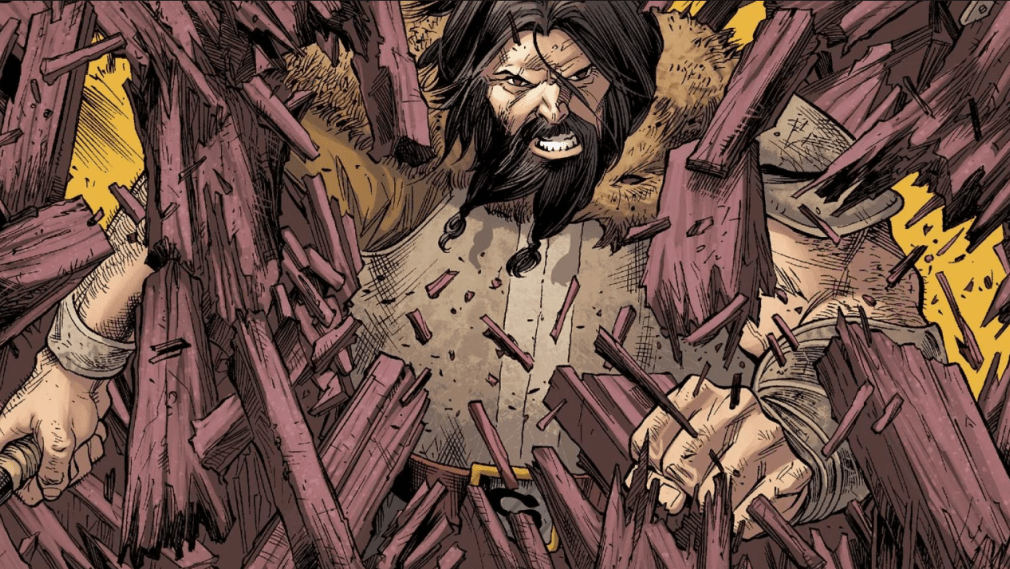
Vandal Savage has lived for a long time. I mean a long time. Centuries. Millennia. Savage has sported various beards throughout the years. Like Lobo, he’s even gone with mutton chops, but those count as beards. Savage looks best when he lets his grizzle flow. Vandal Savage has earned every touch of gray.

Aquaman is another comic book character who doesn’t always wear a beard, but let’s face it, he looks tough with a beard. Aquaman’s abilities make him one of DC Comics’ most powerful heroes, but he often gets clowned. That ended when he sported a lumberjack. There’s something about Arthur’s hair, all of his hair, flowing under the sea. Aquaman’s anchor shows true grit.

I almost went with Thor at this spot, but he’s another comic book character who isn’t always depicted with a beard. Instead, we’ll go with Marvel Comics’ Hercules, who rocked a hipster beard before it was cool. How long do you think it takes Hercules to topiarize that beard? Forget the muscles. You’ve got to give it up for a true beardionado.
I tried to put as many references to beards as I could in this post. Feel free to mention some of your favorite beard terms, and while you’re at it, add a few more comic book beards for this list. There are way too many great beards. Let’s share more hot fuzz. Happy Beard Day, Geekly Gang. Thank you for reading, and wherever you are, I hope you’re having a great day.


Eyes of Wakanda continues its run this month, so we’re celebrating by recounting the greatest Black Panther villains. Hey, hey! Kyra Kyle here. We’ve done the Top 5 villain treatment to several Marvel and DC Comics heroes. It’s only fitting that Black Panther receives his Top 5 Villains.
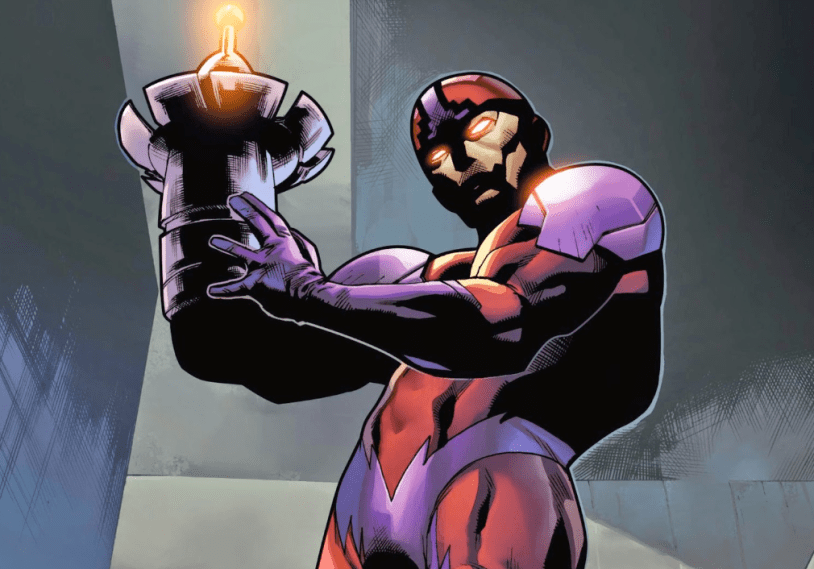
I feel like we have an honorable mention a lot in these lists, but Ulysses Klaw makes this list in this manner for a reason. He’s a Marvel Universe villain more than just a Black Panther villain. Sure, his origin has Wakandan roots, but Klaw has often battled the Fantastic Four and Avengers. Everyone should fear the man with a body of pure sound.
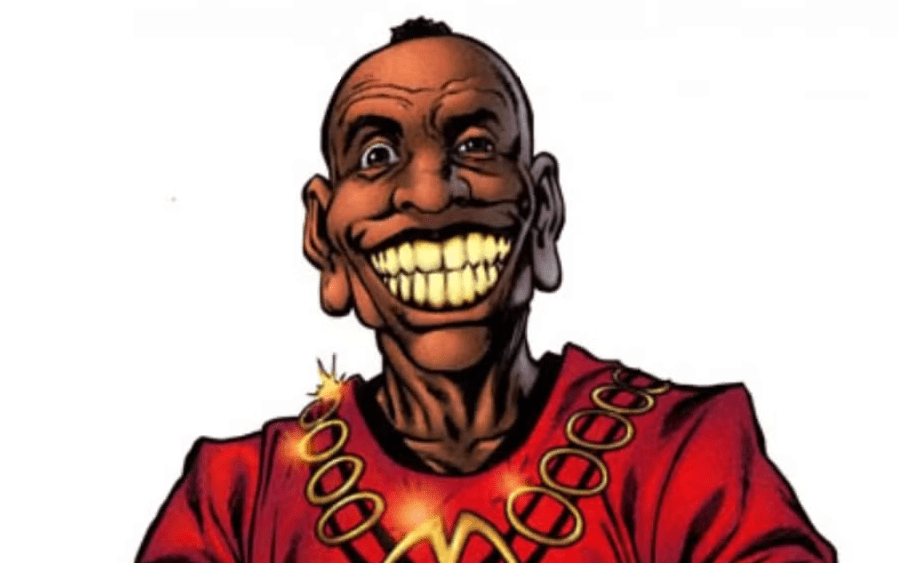
Achebe is the Joker to Black Panther’s Batman. Little is known about Achebe, only rumors. The most persistent of these rumors is that Achebe was once a Ghudazan farmer who helped rebel guerrillas from the neighboring country of Ujanka. He helped nurse the fighters back to health, but his wife fell in love with the rebel leader, and the rebels repaid his kindness by stabbing him 32 times, razing his farm, and taking his wife. What is known is that Achebe made a deal with Mephisto and serves as an emissary of Marvel’s version of the Devil. Achebe is ruthless, unpredictable, and a constant thorn in Black Panther’s side.
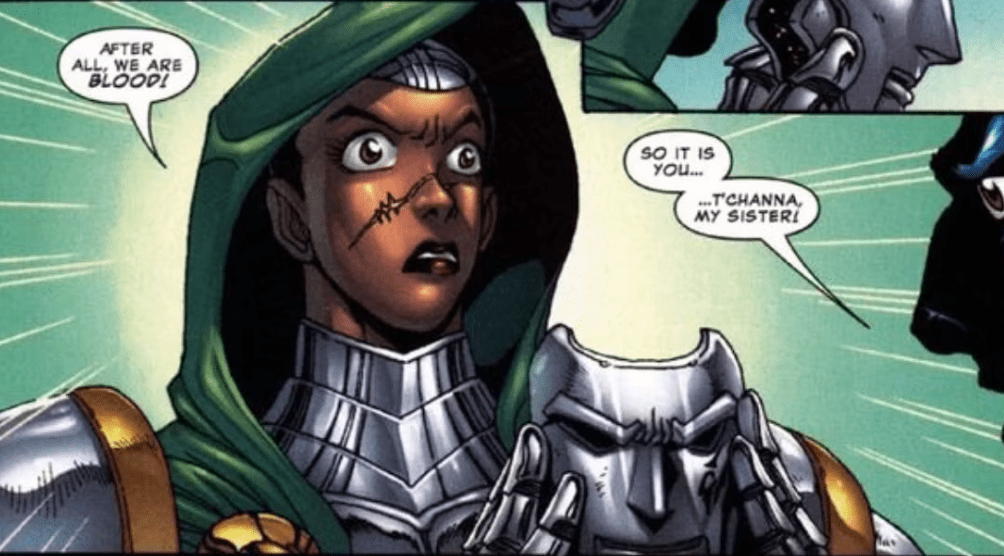
T’Channa is T’Challa’s sister in an alternate universe (Earth-2301). She and her siblings were beaten (she implies brutally) by T’Challa in a contest for Wakanda’s throne. As a result, she left Wakanda for Latveria, where she joined forces with Victor von Doom, until she became strong enough to overtake him as the new Doctor Doom. Honestly, I wouldn’t mind seeing T’Channa’s Doom in an upcoming Marvel project. She blends Wakanda’s technology with the magic she learned from Victor von Doom to become a menace, not just to T’Challa, but to the entire world.
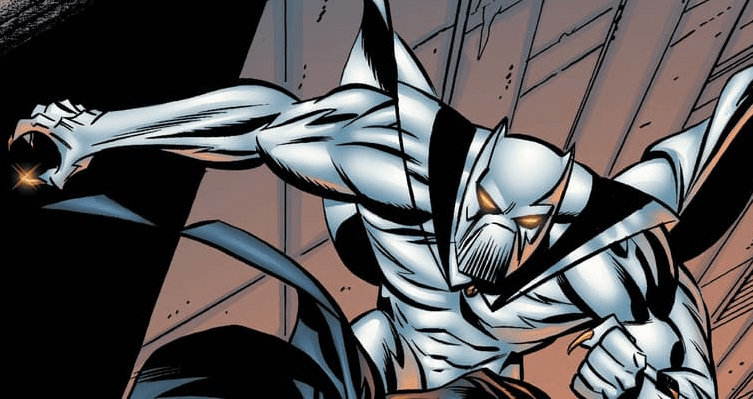
Hunter is T’Challa’s adopted brother. The two were close as children. They even competed in childish games like footraces. But Hunter was born a foreigner from the African nation Mohannda. He was the sole survivor of a plane crash before T’Chaka, T’Challa’s father, adopted him. Hunter doesn’t look like other Wakandans. He has light skin. When he was young, Hunter was the Wakandan envoy to European nations because he looked like them. This othered Hunter from his fellow Wakandans. Eventually, Ulysses Klaw killed T’Chaka and Ramonda (Hunter’s adoptive parents), and he was orphaned again. Hunter blamed T’Challa for his problems and sought revenge against Klaw. He strives to make the country of his birth, Mohannda, as technologically advanced as Wakanda. Hunter’s nationalism often puts him at odds with T’Challa.
The Winter Soldier has been nicknamed White Wolf in the MCU, so it’s unknown if a White Wolf will make an appearance. Fingers crossed that he will.

Born N’Jadaka, Killmonger needs little introduction. Portrayed by Michael B. Jordan, he exploded on the screen in the original Black Panther movie. Killmonger is a Wakandan exile and vows to take the Black Panther mantle. He often challenges T’Challa to ritual combat. Even when he dies, he finds ways to return. One of his most recent reanimations came in the form of an alien symbiote (like Venom). N’Jadaka will never rest until he’s taken his rightful place on Wakanda’s throne. Death can’t even stop him.

M’Baku’s alias Man-Ape has gone out of favor for obvious reasons. It’s problematic. While the MCU has mostly shown M’Baku as one of T’Challa’s allies, he rarely ends up on the same side as the Black Panther. While T’Challa controls the Panther cult, M’Baku is head of the Gorilla cult (hence his alias Man-Ape). In the comics, M’Baku detests Wakanda’s technological revitalization. He seeks to outlaw technology and return the nation to its mystical roots. Often, M’Baku will use greater conflicts to undermine Wakandan leadership. He’s cunning and willing to ally himself with anyone he thinks will grow his standing within Wakanda. Occasionally, that will be Black Panther. But often, he’ll choose Black Panther’s opposition.
I’d love to see Winston Duke’s M’Baku receive more shine in the MCU. I also like how the MCU changed his alias to Great Gorilla. That works.
Did we get the list right? Let us know who you would add or remove in the comments. And wherever you are, I hope you’re having a great day.



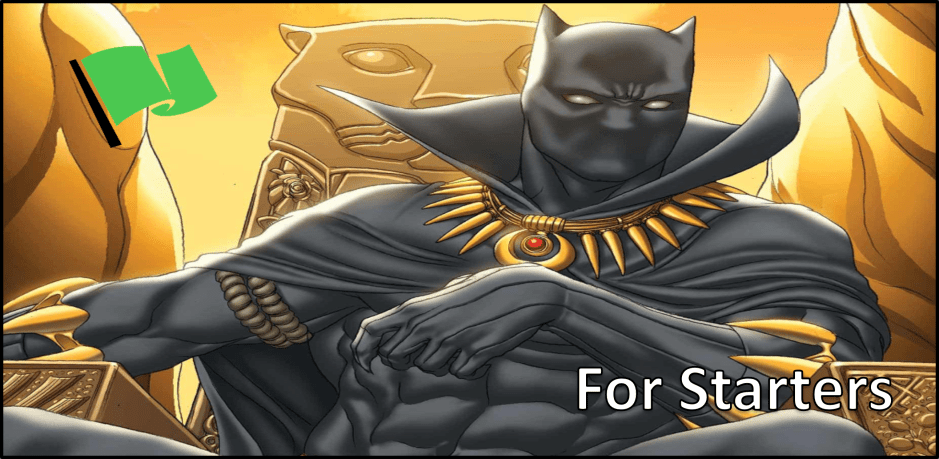
Black Panther has existed since the mid-Sixties, but Marvel produced some of the best Black Panther stories after 2000. Which Black Panther stories should you read first?
Hey, hey! Kyra Kyle here. As you can guess, we’re talking about Black Panther starter stories today. Like we’ve been doing for the past few entries in this series, we’ll split these stories into single issues and story arcs. Today, we’ll begin with single comic book issues. Enjoy!
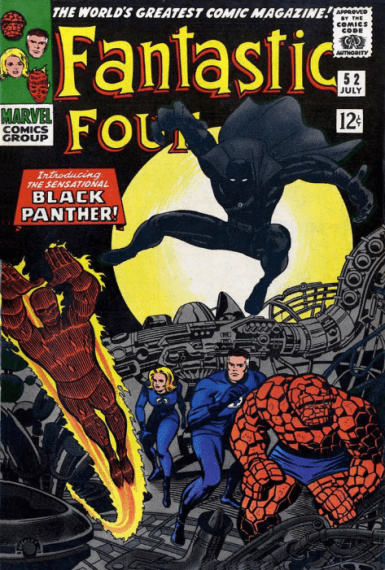
I considered including this issue and a few others as part of a story arc. The next issue would include vibranium’s first mention and sets the stage for Ulysses Klaw to make his first appearance, but I chose to stick with Black Panther’s first appearance. “Introducing The Sensational Black Panther” centers around the Fantastic Four being invited to Wakanda. The enigmatic leader sends a hover car to take Marvel’s family to his homeland. The Fantastic Four agree, and when they arrive in Wakanda, they must survive a robotic jungle and the Black Panther himself. By themselves, the Fantastic Four are no match for Black Panther, but the team joins forces and unmask their assailant.
It turns out that T’Challa (Wakanda’s leader who invited the Fantastic Four to Wakanda) and Black Panther are the same. Black Panther says he only wanted to test the fours’ abilities and meant no harm by his attack. “Introducing The Sensational Black Panther” does a good job of showing Black Panther as formidable. Like I said, many key Black Panther elements are revealed in future issues, but “Introducing The Sensational Black Panther” is a great place to start reading.

“Death Calls for the Arch-Heroes” is another issue that sets up Black Panther; this time, it’s Black Panther’s first appearance as an Avenger. Until this issue, Black Panther served as an occasional Avengers ally. “Death Calls for the Arch-Heroes” begins with Black Panther visiting Avengers HQ to find the Avengers dead. They aren’t actually dead; they’re in a coma. Since Black Panther is an outsider, he gets blamed and taken into custody. Black Panther breaks out of jail, learns that the Grim Reaper (who wants revenge for the death of his brother, Wonder Man) is behind the plot. The two fight, Black Panther wins, reverses the effects of Reaper’s coma weapon, and then becomes a full-fledged member of the Avengers.
“Death Calls for the Arch-Heroes” marks an important milestone in Black Panther’s development. Prior to this issue, Black Panther seldom left Wakanda for long. This issue turned Black Panther into a global figure, and it put Wakanda on the map.
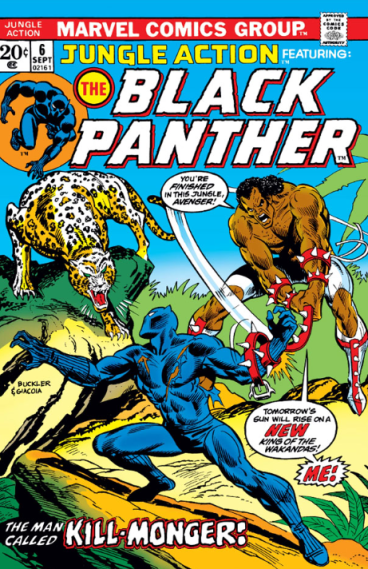
It took a while for Marvel Comics to see potential in Black Panther. Sure, Black Panther showed up in plenty of Fantastic Four comic books. He was even a card-carrying member of the Avengers for half a decade by this point, but he was relegated to the edges of comic book stories and didn’t have his own title. At the same time, there was another Marvel comic book named Jungle Action that rubbed proofreader (at the time) Don McGregor the wrong way. Jungle Action featured white people saving Africans or white African people being threatened by black African people. McGregor demanded that Marvel feature a black African hero. He turned to the seldom-used Black Panther.
McGregor’s initial run on Jungle Action #6-18 (Panther’s Rage) is the birth of who we know as Black Panther. T’Challa returns to Wakanda to find his homeland torn by civil war. A revolutionary leader and terrorist named Erik Killmonger had returned to Wakanda and threatened T’Challa’s claim to the throne. Yes! Panther’s Rage is the first appearance of Killmonger. To say Panther’s Rage was groundbreaking is an understatement.
More than a decade before Watchmen, Panther’s Rage was the first graphic novel. It’s been collected and reprinted numerous times, and it’s worth the read. Writer Don McGregor was no stranger to pushing boundaries. Years before Panther’s Rage, he wrote a story that featured comic books’ first interracial kiss. If you want to know Black Panther better, Panther’s Rage is a great place to start.

After his legendary run on Jungle Action, McGregor left Black Panther for over a decade. He returned to the character with Marvel Comics Presents. The Marvel Comics Presents title was an odd throw-back to early Marvel titles. Anthology series like Tales of Suspense (which featured Iron Man’s first appearance) and Journey into Mystery (which included Thor’s first appearance) had fallen out of favor. Marvel Comics Presents featured stories for multiple characters. We’re interested in the Black Panther storyline, Panther’s Quest.
Panther’s Quest is another McGregor epic. Following rumors that his mother (whom he had never known) may still be alive, T’Challa conducts a stealth mission in South Africa. What unfolds is a harrowing tale of social injustice mixed with intrigue and plenty of action. Always willing to broaden comic books’ horizons, McGregor tackled story elements like Apartheid and the discrimination someone who looks like Black Panther faces. In short, Panther’s Quest is another Black Panther must-read.

The Client marks the first entry for Christopher Priest on this list. Priest is another writer synonymous with Black Panther. Priest is also the first black writer and editor in mainstream comics. He’ll show up time and time again on this list. We couldn’t include all of Priest’s works. The two series of his that didn’t quite make our list are both named Enemy of the State. You should give them a read as well. Getting back to our entry, The Client makes this list because it introduces several key Black Panther figures like Okoye, Zuri, and Nakia. And the story does a great job of balancing the odd space Black Panther occupies.
Black Panther sets up refugee camps and offers political asylum for people fleeing ethnic wars, but at the same time, he pushes for systematic change and battles street crime. T’Challa is a man attempting to do it all. But that’s why a lot of Black Panther’s key support system (like Okoye) are introduced. Within The Client’s pages, Priest develops what it means to be Wakandan.
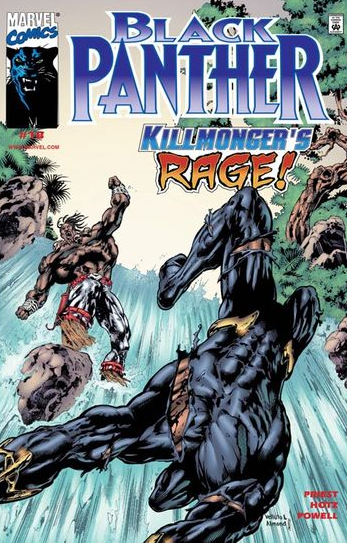
Christopher Priest pushed the Black Panther forward, but he also paid homage to what came before. Killmonger’s Rage is a fitting spiritual successor to Panther’s Rage. Priest honors McGregor’s story by exploring T’Challa and Killmonger’s relationship. Priest’s Killmonger is a Wakandan corrupted by Western values. He’s the antithesis of T’Challa and Wakanda. Black Panther must face an intriguing mirror version of himself. Killmonger’s Rage shows what would happen if T’Challa rejected his Wakandan roots. 2018’s Black Panther uses a storyline or two from Killmonger’s Rage.
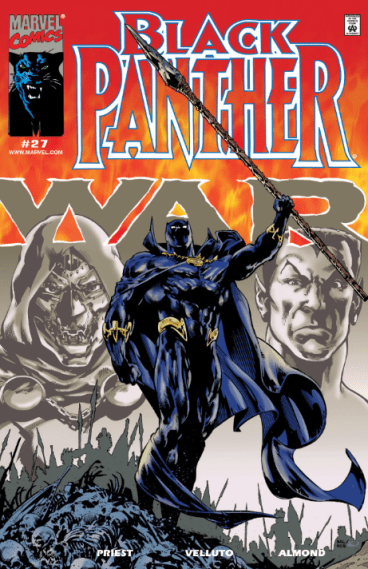
The world is on the verge of World War III, and Black Panther serves as mediator. Sturm Und Drang shows why T’Challa is different from most superheroes. He’s the leader of a country. Tension exists between the underwater nation of Lemuria and the surface world. Klaw works behind the scenes to stir up tensions among various nations; his machinations unnecessarily draw other countries into the mix. Black Panther advocates for peace, but at the same time, he refuses to back down or show any signs of weakness.
Sturm Und Drang explores Black Panther’s leadership during wartime. He must deal with group leaders like Namor, Magneto, and Doctor Doom. Sturm Und Drang is also the final Priest story arc on this list. He had an amazing run on Black Panther. You can’t go wrong if you see Black Panther and Christopher Priest. If you’re interested in reading Black Panther, Priest did more than anyone in shaping this character and showing his many facets. Priest’s run is chef’s kiss good.
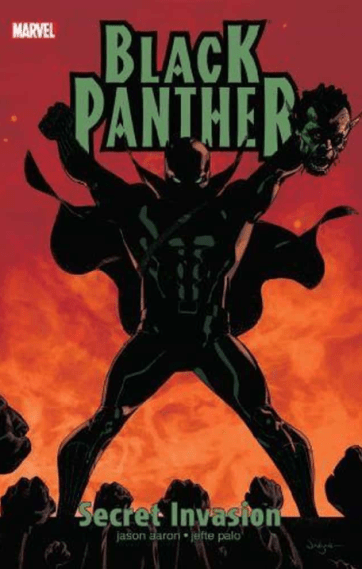
See Wakanda And Die might be a slight understatement of a title. This story acts as a standalone story and a tie-in for Marvel’s 2008 event, Secret Invasion. I know. I know. The Secret Invasion television series almost ruined the MCU. Believe me, the comic book story was handled with more care. But we’re talking about See Wakanda and Die. An army of Skrulls has come to Wakanda to claim all the country’s vibranium. But Wakanda won’t go without a fight.
This action-packed story shows two complementary sides of the Black Panther. First, he’s a leader, shown through tactical decisions and care for his people. Second, he’s a hero, placing himself on the frontlines. These two sides merge to make a satisfying read with excellent pacing.
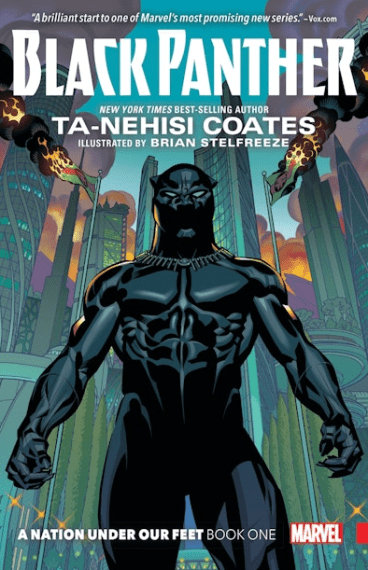
A Nation Under Our Feet is the most philosophical story on this list. It explores Wakanda’s identity, tensions, traditions, and where they fit in modern society while looking toward the future. This examination extends to the monarchy. Does Wakanda still need the Black Panther?
These topics make sense, considering A Nation Under Our Feet’s writer Ta-Nehisi Coates. Coates is an American journalist and activist who often writes about cultural, social, and political issues, specifically African Americans and white supremacy. Coates authored “The Case for Reparations,” so Wakandan story that examines its past while looking at how to move forward is something that Coates has immense experience.
But A Nation Under Our Feet also features the art of Stelfreeze and Sprouse, who present a brilliant Afrofuturism that has a touch of science fiction but is steeped in African art and culture. The result is A Nation Under Our Feet becoming a comic you can lose yourself in as you explore the different parts of Wakanda.
Those are the stories that made our list. Like I said, I could’ve included many more Priest Black Panther stories, and anything by Coates is a great read. Let us know which Black Panther stories you’d add to this list in the comments. Thank you for reading, and wherever you are, I hope you’re having a great day.
Last month Geekly discussed the X-Men’s top 5 villains. Marvel’s first family, the Fantastic Four, has as many contenders for their top five as Marvel’s merry mutants. Hey, hey! Kyra Kyle here. We’re back with another Top 5 Villains List. With Fantastic Four: First Steps releasing later this week, let’s discuss the Fantastic Four’s top five villains. We know one that one of these villains will make an appearance in Fantastic Four: Four Steps. Who knows? More than one of these villains will make their MCU debut soon.

The Frightful Four is a cheat; they’re a supervillain group. Supervillain groups began with Spider-Man’s Sinister Six in 1964. The Frightful Four debuted the following year. Members of the Frightful Four have also served in the Masters of Evil (who made the Avengers Top 5 Villains list) and the Sinister Six. In fact, Sandman is an original member of the Frightful Four and the Sinister Six. The Frightful Four have had a rotating roster, but Wizard (the team’s founder) has stayed the team’s one constant.
The Frightful Four takes its lead from its founder, the Wizard. Dr. Bentley Wittman is a twisted version of Reed Richards. But while Doctor Doom (another twisted version of Reed Richards) combines arcane knowledge with technology, the Wizard combines technology with smoke and mirrors. Think of the Wizard as a beefed-up Mysterio.

Our first Fantastic Four villain is another twisted version of Reed Richards. Maker is the Mr. Fantastic of the Marvel Ultimate Universe. In this universe, Reed proposes to Sue after Sue’s father dies. This universe’s Sue rejects Reed. While somewhat sympathetic (the Ultimate Universe’s Reed Richards witnesses the family he and Sue could’ve had while visiting the main Marvel timeline), Reed gives in fully to his selfish tendencies. He turns his anger on his would-be family by torturing Sue. Subsequently, the Human Torch attacked Reed with his hottest flame, which permanently scarred Reed’s face. After a brief exile in the Negative Zone, Reed emerged as the Maker.
Maker vows to mold the world in his image of perfection. The helmet he wears isn’t just for show. It adjusts to his head. Maker will stretch his brain, learning as much as he can of the universe’s secrets. Maker serves as a warning to Reed Richards. He must not give in fully to his self-centered nature.
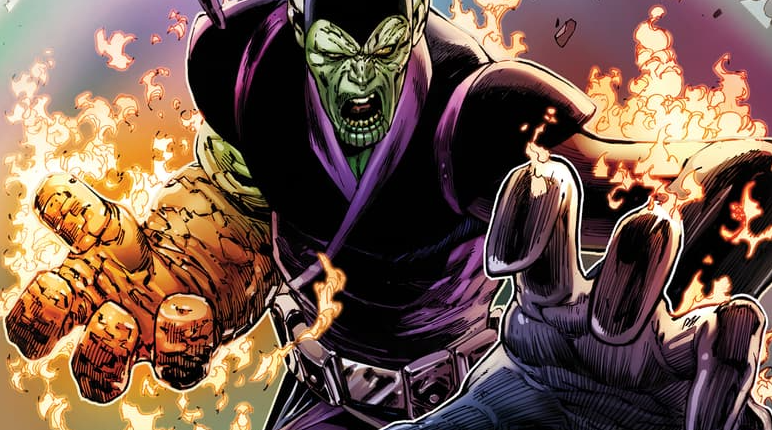
Super-Skrull is an alias used by multiple Marvel comics characters. Essentially, Super-Skrull can refer to any enhanced member of the Skrull race. But when comic book fans refer to “Super-Skrull,” they typically mean Kl’rt, who appeared in Fantastic Four #18, and Kl’rt is the “Super-Skrull” who takes this spot. The Skrulls imbued Kl’rt with the Fantastic Four’s powers. Kl’rt possesses all the Fantastic Four’s powers. He’s an obvious threat.
But Kl’rt’s dominance runs deeper. Typically, he has better control over his powers, and his powers are improved versions of the Fantastic Four’s. Since he’s a Skrull, Kl’rt has natural shapeshifting abilities. Throw in hypnosis, and one can see why Super-Skrull Kl’rt was chosen to pave the way for a new Skrull Empire invasion. While Super-Skrull poses a threat to the Marvel universe as a whole, Kl’rt was designed to take on the Fantastic Four and has been a constant thorn in the side of Marvel’s first family.

Annihilus is another villain who poses a threat to the entire Marvel universe. Spoiler alert: The same can be said of the remaining villains on this list. Annihilus is an interdimensional insectoid conqueror and tyrant hailing from the Negative Zone, a pocket dimension located within Marvel’s main timeline. He attempted to take over the Negative Zone by wielding the Cosmic Control Rod. In classic Reed Richards fashion, he postulated that he needed the Cosmic Control Rod to treat Susan Richards during her pregnancy, and instead of asking for the rod, he stole it from Annihilus. The team intended to return the rod when they were done using it, but Annihilus took exception to the theft. Leave it to Reed to kick a hornet’s nest.
Since their first meeting, Annihilus and the Fantastic Four have been uneasy allies and foes on various occasions. Annihilus works best as an irritant to the Fantastic Four. The animosity has led to some stellar storylines that get personal.
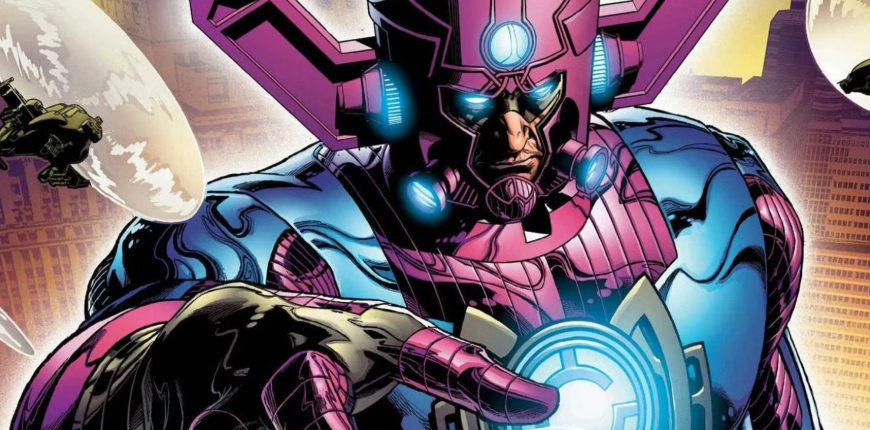
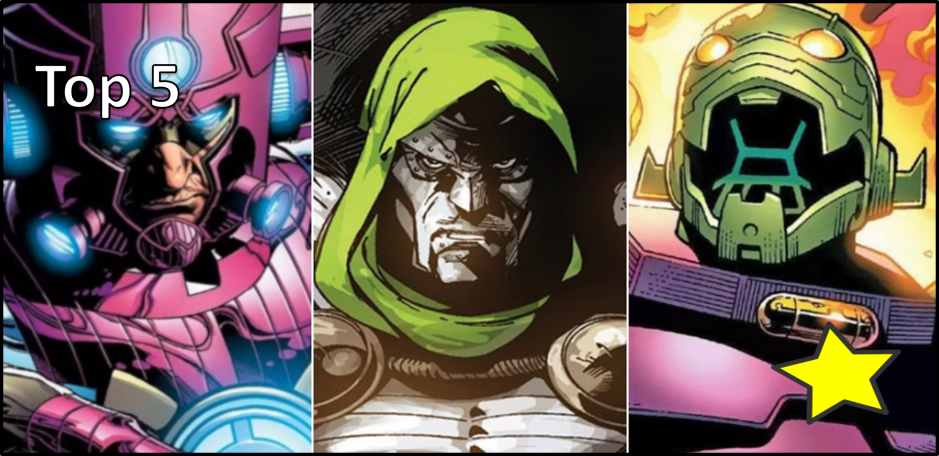
Galactus needs little introduction. He’s the big guy in blue and purple. Even if Galactus needed an introduction, he has countless heralds to do that for him. Galactus is more of a force of nature. He needs to feed on a planet’s essence to survive. Earth and Galactus happen to collide, and when they do, the Fantastic Four serve as Earth’s guardians.
But Galactus’s link to the Fantastic Four (and the Marvel universe) runs deeper than the surface. Galactus wields the power cosmic; the Fantastic Four were transformed by cosmic rays, originating from the power cosmic. Galactus also happens to be the last surviving member of the previous multiverse, the Sixth Cosmos. Due to a plague named the Black Winter, the universe began dying, and Galan (Galactus before he became Galactus) searched the cosmos to find a cure. He failed. Galan proposed to the remaining survivors that they die with glory by piloting one of their starships into the heart of the Cosmic Egg. Everyone aboard the vessel died, except for Galan. He fused with the Sentience of the Sixth Cosmos to become Galactus, the Devourer of Worlds.
I love Galactus’s origin. It humanizes him. He’d easily take the top spot if it weren’t for one Fantastic Four villain.
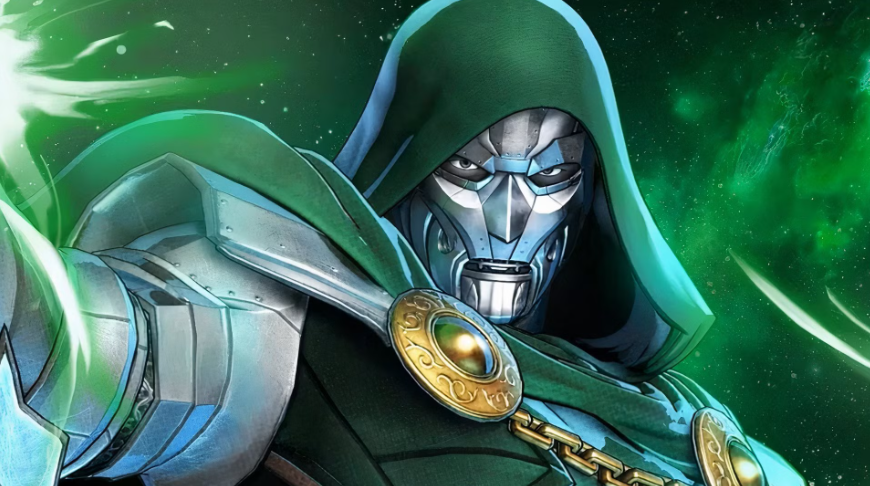
Obviously, Doctor Doom takes the top spot. As mentioned before, Victor von Doom blends magic and science to become one of the Marvel universe’s greatest threats. He rules Latveria with a literal and figurative iron fist and intends to do the same with the rest of the world. Doom believes the world/universe needs a ruler smart and cunning enough to lead. He happens to be the best person for the job.
Even though Doctor Doom threatens the universe, he’s the perfect Fantastic Four villain because of his ties to Reed Richards. The two were college rivals. Doom blames Reed for the accident that cost him his face and drove him to the far reaches of the earth, where he studied magic to coincide with his brilliant scientific mind. Doctor Doom is forever linked to the Fantastic Four. He’s iconic. He’s a threat as big—if not bigger—than Thanos, and I can’t wait to see what the MCU has in store for this character.
Did we get the list right? Let us know who your favorite Fantastic Four villains are in the comments. Thank you for reading, and wherever you are, I hope you’re having a great day.
 jkgeekly.com