
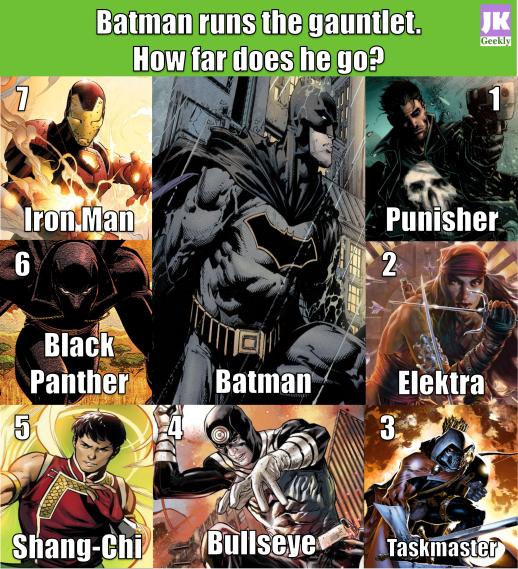
Batman Runs the Gauntlet
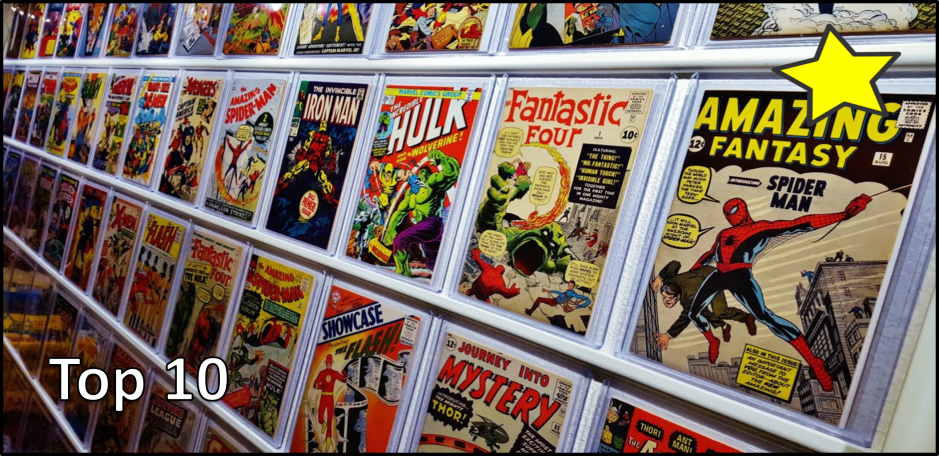
Hey, hey, Geekly Gang! Kyra Kyle here. We’ve tackled the idea of live-action television shows based on comic books over a decade ago with Top 5 Live-Action TV Shows Based on Comics. It’s a good idea to update this post. Our reasoning is three-fold: 1, it’s been long enough and more shows have been produced since 2015; we increased the number of shows on this list from five to ten; and Geekly forgot about a few shows inspired by comic books in the previous list. Whoops! Before we get into the shows, let’s set down some ground rules for this list.
1: Cultural relevance will play a role, as will the show’s overall quality.
2: Some of these shows don’t stack up in cinematic quality even with their contemporaries, but they’re outstanding just the same.
3: We’ll have to stick with one show from a franchise (or specific character) because we wouldn’t want a list that includes only Batman and Spider-Man.
Without further ado, let’s get to the top 10 live-action television shows based on comic books.
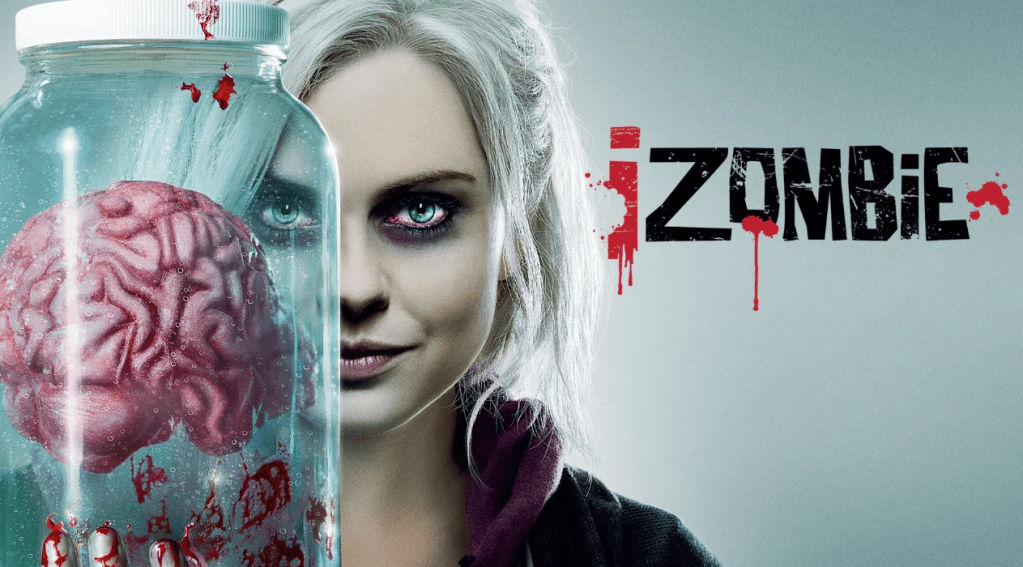
I’ll admit it. I have a soft spot for iZombie. Geekly covered the show when it first aired, and I like the combination of zombies and weekly detective work. Throw in some ongoing drama and a heavy dose of comedy, and you have one addictive show. iZombie won’t be too many people’s first choice for live-action television show based on a comic book, and that’s why I wanted to mention it here. It doesn’t hurt that iZombie’s intro theme, “I’m Already Dead” by Deadboy & The Elephantmen lives rent-free in my head.
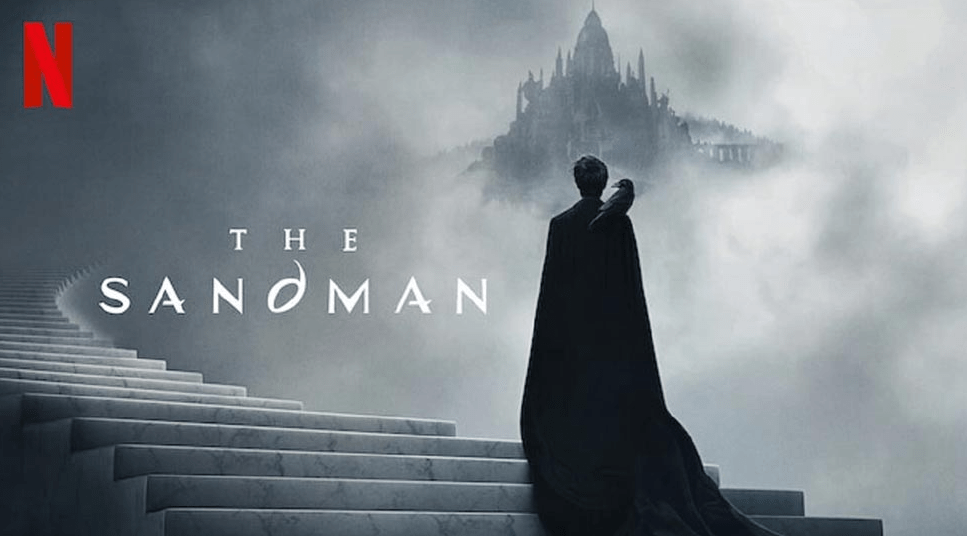
Sandman adapts the source material in a fresh way that also remains faithful to the comic book. Tom Sturridge does the unthinkable and captures the essence of Dream. Kirby makes a great Death. Mason Alexander Park is Desire. I could go on. Sandman has a stellar cast, but it misses our list for a couple of reasons. 1) The Netflix effect. Netflix used to be The Place for creative freedom; now, it’s a place for rehashed ideas, and any original show is likely to get canceled too soon and have little chance of another streaming platform picking up the franchise. 2) The Neil Gaiman effect. I have yet to watch Sandman’s second season because of the ick associated with Gaiman. Still, Sandman deserves a mention.
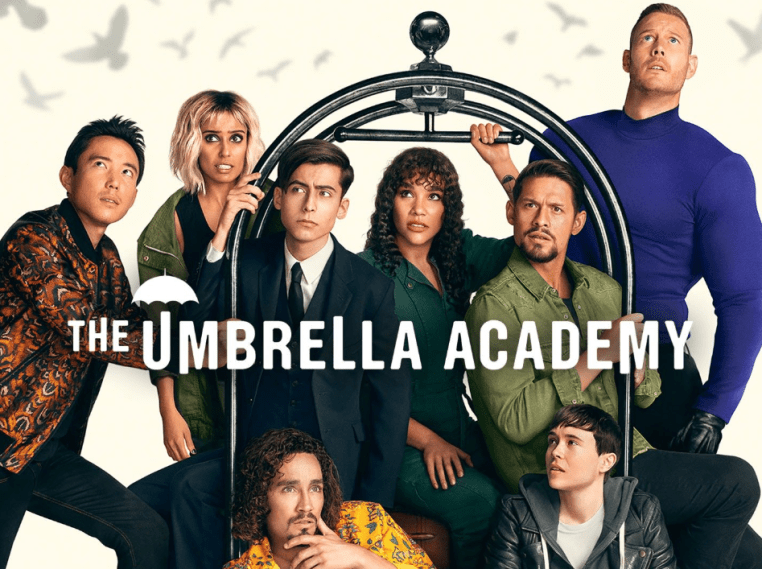
The Umbrella Academy had a brilliant five-year run on Netflix. As one of the more recent entries on this list, I struggled to place it any higher on this list. The other thing going against The Umbrella Academy is that it’s a Netflix show. The Netflix effect claims another victim. Time could see The Umbrella Academy rise in the standings, because there’s a lot to love.
The Umbrella Academy blends quirky humor, bizarre storylines, balls-to-the-wall action, and pitch-perfect character development. The third season incorporated Elliot Page’s gender identity respectfully and made it work for the show’s story. It also doesn’t hurt that the show is based on the comic book of the same name by My Chemical Romance lead singer Gerard Way. That gives The Umbrella Academy an extra layer of cool.
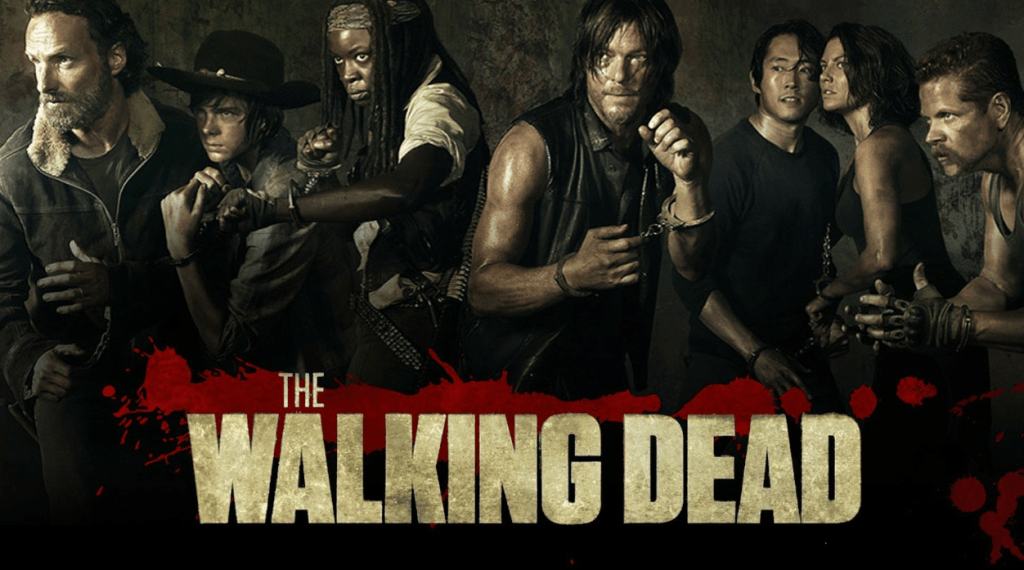
The Walking Dead made our last list over a decade prior, but the show may have hung on for too long. Those early seasons of The Walking Dead were some of the small screen’s best. Despite any flaws, this show focused on interpersonal relationships. The drama within The Walking Dead stemmed from its human characters. And let’s face it. The Walking Dead ignited zombie-mania. You can’t take a breath without huffing on a walker.
The Walking Dead started an empire. I’ve lost track of how many spinoff series this show spawned: Fear the Walking Dead (2015-23), The Walking Dead: World Beyond (2020-21), Tales of the Walking Dead (2022), The Walking Dead: The Ones Who Live (2024), The Walking Dead: Dead City (2023-present), and The Walking Dead: Daryl Dixon (2023-present). The Walking Dead became so popular that a secondary character from the original series, Daryl Dixon, got his own spin-off. Talk about cultural relevance.
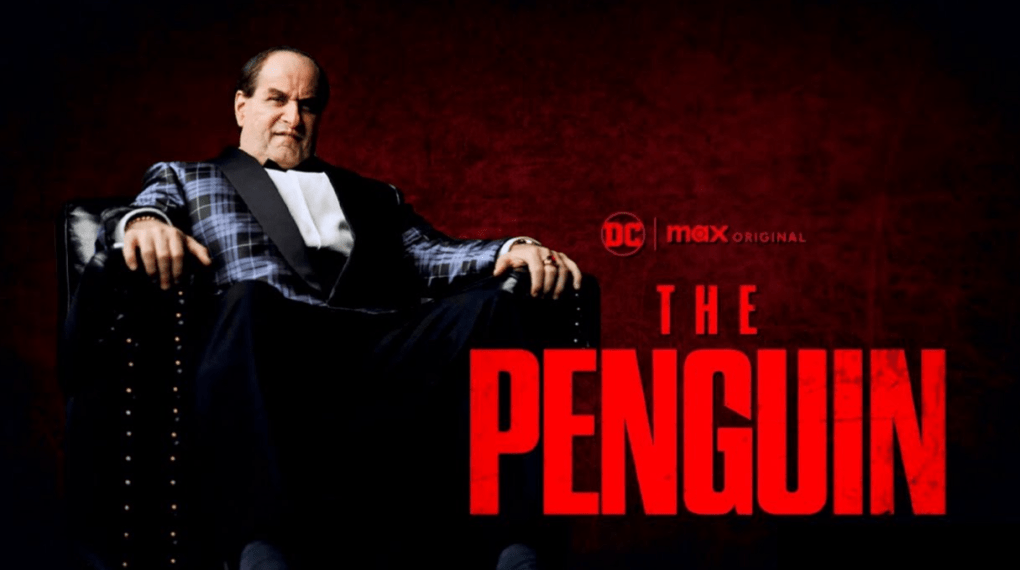
Despite bearing the name of one of Batman’s iconic villains, The Penguin doesn’t even feel like a television show based on a comic book. The Penguin borrows a lot from Breaking Bad and The Sopranos. Watching Oz Cobb ascend–or descend, depending on the lens you use to view his story–to mafia royalty was a joy to watch. Cristin Milioti’s turn as Sofia Falcone was excellent. Sofia Falcone (from The Long Halloween fame) was another comic book character I didn’t expect anyone to pull off well, but Milioti is fabulous in The Penguin.
When I first learned The Penguin got greenlit, I wondered what more there was to say. Apparently, a lot. The Penguin took an interesting enough character from 2022’s The Batman and built a mythos around a character that didn’t receive enough love on the big or small screen. Penguin is one of my favorite Batman villains, and The Penguin captured a certain slimy iteration of the character. The Penguin is well worth watching.

Arrow is another show that stayed a little too long. It suffered the fate of many CW shows and descended into melodrama. After a season, Olicity (the shipping of Oliver Queen and Felicity Smoak) turned my stomach. But Arrow started strong. Manu Bennett may still be the definitive Slade Wilson/Deathstroke, and the “You have failed this city” and Ollie’s time on the island storylines of the first few seasons proved that a lesser DC Comics character like Green Arrow could anchor a show. Not just a show, an entire franchise. Arrow began the Arrowverse.
The Flash may have taken over as the flagship title for the Arrowverse, but Arrow led to The Flash, Supergirl, Legends of Tomorrow, Black Lightning, Batwoman, and the web series Vixen and Freedom Fighters: The Ray. I don’t know when or if I’ll return to Arrow, but I have fond memories of early Arrow seasons. And with Arrow’s cultural impact, no one can deny its place among the top 10 live-action television shows based on comic books.
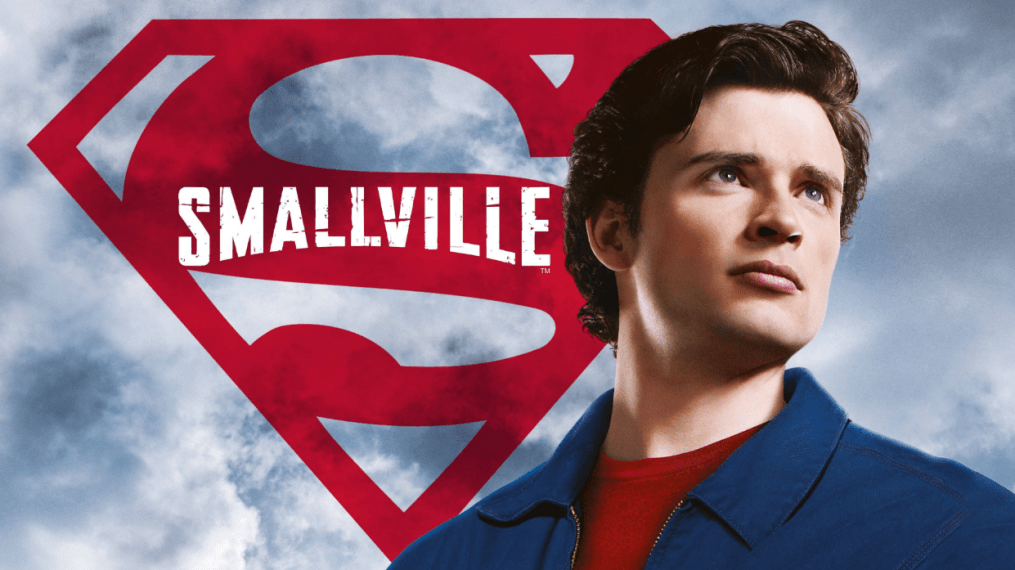
We go from Arrow, which spawned the Arrowverse, to Smallville, which introduced a wider audience to Green Arrow in the first place. Justin Hartley’s Green Arrow guest-starred in numerous Smallville episodes. In fact, Smallville introduced numerous DC Comics Universe characters to television viewers in the early 2000s. I’m still waiting for another actor to take on the role of Booster Gold.
Smallville’s premise wore thin for some people. The show features a Clark Kent before he becomes Superman. In fact, Smallville had the mandate “No Tights, No Flights.” Viewers had to wait a decade for Superman to make his first flight, and by that time, Smallville had seen Aquaman, Green Arrow, and even Booster Gold have a turn in full costume. Even if the “No Tights, No Flights” mandate rubbed you the wrong way, you can’t deny Smallville’s significance.
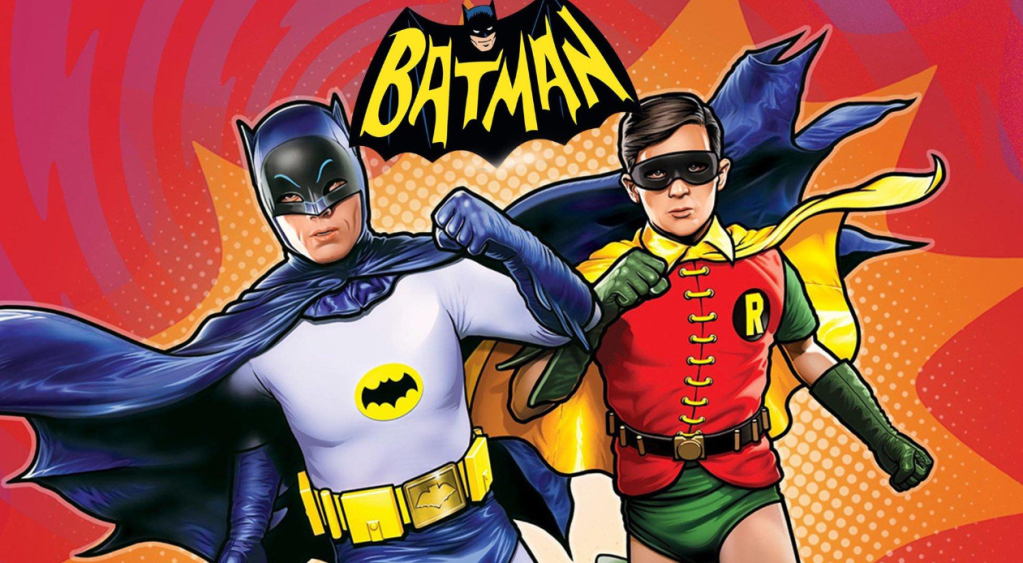
We go way back in time for this next entry. Batman may not have aged the best, but that was never the point. Batman was pure camp. It resurrected characters in the comic book. The Riddler hadn’t been seen in a comic book since the 1950s. The 1960s Batman made The Riddler relevant. Few live-action television shows based on comic books can make that claim.
The Batman-mania of the 1960s proved there was an appetite for comic book media beyond the page. And Batman featured a lot of A-list actors. Cesar Romero, Burgess Meredith, Frank Gorshin, Vincent Price, and many others read like a who’s who of character actors. Batman rejuvenated and launched numerous acting careers. Be honest. When you saw the picture of Batman above, did you not hear Batman’s theme?
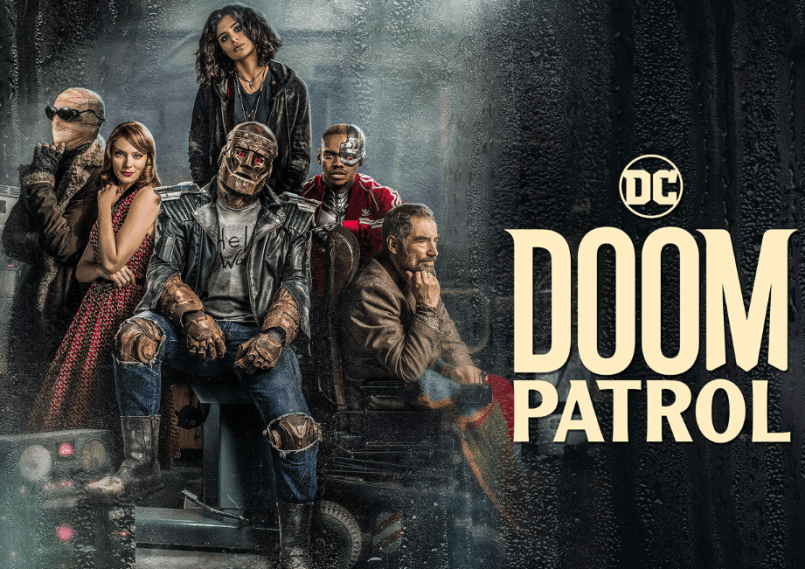
Doom Patrol. Doom Patrol? How is Doom Patrol this high? I didn’t expect to like Doom Patrol as much as I did, but it’s easily one of the DCEU’s best projects. Doom Patrol may have released just before The Umbrella Academy, but the source material, the Doom Patrol comic book, inspired The Umbrella Academy, so that’s one of the reasons Doom Patrol makes it this high on the list.
The other reason is Doom Patrol resurrected Brendan Fraser’s career. Fraser’s turn as Cliff Steele/Robotman was fantastic. Fraser’s final scene in Doom Patrol never fails to turn on the waterworks. I bawl every time I watch it. The rest of Doom Patrol’s cast is top-notch. I like Matt Bomer in most things, and Timothy Dalton is an acting legend. But I need to give Diane Guerrero’s performance as Crazy Jane some praise. It may be a low bar, but Crazy Jane may be the best representation of dissociative identity disorder I’ve seen in a television show or movie. And I hope Joivan Wade gets another chance to portray Victor Stone/Cyborg. He was another stand-out. Everyone was. I liked April Bowlby’s portrayal of Rita Farr/Elasti-Woman. Doom Patrol is one of the few shows on this list that I’ll happily rewatch.
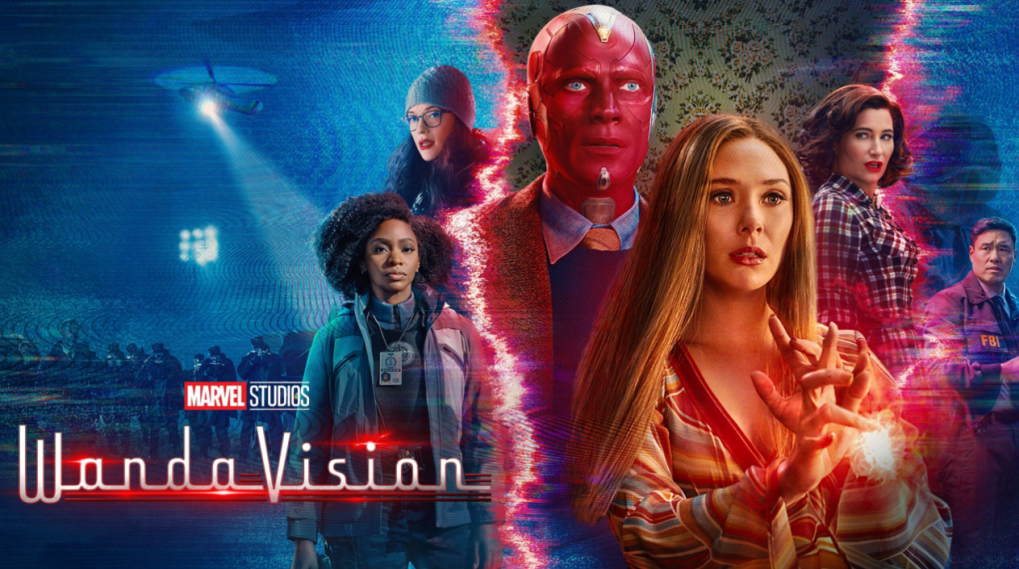
Marvel’s Disney+ shows had so much promise after they leapt off the screen with WandaVision. Sure, WandaVision is a continuation of the MCU, but the exploration of Wanda Maximoff’s mental state can’t be overstated. Kathryn Hahn had a star turn as Agnes/Agatha, and the rest of the cast was a joy. WandaVision is another show I’ll rewatch. Its use of sitcoms through the decades felt organic; it was more than nostalgia.
But there were plenty of call-outs to sitcoms and MCU properties. Evan Peters, pseudo-reprising his role as Pietro Maximoff was a nice touch. WandaVision did the source material proud. Hints of House of M (comic books) lead into Vision Quest (also from the comics), which will become another WandaVision spinoff Disney+ series. Vision Quest will mark two spinoffs to date. The first was Agatha All Along. I cringe at Wanda’s descent into madness, but I can’t look away.
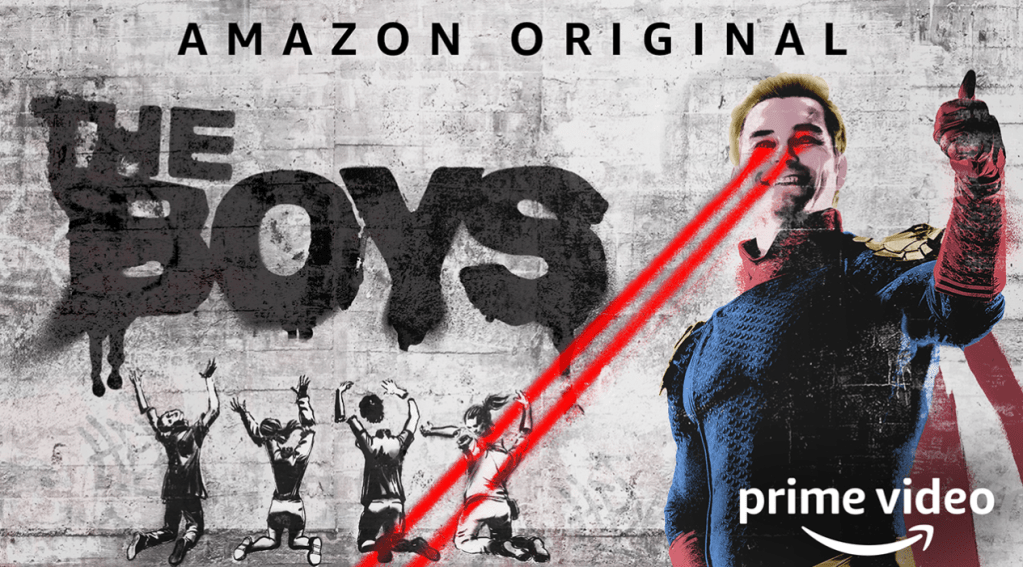
The Boys is the rare television show that’s better than its source material. The Boys comic book was okay. A bit gory and over-the-top, but okay, and let’s not get this twisted, the original comic book was written at the height of the Bush Administration, and it shows. The world has changed. The Boys television show adapted with it. And despite that, The Boys didn’t lose sight of what made the original comic book fun. That and Homelander scares the poop out of me. Seriously, Antony Starr’s Homelander haunts my dreams.
Writing on The Boys strikes a delicate balance of mixing over-the-top violence, black humor, deft plots, and character work. The Boys can be a big, dumb superhero show, but it also be a nuanced look at humanity and how we deal with trauma.
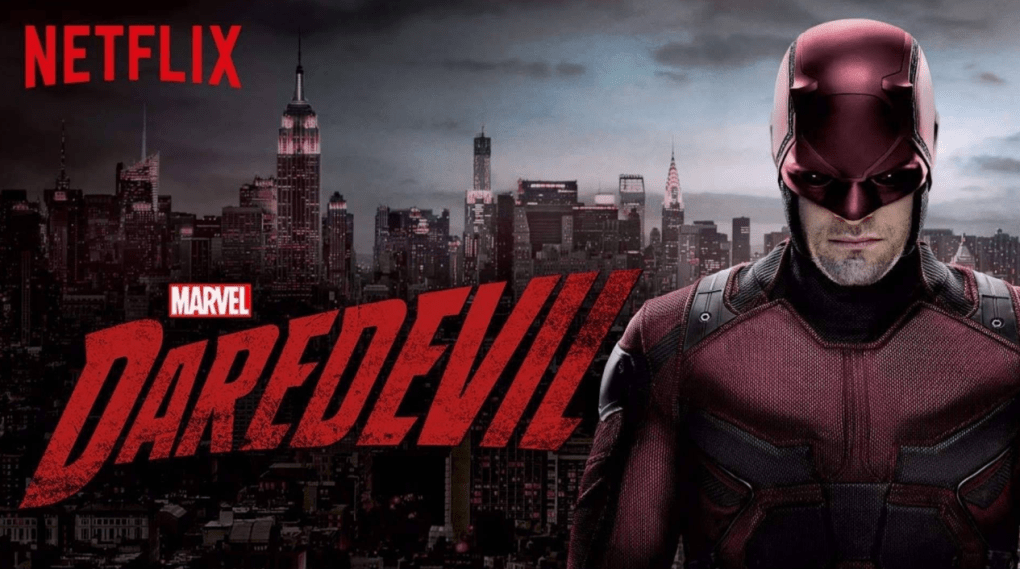
Daredevil rises above the Netflix effect to claim the top spot. I can’t believe it, but Daredevil hadn’t yet released its first episode when we posted our original Top 5 Live-Action Comic Book Shows. My goodness, Geekly’s been around for some time. Daredevil claims the top spot in part because it’s been revived and will resurrect other Netflix Marvel shows with it on Disney+, like Punisher, Jessica Jones, and Luke Cage. Except for a few moments, Daredevil’s writing was on point. Charlie Cox embodied the role so much that I can’t see anyone else portraying Daredevil. And the action sequences and filmography made me feel every punch through the screen. I’ve never felt that before or since Daredevil.
And Daredevil showcased some amazing acting. Cox’s Daredevil was fabulous, while Vincent D’Onofrio was menacing. You know what? I can’t see anyone else portraying Kingpin other than D’Onofrio. Woll’s Karen Page and Henson’s Foggy Nelson rounded out a stellar main cast. And just when I’d think Daredevil would take too many leaps by adding Bernthal’s Punisher or Yung’s Elektra or Bethel’s Bullseye, the actors would turn in character-defining performances. There’s a reason why Daredevil: Born Again was 2025’s most anticipated comic book series. It had some huge shoes to fill.
That’s our list of the top 10 live-action television shows based on comic books. I’m sure yours differs from ours. Let us know which shows you’d add or take away from this list. Thank you for reading, and wherever you are, I hope you’re having a great day.




Hey, hey! Kyra Kyle here. We’re kicking off spooky season a little late with a Top 5. The Top 5 Batman Villains to be exact. I struggled with whether to include The Joker and call it the Top 5 Batman Villains Not Named The Joker. But I decided to keep the Joker and add a sixth, honorable mention villain. The best of both worlds? This sixth villain is someone who wouldn’t have made the list. Eek! Batman has so many great villains. Let’s get started.
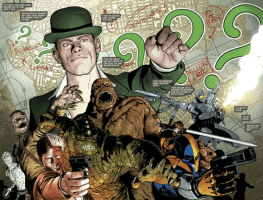
Yep. The Riddler almost didn’t make the list. This doesn’t mean that he’s a poor villain. It doesn’t mean that any of the villains you don’t see on this list are poor villains. I may have to make a Top 5 Underrated Batman Villains at some point. Let me know yours in the comments. Batman has a stacked rogues gallery.
Back to the Riddler. The Riddler began as a joke villain. TV executives even modeled the vibe of the 1960s Batman series starring Adam West from a Batman comic book cover that featured the Riddler. He’s been reimagined so many times that the Riddler has become a formidable foe. He got a little drip from the Batman: The Animated Series. He’s still one of my favorite villains from that cartoon series. “The War of Jokes and Riddles” is a must read if you’d like to see the Riddler portrayed as Joker’s equal. But the Riddler’s best story may come from Batman: Earth One, Volume Two.

Batman: Earth One shows a newer Batman navigating Gotham’s underbelly. The Riddler from Volume Two does a lot of Riddler schtick. He asks riddles of Batman and states that if Batman doesn’t solve the riddle in time, he’ll detonate a bomb killing hundreds. Batman solves the riddle in time because he’s Batman. But the Riddler detonates the bomb anyway. This isn’t your typical Riddler.
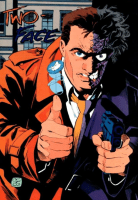
Two-Face has always been a layered Batman villain. He started as one of Bruce Wayne’s good friends and lost touch with reality after a criminal threw acid on the left side of his face. He’s another great villain from the Batman: The Animated Series. His two-part origin story in that series was fantastic and worth a watch. Aaron Eckhart’s portrayal of Harvey Dent was one of the most underrated elements of 2008’s The Dark Knight. But I’d have to go with the source material and 1990’s “The Eye of the Beholder.”
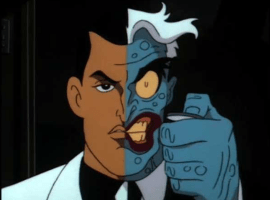
“The Eye of the Beholder” may sound familiar to fans of Batman: TAS. Commissioner Gordon and Harvey Dent form an alliance with Batman to rid Gotham of crime. Little do Gordon and Batman know, Harvey suppresses a second personality. “The Eye of the Beholder” does a great job of diving into Dent’s psychology and is well worth the read.
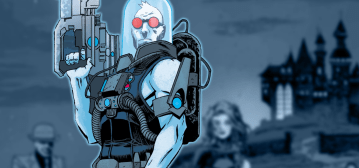
Like the Riddler, Mr. Freeze began as a gag character. He used the name Mr. Zero at first and the 1960s TV show portrayed him like he appeared in the comics. Wild! It took Batman: The Animated Series to reimagine into the Mr. Freeze we know today. Mr. Freeze differs from most Batman villains. He isn’t crazy. He just wants to save his cryogenically frozen wife and will do so by any means. Tim Hill had a great Mr. Freeze story that took a different turn for the villain; he was a victim of Batman’s abuse. But I’d go back to the Batman: TAS classic episode “Heart of Ice” as a go-to Mr. Freeze story.

“Heart of Ice” earned a well-deserved Emmy. It’s the story that transformed Mr. Freeze from a gag villain into the tragic one we know today.

Bane not only matches Batman in brawn, but he can also go toe-to-toe with Batman on an intellectual level. That makes Bane’s inclusion in 1997’s shlocky Batman & Robin even more reprehensible. Tom Hardy’s turn as the villain in 2012’s The Dark Knight Rises gets closer to who the villain is. In the comics, Bane grew up in a prison, atoning for the crimes his father had committed. While in prison, he honed his body and mind. Tim Hill’s run on the Batman featured Bane as the main villain, but I’d go with the classic Batman: Knightfall story as starting point for Bane.

Batman: Knightfall features the moment that Bane “broke the bat.” He raises Batman up and breaks him over one knee, leaving Batman a paraplegic. This story will sound familiar to anyone who’s seen The Dark Knight Rises. This story element appears prominently in the film.

Ra’s Al Ghul translates to “Head of the Demon.” He’s another Batman villain who differs from most of the rest in that he believes his actions are just. Ra’s wants to save the planet and attain a perfect environmental balance by eliminating most of humanity. Marvel’s Thanos would borrow more than a little of this mentality. The Lazarus Pits he uses keeps him virtually immortal. Yet again, Batman: The Animated Series does a great job showcasing Ra’s Al Ghul’s origin. But I would turn again to the source material.
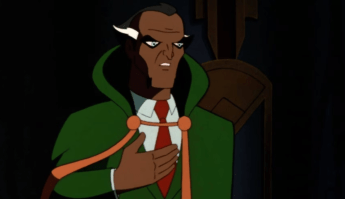
Ra’s Al Ghul first appeared in Batman #232 “Daughter of the Demon” and the story plays out almost exactly as Batman: TAS. So, never mind. I guess you could watch the show instead.
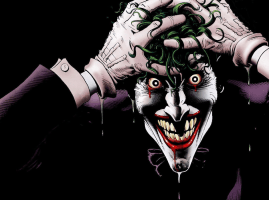
I spoiled this one. I can’t see a world without the Joker as Batman’s ultimate villain. The Joker may be the greatest villain in all of comics. He needs no introduction. There have been numerous actors who have given powerful performances as the Joker. Joaquin Phoenix and Mark Hamill embodied the Joker in one way or another. I’ll always have a soft spot for Jack Nickolson’s Joker, even if he did venture from the characters a bit. John DiMaggio took the Joker to a gritty place with his vocal performances. But Heath Ledger’s Joker still takes the cake.

The Joker has too many great comic book stories to mention here. I could do a Top 5 of these stories. I’ll rattle off a few: “A Death in the Family,” “The Laughing Fish,” “Joker’s Five-Way Revenge,” “Batman: The Man Who Laughs,” and of course, “The Killing Joke.” The Clown Prince of Crime reigns supreme for a reason.
Did we get the list right? Let us know in the comments. And wherever you are, I hope you’re having a great day.

With wave after wave of comic book movies hitting theatres, interest in superhero characters has probably never been higher in the mainstream. Some people who’ve familiarized themselves with the big screen versions of the Avengers or the Justice League may be tempted to delve into the comics, but that can be intimidating. Most of the iconic superheroes in the industry have decades of stories behind them, so new readers may have no idea where to begin. With that in mind, Kyle and I have decided to publish recommendations for new comics readers, jumping-off points, so-to-speak, for understanding the basics of the characters in question.
This week, we’ll cover Batman. With three-quarters of a century’s worth of history, there’s a lot to know about the character, but the good news is most of the truly important moments in Bat-canon aren’t that old, comparatively speaking. Here’s my list of graphic novels and/or story arcs you can read to get all you need to about Batman and the world of Gotham.

Year One (written by Frank Miller/illustrated by David Mazzucchelli)
Year One is pretty much what you’d expect from the title. It’s the story of Bruce Wayne’s beginnings as Batman, his first year. It covers his struggle with the crime families that predate the arrival of the supervillains, as well as his conflict with a corrupt Gotham Police Department. Parts of it aren’t really considered canon anymore, or never were, but modern canon never seems to stray too far from what Frank Miller established here. This is also a great story for understanding the dynamic between Batman and commissioner Gordon.
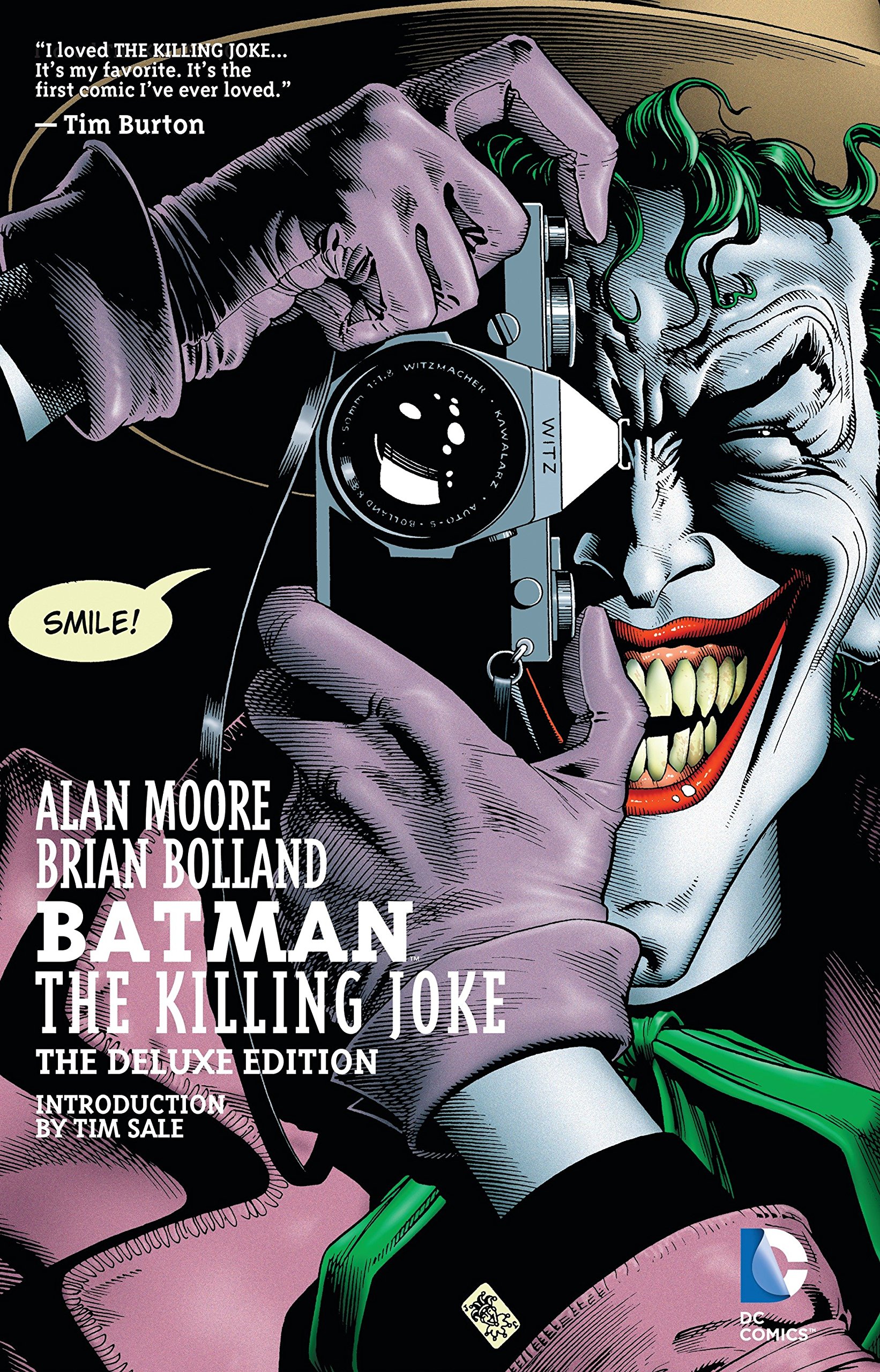
The Killing Joke (written by Alan Moore/Illustrated by Brian Bolland)
This is one of the most famous Batman stories ever told. It’s a window into The Joker, and a brief insight into the dynamic between hero and villain. This one comes with a warning to readers who are sensitive to the topic of sexual abuse, as Barbara Gordon, Jim’s daughter and alter ego of Batgirl, is shot and photographed in various stages of undress by The Joker. Do you remember Christopher Nolan’s film, The Dark Knight? The Joker wanted to prove that Harvey could be corrupted, made as insane as he is. That concept is straight out of The Killing Joke, only the target isn’t Harvey. It’s Jim Gordon, and he uses his daughter to achieve that. The Killing Joke also is the jumping off point to Barbara’s time as the character called Oracle, which is often referenced in Batman comics.
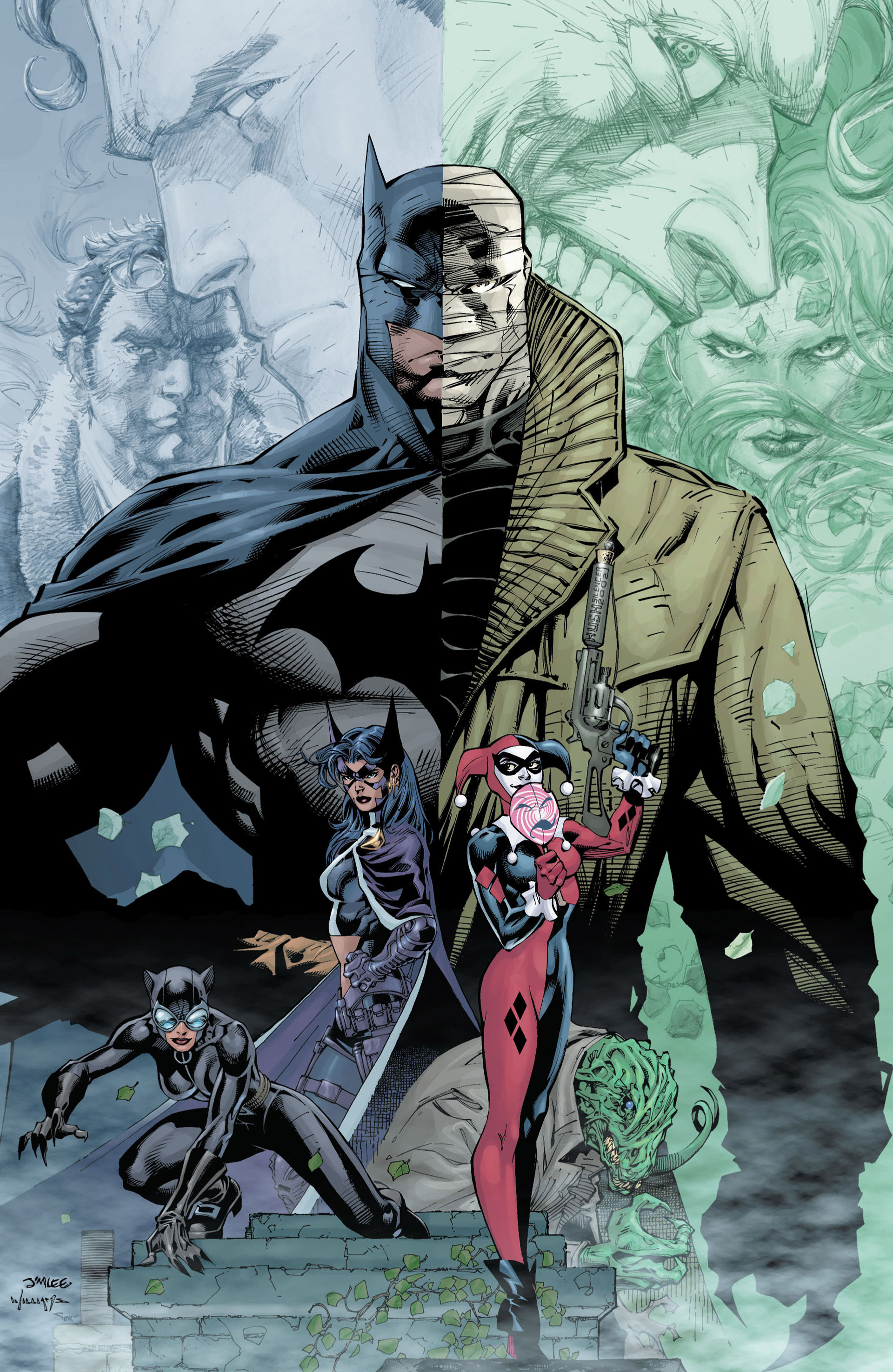
Hush (written by Jeph Loeb/illustrated by Jim Lee)
This one is a solid read, and good for beginners for a couple of reasons. First, because as Jeph Loeb is wont to do, it runs through just about the entire Batman Rogues Gallery in the course of the story. You’ll get a little bit of pretty much everyone here. Second, because this book also has an appearance by Superman, and the dynamic between Batman and Superman is one of the more fun things to consider in modern DC comics.
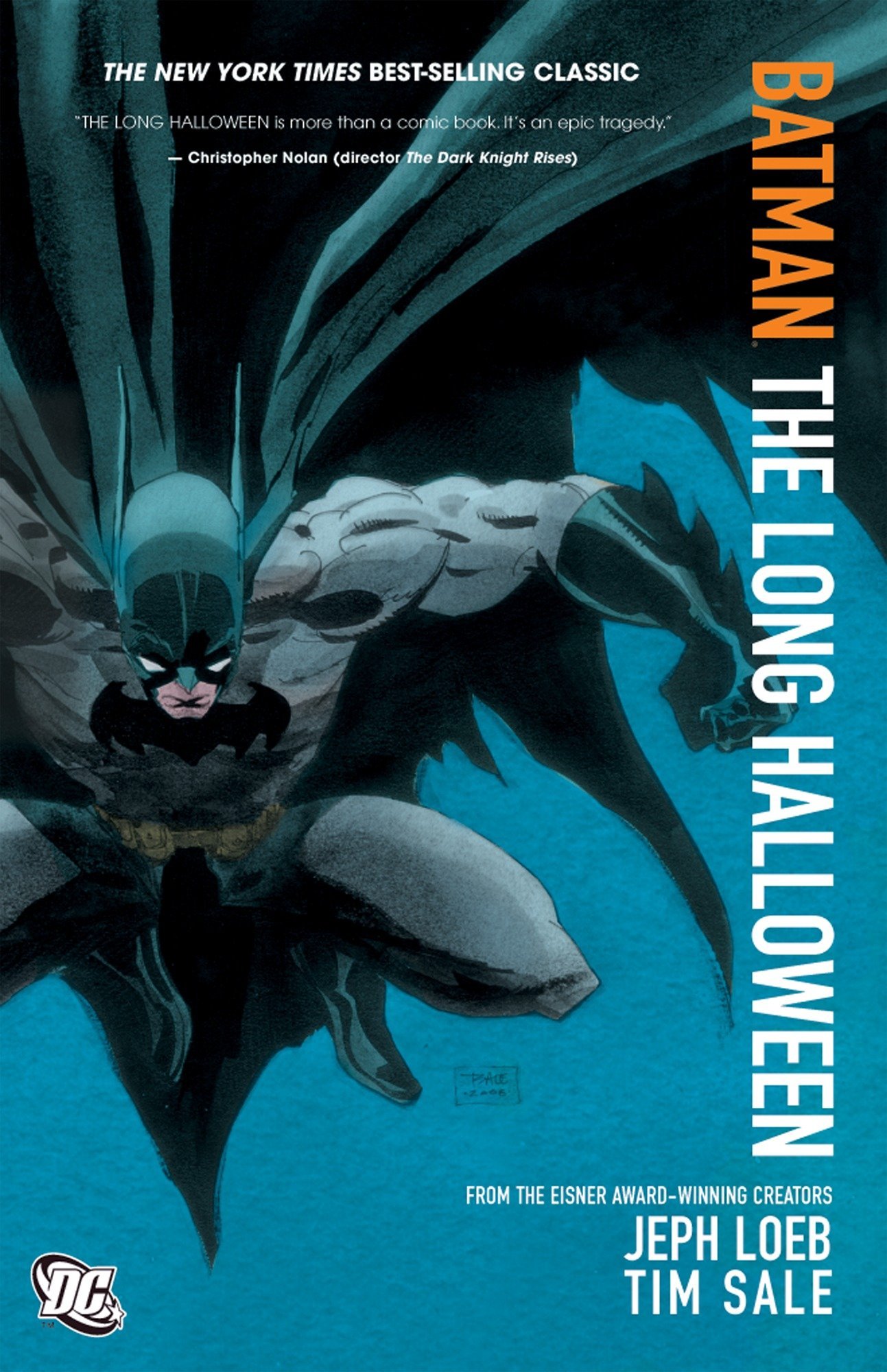
The Long Halloween (written by Jeph Loeb/illustrated by Tim Sale)
This is just a great Batman book in general, but it’s also a good introduction to another one of Batman’s iconic rogues, Two-Face (Harvey Dent). This is also a great read for anyone looking to explore Catwoman as a character.
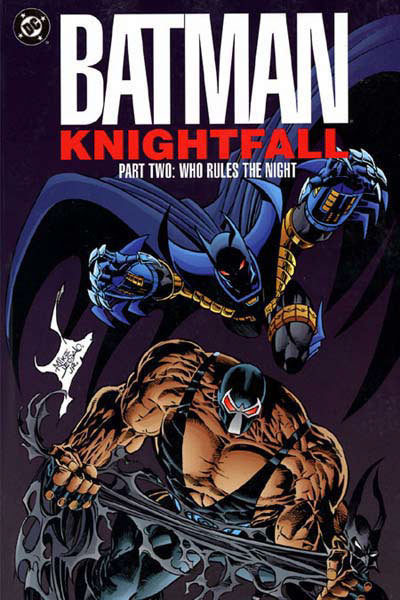
Knightfall (written and illustrated by various)
This one is a bit of cheat as it refers to a long arc within the comics, but one that is often called upon in modern Batman storytelling. Remember when I referenced the Christopher Nolan movies? Well, this one is what The Dark Knight Rises draws from most. It’s the story of Batman having his back broken by Bane, his recovery, and his reclamation of the Batman mantle. It’s actually not one of my favorites, but it’s worth reading to get a bigger picture of the network that is The Bat Family, and why Bane holds a special place among Bruce Wayne’s enemies.
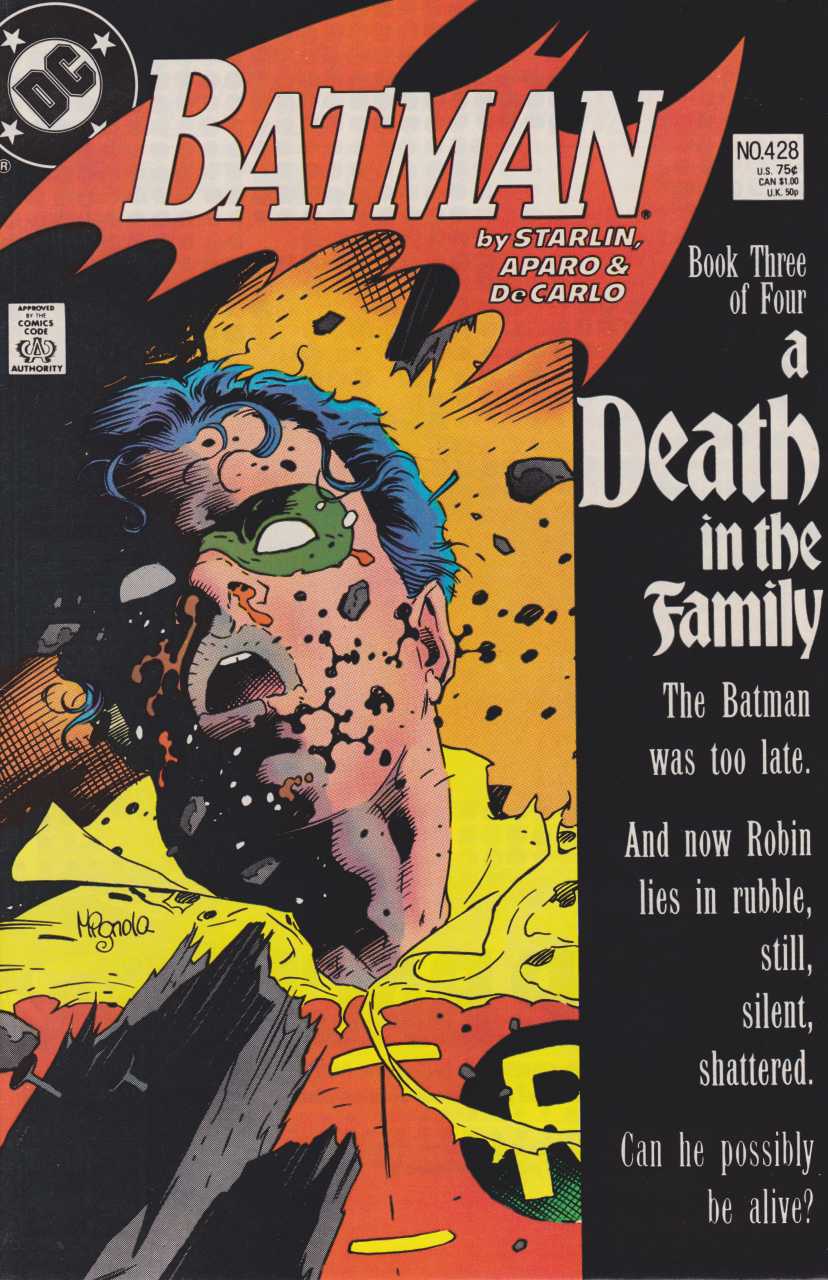
Death in the Family (written by Jim Starlin/illustrated by Jim Aparo)
This one isn’t to be confused with Death of the Family (Snyder/Capullo). Don’t get me wrong, Death OF the Family is terrific, but it’s not for this list. Death IN the Family is an important arc for Batman because it covers the death of Robin. If you’re new to Batman Comics, you may not realize there have been many Robins. In Death in the Family, Batman’s second Robin, Jason Todd, is murdered by the Joker. In later comics, Jason Todd’s death is undone, and the character exists today as Red Hood, but understanding the history established in Death in the Family is key to understanding that dynamic within the Bat Family.
That’s my list for new readers of Batman. How do some of our seasoned Batman readers feel about it? Did I miss any? Did I include some you don’t agree with? Challenge me to a duel, or maybe just tell us in the comments.

It might be time for a new series of articles: my favorite “fill in the blank.” We’ll talk about something in a game or show or movie or comic book that we like and dig into why we like that one thing. Good old Uncle Geekly will get things started with some board game mechanisms, or for the tabletop game newbie, the elements that make up a tabletop game. This week we’ll cover Teenage Mutant Ninja Turtles: Shadows of the Past and Batman: Gotham City Chronicles and their asymmetric one versus many game mechanism.

Teenage Mutant Ninja Turtles: Shadows of the Past
Both of this week’s games can be classified as “one versus many,” meaning that one player plays one side of the characters (usually villains) and two or more players assume the role of the other (usually heroes).
First off, I like how these games make the player who assumes the villains (the one) asymmetric to the gameplay style of the heroes (the many). TMNT: Shadows of the Past has the Turtle players rolling dice and performing actions based on what they roll, while the player who assumes The Foot Clan, Shredder, and the rest uses a deck of cards.
The individual turtles also play like their personalities and that gets to another mechanism I enjoy in Shadows of the Past: sharing dice. The turtles can share what they roll with their teammates. Dice placement makes all the difference. Each turtle player places their dice in front of them in a row and other turtles can only borrow a die that’s the closest to them. The player on your right can only borrow the die that’s the farthest on the right of the row.
Leonardo gets a bonus whenever someone borrows his dice. He’s the leader and that makes sense. Raphael gets extra dice but can’t borrow anything because he’s a loner. This is such a great touch because the players who’re playing Leo and Raph tend to sit as far away from each other as possible and those are the turtles who tend to butt heads the most.
Playing as either side can be fun, but also different, and that adds replay value. It also helps that TMNT: Shadows of the Past has a scenario system that works like playing through classic turtle stories.
Ah. It’s almost like reading the original comics.

Batman: Gotham City Chronicles
Monolith Board Games uses a similar gaming system with Batman: Gotham City Chronicles. Like TMNT: Shadows of the Past, the two sides use asymmetric gameplay, but both sides use gems that serve as their energy pool. The heroes have a set number of actions, depicted on their character cards. They use their gems to activate any of the actions they have at their disposal.
The villain (or Overlord) has a group of enemy tiles on a track that begins with smaller enemies on the left and larger ones on the right.
In a sample Batman game for instance, it’d be henchmen on the far left, Harley Quinn on the spot just left of the Joker, and of course the Joker would be on the far right.
Somewhat like the heroes, the Overlord activates their enemy tiles by using energy gems equal to the spot on the track that the enemy tile they want to activate is on. So, if you want to activate the first set of villains, pay one gem. If you want to activate the second set of villains, pay two, and so forth. As soon as a villain is activated, it goes to the end of the track (far right), and the other tiles slide one spot to the left.
This is so clever because the Overlord could activate the small fry for cheap or they could pay a little extra if the villain to the right has more strategic value. They wouldn’t spend all their gems to activate the Joker, would they? But it is the player’s choice.
But the heroes are also satisfying because they each have unique abilities based in their character’s lore—so Catwoman may be more useful than Red Robin in a game requires theft, but Red Robin is more useful in another that needs more detective work—and each scenario has very different objectives. The heroes win if they meet their objectives. The villains win if the heroes don’t.
Perhaps the best thing is that Batman GCC recreates dozens of classic Batman comic book tales. Not the movies or TV shows, the original comics. And from what I’ve seen, they may be using Capullo’s art as the basis for the miniatures. What!?
Is there anything you like about these games that we didn’t mention? Maybe you like TMNT better than Batman, and I’m too much of a Batman fanboy. You could have them challenge each other to a duel or you can let us know your thoughts in comments.

 jkgeekly.com