Top 5 Tabletop Games from the Early 1960s

Hey, hey! Kyra Kyle here. We’re bringing back an old series: Top 5 Tabletop Games. The lists prior to this one (the 30s and 40s-50s) had fewer titles to choose from during their time periods and served as the best board games of that decade instead of a year. But the 1960s produced so many popular and great games that we split it into two Top 5 lists. One for the beginning of the decade (1960-1964) and another for the end of the decade (1965-1969). We’ll publish the second list next week.

So much time has passed since our last Top 5 Tabletop Games that we may need to reiterate the ground rules before we get started.

1: Cultural relevance plays as much of a factor as overall quality. A game might make a list that doesn’t hold up to others of its type, but you must admit the game is everywhere.

2: Only one game from a franchise makes the list. This will become more of an issue the closer we get to games with expansions.

3: Longevity plays a role, too. A game doesn’t have to fly off the shelves today, but it had to have some widespread appeal for a decent time.

5: Hi Ho! Cherry-O (1960)

Woo! Hi Ho! Cherry-O just barely made this list. Perhaps I should run a survey and see which tabletop games were people’s first games. Hi Ho! Cherry-O may be near the top of that list.

Each player begins with an empty basket and 10 cherries on their tree. Players take turns spinning the spinner and performing the actions they spin. The first player to collect all the cherries from their tree and yell “Hi Ho! Cherry-O” wins. Simple premise. Easy rules to explain and understand.

And yet, mathematicians used a Markov chain to determine how long a game of Hi Ho! Cherry-O would last. Who knew that picking cherries could get so intense?

4: Focus (1963)

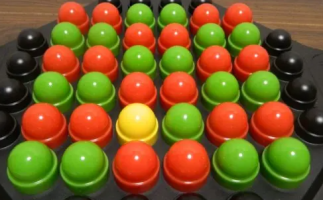
Focus is the first and not the last Sid Sackson game that will make these lists. It’s an abstract strategy game where players move stacks around a checkerboard with the three squares in each corner removed. Stacks may move as many spaces as there are pieces in the stack. Players may only move a stack if the topmost piece in the stack is one of their pieces. When a stack lands on another stack, the two stacks merge. Basically, one tries cornering their opponent(s) into no longer having moves.

Focus also happens to be an early recipient of the Spiel des Jahres, the German Game of the Year (1981). This award elevated the quality of board games that came from Germany after its inception. Sackson did the same for the board game industry prior to this award, which is why, in part, Focus earned this honor. That and Focus is a great game that has inspired countless tabletop game designers.

3: Mouse Trap (1963)

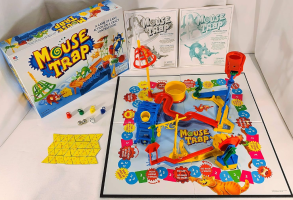
How many of you have built the Rube Goldberg-like mouse trap for this game and never played it? Show of hands. Mouse Trap has players building the least efficient trap to catch a mouse. But the game doesn’t play anything like it did back in 1963. The original Mouse Trap required an opponent to land on the “cheese” space by exact count and the player to land on the “turn crank” space by exact count for a chance that the clunky Mouse Trap might work and eliminate a player.

Fast forward 12 years and the game play surrounding the trap was retooled by Sid Sackson. Hey, there’s that name again. Sackson added the cheese-shaped tokens that allowed players to move themselves or other players or turn the crank of the machine. Sackson streamlined a game that could take several hours into one that can be played in under an hour.

Mouse Trap may lean heavily on a gimmick, but one can’t question its staying power.

2: TwixT (1961)

TwixT began as a paper and pencil game in 1957 by Alex Randolph. And in 1961 Randolph was commissioned along with Sid Sackson (Hey, there’s that name again) to start a games division. TwixT was one of Randolph’s first produced games. It was even short-listed for the first Spiel des Jahres (Hey, we know that award, too) in 1979.

Players take turns placing pegs of their color into a 24×24 square grid of holes. One tries to move from one end of the board to another, connecting one’s pegs by making knight moves (in Chess). You cannot cross two connected pegs, so it’s possible to block your opponent’s progression and that’s what you’ll want to do. TwixT has a bunch of strategy but is easy enough that young children can play. No wonder it was inducted into the Academy of Adventure Gaming Arts & Design’s Hall of Fame along with Randolph.

1: Acquire (1964)

I wonder who designed Acquire. Wait! It’s Sid Sackson. Again. In Acquire, players attempt to earn the most money by developing and merging hotel chains. When a hotel chain that a player owns stock is acquired by a larger chain, players earn money based on the size of the acquired chain. Player will liquidate all their stock at the end of the game and whoever has the most money wins.

Acquire was also short-listed for the first Spiel des Jahres in 1979 and was inducted into the Academy of Adventure Gaming Arts & Design’s Hall of Fame along with Sid Sackson. The tabletop gaming community owes a lot to both of these incredible game designers.

My aunt Erma had a copy of Acquire but lost the rulebook, so I made up my own rules to this game. So, Acquire holds a special place for me personally. I may be a little biased with this number 1.

But did we get the list right, for the most part? Let us know in the comments. And wherever you are, I hope you’re having a great day.

Check out the other lists from this series:
Top 5 Games prior to the 1930s
Top 5 Games from the 1930s
Top 5 Games from the 1940s-50s
Top 5 Games from the Late 1960s
Top 5 Games from the Early 1970s
Top 5 Games from the Late 1970s
Top 5 Games from 1980-1981
Top 5 Games from 1982-1983
Top 5 Games from 1984-1985
Top 5 Games from 1986-1987
Top 5 Games from 1988-1989
Top 5 Games from 1990-1991

Getting Started with Tile Placement Games

Hi, everybody. Kyra’s back with another older write-up that never got posted. This week’s post is a beginner tabletop games. I may add a game or two because there have been countless games that have been published in the six or so years since this write-up was written, but so many people cover newer games. Let’s stick with the older games.

Today we’ll cover tile placement games. A tile placement game is one where players lay or place tiles in groups or patterns to achieve various effects. Usually, but not always, where players lay their tiles will earn them victory points (or just points) needed to win the game.

Okay. The boring part’s over. Let’s get to the games.

Kingdomino

Kingdomino and not its sister game Queendomino makes this list because Kingdomino is more streamlined and easier to learn. It’s not that Queendomino is all that more difficult to play. If you know how to play Kingdomino, it’s easy to learn how to play Queendomino and progressing from King to Queendomino works with my idea of learning tabletop games with a scaffolding approach. One game that builds on another.

Anyway, in Kingdomino players take on the role of a lord or lady as they try to gain the most land—or the most value tracts of land—by collecting dominos. The dominos in question have numbers on their back denoting how valuable they are and two sections of landscapes on the front (that can be forests, deserts, mines, wastelands, or swamps). Dominos equal to the number of lords or ladies (the players pawns) are placed in number order with the lowest number on top and players take turns selecting dominos and placing them in their kingdom.

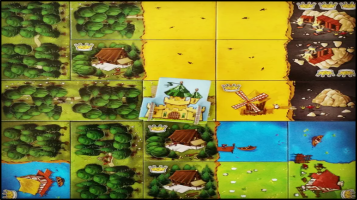
I won’t go into much more detail with how Kingdomino balances who picks first each turn, but it’s well done (as one can expect from designer Bruno Cathala). Instead, let’s focus on the tile placement aspect. Players start with a 1×1 tile, their castle tile. All the dominos are 2×1 tiles and when they’re claimed and added to a player’s kingdom, they must share a side with a section of land that shares their type (forests with forests, deserts with deserts and so on); castle tiles count as all land types. Players also can’t exceed a 5×5 kingdom, but their castle doesn’t have to be in their kingdom’s center.

This all makes for some interesting maneuvering, but the scoring mechanism further complicates tile placement. Players count their scores for each region they have in their kingdom. A region is every continuous area of the same land type and there can be more than one region for a land type. Someone could have a forest region of five and another forest region of three. For each of these regions multiply the number of spaces by the region’s number of crowns. Pictures of crowns show up, usually, in higher value tiles. If the forest region with five space has one crown, it’s worth five points, but if there are two crowns in the five-space forest region, it’s worth 10. A region with no crowns yields no points, no matter how big it is, so it’s ideal to get at least one crown in each region.

Kingdomino received the 2017 Spiel des Jahres; it deserved the game of the year.

Tsuro

I know I’ve included Tsuro in a previous starter games list (route/network building games), but Tsuro pulls double duty as a great starter tile placement game. Each player has a pawn and their pawns begin the game on the edge of the board (a 6×6 grid). On a player’s turn, they place a tile from their hand—these tiles will have paths on them—on the board continuing the path (or route) their pawn is taking. As soon as a new tile is placed, the player moves their pawn further on the path. The aim is to be the last player with their token on the board.

Players are not only building a route or network in Tsuro, they’re placing tiles to do so, and this simple, elegant game makes for a great introduction to both game mechanisms.

Patchwork

Patchwork remains one of my go to two-player only games to teach people. Sure, the designer Uwe Rosenberg has plenty of games the reimplement the same game mechanisms as Patchwork and other designers have followed suit, but the original Tetris-like tabletop competitive game about making a quilt retains its power.

On a turn, players may spend buttons to buy one of three available polyomino tiles (that are patches shaped like a Tetris piece) and add it to their quilt or pass. It takes time to stitch new patches into a quilt, so players will move their time token closer to the center and when a player’s time token reaches the center, they may take a final turn and the game ends.

There are a few more rules to Patchwork, but it’s a simple, streamlined game that works well with its theme. Who’d think that making a quilt would make a great game? Patchwork’s simplicity masks deep strategies. Do you go for larger patches for more points, but leaving you fewer options with which to place future tiles, or do you go for slow and steady points throughout the game, making sure you fill up as many spaces as possible? The options are endless.

I had to include a polyomino tile placement game on this list. Patchwork may not be as hot of a game as it once was and other games may have taken its place (Bärenpark and even Rosenberg’s own Cottage Garden and A Feast for Odin have even taken Patchwork’s place) for a lot of gamers, but it’s still a great starter tile placement game.

Azul

Azul is another game that I included in a previous list of great starter games (Card Drafting Games), but it works for tile laying as well. In fact, Azul’s theme is tile laying a Portuguese wall. Players draw tiles from a bag and four of them are placed on 7 cardboard discs that are accessible to each player. Then, players take turns claiming similar tiles on each disc and adding them to their player boards (that represent the walls the players are tiling). Each board has the same wall pattern and the player to finish a row of tiles initiates the game’s end.

Again, Azul can be classified as card (or tile) drafting and that’s a core ingredient to the game as well as set collection and chain effects, but the combination found is Azul is so unique for a tile placement game that I had to include it on this list.

Chomp

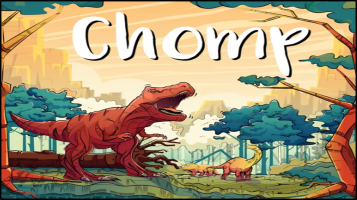
This is the newest game of the list and the only one I added to the original post. I played Chomp a week ago for the first time. Chomp refers to the 2023 Allplay title, not the 2000 food chain card game Chomp! from Gamewright. In Chomp (without the exclamation point), players build a dinosaur biome by laying tiles with dinos, plants, tar pits, and other things you may find in the age of the dinosaurs.

Players must build their land so that herbivores have plants to eat, and carnivores have herbivores their size that they can eat. Dinos of the same type that are placed adjacent to other dinos of their type form a herd. Players can chain as many of these dinos together as they can to form massive herds and potentially earn big points.

Any dinos placed next to tar pits automatically die at the end of nine rounds (I played with 3-players, there may be more or fewer rounds at different player counts), so be careful where you place tar pits. But you may want your dinos to perish. Each tile is double-sided. One side depicts the land you’re placing, while the other gives the player a scoring option. Each game, players must balance whether they want to play or score the tile they pick up that round. Such a great twist.

Final Thoughts

We had a couple more games in this starter board game list than usual, so I hope there’s something here you’ll enjoy.

Know of any other great beginner tile placement games? Are there any games on this list you disagree with? You can place your suggestions and complaints in the comments.

Getting Started with Pick-Up and Delivery Games

Howdy, folks, Uncle Geekly’s back with another group of starter board games. For those of you who are new to the site, our starter game series takes a common or popular game mechanism and picks some good games that feature that mechanism but are easy to learn. Many of these games on these lists will start easy and work their way to greater complexity.

In today’s list we’ll cover pick-up and delivery games, and this mechanism works like its name suggests: players will pick up items from one place and deliver them to another. It’s a simple mechanism that finds its way to several great games, but there are two issues that came up when compiling this list of starter games.

First, many designers don’t believe in having a straight pick-up and delivery game (it’s too boring), so you won’t find too many games with pick-up and delivery as the only mechanism and only a handful more that will include pick-up and delivery in a group of two or three mechanisms.

The second is that by adding extra game mechanisms, designers make many pick-up and delivery games more complicated, so there will be games like Firefly and Freedom: The Underground Railroad that are excellent pick-up and delivery games (a couple of my favorites) but slightly more complex than a starter game should be for newcomers.

Enough about the games that won’t be on this list. Let’s talk about the ones that made the cut.

DeepSeaAdventure01

Deep Sea Adventure

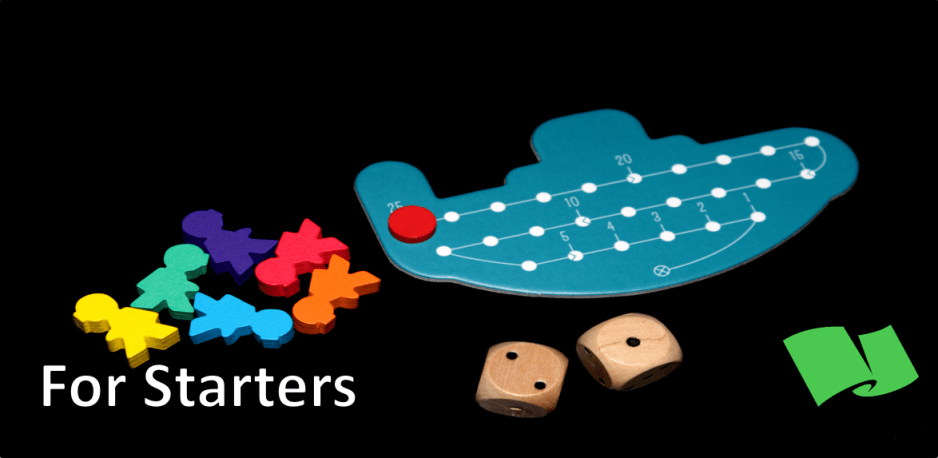
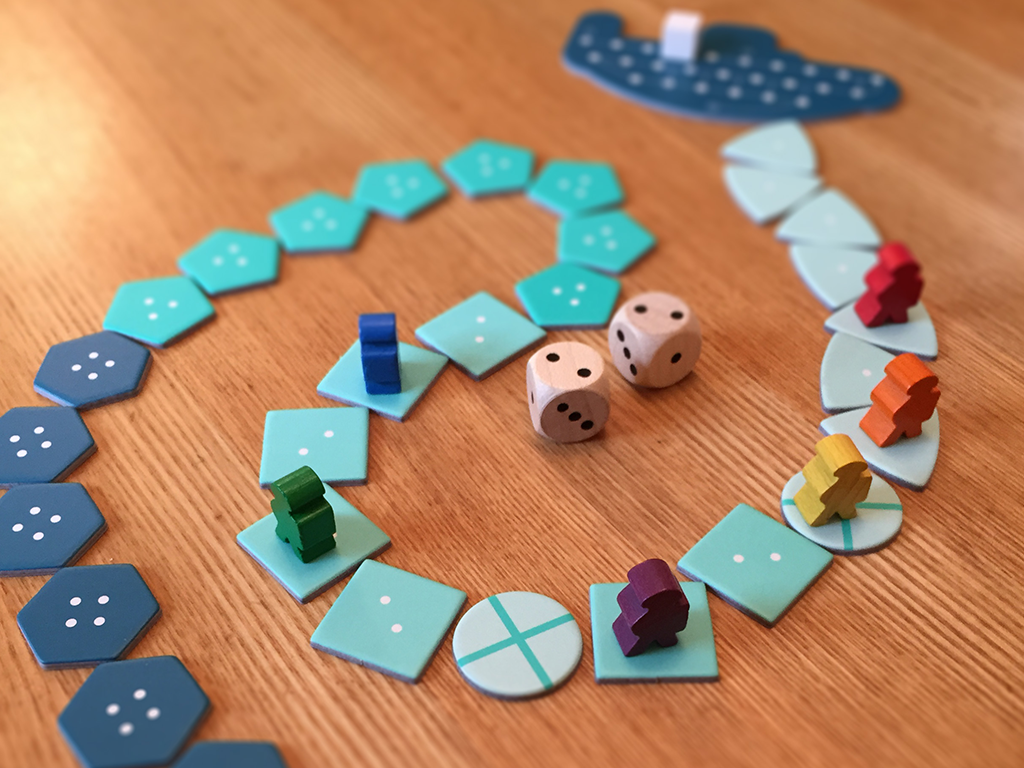
We start with the simplest game of the lot, Deep Sea Adventure. Sure, this game has a push your luck element and uses roll/spin and move, but it’s the closest game to pure pick-up and delivery. Players assume the roles of deep-sea divers. There are four levels of treasure (tokens) with a number (points one can score) printed on the front and the level denoted in dots on the back. The tokens get shuffled and placed in a wavy line protruding from the submarine (where the players pawns start), going from level 1 to level 4.

Players take turns diving into the sea (by rolling two specialty dice numbered from 1-3) and try to go as far as they can, but beware. All players share the same oxygen tank and when the oxygen level reaches zero, the round is over and only those who returned to the submarine with treasure in hand score points that round.

Deep Sea Adventure is charming. It doesn’t look like it would have much strategy, but it’s a lot deeper (pun intended) than first glance. Do you push your luck and go deeper, or do you turn back around with the treasure or two you picked up early on, so you know you’re scoring that round? There’s even a built-in catch-up mechanism where the higher scoring tiles are easier to get to in future rounds, so players who are behind early in the game can score a heap of points in round two or three. I’ve even considered picking up as many level one and two treasures as I can in the first round and since those lost treasure tokens get added to the end of the treasure path in stacks of three, I can claim them later in the game for big points.

Like I said, there are plenty of play styles and stratagems for this easy-to-learn game. Deep Sea Adventure may be marketed toward kids (if you don’t believe me, check out this adorable how to play video by Oink Games) but there’s enough going on to interest adults. You can find Deep Sea Adventure at most Barnes and Nobles but be on the look out for a small package. Oink Games come in small boxes and while I haven’t played all the Oink Game titles, most of the ones I’ve played are at least baseline good.

MyLittleScythe

My Little Scythe

I know that I said this before, but pick-up and delivery games have a knack of being very complicated. Case in point, My Little Scythe is a simplified, or child-friendly, version of Scythe, which happens to be on a lot of people’s best games of all time, but the original Scythe is far too complex for a starter pick-up and delivery game list. Heck. My Little Scythe makes the list by a skosh.

My Little Scythe was designed by a father and daughter, so that the father could play his favorite game with his young daughter, and it follows various animals of the animal kingdom as they prepare for the harvest festival. Players take turns earning trophies by earning specific accomplishments. There’s a lot going on in this game, but no single game mechanism is that complex. That said, I won’t spend too much time with how to play My Little Scythe because this isn’t a “how to play” write-up, it’s a starter game write-up. If you’d like detailed rules explanations, check out Rodney Smith’s video at Watch It Played; Rodney does excellent work. For now, let’s focus on what makes My Little Scythe a good pick-up and delivery starter game.

My Little Scythe takes an interesting look at pick-up and delivery. There’s a strong worker placement element to it—so it would make a nice addition to starter worker placement games—but two of the four trophies needed to trigger the end game (the harvest festival) requires players to pick up four of one kind of resource and drop them off at the castle (centrally located on the board). At least four of the remaining possible six trophies players can earn can be achieved by picking up resources and controlling them. In My Little Scythe, players are considered to have control of resources if their pawns occupy the same space as a resource. If the player controls the resource, they may spend it for other items. That’s a clever distinction that doesn’t show up in any of the other games on this list. So, I guess one could consider My Little Scythe a pick-up and control game.

There are so many other elements going on with My Little Scythe that I won’t mention the rest of them here, but each element works well and the whole is an easy game to learn and teach others. I wanted to include it here because of the interesting twist My Little Scythe makes with the pick-up and delivery mechanism. I know that it’s following Scythe’s lead, but we need more games that add wrinkles to well-established game mechanisms.

ForbiddenDesert08

Forbidden Desert

Forbidden Desert seems to make it on a lot of these lists, but it does fit the pick-up and delivery mechanism requirement and it’s a darn good game, perhaps the best of the Forbidden series, but that’s because I haven’t had the chance of playing Forbidden Sky as of this write-up. In Forbidden Desert players are stranded in an inhospitable desert. They must find and collect (or pick-up) the parts to a flying contraption and deliver the completed machine to the launch pad, so they can escape.

It’s been six years since Forbidden Desert’s initial release, and I still marvel at the way shifting sand is represented by drawing desert cards, shifting land tiles in the direction the cards command, and placing sand tokens atop the land tiles that moved that turn. It feels right. It plays like an unpredictable desert storm.

The way players must uncover both a vertical and horizontal tile for each object to reveal which tile one of the parts resides is brilliant; no game plays the same way twice. This also adds to the storm’s unpredictable nature and the fact that players can get buried in sand adds to the atmosphere of being lost. If the tile your pawn stands on moves, your pawn moves too, and board’s state may be far different from the end of one of your turns to the beginning of your next. Again, this adds to the players’ feeling of hopelessness—at times—or they may find the board moves in their favor and that’s wonderful.

I’ve said it before, but it remains true, Forbidden Desert is an excellent game. It also happens to be an excellent pick-up and delivery starter game. Pick-up and delivery may not play as big of a role in the turn to turn aspects of Forbidden Desert, but the only way players can win this game is by picking up and delivering the flying contraption to the launch pad.

Final Thoughts

Hopefully, we’ve covered some games you either haven’t played or haven’t considered pick-up and delivery games. Uncle Geekly tried to go with a mix of games that use predominantly pick-up and delivery (Deep Sea Adventure), implement pick-up and delivery as the only way to win but doesn’t include it with the turn to turn action (Forbidden Desert), and found one that provides a twist to a popular mechanism (My Little Scythe).

Know of any other great beginner pick-up and delivery games? You can deliver your questions, complaints, and suggestions in the comments.

My Favorite Game Mechanics: Gloomhaven and Assault on Doomrock

There are so many things I could pick as my favorite mechanisms for Gloomhaven and Assault on Doomrock, but I’ll try to stay on task with the one I chose for this article: artificial intelligence.

Cooperative games pit the players against the game itself so almost any cooperative game has some version of artificial intelligence. Gloomhaven and Assault on Doomrock just happen to be two of my favorites in terms of AI.

Gloomhaven01.jpg

Gloomhaven has a leveled system for its creatures, so players can adjust the difficulty to match their tastes, and each creature type has its own action deck. The action cards within these decks dictate how quickly each creature moves, how or if they attack that turn, and who they target when they do. It’s a simple but elegant way of making each creature unique. Players won’t know what the creature will do from turn to turn, but if they’ve faced a similar creature, they may know its habits and that does a lot for characterization.

I also like Gloomhaven’s card-based combat. Usually I don’t like it when a player gets knocked out when they run out of cards in their deck, but this game is so balanced that it works. Okay. I promise that’s the only time I’ll get off topic—with Gloomhaven.

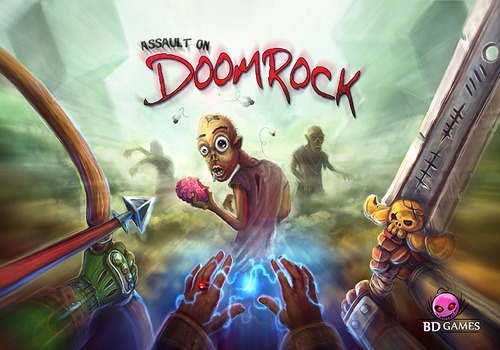
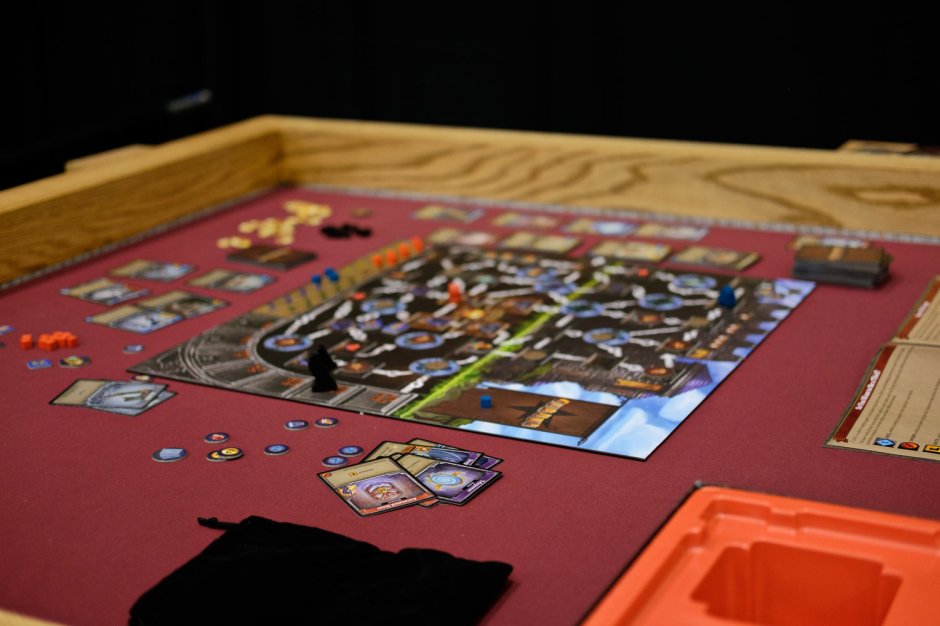
AssaultOnDoomrock

Assault on Doomrock has a similar system for its creatures, but it adds a threat level for each player’s character (or hero). Typically, the hero with the highest threat level will draw more monsters and that allows for a mechanism in the game that functions a lot like a tank in MMORPGs—a tank is a player with a lot of health that serves as a punching bag for monsters to attack, while their teammates wail on the distracted monsters.

There are more things that may affect a creature’s aggression in Assault on Doomrock, but the inclusion of a threat system gives the game more depth. I also like Assault on Doomrock’s addition of time as commodity. T.I.M.E. Stories has a time system too, but Assault on Doomrock’s use of time made me more concerned about wasting the time I had and that increased tension. Alright. I won’t discuss Assault on Doomrock—that much.

SentinelsOfTheMultiverse

I’d be remiss to not give a quick mention to Sentinels of the Multiverse. The villain decks behave differently, giving each character personality. Pandemic almost made this list for artificial intelligence and how the viruses behave, especially how the epidemic cards function with location cards that had been played (currently in the discard pile) go back on top of the draw deck, so diseases can get worse in cities already affected.

Like I said, most cooperative games have some form of artificial intelligence, and there are many other great examples. I could go on for another five or six games at least, but good old Uncle Geekly would like to hear from you.

What do you like most about Gloomhaven and Assault on Doomrock? Is there another game that uses AI in a great way? Error Code 220: Service ready for new user. Let us know in comments.

My Favorite Game Mechanisms: Dinosaur Island

Yes. Uncle Geekly picked up Dinosaur Island this past Christmas, and I’ve had some time to get in several plays. For the uninitiated or the ones who don’t remember what I said about Dinosaur Island in the past, it’s a tabletop game where players compete for visitors by building their own Jurassic Park. The premise is solid gold.

Each individual game mechanism has been seen in other games, but Dinosaur Island does a fantastic job of combining mechanisms that mimic what they’re supposed to mimic. The research and development section functions like the players exploring which dinosaurs they can recreate. Players can take a risk—increasing the dinosaur threat level—by taking a die that yields larger research results or they could take a safer route and set a foundation for gaining research points over time. It’s slower, but more reliable. The building of dinosaur pins and dinosaur husbandry—is that a thing?—functions the way one would think they would. Does one build the pins and reproduce dinos to get more visitors in one’s park before building adequate security? Players can, but is it wise?

DinosaurIsland_DinosaurFigures.jpg

The dinosaur figures don’t hurt the fun factor, but the resource management of where to place workers to get the best effect and where to place visitors so they yield the highest reward are other moments where Dinosaur Island shines. There’s just enough luck introduced so there’s a chance for players to catch a runaway winner, but Dinosaur Island is first and foremost a strategy game. A player who deploys a better strategy tends to win more often than those who don’t.

Each game mechanism—worker placement, tile placement, set collection, and an action point allowance system—behaves like its own mini game. Dinosaur Island could even be viewed as a series of mini games. But Dinosaur Island’s whole is far greater than any single part. That makes describing the game difficult or zeroing in on any specific part as a favorite tough. I like how Jonathan Gilmour and Brian Lewis combine these elements, so they make a tasty blend.

DinosaurIsland_Dice

There are plenty of other games that throw in a lot of mechanisms (First Martians comes to mind), but the individual pieces feel like a board game version of doing your taxes. Dinosaur Island doesn’t feel that way. The elements make sense for what the players are doing and the strategy, while difficult to master, is easy to see. Players will know why they won or lost and how they may be able to improve. Plenty of games offer hodgepodges of gaming mechanisms, but few of those games deliver a great experience like Dinosaur Island.

What are your favorite elements of Dinosaur Island? Have you ever played a game without humming the Jurassic Park theme? Uncle Geekly hasn’t, even when I play a solo game. Let us know your thoughts in the comments.

Underused Intellectual Properties in Tabletop Gaming

Not every intellectual property gets the tabletop game treatment. They can’t all be Star Wars that has hundreds of games on boardgamegeek (BGG), granted a lot of those are Star Wars skinned versions of other games, but still, there are a lot of Star Wars games to choose from. That made your uncle Geekly wonder which intellectual properties could use a tabletop game or two. Here we go.

StarTrek

Star Trek

You know how I said that there are a lot Star Wars games out there. The same can’t be said of Star Trek. What’s worse is that most Star Trek games that are on the market are little more than rethemed Star Wars games. Now, I’m a little fuzzy, so perhaps someone can help me, but are Star Wars and Star Trek so similar that they’re interchangeable?

Yeah, that pissed off some fans. I don’t believe they are, but the real issue is that board game companies don’t seem to see a difference between Wars and Trek.

doctor who

Doctor Who

This is another overlooked intellectual geek culture property, and I’m not sure why. Sure, there’s an RPG and a handful of licensed games like Yahtzee with a TARDIS and a Dalek as the dice cup out there, but the time travel of Doctor Who is prime for some interesting game mechanisms that could bring certain game types into the 21st century.

Frankenstein_MaryWollstonecraftShelley

Literary Board Games

Board games have been turning to books lately for inspiration. The Cthulhu mythos has dominated the board game landscape for years, due its status in the public domain, but other classic works like 1984, Animal Farm, Moby Dick, and Beowulf as well as newer works like Cronin’s The Passage trilogy and Pratchett’s Discworld novels have received the board game treatment. There’s a wealth of classic works out there. Why not turn one into a game?

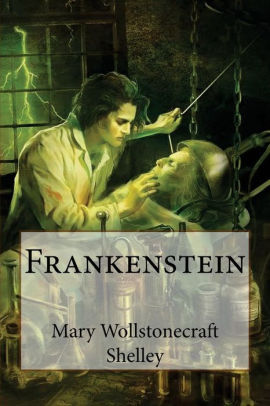
Why not a class/status struggle game based on Jane Austen? Or cast a gamer as Gatsby trying to impress Daisy? Or base a game on Mary Wollstonecraft Shelley’s Frankenstein? There are shockingly few games based on Frankenstein.

Horror novels have generated a lot of buzz. There’s even a game adaptation of Stephen King’s The Shining, where one player assumes the role of the Torrance family and the other plays as the Overlook Hotel. You can’t tell me there isn’t at least one or two more King novels that wouldn’t make a good board game.

AttackOnTitanBoardGame_Anime_Manga_BoardGames

Anime/Manga

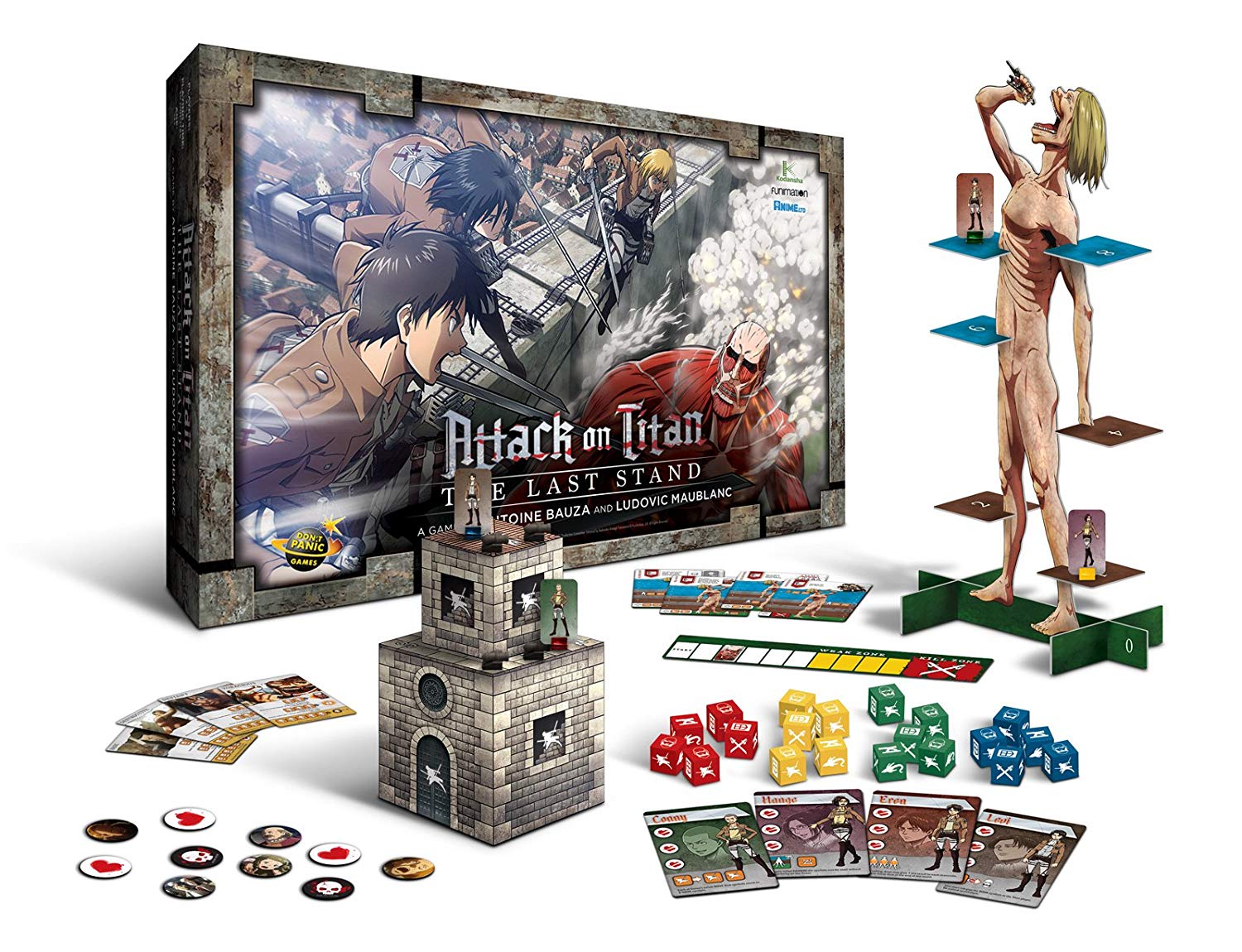
Yes. Some anime and manga titles have received board or card games in the past, and some of those have been pretty good, but most of the time anime fans are left with cheap knock off games. Like some other properties on this list, anime games tend to be skinned versions of other games. It says something when there are more animes about board games than there are board games about anime.

To add insult to injury, countless games use anime style art, but have nothing to do with the source material. It’s about time there was at least one or two decent anime/manga games out there.

Note: I haven’t yet played Bauza’s Attack on Titan board game. I hold out hope that it’s good. I like Attack on Titan and Bauza as a designer.


Scooby-Doo

With so many horror board games doing well, why not make a game featuring Scooby Doo? Exploration and puzzle solving are huge in board gaming right now. Fred, Velma, Daphne, Shaggy, and Scoob would make for some accessible characters for younger gamers, and older gamers would mind the link to Saturday morning cartoons.

I could’ve added more than these five, but your uncle Geekly wants to hear your thoughts. Are there any intellectual properties you’d like to see made into board games? Let us know in comments.

Getting Started with Route or Network Building Games

We’re on a freeway of love in a pink Cadillac. We miss you, Aretha. Shine on, Queen of Soul.

Getting back to tabletop games, there are plenty of games that cast the players with setting up routes or networks or roads or even freeways of love to score points. The difficulty levels of these games vary, and route or network building games tend to have more than just that mechanism in them. That may be because building roads or a network doesn’t appeal to a lot of players, but there are some beginner games that can introduce new players to the genre.

Your uncle Geekly’s back with another Getting Started, so let’s network.

Tsuro

Tsuro

A game that’s just building a road or route. That sounds too simple. It’d be boring. Tsuro doesn’t have much more to it than that, and it’s excellent.

Players lay tiles with winding paths on them from their hand onto a 6×6 grid and move their pawns as far on those paths as they can. The last player with a pawn on the board wins. Hint: you can lead your pawn off the board or into other pawns.

It’s a simple concept, executed well, and it doesn’t hurt that the game looks gorgeous. It also doesn’t hurt that Tsuro lasts fifteen minutes at the most. Perfect for a new player.

TicketToRide

Ticket to Ride

Ticket to Ride was the first game that came to my mind when thinking of starter route-network building games. It dominated the hobby when it first came out and remains popular. There are a lot of offshoots and expansions for Ticket to Ride that depict almost any region or country you could think of, but I’d start with the original United States map from 2004.

Players build railroad connections between cities, while trying to complete destination tickets that can span the length of the continent or country. Rummy-style set collection adds another layer as players collect cards with which to spend on railways between the various cities and usually, the first player to claim a route is the only one who can, so pressure builds when players decide whether to collect more cards for their hand or build a route before another player can do so. This is one of tabletop gaming’s simplest, elegant, and tense push-pulls.

Ticket to Ride may add another layer than Tsuro, but it’s still easy enough for a tabletop game newcomer to learn, and one of the best “gateway games” (easy-to-learn board game that’s great for introducing new gamers to the hobby) on the market.

Takenoko

Takenoko

I’ve talked about Takenoko in the past. Don’t let the Chibi Panda fool you, this game has plenty of depth, but it’s still easy to teach and learn and takes a different approach to route/network building. Like Tsuro, Takenoko uses tile placement, but the network in Takenoko is in its irrigation.

The game starts with a pond tile, and in order to irrigate their bamboo players must connect tiles of various color bamboo to the starting pond tile with what the game calls an irrigation stick. I think of it as more of a trench system to get the water to where one wants it, but I may be wrong. If I am, feel free to toilet paper my house. I live in Connecticut. Yeah, totally Connecticut.

Anyway, I included Takenoko because it shows how many games will incorporate network/route building in the game, but the game won’t be about network building like the previous two entries. Yes. Players need water for irrigation, but irrigation sticks are only a fraction of what someone needs.

Saboteur.jpg

Saboteur

Saboteur returns this list to its classic network/route building roots, but it deviates in another direction: semi-cooperative and secret goals. The goal for the game’s mining dwarves is to build a network of caves (from hands of path cards) to reach gold. The goal for the game’s saboteurs is to prevent the mining dwarves from reaching the gold.

A good saboteur will pick the spot where they betray the team. Do they risk it and wait for the mining to team to get close to the gold and then play a U turn card? It’s very satisfying to be the saboteur, but who’s on which team is only part of the game’s hidden information. There are multiple locations for the gold to be at the beginning of the game, but no one knows where it is until they’re given a card that allows them to take a peek. Again, a good saboteur doesn’t reveal their identity because they could lead the mining team to the wrong spot.

Saboteur isn’t for everyone. There are some folks who hate traitors in cooperative games, but the runtime is so short that it had to make this list.

Final Thoughts

There are many other ways I could go with in terms of expanding this list of beginner route/network building games, but I’ll stop with these four because I miscounted them as five and if I had six I’d have to use the other hand to count.

Speaking of networking, we could use some comments about games or something else in the geek world. If you like this post, give it a like, and if you like what Geekly does, feel free to subscribe. If you subscribe, you can let your uncle Geekly know how wrong he is every day.

3 Lists of 3 Tabletop Game Designers

Uncle Geekly here. We’ve covered tabletop games more than once on 3 Lists of 3, but it may be time to discuss the people behind the games. I smell a few lists of game designers.

Think of these game designers as authors of books and many tabletop game enthusiasts follow them as if they were authors releasing their latest novel, so the following 3 lists may be a good place to start if you’re looking for a designer or two to follow. Let’s get to them.

Designers Who Seldom make the Same Game Twice
Friedemann_Friese

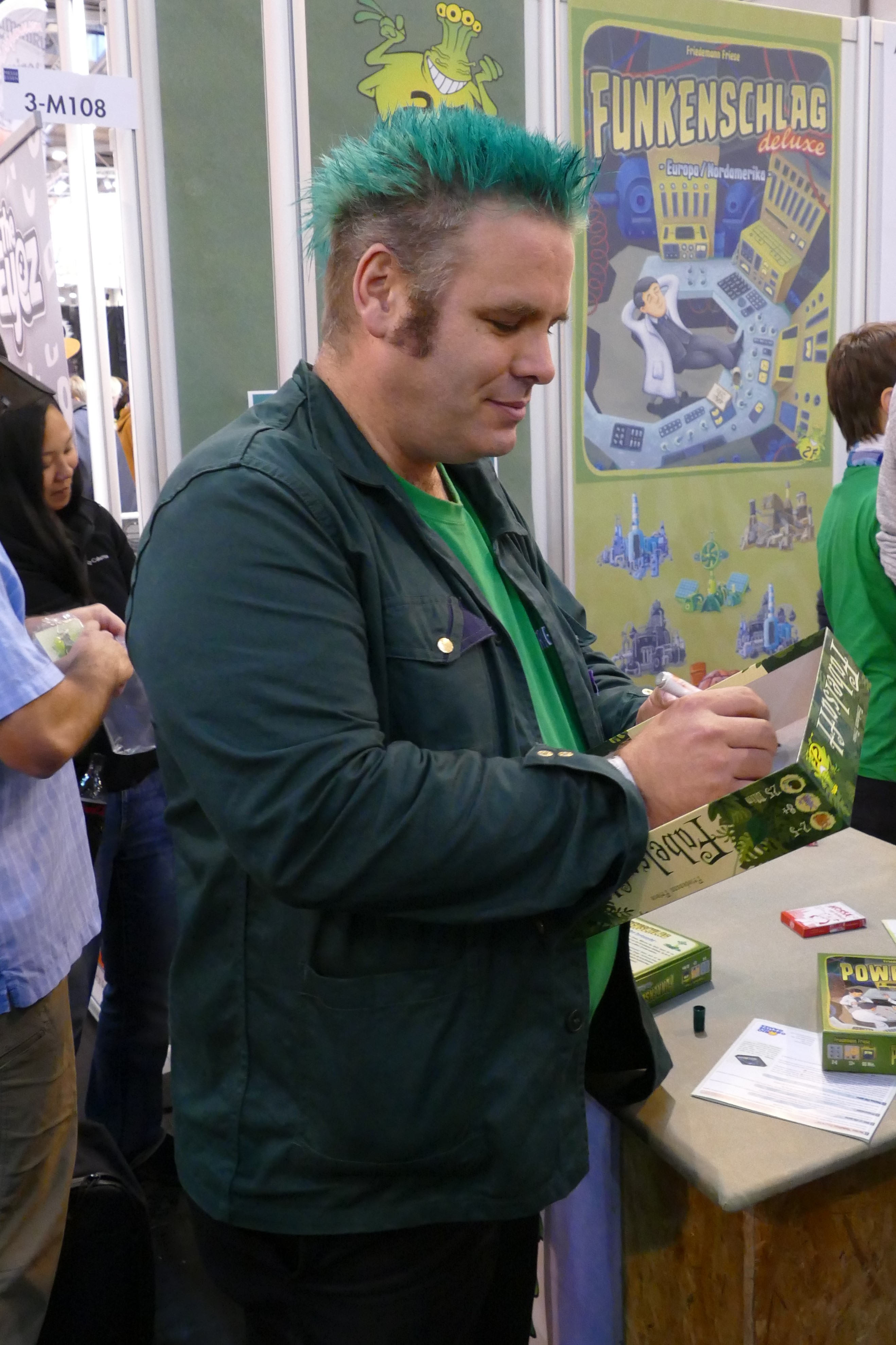
Friedemann Friese

504 may not have landed with fans as well as Friese had hoped, but a game system that has 504 possible combinations of games is a testament to this designer’s versatility. Funkenschlag or Power Grid is an electrifying network building game–pun intended–that may have led to the more streamlined and widespread Ticket to Ride. Friday takes the deck building genre and turns in a story-driven solo experience. I love how the cards you use in the deck can get shuffled back in and have a different effect later in the game. I don’t know how many times I’d eat something that would eventually give me diarrhea. Your uncle Geekly has a weak stomach, so that’s almost like real life.

Fauna and Terra are some of the better takes on trivia games. I don’t care for trivia games as much as I used to—Trivial Pursuit may have ruined me on the genre—but I’ll gladly play either of these two games. Fabled Fruit is a simplified worker placement, legacy game, and that’s an accomplishment. I haven’t heard of too many worker placement games one could explain in under fifteen minutes, let only one that includes a legacy component. Friese is on fire. If his hair is any indication, it’s green fire.
AntoineBauza

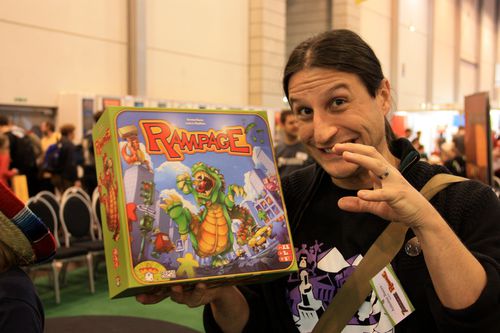
Antoine Bauza

We go from a German to a Frenchman. Antoine Bauza may use a similar aesthetic in his game’s artwork and their themes (strong Japanese influences), but his games have no shortage of story, mechanisms, and scope. Ghost Stories and Samurai Spirit are both cooperative games, but one pits Shaolin Monks against nightmare fuel, while the other, despite some balance issues, is a faithful recreation of Kurosawa’s Seven Samurai. If you’ve never seen the film, it doesn’t end well for the samurai. It also doesn’t usually end well for players of Samurai Spirit.

Bauza’s most celebrated works—the ones that have received the most awards—are card games: Hanabi and 7 Wonders. Hanabi is an interesting 50-card, cooperative game where players can see others’ cards, but not their own. 7 Wonders and its excellent spin-off 7 Wonders Duel popularized card drafting. I’d place Duel slightly ahead of base 7 Wonders because of its use of a pyramid set-up and speed of play, but I couldn’t deny the appeal of 7 Wonders. Grumpy Uncle Geekly wanted to dislike it but didn’t.

There are just too many game types from Bauza: Takenoko (a deceptively strategic game about a Chibi panda eating bamboo), Tokaido (a gorgeous timeline game about a Japanese vacation), and Rampage (like it’s video game namesake, players destroy a city with wooden monsters).

I could’ve gone with several other French game designers here too. Bruno Cathala and Ludovic Maublanc are not only frequent co-designers of Bauza’s, they too seldom use the same mechanism twice.
EricMLang

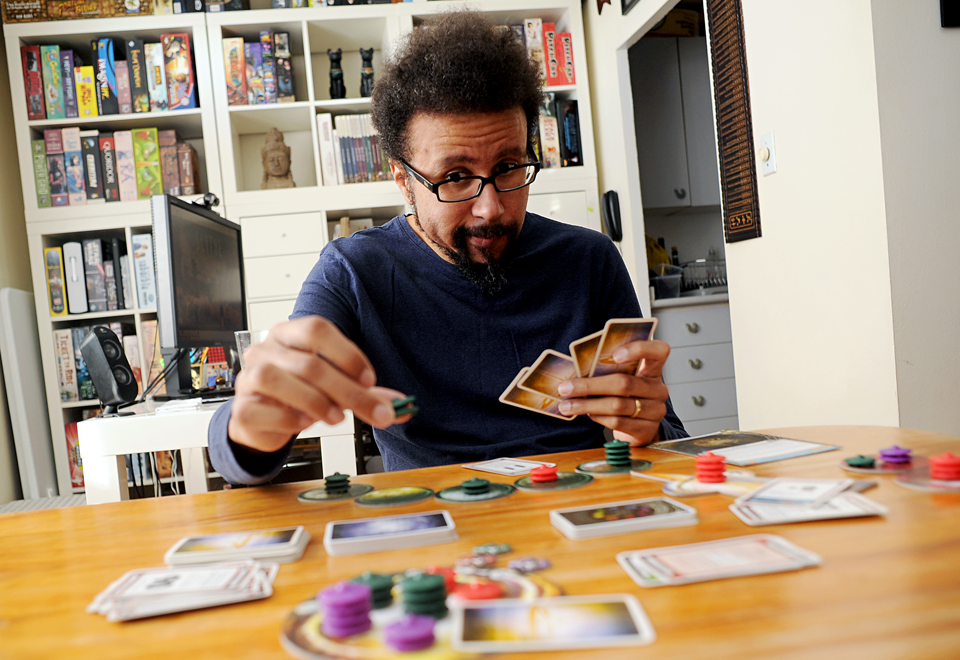
Eric M. Lang

If you noticed trends with Bauza’s games, you’ll see some form with Canada’s favorite game designer Eric Lang. But Lang delivers the goods and his games are eclectic. I’m a huge Lang fan-boy. I see his name on a game and I’m already interested.

Miniatures? Yeah, he’s made some of those games. Anything from Cool Mini or Not (CMON games) is a safe bet: Blood Rage (half strategy Euro, half kickass Vikings), Arcadia Quest (Chibi fantasy dungeon dive), The Godfather: Corleone’s Empire (yeah, it’s a mafia game), and Rising Sun (the second game of the Blood Rage trilogy).

Card games? Yes. He has plenty of those too: Star Wars: The Card Game (this is a great living card game update to the earlier collectible one), Warhammer: Invasion (another living card game update), A Game of Thrones: The Card Game (Same), and Call of Cthulhu: The Card Game (yeah, he does a ton of  these, but he’s great at them).

Dice games? Lang has made some of my favorite dice games. Quarriors! introduced dice to the deck building mechanism. Dice Masters added a collectible layer to Quarriors!, creating the first successful dice collection game that has since been mimicked. Yeah, I’d play a new version of Trivial Pursuit or Monopoly if it had Eric Lang’s name on it.

Designers Who Tend to make the Same Game

MattLeacock

Matt Leacock

This may be sacrilege. I can hear boos from my computer screen, but just because a designer makes a lot of similar games doesn’t mean that they’re poor game designers. I started with Matt Leacock because he’s such a great designer—one of my favorites—but he tends to make a lot of cooperative games. If there was a gaming dictionary, you’d see his face beside the word cooperative.

Pandemic, Pandemic Legacy (seasons 1 and 2), Pandemic: The Cure, Forbidden Island, Forbidden Desert, Forbidden Sky, and Thunderbirds: the Co-operative Board Game are all cooperative games. I think it’s safe to say that Leacock has a type.
UweRosenberg

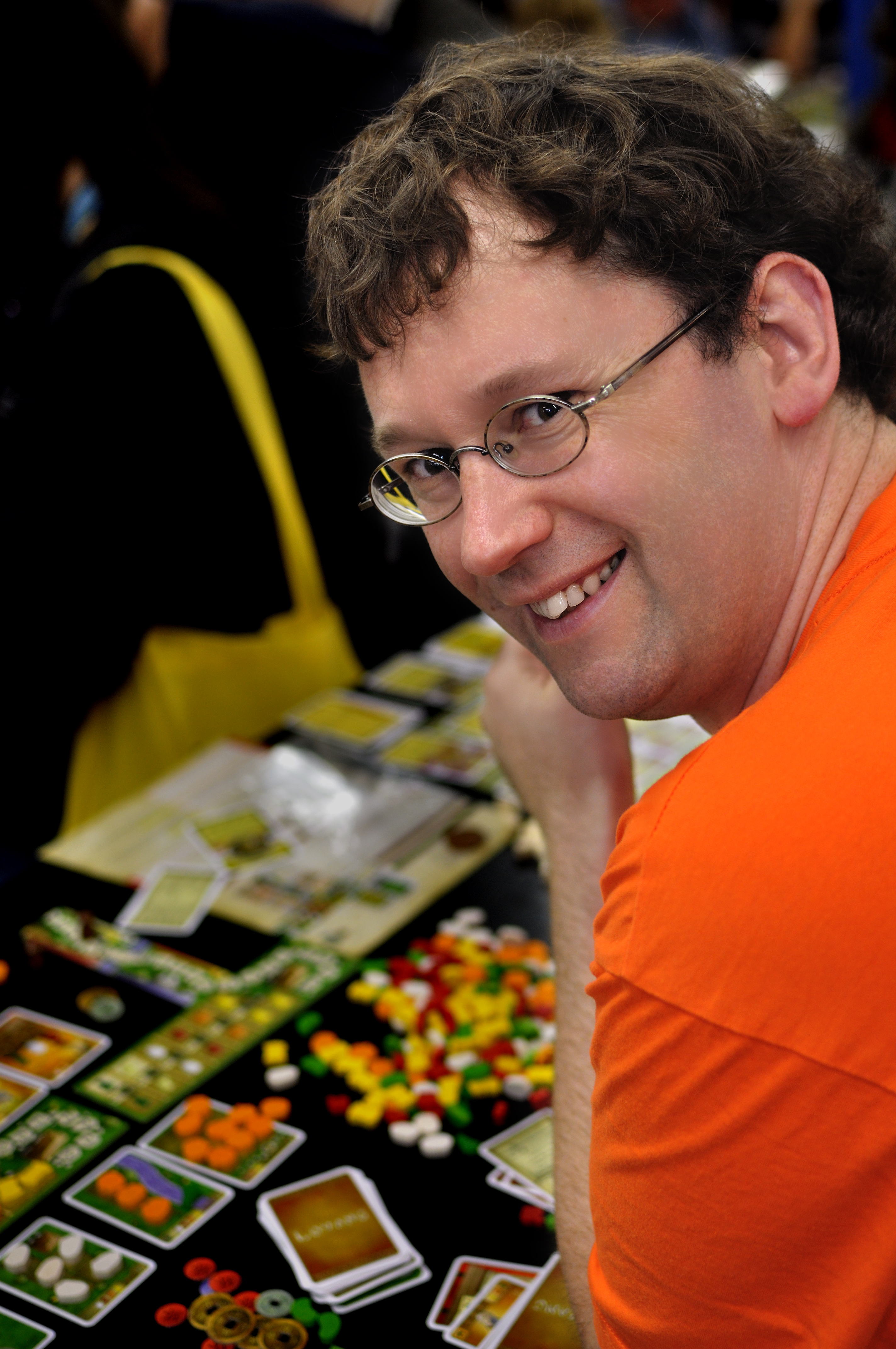
Uwe Rosenberg

Rosenberg’s career is split by two games: Agricola and Patchwork. Prior to Agricola, Rosenberg experimented with various game types, but after Agricola, he made mostly worker placement games with brutal feed your workers mechanisms. What is with feeding workers? There must be some designers who went hungry one time too many.

Le Havre, and Caverna were—admittedly better—variations of Agricola. Then, Rosenberg released Patchwork (a game that added Tetris-style mechanisms to board games). A Feast for Odin combined elements of Agricola with Patchwork, and future Rosenberg games began taking Patchwork in different directions.

Rosenberg’s games are usually good to excellent, but sometimes, I have the urge to report them to the department of redundancy department.

StefanFeld

Stefan Feld

If Leacock’s picture would be next to cooperative, Stefan Feld’s picture would be next to point salad. A point salad game is one that’s heavy on strategy, there are various methods of playing and each method yields points, and the player at the end of the game who has the most points, wins. The reason it’s called a point salad is that players can—and often should—choose multiple methods of play and the resulting points to win. It’s like a big, crunchy, board game salad. You know you’re doing well when you’re eating all the game’s roughage.

Feld is the king of balance. I’m not sure if I’ve played a single game of his that wasn’t balanced and that’s fantastic, but you don’t even need to see the box or know much about the game to tell when a game is designed by Feld.

Up and Coming Designers

IsaacChildres

Isaac Childres

The designer of the current number one rated game on boardgamegeek (BGG) Gloomhaven must be on any list of newer game designers. Childres has released a handful of games prior to the dungeon crawl, but no game before or since has been as large in scope as Gloomhaven.

While I’ve heard mixed reviews surrounding Founders of Gloomhaven (a Euro strategy game based in the world of Gloomhaven), I have no doubt Childres will have plenty of other great projects in the future.

CallinFlores

Callin Flores

Callin Flores’s path to board game design is an odd one. He began as a podcast creator for Plaid Hat Games and slowly became a designer in his own right. Plaid Hat has some of the best designers in the business, so Flores had plenty of guidance for his new release Guardians. I haven’t had the chance to play Guardians, but it looks as if it’ll be another hit for the company.

LudovicRoudy

Ludovic Roudy

The only game that comes close to Gloomhaven’s scope, may be Ludovic Roudy’s 7th Continent. This game puts players in the role of shipwreck survivors, stranded on a deserted island. It’s a character and story driven game that has a unique brand of exploration. I can’t wait to see what’s next from Roudy.

Who are your favorite new game designers? Who are the best designers that have a preferred game type or choose more eclectic mechanisms? Let us know in the comments.

My Favorite Game Mechanics: Pit Crew

Many people won’t like Pit Crew. The real-time aspect of the game can get players flustered and dampen some of the fun, but that’s what I like about it. While most real-time games have players dashing to play cards or some other game device to a common area, Pit Crew has gamers play solitaire.

The rules are simple, but I won’t go into them in detail here. Players assume the role of a pit crew during a stock car race. They play cards numbered 1-10 in either white or black numbers (there’s a bonus if a player uses all of one color) on areas where they must place a pair of the same number, go up or down in number (with 10 and 1 being adjacent), and reach a specific sum. The first ones to do so begin rolling a die. For every 6 they roll, they move their car one space on the track—and that’s where it gets interesting.

PitCrew_BoardGame04.jpg

Geoff Engelstein has created a psychological game with his players. The impulse is to start playing your cards quickly as soon as you hear someone roll a die. But Pit Crew is more concerned with gamers playing a clean game of solitaire. Your opponents will gain more spaces with the penalties incurred by messing up a pattern, than any spaces gained on a die.

Roll. You may forget what total your on for the area that needs a specific sum. Roll. Did I play a three and then a four or a five and then a four? Roll! I don’t care if the color on the numbers match, I’m placing those two ones in a pair spot.

PitCrew_BoardGame03.jpg

What’s worse is that gamers may feel more impowered to give their opponents bonuses rather than take a penalty. This is another psychological trick Pit Crew uses. If my car went backwards on the board for every one of my mistakes, the penalty would only affect me. With all my opponents (it may be a 3-player game) gaining a benefit from my mistakes, my mistakes are multiplied, but in an odd sense, a lot of gamers would prefer giving other players a bonus instead of accepting a penalty.

PitCrew_BoardGame02.jpg

Pit Crew poses an interesting question. Is it better to be punished or rewarded?

What do you like most about Pit Crew? What are the things you don’t like about Pit Crew? Heck, is it better to be punished or rewarded in games?

It’s a good thing I’m a glutton for punishment, let me know what you really think in the comments.

Getting Started with Dice Placement Games

Your uncle Geekly covered worker placement in a previous starter game segment—those are games where players place pawns on the board to gain certain abilities—and this week we’ll discuss dice placement games which are like worker placement games except that players place dice instead of pawns, or one could say that one’s dice are their pawns.
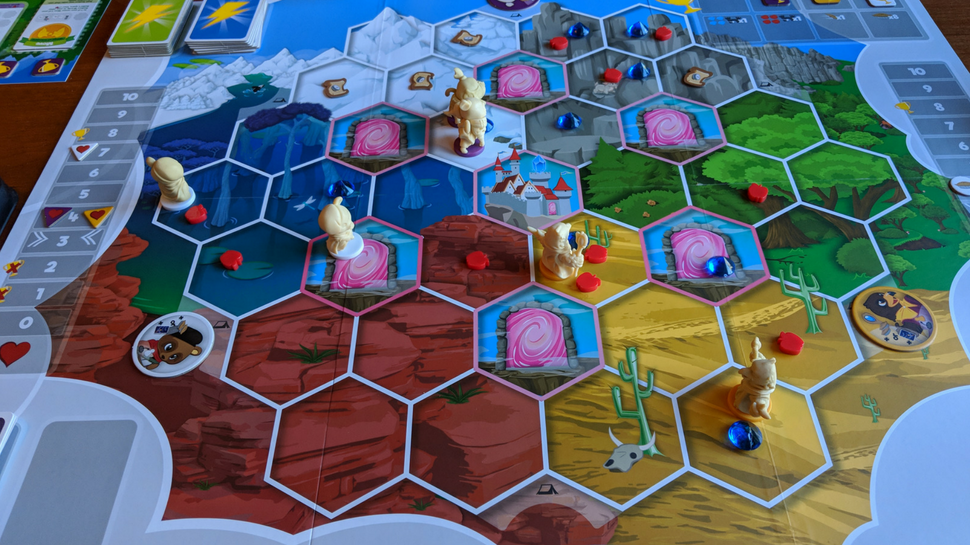
As usual, good old Geekly has some starter games for someone interested in the gaming genre. Let’s get to some of the better and simpler games of this type and work our way up in complexity.

Kingburg01

Kingsburg

I usually try to go with more recent games in a genre, but Kingsburg is a ten-year-old game or so that deserves a mention. Players chuck dice to determine what they can do each turn. The shared board hold a king space and spaces for advisors to the king. Each one grants a different ability based on the numbers one rolls. If some rolled three 6s, they can choose the king space at 18 or a 6 and a 12. The person with the lowest roll each round picks first, and that may be the most clever way to negate a bad roll. Dice hate me. If it was possible to roll negative 18, I’d do it.

There are three phases—oh, yeah three, it’s the magic number—and each player must face an invading army on the fourth turn. The fourth phase just happens to be winter. Winter is coming.

Even though players must face something at the end of each group of four phases, it’s nice to see that a worker placement game designer isn’t obsessed with food. And Kingsburg does a good job of bad die roll mitigation. You’ll see plenty of other designs use other methods to compensate for a bad roll. Apparently, I’m not the only one dice hate.

DiceCityBoardGame.jpg

Dice City

While Kingsburg has a shared board, Dice City gives each player their own board. On each turn, players roll five six-sided dice of different colors and place those dice on their board according to a chart. The columns show numbers and players must roll that number to place their dice in that row, but the rows are one of their die’s colors. So, if one rolls a three on their yellow die, they must place their yellow die on the second row (the yellow row) and the third space from the left (the column for 3s).

On each of these spaces, which are shaped like the game’s deck of cards, is an action. Players may choose to take the action they rolled (usually to get resources) or they may choose to discard one or more of their die or dice (for that round) to move another die left or right for each die discarded. You know how I said that Kingsburg does a good job with bad die roll mitigation, Dice City’s use of discarding dice allows for even more of that. Yay!

Players can upgrade their boards by purchasing cards with the resources they use and that accomplishes two great things: each player’s board is different and further strategy over luck. Dice City may look like a game that uses a ton of luck, but it’s sneakily deep. That said, it’s a step up, or at least sideways, in complexity to Kingsburg.

Discoveries01

Discoveries

Discoveries is most likely a step up in complexity to the others on this list, but a lot is added with that smidgeon of complexity. In this game, players take on the roles of explorers tasked by Thomas Jefferson to explore the western United States.

Unlike the other games on this list, Discoveries uses unique and thematic dice to represent the players journey. Horseshoes, feet, writing, and Native American die faces replace pips of 1-6. Each player receives five of these dice in their player color. They roll their dice and may take one of two actions each turn: play dice of the same type to any space on the board or get dice back from the game board.

It’s this push-pull of gaining dice from the game board—and how one does it—versus using dice that give Discoveries its depth. I’ll discuss how to get points later, but one doesn’t necessarily grab all their used dice when they take the “rest” action or the one that allows a player to retrieve dice from the board. Many of the dice used to explore go to a communal discard area. A player has the option of taking all the dice from one of the communal discard areas or taking all their personal dice (no matter who has them or where they are). It’s a wrinkle not seen in too many other dice placement games. Players must do a good job timing when they retrieve dice. You can snake someone’s die and use it before they decide to take it back. It takes a game or two to get the timing, but it’s not that difficult to learn and that’s why Discoveries is the last game on this list.

Players earn points by exploring more areas, but to explore an area one must generate enough resources (in rivers or mountains to cross) in a single turn because players cannot bank rivers and mountains from one turn to the next.

The game ends when the deck runs out of cards, and there is a scoring method that’s simple enough to understand but would make this write-up swell even more with words, so I won’t include it here, but another one of my favorite mechanisms is Discoveries use of dual-sided cards. Players may befriend Native American tribes and if a card from that offering is used, a new card is dealt Tribe side up. Players also use cards if they explore and if a card from that offering is used, a new card is dealt Exploration side up. It’s an elegant system that forces each game to play differently than the last.

Discoveries, like the other games on this list, also has bad die roll mitigation, but it may be the cheapest of all of them: trade in one die to turn another die to the face you want. Love it. This is easily the least random result dice game on this list.

Final Thoughts

Like worker placement games, it’s difficult to come up with easy to learn dice placement games with depth. Again, I had to go with slightly more complicated games than usual, but they still have some wide appeal. There’s a little more variety in terms of subject matter too. And no food. Yay!

How many times have dice hated you? You can roll shame one of your dice or let us know your favorite dice placement games in the comments.