Tabletop Game Review: SiXeS

Hey, hey! Kyra Kyle here. We haven’t done too many tabletop game reviews over the past several years—before our Marvel United review last month (here’s the link for that review if you missed it). Today’s review is a much shorter game, but one that packs a punch: SiXeS.

Played over six rounds, SiXeS is a party game where players predict what their opponents will write that will match—or not match—depending on whether you’re in a “match” round or a “unique” round. The player with the most points after six rounds, wins.

Before we proceed, we’ll prep the party and discuss SiXeS’s details.

The Fiddly Bits

Designer: Steven Poelzing and Rick Soued
Publisher: Eagle-Gryphon Games and Hobby World
Date Released: 2016
Number of Players: 3-8
Age Range: 12 and up
Setup Time: Less than a minute
Play Time: 15-20 minutes

Game Mechanisms

Party Game
Card Game
Word Game

Sixes Tabletop Game

Game Setup

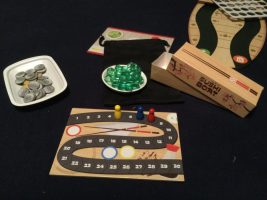
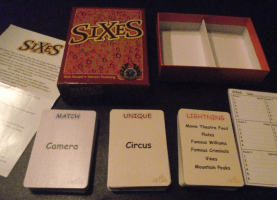
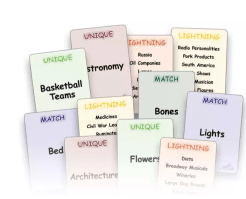
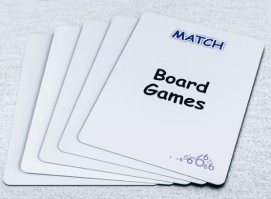
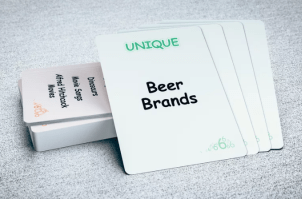
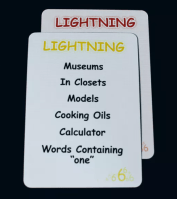
SiXeS consists of three decks of cards: “Match,” “Unique,” and “Lightning” decks and a scoring pad. Each player gets a sheet from the scoring pad and a writing utensil. Shuffle all three decks. Each card is double-sided with one side easier than the other. SiXeS’s rulebook shows which side to use for each round.

You’ll also need a means to keep time; you can use a minute-long sand timer (SiXeS doesn’t include one) or set your phone’s timer for a minute. Some of the rest of “Game Setup” can fall under “Game Flow,” so let’s continue with the next section.

Game Flow

On the scorecard, you’ll find rounds 1-6 marked. Each round has spaces for six answers. Play begins with a “Match” card. After the timer starts, players will think of things that fit the category’s criteria (this will be the word or words printed on the card). For instance, a category like “Sandwiches” can yield answers like “Peanut Butter and Jelly,” “Hero,” or even “Knuckle.” You’re going to have to match at least one other person’s answer at the table, so you may not want to get fancy with which words you use during a “Match” round.

Players find out if they matched anyone else at the table by sharing their answers. You receive a point for each answer that matches another player. If all six of your answers have at least one match, you receive a “Crooked Six.” That’s a seven. You get seven points if you match all six answers. I guess the designers wanted to maintain SiXeS’s theme by calling a seven a “Crooked Six.”

The objective changes with “Unique” rounds. “Unique” rounds play a lot like Scattergories, but you aren’t forced to begin each of your answers with the same letter. In “Unique” rounds, you receive points for each answer that matches no one at the table. You can also earn a “Crooked Six” if no one else puts down your valid answer.

The final card type, “Lightning” has six different categories. You will answer each category in the order in which they appear on the card, and players will try to match answers with at least one other player at the table.

The player with the most points at the end of six rounds wins.

Review

SiXeS resembles Scattegories but with a twist. I like how the rounds vary. As a result, I find it easier to continue playing multiple rounds of SiXeS over Scattegories.

I have yet to play a game of SiXeS that doesn’t include someone getting miffed that no one else chose their cromulent answer or at least one round ending with multiple people unable to fill in all six spots on their scorecard. SiXeS can be frustrating at times but also engages a group of gamers. It’s a great ice-breaker game. It fits into the party game category and a “getting-to-know-you” game. I can see companies using SiXeS as a morale-building tool.

SiXeS’s box says you can play 3-8 players. I wouldn’t recommend three players. Four and five players can be a lot of fun, but SiXeS’s works the best at higher player counts. There’s nothing preventing someone from playing SiXeS with more than eight players. No one’s stopping you from handing out extra scorecards and writing utensils.

That said, beyond the eight-player mark is where SiXeS either becomes super easy and super hard, depending on the round. Matching one out of ten or eleven players would be easy—too easy—but coming up with a unique answer among ten or eleven players can be nearly impossible. I’d stick to as close to eight players as I can. You could convince me into a nine or ten-player game of SiXeS, but the game begins to crumble under the weight of eleven or more players.

Verdict

Easy to learn and fast to play with great replayability, SiXeS gives Scattegories a much-needed twist. It’s also highly portable. I won’t mind taking SiXeS with me on future trips.

Top 5 Tabletop Games from 1984-1985

Hey, hey! Kyra Kyle here. Back with another Top 5 Tabletop Games. 1984 and 1985 had even fewer games for this list than the 1982-1983 list. These two years saw a lot of games that got overlooked in previous years find an audience. Axis & Allies was one such game, but it was originally produced in 1981 and made that list. Even the Spiel des Jahres winners for 1984 and 1985 were games from prior years. That said, I still found a handful of games. Let’s talk games.
But first, in case you’ve forgotten our criteria for the Top 5 Tabletop Games, let’s reiterate the ground rules again before we get started.

1: Cultural relevance plays as much of a factor as overall quality. A game might make a list that doesn’t hold up to others of its type, but you must admit the game is everywhere.

2: Only one game from a franchise makes the list. This will become more of an issue the closer we get to games with expansions.

3: Longevity plays a role, too. A game doesn’t have to fly off the shelves today, but it had to have some widespread appeal for a decent time.

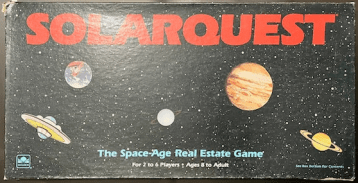
5: SolarQuest (1985)

SolarQuest is a fancy space-age version of Monopoly. Players purchase and develop planets, space stations, and moons set in our solar system. SolarQuest has found renewed interest because of eBay. So much so that it’s recently had a successful Kickstart campaign in 2016. SolarQuest makes a notable addition with fuel. Players must watch their ship’s fuel level because they automatically lose the game if they get stranded with no means to refuel.

Outside of fuel, most of SolarQuest is Monopoly set in space. It can be fun, especially when someone runs out of fuel.

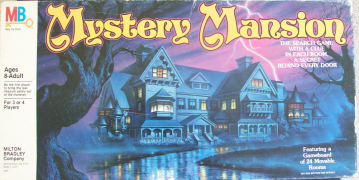
4: Mystery Mansion (1984)

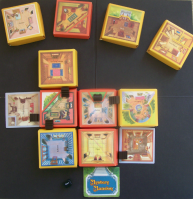
I still quote the mechanical voice of the 1990s version of Mystery Mansion. The original game uses a modular board, one of the first times that a major board game company (Milton Bradley) used a modular board. Mystery Mansion came with 24 cardboard tiles representing different rooms in the mansion: 8 First Floor rooms, 8 Second Floor rooms, and 8 rooms in the cellar.

Each room has different doors and objects that come into play during the game, and players must search the items in the room to find the treasure hidden within. The electronic voice version replaces the modular board (the cardboard tiles) for a fixed layout reminiscent of Cluedo (Clue for Americans). In this version, the electronic device will tell the players which items are in the room, so the setup to the house isn’t the same each time. Other than the board and the mechanical voice, everything else remains the same from the original Mystery Mansion.

Fun Factoid: During the 2015 music competition Iron Composer, where composers have five hours to write a piece of music, finalist Ryan Keebaugh used the mechanic voice from the 1990s Mystery Mansion as his “secret ingredient” for his piece.

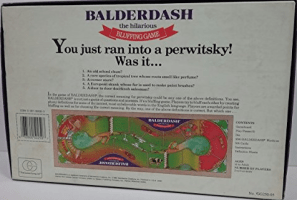
3: Balderdash (1984)

Balderdash is a variant of a classic parlor game, Fictionary, but it counts as a 1984 release. Seriously, there weren’t that many major games that came out these two years. Anyway, Balderdash is a game of obscure words. Players must create definitions for words seldom used in the dictionary and gain points for guessing the correct definition or having other players select their invented definition.

Balderdash can be great fun but like Trivial Pursuit, if you play the game enough, you’ll learn many of the words and their definitions. Hey! That’s a fun way to increase your vocabulary.

2: Abilene (1984)

Abilene is set in the city of Abilene during 1870. This was the time and place for the main transshipment point for the herds of Texan cattle barons. Players assume the role of ranchers who, with the help of their cowboys, drives their herds to Abilene, trying to capture parts of their opponents’ herd along the way.

Abilene has a few twists on this concept. First, players can capture their opponents’ herds as mentioned, but second, your cattle can be diseased. Players have a certain number of diseased cattle in their herd and whenever a herd makes it to Abilene, one’s opponents guess how much of the herd is diseased. Abilene received consideration for the 1985 Spiel des Jahres. Not bad for a game set in Texas. (Note: games set in the United States at this time didn’t fare well in the Spiel des Jahres.)

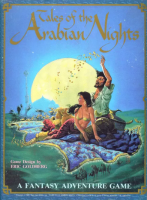
1: Tales of the Arabian Nights (1985)

Tales of the Arabian Nights is getting its 40th anniversary glow-up next year. You can sign up for the Gamefound project preview here (https://gamefound.com/en/projects/play-to-z/tales-of-arabian-nights-40th-anniversary-edition).

Tales of the Arabian Nights uses paragraphs to tell a story where each player travels through the Arabian desert and partakes in adventures from One Thousand and One Nights. Players gain and lose statuses from these adventures and collect Story and Destiny Points. Once you earn enough points to become sultan, you can return to Baghdad to win the game.

Many board game enthusiasts swear by this game as one of the best storytelling games. Every generation, we receive a new version of the game. I’m glad Play to Z has an upcoming new version.

Did we get the list right, for the most part? Let us know in the comments. And wherever you are, I hope you’re having a great day.

Check out the other lists in this series:
Top 5 Tabletop Games Prior to the 1930s
Top 5 Tabletop Games of the 1930s
Top 5 Tabletop Games of the 1940s-50s
Top 5 Tabletop Games from the Early 1960s
Top 5 Tabletop Games from the Late 1960s
Top 5 Tabletop Games from the Early 1970s
Top 5 Tabletop Games from 1980-1981
Top 5 Tabletop Games from 1982-1983
Top 5 Tabletop Games from 1986-1987
Top 5 Tabletop Games from 1988-1989
Top 5 Tabletop Games from 1990-1991

Top 5 Stocking Stuffer Board Game Companies

Hey, hey! Kyra Kyle here. We’re in the middle of the Christmas season. There aren’t that many days until the holiday, so I decided to go with another purchasing guide: stocking stuffer board games. But I don’t want to just do individual games. No, no. Let’s discuss board game companies known for producing good games that can fit inside a stocking.

We’ll have to set some ground rules.

1) The packing must be small enough to fit in at least 50% of stockings.

2) The games must be good. While smaller packaging can lead to compromises, who wants to play a bad game?

3) Extra points for companies that produce various games. It’s easy to find a formula and produce multiple versions of the same game, but I’m handing out brownie points to any company capable of stretching their creative muscles.

With all that out of the way, let’s get to the games, or the board game companies.

5: The Game Crafter (Mint Tin Games)

On the Game Crafter, aspiring game designers can buy board game components for their prototypes. But it also functions as a store for indie board game designers to sell their games. The Game Crafter is a great place to support smaller game companies and indie board game designers directly. We’ll be covering their Mint Tin Games line. These games fit inside a mint tin. Perfect for a stocking.

Price: Varies between $20-$35. Board game designers set their own prices, so mint tin games vary wildly.

Quality: It’s a mixed bag. That’s why Mint Tin Games are fifth on this list. But there is a silver lining. The Game Crafter gives their stamp of approval to any game they view as worth your time.

Variety: Tons! Mint Tin Games are the Wild, Wild West of board games. Think of it as the board game equivalent of the indie video games on Steam. You’ll find games here that you can’t find anywhere else.

Size: 4-inch by 2 1/2-inch mint tins. You can fit these tins into any stocking. I’m surprised by the amount of games you can find that fit inside this packing.

Titles: Again, I’d look at anything that gets the Game Crafter seal, but here are some standouts. I’ve found a ton of excellent solo games. Doom Machine is fantastic. Mint Knight is a fan favorite and a sandbox RPG. What? Astro Asterid’s Quick Shuttle Repair is a fast-paced resource management game. And Deck 52: Space Wrecked is a fun dungeon crawl.

Store Link: (https://www.thegamecrafter.com/games?query=mint&hitsPerPage=18) The Game Crafter (Mint Tin Games).

4: Pack O Game

We had a game series in a mint tin. Pack O Game fits inside a box of chewing gum. How do make a game fit in that tight of a space?

Price: $7 each. By far the cheapest set of games on this list. You can’t beat $7 for a game.

You can also buy a bundle for $50, but that includes 8 games and a pod that can hold all the games from a set, and there are three sets. Even though the pod can hold all the games in a set, it’s still small enough to fit into any stocking.

Quality: Most of the games in this line are good. There can be some duds, but for $7, you can buy a few. And the stellar titles can be fantastic.

Variety: These games use cards shaped like sticks of chewing gum. Despite that, there are plenty of game mechanisms represented in this line.

Size: Don’t worry about it. These are tiny games. These game boxes measure around 5-inch by 1-inch. Crazy small!

Titles: I haven’t played much from the second and third sets, but I played plenty of the first one. Shh must be the best of the bunch; it’s a cooperative word game. Hue and Fly are also good, but I have a soft spot for TKO.

Store Link: Pack O Game by Perplext.

3: All Play Games (Small Box Line)

For the most part, All Play has two sizes of games. We’ll be discussing the smaller (square-shaped) games with this listing. But the larger boxed games are worth perusing as well.

Price: Under $20. Great value for the amount of game inside these small boxes. It’s also a great price for a stocking stuffer.

Quality: While not all the games of this line suit my tastes, the games in All Play’s small box line are baseline good. If something sounds interesting, it’s well worth the price tag.

Variety: All Play has some of the best gameplay variety on this list. You’ll find plenty of themes and gameplay mechanisms that are sure to meet your board game enthusiasts’ preferences.

Size: This is what makes All Play’s small box games third place. This line dominates all the other criteria, but size could be an issue. The small boxes measure 5-inch by 5-inch. That could fit in at least 50% of stockings. Maybe? If you have extra-large stockings, no problem. And who cares if the box protrudes from the stocking’s top?

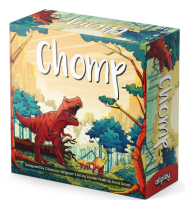
Titles: I mentioned Chomp in our “Getting Starting with Tile-Laying Games” (you can check out that write-up here); Chomp is an excellent game. Sequoia is another great title. Ghosts of Christmas may be a good thematic game for the season. And I’ve heard great things about Mountain Goats.

Store Link: (https://www.allplay.com/board-games/) All Play Games. Look for the square-shaped game boxes.

2: Button Shy Games

Board game rockstar Elizabeth Hargrave (Wingspan) got her start with Button Shy Games’s Wallet Game line. To date, she has more than one game in the Wallet Game line. As the name suggests, these games fit inside a wallet, so they will definitely fit inside a stocking.

Price: $12 each. Another cheap option with some great games on offer.

Quality: Like All Play’s small box line, most games in Button Shy Games’s Wallet Game line are good. But there are some standouts.

Variety: Most, if not all, of the games in this line use 18-card decks. Each game does something different with its 18-cards but it can get repetitive if you pick up too many at once.

Size: The size of a slim wallet, roughly 5-inches by 3-inches. You won’t have an issue fitting any of these games into your stockings.

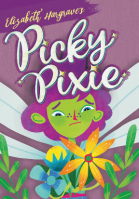
Titles: Hargrave’s first published game Tussie Mussie is not in stock before Christmas 2024, but you can pre-order the next printing set for an April 2025 release. But she does have another great game named Picky PixieMysticana uses a nice twist on rock-paper-scissors, and it has plenty of expansion should you enjoy the core gameplay. Sprawlopolis is a great city-building game. It’s sold out, but its stand-alone sequel Agropolis is available.

Store Link: Button Shy Games Wallet Games line

1: Oink Games

Oink Games have a lot of quirky little games in their line. They have plenty of games that come from East Asia.  More than a few of those will get a mention in the Titles section.

Price: Most are $23, but there are a few that can be a little higher or lower in price.

Quality: Another company that has baseline good games with some standouts.

Variety: Except for All Play’s small box line, Oink Games may have the most variety of any game company (or line) on this list.

Size: The boxes are about 3.5 inches by 2.5 inches. Bigger than most other lines on this list except All Play’s.

Titles: I covered Deep Sea Adventure some time ago with our “Getting Started with Pickup and Delivery Games” writeup (here’s a link); it’s a great title. Scout earned the 2022 Spiel Des Jahres; I may have to check out that one. A Fake Artist Goes to New York is a ton of fun; everyone draws a picture together, but one person (the fake artist) doesn’t know what the group is drawing.

Store Link: Oink Games

That concludes our list. There are a lot of games worth trying. There may even be some that I may have to purchase…as a gift. A gift that’s TOTALLY for someone else.

Did we get the list right? Let us know which companies you would add in the comments. And wherever you are, I hope you’re having a great day.

Top 5 Marvel United Expansions to Buy

Hey, hey! Kyra Kyle here. We discussed Marvel United, a cooperative board game designed by Eric Lang, less than a week ago. If you want to see our review of the core set box, here’s a link to that review (link to the review). We also started a guide to Marvel United; you can check that out here (link to the guide page). But today, let’s discuss which Marvel United Expansions are best to purchase first. Think of this as a Marvel United Purchase Guide.

Marvel United has a ton of expansions, so we need to narrow down which ones—in general—are the expansions you should look for. Disclaimer: Eric Lang is one of my favorite designers, and he did a brilliant thing with this game. (I may be biased, so sue me.) Lang put more of his design focus on the villains and not the heroes. That must’ve made the design and iteration process easier. He worked smarter, not harder: brilliant. This isn’t to say that the heroes don’t have personality, they do, but the villains add more wrinkles to Marvel United’s gameplay and with that said…

1) Expansions with more villains feature more prominently on this list. The more villains, the more unique ways to play Marvel United.

2) Boxes with unique gameplay (outside of more villains) will also rate high on this list.

3) I won’t include core sets. These aren’t expansions; they are base games needed to play Marvel United. With that said, you need at least one core set to play Marvel United. Pick the one that looks the most interesting. I like the original Core Set and the X-Men Core Set.

4) If you have a favorite Marvel character, get the box with that character. It doesn’t matter which boxes I say are the best to have. If your collection isn’t complete without your favorite character, get your favorite character.

5) If CMON Games releases another Marvel United campaign on Kickstarter or Gamefound (which is unlikely because they began DC Heroes United, which will be compatible with Marvel United, so crossover battles!), you should be able to get past Kickstarter exclusives. Fingers crossed that CMON will run a second print run for any of the campaigns. That’s more of a possibility than a fourth Marvel United set.

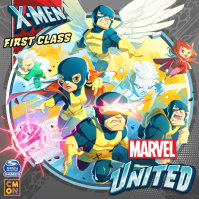
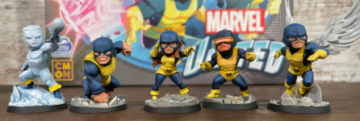
5: X-Men First Class

Spoiler Alert: We’ll see more than one Marvel United X-Men expansion on this list. Many of the runners-up come from the X-Men; that’s what you get when you add the Fantastic Four to the X-Men campaign (the Fantastic Four just missed the list). X-Men First Class has a whopping five heroes, which is rare for an expansion. It also features a double boss in Quicksilver and Scarlet Witch. And it even includes Danger Room Challenges to spice up the gameplay even further.

X-Men First Class has a little bit of everything. Its only downside is that it’s a Kickstarter exclusive. This will be a theme for the list. It’ll be difficult to find X-Men First Class for cheap, but well worth the purchase if you can find it. Or you could wait for a second print run. Again, fingers crossed.

4: Days of Future Past

Another X-Men expansion makes the list. Days of Future Past brings the classic X-Men story of the same name to life. (In case you missed it, here’s our list of X-Men Starter Stories; “Days of Future Past” made the list.) Days of Future Past adds sentinels. And these sentinels (three large ones sporting different poses) are almost to scale. This marks the first time Marvel United attempted a larger model type. Ahem. The largest model shows up later on this list.

Add in Nimrod, a futuristic and enhanced Sentinel model, as the main villain and you have the recipe for another great Marvel United expansion. Again, Days of Future Past is a Kickstarter exclusive. Why does CMON keep locking this great content behind Kickstarter exclusivity? C’mon, CMON. I know why they do it: money. I just wanted to say C’mon, CMON.

3: Maximum Carnage

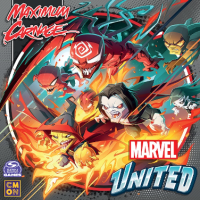
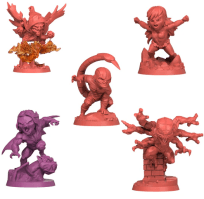
Maximum Carnage has the most villains in an expansion, not including the promo boxes of Kickstarter exclusives. It includes a staggering seven villains (with one of those villains, Morbius, who’s also playable as a hero). Yikes! And Maximum Carnage isn’t a Kickstarter exclusive. Maximum Carnage builds on a playstyle that will show up again on this list; it introduces a New Sinister Six.

If you have the Kickstarter exclusive (there is a difference between the retail and Kickstarter versions of Maximum Carnage), you can interchange the various members of the Sinister Six. If you don’t have the Kickstarter-exclusive Maximum Carnage expansion and you have everything else need, you could print off the New Sinister Six cards from the Marvel United Wiki and add them to your game. I’m not condoning that behavior. I’m just saying you can. Wink.

You could just have a core set and most of the Spider-Man expansions and have a game of Marvel United that you could play for decades. The Sinister Six Module is fantastic.

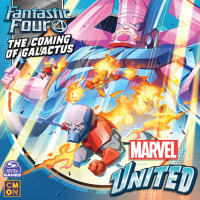
2: The Coming of Galactus

Galactus is the largest Marvel United model to date, and The Coming of Galactus adds a new threat to the game. Namely, Galactus. But Galactus does have heralds, and The Coming of Galactus includes four of these heralds: Nova (Frankie Raye), Terrax, Firelord, and Air-Walker. Silver Surfer was released in the Fantastic Four expansion, which again, barely missed this list. If you have Silver Surfer, he can be added as one of Galactus’s heralds. Yay!

Since Galactus is a world-level threat, the gameplay surrounding him is on a global scale. The heroes don’t defeat Galactus. Not many can defeat Galactus. Instead, the heroes convince Galactus not to consume Earth. The Coming of Galactus is thematic and worth the buy, even if you just want a massive Galactus standing on the moon.

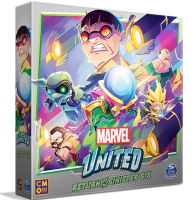
1: Return of the Sinister Six

Return of the Sinister Six includes the original members of the Spider-Man’s Sinister Six. Six villains are always a nice addition. Add in a new way to play, the villains are on a team, and this easily makes Return of the Sinister Six the best of the original Marvel United campaign’s expansions. While I could’ve moved any number of the expansions higher on this list and one of the expansions (Maximum Carnage) improves upon this gameplay style, Return of the Sinister Six deserves the top honors.

Unironically, Vulture may be one of the most difficult villains to defeat, whether a part of the Sinister Six or on his own. He gives me nightmares. And this is such a great expansion.

So, did we get the list right? Which expansions would you include in your Top 5 Marvel United Expansions? Let us know in the comments. And wherever you are, I hope you’re having a great day.

Tabletop Game Review: Marvel United

Hey, hey! Kyra Kyle here. We haven’t done a tabletop game review in quite some time. We’ll rectify that with a board game review of a game we began writing a guide for Marvel United. Excelsior!

Players act as iconic Marvel heroes who work together to stop the master plan of a powerful villain controlled by the game. Each villain has a unique master plan, cards that trigger various effects, and threats that make clearing locations difficult. Heroes clear missions, making the villain vulnerable, and finally take on the big bad villain before they complete their dastardly plan. Can you save the day in time? Let’s find out with Marvel United.

Before we get any further, we’ll take a side quest and discuss Marvel United’s less heroic details.

The Fiddly Bits

Designer: Andrea Chiarvesio and Eric M. Lang
Publisher: CMON Global Limited and Spin Master Ltd.
Date Released: 2020
Number of Players: 1-4
Age Range: 8 and up
Setup Time: 5-10 minutes
Play Time: 30-40 minutes

Game Mechanisms:

Cooperative Play
Hand Management
Modular Board
Solo / Solitaire Game
Variable Player Powers

Game Flow:

The villain begins the game with a turn. A villain plays their turn by drawing the top card of their master plan deck.

1) The villain moves the number of spaces indicated.
2) Resolve any BAM! Effects (if any) and these effects will be printed on a space within the villain’s dashboard and vary from villain to villain.
3) Then, place the civilian/thug tokens (if any) indicated at the bottom of the card. The target symbol signifies the location where the villain ended their move. Villains usually place tokens on their location or locations adjacent to them.

After all these effects are resolved, the heroes get their turn.

Heroes pick who goes first, and hero turns will continue around the table clockwise. At the beginning of each game, Heroes will get three turns before the villain receives another turn. During their turn, heroes play one card from their hand.

Hero cards are simple.

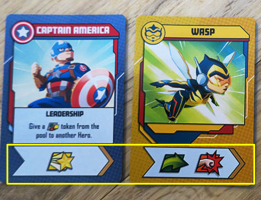
1) Some cards (three cards in each of the core set hero decks) may have an effect that will exist in a box overlapping the hero’s picture.
2) But all cards have an arrow-shaped box pointing to the right on the bottom. The symbols on the bottom box depict the actions the hero can take that turn.

The reason the arrow points to the right is that the next player will play their card to the right of the first player and so on, and the next player gains the symbols/actions on the bottom of the card they played that turn and the previously played card. Marvel United is a cooperative game through in through.

Move Marvel United

So, what do the symbols mean? The Green Arrows are Move actions; the Hero can Move one space for each arrow.

Heroics Marvel United

The Yellow Stars are Heroics actions; Heroics allow Heroes to rescue civilians (if there are any in their location) or help clear Threat cards.

Attack Marvel United

Red Fists give the Hero one Attack, which deals one damage and can be used against the main villain (after they become vulnerable to damage—more on that in a minute), any henchmen like “Bob Agent of Hydra,” or defeat thugs (again if there are any thugs in their location).

Wild Token Marvel United

The final symbol with all three colors is a Wild action; Wild actions can be used for Move, Heroics, or Attack. Heroes may resolve the effect (if they played the card on their turn) and any symbols in any order they choose.

Heroes will use these actions to complete missions. The game begins with three missions in play: Defeat Thugs, Rescue Civilians, and Clear Threats. Each mission card will have spaces for the tokens they require to complete. As soon as these spaces are filled, the card is discarded, and the mission is considered complete. Mission cards can be completed in any order.

After the heroes complete the first mission, the villain panics and will act (play a card) every two hero cards instead of every three hero cards. After the heroes complete the second mission, the villain becomes vulnerable to damage. The heroes can complete the third mission, but it isn’t necessary. If the heroes do complete the third mission, each hero immediately draws 1 card, increasing each player’s hand size by one.

Play continues back and forth until either the villain wins (by completing their unique master plan or anyone, heroes or villains, runs out of cards) or the heroes win by dealing enough damage to the villain after the villain becomes vulnerable to damage.

Marvel United Core Set

Review:

Marvel United scratches a similar itch as a game like X-Men: Under Siege. We covered X-Men: Under Siege in a previous review a decade ago (link to the review). Unlike X-Men: Under Siege, Marvel United functions as a board game system rather than a stand-alone game. Any number of intellectual properties can use this same system, which allows for plenty of crossovers. Case in point, CMON ran a DC Heroes United campaign earlier this year. I can see Teenage Mutant Ninja Turtles, Masters of the Universe, Star Wars, and any number of other IPs in the United System’s future.

The system has intuitive rules that allow for quick teaching times. Since Marvel United is a cooperative game, it benefits from even shorter rules explanation. I always feel like I need to teach everyone everything about a competitive game, otherwise I may have an unfair advantage. Players work together in a cooperative game. New players can learn as they go. And I’ve found Marvel United simple to pick up and relearn. The relearn feature becomes more important the older I get. I have so many games that seldom make it off my shelf because I don’t want to relearn the game. Marvel United makes that easy.

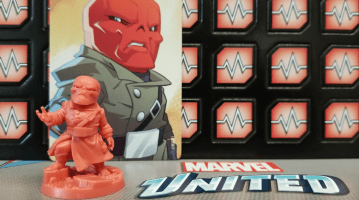
The gameplay itself can be a joy. The first time I played with my oldest daughter, she insisted that we play for hours until we defeated Red Skull. I don’t know why, but Red Skull eeked out a victory time after time. Red Skull is Marvel United’s choice for the first villain new players face first.

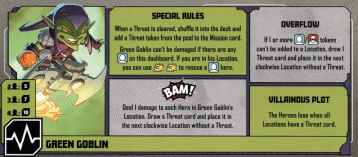
Marvel United’s heroes have just enough flavor to let people know who they’re playing, but Marvel United’s villains are the game’s showstoppers. Each villain has a unique flair. Kraven will actively hunt you. That makes sense, he’s a hunter. Ultron tries to win by flooding the field with civilians and thugs, putting these people’s lives in danger. That tracks for Ultron. Green Goblin will do a little bit of kidnapping, toss out dangerous henchmen, and try to throw out more Threats than the heroes can clear. Again, that feels a lot like Green Goblin. Each villain presents a unique challenge.

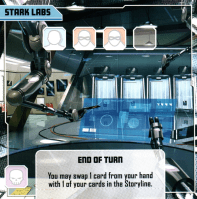
Marvel United incentivizes players to clear Threats. Doing so unlocks “End of Turn” abilities, which can further boost a hero’s power. I like this inclusion. Most expansions will add locations that can help with defeating the villains included in that expansion. Great choice.

The missions work well, too. Depending on the board state and the villain you’re facing, you may want to “Rescue Civilians” and “Clear Threats” or “Clear Threats” and “Defeat Thugs.” This adds to the puzzle of each villain. Some villains will add more civilians than thugs or vice versa and steer the gameplay in that direction. This furthers the uniqueness of each villain. Another great choice.

The one minor gripe I have is that not all the villains scale at every player count. Green Goblin is easier to play at 1-2 players and becomes increasingly more difficult the more heroes who join the fight. This should be expected. Marvel United boasts a massive line-up of characters. Hundreds! And even though Green Goblin becomes more difficult at higher player counts, he doesn’t break the game. You’re just less likely to defeat him.

Each Marvel United box includes challenges to spice up the gameplay if it ever becomes a little stale. The core set boxes have generic challenges, but if you pick up any expansion, you’ll find some great alternative ways to play the game. My favorite from the original launch comes from the Tales of Asgard expansion, where players deal out Loyalty Cards, with one of the cards being Traitor. Essentially, one of the players is Loki in disguise. Fantastic and very thematic.

Return of the Sinister Six Marvel United

Finally, we come to the issue of expansions. This may be yet another small gripe of mine. CMON hid a lot of the better expansions within Kickstarter Exclusives. That means that you must add them to your pledge on Kickstarter instead of being able to buy the expansion via retail (Amazon, Game Nerdz, Target/Wal-Mart, or your local board game shop). Marvel United started the trend with The Return of the Sinister Six, which was easily the best expansion from the first wave. Marvel United continued that trend with Marvel United: X-Men. X-Men: First Class, Days of Future Past, and Fantastic Four were all Kickstarter Exclusives. CMON has a knack for inducing FOMO (fear of missing out).

That said, you don’t need everything to enjoy Marvel United. You could buy one of the core sets (Original, X-Men, or the newest one Multiverse) and add a few expansions that you can find at retail and have a game you can play for decades. I may or may not have started a spreadsheet of all my games. And I started a guide for Marvel United. You can check out the link here.

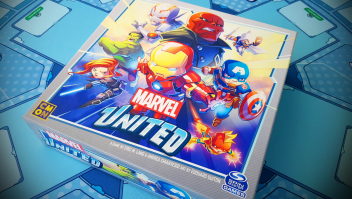
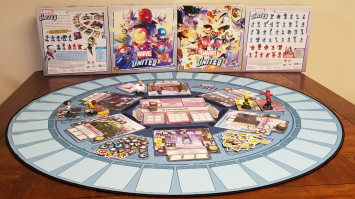
Marvel United Tabletop Game Set Up

Verdict:

Easy to learn, teach, and recall, Marvel United introduces a board game system that will facilitate countless fantastic and future crossovers. The heroes have just enough personality, but the villains steal the show. Each villain feels unique and well worth their puzzle.

Top 5 Tabletop Games from the Late 1970s

Hey, hey! Kyra Kyle here. Back with another Top 5 Tabletop Games of an era. We’re keeping the trend of breaking a decade into two halves—for now. Today’s list will be the Top 5 Tabletop Games from the Late 1970s (1975-1979)

In case you’ve forgotten our criteria for the Top 5 Tabletop Games, let’s reiterate the ground rules again before we get started.

1: Cultural relevance plays as much of a factor as overall quality. A game might make a list that doesn’t hold up to others of its type, but you must admit the game is everywhere.

2: Only one game from a franchise makes the list. This will become more of an issue the closer we get to games with expansions.

3: Longevity plays a role, too. A game doesn’t have to fly off the shelves today, but it had to have some widespread appeal for a decent time.

5: Guess Who? (1979)

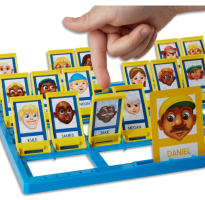
Guess Who? kicks off this list with a simple guessing game. Players pick a card with a character depicted on it, and their opponent guesses who their opponent’s character is before their opponent can do the same. Guess Who’s? game board features several rows of cartoon characters, each with distinct looks. Players ask yes/no questions about their opponent’s character (typically about their opponent’s hair color, eye color, hair style, hats, etc.) and flip down the portrait of characters who don’t match the answer their opponent gave.

Guess Who? like many other children’s games (like Operation) has spawned a lot of brand-themed versions. Disney princesses, the Marvel Cinematic Universe, and even Cars 2 have had variants of Guess Who?. Guess Who? is a quick and easy game to learn and yet another game that has introduced many to the tabletop game hobby.

4: Ogre (1977)

Ogre is the first Steve Jackson design to make one of these lists, but we’ll most likely see more of his work in future lists. Ogre is a tactical ground combat game set in the not-so-distant future. Combat has become faster and deadlier in the year 2085. Hovercraft, tanks, and infantry dole out damage with tactical nuclear devices, but no weapon is as feared as the giant cybernetic (pretty much AI-driven) tank called the OGRE.

One player takes control of a military force with infantry and armor. They must defend a command post. The other player has only one unit, the OGRE. Ogre plays with asymmetric powers. It may even be one of the first to do so on a grand scale.

3: Dungeon! (1975)

Dungeon! plays out a lot like Dungeons & Dragons, if D&D was simplified and converted to a board game. Players explore the titular dungeon that is divided into levels of increasing difficulty. Players fight monsters for treasure. As you journey deeper into the dungeon, the monsters grow in difficulty and the more valuable treasure you’ll find. Dungeon! uses a lot of the class-types one may find in Dungeons & Dragons.

Each character’s fighting style is unique and suited for specific regions in the dungeon. The winner is the first player to bring a certain amount (value) of treasure back to the Dungeon’s entrance. Dungeon! holds a special place for me. It was my first exposure to the world of Dungeons & Dragons, sort of. While the game shares plenty of similarities, Dungeon! doesn’t follow D&D to the letter. And it plays fast and furious.

2: Rummikub (1977)

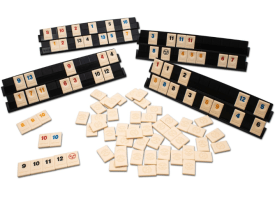
Rummikub holds the distinction of being the first recipient of the Spiel des Jahres (German Board Game of the Year) in 1980. You may notice that Rummikub was published in 1977. It didn’t become widely published until a year or two later. Rummikub plays similar to several other central European card games (like Rummy) which are played with two decks of playing cards. Ephraim Hertzano invented the tile game Rummikub in the 1940s when Communists outlawed card playing.

Rummikub didn’t catch on in the rest of the world until after Hertzano published his 1978 Official Rummikub Book. Like Rummy, you try to get rid of all your tiles by forming numbers into runs of 3 tiles or more, or 3 to 4 of a kind. The colors of the numbers on the tiles function like card suits.

Rummikub proves that people want to play games, especially when an over-bearing regime tells them they can’t. This act of rebellion made Rummikub the perfect first recipient of the Spiel des Jahres.

1: Cosmic Encounter (1977)

Cosmic Encounter takes the top spot because it popularized one of the most beloved game mechanisms of all time: Variable Player Powers. Each player takes control of a unique alien race with a special power. They battle each other for galaxy supremacy.

But Cosmic Encounter is far more than just combat. To win Cosmic Encounter, players spread themselves onto five foreign worlds. Players will often enlist the aid of opponents to take out another opponent or allow them to accomplish one of many challenges. Alien powers, which are unique to each race, give players ways to bend or outright break the game’s rules. The game continues until one player occupies five planets. Shared victories are possible, and a player doesn’t need to occupy their own system to win.

Like I implied, Cosmic Encounter has inspired so many modern board games. The Variable Player Powers mechanism tends to sell board games. And even games like Magic: The Gathering owes their inception to Cosmic Encounter. These alien powers allowed players to break the rules; one of the statements in Cosmic Encounter’s rulebook suggested that if an alien power deviated from the rulebook, follow the rules on the alien power. That’s like Magic’s golden rule of cards. Whenever a card’s text directly contradicts these rules, the card takes precedence. Collectible Card Games owe their existence to Cosmic Encounter. It had to take the top spot.

Did we get the list right, for the most part? Let us know in the comments. And wherever you are, I hope you’re having a great day.

Check out the other lists in this series:
Top 5 Tabletop Games prior to the 1930s
Top 5 Tabletop Games of the 1930s
Top 5 Tabletop Games of the 1940s-50s
Top 5 Tabletop Games of the Early 1960s
Top 5 Tabletop Games of the Late 1960s
Top 5 Tabletop Games of the Early 1970s
Top 5 Tabletop Games from 1980-1981
Top 5 Tabletop Games from 1982-1983
Top 5 Tabletop Games from 1984-1985
Top 5 Tabletop Games from 1986-1987
Top 5 Tabletop Games from 1988-1989
Top 5 Tabletop Games from 1990-1991

3 Lists of 3 Tabletop Games for Miss Kitty

Hey, hey! Kyra Kyle here. I promised something different with this post, so let’s give it a try. Today would be my mom’s 74th birthday. Her name was Catharina Beenen Rackley, but her friends called her Kitty. I wanted to make a 3 Lists of 3 in her honor and had some trouble picking the topic. I could’ve picked music, food, or travel. But we don’t cover those topics on Geekly that often. Miss Kitty also enjoyed television and movies, and those would’ve made good choices. But I decided on tabletop games.

Geekly covers tabletop games, and Mom and I played board games together. She even got a kick out of me designing the occasional game. So, let’s do a 3 Lists of 3 Tabletop Games for Miss Kitty.

Games Miss Kitty Played

Miss Kitty played a lot of different games, and typically, she played games depending on who she had as company. She would play certain games with her children and others with her mother and siblings. And I’m sure she played even more games with her friends. I only have my perspective to go off on here and the accounts of others. Also, we may have more than a few honorable mentions. One cannot boil someone down to a handful of anything, not even board games.

Liverpool Rummy

Liverpool Rummy was a prerequisite whenever visiting Miss Kitty’s family, so this one may be more of a Beenen family pick. But I’m going with it. Miss Kitty and I played Liverpool Rummy a lot. I would go into the gameplay here, but I want to keep the entry short. Perhaps I should cover Liverpool Rummy in a post but it’s a card game using a standard deck.

Each round, players either try to collect sets of cards (at least 3 of the same number) or runs of cards (4 cards in the same suit in sequential numbers). If a player has all the requirements for a round, they can go down (which means revealing their cards with the appropriate number of sets/runs). Once down, players can play cards from their hand onto cards that are “down.” The first player out of cards wins the round and everyone else tallies their score. The lowest score at the end of the game wins.

I picked Liverpool Rummy instead of Wahoo (another Beenen family favorite and a good choice for this selection) because of a moment that happened the first time my wife Jen played with Miss Kitty. Miss Kitty kept saying that she didn’t know why I was so competitive in games. Later that same game, Miss Kitty sported a devilish grin and then bragged as she went out concealed. Jen laughed. Miss Kitty asked her why. Jen said, “I can see why they’re so competitive.”

Balderdash

Another game could’ve taken Balderdash’s place here: Scattegories. In fact, Miss Kitty and I played more Scattegories than Balderdash through the years. Both games are word games and while Miss Kitty would come up with strange answers for Scattegories (“Oreo” or “Knuckle” as forms of sandwiches), Balderdash created more memories.

Balderdash is a game of obscure words. Players must create definitions for words seldom used in the dictionary and gain points for guessing the correct definition or having other players select their invented definition. Miss Kitty worked as a surgical technician. She knew a few things about medicine and used that knowledge liberally in any game of Balderdash. If we heard a definition begin with “a medical term meaning…” or “inflammation of the…” or “a doctor’s tool for,” everyone at the table would turn to look at her. She’d turn beet red and try not to smile. And typically failed. If two “medical” definitions got read, we’d curse our bad luck. Which one’s the real one and which one’s the fake one?

Ticket to Ride

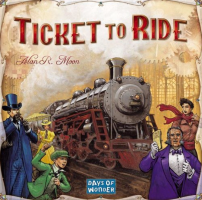
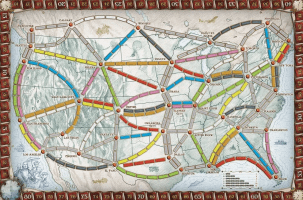
Miss Kitty had a history of set collection games, so of course she’d love Ticket to Ride. The rules are simple to learn and each different flavor of Ticket to Ride would add a wrinkle or two to the core rule set. Ticket to Ride was a perfect game for Miss Kitty. She could play a new game with a few “new rules” and not feel lost. I covered Ticket to Ride some time ago. Here’s a link to the original write-up.

The one game of Ticket to Ride I remember best with Miss Kitty involved her playing with her older brother Paul. Uncle Paul did nothing but build trains on the eastern seaboard. He didn’t complete any tickets. He didn’t do much of anything except block everyone else from building on the eastern coast of the United States. Miss Kitty growled at Uncle Paul. “You’re playing it wrong. Stop playing the game wrong!” I fell out of my seat laughing. It was a window into Miss Kitty’s childhood. This wasn’t the first time she had told off her older brother.

My family and I are currently playing a game of Ticket to Ride Legacy: Legends of the West. This version of Ticket to Ride has a story. Each player assumes the role of a railroad tycoon. The board grows as the railroad gets built from the east coast to the west coast. Hey, Uncle Paul wouldn’t have been playing the game wrong with this version. Anyway, there are four of us playing Ticket to Ride Legacy. When we finish, I intend on dealing out the fifth player stickers (you can place stickers claiming routes and cities for different players and we plan to use the fifth player) for Miss Kitty.

Games Miss Kitty Didn’t Play

This next list is of games are ones Miss Kitty never had the chance to play for one reason or another, but I know she would’ve loved to play them.

Marvel United

I wouldn’t have thought it possible if I didn’t hear this from her myself, but Miss Kitty was more into the Marvel Cinematic Universe than me. Marvel United is a cooperative tabletop game where players assume the role of superheroes in the Marvel universe as they try to stop a supervillain. Like Ticket to Ride, the rules are simple to learn with each hero and villain adding a small wrinkle or two. Since it’s cooperative, Marvel United eliminates competitiveness and players are encouraged to help each other. I just know Miss Kitty would’ve wanted to play out a few of her favorite movies.

And there’s some precedent for this. Miss Kitty and I played X-Men: Under Siege. My father and I played more of this game, but Miss Kitty liked this game, too. Marvel United would’ve scratched a similar itch. And it doesn’t hurt that the miniatures and art have cute designs. Miss Kitty liked cute things.

I haven’t written a review for Marvel United yet, but I started a guide. You can check out the newly posted Guide to Marvel United here.

Flamecraft

Flamecraft is the most complex game on any of these lists so far, but I’m sure Miss Kitty would’ve struggled through a difficult game or two because it’s so cute. And dragons. One of her granddaughters (my niece) is obsessed with dragons or at least she was at one point. Flamecraft uses a game element popular with recent tabletop games. Whenever you take an action that action has a global effect and can benefit your opponent on future turns. This element also makes Flamecraft feel like it’s a winnable game or at least a board game that has closer outcomes.

And did I mention the puns? I can hear Miss Kitty cackling every time I read one of the dragon shops’ names. Either that or I’m hearing my daughter’s same laugh. Critical Rolls. Bizarre Bazaar. Potable Potions. Outback Drakehouse.

Sixes

I first played Sixes recently at a party and thought of Miss Kitty. It’s a word game like Scattegories. Sixes plays out in six rounds—naturally. Each round has players making lists of six things that match a category. The twist comes from what players are trying to do each round. Some rounds, you’ll want to have unique answers like Scattegories. Other rounds, you’ll want to match other players. And the third and sixth rounds are lightning rounds where players answer 6 categories with a single answer. The person with the most points wins.

Miss Kitty would’ve loved playing Sixes. It’s a great ice breaker game or a way to reconnect. I found players saying things like “I knew I liked you” or “we think so much alike” whenever they answer a list similarly during a matching round. Of course, there’s the classic Scattegories response whenever you match during a unique round. “We think TOO much alike.” Or “Get out of my head.”

Games that Remind Me of Miss Kitty

This list is more nebulous than the last two. Some may be games Miss Kitty played at one point. Others may be games she would’ve liked to have played but never did. And there are a few games on this list that just remind me of Miss Kitty.

On Tour

During On Tour, Players assume the role of a rock band’s tour manager. Miss Kitty listened to classic rock and pop music. She would’ve loved this premise for a game. But she may have gotten frustrated with the gameplay. On Tour has simple enough rules. The amount of player choice can get overwhelming.

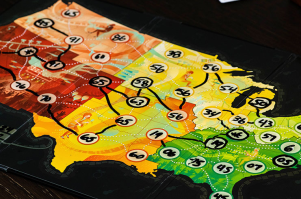
Each turn, a player rolls two ten-sided dice and then each player must simultaneously place the numbers depicted on the dice in a state (if you’re using the United States map) depicted on two of three cards (the cards will have specific states and regions and players may choose whether to use the state or the region). Players do that by drawing on their own game boards with dry erase markers. Once each player’s map is filled, players score points depending on how many states they can travel through starting from lowest to highest number value in sequential order. For example, you can go 5-9-13, but you cannot go 5-13-9.

Players must cut their losses and admit that they will not be able to visit each state (or country on the Europe map). Miss Kitty would’ve struggled with making a route that goes through as many states as possible. She may have frozen before placing each number. But whenever I play On Tour, I’ll name my band (there’s a space for that on the United States side of the map) something that has to do with Rick Springfield. Miss Kitty would listen to Springfield whenever her husband was away and would scramble to hide her teen magazine cutouts whenever he returned home. I may call my next band Working Class Dogs.

Fireball Island: The Curse of Vul-Kar

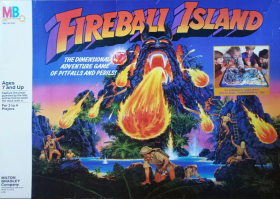
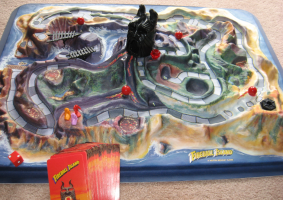
Miss Kitty bought me the original Fireball Island for Christmas one year. I don’t remember if she played the game with me, but she certainly got me the game for the holidays. The original Fireball Island had players race to pick up a gemstone and race back to the finish line with the booty. Fireball Island: The Curse of Vul-Kar improves upon the original. Players take pictures of the island for Instagram (or some other social media), but they can still snag a precious gemstone for extra points.

Fireball Island: The Curse of Vul-Kar reminds me of Miss Kitty, my mom, because I have video of the Christmas when I unwrapped the original Fireball Island. A younger me paced back and forth with the box as Christmas continued. Miss Kitty opened the gift I had bought for her (or I had picked it out for her): Hope perfume. She liked new and unique fragrances, and I had found Hope, which was supposed to change with each person’s body chemistry. It sounded unique. Modern-day Kyra recognizes Hope’s description as a marketing ploy. It was the thought that counts. Anyway, the video shows me geeking out with Fireball Island, while Miss Kitty was geeking out over Hope. Parallel geeking.

The Real Ghostbusters Game

The Real Ghostbusters Game, based on the 80s cartoon series of the same name, reimplements Ghost Castle that released in 1970. It’s a dated game; it doesn’t hold up to modern tabletop game design techniques. But The Real Ghostbusters Game holds a special place.

I brought the game to a kid’s birthday party. Miss Kitty dropped me off at the kid’s house and some time during the drive she shared that my father wondered why I hung out with a loser (the kid whose birthday party I was attending). I told Miss Kitty that even losers needed friends. This was Miss Kitty’s favorite story to share about me and my childhood.

I miss you, Mom. Happy birthday. We’ll play some games for you today.

Let me know of any games that remind you of your loved ones. Or the games you love playing with your loved ones. Or even the games you wish you could’ve played with them. And wherever you are, I hope you’re having a great day.

Top 5 Tabletop Games from the Early 1970s

Hey, hey! Kyra Kyle here. Back with another Top 5 Tabletop Games of an era. We’re keeping the trend of breaking a decade into two halves—for now. Today’s list will be the Top 5 Tabletop Games from the Early 1970s (1970-1974)

In case you’ve forgotten our criteria for the Top 5 Tabletop Games, let’s reiterate the ground rules again before we get started.

1: Cultural relevance plays as much of a factor as overall quality. A game might make a list that doesn’t hold up to others of its type, but you must admit the game is everywhere.

2: Only one game from a franchise makes the list. This will become more of an issue the closer we get to games with expansions.

3: Longevity plays a role, too. A game doesn’t have to fly off the shelves today, but it had to have some widespread appeal for a decent time.

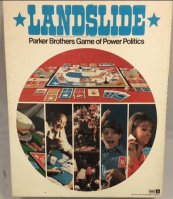
5: Landslide (1971)

Landslide has a simple premise. Each player is running for President of the United States. 2024 is a Presidential election year, so Landslide can scratch the itch for an election game. These rashes flare up every four years. We don’t have too much information about this game’s production; Landslide released when Parker Brothers (the publisher) didn’t credit their artists or designers. That will change in the coming eras.

Landslide uses “votes” as a form of money for players to bid for states. Players can even attempt to steal already “bought” states from each other. And while an actual Presidential election requires one candidate to gain more than half of the total number of electoral votes to get elected, or the vote goes to the House of Representatives, the winner of Landslide is the player with the highest number of electoral votes. There may be more than two players.

I played Landslide a lot growing up. I spotted a couple of copies at my local board game café, Mana Games, and may have to play it a handful of times real soon. The gameplay moves fast, and at the time of its publication (1971), the electoral votes for each state reflected that year’s electoral votes.

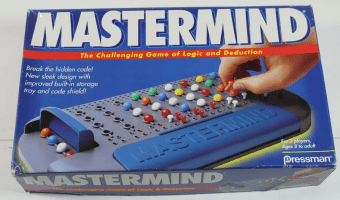
4: Mastermind (1971)

I have a love/hate relationship with Mastermind. I appreciate its simplicity, but my brain struggles with finding the solution. For the few of you who don’t know, Mastermind is the basis for Wordle. Instead of deducing a word, you use logic to deduce a sequence of colors. One player sets a secret code, while the other tries to crack the code.

Mastermind has spawned a ton of imitators: Wordle, Fiction, and many others. Not only do I struggle with these puzzles—I flail whenever I play Wordle—I find it grating that whenever a TV show or movie wants to show someone as smart, that “smart” character always has a copy of Mastermind. Big Bang Theory’s Sheldon Cooper constantly had Mastermind on a shelf in the camera’s frame behind his head. Yeah. We know he’s supposed to be smart, so Mastermind. Ugh!

Still, you can’t deny Mastermind’s cultural impact. Even if I stink as the codebreaker.

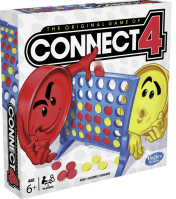
3: Connect 4 (1974)

Connect 4 (also known as Connect Four) plays a lot like Tic-Tac-Toe (connecting 4 of your pieces in a row). The board stands straight up, and players take turns dropping “checkers” game pieces into the stand’s top. The player who connects four of their pieces in a row first wins. Connect 4 is easy-to-learn and has about as much strategy as Tic-Tac-Toe.

Connect Four just may be a lot of people’s first board game. Its simple rules make it a great game for kids.

2: Uno (1971)

Uno continues two trends. The first, 1971 was a banner year for board games; four of the five games on this list released that year. The second, take an existing game and give it a spin. Connect 4 changed up Tic-Tac-Toe; Uno turned Crazy Eights into a colorful and commercial success. Who knew it could be that easy?

In Uno, players race to empty their hands and catch opposing players with cards left in theirs, which score points. Each turn, players play cards by matching the played last card’s color or number. If unable to play, players draw a card from the draw pile. If they’re still unable to play, the player passes their turn. There are several Wild and Special cards to spice up the gameplay. Oh! And you must say “Uno” whenever you have one card remaining in your hand. If anyone calls you out for not saying Uno, you’ll draw two cards.

Uno may also continue a third trend. It could be a lot of people’s first tabletop game.

1: Sleuth (1971)

Sid Sackson makes another appearance on one of these lists. 1971’s Sleuth (hey, this is another 1971 release) tasks players with deducing the location of a hidden gem.

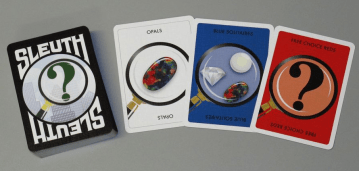
The hidden gem is one of 36 gem cards and gets hidden before the start of the game. The remainder of this gem deck—with each card showing 1-3 diamonds, pearls, or opals in one of four colors—is distributed evenly among the players, with any remaining cards laid face up. A second deck contains 54 search cards, each showing one or two elements, such as pearls, pairs, red opals, or an element of your choice. Each player receives four face-up search cards.

During a turn in Sleuth, players will ask other players about the cards in their hands based on the search cards they have. The asked player must show every card that matches the asking player’s question. This generates partial information in Sleuth. You may know that one player has two diamond cards in their hand, but you won’t know which color they are or how many diamonds are on the cards unless you asked the question.

Players are encouraged to keep notes for both negative and positive information. Sleuth can reach brain burning levels. It boils down a game like Clue—and Sid Sackson’s own The Case of the Elusive Assassin (1967)—to its deduction roots. It’s a simple but deep concept. Would you expect anything less from a master game designer like Sid Sackson?

Did we get the list right, for the most part? Let us know in the comments. And wherever you are, I hope you’re having a great day.

Check out the other lists in this series:
Top 5 Tabletop Games Prior to the 1930s
Top 5 Tabletop Games of the 1930s
Top 5 Tabletop Games of the 1940s-50s
Top 5 Tabletop Games from the Early 1960s
Top 5 Tabletop Games from the Late 1960s
Top 5 Tabletop Games from the Late 1970s
Top 5 Tabletop Games from 1980-1981
Top 5 Tabletop Games from 1982-1983
Top 5 Tabletop Games from 1984-1985
Top 5 Tabletop Games from 1986-1987
Top 5 Tabletop Games from 1988-1989
Top 5 Tabletop Games from 1990-1991

My Favorite Game Mechanisms: Horrified

Hey, hey! Kyra Kyle here. We haven’t done a My Favorite segment for a tabletop game in a while and this month may be the best time to discuss Horrified, a cooperative board game where players try to slay, free, or contain famous monsters. By this point, Horrified has covered Universal movie monsters, American cryptids, and Greek mythological creatures. The monsters may change but the concept remains. I could choose quite a few game mechanisms as my favorite, but I may have to go with each monster’s character.

Horrified does a great job of conveying who most of these monsters are. Frankenstein’s monster and his bride need to be taught how to be human and be shown love. The elusive Big Foot wants to be left alone. And the heroes must return Cerberus to the gates of Hades. Each monster has their own flavor, their own character. And for the most part, Horrified captures the essence of these monsters.

Like many cooperative games, Horrified can unravel at times. Something spawns in an inaccessible place at the worst possible moment or the opposite occurs, and everything becomes super easy because luck favors the players. But despite the luck of the draw (literally, you draw tokens from a bag), Horrified always gives each monster their own feel. Usually, the folks at Prospero Hall (the designers who made the game), capture what makes these monsters/creatures/cryptids who they are and each monster functions as its own mini puzzle.

Horrified builds on the tradition of games like Sentinels of the Multiverse. It could’ve given players their own unique powers and kept it at that but chose to grant the antagonists their own powers. But it goes deeper than older games. Most of these monsters seem real. The aforementioned Big Foot will run away from our heroes. The Yeti only wants what’s best for their little ones. Many of these monsters are more than mindless, well, monsters. And even the ones who could be categorized as mindless have a distinct goal they wish to accomplish.

Of course, there are other great elements and how these elements weave together makes Horrified a great game for spooky season. Every round a card is drawn that will seed the board with items, potentially bring in civilians, and inform the monsters what they’ll do. It’s a simple and elegant system that requires minimal upkeep from turn to turn. And the monsters will act after each player’s turn. Whenever the deck runs out, the monsters win. The heroes win if they can satisfy each of the monster’s mini puzzles.

So good. If you have the chance this Halloween, give Horrified a try. Board game cafes are a great way to test drive a tabletop game. Many local game shops will have demo copies of games as well. And of course there’s always board game conventions.

What are your favorite elements of Horrified? Have you ever played a game without making monster noises? I haven’t, even when I play a solo game. Let us know your thoughts in the comments. And wherever you are, I hope you’re having a great day.

Top 5 Tabletop Games from the late 1960s

Hey, hey! Kyra Kyle here. Back with another Top 5 Tabletop Games of an era and we’re also back with the second half of the 1960s (1965-1969). If you want to see our picks for the first half of the decade, you can follow this link.

We’re getting back into the swing of things, so let’s reiterate the ground rules again before we get started.

1: Cultural relevance plays as much of a factor as overall quality. A game might make a list that doesn’t hold up to others of its type, but you must admit the game is everywhere.

2: Only one game from a franchise makes the list. This will become more of an issue the closer we get to games with expansions.

3: Longevity plays a role, too. A game doesn’t have to fly off the shelves today, but it had to have some widespread appeal for a decent time.

Feudal board game Top 5 Games from 1960s

5: Feudal (1967)

The 1960s had a lot of Chess-like board games—and I do mean a lot—but none of the Chess variants reached the heights of Fred Beustchler’s Feudal. A part of the 3M Bookshelf Series (3M also produced a lot of Sid Sackson and Alex Randloph’s early work), Feudal tasks players with occupying an opponent’s castle or capturing all an opponent’s royalty. The play area consists of four plastic peg boards depicting empty, rough, and mountainous terrain.

Feudal tabletop game Top games from 1960s

Feudal has a unique set-up. Players place their pieces on their peg boards in secret and reveal how they deployed their units simultaneously. This leads to different strategic problems each game and every game plays out differently. We had to include one Chess-like board game. Feudal is the best of the bunch.

Triominoes board game Top 5 games from 1960s

4: Triominoes (1965)

Simply put, Triominoes is a variation of dominoes that uses triangular tiles. The tiles are equilateral triangles so they fit in neatly with each other. Players can play a Triomino if they have matching numbers with the six potential values 0-5.

Triominoes tabletop game Top 5 Games from 1960

I’ll be honest. Triominoes intimidated me while I was growing up. So many numbers close together looked confusing. But there’s no doubt that the game has a legacy.

Kerplunk tabletop game Top 5 game from 1960s

3: Kerplunk (1967)

Sometimes the simplest concepts make the best games. Kerplunk consists of a transparent plastic tube, plastic rods called straws (26-30 of various colors), and several dozen marbles. Players take turns removing a single straw from the tube while trying to minimize the number of marbles that fall though the web and into their trays.

kerplunk board game Top 5 game from 1960s

Kerplunk beget several similar games in the future, specifically Jenga. This family of games has built-in tension. Remove the wrong straw and the marbles pour out.

Twister tabletop game Top 5 game from 1960s

2: Twister (1966)

The tail end of the 60s saw a lot of simple games or new twists on older games. Speaking of twists, our next game is Twister.

Each version of the game comes with a spinner. And each spinner is divided into four labeled sections: left foot, right foot, left hand, and right hand. And each of those four sections are divided further into the colors red, yellow, green, and blue. After spinning, the combination is called (right hand red) and players must move their matching hand or foot to a circle of the correct color. Last player standing wins.

Twister board game Top 5 game from 1960s

Simple enough. And we’ll see a lot of other simple designs that have stood the test of time on this list.

Operation board game Top 5 game from 1960s

1: Operation (1965)

We go from moving one’s body in weird ways to a game featuring someone with a weird body. Operation challenges players with extracting silly body parts from a hapless patient. During the game, you acquire cards which dictate body parts you must remove. The body parts rest inside a hole and if you erroneously touch one of the hole’s metal sides, a sudden buzzer and light-up nose indicates the patient’s pain. Players want as little pain as possible in Operation. Successful extractions give the player money and the player with the most cash at the end of the game wins.

There have been countless versions of Operation. I believe my kids had a Spongebob themed one. Maybe it was Shrek. Regardless, Operation has never been out of print since its release. And I don’t see that happening in the next 60 years either.

Did we get the list right, for the most part? Let us know in the comments. And wherever you are, I hope you’re having a great day.

Check out the other lists in this series:
Top 5 Games prior to the 1930s
Top 5 Games of the 1930s
Top 5 Games of the 1940s-50s
Top 5 Games of the early 1960s
Top 5 Games of the early 1970s
Top 5 Games of the late 1970s
Top 5 Games from 1980-1981
Top 5 Games from 1982-1983
Top 5 Games from 1984-1985
Top 5 Games from 1986-1987
Top 5 Games from 1988-1989
Top 5 Games from 1990-1991