Top 5 Tabletop Games from the Late 1970s

Hey, hey! Kyra Kyle here. Back with another Top 5 Tabletop Games of an era. We’re keeping the trend of breaking a decade into two halves—for now. Today’s list will be the Top 5 Tabletop Games from the Late 1970s (1975-1979)

In case you’ve forgotten our criteria for the Top 5 Tabletop Games, let’s reiterate the ground rules again before we get started.

1: Cultural relevance plays as much of a factor as overall quality. A game might make a list that doesn’t hold up to others of its type, but you must admit the game is everywhere.

2: Only one game from a franchise makes the list. This will become more of an issue the closer we get to games with expansions.

3: Longevity plays a role, too. A game doesn’t have to fly off the shelves today, but it had to have some widespread appeal for a decent time.
5: Guess Who? (1979)

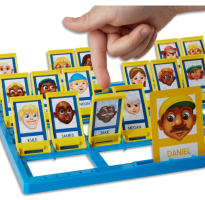
Guess Who? kicks off this list with a simple guessing game. Players pick a card with a character depicted on it, and their opponent guesses who their opponent’s character is before their opponent can do the same. Guess Who’s? game board features several rows of cartoon characters, each with distinct looks. Players ask yes/no questions about their opponent’s character (typically about their opponent’s hair color, eye color, hair style, hats, etc.) and flip down the portrait of characters who don’t match the answer their opponent gave.

Guess Who? like many other children’s games (like Operation) has spawned a lot of brand-themed versions. Disney princesses, the Marvel Cinematic Universe, and even Cars 2 have had variants of Guess Who?. Guess Who? is a quick and easy game to learn and yet another game that has introduced many to the tabletop game hobby.

4: Ogre (1977)

Ogre is the first Steve Jackson design to make one of these lists, but we’ll most likely see more of his work in future lists. Ogre is a tactical ground combat game set in the not-so-distant future. Combat has become faster and deadlier in the year 2085. Hovercraft, tanks, and infantry dole out damage with tactical nuclear devices, but no weapon is as feared as the giant cybernetic (pretty much AI-driven) tank called the OGRE.

One player takes control of a military force with infantry and armor. They must defend a command post. The other player has only one unit, the OGRE. Ogre plays with asymmetric powers. It may even be one of the first to do so on a grand scale.

3: Dungeon! (1975)

Dungeon! plays out a lot like Dungeons & Dragons, if D&D was simplified and converted to a board game. Players explore the titular dungeon that is divided into levels of increasing difficulty. Players fight monsters for treasure. As you journey deeper into the dungeon, the monsters grow in difficulty and the more valuable treasure you’ll find. Dungeon! uses a lot of the class-types one may find in Dungeons & Dragons.

Each character’s fighting style is unique and suited for specific regions in the dungeon. The winner is the first player to bring a certain amount (value) of treasure back to the Dungeon’s entrance. Dungeon! holds a special place for me. It was my first exposure to the world of Dungeons & Dragons, sort of. While the game shares plenty of similarities, Dungeon! doesn’t follow D&D to the letter. And it plays fast and furious.

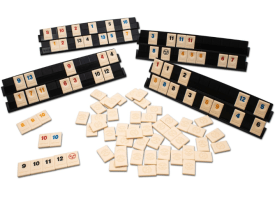
2: Rummikub (1977)

Rummikub holds the distinction of being the first recipient of the Spiel des Jahres (German Board Game of the Year) in 1980. You may notice that Rummikub was published in 1977. It didn’t become widely published until a year or two later. Rummikub plays similar to several other central European card games (like Rummy) which are played with two decks of playing cards. Ephraim Hertzano invented the tile game Rummikub in the 1940s when Communists outlawed card playing.

Rummikub didn’t catch on in the rest of the world until after Hertzano published his 1978 Official Rummikub Book. Like Rummy, you try to get rid of all your tiles by forming numbers into runs of 3 tiles or more, or 3 to 4 of a kind. The colors of the numbers on the tiles function like card suits.

Rummikub proves that people want to play games, especially when an over-bearing regime tells them they can’t. This act of rebellion made Rummikub the perfect first recipient of the Spiel des Jahres.

1: Cosmic Encounter (1977)

Cosmic Encounter takes the top spot because it popularized one of the most beloved game mechanisms of all time: Variable Player Powers. Each player takes control of a unique alien race with a special power. They battle each other for galaxy supremacy.

But Cosmic Encounter is far more than just combat. To win Cosmic Encounter, players spread themselves onto five foreign worlds. Players will often enlist the aid of opponents to take out another opponent or allow them to accomplish one of many challenges. Alien powers, which are unique to each race, give players ways to bend or outright break the game’s rules. The game continues until one player occupies five planets. Shared victories are possible, and a player doesn’t need to occupy their own system to win.

Like I implied, Cosmic Encounter has inspired so many modern board games. The Variable Player Powers mechanism tends to sell board games. And even games like Magic: The Gathering owes their inception to Cosmic Encounter. These alien powers allowed players to break the rules; one of the statements in Cosmic Encounter’s rulebook suggested that if an alien power deviated from the rulebook, follow the rules on the alien power. That’s like Magic’s golden rule of cards. Whenever a card’s text directly contradicts these rules, the card takes precedence. Collectible Card Games owe their existence to Cosmic Encounter. It had to take the top spot.

Did we get the list right, for the most part? Let us know in the comments. And wherever you are, I hope you’re having a great day.

Check out the other lists in this series:
Top 5 Tabletop Games prior to the 1930s
Top 5 Tabletop Games of the 1930s
Top 5 Tabletop Games of the 1940s-50s
Top 5 Tabletop Games of the Early 1960s
Top 5 Tabletop Games of the Late 1960s
Top 5 Tabletop Games of the Early 1970s
Top 5 Tabletop Games from 1980-1981
Top 5 Tabletop Games from 1982-1983
Top 5 Tabletop Games from 1984-1985
Top 5 Tabletop Games from 1986-1987
Top 5 Tabletop Games from 1988-1989
Top 5 Tabletop Games from 1990-1991

3 Lists of 3 Tabletop Games for Miss Kitty

Hey, hey! Kyra Kyle here. I promised something different with this post, so let’s give it a try. Today would be my mom’s 74th birthday. Her name was Catharina Beenen Rackley, but her friends called her Kitty. I wanted to make a 3 Lists of 3 in her honor and had some trouble picking the topic. I could’ve picked music, food, or travel. But we don’t cover those topics on Geekly that often. Miss Kitty also enjoyed television and movies, and those would’ve made good choices. But I decided on tabletop games.

Geekly covers tabletop games, and Mom and I played board games together. She even got a kick out of me designing the occasional game. So, let’s do a 3 Lists of 3 Tabletop Games for Miss Kitty.

Games Miss Kitty Played

Miss Kitty played a lot of different games, and typically, she played games depending on who she had as company. She would play certain games with her children and others with her mother and siblings. And I’m sure she played even more games with her friends. I only have my perspective to go off on here and the accounts of others. Also, we may have more than a few honorable mentions. One cannot boil someone down to a handful of anything, not even board games.

Liverpool Rummy

Liverpool Rummy was a prerequisite whenever visiting Miss Kitty’s family, so this one may be more of a Beenen family pick. But I’m going with it. Miss Kitty and I played Liverpool Rummy a lot. I would go into the gameplay here, but I want to keep the entry short. Perhaps I should cover Liverpool Rummy in a post but it’s a card game using a standard deck.

Each round, players either try to collect sets of cards (at least 3 of the same number) or runs of cards (4 cards in the same suit in sequential numbers). If a player has all the requirements for a round, they can go down (which means revealing their cards with the appropriate number of sets/runs). Once down, players can play cards from their hand onto cards that are “down.” The first player out of cards wins the round and everyone else tallies their score. The lowest score at the end of the game wins.

I picked Liverpool Rummy instead of Wahoo (another Beenen family favorite and a good choice for this selection) because of a moment that happened the first time my wife Jen played with Miss Kitty. Miss Kitty kept saying that she didn’t know why I was so competitive in games. Later that same game, Miss Kitty sported a devilish grin and then bragged as she went out concealed. Jen laughed. Miss Kitty asked her why. Jen said, “I can see why they’re so competitive.”

Balderdash

Another game could’ve taken Balderdash’s place here: Scattegories. In fact, Miss Kitty and I played more Scattegories than Balderdash through the years. Both games are word games and while Miss Kitty would come up with strange answers for Scattegories (“Oreo” or “Knuckle” as forms of sandwiches), Balderdash created more memories.

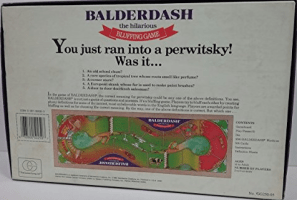
Balderdash is a game of obscure words. Players must create definitions for words seldom used in the dictionary and gain points for guessing the correct definition or having other players select their invented definition. Miss Kitty worked as a surgical technician. She knew a few things about medicine and used that knowledge liberally in any game of Balderdash. If we heard a definition begin with “a medical term meaning…” or “inflammation of the…” or “a doctor’s tool for,” everyone at the table would turn to look at her. She’d turn beet red and try not to smile. And typically failed. If two “medical” definitions got read, we’d curse our bad luck. Which one’s the real one and which one’s the fake one?

Ticket to Ride

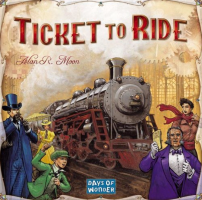
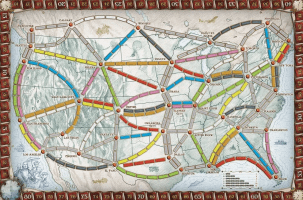
Miss Kitty had a history of set collection games, so of course she’d love Ticket to Ride. The rules are simple to learn and each different flavor of Ticket to Ride would add a wrinkle or two to the core rule set. Ticket to Ride was a perfect game for Miss Kitty. She could play a new game with a few “new rules” and not feel lost. I covered Ticket to Ride some time ago. Here’s a link to the original write-up.

The one game of Ticket to Ride I remember best with Miss Kitty involved her playing with her older brother Paul. Uncle Paul did nothing but build trains on the eastern seaboard. He didn’t complete any tickets. He didn’t do much of anything except block everyone else from building on the eastern coast of the United States. Miss Kitty growled at Uncle Paul. “You’re playing it wrong. Stop playing the game wrong!” I fell out of my seat laughing. It was a window into Miss Kitty’s childhood. This wasn’t the first time she had told off her older brother.

My family and I are currently playing a game of Ticket to Ride Legacy: Legends of the West. This version of Ticket to Ride has a story. Each player assumes the role of a railroad tycoon. The board grows as the railroad gets built from the east coast to the west coast. Hey, Uncle Paul wouldn’t have been playing the game wrong with this version. Anyway, there are four of us playing Ticket to Ride Legacy. When we finish, I intend on dealing out the fifth player stickers (you can place stickers claiming routes and cities for different players and we plan to use the fifth player) for Miss Kitty.

Games Miss Kitty Didn’t Play

This next list is of games are ones Miss Kitty never had the chance to play for one reason or another, but I know she would’ve loved to play them.

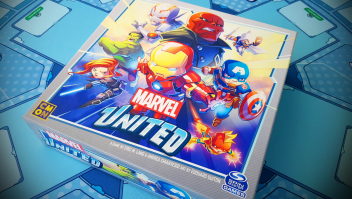
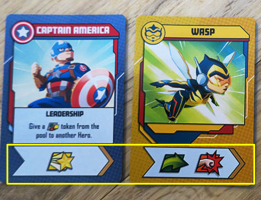
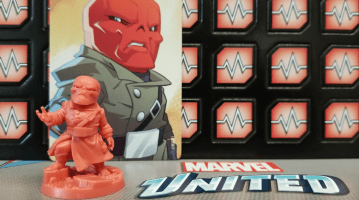
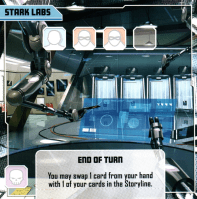
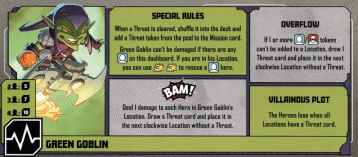
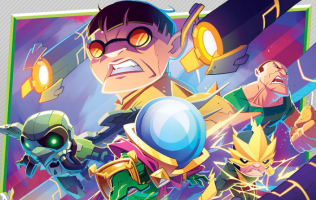
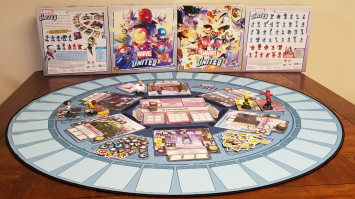
Marvel United

I wouldn’t have thought it possible if I didn’t hear this from her myself, but Miss Kitty was more into the Marvel Cinematic Universe than me. Marvel United is a cooperative tabletop game where players assume the role of superheroes in the Marvel universe as they try to stop a supervillain. Like Ticket to Ride, the rules are simple to learn with each hero and villain adding a small wrinkle or two. Since it’s cooperative, Marvel United eliminates competitiveness and players are encouraged to help each other. I just know Miss Kitty would’ve wanted to play out a few of her favorite movies.

And there’s some precedent for this. Miss Kitty and I played X-Men: Under Siege. My father and I played more of this game, but Miss Kitty liked this game, too. Marvel United would’ve scratched a similar itch. And it doesn’t hurt that the miniatures and art have cute designs. Miss Kitty liked cute things.

I haven’t written a review for Marvel United yet, but I started a guide. You can check out the newly posted Guide to Marvel United here.

Flamecraft

Flamecraft is the most complex game on any of these lists so far, but I’m sure Miss Kitty would’ve struggled through a difficult game or two because it’s so cute. And dragons. One of her granddaughters (my niece) is obsessed with dragons or at least she was at one point. Flamecraft uses a game element popular with recent tabletop games. Whenever you take an action that action has a global effect and can benefit your opponent on future turns. This element also makes Flamecraft feel like it’s a winnable game or at least a board game that has closer outcomes.

And did I mention the puns? I can hear Miss Kitty cackling every time I read one of the dragon shops’ names. Either that or I’m hearing my daughter’s same laugh. Critical Rolls. Bizarre Bazaar. Potable Potions. Outback Drakehouse.

Sixes

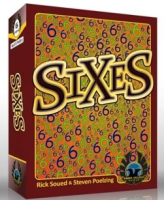
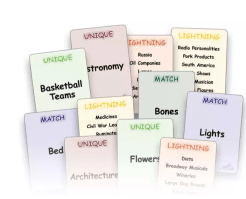
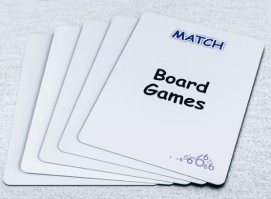
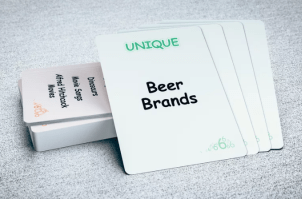
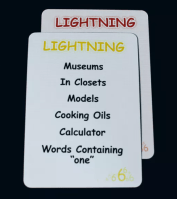
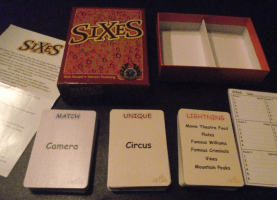
I first played Sixes recently at a party and thought of Miss Kitty. It’s a word game like Scattegories. Sixes plays out in six rounds—naturally. Each round has players making lists of six things that match a category. The twist comes from what players are trying to do each round. Some rounds, you’ll want to have unique answers like Scattegories. Other rounds, you’ll want to match other players. And the third and sixth rounds are lightning rounds where players answer 6 categories with a single answer. The person with the most points wins.

Miss Kitty would’ve loved playing Sixes. It’s a great ice breaker game or a way to reconnect. I found players saying things like “I knew I liked you” or “we think so much alike” whenever they answer a list similarly during a matching round. Of course, there’s the classic Scattegories response whenever you match during a unique round. “We think TOO much alike.” Or “Get out of my head.”

Games that Remind Me of Miss Kitty

This list is more nebulous than the last two. Some may be games Miss Kitty played at one point. Others may be games she would’ve liked to have played but never did. And there are a few games on this list that just remind me of Miss Kitty.

On Tour

During On Tour, Players assume the role of a rock band’s tour manager. Miss Kitty listened to classic rock and pop music. She would’ve loved this premise for a game. But she may have gotten frustrated with the gameplay. On Tour has simple enough rules. The amount of player choice can get overwhelming.

Each turn, a player rolls two ten-sided dice and then each player must simultaneously place the numbers depicted on the dice in a state (if you’re using the United States map) depicted on two of three cards (the cards will have specific states and regions and players may choose whether to use the state or the region). Players do that by drawing on their own game boards with dry erase markers. Once each player’s map is filled, players score points depending on how many states they can travel through starting from lowest to highest number value in sequential order. For example, you can go 5-9-13, but you cannot go 5-13-9.

Players must cut their losses and admit that they will not be able to visit each state (or country on the Europe map). Miss Kitty would’ve struggled with making a route that goes through as many states as possible. She may have frozen before placing each number. But whenever I play On Tour, I’ll name my band (there’s a space for that on the United States side of the map) something that has to do with Rick Springfield. Miss Kitty would listen to Springfield whenever her husband was away and would scramble to hide her teen magazine cutouts whenever he returned home. I may call my next band Working Class Dogs.

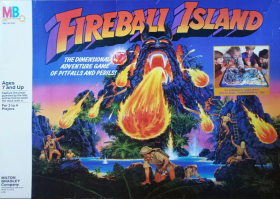
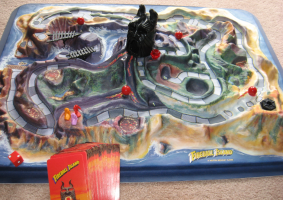
Fireball Island: The Curse of Vul-Kar

Miss Kitty bought me the original Fireball Island for Christmas one year. I don’t remember if she played the game with me, but she certainly got me the game for the holidays. The original Fireball Island had players race to pick up a gemstone and race back to the finish line with the booty. Fireball Island: The Curse of Vul-Kar improves upon the original. Players take pictures of the island for Instagram (or some other social media), but they can still snag a precious gemstone for extra points.

Fireball Island: The Curse of Vul-Kar reminds me of Miss Kitty, my mom, because I have video of the Christmas when I unwrapped the original Fireball Island. A younger me paced back and forth with the box as Christmas continued. Miss Kitty opened the gift I had bought for her (or I had picked it out for her): Hope perfume. She liked new and unique fragrances, and I had found Hope, which was supposed to change with each person’s body chemistry. It sounded unique. Modern-day Kyra recognizes Hope’s description as a marketing ploy. It was the thought that counts. Anyway, the video shows me geeking out with Fireball Island, while Miss Kitty was geeking out over Hope. Parallel geeking.

The Real Ghostbusters Game

The Real Ghostbusters Game, based on the 80s cartoon series of the same name, reimplements Ghost Castle that released in 1970. It’s a dated game; it doesn’t hold up to modern tabletop game design techniques. But The Real Ghostbusters Game holds a special place.

I brought the game to a kid’s birthday party. Miss Kitty dropped me off at the kid’s house and some time during the drive she shared that my father wondered why I hung out with a loser (the kid whose birthday party I was attending). I told Miss Kitty that even losers needed friends. This was Miss Kitty’s favorite story to share about me and my childhood.

I miss you, Mom. Happy birthday. We’ll play some games for you today.

Let me know of any games that remind you of your loved ones. Or the games you love playing with your loved ones. Or even the games you wish you could’ve played with them. And wherever you are, I hope you’re having a great day.

Top 5 Tabletop Games from the Early 1970s

Hey, hey! Kyra Kyle here. Back with another Top 5 Tabletop Games of an era. We’re keeping the trend of breaking a decade into two halves—for now. Today’s list will be the Top 5 Tabletop Games from the Early 1970s (1970-1974)

In case you’ve forgotten our criteria for the Top 5 Tabletop Games, let’s reiterate the ground rules again before we get started.

1: Cultural relevance plays as much of a factor as overall quality. A game might make a list that doesn’t hold up to others of its type, but you must admit the game is everywhere.

2: Only one game from a franchise makes the list. This will become more of an issue the closer we get to games with expansions.

3: Longevity plays a role, too. A game doesn’t have to fly off the shelves today, but it had to have some widespread appeal for a decent time.

5: Landslide (1971)

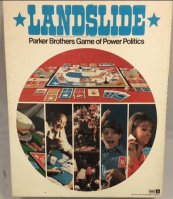
Landslide has a simple premise. Each player is running for President of the United States. 2024 is a Presidential election year, so Landslide can scratch the itch for an election game. These rashes flare up every four years. We don’t have too much information about this game’s production; Landslide released when Parker Brothers (the publisher) didn’t credit their artists or designers. That will change in the coming eras.

Landslide uses “votes” as a form of money for players to bid for states. Players can even attempt to steal already “bought” states from each other. And while an actual Presidential election requires one candidate to gain more than half of the total number of electoral votes to get elected, or the vote goes to the House of Representatives, the winner of Landslide is the player with the highest number of electoral votes. There may be more than two players.

I played Landslide a lot growing up. I spotted a couple of copies at my local board game café, Mana Games, and may have to play it a handful of times real soon. The gameplay moves fast, and at the time of its publication (1971), the electoral votes for each state reflected that year’s electoral votes.

4: Mastermind (1971)

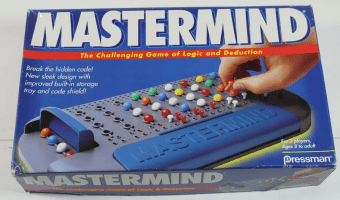
I have a love/hate relationship with Mastermind. I appreciate its simplicity, but my brain struggles with finding the solution. For the few of you who don’t know, Mastermind is the basis for Wordle. Instead of deducing a word, you use logic to deduce a sequence of colors. One player sets a secret code, while the other tries to crack the code.

Mastermind has spawned a ton of imitators: Wordle, Fiction, and many others. Not only do I struggle with these puzzles—I flail whenever I play Wordle—I find it grating that whenever a TV show or movie wants to show someone as smart, that “smart” character always has a copy of Mastermind. Big Bang Theory’s Sheldon Cooper constantly had Mastermind on a shelf in the camera’s frame behind his head. Yeah. We know he’s supposed to be smart, so Mastermind. Ugh!

Still, you can’t deny Mastermind’s cultural impact. Even if I stink as the codebreaker.

3: Connect 4 (1974)

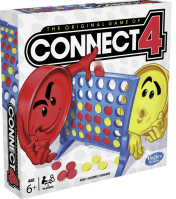
Connect 4 (also known as Connect Four) plays a lot like Tic-Tac-Toe (connecting 4 of your pieces in a row). The board stands straight up, and players take turns dropping “checkers” game pieces into the stand’s top. The player who connects four of their pieces in a row first wins. Connect 4 is easy-to-learn and has about as much strategy as Tic-Tac-Toe.

Connect Four just may be a lot of people’s first board game. Its simple rules make it a great game for kids.

2: Uno (1971)

Uno continues two trends. The first, 1971 was a banner year for board games; four of the five games on this list released that year. The second, take an existing game and give it a spin. Connect 4 changed up Tic-Tac-Toe; Uno turned Crazy Eights into a colorful and commercial success. Who knew it could be that easy?

In Uno, players race to empty their hands and catch opposing players with cards left in theirs, which score points. Each turn, players play cards by matching the played last card’s color or number. If unable to play, players draw a card from the draw pile. If they’re still unable to play, the player passes their turn. There are several Wild and Special cards to spice up the gameplay. Oh! And you must say “Uno” whenever you have one card remaining in your hand. If anyone calls you out for not saying Uno, you’ll draw two cards.

Uno may also continue a third trend. It could be a lot of people’s first tabletop game.

1: Sleuth (1971)

Sid Sackson makes another appearance on one of these lists. 1971’s Sleuth (hey, this is another 1971 release) tasks players with deducing the location of a hidden gem.

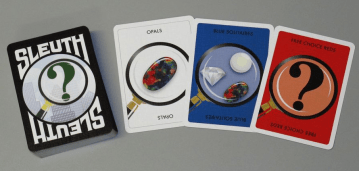
The hidden gem is one of 36 gem cards and gets hidden before the start of the game. The remainder of this gem deck—with each card showing 1-3 diamonds, pearls, or opals in one of four colors—is distributed evenly among the players, with any remaining cards laid face up. A second deck contains 54 search cards, each showing one or two elements, such as pearls, pairs, red opals, or an element of your choice. Each player receives four face-up search cards.

During a turn in Sleuth, players will ask other players about the cards in their hands based on the search cards they have. The asked player must show every card that matches the asking player’s question. This generates partial information in Sleuth. You may know that one player has two diamond cards in their hand, but you won’t know which color they are or how many diamonds are on the cards unless you asked the question.

Players are encouraged to keep notes for both negative and positive information. Sleuth can reach brain burning levels. It boils down a game like Clue—and Sid Sackson’s own The Case of the Elusive Assassin (1967)—to its deduction roots. It’s a simple but deep concept. Would you expect anything less from a master game designer like Sid Sackson?

Did we get the list right, for the most part? Let us know in the comments. And wherever you are, I hope you’re having a great day.

Check out the other lists in this series:
Top 5 Tabletop Games Prior to the 1930s
Top 5 Tabletop Games of the 1930s
Top 5 Tabletop Games of the 1940s-50s
Top 5 Tabletop Games from the Early 1960s
Top 5 Tabletop Games from the Late 1960s
Top 5 Tabletop Games from the Late 1970s
Top 5 Tabletop Games from 1980-1981
Top 5 Tabletop Games from 1982-1983
Top 5 Tabletop Games from 1984-1985
Top 5 Tabletop Games from 1986-1987
Top 5 Tabletop Games from 1988-1989
Top 5 Tabletop Games from 1990-1991
My Favorite Game Mechanisms: Horrified

Hey, hey! Kyra Kyle here. We haven’t done a My Favorite segment for a tabletop game in a while and this month may be the best time to discuss Horrified, a cooperative board game where players try to slay, free, or contain famous monsters. By this point, Horrified has covered Universal movie monsters, American cryptids, and Greek mythological creatures. The monsters may change but the concept remains. I could choose quite a few game mechanisms as my favorite, but I may have to go with each monster’s character.

Horrified does a great job of conveying who most of these monsters are. Frankenstein’s monster and his bride need to be taught how to be human and be shown love. The elusive Big Foot wants to be left alone. And the heroes must return Cerberus to the gates of Hades. Each monster has their own flavor, their own character. And for the most part, Horrified captures the essence of these monsters.

Like many cooperative games, Horrified can unravel at times. Something spawns in an inaccessible place at the worst possible moment or the opposite occurs, and everything becomes super easy because luck favors the players. But despite the luck of the draw (literally, you draw tokens from a bag), Horrified always gives each monster their own feel. Usually, the folks at Prospero Hall (the designers who made the game), capture what makes these monsters/creatures/cryptids who they are and each monster functions as its own mini puzzle.

Horrified builds on the tradition of games like Sentinels of the Multiverse. It could’ve given players their own unique powers and kept it at that but chose to grant the antagonists their own powers. But it goes deeper than older games. Most of these monsters seem real. The aforementioned Big Foot will run away from our heroes. The Yeti only wants what’s best for their little ones. Many of these monsters are more than mindless, well, monsters. And even the ones who could be categorized as mindless have a distinct goal they wish to accomplish.

Of course, there are other great elements and how these elements weave together makes Horrified a great game for spooky season. Every round a card is drawn that will seed the board with items, potentially bring in civilians, and inform the monsters what they’ll do. It’s a simple and elegant system that requires minimal upkeep from turn to turn. And the monsters will act after each player’s turn. Whenever the deck runs out, the monsters win. The heroes win if they can satisfy each of the monster’s mini puzzles.

So good. If you have the chance this Halloween, give Horrified a try. Board game cafes are a great way to test drive a tabletop game. Many local game shops will have demo copies of games as well. And of course there’s always board game conventions.

What are your favorite elements of Horrified? Have you ever played a game without making monster noises? I haven’t, even when I play a solo game. Let us know your thoughts in the comments. And wherever you are, I hope you’re having a great day.

Top 5 Tabletop Games from the late 1960s

Hey, hey! Kyra Kyle here. Back with another Top 5 Tabletop Games of an era and we’re also back with the second half of the 1960s (1965-1969). If you want to see our picks for the first half of the decade, you can follow this link.

We’re getting back into the swing of things, so let’s reiterate the ground rules again before we get started.

1: Cultural relevance plays as much of a factor as overall quality. A game might make a list that doesn’t hold up to others of its type, but you must admit the game is everywhere.

2: Only one game from a franchise makes the list. This will become more of an issue the closer we get to games with expansions.

3: Longevity plays a role, too. A game doesn’t have to fly off the shelves today, but it had to have some widespread appeal for a decent time.

Feudal board game Top 5 Games from 1960s

5: Feudal (1967)

The 1960s had a lot of Chess-like board games—and I do mean a lot—but none of the Chess variants reached the heights of Fred Beustchler’s Feudal. A part of the 3M Bookshelf Series (3M also produced a lot of Sid Sackson and Alex Randloph’s early work), Feudal tasks players with occupying an opponent’s castle or capturing all an opponent’s royalty. The play area consists of four plastic peg boards depicting empty, rough, and mountainous terrain.

Feudal tabletop game Top games from 1960s

Feudal has a unique set-up. Players place their pieces on their peg boards in secret and reveal how they deployed their units simultaneously. This leads to different strategic problems each game and every game plays out differently. We had to include one Chess-like board game. Feudal is the best of the bunch.

Triominoes board game Top 5 games from 1960s

4: Triominoes (1965)

Simply put, Triominoes is a variation of dominoes that uses triangular tiles. The tiles are equilateral triangles so they fit in neatly with each other. Players can play a Triomino if they have matching numbers with the six potential values 0-5.

Triominoes tabletop game Top 5 Games from 1960

I’ll be honest. Triominoes intimidated me while I was growing up. So many numbers close together looked confusing. But there’s no doubt that the game has a legacy.

Kerplunk tabletop game Top 5 game from 1960s

3: Kerplunk (1967)

Sometimes the simplest concepts make the best games. Kerplunk consists of a transparent plastic tube, plastic rods called straws (26-30 of various colors), and several dozen marbles. Players take turns removing a single straw from the tube while trying to minimize the number of marbles that fall though the web and into their trays.

kerplunk board game Top 5 game from 1960s

Kerplunk beget several similar games in the future, specifically Jenga. This family of games has built-in tension. Remove the wrong straw and the marbles pour out.

Twister tabletop game Top 5 game from 1960s

2: Twister (1966)

The tail end of the 60s saw a lot of simple games or new twists on older games. Speaking of twists, our next game is Twister.

Each version of the game comes with a spinner. And each spinner is divided into four labeled sections: left foot, right foot, left hand, and right hand. And each of those four sections are divided further into the colors red, yellow, green, and blue. After spinning, the combination is called (right hand red) and players must move their matching hand or foot to a circle of the correct color. Last player standing wins.

Twister board game Top 5 game from 1960s

Simple enough. And we’ll see a lot of other simple designs that have stood the test of time on this list.

Operation board game Top 5 game from 1960s

1: Operation (1965)

We go from moving one’s body in weird ways to a game featuring someone with a weird body. Operation challenges players with extracting silly body parts from a hapless patient. During the game, you acquire cards which dictate body parts you must remove. The body parts rest inside a hole and if you erroneously touch one of the hole’s metal sides, a sudden buzzer and light-up nose indicates the patient’s pain. Players want as little pain as possible in Operation. Successful extractions give the player money and the player with the most cash at the end of the game wins.

There have been countless versions of Operation. I believe my kids had a Spongebob themed one. Maybe it was Shrek. Regardless, Operation has never been out of print since its release. And I don’t see that happening in the next 60 years either.

Did we get the list right, for the most part? Let us know in the comments. And wherever you are, I hope you’re having a great day.

Check out the other lists in this series:
Top 5 Games prior to the 1930s
Top 5 Games of the 1930s
Top 5 Games of the 1940s-50s
Top 5 Games of the early 1960s
Top 5 Games of the early 1970s
Top 5 Games of the late 1970s
Top 5 Games from 1980-1981
Top 5 Games from 1982-1983
Top 5 Games from 1984-1985
Top 5 Games from 1986-1987
Top 5 Games from 1988-1989
Top 5 Games from 1990-1991

Top 5 Tabletop Games from the Early 1960s

Hey, hey! Kyra Kyle here. We’re bringing back an old series: Top 5 Tabletop Games. The lists prior to this one (the 30s and 40s-50s) had fewer titles to choose from during their time periods and served as the best board games of that decade instead of a year. But the 1960s produced so many popular and great games that we split it into two Top 5 lists. One for the beginning of the decade (1960-1964) and another for the end of the decade (1965-1969). We’ll publish the second list next week.

So much time has passed since our last Top 5 Tabletop Games that we may need to reiterate the ground rules before we get started.

1: Cultural relevance plays as much of a factor as overall quality. A game might make a list that doesn’t hold up to others of its type, but you must admit the game is everywhere.

2: Only one game from a franchise makes the list. This will become more of an issue the closer we get to games with expansions.

3: Longevity plays a role, too. A game doesn’t have to fly off the shelves today, but it had to have some widespread appeal for a decent time.

5: Hi Ho! Cherry-O (1960)

Woo! Hi Ho! Cherry-O just barely made this list. Perhaps I should run a survey and see which tabletop games were people’s first games. Hi Ho! Cherry-O may be near the top of that list.

Each player begins with an empty basket and 10 cherries on their tree. Players take turns spinning the spinner and performing the actions they spin. The first player to collect all the cherries from their tree and yell “Hi Ho! Cherry-O” wins. Simple premise. Easy rules to explain and understand.

And yet, mathematicians used a Markov chain to determine how long a game of Hi Ho! Cherry-O would last. Who knew that picking cherries could get so intense?

4: Focus (1963)

Focus is the first and not the last Sid Sackson game that will make these lists. It’s an abstract strategy game where players move stacks around a checkerboard with the three squares in each corner removed. Stacks may move as many spaces as there are pieces in the stack. Players may only move a stack if the topmost piece in the stack is one of their pieces. When a stack lands on another stack, the two stacks merge. Basically, one tries cornering their opponent(s) into no longer having moves.

Focus also happens to be an early recipient of the Spiel des Jahres, the German Game of the Year (1981). This award elevated the quality of board games that came from Germany after its inception. Sackson did the same for the board game industry prior to this award, which is why, in part, Focus earned this honor. That and Focus is a great game that has inspired countless tabletop game designers.

3: Mouse Trap (1963)

How many of you have built the Rube Goldberg-like mouse trap for this game and never played it? Show of hands. Mouse Trap has players building the least efficient trap to catch a mouse. But the game doesn’t play anything like it did back in 1963. The original Mouse Trap required an opponent to land on the “cheese” space by exact count and the player to land on the “turn crank” space by exact count for a chance that the clunky Mouse Trap might work and eliminate a player.

Fast forward 12 years and the game play surrounding the trap was retooled by Sid Sackson. Hey, there’s that name again. Sackson added the cheese-shaped tokens that allowed players to move themselves or other players or turn the crank of the machine. Sackson streamlined a game that could take several hours into one that can be played in under an hour.

Mouse Trap may lean heavily on a gimmick, but one can’t question its staying power.

2: TwixT (1961)

TwixT began as a paper and pencil game in 1957 by Alex Randolph. And in 1961 Randolph was commissioned along with Sid Sackson (Hey, there’s that name again) to start a games division. TwixT was one of Randolph’s first produced games. It was even short-listed for the first Spiel des Jahres (Hey, we know that award, too) in 1979.

Players take turns placing pegs of their color into a 24×24 square grid of holes. One tries to move from one end of the board to another, connecting one’s pegs by making knight moves (in Chess). You cannot cross two connected pegs, so it’s possible to block your opponent’s progression and that’s what you’ll want to do. TwixT has a bunch of strategy but is easy enough that young children can play. No wonder it was inducted into the Academy of Adventure Gaming Arts & Design’s Hall of Fame along with Randolph.

1: Acquire (1964)

I wonder who designed Acquire. Wait! It’s Sid Sackson. Again. In Acquire, players attempt to earn the most money by developing and merging hotel chains. When a hotel chain that a player owns stock is acquired by a larger chain, players earn money based on the size of the acquired chain. Player will liquidate all their stock at the end of the game and whoever has the most money wins.

Acquire was also short-listed for the first Spiel des Jahres in 1979 and was inducted into the Academy of Adventure Gaming Arts & Design’s Hall of Fame along with Sid Sackson. The tabletop gaming community owes a lot to both of these incredible game designers.

My aunt Erma had a copy of Acquire but lost the rulebook, so I made up my own rules to this game. So, Acquire holds a special place for me personally. I may be a little biased with this number 1.

But did we get the list right, for the most part? Let us know in the comments. And wherever you are, I hope you’re having a great day.

Check out the other lists from this series:
Top 5 Games prior to the 1930s
Top 5 Games from the 1930s
Top 5 Games from the 1940s-50s
Top 5 Games from the Late 1960s
Top 5 Games from the Early 1970s
Top 5 Games from the Late 1970s
Top 5 Games from 1980-1981
Top 5 Games from 1982-1983
Top 5 Games from 1984-1985
Top 5 Games from 1986-1987
Top 5 Games from 1988-1989
Top 5 Games from 1990-1991

Getting Started with Tile Placement Games

Hi, everybody. Kyra’s back with another older write-up that never got posted. This week’s post is a beginner tabletop games. I may add a game or two because there have been countless games that have been published in the six or so years since this write-up was written, but so many people cover newer games. Let’s stick with the older games.

Today we’ll cover tile placement games. A tile placement game is one where players lay or place tiles in groups or patterns to achieve various effects. Usually, but not always, where players lay their tiles will earn them victory points (or just points) needed to win the game.

Okay. The boring part’s over. Let’s get to the games.

Kingdomino

Kingdomino and not its sister game Queendomino makes this list because Kingdomino is more streamlined and easier to learn. It’s not that Queendomino is all that more difficult to play. If you know how to play Kingdomino, it’s easy to learn how to play Queendomino and progressing from King to Queendomino works with my idea of learning tabletop games with a scaffolding approach. One game that builds on another.

Anyway, in Kingdomino players take on the role of a lord or lady as they try to gain the most land—or the most value tracts of land—by collecting dominos. The dominos in question have numbers on their back denoting how valuable they are and two sections of landscapes on the front (that can be forests, deserts, mines, wastelands, or swamps). Dominos equal to the number of lords or ladies (the players pawns) are placed in number order with the lowest number on top and players take turns selecting dominos and placing them in their kingdom.

I won’t go into much more detail with how Kingdomino balances who picks first each turn, but it’s well done (as one can expect from designer Bruno Cathala). Instead, let’s focus on the tile placement aspect. Players start with a 1×1 tile, their castle tile. All the dominos are 2×1 tiles and when they’re claimed and added to a player’s kingdom, they must share a side with a section of land that shares their type (forests with forests, deserts with deserts and so on); castle tiles count as all land types. Players also can’t exceed a 5×5 kingdom, but their castle doesn’t have to be in their kingdom’s center.

This all makes for some interesting maneuvering, but the scoring mechanism further complicates tile placement. Players count their scores for each region they have in their kingdom. A region is every continuous area of the same land type and there can be more than one region for a land type. Someone could have a forest region of five and another forest region of three. For each of these regions multiply the number of spaces by the region’s number of crowns. Pictures of crowns show up, usually, in higher value tiles. If the forest region with five space has one crown, it’s worth five points, but if there are two crowns in the five-space forest region, it’s worth 10. A region with no crowns yields no points, no matter how big it is, so it’s ideal to get at least one crown in each region.

Kingdomino received the 2017 Spiel des Jahres; it deserved the game of the year.

Tsuro

I know I’ve included Tsuro in a previous starter games list (route/network building games), but Tsuro pulls double duty as a great starter tile placement game. Each player has a pawn and their pawns begin the game on the edge of the board (a 6×6 grid). On a player’s turn, they place a tile from their hand—these tiles will have paths on them—on the board continuing the path (or route) their pawn is taking. As soon as a new tile is placed, the player moves their pawn further on the path. The aim is to be the last player with their token on the board.

Players are not only building a route or network in Tsuro, they’re placing tiles to do so, and this simple, elegant game makes for a great introduction to both game mechanisms.

Patchwork

Patchwork remains one of my go to two-player only games to teach people. Sure, the designer Uwe Rosenberg has plenty of games the reimplement the same game mechanisms as Patchwork and other designers have followed suit, but the original Tetris-like tabletop competitive game about making a quilt retains its power.

On a turn, players may spend buttons to buy one of three available polyomino tiles (that are patches shaped like a Tetris piece) and add it to their quilt or pass. It takes time to stitch new patches into a quilt, so players will move their time token closer to the center and when a player’s time token reaches the center, they may take a final turn and the game ends.

There are a few more rules to Patchwork, but it’s a simple, streamlined game that works well with its theme. Who’d think that making a quilt would make a great game? Patchwork’s simplicity masks deep strategies. Do you go for larger patches for more points, but leaving you fewer options with which to place future tiles, or do you go for slow and steady points throughout the game, making sure you fill up as many spaces as possible? The options are endless.

I had to include a polyomino tile placement game on this list. Patchwork may not be as hot of a game as it once was and other games may have taken its place (Bärenpark and even Rosenberg’s own Cottage Garden and A Feast for Odin have even taken Patchwork’s place) for a lot of gamers, but it’s still a great starter tile placement game.

Azul

Azul is another game that I included in a previous list of great starter games (Card Drafting Games), but it works for tile laying as well. In fact, Azul’s theme is tile laying a Portuguese wall. Players draw tiles from a bag and four of them are placed on 7 cardboard discs that are accessible to each player. Then, players take turns claiming similar tiles on each disc and adding them to their player boards (that represent the walls the players are tiling). Each board has the same wall pattern and the player to finish a row of tiles initiates the game’s end.

Again, Azul can be classified as card (or tile) drafting and that’s a core ingredient to the game as well as set collection and chain effects, but the combination found is Azul is so unique for a tile placement game that I had to include it on this list.

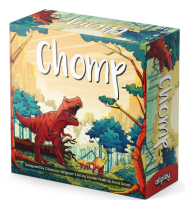
Chomp

This is the newest game of the list and the only one I added to the original post. I played Chomp a week ago for the first time. Chomp refers to the 2023 Allplay title, not the 2000 food chain card game Chomp! from Gamewright. In Chomp (without the exclamation point), players build a dinosaur biome by laying tiles with dinos, plants, tar pits, and other things you may find in the age of the dinosaurs.

Players must build their land so that herbivores have plants to eat, and carnivores have herbivores their size that they can eat. Dinos of the same type that are placed adjacent to other dinos of their type form a herd. Players can chain as many of these dinos together as they can to form massive herds and potentially earn big points.

Any dinos placed next to tar pits automatically die at the end of nine rounds (I played with 3-players, there may be more or fewer rounds at different player counts), so be careful where you place tar pits. But you may want your dinos to perish. Each tile is double-sided. One side depicts the land you’re placing, while the other gives the player a scoring option. Each game, players must balance whether they want to play or score the tile they pick up that round. Such a great twist.

Final Thoughts

We had a couple more games in this starter board game list than usual, so I hope there’s something here you’ll enjoy.

Know of any other great beginner tile placement games? Are there any games on this list you disagree with? You can place your suggestions and complaints in the comments.

Getting Started with Pick-Up and Delivery Games

Howdy, folks, Uncle Geekly’s back with another group of starter board games. For those of you who are new to the site, our starter game series takes a common or popular game mechanism and picks some good games that feature that mechanism but are easy to learn. Many of these games on these lists will start easy and work their way to greater complexity.

In today’s list we’ll cover pick-up and delivery games, and this mechanism works like its name suggests: players will pick up items from one place and deliver them to another. It’s a simple mechanism that finds its way to several great games, but there are two issues that came up when compiling this list of starter games.

First, many designers don’t believe in having a straight pick-up and delivery game (it’s too boring), so you won’t find too many games with pick-up and delivery as the only mechanism and only a handful more that will include pick-up and delivery in a group of two or three mechanisms.

The second is that by adding extra game mechanisms, designers make many pick-up and delivery games more complicated, so there will be games like Firefly and Freedom: The Underground Railroad that are excellent pick-up and delivery games (a couple of my favorites) but slightly more complex than a starter game should be for newcomers.

Enough about the games that won’t be on this list. Let’s talk about the ones that made the cut.

DeepSeaAdventure01

Deep Sea Adventure

We start with the simplest game of the lot, Deep Sea Adventure. Sure, this game has a push your luck element and uses roll/spin and move, but it’s the closest game to pure pick-up and delivery. Players assume the roles of deep-sea divers. There are four levels of treasure (tokens) with a number (points one can score) printed on the front and the level denoted in dots on the back. The tokens get shuffled and placed in a wavy line protruding from the submarine (where the players pawns start), going from level 1 to level 4.

Players take turns diving into the sea (by rolling two specialty dice numbered from 1-3) and try to go as far as they can, but beware. All players share the same oxygen tank and when the oxygen level reaches zero, the round is over and only those who returned to the submarine with treasure in hand score points that round.

Deep Sea Adventure is charming. It doesn’t look like it would have much strategy, but it’s a lot deeper (pun intended) than first glance. Do you push your luck and go deeper, or do you turn back around with the treasure or two you picked up early on, so you know you’re scoring that round? There’s even a built-in catch-up mechanism where the higher scoring tiles are easier to get to in future rounds, so players who are behind early in the game can score a heap of points in round two or three. I’ve even considered picking up as many level one and two treasures as I can in the first round and since those lost treasure tokens get added to the end of the treasure path in stacks of three, I can claim them later in the game for big points.

Like I said, there are plenty of play styles and stratagems for this easy-to-learn game. Deep Sea Adventure may be marketed toward kids (if you don’t believe me, check out this adorable how to play video by Oink Games) but there’s enough going on to interest adults. You can find Deep Sea Adventure at most Barnes and Nobles but be on the look out for a small package. Oink Games come in small boxes and while I haven’t played all the Oink Game titles, most of the ones I’ve played are at least baseline good.

MyLittleScythe

My Little Scythe

I know that I said this before, but pick-up and delivery games have a knack of being very complicated. Case in point, My Little Scythe is a simplified, or child-friendly, version of Scythe, which happens to be on a lot of people’s best games of all time, but the original Scythe is far too complex for a starter pick-up and delivery game list. Heck. My Little Scythe makes the list by a skosh.

My Little Scythe was designed by a father and daughter, so that the father could play his favorite game with his young daughter, and it follows various animals of the animal kingdom as they prepare for the harvest festival. Players take turns earning trophies by earning specific accomplishments. There’s a lot going on in this game, but no single game mechanism is that complex. That said, I won’t spend too much time with how to play My Little Scythe because this isn’t a “how to play” write-up, it’s a starter game write-up. If you’d like detailed rules explanations, check out Rodney Smith’s video at Watch It Played; Rodney does excellent work. For now, let’s focus on what makes My Little Scythe a good pick-up and delivery starter game.

My Little Scythe takes an interesting look at pick-up and delivery. There’s a strong worker placement element to it—so it would make a nice addition to starter worker placement games—but two of the four trophies needed to trigger the end game (the harvest festival) requires players to pick up four of one kind of resource and drop them off at the castle (centrally located on the board). At least four of the remaining possible six trophies players can earn can be achieved by picking up resources and controlling them. In My Little Scythe, players are considered to have control of resources if their pawns occupy the same space as a resource. If the player controls the resource, they may spend it for other items. That’s a clever distinction that doesn’t show up in any of the other games on this list. So, I guess one could consider My Little Scythe a pick-up and control game.

There are so many other elements going on with My Little Scythe that I won’t mention the rest of them here, but each element works well and the whole is an easy game to learn and teach others. I wanted to include it here because of the interesting twist My Little Scythe makes with the pick-up and delivery mechanism. I know that it’s following Scythe’s lead, but we need more games that add wrinkles to well-established game mechanisms.

ForbiddenDesert08

Forbidden Desert

Forbidden Desert seems to make it on a lot of these lists, but it does fit the pick-up and delivery mechanism requirement and it’s a darn good game, perhaps the best of the Forbidden series, but that’s because I haven’t had the chance of playing Forbidden Sky as of this write-up. In Forbidden Desert players are stranded in an inhospitable desert. They must find and collect (or pick-up) the parts to a flying contraption and deliver the completed machine to the launch pad, so they can escape.

It’s been six years since Forbidden Desert’s initial release, and I still marvel at the way shifting sand is represented by drawing desert cards, shifting land tiles in the direction the cards command, and placing sand tokens atop the land tiles that moved that turn. It feels right. It plays like an unpredictable desert storm.

The way players must uncover both a vertical and horizontal tile for each object to reveal which tile one of the parts resides is brilliant; no game plays the same way twice. This also adds to the storm’s unpredictable nature and the fact that players can get buried in sand adds to the atmosphere of being lost. If the tile your pawn stands on moves, your pawn moves too, and board’s state may be far different from the end of one of your turns to the beginning of your next. Again, this adds to the players’ feeling of hopelessness—at times—or they may find the board moves in their favor and that’s wonderful.

I’ve said it before, but it remains true, Forbidden Desert is an excellent game. It also happens to be an excellent pick-up and delivery starter game. Pick-up and delivery may not play as big of a role in the turn to turn aspects of Forbidden Desert, but the only way players can win this game is by picking up and delivering the flying contraption to the launch pad.

Final Thoughts

Hopefully, we’ve covered some games you either haven’t played or haven’t considered pick-up and delivery games. Uncle Geekly tried to go with a mix of games that use predominantly pick-up and delivery (Deep Sea Adventure), implement pick-up and delivery as the only way to win but doesn’t include it with the turn to turn action (Forbidden Desert), and found one that provides a twist to a popular mechanism (My Little Scythe).

Know of any other great beginner pick-up and delivery games? You can deliver your questions, complaints, and suggestions in the comments.

My Favorite Game Mechanics: Gloomhaven and Assault on Doomrock

There are so many things I could pick as my favorite mechanisms for Gloomhaven and Assault on Doomrock, but I’ll try to stay on task with the one I chose for this article: artificial intelligence.

Cooperative games pit the players against the game itself so almost any cooperative game has some version of artificial intelligence. Gloomhaven and Assault on Doomrock just happen to be two of my favorites in terms of AI.

Gloomhaven01.jpg

Gloomhaven has a leveled system for its creatures, so players can adjust the difficulty to match their tastes, and each creature type has its own action deck. The action cards within these decks dictate how quickly each creature moves, how or if they attack that turn, and who they target when they do. It’s a simple but elegant way of making each creature unique. Players won’t know what the creature will do from turn to turn, but if they’ve faced a similar creature, they may know its habits and that does a lot for characterization.

I also like Gloomhaven’s card-based combat. Usually I don’t like it when a player gets knocked out when they run out of cards in their deck, but this game is so balanced that it works. Okay. I promise that’s the only time I’ll get off topic—with Gloomhaven.

AssaultOnDoomrock

Assault on Doomrock has a similar system for its creatures, but it adds a threat level for each player’s character (or hero). Typically, the hero with the highest threat level will draw more monsters and that allows for a mechanism in the game that functions a lot like a tank in MMORPGs—a tank is a player with a lot of health that serves as a punching bag for monsters to attack, while their teammates wail on the distracted monsters.

There are more things that may affect a creature’s aggression in Assault on Doomrock, but the inclusion of a threat system gives the game more depth. I also like Assault on Doomrock’s addition of time as commodity. T.I.M.E. Stories has a time system too, but Assault on Doomrock’s use of time made me more concerned about wasting the time I had and that increased tension. Alright. I won’t discuss Assault on Doomrock—that much.

SentinelsOfTheMultiverse

I’d be remiss to not give a quick mention to Sentinels of the Multiverse. The villain decks behave differently, giving each character personality. Pandemic almost made this list for artificial intelligence and how the viruses behave, especially how the epidemic cards function with location cards that had been played (currently in the discard pile) go back on top of the draw deck, so diseases can get worse in cities already affected.

Like I said, most cooperative games have some form of artificial intelligence, and there are many other great examples. I could go on for another five or six games at least, but good old Uncle Geekly would like to hear from you.

What do you like most about Gloomhaven and Assault on Doomrock? Is there another game that uses AI in a great way? Error Code 220: Service ready for new user. Let us know in comments.

My Favorite Game Mechanisms: Dinosaur Island

Yes. Uncle Geekly picked up Dinosaur Island this past Christmas, and I’ve had some time to get in several plays. For the uninitiated or the ones who don’t remember what I said about Dinosaur Island in the past, it’s a tabletop game where players compete for visitors by building their own Jurassic Park. The premise is solid gold.

Each individual game mechanism has been seen in other games, but Dinosaur Island does a fantastic job of combining mechanisms that mimic what they’re supposed to mimic. The research and development section functions like the players exploring which dinosaurs they can recreate. Players can take a risk—increasing the dinosaur threat level—by taking a die that yields larger research results or they could take a safer route and set a foundation for gaining research points over time. It’s slower, but more reliable. The building of dinosaur pins and dinosaur husbandry—is that a thing?—functions the way one would think they would. Does one build the pins and reproduce dinos to get more visitors in one’s park before building adequate security? Players can, but is it wise?

DinosaurIsland_DinosaurFigures.jpg

The dinosaur figures don’t hurt the fun factor, but the resource management of where to place workers to get the best effect and where to place visitors so they yield the highest reward are other moments where Dinosaur Island shines. There’s just enough luck introduced so there’s a chance for players to catch a runaway winner, but Dinosaur Island is first and foremost a strategy game. A player who deploys a better strategy tends to win more often than those who don’t.

Each game mechanism—worker placement, tile placement, set collection, and an action point allowance system—behaves like its own mini game. Dinosaur Island could even be viewed as a series of mini games. But Dinosaur Island’s whole is far greater than any single part. That makes describing the game difficult or zeroing in on any specific part as a favorite tough. I like how Jonathan Gilmour and Brian Lewis combine these elements, so they make a tasty blend.

DinosaurIsland_Dice

There are plenty of other games that throw in a lot of mechanisms (First Martians comes to mind), but the individual pieces feel like a board game version of doing your taxes. Dinosaur Island doesn’t feel that way. The elements make sense for what the players are doing and the strategy, while difficult to master, is easy to see. Players will know why they won or lost and how they may be able to improve. Plenty of games offer hodgepodges of gaming mechanisms, but few of those games deliver a great experience like Dinosaur Island.

What are your favorite elements of Dinosaur Island? Have you ever played a game without humming the Jurassic Park theme? Uncle Geekly hasn’t, even when I play a solo game. Let us know your thoughts in the comments.