Top 5 Ice-Powered Comic Book Characters

Hey, hey! Kyra Kyle here. For those of us in the northern hemisphere, today is the first day of winter. Let’s celebrate by listing the Top 5 Ice-Powered Characters in comic books.

5: Ice (DC)

The first of several DC Comics characters on this list, Ice is the successor to the Ice Maiden. Tora Olafsdotter is the product of Norwegian experiments with Ice Maiden, hoping to replicate her powers. Tora’s arrival in the human world led the original Ice Maiden feeling superfluous. Ice Maiden returned to Norway, while Tora took up the name Ice and joined the Justice League International. She’s had an off-again, on-again relationship with Guy Gardner and developed a friendship with a heroine named Fire.

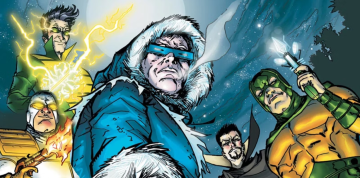
4: Captain Cold (DC)

Leonard Snart, Captain Cold, started life as a gag villain, but over time, Cold has become an impressive DC Universe villain. Snart grew up in an abusive household and turned to a life of crime. He developed a cold gun. The gun has extraordinary power. It can create temperatures to absolute zero. He can freeze objects (and people), create ice patches and icicles, and create a “cold zones” which can slow down anyone, including the Flash.

Snart is one of the founding members of the Rogues. He’s joined the Ice Pack (a group of cold-powered supervillains) and the Secret Society of Super Villains.

3: Killer Frost (DC)

There have been two women who bore the Killer Frost moniker. Crystal Frost was a scientist working in the Arctic when an accident gave her the ability to generate extreme cold. She became a supervillain, but her powers were slowly killing her. In an attempt to save herself, she consumed the heat of Firestorm and died.

Following Crystal’s death, her friend Dr. Louise Lincoln became Killer Frost. She recreated the accident that gave Crystal her powers and sought revenge on Firestorm. Able to transmute heat to cold and create gusts of wind and structures made of ice, Killer Frost has teamed up with villains like Captain Cold (who we saw in our previous entry) and Mr. Freeze, who happens to be our next entry.

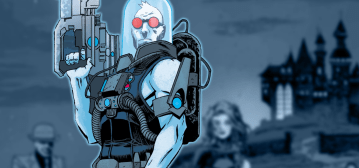
2: Mr. Freeze (DC)

Dr. Victor Fries (originally a mad scientist Mr. Zero) is another DC villain who began life as a joke villain. The 1990’s Batman: The Animated Series recreated him as a sympathetic villain in its Emmy-winning episode “Heart of Ice.” Mr. Freeze has a sad story behind his frozen smile. His wife Nora fell terminally ill. Dr. Fries dedicated himself to cryogenic research to save her. The head of the corporation funding Fries’s work shuts down his project, and Victor fights them to save his wife. A fight ensues, which results in Victor turning into Mr. Freeze.

Freeze can only survive in sub-zero temperatures. To survive, Victor built himself a cryo-suit. He also developed an ice gun (powered by diamonds) and pursued a life of crime. Freeze’s gun can freeze objects and people, while his suit gives him increased strength and durability. Combined with his intellect, Mr. Freeze is a formidable foe.

1: Iceman (Marvel)

Iceman Bobby Drake started as the youngest member of the original X-Men. Most fans ignored him; he was the Spider-Man of that early X-Men team, cracking jokes and acting as the conduit for younger X-Men readers to view the team through.

Fast forward a couple of decades, and Bobby made his weekend appearance on Spider-Man and His Amazing Friends. I know it’s hokey, but I still enjoy watching this Saturday Morning cartoon on Disney+. Little did I, or any of those early readers of X-Men, know that Bobby may be one of the most powerful mutants. Iceman is an Omega-level mutant. As a frame of reference, Magneto is also an Omega-level mutant. Yikes!

Iceman can become ice in an organic form. By doing this, he can change his size and size, becoming an enormous ice man. He can also add spikes of ice on his knuckles or other body part, becoming a living weapon.

Hello, Winter! Let us know who you would add or remove in the comments. And wherever you are, I hope you’re having a great day.

Top 5 Underrated DC Villains

Hey, hey! Kyra Kyle here. We’re doing something very different this week and posting a much older post by our resident Star Trek Geek, Jim Plath. He shared his Top 5 Underrated DC Villains years ago, and I just found the copy. Sorry about that, Jim. Without further ado, here is the Top 5 Underrated DC Villains.

This one ended up being trickier than I expected. When you start digging, you can make a case for just about any villain of Batman’s not named Joker, Ra’s, Deathstroke, or Superman’s not named Lex, Doomsday, Darkseid, or Brainiac. Here’s my list though.

5) Cheetah:

You could make a case for just about any DC female villain not named Harley Quinn these days, but given that she’s really an anti-hero now, she might not make the list anyway. Cheetah’s history with Wonder Woman is pretty front-and-center in Wonder Woman’s current arc, and it’s doing wonders for drawing attention to her sympathetic qualities. As a character, she’s tragic, and as a villain, she’s got Wonder Woman’s durability and the speed of, well, a cheetah. That makes her a worthy adversary for a good portion of the Justice League.

4) Brother Eye

The OMACs/Brother MK1/Brother Eye have been used similarly to Marvel’s Sentinels. They’ve been involved in some great Justice League stories over the years, played a pivotal role in Infinite Crisis and Final Crisis, and always generate hefty stakes.

3) Mongul

Mongul is something of an ersatz Darkseid. In fact, that’s most likely why he’s underrated. Like a lot of characters, his backstory changes slightly here and there, but he’s proven himself a threat to each member of the Justice League individually, and given them a run for their money as a group. He even once destroyed Hal Jordan’s hometown of Coast City.

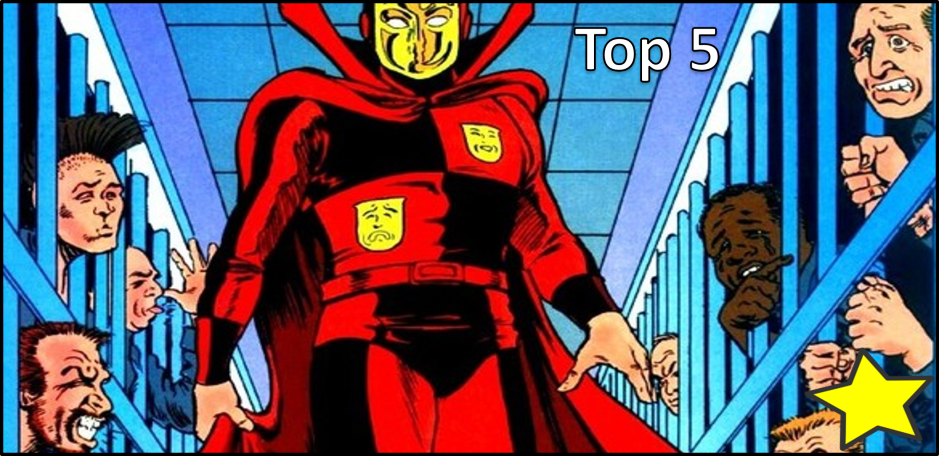
2) Psycho Pirate

With the power to affect people’s states of mind, he probably gets passed over too often for villains like Scarecrow, but Psycho Pirate’s powers are broader. He’s been shown to mollify hostile characters, even pacify Bruce Wayne and Jim Gordon. It isn’t always about fear with the Psycho Pirate.

1) Vandal Savage

When it comes to men made untouchable to father time, the bulk of the spotlight goes to Ra’s al Ghul these days. Some of that is the influence of the Arkham video game franchise, and the Christopher Nolan Dark Knight trilogy, but another factor is Savage is far more powerful. There just aren’t many DC heroes who can make a match for him, so he doesn’t get as many shots at the bigtime.

Do you agree with Jim’s list? Who would you add or remove? Let us know in the comments. And wherever you are, I hope you’re having a great day.

Top 5 Superman Villains

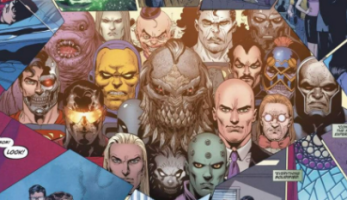
Hey, hey! Kyra Kyle here. We’re back with another Top 5 Villains List. This time we’re covering Superman’s rogues gallery. We mentioned Supe’s rogues in a previous Top 5, the Top 5 Most Powerful Rogues Gallery. But Superman’s villains are getting their list today. Let’s see who made the list.

5: Darkseid

You may think that Darkseid is way too low on this list, but I view him more as a Justice League villain if not a DC universe-wide villain. But Darkseid needs to make the list. I struggled with that. I wanted to include Parasite or Cyborg Superman or even Toy Man or Mister Mxyzptlk. Consider them the honorable mentions. Oh. Spoiler alert: those villains didn’t quite make the list. Getting back to Darkseid, he inspired Marvel’s Thanos. So, Darkseid is a heavy hitter. Unless the writer powers down the villain, Superman often needs help when dealing with Darkseid.

4: Doomsday

What more can be said of the villain who killed Superman? He belongs on the list; he may even be too low like Darkseid. Next.

Just kidding. We’ll discuss Doomsday a bit more. Doomsday is an engineered being from the depths of prehistoric Krypton. Is everyone still on board with genetic experiments? Doomsday’s creator imbued him with few feelings, mostly hate and a desire for destruction, which led to him destroying worlds and eventually finding Earth. Doomsday can’t die. He adapts every time he gets defeated. He can’t be reasoned with. Of Superman’s mindless foes (or his foes who are forces of nature), Doomsday tops them all and makes this list.

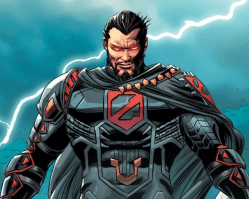
3: General Zod

Since he’s a Kryptonian, General Zod has powers comparable to Superman. And as his name suggests, he’s a general. So, he has military training. That makes General Zod a Superman-powered general who desires to subjugate humanity and turn Earth into a New Krypton. Yep. He’s terrifying.

General Zod may even be my choice for Superman’s first major villain if I were to reboot the character. He ties in perfectly with Supe’s past. General Zod knew Kal-El’s birth parents after all. And he hated them. It made sense that Man of Steel featured General Zod as its main antagonist. Too bad the movie wasn’t better.

2: Brainiac

There have been many Brainiacs and with that several origins for the character. No matter the origins or version, Brainiac is often considered Superman’s second-greatest villain. You can probably guess who takes the top spot. Usually, writers depict Brainiac as a superintelligent android or cyborg from the planet Colu who is obsessed with collecting all knowledge in the known universe. He even goes so far as to shrink cities like Kandor, the capital of Superman’s home planet Krypton, and Brainiac has destroyed countless civilizations.

If his body ever gets destroyed, Brainiac uploads his artificial consciousness into a new body and begins anew. This makes Brainiac pseudo-immortal and a major threat to Superman. One of my favorite versions of Brainiac comes from the Superman Animated Series. Brainiac was an AI present when Krypton exploded. We learn that Brainiac destroyed Krypton so he and he alone would have the knowledge that Krypton ever existed. This put him at odds immediately with Superman. And the reveal was fantastic. Sorry. Spoilers for an almost thirty-year-old cartoon series.

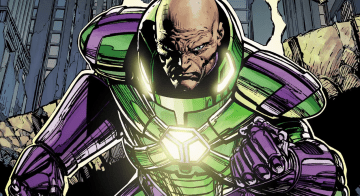
1: Lex Luthor

What more can I say about the man who would be Superman? Most people know Lex Luthor. He’s one of Comicbook’s greatest villains, let alone Superman’s greatest villain. CEO of LexCorp, Lex Luthor as I mentioned in the Most Powerful Rogues Gallery Top 5 is DC Comics’s version of Tony Stark if Iron Man decided to go a different path. Lex hates how much the world loves Superman. He doesn’t trust all that power belonging to an alien. While I could mention several large-scale, DC Comics affecting schemes, my favorite Lex Luthor story, the one that shows how evil he can be, comes from a much smaller story.

Lex visits a diner outside Metropolis. He offers a waitress at the diner a large sum of money to sleep with him. The waitress knows who Lex is, everyone knows him and what he’s done, and she’d rather not sleep with the devil. But the money Lex offered was too good to pass. As soon as she decides to sleep with Lex, he leaves the diner. Lex’s chauffeur asks why he left before completing the “transaction,” and Lex said—and I’m paraphrasing—She will always know that she would’ve slept with me. Now she hasn’t a penny to show for it.

Like Outkast once said, what’s cooler than being cool? Ice cold. That sums up Lex Luthor.

Did we get the list right? Let us know who you would add or remove in the comments. And wherever you are, I hope you’re having a great day.

Top 5 Most Powerful Rogues Galleries

Hey, hey! Kyra Kyle here. It’s still Spooky Season, but I’m going in a different direction with this week’s Top 5. What’s more horrifying than a strong series of villains? In this list, we’ll discuss the 5 most powerful rogues galleries in comic books. This differs from the most popular rogues galleries. If we did the most popular rogues galleries, Batman and Spider-Man’s rogues would certainly make the list. But most of Batman and Spider-Man’s rogues are street-level villains. And not as powerful.

So, who made the list? Let’s find out.

5: The Flash

Flash has an underrated rogues gallery. I may be showing my bias here; I don’t know. Flash begins with a lot of great street-level villains or villains slightly above street-level with Captain Cold, Mirror Master, Weather Wizard, and Captain Boomerang. But then you get into Gorilla Grodd who has brains and brawn, and the Thinker who is the most intelligent being in the DC Universe.

And then Flash’s rogues reach a new height with evil speedsters. Speed is a given in a Flash story, but each of these evil speedsters can reverse time and change events. That’s Reverse-Flash’s MO. He went back in time to kill Barry Allen’s mother. Our next hero may be able to claim a more powerful set of rogues, but that level of pettiness raises the Flash’s rogues.

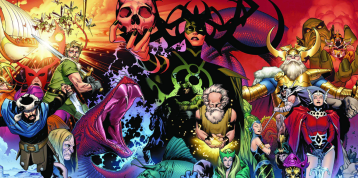
4: Thor

This one’s a cheat. Most of Thor’s rogues are god-tier villains, so they can get powerful. Perhaps too powerful. Mangog is the physical manifestation and sum of the hatred of a billion beings. Mangog is a threat to the entire universe. Then, there’s Surtur, the king of the fire giants. Surtur possesses a sword that can destroy universes. And there’s Gorr the God Butcher. The Marvel Cinematic Universe (MCU) may have done Gorr dirty in Thor: Love and Thunder. He’s far more menacing in the comics; he has killed hundreds of gods with All-Black, his sword that gets more powerful with each god Gorr kills. Oh, wait, I didn’t mention Loki. Yikes!

3: Superman

Most people think of Lex Luthor first when thinking of Superman’s rogues and with good reason. But there are quite a few people who may think Lex is a normal human. He’s not a threat. Lex happens to be DC Comics’ version of Tony Stark/Iron Man. Both Lex and Tony have money to burn, a power suit, and super genius intellects. Lex Luthor is Iron Man if Iron Man decided to break bad.

Then you add all the evil Supermen, and there are a lot. Bizzaro, Cyborg Superman, and General Zod lead the charge here. General Zod is Superman with military training. Supes may be in trouble. Brainiac is another universe-level threat. Darkseid who is a DC-wide villain can also be a solo Superman villain, and Darkseid inspired the creation of Thanos. And that’s all before we get to Doomsday who literally killed Superman. Throw in the imp from the fifth dimension, Mister Mxyzptlk, who can warp reality itself, and you can’t deny that Superman’s rogues contain a lot of heavy hitters.

2: Fantastic Four

Galactus. This being literally eats planets like Pac-Man gobbles power pellets. Galactus alone makes the Fantastic Four’s rogues gallery ridiculously powerful. But it doesn’t stop there. Doctor Doom may be one of the deadliest villains in comic book history. He has taken the Beyonder’s powers more than once. The Beyonder is an otherworldly being with universe altering abilities. Kang keeps trophies of the hundreds of heroes he’s killed while time jumping. And there’s Annihilus, ruler of the Negative Zone.

The Fantastic Four are unique in the world of comics. They tend to act than react and bump into many of their enemies on their adventures, and their adventures take them to some crazy locales like the Negative Zone. I can’t wait to see which version of the Fantastic Four the MCU will give us.

1: X-Men

But our number one spot must be the X-Men. The Fantastic Four may have Galactus, and Galactus may be more powerful than any one X-Men villain, but the X-Men have a power classification system. This makes it easy to figure out who can destroy or severely alter the world. The X-Men have at least eight Omega-level evil mutants. Madelyne Pryor (evil clone of Jean Gray), Dark Phoenix, Apocalypse, Exodus, Cassandra Nova, Stryfe, Proteus, and of course Magneto.

That short list doesn’t even include Mr. Sinister who cloned Jean Gray and has caused havoc. Sentinels and the upgrade Nimrod. Or even Bastion who is part mutant-part Sentinel. It doesn’t include Shadow King and the Adversary who can haunt people psychically. I think I forgot to mention the Brood in there. And so, so many more ridiculously powered villains who would be at home facing off against the Fantastic Four or Superman or the Justice League or the Avengers. The X-Men’s rogues gallery tops just about any comic book rogues gallery in terms of sheer power.

Did we get the list right? Let us know who you would add or remove in the comments. And wherever you are, I hope you’re having a great day.

Top 5 Hulk Villains

Hey, hey! Kyra Kyle here. We’re sticking with the Spooky Season theme or at least Spooky Season adjacent with the Top 5 Hulk Villains. Hulk has an odd array of villains because he spends a large portion of his time as a monster.

But the Green Goliath has his fair share of villains. Let’s see who made the list.

5: Absorbing Man

Absorbing Man could’ve been higher on this list. He has one of the most intriguing powers in Hulk’s rogue’s gallery; he can absorb any material he touches. Think of it like a physical version of the X-Men’s Rogue’s power. But Absorbing Man functions just as much as a Marvel Universe villain as he does a Hulk villain. His origins come from a classic Thor comic and has a link with Loki. And his most notable partner Titiania has a connection with She-Hulk, so Absorbing Man could be just as much of a She-Hulk villain.

Even so, he deserves a mention on this list. After fighting Thor for several rounds, Absorbing Man gets banished into outer space. Upon his return on a comet, Absorbing Man battles the Hulk. And the two became on again, off again rivals ever since.

4: Abomination

The Abomination is a classic Hulk villain. Had this been a decade or two ago, the Abomination could’ve landed much higher on this list, maybe even number one. But a few villains have taken his spot as the Hulk’s big bad. Emil Blonsky’s villainous origin plays out similarly to his Marvel Cinematic Universe (MCU) counterpart. He started as a KGB agent and spy; he was switched to a British Royal Marine for the MCU. Blonsky subjected himself to a ton of gamma radiation and turned into scaly and larger version of the Hulk.

The Abomination is the oldest evil Hulk, but there have been other “evil Hulks” who have taken over higher spots.

3: Maestro

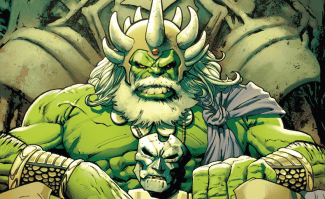
Okay. Maestro is just a future version of the Hulk. But he’s one evil son of a gun. This version of the Hulk comes from the Future Imperfect timeline where the world has been rocked by nuclear weapons. Hulk is uniquely qualified to survive such a future and the horrors he’s seen have driven him mad. Maestro may no longer be as strong as his younger counterpart, but his healing factor makes him virtually immortal.

It also doesn’t hurt that the legendary comic book writer Peter David and equally legendary artist George Perez co-created Maestro and gave the character a phenomenal run in the early 1990s.

2: Red Hulk

Red Hulk is yet another evil version of the Hulk, but he’s more than that. Red Hulk started as General Thaddeus E. “Thunderbolt” Ross. Red Hulk may have debuted in 2008, making him the “newest” character on this list. But Thunderbolt Ross has been around since the very beginning. He was the father of Hulk’s long-time love interest and eventual wife Betty Ross. Thunderbolt hated the Hulk and led the military’s charge to subdue him.

Thunderbolt Ross turned himself into the Red Hulk to go toe-to-toe with the Green Giant. The Red Hulk retained Ross’s intellect and more importantly his military training, making him a force. Ross has yet to become the Red Hulk in the Marvel Cinematic Universe. William Hurt played the character until his passing. Harrison Ford will portray the character in the upcoming Captain America: Brave New World. It should be a matter of time before Red Hulk makes his MCU debut.

1: Leader

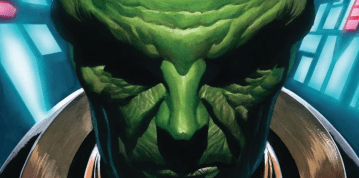
I may be biased, but the Leader remains the ultimate foil for the Hulk. Janitor Samuel Sterns gets turned into the ultra-intelligent Leader after exposure to gamma radiation. He develops telekinesis, telepathy, gamma ray manipulation, and can self-resurrect. He’s been a part of several major Hulk storylines, including the creation of the Red Hulk, our number two villain on this list.

The Leader is also one of the founding members of Intelligencia, a group of the greatest criminal minds on Earth. This group can affect the Marvel Universe as a whole. But the Leader works best when he squares off against the Hulk. He is the yin to the Hulk’s yang. The only villain who comes close to besting the Leader as the Hulk’s greatest enemy may be the Hulk himself.

Did we get the list right? Let us know who you would add or remove in the comments. And wherever you are, I hope you’re having a great day.

Top 5 Batman Villains

Hey, hey! Kyra Kyle here. We’re kicking off spooky season a little late with a Top 5. The Top 5 Batman Villains to be exact. I struggled with whether to include The Joker and call it the Top 5 Batman Villains Not Named The Joker. But I decided to keep the Joker and add a sixth, honorable mention villain. The best of both worlds? This sixth villain is someone who wouldn’t have made the list. Eek! Batman has so many great villains. Let’s get started.

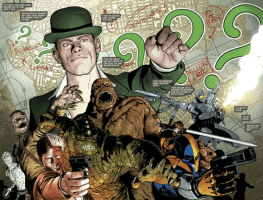
6: The Riddler

Yep. The Riddler almost didn’t make the list. This doesn’t mean that he’s a poor villain. It doesn’t mean that any of the villains you don’t see on this list are poor villains. I may have to make a Top 5 Underrated Batman Villains at some point. Let me know yours in the comments. Batman has a stacked rogues gallery.

Back to the Riddler. The Riddler began as a joke villain. TV executives even modeled the vibe of the 1960s Batman series starring Adam West from a Batman comic book cover that featured the Riddler. He’s been reimagined so many times that the Riddler has become a formidable foe. He got a little drip from the Batman: The Animated Series. He’s still one of my favorite villains from that cartoon series. “The War of Jokes and Riddles” is a must read if you’d like to see the Riddler portrayed as Joker’s equal. But the Riddler’s best story may come from Batman: Earth One, Volume Two.

Batman: Earth One shows a newer Batman navigating Gotham’s underbelly. The Riddler from Volume Two does a lot of Riddler schtick. He asks riddles of Batman and states that if Batman doesn’t solve the riddle in time, he’ll detonate a bomb killing hundreds. Batman solves the riddle in time because he’s Batman. But the Riddler detonates the bomb anyway. This isn’t your typical Riddler.

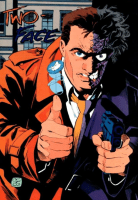
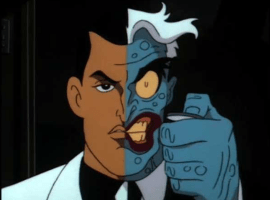
5: Two-Face

Two-Face has always been a layered Batman villain. He started as one of Bruce Wayne’s good friends and lost touch with reality after a criminal threw acid on the left side of his face. He’s another great villain from the Batman: The Animated Series. His two-part origin story in that series was fantastic and worth a watch. Aaron Eckhart’s portrayal of Harvey Dent was one of the most underrated elements of 2008’s The Dark Knight. But I’d have to go with the source material and 1990’s “The Eye of the Beholder.”

“The Eye of the Beholder” may sound familiar to fans of Batman: TAS. Commissioner Gordon and Harvey Dent form an alliance with Batman to rid Gotham of crime. Little do Gordon and Batman know, Harvey suppresses a second personality. “The Eye of the Beholder” does a great job of diving into Dent’s psychology and is well worth the read.

4: Mr. Freeze

Like the Riddler, Mr. Freeze began as a gag character. He used the name Mr. Zero at first and the 1960s TV show portrayed him like he appeared in the comics. Wild! It took Batman: The Animated Series to reimagine into the Mr. Freeze we know today. Mr. Freeze differs from most Batman villains. He isn’t crazy. He just wants to save his cryogenically frozen wife and will do so by any means. Tim Hill had a great Mr. Freeze story that took a different turn for the villain; he was a victim of Batman’s abuse. But I’d go back to the Batman: TAS classic episode “Heart of Ice” as a go-to Mr. Freeze story.

“Heart of Ice” earned a well-deserved Emmy. It’s the story that transformed Mr. Freeze from a gag villain into the tragic one we know today.

3: Bane

Bane not only matches Batman in brawn, but he can also go toe-to-toe with Batman on an intellectual level. That makes Bane’s inclusion in 1997’s shlocky Batman & Robin even more reprehensible. Tom Hardy’s turn as the villain in 2012’s The Dark Knight Rises gets closer to who the villain is. In the comics, Bane grew up in a prison, atoning for the crimes his father had committed. While in prison, he honed his body and mind. Tim Hill’s run on the Batman featured Bane as the main villain, but I’d go with the classic Batman: Knightfall story as starting point for Bane.

Batman: Knightfall features the moment that Bane “broke the bat.” He raises Batman up and breaks him over one knee, leaving Batman a paraplegic. This story will sound familiar to anyone who’s seen The Dark Knight Rises. This story element appears prominently in the film.

2: Ra’s Al Ghul

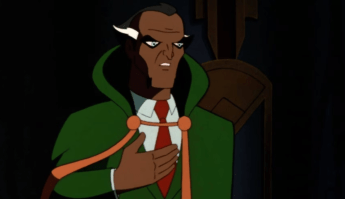
Ra’s Al Ghul translates to “Head of the Demon.” He’s another Batman villain who differs from most of the rest in that he believes his actions are just. Ra’s wants to save the planet and attain a perfect environmental balance by eliminating most of humanity. Marvel’s Thanos would borrow more than a little of this mentality. The Lazarus Pits he uses keeps him virtually immortal. Yet again, Batman: The Animated Series does a great job showcasing Ra’s Al Ghul’s origin. But I would turn again to the source material.

Ra’s Al Ghul first appeared in Batman #232 “Daughter of the Demon” and the story plays out almost exactly as Batman: TAS. So, never mind. I guess you could watch the show instead.

1: The Joker

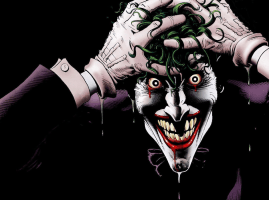
I spoiled this one. I can’t see a world without the Joker as Batman’s ultimate villain. The Joker may be the greatest villain in all of comics. He needs no introduction. There have been numerous actors who have given powerful performances as the Joker. Joaquin Phoenix and Mark Hamill embodied the Joker in one way or another. I’ll always have a soft spot for Jack Nickolson’s Joker, even if he did venture from the characters a bit. John DiMaggio took the Joker to a gritty place with his vocal performances. But Heath Ledger’s Joker still takes the cake.

The Joker has too many great comic book stories to mention here. I could do a Top 5 of these stories. I’ll rattle off a few: “A Death in the Family,” “The Laughing Fish,” “Joker’s Five-Way Revenge,” “Batman: The Man Who Laughs,” and of course, “The Killing Joke.” The Clown Prince of Crime reigns supreme for a reason.

Did we get the list right? Let us know in the comments. And wherever you are, I hope you’re having a great day.

Getting Into Spider-Man: Spider-Man Starter Stories

Spider-Man has so many great stories in his history. There are a lot of eras to Spider-Man too, s this can be a hard character for new readers to get into. Do you want to read Spidey as a teenager (as in Spider-Man: Homecoming) or do you prefer a more adult Spidey (one seldom depicted in movies but just as interesting at times)? Your uncle Geekly doesn’t really know. What he does know is that he can narrow this search to at least Peter Parker as Spider-Man.

Yeah, so we’re not covering Miles Morales (Ultimate Spider-Man), Ben Reilly (Spider Clone), Doctor Octavius (Doc Ock in Spidey’s spandex), or Spider-Girl or Gerry Drew (son of Spider-Woman Jessica Drew) or countless others—and there are several others. We’re talking Peter—not Uncle—Benjamin Parker. Yeah!

Let’s see if I can find a middle ground of teen and adult Spidey with a leaning toward young Spidey. Clear as mud? Good. Here we go.

Spider-Man_PowerAndResponsbility

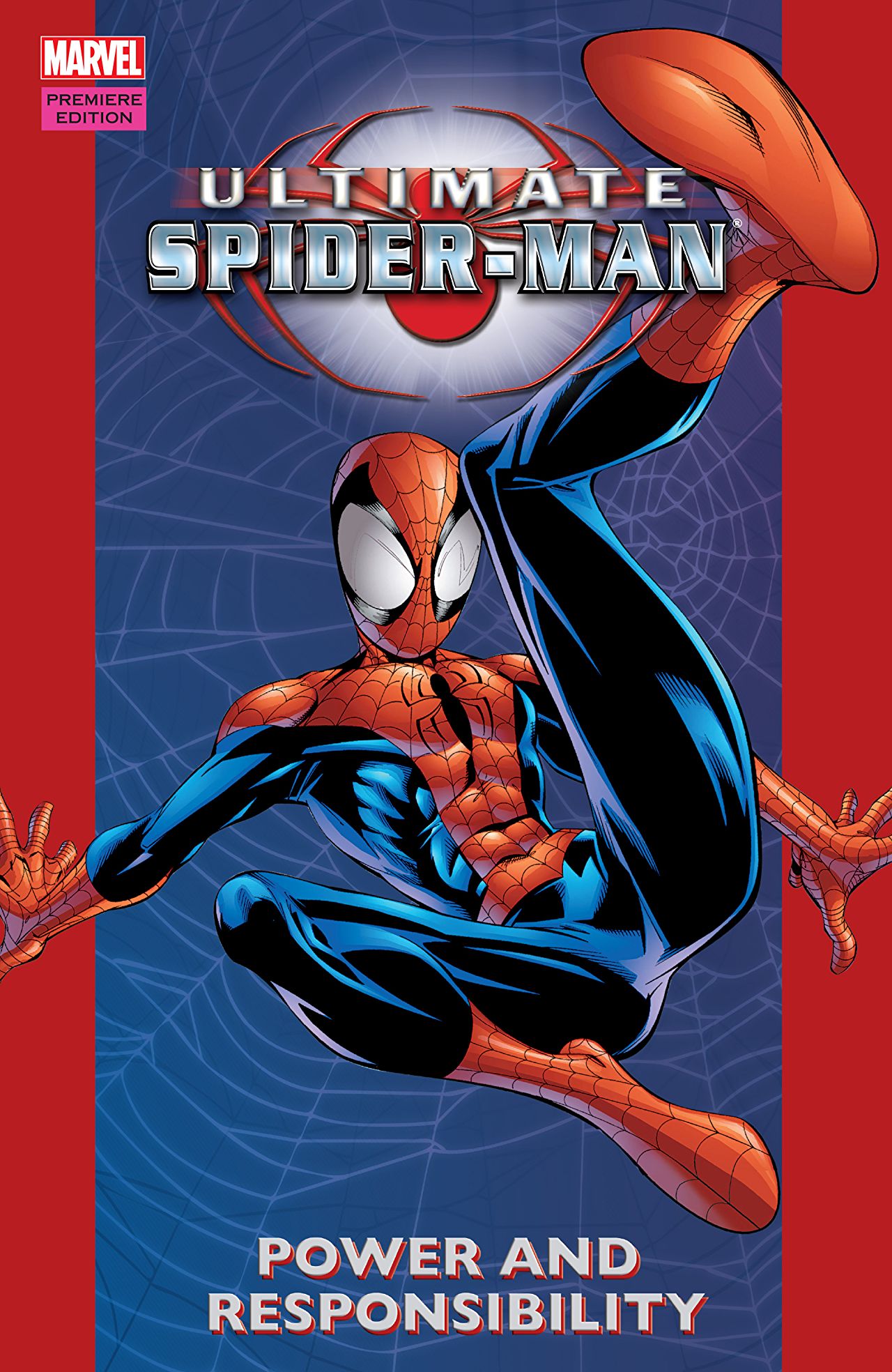
Ultimate Spider-Man #1-7, “Power and Responsibility” (written by Brian Michael Bendis/art by Mark Bagley; 2000-2001)

I know I said that I wouldn’t include Ultimate Spider-Man Miles Morales, but the original Ultimate Spider-Man series featured Peter Parker and the first seven issues titled “Power and Responsibility” retold Spider-Man’s origin in an accessible way. It also happens to be one of the main source materials for Spider-Man: Homecoming, so if you want to learn about this Peter Parker from the ground up, there’s no better place to start.

Spider-Man_Blue

Spider-Man: Blue (written by Jeph Loeb/art by Tim Sale; 2002)

Anytime Loeb and Sale team up there’s usually an origin tale or “before they were stars” story, and Spider-Man: Blue is no exception. Sale’s art takes a nice middle ground to slick, modern comic book style and retro Spidey. Loeb’ writing adds the right kind of depth for retelling the early days of Peter and his love affair with Gwen. Gwen Stacy is the one who was portrayed by Emma Stone in The Amazing Spider-Man film series, not Peter’s better-known love interest Mary Jane.

While one could read the original appearance of Spider-Man, Spider-Man: Blue adds more depth to the character that wasn’t there in the 60s.

Spider-Man_IfThisBeMyDestiny

Amazing Spider-Man #31-33, “If This Be My Destiny” (written by Stan Lee/art by Steve Ditko; 1965-1966)

The plot for “If This Be My Destiny” is standard Spider-Man fare. It’s a well-executed Doc Ock story, but most stories of this time by Ditko and Lee were. Where “If This Be My Destiny” shines is when Spidey gets caught beneath some heavy machinery. In this classic scene, which has been duplicated in numerous Spider-Man movies, Peter musters all his willpower to free himself from the heavy load. This act shows what makes Spider-Man the endearing character he is, while his inner monologue brings his demons to light. “If This Be My Destiny” cements Spidey as the everyman hero.

Spider-Man_HowGreenWasMyGoblin

Amazing Spider-Man #39-40, “How Green Was My Goblin” (written by Stan Lee/art by John Romita Sr.; 1966)

As you might be able to tell with my books I seldom go with the original telling of stories, opting to go with contemporary retellings, but the great Stan Lee does an awesome job of setting up Peter’s nemesis. And I say Peter’s nemesis because Norman Osborne’s Green Goblin has personal attachments to The Wallcrawler.

The first movie version of the Green Goblin showed him as Harry Osborne’s dad, but this reveal was a shock at the time, and this story gets to the essence of these two’s relationship. Batman needs his Joker. Spidey needs his Green Goblin.

Spider-Man_TheNightGwenStacyDied

Amazing Spider-Man #121-122, “The Night Gwen Stacy Died” (written by Gerry Conway/art by Gil Kane; 1973)

This one had to make the list. One of the pivotal moments of Spidey’s life as a hero came in the form of when Gwen Stacy died. It’s a tale that shows that even superheroes can fail.

Failure is a part of life and it’s definitely a part of Spidey’s life. This is one of the things that makes Spidey relatable as a character.

The death of Gwen Stacy also defined Green Goblin as a villain. As the previous entry attests, Green Goblin is Peter Parker’s enemy, not just Spider-Man’s, and “The Night Gwen Stacy Died” does the most to bring home this fact. It’s a must read.

Spider-Man_KravensLastHunt01

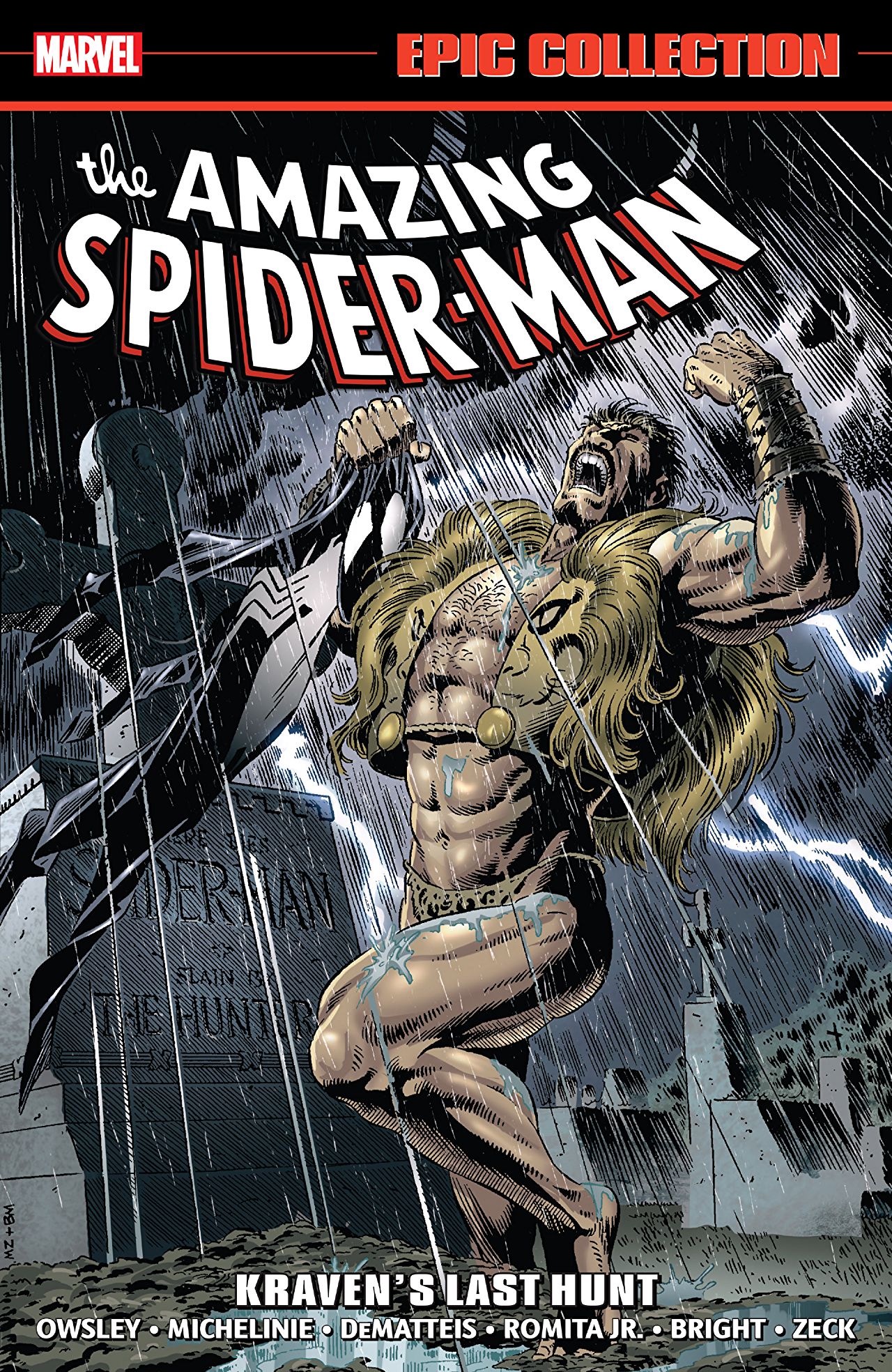
Web of Spider-Man #31-32; The Amazing Spider-Man #293-294; The Spectacular Spider-Man #131-132, “Kraven’s Last Hunt” (written by J. M. DeMatteis/art by Mike Zeck; 1987)

Kraven had been one of Spider-Man’s greatest enemies early in the Wallcrawler’s career, but time had passed him by. “Kraven’s Last Hunt” mirrored this decline, showcased Kraven’s ultimate revenge, and delved into Peter and Mary-Jane’s early marriage. There’s so much going on in this storyline that has defined and will continue to define the character.

It’s a story that asks what makes a hero, and one of the better Spider-Man stories ever written.

Spider-Man_BirthOfVenom

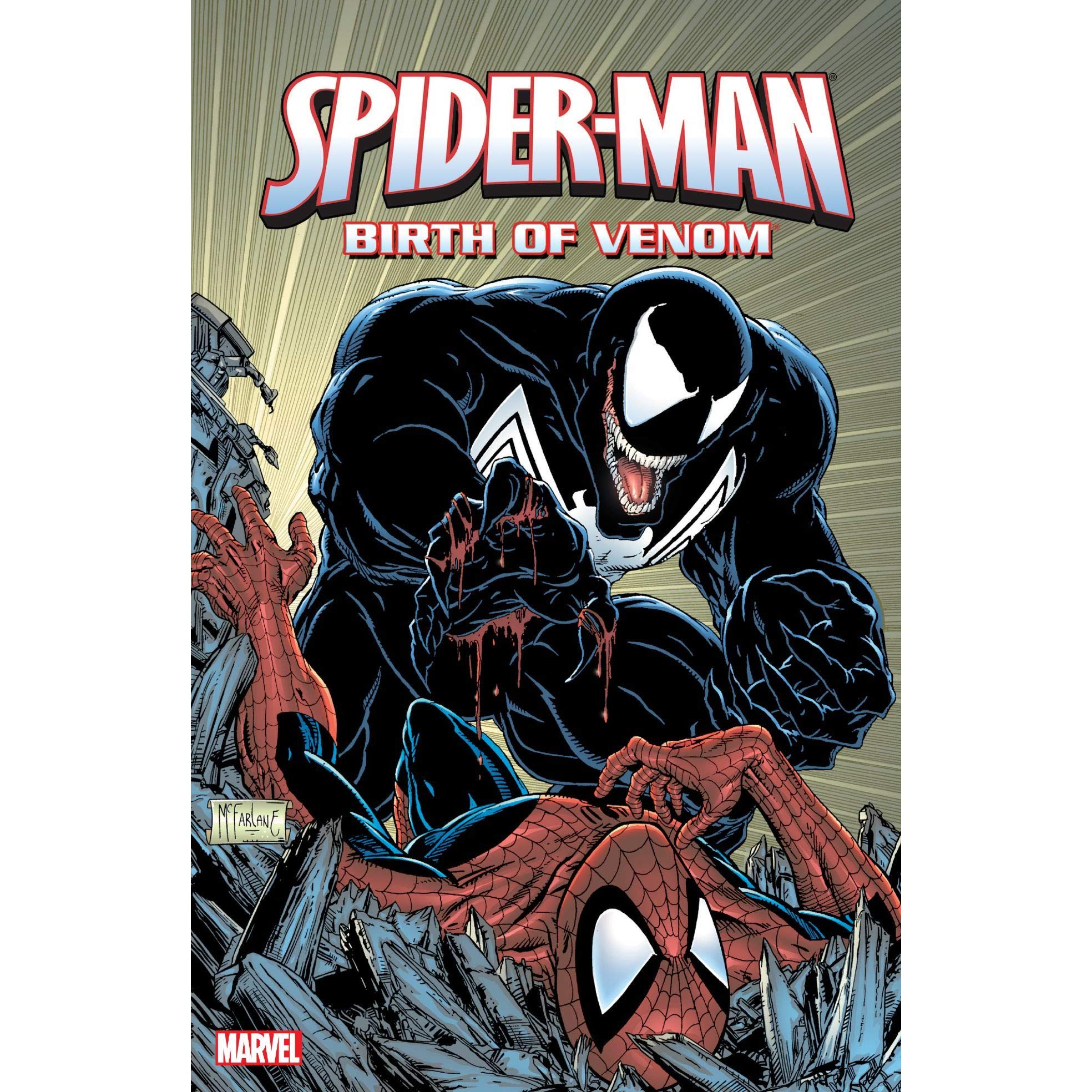
Secret Wars #8; Amazing Spider-Man #252-259; #298-300; #315-317, “Spider-Man: Birth of Venom” (written by various/art by various; 1984-1989)

There’s a lot of time gaps with this story, but “Spider-Man: Birth of Venom” has been collected in various graphic novels—maybe not all these stories, but a great many of them—and to get a good idea of Spider-Man and his relationship with the various symbiotes one should read this story first.

So much of Spider-Man in the 1990s and even in the 2000s revolved around Spidey and the various symbiotes that one should know a little something about them. “Birth of Venom” provides that background knowledge.

That’s my list for readers who are new to Spider-Man comics. There are so many to choose from—decades in fact—and I’m sure I missed more than one, two, or five hundred. Be sure to list some in comments. I’m sure Jim would prefer your picks to mine.

3 Lists of 3 of Stan Lee

Uncle Geekly was remiss with not publishing a write-up for the late, great Stan Lee a few months ago, but that may be because it’s difficult to boil such an uncanny comic book giant with a small write-up. Ergo, a 3 Lists of 3 may be in order.

But Stan Lee is only as human as the characters he helped bring to life, so one of the following lists may cite some issues fans had with his work or more specifically, the assigning of credit. Even with his faults, Stan “The Man” did more good than most comic book creators. The world lost a legend.

A Pioneer

StanLee01

Humanizing Superheroes

There’s a tale of Stan Lee’s—it may be a legend by now—that goes like this. Before the dawn of the Marvel Age (when the Fantastic Four first launched) Stan was frustrated with writing the same thing. He told his wife Joan he’d quit, so he could write the stories he wanted to write. Joan responded to Stan that if he wanted to quit, why not write the stories you want to write in comics? If you fail, you wanted to quit anyway, so it doesn’t matter.

Stan did what his wife suggested, and the results were character-driven stories that showed superheroes as flawed people. The Fantastic Four fought like any family. Johnny Storm was a hot-head (I’m sure the pun was intended), Peter Parker struggled with most everything (money, school, and getting picked on), and Hulk has anger issues. What made these heroes great was that they had to overcome their shortcomings.

Some of the great comic book characters of the time dabbled with this concept, but Stan Lee made it a point that all his characters would have flaws. A character’s flaws and the conflicts that ensue are what makes a character interesting. Look no further than “This Man, This Monster” where The Thing must make the choice to be The Thing in order to save his friends and family.

Relatable characters existed in comics before the Marvel Age, but Stan Lee’s storytelling spark thrust them to the forefront.
StanLee04

Interacting with Fans

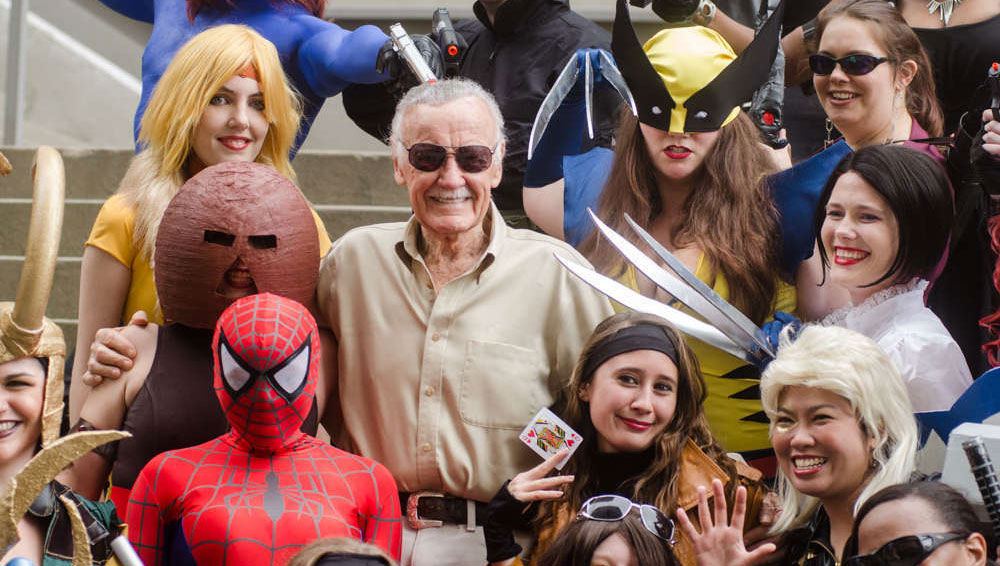
To call Stan Lee charismatic is an understatement. He acted as cheerleader for his characters as well as his fellow comic book creators, but he stood out equally with his interaction with fans. Stan Lee could give a master course in how to communicate with and respond to fanboys and fangirls.

If a fan caught an error on a page, they could write in and let Stan know. He’d write them a personal letter, complimenting their keen eye. The Marvel No Prize offered no monetary reward, but there are some folks who hold onto their letters today and treasure them. Stan also had his “Soapbox” where he’d tackle issues and concerns fans had with their favorite characters or in their personal lives. He comforted those whose family members went to Vietnam. And just two or three weeks before he passed, Stan posted a video about how fans shouldn’t worry about his health. His left hand is doing okay, but he’s worried about his other hand. That’s when he unveils a toy Hulk fist on his right hand.

He was a joy to the end.

StanLee02

An Epic Story

Stan Lee had a great sense of scope and grandeur. Comic book stories rarely went beyond a single issue, but Stan, along with his bullpen, stretched them to multiple issues. I’m not sure if Stan could envision the twelve issue plus story arcs that came decades after the Marvel Age, but he and Jack Kirby were trailblazers with the original story of Galactus.

Fantastic Four’s “Galactus Trilogy” spanned three issues and if it wasn’t for Stan revitalizing the industry, he wouldn’t have been given the latitude to make something that was “supposed” to be a single issue and give it more weight. The “Galactus Trilogy’s” success led to other comic book companies and other mediums to question preconceived notions for their art.

Controversies and Personality Flaws

It’s that time where I cover some of the less tenable things in Stan Lee’s past. There aren’t that many because he’s a legend for a reason, but he did manage to rub some people the wrong way, so I’ll include them here to show another side of Stan Lee.

KirbyAndLee

Credit Where Credit is Due

I hinted at this one already, but Stan Lee often received credit for single-handedly or predominately creating the Marvel Universe. That’s false. Stan Lee had plenty of help. Jack Kirby, Steve Ditko, Marie Severin, Joe Simon, Bill Everett, and even Stan’s brother Larry Lieber did a lot to shape Marvel’s stable of superheroes.

Many fans blamed Stan Lee for taking too much credit and that may hold some truth, but Stan’s fame may have come from needing to be the company’s front man, it’s icon. With Stan Lee as the face of the franchise, Marvel moved a lot of product.

Still, there’s a debate for who had more creative control. When Steve Ditko and Jack Kirby switched the titles they worked on (Ditko with Hulk; Kirby with Fantastic Four), to shake things up, the adventures in which the effected characters embarked changed to resemble the artist’s vision. If Stan Lee was the only one responsible for the stories, that wouldn’t have happened.
StanLee05.jpg

A Shameless Self-Promoter

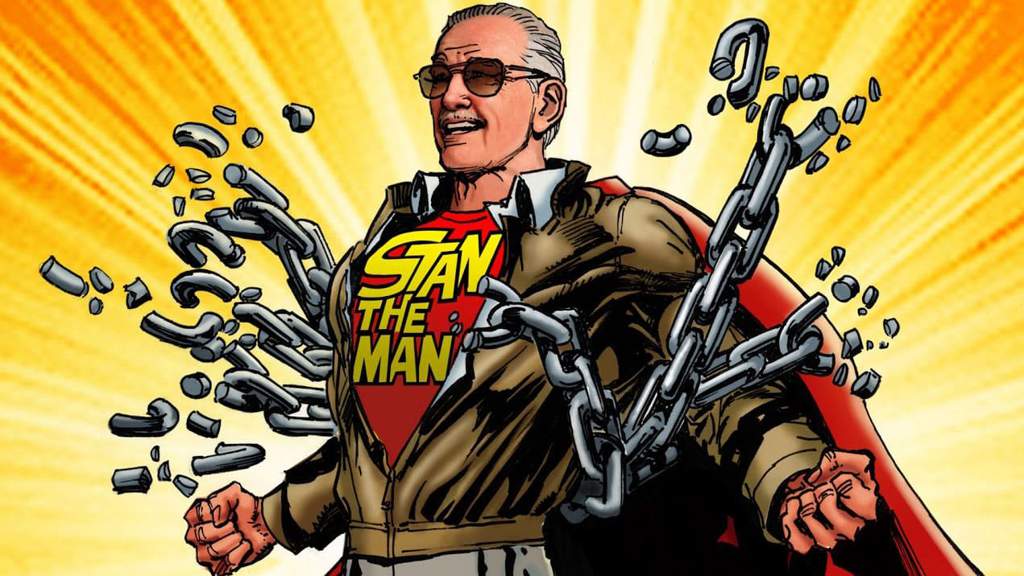
Have I said how charismatic Stan Lee was and how communicative he was with his fans? Well, he was, and some critics viewed his loquaciousness as shameless self-promotion or even arrogance.

There’s a good chance he was to some degree—aren’t we all at times?—but Stan Lee promoted everyone and everything. He could’ve named Hulk, The Hulk, but he had to be “The Incredible Hulk.” Spider-Man wasn’t just Spider-Man, he was “The Amazing Spider-Man.” So, Jack Kirby wasn’t just Jack Kirby, he was Jack “The King” Kirby because even Stan knew how influential Kirby was, even if some fans didn’t.

Here are some of my other favorite names Stan gave the Marvel Bullpen:

Gil “Sugar” Kane

“Gorgeous” George Perez

“Roisterous” Ralph Reese

“Nefarious” Neal Adams

Steve “The Angry Man” Ditko

“Jocular” John Byrne

“Arachnerd” Jim Salicrup

And yes, Jim Salicrup worked a lot on Spider-Man; I’d love a nickname like “Arachnerd.”

StanLee06.jpg

He Left Comics for Hollywood

To be honest, I don’t qualify this one as a personality flaw or a controversy. I had to include it because when Stan Lee moved to Hollywood in the 1980s to start Marvel’s cinematic wing, many fans questioned his love for the medium that made him famous.

That’s crap. By the 1980s, Stan Lee had been working on comics for around forty years, and most people retire at that point in their careers. Stan Lee didn’t retire. He began what he thought would make Marvel omnipresent: a movie empire. While he didn’t succeed as much as he wanted to then (mostly TV shows, cartoons, and made-for-TV movies), Stan Lee was right in accessing that cinema would eventually make Marvel one of the hottest brands on the planet.

A Legacy

An Ambassador

I’ve used the term icon and giant to describe Stan Lee, but let’s throw in ambassador of comics to mix. Stan Lee promoted comic books his entire life. Even though it may not have been what he wanted to do with his career (he wanted to write novels), he made the art form his own. He empowered others to pursue it as a legitimate career path. He, along with others, put comic books on the map.

StanLee07.jpg

The Movies

Thank goodness we have all those Stan Lee cameos in the Marvel Cinematic Universe. Each one shows how loose, carefree, and fun Stan Lee was. He never took himself too seriously. There may be a lesson there.
StanLee09.jpg

His Stories and Some Quotes

 Here are some of my favorite Stan Lee stories, in no particular order, that may be worth checking out:

“The Galactus Trilogy” Fantastic Four Vol. 1 #48-50

“This Man, This Monster” Fantastic Four Vol. 1 #51

 “If This Be My Destiny” Amazing Spider-Man #31-33

 “How Green Was My Goblin” Amazing Spider-Man #39-40

 “Spider-Man No More” Amazing Spider-Man #50

“Captain America Joins…The Avengers” Avengers #4

The Incredible Hulk Vol. 1 #1-6
This one comes with a caveat; The Hulk didn’t take off as well as Marvel would’ve liked, but one can see Stan Lee and Jack Kirby at the drawing board with each issue, reworking the character so he could work.

“The Eternity Saga” Strange Tales #130-146

And some quotes:

“Forced idleness is a terrible thing.”

“The only advice anybody can give is if you want to be a writer, keep writing. And read all you can, read everything.”

“The pleasure of reading a story and wondering what will come next for the hero is a pleasure that has lasted for centuries and, I think, will always be with us.”

“Face front, true believers.”

“With great power comes great responsibility.”

“Excelsior!”

“Nuff said!”

Shazam! Starter Stories

Solomon, Hercules, Atlas, Zeus, Achilles and Mercury: Shazam!. Billy Batson, or rather his alter ego Captain Marvel, donned the famous—or not so famous—red, gold and white costume. Shazam! wasn’t always a DC Comics property and the history of his rites and identity is a strange one. Uncle Geekly will take a hot minute to recap it for those of you who care to know.

Captain Marvel got his start with Fawcett Comics in the late 1930s and ironically, Fawcett had to stop publishing Captain Marvel and his Marvel family of comics (there were other superheroes in the Marvel line like Captain Marvel Jr. and Mary Marvel) due to a 1953 lawsuit won by DC Comics that claimed he was too similar to Superman. Hmm.

So, Captain Marvel faded into obscurity for a couple of decades until DC licensed the characters from Fawcett (in 1972)—Why bother with just licensing the characters from a defunct publishing house?—and eventually bought them outright in 1991—I guess it takes two more decades for a buyout. DC Comics wanted to reboot the character as Captain Marvel, but by that time another Captain Marvel (Mar-Vell, Marvel Comics rendition of Captain Marvel) already existed and Captain Marvel had to change his name to Shazam. You know, the acronym of the six “immortal elders” who grant Billy his powers.

Wow. I could go on with more domino copyright infringement cases that led to other famous comic book characters changing their name (as a result of the Captain Marvel ruling for Marvel Comics) like Marvelman to Miracleman, but this starter story writeup is for the 14-year-old boy with the body of a jacked Zachary Levi. That’s another odd phrase I never thought I’d say: a jacked Zachary Levi. Shazam! indeed.

ThePowerOfShazamVol1

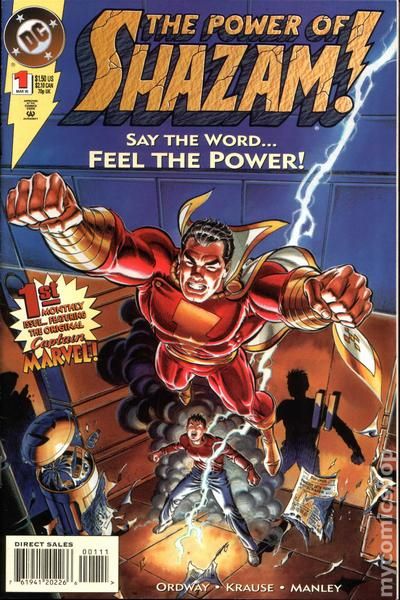
The Power of Shazam! Vol. 1 (written by Jerry Ordway/art by Jerry Ordway; 1994)

I’ll skip the Fawcett years because DC Comics retconned (changed the origin and details) of the character so many times after Shazam became a DC Comics property and I’ll hop over some of those other abandoned versions of the character(s) to get to a version of Shazam that had a little more staying power, so I’m landing on The Power of Shazam!. While you could pick up the second volume of this series (which was an ongoing title that introduced the rest of the Marvel Family members), the first volume includes an updated retelling of Shazam’s origin with a minor tweak that gives Black Adam and Billy Batson a personal tie. Honestly, it makes them more natural enemies.

Ordway’s story is the closest to the original Fawcett origin story; it also happens to be easy to understand, straightforward and if I was to bet on a story that the upcoming Shazam! movie will pull the most inspiration from, it’d be The Power of Shazam!. All the major players are here.

ShazamTheMonsterSocietyOfEvil

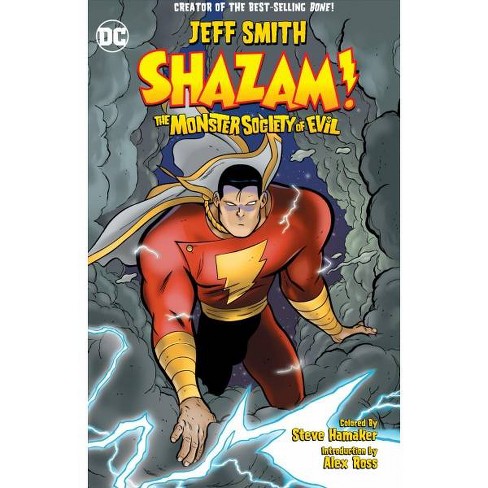
Shazam! The Monster Society of Evil (written by Jeff Smith/art by Jeff Smith; 2007)

I’m not sticking with one Shazam origin story, you can’t make me. Jeff Smith (of Bone fame) retold the story again about a decade later. In this telling, Smith used far less space to show Batson’s origin and focused more on the character dealing with the repercussions of magic on the unsuspecting people of Fawcett City (DC tipping their hat to the original creators). There’re also aspects of government untrustworthiness; it’s subtle, but Dr. Sivana (mad scientist and archnemesis of Shazam) is the Attorney General of the United States. Of course Sivana is secretly behind the horrors of Fawcett City, but it’s a nice twist for the character and Shazam! The Monster Society of Evil does more to develop Billy’s sister Mary (as in Mary Marvel) as a character.

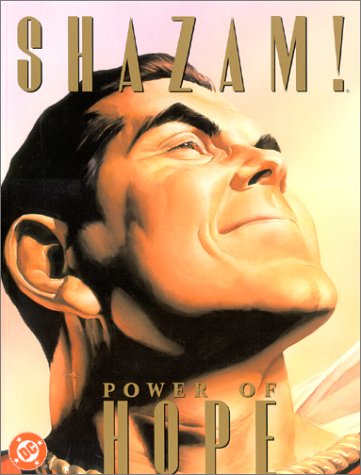
ShazamPowerOfHope

Shazam! Power of Hope (written by Paul Dini and Alex Ross/art by Alex Ross; 2005)

I included Wonder Woman: Spirit of Truth in my “Wonder Woman Starter Stories” write-up a few weeks ago and here’s another selection from the DC oversized graphic novel series that featured Alex Ross’s artwork. Like most of the other stories in this line, Dini and Ross focus more on real world and human issues.

In Shazam! Power of Hope, Billy visits children in a hospital. He gets the impression that one kid in a wheelchair is being beaten by his father and being a kid and knowing how children can feel powerless around adults, Billy attempts to the threaten the kid’s father. By the end, Billy realizes that he’s part of the cycle and learns that he can help just by visiting these children and giving them hope.

Yes. It’s sappy, but Shazam! Power of Hope has some nice character moments. It also reminds readers that Billy is still a kid, even if he looks like Superman. It also shows the character as the inspiring superhero he is.

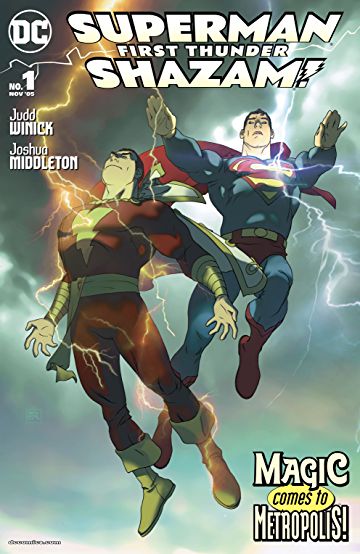
SupermanShazamFirstThunder.jpg

Superman/Shazam: First Thunder (written by Judd Winick/art by Joshua Middleton; 2006)

There’s only one thing to take away from Superman/Shazam: First Thunder and it’s an important one: how Superman and Shazam interact. DC Comics likes to show how these two iconic and most powerful men in their universe differ and this retelling of Superman and Shazam’s first encounter shows what makes these two characters unique and why DC would pay to have two characters with similar—and yet dissimilar—superpowers.

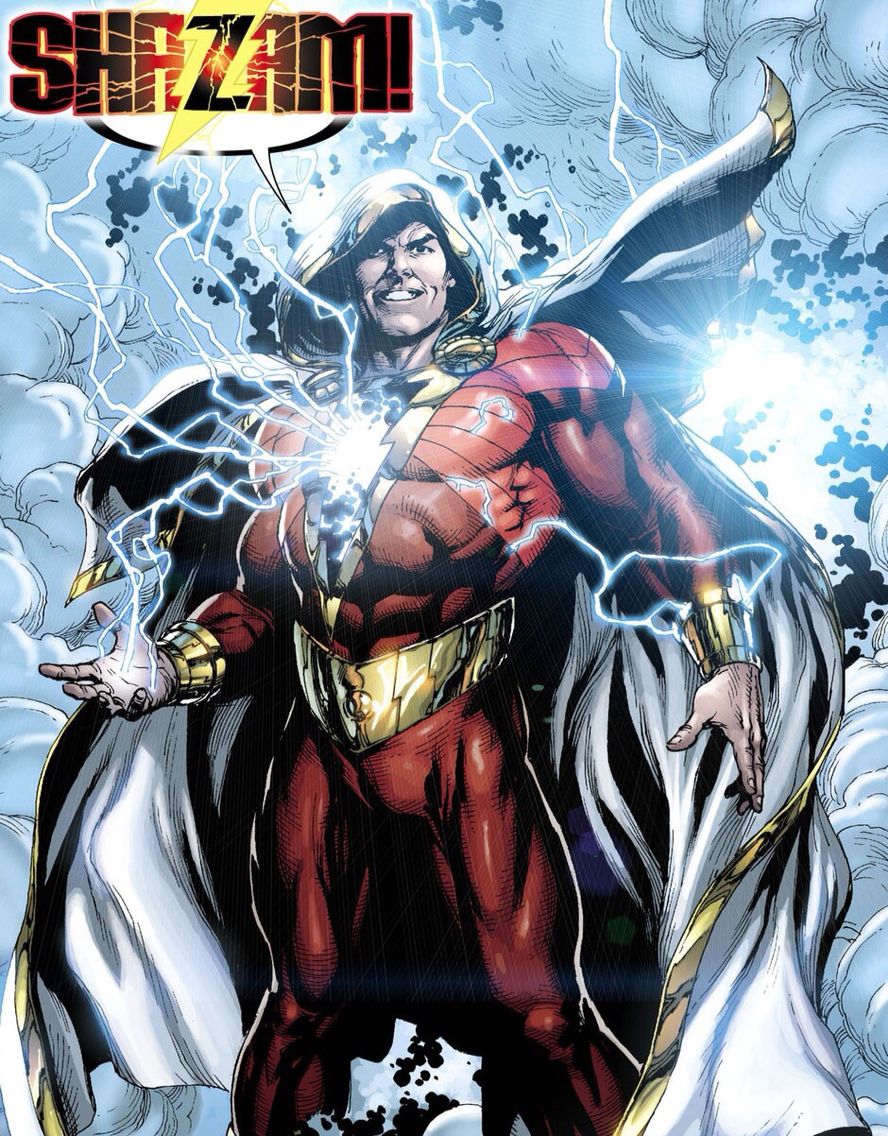
ShazamTheNew52

Shazam! The New 52 (written by Geoff Johns/art by Gary Frank; 2012-2014)

Okay. This is yet another telling of Shazam’s origin story; this character changes origins more frequently than I change underwear. But of course, he’d have another origin story, Uncle Geekly, what would you expect from the alternate Earth of the New 52?

In this tale, Billy Batson is more obnoxious and angsty than his previous incarnations as this is a more reality-based take on a 15-year-old orphan who was stuck in the foster care system for many years and lacks the trust of the adults in his life that the other versions of Billy share. This is also a more modern version of Billy. Don’t expect any “aw shucks” moments.

Shazam! The New 52 delivers on an epic showdown between Shazam and his archnemesis Black Adam (who will be played by The Rock in upcoming DCEU films), and if the DCEU continues its line of edgier superhero films, this may be the film version of Billy Batson.

I thought I’d add a few more stories to this list, but there are too many interpretations of Billy Batson/Captain Marvel/Shazam!/The Other Superman that it could muddy the waters further than I believe is necessary.

Judd Winick’s The Trials of Shazam! is another excellent story, but it casts Billy as the wizard who gave him his powers and Captain Marvel Jr. must assume the role as the new Shazam. There are the original stories and those other DC versions of the character throughout the 70s and 80s and there were some good stories there too, but I think the above stories do the most to ground readers in who this character is.

I’m sure I may have missed a story or two. Let me know of any ones you’d add to this list in the comments.

Wonder Woman Starter Stories

The first lady of comic books Wonder Woman has had an odd history, both in terms of how she came to be and with the path, or more exactly, the paths she’s taken. Hi. Uncle Geekly here and while I could address Wonder Woman’s creation story, we’ll spend today covering some of the greatest Wonder Woman stories for readers new to comic books.

Believe me. There are so many origin stories for Wonder Woman that Greg Rucka in his latest Wonder Woman run addressed them in DC Rebirth (2016-2017). That story just missed the cut, but it’d be a great honorable mention for this list, and I recommend reading that one too if you have the time. Let’s get to the ones that did make the list.

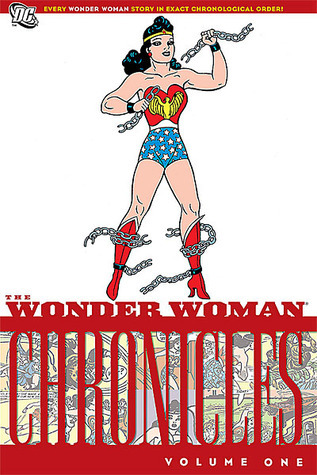
WonderWomanChroniclesVol1

Wonder Woman Chronicles Vol 1. (written by Dr. William Martson/art by Harry G. Peter; 1941-1942)

The writing is dated but Wonder Woman Chronicles Vol. 1 collects the original appearances of Wonder Woman in chronological order, so Steve Trevor makes an appearance–perhaps too much of one. Despite a shaky beginning, this volume shows how Wonder Woman promoted female empowerment long before it became commonplace. Heck. Wonder Woman was the first female superhero and while her origins may be humble (Diana takes on the name Wonder Woman because her mother gives it to her and she does a lot of what she does for Steve, a man she just met), these stories laid the ground work for an icon.

WonderWoman77

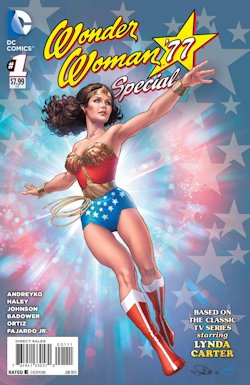
Wonder Woman ‘77 (written by various/art by various; 2015-2016)

Following the success of the Batman ’66 series that chronicled the continuing story of the 1966-68 television series starring Adam West and Burt Ward, DC Comics did the same for the 1975-79 Wonder Woman television series that starred Lynda Carter with Wonder Woman ’77.

Initial writer Marc Andreyko wanted to use “under-appreciated” Wonder Woman rogues and include them in the series, since the television series’ limited budget didn’t allow from them. As a result, classic Wonder Woman villains like Cheetah, Silver Swan, and Doctor Psycho received the Wonder Woman TV treatment they never had and Andreyko does such a great job including them that folks won’t remember that they were never in the original series—or maybe they will.

Anyway, Wonder Woman ’77 is a great series for fans of the Lynda Carter TV show or for people who may have missed the original show and don’t want to sit through the dated special effects and again, dated writing. This series does a great job of cleaning up some of the television show’s shortcomings.

WonderWomanGodsAndMortals

Gods and Mortals (written by George Perez and Len Wien/art by George Perez; 1987)

Gods and Mortals is a quintessential Wonder Woman story. After Marston’s Golden Age run and Crisis on Infinite Earths, the quality of Wonder Woman was—how to do I put this kindly—a mixed bag. George Perez relaunched the Wonder Woman title and he abandoned Diana as a marginalized member of the JLA’s boy’s club. He took Diana back to her feminist roots and made Steve Trevor and Etta Candy (one of Wonder Woman’s closest friends) rich and layered characters. Perez deployed a sense of fatalistic realism as the Amazons put themselves in a self-imposed exile after Queen Hippolyta (Diana’s mother) was put into bondage and raped by Hercules.

As you can see, Gods and Mortals took risks that many in the comics world would’ve taken at the time, but the end result was Diana standing on her own, apart from the Justice Society and Justice League. She didn’t need the male pantheon for support, and it was Gods and Mortals that made Greek gods regular characters in Wonder Woman stories.

WonderWomanSpiritOfTruth

Wonder Woman: Spirit of Truth (written by Paul Dini/art by Alex Ross; 2001)

Paul Dini of Batman: The Animated Series fame crafts an understated moment between Diana and Clark Kent having coffee and swapping tales. Artist Alex Ross does a great job rendering these moments of Clark and Diana enjoying each other’s company one instant and the Amazonian Warrior lifting tanks, taking on armies, and fighting for women’s rights the next. Spirit of Truth may only come in at 64 pages, but it captures what makes Wonder Woman an endearing character.

WonderWomanTheHiketeia

Wonder Woman: The Hiketeia (written by Greg Rucka/art by Drew Johnson, Eric Shanower, and Brian Stelfreeze; 2003)

The Hiketeia takes an intriguing look at the ancient idea of justice in the modern world. When Diana meets Danielle Wellys, Danielle evokes the ancient rite of Hiketeia and bonds herself to Diana as Diana’s supplicant. In return, Diana must ensure Danielle’s protection, but little does Diana know that Danielle has been on a murder spree to avenge her slain sister. Danielle’s actions attract the attention of the Furies of Greek myth, seeking vengeance for the victims, and Batman.

Batman and Wonder Woman’s views on justice differ as Diana marries fairness with justice. The Hiketeia does a great job showing how two thirds of DC’s trinity interact as they have a respectful but adversarial relationship.

WonderWomanDownToEarth

Wonder Woman: Down to Earth (written by Greg Rucka/art by Drew Johnson, Eric Shanower, and Brian Stelfreeze; 2004)

Down to Earth is an unconventional superhero story as Wonder Woman doesn’t stop villains or save the world; she shares her ideals in a book of essays and others try to tear down her philosophies. A lot of this backlash originates with the mysterious Veronica Cale—who functions like a female Lex Luthor—and she pulls all kinds of strings that make Diana’s life difficult. The book even creates tension in Mount Olympus with the gods, which doesn’t end well for Wonder Woman in the long run.

Down to Earth is another great story by Greg Rucka, and it does a lot to set up many of the events in his excellent four year run of Wonder Woman.

WonderWomanTheNew52

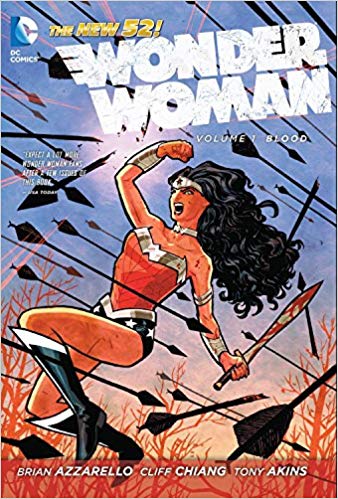
Wonder Woman: The New 52 (written by Brian Azzarello/art by Cliff Chiang; 2012-2015)

Brian Azzarello’s run on Wonder Woman: The New 52 was amazing. It embraces Diana’s Greek mythological roots and bends these same classic Greek myths, turning them into something new and exciting. Every step of the way you’ll stop and think that’s so Hades or that’s so Poseidon and Diana the daughter of Hippolyta and Zeus fits right in. The ending doesn’t disappoint. I won’t ruin it here, but Azzarello does a great job of pacing and taking what makes these characters who they are—both Greek myth and comic book characters—and blends them together seamlessly.

That’s my list for readers who are new to Wonder Woman comics. There are so many to choose from—decades after decades in fact—and I’m sure I missed more than one, two, or five hundred. Be sure to list some in comments. I’m sure Jim will prefer your picks to mine.