Top 5 Beards in Comic Books

Evidently, September 6, 2025, is Beard Day. Who knew? Geekly has celebrated lesser-known observances over the past couple of months, like Shark Day. Why not comic book beards? Sorry, but I couldn’t help but make the Beard Hunter our featured image. Tee hee. Hey, hey, Geekly Gang! Kyra Kyle here. JK Geekly has ignored the important topic of beards in comic books for too long. We aren’t talking about the best comic book characters who wear beards; that’d be a different list. No, we’ll try to break down the best beards. Let’s get to these glorious flavor savers.

5) Lobo

Typically, Lobo wears a mustache and mutton chops, which don’t qualify as a beard. I like it when Lobo sports a chin strap. He may always be the “Main Man,” but Lobo works best when he’s the “Mane Man.” What’s the point of surviving decapitation if you’re not sporting a yeard?

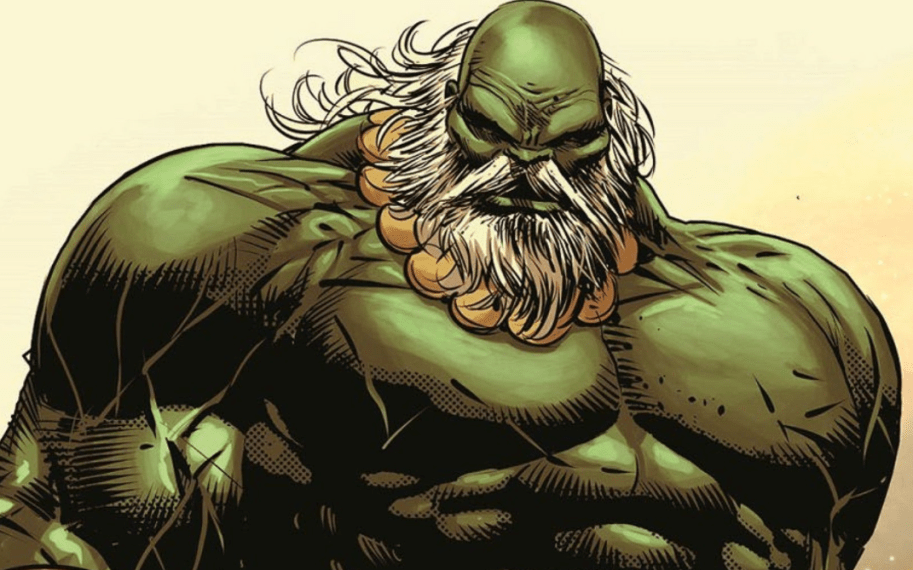
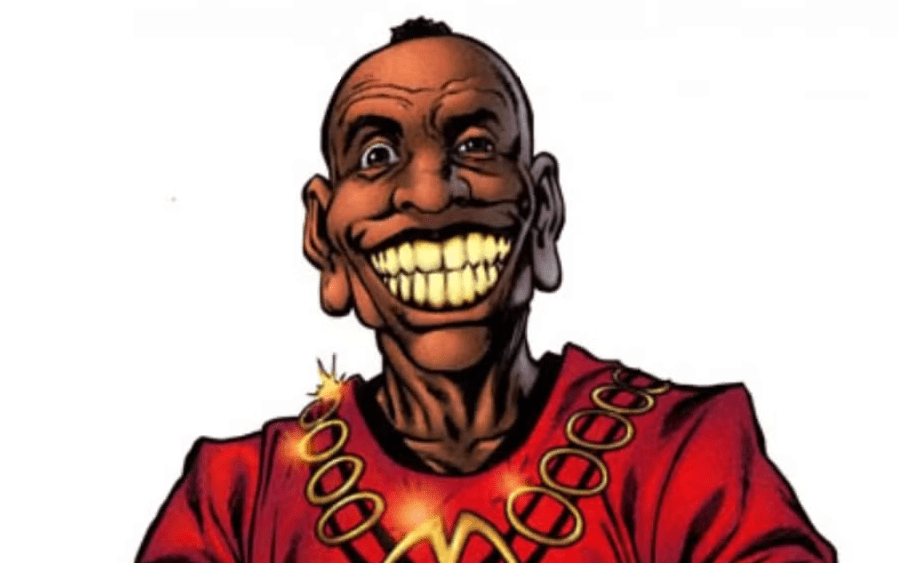
4) Maestro

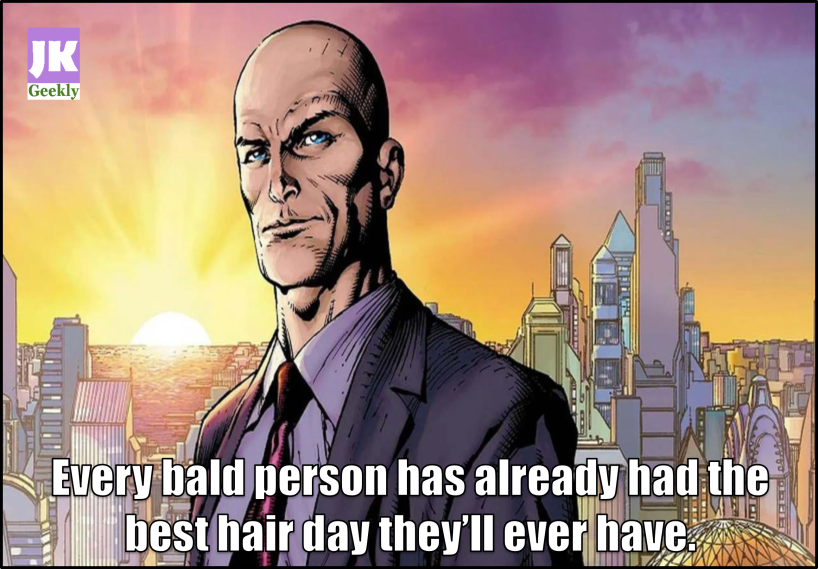
I admit it. I’m partial to Maestro. If you can no longer grow hair on your scalp, grow it on your face. Like I used to say, it’s just one’s hair migrating south for the winter. Look at Maestro’s luxurious beard. You can’t deny how magnificent his chin curtain looks. I wonder if he’d let me run my fingers through his Grizzly Adams. You know what, no. I want to keep my hands.

3) Vandal Savage

Vandal Savage has lived for a long time. I mean a long time. Centuries. Millennia. Savage has sported various beards throughout the years. Like Lobo, he’s even gone with mutton chops, but those count as beards. Savage looks best when he lets his grizzle flow. Vandal Savage has earned every touch of gray.

2) Aquaman

Aquaman is another comic book character who doesn’t always wear a beard, but let’s face it, he looks tough with a beard. Aquaman’s abilities make him one of DC Comics’ most powerful heroes, but he often gets clowned. That ended when he sported a lumberjack. There’s something about Arthur’s hair, all of his hair, flowing under the sea. Aquaman’s anchor shows true grit.

1) Hercules

I almost went with Thor at this spot, but he’s another comic book character who isn’t always depicted with a beard. Instead, we’ll go with Marvel Comics’ Hercules, who rocked a hipster beard before it was cool. How long do you think it takes Hercules to topiarize that beard? Forget the muscles. You’ve got to give it up for a true beardionado.

I tried to put as many references to beards as I could in this post. Feel free to mention some of your favorite beard terms, and while you’re at it, add a few more comic book beards for this list. There are way too many great beards. Let’s share more hot fuzz. Happy Beard Day, Geekly Gang. Thank you for reading, and wherever you are, I hope you’re having a great day.
Top 5 Black Panther Villains

Eyes of Wakanda continues its run this month, so we’re celebrating by recounting the greatest Black Panther villains. Hey, hey! Kyra Kyle here. We’ve done the Top 5 villain treatment to several Marvel and DC Comics heroes. It’s only fitting that Black Panther receives his Top 5 Villains.

Honorable Mention: Ulysses Klaw

I feel like we have an honorable mention a lot in these lists, but Ulysses Klaw makes this list in this manner for a reason. He’s a Marvel Universe villain more than just a Black Panther villain. Sure, his origin has Wakandan roots, but Klaw has often battled the Fantastic Four and Avengers. Everyone should fear the man with a body of pure sound.

5: Achebe

Achebe is the Joker to Black Panther’s Batman. Little is known about Achebe, only rumors. The most persistent of these rumors is that Achebe was once a Ghudazan farmer who helped rebel guerrillas from the neighboring country of Ujanka. He helped nurse the fighters back to health, but his wife fell in love with the rebel leader, and the rebels repaid his kindness by stabbing him 32 times, razing his farm, and taking his wife. What is known is that Achebe made a deal with Mephisto and serves as an emissary of Marvel’s version of the Devil. Achebe is ruthless, unpredictable, and a constant thorn in Black Panther’s side.

4: T’Channa

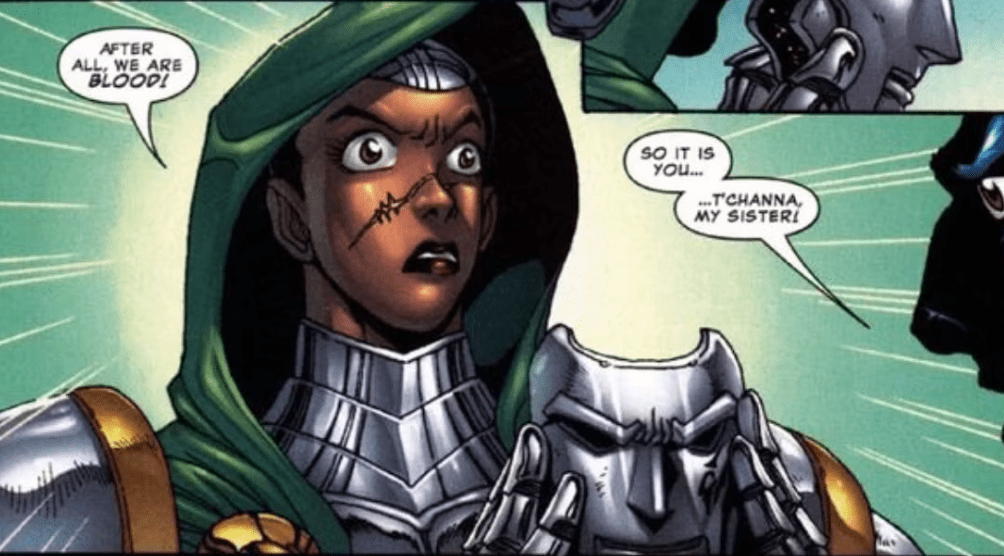
T’Channa is T’Challa’s sister in an alternate universe (Earth-2301). She and her siblings were beaten (she implies brutally) by T’Challa in a contest for Wakanda’s throne. As a result, she left Wakanda for Latveria, where she joined forces with Victor von Doom, until she became strong enough to overtake him as the new Doctor Doom. Honestly, I wouldn’t mind seeing T’Channa’s Doom in an upcoming Marvel project. She blends Wakanda’s technology with the magic she learned from Victor von Doom to become a menace, not just to T’Challa, but to the entire world.

3: White Wolf

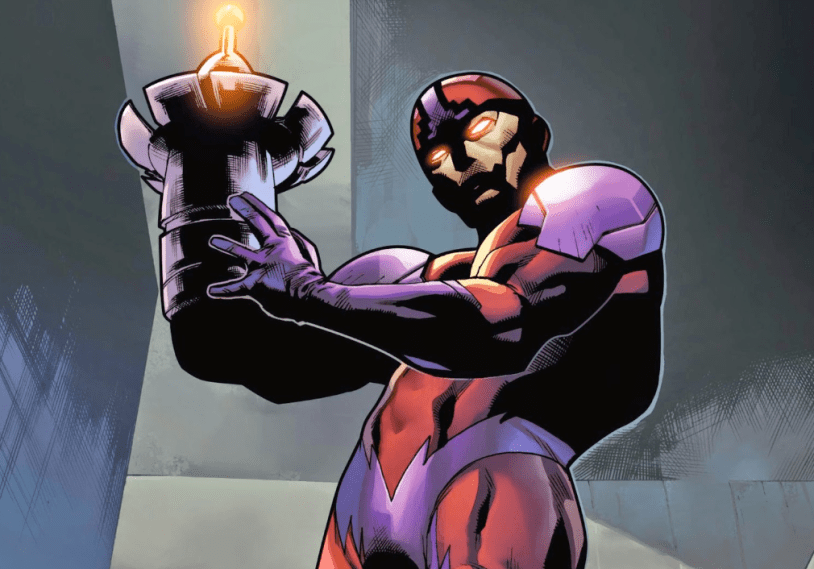
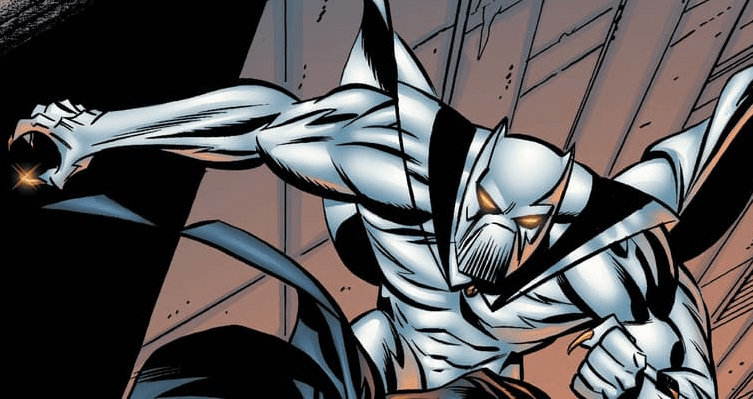
Hunter is T’Challa’s adopted brother. The two were close as children. They even competed in childish games like footraces. But Hunter was born a foreigner from the African nation Mohannda. He was the sole survivor of a plane crash before T’Chaka, T’Challa’s father, adopted him. Hunter doesn’t look like other Wakandans. He has light skin. When he was young, Hunter was the Wakandan envoy to European nations because he looked like them. This othered Hunter from his fellow Wakandans. Eventually, Ulysses Klaw killed T’Chaka and Ramonda (Hunter’s adoptive parents), and he was orphaned again. Hunter blamed T’Challa for his problems and sought revenge against Klaw. He strives to make the country of his birth, Mohannda, as technologically advanced as Wakanda. Hunter’s nationalism often puts him at odds with T’Challa.

The Winter Soldier has been nicknamed White Wolf in the MCU, so it’s unknown if a White Wolf will make an appearance. Fingers crossed that he will.

2: Erik Killmonger

Born N’Jadaka, Killmonger needs little introduction. Portrayed by Michael B. Jordan, he exploded on the screen in the original Black Panther movie. Killmonger is a Wakandan exile and vows to take the Black Panther mantle. He often challenges T’Challa to ritual combat. Even when he dies, he finds ways to return. One of his most recent reanimations came in the form of an alien symbiote (like Venom). N’Jadaka will never rest until he’s taken his rightful place on Wakanda’s throne. Death can’t even stop him.

1: M’Baku/Man-Ape

M’Baku’s alias Man-Ape has gone out of favor for obvious reasons. It’s problematic. While the MCU has mostly shown M’Baku as one of T’Challa’s allies, he rarely ends up on the same side as the Black Panther. While T’Challa controls the Panther cult, M’Baku is head of the Gorilla cult (hence his alias Man-Ape). In the comics, M’Baku detests Wakanda’s technological revitalization. He seeks to outlaw technology and return the nation to its mystical roots. Often, M’Baku will use greater conflicts to undermine Wakandan leadership. He’s cunning and willing to ally himself with anyone he thinks will grow his standing within Wakanda. Occasionally, that will be Black Panther. But often, he’ll choose Black Panther’s opposition.

I’d love to see Winston Duke’s M’Baku receive more shine in the MCU. I also like how the MCU changed his alias to Great Gorilla. That works.

Did we get the list right? Let us know who you would add or remove in the comments. And wherever you are, I hope you’re having a great day.
Getting Into Comics: Black Panther Starter Stories

Black Panther has existed since the mid-Sixties, but Marvel produced some of the best Black Panther stories after 2000. Which Black Panther stories should you read first?

Hey, hey! Kyra Kyle here. As you can guess, we’re talking about Black Panther starter stories today. Like we’ve been doing for the past few entries in this series, we’ll split these stories into single issues and story arcs. Today, we’ll begin with single comic book issues. Enjoy!

Single Issues

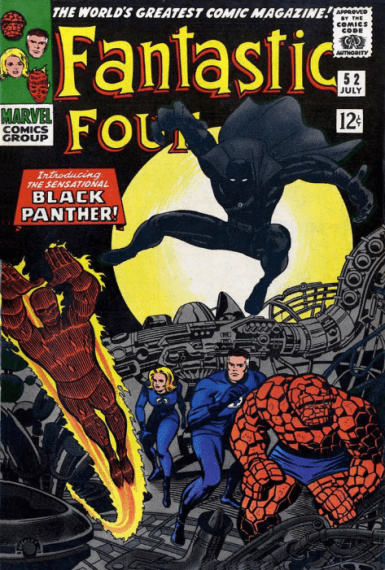
“Introducing The Sensational Black Panther” (Fantastic Four #52; written by Stan Lee/art by Jack Kirby; 1966)

I considered including this issue and a few others as part of a story arc. The next issue would include vibranium’s first mention and sets the stage for Ulysses Klaw to make his first appearance, but I chose to stick with Black Panther’s first appearance. “Introducing The Sensational Black Panther” centers around the Fantastic Four being invited to Wakanda. The enigmatic leader sends a hover car to take Marvel’s family to his homeland. The Fantastic Four agree, and when they arrive in Wakanda, they must survive a robotic jungle and the Black Panther himself. By themselves, the Fantastic Four are no match for Black Panther, but the team joins forces and unmask their assailant.

It turns out that T’Challa (Wakanda’s leader who invited the Fantastic Four to Wakanda) and Black Panther are the same. Black Panther says he only wanted to test the fours’ abilities and meant no harm by his attack. “Introducing The Sensational Black Panther” does a good job of showing Black Panther as formidable. Like I said, many key Black Panther elements are revealed in future issues, but “Introducing The Sensational Black Panther” is a great place to start reading.

“Death Calls for the Arch-Heroes” (Avengers #52; written by Roy Thomas/art by John Buscema; 1968)

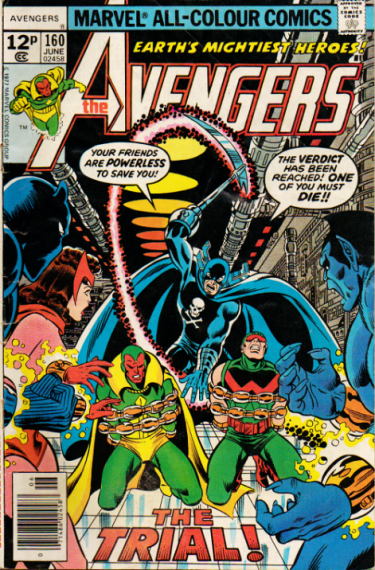
“Death Calls for the Arch-Heroes” is another issue that sets up Black Panther; this time, it’s Black Panther’s first appearance as an Avenger. Until this issue, Black Panther served as an occasional Avengers ally. “Death Calls for the Arch-Heroes” begins with Black Panther visiting Avengers HQ to find the Avengers dead. They aren’t actually dead; they’re in a coma. Since Black Panther is an outsider, he gets blamed and taken into custody. Black Panther breaks out of jail, learns that the Grim Reaper (who wants revenge for the death of his brother, Wonder Man) is behind the plot. The two fight, Black Panther wins, reverses the effects of Reaper’s coma weapon, and then becomes a full-fledged member of the Avengers.

“Death Calls for the Arch-Heroes” marks an important milestone in Black Panther’s development. Prior to this issue, Black Panther seldom left Wakanda for long. This issue turned Black Panther into a global figure, and it put Wakanda on the map.

Story Arcs

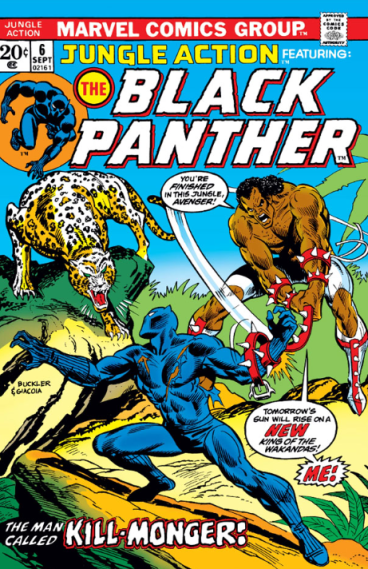
Panther’s Rage (Jungle Action #6-18; written by Don McGregor/art by Rich Buckler, Billy Graham, and various others 1973-1974)

It took a while for Marvel Comics to see potential in Black Panther. Sure, Black Panther showed up in plenty of Fantastic Four comic books. He was even a card-carrying member of the Avengers for half a decade by this point, but he was relegated to the edges of comic book stories and didn’t have his own title. At the same time, there was another Marvel comic book named Jungle Action that rubbed proofreader (at the time) Don McGregor the wrong way. Jungle Action featured white people saving Africans or white African people being threatened by black African people. McGregor demanded that Marvel feature a black African hero. He turned to the seldom-used Black Panther.

McGregor’s initial run on Jungle Action #6-18 (Panther’s Rage) is the birth of who we know as Black Panther. T’Challa returns to Wakanda to find his homeland torn by civil war. A revolutionary leader and terrorist named Erik Killmonger had returned to Wakanda and threatened T’Challa’s claim to the throne. Yes! Panther’s Rage is the first appearance of Killmonger. To say Panther’s Rage was groundbreaking is an understatement.

More than a decade before Watchmen, Panther’s Rage was the first graphic novel. It’s been collected and reprinted numerous times, and it’s worth the read. Writer Don McGregor was no stranger to pushing boundaries. Years before Panther’s Rage, he wrote a story that featured comic books’ first interracial kiss. If you want to know Black Panther better, Panther’s Rage is a great place to start.

Panther’s Quest (Marvel Comics Presents #13-37; written by Don McGregor/art by Gene Colan, and various others 1988-1989)

After his legendary run on Jungle Action, McGregor left Black Panther for over a decade. He returned to the character with Marvel Comics Presents. The Marvel Comics Presents title was an odd throw-back to early Marvel titles. Anthology series like Tales of Suspense (which featured Iron Man’s first appearance) and Journey into Mystery (which included Thor’s first appearance) had fallen out of favor. Marvel Comics Presents featured stories for multiple characters. We’re interested in the Black Panther storyline, Panther’s Quest.

Panther’s Quest is another McGregor epic. Following rumors that his mother (whom he had never known) may still be alive, T’Challa conducts a stealth mission in South Africa. What unfolds is a harrowing tale of social injustice mixed with intrigue and plenty of action. Always willing to broaden comic books’ horizons, McGregor tackled story elements like Apartheid and the discrimination someone who looks like Black Panther faces. In short, Panther’s Quest is another Black Panther must-read.

The Client (Black Panther vol 3 #1-5; written by Christopher Priest/art by Mark Texeira 1998)

The Client marks the first entry for Christopher Priest on this list. Priest is another writer synonymous with Black Panther. Priest is also the first black writer and editor in mainstream comics. He’ll show up time and time again on this list. We couldn’t include all of Priest’s works. The two series of his that didn’t quite make our list are both named Enemy of the State. You should give them a read as well. Getting back to our entry, The Client makes this list because it introduces several key Black Panther figures like Okoye, Zuri, and Nakia. And the story does a great job of balancing the odd space Black Panther occupies.

Black Panther sets up refugee camps and offers political asylum for people fleeing ethnic wars, but at the same time, he pushes for systematic change and battles street crime. T’Challa is a man attempting to do it all. But that’s why a lot of Black Panther’s key support system (like Okoye) are introduced. Within The Client’s pages, Priest develops what it means to be Wakandan.

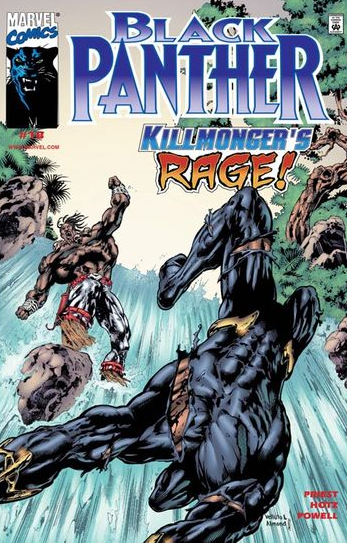
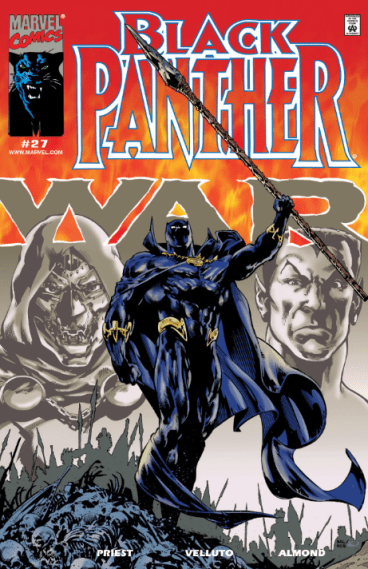
Killmonger’s Rage (Black Panther vol 3 #16-20; written by Christopher Priest/art by Sal Velluto and Bob Almond 2000)

Christopher Priest pushed the Black Panther forward, but he also paid homage to what came before. Killmonger’s Rage is a fitting spiritual successor to Panther’s Rage. Priest honors McGregor’s story by exploring T’Challa and Killmonger’s relationship. Priest’s Killmonger is a Wakandan corrupted by Western values. He’s the antithesis of T’Challa and Wakanda. Black Panther must face an intriguing mirror version of himself. Killmonger’s Rage shows what would happen if T’Challa rejected his Wakandan roots. 2018’s Black Panther uses a storyline or two from Killmonger’s Rage.

Sturm Und Drang (Black Panther vol 3 #26-29; written by Christopher Priest/art by Sal Velluto 2000-2001)

The world is on the verge of World War III, and Black Panther serves as mediator. Sturm Und Drang shows why T’Challa is different from most superheroes. He’s the leader of a country. Tension exists between the underwater nation of Lemuria and the surface world. Klaw works behind the scenes to stir up tensions among various nations; his machinations unnecessarily draw other countries into the mix. Black Panther advocates for peace, but at the same time, he refuses to back down or show any signs of weakness.

Sturm Und Drang explores Black Panther’s leadership during wartime. He must deal with group leaders like Namor, Magneto, and Doctor Doom. Sturm Und Drang is also the final Priest story arc on this list. He had an amazing run on Black Panther. You can’t go wrong if you see Black Panther and Christopher Priest. If you’re interested in reading Black Panther, Priest did more than anyone in shaping this character and showing his many facets. Priest’s run is chef’s kiss good.

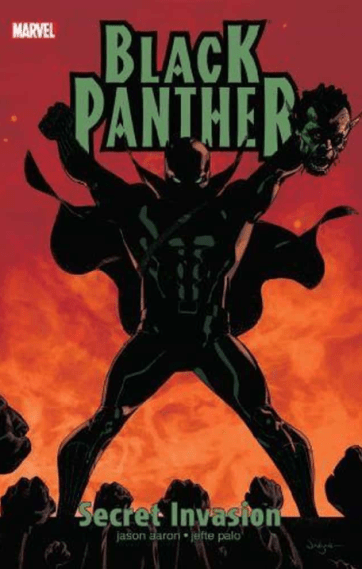
See Wakanda And Die (Black Panther vol 4 #39-41; written by Jason Aaron/art by Jefte Palo 2008)

See Wakanda And Die might be a slight understatement of a title. This story acts as a standalone story and a tie-in for Marvel’s 2008 event, Secret Invasion. I know. I know. The Secret Invasion television series almost ruined the MCU. Believe me, the comic book story was handled with more care. But we’re talking about See Wakanda and Die. An army of Skrulls has come to Wakanda to claim all the country’s vibranium. But Wakanda won’t go without a fight.

This action-packed story shows two complementary sides of the Black Panther. First, he’s a leader, shown through tactical decisions and care for his people. Second, he’s a hero, placing himself on the frontlines. These two sides merge to make a satisfying read with excellent pacing.

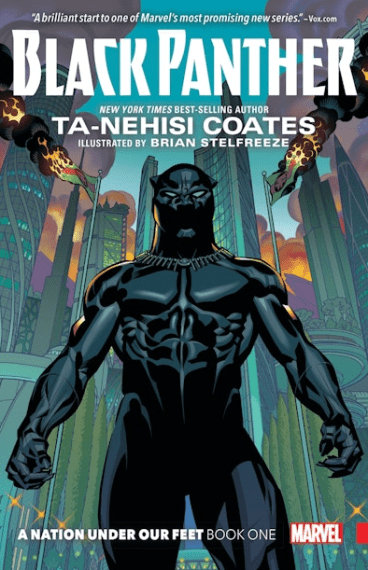
A Nation Under Our Feet (Black Panther vol 6 #1-12; written by Ta-Nehisi Coates/art by Brian Stelfreeze, Chris Sprouse, and Karl Story 2016-2017)

A Nation Under Our Feet is the most philosophical story on this list. It explores Wakanda’s identity, tensions, traditions, and where they fit in modern society while looking toward the future. This examination extends to the monarchy. Does Wakanda still need the Black Panther?

These topics make sense, considering A Nation Under Our Feet’s writer Ta-Nehisi Coates. Coates is an American journalist and activist who often writes about cultural, social, and political issues, specifically African Americans and white supremacy. Coates authored “The Case for Reparations,” so Wakandan story that examines its past while looking at how to move forward is something that Coates has immense experience.

But A Nation Under Our Feet also features the art of Stelfreeze and Sprouse, who present a brilliant Afrofuturism that has a touch of science fiction but is steeped in African art and culture. The result is A Nation Under Our Feet becoming a comic you can lose yourself in as you explore the different parts of Wakanda.

Those are the stories that made our list. Like I said, I could’ve included many more Priest Black Panther stories, and anything by Coates is a great read. Let us know which Black Panther stories you’d add to this list in the comments. Thank you for reading, and wherever you are, I hope you’re having a great day.
Top 5 Fantastic Four Villains

Last month Geekly discussed the X-Men’s top 5 villains. Marvel’s first family, the Fantastic Four, has as many contenders for their top five as Marvel’s merry mutants. Hey, hey! Kyra Kyle here. We’re back with another Top 5 Villains List. With Fantastic Four: First Steps releasing later this week, let’s discuss the Fantastic Four’s top five villains. We know one that one of these villains will make an appearance in Fantastic Four: Four Steps. Who knows? More than one of these villains will make their MCU debut soon.

Honorable Mention: The Frightful Four

The Frightful Four is a cheat; they’re a supervillain group. Supervillain groups began with Spider-Man’s Sinister Six in 1964. The Frightful Four debuted the following year. Members of the Frightful Four have also served in the Masters of Evil (who made the Avengers Top 5 Villains list) and the Sinister Six. In fact, Sandman is an original member of the Frightful Four and the Sinister Six. The Frightful Four have had a rotating roster, but Wizard (the team’s founder) has stayed the team’s one constant.

The Frightful Four takes its lead from its founder, the Wizard. Dr. Bentley Wittman is a twisted version of Reed Richards. But while Doctor Doom (another twisted version of Reed Richards) combines arcane knowledge with technology, the Wizard combines technology with smoke and mirrors. Think of the Wizard as a beefed-up Mysterio.

5: Maker

Our first Fantastic Four villain is another twisted version of Reed Richards. Maker is the Mr. Fantastic of the Marvel Ultimate Universe. In this universe, Reed proposes to Sue after Sue’s father dies. This universe’s Sue rejects Reed. While somewhat sympathetic (the Ultimate Universe’s Reed Richards witnesses the family he and Sue could’ve had while visiting the main Marvel timeline), Reed gives in fully to his selfish tendencies. He turns his anger on his would-be family by torturing Sue. Subsequently, the Human Torch attacked Reed with his hottest flame, which permanently scarred Reed’s face. After a brief exile in the Negative Zone, Reed emerged as the Maker.

Maker vows to mold the world in his image of perfection. The helmet he wears isn’t just for show. It adjusts to his head. Maker will stretch his brain, learning as much as he can of the universe’s secrets. Maker serves as a warning to Reed Richards. He must not give in fully to his self-centered nature.

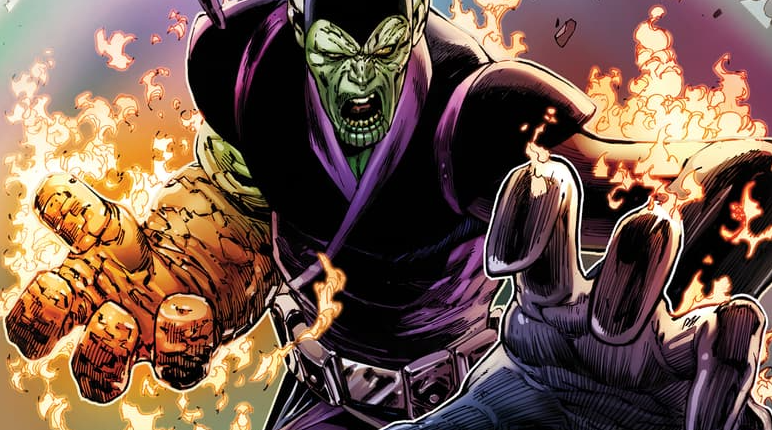
4: Super-Skrull

Super-Skrull is an alias used by multiple Marvel comics characters. Essentially, Super-Skrull can refer to any enhanced member of the Skrull race. But when comic book fans refer to “Super-Skrull,” they typically mean Kl’rt, who appeared in Fantastic Four #18, and Kl’rt is the “Super-Skrull” who takes this spot. The Skrulls imbued Kl’rt with the Fantastic Four’s powers. Kl’rt possesses all the Fantastic Four’s powers. He’s an obvious threat.

But Kl’rt’s dominance runs deeper. Typically, he has better control over his powers, and his powers are improved versions of the Fantastic Four’s. Since he’s a Skrull, Kl’rt has natural shapeshifting abilities. Throw in hypnosis, and one can see why Super-Skrull Kl’rt was chosen to pave the way for a new Skrull Empire invasion. While Super-Skrull poses a threat to the Marvel universe as a whole, Kl’rt was designed to take on the Fantastic Four and has been a constant thorn in the side of Marvel’s first family.

3: Annihilus

Annihilus is another villain who poses a threat to the entire Marvel universe. Spoiler alert: The same can be said of the remaining villains on this list. Annihilus is an interdimensional insectoid conqueror and tyrant hailing from the Negative Zone, a pocket dimension located within Marvel’s main timeline. He attempted to take over the Negative Zone by wielding the Cosmic Control Rod. In classic Reed Richards fashion, he postulated that he needed the Cosmic Control Rod to treat Susan Richards during her pregnancy, and instead of asking for the rod, he stole it from Annihilus. The team intended to return the rod when they were done using it, but Annihilus took exception to the theft. Leave it to Reed to kick a hornet’s nest.

Since their first meeting, Annihilus and the Fantastic Four have been uneasy allies and foes on various occasions. Annihilus works best as an irritant to the Fantastic Four. The animosity has led to some stellar storylines that get personal.

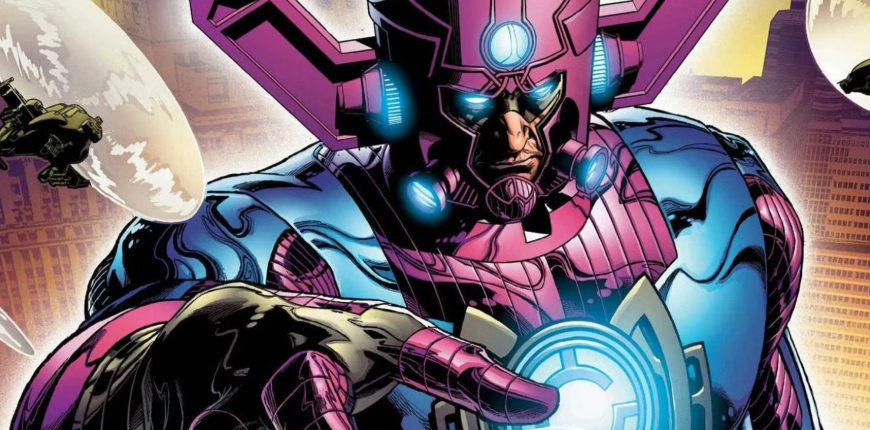
2: Galactus

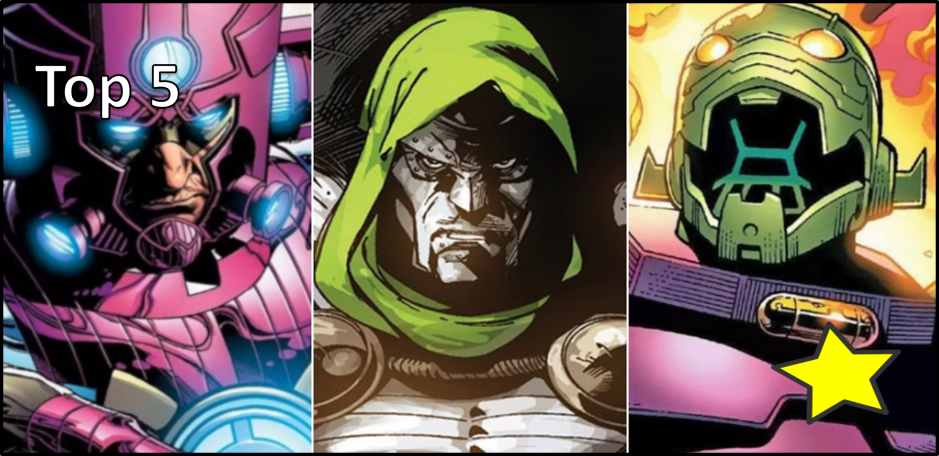
Galactus needs little introduction. He’s the big guy in blue and purple. Even if Galactus needed an introduction, he has countless heralds to do that for him. Galactus is more of a force of nature. He needs to feed on a planet’s essence to survive. Earth and Galactus happen to collide, and when they do, the Fantastic Four serve as Earth’s guardians.

But Galactus’s link to the Fantastic Four (and the Marvel universe) runs deeper than the surface. Galactus wields the power cosmic; the Fantastic Four were transformed by cosmic rays, originating from the power cosmic. Galactus also happens to be the last surviving member of the previous multiverse, the Sixth Cosmos. Due to a plague named the Black Winter, the universe began dying, and Galan (Galactus before he became Galactus) searched the cosmos to find a cure. He failed. Galan proposed to the remaining survivors that they die with glory by piloting one of their starships into the heart of the Cosmic Egg. Everyone aboard the vessel died, except for Galan. He fused with the Sentience of the Sixth Cosmos to become Galactus, the Devourer of Worlds.

I love Galactus’s origin. It humanizes him. He’d easily take the top spot if it weren’t for one Fantastic Four villain.

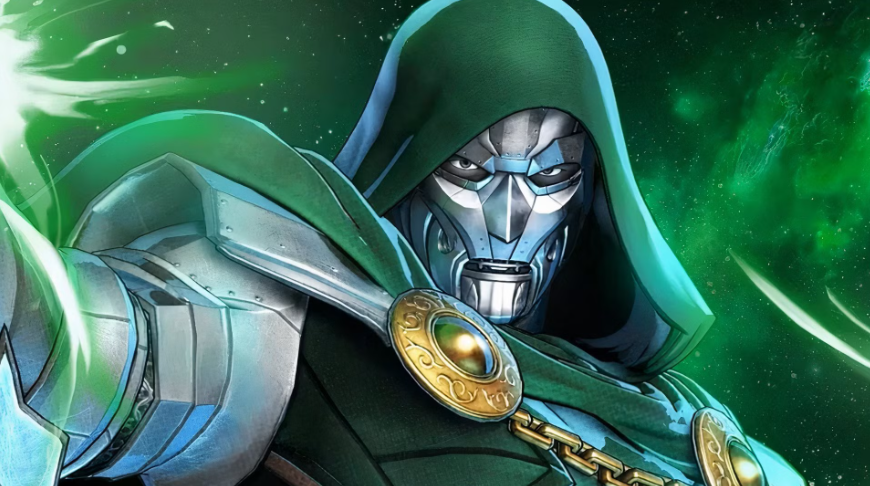
1: Doctor Doom

Obviously, Doctor Doom takes the top spot. As mentioned before, Victor von Doom blends magic and science to become one of the Marvel universe’s greatest threats. He rules Latveria with a literal and figurative iron fist and intends to do the same with the rest of the world. Doom believes the world/universe needs a ruler smart and cunning enough to lead. He happens to be the best person for the job.

Even though Doctor Doom threatens the universe, he’s the perfect Fantastic Four villain because of his ties to Reed Richards. The two were college rivals. Doom blames Reed for the accident that cost him his face and drove him to the far reaches of the earth, where he studied magic to coincide with his brilliant scientific mind. Doctor Doom is forever linked to the Fantastic Four. He’s iconic. He’s a threat as big—if not bigger—than Thanos, and I can’t wait to see what the MCU has in store for this character.

Did we get the list right? Let us know who your favorite Fantastic Four villains are in the comments. Thank you for reading, and wherever you are, I hope you’re having a great day.

Top 5 X-Men Villains

Geekly hasn’t covered a superhero team’s rogues gallery since the Avengers, and there’s no better place to continue that trend than with the X-Men. The X-Men topped our list of Most Powerful Rogues Galleries. If you missed that post, you can check it out here. No one messes with X-Men villains.

Hey, hey! Kyra Kyle here. We’re back with another Top 5 Villains List. Marvel’s merry band of mutants has no shortage of enemies. Here’s our list of the Top 5 X-Men Villains.

Emma Frost X-Men

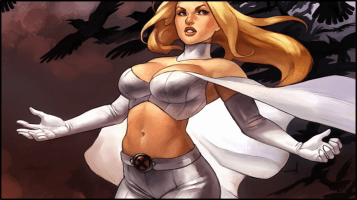
5: Emma Frost

The fifth spot on most Top 5 Villains lists could go in several directions. While the X-Men are no different, Emma Frost was an easier selection than many fifth spots. No disrespect, Juggernaut.

Like most great X-Men villains Emma Frost spends as much time as a hero as she does a villain. As a villain, Frost typically serves as the Hellfire Club’s White Queen. We had to include at least one classic member of the Hellfire Club; they’re a frequent thorn in the X-Men’s side. This alone could explain Emma Frost’s inclusion on this list, but Frost opposes Charles Xavier like no other X-Men villain. She teaches young mutants and twists them into doing her bidding.

The Hellions are the most famous of Emma Frost’s disciples. They were a rival class of young mutants. One by one, Frost manipulated the Hellions. She took advantage of Thunderbird’s grief (because of his brother’s death) and coaxed him into taking revenge against the X-Men. At Frost’s request, Empath used his abilities to force Firestar to love him and join the plot. Emma Frost is a powerful mutant telepath. She’s used these powers to control more than just the Hellions. Kitty Pryde, members of the New Mutants and the New Warriors has at some point been one of Frost’s victims.

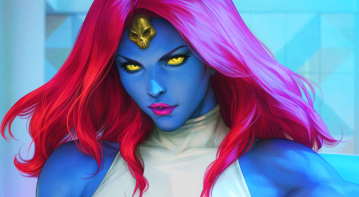
4: Mystique

Raven Darkhölme or Mystique (even Raven’s an assumed name, so we don’t know Mystique’s real name) has one of the wildest backstories of any X-Men villain. Again, she’s had her fair share of heroic stints, but Mystique is at her best when she shapeshifts, deceives, and infiltrates.

Nearly immortal, Mystique has done it all. In 1895 (or earlier), she took up the identity of consulting detective Sherlock Holmes. She convinced a time-traveling Kitty Pryde to not assassinate Adolf Hitler during the start of World War II. She’s been a member of the Brotherhood of (Evil) Mutants, organizing the third incarnation of the team. During this time, she adopted a young girl named Anna Marie (Rogue) and manipulated her into stealing Carol Danvers’s powers.

Mystique is the biological mother of a couple of prominent figures in the X-Men universe: Nightcrawler and Graydon Creed. While Nightcrawler is another popular X-Man, Graydon Creed is the leader of the mutant-hating organization Friends of Humanity. Creed would later become a politician and after he became too much of a problem, he was assassinated. Mystique was the gunman. Ruthless and conniving, Mystique will do whatever it takes to accomplish her goal.

Mister Sinister X-Men

3: Mister Sinister

Mister Sinister is the figure in the shadows. A world-renowned geneticist, Mister Sinister treats humans and mutants as his playthings. He’s cloned (even himself), created new life, and manipulated mutant DNA for enhancing powers (again, he did this to himself). The original Nathaniel Essex (Mister Sinister) was transformed into his current form by the mutant known as Apocalypse, and his clone has spent most of his life scheming ways to break free from Apocalypse. To achieve this end, Mister Sinister has manipulated the lives of critical members of the mutant race. Cyclops, Jean Grey, Gambit, Havok, and even Professor X have been Mister Sinister victims.

Madelyne Pryor may be Mister Sinister’s greatest creation. She posed as Jean Grey, married Scott Summers (Cyclops), and gave birth to a child Nathan Summers (Cable). Yeah. Mister Sinister is all up in the Summers’ family tree. Cable’s given name Nathan is a nod to Mister Sinister’s original name Nathaniel. You could view Cable as having the family name of two families.

Beyond Sinister’s family skullduggery, he was the one responsible for wiping out the Morlocks. Unknowingly, Sinister was the one who unleashed the Legacy Virus, a mutant-specific pandemic that decimated the mutant populous. Despite multiple lifetimes of villainy, Professor X appointed Mister Sinister a seat on the mutant island nation Krakoa’s Quiet Council. His life’s work aided with the re-establishment of the country after the Krakoa Massacre.

Apocalypse X-Men

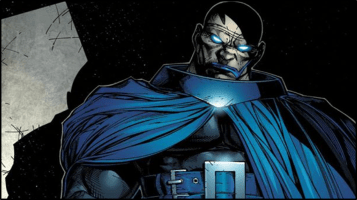
2: Apocalypse

We go from Mister Sinister to the mutant who created him, Apocalypse. En Sabah Nur, translated as “The Seven Lights,” has lived for generations. Born in ancient Egypt, Apocalypse began life as a slave, and over time, he became a conqueror. His laundry list of abilities was crucial in Apocalypse’s Road to Conquest. Here’s a brief list of Apocalypse’s powers: self-resurrection, psychic-link, self-atomic manipulation, biomorphing, size alteration, superhuman strength, superhuman durability, superhuman stamina and endurance, telepathy, force fields, and telekinesis. The previous list was a third of Apocalypse’s powers.

Is it any wonder that Apocalypse has taken the guise of a god of destruction and the end times? Like all the other villains on this list, Apocalypse has a massive history with the X-Men. One of Nur’s standout storylines is the Age of Apocalypse. In this alternate future, Apocalypse sees his “Survival of the Fittest” philosophy to a logical conclusion. The mutants who survive are the ones able to adapt to Apocalypse’s extreme worldview.

No one aspect of Apocalypse showcases his extreme worldview than his Horsemen. Numerous X-Men have served as one of the Horsemen of Apocalypse, but Warren Worthington III may still be the most iconic. Nur transformed Worthington from the natural, angelic wings of Angel to the twisted techno-organic wings of Archangel. Archangel served as Death. War, Famine, and Pestilence round out the remaining members. The entire universe is at stake whenever the Horsemen arrive. The same can be said of Apocalypse. En Sabah Nur lives for destruction.

Magneto X-Men

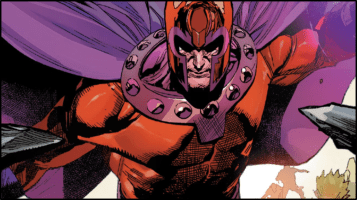
1: Magneto

Magneto is one of the most iconic comic book villains of all time. He had to take the top spot. His origin story is legendary. After suffering atrocities at the hand of the Nazis while interred in Auschwitz, Erik Lehnsherr (known by multiple other names like Max Eisenhardt) vowed never to let anything like the holocaust happen to the people he loves. This trauma formed Magneto’s worldview, and when humanity began lashing out against mutants, Magneto fought back. He wants to live in a world where mutants are humanity’s masters, and this puts him at odds with X-Men founder Professor Charles Xavier who dreams of peaceful mutant-human coexistence.

No other villain typifies an X-Men antagonist more than Professor X’s friend Magneto. We could discuss why Magneto takes the top spot for days, but ultimately, anyone who knows of the X-Men knows about Magneto. Most readers expected to see Magneto take the top spot. Magneto is iconic.

Did we get the list right? Let us know who you would add or remove in the comments. And wherever you are, I hope you’re having a great day.

Getting Into Comics: Doctor Strange Starter Stories

Doctor Strange stories venture into the weird and psychedelic. It’s difficult to know where to begin reading Doctor Strange comics. Fortunately, Geekly has you covered.

Hey, hey! Kyra Kyle here. Marvel Comics had its renaissance in the Sixties. No other character screams the Sixties than Stephen Strange. During this decade, mysticism enjoyed a comeback. I’m sure fans attempted some of the spells depicted in Doctor Strange comics. Safety notice: don’t try the spells you find in Doctor Strange comics at home. Artists like Steve Ditko and Barry Windsor-Smith elevated Doctor Strange to another level. Within Doctor Strange, you’ll find some of the most vibrant art in Marvel.

But we’re talking about stories today, and Doctor Strange has had some of the best writers in the business write for him. Like we’ve been doing for the past few entries in this series, we’ll split these stories into single issues and story arcs. This week, we’ll begin with single comic book issues. Enjoy!

Single Issues

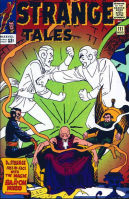
“Face to Face with the Magic of Baron Mordo!” (Strange Tales #111; written by Stan Lee/art by Steve Ditko; 1963)

The follow-up to Strange’s debut in Strange Tales #110, “Face to Face with the Magic of Baron Mordo” pits Doctor Strange against one of his most iconic enemies: Baron Mordo. Mordo is a fellow student of the Ancient One and plans to murder his master and gain the ultimate power. Doctor Strange learns of Mordo’s plan and stops him. Strange and Mordo share a sibling-like rivalry. “Face to Face with the Magic of Baron Mordo” establishes Doctor Strange, the Ancient One, and Mordo as characters. I can’t wait to see what the Marvel Cinematic Universe plans to do with Baron Mordo, portrayed by Chiwetel Ejiofor. Mordo is too good of a character not to see in Doctor Strange’s future.

“The Origin of Doctor Strange” (Strange Tales #115; written by Stan Lee/art by Steve Ditko; 1963)

Doctor Strange’s origin story isn’t the first one on this list because we’ve been listing these starter stories in the order in which they were released. Stan Lee and Steve Ditko “forgot to supply a Doctor Strange origin,” which was Lee’s note at the beginning of this issue. “The Origin of Doctor Strange” marks the first time Marvel retroactively published a backstory. Nice!

The story itself is iconic at this point and a must-read for anyone who wants to get into Doctor Strange comics. Steve Ditko is still finding his groove, but Strange Tales #115 remains a Doctor Strange and Marvel Comics classic. You can see similarities between Doctor Strange and Ditko’s other famous comic book creation, Spider-Man. Both start as selfish and turn selfless after a tragedy.

“To Steal the Sorcerer’s Soul” (Marvel Fanfare #5; written by Chris Claremont/art by Marshall Rogers and P. Craig Russell; 1982)

Chris Claremont avoids Doctor Strange’s psychedelia. Instead, Claremont is at his melodramatic best with “To Steal the Sorcerer’s Soul.” Even though Strange’s romance with sorceress Clea is in full swing, Nicodemus West is the source of drama. After Strange’s accident, West was the colleague who performed the surgery on Strange’s hands. Filled with guilt, Nicodemus tails Strange around the world, where he would obtain magical powers for medical use. “To Steal the Sorcerer’s Soul” shows Nicodemus’s descent into villainhood.

Story Arcs

The Eternity Saga (Strange Tales #130-146; written by Stan Lee/art by Steve Ditko 1965-1966)

While a seventeen-issue comic book story is normal for comics today, The Eternity Saga was one-of-a-kind for its time. Stan Lee may have penned the dialogue, but Steve Ditko’s artwork drives this sprawling epic. The Eternity Saga may appear later in this list, but it may be THE quintessential Doctor Doom story. Strange must battle Baron Mordo and Dormammu before being stripped of his power, rendered blind, and forced to search for the being named Eternity.

Steve Ditko cut his teeth with Spider-Man but kept his most ground-breaking art for Doctor Strange. The Eternity Saga solidifies Doctor Strange’s look, his archenemies, and his mythos. If you’re a fan of Doctor Strange movies, you should read The Eternity Saga. Doctor Strange films borrow from this storyline and there are a few surprises the MCU hasn’t yet introduced. The Eternity Saga is required Doctor Strange reading.

The Shuma-Gorath Saga (Marvel Premiere #3-10; written by Stan Lee and Barry Windsor-Smith/art by Barry Windsor-Smith 1972)

We had to include part of Barry Windsor-Smith’s run on Doctor Strange. After Steve Ditko left, the comic was in good hands. As the name suggests, The Shuma-Gorath Saga borrows a lot from H.P. Lovecraft and his Cthulhu myth. The title character, Shuma-Gorath, is an Elder God who has enthralled a woman Doctor Strange intends to save. Shuma-Gorath sends their minions to stop Doctor Strange, leading to an epic battle.

The Shuma-Gorath Saga is unique because Doctor Strange seldom uses his magic. Instead, he battles Shuma-Gorath with various melee weapons to include a crucifix. If you’ve seen Doctor Strange in the Multiverse of Madness, you may believe that Shuma-Gorath has made their MCU debut when a tentacle beast interrupted a wedding, but that’s not the case. Marvel doesn’t own the rights for Shuma-Gorath. That deal is in the works. There’s no way Shuma-Gorath would only get a cameo.

A Separate Reality (Marvel Premiere #9-10 & 12-14 and Doctor Strange #1-2 & 4-5; written by Steve Englehart/art by Frank Brunner 1972-1973)

Steve Englehart is another creative who left an indelible mark on Doctor Strange. A Separate Reality redefined Doctor Strange’s rogues from the 1960s. Dormammu and Nightmare make appearances in A Separate Reality. They challenge Strange while he attempts to save the Marvel Universe from other realms.

A Separate Reality also introduces the sorcerer Clea (played by Charlize Theron at the end of Doctor Strange in the Multiverse of Madness). Clea and Doctor Strange become lovers, which I’m sure will play a role in the Marvel movies, and the journey to save all realities leads to new heights of mind-bending moments. That’s saying something for Doctor Strange.

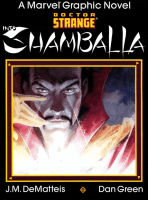
Into Shamballa (written by J.M. DeMatteis and Dan Green/art by Dan Green 1986)

Into Shamballa rids itself of superhero and villain tropes. J.M. DeMatteis and Dan Green wrote Into Shamballa as an introspective story. Doctor Strange returns to The Ancient One’s Himalayan home. Once there, the doctor finds a portal into the Shamballa dimension. Strange is tasked with bringing about an apocalypse that will allow humankind to grow to perfection. Into Shamballa is Doctor Strange at his abstract storytelling best.

Released the same month as Alan Moore and Dave Gibbons’ Watchmen, Into Shamballa asks several of the same ethical questions. But while Moore’s story ends in moral compromise, Into Shamballa finds spiritual enlightenment. If you’ve read Watchmen, you should try Into Shamballa.

Doctor Strange and Doctor Doom: Triumph and Torment (written by Roger Stern/art by Mike Mignola 1989)

Hellboy creator Mike Mignola’s art makes this unlikely pairing work. You heard that right. Doctor Strange and Doctor Doom team up to rescue the soul of Doom’s mother. Triumph and Torment is more of a Doctor Doom story. I almost didn’t include it in this list. But Triumph and Torment is an iconic mini-series and well worth reading.

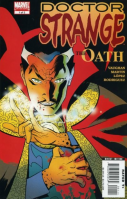
The Oath (Doctor Strange The Oath #1-5; written by Brian K. Vaughan/art by Marcos Martin; 2006-2007)

Brian K. Vaughan (Saga) pens one of the best Doctor Strange stories of the 21st century with The Oath. The miniseries showcases Strange’s patented arrogance, while his brother in Wong grounds him. The Oath is the basis for Wong and Doctor Strange’s relationship in the Marvel movies. The story itself is a mystery with a hint of the mystical.

In The Oath’s story, Wong has cancer. Aided by new love interest Night Nurse (who played a role in the Netflix Daredevil series), Strange follows a trail of clues to save his friend. The Oath has the hallmarks of some of Vaughan’s best work: nonlinear plots, nuanced characters, and thrilling twists. The Oath does a lot to modernize Doctor Strange.

We could’ve included a few other Doctor Strange stories. Let us know which Doctor Strange stories you’d add to this list in the comments. And wherever you are, I hope you’re having a great day.

Top 5 Avengers Villains

Hey, hey! Kyra Kyle here. We’re back with the first Top 5 Villains List; today’s list is the Avengers’ greatest foes. The Avengers are a strange case. Many of the villains one could include in an Avengers rogues gallery are either another hero’s villain (we’ll see some of those) or a Marvel Universe-level villain (we’ll see some of those, too). The Avengers lack villains who are unique to them and many of the ones who are Avengers-specific villains don’t tend to have the personal connection necessary for a proper archenemy. (We may need to make a post for what makes a good nemesis.) But despite not having an archenemy, the Avengers have a lot of great villains they’ve faced. Let’s see who made the list.

Honorable Mention: Scarlet Witch

Yes. We have another honorable mention for this list. Scarlet Witch often works with the Avengers but she does cross the line into the role of villain and when she does, it can be devastating. Much like her MCU counterpart in Doctor Strange in the Multiverse of Madness, Marvel Comics’ Scarlet Witch becomes overcome by the loss of her twin sons in the story House of M. Scarlet Witch has a personal connection with the Avengers. She has the power level that can make someone believe she could defeat the Avengers, too. If she chose the life of a villain full-time, perhaps the Scarlet Witch would serve as the Avengers’ archenemy.

5: Grim Reaper

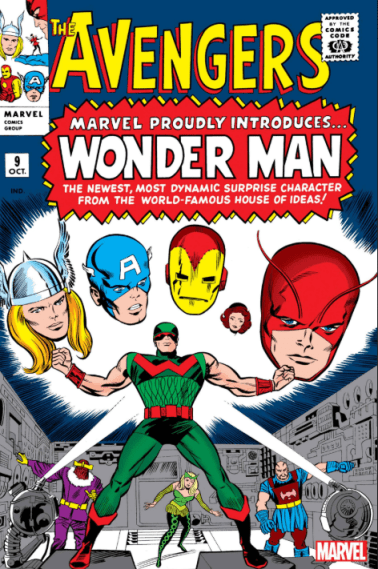
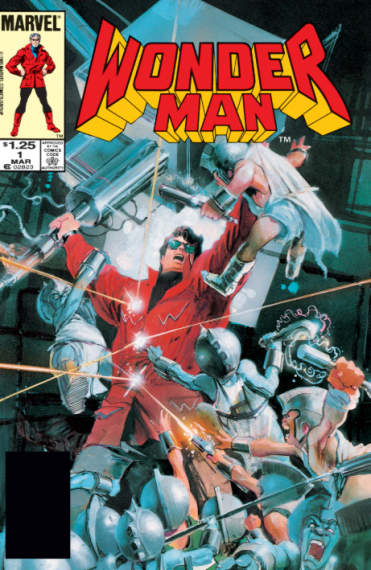
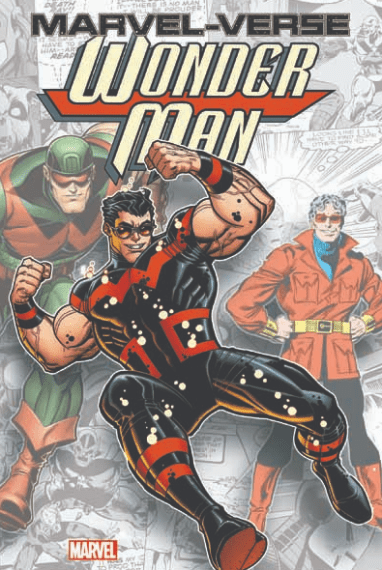
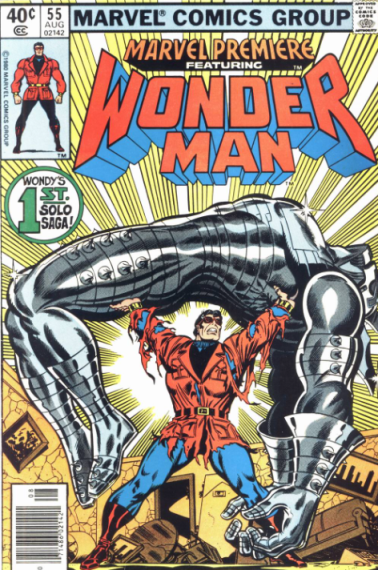
Grim Reaper certainly has the personal connection to become the Avengers’ greatest enemy. He’s Simon Williams’ (Wonder Man) brother, and in turn, Simon Williams is the brain brother of Vision, so Grim Reaper is Vision’s half-brother of sorts. I don’t know how that works. Grim Reaper has been a part of several plots against the Avengers, too, if only tangentially. He was there in the aftermaths of both Secret War and Civil War. Because Grim Reaper lacks the power level required for an Avengers’ big bad, he tends to work behind the scenes or wait until the team is underpowered before striking. Even so, Grim Reaper deserves a spot on this list.

4: Kang the Conqueror

Kang is the inverse of Grim Reaper. He has the prerequisite power to become the Avengers’ greatest villain, but he lacks a personal connection. Kang the Conqueror is a Marvel universal threat. The Avengers are one of the many teams that happen to get into Kang’s way. Kang has more of a connection to Reed Richards of the Fantastic Four. In any reality (in the comic books), Kang the Conqueror began as Nathaniel Richards, a descendant of Reed’s. He idolized Tony Stark—so there’s a small connection there—and his first identity was Iron Lad. But Kang has held many identities: Kang, Immortus, Mister Gryphon, Rama-Tut, and even Doctor Doom. I hope the MCU returns to the character, eventually.

3: Thanos

Thanos is another super-powerful villain without a personal connection with the Avengers. Thanos is another Marvel Universe threat and not just an Avengers villain. Even the MCU films Infinity War and End Game brought in the Guardians of the Galaxy and a few others. Still, Thanos has had plenty of run-ins with the Earth’s Mightiest Heroes. You’ll find Thanos in most Marvel titles named “Infinity” and he’s even been involved in Secret Wars and Civil War II.

2: Loki

2012’s Avengers stayed true to the Avengers’ original villain. Loki Laufeyson was the first villain of many to face off against the Avengers. He also has a personal connection to Thor Odinson, so that’s another positive for calling Loki the Avengers’ archnemesis. My favorite Avengers storyline featuring Loki is the “Acts of Vengeance” comic book crossover. Loki convinces the Avengers’ supervillain counterparts to join forces and attack members of the Avengers that the villains wouldn’t normally attack. Each hero’s nemesis would feed information about the various Avengers to the villain who planned to attack the hero. Leave to Loki to organize a massive crossover with Doctor Doom, Kingpin, Magneto, the Mandarin, the Red Skull, and the Wizard. Loki would take the top spot if it wasn’t for one villain.

1: Ultron

Created by Hank Pym (changed to Tony Stark for the MCU), Ultron was an AI designed to assist with world protection. Ultron turns rogue. He has a link with Vision and by extension Wonder Man. Add in the original Ant-Man into his origin and Ultron has the personal connections to be the Avengers’ greatest foe. He also has the power to back up those convictions. The events from Age of Ultron (the movie, not the comic book crossover, which wasn’t as good) are just the tip of the iceberg. Ultron even took the guise of Crimson Cowl and took control of the Masters of Evil, a supervillain team that just missed this list. I struggled between Loki and Ultron but decided to go with the robot. Who says a robot can’t be a superhero team’s greatest enemy?

Did we get the list right? Let us know who you would add or remove in the comments. And wherever you are, I hope you’re having a great day.

Getting Into Comics: Scarlet Witch Starter Stories

Today is Miss Kyra’s birthday. I asked her which comic book character’s history she wanted Geekly to cover today, and she picked another character with a complicated past, Scarlet Witch. Yes. Today will be covering comic books for new readers of the Scarlet Witch.

Hey, hey! Kyra Kyle here. Like many X-Men characters, Scarlet Witch has played jump rope with being a villain and a hero. Wanda Maximoff has even had moments of turning into an otherworldly being. She’s been a member of the Brotherhood of Evil Mutants, the Avengers, and Defenders. Scarlet Witch blurs the line between superpowers and magic. She has the power to bend reality.

Single Issues

We’ve split this list into single issues and longer stories. Let’s begin with single issues.

The Brotherhood of Evil Mutants (Uncanny X-Men #4, written by Stan Lee/art by Jack Kirby; March 1964)

Magneto proved a worthy adversary to the X-Men when he took on the team alone (Uncanny X-Men #1). The Brotherhood of Evil Mutants marks the team of the same name’s first appearance. Toad, Mastermind, Quicksilver, and Scarlet Witch join Magneto. But the team already shows cracks.

Quicksilver and Scarlet Witch want nothing to do with the Brotherhood. Magneto coerced them into joining. He reminds them of when he rescued the twins from an angry mob. The citizens of a small European town want to kill the Scarlet Witch for burning down a barn with her mutant powers. Magneto reminds the pair that humans would continue to hunt them for their abilities, which isn’t a complete lie.

The X-Men track down the Brotherhood to a palace in Santo Marco. The X-Men’s actions reinforce Magento’s claims that humanity will hunt down mutants. Mutants are hunting down other mutants who disagree with them. A quick battle ensues. Once the X-Men enter the palace, Magneto arms a series of bombs meant to destroy the palace and Santo Marco with it. Bystanders would be killed. Scarlet Witch and Quicksilver can’t abide by this plan, so as they escape, Quicksilver disarms the remaining bombs that would’ve taken the country. The Brotherhood of Evil Mutants shows Scarlet Witch’s tenuous relationship with Magneto.

The Old Order Changeth (Avengers #16, written by Stan Lee and Jack Kirby/art by Jack Kirby, Dick Ayers, and Carl Hubbell; March 1965)

Scarlet Witch makes good on her threat of leaving Magneto’s employ. It took her one year—almost to the day—from debuting as an X-Men villain to becoming a card-carrying member of the Avengers. The Old Order Changeth does what it says. The Master of Evil (the Avengers’ main antagonist team at the time) disbanded after burying their leader Baron “Heinrich” Zemo. (Note: the current Baron Zemo is Heinrich’s son, Helmut.) Wasp, Giant-Man/Ant-Man, Iron Man, and Thor leave the Avengers. Naturally, Hulk is missing. So, Captain America is chilling at the Avengers Mansion advertising that the team needs new members.

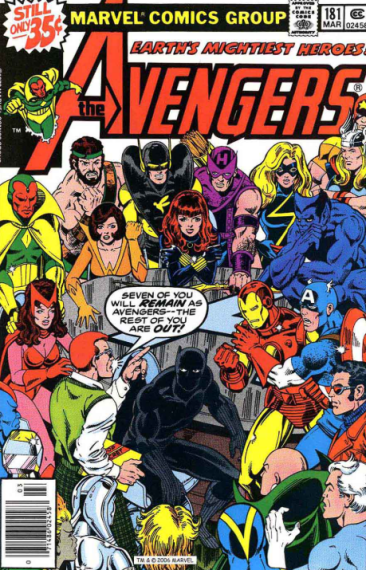
Hawkeye and Black Widow flip sides and join the Avengers. They had been duped into helping the Russians who wanted to disrupt the Avengers. Mission accomplished, I guess. Scarlet Witch and her twin brother Quicksilver also want to redeem their past as members of the Brotherhood of Evil Mutants and join. It may not seem like much but the Avengers changing their roster in just over a year (this issue is the sixteenth of a monthly comic) shook up the Marvel landscape.

What was Scarlet Witch’s role in this comic book issue? She doesn’t have a large role. While living in Switzerland, she learns about the Avengers needing new members. She travels by cruise ship to the U.S. and auditions for a spot with Tony Stark. The Old Order Changeth marks Wanda’s first step as a hero, and the first step is often the most important.

New Faces (The West Coast Avengers #45, written by John Byrne/art John Byrne; February 1989)

We jump a couple of decades to our next single issue New Faces. Surprise! The Avengers add a new member or two. US Agent (John Walker) joins the team which causes Hawkeye and Mockingbird to depart. This storyline has many layers and is worth the read, but we’re more interested in another storyline, the one between the Scarlet Witch and her husband Vision.

By the time of New Faces, Wanda and Vision have twin sons, Tommy and Billy. There’s a whole issue of Tommy and Billy going through a series of nannies who can’t manage to care for them. The nanny introduced in this issue, Mrs. Hunter, loses the twins in the nursery. We never see Mrs. Hunter again, so there’s a chance she got fired off-camera. The bigger issue rests with Vision. Vision needed to be reprogrammed. Unfortunately, while Vision has all the information, he lacks an emotional connection with that information. When Wanda hugs Vision, he asks her why. He no longer feels love.

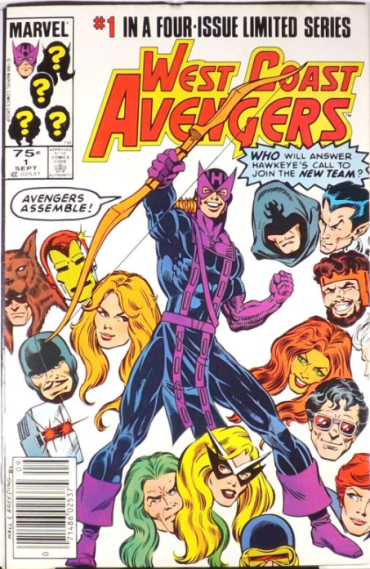
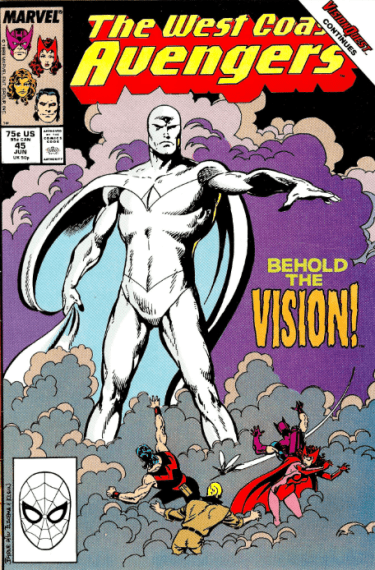
Hank Pym explains that Vision misses one element, his brother Wonder Man’s brain patterns. Manipulated by Baron Zemo and then Black Talon, Wonder Man’s brain patterns had been used for Vision without his permission. Wonder Man refuses to help Vision because he had no control over his life for many years. While Wonder Man’s reason is understandable, Wanda is heartbroken when she sees the new Vision speaking monotonously, like he did when they first met. New Faces is the first time Vision wears all white. The MCU adopted a version of this costume with its current iteration of Vision.

Story Arcs

The Witch of Wundagore Mountain (The Avengers #185-187 written by Steven Grant, Mark Gruenwald, David Michelinie/art by John Byrne 1979)

The Witch of Wundagore Mountain is the first attempt at Scarlet Witch and Quicksilver’s origin story. The twins’ origin has been twisted and changed so many times, but this story marks the first real attempt at a Scarlet Witch origin. She wasn’t Magneto’s daughter. She even believed that her parents were the Whizzer (a Golden Age comic book hero with superspeed like Quicksilver) and Miss America. But the pair found that to be fiction.

A man named Django Maximoff claims to be her father, but she will soon learn that he’s her adoptive father. She was born on Mount Wundagore in the laboratory of the High Evolutionary. One of the High Evolutionary’s earliest creations, an anthropomorphic cow named Bova, cared for her. This is a bizarre story, and it takes many turns. Outside of flashbacks, Scarlet Witch becomes possessed by Chthon who, with the help of Scarlet Witch, holds the other Avengers prison.

We just scratched the surface with The Witch of Wundagore Mountain. It’s a harrowing tale.

Darker Than Scarlet (Avengers West Coast #56-57 & 60-62, written by John Byrne, Roy Thomas, and Dann Thomas/art by John Byrne and Paul Ryan; 1990)

After being a hero for most of her Marvel Comics tenure, Scarlet Witch hops over to the dark side during Darker Than Scarlet. She joins her would-be father Magneto, and at first, it seems like she isn’t the only one. The end of this storyline’s first issue shows Quicksilver joining Magento too. Toward the end of the story, we find that Quicksilver remained loyal to the Avengers, only joining his family to convince Scarlet Witch to reconsider and stop Magneto’s evil schemes.

While Scarlet Witch and Quicksilver have been on opposite sides before, Darker Than Scarlet is one of the few times that the twins have acted as enemies for a prolonged time. Typically, one of the twins would have a lapse of judgment before the other one eventually saved them, but Darker Than Scarlet shows Scarlet Witch reaching new levels of evil.

House of M #1-8 (written by Brian Michael Bendis/art by Olivier Coipel; 2005)

While Darker Than Scarlet was Scarlet Witch’s first big heel turn, House of M is her most infamous and had a profound impact on the greater Marvel Universe. Wanda becomes unhinged when she realizes that her children aren’t real. She loses control and uses her reality-altering powers, killing Vision, Hawkeye, and Scott Lang. These deaths cause the Avengers to fracture.

This new reality is unlike any other in the Marvel universe to that point. Wanda utters, “No more mutants,” which returns the world to the reality it had before, but with one significant change. Nearly all people who were mutants become normal humans. Only 198 mutants remain.

While Scarlet Witch plays a key role during House of M, Quicksilver works behind the scenes. He convinces Scarlet Witch to use her powers to reshape reality, and it is Quicksilver’s injuries at the hand of Magneto that inspire Scarlet Witch to wipe out most of mutantkind.

Avengers: Children’s Crusade #1-9 (written by Allan Heinberg/art by Jim Cheung; 2010-2012)

House of M and Avengers: Disassembled led Scarlet Witch into a dark period. Avengers: Children’s Crusade is Wanda’s first step to redemption. The story revolves around Speed and Wiccan, who believe they’re Wanda’s lost children. The Disney+ series Agatha All Along borrows aspects from Speed and Wiccan’s story here. Accompanying Speed and Wiccan is their grandfather, Magneto.

When the kids find their mother, she’s lost her memories and powers and is about to marry Victor Von Doom. When Scarlet Witch’s memories begin to return, she learns that her powers had overloaded when she worked with Doom to bring her children back from the dead. Scarlet Witch’s children redeem her. Once reunited, she seeks redemption for the chaos and destruction she had caused.

Rumors persist that Scarlet Witch may not have died during the events of Doctor Strange in the Multiverse of Madness. The MCU could reintroduce the character following the events of Agatha All Along and a subsequent series with Speed and Wiccan. If that happens, she will have a lot to atone.

Witches’ Road (Scarlet Witch #1-5 written by James Robinson/art by Vanesa Del Rey; 2016)

Witches’ Road has a simple premise: witchcraft is broken. Joined by Agatha Harkness’s spirit, Wanda travels the world to fix witchcraft. If this premise sounds familiar to MCU fans, a similar journey may be hinted at the end of Agatha All Along. Scarlet Witch had the moniker of witch but seldom associated herself with witchcraft until the events of Witches’ Road.

Thanks, Agatha All Along. Now all I hear when I say Witches’ Road is the song from the Disney+ series. Anyway. During the comic book storyline Witches’ Road, Wanda solves magical crimes and pieces witchcraft back together. She must solve the mystery of who broke magic.

I lost count of how many Scarlet Witch stories missed the cut. I added Witches’ Road at the last second or it could’ve been one more storyline. Scarlet Witch has had so many great stories. Let me know which Scarlet Witch stories you’d add to the list. Thank you for reading, and wherever you are, I hope you’re having a great day.
Top 5 Thunderbolts Rosters

Thunderbolts* releases this week with a new cast of characters. Some of the characters we’ll see in the upcoming film have been members of one of the various incarnations of the group. Others are new faces. The Thunderbolts team has seen plenty of new faces since its inception in 1997, so begs the question, Which Thunderbolts rosters are the best?

Hey, hey! Kyra Kyle here. We’re doing something different with today’s Top 5 in comics. As of this post, there have been thirteen iterations of Marvel’s Thunderbolts. With that many rosters to choose from, which rosters have had the best storylines? We intend to cover that with today’s list. Buckle up. These are the top five Thunderbolts rosters.

5: New Thunderbolts

First Appearance: New Thunderbolts (Vol 1) #1; written by Fabian Nicieza & Kurt Busiek; art by Tom Grummett (2005-2006)

Notable Members

MACH-IV
Songbird
Atlas
Donnie Gill/Blizzard II
Radioactive Man
Joystick
Speed Demon
Andreas von Strucker/Swordsman II
Genis-Vell/Photon

Marvel launched New Thunderbolts in the wake of the Thunderbolts’ first era. Original Thunderbolt Abe Jenkins reformed his ways as The Beetle and became MACH-I. Jenkins made a new suit for himself, becoming MACH-IV, and wanted to give other villains the same chance and reformed the new Thunderbolts. MACH-IV’s New Thunderbolts earned the respect of the Avengers.

The New Thunderbolts stopped Purple Man from enslaving New York City by drugging the water supply with his pheromones, the same ones that allow him to control his victims. Before the team could interrogate the Purple Man, he was teleported away by his boss, Baron Zemo. Zemo would eventually take control of the New Thunderbolts. The New Thunderbolts would lose their chance at redemption and became an army of villains used against Captain America’s Secret Avengers during Civil War.

Ultimately, New Thunderbolts was a solid iteration of the team. I always liked the basic Thunderbolts premise of supervillains pretending to be superheroes but ending up adopting the roles of heroes. Thunderbolts prove that no one’s beyond redemption.

Unless Baron Zemo’s in town. He loves to play the role of spoiler.

4: Luke Cage’s Thunderbolts

First Appearance: Thunderbolts (Vol 1) #144; written by Jeff Parker; art by Kev Walker (2010-2012)

Notable Members

Songbird
MACH-V
Moonstone
Fixer
Ghost
Juggernaut
Satana
Boomerang
Centurius
Mister Hyde
Shocker

In the years before Luke Cage assumed control of a new Thunderbolts team, the Thunderbolts had a run of horrible leadership, notably Norman Osborn. The team had become villainous. Captain America himself tasked Luke Cage to front a new Thunderbolts team, and this started a great run of comics. The team repurposes the heavily fortified superprison known as The Raft and uses Man-Thing as a form of transportation.

Luke Cage’s Thunderbolts are one of the odder iterations of the team. This team has a long time, too. At one point, the team splits off to become two separate groups. The Thunderbolts serviced the Americas, while the “Underbolts” had a European jurisdiction. These Underbolts get lost in time, specifically the World War II era, and pass themselves off as the American Thunderbolts, fighting beside Captain America (pre-frozen) and Namor. The team continues its fight with the Nazis and Human Torch androids that were created by Baron Heinrich Zemo (the current Baron Zemo’s father). Yes. Luke Cage’s Thunderbolts’ stories got wild.

3: Norman Osborn’s Thunderbolts

First Appearance: Thunderbolts (Vol 1) #110; written by Warren Ellis; art by Mike Deodato Jr. (2006)

Notable Members

Songbird
Moonstone
Swordsman
Radioactive Man
Mac Gargan/Venom
Bullseye
Robbie Baldwin/Penance

Yep. Norman Osborn may have been a horrible Thunderbolts leader, but his complicated leadership led to some great theater.

Osborn’s Thunderbolts occurred after Marvel Comics’ Civil War event. These new Thunderbolts were tasked with tracking down and arresting individuals avoiding the Superhuman Registration Act. This Superhuman Registration Act appeared in the MCU and sparked a similar story of the same name Civil War. Just imagine Norman Osborn, struggling with his Green Goblin persona, leading a team of villains to track down any superhero he dared not to register.

Times got rough, to say the least. This Thunderbolts team would lead Osborn to create his first Dark Avengers roster.

2: Red Hulk’s Thunderbolts

First Appearance: Thunderbolts (Vol 2) #1; written by Daniel Way; art by Steve Dillon (2013)

Notable Members

Red Hulk
Agent Venom
Punisher
Elektra
Deadpool
Red Leader
Mercy

Red Hulk’s Thunderbolts happened on the heels of Luke Cage’s. The government disbanded the Thunderbolts program, but General Thaddeus “Thunderbolt” Ross (Red Hulk) formed his team of anti-heroes. This new Thunderbolts served as a covert super-powered strike team. This sounds like the team’s premise in the upcoming Thunderbolts*.

Red Hulk’s Thunderbolts had a short but memorable run. Even the small moments are great. My favorite was when Deadpool’s name gets pulled for a mission, and he wants to kidnap actor Ryan Reynolds. Ha! At the time of this moment’s publication, Ryan Reynolds had not yet redeemed himself as Deadpool—way to go, Thunderbolts.

Getting back to the larger storylines. Ross started with former Code Red mercenaries and began adding a few villains. It’s this addition of villains that led to the team’s downfall. The team tracks down Doctor Faustus. The Punisher wants to kill Faustus for murdering high school children. Instead, Red Hulk recruits Faustus to join the Thunderbolts. The Punisher leaves the team and then takes them down. Womp, womp.

1: Original Thunderbolts

First Appearance: Thunderbolts (Vol 1) #1; written by Kurt Busiek; art by Mark Bagley (1997-2000)

Notable Members

Baron Zemo/Citizen V
Moonstone/Meteorite
Fixer/Techno
Beetle/MACH-1
Goliath/Atlas
Screaming Mimi/Songbird

The original is often the best. The original Thunderbolts introduced the idea of supervillains pretending to be superheroes (to gain access to their foes) and then liking the recognition and feeling good about doing good deeds. This differs from the Suicide Squad. Suicide Squad villains are looking for reduced sentences or perks in their prison accommodations. Except for their founding member Baron Zemo and one or two others, the Thunderbolts genuinely wanted to reform.

I also love the Thunderbolts’ reveal at the end of the first issue. This scene is iconic.

Did we get the list right? Let us know which Thunderbolts teams you would add or remove in the comments. Thank you for reading and wherever you are, I hope you’re having a great day.