Writing Brain Dump: September 18, 2026

Hey, hey, Geekly Gang! Kyra Kyle here with another writing brain dump. We’ve entered the “Ber” Season, months ending with the letters BER, so I’m doubling down on my writing. But I had trouble getting into gear, finding a flow state, discovering my voice, and all that fun stuff. Thankfully, one method got me on track: The Literary Triptych.

Literary triptychs work like art triptychs. Triptychs are the sets of three art pieces that build off one another. The artist tells a story with their set of three paintings. A literary triptych–as I define it–can do a similar thing. Literary triptychs take the same short work (or story) and sends it through different lenses. This could include different points of view characters, but doesn’t need to be. I’ve warped a story through first, second, and third person. Tense can also shake up the status quo. But I will be honest, changing character points of view works extremely well, and it does the most to get a writer unstuck.

At least for me. I got to test drive three different narrators through three hundred word retellings of the same small occurrence. Maintaining a point of view character’s voice through a novel-length work can get daunting. Test driving three different narrators was a godsend. Whichever one sparked my interest the most won the narrator duties. After this brief exercise, I was off to the races.

But literary triptychs have a secondary benefit. I explored my story’s world, got to know all three characters a little better than I did at the start, and found details (about the characters and world) I could weave into a novel-length work. And it didn’t take long for me to finish the triptych. If I get stuck while writing the novel (working title is Gods and Dolls), I may deploy the triptych and see if it will help.

Getting back to my progress on Gods and Dolls, I started at two hundred to two hundred and fifty words per day (the first three days) and upped my production to seven hundred to eight hundred daily words. I want a production level that I can sustain for days, weeks, and even months. If I maintain this level of production, I should complete Gods and Dolls well before Christmas. I did begin this process in the mid-August, so I had a head start.

I also won’t stop myself if I catch fire. If I can reach over a thousand words a day, I’ll ride that wave as long as I can. Who knows? I may complete my first draft before Thanksgiving. That should give me plenty of time to edit my previous novel, and Crooked as a Dogwood has been out to agents for almost two months. One more month, and I’ll submit to another round of agents. Hopefully, I’ll be finished with my second novel as I send Crooked as a Dogwood out to small publishers. And of course, I’ll have the third novel completed before sending out the second novel. Yay!

That’s all I have for this month’s Writing Brain Dump. Let me know how you’re doing with your writing journey. And if you try the literary triptych method to get yourself unstuck in story, leave a message in the comments. Thank you for reading, and wherever you are, I hope you’re having a great day.

Writing Brain Dump: March 20, 2026

Hey, hey, Geekly Gang! Kyra Kyle here. Has it really been about a month since the last Writing Brain Dump? Wow! Time flies. If you follow the board game design brain dump series, today’s topic will sound familiar. I tailored the design post toward board game design, so today’s brain dump will focus on writing. And we’re talking about the writing spectrum.

Most things in life can be expressed through a spectrum. Some people feel most comfortable on one extreme side of the spectrum, while others prefer the other. And then there are the ones like me who live somewhere in between the two extremes. In writing, those extremes are Plotters (or Planners) and Pantsers. Planners (or Plotters) create outlines for their plots and write their stories based on that outline. This may be the way most of us learned how to write. I remember my teachers preaching the importance of outlines. Several famous writers swear by plotting, and some refuse to conform. Rebels. Rebels, I say. You can’t tell them to make an outline. These are your Pantsers, nicknamed from the idiom, flying by the seat of one’s pants. And plenty of writers swear by pantsing.

Both sides make compelling arguments. JK Rowling, a famous Plotter, once suggested that without an outline, one will get lost. You wouldn’t go on a road trip without a map. That makes sense. But Stephen King, a famous Panster, once said never to outline. If you, as the writer, can’t be surprised by your work, you can’t expect your reader to be surprised. This also makes a lot of sense. So, who’s right? Both sides believe their method to be the best. Seriously, there’s a reason I made the above graphic look like a political divide. The writing divide can be just as contentious. Would it bug you if I said neither side is right? Or that both of them are right, given the proper circumstances? You can’t take me off this fence.

But context matters. A novel with numerous intricate plotlines may yearn for an outline. The writer could easily get lost. And pantsing one’s way through a story could help with suspense. Is it a coincidence that Stephen King mentions surprise in his reasoning for pantsing? Horror requires surprise. Of course, the Master of Horror would pants. Rowling’s Harry Potter series began with a school year structure. An outline for that series makes sense because she had to keep to that strict form. Until the final couple of books, where Rowling aged up the characters (to match the aging audience) and ditched the school year structure entirely with The Deathly Hollows. But enough about King and Rowling. Where a writer falls on the writing spectrum depends on the writer.

I’ve tried both of these methods. They work for various projects, like the ones I mentioned for the two famous authors. I’ve spelled out why an author may choose one extreme over the other. Pantsing adds surprise (might be good for Horror and Suspense). Plotting provides structure (great for books that follow a rigid structure). But there are two other main ways a writer can write their books/stories: Lighthousing and Blotting. I told you I live in the middle.

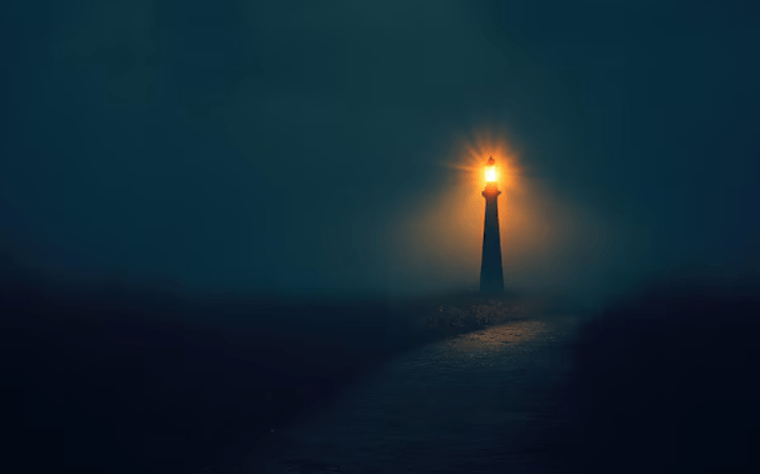
Typically, when I Lighthouse, I know what my initial scene will be, and I have a scene I know the story will progress toward, my Lighthouse Scene. This gives an author guide rails (sounds a little like Plotting), but allows the author to meander on their way toward the Lighthouse Scene (giving the flexibility of Pantsing). I love this method. It helps when I have a good idea of where I want to begin, and when I have a scene I’m dying to write. I’ve done this a lot with short stories. The exception for a short story is that you won’t have as many Lighthouse Scenes. You may even have one Lighthouse. If that’s the case, you may drift a little while before finding the point in the story where you’ll need to make your way to the end.

Lighthousing works best for stories where you have a good idea of how they’ll end (or perhaps a great penultimate scene), but you want some freedom to explore. But Lighthousing can get tricky. I’d begin with short stories first. Not enough writers start with short stories; short stories are a great way to explore one’s craft. Oh. I guess this is less of a writing brain dump and more of a craft talk. Whoops!

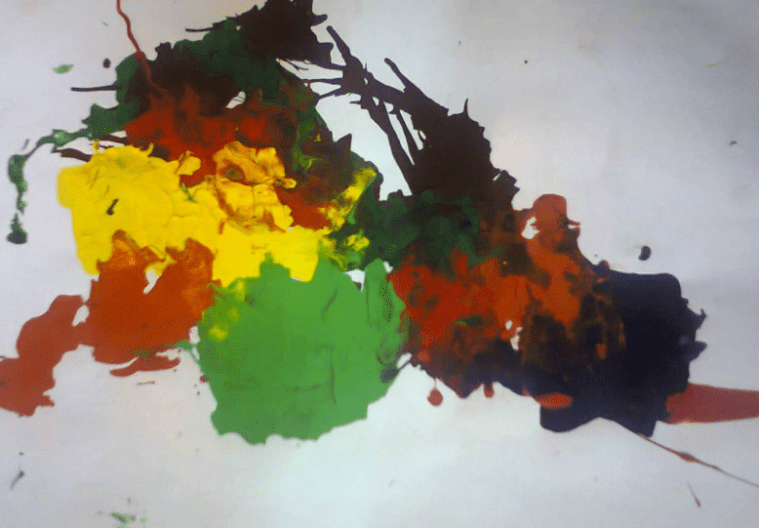
Blotting is the other main way writers can craft their stories, outside of plotting and pantsing. I always view Blotting like I’m a painter with an empty canvas. I have a sopping wet paintbrush in my hand, and I’m slinging the brush on the canvas with something I know I want in my story. This can be an element. This could be multiple scenes. The great thing about Blotting is that you can write the scenes in your story in any order, and then write the rest of the scenes that go in between those scenes. In other words, you can write the cool scenes you want to see in your story, and see what parts of the story remain.

Blotting works really well for non-linear storytelling, but that doesn’t mean it can’t work for a linear one. I blot a lot more when I write longer works. It helps me gain momentum, and writers need momentum for longer works. Get there faster.

So, which method is best? None. All. It depends on the writer and the project. Seriously, I’ve tried all of these; I’ve even used all four of these methods in a single calendar year. And just because you pants or lighthouse or blot, doesn’t mean you can’t reverse outline your book. Reverse outlining is when you take what you’ve written and retroactively place it into an outline. While Plotters could benefit from reverse outlining (you never know if you deviated from your original outline), reverse outlining is a godsend for a Panster, Lighthouser, or Blotter. If a scene doesn’t work in your overall story, why bother line editing that scene? Time is precious. Save as much time as you can.

How do you like to write? Do you have a fifth, sixth, or seventh method of getting your story on the page? Let me know in the comments. Thank you for reading, and wherever you are, I hope you’re having a great day.