3 Lists of 3 Video Games

Good old, uncle Geekly may be more into tabletop games, but he still plays the occasional video game. For all you video game fans, here’s a three lists of three. Hold your anger for the end.

Underrated or Overlooked Video Games or Video Game Franchises

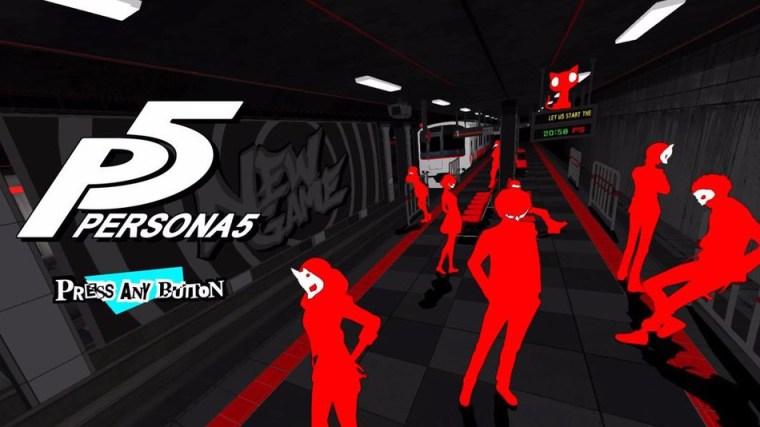
Persona5.jpg

Persona/Shin Megami Tensei

Persona may gain some traction in the States after 2017’s Persona 5, but this series has been cranking out old-school RPG hits for some time. Each game is a standalone experience that centers around a group of students battling otherworldly evils from another dimension in between class periods. With turn-based gameplay, unique monster designs, and Eastern humor the Persona series is one of the reasons I don’t mind other classic RPGs like Final Fantasy have shifted away from their roots. Persona does a great job of keeping the tradition alive.

WorldOfGoo.jpg

World of Goo

World of Goo is an indie, puzzle game that didn’t set the world on fire like Angry Birds, but its physics engine may be just as good. Honestly, I prefer World of Goo. Players control the flow of goo to an exit point and the quicker a player can do that, the more points they earn. A minimum score is required to finish a level, of course, and like most puzzle games, World of Goo’s levels start easy and grow in difficulty. You also get new versions of goo. You can never have enough goo.

This game has been ported to plenty of newer systems, so it shouldn’t be too difficult to find. It was even a Nintendo Switch launch title.

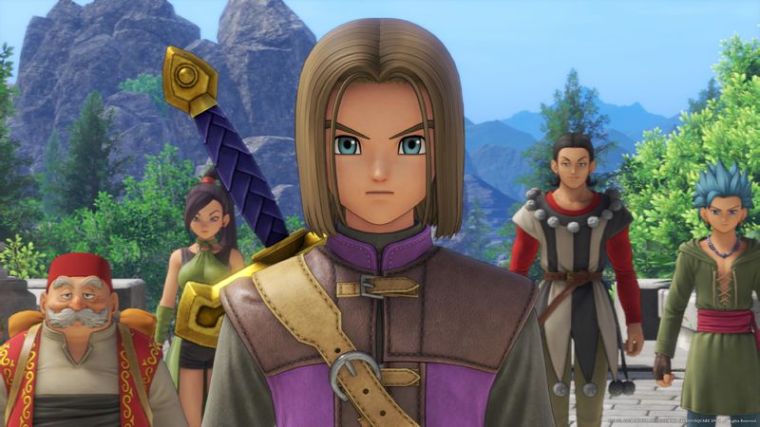
DragonQuestXI_02.jpg

Dragon Quest

If you can’t tell, I’m a huge RPG fan and since I live in the states, Final Fantasy dominated the genre. But Dragon Quest is every bit the classic RPG franchise. Heck, if you lived on the other side of the planet, Dragon Quest would’ve been bigger than Final Fantasy. Yeah, it’s that huge.

The art design comes courtesy of Dragon Ball Z’s Akira Toriyama, so the worlds are gorgeous and character designs quirky, fun, and familiar. Turn-based battles? Yep. Random battles? Usually. Dragon Quest knows who their core audience is and does a great job of catering to it. If you get the chance, play Dragon Quest VIII: Journey of the Cursed King—by far one of the series’ best—and look out for Dragon Quest XI which should be out this holiday season.

Overrated Video Games or Video Game Franchises

AssassinsCreedOdyssey

Assassin’s Creed

The concept of someone going back in time and inhabiting the body of an assassin sounds neat. Assassin’s Creed does a great job of putting players in a certain timeline. But the story gets too convoluted for its own good and guest appearances by Da Vinci, Machiavelli, and the occasional pope doesn’t do enough to make the story or the characters interesting.

What’s left are some great set pieces, but “Cool, this game has sabres” and “I can kill someone with a bayonet in this one” and “Tomahawks! What?” can only make a game fun for so long.

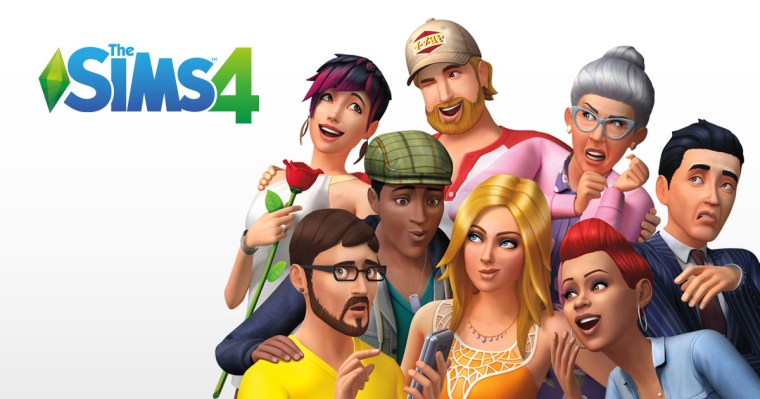
Sims4.jpg

The Sims

How has this one lasted this long? I’m fine with the life simulation, but after a while, a player must realize that The Sims is a life simulation. Oh, crap. I almost crapped myself. My sim got too tired and fell asleep on the kitchen floor. Hey, they’re getting frisky under those sheets. I guess that’s entertaining for a little while, but my enjoyment with the series has waned over the years.

Maybe I’m just bitter because I can no longer trick my sim into a swimming pool, remove the ladder so they can’t get out, and allow them to drown. Yeah, I may have issues.

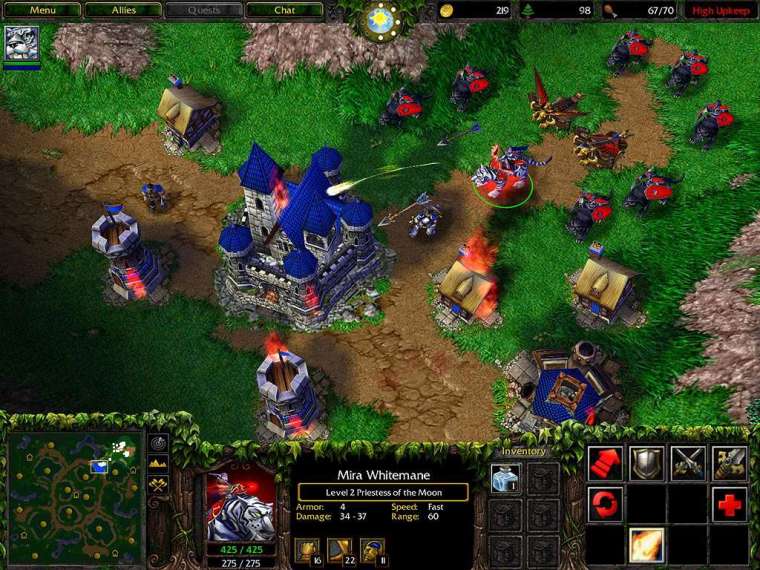
Warcraft3

Warcraft

No, not World of Warcraft, the original real-time strategy game Warcraft. Now, the first three games are classics—well, at least the third one—but one must admit that Warcraft III enjoys most of its continued success due to the mods the modding community has done in the years since its release. Heck, the multiplayer online battle arena (MOBA) genre may never have come to fruition without Warcraft III.

But Warcraft’s story began with some solid character development and with the juggernaut that was World of Warcraft and the subsequent Warcraft relaunch, Blizzard put more attention on character customization instead of development. A craptacular Warcraft movie had gamers flock to Warcraft III, but the story leading up to the third installment was canned, and the third one hasn’t aged well—in terms of story as well as graphics.

Upcoming Video Games to Look Out For

Starfield

Starfield (2019?)

Not much is known about Bethesda’s big space game, except that it’s a big space game that may be in the mold of Elder Scrolls or Fallout. We don’t even have a release date. All I know is that I’m okay with a slightly longer wait for the Elder Scrolls VI if Starfield can live up to Bethesda’s high standards.

Hold on. Did I just say that I’m okay with a longer Elder Scrolls wait? Yep. I’d rather Bethesda not pull a BioWare with Mass Effect: Andromeda.

WolfensteinYoungblood

Wolfenstein: Youngblood (2019)

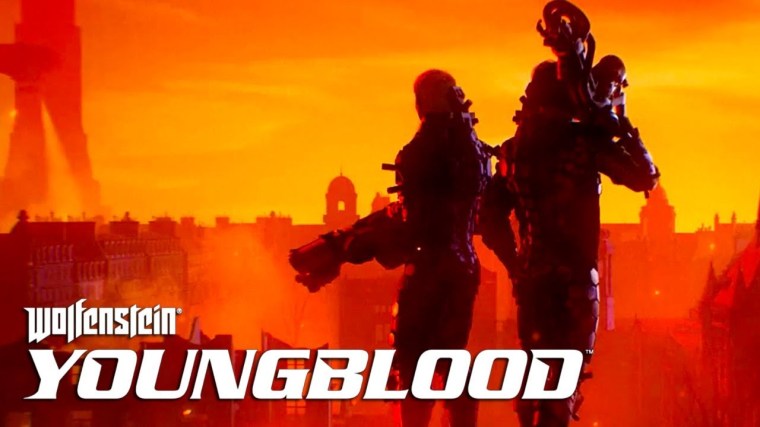
Wolfenstein II: The New Colossus flew under the radar in 2017 and that’s a shame. Bethesda did a bang-up job with that one. Wolfenstein: Youngblood will be a cooperative game set in the 1980s. I’m not sure what more to expect, but it looks as if Bethesda plans to stretch their creative muscles.

Huh. That’s two Bethesda games in a row. I couldn’t possibly go for a third.

KingdomHeartsIII.jpg

Kingdom Hearts III (2019)

I like RPGs, but Kingdom Hearts III is on this list for Season’s sake. She—like thousands of fans—has been waiting 13 years for the next numbered title of this Final Fantasy meets Disney game series. Square-Enix and Disney have leaked some of the worlds and characters. Frozen, The Little Mermaid, Monsters Inc., Toy Story, Pirates of the Caribbean, Tangled, and Sleeping Beauty are some of the Disney properties that’ll make an appearance.

I didn’t want to like Kingdom Hearts because I have a complicated relationship with Disney, but the series works. That many fans can’t be wrong. Right?

Are there any video game series we missed with our lists? Which upcoming games do you look forward to the most? Let us know in the comments.

My Favorite Game Mechanics: Fallout Shelter

Old Uncle Geekly is trying a new trick. This week’s favorite game mechanic comes from video games, Fallout Shelter in particular.

On the surface Fallout Shelter shares a lot of commonalities with other free-to-play games/apps like Clash of Clans. Players download it for free and it offers in game purchases for players to get better at the game faster than they would by investing only time. But the one thing that separates this game from other free-to-play games is also the one thing that makes it uniquely Bethesda. The player competes against the game, not other players.

When one logs off of Clash of Clans or a Clash of Clans clone, logging back in allows them to see what other players did to their defenses while they were offline. This sometimes leads to players paying for repairs (tying up a worker to repair counts as “paying”) and regrouping. There’s usually a tournament included in games of this ilk and only the best players—or the ones willing to pay to win—fair well in these tournaments. There’s a reason people scoff at these games as “pay to win.” The only way to get ahead in a game like that is to pay something. Fallout Shelter eliminates that style of play.

Sure, you could pay to get better things faster in the game, but the only player you can see is yourself. Fallout Shelter allows players to do things at their own pace. It doesn’t apply the pressure of a tournament.

Now I’m not saying that I don’t enjoy the occasional competitive free-to-play game, but Fallout Shelter’s brand of leveling up your vault dwellers how you see fit and sending them out on missions or exploring the wastes fit with Bethesda’s gaming catalogue. This isn’t just a free-to-play game. This is a Bethesda free-to-play game.

Is it for everyone? No. Did some gamers download it because they saw the word Fallout? Of course. Am I a Bethesda fanboy? You know it. But it’s the Bethesda open-world RPG flavor of Fallout Shelter that makes me interested in the game, and I hope other free-to-play games follow suit.

Player versus environment may be my favorite game mechanic, but I promised at least one more mechanism and here it goes. When Fallout Shelter first hit the app store, it bragged about players not having to wait for construction. Again, games like Clash of Clans have players build items and then they must wait real-world minutes or even hours for those items to be constructed. It’s a time waster. Well, you could pay gems (which end up being real-world money) to instantly build an item, but that ruins the idea of “free-to-play.” Fallout Shelter doesn’t have players wait for construction. If you have the resources, you build the room within your vault immediately.

FalloutShelter_Diner.jpg

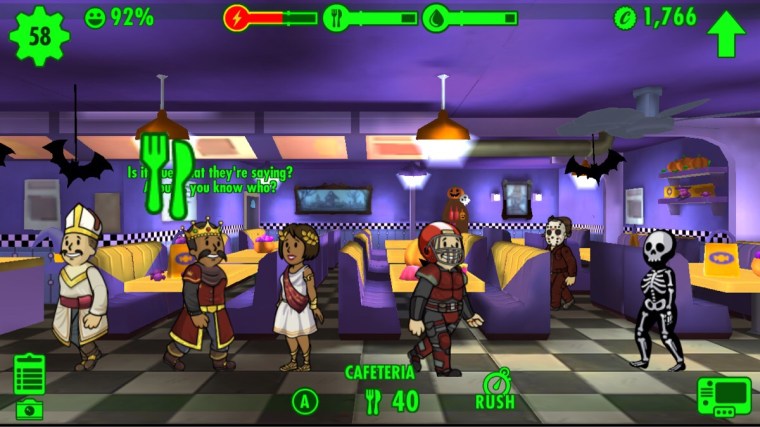
While immediate construction was a huge selling point for the game, it opened new game mechanisms: push your luck and managing vault dwellers. Players didn’t wait on construction, they waited on their rooms to produce resources like food and water that their people needed.

The more dwellers one sent to a room, the faster that room produced the resource. This is a clever way of adding yet another resource (workers) to the game system. One could also “push their luck” by rushing production in a room. If one succeeds, the game gives them more resources. If the rush fails, the game generates some crisis (radroaches, a room fire, or deathclaws) the player must resolve.

It’s subtle, but the push your luck and managing vault dwellers mechanisms are excellent additions. Come to think of it, they may be just as important as making Fallout Shelter player versus environment.

I guess I had more than one favorite mechanism for Fallout Shelter after all. I’m sure I got lost somewhere while I searched the wastes. If I did, slap upside the head with a radscorpion barb. Or you could always say something in the comments.

3 Lists of 3 Video Game Enemies Made of Weak Sauce

Video game villains or enemies can’t all be made of the finer things like Final Fantasy VI’s Kefka, Shadow of the Colossus’ Dormin or even Bowser. This week your uncle Geekly’s three list of three will cover the video game enemies who bleed weak sauce.

These are the guys you can bludgeon with one strike of your foam hammer, and they’ll pass out. We’ll start with ones you can find in many different video game franchises.

ESO_Rat.png

Pathetic Generic Enemies

Rats

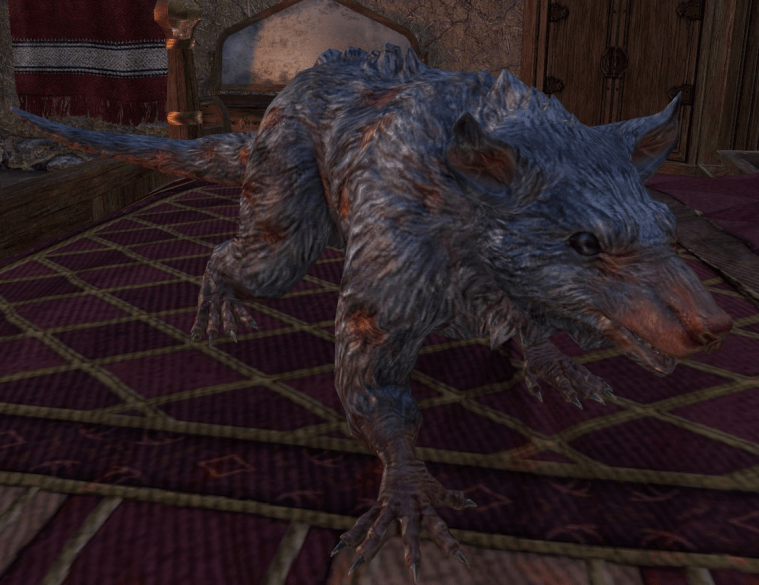
Why does it always have to be rats? These little rodents don’t put up much of a fight unless they swarm the field. To be fair, that’s what a lot of games do with rats to make them more of a menace, but rats still don’t strike fear in the hearts of virtual heroes. My eyes get wide when I see them in an Elder Scrolls game. Heck, I picked the Fighter’s Guild quest line first in Morrowind, because of the rats.

A couple of well-placed swings will send the hoards to rat heaven where the streets are made of Cheez-Its, and it rains cheese fondue.

Skeletons

While you’ll see another undead come up next, skeletons are a classic video game enemy. I’m not exactly sure what holds them together, especially since they can’t take a licking. Super Mario Bros’ Dry Bones fall apart and somehow get back together after taking a couple of breaths(?).

Skeletons aren’t that sneaky either because you can hear their bones rattling across an empty tomb, and that’s where one would normally find one. At least the player has to look down at their feet—or non-existent feet if you’re playing Elder Scrolls—to see a rat after hearing it squeak.

There’s a reason why Undertale’s Sans came out of nowhere: skeletons aren’t supposed to be tough.

Zombies

Zombies are the undead version of rats. A single zombie doesn’t scare the typical gamer, one shot to the head usually does the trick, but that’s not what makes zombies formidable. It’s the throng of zombies—or is it the herd or hoard?—that makes people drop soft serve in their Underoos.

Still, zombies are overdone. They may be more overdone than rats and skeletons at this point, especially since many video games change what they call zombies. Draugr. Feral ghouls. Clickers. Infected. They’re still zombies.

Goomba.png

Pitiful Unique Enemies

Slimes (Dragon Quest)

Slimes are one of the first things fans of Dragon Quest think of. They’re iconic. They also consist of nothing but weak sauce in the shape of a poop emoji. There’s a reason slimes are often your first enemy when starting a Dragon Quest game. They’re easy.

Keep smiling though. You’re the poop.

Goombas (Super Mario Brothers)

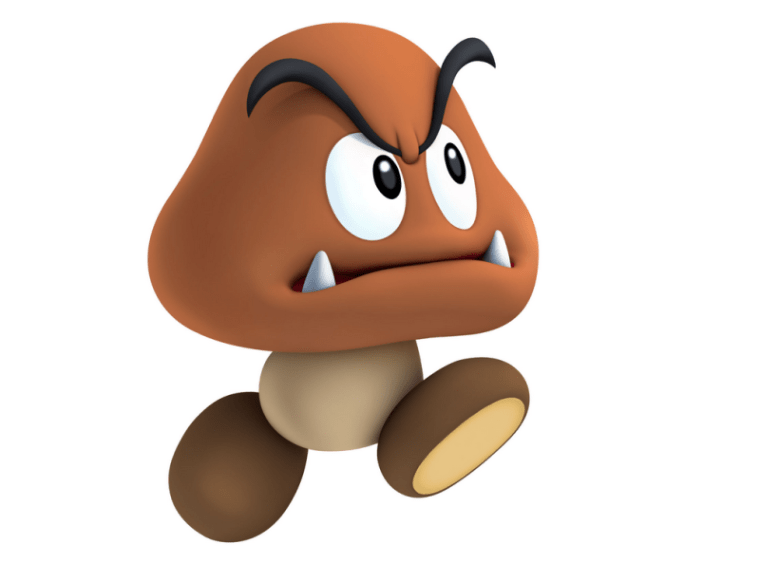
Yep. The mushroom shaped goombas are another example of an iconic video game enemy that’s too easy to kill. All Mario has to do is jump on them, and that’s a good thing because that’s all Mario can do at the beginning of most Super Mario Brothers games. One word: squish.

Mudcrabs (Elder Scrolls)

If an Elder Scrolls entry doesn’t start a player with rats, it’ll start them with mudcrabs. Let’s mix it up and start the player character in a half-flooded dungeon and pit them against half rats and half mudcrabs.

Mudcrabs are just crabs who live in mud. Despite their shell, they’re easy to defeat. The only thing that would scare me is if my character somehow contracted mudcrabs. That would scare me a lot more than Ataxia.

HumanReaper.jpg

Ridiculously Easy Boss Enemies

Alduin (Elder Scrolls)

Man, I’m beating up on Elder Scrolls with these lists. I’m sorry, Bethesda. I promise that I like your games. I’m a huge Bethesda fanboy, but they’ve made some stinker enemies. The build-up to Alduin in Skyrim was fantastic, but Alduin himself must’ve read the word of weakness right before the main storyline’s final battle.

I’ve had tougher battles getting rid of mudcrabs.

Human Reaper Larva (Mass Effect 2)

Mass Effect is another series I love, but it’s another case of the final villain of the game (Mass Effect 2 to be specific) not living up to its billing. Cast as the most powerful and terrifying race, the vision gamers built of reapers in the minds was shattered when fighting this simplistic enemy. It wasn’t terrifying. It took no time at all to beat. I’m thinking human DNA wasn’t the best one to choose from. Countless hours of making reapers sound awesome wasted.

343 Guilty Spark (Halo 3)

He’s a tiny AI that’s cast as comic relief in the final installment of the Halo trilogy. This game is what the entire series built up toward, and guess who the ultimate boss turned out to be? The tiny AI that was supposed to be comic relief and takes three hits to take out. His name is even 343 Guilty Spark. Bungie is guilty of making a lame villain.

There’s plenty of weak sauce to go around. I spread a little on my hot dogs every game night. Which villains do you think are weak sauce? Let us know in comments, and if you like more daily, weak write-ups, subscribe for updates.

Geekly News: October 12, 2018

There aren’t as many big headlines this week in Geekly News, so we’ll go with some short news blurbs followed by new releases. Let’s kickoff this ball game with a New York Comic Con panel and a trailer.

Good Omens

Principal photography on the upcoming Amazon series Good Omens (based on the collaborative novel by Terry Pratchett and Neil Gaiman) began over a year ago, but audiences didn’t catch a glimpse of any video until a panel at last week’s New York Comic Con. This series should be another solid one for Amazon who has slowly garnered a fine collection of native programming.

With American Gods and an upcoming Sandman movie, Neil Gaiman has been on a role with his creations finding their way on the silver and small screens. Is a Books of Magic or a Black Orchid movie far behind?


Batwoman Costume Revealed

The CW’s annual crossover event won’t occur until December 9th, but that didn’t stop the network from leaking its first glimpse of Ruby Rose as Batwoman. Like many other heroes in the Arrowverse, Batwoman will make her first appearance this year during the crossover event, but she’s scheduled to have her own series beginning next season.

The Arrowverse has dabbled with an LGBT superhero, Mr. Terrific, in the past, but Batwoman will mark the first take that an LGBT superhero will take center stage.

Batwoman_Costume

Video Games

Friday, October 12, 2018

Call of Duty: Black Ops 4 (PS4, Xbox One, PC)

The latest Call of Duty has picked up a few tricks from the popular Fortnite. Previous installments of Call of Duty had player respawn (or have players’ characters revive) shortly after dying. This led to gun combat being fast paced and devalued long-distance shooting or snippers. We’ll have to see how this latest Call of Duty fares.

Starlink_Starfox.jpg

Tuesday, October 16, 2018

Starlink: Battle for Atlas (Switch, PS4, Xbox One)

This is another wait and see title. Starlink takes the failing “toys-to-life” video game genre (games like Skylanders that have players buy real-life toys and use them in video games) and makes it new and exciting by adding an open-world—or open-universe—element. The toy spaceships and pilots look interesting, but I prefer the Switch copy for this game, as characters from Nintendo’s Star Fox series will make an appearance. Heck, with Star Fox as part of the cast, I’d do a barrel roll.

FirstMan.jpg

Movies

First Man

This film has received critical acclaim for Ryan Gosling’s performance of the first man on the moon Neil Armstrong and Clair Foy’s as his wife Janet Shearon. It’s also been at the center of an American flag controversy. First Man looks to be a lightning rod of buzz.

That was bad. First Man does intrigue me, and I’ll probably watch it at some point.

Bad Times at the El Royale

The premise may sound familiar (seven strangers who each hide dark secrets manage to stay at the same shady hotel), but the cast make this neo-noir mystery thriller sound like it’ll be fun if nothing else. Bad Times at the El Royale is another one I wouldn’t mind seeing.

Goosebumps 2: Haunted Halloween

I never watched the first Goosebumps movie, but I heard it was a modest success. Jack Black makes another appearance as R. L. Stine. That’s something, I guess.

crazy-ex-girlfriend.png

TV

Friday, October 12, 2018

Crazy Ex-Girlfriend (CW)

The fourth and final season of this stellar comedy musical begins tonight. Don’t try to text, message, or call me. I’ll be washing my hair—which is code for watching Crazy Ex-Girlfriend.

The Haunting of Hill House (Netflix)

Shirley Jackson knew how to write horror of all kinds. The short story that first garnered her attention and put her on the map was “The Lottery” and it’s a great psychological horror story. “The Haunting of Hill House” is a supernatural horror classic that Stephen King cited as the best horror story written in the 20th century. I’ll go with that and I’ll definitely see if this Netflix offering measures up.

The Romanoffs (Amazon)

I’ve talked about The Romanoffs last week in our 3 Lists of 3. The stellar cast and odd premise (several people believe they’re part of the Russian royal family) has piques my interest.

Titans (DCU)

Titans, as in the adult versions of Teen Titans, was supposed to air on various cable networks before landing on the DCU’s new streaming service. Every company wanting their own streaming service burns my corn, but if DCU streaming can make enough quality programming, I may consider it. I’m most likely to download the app for a free trial and binge everything in a weekend.

charmedreboot.jpg

Sunday, October 14, 2018

Charmed (CW)

Truth time: I watched the original. I even watched the original Charmed not that long ago and got embarrassed for ever having watched it. Charmed was a CW (then WB) mainstay and a lot of the tropes and clichés one can find in CW shows today pretty much originated with Charmed. I may watch an episode or two and catch a glimpse of this trio of witchy sisters.

Constantine The Legend Continues.jpg

Monday, October 15, 2018

Arrow (CW)

Yep, the Arrowverse is still at it. I lost interest in these shows for some time, but like Charmed, I may tune in once or twice for old times’ sake.

Constantine: The Legend Continues (CW Seed)

It feels like yesterday when I lamented NBC cancelling the live-action TV show Constantine. Did it have its issues? Sure, but the series picked up steam and got canned before reaching full strength. Fans of the series were ticked, and the CW has brought back Matt Ryan (who played John Constantine) for this upcoming animated series. I think the CW Seed app offers free streaming for certain episodes. I’ll have to check on Monday or Tuesday. Or I could always wait for another free trial period.

Board Games

Solenia

Solenia

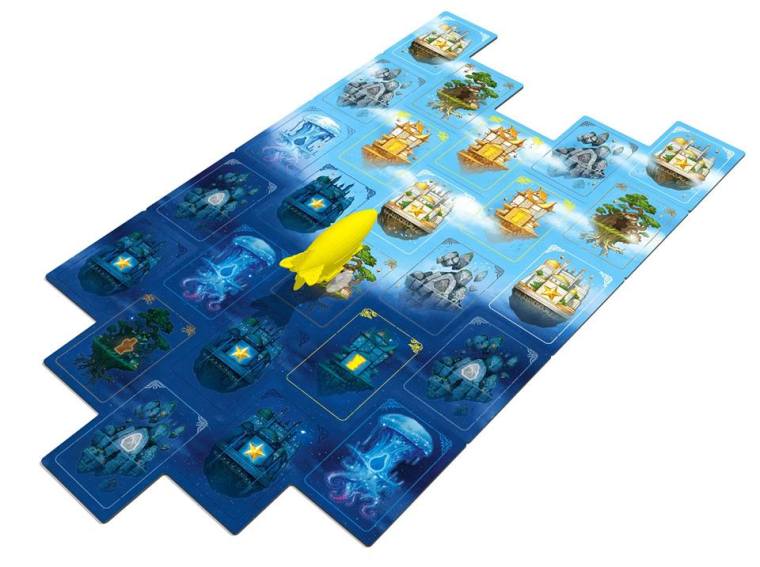
Belgian publisher Pearl Games originally intended to release this game as Sun-Moon but settled on the name Solenia. The game consists of 16 rounds where players play cards with holes in the middle of them onto a modular board. The holes reveal a resource that players are trying to pick up or deliver and players gain points for delivering goods.

All of this is fairly standard for gamers, specifically Euro-style gamers, but the most interesting aspect of Solenia—besides the see-through cards—is its modular board. The tiles are double-sided with day and night scenes. These tiles cycle between day and night throughout the game, so players must plan their moves based on when they can perform actions. I’ll try to demo this game before long.

That’s all we have for this week. Be kind to each other and stay geeky.

Geekly News: October 5, 2018

Another day and another new content type. We’re trying our hat at Geekly News today. Even though your uncle Geekly could scour the internet for any type of Geek News, most weeks this post type will list new releases for the coming week. We’re lucky this first week features a major movie announcement and a leak at Bethesda’s parent company ZeniMax.

ElderScrollsVI

Elder Scrolls VI

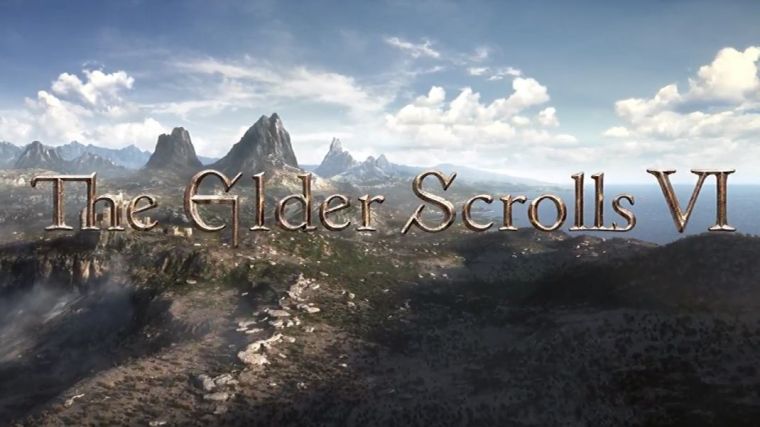
People have been debating for years which Tamriel province will host the sixth entry in the Elder Scrolls main series, and ZeniMax may have given players their first concrete evidence. Sure, some internet sleuths found evidence in the short teaser trailer, but that’s more in the realm of speculation.

And this new information could be filed as that too, but there’s a more compelling argument to be made. The attorney who registered a copyright for Morrowind, Oblivion, and Skyrim years before each game’s release just registered a copyright for a single-player game set in the Elder Scrolls universe entitled Redfall.

This development suggests that Elder Scrolls VI will be set in part or entirely in Hammerfell (home of the Redguards) and will feature a questline involving Redguards.

Why not call it Hammerfell? Many Elder Scrolls games aren’t named by the province in which they occur, Morrowind and Skyrim are the exception, not the rule, they’re named based on the game’s storyline. Sure, Redfall could pertain to something other than Redguards and the contested Hammerfell/High Rock border, but it’s likely that Redguards and Hammerfell will factor into this latest installment.

There’s still no release date for Elder Scrolls VI. If your uncle Geekly were to place a bet for when Redfall will be released, he’d go with a post Playstation 5, X-Box 2 (who knows if Microsoft will stick with this naming convention, but to the best of my knowledge it’ll be X-Box 2) release.

It could also be that ZeniMax wants fans to talk about Elder Scrolls VI more. If so, mission accomplished.

Megaman Live Action Movie Announced.jpg

Mega Man Live Action Movie

Capcom has announced that its Mega Man franchise is going to get the live-action Hollywood treatment. The press release came one day after Mega Man 11’s release and the movie celebrates the franchise’s 30th anniversary.

The film is tentatively titled MEGA MAN (in all caps) and has writer/directors Henry Joost and Ariel Schulman (Catfish, Paranormal Activity 3) attached to the project. Capcom says it aims to “appeal to a diverse audience, including not only game players but action movie fans as well, with an adaptation that maintains the world of the Mega Man games, while incorporating the grand production and entertainment value that Hollywood movies are known for.”

Video game movies don’t have the best track record, but I’ll be keeping my fingers crossed with this title. It’s a safe bet that your uncle Geekly will be watching this film on opening weekend. There’s no release date set for this project as of this write-up.

And now for some new releases for the upcoming Week.

Video Games

AssassinsCreedOdyssey

Friday, October 5, 2018

Assassin’s Creed Odyssey (PS4, Xbox One, PC)

This is the latest of the Assassin’s Creed games and it’s set in ancient Greece. Be ready for a lot of “This…Is…Sparta!.”

Super Mario Party (Switch)

My family and I have had some fun with this title in the past. It blends roll, spin and move (roll dice to see how far you can go in a turn: for example, Monopoly) of tabletop games with minigames one might find in other Mario titles.

Venom-Movie-Symbiote.jpg

Movies

Venom

This one troubles me. Based on the trailers, the special effects are dated and that’s not a good thing for a comic book movie. I’m also concerned with how they pronounced symbiote.

A Star is Born

Lady Gaga (first major acting role) and Bradley Cooper (first time director) recreate this Barbara Streisand classic. I may not see this one in theaters, but I’ll probably see it when it’s out on video or streaming.

ManInTheHighCastleSeason3.jpg

TV

Friday, October 5, 2018

Big Mouth (Netflix)

I’ve heard good things about this one. It’s a raunchy cartoon series centered around puberty. I haven’t gotten around to watching it because there are a lot of raunchy cartoon series to choose from.

Into the Dark (Hulu)

This one confused me a bit. Netflix recently released a movie entitled Hold the Dark. Hulu’s Into the Dark is an American horror anthology series for those who think American Horror Story isn’t enough. I’ll give it a chance.

The Man in the High Castle (Amazon)

I’ll have to finish the second season before starting the upcoming third. The Man in the High Castle is easily one of Amazon Prime’s best series.

DoctorWho11

Sunday, October 7, 2018

Doctor Who (BBC America)

The adventures of the first female Doctor Who begins today. Yes! Bring it on.

Star Wars Resistance (Disney)

There have been several successful Star Wars cartoons. The franchise almost redeemed the prequels with all the work Star Wars animated series put in. Resistance is set in the sequel’s timeline. It’ll interesting to see how this series builds Poe Dameron’s character.

The Walking Dead (AMC)

I wonder how long people can survive in a world with zombies. The Walking Dead endeavors to answer that question with nine years and counting. This year has the distinction of Andrew Lincoln (Rick Grimes) leaving the series.

Arrowverse

Tuesday, October 9, 2018

The Flash (CW)

Ah, the Arrowverse. I might watch an episode or two just for old time’s sake. These shows are no longer appointment television for me, but it can be fun to watch certain DC comics characters grace the small screen.

Black Lightning (CW)

I never got into Black Lightning because I had all but given up on the Arrowverse by the time it was released, but Black Lightning is one of the first live-action superhero TV shows to feature an African-American protagonist (Netflix’s Luke Cage beat it by a half year), and from what I’ve seen, it doesn’t intertwine as much with the rest of the Arrowverse. I’ll probably give it a shot. Looks like I have some binging to do.

Wednesday, October 10, 2018

Riverdale (CW)

I never got into Riverdale, but I know that many folks think of it as something more than a fusion of Dawson’s Creek and Archie Comics. This may be one of those series I watch well into the show’s run.

Thursday, October 11, 2018

Supernatural (CW)

This CW standard enters its 14th season today. Talk about your long-running television shows.

That’s all we have for Geekly News this week. May the geek with you and be kind to one another.


Geekly’s Free Video Game Summer: September 18, 2016


One more week after this one, where did the summer go? Hi, guys, it’s me, Kyle. I’ll get to the games in a bit, but I wanted to remind everyone that I’ll be taking a breather after next week before posting new free video game reviews in the autumn. Jim and I will be ramping up our TV show coverage, and I may need a few weeks to get prepared. Here’s another Geekly Free Video Game Summer post; I wanted to merge tabletop games with video games, so this week’s post will be free video games based on tabletop games.

pokemontcgonline

Pokemon: Trading Card Game (TCG) Online

Pokemon: TCG Online does a great job of transferring the game from the table to your mobile device. That can be a good and bad thing. There have been countless releases of Pokemon: TCG in the past two decades and Pokemon: TCG Online has samples from many of those releases, which leads to unbalanced power with the decks players construct, especially when you challenge opponents online. Of course you could play block format (only the sets released in the past year) but you’re still subject to opponents who have been collecting cards a lot long than you. When you’re first starting out, you will lose—a lot.

The game also includes legacy (last several years) and unlimited (any card from any Pokemon release) and you’re likelihood of winning a game diminishes with each group of cards you add to the card pool, but you could play with that awesome Wobbufett—if you have that awesome Wobbufett, that is. The gameplay is the classic Pokemon: TCG gameplay.

Players summon Pokemon with one as their main Pokemon and up to five on their bench, should the main Pokemon get defeated. Pokemon need energy cards attached to them to perform their abilities so energy cards are the second most common, and the rest of a deck consists of trainer or support cards that do various things to support the Pokemon on your team. At the beginning of each match, both players draw ten cards from their deck and place them face down, which make up their rewards, and the first player to earn all ten of their reward cards wins.

Okay. Most of you probably didn’t need the gameplay refresher, but it is addictive—as most Pokemon products tend to be. I didn’t mind the trip down memory lane with Pokemon TCG Online. It’s a solid TCG and if you have any interest in Pokemon, I recommend it; you also don’t have to keep binders of cards: space saving idea.

neuroshimahexapp

Neuroshima Hex!

I covered the tabletop game Neuroshima Hex over a year ago (here’s a link) and not much is different with the app version, except that the app makes the game easier to play and more accessible, and that’s always a good thing. Players take command of a faction and the game is played 19 honeycomb grid. Instead of cards, players use hexagonal tiles to denote their forces. Each player starts the game with their headquarters tile with 20 hit points. Players win if they are the first player to lower their opponent’s HQ to zero hit points or if the tile draw pile is exhausted, whoever’s HQ has the most hit points wins.

Players take turns playing tiles. Most tiles are unit tiles. They’ll deal damage on whatever face (of the hexagon) they have a triangle. Short triangles are melee attacks and only work on adjacent units or if the HQ is adjacent. Long, skinny triangles are ranged attacks which hit the first enemy unit (or enemy HQ) in the direction the triangle is positioned. Every unit also has a number which denotes their initiative (how quickly they act); the higher the number, the faster the unit performs their attack. Once the board fills up with tiles or a player uses a combat tile (a burst symbol on the tile), the two armies fight. Units with the highest initiative perform their attacks first and play continues in initiative until every unit gets an action.

And it’s the computer’s calculations during combat that makes the Neuroshima Hex app more enjoyable than the original tabletop game. I almost always forget a unit or two, or an ability. Playing online negates human error, and my brain doesn’t have to crunch as many numbers. Neuroshima Hex packs a lot of game and strategy in a small amount of time (10-15 minutes). If you want a new-age Chess with a faint war theme, Neuroshima Hex might be right up your alley. I highly recommend it.

summonwarsapp

Summoner Wars

Oh, this is the game that put Plaid Hat Games (Dead of Winter, and Mice and Mystics) on the map. I enjoy Summoner Wars, and the free-to-play app does a great job of transitioning the game to mobile platforms.

Similar to Neuroshima Hex, players take control of a faction, each with strengths and weaknesses, only this time you’re playing in a fantasy world and you’re a summoner. Summoner Wars’ gameplay is miniatures without the miniatures. You manipulate cards, which represent your units, on a 6×8 grid. You have your customary attack, defense, health, and movement you’ll find in any miniatures game, and most units have special abilities you can exploit. The first player to lower their opponent’s summoner card’s health to zero wins.

Summoner Wars doesn’t try to reinvent miniatures battle. If you’re looking for a more in-depth miniatures game, you’d be better off looking elsewhere, but Summoner Wars is an accessible game for folks who are interested in miniatures as a game type, and it’s fun. If you want to play more than the fire elves, you’ll have to pay money to unlock other factions, but the free version of Summoner Wars offers a lot in terms of strategy and replayability. You may not be able to play as other factions, but you can play against them. This is another game I highly recommend.

zombiediceapp

Zombie Dice

There had to be one game I didn’t like in this group, and Zombie Dice is that game. I like the original tabletop version of Zombie Dice (I reviewed it a while ago; here’s a link), but the app version doesn’t measure up to the fun of rolling dice and pressing your luck. The pressing your luck aspect is still present but I tend to not like games that use a lot of dice rolling in a video game, especially when you can tell whether or not the games cheating.

Players take on the role of a zombie. You role dice, which denote humans, and the first zombie to eat 13 brains wins. Now, there are three results you can get on a zombie die: brains, shotgun blast, and footsteps. If you roll brains, you ate one brain. If you roll a shotgun blast, you got shot or hit by a human; you only get three shotgun blasts before you lose your turn. If you roll footsteps, your prey escaped. When it’s your turn you grab three dice and roll them. After any roll you can choose to keep your brain total and pass your turn or you can continue to roll, but if you roll three shotgun blasts, your turn ends, you lose any points you gained this turn (keeping your total for the game), and play goes to the zombie on your left.

Zombie Dice is a simple, press your luck game, but it’s a blast. The app isn’t as much fun. Since there are only three results, it’s easy to tell when you roll far too many shotgun blasts, while your computer opponent tends to roll far too many brains. Hmm. Feel free to pick up the physical copy of Zombie Dice (you can find it at most supermarkets today), but don’t bother playing the mobile app.

bossmonsterapp

Boss Monster

Boss Monster is yet another tabletop game I’ve reviewed in the distant past (here’s a link), and this is another app that does a great job of capturing the essence of the original.

Players are the boss monster at the end of a video game. You build your dungeon, attract video game heroes to your dungeon, and collect souls. If your dungeon fails to defeat a hero, you receive a wound (or two if it’s an epic hero). If you receive five or more wounds, you lose. The first player to collect 10 hero souls or the last boss monster standing wins.

There isn’t much to add from the original review, except that the Boss Monster app runs slow. The original game can take a while to pay (about 20-30 minutes for a card game, which is a little on the long side), but the extra time it takes for heroes to travel through dungeons in the app makes a typical game run about the same time as the original, and there’s usually only one human character. That’s way too long for a solo-mobile game. I like Boss Monster but the game needs to speed up its processing power. I’ll still keep it in my permanent collection, but Boss Monster is one of those games I have to be in the mood to play. I’d prefer to play the original tabletop version.

That’s one more week down and only one more to go. I’ll try to get some free-to-play MMORPGs under my belt for next week. Let’s end the Free Video Game Summer with a bang. Until next we meet, thanks for reading.

Geekly’s Free Video Game Summer: September 9, 2016

FreeVideoGame6

Hello again. It’s me, Kyle, and I have another week of Free Video Game Summer. I’ll take a break later this month, mid-September is the beginning of autumn, and continue this series as an ongoing free video games post—I’ll probably write posts for this series with less regularity, perhaps once every other week or something—but until then here’s another theme-less Video Game Summer post in which I’ll probably figure out a recurring theme half-way through the post. Oh, well.

smashsquad

Smash Squad

I downloaded Smash Squad toward the beginning of the summer and waited until a good group of games to pair it with presented itself. There aren’t any. It many ways it’s not your typical free-to-play video game and in other ways it is. Let’s start with what makes Smash Squad unique: its concept. Take a finger flick tabletop game like Flick ‘em Up and merge it with a superhero game where you can upgrade your heroes and you get Smash Squad.

Your squad is composed of pog-like discs. Each of these discs has health, attack, and defense and you flick them (pull back in the opposite direction of the way you want to shoot your disc) at your opponent’s discs. If you take out their discs before they take out yours, you win. Ah, this is such an interesting game mechanism. I love flicking my discs at other people’s discs. This mechanism is done well and it makes Smash Squad stand out from the horde of other free games. But what’s underneath Smash Squad’s shiny new mechanism resembles many other games.

There’s an energy system. Instead of the player not being able to compete for a while, each disc/hero has energy and you can’t play them until they have enough energy to compete. This functions the same way as other free-to-play games, but once you advance in rank and have plenty of heroes, you could play Smash Squad more regularly than you would other games of its ilk.

You can also upgrade your squad. Smash Squad has several levels of items—of varying rarity and cost to purchase with real-world money—that players can use to upgrade their squad. It’s always difficult to see how many crystals, jelly beans, or whatever the item you can purchase is costs when there are odd currency exchange rates. Like many free-to-play games Smash Squad monetizes pain and suffering. You don’t have to spend real-world money, but you will have to wait some time to unlock certain goodies.

Overall, the good outweighs the bad and Smash Squad offers a unique gaming experience. It may not be your thing, but you should give it a spin—or a flick.

worldzombination

World Zombination

World Zombination is a tower defense game that allows players to control either the humans, the defense, or zombies, the horde of enemies. Let’s face it, you’re going to want to play as the zombies. No offense to the humans—they’re already on the defensive—but few games allow you to play as zombies or as the enemy horde attacking the tower defense. I did play as the humans as well as the zombies, and World Zombination does a good job of presenting a tower defense game with a twist: your towers move. But the zombie side of things makes this game shine.

You get to load out your zombie power-ups and deploy your horde in strategic places to overwhelm those pesky humans. While it can be satisfying to fight off the zombie horde, it was more satisfying to gobble up brains. Ultimately there’s little difference between the two sides. You get a lot of the same power-ups. The objective is the only thing that changes when you go from human to zombie or vice versa. But it’s the objective that makes playing as the zombies unique.

Now, World Zombination has a lot of the same things we see in other free-to-play games: wait times for power-ups, hard to obtain in-game currency that tempts players to spend real money, and energy recharging that can be cut down if you use the same hard to obtain in-game currency. You’ll have to be patient, or be willing to spend real money, but World Zombination provides a singular tower defense experience, especially when you factor in player-versus-player game modes.

batmanarkhamunderworld

Batman: Arkham Underworld

Okay. I just said that no other tower defense game besides World Zombination allows you to play as the enemy horde. Well, Batman: Arkham Underworld does that, too. In fact, Batman: Arkham Underworld plays a lot like World Zombination with a different theme and skin. This time, you play as Batman’s rogues.

Batman: Arkham Underworld isn’t a bad game, it provides an experience similar to World Zombination, but Batman’s rogues as a theme doesn’t work as well as a zombie horde. It’s one thing to unlock a new zombie type and power them up. It’s another when the game treats Batman’s rogues like World Zombination treats its zombies; they aren’t unique enough to justify the theme. Batman: Arkham Underworld plays like your controlling a zombie horde masquerading as Batman’s rogues’ gallery.

Batman: Arkham Underworld has many of World Zombination’s features, and you can find some solid game play. It’s not as if Batman: Arkham Underworld is a bad game; the theme doesn’t match the game mechanism. Still, if you like Batman and enjoy the idea of a playing as the side seldom played in a tower defense game, you may like Batman: Arkham Underworld. And it’d be redundant to have both Batman: Arkham Underworld and World Zombination.

ghostbusters-slime-city

Ghostbusters: Slime City

Ghostbusters: Slime City cashes in on the summer blockbuster Ghostbusters, but you won’t find many of the characters from the original movie or the reboot—human characters that is; Slimer and the Stay Puft Marshmallow Man make appearances. Ghostbusters: Slime City has the most action of any game I’ve covered so far, but it maintains the level-up aspects of your equipment as well as your headquarters and a bank, and I’m not sure the mini-games make much sense.

Beyond the weird mini-games like feeding Slimer hot dogs and gaining money, the core game play is busting a bunch a ghosts by pointing and swiping on your touch screen. Your ghostbuster will run out of power and you have to take your finger off your screen for them to recharge their battery and when you have power, you continue to point and swipe. At random moments you’ll trap ghosts—I’m not sure how the game determines which ghosts you trap—but most ghosts are blasted with your proton ray. You get a few minutes to bust the target number of ghosts you need to bust and then you either beat the level or have to replay it. Ghostbusters: Slime City is a straightforward game. It doesn’t add any new game play or offer an engaging story—although there is one the game shoe horns into the gameplay—but if you like Ghostbusters and busting makes you feel good, you may want to give Ghostbusters: Slime City. This game doesn’t cover enough new ground to be staying in my permanent collection.

spider-manunlimitedapp

Spider-Man Unlimited

Spider-Man Unlimited is Temple Run with a Spider-Man skin. There’s nothing wrong with that premise. In fact, Spider-Man Unlimited does a great job of incorporating new game mechanisms to the Temple Run model that are suited to Spider-Man. Web slinging is fantastic. Battling enemies is intuitive but challenging. And the dynamic level generation keeps players on their toes.

That last point can be a good or bad thing. I like being challenged by a game, even if it’s a free-to-play game, but you can get stuck on a level for a really long time and instead of being able to memorize what’s going to show up next on a map, because you died several times on a stage, Spider-Man Unlimited does a good job of changing up the level each time. You could be fighting enemies and dodging obstacles one play through of a stage, only to be web slinging the next time.

A free-to-play game wouldn’t make money without having power-ups, enhancements, and boosts for your heroes, and Spider-Man Unlimited uses the customary difficult to obtain in-game currency, energy recharge times, and the like. Again, you can spend a lot of money getting through things—and Spider-Man Unlimited can be frustrating enough to make you want to spend money—or you could be patient and clear the level without spending money.

Regardless, Spider-Man Unlimited adds enough to the Temple Run formula to make it uniquely Spidey, fresh, and worth a quick play.

All right. We’re almost done with Free Video Game Summer. Until next we meet, thanks for reading.

Geekly’s Free Video Game Summer: September 2, 2016

FreeVideoGame6

Hello. We don’t have a theme for this week’s Free Video Game Summer. There’s just a lot of small games. That means that these reviews won’t be too long—for the most part—so let’s get to it.

PocketPolitics

Pocket Politics

Pocket Politics uses the same set up as Kongregate’s previous game, AdVenture Capitalist. I reviewed AdVenture Capitalist earlier this summer and liked it, but that was the PC version of the game, which is the far superior version of the game. I downloaded the iTunes app and there were more stumbling blocks in terms of ploys to gain people’s money and these schemes rear their heads here in Pocket Politics.

Looking beyond these money-making practices, the main game mechanisms from AdVenture Capitalist are still in place. You tap businesses to open them and generate money, hire managers to tap businesses for you, and purchase upgrades to boost your earnings. This set-up worked for AdVenture Capitalist because it matches the game’s theme. The same can’t be said of Pocket Politics. Most people know that money talks in politics, but it’s not the one-for-one of the original and these same game mechanisms fall flat even before you factor in the shady ways power-ups work. Play AdVenture Capitalist on the PC and skip Pocket Politics.

BigBangRacing

Big Bang Racing

Big Bang Racing is a fun little racing game in the mode of Mod Nation Racers or Little Big Planet Karting. The controls aren’t as good as a 3D racing game—this is a side-scrolling racing game—but they’re also not too difficult to pick up and master either. Where Big Bang Racing shines is in its customization.

Not only can you trick out your cart, you can create your own levels and play levels designed by your friends. This makes for endless content. And with a global community, you’ll find hours of enjoyment. Big Bang Racing isn’t for everyone. There are plenty of other games that capture the adrenaline of pedal to the metal racing, and I would’ve preferred some power ups besides turbo boost (there may be more if I were to play longer) but for a free, kart racing game, you can’t go wrong with Big Bang Racing.

Snakebird

Snakebird

Snakebird gets its name from the titular character who’s a gooey amalgam of a snake and a bird. At its heart Snakebird is a puzzle game. You navigate levels by sliding your snakebird over hills and into caves. It’s a simple and fun concept, but the game can get frustrating.

There’s no hint system that I could find, so players could spend hours—days if you take breaks—on a stage before clearing the level. That’s not a deal breaker for me, but it could be for many other people. In fact, Snakebird doesn’t waste much time before plunging its players into difficult to solve puzzles. It can be brutal game, so beware. But if you can get pass its unforgiving puzzles, Snakebird can be fun.

WinterFugitives2Chronicles

Winter Fugitives 2 Chronicles

Like Big Bang, Winter Fugitives 2 Chronicles is another simplified version of a popular game type: stealth. If you like sneaking around in Thief or Metal Gear Solid, you might enjoy the stripped down Winter Fugitives 2 Chronicles. Players control a prisoner trying to escape. You have to avoid guards (who have cones of vision you must side-step) and look for the occasional key, found in desks, safes, or crates. You have the option of knocking out guards and subduing them, but you run the risk of not gaining the level’s bonus, and you typically want the bonus. Other than that, there isn’t a lot of complexity to Winter Fugitives 2 Chronicles. Try not to be seen. The gameplay is tight and it can scratch the itch of a free-to-play stealth, mobile game.

JellyJump

Jelly Jump

Jelly Jump is another game with a simple concept. Players control a jelly cube and must jump (tap the cube) at the right time to make to the level above them; instead of side scrolling, Jelly Jump top scrolls. You only have a short time to make your jump because you may get closed off from the level above you (draw bridges) and water is filling the bottom of the screen. It’s a fun little game.

You could pay $1.99 and eliminate ads that periodically show up, but the ads in Jelly Jump aren’t obtrusive, you can get by with the free version. The gameplay may be simple but it can be intense. Several times I got my jelly cube stuck in a draw bridge and frantically tapped the screen to free it. It’s odd how a simple game can elicit a response like that. For a little game Jelly Jump can get your blood pumping, and it’s worth a quick play.

PowerHover

Power Hover

Power Hover puts you in control of a guy on a hover board, restoring power to the countryside. Each stage has you swiping to avoid obstacles and pick up electricity. If you collect enough electricity, you can power up the local power stations and people regain their electric power. This is yet another simple concept game, but Power Hover does a good job of providing tight controls and gameplay, and players know what they’re doing and why they’re doing it. That’s always a plus.

While Power Hover isn’t as deep as Big Bang—few free-to-play games can offer that much content—it does provide plenty of fun. That’s probably the theme of this week’s games: strip away a game style to what makes it work. Power Hover may be too simple for some gamers, but for what it is, it works.

NonstopKnight

Nonstop Knight

It’s funny how some of these games do exactly what the title says. Nonstop Knight is a game where the player controls a knight who runs through a dungeon, killing creatures, whether you control them or not, hence the title, Nonstop Knight. This title has more going on but that doesn’t make it a better game.

If you’ve been following Geekly’s Free Video Game Summer, you’ll know that I don’t care for games that give me little agency as a player. Nonstop Knight plays itself. Literally, you don’t have to play the game for your knight to kill goblins deep in the dungeon in which you’re crawling. It’s a game that’s on rails, and I don’t care for it. Sure, AdVenture Capitalist suffers from this a bit, too, but the player still has to make choices. If you’re logged in, you can pull off some combat moves, but Nonstop Knight doesn’t give players any meaningful choices. You don’t even control your character. Skip it.

We don’t have too many more weeks left. Hopefully, I can keep this up. Until next we meet, thanks for reading.

Geekly’s Free Video Game Summer: August 21, 2016

FreeVideoGame6

Hi, guys. I didn’t forget you, I’ve just been dealing with housing issues (my house is constantly under construction) but you don’t want to know about that. You want more games. This week’s Geekly’s Free Video Game Summer is brought to you by video game versions of collectible card games. I know I cover tabletop games with my other reviews, but there are plenty of free-to-play video games that use the collectible card game model. Just to clarify, you collect cards (of varying rarity) in a collectible card game and make decks out of the cards you collect. It’s a decent game model for a free-to-play game and there are plenty of free-to-play collectible card games out there. Let’s get started.

FinalFantasyPortalApp

Final Fantasy Portal: Triple Triad

Full disclosure: there’s a lot more to the Final Fantasy Portal besides Triple Triad, but the only thing I’m covering here is Triple Triad. Ah, I loved Triple Triad in Final Fantasy VIII. It’s the collectible card game within the role playing game. Players would collect cards of characters found within the game and challenge random non-player characters to card duels. The rules are simple.

You play on a 3×3 grid. Every card has four values for each one of its sides (left, right, up, and down) and these values are printed in the upper right-hand corner of the card. You play cards in the 3×3 grid and if your card’s value on one side is greater than your opponent’s you take control of their card (kind of like Othello). Whoever owns the most cards at the end of the match wins. In the original game, players only obtained characters from Final Fantasy VIII, but Final Fantasy Portal’s version of Triple Triad includes all numbered entries in the Final Fantasy franchise and that’s a lot of fun.

The original Triple Triad weaved in elemental play—the card based on the Brothers summon had an earth element and its values were doubled against cards with a lightning element—but Final Fantasy Portal’s Triple Triad omits elements and adds same and plus to the gameplay. Same is okay; if you play a card that matches the values on cards that share two or more sides, you flip over any opponent’s cards adjacent to the card you played. Plus functions similarly to Same but you add the values of the cards on all sides and if the sum is the same, you flip over all opponent cards. I hate the Plus rule.

Plus can negate any good card you may have. If one side is an 8 and the other is a 9, all your opponent has to do is play a 2 to the 9 while playing a 3 to the 8; both sides would equal 11 and you just lost some of your best cards. You can dictate which rules you play in versus mode, so you can avoid the Plus rule and it doesn’t diminish my enjoyment of Triple Triad, but how hard would it have been to assign an element to each character? Still, Final Fantasy Portal’s Triple Triad is a faithful port of the popular Final Fantasy mini game. And wouldn’t want to construct a deck with the best characters from Final Fantasy lore? This one’s staying in my collection, but I’m not sure how often I’ll play.

OrderAndChaosDuels

Order & Chaos Duels

On the surface, Order & Chaos Duels looks like a Hearthstone clone, but there’s more going on beneath the surface—not much but a little. Like Hearthstone, you assume control of a hero who has their own innate ability and you’re trying to knock your opponent’s hero’s health to zero. You cast minions and spells to buff your minions or debuff your opponent’s minions. All of this should sound familiar to Hearthstone fans. Order & Chaos’s twist is that it matters where you play a minion.

You have five locations (one row consisting of five spots) you can play your minions, each minion has attack and health, and if you lower your opponent’s minion to zero health in a spot or there is no minion in the spot, your minion attacks your opponent directly. This simple addition offers more strategy, and that’s a good thing, but I never felt as if I had agency in a game of Order & Chaos.

Sure, you set up your minions to defeat your enemy, but unlike Hearthstone or Magic: The Gathering, there’s no way to counter anything your opponent does—or at least these counters are few and far between. Most of the time you’ll set up your minions during your planning phase, pass the turn to your attack phase, and once you’re done attacking, your turn’s finished.

There are also alternate ways of winning in both Hearthstone and Magic: The Gathering (namely you helping your opponent run out of cards: milling their deck) that just doesn’t exist in any tangible way in Order & Chaos. The play styles don’t offer much variety either, so I’d say Order & Chaos is a pass.

EpicCardsBattle

Epic Cards Battle

I’m not sure if Epic Cards Battle even qualifies as a collectible card game. Sure, you collect cards but you don’t build a deck so much as you pick your best card or two and play them ad nauseam.

If I didn’t like the lack of agency in Order & Chaos, I hate the lack of agency in Epic Cards Battle. All you do is pick the card(s) that has the best combination of attack, health, and speed and see these cards battle it out on their own with no input from the player. Some of these characters/cards have special abilities but gameplay boils down to those three statistics and whose cards have the better of those statistics. Epic Cards Battle puts more emphasis on scantily clad women than it does gameplay. If you’re into that sort of thing, Epic Cards Battle might be a decent game. If you want something more from your gaming experience, I’d skip it.
CardLordsApp

Card Lords

Card Lords combines elements from several games in this review and it does so in a satisfying way. It could be that it deploys a similar art style as Card Wars 2 (which I’ll cover later: foreshadowing, baby) and I like that art style, but it does use the best part of Order & Chaos, which is “card placement matters.”

Akin to Epic Cards Battle, Card Lords has players select their best cards. Unlike Epic Cards Battles, it feels more like you’re building a deck, or at least assembling a team with abilities that play off each other well. There’s a lot of repetition to Card Lords’ gameplay but it’s enjoyable in small doses, and players will get small doses because Card Lords also uses the ubiquitous energy resource found in free-to-play games. You’ll play a few matches before you have to wait an hour or so—or spend money (and that’s how the developer’s get paid). But unlike most free-to-play games that use energy, you don’t have to wait long; it’s literally an hour or less.

The last element Card Lords introduces is developing your cards. You can power up your cards so they’ll gain special abilities (another thing we’ll see again in Card Wars 2) and you get a sense of developing your team/deck. You also have slightly more control in Card Lords than you do in the previous two entries (Epic Cards Battle and Order & Chaos), but it still doesn’t have as much strategy as I would like. There are few moments when you wouldn’t use your cards’ special ability as soon as it’s available to you and battles still come down to who has the best stats. Still, Card Lords is worth a look.

Cardstone

Cardstone

Cardstone is a Rogue-like dungeon crawl that just happens to use cards as its means of combat. You collect cards as you journey deeper into the dungeon, but if you die, your deck resets and you have to rebuild your deck the next time you enter the dungeon. That’s curious.

Cardstone plays more like a deck-builder game (a game with set cards and you build your deck each time you start a new game) instead of a collectible card game (a game where you build your deck over time and your deck remains the same unless you make changes to it). I like the idea of a free-to-play deck-builder game, but I’m not sure if Cardstone’s combat works as well as I would like.

Players face a new creature in the dungeon with each round. Sometimes a creature will run away if you have too high a level—you do gain levels and increase your health, even if your deck resets—but when a creature stills around, you cycle through your deck on a timer. Every three or four seconds, you draw a new card from your deck. You’ll see that card rotate on the screen until you use it or it disappears (gets discarded). This mechanism leads to players drawing healing cards when they need to deal damage and damage cards when they need healing. It doesn’t matter early in the dungeon, but the deeper you get in the dungeon, the harder your opponents get and the less likely it is you’ll get the right cards. Funny how that works. This perceived cheating by the AI makes Cardstone the most frustrating game of this bunch. I don’t know how many times I fought a creature to a first one who deals damage wins scenario, only to draw into five consecutive healing cards. Note: do not play Cardstone if you’re easily irritated.

I like Cardstone’s concept but I’m not sure how long it’ll stay in my collection. It’s another game that’s worth a look. You may find it enjoyable.
DengenChronicles

Dengen Chronicles

I was intrigued when I first downloaded Dengen Chronicles. It’s a collectible card game, but the cards are hexagonal shaped and the board is laid out like a honeycomb. Unfortunately, there’s little to no strategy.

Like many other games in this list, the winner of Dengen Chronicles boils down to who has the best stats: attack and health. But the board factors into the equation. Character/card placement matters, but it matters in the worst possible way. During the first turn, whoever has a character/card in the top point of the star deals damage first to the first, opponent character/card located clockwise on the star. So, whoever gets to play their card/character first typically wins. Sure, the next round shifts who deals damage first to the next point clockwise on the star, but by then the damage is already done.

Dengen Chronicles overlays a convoluted element chart on the board. Each section of the honeycomb represents a specific element and only characters with that element can be played there—you get bonus attack if they have multiple copies of that element printed on their card—but all you have to do is build a deck that has a strong showing in the first, third, and fifth elements, and you can dominate most games.

The only issue with that strategy is that everyone tries to use it (player versus player) and who wins is the person who goes first. At that rate you may as well flip a coin and call heads or tails instead of playing Dengen Chronicles. For me this game is a strong pass.
CardWars

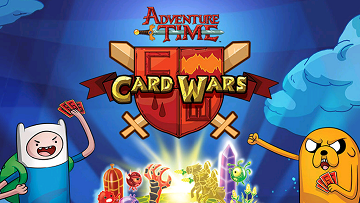
Card Wars 2

Full disclosure: there is a physical, printed version of this game and I haven’t yet played it, but I have seen Adventure Time and like the Card Wars episodes. Card Wars 2 is one of those few games where I don’t ever mute the game. John DiMaggio’s Jake the Dog walks you through the tutorial and the rest of the cast voice the characters they portray in the cartoon.

The game itself is a good representation of the Card Wars found in the animated series. They’ve got everything, including Jake’s favorite element: Corn. You can pick any element you want to play. Each element has a distinct play style, which is something that’s missing in many of the other games on this list. You can even mix-match cards from various elements to build an awesome deck, and it’s a lot of fun to experiment. Compared to the other games on this list, Card Wars 2 is a must play.

But Card Wars 2 isn’t all sunshine. It uses an energy system, which isn’t bad, and players can also upgrade their cards. I’m not against upgrading cards either but how you upgrade cards matters, and with how Card Wars 2 is set up, you could spend real-world dollars trying to upgrade your cards the preferred way. The first way you can upgrade your cards is by leveling them up. The problem with this method is that your decks are capped off at a certain numeric level, based on your player level. So if you level up your cards, you might only be able to put a 40 levels of cards in a deck, and if you have a card you want to use that’s level 40, one card could be your entire deck. The better way to upgrade your cards is to enhance them, and to do that you’ll have to collect items and merge them with your card. These items are difficult to acquire and this is where Card Wars 2 tempts players to make in-game purchases.

If you’re patient with leveling yourself up as a player and then leveling up your cards, Card Wars 2 can be enjoyable and free. If you’re impatient, you could spend a lot of real-world money or you could get frustrated. Card Wars 2 is the most enjoyable game on this list and a must play for an Adventure Time fan.

Well, I hope this longer group of games makes up for the couple of weeks I missed. Until next we meet, thanks for reading.

Geekly’s Free Video Game Summer: July 31, 2016

FreeVideoGame6

I’m still trying to figure out when I should post Geekly’s Free Video Game Summer. It’s been a little over a week, but I haven’t forgotten about you guys. This week I’ve played a lot of smaller games that seem to have a similar theme: run and survive.

SeaHeroQuest

Sea Hero Quest

Okay. I’m starting with the one game on this list that doesn’t have a survival mechanism, but Sea Hero Quest’s an interesting game. Well, it’s a simple game, but its real-world mission is interesting. Sea Hero Quest is backed by Alzheimer’s Research, and it tracks players’ progress as they perform brain cognition and memory games. The data collected from the game’s users is given to assist with a cure for Alzheimer’s and dementia.

Don’t worry. The users remain anonymous, and the data isn’t used for anything other than Alzheimer’s and dementia research. Here’s a link to their terms and conditions: http://www.seaheroquest.com/en/terms-and-conditions

If you want to learn more about how Sea Hero Quest is using its data to aid in dementia research, click on this link: http://www.seaheroquest.com/en/dementia

This game isn’t that involved, nor should it be. It has a cute story about a sailor out to sea, you play some time-waster mind games and clear levels. There isn’t too much going on with this game on the surface, but the game’s real mission of scientific research has led to over 2 million people downloading and playing Sea Hero Quest, which has in turn provided 786 decades worth of dementia research data and counting.
Sure, it’s a time-waster game, but you won’t find another time-waster that’s time well spent.

RunAround

Let’s Go Run Around

Let’s Go Run Around’s game play is exactly what you’d expect from a game entitled Let’s Go Run Around. A cape-wearing astronaut runs around the perimeter of your mobile device, and you tap your screen to make him jump over obstacles.

It’s a silly game, but the controls are solid. My only major complaint with Let’s Go Run Around is the same gripe I have for most games of this ilk: little to no saving of player progress. You’ll spin your wheels for a while before getting to a checkpoint, and it’s the pain of having to start over that coaxes players to spend money on a free app of this type. You’ve played those last five levels and you don’t want to replay them, so you spend a dollar to gain an extra life.

Dying happens a little too frequently and checkpoints happen a little too infrequently for my taste. I won’t be keeping Let’s Go Run Around in my collection, but I did enjoy it.

IntoTheDead

Into the Dead

Let’s Go Run Around may be on the fringe of the run and survive motif, but Into the Dead hits that motif in the gut. You’re navigating a forest of zombies, slipping past them, picking up weapons, and mowing them down to clear a lane.

Similar to Stampede Rodeo, which I covered a few weeks ago, Into the Dead players are given mini-goals. They gain experience with each goal they clear and if they earn enough experience, players can unlock different game modes and power-ups. What I like the most about Into the Dead is its variety of controls. I prefer tilting my device to move and tapping to shoot my weapon, so that when I touch my screen, I know I’m firing my weapon, but players have the options of swiping or tapping for movement too. You’re sure to find a control configuration that works best for your play style.

The game itself is a zombie, 3D version of Pac-Man. I like Pac-Man a lot—this won’t be the last time we’ll see Pac-Man on this list—but the formula loses something by switching from third person to first. By doing this Into the Dead cranks up the tension the first few times you play it; you feel as if you are a zombie apocalypse survivor. As you grow accustomed to dying—and you will die a lot, just like Pac-Man—death means less and the tension wanes as you respawn. When you no longer have that tension, you’re left with no one to root for. You don’t have a cuddly yellow buddy.

Into the Dead is a solid game. It’s worth a trial run, but I’m not sure it stays in my permanent collection.

RollingSky

Rolling Sky

These next two games are similar in play style. You control a constantly rolling ball in Rolling Sky. You’re tasked with moving the ball around or through obstacles that also move in and out of play. As soon as you fall off—from a surface that disappears suddenly—or the ball pops—from a spike that appears just as quickly as disappearing surfaces—you must start over from the last checkpoint you crossed.

If I didn’t like the pain of losing progress through the rare nature of checkpoints in Let’s Go Run Around, you can guess what I think about the frustration generated through the scarcity of checkpoints in Rolling Sky. I don’t like this business model. Yes. These games need to make money for their developers, but some free-to-play game developers are monetizing pain and frustration, and it’s not a good look.

Game play wise Rolling Sky is another solid game. If you liked Marble Madness from the classic Nintendo or arcade, you’ll enjoy Rolling Sky. But be prepared to play the same levels.

SmashHit

Smash Hit

With Smash Hit you’re running through an ice cave, flicking marbles at sheets of ice that act as obstacles. If you run into an obstacle, your run ends and you start over from the last checkpoint you crossed. Sound familiar? I shouldn’t like this, but Smash Hit does the best job of checkpoint intervals. Starting from the last checkpoint you crossed isn’t that bad. It’s challenging but not anger inducing.

You can even fire a marble at an occasional ice stalagmite or stalactite and gain additional marbles. I like the design of Smash Hit’s levels and its simmer of frustration. It’d be the perfect free-to-play game on this list if it wasn’t for the fact that it’s more of a free demo than a free-to-play game. You can only start from the last checkpoint you crossed if you pay $2 for the game’s full-version. Two bucks isn’t a lot, but darn you, Smash Hit. Why did you show up as a free-to-play game? Next.
Pac-Man256

Pac-Man 256

As I said before I like Pac-Man a lot, and Pac-Man 256 is a very good, modern, free-to-play variant of the game. Pac-Man 256 is a 3D version of the classic. You move through an endless maze, with older portions of the maze cut off from you because of a new ghost named Glitchy, who looks like a gaming glitch, eating up the old maze. The original ghosts are in this game too, and Pac-Man 256 does a great job of capturing their personalities/nicknames—that’d be the ghost personalities as they were better described in Japanese—and some of their personalities are enhanced from the original.

Blinky (the red ghost or “chaser” in Japan) continues to chase you until you can shake him. Pinky (the pink ghost or “ambusher” in Japan) sits at a crossroad and ambushes you if you get in his line-of-sight. Inky (the blue ghost or “whimsical” in Japan) tries to anticipate where you’re headed and runs toward four pixels ahead of where you are—or something similar to that. And you can still play a game of chicken with Clyde (the orange ghost or “feigning ignorance” in Japan) who either tries to catch up to Blinky if he’s far from you or makes a bee-line for the bottom left corner of the maze, which is effective when you consider that you’re forced to move up (because of Glitchy eating the maze), while Clyde’s moving down. Yeah, I’m a bit of a Pac-Man fan.

The odd thing in Pac-Man 256 is that Pac-Man takes on an aspect of the original Blinky’s “Cruiser Elroy” mode. In the original, Blinky would speed up when so many pellets were left on the board and in Pac-Man 256, Pac-Man speeds up with each consecutive pellet he eats. Another deviation from the original is that some portions of the maze won’t have a pellet and that forces players to make a quick decision of which route they should take. Is the speed boost worth getting caught? It’s an interesting twist to the original.

Of course there are power-ups in this game. You still have the super pellet, which turns all ghosts dark blue and allows you to eat them, but Pac-Man 256 adds stealth, giant-sized Pac-Man, bombs, tornadoes, and several other manner of quirky super powers. You can upgrade these power-ups and the time it takes to upgrade them—you can’t use a power-up while it’s upgrading—tempts players to spend real-life money to speed up the process, but the real money maker is the game’s original Pac-Man skin.

Pac-Man 256’s base game adds a blocky, pixelated art to the original. It’s pleasant and close enough to the original look, but if you want a more authentic look, you’ll have to pay a dollar. That’s not a lot of money for an upgrade, but Pac-Man 256 should’ve included the original game’s look in the base game. There are plenty of other purchasable skins for the game (like a Lego version, Pac-Man in an office, and a Tron inspired board) that the original Pac-Man look as an in-game purchase reads like a cheap money grab. It’s a small amount of money, but it’s still a money grab.

My only other minor complaint would be that the touch controls were not as responsive as I’d like them to be. Most of the time when Pac-Man died it was my fault, but once every nine or ten deaths, the game wouldn’t respond. That’s not bad, but one could get frustrated.

Overall, Pac-Man 256 is a great game. I’ve had a copy or version of Pac-Man on most of the computers or devices I’ve ever owned. There are other versions of Pac-Man available for this generation of devices, but Pac-Man 256 is a fun one and it’s staying in my collection.

That wraps up another week of free-to-play games. Until next we meet, thanks for reading.