Top 5 Tabletop Games from 1986-1987

Hey, hey! Kyra Kyle here. Back with another Top 5 Tabletop Games. 1986 and 1987 have a lot more games for us to choose from. These two years may have too many games to talk about. Why couldn’t some of these games be released over the previous two years? Ugh! This is a good problem to have. I may have at least one honorable mention this year. Let’s talk board games.

But first, in case you’ve forgotten our criteria for the Top 5 Tabletop Games, let’s reiterate the ground rules again before we get started.

1: Cultural relevance plays as much of a factor as overall quality. A game might make a list that doesn’t hold up to others of its type, but you must admit the game is everywhere.

2: Only one game from a franchise makes the list. This will become more of an issue the closer we get to games with expansions.

3: Longevity plays a role, too. A game doesn’t have to fly off the shelves today, but it had to have some widespread appeal for a decent time.

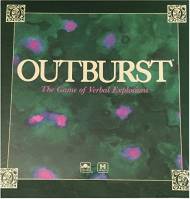
5: Outburst (1986)

Outburst plays a bit like Family Feud. Two teams compete over multiple rounds to reach 60 points by guessing items listed on a Topic Card within a time limit. Outburst’s simple concept puts it firmly in the party game category, and games like this bring people into the hobby of tabletop games. And they can just be fun.

Outburst was featured in Games magazine’s Best Games of 1988. Scott Marley praised Outburst for its clever topics and team-based gameplay. Marley concluded that “Though Outburst is easy to learn, many topics are too hard—and occasionally too spicy—for children.” This may have prompted 1989’s Outburst Junior.

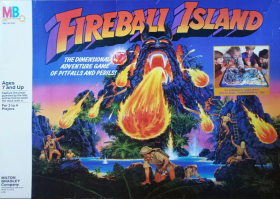
Fireball Island Tabletop Game

4: Fireball Island (1986)

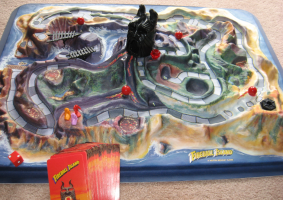
I remember getting the original Fireball Island for Christmas in 1986. The box is ginormous. The plastic game board had undulating paths where the titular fireballs (marbles) would travel down and knock players down, causing the player to lose any items. The object of Fireball Island is to escape the island with the jewel, which players must steal from the top of the Vul-Kar’s mountain. Fireball Island only has one jewel, so once a player grabs it, they become the target of others. And boy, do they become a target.

Fireball Island Tabletop Game Board Close up

Players are incentivized to knock the jewel out of the hands of the player who possesses it. The reimagining of Fireball Island by Restoration Games in 2018 doesn’t place as much emphasis on the jewel. Players can win by other means. Unsponsored quick plug: Restoration Games does great work. They’ve brought back many games on this list and even a couple of honorable mentions like Dark Tower (from the 1980-1981 list) and Thunder Road (which just missed this list).

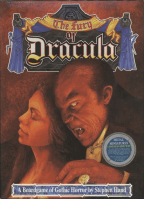
3: The Fury of Dracula (1987)

I mentioned a few lists ago (1983-1984) that Scotland Yard inspired many asymmetric games with hidden movement; The Fury of Dracula is one of the most prominent. I like the theme, but the name “Fury” is a bit of a misnomer. Dracula travels on a hidden board while the hunters move across the game board openly and try to deduce where Dracula is, all the while collecting the means with which to slay Dracula (stakes, garlic, and holy water). The Fury of Dracula ends with an epic showdown.

The Fury of Dracula has been updated multiple times. The second edition changes a lot of the gameplay, while the third edition streamlines the rules to make it easier to play and get into. 2019’s Fourth Edition of The Fury of Dracula gave the game a facelift; it didn’t change much in the way of gameplay. I recommend either the third or fourth editions.

2: Labyrinth (1986)

Not to be confused with the 1946 marble game, Labyrinth, which was originally stylized as THE aMAZEing LABYRINTH, uses a 7×7 grid where tiles get placed on one end of a column or row and displaces the tile on the opposite side of the column or row, hence the German name for the game Das verrückte Labyrinth, which is a pun on the German words errücken” (displace) and “verrückt” (crazy).

Players move their pieces along the ever-shifting path. Many of the tiles will have treasures printed on them. These treasures will match the cards dealt to players at the beginning of the game. The first player to obtain all the treasures in their deck wins. Labyrinth looks simple at first, but it gets puzzlely real fast. It’s a great problem-solving game for children, but when played by adults, the game can become more strategic and cutthroat. Labyrinth’s shifting tiles is one of the most unique game mechanisms from this era.

Returning to the naming, I wonder if Labyrinth avoided calling itself that in 1986 to avoid a lawsuit or confusion with Jim Henson’s Labyrinth movie that was released the same year. I remember a Labyrinth marble game variant tying into the movie that year.

1: Arkham Horror (1987)

I didn’t realize how old Arkham Horror was until I started compiling this list. Designer Richard Launius originally submitted the concept as Call of Cthulhu: The Board Game. This won’t be the first time Launius will make a game based on H.P. Lovecraft. He made a faster-pace, dice version of Arkham Horror in Elder Sign. Launius may be the person most responsible for making H.P. Lovecraft so popular in tabletop gaming. Arkham Horror is an early, thematic cooperative board game. Before Arkham Horror, I don’t recall seeing too many popular cooperative board games.

Because of this, Arkham Horror introduced a lot of staple cooperative board game concepts. Not the least of which is a “Doom Track.” Players work against the clock before the Ancient One breaks through its plane and into Arkham. Come to think of it, a game clock—of one persuasion or another—exists in most cooperative board games. Launius reinvented Arkham Horror into a Living Card Game in 2005.

Did we get the list right, for the most part? I didn’t mention Blood Bowl (1987); I’ll mention it here as another honorable mention. Let us know which games you’d add in the comments. And wherever you are, I hope you’re having a great day.

Check out the other lists in this series:
Top 5 Tabletop Games Prior to the 1930s
Top 5 Tabletop Games of the 1930s
Top 5 Tabletop Games of the 1940s-50s
Top 5 Tabletop Games from the Early 1960s
Top 5 Tabletop Games from the Late 1960s
Top 5 Tabletop Games from the Early 1970s
Top 5 Tabletop Games from 1980-1981
Top 5 Tabletop Games from 1982-1983
Top 5 Tabletop Games from 1984-1985
Top 5 Tabletop Games from 1988-1989
Top 5 Tabletop Games from 1990-1991

Top 5 Ice-Powered Comic Book Characters

Hey, hey! Kyra Kyle here. For those of us in the northern hemisphere, today is the first day of winter. Let’s celebrate by listing the Top 5 Ice-Powered Characters in comic books.

5: Ice (DC)

The first of several DC Comics characters on this list, Ice is the successor to the Ice Maiden. Tora Olafsdotter is the product of Norwegian experiments with Ice Maiden, hoping to replicate her powers. Tora’s arrival in the human world led the original Ice Maiden feeling superfluous. Ice Maiden returned to Norway, while Tora took up the name Ice and joined the Justice League International. She’s had an off-again, on-again relationship with Guy Gardner and developed a friendship with a heroine named Fire.

4: Captain Cold (DC)

Leonard Snart, Captain Cold, started life as a gag villain, but over time, Cold has become an impressive DC Universe villain. Snart grew up in an abusive household and turned to a life of crime. He developed a cold gun. The gun has extraordinary power. It can create temperatures to absolute zero. He can freeze objects (and people), create ice patches and icicles, and create a “cold zones” which can slow down anyone, including the Flash.

Snart is one of the founding members of the Rogues. He’s joined the Ice Pack (a group of cold-powered supervillains) and the Secret Society of Super Villains.

3: Killer Frost (DC)

There have been two women who bore the Killer Frost moniker. Crystal Frost was a scientist working in the Arctic when an accident gave her the ability to generate extreme cold. She became a supervillain, but her powers were slowly killing her. In an attempt to save herself, she consumed the heat of Firestorm and died.

Following Crystal’s death, her friend Dr. Louise Lincoln became Killer Frost. She recreated the accident that gave Crystal her powers and sought revenge on Firestorm. Able to transmute heat to cold and create gusts of wind and structures made of ice, Killer Frost has teamed up with villains like Captain Cold (who we saw in our previous entry) and Mr. Freeze, who happens to be our next entry.

2: Mr. Freeze (DC)

Dr. Victor Fries (originally a mad scientist Mr. Zero) is another DC villain who began life as a joke villain. The 1990’s Batman: The Animated Series recreated him as a sympathetic villain in its Emmy-winning episode “Heart of Ice.” Mr. Freeze has a sad story behind his frozen smile. His wife Nora fell terminally ill. Dr. Fries dedicated himself to cryogenic research to save her. The head of the corporation funding Fries’s work shuts down his project, and Victor fights them to save his wife. A fight ensues, which results in Victor turning into Mr. Freeze.

Freeze can only survive in sub-zero temperatures. To survive, Victor built himself a cryo-suit. He also developed an ice gun (powered by diamonds) and pursued a life of crime. Freeze’s gun can freeze objects and people, while his suit gives him increased strength and durability. Combined with his intellect, Mr. Freeze is a formidable foe.

1: Iceman (Marvel)

Iceman Bobby Drake started as the youngest member of the original X-Men. Most fans ignored him; he was the Spider-Man of that early X-Men team, cracking jokes and acting as the conduit for younger X-Men readers to view the team through.

Fast forward a couple of decades, and Bobby made his weekend appearance on Spider-Man and His Amazing Friends. I know it’s hokey, but I still enjoy watching this Saturday Morning cartoon on Disney+. Little did I, or any of those early readers of X-Men, know that Bobby may be one of the most powerful mutants. Iceman is an Omega-level mutant. As a frame of reference, Magneto is also an Omega-level mutant. Yikes!

Iceman can become ice in an organic form. By doing this, he can change his size and size, becoming an enormous ice man. He can also add spikes of ice on his knuckles or other body part, becoming a living weapon.

Hello, Winter! Let us know who you would add or remove in the comments. And wherever you are, I hope you’re having a great day.

Top 5 Tabletop Games from 1984-1985

Hey, hey! Kyra Kyle here. Back with another Top 5 Tabletop Games. 1984 and 1985 had even fewer games for this list than the 1982-1983 list. These two years saw a lot of games that got overlooked in previous years find an audience. Axis & Allies was one such game, but it was originally produced in 1981 and made that list. Even the Spiel des Jahres winners for 1984 and 1985 were games from prior years. That said, I still found a handful of games. Let’s talk games.

But first, in case you’ve forgotten our criteria for the Top 5 Tabletop Games, let’s reiterate the ground rules again before we get started.

1: Cultural relevance plays as much of a factor as overall quality. A game might make a list that doesn’t hold up to others of its type, but you must admit the game is everywhere.

2: Only one game from a franchise makes the list. This will become more of an issue the closer we get to games with expansions.

3: Longevity plays a role, too. A game doesn’t have to fly off the shelves today, but it had to have some widespread appeal for a decent time.

5: SolarQuest (1985)

SolarQuest is a fancy space-age version of Monopoly. Players purchase and develop planets, space stations, and moons set in our solar system. SolarQuest has found renewed interest because of eBay. So much so that it’s recently had a successful Kickstart campaign in 2016. SolarQuest makes a notable addition with fuel. Players must watch their ship’s fuel level because they automatically lose the game if they get stranded with no means to refuel.

Outside of fuel, most of SolarQuest is Monopoly set in space. It can be fun, especially when someone runs out of fuel.

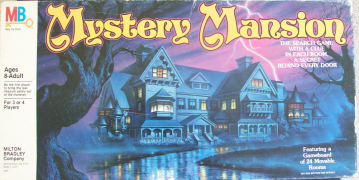
4: Mystery Mansion (1984)

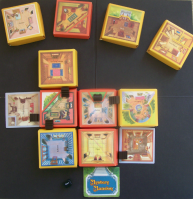
I still quote the mechanical voice of the 1990s version of Mystery Mansion. The original game uses a modular board, one of the first times that a major board game company (Milton Bradley) used a modular board. Mystery Mansion came with 24 cardboard tiles representing different rooms in the mansion: 8 First Floor rooms, 8 Second Floor rooms, and 8 rooms in the cellar.

Each room has different doors and objects that come into play during the game, and players must search the items in the room to find the treasure hidden within. The electronic voice version replaces the modular board (the cardboard tiles) for a fixed layout reminiscent of Cluedo (Clue for Americans). In this version, the electronic device will tell the players which items are in the room, so the setup to the house isn’t the same each time. Other than the board and the mechanical voice, everything else remains the same from the original Mystery Mansion.

Fun Factoid: During the 2015 music competition Iron Composer, where composers have five hours to write a piece of music, finalist Ryan Keebaugh used the mechanic voice from the 1990s Mystery Mansion as his “secret ingredient” for his piece.

3: Balderdash (1984)

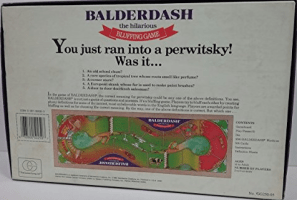
Balderdash is a variant of a classic parlor game, Fictionary, but it counts as a 1984 release. Seriously, there weren’t that many major games that came out these two years. Anyway, Balderdash is a game of obscure words. Players must create definitions for words seldom used in the dictionary and gain points for guessing the correct definition or having other players select their invented definition.

Balderdash can be great fun but like Trivial Pursuit, if you play the game enough, you’ll learn many of the words and their definitions. Hey! That’s a fun way to increase your vocabulary.

2: Abilene (1984)

Abilene is set in the city of Abilene during 1870. This was the time and place for the main transshipment point for the herds of Texan cattle barons. Players assume the role of ranchers who, with the help of their cowboys, drives their herds to Abilene, trying to capture parts of their opponents’ herd along the way.

Abilene has a few twists on this concept. First, players can capture their opponents’ herds as mentioned, but second, your cattle can be diseased. Players have a certain number of diseased cattle in their herd and whenever a herd makes it to Abilene, one’s opponents guess how much of the herd is diseased. Abilene received consideration for the 1985 Spiel des Jahres. Not bad for a game set in Texas. (Note: games set in the United States at this time didn’t fare well in the Spiel des Jahres.)

1: Tales of the Arabian Nights (1985)

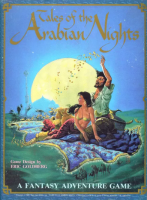
Tales of the Arabian Nights is getting its 40th anniversary glow-up next year. You can sign up for the Gamefound project preview here (https://gamefound.com/en/projects/play-to-z/tales-of-arabian-nights-40th-anniversary-edition).

Tales of the Arabian Nights uses paragraphs to tell a story where each player travels through the Arabian desert and partakes in adventures from One Thousand and One Nights. Players gain and lose statuses from these adventures and collect Story and Destiny Points. Once you earn enough points to become sultan, you can return to Baghdad to win the game.

Many board game enthusiasts swear by this game as one of the best storytelling games. Every generation, we receive a new version of the game. I’m glad Play to Z has an upcoming new version.

Did we get the list right, for the most part? Let us know in the comments. And wherever you are, I hope you’re having a great day.

Check out the other lists in this series:
Top 5 Tabletop Games Prior to the 1930s
Top 5 Tabletop Games of the 1930s
Top 5 Tabletop Games of the 1940s-50s
Top 5 Tabletop Games from the Early 1960s
Top 5 Tabletop Games from the Late 1960s
Top 5 Tabletop Games from the Early 1970s
Top 5 Tabletop Games from 1980-1981
Top 5 Tabletop Games from 1982-1983
Top 5 Tabletop Games from 1986-1987
Top 5 Tabletop Games from 1988-1989
Top 5 Tabletop Games from 1990-1991

Top 5 Stocking Stuffer Board Game Companies

Hey, hey! Kyra Kyle here. We’re in the middle of the Christmas season. There aren’t that many days until the holiday, so I decided to go with another purchasing guide: stocking stuffer board games. But I don’t want to just do individual games. No, no. Let’s discuss board game companies known for producing good games that can fit inside a stocking.

We’ll have to set some ground rules.

1) The packing must be small enough to fit in at least 50% of stockings.

2) The games must be good. While smaller packaging can lead to compromises, who wants to play a bad game?

3) Extra points for companies that produce various games. It’s easy to find a formula and produce multiple versions of the same game, but I’m handing out brownie points to any company capable of stretching their creative muscles.

With all that out of the way, let’s get to the games, or the board game companies.

5: The Game Crafter (Mint Tin Games)

On the Game Crafter, aspiring game designers can buy board game components for their prototypes. But it also functions as a store for indie board game designers to sell their games. The Game Crafter is a great place to support smaller game companies and indie board game designers directly. We’ll be covering their Mint Tin Games line. These games fit inside a mint tin. Perfect for a stocking.

Price: Varies between $20-$35. Board game designers set their own prices, so mint tin games vary wildly.

Quality: It’s a mixed bag. That’s why Mint Tin Games are fifth on this list. But there is a silver lining. The Game Crafter gives their stamp of approval to any game they view as worth your time.

Variety: Tons! Mint Tin Games are the Wild, Wild West of board games. Think of it as the board game equivalent of the indie video games on Steam. You’ll find games here that you can’t find anywhere else.

Size: 4-inch by 2 1/2-inch mint tins. You can fit these tins into any stocking. I’m surprised by the amount of games you can find that fit inside this packing.

Titles: Again, I’d look at anything that gets the Game Crafter seal, but here are some standouts. I’ve found a ton of excellent solo games. Doom Machine is fantastic. Mint Knight is a fan favorite and a sandbox RPG. What? Astro Asterid’s Quick Shuttle Repair is a fast-paced resource management game. And Deck 52: Space Wrecked is a fun dungeon crawl.

Store Link: (https://www.thegamecrafter.com/games?query=mint&hitsPerPage=18) The Game Crafter (Mint Tin Games).

4: Pack O Game

We had a game series in a mint tin. Pack O Game fits inside a box of chewing gum. How do make a game fit in that tight of a space?

Price: $7 each. By far the cheapest set of games on this list. You can’t beat $7 for a game.

You can also buy a bundle for $50, but that includes 8 games and a pod that can hold all the games from a set, and there are three sets. Even though the pod can hold all the games in a set, it’s still small enough to fit into any stocking.

Quality: Most of the games in this line are good. There can be some duds, but for $7, you can buy a few. And the stellar titles can be fantastic.

Variety: These games use cards shaped like sticks of chewing gum. Despite that, there are plenty of game mechanisms represented in this line.

Size: Don’t worry about it. These are tiny games. These game boxes measure around 5-inch by 1-inch. Crazy small!

Titles: I haven’t played much from the second and third sets, but I played plenty of the first one. Shh must be the best of the bunch; it’s a cooperative word game. Hue and Fly are also good, but I have a soft spot for TKO.

Store Link: Pack O Game by Perplext.

3: All Play Games (Small Box Line)

For the most part, All Play has two sizes of games. We’ll be discussing the smaller (square-shaped) games with this listing. But the larger boxed games are worth perusing as well.

Price: Under $20. Great value for the amount of game inside these small boxes. It’s also a great price for a stocking stuffer.

Quality: While not all the games of this line suit my tastes, the games in All Play’s small box line are baseline good. If something sounds interesting, it’s well worth the price tag.

Variety: All Play has some of the best gameplay variety on this list. You’ll find plenty of themes and gameplay mechanisms that are sure to meet your board game enthusiasts’ preferences.

Size: This is what makes All Play’s small box games third place. This line dominates all the other criteria, but size could be an issue. The small boxes measure 5-inch by 5-inch. That could fit in at least 50% of stockings. Maybe? If you have extra-large stockings, no problem. And who cares if the box protrudes from the stocking’s top?

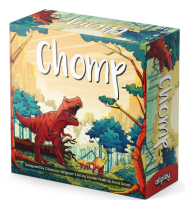
Titles: I mentioned Chomp in our “Getting Starting with Tile-Laying Games” (you can check out that write-up here); Chomp is an excellent game. Sequoia is another great title. Ghosts of Christmas may be a good thematic game for the season. And I’ve heard great things about Mountain Goats.

Store Link: (https://www.allplay.com/board-games/) All Play Games. Look for the square-shaped game boxes.

2: Button Shy Games

Board game rockstar Elizabeth Hargrave (Wingspan) got her start with Button Shy Games’s Wallet Game line. To date, she has more than one game in the Wallet Game line. As the name suggests, these games fit inside a wallet, so they will definitely fit inside a stocking.

Price: $12 each. Another cheap option with some great games on offer.

Quality: Like All Play’s small box line, most games in Button Shy Games’s Wallet Game line are good. But there are some standouts.

Variety: Most, if not all, of the games in this line use 18-card decks. Each game does something different with its 18-cards but it can get repetitive if you pick up too many at once.

Size: The size of a slim wallet, roughly 5-inches by 3-inches. You won’t have an issue fitting any of these games into your stockings.

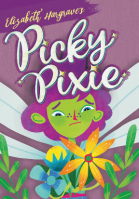
Titles: Hargrave’s first published game Tussie Mussie is not in stock before Christmas 2024, but you can pre-order the next printing set for an April 2025 release. But she does have another great game named Picky PixieMysticana uses a nice twist on rock-paper-scissors, and it has plenty of expansion should you enjoy the core gameplay. Sprawlopolis is a great city-building game. It’s sold out, but its stand-alone sequel Agropolis is available.

Store Link: Button Shy Games Wallet Games line

1: Oink Games

Oink Games have a lot of quirky little games in their line. They have plenty of games that come from East Asia.  More than a few of those will get a mention in the Titles section.

Price: Most are $23, but there are a few that can be a little higher or lower in price.

Quality: Another company that has baseline good games with some standouts.

Variety: Except for All Play’s small box line, Oink Games may have the most variety of any game company (or line) on this list.

Size: The boxes are about 3.5 inches by 2.5 inches. Bigger than most other lines on this list except All Play’s.

Titles: I covered Deep Sea Adventure some time ago with our “Getting Started with Pickup and Delivery Games” writeup (here’s a link); it’s a great title. Scout earned the 2022 Spiel Des Jahres; I may have to check out that one. A Fake Artist Goes to New York is a ton of fun; everyone draws a picture together, but one person (the fake artist) doesn’t know what the group is drawing.

Store Link: Oink Games

That concludes our list. There are a lot of games worth trying. There may even be some that I may have to purchase…as a gift. A gift that’s TOTALLY for someone else.

Did we get the list right? Let us know which companies you would add in the comments. And wherever you are, I hope you’re having a great day.

Top 5 Underrated DC Villains

Hey, hey! Kyra Kyle here. We’re doing something very different this week and posting a much older post by our resident Star Trek Geek, Jim Plath. He shared his Top 5 Underrated DC Villains years ago, and I just found the copy. Sorry about that, Jim. Without further ado, here is the Top 5 Underrated DC Villains.

This one ended up being trickier than I expected. When you start digging, you can make a case for just about any villain of Batman’s not named Joker, Ra’s, Deathstroke, or Superman’s not named Lex, Doomsday, Darkseid, or Brainiac. Here’s my list though.

5) Cheetah:

You could make a case for just about any DC female villain not named Harley Quinn these days, but given that she’s really an anti-hero now, she might not make the list anyway. Cheetah’s history with Wonder Woman is pretty front-and-center in Wonder Woman’s current arc, and it’s doing wonders for drawing attention to her sympathetic qualities. As a character, she’s tragic, and as a villain, she’s got Wonder Woman’s durability and the speed of, well, a cheetah. That makes her a worthy adversary for a good portion of the Justice League.

4) Brother Eye

The OMACs/Brother MK1/Brother Eye have been used similarly to Marvel’s Sentinels. They’ve been involved in some great Justice League stories over the years, played a pivotal role in Infinite Crisis and Final Crisis, and always generate hefty stakes.

3) Mongul

Mongul is something of an ersatz Darkseid. In fact, that’s most likely why he’s underrated. Like a lot of characters, his backstory changes slightly here and there, but he’s proven himself a threat to each member of the Justice League individually, and given them a run for their money as a group. He even once destroyed Hal Jordan’s hometown of Coast City.

2) Psycho Pirate

With the power to affect people’s states of mind, he probably gets passed over too often for villains like Scarecrow, but Psycho Pirate’s powers are broader. He’s been shown to mollify hostile characters, even pacify Bruce Wayne and Jim Gordon. It isn’t always about fear with the Psycho Pirate.

1) Vandal Savage

When it comes to men made untouchable to father time, the bulk of the spotlight goes to Ra’s al Ghul these days. Some of that is the influence of the Arkham video game franchise, and the Christopher Nolan Dark Knight trilogy, but another factor is Savage is far more powerful. There just aren’t many DC heroes who can make a match for him, so he doesn’t get as many shots at the bigtime.

Do you agree with Jim’s list? Who would you add or remove? Let us know in the comments. And wherever you are, I hope you’re having a great day.

Top 5 Marvel United Expansions to Buy

Hey, hey! Kyra Kyle here. We discussed Marvel United, a cooperative board game designed by Eric Lang, less than a week ago. If you want to see our review of the core set box, here’s a link to that review (link to the review). We also started a guide to Marvel United; you can check that out here (link to the guide page). But today, let’s discuss which Marvel United Expansions are best to purchase first. Think of this as a Marvel United Purchase Guide.

Marvel United has a ton of expansions, so we need to narrow down which ones—in general—are the expansions you should look for. Disclaimer: Eric Lang is one of my favorite designers, and he did a brilliant thing with this game. (I may be biased, so sue me.) Lang put more of his design focus on the villains and not the heroes. That must’ve made the design and iteration process easier. He worked smarter, not harder: brilliant. This isn’t to say that the heroes don’t have personality, they do, but the villains add more wrinkles to Marvel United’s gameplay and with that said…

1) Expansions with more villains feature more prominently on this list. The more villains, the more unique ways to play Marvel United.

2) Boxes with unique gameplay (outside of more villains) will also rate high on this list.

3) I won’t include core sets. These aren’t expansions; they are base games needed to play Marvel United. With that said, you need at least one core set to play Marvel United. Pick the one that looks the most interesting. I like the original Core Set and the X-Men Core Set.

4) If you have a favorite Marvel character, get the box with that character. It doesn’t matter which boxes I say are the best to have. If your collection isn’t complete without your favorite character, get your favorite character.

5) If CMON Games releases another Marvel United campaign on Kickstarter or Gamefound (which is unlikely because they began DC Heroes United, which will be compatible with Marvel United, so crossover battles!), you should be able to get past Kickstarter exclusives. Fingers crossed that CMON will run a second print run for any of the campaigns. That’s more of a possibility than a fourth Marvel United set.

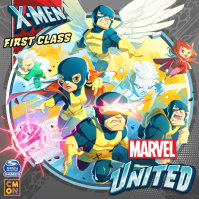
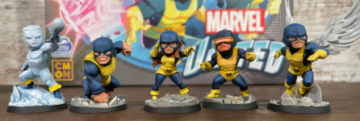
5: X-Men First Class

Spoiler Alert: We’ll see more than one Marvel United X-Men expansion on this list. Many of the runners-up come from the X-Men; that’s what you get when you add the Fantastic Four to the X-Men campaign (the Fantastic Four just missed the list). X-Men First Class has a whopping five heroes, which is rare for an expansion. It also features a double boss in Quicksilver and Scarlet Witch. And it even includes Danger Room Challenges to spice up the gameplay even further.

X-Men First Class has a little bit of everything. Its only downside is that it’s a Kickstarter exclusive. This will be a theme for the list. It’ll be difficult to find X-Men First Class for cheap, but well worth the purchase if you can find it. Or you could wait for a second print run. Again, fingers crossed.

4: Days of Future Past

Another X-Men expansion makes the list. Days of Future Past brings the classic X-Men story of the same name to life. (In case you missed it, here’s our list of X-Men Starter Stories; “Days of Future Past” made the list.) Days of Future Past adds sentinels. And these sentinels (three large ones sporting different poses) are almost to scale. This marks the first time Marvel United attempted a larger model type. Ahem. The largest model shows up later on this list.

Add in Nimrod, a futuristic and enhanced Sentinel model, as the main villain and you have the recipe for another great Marvel United expansion. Again, Days of Future Past is a Kickstarter exclusive. Why does CMON keep locking this great content behind Kickstarter exclusivity? C’mon, CMON. I know why they do it: money. I just wanted to say C’mon, CMON.

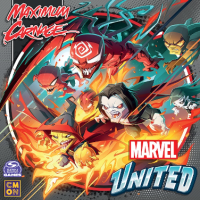
3: Maximum Carnage

Maximum Carnage has the most villains in an expansion, not including the promo boxes of Kickstarter exclusives. It includes a staggering seven villains (with one of those villains, Morbius, who’s also playable as a hero). Yikes! And Maximum Carnage isn’t a Kickstarter exclusive. Maximum Carnage builds on a playstyle that will show up again on this list; it introduces a New Sinister Six.

If you have the Kickstarter exclusive (there is a difference between the retail and Kickstarter versions of Maximum Carnage), you can interchange the various members of the Sinister Six. If you don’t have the Kickstarter-exclusive Maximum Carnage expansion and you have everything else need, you could print off the New Sinister Six cards from the Marvel United Wiki and add them to your game. I’m not condoning that behavior. I’m just saying you can. Wink.

You could just have a core set and most of the Spider-Man expansions and have a game of Marvel United that you could play for decades. The Sinister Six Module is fantastic.

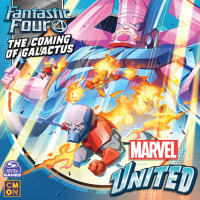
2: The Coming of Galactus

Galactus is the largest Marvel United model to date, and The Coming of Galactus adds a new threat to the game. Namely, Galactus. But Galactus does have heralds, and The Coming of Galactus includes four of these heralds: Nova (Frankie Raye), Terrax, Firelord, and Air-Walker. Silver Surfer was released in the Fantastic Four expansion, which again, barely missed this list. If you have Silver Surfer, he can be added as one of Galactus’s heralds. Yay!

Since Galactus is a world-level threat, the gameplay surrounding him is on a global scale. The heroes don’t defeat Galactus. Not many can defeat Galactus. Instead, the heroes convince Galactus not to consume Earth. The Coming of Galactus is thematic and worth the buy, even if you just want a massive Galactus standing on the moon.

1: Return of the Sinister Six

Return of the Sinister Six includes the original members of the Spider-Man’s Sinister Six. Six villains are always a nice addition. Add in a new way to play, the villains are on a team, and this easily makes Return of the Sinister Six the best of the original Marvel United campaign’s expansions. While I could’ve moved any number of the expansions higher on this list and one of the expansions (Maximum Carnage) improves upon this gameplay style, Return of the Sinister Six deserves the top honors.

Unironically, Vulture may be one of the most difficult villains to defeat, whether a part of the Sinister Six or on his own. He gives me nightmares. And this is such a great expansion.

So, did we get the list right? Which expansions would you include in your Top 5 Marvel United Expansions? Let us know in the comments. And wherever you are, I hope you’re having a great day.

Top 5 Superman Villains

Hey, hey! Kyra Kyle here. We’re back with another Top 5 Villains List. This time we’re covering Superman’s rogues gallery. We mentioned Supe’s rogues in a previous Top 5, the Top 5 Most Powerful Rogues Gallery. But Superman’s villains are getting their list today. Let’s see who made the list.

5: Darkseid

You may think that Darkseid is way too low on this list, but I view him more as a Justice League villain if not a DC universe-wide villain. But Darkseid needs to make the list. I struggled with that. I wanted to include Parasite or Cyborg Superman or even Toy Man or Mister Mxyzptlk. Consider them the honorable mentions. Oh. Spoiler alert: those villains didn’t quite make the list. Getting back to Darkseid, he inspired Marvel’s Thanos. So, Darkseid is a heavy hitter. Unless the writer powers down the villain, Superman often needs help when dealing with Darkseid.

4: Doomsday

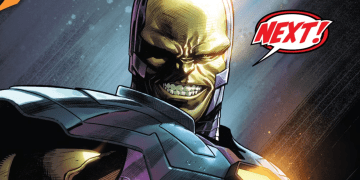
What more can be said of the villain who killed Superman? He belongs on the list; he may even be too low like Darkseid. Next.

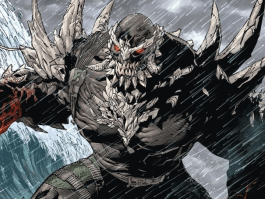
Just kidding. We’ll discuss Doomsday a bit more. Doomsday is an engineered being from the depths of prehistoric Krypton. Is everyone still on board with genetic experiments? Doomsday’s creator imbued him with few feelings, mostly hate and a desire for destruction, which led to him destroying worlds and eventually finding Earth. Doomsday can’t die. He adapts every time he gets defeated. He can’t be reasoned with. Of Superman’s mindless foes (or his foes who are forces of nature), Doomsday tops them all and makes this list.

3: General Zod

Since he’s a Kryptonian, General Zod has powers comparable to Superman. And as his name suggests, he’s a general. So, he has military training. That makes General Zod a Superman-powered general who desires to subjugate humanity and turn Earth into a New Krypton. Yep. He’s terrifying.

General Zod may even be my choice for Superman’s first major villain if I were to reboot the character. He ties in perfectly with Supe’s past. General Zod knew Kal-El’s birth parents after all. And he hated them. It made sense that Man of Steel featured General Zod as its main antagonist. Too bad the movie wasn’t better.

2: Brainiac

There have been many Brainiacs and with that several origins for the character. No matter the origins or version, Brainiac is often considered Superman’s second-greatest villain. You can probably guess who takes the top spot. Usually, writers depict Brainiac as a superintelligent android or cyborg from the planet Colu who is obsessed with collecting all knowledge in the known universe. He even goes so far as to shrink cities like Kandor, the capital of Superman’s home planet Krypton, and Brainiac has destroyed countless civilizations.

If his body ever gets destroyed, Brainiac uploads his artificial consciousness into a new body and begins anew. This makes Brainiac pseudo-immortal and a major threat to Superman. One of my favorite versions of Brainiac comes from the Superman Animated Series. Brainiac was an AI present when Krypton exploded. We learn that Brainiac destroyed Krypton so he and he alone would have the knowledge that Krypton ever existed. This put him at odds immediately with Superman. And the reveal was fantastic. Sorry. Spoilers for an almost thirty-year-old cartoon series.

1: Lex Luthor

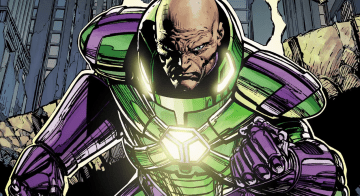
What more can I say about the man who would be Superman? Most people know Lex Luthor. He’s one of Comicbook’s greatest villains, let alone Superman’s greatest villain. CEO of LexCorp, Lex Luthor as I mentioned in the Most Powerful Rogues Gallery Top 5 is DC Comics’s version of Tony Stark if Iron Man decided to go a different path. Lex hates how much the world loves Superman. He doesn’t trust all that power belonging to an alien. While I could mention several large-scale, DC Comics affecting schemes, my favorite Lex Luthor story, the one that shows how evil he can be, comes from a much smaller story.

Lex visits a diner outside Metropolis. He offers a waitress at the diner a large sum of money to sleep with him. The waitress knows who Lex is, everyone knows him and what he’s done, and she’d rather not sleep with the devil. But the money Lex offered was too good to pass. As soon as she decides to sleep with Lex, he leaves the diner. Lex’s chauffeur asks why he left before completing the “transaction,” and Lex said—and I’m paraphrasing—She will always know that she would’ve slept with me. Now she hasn’t a penny to show for it.

Like Outkast once said, what’s cooler than being cool? Ice cold. That sums up Lex Luthor.

Did we get the list right? Let us know who you would add or remove in the comments. And wherever you are, I hope you’re having a great day.
Top 5 Tabletop Games from the Late 1970s

Hey, hey! Kyra Kyle here. Back with another Top 5 Tabletop Games of an era. We’re keeping the trend of breaking a decade into two halves—for now. Today’s list will be the Top 5 Tabletop Games from the Late 1970s (1975-1979)

In case you’ve forgotten our criteria for the Top 5 Tabletop Games, let’s reiterate the ground rules again before we get started.

1: Cultural relevance plays as much of a factor as overall quality. A game might make a list that doesn’t hold up to others of its type, but you must admit the game is everywhere.

2: Only one game from a franchise makes the list. This will become more of an issue the closer we get to games with expansions.

3: Longevity plays a role, too. A game doesn’t have to fly off the shelves today, but it had to have some widespread appeal for a decent time.

5: Guess Who? (1979)

Guess Who? kicks off this list with a simple guessing game. Players pick a card with a character depicted on it, and their opponent guesses who their opponent’s character is before their opponent can do the same. Guess Who’s? game board features several rows of cartoon characters, each with distinct looks. Players ask yes/no questions about their opponent’s character (typically about their opponent’s hair color, eye color, hair style, hats, etc.) and flip down the portrait of characters who don’t match the answer their opponent gave.

Guess Who? like many other children’s games (like Operation) has spawned a lot of brand-themed versions. Disney princesses, the Marvel Cinematic Universe, and even Cars 2 have had variants of Guess Who?. Guess Who? is a quick and easy game to learn and yet another game that has introduced many to the tabletop game hobby.

4: Ogre (1977)

Ogre is the first Steve Jackson design to make one of these lists, but we’ll most likely see more of his work in future lists. Ogre is a tactical ground combat game set in the not-so-distant future. Combat has become faster and deadlier in the year 2085. Hovercraft, tanks, and infantry dole out damage with tactical nuclear devices, but no weapon is as feared as the giant cybernetic (pretty much AI-driven) tank called the OGRE.

One player takes control of a military force with infantry and armor. They must defend a command post. The other player has only one unit, the OGRE. Ogre plays with asymmetric powers. It may even be one of the first to do so on a grand scale.

3: Dungeon! (1975)

Dungeon! plays out a lot like Dungeons & Dragons, if D&D was simplified and converted to a board game. Players explore the titular dungeon that is divided into levels of increasing difficulty. Players fight monsters for treasure. As you journey deeper into the dungeon, the monsters grow in difficulty and the more valuable treasure you’ll find. Dungeon! uses a lot of the class-types one may find in Dungeons & Dragons.

Each character’s fighting style is unique and suited for specific regions in the dungeon. The winner is the first player to bring a certain amount (value) of treasure back to the Dungeon’s entrance. Dungeon! holds a special place for me. It was my first exposure to the world of Dungeons & Dragons, sort of. While the game shares plenty of similarities, Dungeon! doesn’t follow D&D to the letter. And it plays fast and furious.

2: Rummikub (1977)

Rummikub holds the distinction of being the first recipient of the Spiel des Jahres (German Board Game of the Year) in 1980. You may notice that Rummikub was published in 1977. It didn’t become widely published until a year or two later. Rummikub plays similar to several other central European card games (like Rummy) which are played with two decks of playing cards. Ephraim Hertzano invented the tile game Rummikub in the 1940s when Communists outlawed card playing.

Rummikub didn’t catch on in the rest of the world until after Hertzano published his 1978 Official Rummikub Book. Like Rummy, you try to get rid of all your tiles by forming numbers into runs of 3 tiles or more, or 3 to 4 of a kind. The colors of the numbers on the tiles function like card suits.

Rummikub proves that people want to play games, especially when an over-bearing regime tells them they can’t. This act of rebellion made Rummikub the perfect first recipient of the Spiel des Jahres.

1: Cosmic Encounter (1977)

Cosmic Encounter takes the top spot because it popularized one of the most beloved game mechanisms of all time: Variable Player Powers. Each player takes control of a unique alien race with a special power. They battle each other for galaxy supremacy.

But Cosmic Encounter is far more than just combat. To win Cosmic Encounter, players spread themselves onto five foreign worlds. Players will often enlist the aid of opponents to take out another opponent or allow them to accomplish one of many challenges. Alien powers, which are unique to each race, give players ways to bend or outright break the game’s rules. The game continues until one player occupies five planets. Shared victories are possible, and a player doesn’t need to occupy their own system to win.

Like I implied, Cosmic Encounter has inspired so many modern board games. The Variable Player Powers mechanism tends to sell board games. And even games like Magic: The Gathering owes their inception to Cosmic Encounter. These alien powers allowed players to break the rules; one of the statements in Cosmic Encounter’s rulebook suggested that if an alien power deviated from the rulebook, follow the rules on the alien power. That’s like Magic’s golden rule of cards. Whenever a card’s text directly contradicts these rules, the card takes precedence. Collectible Card Games owe their existence to Cosmic Encounter. It had to take the top spot.

Did we get the list right, for the most part? Let us know in the comments. And wherever you are, I hope you’re having a great day.
Check out the other lists in this series:
Top 5 Tabletop Games prior to the 1930s
Top 5 Tabletop Games of the 1930s
Top 5 Tabletop Games of the 1940s-50s
Top 5 Tabletop Games of the Early 1960s
Top 5 Tabletop Games of the Late 1960s
Top 5 Tabletop Games of the Early 1970s
Top 5 Tabletop Games from 1980-1981
Top 5 Tabletop Games from 1982-1983
Top 5 Tabletop Games from 1984-1985
Top 5 Tabletop Games from 1986-1987
Top 5 Tabletop Games from 1988-1989
Top 5 Tabletop Games from 1990-1991

Top 5 Tabletop Games from the Early 1970s

Hey, hey! Kyra Kyle here. Back with another Top 5 Tabletop Games of an era. We’re keeping the trend of breaking a decade into two halves—for now. Today’s list will be the Top 5 Tabletop Games from the Early 1970s (1970-1974)

In case you’ve forgotten our criteria for the Top 5 Tabletop Games, let’s reiterate the ground rules again before we get started.

1: Cultural relevance plays as much of a factor as overall quality. A game might make a list that doesn’t hold up to others of its type, but you must admit the game is everywhere.

2: Only one game from a franchise makes the list. This will become more of an issue the closer we get to games with expansions.

3: Longevity plays a role, too. A game doesn’t have to fly off the shelves today, but it had to have some widespread appeal for a decent time.

5: Landslide (1971)

Landslide has a simple premise. Each player is running for President of the United States. 2024 is a Presidential election year, so Landslide can scratch the itch for an election game. These rashes flare up every four years. We don’t have too much information about this game’s production; Landslide released when Parker Brothers (the publisher) didn’t credit their artists or designers. That will change in the coming eras.

Landslide uses “votes” as a form of money for players to bid for states. Players can even attempt to steal already “bought” states from each other. And while an actual Presidential election requires one candidate to gain more than half of the total number of electoral votes to get elected, or the vote goes to the House of Representatives, the winner of Landslide is the player with the highest number of electoral votes. There may be more than two players.

I played Landslide a lot growing up. I spotted a couple of copies at my local board game café, Mana Games, and may have to play it a handful of times real soon. The gameplay moves fast, and at the time of its publication (1971), the electoral votes for each state reflected that year’s electoral votes.

4: Mastermind (1971)

I have a love/hate relationship with Mastermind. I appreciate its simplicity, but my brain struggles with finding the solution. For the few of you who don’t know, Mastermind is the basis for Wordle. Instead of deducing a word, you use logic to deduce a sequence of colors. One player sets a secret code, while the other tries to crack the code.

Mastermind has spawned a ton of imitators: Wordle, Fiction, and many others. Not only do I struggle with these puzzles—I flail whenever I play Wordle—I find it grating that whenever a TV show or movie wants to show someone as smart, that “smart” character always has a copy of Mastermind. Big Bang Theory’s Sheldon Cooper constantly had Mastermind on a shelf in the camera’s frame behind his head. Yeah. We know he’s supposed to be smart, so Mastermind. Ugh!

Still, you can’t deny Mastermind’s cultural impact. Even if I stink as the codebreaker.

3: Connect 4 (1974)

Connect 4 (also known as Connect Four) plays a lot like Tic-Tac-Toe (connecting 4 of your pieces in a row). The board stands straight up, and players take turns dropping “checkers” game pieces into the stand’s top. The player who connects four of their pieces in a row first wins. Connect 4 is easy-to-learn and has about as much strategy as Tic-Tac-Toe.

Connect Four just may be a lot of people’s first board game. Its simple rules make it a great game for kids.

2: Uno (1971)

Uno continues two trends. The first, 1971 was a banner year for board games; four of the five games on this list released that year. The second, take an existing game and give it a spin. Connect 4 changed up Tic-Tac-Toe; Uno turned Crazy Eights into a colorful and commercial success. Who knew it could be that easy?

In Uno, players race to empty their hands and catch opposing players with cards left in theirs, which score points. Each turn, players play cards by matching the played last card’s color or number. If unable to play, players draw a card from the draw pile. If they’re still unable to play, the player passes their turn. There are several Wild and Special cards to spice up the gameplay. Oh! And you must say “Uno” whenever you have one card remaining in your hand. If anyone calls you out for not saying Uno, you’ll draw two cards.

Uno may also continue a third trend. It could be a lot of people’s first tabletop game.

1: Sleuth (1971)

Sid Sackson makes another appearance on one of these lists. 1971’s Sleuth (hey, this is another 1971 release) tasks players with deducing the location of a hidden gem.

The hidden gem is one of 36 gem cards and gets hidden before the start of the game. The remainder of this gem deck—with each card showing 1-3 diamonds, pearls, or opals in one of four colors—is distributed evenly among the players, with any remaining cards laid face up. A second deck contains 54 search cards, each showing one or two elements, such as pearls, pairs, red opals, or an element of your choice. Each player receives four face-up search cards.

During a turn in Sleuth, players will ask other players about the cards in their hands based on the search cards they have. The asked player must show every card that matches the asking player’s question. This generates partial information in Sleuth. You may know that one player has two diamond cards in their hand, but you won’t know which color they are or how many diamonds are on the cards unless you asked the question.

Players are encouraged to keep notes for both negative and positive information. Sleuth can reach brain burning levels. It boils down a game like Clue—and Sid Sackson’s own The Case of the Elusive Assassin (1967)—to its deduction roots. It’s a simple but deep concept. Would you expect anything less from a master game designer like Sid Sackson?

Did we get the list right, for the most part? Let us know in the comments. And wherever you are, I hope you’re having a great day.

Check out the other lists in this series:
Top 5 Tabletop Games Prior to the 1930s
Top 5 Tabletop Games of the 1930s
Top 5 Tabletop Games of the 1940s-50s
Top 5 Tabletop Games from the Early 1960s
Top 5 Tabletop Games from the Late 1960s
Top 5 Tabletop Games from the Late 1970s
Top 5 Tabletop Games from 1980-1981
Top 5 Tabletop Games from 1982-1983
Top 5 Tabletop Games from 1984-1985
Top 5 Tabletop Games from 1986-1987
Top 5 Tabletop Games from 1988-1989
Top 5 Tabletop Games from 1990-1991

Top 5 Horror Tropes

Hello, Geekly Community! My name is Skye, and I love movies and TV. You could call me a “Screen Geek.” I make deep dives on TV shows and movies on TGIMovies (here’s the link to my website). Everyone who clicks the link gets a free year-long Netflix subscription (JK, just kidding). I’m excited to write for this site and get to know you all. Thank you for inviting me to this platform, it means a lot to be here. Without further ado, let’s begin my very first post. Woo-hoo!

Happy Halloween! Since it’s that time of year, let’s talk about something scary. But not too scary. (͡° ͜ʖ ͡°). While I view myself as a refined connoisseur of visual media (don’t we all?), I’m drawn to certain tropes (whether they’re good or not). Sure, I love killers and dumb idiots dying as much as the next person, but there are other tropes in horror that I just can’t resist. With that said, these are my 5 favorite horror tropes.
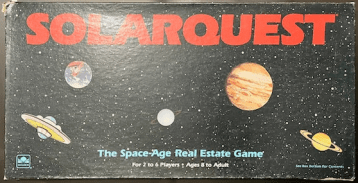
5. Creepy/Evil Children

The Evil Children trope has been done to death. Sometimes, literally. Creepy Children show up a lot in horror because children are supposed to be innocent and non-threatening, and this trope flips that expectation on its head. It can be jarring when done well. Unfortunately, I’ve seen far too many poor implementations of Evil Children to put it higher on the list. But let’s focus on good Creepy Children.

4. “Final Girls”

While mostly associated with slasher films, the “Final Girl” trope has experienced an expansion in recent horror media. In the past she was the most moral character of the movie, typically a virgin—and usually white—she suffers more hardship than any other character. She’s always the last to survive, hence the term “Final Girl.” Since Sally Hardesty from The Texas Chainsaw Massacre, this was the purpose of “Final Girls.” Look pretty, be nice/modest, and maintain innocence throughout her ordeal.

3. The Slow-Burn

The type of horror that scares me the most is the kind that takes its time. Too many movies are desperate to get reactions out of people and blow their load in over-the-top jump scares which only exist to create the illusion of fear. In case you were wondering, jump scares didn‘t make the list. When it comes to legitimate horror, you must get your audience invested in your characters, story, atmosphere, and of course, pacing.

2. Monsters/Practical Effects

Monsters are awesome! I love a good creature feature, and that’s because you can do so much with monsters. My personal favorites are the ones created through practical effects and shot in front of the camera. It makes them more real and horrifying. I’m not entirely against computer-generated effects but considering Hollywood’s overuse of these kinds of effects in the past 30 years, you can’t deny that CGI has become easy to spot. If I had to choose between a bad practical effect and a bad digital effect, I’d choose the former 10 times out of 10.

1. Music/Sound Design

This one is a cheat. Music and sound design are less a trope and more an essential part of filmmaking. But I believe music and sound design are the most important parts of filmmaking when it comes to Horror. Music instills emotions. Horror needs to create specific emotions to get its audience on edge. It’s been scientifically proven that jump scares almost entirely lose their power without the assistance of sound.


Top 5 Horror Tropes Creepy Children

-Skye