Getting Into Comics: Punisher Starter Stories

Do you want to get into Punisher comics and don’t know where to start? Geekly has you covered. Daredevil: Born Again continues its run on Disney+ this week, and Geekly is celebrating with yet another comic book starter stories list. Today’s list features the Punisher.

Hey, hey! Kyra Kyle here. While Frank Castle (The Punisher) may not have been around as long as Matt Murdock (Daredevil), he has an extensive catalog of comic books. We’ll have a mix of story arcs (stories composed of multiple comic book issues) and single-issue stories (which will only have one comic book to the story). The Punisher has a nice split between single-issue stories and story arcs. We’ll begin with the story arcs. Enjoy!

Story Arcs

Circle of Blood (The Punisher #1-5; written by Steven Grant and Jo Duffy/art by Mike Zeck and Mike Vosburg 1986)

The Punisher spent the first decade as a side character. His first appearance (which we’ll mention in the single issues) in Spider-Man established the Punisher as a mysterious figure, but Circle of Blood established the Punisher as a character. Originally, Marvel intended to make Circle of Blood a four-issue limited series. That changed with the series’ popularity. Circle of Blood became so popular that the Punisher became a monthly comic. Within this mini-series, you’ll find the Punisher’s origins. Frank is a Vietnam veteran who watches his family die at the hands of a gang war. Motivated by anguish he becomes a one-man army of revenge.

Circle of Blood gives readers everything they need about the Punisher as a character. There’s no better place to start reading Punisher than with Circle of Blood.

War Zone (The Punisher War Zone #1-6; written by Chuck Dixon/art by John Romita Jr., John Buscema, and Joe Kubert 1992)

During the early Nineties, The Punisher had two monthly titles. The original Punisher series was strong enough, while Punisher War Journal devolved into “Punisher make things go boom and die.” Punisher War Zone’s first storyline breaks from the norm—at least the first half of the storyline does, which is why I included #1-6, instead of #1-11. The Punisher goes undercover and unearths a mob plot. Throw in someone who may or may not be Kingpin, Kingpin was in hiding at this time, and Punisher War Zone is a great place to see the Punisher working with the police on the down low and flexing his detective and heroic muscles.

Welcome Back, Frank (The Punisher #1-12; written by Garth Ennis/art by Steve Dillon and Jimmy Palmiotti 2000-2001)

Marvel produced this twelve-issue limited series in 2000-2001. First-time Punisher scribe Garth Ennis made a huge splash with Punisher Kills the Marvel Universe (which almost made this list) and this series gave him a second opportunity to write for the character. This won’t be Ennis’s last entry; Ennis will dominate this list. Welcome Back, Frank continues to depict Frank as a Vietnam War veteran. He announces his return to New York City by taking on the Gnucci crime syndicate. Publicly, the NYPD opposes Frank’s actions. Secretly, the police condone the Punisher’s actions. With the help of the police and his neighbors, Frank dismantles the Gnucci’s crime operation. Welcome Back, Frank showcases the Punisher’s tenuous relationship with the police and highlights the smaller good deeds, that I won’t spoil here, that make Frank Castle who he is. Welcome Back, Frank is a Punisher must-read.

Born (Born #1-4; written by Garth Ennis/art by Darick Robertson and Tom Palmer; 2003)

I warned you. Garth Ennis will dominate this Punisher reading list. Born is another great Punisher mini-series; a lot happens in this four-issue run. Born follows Frank Castle as he serves in the United States Marine Corps during his final tour in Vietnam in 1971. Half of Frank’s fellow Marines are addicted to heroin. Their commanding officer is an apathetic alcoholic who pretends he has malaria whenever the superiors plan an inspection of the base, Valley Forge. Of course, we see military combat. One by one, Castle’s unit falls, and he finds himself surrounded by the enemy. I won’t spoil any more of this heart-pounding series. If you’re interested in what made Frank Castle the man he is, you should read Born.

Barracuda (Punisher #31-36; written by Garth Ennis/art by John McCrea and Steve Dillon 2003-2004)

Barracuda refers to the man who could be the Punisher’s greatest villain. Screen Rant said this about Barracuda. “Far and away the most popular villain from the Punisher MAX comics, Barracuda has become one of the most iconic enemies Frank Castle has faced.” Barracuda is every bit the Punisher’s equal. Honestly, he may be more terrifying. Barracuda didn’t need a tragedy (like losing his family) to become a killer. While in elementary school, he shoved his thumbs into a classmate’s eyes. He castrated someone while in a youth detention center. This propensity for violence made Barracuda the perfect Green Beret. So, now he has special ops training and a massive frame to back up his nastiness.

There’s no better place to start with getting to know one of the Punisher’s greatest enemies than with this comic book run. The last thing you want to see is a smiling Barracuda.

The Slavers (Punisher #25-30; written by Garth Ennis/art by Leandro Fernandez and Scott Koblish 2006)

The Slavers storyline shows Frank Castle’s softer side. As the title implies, this story revolves around slaves and the people who keep them in bondage. Specifically, The Slavers is about a forced prostitution ring. I won’t get into too much detail here. On one hand, I don’t want to spoil the story. On the other hand, The Slavers is not for the faint of heart. While this story arc is one of the Punisher’s best (and of course, it’s written by Garth Ennis), it comes with a strong trigger warning. The Slavers proves that the Punisher has a heart of gold, even if his methods are savage.

Single Issues

“The Punisher Strikes Twice!” (The Amazing Spider-Man #129; written by Gerry Conway/art by Ross Andru, Frank Giacoia, and Dave Hunt; 1974)

“The Punisher Strikes Twice!” marks the Punisher’s first appearance. Narratively, this Punisher looks very different from the one we see in any other Punisher story on this list. Punisher is little more than a hired gun. A new costumed character called the Jackal hires Punisher to slay Spider-Man. Antics ensue.

After this first appearance, the Punisher would team up with Spider-Man. Eventually, he would make cameos in other titles, teaming up with Captain America and Nightcrawler until Frank Miller would contrast Daredevil’s crimefighting style against the Punisher’s. “The Punisher Strikes Twice!” may not be the character we know of as the Punisher, but a Punisher fun should read the comic that started it all.

“The End” (Punisher: The End #1; written by Garth Ennis/art by Richard Corben; 2004)

And we’re back to another Garth Ennis-penned Punisher story. “The End” is a Punisher one-shot story set in the wake of World War III. This post-apocalyptic story is a product of its time. Frank is tasked with finding a hidden bomb shelter beneath the former site of the World Trade Center.  With the War on Terror in full swing, “The End” mirrors American fears.

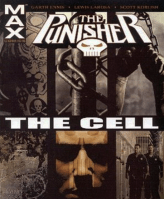
“The Cell” (Punisher: The Cell #191; written by Garth Ennis/art by Lewis LaRosa; 2005)

Within the darkest corners of Riker’s prison, old men control their criminal empire. These old men are given a new neighbor on their cell block: Frank Castle. The Punisher uses a prison riot to weaken the crime lord’s defenses. When they attempt to wait out the chaos, the Punisher strikes. “The Cell” shows a Punisher who can play the long game. This Punisher bides his time and waits for the perfect moment to attack.

This list is by no means exhaustive. We could’ve added a few other Punisher stories. Let us know which Punisher stories you’d add to this list in the comments. And wherever you are, I hope you’re having a great day.
Getting Started With Comics: Daredevil Starter Stories

Daredevil: Born Again begins its run tomorrow, and Geekly is celebrating with another comic book starter stories list. Today may be the best day to begin reading Daredevil comics. We hope this list will help you decide where to begin your journey with the Man Without Fear.

Hey, hey! Kyra Kyle here. Daredevil has been around for a long time and has had plenty of brilliant runs throughout his time in Marvel comics. We’ll have a mix of story arcs (stories composed of multiple comic book issues) and single-issue stories (which will only have one comic book to the story). Daredevil has a nice split between single-issue stories and story arcs. We’ll begin with the story arcs. Enjoy!

Story Arcs

Punisher Versus Daredevil (Daredevil #183-184; written by Frank Miller and Roger McKenzie/art by Frank Miller and Klaus Janson 1982)

This is the first of several Frank Miller entries. Miller made his name writing for Daredevil, so it’s inevitable. This two-issue story called “Child’s Play” shows the difference between Daredevil and the Punisher. While Daredevil refuses to kill, the Punisher has no problem killing.

The pair team-up after a young girl on drugs takes a dive out of her school window and dies. Yeah. Miller’s Daredevil pushed the envelope of what the Comics Code Authority would allow in a story. Getting back to this story, with the help of the dead girl’s brother, Daredevil and Punisher track down the dealer responsible for selling her drugs. Daredevil and Punisher get into a fight over how they’ll handle the dealer after they find him. Daredevil #183’s cover showcases this fight; it’s iconic.

Born Again (Daredevil #227-233; written by Frank Miller/art by Frank Miller and David Mazzuchelli 1986)

The Disney+ series Daredevil: Born Again gets its name from a Frank Miller-penned comic book story arc, and the final season of the Netflix Daredevil series borrows a lot from Daredevil Born Again. It’s a classic.

Daredevil Born Again follows Daredevil’s descent into insanity and destitution at the Kingpin’s hands. Daredevil’s ex-girlfriend Karen Page becomes a heroin addict. Strapped for cash, she sells the information that Matt Murdock is Daredevil for a shot of heroin. This information is then sold to the Kingpin, and the Kingpin does all manner of things to destroy Daredevil’s personal life. Matt’s life becomes hell.

I hope the Disney+ series goes further than the Netflix series and dives deeper into Born Again’s storyline.

Last Rites (Daredevil #283-300; written by Ann Nocenti and Dan G. Chichester/art by Mark Bagley, Lee Weeks Greg Capullo, Kieron Dwyer, Ron Garney, Butch (Jackson) Guice, Don Hudson, Larry Alexander, June Brigman, Al Williamson, Doug Hazlewood, Fred Fredericks, Tom Morgan, and Roy Richardson; 1990-1992)

Last Rites is the longest story arc included on this list, but it’s a Daredevil essential. This storyline concludes Ann Nocenti’s epic run on the character (we’ll see more of Nocenti’s work later). Last Rites is a whirlwind. The Kingpin falls. An amnesiac Matt Murdock is no longer Daredevil. Instead, another person swings around New York wearing a red jumpsuit, committing surgically precise crimes.

Matt thinks he’s the boxer Jack Murdock, while Kingpin builds a media empire. Eventually, a reborn Daredevil is determined to deliver the last rites to Kingpin’s reign of terror. There are a heap of guest stars in this massive Daredevil story: Captain America, Taskmaster, Tombstone, Baron Strucker, The Punisher, and Ghost Rider. But at its heart, Last Rites is Daredevil and Kingpin battling to the death.

Daredevil: Man Without Fear (Daredevil: Man Without Fear #1-5; written by Frank Miller/art by John Romita 1993-1994)

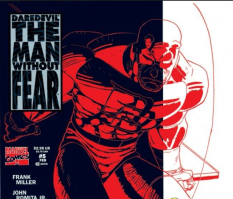
If you can’t tell, Frank Miller will dominate this list. I tried to keep Miller’s number of stories at a minimum, but he will repeatedly show up. Daredevil: Man Without Fear was a miniseries from the early Nineties. The series explores Matt Murdock’s childhood, the accident that caused his blindness and powers, as well as his father’s death. The series features pivotal scenes that have become staples in the Daredevil mythos: Matt’s mentor Stick, his college flame Elektra, his best friend Foggy Nelson, and his primary nemesis Kingpin. Fans of the Netflix Daredevil show will see plenty of familiar scenes. Daredevil: Man Without Fear is a must-read.

Return of the King (Daredevil #116-119; written by Ed Brubaker/art by Michael Lark and David Aja 2009)

A story arc from Ed Brubaker’s historic run on Daredevil had to appear on this list. I chose Return of the King because it shows Kingpin—easily Daredevil’s greatest villain—at his backstabbing and conniving best. Wilson Fisk (Kingpin) flees to Europe to escape his life of crime, where he meets a woman and befriends her children. Fisk views this family as his own until they are killed by the Hand. Lady Bullseye, one of the Hand assassins, claims Daredevil sent her. And all hell breaks loose with Kingpin reclaiming his reign as king of the criminal underworld.

The Omega Effect (Avenging Spider-Man #6, Punisher #10, and Daredevil #11; written by Greg Rucka and Mark Waid/art by Marco Checchetto 2012)

Mark Waid’s run on Daredevil could be summed up in one word: fun. The Omega Effect joins this list because it features Daredevil teaming up with two of his most common allies: Spider-Man and Punisher. But you don’t get one Punisher. Frank Castle trains a second Punisher, Rachel Cole-Alves. This makeshift team crumbles when one of the members turns backstabber.

Single Issues

“Last Hand” (Daredevil #181; written by Frank Miller/art by Frank Miller and Klaus Janson; 1982)

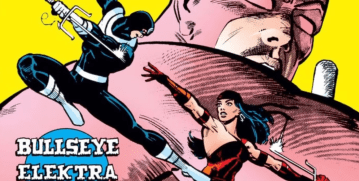
“Last Hand” is another classic Frank Miller comic. It’s a simple concept. Bullseye escapes from prison and plots his revenge against Daredevil. But Bullseye also discovers Daredevil’s secret identity and figures the only way to hurt Daredevil worse than killing him is to go after his lover Elektra. “Last Hand” ends with Elektra’s iconic death.

“Roulette” (Daredevil #191; written by Frank Miller/art by Frank Miller and Terry Austin; 1983)

The title “Roulette” may come from Daredevil playing Russian Roulette with a helpless Bullseye (he’s paralyzed from their previous battle), but the reason for Matt Murdock playing Russian Roulette stems from another encounter. “Roulette” uses Daredevil torturing a hospitalized Bullseye with an empty gun as bread in a narrative sandwich. This narrative’s filling comes from Daredevil’s interactions with a father and son.

The father is bullied at work just as the son is bullied at school. There’s a hint that the father may be abusing his child at home, too. The kid idolizes Daredevil, even pretending that he is Daredevil at school, but he becomes disillusioned when his father pulls a gun on a coworker who’s blackmailing him, and Daredevil beats up the kid’s dad before he can shoot. This traumatizes the kid. Later, the kid brings his father’s gun to school and when he gets picked on again, he shoots the kid who’s bullying him. “Roulette” is a bleak story. But it’s a story that may have even more relevance today than it did when it was first published.

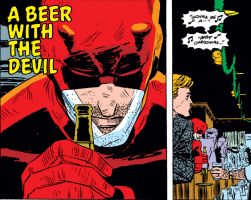
“A Beer with the Devil” (Daredevil #266; written by Ann Nocenti and John Romita Jr./art by John Romita Jr.; 1989)

“A Beer with the Devil” is easily the oddest entry on this list. Ann Nocenti’s run on Daredevil is one of the most daring. Pun intended. She takes plenty of risks and takes Daredevil to some bizarre places. She’s the one who introduced the antagonist Typhoid Mary (Daredevil #254, which almost made this list) and the demon Blackheart (Daredevil #270, which is another standout issue). But we’re going with “A Beer with the Devil.” It puts the devil in Daredevil. Matt Murdock spends Christmas in a seedy bar with Satan’s cousin Mephisto.

The stories on this list are just the tip of the iceberg. Daredevil has seen so many reboots and stellar story arcs that we’re bound to miss one or two of five hundred. Let us know which Daredevil stories you’d add to this list in the comments. And wherever you are, I hope you’re having a great day.
Getting Into Comics: Sam Wilson (Falcon/Captain America) Starter Stories

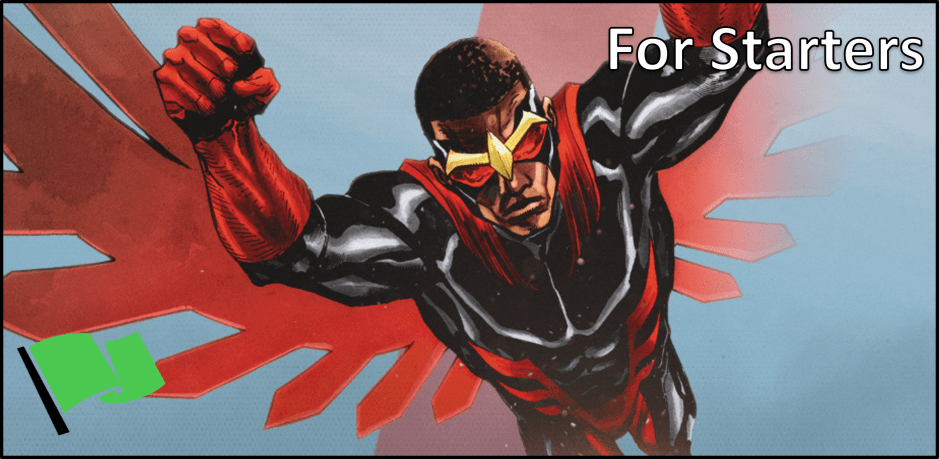
Hey, hey! Kyra Kyle here. Captain America: Brave New World was released yesterday, so we figured we would compile a list of Sam Wilson (Falcon and Captain America) starter stories if you were interested in getting to know Sam better as a character. Today’s post will feature one story with a single comic book issue. The rest will be story arcs composed of multiple comic books. Enjoy!

Single Issue

Sight Unseen (Avengers #64, written by Geoff Johns/art by Ivan Reis; 2003)

The events of Sight Unseen mostly take place in Avengers #64. Falcon has recently been drafted into the Avengers. Sam Wilson serves as a diversity hire—the rest of the Avengers more or less make him feel this way—so Sam never truly feels like he’s part of the team. Sight Unseen shows Sam finding his voice and cementing himself as a member of the Avengers. He gains a lot of respect, and this becomes a defining moment in his Avengers career. I don’t want to spoil too much of the plot, but let’s say that Henry Gyrich and Scarecrow make an appearance.

Story Arcs

The Coming of…The Falcon (Captain America #115-119, written by Stan Lee/art by Gene Colan; 1968)

The Coming of…The Falcon technically starts in Captain America #115, but Falcon doesn’t make his first appearance until #117. Before Falcon steps into the action, there are some Cosmic Cube shenanigans where Captain America and Red Skull have a Freaky Friday situation and swap bodies. Sam Wilson sees beyond the exterior and teams up with the Red Skull body-trapped Captain America. Cap teaches Sam some fighting skills and encourages Sam to take on a hero identity. Sam impresses Captain America enough that he becomes Cap’s new sidekick Falcon.

Falcon Miniseries (written by Jim Owlsey/art by Paul Smith; 1983-1984)

The Falcon Miniseries marks the first time Falcon stepped out of the sidekick role. Sam Wilson returns home. He witnesses a peaceful march resulting in protestors dying. Incensed, Sam shows the world that he is a hero to everyone, even those the government and police refuse to protect. Though written in the 1980s, the Falcon Miniseries remains culturally relevant.

The Burden of Dreams (Captain America #31-36, written by Ed Brubaker/art by Steve Epting; 1990)

Relationships aren’t the only thing that breaks in the wake of Civil War. Despite surrendering, a gunman kills Steve Rodgers before he can stand trial. Afterwards, Sam Wilson registers his identity per the Superhuman Registration Act, but that’s immediately followed by a new Captain America program, and the person tasked to fill this role is Bucky Barnes. But no one knows where Barnes is; Wilson must find him. When he does, he finds the Winter Soldier in the grip of the Red Skull and Doctor Faustus. It’s up to Falcon to rescue Bucky.

American Psycho (Captain America and The Falcon #13-14, written by Christopher Priest/art by Dan Jurgens; 2005)

Sam Wilson usually assumes the role of a hero in Marvel Comics, but in 2005’s American Psycho, his loyalty gets called into question. During much of this series, Sam gets involved in criminal activities when something happens that reverts him back to his pre-hero way of life. As one of Captain America’s greatest allies, Steve tries to stop Sam but can’t. When someone shoots Falcon, he snaps out of his trance. The damage has been done, and Sam begins a redemption arc.

Not My Captain America (Captain America: Sam Wilson #1-6, written by Nick Spencer/art by Paul Renaud; 2010-2011)

Not My Captain America is the first storyline that features Sam Wilson as the new Captain America. Much like the end of Avengers: End Game, Steve Rodgers rapidly ages and can no longer continue as Captain America. Sam Wilson is the obvious choice to replace Steve as Cap. Throughout the story, fewer and fewer people accept Sam, adopting the slogan, “Not My Captain America.” Like many other great Sam Wilson stories, Not My Captain America didn’t flinch when addressing racism in America.

Falcon and Winter Soldier Miniseries (written by Derek Landy/art by Federico Vincenti; 2019)

The Falcon and Winter Soldier Miniseries was released in 2019 to prepare fans for the 2021 Disney+ series of the same name. It serves as a fun buddy cop series. While Falcon and Bucky don’t tend to click as well as Bucky and Hawkeye, the Falcon and Winter Miniseries provides a great look at the odd couple. An assassination attempt on Winter Soldier prompts Bucky to call Sam Wilson for help. The two seek out the new leader of HYDRA before the organization can regroup.

I’m sure I missed a story or two on this list. Let me know which Sam Wilson stories you’d choose instead and make sure you note whether the Sam stories are ones of him as Cap or Falcon. And wherever you are, I hope you’re having a great day.
Getting Into Comics: Cassandra Nova Starter Stories

Hey, hey! Kyra Kyle here. Tomorrow is my oldest daughter’s birthday. Happy 27th birthday! She’s one year closer to 30. Eek! Anyway, I asked her which comic book character she’d like me to cover this week in our ongoing series of “Getting into Comics,” and she answered Cassandra Nova.

Yep. Yet another villain for the comic book starter stories. And yes, she first learned about Cassandra Nova in the recent Deadpool and Wolverine movie. We covered the movie a while back, here’s the link. Cassandra Nova is one of the newer X-Men villains, so she won’t have as extensive of a reading list. Here it goes.

Story Arcs

We’re continuing the trend of separating single issues stories from story arcs. This time, we’ll start with story arcs that consist of multiple comic books and then move on to single-issue stories. We’re doing it this way because Cassandra Nova’s first appearance was in a story arc.

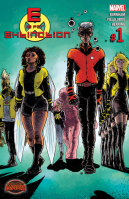
E Is For Extinction (New X-Men #114-116; written by Grant Morrison/art by Frank Quietly and Ethan Van Sciver 2001)

E is for Extinction was the first story arc from Grant Morrison’s run on the New X-Men. Morrison insisted the series be renamed New X-Men; it retained the original series’ numbering, but he revamped the team so much that the series needed a new name. Morrison catapults the X-Men into the 21st century.

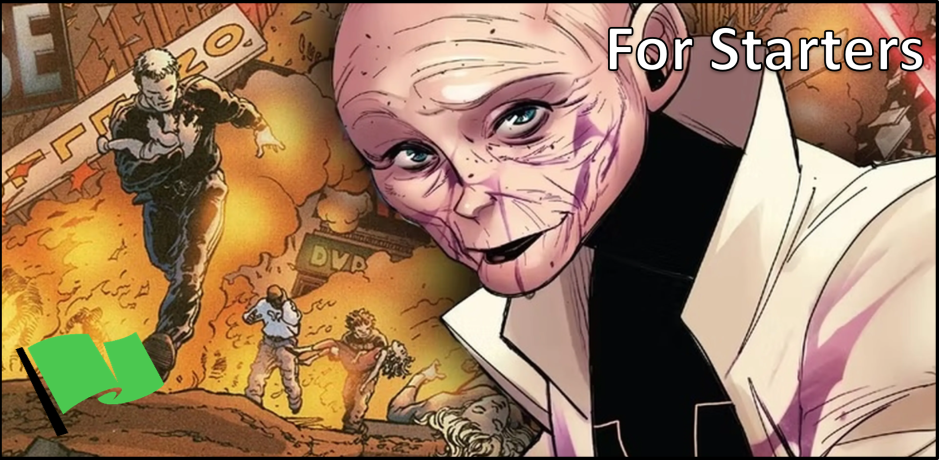
Cassandra Nova discovers a long-lost Master Mold A.I. and Sentinel production facility in Ecuador. She uses the last surviving relative of Bolivar Trask to gain control of the wild sentinels and has the man order the Sentinels to massacre the entire population of the mutant nation Genosha. The X-Men locate her by using the newly created mutant detection machine Cerebra and put an end to her reign of terror, but they’re too late. Cassandra Nova almost wipes out the entire population of the island.

If this sounds an awful lot like a plot line from the recent X-Men ’97 cartoon, you’re right. And if you haven’t yet seen X-Men ’97, what are you waiting for? E is for Extinction shows how diabolical Cassandra Nova can get. It’s no wonder that she earned the distinction as “Villain of the Year” by Wizard Magazine in 2001.

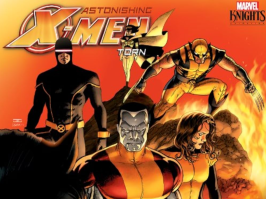
Torn (Astonishing X-Men #13-18; written by Joss Whedon/art by John Cassaday 2005)

Joss Whedon continued Grant Morrison’s New X-Men run with Astonishing X-Men. Most of the cast (heroes and most of the villains) remain the same. With that said, the Dangerous story arc that proceeds this one ties up some loose ends with E is for Extinction. Another Sentinel attacks and the culprit behind the attack is (spoilers) the Danger Room itself. The reason why this ties up loose ends found in E is for Extinction is that the Sentinel who destroyed Genosha becomes aware of its actions and ceases to attack the X-Men. It’s also revealed that Emma Frost works with the newly formed Hellfire Club. Enter Cassandra Nova.

Nova has joined this new version of the Hellfire Club. To be exact, Emma imprisoned Nova’s mind into a biological “slug.” Not all is what it seems. Cassandra Nova out mind tricks Emma Frost into doing her bidding. Nova even forces the X-Men to face their greatest fears and childhood trauma. This all leads to Shadowcat mimicking the classic pose Wolverine took in Uncanny X-Men #132.

X-Men: Red, Volume 1 (X-Men: Red #1-11; written by Tom Taylor/art by Al Ewing 2018-2019)

X-Men: Red follows the events from the December 2017 miniseries Phoenix Resurrection: The Return of Jean Grey written by Matthew Rosenberg with art by Leinil Francis Yu. Yes. Jean Grey died a second time, but at least this time she stayed dead for about a decade. Way longer than her first death after the Dark Phoenix Saga. Anyway, X-Men Red was promoted as part of Marvel’s Fresh Start. Part of this fresh start is the X-Men trying to create a new mutant nation.

The heroes of X-Men: Red shake up the norm. Jean, Nightcrawler, and Wolverine serve as the old guard, but new editions Honey Badger, Gentle, Trinary, and even Namor round out the rest of the X-Men.  They use Atlantis as their headquarters in part because Jean is framed for the murder of an English congresswoman. In truth, the congresswoman died at the hands of a resurfaced Cassandra Nova. Nova uses the politician’s death to alienate Jean from the public eye. This forces Jean’s team to work underground.

Marauders, Volume 2 (Marauders Vol 2 #1-12; written by Steve Orlando/art by Eleonora Carlini 2022-2023)

Not to be confused with several other versions of Marauders, this most recent group of Marauders is led by Captain Kitty Pryde. They rescue mutants, wherever they may be and no matter how dangerous the odds. The final member of her crew is none other than Cassandra Nova.

This is the first time that Cassandra Nova has been cast as a hero, albeit a reluctant one. Most of the Marauders, who were victims of Nova’s cruelty to Genosha, would rather not depend on her, and they do depend on her abilities quite a bit. The group depends on her for a while, until they plan for Nova’s eventual heel turn. Marauders is a strange read. It ends its arc with Nova being stranded 2 billion years in the past, with a mass extinction event on the horizon. That’s one way to exact your revenge.

Single Issues

“Silence: Psychic Rescue in Progress” (New X-Men #121; written by Grant Morrison/art by Frank Quietly and Ethan Van Sciver; 2002)

Charles Xavier’s mind lies imprisoned in the comatose body of Cassandra Nova. Jean Grey and Emma Frost team up on a telepathic journey into Cassandra’s consciousness to rescue Charles. The psychic trip is one for the ages. Beyond vast oceans rests a suspiciously fortified tower. Phoenix builds a bridge to cross the divide, but the tower’s defenses destroy Jean’s construct.

Traveling deeper into Cassandra Nova’s consciousness, the two learn that Cassandra Nova and Charles Xavier are twins. They engaged in psychic combat inside their mother’s womb. The fight led Charles and Cassandra’s mother to tumble down a flight of stairs. Jean and Emma learn that Charles intended to kill his sister inside the womb. Cassandra Nova left the womb stillborn.

This sequence gives much-needed context to why Cassandra Nova sicced the Sentinels on the nation of Genosha. She wants to destroy what Charles Xavier holds dear. She wants to make him pay for not showing her the same love he shows others.

The beginning of this issue’s title “Silence” holds special significance. This issue is part of the “Nuff Said” month in which no comics released at the time were allowed to use any words. The only words uttered were by Jean during the story’s conclusion.

There aren’t that many Cassandra Nova stories to choose from, but I may have left off one or two. Let me know which Cassandra Nova stories you’d choose instead. And wherever you are, I hope you’re having a great day.
Getting Into Comics: Magneto Starter Stories

Hey, hey! Kyra Kyle here. Today is my youngest daughter’s birthday. Happy 24th birthday! One more year and you can rent a car. Is that still true? Anyway, I wanted to bring back the comic book starter stories and asked her which character she’d like me to cover this week. She answered Magneto.

You heard the girl. Geekly will be covering its first comic book starter stories for a supervillain. We may have some growing pains with this topic. Villains are a little more difficult to recommend starter stories for, but I’ll do my best. The following list should give you an idea of which stories you should read to get to know Magneto better.

Single Issues

We’re doing this list a little differently than prior starter comic book stories. We’ll start with single issues and then move on to story arcs that consist of multiple comic books.

Uncanny X-Men #1

(written by Stan Lee/art by Jack Kirby; 1963)

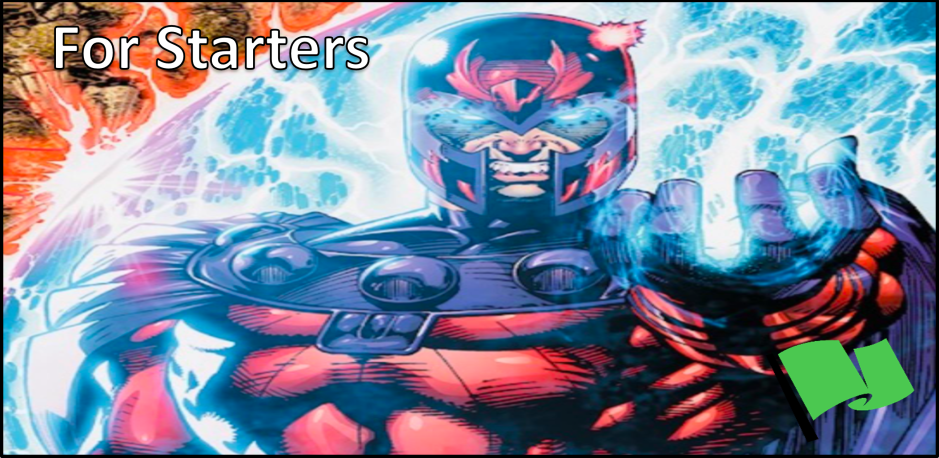
This first entry cheats a little bit. Uncanny X-Men #1 is the first appearance of Magneto and the X-Men. Since the issue does double duty and sets up Magneto and the X-Men, there’s less of a focus on him as the main villain, but Uncanny X-Men #1 does a great job of showing Magneto as a formidable foe.

You don’t have to break the bank to read the first X-Men story. Marvel has reprinted it plenty of times. You should even be able to read Uncanny X-Men #1 for free online. If you did want to own a physical copy, Uncanny X-Men #1 would cost you hundreds of thousands of dollars. X-Men didn’t have the warmest of receptions when it first launched. This makes the comic rare and valuable. Ka-ching!

I, Magneto

(Uncanny X-Men #150, written by Chris Claremont/art by Glynis Wein, Dave Cockrum, Dan Crespi, and Tom Orzechowski; 1981)

Magneto started out wanting a world where mutants dominated over inferior homo sapiens, but in “I, Magneto,” Magneto sets out for what he wanted all along, to become everyone’s leader. In this story, Magneto wants no less than the planet making him the world’s leader.

Magneto enlists the help of a series of supercomputers, but when those computers begin to explode, Magneto becomes furious. Kitty Pryde has been blowing up his computers by phasing through them. In a fit of rage, Magneto nearly kills her. Magneto sees a lot of himself in Kitty Pryde, since they have a similar heritage. When Magneto sees himself as the monster he’s turned into, he realizes that he isn’t fit to lead the world.

The Trial of Magneto

(Uncanny X-Men #200, written by Chris Claremont/art John Romita Jr.; 1985)

Claremont does a great job with the Uncanny X-Men’s bicentennial issue. As the name suggests (“The Trial of Magneto”), Magneto is on trial for former acts as a “mutant terrorist.” While he stands trial, unknown terrorists leave behind a calling card, “Free Magneto – X-Men.” Professor X sees this message and suddenly falls ill. Cyclops believes Charles is possibly dying.

The terrorist acts serve as a distraction so the Von Strucker twins can attack the court and exact vengeance against Magneto. This puts everyone in the courtroom in danger. Magneto saves everyone in the building. This shows the judge Magneto’s humanity. The scuffle results in Professor X suffering a heart attack. Magneto saves Charles, but Charles insists that he can no longer care for the X-Men. He asks Magneto to take his place.

If you’ve seen the X-Men ’97 cartoon on Disney+, many of these story elements will sound familiar in “The Trial of Magneto.” This story showcases Magneto’s propensity for being a hero.

Story Arcs

X-Men: Magneto Testament #1-5

(written by Greg Pak/art by Carmine DI Giandomenico 2008-2009)

Magneto Testament fleshes out Magneto’s childhood story. This five-issue miniseries doesn’t pull any punches. It shows us Magneto as a young boy surviving the Nazi death machine. As a result, Magneto Testament is one of the bleakest stories Marvel Comics has ever published. It’s also poignant.

Magneto Testament explores what made Magneto the man he is today. X-Men: First Class may dip its toe into this origin, but Magneto Testament digs deeper. This is one of the best Magneto stories ever written and a must if you want to understand Magneto.

X-Men: God Loves, Man Kills

(written by Chris Claremont/art by Brent Anderson; 1982)

I know this story also made our “X-Men Starter Stories” post years ago (here’s a link to that list if you’re interested), but Magneto is an X-Men villain, so there’s bound to be some crossover.

Many consider God Loves, Man Kills the defining X-Men arc, and they may be right. Humanity is the main villain. Humans, through the machinations of William Stryker, launch a scheme to rid the world of mutants. Magneto learns this while investigating the deaths of two mutant children. Magneto then joins forces with the X-Men.

God Loves, Man Kills establishes Magneto’s willingness to do anything to protect mutantkind, even if that means joining forces with his enemies. Stories like God Loves, Man Kills do a lot to deepen Magneto as a character.

Mutant Genesis

(X-Men #1-7, written by John Byrne and Chris Claremont/art by Jim Lee; 1991)

Before Mutant Genesis, Magneto lost his way. He even ran the X-Men and New Mutants for a time. (See the above write-up for “The Trial of Magneto.”) While these storylines helped to humanize the X-Men’s greatest villain, Mutant Genesis brings Magneto back to his roots. He has returned as a powerful villain. During this arc, we see how Magneto’s powers are slowly driving him insane.

But Magneto isn’t alone in his insanity. Mutant Genesis introduces Magneto’s team of Acolytes. These Acolytes pose a huge threat to humanity and even mutant-kind. It also doesn’t help that long-time X-Men begin questioning their loyalty to Professor X’s cause. Mutant Genesis is the final story seminal X-Men scribe Chris Claremont wrote for the series. Without Claremont, the X-Men would not have become the household names they are today.

Planet X

(New X-Men #146-150, written by Grant Morrison/art by Phil Jimenez; 2003-2004)

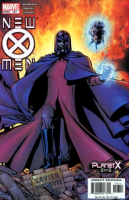
Magneto disguises himself as Xorn, one of the X-Men’s most trusted members at the time. The X-Men had thought that they had rescued Xorn from a Chinese prison, but it was a ruse. Magneto worked with the Chinese government to infiltrate the X-Men. At the time Magneto was believed dead, making this reveal even more shocking. Planet X shows how clever Magneto can be when putting an elaborate plan into action. This story did a lot for Magneto’s legacy.

As Magneto is the X-Men’s oldest enemy, no one could imagine that he could disguise himself well enough to fool his enemies. In classic mastermind fashion, Magneto didn’t reveal his identity until the time was just right.

There are so many other stories that I could’ve included here. I’m sure I missed one or two, or three hundred. Let me know which Magneto stories you’d choose instead. And wherever you are, I hope you’re having a great day.
Getting Into Spider-Man: Spider-Man Starter Stories

Spider-Man has so many great stories in his history. There are a lot of eras to Spider-Man too, s this can be a hard character for new readers to get into. Do you want to read Spidey as a teenager (as in Spider-Man: Homecoming) or do you prefer a more adult Spidey (one seldom depicted in movies but just as interesting at times)? Your uncle Geekly doesn’t really know. What he does know is that he can narrow this search to at least Peter Parker as Spider-Man.

Yeah, so we’re not covering Miles Morales (Ultimate Spider-Man), Ben Reilly (Spider Clone), Doctor Octavius (Doc Ock in Spidey’s spandex), or Spider-Girl or Gerry Drew (son of Spider-Woman Jessica Drew) or countless others—and there are several others. We’re talking Peter—not Uncle—Benjamin Parker. Yeah!

Let’s see if I can find a middle ground of teen and adult Spidey with a leaning toward young Spidey. Clear as mud? Good. Here we go.

Spider-Man_PowerAndResponsbility

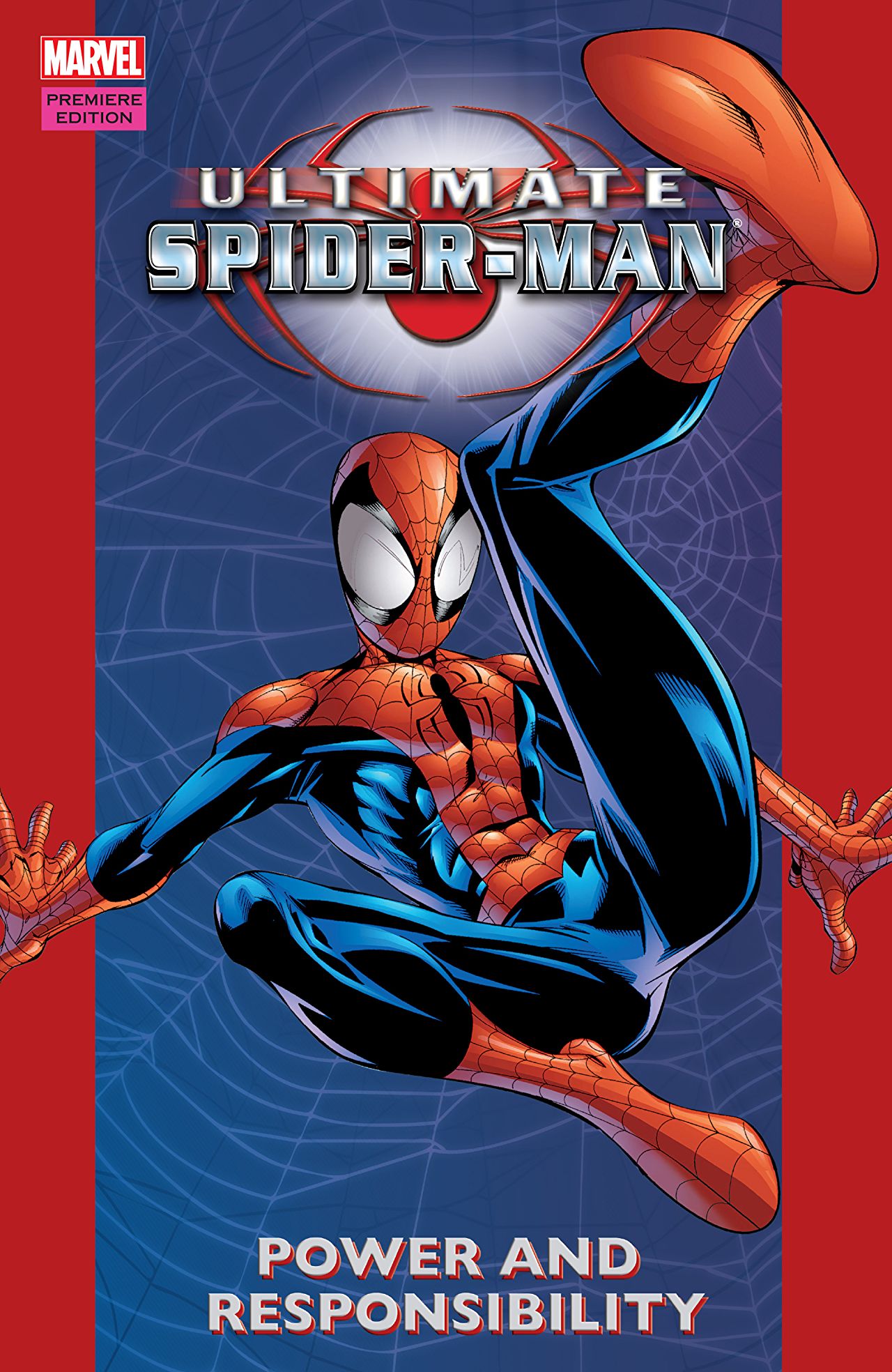
Ultimate Spider-Man #1-7, “Power and Responsibility” (written by Brian Michael Bendis/art by Mark Bagley; 2000-2001)

I know I said that I wouldn’t include Ultimate Spider-Man Miles Morales, but the original Ultimate Spider-Man series featured Peter Parker and the first seven issues titled “Power and Responsibility” retold Spider-Man’s origin in an accessible way. It also happens to be one of the main source materials for Spider-Man: Homecoming, so if you want to learn about this Peter Parker from the ground up, there’s no better place to start.

Spider-Man_Blue

Spider-Man: Blue (written by Jeph Loeb/art by Tim Sale; 2002)

Anytime Loeb and Sale team up there’s usually an origin tale or “before they were stars” story, and Spider-Man: Blue is no exception. Sale’s art takes a nice middle ground to slick, modern comic book style and retro Spidey. Loeb’ writing adds the right kind of depth for retelling the early days of Peter and his love affair with Gwen. Gwen Stacy is the one who was portrayed by Emma Stone in The Amazing Spider-Man film series, not Peter’s better-known love interest Mary Jane.
While one could read the original appearance of Spider-Man, Spider-Man: Blue adds more depth to the character that wasn’t there in the 60s.

Spider-Man_IfThisBeMyDestiny

Amazing Spider-Man #31-33, “If This Be My Destiny” (written by Stan Lee/art by Steve Ditko; 1965-1966)

The plot for “If This Be My Destiny” is standard Spider-Man fare. It’s a well-executed Doc Ock story, but most stories of this time by Ditko and Lee were. Where “If This Be My Destiny” shines is when Spidey gets caught beneath some heavy machinery. In this classic scene, which has been duplicated in numerous Spider-Man movies, Peter musters all his willpower to free himself from the heavy load. This act shows what makes Spider-Man the endearing character he is, while his inner monologue brings his demons to light. “If This Be My Destiny” cements Spidey as the everyman hero.

Spider-Man_HowGreenWasMyGoblin

Amazing Spider-Man #39-40, “How Green Was My Goblin” (written by Stan Lee/art by John Romita Sr.; 1966)

As you might be able to tell with my books I seldom go with the original telling of stories, opting to go with contemporary retellings, but the great Stan Lee does an awesome job of setting up Peter’s nemesis. And I say Peter’s nemesis because Norman Osborne’s Green Goblin has personal attachments to The Wallcrawler.

The first movie version of the Green Goblin showed him as Harry Osborne’s dad, but this reveal was a shock at the time, and this story gets to the essence of these two’s relationship. Batman needs his Joker. Spidey needs his Green Goblin.

Spider-Man_TheNightGwenStacyDied

Amazing Spider-Man #121-122, “The Night Gwen Stacy Died” (written by Gerry Conway/art by Gil Kane; 1973)

This one had to make the list. One of the pivotal moments of Spidey’s life as a hero came in the form of when Gwen Stacy died. It’s a tale that shows that even superheroes can fail.

Failure is a part of life and it’s definitely a part of Spidey’s life. This is one of the things that makes Spidey relatable as a character.

The death of Gwen Stacy also defined Green Goblin as a villain. As the previous entry attests, Green Goblin is Peter Parker’s enemy, not just Spider-Man’s, and “The Night Gwen Stacy Died” does the most to bring home this fact. It’s a must read.

Spider-Man_KravensLastHunt01

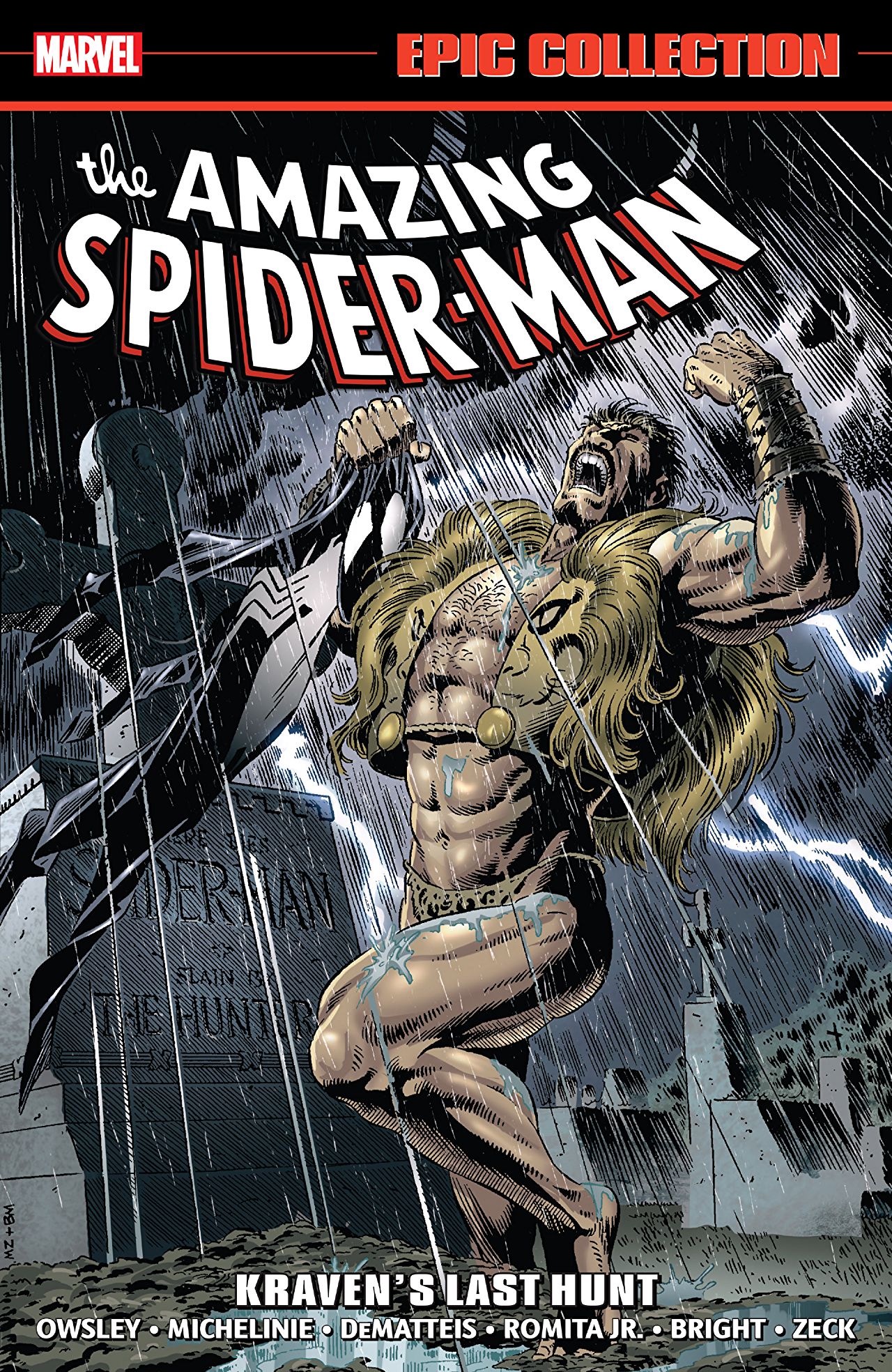
Web of Spider-Man #31-32; The Amazing Spider-Man #293-294; The Spectacular Spider-Man #131-132, “Kraven’s Last Hunt” (written by J. M. DeMatteis/art by Mike Zeck; 1987)

Kraven had been one of Spider-Man’s greatest enemies early in the Wallcrawler’s career, but time had passed him by. “Kraven’s Last Hunt” mirrored this decline, showcased Kraven’s ultimate revenge, and delved into Peter and Mary-Jane’s early marriage. There’s so much going on in this storyline that has defined and will continue to define the character.

It’s a story that asks what makes a hero, and one of the better Spider-Man stories ever written.

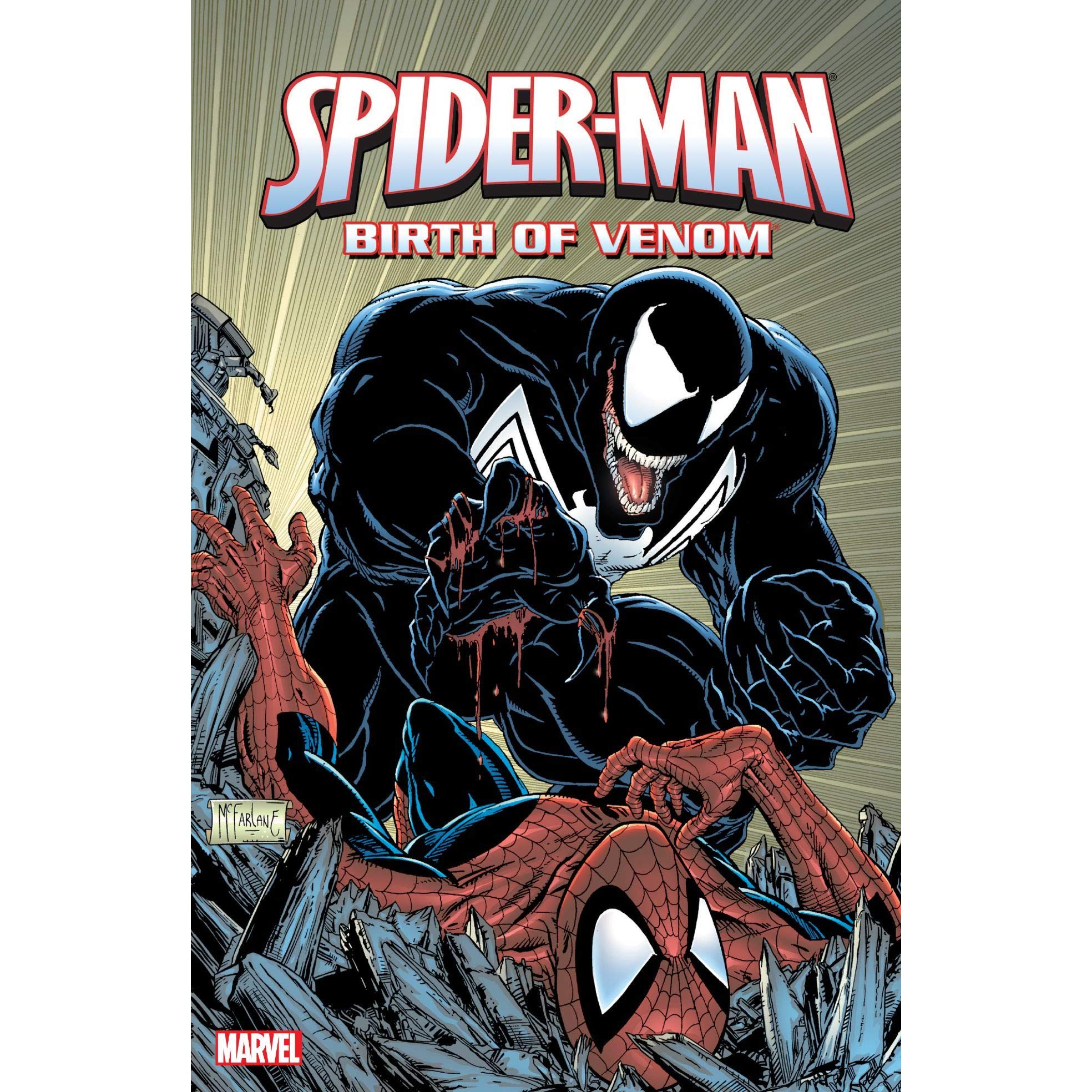
Spider-Man_BirthOfVenom

Secret Wars #8; Amazing Spider-Man #252-259; #298-300; #315-317, “Spider-Man: Birth of Venom” (written by various/art by various; 1984-1989)

There’s a lot of time gaps with this story, but “Spider-Man: Birth of Venom” has been collected in various graphic novels—maybe not all these stories, but a great many of them—and to get a good idea of Spider-Man and his relationship with the various symbiotes one should read this story first.

So much of Spider-Man in the 1990s and even in the 2000s revolved around Spidey and the various symbiotes that one should know a little something about them. “Birth of Venom” provides that background knowledge.

That’s my list for readers who are new to Spider-Man comics. There are so many to choose from—decades in fact—and I’m sure I missed more than one, two, or five hundred. Be sure to list some in comments. I’m sure Jim would prefer your picks to mine.

Wonder Woman Starter Stories

The first lady of comic books Wonder Woman has had an odd history, both in terms of how she came to be and with the path, or more exactly, the paths she’s taken. Hi. Uncle Geekly here and while I could address Wonder Woman’s creation story, we’ll spend today covering some of the greatest Wonder Woman stories for readers new to comic books.

Believe me. There are so many origin stories for Wonder Woman that Greg Rucka in his latest Wonder Woman run addressed them in DC Rebirth (2016-2017). That story just missed the cut, but it’d be a great honorable mention for this list, and I recommend reading that one too if you have the time. Let’s get to the ones that did make the list.

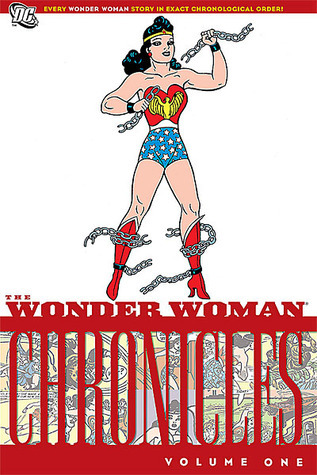
WonderWomanChroniclesVol1

Wonder Woman Chronicles Vol 1. (written by Dr. William Martson/art by Harry G. Peter; 1941-1942)

The writing is dated but Wonder Woman Chronicles Vol. 1 collects the original appearances of Wonder Woman in chronological order, so Steve Trevor makes an appearance–perhaps too much of one. Despite a shaky beginning, this volume shows how Wonder Woman promoted female empowerment long before it became commonplace. Heck. Wonder Woman was the first female superhero and while her origins may be humble (Diana takes on the name Wonder Woman because her mother gives it to her and she does a lot of what she does for Steve, a man she just met), these stories laid the ground work for an icon.

WonderWoman77

Wonder Woman ‘77 (written by various/art by various; 2015-2016)

Following the success of the Batman ’66 series that chronicled the continuing story of the 1966-68 television series starring Adam West and Burt Ward, DC Comics did the same for the 1975-79 Wonder Woman television series that starred Lynda Carter with Wonder Woman ’77.

Initial writer Marc Andreyko wanted to use “under-appreciated” Wonder Woman rogues and include them in the series, since the television series’ limited budget didn’t allow from them. As a result, classic Wonder Woman villains like Cheetah, Silver Swan, and Doctor Psycho received the Wonder Woman TV treatment they never had and Andreyko does such a great job including them that folks won’t remember that they were never in the original series—or maybe they will.

Anyway, Wonder Woman ’77 is a great series for fans of the Lynda Carter TV show or for people who may have missed the original show and don’t want to sit through the dated special effects and again, dated writing. This series does a great job of cleaning up some of the television show’s shortcomings.

WonderWomanGodsAndMortals

Gods and Mortals (written by George Perez and Len Wien/art by George Perez; 1987)

Gods and Mortals is a quintessential Wonder Woman story. After Marston’s Golden Age run and Crisis on Infinite Earths, the quality of Wonder Woman was—how to do I put this kindly—a mixed bag. George Perez relaunched the Wonder Woman title and he abandoned Diana as a marginalized member of the JLA’s boy’s club. He took Diana back to her feminist roots and made Steve Trevor and Etta Candy (one of Wonder Woman’s closest friends) rich and layered characters. Perez deployed a sense of fatalistic realism as the Amazons put themselves in a self-imposed exile after Queen Hippolyta (Diana’s mother) was put into bondage and raped by Hercules.

As you can see, Gods and Mortals took risks that many in the comics world would’ve taken at the time, but the end result was Diana standing on her own, apart from the Justice Society and Justice League. She didn’t need the male pantheon for support, and it was Gods and Mortals that made Greek gods regular characters in Wonder Woman stories.

WonderWomanSpiritOfTruth

Wonder Woman: Spirit of Truth (written by Paul Dini/art by Alex Ross; 2001)

Paul Dini of Batman: The Animated Series fame crafts an understated moment between Diana and Clark Kent having coffee and swapping tales. Artist Alex Ross does a great job rendering these moments of Clark and Diana enjoying each other’s company one instant and the Amazonian Warrior lifting tanks, taking on armies, and fighting for women’s rights the next. Spirit of Truth may only come in at 64 pages, but it captures what makes Wonder Woman an endearing character.

WonderWomanTheHiketeia

Wonder Woman: The Hiketeia (written by Greg Rucka/art by Drew Johnson, Eric Shanower, and Brian Stelfreeze; 2003)

The Hiketeia takes an intriguing look at the ancient idea of justice in the modern world. When Diana meets Danielle Wellys, Danielle evokes the ancient rite of Hiketeia and bonds herself to Diana as Diana’s supplicant. In return, Diana must ensure Danielle’s protection, but little does Diana know that Danielle has been on a murder spree to avenge her slain sister. Danielle’s actions attract the attention of the Furies of Greek myth, seeking vengeance for the victims, and Batman.

Batman and Wonder Woman’s views on justice differ as Diana marries fairness with justice. The Hiketeia does a great job showing how two thirds of DC’s trinity interact as they have a respectful but adversarial relationship.

WonderWomanDownToEarth

Wonder Woman: Down to Earth (written by Greg Rucka/art by Drew Johnson, Eric Shanower, and Brian Stelfreeze; 2004)

Down to Earth is an unconventional superhero story as Wonder Woman doesn’t stop villains or save the world; she shares her ideals in a book of essays and others try to tear down her philosophies. A lot of this backlash originates with the mysterious Veronica Cale—who functions like a female Lex Luthor—and she pulls all kinds of strings that make Diana’s life difficult. The book even creates tension in Mount Olympus with the gods, which doesn’t end well for Wonder Woman in the long run.

Down to Earth is another great story by Greg Rucka, and it does a lot to set up many of the events in his excellent four year run of Wonder Woman.

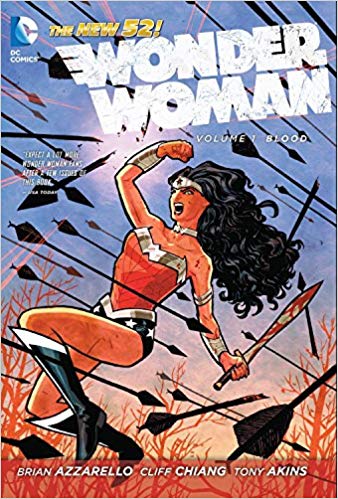
WonderWomanTheNew52

Wonder Woman: The New 52 (written by Brian Azzarello/art by Cliff Chiang; 2012-2015)

Brian Azzarello’s run on Wonder Woman: The New 52 was amazing. It embraces Diana’s Greek mythological roots and bends these same classic Greek myths, turning them into something new and exciting. Every step of the way you’ll stop and think that’s so Hades or that’s so Poseidon and Diana the daughter of Hippolyta and Zeus fits right in. The ending doesn’t disappoint. I won’t ruin it here, but Azzarello does a great job of pacing and taking what makes these characters who they are—both Greek myth and comic book characters—and blends them together seamlessly.

That’s my list for readers who are new to Wonder Woman comics. There are so many to choose from—decades after decades in fact—and I’m sure I missed more than one, two, or five hundred. Be sure to list some in comments. I’m sure Jim will prefer your picks to mine.