Whatcha Reading, Geekly: April 2025

Today’s post marks the end of our first month of the Whatcha Wednesday series. Let’s finish strong with Whatcha Reading, Geekly. Hey, hey! Kyra Kyle here. Today’s theme is reading. This can include novels, poetry, short stories, essays, comic books, and anything in-between. As always, feel free to share what you read this past month. We’re all part of the Geekly Gang.

Kyra’s Reads
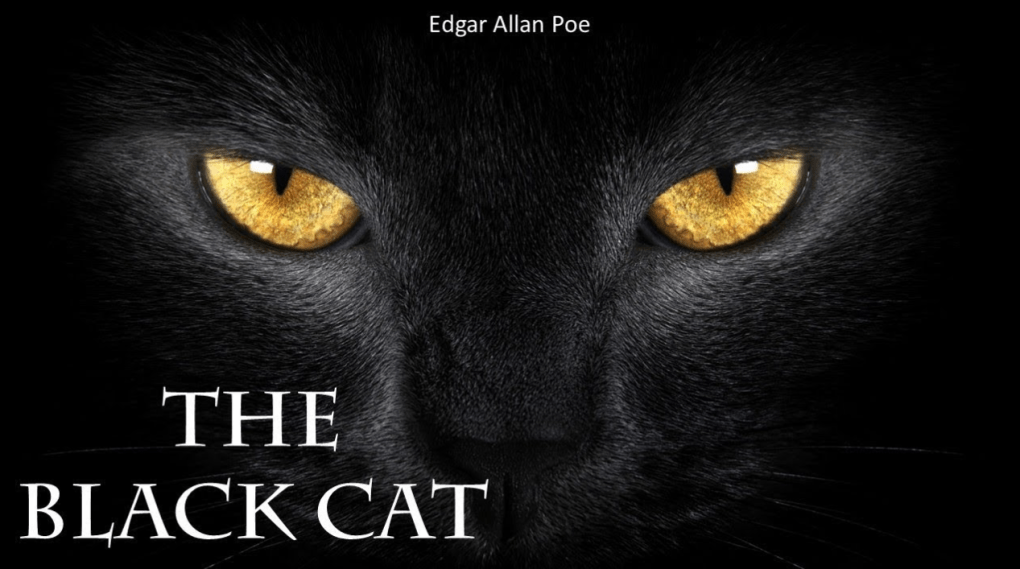
Edgar Allan Poe

The Geekly Gang went to the Edgar Allan Poe Speakeasy last month. This event featured actors interpreting Poe’s short stories and poems and cocktails based on the tales. My favorite cocktail of the bunch was the Cat’s Meow. And I started reading my collection of Edgar Allan Poe short stories. This may have also influenced my binging of true crime shows. Watching someone perform “The Tell-Tale Heart” and another actor portray “The Black Cat” got me wondering if Poe had homicidal tendencies. JK But I do think Poe’s work informed my choice of television shows.

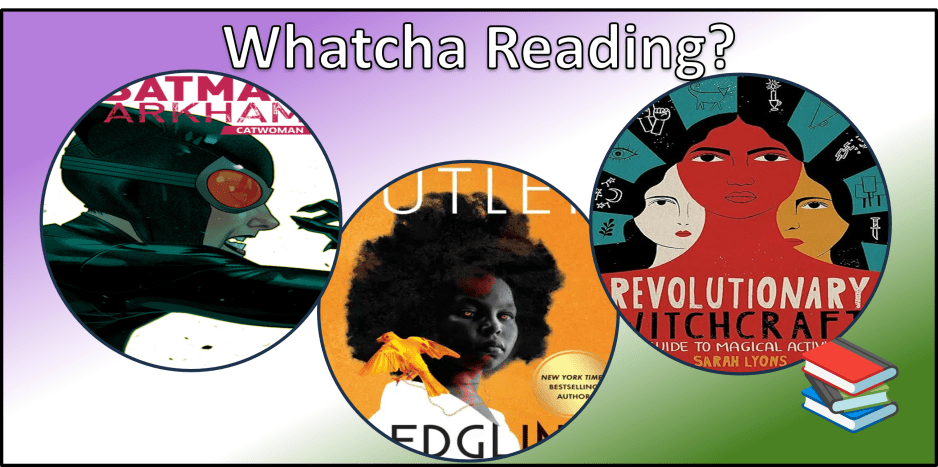
Batman: Arkham, Catwoman

Staying on the subject of black cats, I also read the Batman: Arkham, Catwoman collection. I enjoy reading classic DC Comics stories, and the Batman: Arkham series is good for catching up with a villain’s history. Catwoman’s been around since the 1940s. Early stories are products of their time. Then, the stories jump to being cheesy and using a heap of cat puns. It’s difficult to read. Late Eighties comics that feature Catwoman were influenced by Frank Miller’s The Dark Knight Returns, so they leaned into Catwoman’s updated origin as a former prostitute. Despite this, I liked Mindy Newell’s “Downtown Babylon.” Newell may have been forced to use this backstory for Catwoman, but she makes it her own. My only gripe is that “Downtown Babylon” was the second issue of a four-issue miniseries, and that’s Batman: Arkham’s biggest issue. Often, readers will get a random issue plucked from an ongoing story.

I may track down Newell’s 1989 Catwoman mini-series. What I read of it got me invested. The other standout in this volume was Ed Brubaker’s “Joy Ride.” This story is contained within a single issue and does a great job of showing Catwoman. She’s an anti-hero with a checkered past and a mischievous streak. Batman: Arkham, Catwoman is a good jumping-off point for further reading about the character. And that’s what I like best about this series.

Isaac Asimov I Robot

I, Robot

It may be sacrilege, but Asimov’s I, Robot made the DNF (did not finish) pile this month. The prose was more archaic than another book I started shortly afterwards, The King in Yellow, which was written fifty years prior. All is not lost. I’ll give I, Robot another go in another month or two. I’m also open to reading suggestions. I finished Becky Chambers’ A Psalm for the Wild-Built a month prior and fell in love with how “human” Chambers made Mosscap. I picked up the follow-up, A Prayer for the Crown-Shy, so spoiler alert for next month.

That’s all I have for this month. Thank you for reading, and let’s see what Season and Skye have been reading.

Season’s Reads

Fledgling

I’m finishing out my final semester in college, and Octavia Butler’s Fledgling is a novel we read in class. We read the first half one week and the second half the next week. I got so enamored with the story that I almost read the entire thing in a day. Fledgling follows Shori (pictured on the cover) as she discovers who she is and finds her purpose. She’s also a vampire called an Ina. Ina and humans live symbiotically with one another. I’ve never seen a story explore a mutual symbiosis with humans and a humanoid creature before. I highly recommend Fledgling for those who are interested in vampires, societal issues, and journeys of self-discovery.

There were talks back in 2022 of turning Fledgling into an HBO series. There isn’t much information on a release date or if the project was canceled. Personally, I’d love to see one of my new favorite books on screen.
The Nose

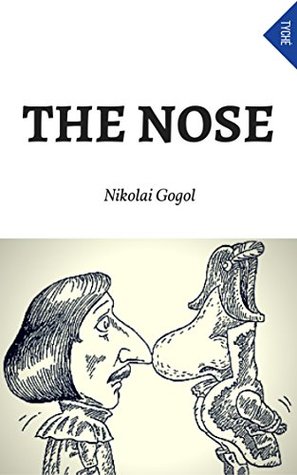
I read a collection of Russian short stories. “The Nose” by Nikolai Gogol stood out to me. It’s literally about a guy whose nose jumps off his face. The nose has a life of its own and even tries to leave the country by stagecoach, passport, and everything. There isn’t a clear main character within the story, but it’s about perception and how people handle the information provided to them. In classic Russian fashion, many characters have more than one name, so it can be difficult to follow at times. If you’re looking for something unique and wacky, I’d recommend “The Nose.”

Skye, what have you been reading?

Skye’s Reads

Yes, I also read on occasion. Here are the books I’ve been tackling lately.

The Crystal Witch

This should give you a crystal-clear idea of who I am. See what I did there? I practice New Age Spirituality. What draws me to it is its “a la carte” approach to faith. There’s no “right” way to practice it, and my preferred method is through rituals, tarot cards, manifestation, and crystals. That leads me to The Crystal Witch.

For folks like me who want a clearer picture of symbolism, spiritual power, and how to get started practicing New Age, The Crystal Witch has it all. So far, I’ve learned a lot about sacred altars, the importance of colors in practice, and descriptions of the most common crystals. I can’t wait ‘til I can categorize each of the crystals in my collection and start using them in everyday spiritual practice.

Revolutionary Witchcraft

Honestly, I’m unsure how I feel about the term witchcraft. While I’m empowered to be a part of a community, the term carries negativity. New Age is primarily built on positivity and the connection of humans to the rest of the universe. When words like “witch” are thrown around, it’s distracting. Although I’ll admit that New Age does have roots in the Occult, Paganism, and Wicca.

What does that have to do with Revolutionary Witchcraft? Well, Revolutionary Witchcraft teaches “witches” such as me how to use our beliefs to create positive change in our communities. I don’t know about y’all, but I always hear the latest news headlines and shudder. Because of that, I want to give back to my community, my country, my species, and my planet by properly directing my beliefs. Maybe we can finally see some good news, so here’s hoping.
The Filmmaker’s Handbook (5th edition)

Even in a segment about books, I still managed to circle back around to movies. That’s just what I do. I love visual art forms. I even like to make my own films. Eventually. Not now of course. Do you have $300 million? ‘Cause I don’t.

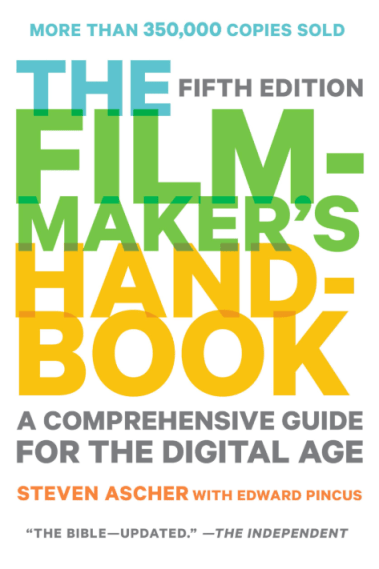
I’m reading The Filmmaker’s Handbook to give me an idea of where to start. What kind of shots work best to create a specific mood? When should you use live-action and animation? What are the basic building blocks of cinematic storytelling? How do you become an independent filmmaker? All that and more in The Filmmaker’s Handbook.

Also, I’m giving myself an excuse to judge films more harshly. I’m a critic at heart. What’re you gonna do?

Jesus’ Son

I’ve been putting a lot of emphasis on non-fiction books, so I asked my sister if she could recommend any fiction for me. She led me to Jesus’ Son. Thanks, Sis! I haven’t gotten very far into it, but so far, I have a lot of thoughts. Jesus’ Son is a collection of short stories with thought-provoking themes. Considering the first story is titled “Car Crash While Hitchhiking,” that’s a fair assessment.

Even though I haven’t read much, I feel like I could read the whole thing in one night. Unfortunately, I can’t. I’ve got stuff to do. Life be like that sometimes. The themes and emotions that arose after reading the first story were difficult to describe, but deeply intriguing. Because of that, I feel the need to re-read, re-re-read, and re-re-re-read to gain a deeper understanding. These are my favorite kinds of stories, stories that Shrek would compare to onions. These are some exciting layers.

Hey, hey! Kyra Kyle again. That’s all we have for you this month. Let us know what you’re reading in the comments, Geekly Gang. Thank you for reading, and wherever you are, I hope you’re having a great day.
3 Lists of 3 of Stan Lee

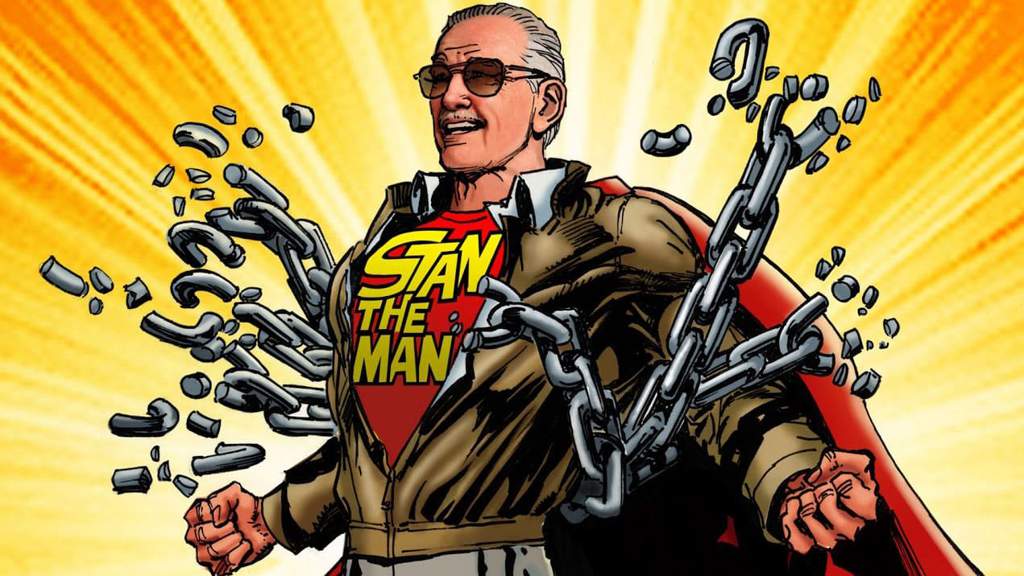
Uncle Geekly was remiss with not publishing a write-up for the late, great Stan Lee a few months ago, but that may be because it’s difficult to boil such an uncanny comic book giant with a small write-up. Ergo, a 3 Lists of 3 may be in order.

But Stan Lee is only as human as the characters he helped bring to life, so one of the following lists may cite some issues fans had with his work or more specifically, the assigning of credit. Even with his faults, Stan “The Man” did more good than most comic book creators. The world lost a legend.

A Pioneer

StanLee01

Humanizing Superheroes

There’s a tale of Stan Lee’s—it may be a legend by now—that goes like this. Before the dawn of the Marvel Age (when the Fantastic Four first launched) Stan was frustrated with writing the same thing. He told his wife Joan he’d quit, so he could write the stories he wanted to write. Joan responded to Stan that if he wanted to quit, why not write the stories you want to write in comics? If you fail, you wanted to quit anyway, so it doesn’t matter.

Stan did what his wife suggested, and the results were character-driven stories that showed superheroes as flawed people. The Fantastic Four fought like any family. Johnny Storm was a hot-head (I’m sure the pun was intended), Peter Parker struggled with most everything (money, school, and getting picked on), and Hulk has anger issues. What made these heroes great was that they had to overcome their shortcomings.

Some of the great comic book characters of the time dabbled with this concept, but Stan Lee made it a point that all his characters would have flaws. A character’s flaws and the conflicts that ensue are what makes a character interesting. Look no further than “This Man, This Monster” where The Thing must make the choice to be The Thing in order to save his friends and family.

Relatable characters existed in comics before the Marvel Age, but Stan Lee’s storytelling spark thrust them to the forefront.

StanLee04

Interacting with Fans

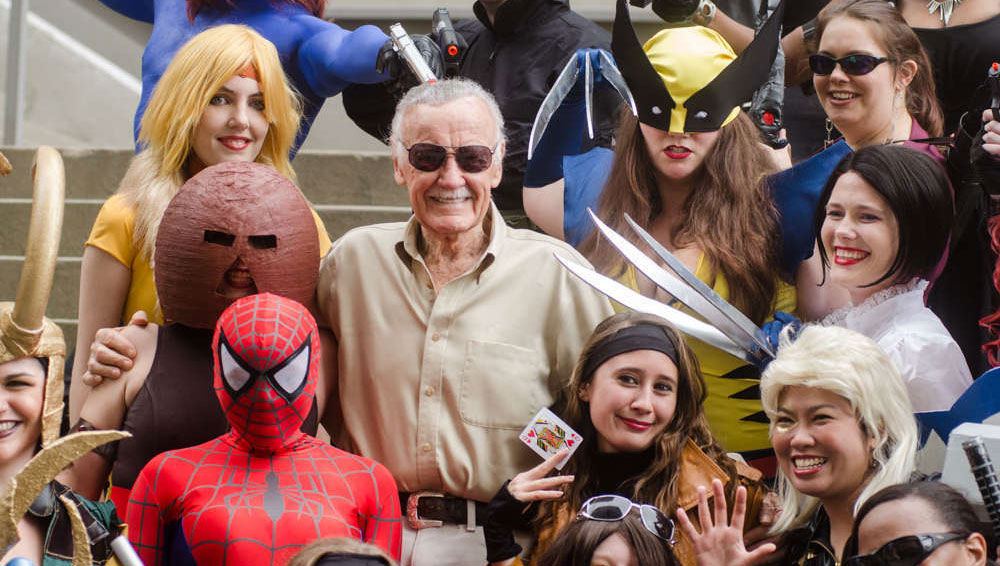
To call Stan Lee charismatic is an understatement. He acted as cheerleader for his characters as well as his fellow comic book creators, but he stood out equally with his interaction with fans. Stan Lee could give a master course in how to communicate with and respond to fanboys and fangirls.

If a fan caught an error on a page, they could write in and let Stan know. He’d write them a personal letter, complimenting their keen eye. The Marvel No Prize offered no monetary reward, but there are some folks who hold onto their letters today and treasure them. Stan also had his “Soapbox” where he’d tackle issues and concerns fans had with their favorite characters or in their personal lives. He comforted those whose family members went to Vietnam. And just two or three weeks before he passed, Stan posted a video about how fans shouldn’t worry about his health. His left hand is doing okay, but he’s worried about his other hand. That’s when he unveils a toy Hulk fist on his right hand.

He was a joy to the end.

StanLee02

An Epic Story

Stan Lee had a great sense of scope and grandeur. Comic book stories rarely went beyond a single issue, but Stan, along with his bullpen, stretched them to multiple issues. I’m not sure if Stan could envision the twelve issue plus story arcs that came decades after the Marvel Age, but he and Jack Kirby were trailblazers with the original story of Galactus.

Fantastic Four’s “Galactus Trilogy” spanned three issues and if it wasn’t for Stan revitalizing the industry, he wouldn’t have been given the latitude to make something that was “supposed” to be a single issue and give it more weight. The “Galactus Trilogy’s” success led to other comic book companies and other mediums to question preconceived notions for their art.

Controversies and Personality Flaws

It’s that time where I cover some of the less tenable things in Stan Lee’s past. There aren’t that many because he’s a legend for a reason, but he did manage to rub some people the wrong way, so I’ll include them here to show another side of Stan Lee.

KirbyAndLee

Credit Where Credit is Due

I hinted at this one already, but Stan Lee often received credit for single-handedly or predominately creating the Marvel Universe. That’s false. Stan Lee had plenty of help. Jack Kirby, Steve Ditko, Marie Severin, Joe Simon, Bill Everett, and even Stan’s brother Larry Lieber did a lot to shape Marvel’s stable of superheroes.

Many fans blamed Stan Lee for taking too much credit and that may hold some truth, but Stan’s fame may have come from needing to be the company’s front man, it’s icon. With Stan Lee as the face of the franchise, Marvel moved a lot of product.

Still, there’s a debate for who had more creative control. When Steve Ditko and Jack Kirby switched the titles they worked on (Ditko with Hulk; Kirby with Fantastic Four), to shake things up, the adventures in which the effected characters embarked changed to resemble the artist’s vision. If Stan Lee was the only one responsible for the stories, that wouldn’t have happened.

StanLee05.jpg

A Shameless Self-Promoter

Have I said how charismatic Stan Lee was and how communicative he was with his fans? Well, he was, and some critics viewed his loquaciousness as shameless self-promotion or even arrogance.

There’s a good chance he was to some degree—aren’t we all at times?—but Stan Lee promoted everyone and everything. He could’ve named Hulk, The Hulk, but he had to be “The Incredible Hulk.” Spider-Man wasn’t just Spider-Man, he was “The Amazing Spider-Man.” So, Jack Kirby wasn’t just Jack Kirby, he was Jack “The King” Kirby because even Stan knew how influential Kirby was, even if some fans didn’t.

Here are some of my other favorite names Stan gave the Marvel Bullpen:

Gil “Sugar” Kane

“Gorgeous” George Perez

“Roisterous” Ralph Reese

“Nefarious” Neal Adams

Steve “The Angry Man” Ditko

“Jocular” John Byrne

“Arachnerd” Jim Salicrup

And yes, Jim Salicrup worked a lot on Spider-Man; I’d love a nickname like “Arachnerd.”

StanLee06.jpg

He Left Comics for Hollywood

To be honest, I don’t qualify this one as a personality flaw or a controversy. I had to include it because when Stan Lee moved to Hollywood in the 1980s to start Marvel’s cinematic wing, many fans questioned his love for the medium that made him famous.

That’s crap. By the 1980s, Stan Lee had been working on comics for around forty years, and most people retire at that point in their careers. Stan Lee didn’t retire. He began what he thought would make Marvel omnipresent: a movie empire. While he didn’t succeed as much as he wanted to then (mostly TV shows, cartoons, and made-for-TV movies), Stan Lee was right in accessing that cinema would eventually make Marvel one of the hottest brands on the planet.

A Legacy

An Ambassador

I’ve used the term icon and giant to describe Stan Lee, but let’s throw in ambassador of comics to mix. Stan Lee promoted comic books his entire life. Even though it may not have been what he wanted to do with his career (he wanted to write novels), he made the art form his own. He empowered others to pursue it as a legitimate career path. He, along with others, put comic books on the map.

StanLee07.jpg

The Movies

Thank goodness we have all those Stan Lee cameos in the Marvel Cinematic Universe. Each one shows how loose, carefree, and fun Stan Lee was. He never took himself too seriously. There may be a lesson there.

StanLee09.jpg

His Stories and Some Quotes

 Here are some of my favorite Stan Lee stories, in no particular order, that may be worth checking out:

“The Galactus Trilogy” Fantastic Four Vol. 1 #48-50

“This Man, This Monster” Fantastic Four Vol. 1 #51

 “If This Be My Destiny” Amazing Spider-Man #31-33

 “How Green Was My Goblin” Amazing Spider-Man #39-40

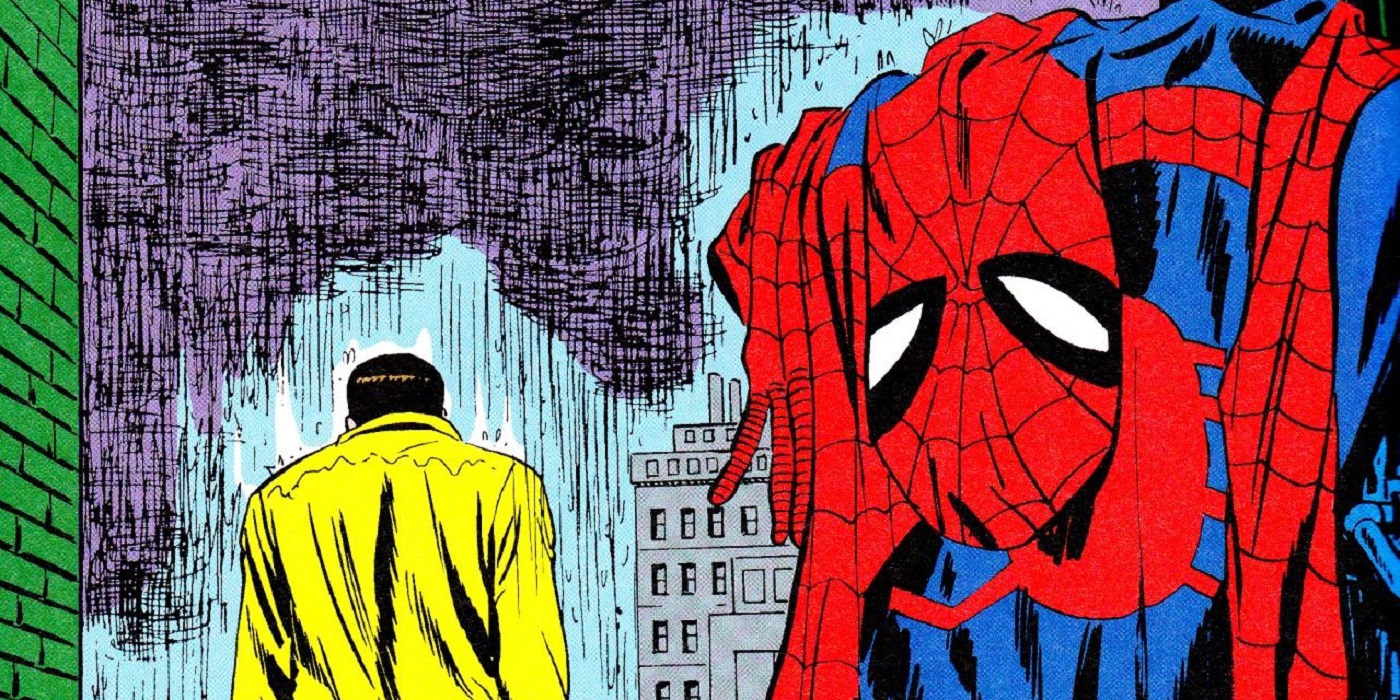
 “Spider-Man No More” Amazing Spider-Man #50

“Captain America Joins…The Avengers” Avengers #4

The Incredible Hulk Vol. 1 #1-6
This one comes with a caveat; The Hulk didn’t take off as well as Marvel would’ve liked, but one can see Stan Lee and Jack Kirby at the drawing board with each issue, reworking the character so he could work.

“The Eternity Saga” Strange Tales #130-146

And some quotes:

“Forced idleness is a terrible thing.”

“The only advice anybody can give is if you want to be a writer, keep writing. And read all you can, read everything.”

“The pleasure of reading a story and wondering what will come next for the hero is a pleasure that has lasted for centuries and, I think, will always be with us.”

“Face front, true believers.”

“With great power comes great responsibility.”

“Excelsior!”

“Nuff said!”

Batman Starter Stories

With wave after wave of comic book movies hitting theatres, interest in superhero characters has probably never been higher in the mainstream. Some people who’ve familiarized themselves with the big screen versions of the Avengers or the Justice League may be tempted to delve into the comics, but that can be intimidating. Most of the iconic superheroes in the industry have decades of stories behind them, so new readers may have no idea where to begin. With that in mind, Kyle and I have decided to publish recommendations for new comics readers, jumping-off points, so-to-speak, for understanding the basics of the characters in question.

This week, we’ll cover Batman. With three-quarters of a century’s worth of history, there’s a lot to know about the character, but the good news is most of the truly important moments in Bat-canon aren’t that old, comparatively speaking. Here’s my list of graphic novels and/or story arcs you can read to get all you need to about Batman and the world of Gotham.

BatmanYearOne.jpg

Year One (written by Frank Miller/illustrated by David Mazzucchelli)

Year One is pretty much what you’d expect from the title. It’s the story of Bruce Wayne’s beginnings as Batman, his first year. It covers his struggle with the crime families that predate the arrival of the supervillains, as well as his conflict with a corrupt Gotham Police Department. Parts of it aren’t really considered canon anymore, or never were, but modern canon never seems to stray too far from what Frank Miller established here. This is also a great story for understanding the dynamic between Batman and commissioner Gordon.

BatmanTheKillingJoke

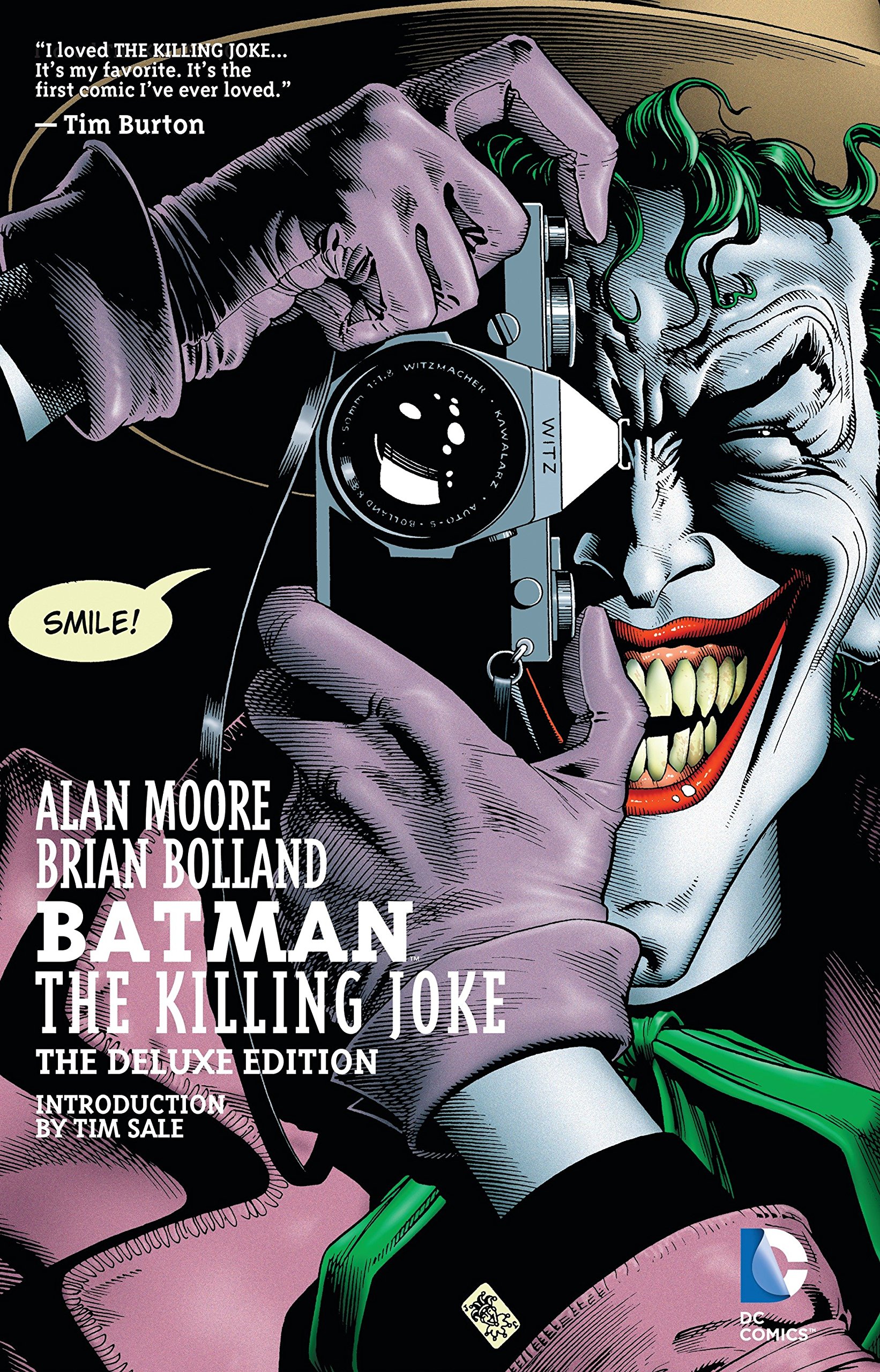
The Killing Joke (written by Alan Moore/Illustrated by Brian Bolland)

This is one of the most famous Batman stories ever told. It’s a window into The Joker, and a brief insight into the dynamic between hero and villain. This one comes with a warning to readers who are sensitive to the topic of sexual abuse, as Barbara Gordon, Jim’s daughter and alter ego of Batgirl, is shot and photographed in various stages of undress by The Joker. Do you remember Christopher Nolan’s film, The Dark Knight? The Joker wanted to prove that Harvey could be corrupted, made as insane as he is. That concept is straight out of The Killing Joke, only the target isn’t Harvey. It’s Jim Gordon, and he uses his daughter to achieve that. The Killing Joke also is the jumping off point to Barbara’s time as the character called Oracle, which is often referenced in Batman comics.

BMHUSH.Cv.r8.qx

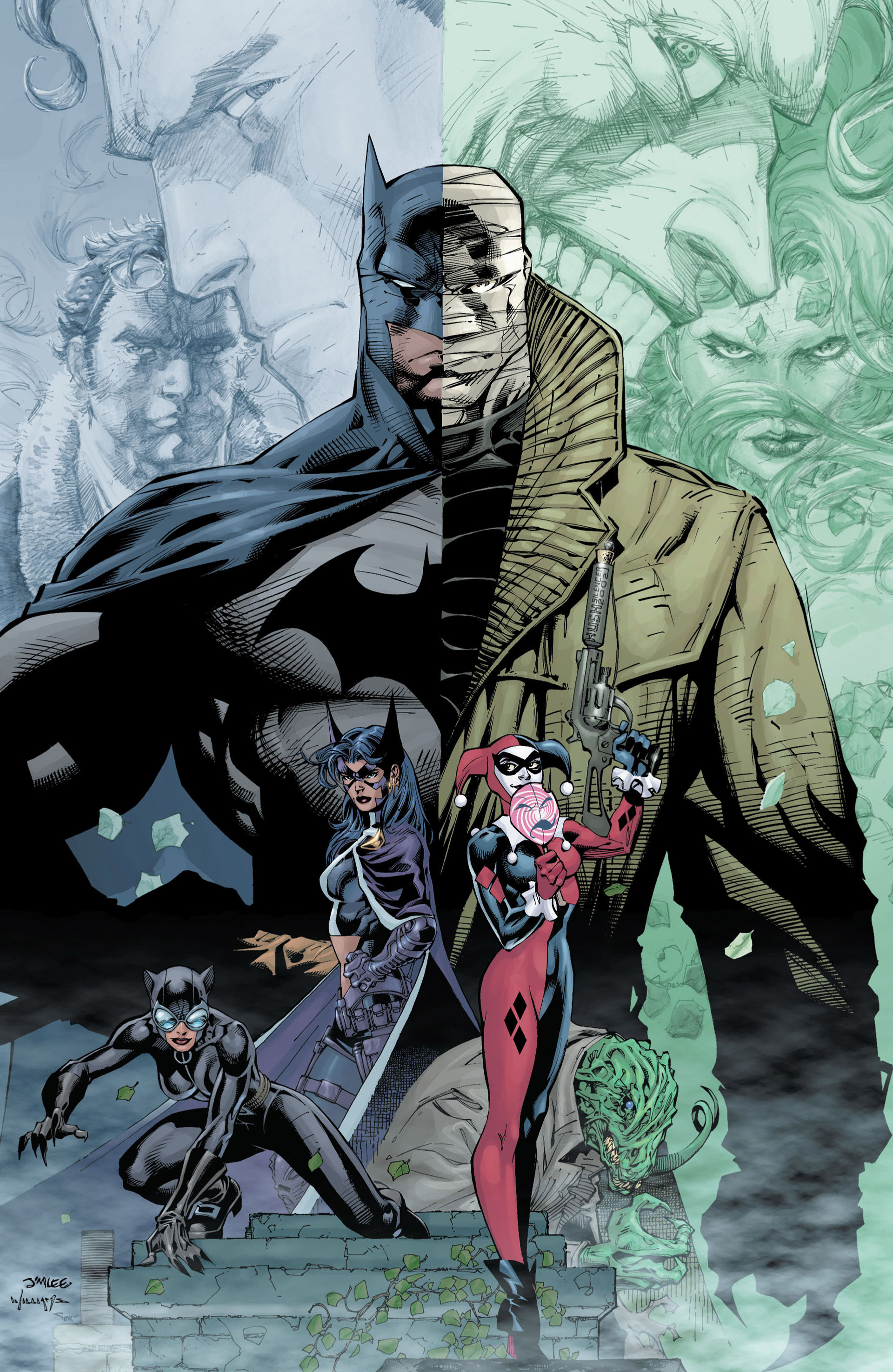
Hush (written by Jeph Loeb/illustrated by Jim Lee)

This one is a solid read, and good for beginners for a couple of reasons. First, because as Jeph Loeb is wont to do, it runs through just about the entire Batman Rogues Gallery in the course of the story. You’ll get a little bit of pretty much everyone here. Second, because this book also has an appearance by Superman, and the dynamic between Batman and Superman is one of the more fun things to consider in modern DC comics.

 BatmanTheLongHalloween

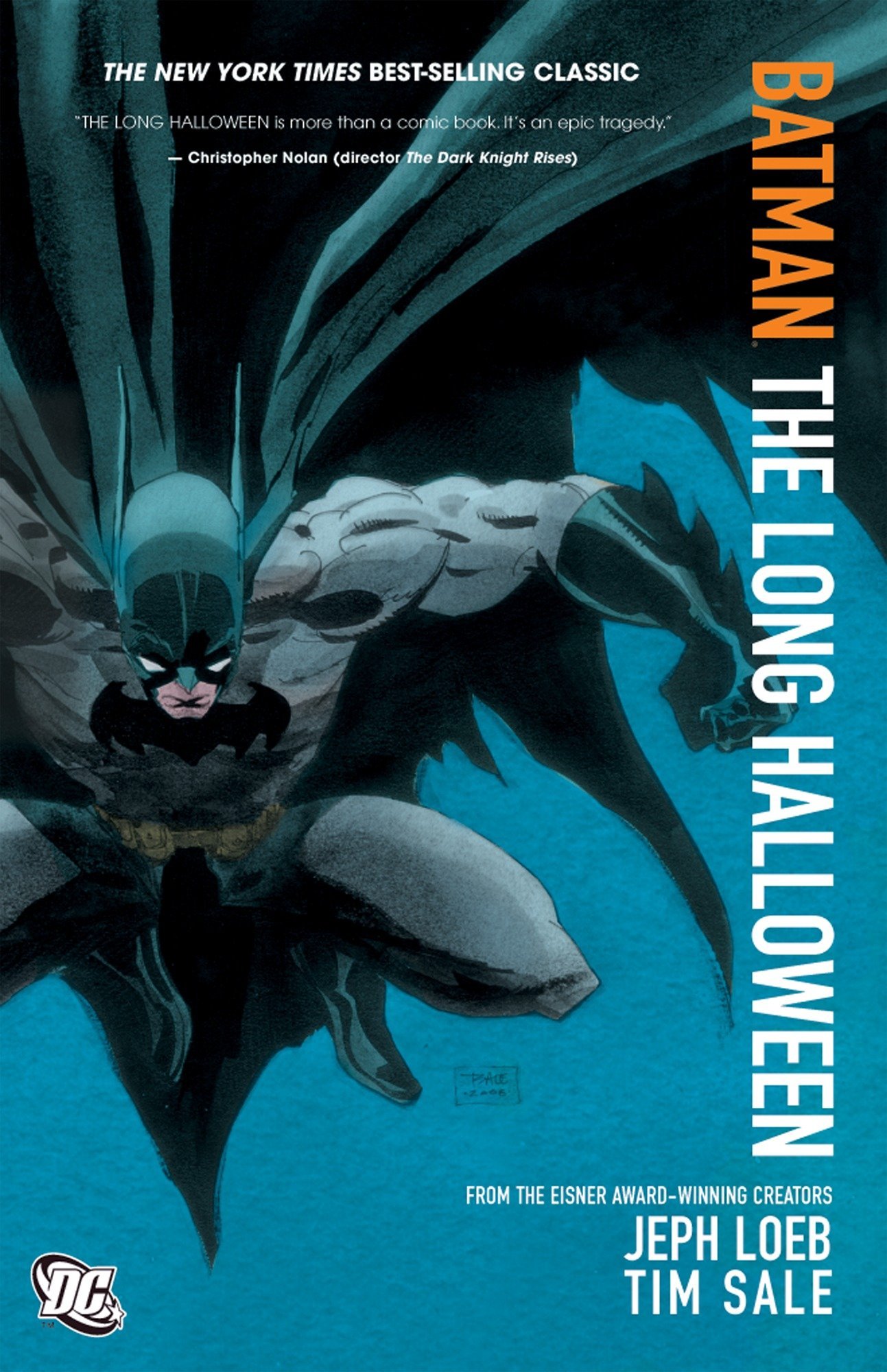
The Long Halloween (written by Jeph Loeb/illustrated by Tim Sale)

This is just a great Batman book in general, but it’s also a good introduction to another one of Batman’s iconic rogues, Two-Face (Harvey Dent). This is also a great read for anyone looking to explore Catwoman as a character.

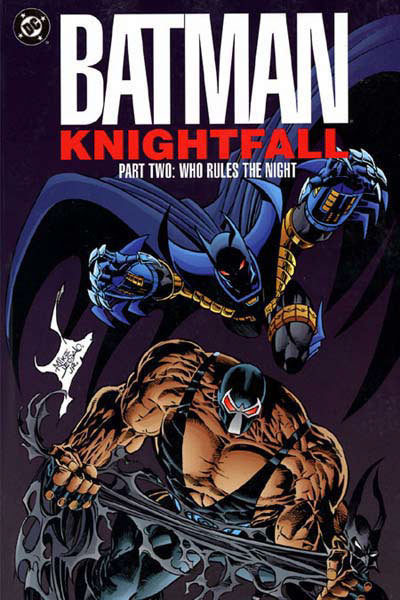
 BatmanKnightfall

Knightfall (written and illustrated by various)

This one is a bit of cheat as it refers to a long arc within the comics, but one that is often called upon in modern Batman storytelling. Remember when I referenced the Christopher Nolan movies? Well, this one is what The Dark Knight Rises draws from most. It’s the story of Batman having his back broken by Bane, his recovery, and his reclamation of the Batman mantle. It’s actually not one of my favorites, but it’s worth reading to get a bigger picture of the network that is The Bat Family, and why Bane holds a special place among Bruce Wayne’s enemies.

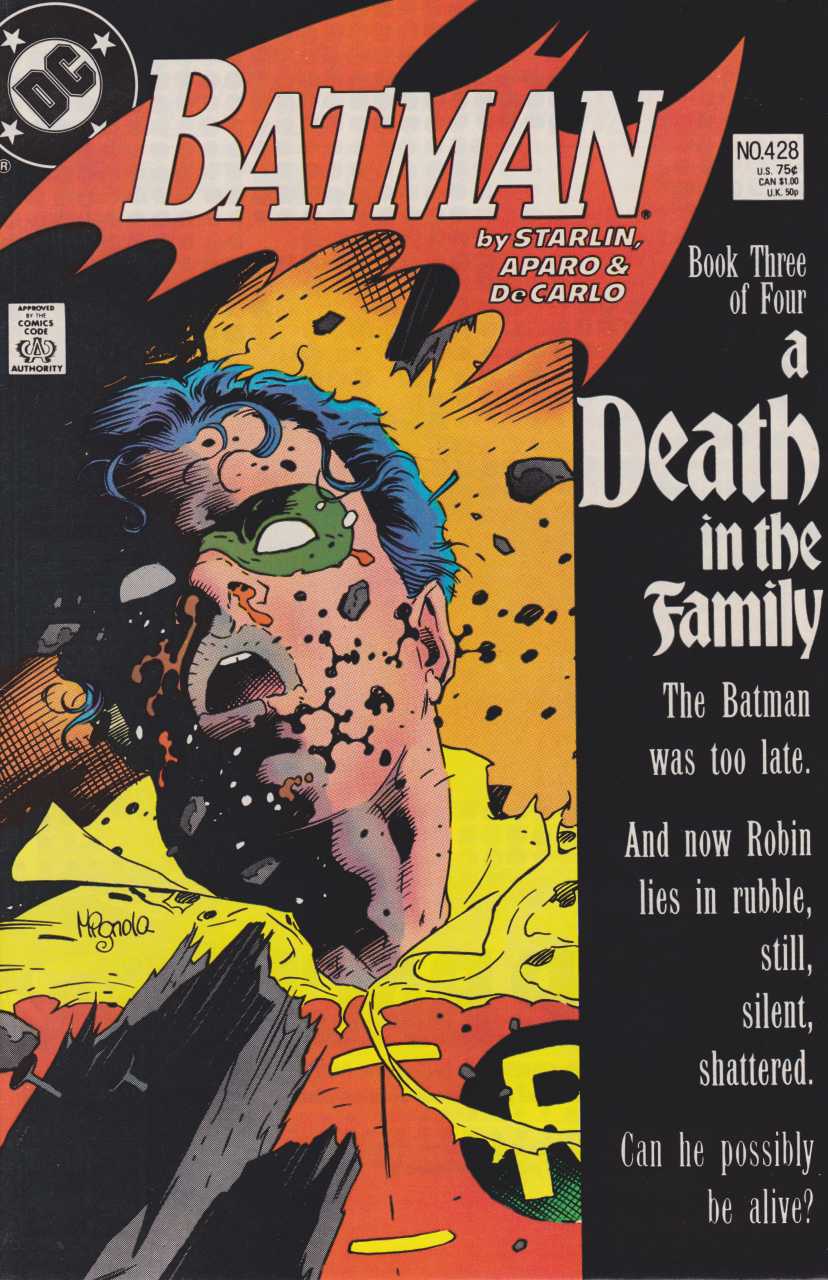
BatmanADeathInTheFamily

Death in the Family (written by Jim Starlin/illustrated by Jim Aparo)

This one isn’t to be confused with Death of the Family (Snyder/Capullo). Don’t get me wrong, Death OF the Family is terrific, but it’s not for this list. Death IN the Family is an important arc for Batman because it covers the death of Robin. If you’re new to Batman Comics, you may not realize there have been many Robins. In Death in the Family, Batman’s second Robin, Jason Todd, is murdered by the Joker. In later comics, Jason Todd’s death is undone, and the character exists today as Red Hood, but understanding the history established in Death in the Family is key to understanding that dynamic within the Bat Family.

That’s my list for new readers of Batman. How do some of our seasoned Batman readers feel about it? Did I miss any? Did I include some you don’t agree with? Challenge me to a duel, or maybe just tell us in the comments.