


Happy Sunday, Geekly Gang! Kyra Kyle here with another week of geek news. This week is a little quiet due to the United States Holiday, the Fourth of July, and the upcoming DCU and MCU movies: Superman and Fantastic Four: First Steps, respectively. So, we don’t have any major news to report. Instead, let’s discuss some board game releases for the upcoming week.
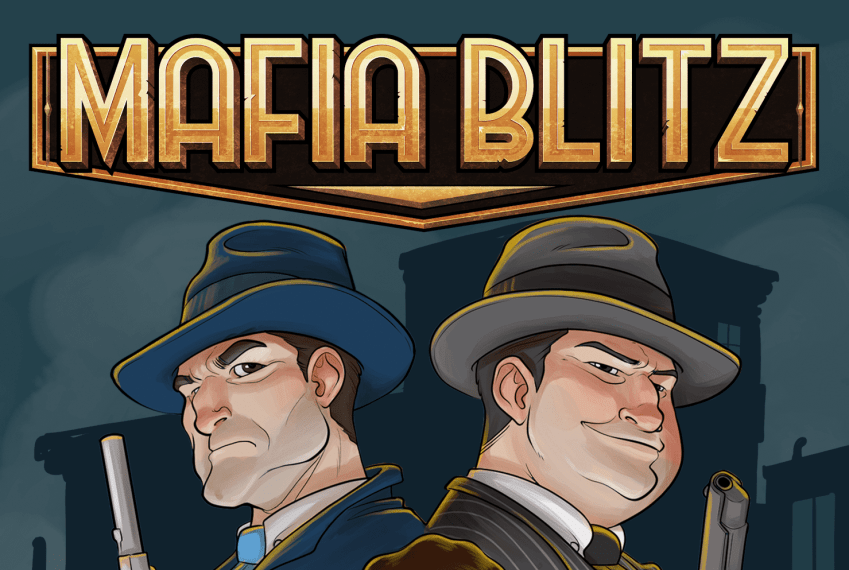
Honestly, I’ve never cared for social deduction games, but fast-paced social deduction games that don’t include player elimination (like One Night: Ultimate Werewolf), I can get behind. That is the premise of Mafia Blitz. Mafia pioneered the social deduction game. Mafia Blitz, designed by frequent Meeple Mountain contributor Mark Iradian, aims to do the same for quick social deduction games. Each role has unique win conditions, with many roles having overlapping win conditions. There are even some roles that include end-game triggers.
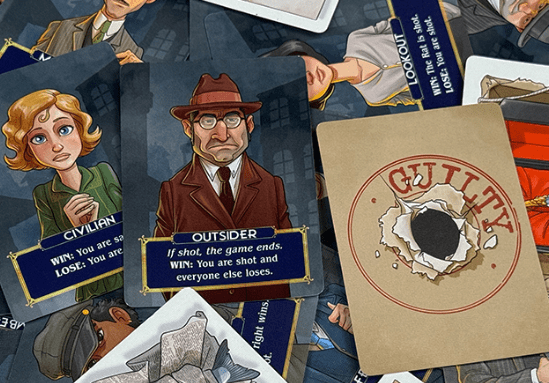
I like Mafia Blitz’s approach of having one price point: $20. Too often, crowdfunding projects include multiple add-ons, which can lead to a different gaming experience from one copy of the same game to the next. Mafia Blitz doesn’t have that issue. If you’re interested in Mafia Blitz, check out their KickStarter page.

Paradise: A Wastepunk Boardgame is another board game type I don’t typically care for (a skirmisher combat game), but it’s another one that has me intrigued. Its setup reminds me of a Memoir ’44 that has character abilities. Coincidentally, Memoir ’44 is one of the few skirmisher games I enjoy.
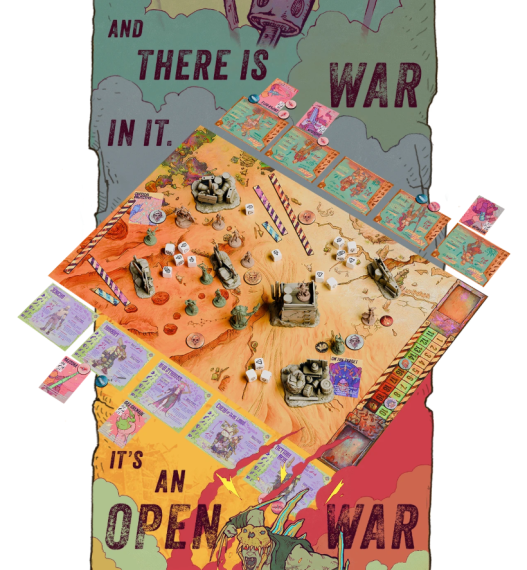
Throw in some quick dice combat, what appears to be gear cards, and detailed terrain pieces, and Paradise: A Wastepunk Boardgame has my attention. I also love the colorful palette Mindwork Games uses. Paradise: A Wastepunk Boardgame is Italian board game design studio Mindwork Games’ first design. They give me strong early CMON vibes. Both companies began as purveyors of awesome miniatures. That fact should let you know the level of detail this game’s miniatures will have. I wonder what the quality difference is between the PVC and resin miniatures. The resin minis are more expensive, and resin minis tend to break more easily than PVC minis. It’s something to consider.
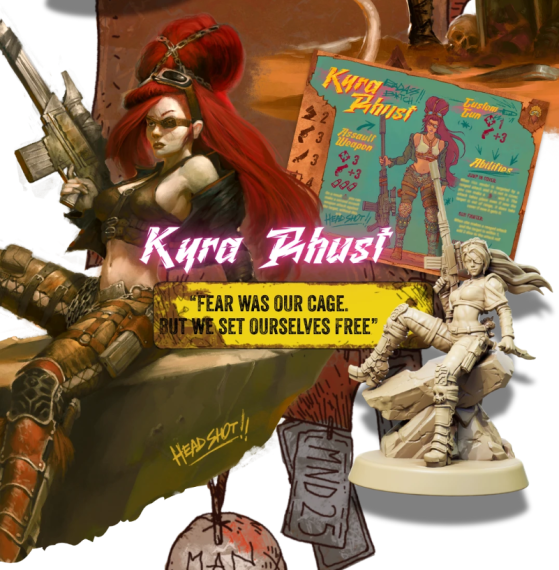
On a personal note, I’m considering backing Paradise: A Wastepunk Boardgame because of the character named Kyra Rhust. We’re both Kyra. And this Kyra looks like she may be a healing sniper like Ana from Overwatch (Ana was one of my mains–yay!). If you’re interested in Paradise: A Wastepunk Boardgame, give its GameFound page a look.

Far Far Out looks fantastic. The Netherlands-based game design group Studio Inifinitus offers multiple ways to win in this Civilization-like board game. The system tiles look amazing. These system tiles interlock and contain planets.

Players then place planets on top of the system tiles. I’m unsure if the planets always spawn on specific systems or if it differs each game. My guess is that players can change up which systems a planet can be placed. Far Far Out is stunning.
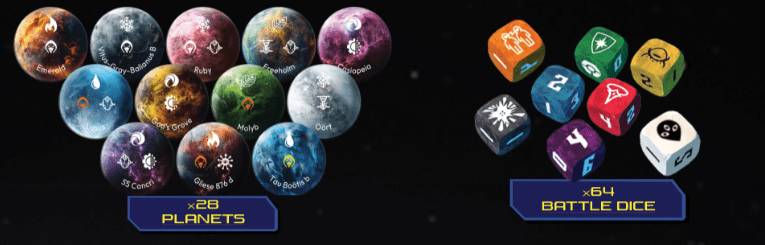
The game lists three ways to win. Far Far Out’s inclusion of 64 battle dice–64!–suggests that one method for victory is military/combat, but Far Far Out insists these battle dice serve multiple purposes. Far Far Out features a lot of exploration. I like that in a game set in outer space. We don’t know too much about the game’s mechanisms, but they have us intrigued.
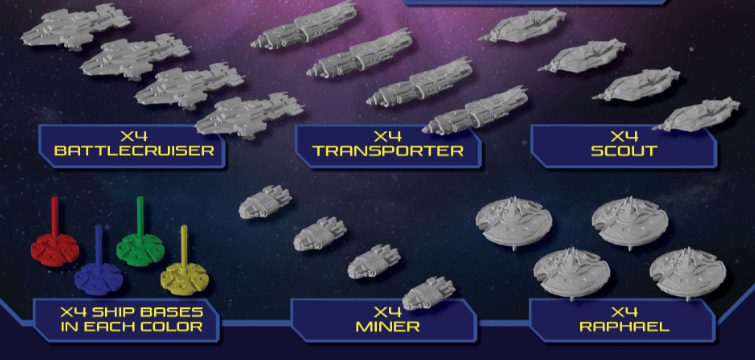
Far Far Out’s more expensive pledge (around $175) includes intricate miniatures, while its less expensive pledge (around $117) includes detailed standees. The only difference I’ve found between the two versions is the unpainted miniatures (pictured above), but Far Far Out leaves the description of its more expensive pledge as “all deluxe content.” The campaign could add more deluxe content, so keep an eye out. The price tag is a bit high because Far Far Out includes a lot of bits. This is a premium game with a premium price. If you’re interested in Far Far Out, zoom to its GameFound page.

Former Marvel Comics Editor-In-Chief and comic book visionary Jim Shooter passed away on June 30, 2025. Shooter has a complicated comic book history. On one hand, he “rescued” the comic book industry. By the mid-1970s to early 1980s, comic books had gone stale. A 13-year-old Shooter would get his start with DC Comics and proceed to pull comic books out of its slump. During his time as Marvel Comics Editor-In-Chief, Shooter orchestrated the massive crossover event, Secret Wars, which is the major event the MCU is currently building toward. But Shooter wasn’t without his share of controversy.
Shooter’s Marvel Comics was openly homophobic, refusing to feature queer stories. Writer/artist John Byrne was forced to conceal Northstar’s sexual orientation for years before the character became the first openly gay comic book character. Instead of letting Northstar out of the closet, Shooter penned the first comic book that featured a queer storyline: two gay men attempt to r*pe Bruce Banner and this caused Banner to transform into The Hulk. Shooter had a “Don’t Say Gay” Policy with Marvel Comics. This restriction prevented positive queer representation in Marvel Comics for over a decade.

Still, Jim Shooter (during his teen years) wrote the first race between Superman and The Flash. This race between titans has become a tradition for DC Comics, and he solidified much of the Legion of Super-Heroes lore during his early tenure. Shooter even created one of my favorite Superman villains, Parasite. And Shooter’s jump to Marvel Comics ended the revolving door of editors after Stan Lee had transitioned to Marvel Films. Shooter was the editor who oversaw the growth of Chris Claremont and John Byrne’s classic run of The Uncanny X-Men, which led to the team becoming a global phenomenon. The Uncanny X-Men also saw the inclusion of many BIPOC stories.
Shooter has an impressive comic book history and a checkered past with queer inclusion. His contributions to comic books, and especially Marvel Comics, will not be forgotten. As a member of the LGBT community, I wish Shooter had done more for LGBT inclusion in Marvel comics. Even so, my thoughts go out to Shooter’s family. Rest in Peace.
That’s all the geek news we have for this week. Thank you for reading, and wherever you are, I hope you’re having a great day.



Today is Miss Kyra’s birthday. I asked her which comic book character’s history she wanted Geekly to cover today, and she picked another character with a complicated past, Scarlet Witch. Yes. Today will be covering comic books for new readers of the Scarlet Witch.
Hey, hey! Kyra Kyle here. Like many X-Men characters, Scarlet Witch has played jump rope with being a villain and a hero. Wanda Maximoff has even had moments of turning into an otherworldly being. She’s been a member of the Brotherhood of Evil Mutants, the Avengers, and Defenders. Scarlet Witch blurs the line between superpowers and magic. She has the power to bend reality.
We’ve split this list into single issues and longer stories. Let’s begin with single issues.

Magneto proved a worthy adversary to the X-Men when he took on the team alone (Uncanny X-Men #1). The Brotherhood of Evil Mutants marks the team of the same name’s first appearance. Toad, Mastermind, Quicksilver, and Scarlet Witch join Magneto. But the team already shows cracks.
Quicksilver and Scarlet Witch want nothing to do with the Brotherhood. Magneto coerced them into joining. He reminds them of when he rescued the twins from an angry mob. The citizens of a small European town want to kill the Scarlet Witch for burning down a barn with her mutant powers. Magneto reminds the pair that humans would continue to hunt them for their abilities, which isn’t a complete lie.
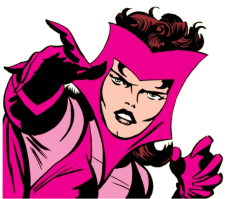
The X-Men track down the Brotherhood to a palace in Santo Marco. The X-Men’s actions reinforce Magento’s claims that humanity will hunt down mutants. Mutants are hunting down other mutants who disagree with them. A quick battle ensues. Once the X-Men enter the palace, Magneto arms a series of bombs meant to destroy the palace and Santo Marco with it. Bystanders would be killed. Scarlet Witch and Quicksilver can’t abide by this plan, so as they escape, Quicksilver disarms the remaining bombs that would’ve taken the country. The Brotherhood of Evil Mutants shows Scarlet Witch’s tenuous relationship with Magneto.

Scarlet Witch makes good on her threat of leaving Magneto’s employ. It took her one year—almost to the day—from debuting as an X-Men villain to becoming a card-carrying member of the Avengers. The Old Order Changeth does what it says. The Master of Evil (the Avengers’ main antagonist team at the time) disbanded after burying their leader Baron “Heinrich” Zemo. (Note: the current Baron Zemo is Heinrich’s son, Helmut.) Wasp, Giant-Man/Ant-Man, Iron Man, and Thor leave the Avengers. Naturally, Hulk is missing. So, Captain America is chilling at the Avengers Mansion advertising that the team needs new members.

Hawkeye and Black Widow flip sides and join the Avengers. They had been duped into helping the Russians who wanted to disrupt the Avengers. Mission accomplished, I guess. Scarlet Witch and her twin brother Quicksilver also want to redeem their past as members of the Brotherhood of Evil Mutants and join. It may not seem like much but the Avengers changing their roster in just over a year (this issue is the sixteenth of a monthly comic) shook up the Marvel landscape.
What was Scarlet Witch’s role in this comic book issue? She doesn’t have a large role. While living in Switzerland, she learns about the Avengers needing new members. She travels by cruise ship to the U.S. and auditions for a spot with Tony Stark. The Old Order Changeth marks Wanda’s first step as a hero, and the first step is often the most important.

We jump a couple of decades to our next single issue New Faces. Surprise! The Avengers add a new member or two. US Agent (John Walker) joins the team which causes Hawkeye and Mockingbird to depart. This storyline has many layers and is worth the read, but we’re more interested in another storyline, the one between the Scarlet Witch and her husband Vision.
By the time of New Faces, Wanda and Vision have twin sons, Tommy and Billy. There’s a whole issue of Tommy and Billy going through a series of nannies who can’t manage to care for them. The nanny introduced in this issue, Mrs. Hunter, loses the twins in the nursery. We never see Mrs. Hunter again, so there’s a chance she got fired off-camera. The bigger issue rests with Vision. Vision needed to be reprogrammed. Unfortunately, while Vision has all the information, he lacks an emotional connection with that information. When Wanda hugs Vision, he asks her why. He no longer feels love.
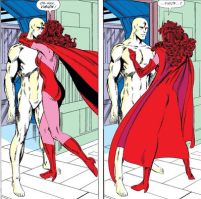
Hank Pym explains that Vision misses one element, his brother Wonder Man’s brain patterns. Manipulated by Baron Zemo and then Black Talon, Wonder Man’s brain patterns had been used for Vision without his permission. Wonder Man refuses to help Vision because he had no control over his life for many years. While Wonder Man’s reason is understandable, Wanda is heartbroken when she sees the new Vision speaking monotonously, like he did when they first met. New Faces is the first time Vision wears all white. The MCU adopted a version of this costume with its current iteration of Vision.
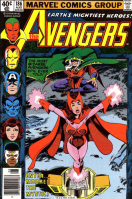
The Witch of Wundagore Mountain is the first attempt at Scarlet Witch and Quicksilver’s origin story. The twins’ origin has been twisted and changed so many times, but this story marks the first real attempt at a Scarlet Witch origin. She wasn’t Magneto’s daughter. She even believed that her parents were the Whizzer (a Golden Age comic book hero with superspeed like Quicksilver) and Miss America. But the pair found that to be fiction.
A man named Django Maximoff claims to be her father, but she will soon learn that he’s her adoptive father. She was born on Mount Wundagore in the laboratory of the High Evolutionary. One of the High Evolutionary’s earliest creations, an anthropomorphic cow named Bova, cared for her. This is a bizarre story, and it takes many turns. Outside of flashbacks, Scarlet Witch becomes possessed by Chthon who, with the help of Scarlet Witch, holds the other Avengers prison.

We just scratched the surface with The Witch of Wundagore Mountain. It’s a harrowing tale.

After being a hero for most of her Marvel Comics tenure, Scarlet Witch hops over to the dark side during Darker Than Scarlet. She joins her would-be father Magneto, and at first, it seems like she isn’t the only one. The end of this storyline’s first issue shows Quicksilver joining Magento too. Toward the end of the story, we find that Quicksilver remained loyal to the Avengers, only joining his family to convince Scarlet Witch to reconsider and stop Magneto’s evil schemes.
While Scarlet Witch and Quicksilver have been on opposite sides before, Darker Than Scarlet is one of the few times that the twins have acted as enemies for a prolonged time. Typically, one of the twins would have a lapse of judgment before the other one eventually saved them, but Darker Than Scarlet shows Scarlet Witch reaching new levels of evil.

While Darker Than Scarlet was Scarlet Witch’s first big heel turn, House of M is her most infamous and had a profound impact on the greater Marvel Universe. Wanda becomes unhinged when she realizes that her children aren’t real. She loses control and uses her reality-altering powers, killing Vision, Hawkeye, and Scott Lang. These deaths cause the Avengers to fracture.
This new reality is unlike any other in the Marvel universe to that point. Wanda utters, “No more mutants,” which returns the world to the reality it had before, but with one significant change. Nearly all people who were mutants become normal humans. Only 198 mutants remain.

While Scarlet Witch plays a key role during House of M, Quicksilver works behind the scenes. He convinces Scarlet Witch to use her powers to reshape reality, and it is Quicksilver’s injuries at the hand of Magneto that inspire Scarlet Witch to wipe out most of mutantkind.

House of M and Avengers: Disassembled led Scarlet Witch into a dark period. Avengers: Children’s Crusade is Wanda’s first step to redemption. The story revolves around Speed and Wiccan, who believe they’re Wanda’s lost children. The Disney+ series Agatha All Along borrows aspects from Speed and Wiccan’s story here. Accompanying Speed and Wiccan is their grandfather, Magneto.

When the kids find their mother, she’s lost her memories and powers and is about to marry Victor Von Doom. When Scarlet Witch’s memories begin to return, she learns that her powers had overloaded when she worked with Doom to bring her children back from the dead. Scarlet Witch’s children redeem her. Once reunited, she seeks redemption for the chaos and destruction she had caused.
Rumors persist that Scarlet Witch may not have died during the events of Doctor Strange in the Multiverse of Madness. The MCU could reintroduce the character following the events of Agatha All Along and a subsequent series with Speed and Wiccan. If that happens, she will have a lot to atone.

Witches’ Road has a simple premise: witchcraft is broken. Joined by Agatha Harkness’s spirit, Wanda travels the world to fix witchcraft. If this premise sounds familiar to MCU fans, a similar journey may be hinted at the end of Agatha All Along. Scarlet Witch had the moniker of witch but seldom associated herself with witchcraft until the events of Witches’ Road.
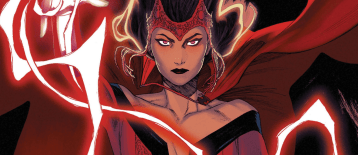
Thanks, Agatha All Along. Now all I hear when I say Witches’ Road is the song from the Disney+ series. Anyway. During the comic book storyline Witches’ Road, Wanda solves magical crimes and pieces witchcraft back together. She must solve the mystery of who broke magic.
I lost count of how many Scarlet Witch stories missed the cut. I added Witches’ Road at the last second or it could’ve been one more storyline. Scarlet Witch has had so many great stories. Let me know which Scarlet Witch stories you’d add to the list. Thank you for reading, and wherever you are, I hope you’re having a great day.




 jkgeekly.com