Iron Man Starter Stories

Iron Man doesn’t get the due that other Marvel characters receive. Heck, he’s the character who kicked off the Marvel Cinematic Universe. Show some respect, people. He’s also had a checkered past when it comes to the quality of his storytelling.

Some Iron Man moments are some of the best in the business. Others leave readers shaking their heads. It’s a rollercoaster of a ride for Iron Man readers, but fortunately, your uncle Geekly’s here to point you in the right direction of some of the better Iron Man titles that serve as great jumping off places for new Iron Man readers.

Tales_of_Suspense_Vol_1_39.jpg

Tales of Suspense #39 “Iron Man’s Origin” (written by Stan Lee/art by Steve Ditko; 1963)

What better place to start than with Iron Man’s origin? What new readers may be surprised when they first read this story is the reflective nature toward communism that it takes—in 1963. We’re in the height of the Cold War. This is a story originally based in Vietnam that was published a year before the Vietnam War started in earnest.

It’s no wonder the Iron Man film obliquely addressed the War on Terror. Iron Man has a history of taking on current events and international conflict. You could spend thousands of dollars to get your hands on an original comic, but Uncle Geekly suggests that you pick up the anthology Essential Iron Man.

IronManExtermis

Iron Man: Extremis (written by Warren Ellis/art by Adi Granov; 2005-2006)

We’re going to jump several decades to this essential Iron Man story. Extremis updates Iron Man’s origin—something that’ll look familiar if you’ve seen the first Iron Man movie—and serves as the primary source material for Iron Man 3.

This story handles Aldrich Killian (the main antagonist in Iron Man 3) a lot differently than the movie, but the key story elements are present. It also updated Tony’s suit and his relationship with it that one can see in later Marvel Universe movies. Extremis is one of the best Iron Man stories and well worth the read.

IronManDemonInABottle04

Demon in a Bottle (written by David Michelinie and Bob Layton/art by John Romita Jr., Bob Layton, and Carmine Infantino; 1979)

Sorry, but we’re going back in time with this one. “Demon in a Bottle” introduces Tony Stark/Iron Man’s struggles with alcoholism. This addiction remains one of Tony’s defining characteristics.

The Marvel Cinematic Universe glossed over Tony’s alcoholism (there was a moment in Iron Man 2 where he got drunk at a party while wearing his armor), but any collection of Iron Man stories must include “Demon in a Bottle.”

Whether he struggles with his addiction or comforts someone else with an addiction, Tony Stark gained some needed personality and depth with this story, and this story happened almost by accident.

IronManTheEnemyWithin.jpg

The Enemy Within (written by John Byrne/art by John Romita Jr.; 1990)

Tony’s alcoholism continues to gnaw at him. When he’s pushed over the edge with AIM, the Serpent Squad, and Diablo while fighting a corporate takeover by Obadiah Stane (main villain of the first Iron Man movie), he turns to the bottle and after several drinks, it’s obvious that Tony is in no shape to fight.

James Rhodes fills in for Tony for the first time in this story and this leads to his transformation as War Machine. Fans of War Machine will love this story. Others will find “The Enemy Within” as a fantastic character study for Tony.
IronManArmorWars

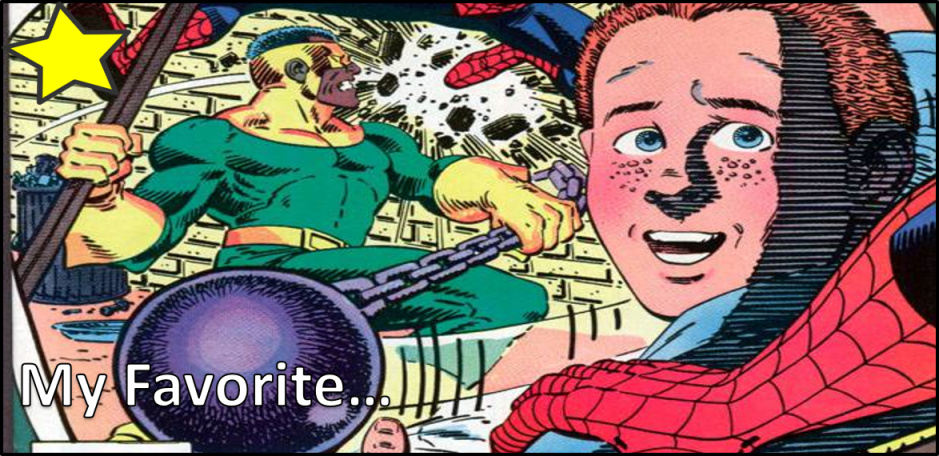
Armor Wars (written by David Michelinie and Bob Layton/art by Mark D. Bright and Barry Windsor-Smith; 1987-1988)

Armor Wars has more action than most of the other titles on this list so far. It also features some of Iron Man’s greatest foes like Titanium Man and Crimson Dynamo. Tony travels to his Vault as he battles the government and infiltrates SHIELD.

But this story is more than just action. It shows how Tony can be careless, aggressive, and out of control with his armor. It’s a story about relationship—specifically ones Tony destroys—as well as who he beats up, and it’s well worth the read.

IronManCivilWar

Civil War (written by Mark Millar/art by Steve McNiven; 2006-2007)

This one is by no means a great Iron Man story (I have plenty of issues with it), but it’s a massive tale for the greater Marvel Universe and Tony is in the middle of it.

Like the movie Captain America: Civil War, Tony fights for power registration in his attempt to make the world safer for civilians—or normies. Oddly enough, the movie does a somewhat better job of making the story a little more even keel, but the comic book Civil War is biased in Cap’s favor and that mostly comes from the fact that Tony would never want power registration.

Still, there was a movie that uses Civil War as its source material and this event is one of Marvel’s largest. Just make sure to read the stories centered on Iron Man.

IronManWorldsMostWanted

World’s Most Wanted (written by Matt Fraction/art by Salvador Larroca; 2009)

I couldn’t end this list with Civil War, so I added one extra story. World’s Most Wanted picks up the pieces of the events after Civil War—sort of.

It was a tall order to return Iron Man to his former glory after he betrayed his friends, but Fraction was up to the task and softly reboots the character. Norman Osborne has taken over HAMMER (which movie fans will remember as a huge player in Iron Man 2), and Osborne wants Tony’s knowledge of the superhero community. Tony erases his memories, so he can’t betray his friends.

This returns Tony to person we know even if he had to lobotomize himself to do it.

That’s my list for beginning Iron Man readers. I’m sure there are some omissions. You can let me know what you’d pick by message raven or just leave a comment.

Underrated or Underused X-Men Villains

While we can, and probably will, make lists for underused or underrated characters in other superhero and superhero team books, the X-Men have so many characters in its stable that it’s easy to make a list of them. Old uncle Geekly likes easy tasks, so here’s a list of X-Men villains who are underrated or underused in the comics. I’m sure Jim will spank me with a paddle if I’m wrong.

X-MenChildrenOfTheVault

Children of the Vault (First appearance: September 2006)
You know you have a horrifying supervillain team when they turn Sabretooth’s fur white. Seriously, if you look closely in one of the panels, you can see if Sabretooth poops in the woods. He does by the way.

These superpowered villains don’t fall neatly into a human or mutant category. They’re beings that evolved from a baseline human genome over 6,000 years or so. Think of them as an off-shoot humanoid like a Neanderthal that developed over millennia with the help of the Weapon Plus Program that also produced Wolverine. That, and they want to end humans and mutants. They’re equal opportunity murderers with Spanish codenames like Sangre, Fuego, and Cadena.

Even though they’ve been around for over a decade, the Children of the Vault and their approximately 3,000 members (X-Men #193) haven’t been used enough and that’s why they make this list.

GraydonCreed.jpg

Graydon Creed (First Appearance: April 1993)

We go from a group trying to kill Sabretooth to Sabretooth’s estranged, human son.

Creed factors into so many X-Men characters backstories that I couldn’t possibly list them all here, but I will mention that he formed a group called the Friends of Humanity, and they’ve been a thorn in the X-Men’s side for a long time.
This entry may be a tad misleading. Creed was assassinated in 2010 by Mystique during his presidential campaign. He’s since been resurrected as a human-sentinel. In classic X-Men fashion, it’s more complicated than that, but classic Graydon Creed made a great foil for the X-Men. Plenty of X-Men the Animated Series may remember him fondly as well.
He hasn’t shown up that often since his transformation, but nothing says a trip back in time couldn’t return Creed to his original form. Make it happen, Marvel.

X-MenMastermind

Mastermind (First Appearance: March 1964)

This is the guy who set the Dark Phoenix Saga in motion, and it often gets overlooked and viewed as an also ran. Sure, the original Mastermind perished in 1993, but he doesn’t get the credit he deserves as a pivotal member of the Hellfire Club.

Heck, the Hellfire Club asked him to turn Jean Grey as his initiation into their Inner Circle. When that turned into the Dark Phoenix Saga, his application was rejected, and he was forced out of the group.

But that didn’t stop Mastermind. He remained a thorn in the side of Cyclops and Wolverine—tearing apart future romances. He even went toe to toe with Rachel Summers, the second host of the Phoenix force. He may have died of the Legacy Virus, but he won’t be forgotten by this fan.

Mastermind is a classic X-Men villain who doesn’t get the same recognition as his Brotherhood of Evil Mutants and Hellfire Club teammates. It’s a shame.

X-MenSugarMan

Sugar Man (First Appearance: April 1995)
Sugar Man hasn’t made too many appearances because he’s tied to the Age of Apocalypse storyline, but that reality gave birth to Blink, and she’s made plenty of appearances since the 90s. Sugar Man must have the most unique look of any X-Men villain: four arms, a mouth full of razor teeth, a long strong tongue, and a head for a body.

He’s a cross between a troll and a mutant and he isn’t used enough in the X-Men universe. Give us some Sugar Man.

X-MenVargas

Vargas (First Appearance: July 2001)

Yeah, Vargas takes the humans hating mutants angle and adds a Captain America bend to it. He gave himself powers, so humans can compete with homo-superiors. He had a short but interesting run where Rogue may or may not have killed him. To be fair, it was revealed some years later that she spared his life and someone else took it.

While it makes sense that Vargas hasn’t made another appearance, you’d think more humans would take the Cap route to keep up with mutants. Maybe they have, and I missed it. If so, feel free to wag your finger at me.

I could’ve added more than these five, but your uncle Geekly wants to hear your thoughts. Are there any X-Men villains you’d like to see more of or who don’t get the due they deserve? I’ll accept picket signs with your answers on them, or you could take the easy route and comment. Your uncle Geekly won’t judge.

My Favorite Storytelling Element: Iron Man “Demon in a Bottle”

I’m not sure if I can say it any better than several other critics “’Demon in a Bottle’ is THE quintessential Iron Man story.”

Tony Stark/Iron Man’s alcoholism is one of his key characteristics, and “Demon in a Bottle” introduces this. Does “Demon in a Bottle” do as well of a job tackling this issue as other, more modern stories (in comics and other media)? Not necessarily. It’s a 1979 comic book story arc after all. Does writer David Michelinie speed through what occurs during recovery? Yes. It’s almost comical. But he does an excellent job with loss and the struggles Tony deals with, and it’s easy to see why “Demon in a Bottle” remains one of the best Iron Man stories.

Prior to “Demon in a Bottle” Iron Man was a relatively flat character. Many of the stories weren’t engaging. I like how the “Demon in a Bottle” begins as usual Iron Man fare at the beginning of the arc. The storyline ran from The Invincible Iron Man #120-128 (March-November 1979), but it wasn’t until issue 124 or so that alcohol really came into play.

demon-in-a-bottle-2.jpg

It’s odd watching modern critics address this story. They’ll say things like they wished Iron Man started with Tony’s alcoholism sooner and expand on it. Do I wish, in hind-sight, that “Demon in a Bottle” did more to address alcoholism or do so sooner in the arc? Yes. A serious subject like alcoholism deserves as much space as needed.

Other storylines in the 1970s dedicated plenty of issues to drugs. Roy Harper (the original Speedy) was revealed to be a heroin addict in Green Lantern vol. 2 #85 (1971), and Spider-Man fought drugs that same year (The Amazing Spider-Man #96-98), but those two storylines showed third-person accounts of addiction. Speedy wasn’t the main character in Green Lantern. Spidey fought crime, but drugs were kept at arms’ length, in third-person. Tony is Iron Man. “Demon in a Bottle” is a first-person account of how someone slowly descends—but perhaps not slow enough of a descent—into alcoholism.

Furthermore, Spider-Man and Green Lantern knew they were making a statement with their stories. “Demon in a Bottle” came out of nowhere. The issue of alcoholism grew organically, and that tends to be the insidious thing about addiction.

The first several issues Tony started drinking occasionally. As events unfolded—I won’t spoil much here, but many people would consider what happens in the early going of this story side battles and tragedies—he drank a little more each day until his addiction consumed him.

Comic book characters change a lot through the years and decades, but one thing has remained the same for Tony Stark/Iron Man since 1979. He battles with alcoholism. For a story that had little to no intention of making a statement, “Demon in a Bottle” makes a huge one. For a character who was just another guy in a flying suit, he gains one of his most defining characteristics.

IronManDemonInABottle03.jpg

Tony’s alcoholism has been revisited in later Iron Man storylines. He may offer advice to someone else suffering with addiction or he may hit the bottle again. Alcoholism is one of the things that makes Tony Stark relatable, human.

You can even see the impact “Demon in a Bottle” had in the film Iron Man 2. Tony gets drunk during a party in his armor and mayhem ensues. Director Jon Favreau may not have wanted to delve too deeply into Tony’s addiction—Disney/Marvel wanted to keep things light—but he wanted to homage to the most important Iron Man story.

I’m not sure what else there is to say. Perhaps one of you is more eloquent than me or has more insight into this groundbreaking comic book story. If you do, please share in the comments.

Hulk Starter Stories

Despite his superhero persona, the Hulk is often viewed as a monster and many of his stories range between Hulk as a hero and as the hunted. He’s one of the rare Marvel heroes who started with their own solo series and then got absorbed into an anthology series (Tales to Astonish), only to receive a solo series again. Marvel often doesn’t know how to handle the green goliath, so it can be difficult to find which stories to read first.

Hey, hey! Kyra Kyle here with a guide of starter Hulk stories.

HulkGray03.jpg

Hulk: Gray (written by Jeph Loeb/art by Tim Sale; 2003-2004)

Loeb and Sale usually do a great job showing a hero’s formative years, and Hulk: Gray is no exception. For those who don’t know Hulk’s origin as well as other Marvel character’s this series delves into the accident that created him and his early struggles and failures to control his powers.

Hulk: Gray only ran for six issues, but readers get a good understanding on how at odds Banner is with his counterpart. It’s a quick and must read.

PlanetHulk02

Planet Hulk (written by Greg Pak/art by Carlo Pagulayan and Aaraon Lopresti; 2006-2007)

Yes! This story should look familiar for Thor: Ragnarok fans. Humanity deems Hulk too dangerous to remain on Earth, so he’s jettisoned on an alien planet Sakaar. Once there, the locals enslave him and force the Hulk to fight in gladiatorial combat against other aliens. Planet Hulk is one of the wildest and best Hulk stories.

The story builds intrigue on who sent Hulk to the planet—I won’t spoil it here, but it’s eye-opening—and watching the Hulk battle to liberate Sakaar from the Red King is satisfying. Throw in Hulk getting married and a Hulk baby and you have a romp that’s well worth the read.

WorldWarHulk01

World War Hulk (written by Greg Pak/art by John Romita Jr.; 2007)

Remember the intrigue from Planet Hulk? Yeah, World War Hulk shows what happens when the Hulk discovers who sent him to Sakaar and the subsequent war. While this mini-series displays some intricate combat, it also manages to show a mindful Bruce Banner who remains trapped inside all the Hulk’s rage.

It’s a side of the Hulk that readers don’t get to see that often and it’s refreshing.

IndestructibleHulk

Indestructible Hulk (written by Mark Waid/art by Leinil Francis Yu; 2012-2014)

This story may seem out of place as it was published a good five years after World War Hulk, but Indestructible Hulk does a great job of showing why humanity may fear the Hulk enough to send him to another planet.

The Hulk chooses to do some good and allies with S.H.I.E.L.D.. This partnership leads to some of the Hulks battles, but as the title implies, the Hulk gains so much strength that he becomes indestructible. I won’t spoil the shocking reveal at the end, but this series shows how the Hulk struggles to be a hero, but he’s ultimately a force of nature.

HulkDestruction

Hulk: Destruction (written by Peter David/art by Jim Muniz; 2005)

The Hulk doesn’t have as many villains as other heroes in comics, but the Abomination (featured in the movie The Incredible Hulk) must be one of the key few, and Hulk: Destruction does a great redefining the two’s relationship.

Peter David also happens to be a long-time The Hulk writer and this mini-series does a good job showing what he can do with the character.

UltimateWolverineVsHulk

Ultimate Wolverine vs. Hulk (written by Damon Lindelof/art by Leinil Francis Yu; 2005-2009)

The infrequent schedule of this mini-series left a lot of readers miffed at the time of its original run, but the six issues have been completed, and no collection of Hulk stories would be complete without including at least one battle between Hulk and Wolverine. Heck, Wolverine was first introduced as a Hulk foil.

Ultimate Wolverine vs. Hulk shows how insane these battles get. It opens with Wolverine torn in half, his legs on top of a mountain. Yikes!

I could have done with so many flashforwards and flashbacks in a short series like this (Lindelof is one of Lost’s co-creators, so I guess he likes using a lot of these), but Ultimate Wolverine vs. Hulk gives insight to the brutality of these two primal beings.

That’s my list for new Hulk readers. Did I miss any stories or include some that I shouldn’t? Send me a smoke signal atop a mountain—preferably not the one the Hulk traveled to—or let us know in the comments. And wherever you are, I hope you’re having a great day.

Batman Starter Stories

With wave after wave of comic book movies hitting theatres, interest in superhero characters has probably never been higher in the mainstream. Some people who’ve familiarized themselves with the big screen versions of the Avengers or the Justice League may be tempted to delve into the comics, but that can be intimidating. Most of the iconic superheroes in the industry have decades of stories behind them, so new readers may have no idea where to begin. With that in mind, Kyle and I have decided to publish recommendations for new comics readers, jumping-off points, so-to-speak, for understanding the basics of the characters in question.

This week, we’ll cover Batman. With three-quarters of a century’s worth of history, there’s a lot to know about the character, but the good news is most of the truly important moments in Bat-canon aren’t that old, comparatively speaking. Here’s my list of graphic novels and/or story arcs you can read to get all you need to about Batman and the world of Gotham.

BatmanYearOne.jpg

Year One (written by Frank Miller/illustrated by David Mazzucchelli)

Year One is pretty much what you’d expect from the title. It’s the story of Bruce Wayne’s beginnings as Batman, his first year. It covers his struggle with the crime families that predate the arrival of the supervillains, as well as his conflict with a corrupt Gotham Police Department. Parts of it aren’t really considered canon anymore, or never were, but modern canon never seems to stray too far from what Frank Miller established here. This is also a great story for understanding the dynamic between Batman and commissioner Gordon.

BatmanTheKillingJoke

The Killing Joke (written by Alan Moore/Illustrated by Brian Bolland)

This is one of the most famous Batman stories ever told. It’s a window into The Joker, and a brief insight into the dynamic between hero and villain. This one comes with a warning to readers who are sensitive to the topic of sexual abuse, as Barbara Gordon, Jim’s daughter and alter ego of Batgirl, is shot and photographed in various stages of undress by The Joker. Do you remember Christopher Nolan’s film, The Dark Knight? The Joker wanted to prove that Harvey could be corrupted, made as insane as he is. That concept is straight out of The Killing Joke, only the target isn’t Harvey. It’s Jim Gordon, and he uses his daughter to achieve that. The Killing Joke also is the jumping off point to Barbara’s time as the character called Oracle, which is often referenced in Batman comics.

BMHUSH.Cv.r8.qx

Hush (written by Jeph Loeb/illustrated by Jim Lee)

This one is a solid read, and good for beginners for a couple of reasons. First, because as Jeph Loeb is wont to do, it runs through just about the entire Batman Rogues Gallery in the course of the story. You’ll get a little bit of pretty much everyone here. Second, because this book also has an appearance by Superman, and the dynamic between Batman and Superman is one of the more fun things to consider in modern DC comics.

 BatmanTheLongHalloween

The Long Halloween (written by Jeph Loeb/illustrated by Tim Sale)

This is just a great Batman book in general, but it’s also a good introduction to another one of Batman’s iconic rogues, Two-Face (Harvey Dent). This is also a great read for anyone looking to explore Catwoman as a character.

 BatmanKnightfall

Knightfall (written and illustrated by various)

This one is a bit of cheat as it refers to a long arc within the comics, but one that is often called upon in modern Batman storytelling. Remember when I referenced the Christopher Nolan movies? Well, this one is what The Dark Knight Rises draws from most. It’s the story of Batman having his back broken by Bane, his recovery, and his reclamation of the Batman mantle. It’s actually not one of my favorites, but it’s worth reading to get a bigger picture of the network that is The Bat Family, and why Bane holds a special place among Bruce Wayne’s enemies.

BatmanADeathInTheFamily

Death in the Family (written by Jim Starlin/illustrated by Jim Aparo)

This one isn’t to be confused with Death of the Family (Snyder/Capullo). Don’t get me wrong, Death OF the Family is terrific, but it’s not for this list. Death IN the Family is an important arc for Batman because it covers the death of Robin. If you’re new to Batman Comics, you may not realize there have been many Robins. In Death in the Family, Batman’s second Robin, Jason Todd, is murdered by the Joker. In later comics, Jason Todd’s death is undone, and the character exists today as Red Hood, but understanding the history established in Death in the Family is key to understanding that dynamic within the Bat Family.

That’s my list for new readers of Batman. How do some of our seasoned Batman readers feel about it? Did I miss any? Did I include some you don’t agree with? Challenge me to a duel, or maybe just tell us in the comments.

X-Men Starter Stories

Comic book movies have flooded Hollywood and that’s led to new comic book readers, but there’s too much history for a lot of these characters that newbies to the hobby can get lost. Not to worry your uncle Geekly and Big Bad Jim have you covered. We’ll make recommendations for newcomers to various aspects of geekery.

Keep in mind that these are recommendations. You can read our list and disagreeing with it. We won’t hold that against you, but we may have to challenge you to a leg wrestling match.

We’ll start this ballgame with one of the largest superhero teams in comics: The X-Men.

The X-Men have had plenty of various lineups, eras, and variants, so they prove difficult to follow, especially if you’re new to the comic books.

Over the course of its history the X-Men have grown and expanded more than any other Marvel property. Time travel, group dynamic changes, and characters losing their minds don’t help matters much.

Hi, everyone. This is good, old uncle Geekly with a group of starter stories that feature everyone’s favorite Marvel mutants the X-Men.

250px-X-Men_First_Class_01

X-Men: First Class (written by Jeff Parker/art by Roger Cruz; 2006-2007)

No. This story doesn’t mirror the movie by the same name; it’s a reimagining of the original class of students to don the uniform: Scott Summers (Cyclops), Jean Grey (Marvel Girl), Robert Drake (Iceman), Warren Worthington III (Angel), and Hank McCoy (Beast).

The X-Men can get overly convoluted. X-Men: First Class strips down the original characters to their teenage roots. It’s a light-hearted and fun series, and the one quality that puts it on this list is that the reader doesn’t need to know much about the series find enjoyment. It’s a great jumping off point.

Giant-Size X-Men

Giant-Size X-Men #1 (written by Len Wein/art by Dave Cockrum; May 1975)

This one predates Chris Claremont’s fabled run on Uncanny X-Men (1975-1991) and introduces readers to the second wave of X-Men: Storm, Colossus, Nightcrawler, and Wolverine. It opens in medias res with Professor X recruiting this new team to rescue the original X-Men, and it’s this group of mutants who defined the group for a generation. It’s also arguably the most diverse team roster, something in which the X-Men prides itself.

X-Men_Vol_1_135

X-Men: Dark Phoenix Saga (written by Chris Claremont and John Byrne/art by John Byrne; 1980)

This one is iconic. Jean Grey had been reborn as the Phoenix after becoming a being of pure thought. This new persona made her a target for Mastermind (of the Hellfire Club) and what follows is a long descent into madness. One could liken it to a superhero version of The Exorcist.

The Dark Phoenix Saga is required reading for anyone wanting to get into X-Men comics. Readers get a good look at the Hellfire Club, the Shi-ar, and even throws in the Kree and Skrull empires. The Dark Phoenix Saga is a who’s who of Marvel aliens.

This story was adapted for the X-Men Animated Series. X-Men: The Last Stand contained story elements, and the upcoming Dark Phoenix film should be a direct, live-action adaptation of the story that has been inducted into Columbia University’s library. Yeah, Xavier’s school isn’t the only one that views The Dark Phoenix Saga highly.

220px-X-Men_v1_141

X-Men: Days of Future Past (written by Chris Claremont and John Byrne/art by John Byrne; 1981)

This story marked the end of Claremont and Byrne’s run on the X-Men, and this is also where the X-Men’s time travel stories begin. While the series may have done time travel to death, in Days of Future Past it was refreshing, novel, and easy to follow.

The story alternates between the present year of 1980 and the future year of 2013. Wow. We’ve already lived beyond the fictional year for this story. The story’s 2013 paints a bleak existence for mutants. They’re killed one by one and must send one of their own back in time to stop the dystopia.

Kitty Pride, the one who’s chosen to go back in time, becomes a full-fledged member of the team, and this story is the first one to promote Mystique to the Brotherhood of Evil Mutants’ leader. Both characters come into their own here, so this classic is a must read.

X-Men_GodLovesManKills

X-Men: God Loves, Man Kills (written by Chris Claremont/art by Brent Anderson; 1982)

So many X-fans would call God Loves, Man Kills the defining X-Men arc, and they may be right. The main antagonist doesn’t wear tights or have powers. Humanity is at war with itself.

This is a realistic portrayal of how the world may react to the dawn of mutants and how those mutants would react to that world. It’s an analogy of bigotry and small mindedness. It also showcases how tenuous allegiances can be in the series as Magneto joins forces with the X-Men to rescue Professor X, who is forced to mentally kill all mutants on Earth.

Some fans may notice elements of this story in X2: X-Men United.

X-Men_FatalAttractions

Fatal Attractions (written by Fabian Nicieza and Scott Lobdell/art by various; 1993)

It’s difficult to pick an X-story from the 1990s and beyond without listing a bunch of other stories one would have to read to get most of the references. Fatal Attractions requires very little background info. It recasts Magento as the X-Men’s chief antagonist. This crossover event also features Cable’s return to X-Force (good for Deadpool 2 fans) and one of the most desperate fights between Magneto and Professor Xavier.

There’s even an iconic battle between Wolverine and Magneto that left some fans squeamish.

That’s my list for readers new to X-Men. Did I miss any stories or include some that I shouldn’t? You could send me a message via telepathy, but I’m telepathetic. Leaving a comment would be more effective.