Getting Into Comics: Sam Wilson (Falcon/Captain America) Starter Stories

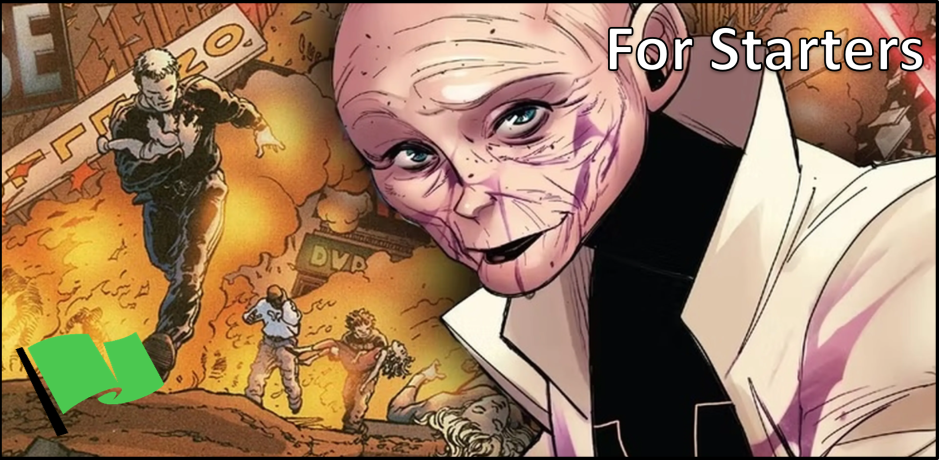
Hey, hey! Kyra Kyle here. Captain America: Brave New World was released yesterday, so we figured we would compile a list of Sam Wilson (Falcon and Captain America) starter stories if you were interested in getting to know Sam better as a character. Today’s post will feature one story with a single comic book issue. The rest will be story arcs composed of multiple comic books. Enjoy!

Single Issue

Sight Unseen (Avengers #64, written by Geoff Johns/art by Ivan Reis; 2003)

The events of Sight Unseen mostly take place in Avengers #64. Falcon has recently been drafted into the Avengers. Sam Wilson serves as a diversity hire—the rest of the Avengers more or less make him feel this way—so Sam never truly feels like he’s part of the team. Sight Unseen shows Sam finding his voice and cementing himself as a member of the Avengers. He gains a lot of respect, and this becomes a defining moment in his Avengers career. I don’t want to spoil too much of the plot, but let’s say that Henry Gyrich and Scarecrow make an appearance.

Story Arcs

The Coming of…The Falcon (Captain America #115-119, written by Stan Lee/art by Gene Colan; 1968)

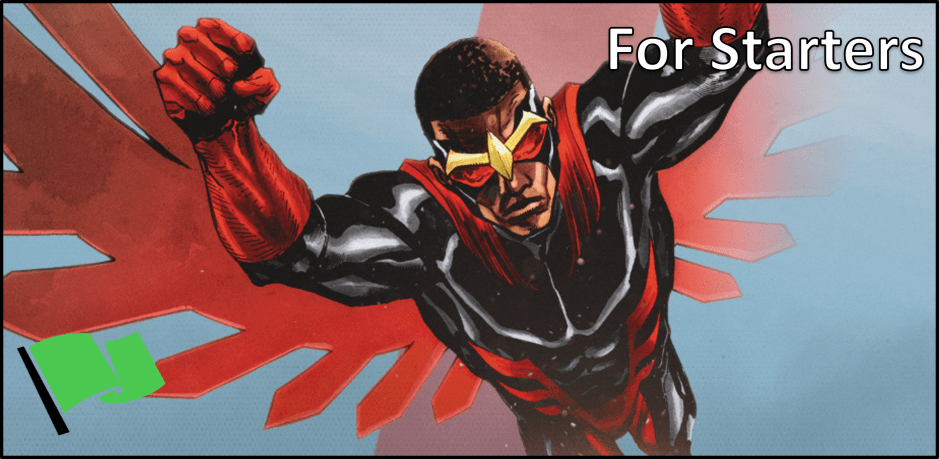
The Coming of…The Falcon technically starts in Captain America #115, but Falcon doesn’t make his first appearance until #117. Before Falcon steps into the action, there are some Cosmic Cube shenanigans where Captain America and Red Skull have a Freaky Friday situation and swap bodies. Sam Wilson sees beyond the exterior and teams up with the Red Skull body-trapped Captain America. Cap teaches Sam some fighting skills and encourages Sam to take on a hero identity. Sam impresses Captain America enough that he becomes Cap’s new sidekick Falcon.

Falcon Miniseries (written by Jim Owlsey/art by Paul Smith; 1983-1984)

The Falcon Miniseries marks the first time Falcon stepped out of the sidekick role. Sam Wilson returns home. He witnesses a peaceful march resulting in protestors dying. Incensed, Sam shows the world that he is a hero to everyone, even those the government and police refuse to protect. Though written in the 1980s, the Falcon Miniseries remains culturally relevant.

The Burden of Dreams (Captain America #31-36, written by Ed Brubaker/art by Steve Epting; 1990)

Relationships aren’t the only thing that breaks in the wake of Civil War. Despite surrendering, a gunman kills Steve Rodgers before he can stand trial. Afterwards, Sam Wilson registers his identity per the Superhuman Registration Act, but that’s immediately followed by a new Captain America program, and the person tasked to fill this role is Bucky Barnes. But no one knows where Barnes is; Wilson must find him. When he does, he finds the Winter Soldier in the grip of the Red Skull and Doctor Faustus. It’s up to Falcon to rescue Bucky.

American Psycho (Captain America and The Falcon #13-14, written by Christopher Priest/art by Dan Jurgens; 2005)

Sam Wilson usually assumes the role of a hero in Marvel Comics, but in 2005’s American Psycho, his loyalty gets called into question. During much of this series, Sam gets involved in criminal activities when something happens that reverts him back to his pre-hero way of life. As one of Captain America’s greatest allies, Steve tries to stop Sam but can’t. When someone shoots Falcon, he snaps out of his trance. The damage has been done, and Sam begins a redemption arc.

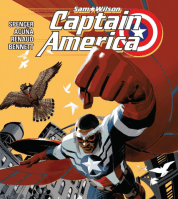
Not My Captain America (Captain America: Sam Wilson #1-6, written by Nick Spencer/art by Paul Renaud; 2010-2011)

Not My Captain America is the first storyline that features Sam Wilson as the new Captain America. Much like the end of Avengers: End Game, Steve Rodgers rapidly ages and can no longer continue as Captain America. Sam Wilson is the obvious choice to replace Steve as Cap. Throughout the story, fewer and fewer people accept Sam, adopting the slogan, “Not My Captain America.” Like many other great Sam Wilson stories, Not My Captain America didn’t flinch when addressing racism in America.

Falcon and Winter Soldier Miniseries (written by Derek Landy/art by Federico Vincenti; 2019)

The Falcon and Winter Soldier Miniseries was released in 2019 to prepare fans for the 2021 Disney+ series of the same name. It serves as a fun buddy cop series. While Falcon and Bucky don’t tend to click as well as Bucky and Hawkeye, the Falcon and Winter Miniseries provides a great look at the odd couple. An assassination attempt on Winter Soldier prompts Bucky to call Sam Wilson for help. The two seek out the new leader of HYDRA before the organization can regroup.

I’m sure I missed a story or two on this list. Let me know which Sam Wilson stories you’d choose instead and make sure you note whether the Sam stories are ones of him as Cap or Falcon. And wherever you are, I hope you’re having a great day.

Top 5 Captain America Villains

Hey, hey! Kyra Kyle here. We’re preparing for the upcoming Captain America: Brave New World with another Top 5 Villains List. Captain America has an interesting group of villains, to say the least.

We’ll have two official honorable mentions, but I’m going to cheat a bit and add a few in this introduction: MODOK, Batroc, and Adolph Hitler. MODOK stands for Mental Organism Designed Only for Killing. I’d shorten it to MODOK, too. MODOK is a floating head. Batroc’s full name is Batroc the Leaper. He leaps. And Adolph Hitler needs no introduction. Cap spent most of his early days punching Adolph Hitler in the face. With those villains out of the way, let’s get to our official honorable mentions.

Honorable Mention 2: Winter Soldier

Spoiler Alert for one of the MCU’s best films Captain America: The Winter Soldier. Steve Rodgers’ old friend Bucky Barnes is the Winter Soldier. He didn’t make the top villains list properly because even though he was the title villain in one of the greatest Captain America stories and recontextualized Captain America’s past, he became a hero. And he’s stayed a hero for the most part. The Winter Soldier even became Captain America in the comics for a time.

Honorable Mention 1: Serpent Society

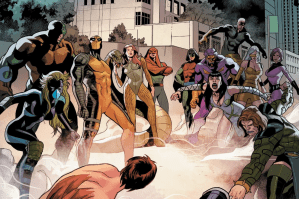
The Serpent Society is a supervillain group rather than one villain, but they deserve a mention, especially since they’ll receive their MCU introduction in Captain America: Brave New World. Several factions exist within the Serpent Society. That’s to be expected since the group consists of dozens of snake-themed villains. Sidewinder, Princess Python, Anaconda, Constrictor, Fer de Lance, Puff Adder, Death Adder, Bushmaster, Asp, Cottonmouth, Rattler, and many, many more are part of the Serpent Society. We’ll have to see what the Serpent Society’s plot will be in the upcoming movie, but I wager it won’t be poisoning Washington DC’s water supply to turn everyone into Snake-People. That happened in the comics once. It took Diamondback rebelling against Madame Hydra’s rule to put an end to the plot.

5: Crossbones

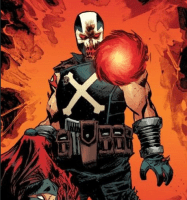
Crossbones is often viewed as a Red Skull henchman—another spoiler, Red Skull will make the list—and he often gets attributed as a Sharon Carter villain. But Crossbones instigated Captain America’s assassination in the comics. Crossbones takes pleasure in murder. He even laughs when the Winter Soldier and Falcon take him down following Cap’s death. In the MCU, Crossbones (Brock Rumlow) was the one who hinted that HYDRA may have infiltrated S.H.I.E.L.D. Near the beginning of Captain America: Civil War, he laughs about the torture he put Bucky through when Captain America apprehends him. Crossbones wears a suicide vest, and Scarlet Witch hurls him toward a building filled with Wakandan relief workers, which causes a rift within the Avengers. Crossbones is more than your average henchman.

4: Arnim Zola

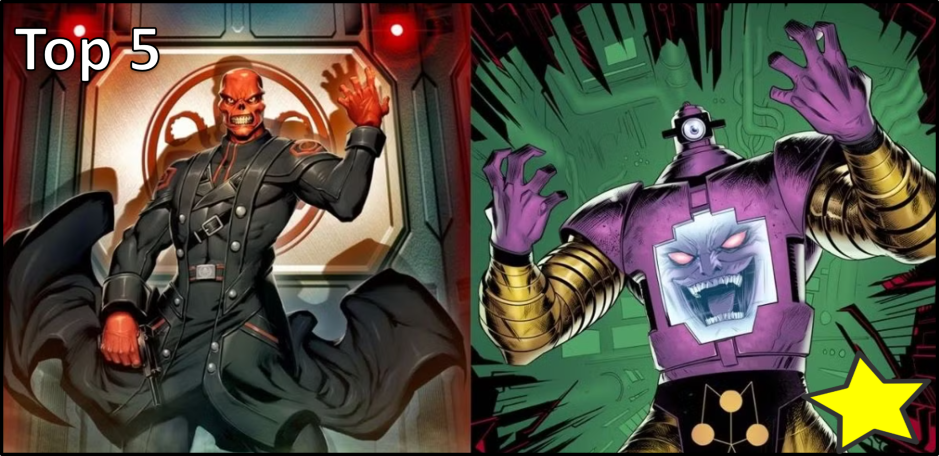
Originally a HYDRA scientist, Arnim Zola conducted numerous biochemical experiments. He messed around with the genes of human subjects and even brought back Adolph Hitler. Zola has a mean streak. He doesn’t care who he teams up with so long as he can continue his experiments. Most of what Zola does is in service of these experiments. He even uploaded his mind into a robot body, granting himself a type of immortality. Don’t let Zola’s goofy appearance of a giant TV screen with arms and legs fool you. Zola is one the deadliest villains in comic book history.

3: Baron Strucker

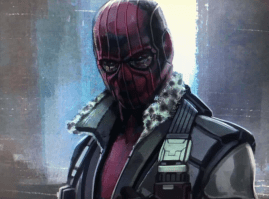
It was Baron Strucker all along. Baron Wolfgang von Strucker founded Hydra in the 1800s. He fought for Germany during World War I and brought the Red Skull into the fold during World War II. It was Strucker who recruited Arnim Zola. Following the end of World War II, Strucker became near-immortal by obtaining the Satan Claw, a strength-enhancing gauntlet. Strucker infiltrated S.H.I.E.L.D. with HYDRA agents. For years S.H.I.E.L.D. fell under HYDRA’s corruption, feeding the villainous group all its information. Decade after decade, Baron von Strucker earned his place as one of the greatest criminal masterminds in comics.

2: Baron Zemo

Two characters have taken the name Baron Zemo, a father-son tandem of Heinrich (father) and Helmut (son). I’m cheating—a little—by combining the two characters for this entry. Father Heinrich Zemo was one of the most despicable figures of the Third Reich. He, like Zola earlier on this list, loved testing inventions like ray cannons and disintegration guns on innocent people. He founded the Master of Evil, a thorn in the side of the early Avengers, and eventually killed—or at least we believed he killed—Steve Rodgers’ best friend Bucky Barnes. Following Bucky’s “death,” Captain America kills Heinrich Zemo. Heinrich’s son Helmut Zemo swears vengeance on Captain America. Where Captain America wants to make the world better for everyone, Zemo strives to ruin it because of his vendetta against one man. Helmut Zemo formed the original Thunderbolts, which were villains masquerading as heroes.

1: Red Skull

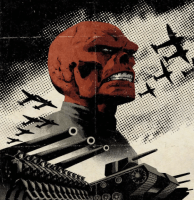
Red Skull appeared in the first-ever Captain America comic book. No other villain has come close to capturing the menace and imagination as Johann Schmidt, the Red Skull. The Red Skull is the antithesis of Captain America. He’s the super soldier experiment gone wrong. His imagery of a bloody skull dressed in a black coat contrasts the symbology of Captain America’s outfit. While Captain America represents the American ideal, the Red Skull did the same for Nazi Germany. Post World War II, the Red Skull has joined forces with HYDRA, a Nazi stand-in, and he continues to clash with one of the oldest comic book characters. No Captain America villain has ever reached the Red Skull’s status and malice.

Who is your favorite Captain America villain? Let us know who you would add or remove in the comments. And wherever you are, I hope you’re having a great day.
Getting Into Comics: Cassandra Nova Starter Stories

Hey, hey! Kyra Kyle here. Tomorrow is my oldest daughter’s birthday. Happy 27th birthday! She’s one year closer to 30. Eek! Anyway, I asked her which comic book character she’d like me to cover this week in our ongoing series of “Getting into Comics,” and she answered Cassandra Nova.

Yep. Yet another villain for the comic book starter stories. And yes, she first learned about Cassandra Nova in the recent Deadpool and Wolverine movie. We covered the movie a while back, here’s the link. Cassandra Nova is one of the newer X-Men villains, so she won’t have as extensive of a reading list. Here it goes.

Story Arcs

We’re continuing the trend of separating single issues stories from story arcs. This time, we’ll start with story arcs that consist of multiple comic books and then move on to single-issue stories. We’re doing it this way because Cassandra Nova’s first appearance was in a story arc.

E Is For Extinction (New X-Men #114-116; written by Grant Morrison/art by Frank Quietly and Ethan Van Sciver 2001)

E is for Extinction was the first story arc from Grant Morrison’s run on the New X-Men. Morrison insisted the series be renamed New X-Men; it retained the original series’ numbering, but he revamped the team so much that the series needed a new name. Morrison catapults the X-Men into the 21st century.

Cassandra Nova discovers a long-lost Master Mold A.I. and Sentinel production facility in Ecuador. She uses the last surviving relative of Bolivar Trask to gain control of the wild sentinels and has the man order the Sentinels to massacre the entire population of the mutant nation Genosha. The X-Men locate her by using the newly created mutant detection machine Cerebra and put an end to her reign of terror, but they’re too late. Cassandra Nova almost wipes out the entire population of the island.

If this sounds an awful lot like a plot line from the recent X-Men ’97 cartoon, you’re right. And if you haven’t yet seen X-Men ’97, what are you waiting for? E is for Extinction shows how diabolical Cassandra Nova can get. It’s no wonder that she earned the distinction as “Villain of the Year” by Wizard Magazine in 2001.

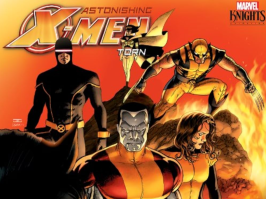
Torn (Astonishing X-Men #13-18; written by Joss Whedon/art by John Cassaday 2005)

Joss Whedon continued Grant Morrison’s New X-Men run with Astonishing X-Men. Most of the cast (heroes and most of the villains) remain the same. With that said, the Dangerous story arc that proceeds this one ties up some loose ends with E is for Extinction. Another Sentinel attacks and the culprit behind the attack is (spoilers) the Danger Room itself. The reason why this ties up loose ends found in E is for Extinction is that the Sentinel who destroyed Genosha becomes aware of its actions and ceases to attack the X-Men. It’s also revealed that Emma Frost works with the newly formed Hellfire Club. Enter Cassandra Nova.

Nova has joined this new version of the Hellfire Club. To be exact, Emma imprisoned Nova’s mind into a biological “slug.” Not all is what it seems. Cassandra Nova out mind tricks Emma Frost into doing her bidding. Nova even forces the X-Men to face their greatest fears and childhood trauma. This all leads to Shadowcat mimicking the classic pose Wolverine took in Uncanny X-Men #132.

X-Men: Red, Volume 1 (X-Men: Red #1-11; written by Tom Taylor/art by Al Ewing 2018-2019)

X-Men: Red follows the events from the December 2017 miniseries Phoenix Resurrection: The Return of Jean Grey written by Matthew Rosenberg with art by Leinil Francis Yu. Yes. Jean Grey died a second time, but at least this time she stayed dead for about a decade. Way longer than her first death after the Dark Phoenix Saga. Anyway, X-Men Red was promoted as part of Marvel’s Fresh Start. Part of this fresh start is the X-Men trying to create a new mutant nation.

The heroes of X-Men: Red shake up the norm. Jean, Nightcrawler, and Wolverine serve as the old guard, but new editions Honey Badger, Gentle, Trinary, and even Namor round out the rest of the X-Men.  They use Atlantis as their headquarters in part because Jean is framed for the murder of an English congresswoman. In truth, the congresswoman died at the hands of a resurfaced Cassandra Nova. Nova uses the politician’s death to alienate Jean from the public eye. This forces Jean’s team to work underground.

Marauders, Volume 2 (Marauders Vol 2 #1-12; written by Steve Orlando/art by Eleonora Carlini 2022-2023)

Not to be confused with several other versions of Marauders, this most recent group of Marauders is led by Captain Kitty Pryde. They rescue mutants, wherever they may be and no matter how dangerous the odds. The final member of her crew is none other than Cassandra Nova.

This is the first time that Cassandra Nova has been cast as a hero, albeit a reluctant one. Most of the Marauders, who were victims of Nova’s cruelty to Genosha, would rather not depend on her, and they do depend on her abilities quite a bit. The group depends on her for a while, until they plan for Nova’s eventual heel turn. Marauders is a strange read. It ends its arc with Nova being stranded 2 billion years in the past, with a mass extinction event on the horizon. That’s one way to exact your revenge.

Single Issues

“Silence: Psychic Rescue in Progress” (New X-Men #121; written by Grant Morrison/art by Frank Quietly and Ethan Van Sciver; 2002)

Charles Xavier’s mind lies imprisoned in the comatose body of Cassandra Nova. Jean Grey and Emma Frost team up on a telepathic journey into Cassandra’s consciousness to rescue Charles. The psychic trip is one for the ages. Beyond vast oceans rests a suspiciously fortified tower. Phoenix builds a bridge to cross the divide, but the tower’s defenses destroy Jean’s construct.

Traveling deeper into Cassandra Nova’s consciousness, the two learn that Cassandra Nova and Charles Xavier are twins. They engaged in psychic combat inside their mother’s womb. The fight led Charles and Cassandra’s mother to tumble down a flight of stairs. Jean and Emma learn that Charles intended to kill his sister inside the womb. Cassandra Nova left the womb stillborn.

This sequence gives much-needed context to why Cassandra Nova sicced the Sentinels on the nation of Genosha. She wants to destroy what Charles Xavier holds dear. She wants to make him pay for not showing her the same love he shows others.

The beginning of this issue’s title “Silence” holds special significance. This issue is part of the “Nuff Said” month in which no comics released at the time were allowed to use any words. The only words uttered were by Jean during the story’s conclusion.

There aren’t that many Cassandra Nova stories to choose from, but I may have left off one or two. Let me know which Cassandra Nova stories you’d choose instead. And wherever you are, I hope you’re having a great day.

Top 5 Spider-Man Villains

Hey, hey! Kyra Kyle here. We’re back with the first Top 5 Villains List of the new year. I can’t believe we lasted this long before mentioning Spider-Man’s top villains. Let’s rectify that. Here’s our list of the Top 5 Spider-Man Villains.

5: Carnage

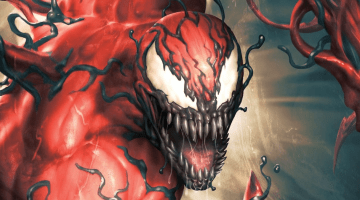
We could’ve gone several different directions here. I wanted to put a classic Spider-Man at the fifth spot, someone like Electro, Sandman, Kraven, or even Vulture, but Carnage trumps each of them. The alien symbiote that merged with Cletus Kasady Carnage may be the offspring of another character on this list (spoilers, I guess), but Carnage is a formidable Spider-Man villain and worthy of this list. If we were to discuss Spider-Man’s most violent villains, Carnage would be atop that list.

Carnage has had some stellar storylines, some of the best Spider-Man stories in the past three decades or so since his first appearance: Absolute Carnage, Maximum Carnage, and Carnage, U.S.A. to name a few. Carnage rampages his way near the top of Spider-Man’s rogues.

4: Mysterio

I always liked Mysterio as a villain. Quentin Beck’s penchant for the dramatic and choosing to manipulate and confuse Spider-Man instead of trying to out science or beat Spidey to a pulp made Mysterio unique. Beck spent years on Spidey’s back catalog of villains. Wearing a fishbowl as a helmet couldn’t help.

Even with a ridiculous outfit—or perhaps because of a ridiculous outfit—Mysterio has been in some great Spider-Man stories. The five-issue mini-series Symbiote Spider-Man rescued Mysterio from obscurity. He even returned from the dead in “Mysterioso” (Amazing Spider-Man #618). This story bridged the gap from the goofy Silver Age version of Mysterio to the more sinister character in “Guardian Devil.” And the 2019 MCU film Spider-Man: Far From Home did a lot to improve Mysterio’s image to non-diehard Spidey fans.

3: Doctor Octopus

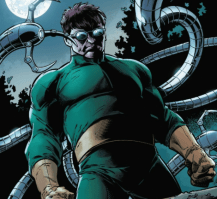
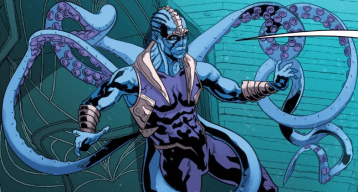
There was a time when Doctor Octopus would’ve dominated this list, or he’d at least be second to another character we’ll see later, but Otto Octavius finds himself in the third spot. Many comic book characters have changed their looks and even their backstory, but Doctor Octopus may be the king of makeovers. He’s been an Atlantean, an octopus-like monster, and he’s even been Spider-Man before in the storyline Superior Spider-Man.

Many of Spider-Man’s villains may know his identity as Peter Parker, but Doctor Octopus was one of the first. And he used that knowledge to torture Peter. Add in the fact that Doc Ock assembled the original Sinister Six and that makes him a no-brainer for this list.

2: Venom

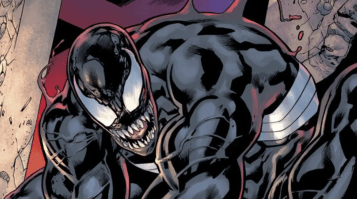
Venom got teased in the Carnage write-up. When an alien symbiote merged with Eddie Brock to form Venom, it shook up the Spider-Man mythos. Since Spidey has such a great rogues gallery, Venom is the only modern Spider-Man villain who can sneak into the top three. One could argue that Venom is equal parts hero and villain, and many of Venom’s best stories cast them as a hero. Venom Vs. Carnage and Maximum Carnage pit them against their offspring Carnage. I especially liked Venom’s turn as a hero in the latter story because it forced Venom to join forces with their hated enemy Spider-Man. But I always thought Venom worked best as a villain.

Since Venom is a symbiote, more than one character has formed an alliance with the alien. Famously, Peter Parker was Venom’s first host. Other hosts include Mac Gargan (Scorpion), Flash Thompson, and even Mysterio. And since the symbiote has merged with Peter Parker Spider-Man in the past, Venom typically knows Spider-Man’s identity, which makes them even deadlier. Throw in the fact that Spidey’s spider-sense can’t detect Venom, and they’re easily a top villain.

1: Green Goblin

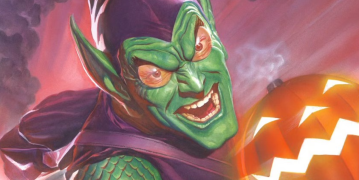
Could it be anyone else? Green Goblin takes a lot of what makes the villains on this list formidable and combines them into one character. Norman Osborn knows Peter’s identity. He isn’t afraid to use his knowledge of Spider-Man’s identity to his advantage and has leveraged Spider-Man’s identity on multiple occasions. He has a personal connection with Spider-Man through his son Harry Osborn being one of Peter’s friends. He can manipulate, out-science, and even overpower Spider-Man physically. Green Goblin even killed Peter Parker’s first girlfriend Gwen Stacy.

I could go into numerous Green Goblin stories here, but that may need a future list. Simply put, Green Goblin was the obvious choice for the first Spider-Man big-screen adaptation.

Did we get the list right? Let us know who you would add or remove in the comments. And wherever you are, I hope you’re having a great day.
Richest Comic Book Characters

Happy Tuesday! We compiled the following images and statistics to showcase the net worth of comic book characters. We threw in some real world people for reference.

The following statistics for comic book character wealth comes from Wealthy Gorilla, while the wealth of real world people comes from Forbes. These statistics were retrieved on January 13, 2025; they are subject to change.

We’ll begin with the characters/people with a net worth of $2 Billion and work our way up to the richest person or character. Can you guess who tops this list?

We may be one or two stacks short for T’Challa. Nothing beats Vibranium and other-worldly tech.

Wherever you are, we hope you’re having a great day.
Getting Into Comics: Magneto Starter Stories

Hey, hey! Kyra Kyle here. Today is my youngest daughter’s birthday. Happy 24th birthday! One more year and you can rent a car. Is that still true? Anyway, I wanted to bring back the comic book starter stories and asked her which character she’d like me to cover this week. She answered Magneto.

You heard the girl. Geekly will be covering its first comic book starter stories for a supervillain. We may have some growing pains with this topic. Villains are a little more difficult to recommend starter stories for, but I’ll do my best. The following list should give you an idea of which stories you should read to get to know Magneto better.

Single Issues

We’re doing this list a little differently than prior starter comic book stories. We’ll start with single issues and then move on to story arcs that consist of multiple comic books.

Uncanny X-Men #1

(written by Stan Lee/art by Jack Kirby; 1963)

This first entry cheats a little bit. Uncanny X-Men #1 is the first appearance of Magneto and the X-Men. Since the issue does double duty and sets up Magneto and the X-Men, there’s less of a focus on him as the main villain, but Uncanny X-Men #1 does a great job of showing Magneto as a formidable foe.

You don’t have to break the bank to read the first X-Men story. Marvel has reprinted it plenty of times. You should even be able to read Uncanny X-Men #1 for free online. If you did want to own a physical copy, Uncanny X-Men #1 would cost you hundreds of thousands of dollars. X-Men didn’t have the warmest of receptions when it first launched. This makes the comic rare and valuable. Ka-ching!

I, Magneto

(Uncanny X-Men #150, written by Chris Claremont/art by Glynis Wein, Dave Cockrum, Dan Crespi, and Tom Orzechowski; 1981)

Magneto started out wanting a world where mutants dominated over inferior homo sapiens, but in “I, Magneto,” Magneto sets out for what he wanted all along, to become everyone’s leader. In this story, Magneto wants no less than the planet making him the world’s leader.

Magneto enlists the help of a series of supercomputers, but when those computers begin to explode, Magneto becomes furious. Kitty Pryde has been blowing up his computers by phasing through them. In a fit of rage, Magneto nearly kills her. Magneto sees a lot of himself in Kitty Pryde, since they have a similar heritage. When Magneto sees himself as the monster he’s turned into, he realizes that he isn’t fit to lead the world.

The Trial of Magneto

(Uncanny X-Men #200, written by Chris Claremont/art John Romita Jr.; 1985)

Claremont does a great job with the Uncanny X-Men’s bicentennial issue. As the name suggests (“The Trial of Magneto”), Magneto is on trial for former acts as a “mutant terrorist.” While he stands trial, unknown terrorists leave behind a calling card, “Free Magneto – X-Men.” Professor X sees this message and suddenly falls ill. Cyclops believes Charles is possibly dying.

The terrorist acts serve as a distraction so the Von Strucker twins can attack the court and exact vengeance against Magneto. This puts everyone in the courtroom in danger. Magneto saves everyone in the building. This shows the judge Magneto’s humanity. The scuffle results in Professor X suffering a heart attack. Magneto saves Charles, but Charles insists that he can no longer care for the X-Men. He asks Magneto to take his place.

If you’ve seen the X-Men ’97 cartoon on Disney+, many of these story elements will sound familiar in “The Trial of Magneto.” This story showcases Magneto’s propensity for being a hero.

Story Arcs

X-Men: Magneto Testament #1-5

(written by Greg Pak/art by Carmine DI Giandomenico 2008-2009)

Magneto Testament fleshes out Magneto’s childhood story. This five-issue miniseries doesn’t pull any punches. It shows us Magneto as a young boy surviving the Nazi death machine. As a result, Magneto Testament is one of the bleakest stories Marvel Comics has ever published. It’s also poignant.

Magneto Testament explores what made Magneto the man he is today. X-Men: First Class may dip its toe into this origin, but Magneto Testament digs deeper. This is one of the best Magneto stories ever written and a must if you want to understand Magneto.

X-Men: God Loves, Man Kills

(written by Chris Claremont/art by Brent Anderson; 1982)

I know this story also made our “X-Men Starter Stories” post years ago (here’s a link to that list if you’re interested), but Magneto is an X-Men villain, so there’s bound to be some crossover.

Many consider God Loves, Man Kills the defining X-Men arc, and they may be right. Humanity is the main villain. Humans, through the machinations of William Stryker, launch a scheme to rid the world of mutants. Magneto learns this while investigating the deaths of two mutant children. Magneto then joins forces with the X-Men.

God Loves, Man Kills establishes Magneto’s willingness to do anything to protect mutantkind, even if that means joining forces with his enemies. Stories like God Loves, Man Kills do a lot to deepen Magneto as a character.

Mutant Genesis

(X-Men #1-7, written by John Byrne and Chris Claremont/art by Jim Lee; 1991)

Before Mutant Genesis, Magneto lost his way. He even ran the X-Men and New Mutants for a time. (See the above write-up for “The Trial of Magneto.”) While these storylines helped to humanize the X-Men’s greatest villain, Mutant Genesis brings Magneto back to his roots. He has returned as a powerful villain. During this arc, we see how Magneto’s powers are slowly driving him insane.

But Magneto isn’t alone in his insanity. Mutant Genesis introduces Magneto’s team of Acolytes. These Acolytes pose a huge threat to humanity and even mutant-kind. It also doesn’t help that long-time X-Men begin questioning their loyalty to Professor X’s cause. Mutant Genesis is the final story seminal X-Men scribe Chris Claremont wrote for the series. Without Claremont, the X-Men would not have become the household names they are today.

Planet X

(New X-Men #146-150, written by Grant Morrison/art by Phil Jimenez; 2003-2004)

Magneto disguises himself as Xorn, one of the X-Men’s most trusted members at the time. The X-Men had thought that they had rescued Xorn from a Chinese prison, but it was a ruse. Magneto worked with the Chinese government to infiltrate the X-Men. At the time Magneto was believed dead, making this reveal even more shocking. Planet X shows how clever Magneto can be when putting an elaborate plan into action. This story did a lot for Magneto’s legacy.

As Magneto is the X-Men’s oldest enemy, no one could imagine that he could disguise himself well enough to fool his enemies. In classic mastermind fashion, Magneto didn’t reveal his identity until the time was just right.

There are so many other stories that I could’ve included here. I’m sure I missed one or two, or three hundred. Let me know which Magneto stories you’d choose instead. And wherever you are, I hope you’re having a great day.