




Geekly hasn’t covered a superhero team’s rogues gallery since the Avengers, and there’s no better place to continue that trend than with the X-Men. The X-Men topped our list of Most Powerful Rogues Galleries. If you missed that post, you can check it out here. No one messes with X-Men villains.
Hey, hey! Kyra Kyle here. We’re back with another Top 5 Villains List. Marvel’s merry band of mutants has no shortage of enemies. Here’s our list of the Top 5 X-Men Villains.
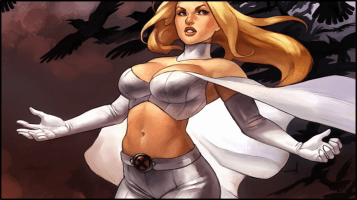
The fifth spot on most Top 5 Villains lists could go in several directions. While the X-Men are no different, Emma Frost was an easier selection than many fifth spots. No disrespect, Juggernaut.
Like most great X-Men villains Emma Frost spends as much time as a hero as she does a villain. As a villain, Frost typically serves as the Hellfire Club’s White Queen. We had to include at least one classic member of the Hellfire Club; they’re a frequent thorn in the X-Men’s side. This alone could explain Emma Frost’s inclusion on this list, but Frost opposes Charles Xavier like no other X-Men villain. She teaches young mutants and twists them into doing her bidding.
The Hellions are the most famous of Emma Frost’s disciples. They were a rival class of young mutants. One by one, Frost manipulated the Hellions. She took advantage of Thunderbird’s grief (because of his brother’s death) and coaxed him into taking revenge against the X-Men. At Frost’s request, Empath used his abilities to force Firestar to love him and join the plot. Emma Frost is a powerful mutant telepath. She’s used these powers to control more than just the Hellions. Kitty Pryde, members of the New Mutants and the New Warriors has at some point been one of Frost’s victims.
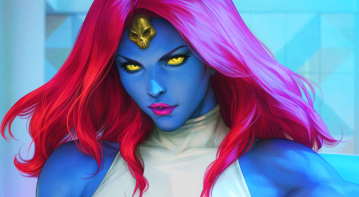
Raven Darkhölme or Mystique (even Raven’s an assumed name, so we don’t know Mystique’s real name) has one of the wildest backstories of any X-Men villain. Again, she’s had her fair share of heroic stints, but Mystique is at her best when she shapeshifts, deceives, and infiltrates.
Nearly immortal, Mystique has done it all. In 1895 (or earlier), she took up the identity of consulting detective Sherlock Holmes. She convinced a time-traveling Kitty Pryde to not assassinate Adolf Hitler during the start of World War II. She’s been a member of the Brotherhood of (Evil) Mutants, organizing the third incarnation of the team. During this time, she adopted a young girl named Anna Marie (Rogue) and manipulated her into stealing Carol Danvers’s powers.
Mystique is the biological mother of a couple of prominent figures in the X-Men universe: Nightcrawler and Graydon Creed. While Nightcrawler is another popular X-Man, Graydon Creed is the leader of the mutant-hating organization Friends of Humanity. Creed would later become a politician and after he became too much of a problem, he was assassinated. Mystique was the gunman. Ruthless and conniving, Mystique will do whatever it takes to accomplish her goal.

Mister Sinister is the figure in the shadows. A world-renowned geneticist, Mister Sinister treats humans and mutants as his playthings. He’s cloned (even himself), created new life, and manipulated mutant DNA for enhancing powers (again, he did this to himself). The original Nathaniel Essex (Mister Sinister) was transformed into his current form by the mutant known as Apocalypse, and his clone has spent most of his life scheming ways to break free from Apocalypse. To achieve this end, Mister Sinister has manipulated the lives of critical members of the mutant race. Cyclops, Jean Grey, Gambit, Havok, and even Professor X have been Mister Sinister victims.
Madelyne Pryor may be Mister Sinister’s greatest creation. She posed as Jean Grey, married Scott Summers (Cyclops), and gave birth to a child Nathan Summers (Cable). Yeah. Mister Sinister is all up in the Summers’ family tree. Cable’s given name Nathan is a nod to Mister Sinister’s original name Nathaniel. You could view Cable as having the family name of two families.
Beyond Sinister’s family skullduggery, he was the one responsible for wiping out the Morlocks. Unknowingly, Sinister was the one who unleashed the Legacy Virus, a mutant-specific pandemic that decimated the mutant populous. Despite multiple lifetimes of villainy, Professor X appointed Mister Sinister a seat on the mutant island nation Krakoa’s Quiet Council. His life’s work aided with the re-establishment of the country after the Krakoa Massacre.
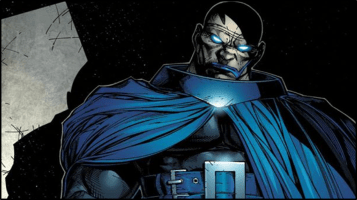
We go from Mister Sinister to the mutant who created him, Apocalypse. En Sabah Nur, translated as “The Seven Lights,” has lived for generations. Born in ancient Egypt, Apocalypse began life as a slave, and over time, he became a conqueror. His laundry list of abilities was crucial in Apocalypse’s Road to Conquest. Here’s a brief list of Apocalypse’s powers: self-resurrection, psychic-link, self-atomic manipulation, biomorphing, size alteration, superhuman strength, superhuman durability, superhuman stamina and endurance, telepathy, force fields, and telekinesis. The previous list was a third of Apocalypse’s powers.
Is it any wonder that Apocalypse has taken the guise of a god of destruction and the end times? Like all the other villains on this list, Apocalypse has a massive history with the X-Men. One of Nur’s standout storylines is the Age of Apocalypse. In this alternate future, Apocalypse sees his “Survival of the Fittest” philosophy to a logical conclusion. The mutants who survive are the ones able to adapt to Apocalypse’s extreme worldview.
No one aspect of Apocalypse showcases his extreme worldview than his Horsemen. Numerous X-Men have served as one of the Horsemen of Apocalypse, but Warren Worthington III may still be the most iconic. Nur transformed Worthington from the natural, angelic wings of Angel to the twisted techno-organic wings of Archangel. Archangel served as Death. War, Famine, and Pestilence round out the remaining members. The entire universe is at stake whenever the Horsemen arrive. The same can be said of Apocalypse. En Sabah Nur lives for destruction.
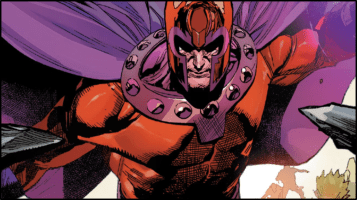
Magneto is one of the most iconic comic book villains of all time. He had to take the top spot. His origin story is legendary. After suffering atrocities at the hand of the Nazis while interred in Auschwitz, Erik Lehnsherr (known by multiple other names like Max Eisenhardt) vowed never to let anything like the holocaust happen to the people he loves. This trauma formed Magneto’s worldview, and when humanity began lashing out against mutants, Magneto fought back. He wants to live in a world where mutants are humanity’s masters, and this puts him at odds with X-Men founder Professor Charles Xavier who dreams of peaceful mutant-human coexistence.
No other villain typifies an X-Men antagonist more than Professor X’s friend Magneto. We could discuss why Magneto takes the top spot for days, but ultimately, anyone who knows of the X-Men knows about Magneto. Most readers expected to see Magneto take the top spot. Magneto is iconic.
Did we get the list right? Let us know who you would add or remove in the comments. And wherever you are, I hope you’re having a great day.
Doctor Strange stories venture into the weird and psychedelic. It’s difficult to know where to begin reading Doctor Strange comics. Fortunately, Geekly has you covered.
Hey, hey! Kyra Kyle here. Marvel Comics had its renaissance in the Sixties. No other character screams the Sixties than Stephen Strange. During this decade, mysticism enjoyed a comeback. I’m sure fans attempted some of the spells depicted in Doctor Strange comics. Safety notice: don’t try the spells you find in Doctor Strange comics at home. Artists like Steve Ditko and Barry Windsor-Smith elevated Doctor Strange to another level. Within Doctor Strange, you’ll find some of the most vibrant art in Marvel.
But we’re talking about stories today, and Doctor Strange has had some of the best writers in the business write for him. Like we’ve been doing for the past few entries in this series, we’ll split these stories into single issues and story arcs. This week, we’ll begin with single comic book issues. Enjoy!
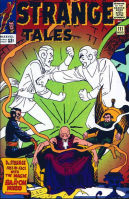
The follow-up to Strange’s debut in Strange Tales #110, “Face to Face with the Magic of Baron Mordo” pits Doctor Strange against one of his most iconic enemies: Baron Mordo. Mordo is a fellow student of the Ancient One and plans to murder his master and gain the ultimate power. Doctor Strange learns of Mordo’s plan and stops him. Strange and Mordo share a sibling-like rivalry. “Face to Face with the Magic of Baron Mordo” establishes Doctor Strange, the Ancient One, and Mordo as characters. I can’t wait to see what the Marvel Cinematic Universe plans to do with Baron Mordo, portrayed by Chiwetel Ejiofor. Mordo is too good of a character not to see in Doctor Strange’s future.

Doctor Strange’s origin story isn’t the first one on this list because we’ve been listing these starter stories in the order in which they were released. Stan Lee and Steve Ditko “forgot to supply a Doctor Strange origin,” which was Lee’s note at the beginning of this issue. “The Origin of Doctor Strange” marks the first time Marvel retroactively published a backstory. Nice!
The story itself is iconic at this point and a must-read for anyone who wants to get into Doctor Strange comics. Steve Ditko is still finding his groove, but Strange Tales #115 remains a Doctor Strange and Marvel Comics classic. You can see similarities between Doctor Strange and Ditko’s other famous comic book creation, Spider-Man. Both start as selfish and turn selfless after a tragedy.

Chris Claremont avoids Doctor Strange’s psychedelia. Instead, Claremont is at his melodramatic best with “To Steal the Sorcerer’s Soul.” Even though Strange’s romance with sorceress Clea is in full swing, Nicodemus West is the source of drama. After Strange’s accident, West was the colleague who performed the surgery on Strange’s hands. Filled with guilt, Nicodemus tails Strange around the world, where he would obtain magical powers for medical use. “To Steal the Sorcerer’s Soul” shows Nicodemus’s descent into villainhood.

While a seventeen-issue comic book story is normal for comics today, The Eternity Saga was one-of-a-kind for its time. Stan Lee may have penned the dialogue, but Steve Ditko’s artwork drives this sprawling epic. The Eternity Saga may appear later in this list, but it may be THE quintessential Doctor Doom story. Strange must battle Baron Mordo and Dormammu before being stripped of his power, rendered blind, and forced to search for the being named Eternity.
Steve Ditko cut his teeth with Spider-Man but kept his most ground-breaking art for Doctor Strange. The Eternity Saga solidifies Doctor Strange’s look, his archenemies, and his mythos. If you’re a fan of Doctor Strange movies, you should read The Eternity Saga. Doctor Strange films borrow from this storyline and there are a few surprises the MCU hasn’t yet introduced. The Eternity Saga is required Doctor Strange reading.

We had to include part of Barry Windsor-Smith’s run on Doctor Strange. After Steve Ditko left, the comic was in good hands. As the name suggests, The Shuma-Gorath Saga borrows a lot from H.P. Lovecraft and his Cthulhu myth. The title character, Shuma-Gorath, is an Elder God who has enthralled a woman Doctor Strange intends to save. Shuma-Gorath sends their minions to stop Doctor Strange, leading to an epic battle.

The Shuma-Gorath Saga is unique because Doctor Strange seldom uses his magic. Instead, he battles Shuma-Gorath with various melee weapons to include a crucifix. If you’ve seen Doctor Strange in the Multiverse of Madness, you may believe that Shuma-Gorath has made their MCU debut when a tentacle beast interrupted a wedding, but that’s not the case. Marvel doesn’t own the rights for Shuma-Gorath. That deal is in the works. There’s no way Shuma-Gorath would only get a cameo.
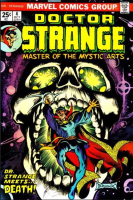
Steve Englehart is another creative who left an indelible mark on Doctor Strange. A Separate Reality redefined Doctor Strange’s rogues from the 1960s. Dormammu and Nightmare make appearances in A Separate Reality. They challenge Strange while he attempts to save the Marvel Universe from other realms.
A Separate Reality also introduces the sorcerer Clea (played by Charlize Theron at the end of Doctor Strange in the Multiverse of Madness). Clea and Doctor Strange become lovers, which I’m sure will play a role in the Marvel movies, and the journey to save all realities leads to new heights of mind-bending moments. That’s saying something for Doctor Strange.
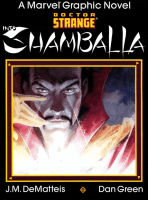
Into Shamballa rids itself of superhero and villain tropes. J.M. DeMatteis and Dan Green wrote Into Shamballa as an introspective story. Doctor Strange returns to The Ancient One’s Himalayan home. Once there, the doctor finds a portal into the Shamballa dimension. Strange is tasked with bringing about an apocalypse that will allow humankind to grow to perfection. Into Shamballa is Doctor Strange at his abstract storytelling best.
Released the same month as Alan Moore and Dave Gibbons’ Watchmen, Into Shamballa asks several of the same ethical questions. But while Moore’s story ends in moral compromise, Into Shamballa finds spiritual enlightenment. If you’ve read Watchmen, you should try Into Shamballa.

Hellboy creator Mike Mignola’s art makes this unlikely pairing work. You heard that right. Doctor Strange and Doctor Doom team up to rescue the soul of Doom’s mother. Triumph and Torment is more of a Doctor Doom story. I almost didn’t include it in this list. But Triumph and Torment is an iconic mini-series and well worth reading.
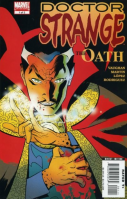
Brian K. Vaughan (Saga) pens one of the best Doctor Strange stories of the 21st century with The Oath. The miniseries showcases Strange’s patented arrogance, while his brother in Wong grounds him. The Oath is the basis for Wong and Doctor Strange’s relationship in the Marvel movies. The story itself is a mystery with a hint of the mystical.
In The Oath’s story, Wong has cancer. Aided by new love interest Night Nurse (who played a role in the Netflix Daredevil series), Strange follows a trail of clues to save his friend. The Oath has the hallmarks of some of Vaughan’s best work: nonlinear plots, nuanced characters, and thrilling twists. The Oath does a lot to modernize Doctor Strange.
We could’ve included a few other Doctor Strange stories. Let us know which Doctor Strange stories you’d add to this list in the comments. And wherever you are, I hope you’re having a great day.
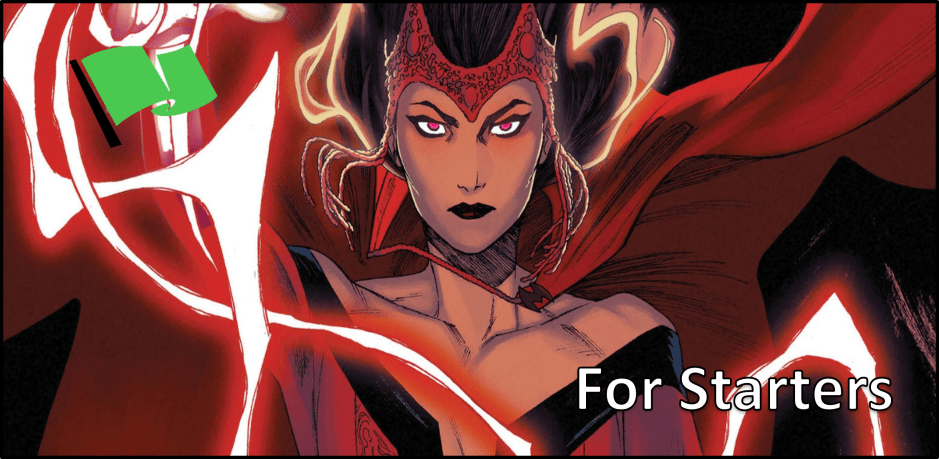
Today is Miss Kyra’s birthday. I asked her which comic book character’s history she wanted Geekly to cover today, and she picked another character with a complicated past, Scarlet Witch. Yes. Today will be covering comic books for new readers of the Scarlet Witch.
Hey, hey! Kyra Kyle here. Like many X-Men characters, Scarlet Witch has played jump rope with being a villain and a hero. Wanda Maximoff has even had moments of turning into an otherworldly being. She’s been a member of the Brotherhood of Evil Mutants, the Avengers, and Defenders. Scarlet Witch blurs the line between superpowers and magic. She has the power to bend reality.
We’ve split this list into single issues and longer stories. Let’s begin with single issues.

Magneto proved a worthy adversary to the X-Men when he took on the team alone (Uncanny X-Men #1). The Brotherhood of Evil Mutants marks the team of the same name’s first appearance. Toad, Mastermind, Quicksilver, and Scarlet Witch join Magneto. But the team already shows cracks.
Quicksilver and Scarlet Witch want nothing to do with the Brotherhood. Magneto coerced them into joining. He reminds them of when he rescued the twins from an angry mob. The citizens of a small European town want to kill the Scarlet Witch for burning down a barn with her mutant powers. Magneto reminds the pair that humans would continue to hunt them for their abilities, which isn’t a complete lie.
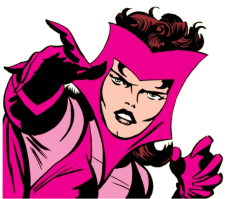
The X-Men track down the Brotherhood to a palace in Santo Marco. The X-Men’s actions reinforce Magento’s claims that humanity will hunt down mutants. Mutants are hunting down other mutants who disagree with them. A quick battle ensues. Once the X-Men enter the palace, Magneto arms a series of bombs meant to destroy the palace and Santo Marco with it. Bystanders would be killed. Scarlet Witch and Quicksilver can’t abide by this plan, so as they escape, Quicksilver disarms the remaining bombs that would’ve taken the country. The Brotherhood of Evil Mutants shows Scarlet Witch’s tenuous relationship with Magneto.

Scarlet Witch makes good on her threat of leaving Magneto’s employ. It took her one year—almost to the day—from debuting as an X-Men villain to becoming a card-carrying member of the Avengers. The Old Order Changeth does what it says. The Master of Evil (the Avengers’ main antagonist team at the time) disbanded after burying their leader Baron “Heinrich” Zemo. (Note: the current Baron Zemo is Heinrich’s son, Helmut.) Wasp, Giant-Man/Ant-Man, Iron Man, and Thor leave the Avengers. Naturally, Hulk is missing. So, Captain America is chilling at the Avengers Mansion advertising that the team needs new members.

Hawkeye and Black Widow flip sides and join the Avengers. They had been duped into helping the Russians who wanted to disrupt the Avengers. Mission accomplished, I guess. Scarlet Witch and her twin brother Quicksilver also want to redeem their past as members of the Brotherhood of Evil Mutants and join. It may not seem like much but the Avengers changing their roster in just over a year (this issue is the sixteenth of a monthly comic) shook up the Marvel landscape.
What was Scarlet Witch’s role in this comic book issue? She doesn’t have a large role. While living in Switzerland, she learns about the Avengers needing new members. She travels by cruise ship to the U.S. and auditions for a spot with Tony Stark. The Old Order Changeth marks Wanda’s first step as a hero, and the first step is often the most important.

We jump a couple of decades to our next single issue New Faces. Surprise! The Avengers add a new member or two. US Agent (John Walker) joins the team which causes Hawkeye and Mockingbird to depart. This storyline has many layers and is worth the read, but we’re more interested in another storyline, the one between the Scarlet Witch and her husband Vision.
By the time of New Faces, Wanda and Vision have twin sons, Tommy and Billy. There’s a whole issue of Tommy and Billy going through a series of nannies who can’t manage to care for them. The nanny introduced in this issue, Mrs. Hunter, loses the twins in the nursery. We never see Mrs. Hunter again, so there’s a chance she got fired off-camera. The bigger issue rests with Vision. Vision needed to be reprogrammed. Unfortunately, while Vision has all the information, he lacks an emotional connection with that information. When Wanda hugs Vision, he asks her why. He no longer feels love.
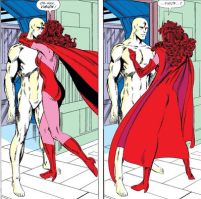
Hank Pym explains that Vision misses one element, his brother Wonder Man’s brain patterns. Manipulated by Baron Zemo and then Black Talon, Wonder Man’s brain patterns had been used for Vision without his permission. Wonder Man refuses to help Vision because he had no control over his life for many years. While Wonder Man’s reason is understandable, Wanda is heartbroken when she sees the new Vision speaking monotonously, like he did when they first met. New Faces is the first time Vision wears all white. The MCU adopted a version of this costume with its current iteration of Vision.
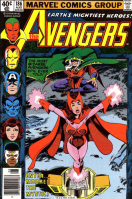
The Witch of Wundagore Mountain is the first attempt at Scarlet Witch and Quicksilver’s origin story. The twins’ origin has been twisted and changed so many times, but this story marks the first real attempt at a Scarlet Witch origin. She wasn’t Magneto’s daughter. She even believed that her parents were the Whizzer (a Golden Age comic book hero with superspeed like Quicksilver) and Miss America. But the pair found that to be fiction.
A man named Django Maximoff claims to be her father, but she will soon learn that he’s her adoptive father. She was born on Mount Wundagore in the laboratory of the High Evolutionary. One of the High Evolutionary’s earliest creations, an anthropomorphic cow named Bova, cared for her. This is a bizarre story, and it takes many turns. Outside of flashbacks, Scarlet Witch becomes possessed by Chthon who, with the help of Scarlet Witch, holds the other Avengers prison.

We just scratched the surface with The Witch of Wundagore Mountain. It’s a harrowing tale.

After being a hero for most of her Marvel Comics tenure, Scarlet Witch hops over to the dark side during Darker Than Scarlet. She joins her would-be father Magneto, and at first, it seems like she isn’t the only one. The end of this storyline’s first issue shows Quicksilver joining Magento too. Toward the end of the story, we find that Quicksilver remained loyal to the Avengers, only joining his family to convince Scarlet Witch to reconsider and stop Magneto’s evil schemes.
While Scarlet Witch and Quicksilver have been on opposite sides before, Darker Than Scarlet is one of the few times that the twins have acted as enemies for a prolonged time. Typically, one of the twins would have a lapse of judgment before the other one eventually saved them, but Darker Than Scarlet shows Scarlet Witch reaching new levels of evil.

While Darker Than Scarlet was Scarlet Witch’s first big heel turn, House of M is her most infamous and had a profound impact on the greater Marvel Universe. Wanda becomes unhinged when she realizes that her children aren’t real. She loses control and uses her reality-altering powers, killing Vision, Hawkeye, and Scott Lang. These deaths cause the Avengers to fracture.
This new reality is unlike any other in the Marvel universe to that point. Wanda utters, “No more mutants,” which returns the world to the reality it had before, but with one significant change. Nearly all people who were mutants become normal humans. Only 198 mutants remain.

While Scarlet Witch plays a key role during House of M, Quicksilver works behind the scenes. He convinces Scarlet Witch to use her powers to reshape reality, and it is Quicksilver’s injuries at the hand of Magneto that inspire Scarlet Witch to wipe out most of mutantkind.

House of M and Avengers: Disassembled led Scarlet Witch into a dark period. Avengers: Children’s Crusade is Wanda’s first step to redemption. The story revolves around Speed and Wiccan, who believe they’re Wanda’s lost children. The Disney+ series Agatha All Along borrows aspects from Speed and Wiccan’s story here. Accompanying Speed and Wiccan is their grandfather, Magneto.

When the kids find their mother, she’s lost her memories and powers and is about to marry Victor Von Doom. When Scarlet Witch’s memories begin to return, she learns that her powers had overloaded when she worked with Doom to bring her children back from the dead. Scarlet Witch’s children redeem her. Once reunited, she seeks redemption for the chaos and destruction she had caused.
Rumors persist that Scarlet Witch may not have died during the events of Doctor Strange in the Multiverse of Madness. The MCU could reintroduce the character following the events of Agatha All Along and a subsequent series with Speed and Wiccan. If that happens, she will have a lot to atone.

Witches’ Road has a simple premise: witchcraft is broken. Joined by Agatha Harkness’s spirit, Wanda travels the world to fix witchcraft. If this premise sounds familiar to MCU fans, a similar journey may be hinted at the end of Agatha All Along. Scarlet Witch had the moniker of witch but seldom associated herself with witchcraft until the events of Witches’ Road.
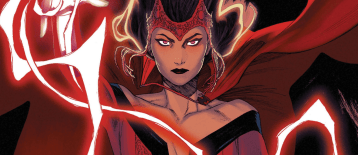
Thanks, Agatha All Along. Now all I hear when I say Witches’ Road is the song from the Disney+ series. Anyway. During the comic book storyline Witches’ Road, Wanda solves magical crimes and pieces witchcraft back together. She must solve the mystery of who broke magic.
I lost count of how many Scarlet Witch stories missed the cut. I added Witches’ Road at the last second or it could’ve been one more storyline. Scarlet Witch has had so many great stories. Let me know which Scarlet Witch stories you’d add to the list. Thank you for reading, and wherever you are, I hope you’re having a great day.
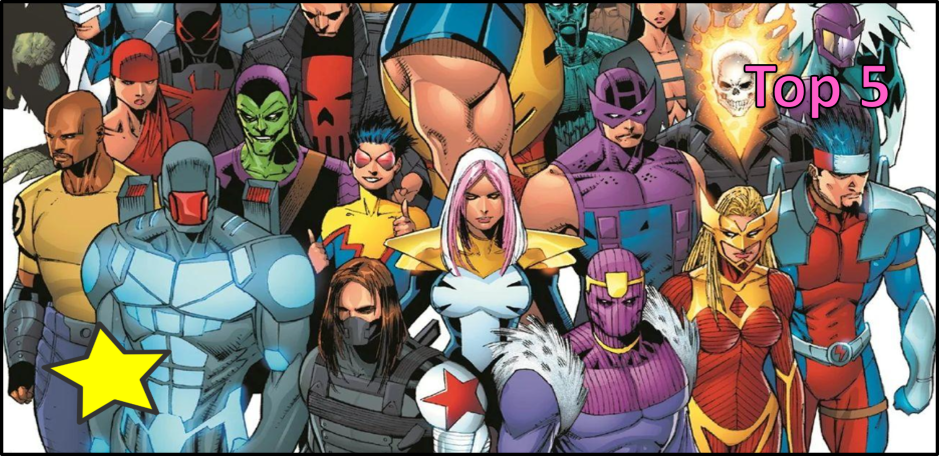
Thunderbolts* releases this week with a new cast of characters. Some of the characters we’ll see in the upcoming film have been members of one of the various incarnations of the group. Others are new faces. The Thunderbolts team has seen plenty of new faces since its inception in 1997, so begs the question, Which Thunderbolts rosters are the best?
Hey, hey! Kyra Kyle here. We’re doing something different with today’s Top 5 in comics. As of this post, there have been thirteen iterations of Marvel’s Thunderbolts. With that many rosters to choose from, which rosters have had the best storylines? We intend to cover that with today’s list. Buckle up. These are the top five Thunderbolts rosters.

First Appearance: New Thunderbolts (Vol 1) #1; written by Fabian Nicieza & Kurt Busiek; art by Tom Grummett (2005-2006)
MACH-IV
Songbird
Atlas
Donnie Gill/Blizzard II
Radioactive Man
Joystick
Speed Demon
Andreas von Strucker/Swordsman II
Genis-Vell/Photon
Marvel launched New Thunderbolts in the wake of the Thunderbolts’ first era. Original Thunderbolt Abe Jenkins reformed his ways as The Beetle and became MACH-I. Jenkins made a new suit for himself, becoming MACH-IV, and wanted to give other villains the same chance and reformed the new Thunderbolts. MACH-IV’s New Thunderbolts earned the respect of the Avengers.
The New Thunderbolts stopped Purple Man from enslaving New York City by drugging the water supply with his pheromones, the same ones that allow him to control his victims. Before the team could interrogate the Purple Man, he was teleported away by his boss, Baron Zemo. Zemo would eventually take control of the New Thunderbolts. The New Thunderbolts would lose their chance at redemption and became an army of villains used against Captain America’s Secret Avengers during Civil War.
Ultimately, New Thunderbolts was a solid iteration of the team. I always liked the basic Thunderbolts premise of supervillains pretending to be superheroes but ending up adopting the roles of heroes. Thunderbolts prove that no one’s beyond redemption.
Unless Baron Zemo’s in town. He loves to play the role of spoiler.

First Appearance: Thunderbolts (Vol 1) #144; written by Jeff Parker; art by Kev Walker (2010-2012)
Songbird
MACH-V
Moonstone
Fixer
Ghost
Juggernaut
Satana
Boomerang
Centurius
Mister Hyde
Shocker
In the years before Luke Cage assumed control of a new Thunderbolts team, the Thunderbolts had a run of horrible leadership, notably Norman Osborn. The team had become villainous. Captain America himself tasked Luke Cage to front a new Thunderbolts team, and this started a great run of comics. The team repurposes the heavily fortified superprison known as The Raft and uses Man-Thing as a form of transportation.
Luke Cage’s Thunderbolts are one of the odder iterations of the team. This team has a long time, too. At one point, the team splits off to become two separate groups. The Thunderbolts serviced the Americas, while the “Underbolts” had a European jurisdiction. These Underbolts get lost in time, specifically the World War II era, and pass themselves off as the American Thunderbolts, fighting beside Captain America (pre-frozen) and Namor. The team continues its fight with the Nazis and Human Torch androids that were created by Baron Heinrich Zemo (the current Baron Zemo’s father). Yes. Luke Cage’s Thunderbolts’ stories got wild.
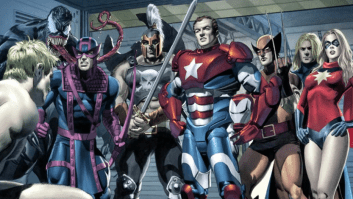
First Appearance: Thunderbolts (Vol 1) #110; written by Warren Ellis; art by Mike Deodato Jr. (2006)
Songbird
Moonstone
Swordsman
Radioactive Man
Mac Gargan/Venom
Bullseye
Robbie Baldwin/Penance
Yep. Norman Osborn may have been a horrible Thunderbolts leader, but his complicated leadership led to some great theater.
Osborn’s Thunderbolts occurred after Marvel Comics’ Civil War event. These new Thunderbolts were tasked with tracking down and arresting individuals avoiding the Superhuman Registration Act. This Superhuman Registration Act appeared in the MCU and sparked a similar story of the same name Civil War. Just imagine Norman Osborn, struggling with his Green Goblin persona, leading a team of villains to track down any superhero he dared not to register.
Times got rough, to say the least. This Thunderbolts team would lead Osborn to create his first Dark Avengers roster.
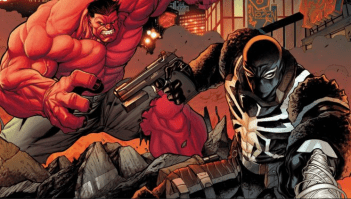
First Appearance: Thunderbolts (Vol 2) #1; written by Daniel Way; art by Steve Dillon (2013)
Red Hulk
Agent Venom
Punisher
Elektra
Deadpool
Red Leader
Mercy
Red Hulk’s Thunderbolts happened on the heels of Luke Cage’s. The government disbanded the Thunderbolts program, but General Thaddeus “Thunderbolt” Ross (Red Hulk) formed his team of anti-heroes. This new Thunderbolts served as a covert super-powered strike team. This sounds like the team’s premise in the upcoming Thunderbolts*.
Red Hulk’s Thunderbolts had a short but memorable run. Even the small moments are great. My favorite was when Deadpool’s name gets pulled for a mission, and he wants to kidnap actor Ryan Reynolds. Ha! At the time of this moment’s publication, Ryan Reynolds had not yet redeemed himself as Deadpool—way to go, Thunderbolts.
Getting back to the larger storylines. Ross started with former Code Red mercenaries and began adding a few villains. It’s this addition of villains that led to the team’s downfall. The team tracks down Doctor Faustus. The Punisher wants to kill Faustus for murdering high school children. Instead, Red Hulk recruits Faustus to join the Thunderbolts. The Punisher leaves the team and then takes them down. Womp, womp.

First Appearance: Thunderbolts (Vol 1) #1; written by Kurt Busiek; art by Mark Bagley (1997-2000)
Baron Zemo/Citizen V
Moonstone/Meteorite
Fixer/Techno
Beetle/MACH-1
Goliath/Atlas
Screaming Mimi/Songbird
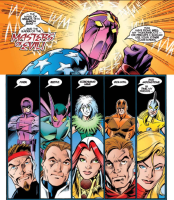
The original is often the best. The original Thunderbolts introduced the idea of supervillains pretending to be superheroes (to gain access to their foes) and then liking the recognition and feeling good about doing good deeds. This differs from the Suicide Squad. Suicide Squad villains are looking for reduced sentences or perks in their prison accommodations. Except for their founding member Baron Zemo and one or two others, the Thunderbolts genuinely wanted to reform.
I also love the Thunderbolts’ reveal at the end of the first issue. This scene is iconic.
Did we get the list right? Let us know which Thunderbolts teams you would add or remove in the comments. Thank you for reading and wherever you are, I hope you’re having a great day.

We covered Marvel’s Illuminati members last month, and this month we’re doing the same for DC Comics rag-tag team of oddballs the Suicide Squad. Also referred to as Task Force X, the Suicide Squad takes on missions so dangerous that trying to complete them would mean that someone has a death wish. Brought back in the 1980s with this concept, the Suicide Squad was run by Amanda Waller, who installed explosive devices inside the heads of hardened criminals. Cue over-the-top antics.
Hey, hey! Kyra Kyle here. We’re back with the first Top 5 list. Today we’re tackling DC’s lovable gang of miscreants, the Suicide Squad. Who made our list of the Top 5 Suicide Squad Members? Let’s find out.
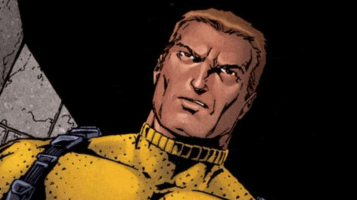
Rick Flag is the OG Suicide Squad member. Someone by the name of Rick Flag has been around since 1959. There have been three generations of Rick Flags; each one has served as one of the Suicide Squad’s leaders. Rick Flag stands out from most other Suicide Squad members because he isn’t a former criminal. Most iterations of Rick Flag portray him as a skilled military special ops member. This makes sense. The Suicide Squad began as a military/government outfit. It wasn’t until Amanda Waller revived the project that the Suicide Squad included criminals.
Typically, Rick Flag serves as Amanda Waller’s right-hand man within the group, helping keep the rest of the Suicide Squad in line. Amanda Waller is on to something. It would take more than a bomb in one’s head to stop certain members of the Suicide Squad. You need a man on the inside. Rick Flag is that inside man.

We go from the most wholesome member of the Suicide Squad in Rick Flag to the least wholesome in Captain Boomerang. Let that sink in. Within a group of psychopaths and hardened criminals, Captain Boomerang is the least wholesome.
Boomerang joined the Suicide Squad in exchange for a pardon. So far, so good. But his grating personality and blatant racism cause more than a little strife within the group. Nobody likes this guy. He causes friction within the team and most team members consider him to be the most dangerous and least dependable member. This also causes Captain Boomerang to have some tasty storylines. He’s one of those villains you love to hate.
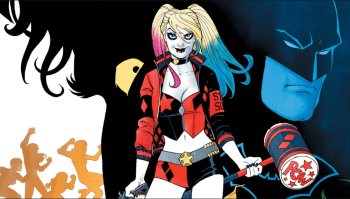
Harley Quinn was going to make this list, but I struggled with where to place her. She’s the highest profile character on this Top 5 list, but she’s also the newest Suicide Squad member. The third spot sounds right.
This isn’t the classic Harley Quinn. The original Harley Quinn, found in Batman: The Animated Series, needed a makeover before joining the team. The Harley who joined the Suicide Squad is the one with the revamped origin story where Joker pushes Harley into a vat of chemicals, granting her superpowers. This new Harley Quinn breaks the fourth wall like a popular merc with a mouth from a different comic book universe. I don’t know which version of Harley I like better, but there’s no denying that after her makeover, Harley Quinn molded the Suicide Squad in her image.

Besides the character in our number one spot, Floyd Lawton as Deadshot is who I think of first when I think of the Suicide Squad. Waller recruits Lawton because of his skills as a marksman and the fact that his mandated therapy sessions revealed that he has a “death wish,” hoping a skilled enemy will end his life in a dramatic battle. This death wish leads Deadshot to wear a costume featuring a target on his chest.
Deadshot often clashes with Captain Boomerang—who doesn’t—and field leader Rick Flag. But Deadshot and the latter share a begrudging respect for each other. Deadshot is a classic Suicide Squad member. His backstory lends himself to inclusion on the team and on this list. Lawton may be the only member of the Suicide Squad with a death wish.
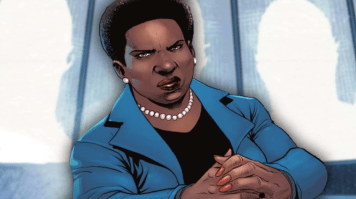
I mentioned Amanda Waller in several write-ups leading to our top spot. Her spot at number one was inevitable. Waller is the woman in charge. She’s the one who resurrected the Suicide Squad. She’s the one who thought installing bombs in criminal’s skulls and forcing them to do government work was a good idea. In short, there would be no Suicide Squad without Amanda Waller.
The woman nicknamed The Wall makes up for her lack of superpowers with her ruthlessness, guile, intimidation, and political connections. Waller is the proverbial person who knows where the bodies are buried, and she’s not afraid to use that knowledge to her advantage. The Wall can even make members of the Justice League, like Superman and Batman, blush. She’s not to be taken lightly. She had to take the number one spot.
Did we get the list right? Let us know who you would add or remove in the comments. And wherever you are, I hope you’re having a great day.

Hey, hey! Kyra Kyle here. The MCU introduced Marvel Comic’s Illuminati in Doctor Strange in the Multiverse of Madness. I don’t know if the Illuminati will continue in the MCU, but they’ve done a lot of work behind the scenes during major Marvel Comics crossovers. The Illuminati’s first appearance (New Avengers #7, July 2005) features each member of the group protecting one of the Infinity Gems. The Illuminati also factor into 2015’s Secret Wars. So, there’s a chance we’ll see more of them on the big screen. Who are the best characters from this group of Marvel Comic’s most powerful beings working in secret, shaping the superhuman world and protecting Earth from catastrophe?
But first, an honorable mention or two. I like Tony Stark/Iron Man a lot as a character. He’s also done a lot with the Illuminati, but he’s not the first name I think of when discussing the Illuminati, even though he’s a founding member. You’ll find another major exclusion on this list: Doctor Strange. His story may have introduced the Illuminati to the MCU, but I think the Illuminati works best when it’s composed of people who represent different demographics, kind of like a Marvel Comics version of the United Nations. And most of the Illuminati’s members fit this bill.
Let’s see who made the list.
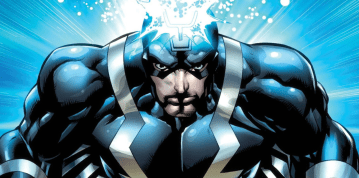
The Inhumans occupy an important part of the Marvel Universe. They may have existed before humanity or at least they had a higher level of intelligence and awareness before humanity during Earth’s earliest history. This history also involved extraterrestrial and cosmic encounters. Enter Black Bolt. He’s the Inhumans’ current monarch and boasts incredible power. Black Bolt was born with a voice so strong that it can obliterate planets. Since this is the case, he seldom speaks, opting to have Medusa, another powerful Inhuman, speak on his behalf.
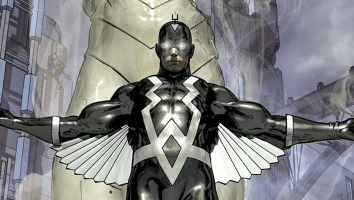
Fortunately, the Illuminati’s creator, Brian Michael Bendis, shared his reasoning for each of the original member’s inclusion. Here’s what Bendis has to say about Black Bolt (I’m paraphrasing to some extent):
“King of the Inhumans, who are an important part of Marvel history and play an important part in events that have not yet come to pass. He also represents a ruler/king archetype.”
The Inhumans television show didn’t fare well, but let’s hope the Inhumans will find new life in some other form. They’re too important to vanish from the MCU entirely.

Namor is yet another monarch. He rules the underwater nation of Atlantis and adds a different perspective for the Illuminati. The ocean claims more area than land on Earth, and Namor is its unquestioned ruler. He’s a member of another ancient civilization, one featured in Black Panther: Wakanda Forever, but missing from the Illuminati’s brief stint in Doctor Strange in the Multiverse of Madness. Like the Inhumans, I hope we get to see more of Namor in future MCU projects.

Let’s see why Bendis included Namor in the original Illuminati:
“Namor is the King of Atlantis and the Seven Oceans and represents the antihero mindset.”
He certainly does that. Namor is an ally to none. His only wish is to have his people’s voices heard. Namor served on Norman Osborn’s Cabal at the same time as his stint on the Illuminati. His role in the Illuminati mirrors his earlier team-up with the Invaders. The Invaders signaled Atlantis’s desire to be known to the outside world, the world of the land dwellers. The Invaders could be another group that could factor into the MCU’s future.
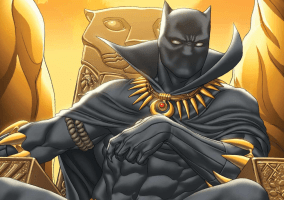
Black Panther is the only member of the Illuminati (on this list) who wasn’t in the original roster, but that wasn’t from lack of trying. Tony Stark recruited T’Challa to become an original member and the representative of Wakanda, but T’Challa turned Stark down. Black Panther would later join the Illuminati to face the Incursions.

Wakanda is one of the most prosperous nations on Earth and the main supplier of the world’s Vibranium. Black Panther is calm, fair, and reasonable while boasting no ego. In short, T’Challa differs from most members of the Illuminati. You can call Tony Stark, Mr. Fantastic, and Dr. Strange many things, but ego-less is not one of them.
T’Challa’s relationship with the others in the group can get strained because of the others’ lack of control. Black Panther isn’t easily manipulated. Again, Black Panther is another character I’d like to see more of in the MCU. If that includes a second incarnation of the Illuminati, so be it.

Professor X needs no introduction. He’s the founder and leader of the X-Men and fights for equal rights for mutant-kind. Charles Xavier boasts a level of intellect and wisdom that’s rarely matched. His ability to read minds, while usually not used against members of the group, proves vital when obtaining intelligence. Because of his role as peacemaker and arbitrator, Professor X often takes a prominent leadership role in the Illuminati.

Eventually, future events in the comics prevent Xavier from participating in the Illuminati, which leads to the group’s gradual demise. Yeah. The comic book version of the Illuminati didn’t dissolve because an omega-powered mutant turned rogue and killed them all in a fit of rage. Spoilers for Doctor Strange in the Multiverse of Madness.
Let’s have Bendis weigh in on why he included Professor X in the Illuminati:
“Leader of the X-Men, Charles Xavier is in the group on behalf of the mutant community.”
Fair enough. And with mutants playing a larger role in the MCU going forward, Professor X’s inclusion in a second Illuminati could prove fruitful.

Reed Richards (Mister Fantastic) is the one entry that doesn’t represent a group of people, a country, or both. Reed is only one of the smartest minds on the planet and the leader of the Fantastic Four. He has a long history in the Marvel Universe. Richards’s scientific capabilities are almost unmatched and his desire to see a better tomorrow makes him a prominent member within the Illuminati. He meshes well with Tony Stark, but the two can often butt heads because they can’t put aside their egos.
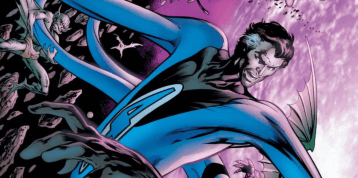
Reed even reasoned with Iron Man’s original proposition for the Illuminati as a “United Nations” of superheroes. Richards argued that the idea presented too many logistical and bureaucratic issues, but he also acknowledged the need for efficient information exchange between the world’s greatest minds. Mister Fantastic represents the scientific community of the Marvel Universe. He knows more about alternate realms and the cosmos than most, usually because he conducts reckless experiments and kicks a hornet’s nest or two. Annihilus wouldn’t know humans or Earth existed if Reed hadn’t bumbled into the Negative Zone. Thanks, Reed.
I can’t wait for the Fantastic Four to make their MCU debut. I wouldn’t mind more Mister Fantastic screen time. A second Illuminati could give us more FF goodness.
Which member of the Illuminati do you think should’ve made the list? Let us know in the comments. And wherever you are, I hope you’re having a great day.

Do you want to get into Punisher comics and don’t know where to start? Geekly has you covered. Daredevil: Born Again continues its run on Disney+ this week, and Geekly is celebrating with yet another comic book starter stories list. Today’s list features the Punisher.
Hey, hey! Kyra Kyle here. While Frank Castle (The Punisher) may not have been around as long as Matt Murdock (Daredevil), he has an extensive catalog of comic books. We’ll have a mix of story arcs (stories composed of multiple comic book issues) and single-issue stories (which will only have one comic book to the story). The Punisher has a nice split between single-issue stories and story arcs. We’ll begin with the story arcs. Enjoy!
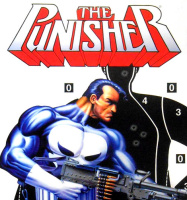
The Punisher spent the first decade as a side character. His first appearance (which we’ll mention in the single issues) in Spider-Man established the Punisher as a mysterious figure, but Circle of Blood established the Punisher as a character. Originally, Marvel intended to make Circle of Blood a four-issue limited series. That changed with the series’ popularity. Circle of Blood became so popular that the Punisher became a monthly comic. Within this mini-series, you’ll find the Punisher’s origins. Frank is a Vietnam veteran who watches his family die at the hands of a gang war. Motivated by anguish he becomes a one-man army of revenge.
Circle of Blood gives readers everything they need about the Punisher as a character. There’s no better place to start reading Punisher than with Circle of Blood.

During the early Nineties, The Punisher had two monthly titles. The original Punisher series was strong enough, while Punisher War Journal devolved into “Punisher make things go boom and die.” Punisher War Zone’s first storyline breaks from the norm—at least the first half of the storyline does, which is why I included #1-6, instead of #1-11. The Punisher goes undercover and unearths a mob plot. Throw in someone who may or may not be Kingpin, Kingpin was in hiding at this time, and Punisher War Zone is a great place to see the Punisher working with the police on the down low and flexing his detective and heroic muscles.

Marvel produced this twelve-issue limited series in 2000-2001. First-time Punisher scribe Garth Ennis made a huge splash with Punisher Kills the Marvel Universe (which almost made this list) and this series gave him a second opportunity to write for the character. This won’t be Ennis’s last entry; Ennis will dominate this list. Welcome Back, Frank continues to depict Frank as a Vietnam War veteran. He announces his return to New York City by taking on the Gnucci crime syndicate. Publicly, the NYPD opposes Frank’s actions. Secretly, the police condone the Punisher’s actions. With the help of the police and his neighbors, Frank dismantles the Gnucci’s crime operation. Welcome Back, Frank showcases the Punisher’s tenuous relationship with the police and highlights the smaller good deeds, that I won’t spoil here, that make Frank Castle who he is. Welcome Back, Frank is a Punisher must-read.

I warned you. Garth Ennis will dominate this Punisher reading list. Born is another great Punisher mini-series; a lot happens in this four-issue run. Born follows Frank Castle as he serves in the United States Marine Corps during his final tour in Vietnam in 1971. Half of Frank’s fellow Marines are addicted to heroin. Their commanding officer is an apathetic alcoholic who pretends he has malaria whenever the superiors plan an inspection of the base, Valley Forge. Of course, we see military combat. One by one, Castle’s unit falls, and he finds himself surrounded by the enemy. I won’t spoil any more of this heart-pounding series. If you’re interested in what made Frank Castle the man he is, you should read Born.

Barracuda refers to the man who could be the Punisher’s greatest villain. Screen Rant said this about Barracuda. “Far and away the most popular villain from the Punisher MAX comics, Barracuda has become one of the most iconic enemies Frank Castle has faced.” Barracuda is every bit the Punisher’s equal. Honestly, he may be more terrifying. Barracuda didn’t need a tragedy (like losing his family) to become a killer. While in elementary school, he shoved his thumbs into a classmate’s eyes. He castrated someone while in a youth detention center. This propensity for violence made Barracuda the perfect Green Beret. So, now he has special ops training and a massive frame to back up his nastiness.
There’s no better place to start with getting to know one of the Punisher’s greatest enemies than with this comic book run. The last thing you want to see is a smiling Barracuda.
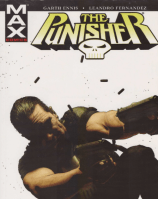
The Slavers storyline shows Frank Castle’s softer side. As the title implies, this story revolves around slaves and the people who keep them in bondage. Specifically, The Slavers is about a forced prostitution ring. I won’t get into too much detail here. On one hand, I don’t want to spoil the story. On the other hand, The Slavers is not for the faint of heart. While this story arc is one of the Punisher’s best (and of course, it’s written by Garth Ennis), it comes with a strong trigger warning. The Slavers proves that the Punisher has a heart of gold, even if his methods are savage.

“The Punisher Strikes Twice!” marks the Punisher’s first appearance. Narratively, this Punisher looks very different from the one we see in any other Punisher story on this list. Punisher is little more than a hired gun. A new costumed character called the Jackal hires Punisher to slay Spider-Man. Antics ensue.
After this first appearance, the Punisher would team up with Spider-Man. Eventually, he would make cameos in other titles, teaming up with Captain America and Nightcrawler until Frank Miller would contrast Daredevil’s crimefighting style against the Punisher’s. “The Punisher Strikes Twice!” may not be the character we know of as the Punisher, but a Punisher fun should read the comic that started it all.

And we’re back to another Garth Ennis-penned Punisher story. “The End” is a Punisher one-shot story set in the wake of World War III. This post-apocalyptic story is a product of its time. Frank is tasked with finding a hidden bomb shelter beneath the former site of the World Trade Center. With the War on Terror in full swing, “The End” mirrors American fears.
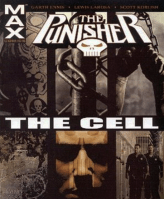
Within the darkest corners of Riker’s prison, old men control their criminal empire. These old men are given a new neighbor on their cell block: Frank Castle. The Punisher uses a prison riot to weaken the crime lord’s defenses. When they attempt to wait out the chaos, the Punisher strikes. “The Cell” shows a Punisher who can play the long game. This Punisher bides his time and waits for the perfect moment to attack.
This list is by no means exhaustive. We could’ve added a few other Punisher stories. Let us know which Punisher stories you’d add to this list in the comments. And wherever you are, I hope you’re having a great day.

I can’t believe Geekly has been doing Top 5 Villains lists for superheroes and we haven’t covered Flash’s rogues gallery. Flash has one of the most extensive rogues galleries in comic book history. He may not have villains with the same name recognition as Spider-Man or Batman, but his rogues gallery is one of the best.
Hey, hey! Kyra Kyle here. We’re back with another Top 5 Villains list. Many of the Flash’s most iconic villains have superspeed, so we’ll be limiting this list to the top speedster. Let us know if you’d like a Top 5 List of Villainous Speedsters. In the meantime, here’s our list of the Top 5 Flash Villains.

Flash’s top 4 villains were a breeze to compile. I knew who they were the instant I sat down. His fifth villain could go in several directions. I may have said that about more than one superhero, but that’s the truth. Killer Frost beats out the rest of the would-be Top 5 Flash villains if for no other reason than she used to be a Flash ally. She spends part of her time as an anti-hero, having spent stints with the Suicide Squad and Justice League. But whenever Caitlin Snow decides to turn evil, it spells doom for the Flash. Her connections with Flash and Firestorm add to her lethality. Cold powers prove effective against the Flash; cold can slow the speedster. Killer Frost’s freezing ability, as we’ll see with another Flash villain on this list, makes her dangerous.

Mirror Master fills a similar role in Flash’s Rogues that Mysterio does in Spider-Man’s Rogues, and Mysterio ended up as Spider-Man’s fourth-placed villain. Hmm. Looks like the fourth spot is the perfect place for a villain designed to confuse their nemesis. Unlike Mysterio, Mirror Master possesses powers. His mirrors can hypnotize, turn him invisible, generate holograms, change his physical form, and travel into other dimensions. That final ability separates Mirror Master from Mysterio. One of my favorite recent stories Mirror Master showed him trap Flash within a parallel dimension of his creation.
Don’t let the high-speed fool you. Flash is one of DC Comics’ most powerful heroes. He can turn back time and alter the past. Brute strength doesn’t often work against the Flash. Mirror Master takes a different route. And I’m a sucker for a villain with a mischievous streak.

Gorilla Grodd is one of my favorite Flash villains. I wanted to place him at the one or the two spot, but two other villains narrowly beat him. Gorilla Grodd has superhuman strength, telekinesis, telepathy, a super genius-level intellect, and has a connection to the Speed Force. As his name suggests, he’s a gorilla. He hails from Gorilla City and is the sometimes leader of the metropolis led by super-intelligent gorillas. Gorilla Grodd not only has a laundry list of abilities, he has an army at his disposal.
Marry all of this up with Grodd’s connections with most of DC Comics’ supervillain organizations like the Legion of Doom, the Secret Society of Super Villains, and the Injustice League, and Gorilla Grodd has a plethora of allies he can summon. Grodd is one of Flash’s most formidable enemies.
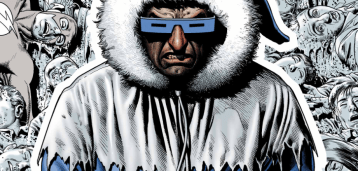
You can take everything I said about Killer Frost and her freezing powers and apply it to Captain Cold. But instead of Captain Cold being a personal friend of the Flash’s, he’s the man he instituted the Flash’s Rogues, Flash’s version of the Sinister Six, and serves as their leader. I had to put Captain Cold above Grodd because Grodd can get distracted by other heroes, and Captain Cold keeps his animosity toward the Flash. He knows which buttons to press and isn’t afraid to press them. His freezing abilities are only matched by his intellect. In short, Captain Cold knows how to use the Flash’s strength against him and that makes him deadly.

Eobard Thawne (also known as Reverse-Flash and Professor Zoom) takes the top spot. He’s another speedster, so if we were to create a list of Top 5 Villainous Flash Speedsters, he’d be the top spot there as well. Thawne is one of the few characters in the DC Comics Universe who can travel back in time with little to no ill effects, and he uses this to his advantage. He’s erased characters to torment and destroy the Flash’s life. He even went back in time to kill Barry Allen’s mother. Reverse-Flash is plain evil.
He too has connections with the Legion of Doom, the Injustice League, and the Rogues. He had to take the top spot. Despite others’ attempts, no one has tortured the Flash more than Reverse-Flash. He does what his name says, he is the Flash’s antithesis.
Did we get the list right? Let us know who you would add or remove in the comments. And wherever you are, I hope you’re having a great day.
 jkgeekly.com