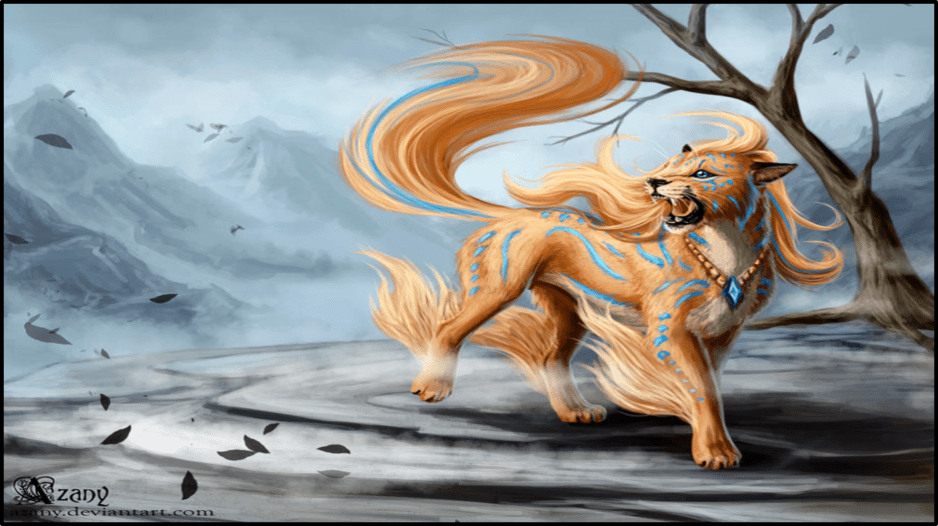
Geek Out

My Favorite Storytelling Elements of Breaking Bad

Hey, hey! Kyra Kyle here. Like I said a few weeks ago, I’ve sprinkled in new posts with the old stuff, but we’re running out of the older posts. This one’s about Breaking Bad and my favorite storytelling elements from that show may be our final older post. Yay!

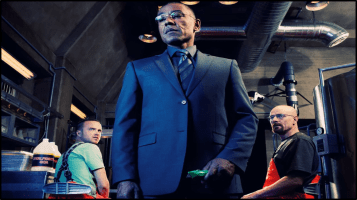
There are so many places to go in terms of storytelling elements that work in Breaking Bad. The characters grow and change over time. The strong narrative stayed on point, tension increased during each show, it explored concepts of storytelling, and didn’t over stay its welcome like other popular shows during its run. Despite the show’s groundbreaking nature, one of my favorite storytelling elements of Breaking Bad is the show’s adherence to a famous storytelling precept: Chekhov’s Gun.

Essentially, Chekhov’s Gun states that every element in a story must be necessary, irrelevant elements should be removed, and no element should appear to make false promises. Everything must have a purpose. Chekhov used a gun for his analogy. If a gun is mounted on the wall during a play’s first act, it must go off in the second act. Otherwise, why have the gun?

I’m all for subverting traditional storytelling precepts, but there is a reason they exist, and storytellers should know the time and manner to subvert these practices. Readers and viewers will assign meaning to something a storyteller shows them. The more elements a storyteller shows that don’t matter, the more likely they’ll lose their audience because their audience will start assigning meaning to things that don’t matter. The best example of a Chekhov’s Gun fail is Star Wars: The Last Jedi.

The bit of dialogue in the previous Star Wars film (The Force Awakens) concerning the origin of Rey’s lightsaber dubbed it Luke Skywalker’s and his father’s before his. This suggest that Rey is part of the Skywalker bloodline. If she was Luke’s former pupil (a popular fan theory prior to The Last Jedi), the line could include Luke, but not his father. If Rey had no connection at all to the Skywalkers, then don’t mention the Skywalker name.

Okay. Let’s get back to Breaking Bad and how it uses and subverts Chekhov’s Gun.

Breaking Bad is brilliant at assigning meaning to elements it shows. Viewers may find an odd camera angle that brings an electrical outlet into the forefront. Don’t worry there’s a reason to show said electrical outlet. A bit a dialogue that feels like it should be throw away banter will make an impact later in the episode or series. Why are they beginning an episode with a crawl space? There’s a reason. Even a Roomba has purpose.

But Breaking Bad subverts Chekhov’s Gun as well. Up to this point I’ve stayed as vague as I could. I’ll try not to spoil anything with this next example, but it’s difficult not to with this type of write-up. Consider yourself warned.

Let’s talk about the Ricin Incident of season 4. We’ll start with a rundown of what happened. Walter White plans to have Jesse give Gus a ricin-laced cigarette. Walt chooses the nerve agent ricin because it’s difficult to detect. Jesse chooses not to poison Gus because he doesn’t trust Walt at this point and has grown closer to Gus. Later, Brock (the son of Jesse’s girlfriend) falls ill from an unknown cause. Jesse finds that he had lost the ricin cigarette and blames Walt for giving the poison to Brock. Walt convinces Jesse that he couldn’t have poisoned Brock; it was Gus. Eventually, doctors find out that Brock ingested the berries of a Lily of the Valley. At the end of the episode, the camera zooms in on a Lily of the Valley in Walt’s backyard.

Phew! That’s a lot to get through. The upshot is that Walt poisoned Brock and turned Jesse against Gus. Breaking Bad uses Chekhov’s Gun the entire time, but it layers each element and nests them together like Matryoshka dolls. The lilies were mentioned in dialogue earlier while Walt and his wife Skyler discussed landscaping. It’s banter that most viewers dismissed, but there’s a reason for everything in Breaking Bad. Viewers could also dismiss the ricin cigarette as a red herring, and it was to a point, but it returns later in the series and serves in this episode (or two episodes) as character motivation. It also does a lot for character development. If there was any lingering hope for Walt’s soul, and it’s debatable, it was lost here.

Oh, man. That ricin vial got around in this series. That Roomba makes an appearance as does the electrical outlet. I won’t say how, even though I’ve spoiled quite a bit already. Oh, well. You should watch Breaking Bad.

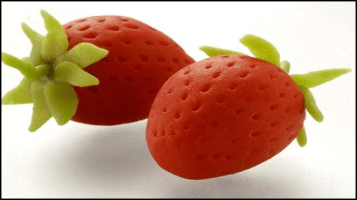
If you’ve watched Breaking Bad, what are your favorite storytelling elements? You could pass it to me, hidden in a marzipan strawberry or you could let me know in comments. And wherever you are, I hope you’re having a great day.

Geekly News: Sony Pictures and Marvel Pictures Closing On New Spider-Man Film Deal

After years of speculation and arguments, we may have some resolution to the Spider-Man movie drama.

Hey, hey! Kyra Kyle here. And today we have a big development between Sony Pictures (the owners of Spider-Man’s movie license) and Marvel Pictures. Ever since 2017’s Spider-Man: Homecoming, Sony couldn’t include Peter Parker in any of their live-action Spider-Man universe movies, and the Marvel Cinematic Universe couldn’t use a secondary Spider-Man character (like some of Spidey’s rogues) if Sony included that Spider-Man character in a Sony-backed Spider-Man movie. This arrangement led to Venom getting a trilogy of movies without Spider-Man (those weren’t so bad) and other Spidey characters like Morbius and Madame Web also got greenlit (both of which tanked). This kept Marvel from using Venom, Morbius, and any of the gagillion characters in Madame Web. All of that may change soon.

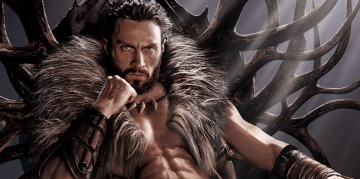
Multiple sources have stated that Sony plans to reboot their Spider-Man Cinematic Universe. This will most likely occur after the third and final Venom film. We still don’t know what this will mean for the upcoming Kraven the Hunter film. If the agreement takes effect, Kraven the Hunter could be included in the Marvel Cinematic Universe canon.

The details of this agreement are not finalized. Things can change. But the gist is that Sony will be able to include Peter Parker in any of their future live-action Spider-Man Universe movies, and any Spider-Man Cinematic Universe movie will be included within the Marvel Cinematic Universe. I don’t believe this means that Marvel will oversee every Spider-Man Cinematic Universe movie that doesn’t involve Peter Parker’s Spider-Man, but it does mean that the characters within Spider-Man’s mythos will be available for both movie universes. And new Spider-Man Cinematic Universe movies could have an impact on the Marvel Cinematic Universe going forward.

This potential deal could help both sides as several Spider-Man villains become unfrozen by the current deal, and we could finally see that Tom Holland Spider-Man and Tom Hardy Venom mash-up fans have been waiting for. This deal couldn’t come at a better moment. As I mentioned, Sony Pictures will finish their Venom trilogy (their most successful live-action Spider-Man franchise to date), while the Marvel Cinematic Universe wraps up the Multiverse Saga, which could go a long way to merge these two Spider-Man universes. And Secret Wars isn’t too far away. Peter Parker first met the Symbiote Suit (the black Spider-Man suit that would become Venom) during Secret Wars.

I can’t wait to see what a new agreement between Sony and Marvel Pictures brings. Let us know in the comments which movies you’d like to see. And wherever you are, I hope you’re having a great day.

Top 5 Tabletop Games from the late 1960s

Hey, hey! Kyra Kyle here. Back with another Top 5 Tabletop Games of an era and we’re also back with the second half of the 1960s (1965-1969). If you want to see our picks for the first half of the decade, you can follow this link.

We’re getting back into the swing of things, so let’s reiterate the ground rules again before we get started.

1: Cultural relevance plays as much of a factor as overall quality. A game might make a list that doesn’t hold up to others of its type, but you must admit the game is everywhere.

2: Only one game from a franchise makes the list. This will become more of an issue the closer we get to games with expansions.

3: Longevity plays a role, too. A game doesn’t have to fly off the shelves today, but it had to have some widespread appeal for a decent time.

Feudal board game Top 5 Games from 1960s

5: Feudal (1967)

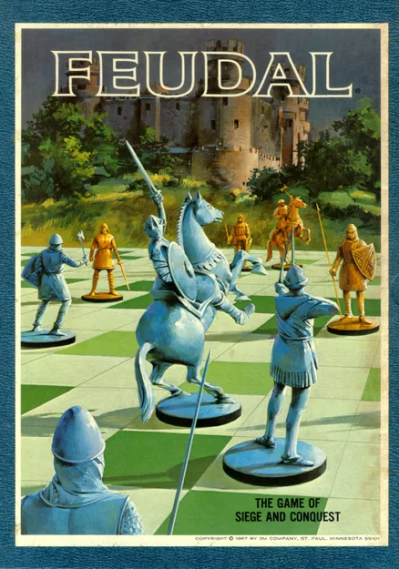
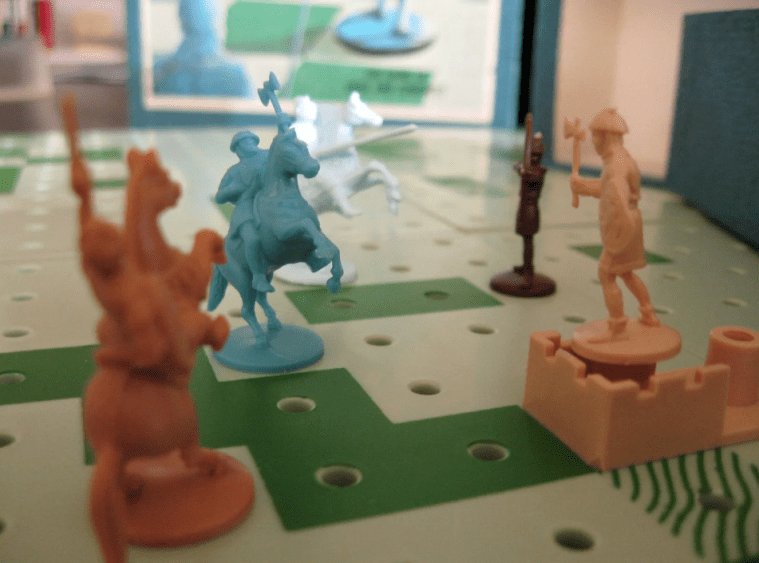
The 1960s had a lot of Chess-like board games—and I do mean a lot—but none of the Chess variants reached the heights of Fred Beustchler’s Feudal. A part of the 3M Bookshelf Series (3M also produced a lot of Sid Sackson and Alex Randloph’s early work), Feudal tasks players with occupying an opponent’s castle or capturing all an opponent’s royalty. The play area consists of four plastic peg boards depicting empty, rough, and mountainous terrain.

Feudal tabletop game Top games from 1960s

Feudal has a unique set-up. Players place their pieces on their peg boards in secret and reveal how they deployed their units simultaneously. This leads to different strategic problems each game and every game plays out differently. We had to include one Chess-like board game. Feudal is the best of the bunch.

Triominoes board game Top 5 games from 1960s

4: Triominoes (1965)

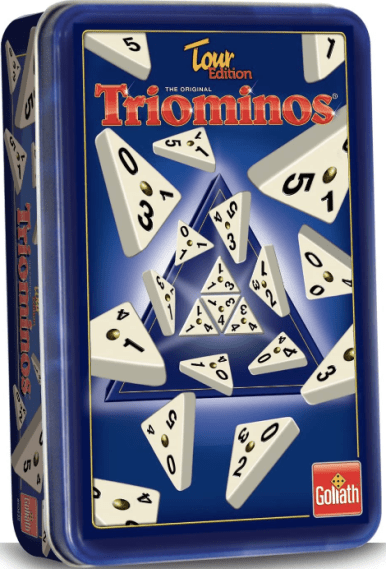
Simply put, Triominoes is a variation of dominoes that uses triangular tiles. The tiles are equilateral triangles so they fit in neatly with each other. Players can play a Triomino if they have matching numbers with the six potential values 0-5.

Triominoes tabletop game Top 5 Games from 1960

I’ll be honest. Triominoes intimidated me while I was growing up. So many numbers close together looked confusing. But there’s no doubt that the game has a legacy.

Kerplunk tabletop game Top 5 game from 1960s

3: Kerplunk (1967)

Sometimes the simplest concepts make the best games. Kerplunk consists of a transparent plastic tube, plastic rods called straws (26-30 of various colors), and several dozen marbles. Players take turns removing a single straw from the tube while trying to minimize the number of marbles that fall though the web and into their trays.

kerplunk board game Top 5 game from 1960s

Kerplunk beget several similar games in the future, specifically Jenga. This family of games has built-in tension. Remove the wrong straw and the marbles pour out.

Twister tabletop game Top 5 game from 1960s

2: Twister (1966)

The tail end of the 60s saw a lot of simple games or new twists on older games. Speaking of twists, our next game is Twister.

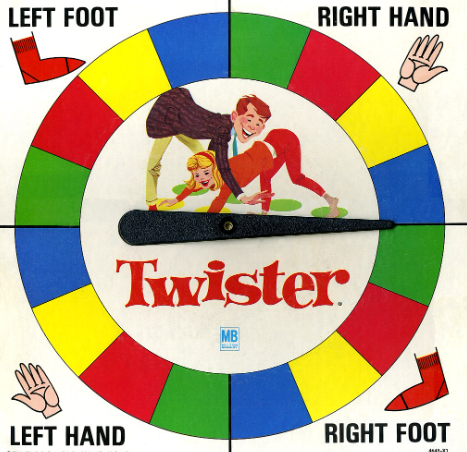
Each version of the game comes with a spinner. And each spinner is divided into four labeled sections: left foot, right foot, left hand, and right hand. And each of those four sections are divided further into the colors red, yellow, green, and blue. After spinning, the combination is called (right hand red) and players must move their matching hand or foot to a circle of the correct color. Last player standing wins.

Twister board game Top 5 game from 1960s

Simple enough. And we’ll see a lot of other simple designs that have stood the test of time on this list.

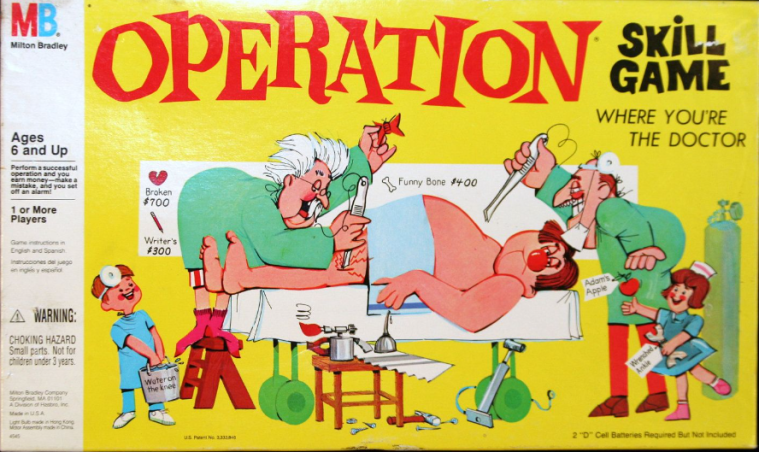
Operation board game Top 5 game from 1960s

1: Operation (1965)

We go from moving one’s body in weird ways to a game featuring someone with a weird body. Operation challenges players with extracting silly body parts from a hapless patient. During the game, you acquire cards which dictate body parts you must remove. The body parts rest inside a hole and if you erroneously touch one of the hole’s metal sides, a sudden buzzer and light-up nose indicates the patient’s pain. Players want as little pain as possible in Operation. Successful extractions give the player money and the player with the most cash at the end of the game wins.

There have been countless versions of Operation. I believe my kids had a Spongebob themed one. Maybe it was Shrek. Regardless, Operation has never been out of print since its release. And I don’t see that happening in the next 60 years either.

Did we get the list right, for the most part? Let us know in the comments. And wherever you are, I hope you’re having a great day.

Check out the other lists in this series:
Top 5 Games prior to the 1930s
Top 5 Games of the 1930s
Top 5 Games of the 1940s-50s
Top 5 Games of the early 1960s
Top 5 Games of the early 1970s
Top 5 Games of the late 1970s
Top 5 Games from 1980-1981
Top 5 Games from 1982-1983
Top 5 Games from 1984-1985
Top 5 Games from 1986-1987
Top 5 Games from 1988-1989
Top 5 Games from 1990-1991

Gacha Game Review: Genshin Impact

Hey, hey! Kyra Kyle here. I’m kicking off these gacha critiques with Genshin Impact. I have two logins (one for PC and the other Playstation), so I’ve spent plenty of time in Teyvat (the world Genshin is set in). But I’ve only recently revisited the game. The new continent Natlan brought me back. So, what does Genshin look like in over a year? The graphics are dated but not as bad as I would’ve thought. The oversaturated colors bugged me. They’re loud. So loud that I almost grabbed a pair of sunglasses to shield myself from the glare. The music was always great, almost iconic. But these are surface-level viewpoints. How does Genshin Impact hold up to some of these new or updated video game criteria that we talked about in yesterday’s post? As it turns out, not too well.

Mechanisms: 5/10

Genshin conducted a massive copy paste to Zelda: Breath of the Wild’s mechanisms, so you won’t find too many innovative game mechanisms. The mechanisms that are here work well, even if they are dated, but more on that in the following segment. Is there anything left to say than Genshin’s mechanisms whimper banal?

Above Image from GameDesigning.Org

Gameplay Loop: 8/10

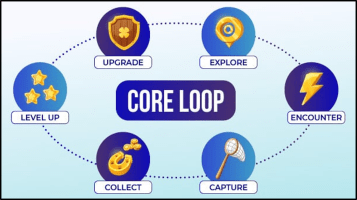
It worked in Breath of the Wild, and it works here. The core gameplay loop can keep players engaged for countless hours. That can be a good and bad thing. Elemental reactions play a huge role in Genshin’s combat, so players will often switch characters. Breath of the Wild only has Link. The physical swapping of characters goes a long way to hold a player’s attention, and it doesn’t hurt that players need to build more than one character and that each of these characters have different interactions.

Respecting Time: 2/10

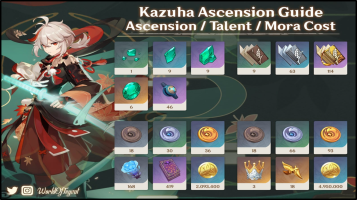
Genshin does little to respect a player’s time. It’s an older game, four-years old at this point, and it shows its age. As I mentioned previously, Genshin borrows most if not all of its gameplay from Zelda: Breath of the Wild and that includes the glacially slow glider and snailing up mountain faces. And there are so many mountain faces. But it goes deeper than that. Repetitive storylines and dialogue with no way of skipping said dialogue can make me want to rage quit. The game time gates upgrade materials. One can only farm materials on certain days of the week. I forgot about this in my year off. Why can I only farm skill scrolls on specific days? It makes no sense.

And speaking of these upgrade materials and skill scrolls, one can’t skip the domains these items can be found. You must defeat the same bosses or mid-level bosses every day. Every. Day. I miss older gachas. They knew they were mobile/timewaster games and allowed players to skip. I’ve beaten this level with a five-star rating before, so I can spend my energy and auto-clear this domain. The trend of disabling auto-clear in gachas began with Genshin. Hoyoverse assumed the attitude of “I created a robust world with better graphics and demand you see this world as much as possible, even if it’s repetitive.” Ugh!

It takes one-two minutes to defeat these domains. That’s not that long but considering you could clear about eight to twelve a day, that’s a good ten-twenty minutes. It’s half that if you use condensed resin (which acts like finishing the domain twice in one go), but you also need to farm the items with which to make condensed resin, and we’re doing the time warp again. And not in the fun Rocky Horror way. These domains don’t sound like they take long, but time adds up fast. Genshin also offers daily tasks which don’t take that long, but they’re daily tasks and they can last up to five minutes. It’s a lot of busy work with not enough pay off.

And it goes even further with minor time wasting inconveniences. Items burst out of things. I don’t know how many times I’m on a mountain face, open a chest, and the treasure spills down the mountain. Really? Auto-collect the treasure. And I can’t interact with things like a waypoint for the first time if an enemy spots me. I don’t have to see the enemy. Half the time I’m scratching my head wondering where the enemy is. Genshin invents new ways to waste time. But it’s super easy to finish the battle pass. That’s a huge plus.

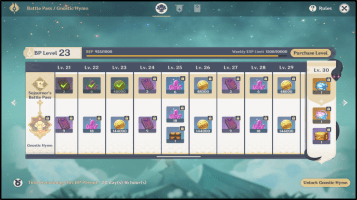
Battle Pass: 4/10

Genshin doesn’t really require a player to purchase its battle pass. I advise purchasing the battle pass once annually because some extra goodies can go a long way, but one can get by without it. And if that was all that mattered, I would’ve given Genshin top marks.

Unfortunately, Genshin has seen few upgrades to its battle pass in four years. There has been one major inclusion: artifact experience items. Genshin Impact is playing with a player’s ability to build their own artifacts with these experience items and that could ease the pain of farming artifacts. I didn’t mention this in the Respecting Time segment, but Genshin’s artifacts are the most time consuming of all items one must farm.

That said, I still can’t give Genshin high marks in Battle Pass because the BP weapons are okay at best, and the ability for players to build their own artifacts is getting tested in this patch. We don’t know if Genshin intends to keep this function, even though it’s been in Honkai: Star Rail from the beginning. Fingers crossed that it stays.

True Cost: 3/10

Genshin is below average in terms of True Cost, but I struggled with how far down it should fall. It originally received an average score years ago, but I have more context with which to stratify Genshin Impact. The release of Wuthering Waves (WuWa) and how much Kuro Games gifts their players with free five-stars and upgrades and convenes (those are WuWa’s version of a gacha turn) leaves Genshin in the dust.

Even so, I can’t crater this score. One doesn’t need that much in terms of primogems (the in-game currency players can buy with real-world money) and only a few characters are needed, specifically anyone who can facilitate hyper bloom. But it’s fun to get new characters and Hoyoverse’s other game Honkai: Star Rail (HSR) is far more generous. Both HSR and WuWa provide more in-game currency for exploration and completing events.

Sure, Genshin has given their playerbase more primogems and free gacha turns in this patch (5.0) than most other patches, but someone smarter (and more dedicated toward number crunching) than me kept track of how many gacha turns a person can make with freemogems and gifts in Genshin versus HSR. Over the years, Genshin has given players 80 turns per patch. To date, HSR gives players at least 100 turns per patch with just finishing in-game content. That means that HSR players are guaranteed a five-star character each patch, while Genshin players must pay for 20 turns of the gacha crank or not get a five-star. Or they need to get lucky. Just be lucky. Simple.

And it doesn’t stop there. Genshin Impact changes for the worse with its weapon banner. You must lose the 33% chance twice before getting a guaranteed weapon. If you miss both times and go to hard pity every time, you could spend hundreds of real-world dollars. Yikes! Genshin’s weapon banner is abysmal. What’s worse is that the current banner is an improvement. I saw a video years ago of someone spending thousands of dollars and never getting the banner weapon.

Narrative: 7/10

I gave Genshin an 8/10 for this category years ago. I would’ve given it 9/10 if I only gauged its story and not the storytelling. Genshin Impact has an engaging story; Hoyoverse stinks at telling stories.

This will be a problem with most gacha games. Gachas tend to dice up a story, toss the segments into the air, and let them fall wherever they will. As a result, I can seldom follow what’s going on in Genshin’s story. I need YouTube creators like Ashikai to compile Genshin’s story from various mediums, to include mangas, short animations, one shots, forums, and even some events that I may have missed because I was AFK. Quick plug, you should check out Ashikai’s YouTube channel; they do amazing work.

Once you know the plot points, Genshin Impact has a great story. The idea that this could be a post-apocalyptic world, and the sky is fake fascinates me. I won’t spoil the whole thing here. You should check out Ashikai’s playlist on World Structure Theory. Great stuff. The narrative itself rocks. I just wish Hoyoverse would elevate their storytelling.

Storytelling: 2/10

Ugh! Genshin hardly makes sense half the time and the times when it does make sense, Paimon repeats what a character just said.

Random NPC: I think the wolf headed east.

Paimon: It sounds like (random NPC) thinks the wolf headed east.

Skip. Skip! Skip!!! I already know that. Why don’t you give me a skip function? Why does Paimon repeat everything? Why doesn’t Paimon recap the parts of the story that I could’ve missed in timed events or the manga or some other media I haven’t seen? Hoyoverse’s team must’ve heard that no one can follow their plot, but they didn’t get the memo that their tossed salad method of storytelling could be the issue. It must be that the player wasn’t paying attention. Let’s repeat the same dialogue five times because the following happens way too often:

Random NPC: That’s right, Paimon! I believe the wolf headed east.

Paimon: Oh! (Random NPC) believes the wolf headed east.

Random NPC: That’s right, Paimon. You should head east in order to find the wolf. Paimon: Paimon thinks that Paimon and the traveler should head east in order to… Stop! Skip! Why?


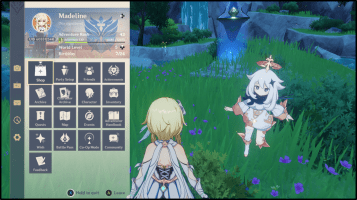
User Interface: 7/10

Genshin Impact streamlined a lot. So many gachas have cluttered interfaces. Tower of Fantasy (ToF), which was released after Genshin, is a good example of a cluttered interface. I can’t follow half of what ToF is trying to show me. It has too many sub-sub-sub-sub categories. Send a search party.

Genshin does a good job of showing the most pertinent information. But it can be better. I can do with even fewer sub, subcategories. Even so, Genshin has done such a good job at minimizing clutter that Wuthering Waves copied Genshin Impact’s interface as much as Genshin Impact copied Breath of the Wild. That tends to happen when a game does something right. If something works, copy the homework.

Presentation: 9/10

Like I said, the graphics look good but they’re dated, and I could do without Genshin’s oversaturated color palette. But the music catapults this score. Hoyoverse sunk a ton of money into making each region and even specific locations within a region unique. It says something when you can close your eyes, listen to a track, and know exactly where the piece plays.

A high music score will be a common trend for Hoyoverse games. Hoyoverse knows the value of good music. They honed their skills in Honkai Impact 3rd. “Nightglow,” anyone?

Aggregated Score: 5.22

These new scoring metrics lowered Genshin Impact’s overall score. I still have a little hope that Hoyoverse will improve Genshin Impact, but several of the game’s improvements were first tested in Honkai: Star Rail, and it took over a year for those improvements to make their way from HSR to Genshin Impact. It’s the same company.

Hoyoverse has shifted assets and focus to HSR, Honkai Impact 3rd: Part 2, and Zenless Zone Zero. As I said in my review years ago, Hoyoverse may cut their losses and not give Genshin Impact the overhaul it needs. They don’t improve their profit margins if they upgrade the current Genshin Impact. It’s only a matter of time until Hoyoverse releases Genshin Impact 2nd: Give Us More Money. That’s all I have for now. Let me know your thoughts on Genshin Impact. And wherever you are, I hope you’re having a great day.

The State of Video Game Reviews and Free-to-Play Games

Hey, hey! Kyra Kyle here. I haven’t shared a video game review in quite a while. I started by covering a bunch of Gacha games and intended on including them all in this post, but I pared that down to one gacha Genshin Impact, which will post tomorrow. I found that most video game reviews aren’t effective when discussing free-to-play video games. So, let’s give video game reviews the enema it needs.

Video game reviews often cover things that are easy to spot. Visuals? You can see screenshots: unnecessary. Audio? I guess that’s helpful, but again there are video shorts, and one can get the feel of a game’s audio before purchasing. Gameplay might be the most useful and some sites will even include a video game’s replayability. But we’re living in a free-to-play video game world, and there are video game review categories that get overlooked.

Respectful of a Player's Time

Respecting a player’s time may be the biggest omission. Replayability is fine and all, but video gamers are getting older. So many of us are parents and grandparents and even the ones who don’t have kids have other real-world obligations.

Respecting a player’s time has become more important than replayability. I said it. Whenever I see a game boast that it has 100s of hours of replayability, I lose interest. I don’t need another part-time job playing a video game for certain unlockables or item upgrades. That’s good for someone whose job is video games or someone still in grade school. The rest of us have other things we could be doing or other things we need to do.

Video Game's True Cost

True cost. Free-to-play games need a true cost category. Can players effectively play a game without buying the battle pass every patch? Yes. Battle passes should also have their own category, because most free-to-play games include one. Heck! Several paid games include a battle pass in today’s climate.

But Gacha games, which have gained popularity in recent years because of their monetization system, find ways to price-gouge players with drop rates for characters and items. But Kyra, you could play 40 hours a week to—see respecting a player’s time. I guess this one could also be called respecting a player’s money.

Mechanisms

I’d take it further with splitting gameplay into mechanisms and gameplay loop. Mechanisms are what you’re mechanically doing in a game, but what one does in a game only matters if the game mechanisms are unique. And gameplay loop is how satisfying and engaging the mechanisms work together as a whole.

Gameplay combines the two ideas. I guess the combo works, but separate categories may attract different gamers. Some like playing a unique game even if the combination of elements gets clunky. Other gamers look for a cohesive whole.

Storytelling

I’d do a similar thing with story or narrative. Storytelling and a story are not the same thing. John Updike’s A&P has a simple premise, but Updike’s storytelling elevates the story into a classic. On the flip side, Genshin Impact has a great story if you can follow it, but Hoyoverse has done a piss pour job at storytelling. Oops! That may have spoiled the Genshin Impact review.

With all of that said, let’s see if we can pin down a good set of video game review criteria before covering the first of a few larger gacha games. But before we do that, we’ll need to discuss what makes a gacha game for the folks who may not know. For those of you who know what a gacha game is, feel free to scroll past this next section. I’ll try and keep it short.

Gacha Games

Gacha Games

Gacha games have been around for decades. One of the first, MapleStory released in 2003. Yikes! It has been decades. But the polish and larger budget and success of 2020’s Genshin Impact launched gacha games into mainstream popularity.

Gachas have always been popular, especially in eastern Asia, but Genshin’s blend of Zelda: Breath of the Wild’s gameplay and the gacha monetization system brought in new fans. Let’s be real. Genshin is a Breath of the Wild clone. So, the only new thing Genshin really introduced to that formula was the gacha system. So, let’s discuss what makes a Gacha game.

Gacha Machines

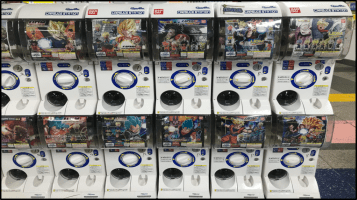
Gachas work like collectible card games or like the gacha machines the game type borrows the word. Gacha machines are the machines one can find at the front of a grocery store. Insert a coin (quarter) into the machine, turn the crank, and a plastic ball with a toy inside spits out from a spout. Gacha originates in Japan. The Japanese call it that because they believe that’s the sound a gacha machine makes as one turns the crank. Gacha. Gacha! Gacha!!!

In gacha games, players wish or warp or convene—each game has its own word for what you’re doing, so let’s come up with a universal term “turn”—or takes a turn on a banner. Each banner will feature a character.

Usually, but not always, players take a certain number of turns on the banner before they can receive the featured character (usually about 80-100 turns). I say “can receive” because gachas typically employ a percentage chance of gaining the featured character or item. Often, one needs to lose their percentage chance of gaining a featured item before receiving a guaranteed character/item.

As you can guess, this monetization system is how gacha games make most of their money. And they make a LOT of money. Despite most gacha games using a free-to-play model, one will often find gacha games at the top of the most money earned over any given month. This fact is also why gachas became popular. Video game companies like money.

With those new ways of earning—or syphoning—money from customers, we may need new video game review criteria. So, let’s pin down some free-to-play/gacha video game categories.

Mechanisms

Mechanisms

This will be a category for the folks who like interesting mechanisms in their game. Games that push what can be done with video games from a technical gameplay standpoint will earn good scores.

Gameplay Loop

Above image from GameDesigning.org

Gameplay Loop

This is how the mechanisms work together to make a cohesive product. A formulaic game can score a high Gameplay Loop score, but that doesn’t mean that it doesn’t anything unique.

Respectful of a Player's Time

Respecting Time

This applies more to free-to-play games, but I’ve seen plenty of other games waste a players time. Games that don’t waste a player’s time with busy work will score high in this category.

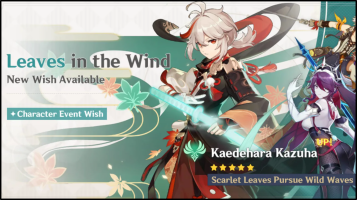
Genshin Impact Battle Pass

Battle Pass

If a game has a battle pass, it will receive a score in this category. Who are we kidding? Most, if not every, gacha game has a battle pass. Even some paid games boast battle passes. I’ll split this score between the necessity of buying the pass and what one gets for completing it, giving difference to the latter.

Video Game's True Cost

True Cost

How much does the game actually cost? Again, this is more a question for free-to-play games, but players can be asked to purchase add-ons. How much does everything cost?

Story or Narrative

Narrative

I mentioned this prior. This is the story, not the storytelling. Gachas have a nasty habit of chopping up their narratives and tossing them into the wind. I’ll be leaning on YouTubers and other people to help me piecemeal these stories together.

Storytelling

Storytelling

Again, this I mentioned this prior. How well does the game tell its story? These are two very different concepts, especially for gacha games.

Genshin Impact User Interface

User Interface

Gachas are also notorious for having difficult to manage menus. This wouldn’t be that big of an issue for most video games, but free-to-play games have a knack for hiding things within sub-sub-sub-sub menus so gamers can’t find them.

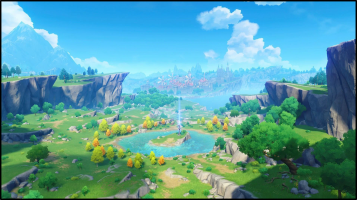
Genshin Impact's Graphics

Presentation

Yes. It’s obvious but still a necessary category. I’ll use this as a catch all for graphics and audio, giving an internal score for both within the segment.

Final Thoughts

And with that, I think we have a good set of parameters. I’ll see you tomorrow. And wherever you are, I hope you’re having a nice day.

Top 5 Tabletop Games from the Early 1960s

Hey, hey! Kyra Kyle here. We’re bringing back an old series: Top 5 Tabletop Games. The lists prior to this one (the 30s and 40s-50s) had fewer titles to choose from during their time periods and served as the best board games of that decade instead of a year. But the 1960s produced so many popular and great games that we split it into two Top 5 lists. One for the beginning of the decade (1960-1964) and another for the end of the decade (1965-1969). We’ll publish the second list next week.

So much time has passed since our last Top 5 Tabletop Games that we may need to reiterate the ground rules before we get started.

1: Cultural relevance plays as much of a factor as overall quality. A game might make a list that doesn’t hold up to others of its type, but you must admit the game is everywhere.

2: Only one game from a franchise makes the list. This will become more of an issue the closer we get to games with expansions.

3: Longevity plays a role, too. A game doesn’t have to fly off the shelves today, but it had to have some widespread appeal for a decent time.

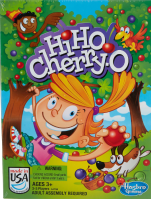
5: Hi Ho! Cherry-O (1960)

Woo! Hi Ho! Cherry-O just barely made this list. Perhaps I should run a survey and see which tabletop games were people’s first games. Hi Ho! Cherry-O may be near the top of that list.

Each player begins with an empty basket and 10 cherries on their tree. Players take turns spinning the spinner and performing the actions they spin. The first player to collect all the cherries from their tree and yell “Hi Ho! Cherry-O” wins. Simple premise. Easy rules to explain and understand.

And yet, mathematicians used a Markov chain to determine how long a game of Hi Ho! Cherry-O would last. Who knew that picking cherries could get so intense?

4: Focus (1963)

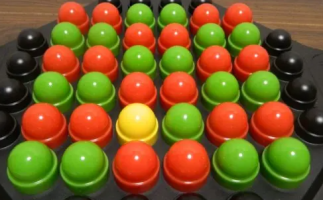
Focus is the first and not the last Sid Sackson game that will make these lists. It’s an abstract strategy game where players move stacks around a checkerboard with the three squares in each corner removed. Stacks may move as many spaces as there are pieces in the stack. Players may only move a stack if the topmost piece in the stack is one of their pieces. When a stack lands on another stack, the two stacks merge. Basically, one tries cornering their opponent(s) into no longer having moves.

Focus also happens to be an early recipient of the Spiel des Jahres, the German Game of the Year (1981). This award elevated the quality of board games that came from Germany after its inception. Sackson did the same for the board game industry prior to this award, which is why, in part, Focus earned this honor. That and Focus is a great game that has inspired countless tabletop game designers.

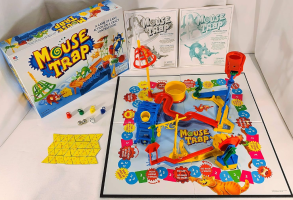
3: Mouse Trap (1963)

How many of you have built the Rube Goldberg-like mouse trap for this game and never played it? Show of hands. Mouse Trap has players building the least efficient trap to catch a mouse. But the game doesn’t play anything like it did back in 1963. The original Mouse Trap required an opponent to land on the “cheese” space by exact count and the player to land on the “turn crank” space by exact count for a chance that the clunky Mouse Trap might work and eliminate a player.

Fast forward 12 years and the game play surrounding the trap was retooled by Sid Sackson. Hey, there’s that name again. Sackson added the cheese-shaped tokens that allowed players to move themselves or other players or turn the crank of the machine. Sackson streamlined a game that could take several hours into one that can be played in under an hour.

Mouse Trap may lean heavily on a gimmick, but one can’t question its staying power.

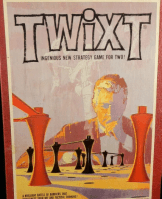
2: TwixT (1961)

TwixT began as a paper and pencil game in 1957 by Alex Randolph. And in 1961 Randolph was commissioned along with Sid Sackson (Hey, there’s that name again) to start a games division. TwixT was one of Randolph’s first produced games. It was even short-listed for the first Spiel des Jahres (Hey, we know that award, too) in 1979.

Players take turns placing pegs of their color into a 24×24 square grid of holes. One tries to move from one end of the board to another, connecting one’s pegs by making knight moves (in Chess). You cannot cross two connected pegs, so it’s possible to block your opponent’s progression and that’s what you’ll want to do. TwixT has a bunch of strategy but is easy enough that young children can play. No wonder it was inducted into the Academy of Adventure Gaming Arts & Design’s Hall of Fame along with Randolph.

1: Acquire (1964)

I wonder who designed Acquire. Wait! It’s Sid Sackson. Again. In Acquire, players attempt to earn the most money by developing and merging hotel chains. When a hotel chain that a player owns stock is acquired by a larger chain, players earn money based on the size of the acquired chain. Player will liquidate all their stock at the end of the game and whoever has the most money wins.

Acquire was also short-listed for the first Spiel des Jahres in 1979 and was inducted into the Academy of Adventure Gaming Arts & Design’s Hall of Fame along with Sid Sackson. The tabletop gaming community owes a lot to both of these incredible game designers.

My aunt Erma had a copy of Acquire but lost the rulebook, so I made up my own rules to this game. So, Acquire holds a special place for me personally. I may be a little biased with this number 1.

But did we get the list right, for the most part? Let us know in the comments. And wherever you are, I hope you’re having a great day.

Check out the other lists from this series:
Top 5 Games prior to the 1930s
Top 5 Games from the 1930s
Top 5 Games from the 1940s-50s
Top 5 Games from the Late 1960s
Top 5 Games from the Early 1970s
Top 5 Games from the Late 1970s
Top 5 Games from 1980-1981
Top 5 Games from 1982-1983
Top 5 Games from 1984-1985
Top 5 Games from 1986-1987
Top 5 Games from 1988-1989
Top 5 Games from 1990-1991

3 Lists of 3 Anime: Take 3

This is one of the last older posts that I haven’t yet published. Up to this point, we’ve been sprinkling in some newer stuff, but it may be mostly new stuff from this point forward. This is the third and possibly final 3 Lists of 3 for anime.

Just in case you’ve forgotten how these posts work, I’ll break down some of the more popular anime genres and list a few anime for new viewers to dip their toes into. This series differs from our typical starters writeups because we won’t spend too much time on each anime—usually—and it’ll function more as an “if you like this story, you may like this other one.” Let’s get started.

Mystery

When one hears mystery as a genre, one thinks about stories that feature detectives and gumshoes. The same holds for anime—for the most part—but there are some anime that go a little off that tried and true formula.

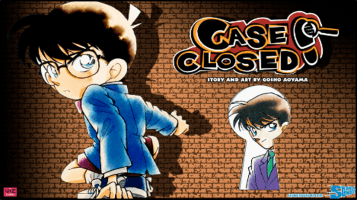
Detective Conan

We’ll start with the one that’s the most familiar for westerners. Detective Conan (also known as Case Closed) features a precocious teen detective Jimmy Kudo who solves the police’s most difficult cases. He gets poisoned by a secret organization, but the poison doesn’t kill him, it turns Jimmy into a short pants kid.

To keep his identity a secret, Jimmy adopts the alias Conan Edogawa (he names himself Conan after his favorite author Sir Arthur Conan Doyle). Detective Conan continues to solve crimes, while unearthing who reversed his aging into a child. Detective Conan plays out a little like Inspector Gadget with Conan solving crimes for an inept adult detective, but while Detective Conan has its comedic moments, it’s a classic detective series.

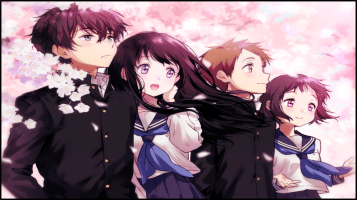
Hyouka

Here comes another young gumshoe—or a group of gumshoes. The Hyouka anime is based on the manga, which was in turn based on the novel series Classic Literature Club by Honobu Yonezawa. It’s set in Kamiyama High School where the members of the Classic Literature Club help others out by solving crimes. If you liked series like the Hardy Boys or the Babysitters Club, you might want to give Hyouka a try.

Eden of the East

Eden of the East is the one anime on this list that journeys the furthest from a traditional detective story. This gets a little convoluted. Eden of the East behaves a little like the cloak and dagger elements of 100 Bullets, so there are plenty of twists and turns.

Essentially, the two main protagonists are given 8.2 billion yen that’s supposed to be used to “save” Japan in some way. They must use their money to pay a group named The Seleção, but if they use the money for selfish reasons, they fail, and Japan is destroyed. There’s a lot more to it than that—a lot more—but Eden of the East builds on a series of terrorist attacks and who’s behind them. It asks moral questions like if you could sell out your home country for a small fortune, would you?

Horror

As you can see, I’m going with more traditional subgenres with this list—for now. Horror anime ranges from ghosts and goblins to myths or just the plain creepy. Get ready for a few chills.

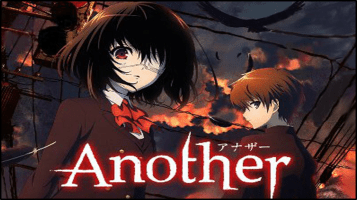
Another

We’ll start with a horror anime that could classify as a pseudo mystery. Another is set in a high school where a student died in 1972 and in the wake of that death, everyone denied that it happened. As a result, a curse befalls the school, and students, faculty, and their family members are at risk of gruesome deaths like the ones you might see in a Final Destination film.

We’re talking plenty of blood and gore. But there may be something or someone behind these murders and that’s where Another blends mystery and horror. Expect plenty of red herrings in this short, twelve-episode series. You may also want a change of pants.

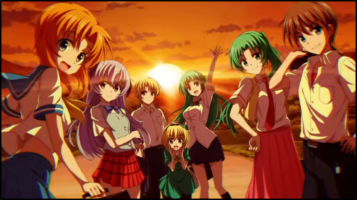
When They Cry

When They Cry is adapted from the video game series of the same name. Set in June of 1983 and in a quiet rural village Hinamizawa, protagonist Keiichi Maebara leaves his hometown for Hinamizawa after a series of unfortunate events. He makes friends in this sleepy town, but soon finds out that there’s more to the town than he first believed. A series of murders and other gruesome events occur in Hinamizawa, and the friends Keiichi has made may not be all they seem. Who needs enemies when you have lunatics for friends?

Parasyte

I could’ve gone with Corpse Parade here—another great, short series—but it’s another spooky school anime and I wanted to branch out. Parasyte, based on a manga that ran from 1988-1995, has plenty of stunning visuals, gore for those of you who like gore-fests, and aliens. That’s right. Let’s give some aliens a little love. The titular aliens enter orifices and transform humans into monsters.

Main character Shinichi encounters such an alien, but the alien can’t overtake him and only manages to turn him into a human with one alien arm. Shinichi maintains control of the parts of him that aren’t an alien arm, but the alien arm has a mind of its own. Parasyte explores many issues of what it means to be human, and it’s a much watch for horror fans who like scares like Alien.

Josei

I’m venturing a little off the beaten path here with Josei, but just a little. Josei is more of a demographic than an anime genre. It targets female viewers around the ages 18-40 and depicts life and romance in a more mature light. Romance doesn’t have to factor into the story all the time; a Josei anime needs to cater to women of this age range (essentially not teens or children) and feature more grounded characters, instead of idealistic fantasies.

Princess Jellyfish

The crux of Princess Jellyfish rests with a group of otaku (geek) women who happen to be flat mates. They bond with each other and no men are allowed in their club. Protagonist Tsukimi, one of the otaku women, hopes to become an illustrator and loves jellyfish because they remind her of her mother who took her to the aquarium to see them.

Enter Kuranosuke, the illegitimate son of a politician, who cross-dresses to rebel against his father and feel closer to his mother. Tsukimi befriends Kuranosuke and allows Kuranosuke to join her band of otaku, hiding Kuranosuke’s gender from her flat mates. Princes Jellyfish addresses gender identity and challenges one’s preconceptions. It also makes for a non-conforming romantic-comedy as Kuranosuke develops feelings for Tsukimi.

Nana

Nana’s title derives from its two main characters, both of whom are named Nana. Nana Komatsu has a habit of falling in love at first site. The other Nana, Nana Osaki, is the lead vocalist of a band called Black Stones (BLAST for short). Osaki’s boyfriend, the band’s bassist, leaves BLAST for a better gig, but Osaki continues with BLAST. Nana centers on these two Nanas as Komatsu seeks love and happiness, and Osaki pursues fame and recognition. Neither Nana finds what they want at first and perhaps what they want isn’t what they need.

Whenever I get enough of the Nana manga, I may have to place eight of them on the shelf with a Batman graphic novel after them, that way anyone who looks at the books in my library will get the 1960s Batman theme stuck in their head. If you’ve heard the song, you have it in your head right now. Mwah-ha-ha!

Seriously, Nana is a great read.

Shouwa Genroku Rakugo Shinjuu

Shouwa Genroku is a shot of fresh air for anime. Set against the art form Rakugo, a traditional form of Japanese entertainment where a storyteller must sit and convey a tale with only a paper fan and small cloth, Shouwa Genroku unveils the story of two friends.

One begins his path as a Rakugo performer after being released from prison, the other takes a different path and both have disparate performance styles. Shouwa Genroku may be the most intimate of all the anime on these lists and one of the most character-driven stories.

Final Thoughts

I hope there are plenty of anime in these lists for you try out. I’m sure I got something wrong. Let me know in the comments.

And wherever you are, I hope you’re having a great day.

Monthly Check In

Hey, hey, folks! Just checking in with another personal update. It’s been a month since the last update, and we’ve had weekly posts up until this point. I’ll have another post later today. Hopefully, that won’t be too many emails from me in a single day. 😊


I’m still waiting to hear back from the company who said they were interested in Spill the Beans. I discussed this game more in last month’s update. They had promised me that the contract would be finished by the end of August, and I haven’t received an official contract yet. I believe they had some issues with their upcoming Kickstarter; it was supposed to launch in June or July at the latest and hasn’t yet hit Kickstarter. Fingers crossed that everything is okay.


I won’t hear back from publishers for another couple of months for the other game I submitted Whistlestop Pets. From what I’ve seen and heard, it takes about three months or more for a game publisher to respond to an email query. There isn’t a standard, so it could be a longer wait.

Speaking of waits, I also heard back from a literary agent for my novel Crooked as a Dogwood last month. The agent asked for a full manuscript. Yay! But it will also take an additional couple of months for a response. It takes time to read a full novel and even longer to figure out if it’s something an agent would like to take on. Fingers crossed for some good news in a couple of months.

So, it looks like I’ll have to busy myself with projects, so I don’t dwell on all of that waiting. Eek!

As a result, I’ve pursued other projects. Let’s begin with tabletop games. There a few games that far away from discussing here, but one stands above the rest: Pick Your Poison.


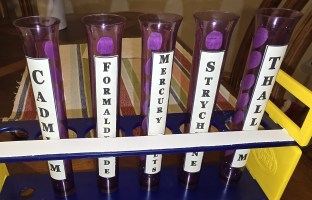
The phrase “Pick Your Poison” comes from the Prohibition era. Not only did prohibition ban alcohol, they added literal poison (like thallium and strychnine) to household products like after shave and the like (this is also called denaturing alcohol) in order to dissuade people from switching to drinking those household products. So, when a bartender at a speakeasy would say, pick your poison, they knew they were serving their customers poison.

In the game Pick Your Poison, you play as a public figure in the final year of Prohibition, and you dictate how much poison is in those household products. For prohibition to succeed, one needs to kill enough citizens…but not too many or you’ll incur the public’s wrath. Players add or subtract marbles from test tubes that will show how many people die from denatured alcohol each round (which is every two months).


If your role card is face down, you win the game if Prohibition has a positive public opinion at the end of a year. If your role card faces up, you win the game if Prohibition has a negative public opinion. Pick Your Poison is a semi-cooperative game for 3-6 players.

I’m ironing out the details but intend to submit Pick Your Poison to next year’s Zenobia Award. It’s a contest for designers belonging to underrepresented groups. The games must be based on history. I think Pick Your Poison fits that bill.


In terms of writing (not related to Geekly), I continue to work on the unnamed novel that’s based in the same universe as Whistlestop Pets and two other games in the offing. I should have a working draft by the end of the year. NaNoWriMo (national novel writing month) is in November, and I typically participate each year with the Omaha chapter. I encourage others to reach out to their local NaNoWriMo groups if they’d like to write a novel. You could make new friends. And I’ve noticed that my group holds people accountable. They’re focusing on getting people published.

And of course, Geekly has been another escape from remembering that I have multiple projects out for review. I appreciate everyone who has spent time and who does spend time reading these posts. Thank you!

That’s all I have for this month’s personal update. This may become a monthly thing. We’ll see.

I hope that wherever you are, you’re having a great day.

~ Kyra

Top Fantasy Creatures

Hey, hey! Kyra Kyle here. I adapted this post from a scrapped video script. Who knows? This could still become a video at some point in the future. Let’s find out which fantasy creatures are the most common. Or another way of phrasing it, which fantasy creatures are the most popular?

By knowing the most common fantasy creatures, we can avoid using them or at least tweak them in interesting ways. I may even sprinkle in some trends that I’ve found along the way.

A short video a friend of mine shared on Facebook inspired this post. That would’ve been at least two years ago by now. I have a good idea of who posted the video, but I don’t want to get their identity wrong. Sorry about that. Anyway, he proposed that fantasy has been trapped in amber post Lord of the Rings. He argued that fantasy still uses Tolkien’s creatures, and I agreed with him.
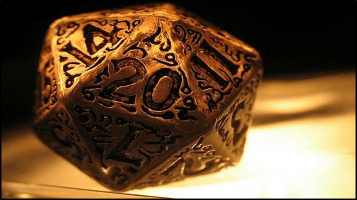
As someone who has played plenty of Dungeons and Dragons (which ripped their character classes from Lord of the Rings and perpetuated the hierarchy of elves, dwarves, orcs, and even hobbits, modern D&D refers to them as halflings), why would I not? But then I wondered which creatures appear the most in fantasy?

Fantasy is a broad genre. A lot broader than I originally thought. I researched—as best I could—for fantasy novels and movies (and other media) and the kinds of creatures, monsters, and species they use. I’ll have to get a major disclaimer or two out of the way and show how I compiled the data before we get into the list.

But if you don’t care for the background info, feel free to scroll down to the creatures which will begin in reverse order from nine to one. There are a ton of ties and near ties that swell the list to a top twelve, but you’ll see in just a bit.
Disclaimers and Compilation

I searched for the top selling and rated fantasy novels and movies on various sites like Goodreads, Rotten Tomatoes, Amazon, and Penguin/Random House. Immediately, I found that epic fantasy, like the ones Tolkien wrote, may have been what my friend referenced. Perhaps epic fantasy uses most of Tolkien’s creatures.

The Twilight series is classified as fantasy. In my opinion vampires, werewolves, ghosts, and zombies or ghouls belong more to horror, but these creatures make up a large chunk of urban fantasy, which is fantasy set in a cityscape.
I can break down the various types of fantasy if anyone is interested (I still have the data) but for now, let’s stick with fantasy as an overall genre. As you can guess, I ended up with hundreds—if not tens of thousands—of books. I wasn’t going to read all of them, even if there were some interesting ones like the Meowing Medium Books that features a cat who solves crimes by communicating with ghosts. That sounds super cute. You can find that series on Amazon.

As a result, I narrowed my search to novels, movies, and series that had synopses. That still left me with over a hundred synopses and that’s still a lot of reading. I could have easily missed something. And we’ll quickly see that writers don’t classify or name their fantasy creatures or species consistently.
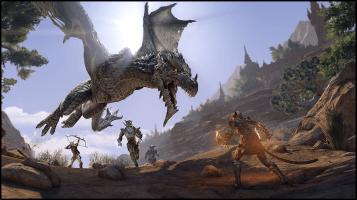
Finally, I didn’t include games. D&D alone has countless titles, and plenty of other video game and tabletop role playing game franchises borrow heavily from D&D—here’s looking at you, Elder Scrolls—so the data would become D&D skewed. Games also deserve their own post.

Needless to say, I got lost down several rabbit holes. Seriously, you may have to send a search party. I easily get lost.
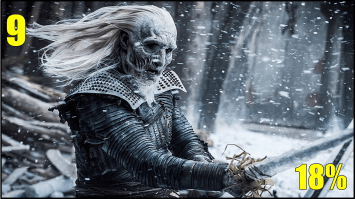
9) Zombies/Ghouls

Zombies and ghouls are the only creatures that straddle the horror and fantasy genres that scored high enough to make the list. They’re tied with three other fantasy creatures; I classified ties as anything within a half of a percentage point.

Why zombies?

There’s a lot of zombie fiction and a lot of that can be classified as urban fantasy. Consider this a Walking Dead boost. Their inclusion isn’t surprising. What is surprising is that zombie/ghouls show up more in epic fantasy than non-epic fantasy, such as urban fantasy.

And before you say, Kyra, you misclassified some of these stories, which I undoubtedly did to some degree, remember that A Song of Ice and Fire has White Walkers. Technically, White Walkers aren’t zombies or ghouls, but they may as well be. So, there may also be a Game of Thrones bump for zombies, too.
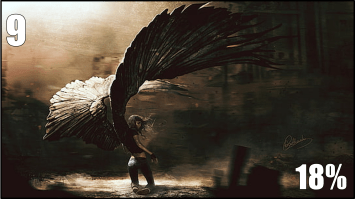
9) Harpies

Harpies?

Did centaurs make the list? No. Did minotaurs? Nope.  Of all the half-animal, half-human fantasy species, I didn’t expect harpies to have the largest footprint. They show up slightly more often in epic fantasy than they do in non-epic fantasy and that makes sense.

Why harpies?

While centaurs and minotaurs can be viewed as good, evil or neutral, harpies tend to be antagonists and usually evil. And they also happen to look like women most of the time. Yeah. Fantasy has a type. We’ll see a lot more evil feminine types on this list.

But harpies? The only reason I can think why harpies are more prevalent than other half-human fantasy species is that flying beings dominate this list, especially when they’re cast as antagonists. We’ll see more flying creatures and beings soon enough.

If you have any other suggestions as to why harpies made the top ten, feel free to leave them in the comments.
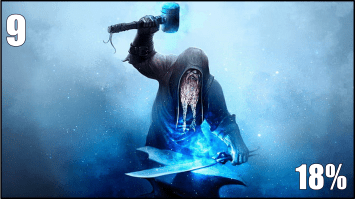
9) Dwarves

Dwarves don’t surprise me. They aren’t as common as elves, so I would have guessed that they were tied for a few spots below elves. Spoiler alert, we’ll see elves on this list. But you already knew that. Don’t act like you didn’t scroll down to see the entire list.

Like harpies, dwarves show up more in epic fantasy than non-epic fantasy. That’s also to be expected. But the two fantasy types are closer than I would’ve thought. I didn’t know dwarves showed up that often in urban fantasy.

Why dwarves?

It’s the Tolkien/D&D boost. Did you need someone to gulp ale? Dwarf. Do you want to explore a cave? Dwarf. Do you want to try your hand at an Irish brogue or Scottish accent? Dwarf.

Yeah. Dwarves may be overdone, but fantasy fans may want to see dwarves in their fantasy. Sometimes one has to give the people what they want. By that logic, shouldn’t dwarves be higher on this list?
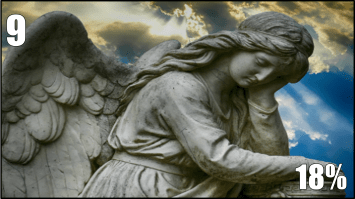
9) Angels

This is the last creature/being tied at the ninth spot. From what I’ve seen angels can be nerfed (or powered down) and recast as fairies. Another spoiler: fairies are on this list, too.

Because the line between angel and fairy or fae gets blurred, they show up at similar rates in epic and non-epic fantasies.

Why angels?

I expected angels to show up more in non-epic fantasy because of urban fantasy. Consider this the Neil Gaiman boost (American Gods and Good Omens). The ratio was a lot closer than I originally thought but again, that could be because stories can recast fairies as angels and vice versa.

The power sets between angels and fairies tend to overlap. Fairies can often heal. So can angels. Fairies often wield powerful balls of light. I may be showing my video gamer here, but that’s often classified as holy damage. And angels are holy beings.

The only physical difference between these two beings would be their wings. Angels have bird wings, while fairies have insect wings. But most fantasy stories that include angels and fairies don’t depict them with wings at all. So, without the distinction of wings, the only thing separating these two beings is one is a spiritual being (angel) while the other is a mythical being (fairy).

If you’re writing a spiritually or religiously based fantasy, you’ll often feature angels. If you’re not writing that type of fantasy, you’ll most likely use fairies. Context matters.
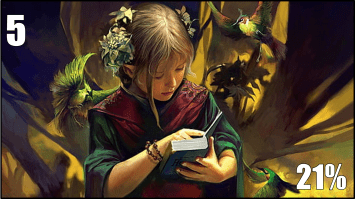
5) Elves

Wait. We jumped from 9 to 5. What happened? Yes. We have another four-way tie for the fifth spot. These creature types were within a few tenths or even hundredths of a percentage point from each other. I promised elves and here are the elves.

Elves, like their dwarf counterparts, show up more in epic fantasy than they do in non-epic fantasy.

Why Elves?

Again, this is the Tolkien/D&D boost. Many fantasy fans expect elves, so fantasy writers include them in their stories.

Before I dive deeper into why I believe elves made this list, I must include that Tolkien deserves credit for popularizing elves and dwarves and maybe a few more fantasy creatures/beings on this list. But Tolkien didn’t invent dwarves or elves. His interpretation of dwarves and elves is what matters in this context. Plenty of fantasy stories have taken elves and dwarves to their folklore roots and put their own spin on these beings. There’s nothing saying that a prospective fantasy writer can’t do that too.

Getting back to elves, they’re human enough for readers to see more of themselves within the characters, yet they aren’t human. But it goes a little deeper. Dwarves and elves can represent either bygone days of humanity or what humanity could’ve become had we taken another path. The two species are a fun way to speculate what humanity would look like if it developed underground or in a forest’s canopy.

That and pointy ears and magic.
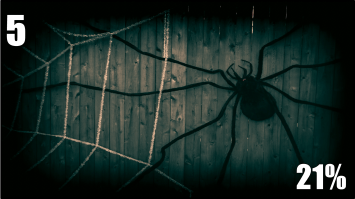
5) Spiders

How many fantasy themed video games must one slay a giant spider or rat as their first opponent?

Fantasy movies, TV shows, and novels pit their protagonists against similar beasties in the early going. There have been plenty of prominent fantasy spiders: Aragog in Harry Potter, A Song of Ice and Fire’s Manticore which was described as a venomous species of spider, and Shelob from Lord of the Rings, who was also a demon, so that’s a two for one beast.

That’s another Tolkien sighting, but I don’t think Tolkien fans can claim that he defined spiders as fantasy antagonists because spiders have been folklore antagonists for centuries. Spiders appear in just over 21 percent of both epic and non-epic fantasy stories.

Why Spiders?

Simple: arachnophobia is one of the most common animal-based fears. Snakes are the only other creature that strikes a similar chord, and we will see a snake-like creature later in this list. Surprise!

If a character says that they have arachnophobia, you can bet the story will include spiders. A spider’s inclusion can be shorthand for a character overcoming a fear. We all need character growth.
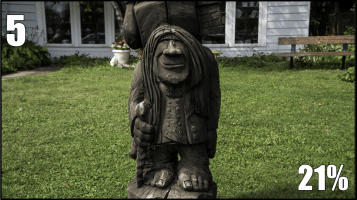
5) Trolls

Goblins and Orcs and Trolls, oh my.

These three were difficult to differentiate. While the modern look of orcs can be attributed to Tolkien, he repopularized the term with The Lord of the Rings, goblins and trolls can vary in shape and size and appearance, and they don’t have a clear vision of what they look like, like orcs. You’re letting me down, Tolkien. You were supposed to define all three of these creatures. You gave fantasy writers work.

Anyway, I decided to take each writer at their word with these creatures. If a writer called something a goblin, I marked it down as a goblin. The same went with orcs and trolls.

As a result, the trolls came out on top. It wasn’t that close. It may be the troll’s versatility that makes them the clear winner of these three, but we’ll get to that in a bit. Trolls appear far more frequently in epic fantasy as opposed to non-epic fantasy and that isn’t a surprise.

Why Trolls?

Like I said, Trolls are versatile. While goblins and orcs are always grotesque (mostly varying in size: goblins shorter; orcs taller), trolls can look like humans. Just like those internet trolls who’ll make some snide comment below. You know who you are.

I’m kidding about internet trolls (kind of, be gentle), but internet trolls may be closer to the original Nordic myth of trolls than one might think. Several stories—including original Nordic myths—describe trolls as larger humans or humans with exaggerated features. So, much like elves and dwarves, trolls show up more often because readers/viewers can see more of themselves in trolls than they can in goblins and orcs.

Perhaps it’s because a troll looks more human that caused us to call them internet trolls and not internet orcs. One wouldn’t want to dehumanize someone too much, even if they’re being a goblin.
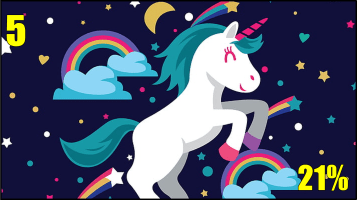
5) Unicorns

This must be the biggest shock of the bunch. I like unicorns a lot, but I didn’t realize that they showed up in this many fantasy stories. Unicorns appear far more often in epic fantasy than non-epic fantasy.

Why Unicorns?

Unicorns have seen a resurgence through themed food and drinks. Starbucks had a viral Unicorn Frappuccino in 2017. Since then, unicorns have shown up in countless edible and inedible products like cakes, bath bombs, and cereal. Anything rainbow could fall under the unicorn label. Some writers wanted to capitalize on the unicorn craze. I noticed an uptick in unicorn usage since 2017. What have you done, Starbucks?

Even with the upswing, unicorns have always been somewhat popular. That could be because of The Last Unicorn. That began my love of the mythical creature. It’s also one of the first books my wife and I gave to our kids. My Little Pony also features quite a few unicorns, and Friendship is Magic predates the Unicorn Frappuccino by seven years. Perhaps, Bronies pushed unicorns to the forefront.

But not exactly. Very few fantasy stories, epic or non-epic, cast unicorns as prominent characters. They’re typically part of a hunt or are hunted by a villain (like in the Harry Potter series) and as such, they tend to be used as a McGuffin. So, despite being present in a lot of stories, unicorns tend to get overused as narrative devices. I’d like to read more unicorn stories that don’t use them as plot devices. #FreeUnicorns

4) Gods and Demons


I considered making gods and demons separate entries, but let’s be real, they showed up in the same titles. If one has gods, one includes demons. I did a similar thing with another creature/character type later in the list. More on them in a few spots.

Gods and demons appear in just over 30 percent of all fantasy reviewed; they almost have an even split between epic and non-epic fantasies.

Why Gods and Demons?

It’s the Neil Gaiman effect for urban fantasy. American Gods, Good Omens, and the like have inspired a lot of writers. Mythological gods show up in other titles like the Percy Jackson series. Mythology itself has inspired countless storytellers. Even comic books have drawn inspiration from mythology. Thor, Wonder Woman, Hawkgirl, and Moon Knight all have origins based in mythology. They’d also be considered urban fantasy for the most part.

But epic fantasy isn’t devoid of its own gods. So much of Dungeons and Dragons is creating one’s own pantheon of gods. That may be one of the first things a dungeon master does. What new god or demon can I add to this world?

Like I said before, demons tend to follow gods. Sometimes demons take the form of a devil. They can also take the form of evil or fallen angels. Others can even be destructive gods. Like so many of the other terms on this list, the lines get blurred between gods and demons. For fantasy, it tends to be a matter of motivation or the being’s purpose.
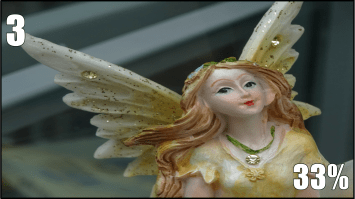
3) Fairies

Yes! Finally, we’ve reached fairies. They show up in non-epic fantasy far more frequently than epic fantasy, but they still appear in epic fantasy often enough. That’s why they’re third on this list.

Why Fairies?

I mentioned before that sometimes in folklore, fairies can be demoted angels or demons. I’ll try not to repeat what I said in the Angels write-up here. Everything I said in the Angels write-up still applies.

Instead, let’s go a different route with fairies. I saw a small uptick in fairy usage after Pan’s Labyrinth, but that’s nowhere near as severe as unicorns after their Frappuccino release. No. Fae and fairies show up far more often in urban fantasies and other non-epic fantasies as sex symbols. In short, fae are hot.

Highlanders? They’re akin to fairies. The wildly popular erotic fantasy series A Court of Thorns and Roses has a faerie love interest and is set in the world of faerie. Even Sookie Stackhouse from The Southern Vampire Mysteries series is a half-human, half-fairy, and that series gets more than a little steamy.

If you want a little romance or erotica with your fantasy, you’re probably going to include fairies. And plenty of fantasy writers add a dash of erotica and romance. Romantasies are very popular.
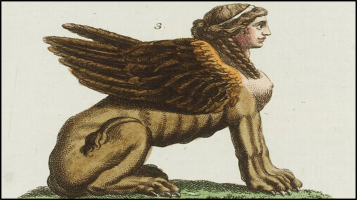
Just Missed the List

I’m prolonging the reveal of the not-so-surprising top spots with honorable mentions. Quick! Comment which creatures/character types you think will be in the top two.

The following creatures or character types didn’t quite make the list. There was almost an eight-way tie for the ninth spot, but I had to cut off the list somewhere.

13) Gnomes
14) Werewolves
15) Vampires
16) Centaurs
17) Big Cats
18) Goblins
19) Basilisks
20) Giants
21) Chimeras
22) Sphinxes

I had to keep going until I reached the sphinx, because that’s the name of one of my daughter’s cats. Okay. I’ve delayed the inevitable. Here are the final two entries.
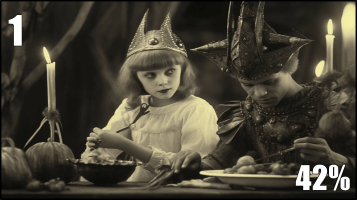
1) Wizards and Witches

We have another tie. This time for the top spot. Both creature/character types at the top of this list show up in 42% of all fantasy stories. 42 is the answer to everything.

Let’s begin with another two character types that are too difficult to differentiate: wizards and witches. It should come as no surprise that wizards and witches make the list. Wizards and witches show up far more in non-epic fantasy than they do in epic fantasy. The inverse will be true with the next entry, but first…

Why Wizards and Witches?

I’ve mentioned a few times before this entry that people like to see creatures and character types with which they can relate. People want to see themselves in the characters they read or watch. What’s more relatable than a human? Well, humans with magic.

Most writers—there are exceptions to everything—cast wizards and witches as similar character types, so I ended up lumping them together. These two character types are often treated as two sides of the same coin such as wizards are men, and witches are women. Or wizards are good, and witches are evil. Or what The Magicians series did and categorized wizards as college trained magic users, while hedge witches dropped out of school or never attended.

What did I say about fantasy writers and evil women? Fantasy writers may be expressing some unconscious sentiment by linking women with witches and then witches with evil or uneducated. Women tend to get thrown into the less flattering side of this dyad. I’m not going to dig too much deeper into this issue, that could be another post unto itself. But if you’re interested, you could argue in the comments.

Who wouldn’t want magical powers? It’s no wonder wizards and witches dominate fantasy stories. Stories with magical humans is a power fantasy. It’s the same draw with superhero fiction.

With a few exceptions where there were wizards and no witches and vice versa, the two were similar enough to include as a single entry, so they both can claim the tie at number one. But we have another number one, so this may be a tie within a tie.
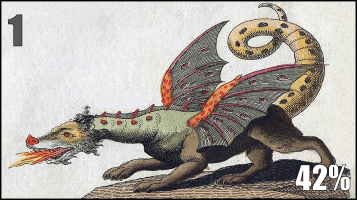
1) Dragons

How many of you were waiting for dragons? How many of you would’ve fought me if dragons didn’t make the list? I should’ve said something else here and watched the deluge of angry comments.

Of course, dragons share the top spot with wizards and witches. Dragons dominate epic fantasy, but they’re less common in non-epic fantasy stories.

Why Dragons?

Dragons are the snake-like creature I mentioned earlier in the Spiders entry, but they’re more than just snakes. Multiple cultures have created their own version of dragons, and they did so separate from each other. Ancient civilizations didn’t share dragon notes, yet we can find dragons from Asian, Native American, and European traditions. Why is that?

A human’s first predators would’ve been serpents, big cats, and raptors. Dragons are an amalgam of all three. While several people have a fear of spiders, dragons are fear personified. They are one of the most powerful creatures a human can conjure. We can see that throughout history.

You can learn a lot about a culture or a writer by how they describe their dragons. Will you enhance the serpentine, feline, or avian features? Why did you choose that feature? Do you fear that animal the most? Would you like to experience what it’s like as that animal? Is that animal friend or foe?

Dragons will always pervade fantasy stories. So many fantasy readers expect to see dragons. Can a fantasy be called epic if it doesn’t contain a dragon? Apparently not. Dragons show up in 63% of epic fantasies. Yikes!
Final Thoughts

That’s the list. Phew! That was a lot. I could’ve included more—a lot more. But what does this tell us?
My friend might be right, epic fantasy may be trapped in Tolkien amber. Non-epic fantasy differs quite a bit, but they have their own preferences like hot fairies. Perhaps, aspiring fantasy writers should think about shaking up this hierarchy of characters and creatures. Don’t be afraid to take a creature type back to its folklore or mythological roots and take them in a different direction.

If you see a creature that you like that’s further down the list (or not on the list at all) and you’d like to see them climb up in popularity, write a story about them.

It might be time to end the wizard and witch binary. Or at least stop placing women in the less desirable side of a binary. That’s cliché.

Speaking of cliché, if you’re writing about unicorns, maybe you don’t make them a narrative device.

I hope you found something useful in this post. And I hope that wherever you are you’re having a great day.

~ Kyra