Autism Representation: Dead End: Paranormal Park

Geekly started a new deep dive series about Autism Representation in media. Our first post in that series was about Sheldon Cooper from The Big Bang Theory, and it was posted in May. Was it that long ago? Yikes! Well, Geekly’s back with another deep dive about Autism Representation. Today’s piece of media is the short-lived Netflix animated series, Dead End: Paranormal Park.

Hey, hey, Geekly Gang! Kyra Kyle here. As I mentioned in our previous Autism Representation post, I’m a late-diagnosed autistic person and ADHDer. Yes, you can have both. Ever since my diagnosis, I’ve been viewing media through a different lens, trying to see if a piece of media has good or not-so-good Autism Representation. I intended this series to be something Geekly released once a quarter. We’re getting this post right under the wire with Dead End: Paranormal Park because this series not only has an Autistic main character, but the other main character is transgender. I also happen to be trans and gender queer and intended to give Transgender Representation in media the same treatment. So today, we’re releasing two posts about Dead End: Paranormal Park.

Since Dead End: Paranormal Park only lasted two seasons (for a total of 20, 20-minute episodes), we’ll go through each pertinent episode in sequential order for both characters. Our subject for this post is Norma Khan, a 17-year-old bisexual and autistic Pakistani-American girl who gets a job at the park because of her adoration of the films made by character Pauline Phoenix. Already, I love Norma’s intersectionality. Let’s get started with Dead End: Paranormal Park’s first episode, “The Job.”

Season 1, Episode 1, “The Job”

We first meet Norma Khan in her room, decked out in Pauline Phoenix (the actress behind Phoenix, “Paranormal,” Park) paraphernalia: Pauline posters, Pauline bedsheets, and even a Pauline lamp. Norma has an episode of Dead End (one of Pauline Phoenix’s television shows) playing as she prepares for a job interview at Phoenix Park. Something tells me Norma listens to this show on repeat often. I’ve done the same. I may have audio taped cartoons (on cassette tapes) so I could play them at night to fall asleep. I’m sure Norma wouldn’t do anything like that. Wink.

Norma’s mother dotes on her. She worries more about Norma’s job interview than Norma does. She hugs and kisses Norma as Norma tries to break away. I can relate. We know little about Norma, but Dead End: Paranormal Park hints that Norma’s mother may want more affection than Norma is comfortable giving. This is in keeping with some autistic kids. This moment also suggests that Norma’s job interview may be her first time alone; it’s certainly her first step as an adult. Autistic people do tend to have a higher unemployment rate than the general population, and often, this is less about capability and more about finding the right work environment. It sounds like Phoenix (Paranormal) Park is Norma’s perfect job environment.

“The Job” sprinkles in some references to Norma’s hyper-fixations. In fact, when she believes she didn’t get the job at first, Norma flat out says, “Looks like I’ll have to find something else to hyper-fixate on for fifteen years.” Norma earns this line because she spews paragraphs of Pauline Phoenix facts while Norma and Barney are trapped in a haunted mansion. Only Norma doesn’t yet realize the two of them are trapped. She’s too busy info-dumping on Barney about her special interest. I watched this episode with one of my daughters, and she chuckled. You’re not like that at all, are you, Mapa? Yep. That happens sometimes. The train needs to reach the station before we can switch tracks.
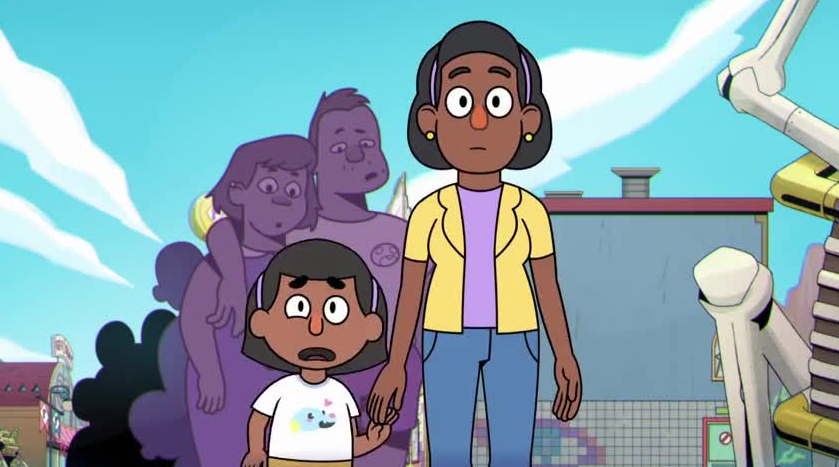
Season 1, Episode 2, “The Tunnel”

“The Tunnel” begins with a Norma flashback. She’s a child attending Phoenix Parks and in line to visit Buster Scruffs (one of the employees dressed as a mascot). Norma panics. Her feet sink into the concrete. While I’m unsure if this sequence is directly tied to an autistic shutdown (where an autistic person retreats from their surroundings) or if this scene is just a child reacting to too much stimuli (which can cause autistic shutdowns), Dead End: Paranormal Park does a fantastic job of showing Norma’s internal world.

When we shift to the present day, Norma storms into the haunted mansion. She doesn’t care that Pugsley can talk (a side effect of his former demonic possession) and is livid that Barney clocked into work before her. The group brushes past Barney, staying the night at the park, and promptly finds a gold pass. I love how she prefers to go to the park’s staff meeting when presented with the option to do anything in the park. Dead End: Paranormal Park drops another line of Norma obsessed with Pauline Phoenix, before she wishes for the three-hour version of employee orientation. I can attest that I could withstand a three-hour orientation on my special interest. This tracks for an autistic person.

What also tracks for autistic people is Norma’s odd eye contact. When Badyah Hassan (leader of the staff orientation) begins orientation, Norma info dumps and gives Badyah intense eye contact. Norma bores a hole into Badyah. That made me laugh. It’s so accurate. Many people believe that autistic people can’t make eye contact, when it’s just as likely that autistic people will make intense eye contact. In short, autism leads to odd levels of eye contact: none or too much. And of course, Norma takes over the orientation after Badyah sarcastically asks if she wants to do so. Norma puts on a performance voice (another autistic thing to do), and I felt called out. Both of my daughters recounted a similar instance with me at a board game cafe.
Season 1, Episode 3, “Trust Me”

“Trust Me” centers around a team-building exercise at the beach. Norma is reluctant to leave her mother’s car because she believes everyone at work hates her, while Norma’s mother counters with no one knows you. This is a great representation of an autistic side-effect, rejection sensitivity. Rejection sensitivity may occur when an autistic person has experienced so many instances where they said or did the wrong thing, or they just acted like themselves (and not like a neurotypical or person without autism), and got rejected, so the autistic person believes people hate them even when there’s empirical evidence to the contrary. I’ve received a pep talk from a loved one like the one Norma gets so many times, I’ve lost count. I love that Dead End: Paranormal Park touched on this subject.

Before “Trust Me’s” volta (the turn), we get a lot of Norma being literal. The team-building guru speaks in metaphors, and each flies over Norma’s head. Physical things don’t bind us. Yes, they can. The opposite of trust is fear. No, the opposite of trust is mistrust. I agree with Norma on that last one. Autistic people can be very literal. I got diagnosed with autism after my younger daughter was diagnosed (autism is hereditary), and my daughter would always answer with specific times whenever someone asked what time it was. For instance, it’s 4:18, instead of 4:15 or 4:20. We didn’t know when she was younger, but that’s an autistic trait. I still agree with Norma that the opposite of trust is definitely mistrust.

And I like how Dead End: Paranormal Park mixes up Norma’s affect. When she says, the opposite of trust is definitely mistrust, her voice is flat. Other times, she’s very expressive, overly so. Excellent! The montage of Norma screwing up every trust-building exercise is also excellent. Her forward trust fall had me in stitches.

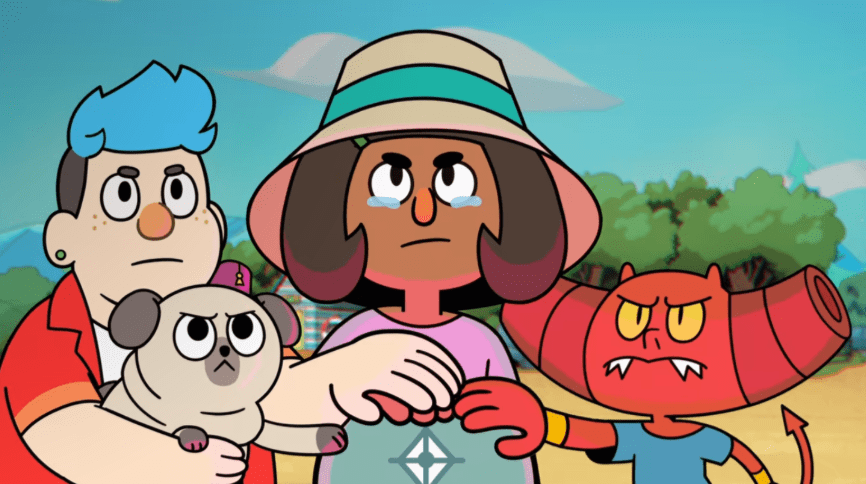
This next bit ventures into spoiler territory, but who are kidding? We’ve already shared some spoilers. The team-building guru is a fear demon in disguise, and he intends to feed on the gang’s fear. While everyone else enters a nightmare realm where their greatest fears come to life, Norma’s fear world is the real world. She worries about every interaction with people. She relives every social misstep. Eventually, Norma’s rejection sensitivity overwhelms the fear demon. I love how the animation style changes when we fully enter Norma’s perspective. It’s another subtle way Dead End: Paranormal Park portrays autism. The Norma we see in the picture above may be closer to how she views the world.

And that’s how autism works. It’s another way of viewing the world. Neurodivergent brains process things differently from neurotypical brains. This is another excellent example of autism representation. This may dovetail into Norma calling her coworkers by the attractions they monitor at the park. I like how most people take offense, but Badyah leans into her nickname death slide. Badyah’s the one who sits beside Norma on the beach and comforts her; Norma may have found a kindred spirit.

Season 1, Episode 4, “Night of the Living Kids”

“Night of the Living Kids” is more of a Barney episode. We get our first look at Patrick, Barney’s younger brother, who’s having an overnight birthday party at the park. Patrick plays Pin the Tail on the Dinosaur, and when Barney recognizes him, he takes cover. After Barney says that Patrick can’t see him, Norma doesn’t get the context and replies that he has the blindfold off now, so he can see Barney. Classic Norma.

And in classic Norma fashion, she finds the one kid at the party who’s as obsessed as she is about Pauline Phoenix. Vince even outbid Norma for Pauline memorabilia on an online auction. Norma finally has someone else she can talk to about her special interest. As Norma says, Finally, an intelligent conversation. The two’s conversation sets up the mystery of Barbora (not Barbera), Pauline’s angry and athletic stunt double. The two’s convo gets interrupted by children who lost all the sleep they ever slept, hence the episode’s name “Night of the Living Kids.”

Season 1, Episode 5, “The Nightmare Before Christmas in July”

“The Nightmare Before Christmas in July” takes a break from Barney and Norma and focuses more on their demon friend, Courtney. Courtney is stuck in the mortal realm, so Barney and Norma go on a devilish game show to snag them (Courtney) a ticket home. Note: I’ll mention this in the transgender representation companion post to this one, but the demon Courtney is non-binary/gender queer in the comics, but Netflix changed their pronouns from they/them to she/her; I’ll use Courtney’s preferred pronouns of they/them.
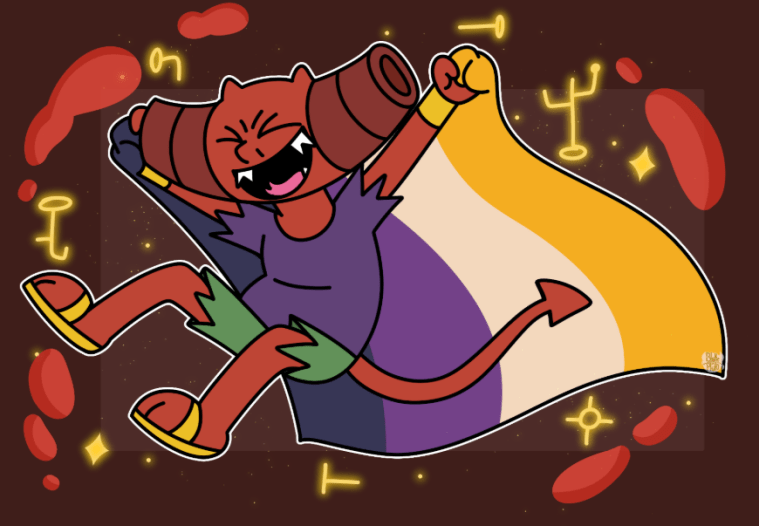
Even though “The Nightmare Before Christmas in July” is predominantly a Courtney episode, we get a classic Norma moment during the game show. When the demon host says the next leg is a “lightning round,” Norma shouts, Trivia. Nope. Not trivia, Norma. Actual lightning.

Season 1, Episode 6, “Wait Time: 22 Minutes”

“Wait Time: 22 Minutes” gets its title from the line for the newly opened Dr. Love Ride at the park. The Dr. Love Ride has been closed since before Norma was born, and naturally, she wants to experience the ride before spoilers flood her timeline. This is in keeping with everything we’ve learned about Norma. She and Barney get separated in the line because Norma takes the employee express lane, while Barney stays in the main line with Logan, who wants to make sure the wait time sign of 20 minutes is correct. Since Barney has a crush on Logan, he texts Norma incessantly.

In classic Norma fashion, she doesn’t get why Barney is freaking out, but it’s what she says that rings true for an autistic person. Barney’s in a line with Logs, so the danger seems minimal. Lol. Often, autistic people can brave large crowds if they have at least one person they know well. Norma doesn’t get Barney’s dread because she views Logan as a safe person to brave Dr. Love’s long line. Pugsley has to spell out the awkward social implications for Norma. I love this. I wouldn’t have been able to attend Pride if I hadn’t gone with some of my safe people. And I might’ve missed the social cues of Barney’s crush on Logan.

I also love Norma’s line to Barney. I’m the socially awkward one. Stop stealing my thing. The rest of the episode’s runtime, in reality, revolves around Norma, Courtney, and Pugsley possessing Barney and taking turns trying to woo Logan. Norma asks standard questions and gets frustrated when Logan answers them out of order. He needs to answer the questions in the order they were asked. I could see an autistic person getting frustrated by this, and the lesbian couple standing by Barney (possessed by Norma) bemoan that kids these days are too literal. Yeah. That tracks for an autistic person.

Throughout the body-swapping antics, Norma remains on task. What starts as helping Barney with Logan turns into saving Barney from the in-between, a place where possessed souls go. “Wait Time: 22 Minutes” ends with Norma finally getting on the Dr. Love Ride. She begins info-dumping to Logan as the ride begins, only to have the ride shut down as she’s about to enter. Awesome!

Season 1, Episode 7, “Norma Khan: Paranormal Detective”

The title “Norma Khan: Paranormal Detective” is a bit of a misnomer. At first, Norma takes the role too seriously. Norma’s covert scene with Vince (nice call back) is over-the-top, leading Badyah to say that the two of them are more suspicious than if they faced each other. Note: Norma and Vince sit on with their backs to each other, and Vince struggles to give Norma the magazine featuring Barbora that he mentioned during “Night of the Living Kids.”

Norma is blinded by her obsession with Pauline Phoenix that she ignores all the evidence that clearly paints Pauline as the one behind the missing Pauline impersonators. Tunnel vision can occur for autistic people. I’ve been blinded by my special interests. While this tracks for an autistic person, Badyah proves to be the better “paranormal detective.” I love Norma’s detailed evidence board. The picture above is a zoomed-in segment of that board. Trust me, Norma goes into excruciating detail, making her an autistic queen.

Norma refuses to view Pauline as a threat even at the end of “Norma Khan: Paranormal Detective.” It takes Pauline Phoenix’s ghost charging at Norma before she jumps into a haunted television screen. I’m sure this will end well.
Season 1, Episode 8, “The Pauline Phoenix Experience”

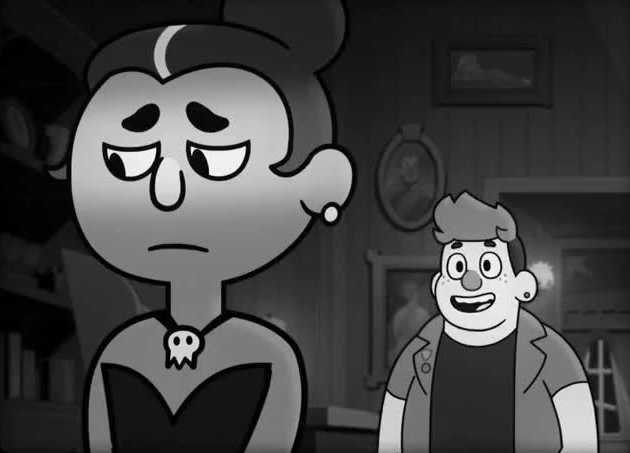
“The Pauline Phoenix Experience” casts the gang in Pauline’s former roles. That’s why we get that awesome black and white picture above. Even though this episode does a lot of heavy lifting for the Dead End: Paranormal Park’s main storyline, it does reveal the depths of Norma’s Pauline Phoenix fandom. She figures out they’re in Pauline’s movies/TV shows before Barney, but plays along because it’s her dream come true. She knows the lines. She’s probably heard them millions of times and this is her time to shine.

Norma goes as far as trying to “kill” Barney because her character tries to do so in the films. Talk about commitment. But she breaks when she comes to terms that Pauline was using her and all her fans. Autistic people tend to have strong moral compasses that can be obscured through the lens of fandom. By the end of this episode, Norma breaks down, but after she mourns the loss of her idol, she’s ready to exact change.
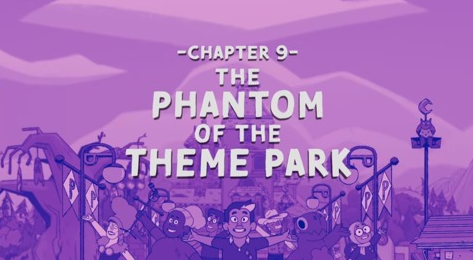
Season 1, Episode 9, “The Phantom of the Theme Park”

Dead End: Paranormal Park is a queer version of Scooby Doo. The park is based on a drag queen. It was only a matter of time before we got a musical episode. “The Phantom of the Theme Park” takes inspiration from several musicals, but its main influence, naturally, is The Phantom of the Opera. I love this episode. The music is spot on, and the musical does a great job of forwarding the action to season one’s conclusion. While “The Phantoms of the Theme Park” doesn’t show new aspects of Norma’s for us to discuss at length, it follows through on Norma’s strong moral compass.

She sacrifices herself to be Pauline Phoenix’s new vessel and hatches a plan to end the park’s suffering. Even though the plan doesn’t go as planned, Pauline is banished, but now we have the return of Temeluchus. Uh oh!
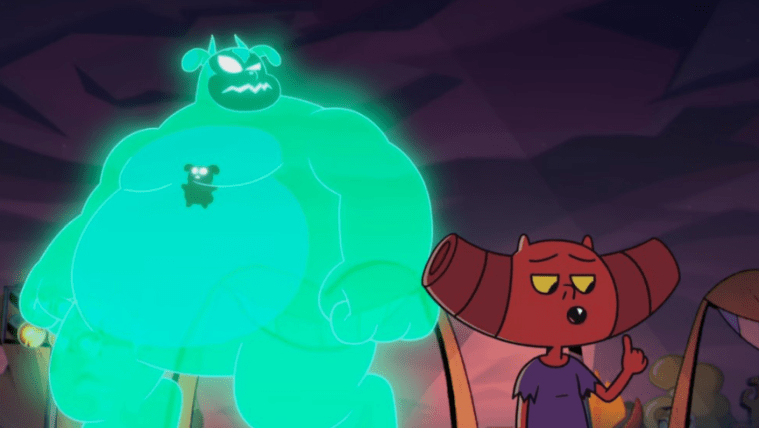
Season 1, Episode 10, “Into the Fire”

I’ll level with you. I can’t believe I’ve gone this far without mentioning Norma’s odd speech patterns. I grew up in the South and don’t sound like it. Sure, some of this is due to my moving away from the South, but not entirely. Even while I was living in the South, folks wondered if I had a foreign accent. Norma’s odd speech pattern is spot on.

Norma takes charge during the demon invasion. She reverts to calling park employees by the attractions they monitor. Death Slide and Norma to the rescue. Demon lords Zagan and Temeluchus battle for surface world supremacy. Demonic fun ensues, but everything turns out okay in the end. The demons leave. The humans are no longer turned to stone. After Phoenix Parks returns to normal (relatively speaking), the crew discusses what to do next, unaware of someone watching them. It’s a citizen of heaven.

But that will wait until season two.

Quick Break and Thank You

Thank you for reading up to this point. You’re amazing. Since the Dead End: Paranormal Park’s first season set up its characters well, the second season explores the other planes of existence, specifically heaven, so each individual episode’s write-up should be shorter. Thanks again for reading, and let’s get back to the show.

Season 2, Episode 1, “Take the Angels Bowling”

“Take the Angels Bowling” gives us our first full look at an angel, Fingers, who is a massive hand with a face in its palm. When Fingers extends its body (a long arm stretching from heaven), it resembles Gord’s, the red-skinned demon, who looks like a worm. Coincidence?

Most of “Take the Angels Bowling” sets up the impending denizens of heaven descending on Phoenix Parks, but there are a few wonderful Norma moments. Her friend Badyah knows Norma wouldn’t want to wear used bowling shoes, so she bought her a fresh pair. That’s thoughtful. Judging from the smell and look of the loaner bowler shoes, that’s a good call by Badyah. Norma and Badyah have started a podcast about ghosts and demons. Very on brand. Norma’s more interested in setting up a podcast schedule than bowling. Also on brand. And when Badyah info dumps about the finer points of bowling, Norma asks if that’s what she sounds like to Badyah. Awesome!
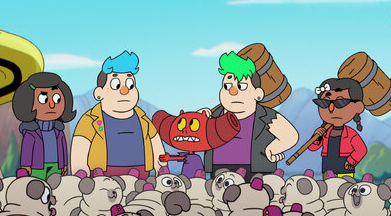
Season 2, Episode 2, “Evil Twins Are People Too”

“Evil Twins Are People Too” steers into the television trope of a character having an evil twin. Barney and Norma’s twins are the worst parts of themselves, but this becomes a blessing for Norma. She fears that Badyah isn’t as into their podcast or at least as into demons as her, which is true, but after an unpleasant exchange with evil Norma, Badyah tells Norma that she does the podcast to spend time with her. Norma makes the mistake of tying her relationship (spoiler: Norma is crushing on Badyah) with Badyah’s liking or disliking her special interest. This is fantastic.

Honestly, I’ve done the same at times. Because an autistic person views their special interest as an intimate part of them, they can tie relationships (or a relationship’s depth) to these interests. I even like how long it takes Norma to realize she has feelings for Badyah. There’s a reason I often talk things out to myself. I love this inclusion.

Quick Point: Badyah mentions that Norma does all the demon sounds during their podcast. This is most likely an example of echolalia, the repetition of phrases or noises that autistic people can make. I would guess that Norma makes these noises outside the podcast.

Season 2, Episode 3, “The Trials of Barney”

“The Trials of Barney” puts Norma’s story on the back burner. Secretly, Barney joins a demonic gym and trains to become a pro wrestler in the demon league. Barney proves to be one heck of a heel, earning the respect of most demons at the arena, especially his opponent, Asmodeus. Near the end of the episode, Badyah compliments Barney and then asks if he’ll be on hers and Norma’s podcast, proving that Badyah supports Norma’s special interest (demonology) and finds some enjoyment from it. Personally, I’ve found this to be the case. One’s loved ones can’t go long hearing someone enthuse about a topic without getting invested.

Random Note: The rock song (“Fight Like a Demon Boy”) that plays during Barney’s training montage slaps.

Season 2, Episode 4, “Eat the Parents”

“Eat the Parents” features Logan meeting Barney’s parents. For this reason, Norma doesn’t feature as prominently, but we get another round of her using a hilarious, ornate voice. Maître de Norma is so over-the-top it makes Barney question what’s wrong with her. This is so on point for many autistic people. You either get zero inflection or all the inflection in the world. I also like that Norma’s dream dinner guest is what she thinks is an adorable spider skull demon. To each their own, I guess, but this shows the depths of Norma’s special interest.

And clearly, romantic comedies were an obsession for Norma at some point. She goes full army general while discussing how crucial meeting one’s parents during a Rom-Com plotline is. I love how “Get Married” goes straight to “Buy Matching Coffins” on the timeline. Norma has watched enough Rom-Coms to know that all of them end after the couple gets married.
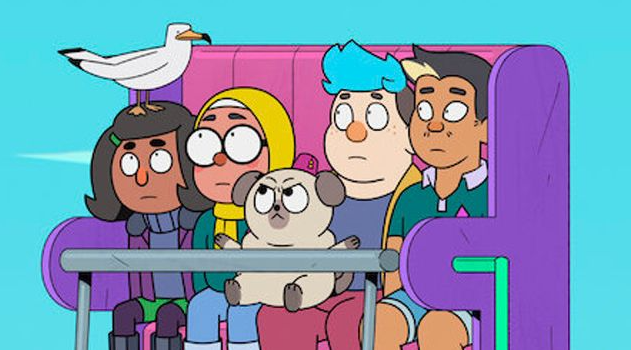
Season 2, Episode 5, “The Ride of a Lifetime”

Hurt feelings and a lover’s spat abound in “The Ride of a Lifetime.” Norma plans to tell Badyah how she feels about her, and Pugsley sees the conversation is not going well. Pugsley spends the entire episode’s runtime trying to avoid calamity of all kinds, physical and emotional harm, but you can’t rewind time to execute the perfect world. While this episode focuses on Norma’s love life, it still manages a callback to Norma knowing how long the Ferris wheel ride lasts. Excellent!

Badyah thinks Norma wants to cut her from the podcast, so she tries to prevent Norma from talking. Badyah doesn’t know what to think when Norma tells her that she “like-likes her.” I love how Dead End: Paranormal Park handles this scene. Badyah says she thinks she’s straight, but she doesn’t think about it too much. The showrunners have said that Badyah could be queer, but she comes out in a different way. I could also see Badyah as aroace (aromantic and asexual, where you don’t tend to have a lot of romantic feelings or sexual attraction). I would’ve loved to see where Dead End: Paranormal Park chose to take Badyah’s character.

Season 2, Episode 6, “My Super Sweet 1600”

Norma spends most of “My Super Sweet 1600’s” runtime avoiding Badyah, and she doesn’t attempt to hide her Badyah aversion. This tracks for an autistic person. Many of us, including me, have a difficult time masking irritation. I love how even when Norma attempts to “act normal,” her eyes narrow to pinpricks, and it gives away her emotions.

Badyah tries to smooth things over (from her rejecting Norma’s romantic advances) by hooking up Norma and the Gazan, the demon/vampire, celebrating her Super Sweet 1600 birthday. Gazan and Norma strike a friendship, and their heart-to-heart talk helps Norma see what she needs: space. “My Super Sweet 1600” ends with Norma quitting her job at Phoenix Parks. Gasp!

Season 2, Episode 7, “All Dolled Up”

Dead End: Paranormal Park does a great job of showing many ways a person can come out (with their gender identity and/or sexual orientation) and the responses that may occur when one does. More on that in a minute, but we’re talking Norma’s autism representation right now. “All Dolled Up” gives us a window into Norma’s childhood. We spend more time in her childhood home, see that she’s taken down all her Pauline Phoenix paraphernalia, but her mom clings to the Norma she used to know, the Norma whose dream job is Phoenix Parks, and she quit.

Norma’s mom cooks Pauline pancakes. This was one of Norma’s safe foods, as she ate it every morning growing up. This is definitely an autistic thing. Even as an adult, I still have safe foods, foods I know I can turn to for their texture, flavor, or even lack of flavor. My daughter, whose autism diagnosis led to my late diagnosis, ate chicken tenders/nuggets for every meal she could. I chuckled when Norma switched from pancakes to chicken tenders. Excellent.

By this point, Norma’s personality is set. Her status as an autistic queen is secure. “All Dolled Up” gives us the revelation that Norma is bisexual. I’ve said it before, but I love Dead End: Paranormal Park’s intersectionality. Norma’s scene where she comes out to her mom is heartwarming. It differs from Barney’s, and that’s the point. This show does what it can to show the spectrum of outcomes of coming out to one’s parents. We even learn that confident Logan is not yet out to his parents.

Season 2, Episode 8, “The Other Side”

“The Other Side” shows what Barney and the rest were doing during Norma’s doll infestation from the previous episode. Norma shows up at the end, making amends with Badyah. The two are friends, but Norma needs space. Fair.

This episode sets up the main conflict for Dead End: Paranormal Park’s second season. We’re headed to heaven, floor four.
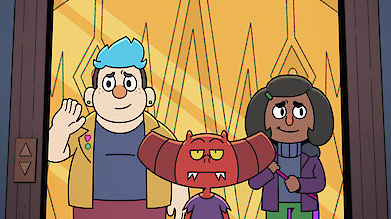
Season 2, Episode 9, “Going Up”

Before we get into spoilers–there’s little chance I can cover “Going Up” without revealing some plot points–let’s discuss some quick Normaisms. Norma already has hers and Badyah’s next four hangouts and topics of conversation scheduled in her diary. While I don’t plan my days in this much detail or that far in advance, I am writing this deep dive in June, and it’s scheduled for mid-September. Yikes! Maybe I do plan that far in advance. Autistic people do like a regimen. I also like Norma’s wonder at heaven when she first arrives. As she says, I’ve spent so much time studying demons; I didn’t think about what was going on up here. Again, tunnel vision. I wouldn’t have Norma any other way.

Now, we get into spoilers for a show that’s been around for three years. You’ve been warned. Courtney learns they’re a fallen angel. Their “horns” are a broken halo, and they’re doomed to prune the universe’s timeline of all “unwanted” branches. While bleak in nature, this plot point metaphorically plays into Dead End: Paranormal Park’s main characters in profound ways. Fallen angels (angels whose halos are broken) no longer fit what it means to be an angel, so Courtney has more in common with Norma than they may have first thought. As an autistic person, Norma doesn’t fit in with neurotypical people. We’ll go more into the Barney side with the trans representation post, but Courtney’s subjugation in heaven rings true for a lot of autistic people.
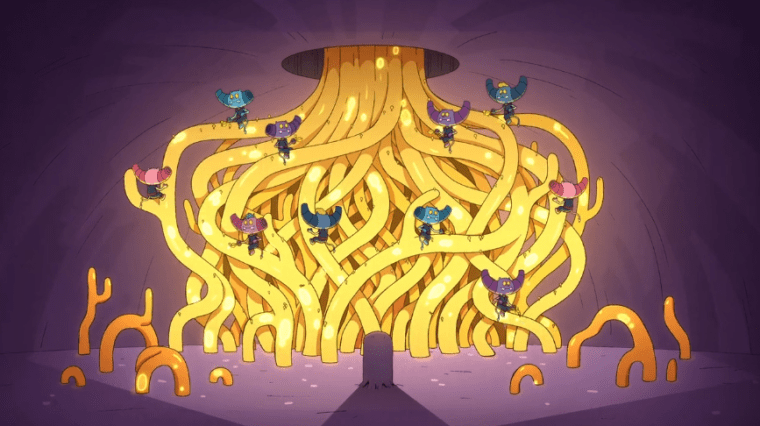
Courtney isn’t allowed to be Courtney. Their personality–or any personality–runs counter to what the heavenly society can accept. There’s a lot to unpack with heaven’s insistence that everyone must conform and follow preconceived notions. One could rewatch Dead End: Paranormal Park multiple times and find new angles. This is the mark of a great show. One final point: I love how Barney asks if he can hug Norma at the end of this episode. Barney shows Norma respect with this question; Norma doesn’t always like human contact. I’m with you, sister.

One more major spoiler: Pugsley becomes The Watcher. The Watcher is the all-powerful heavenly sorcerer who serves as watchdog for anyone who steps out of line. Pugsley loses himself behind this onion-head mask. I don’t know if this was the intent, but Pugsley is literally masking. Masking for autistic people is when one attempts to look less neurodivergent. Dead End: Paranormal Park may be geared for kids, but it has many layers.

Season 2, Episode 10, “The Watcher’s Test”

“The Watcher’s Test” does for Pugsley what “Going Up” did for Courtney. Barney and Norma’s journey can be seen through Pugsley’s. Since this is our autism representation post, we’ll focus on how Pugsley’s journey mirrors Norma’s. Again, we’ll be going through some major spoilers, but if you’ve made it this far, spoilers won’t be that big of an issue.

Heaven (not sure if the character commanding Fingers is God, but they’re certainly from heaven) commands Pugsley to become The Watcher. Heaven insists there is no other way of thinking. Any other ways of thinking are incorrect, and that’s where Pugsley’s internal battle with Fingers’ programming mirrors autism. Most of the world runs on the neurotypical’s (someone who isn’t autistic) way of thinking, hence the term, neurotypical. Pugsley doesn’t think in the same way as Fingers and their boss (or bosses). Instead of allowing Pugsley’s different way of viewing the world, heaven forcefully changes his mind.
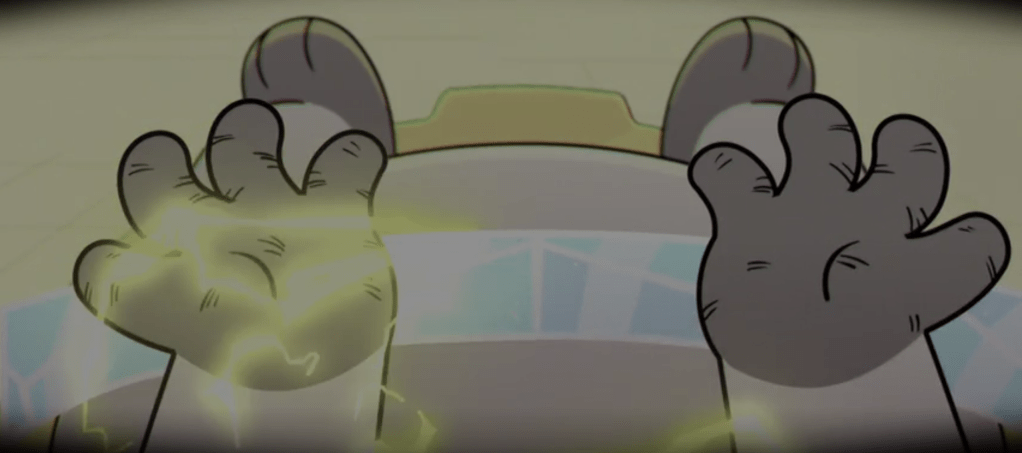
Furthermore, Applied Behavioral Analysis (ABA) therapy, a therapy often used to change autistic people’s behavior, can be compared to animal (or dog) training. I don’t know if a link with Pugsley and his heavenly training (as a metaphor for ABA therapy) was Dead End: Paranormal Park’s intention, but if it was, that’s brilliant. Even if that wasn’t the show’s intent, the world’s a better place when Pugsley’s allowed to be Pugsley, and our world could be better if accommodations were made available for autistic people instead of forcing autistic people into boxes–or onion-shaped masks.

Random Thought: The dedication to Leon Fechner (one of the show’s animators) during Dead End: Paranormal Park’s closing credits is touching. We leave season two with Pugsley wandering a plane that isn’t heaven, hell, or Earth. This pays homage to Fechner, who had slipped into a coma and died before the show was completed. Rest in peace, Leon Fechner.

Closing Thoughts

Phew! This was long. It’s even longer if you read the companion piece, Dead End: Paranormal Park’s Transgender Representation. While this show’s geared toward children, Dead End: Paranormal Park does a stellar job with autism representation. I’m not the first to cite Norma Khan as one of the best autistic characters. The show handles Norma’s autism with grace and style. I love Dead End: Paranormal Park’s intersectionality. Each character is thoughtfully layered.

If you have any other movies or television shows that depict autism that you’d like us to cover, let us know in the comments. If you’ve made it this far, you’re amazing. We all know it. Thank you for reading, and wherever you are, I hope you’re having a great day.

Eyes of Wakanda Review

Happy Friday, Geekly Gang! Marvel Studios Animation released its fifth project in its short four years of existence with Eyes of Wakanda. This series looks amazing. The premise of time-hopping through history, showing Wakanda’s secret spies, the Hatut Zaraze (War Dogs), retrieving Wakanda’s advanced technology, sounds exciting. And Eyes of Wakanda is fun, I can see where storyboard artist Todd Harris wanted to go with Eyes of Wakanda’s story, but the reduced episode run makes it difficult for the Eyes of Wakanda to find its stride.

The War Dogs’ mission is to sneak into outside countries and recover lost Vibranium artifacts that, if they fall into the wrong hands, could expose or bring harm to Wakanda. The Hatut Zaraze do their best to keep Wakanda hidden from the outside world. This idea dovetails into the first Black Panther film; Killmonger found a Wakandan artifact on display in a museum. More on this moment later. Eyes of Wakanda’s first season features four key moments in Wakandan history: the Bronze Age, the Trojan War, the beginning of China’s Ming dynasty, and the First Italo-Ethiopian War. Each episode leans into the region’s cultural aesthetics. Eyes of Wakanda shows accurate depictions of the people who lived in each location during that time. I can’t say it enough, the art style is fabulous.

I also like how these four episodes are stand-alone stories. You don’t need to watch either of the Black Panther movies or do any other MCU homework. Everything you need to know is contained in four half-hour episodes. The first and final episodes of Eyes of Wakanda’s first season stand out above the middle two. I like the idea of reintroducing Iron Fist in the third episode–there’s hope we’ll have another Iron Fist sighting in the MCU–but the middle two episodes don’t do as much to explore Wakanda. The first episode shows how far advanced Wakanda is from the rest of a Bronze Age society. The fourth directly ties into Black Panther and Killmonger (this is the artifact, the axe, Killmonger steals from the museum). I have mixed feelings about forcing Eyes of Wakanda to connect with Black Panther, but the MCU is going to MCU. The bookend episodes also delve further into their protagonists.

In the first episode, we follow failed Dora Milaje candidate Noni, while the fourth episode centers on eager Wakandan Prince Tafari. I didn’t see the same character development in the middle two episodes. Or at least, the middle two didn’t stand out as much.

Eyes of Wakanda’s short run works against it. A couple more episodes like the first and fourth could’ve allowed Eyes of Wakanda to find its footing. Several television shows need at least two or three episodes to “really get going,” and I got that vibe from Eyes of Wakanda. With a larger episode order, Marvel Studios Animations could’ve shown more sides of Wakanda.

Still, what’s here is fun, and two hours isn’t a long investment for an animated series. And I can’t stress how amazing Eyes of Wakanda’s animation is. To this point, What If? was Marvel Studios Animations’ crowning achievement for art style and direction. Eyes of Wakanda gives What If? a run for its money. Thank you for reading, and wherever you are, I hope you’re having a great day.

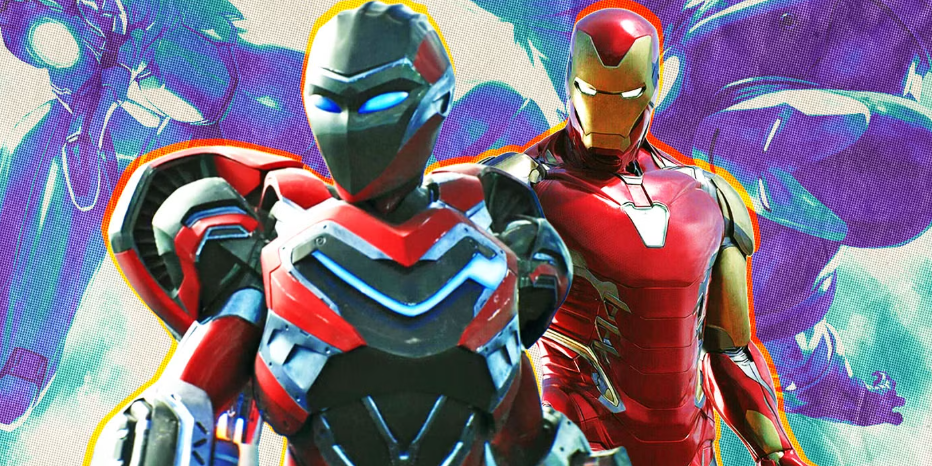
Ironheart: Episode 4-6 Review

Happy Friday, Geekly Gang! Kyra Kyle here, and we’re going to discuss Ironheart’s final three episodes. There’s little chance that we’ll cover this subject without major spoilers, so this is your spoiler warning. Last week, Ironheart finished strong, but I wondered if it would continue this momentum during its second episode release. In short, it did.

Ironheart managed to raise the stakes with almost every scene; that’s good to see. Sacha Baron Cohen was electric as Mephisto. Unlike my thoughts from last week (I guessed Ironheart would show Mephisto ruing its fifth episode), Ironheart held off showing Mephisto until its final episode. That’s a fantastic choice. This kept Mephisto from being watered down over two episodes. The MCU has been building toward Mephisto for a while. (Yes, there will be some minor MCU homework, but Ironheart does a good job revisiting Dormammu and the events of the first Doctor Strange.) The show ends on a cliffhanger. It looks as if Mephisto wins. That’s an intriguing ending for what would’ve been Ironheart’s first season. We’ll have to discuss Ironheart’s future at some point. Why not now?

Few Marvel shows on Disney+ have received second seasons, and that’s before considering Ironheart’s potential for underperformance. Disney+ hasn’t yet released its streaming numbers for Ironheart, but I’d imagine it didn’t do well because the show starts slow–really slow–and there’s a chance fewer viewers will give Ironheart episodes 3-6 a watch. Seriously, the last four episodes save the show. Despite leaving a lot of bread crumbs, I doubt Ironheart receives a second season. We’ll see Mephisto and Ironheart again in future MCU projects, but it’s a shame their story won’t continue through a second Ironheart season or an Ironheart special. I’d be okay with a one-shot Ironheart Disney+ special.

Getting back to Ironheart’s final three episodes, the characters grew on me. I was warming up to them during episode three, but Ironheart really did ramp up the tension and/asked interesting questions with each of its scenes. Of course, there were the ubiquitous battles. Ironheart wouldn’t be a Marvel project without the fights growing in intensity. But Ironheart did enough groundwork to make Riri’s showdown against The Hood’s gang, Zeke Stane, and The Hood meaningful. Each of these factions (and yes, The Hood’s gang and The Hood) has different goals and desires, and I like how Ironheart pitted these characters’ motivations against each other.

Even Mephisto’s goals differ from The Hood’s. Did I mention Sacha Baron Cohen is amazing as Mephisto? I have? Well, I’d watch Ironheart just for his performance, but Ironheart had plenty of amazing acting performances. I don’t want to list them all here. Few, if any, Ironheart characters fell flat, but I’ll take this moment to give a shout-out to the surprise Doctor Strange (from the comics) character Zelma Stanton.

Regan Aliyah’s adorkable Zelma Stanton does a great job of tying Ironheart into Doctor Strange and Wandavision/Agatha: All Along. I like how Marvel digs deep into its comic book lore in odd but meaningful ways. Ironheart wouldn’t work without Zelma. Kudos for including her. I have one small gripe. The now iconic scene of Mephisto tempting Riri Williams is a little on the nose (from a writing perspective), but Cohen’s gravitas is outstanding, and I don’t care if I’ve heard a similar version of the devil.

So, is Ironheart worth your time? I’d consider skipping the first two episodes and watching the episode recap for episode three. I’d definitely skip Ironheart’s first episode; it’s a slog. I’m concerned about how the MCU will continue the stories introduced in this show, so I’d have to give Ironheart an incomplete. It ends with a compelling cliffhanger, but there’s little chance we’ll get a satisfying payoff. Please, give us an Ironheart Disney+ special. Beyond those early hiccups, Ironheart was a fun watch. It even manages to set up a solid foundation for future MCU stories.

Ironheart’s future is up in the air. I wish I could tell you that all the great story threads introduced in this show will get a satisfying resolution, but only time will tell. Honestly, Riri’s reunion with Natalia and showing signs of Mephisto taint gave me a smile. Not since Thanos have we seen a Marvel villain succeed, and Sacha Baron Cohen’s Mephisto can serve as a fantastic MCU villain.

Ironheart: Episodes 1-3 Review

Hey, hey, Geekly Gang! Kyra Kyle here. The first half of Ironheart’s episodes were released this past week, and I’ll share my thoughts, but as you can see, I’m not giving each episode its own review. JK Geekly has covered Your Friendly Neighborhood Spider-Man and Daredevil: Born Again, and typically, we give each episode its own post. We’re not doing that for Ironheart because it drags. With these first three episodes, the show takes double the time it needs (for at least the first two episodes), so we figured we’d cover the first three episodes as if they were one and a half episodes or a single Marvel special.

At its heart–Ha! Heart was unplanned–Ironheart has the structure for a good story. It sets up an interesting conflict between tech and magic, I like the show’s social commentary, Riri has an intriguing (enough) backstory, and I like many of its characters. Ironheart’s execution is lacking. Quick note: We will go into spoiler territory throughout this review; you’ve been warned. Ironheart actively keeps why Riri Williams wants to make an iron suit a secret for over two episodes. Really? While it makes sense for Riri to obscure her motives from other characters, it hurts Ironheart’s story, keeping the viewers in the dark. Spoiler: Her dad, Gary, was a Tony Stark superfan, and that’s why she wants to build an iron suit. We could’ve gotten that information in any one of five flashback scenes with Gary, but Ironheart deliberately keeps the audience at bay.

And Ironheart uses too many flashback scenes, with none of these scenes pulling double duty. Those flashback scenes with Gary Williams show his and Riri’s relationship, but give few other details (like Gary is a Stark fan), and it isn’t just the flashback scenes. Most of the scenes in the first two episodes are one-note. This leads to the show doubling in length. Fortunately, Ironheart’s third episode, “We in Danger, Girl” picks up the pace. Joe turns out to be Obadiah Stane’s son, Ezekiel, and this is done in a scene that pulls double duty. 1) Riri needs tech to go undetected by The Hood. 2) Ezekiel reveals who he is and why he has so much advanced tech. In fact, Ironheart’s third episode sheds most of what bogs down the previous two episodes, so I’m cautiously optimistic about next week’s Ironheart offering.

While it’s not always about the action, “We in Danger, Girl” cranks up the action and tension while raising the stakes at most turns. It even manages to throw in a few welcome comedic moments. I like Riri’s panic attack side story. We don’t get enough superheroes struggling with the very act of being a superhero. Riri’s moral ambiguity at the beginning was also welcome. I even liked how Riri struggles because of her ethnicity. I just wish Ironheart’s story were tighter.

But “We in Danger, Girl” did enough for me to watch Ironheart’s next three episodes. The cast is excellent. I like this version of Slug better than the comic book version; I need more of this Slug. The story is picking up the pace. I’m excited to see how The Hood and Mephisto interact and how Riri’s not-so-good choices will impact her future. Riri is a flawed and compelling character, and her relationship with the AI Natalie (Riri’s friend who died) is top-notch, but I wonder how many viewers will sit through Ironheart’s first two episodes. Thank you for reading, and wherever you are, I hope you’re having a great day.

Daredevil: Born Again, “Straight to Hell”

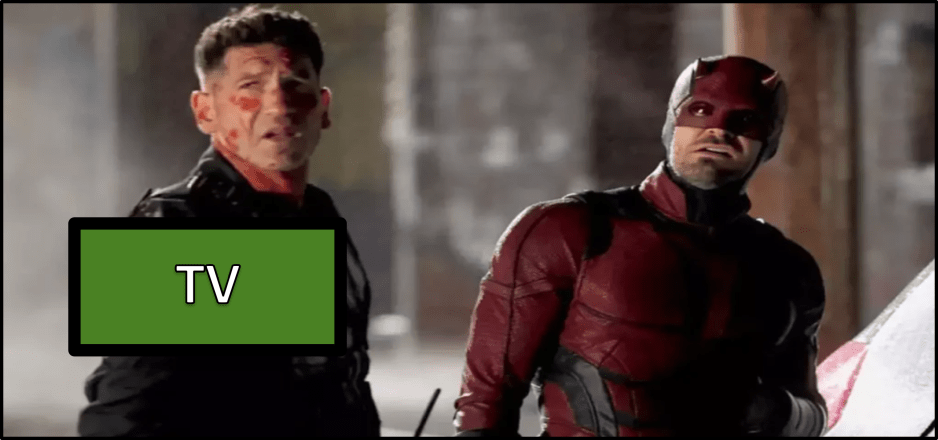
Daredevil: Born Again wrapped up its first season this week with “Straight to Hell.” This episode sees the return of Karen Page and The Punisher. Hey, hey! Kyra Kyle here. Daredevil: Born Again’s first season was uneven but entertaining. I had guessed a week or two ago that this season would end with Kingpin leaking Daredevil’s identity, but I forgot about the MCU’s plan of turning Kingpin into the ultimate street-level threat. While I enjoyed Kingpin’s side of the story, Daredevil didn’t get the same care. In fact, this show could’ve been named Kingpin: Return of the King.

Let’s begin with the interesting half of Daredevil: Born Again’s story. Kingpin’s rise to power plays out like a Marvel-flavored House of Cards or Breaking Bad. Kingpin wheels and deals himself into the best position. Daniel Blake’s journey to become Kingpin’s right-hand man was a joy. Sheila Rivera and Commissioner Gallo, scrambling to adapt to the changing political climate (dictated by Kingpin) and attempting to fix corruption from within, delivered plenty of tense scenes. Gallo’s story culminates in the single most violent moment in MCU history (so far), and that includes a Deadpool movie. I won’t spoil it here, but you’ll know the scene when you see it. Even Daredevil’s most aha moment comes when he figures out Kingpin’s ultimate plan: turning Red Hook into his private city-state.

Kingpin establishing a vigilante task force is the thread that can drive countless MCU television shows. This one plot point could and should affect a Punisher, Luke Cage, Jessica Jones, and Iron Fist reboot. This task force could appear in a future Spider-Man movie. Depending on where these characters reside, Hawkeye and Moon Knight could get tangled up with the task force. This is why I believe Daredevil: Born Again should’ve been a Kingpin show like Max’s The Penguin. I haven’t even mentioned Vanessa and Wilson Fisk’s complicated relationship. There’s so much meat to this half of Daredevil: Born Again’s story. By comparison, Daredevil’s story is thin.

Daredevil was an afterthought in his own show. With the exception of a few scenes, Daredevil could’ve been deleted from the show, and the show would’ve ended up the same. As a result, most of Daredevil’s story failed to capture my attention. I mentioned Heather Glenn’s lack of chemistry with Matt Murdock for weeks. She jumps on the Kingpin train quickly during “Straight to Hell.” Makes sense. I don’t know if Murdock will even miss her; he doesn’t act like he does. I never bought the two’s relationship.

I wonder how integral Kamar de los Reyes’s White Tiger was to Daredevil’s half of the original script. If Daredevil: Born Again was supposed to be a Kingpin show, it would make sense if more than one vigilante were active during the bulk of the season. It would also make sense for Daredevil to mentor White Tiger during his exploits. Daredevil: Born Again did a good job of integrating White Tiger into Daredevil’s narrative where it could. The show also managed to honor Kamar de los Reyes. Rest in peace.

The Punisher is inactive for most of this season’s run and only resumes his vigilante activities during “Straight to Hell.” It almost seemed like Daredevil: Born Again saved all its juicy Murdock/Daredevil story threads for its season finale. The show reintroduces a potential love triangle among Daredevil, Karen, and Punisher. It’s difficult to establish a love triangle like this when two-thirds of the characters receive little to no screen time until the final forty minutes. What’s worse is that the Murdock/Daredevil supporting characters like fellow attorney-at-law McDuffie and cop turned private investigator Cherry serve little more than plot devices.

Murdock, donning his new duds, was fun, and Bullseye was electric in the few episodes toward the end where he appeared. I can’t wait to see where the MCU takes Daredevil, but Daredevil: Born Again season one was more of a Kingpin show, and that’s okay. I just wish Marvel had renamed the show to reflect the show’s true main character. Daredevil: Born Again season one was the street-level version of Avengers: Infinity War with Kingpin swapped for Thanos.

Let us know your thoughts on Daredevil: Born Again’s first season and the season finale “Straight to Hell.” Thank you for reading, and wherever you are, I hope you’re having a great day.

Daredevil: Born Again, “Isle of Joy”

Daredevil: Born Again ended this week’s episode, “Isle of Joy,” with a bang. Hey, hey! Kyra Kyle here. Daredevil: Born Again’s first season draws closer to its end, and “Isle of Joy” tied up numerous story threads in satisfying ways and reintroduced a fan favorite character. I do have one major gripe, but let’s start with the several positives.

Kingpin and Vanessa’s story continues to drive Daredevil: Born Again. Matt Murdock/Daredevil’s story highlights stem from Kingpin and Vanessa in some form. The power couple resolves their differences and creates a unified front. By the end of “Isle of Joy,” Kingpin and Vanessa are equal partners in the criminal underworld and politics. This story thread is organic. I don’t want to spoil the big reveal toward the end of this episode, and I don’t want to beat this drum any further. Kingpin and Vanessa scenes are a must-watch.

The same can be said of Kingpin’s rise as mayor. Guevara’s Sheila Rivera and Gandolfini’s Daniel Blake are welcome additions. Blake’s character introduced reporter BB Urich (portrayed by Genneya Walton). I like the nod to Ben Urich, BB’s uncle, who was murdered during Daredevil season 3. This builds tension between the media (working under the table), the police who don’t see eye to eye with Fisk (like Commissioner Gallo), and Mayor Kingpin. Daredevil: Born Again has done a great job constructing this power dynamic and struggle.

Furthermore, Fisk’s vigilante task force shows the city’s pulse and the government’s corruption. We get little airtime for Rivera, Blake, Urich, Gallo, and Officer Powell, but the scant moments “Isle of Joy” spares for these characters pack a punch. I really like Officer Powell in this episode. He gets two minutes but does more work in those minutes than some scenes do in fifteen or twenty. Daredevil: Born Again illustrates that it can be character-driven while progressing a plot. I’m fighting the urge to drop the one gripe I have. Must. Continue with one final positive.

Wilson Bethel returns as Dex (Bullseye). Yes! He’s worth the wait. Every scene with Bullseye is electric. Pure adrenaline. This includes the final scene that we’ll discuss in a minute. “Isle of Joy” has a shocking ending. I’ve waited long enough. I must include the one negative. I don’t believe Matt Murdock and Heather Glenn’s story.

I know. I mentioned how awful the Murdock-Glenn story is in a previous episode, but “Isle of Joy” hammers home this point. Murdock wants Glenn to admit that Fisk is one of her patients. He’s a lawyer. He should know the law, and that Glenn can’t confirm that Fisk is her patient. Any time Murdock pressed this issue–which was often–he came off as a teenager who didn’t understand how things work. Glenn wasn’t much better regarding Murdock. He’s clearly upset that she’s accepting an invitation from Mayor Fisk for a black and white ball. Adult Teenager Murdock storms off, and Glenn gets butt hurt when he shows up late to the event. What did she expect? This makes me question if she’s good at her job as a therapist.

During the event, Glenn complains to Vanessa that she doesn’t even know Matt anymore. First, we’ve seen these two on one date the entire series. I don’t believe she knows him at all. Second, why is she confiding personal issues with her client? Again, this smells like she isn’t good at her job. You know what? No. Heather Glenn isn’t a good therapist. During this scene, she lost all credibility.

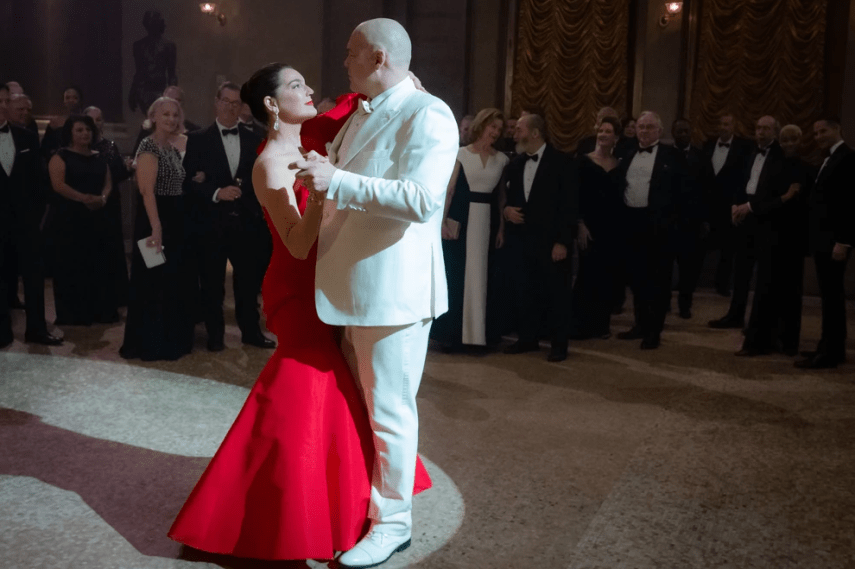
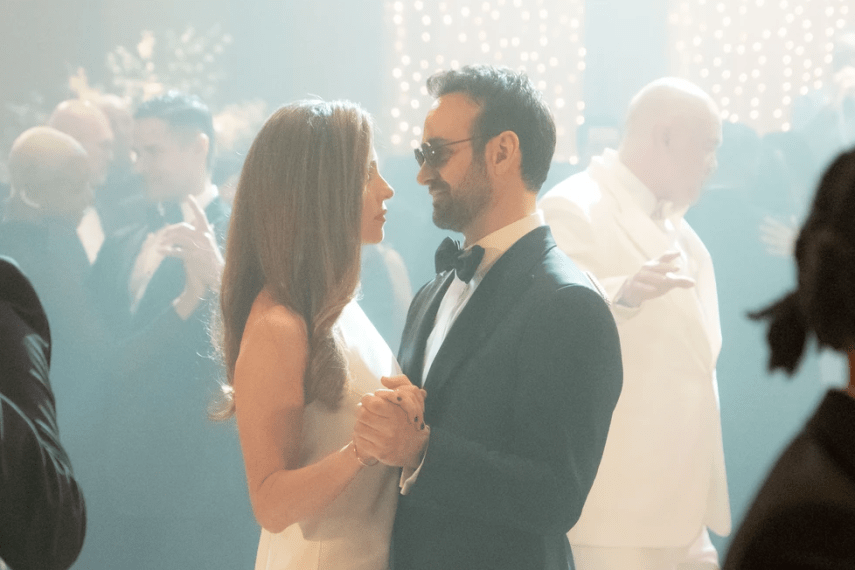
We end with the showstopper. Major spoilers for anyone who hasn’t yet seen “Isle of Joy.” You’ve been warned. Matt discovers that Vanessa ordered the hit on Foggy and confronts her. When Murdock hears a gun cock, he knows its Bullseye aiming for Fisk. Matt jumps in front of Fisk and takes the bullet, and “Isle of Joy” ends with Murdock bleeding out on the dance floor. This sequence had an amazing pace. I don’t know if I quite buy Murdock taking a bullet for Mayor Fisk. We know Murdock won’t die. The show’s named after his alter ego. But I’m interested to see how Daredevil: Born Again season one continues after this chaotic scene.

What do you think about Daredevil: Born Again, Geekly Gang? Let us know in the comments. Thank you for reading, and wherever you are, I hope you’re having a great day.

Daredevil: Born Again, “Art for Art’s Sake”

Daredevil: Born Again’s episode this week, “Art for Art’s Sake” has me torn. The pace is simultaneously fast and slow. Quick spoiler: Muse perishes during the episode. While the man behind Muse makes physical appearances earlier in the show, Daredevil: Born Again could’ve done more to develop him further. In short, “Art for Art’s Sake” sends mixed signals.

Hey, hey! Kyra Kyle here. Daredevil: Born Again’s weekly episode left me scratching my head. I don’t know what to make of its pacing. I expected the first season to end with Muse’s demise. Instead, they get right to eliminating the threat. I would’ve liked to have seen more of Muse before he left the show. While the show could travel interesting waters, Daredevil: Born Again raced to Muse’s end. I figured Heather Glenn’s strange patient was tied to Muse or was Muse. That ended up being true. He was conspicuously the next patient after Wilson Fisk and Vanessa. For what it matters, the idea of no one noticing Muse fits; I was more focused on the couple. But I wanted the show to explore Muse more.

I wouldn’t classify Muse as a villain of the week. He’s more than that. While I didn’t care for how fast Daredevil: Born Again gave him the boot, how Muse left was intense. Despite any reservations I may have, Daredevil taps the suspense vein. Is it too soon to make a blood reference? Muse met a fitting end; I hoped he would’ve stuck around longer.

So, if Muse isn’t this season’s main threat, what is? I have an idea of where Daredevil: Born Again intends to take the season finale (episode nine; thanks again for the clarification, MetalAusten of BlueSky), and if I’m right, it could be a doozy. At one point in the Daredevil comics, Kingpin reveals that Matt Murdock is Daredevil. Daredevil: Born Again looks to be building toward that end, but it’s taking its time. See what I mean by this episode’s pacing. It raced to the end of Muse while dragging its feet toward something bigger, like Daredevil’s identity getting blown.

Kingpin has been sitting on Murdock’s identity for years. He’s known Murdock and Daredevil were the same person since the original series. Why wait until now to unmask Daredevil? Sure. Kingpin did warn Murdock not to resume his “activities” as Daredevil or else there would be consequences. But two episodes remain until the break, when this bombshell (if it does happen) will occur. Does Daredevil: Born Again intend to mark time until then? Why not build the tension while Muse continues his reign of terror? The show may have missed a symbolic gesture of Kingpin holding Muse’s mask while unmasking Daredevil.

And again, I can hear a sceptic ask, but what about Heather Glenn? She’s been set up as an anti-vigilante, and Matt says her name after he rescues her. First, Glenn’s anti-vigilante stance happened in the last episode or two. We haven’t known she’s been anti-vigilante for long, and the show has had opportunities for this inclusion. Second, Daredevil: Born Again hasn’t sold me on their relationship. The only time their relationship gets brought up (since the one date right after Foggy’s death and a couple of sex scenes) is when Heather asks where Matt was overnight. This was before Matt resumed work as Daredevil. The series hasn’t shown me that they’re close.

A quick tangent. While watching Daredevil’s side of this story, I’m reminded of Jim Plath’s pet peeve: the reluctant superhero. He’d say that the reluctant superhero cliche was overplayed, and that was ten years ago. Until the last two episodes, Daredevil’s story is a reluctant superhero story.

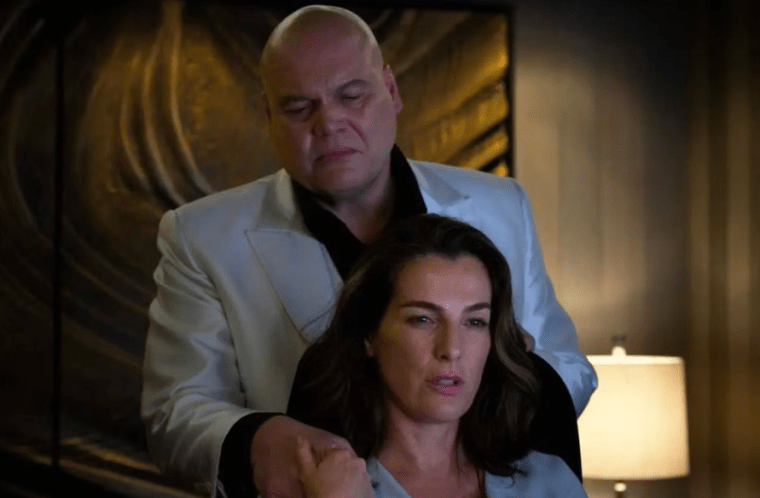
The Vanessa and Wilson Fisk angle remains the most intriguing. Venessa all but sends a gangster to attempt Kingpin’s murder. Or did she? She could’ve warned Wilson of the threat, but something tells me Buck (Kingpin’s right-hand man) always stands in the shadows while Kingpin eats. In a previous week, I mentioned that I like Heather Glenn more as Fisk’s therapist. I can’t wait to see how she tackles the layers of this relationship. Daredevil: Born Again could build an interesting dynamic of Kingpin using Glenn to get to Murdock before he reveals Daredevil’s identity.

Daredevil: Born Again Wilson and Vanessa Fisk

As much as it may sound like it, I didn’t hate “Art for Art’s Sake.” Most of the show’s better moments happen on Kingpin’s side of the ledger. Venessa and Wilson Fisk’s relationship has me wanting more. Kingpin navigating his role as mayor has been a treat. I loved Daniel Blake’s heel-turn in this episode. In one scene, Blake went from a sniveling Mayor Fisk superfan to a cold-blooded manipulator that Kingpin can and should use in the future. And it felt organic. The gangland unrest, while understated, simmers in a tasty way. And I like the inclusion of Kingpin’s anti-vigilante task force. Like many other elements (in the show), its formation was rushed, but Officer Powell galvanizes the team.

Kingpin’s rise as mayor is Daredevil: Born Again’s bright spot. While I question some of the show’s decisions, it’s done enough to hold my interest, and I can’t wait for the finale. There’s a chance we have more than one surprise in the offing. Thank you for reading, and wherever you are, I hope you’re having a great day.
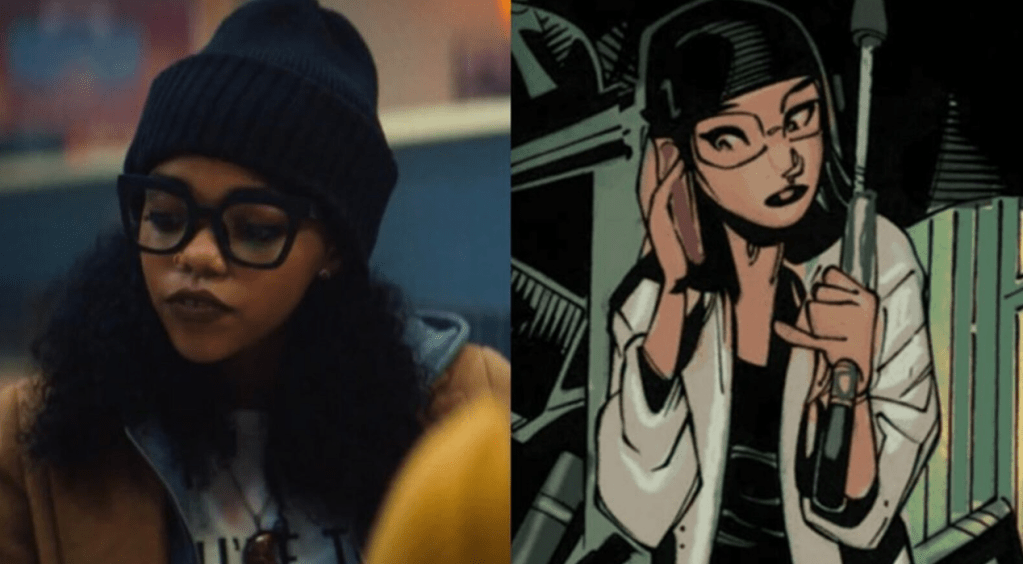
Daredevil: Born Again, “Excessive Force” Review

Daredevil: Born Again’s second episode this week, “Excessive Force,” ties several loose ends, and Daredevil makes his triumphant return in costume. Hey, hey! Kyra Kyle here. I apologize for the delay this week. Everything ran smoothly with the family issue on Wednesday, so we’re back with more Daredevil: Born Again.

This week’s tandem of episodes had a similar feel to Daredevil: Born Again’s debut. If Disney+ had only released “With Interest,” fans may have been miffed (the first episode didn’t go far with the main storyline), but the streaming service dropped two episodes this week with “Excessive Force,” and I can see fans happier with the second offering. I enjoyed “Excessive Force.” As I said in the intro, it ties up several loose ends. That’s always appreciated. Wilson Fisk and Matt Murdock’s journey to find their true selves, their inner Kingpin and Daredevil, mirrors each other’s journey.

The inevitable fight sequence at the end has choreography that harkens to the original Daredevil Netflix series. Kingpin unleashes his baser instincts on Adam, the man with whom Fisk’s wife, Vanessa, cheated on him, while Daredevil rescues Angela Del Toro, Hector Ayala’s (White Tiger’s) niece, from Muse. Both scenes are earned. Earlier in “Excessive Force,” Vanessa and Wilson have an exchange that suggests Kingpin has Vanessa’s okay to revert to his mob boss ways, while Del Toro approached Murdock for help, letting him know where her uncle thinks a serial killer (Muse) is hiding, and Murdock has the idea to “f*** it” and rescue Del Toro himself as Daredevil. Since the police killed her uncle, Del Toro doesn’t trust the police.

I liked that Daredevil: Born Again brought back Angela Del Toro. In the comics, Del Toro dons her uncle’s White Tiger costume, and there’s a chance that Camila Rodriguez (who portrays Del Toro) could do the same. Del Toro does a good job of giving Murdock the kick he needs in the hindside. Running parallel to Del Toro’s mistrust of the police is that Fisk runs the police, and he’s formed a task force of dirty cops to find Muse. As I said, plenty of loose ends. Hamish Allan-Headley’s Officer Powell joins the newly formed task force. Powell has been one of the better side characters introduced in Daredevil: Born Again, but that’s because he’s had a handful of pivotal scenes. And that’s where Daredevil: Born Again has had issues.

Matt’s love interest (Heather Glenn) asks him if he knows any vigilantes he could introduce her to for a book she plans to write about vigilantes. While this could’ve worked, it came out of nowhere. We’ve met Heather Glenn more often than Officer Powell, and this is the first we’ve heard of this intention. Officer Powell’s motives are better developed. Angela Del Toro approaching Matt Murdock to help stop Muse makes sense (her character is well developed despite this episode being her second appearance), but Cherry (Matt’s ex-cop friend/employee) serves little more than a plot device when he warns Murdock against fighting Muse as Daredevil. We know next to nothing about Cherry. Even though he’s physically been in the series three times as much as Del Toro, I forgot he existed.

I mentioned the vlogger vignettes in a previous review. The shaky-cam on the street works better in a Spider-Man property. It’s out of place in Daredevil: Born Again, but further than that, it doesn’t do enough to show New York’s citizens. I don’t know if the audience should know who the vlogger is and follows them as another character (perhaps a friend of Murdock’s) or if the vlogger could attempt to interview Mayor Fisk, which could serve double-duty as a scene transition, or omit those scenes and show Murdock serve more citizens (than the one Fiddle Faddle thief) as a lawyer. Personally, I’d choose the latter. Showing Murdock trying to fix NYC’s issues as a lawyer, but needing to do more, would further the idea that the city needs Daredevil.

Those couple of sticky points aside, Daredevil: Born Again is a great Marvel show. “Excessive Force” saw the return of Tony Dalton’s Jack Duquesne/Swordsman. He’s an underused superhero (last seen in 2021’s Hawkeye as Kate Bishop’s wealthy stepfather), and I’m glad he gets another chance to shine. Thank you, MetalAusten (on BlueSky), for straightening out Geekly’s misunderstanding of Daredevil: Born Again’s schedule. The show WILL return next week, and we can’t wait. Thank you for reading, and wherever you are, I hope you’re having a great day.

Daredevil: Born Again, “With Interest” Review

Brief schedule alert: Geekly will cover the first of the Daredevil: Born Again two-episode finale today and the second episode on Friday. Kyra, who covers Daredevil: Born Again, has a family issue on Wednesday morning and will need another day or two to cover the second episode. With that said, let’s discuss the first of Daredevil: Born Again’s finale, “With Interest.”

Hey, hey! Kyra Kyle here. Daredevil: Born Again nears the close of its first season break. I’m still unsure how the program plans to continue after this. The last I heard, Daredevil: Born Again will have another four or six episodes next year, hopefully near the beginning of next year. Will this be the second half of season one? Since there’s a year gap in release, wouldn’t that make those next four or six episodes season two? Anyway, “With Interest” serves as a divergence if you’re charitable. It’s a filler episode if you’re less charitable. I lean more towards the former, but I was left wanting. “With Interest” shows Matt Murdock continuing down the crime-fighter path, and weaves his story into the greater MCU, and it’s the weaving of Daredevil: Born Again into the greater MCU that chafes.

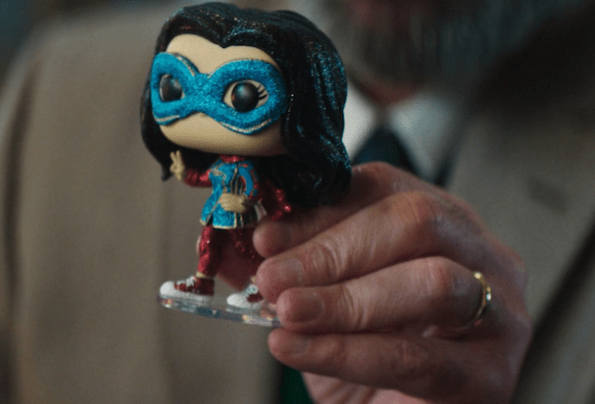
Yusuf Khan, Kamala Khan’s (Ms. Marvel’s) father, makes a guest appearance in “With Interest.” This episode’s story revolves around Khan and the bank where he works. Bank robbers begin a heist immediately after Khan denies Murdock a loan for Murdock & McDuffie (Matt’s new law firm). Convenient. Before then, Khan talks about his daughter Kamala, Jersey City, and Jersey City’s own superhero Ms. Marvel. He spills the tea about what Kamala is up to (visiting friends in California, which could be Kamala recruiting Kate Bishop in San Francisco), and I half-expected him to brag that his daughter and Ms. Marvel were one and the same when he dug out his Ms. Marvel Funko Pop.

Matt chuckles at Khan’s antics. He gives him an annoyed chuckle that mirrors my own. Don’t get me wrong. I like Mohan Japur’s portrayal of Yusuf. He does a good job of conveying a doting father. My issue is with Khan’s inclusion. It felt forced. While a solidly written, acted, and directed episode, “With Interest” isn’t needed. One could’ve omitted “With Interest,” and season one of Daredevil: Born Again would’ve remained the same. It felt like a bottle episode that didn’t need to happen. I felt the showrunner marking time for the final episode.

The only two things I can say that “With Interest” adds to this season’s story are that Murdock’s law firm matches his (eventual) crimefighting, and Daredevil: Born Again exists within the MCU. Thank you for making it abundantly clear that Daredevil: Born Again exists within the MCU. Other nods occurred earlier this season to suggest that, but perhaps some viewers in the back row needed to be force-fed that information. As Yusuf says in this episode, Murdock takes on a lot of cases that don’t make enough money to sustain his business. That reinforces the idea that Matt does things because they’re the right things to do, kind of like his crimefighting. From a storytelling standpoint, the latter has more merit.

But I could’ve seen this played out in a smaller or different scene. I know it sounds like I didn’t care for “With Interest.” The opposite is true. Taken by itself, “With Interest” is a fun romp. Matt Murdock thwarts a group of bank robbers and saves the hostages within the bank. There may be something I didn’t catch with the bank robbers themselves. The one who orchestrated the heist gets away. I hope she plays a bigger role later. My opinion of “With Interest” could change slightly if that’s the case. But until that happens, I’m viewing “With Interest” as a fun diversion before the main meal.

That main meal will have to wait. I won’t be reviewing the second episode of Daredevil: Born Again’s finale until Friday, March 28th. Until then, feed me some fake or real spoilers for the final episode. Thank you for reading, and wherever you are, I hope you’re having a great day.

Harley Quinn: “The Mess Is the Point” Review

Season’s Thoughts

I’ll be the first to admit I teared up during the latter half of “The Mess Is the Point.” Harley Quinn managed to, once again, subvert my expectations while being comical.

“The Mess Is the Point” was another heavy episode, but it felt a bit lighter than “Bottle Episode (But Not a ‘Bottle Episode’).” I think that’s because I expected Harley and crew to be rescued in one way or another, so there was going to be a silver lining.

I never thought I’d say it, but I think I’d prefer Kyra’s prediction last week to how Frankette would get Harley and crew out of the bottle as opposed to what actually happened. By a small margin. I’m not overly attached to Frankette because she’s a new character, but seeing a baby get hurt is upsetting regardless of species. Frankette eating the Luthor siblings was par for the course.

Superman coming back to save the day was something I expected. I was really hoping he’d say some cheesy line about his and Lois’ Morse code exchanges to lean into Harley Quinn’s type of comedy. All he said was, “It sure is nice to be needed again.” Okay. I’ll admit it. That’s a line I expect out of superhero cartoons from decades ago, and I appreciate this inclusion.

Brainiac really tugged on my heartstrings this time around, too. I was tearing up when he sat with his family for the last time. He had so much buildup, but he didn’t seem like a villain. I was sad to see him go, but I don’t think Harley Quinn can do anything else with his character after season five. It seems like Harley and Ivy are staying in Metropolis. If there is a season six, I’m curious to see which of Metropolis’ rogues Harley Quinn will explore next.

Kyra’s Take

I agree with Season. Brainiac’s ending was heartfelt and fitting. Even though we didn’t spend too much time with Brainiac this season, he had a fleshed-out character arc. Harley Quinn did a good job juggling Brainiac and Lena’s storylines and tying them together at the end. I also don’t see Harley Quinn doing much with Brainiac beyond this season. Point of clarification: Harley and Ivy moved back to Gotham City by the end of “The Mess Is the Point.” Ivy claims that she stole the place from Cyborg. It may appear that Harley and Ivy stayed in Metropolis because Superman had placed Metropolis next to Gotham after he rescued the city from the bottle.

Speaking of cities in bottles, Harley Quinn can dip into countless DC Universe stories with the other cities Brainiac captured. This could lead Harley Quinn into Green Lantern, Blue Beetle, Hawkman/Hawkgirl, Legion of Superheroes, and Martian Manhunter storylines, just to name a few. Harley and Ivy even mention they will restore these cities in the future. And the Harley Quinn creative team has carte blanche to do whatever they want in the Harleyverse. It doesn’t affect the Canonverse. Max hasn’t officially announced a sixth season for Harley Quinn yet but with the show’s popularity and a desire by everyone involved in the project (per multiple entertainment news sources like Coming Soon who interviewed showrunner Dean Lorey), this may be a matter of time.

And speaking of time, allow me to time warp to season 5’s finale. It felt like a finale. Harley Quinn’s last two seasons failed to tie up loose ends. Season 3 focused on Harley becoming a superhero and her failing. Plot lines were dropped in season 4 after Nightwing gets killed and the ladies form the Gotham City Sirens. And that plot line got dropped in season 5’s opening minutes. Harley Quinn season 5 tied up all its Metropolis shenanigans while setting up potential future storylines. This ending tied up things so well that it made me wonder if Harley Quinn would be renewed for a sixth season. If Harley Quinn were to end with season 5, fans would at least have closure.

That said, I’m not ready to say goodbye to these characters yet. I’m rooting for a season 6. The show can go in plenty of directions. Let’s assume Harley Quinn gets renewed. The audience got a hint of space during the season finale. Let’s see more intergalactic mayhem. Add a dash of some familiar madness, too. Harley’s mom has moved in with Harley and Ives. That should spice up their living conditions. Harley/Ivy, King Shark, Bruce, Joker, and Bane all have children. The show could mine these relationships further. And was Bane’s wife pregnant? Oh my! That’ll be interesting.

Harley Quinn season 5 was one of the series’ best and most cohesive seasons. Fingers crossed that we’ll see a sixth season. Thank you for reading, and wherever you are, I hope you’re having a great day.