Top 10 Classic Christmas Films

Hello, and Merry Christmas to you. This is Skye once again and thank you for inviting me back to the platform for another holiday update. This time, it’s Christmas, so what better way to celebrate than with movies?  

Trust me, I went through a lot of movies to pick out my favorites. With that being said, this list will also include animated Christmas specials. I know this post is called “Top 10 Classic Christmas Films,” but I wanted to make sure all my bases were covered. Some of those specials deserve praise, too. Now, let’s get on with the list. 

10. The Polar Express

This may be a controversial choice, but bear in mind, it’s number 10 for a reason. I don’t deny this movie has problems. It absolutely does. From the wonky mo-cap animation to the overused action sequences, this movie isn’t perfect. At the same time, it can be beautiful.  

When the girl’s ticket is flying across the winter landscape, it’s genuinely impressive to watch. Also, some of the environments can be grand when shot properly. However, the most enduring part of the film is its message. It’s not the most original message, but they tackle it in such a complex way that it still sticks with me.  

So, while flawed, The Polar Express has earned a spot on this list.

9. Home Alone

Much like The Polar Express, this movie is difficult for me to defend. It often doesn’t know what tone it wants to convey, is awkward at times, and can be overly childish. To that same end, there are some genuinely heartfelt moments.  

There isn’t a single bad performance in the film from any actor (even Macaulay Culkin), plus the chemistry Kevin has with his mother helps ground the film to its holiday roots. Overall, it’s uneven, goofy, and mean, but it also has a John Williams score. That’s the main reason this film beat out The Polar Express. You just can’t beat John Williams. 

I reviewed Home Alone on my blog last Friday, so click here if you’d like to see my more detailed thoughts.

8. The Rankin/Bass Specials

Our first Christmas specials. Yes: specials plural. I’m including both Rudolph the Red-Nosed Reindeer and Santa Claus is Comin’ to Town! in this slot, because they’re both of equal value. Why are they so low on the list? They’re still corny and random, y’all.

Both specials are weird and only created to give us the origin behind the songs. Also, both make little sense in hindsight. Some things are thrown in for the sake of padding the runtime, but I can’t help feeling Christmas-y whenever I see them. Despite their flaws, you can’t say they don’t remind you of Christmas. We all watched the Rankin/Bass Christmas Specials as kids, and we’re gonna show them to our kids too. 

Because of that, this list would feel naked without them.

7. A Christmas Carol

I know what you’re thinking: “Which one?” Honestly, all of them. Don’t get me wrong, none of them are perfect, but what I love is the concept. It’s so powerful that everyone wants to give their take on it from the Muppets to Mickey Mouse to Robert Zemeckis. That last one might need some therapy. 

Richard Donner threw his hat in the ring with Scrooged, The Looney Tunes did their own rendition, George C. Scott gave us a subtle Scrooge in 1984, there’s even a Christmas Carol stage show. Basically, what I’m saying is we all have our favorite version. Whichever one you prefer, there’s no doubt it’ll give you that Christmas feeling with a crotchety man changing his ways due to a certain jolly holiday.  

There’s several adaptations and there’ll likely be several more in the years to come which is why A Christmas Carol is on the list.

6. Miracle on 34th Street (1947)

With few exceptions, the originals are always better than the remakes. This one, however, is no exception. My favorite aspect of Miracle on 34th Street is how it treats the concept of Santa Claus in such a realistic way. Also, Edmund Gwenn’s performance as Kris Kringle is my favorite cinematic Santa Claus.  

While Christmas is a magical time, here we’re viewing Christmas through the lens of the adult world. Miracle on 34th Street proves that the power of the holiday can transcend even the most uptight/rigid adult institutions, and it does so in spectacular fashion. Miracle on 34th Street left me hooked from beginning to end and represents the season in a way that resonates with both children and adults. 

This is certainly a film I’d call a holiday classic.

5. The Snowman

While not explicitly about Christmas (there is Christmas imagery here and there), The Snowman mostly revels in the wonders of winter. You could probably guess that with the special being called The Snowman. Even though it’s not about Christmas, whenever I see The Snowman, I can’t help but feel Christmas-y.  

The same way “Winter Wonderland” is a Christmas song, The Snowman is a Christmas special. The Snowman is a very dream-like experience. It includes stellar hand-drawn animation, a great musical score, and no dialogue. In a way, watching it feels like an elaborate dream a child could’ve had on the night of Christmas Eve, and that’s what makes it feel Christmas-y. Some parts are drawn out or odd, but The Snowman is definitely worth a look. 

Check out The Snowman. You’ll return to this Christmas classic year after year. 

I put Joyeux Noël above The Snowman, because it’s more outwardly related to Christmas. Much like Miracle on 34th Street, Joyeux Noël focuses on the power of the holiday. In this case, it’s the power of the holiday in the darkest of times. 

Joyeux Noël tackles the Christmas spirit in ways I haven’t seen any other film accomplish. Soldiers in WWI call a truce during the holiday and become friends with their enemy. Each of them goes through complex emotions when the truce ends. They must resume fighting with the friends they just made the day before. Despite the misery and death surrounding them, these people still knew that the Christmas spirit was too great to kill. 

If you’re looking for a great Christmas cry, Joyeux Noël is exactly what you need.

Hear me out. I know Die Hard isn’t really Christmas-y. It doesn’t represent Christmas in the ways that any of the previous films and specials I’ve talked about do. That’s the reason I like it so much. There’s no other Christmas film like Die Hard

Die Hard diverges from what you would typically expect in a Christmas movie, but both the film and the holiday are inseparable. It makes sense that John would try to make up with his wife during the season of perpetual love and hope. Also, Hans’ plans likely wouldn’t have worked during any other time of the year with everyone distracted by the holidays. With all of this, Die Hard is still one of the greatest action flicks.  

There’s no other Christmas film like Die Hard, and there likely won’t ever be again. 

2. A Christmas Story

Some people probably see A Christmas Story as annoying at this point. If that’s the case with you, I understand. Although, in my experience, that’s mostly due to the over commercialization of the film with sequels, merchandise, and a live TV musical despite A Christmas Story lampooning those very things. 

Remember when A Christmas Story used to be the small film only you, and a few people you knew watched? That’s when the movie works best. The reason it’s become so heinous is due to people trying to make it bigger. A Christmas Story works the best when it’s just a small family in a small town dealing with small stuff. Oddly enough, when A Christmas Story focuses on the small moments, that’s when it feels the biggest and most personal. 

A Christmas Story takes place 80 years ago, but it still feels like a family Christmas that could happen today which is why it’s my number two.

1. Dr. Seuss’ How the Grinch Stole Christmas!

Yes, my absolute favorite Christmas special takes the top spot: the original Dr. Seuss’ How the Grinch Stole Christmas. You can’t go wrong with the classics, and there’s a lot to appreciate with this Dr. Seuss’ How the Grinch Stole Christmas.  

Everyone knows the story: a mean green man hates seeing people happy around the holidays so he does what he can to put a stop to it. From the brilliant animation heralded by the legendary Chuck Jones to the outstanding vocal talents of Boris Karloff and Thurl Ravenscroft, Dr. Seuss’ How the Grinch Stole Christmas is, without a doubt, synonymous with Christmas. That and the ever-enduring message for kids that Christmas cannot be stolen is one that will live on forever. 

Dr. Seuss’ How the Grinch Stole Christmas is short, sweet, and undoubtedly the best Christmas classic. 


With all that said, I hope you enjoyed my Top 10 Classic Christmas Films. Before I leave you, I’d like to add some honorable mentions that didn’t quite make the list including National Lampoon’s Christmas Vacation, The Santa Clause, and the animated Frosty the Snowman special. Each of them, while not great enough to make the list, are still worth a look if you’re interested. 

Also, what are your top 10 Christmas classics? Let us know in the comments and have yourselves a Merry little Christmas now. We’ll see you next year! 

-Skye

Top 5 Ice-Powered Comic Book Characters

Hey, hey! Kyra Kyle here. For those of us in the northern hemisphere, today is the first day of winter. Let’s celebrate by listing the Top 5 Ice-Powered Characters in comic books.

5: Ice (DC)

The first of several DC Comics characters on this list, Ice is the successor to the Ice Maiden. Tora Olafsdotter is the product of Norwegian experiments with Ice Maiden, hoping to replicate her powers. Tora’s arrival in the human world led the original Ice Maiden feeling superfluous. Ice Maiden returned to Norway, while Tora took up the name Ice and joined the Justice League International. She’s had an off-again, on-again relationship with Guy Gardner and developed a friendship with a heroine named Fire.

4: Captain Cold (DC)

Leonard Snart, Captain Cold, started life as a gag villain, but over time, Cold has become an impressive DC Universe villain. Snart grew up in an abusive household and turned to a life of crime. He developed a cold gun. The gun has extraordinary power. It can create temperatures to absolute zero. He can freeze objects (and people), create ice patches and icicles, and create a “cold zones” which can slow down anyone, including the Flash.

Snart is one of the founding members of the Rogues. He’s joined the Ice Pack (a group of cold-powered supervillains) and the Secret Society of Super Villains.

3: Killer Frost (DC)

There have been two women who bore the Killer Frost moniker. Crystal Frost was a scientist working in the Arctic when an accident gave her the ability to generate extreme cold. She became a supervillain, but her powers were slowly killing her. In an attempt to save herself, she consumed the heat of Firestorm and died.

Following Crystal’s death, her friend Dr. Louise Lincoln became Killer Frost. She recreated the accident that gave Crystal her powers and sought revenge on Firestorm. Able to transmute heat to cold and create gusts of wind and structures made of ice, Killer Frost has teamed up with villains like Captain Cold (who we saw in our previous entry) and Mr. Freeze, who happens to be our next entry.

2: Mr. Freeze (DC)

Dr. Victor Fries (originally a mad scientist Mr. Zero) is another DC villain who began life as a joke villain. The 1990’s Batman: The Animated Series recreated him as a sympathetic villain in its Emmy-winning episode “Heart of Ice.” Mr. Freeze has a sad story behind his frozen smile. His wife Nora fell terminally ill. Dr. Fries dedicated himself to cryogenic research to save her. The head of the corporation funding Fries’s work shuts down his project, and Victor fights them to save his wife. A fight ensues, which results in Victor turning into Mr. Freeze.

Freeze can only survive in sub-zero temperatures. To survive, Victor built himself a cryo-suit. He also developed an ice gun (powered by diamonds) and pursued a life of crime. Freeze’s gun can freeze objects and people, while his suit gives him increased strength and durability. Combined with his intellect, Mr. Freeze is a formidable foe.

1: Iceman (Marvel)

Iceman Bobby Drake started as the youngest member of the original X-Men. Most fans ignored him; he was the Spider-Man of that early X-Men team, cracking jokes and acting as the conduit for younger X-Men readers to view the team through.

Fast forward a couple of decades, and Bobby made his weekend appearance on Spider-Man and His Amazing Friends. I know it’s hokey, but I still enjoy watching this Saturday Morning cartoon on Disney+. Little did I, or any of those early readers of X-Men, know that Bobby may be one of the most powerful mutants. Iceman is an Omega-level mutant. As a frame of reference, Magneto is also an Omega-level mutant. Yikes!

Iceman can become ice in an organic form. By doing this, he can change his size and size, becoming an enormous ice man. He can also add spikes of ice on his knuckles or other body part, becoming a living weapon.

Hello, Winter! Let us know who you would add or remove in the comments. And wherever you are, I hope you’re having a great day.

Top 5 Tabletop Games from 1984-1985

Hey, hey! Kyra Kyle here. Back with another Top 5 Tabletop Games. 1984 and 1985 had even fewer games for this list than the 1982-1983 list. These two years saw a lot of games that got overlooked in previous years find an audience. Axis & Allies was one such game, but it was originally produced in 1981 and made that list. Even the Spiel des Jahres winners for 1984 and 1985 were games from prior years. That said, I still found a handful of games. Let’s talk games.

But first, in case you’ve forgotten our criteria for the Top 5 Tabletop Games, let’s reiterate the ground rules again before we get started.

1: Cultural relevance plays as much of a factor as overall quality. A game might make a list that doesn’t hold up to others of its type, but you must admit the game is everywhere.

2: Only one game from a franchise makes the list. This will become more of an issue the closer we get to games with expansions.

3: Longevity plays a role, too. A game doesn’t have to fly off the shelves today, but it had to have some widespread appeal for a decent time.

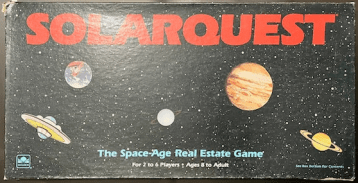
5: SolarQuest (1985)

SolarQuest is a fancy space-age version of Monopoly. Players purchase and develop planets, space stations, and moons set in our solar system. SolarQuest has found renewed interest because of eBay. So much so that it’s recently had a successful Kickstart campaign in 2016. SolarQuest makes a notable addition with fuel. Players must watch their ship’s fuel level because they automatically lose the game if they get stranded with no means to refuel.

Outside of fuel, most of SolarQuest is Monopoly set in space. It can be fun, especially when someone runs out of fuel.

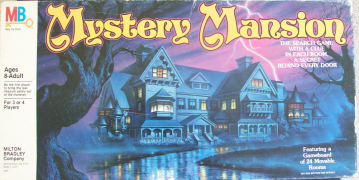
4: Mystery Mansion (1984)

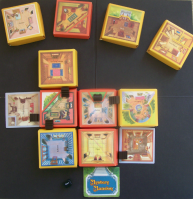
I still quote the mechanical voice of the 1990s version of Mystery Mansion. The original game uses a modular board, one of the first times that a major board game company (Milton Bradley) used a modular board. Mystery Mansion came with 24 cardboard tiles representing different rooms in the mansion: 8 First Floor rooms, 8 Second Floor rooms, and 8 rooms in the cellar.

Each room has different doors and objects that come into play during the game, and players must search the items in the room to find the treasure hidden within. The electronic voice version replaces the modular board (the cardboard tiles) for a fixed layout reminiscent of Cluedo (Clue for Americans). In this version, the electronic device will tell the players which items are in the room, so the setup to the house isn’t the same each time. Other than the board and the mechanical voice, everything else remains the same from the original Mystery Mansion.

Fun Factoid: During the 2015 music competition Iron Composer, where composers have five hours to write a piece of music, finalist Ryan Keebaugh used the mechanic voice from the 1990s Mystery Mansion as his “secret ingredient” for his piece.

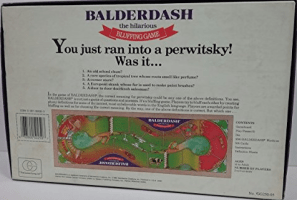
3: Balderdash (1984)

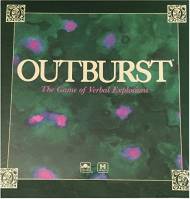
Balderdash is a variant of a classic parlor game, Fictionary, but it counts as a 1984 release. Seriously, there weren’t that many major games that came out these two years. Anyway, Balderdash is a game of obscure words. Players must create definitions for words seldom used in the dictionary and gain points for guessing the correct definition or having other players select their invented definition.

Balderdash can be great fun but like Trivial Pursuit, if you play the game enough, you’ll learn many of the words and their definitions. Hey! That’s a fun way to increase your vocabulary.

2: Abilene (1984)

Abilene is set in the city of Abilene during 1870. This was the time and place for the main transshipment point for the herds of Texan cattle barons. Players assume the role of ranchers who, with the help of their cowboys, drives their herds to Abilene, trying to capture parts of their opponents’ herd along the way.

Abilene has a few twists on this concept. First, players can capture their opponents’ herds as mentioned, but second, your cattle can be diseased. Players have a certain number of diseased cattle in their herd and whenever a herd makes it to Abilene, one’s opponents guess how much of the herd is diseased. Abilene received consideration for the 1985 Spiel des Jahres. Not bad for a game set in Texas. (Note: games set in the United States at this time didn’t fare well in the Spiel des Jahres.)

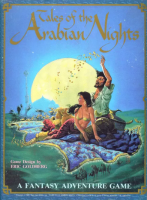
1: Tales of the Arabian Nights (1985)

Tales of the Arabian Nights is getting its 40th anniversary glow-up next year. You can sign up for the Gamefound project preview here (https://gamefound.com/en/projects/play-to-z/tales-of-arabian-nights-40th-anniversary-edition).

Tales of the Arabian Nights uses paragraphs to tell a story where each player travels through the Arabian desert and partakes in adventures from One Thousand and One Nights. Players gain and lose statuses from these adventures and collect Story and Destiny Points. Once you earn enough points to become sultan, you can return to Baghdad to win the game.

Many board game enthusiasts swear by this game as one of the best storytelling games. Every generation, we receive a new version of the game. I’m glad Play to Z has an upcoming new version.

Did we get the list right, for the most part? Let us know in the comments. And wherever you are, I hope you’re having a great day.

Check out the other lists in this series:
Top 5 Tabletop Games Prior to the 1930s
Top 5 Tabletop Games of the 1930s
Top 5 Tabletop Games of the 1940s-50s
Top 5 Tabletop Games from the Early 1960s
Top 5 Tabletop Games from the Late 1960s
Top 5 Tabletop Games from the Early 1970s
Top 5 Tabletop Games from 1980-1981
Top 5 Tabletop Games from 1982-1983
Top 5 Tabletop Games from 1986-1987
Top 5 Tabletop Games from 1988-1989
Top 5 Tabletop Games from 1990-1991

Top 5 Stocking Stuffer Board Game Companies

Hey, hey! Kyra Kyle here. We’re in the middle of the Christmas season. There aren’t that many days until the holiday, so I decided to go with another purchasing guide: stocking stuffer board games. But I don’t want to just do individual games. No, no. Let’s discuss board game companies known for producing good games that can fit inside a stocking.

We’ll have to set some ground rules.

1) The packing must be small enough to fit in at least 50% of stockings.

2) The games must be good. While smaller packaging can lead to compromises, who wants to play a bad game?

3) Extra points for companies that produce various games. It’s easy to find a formula and produce multiple versions of the same game, but I’m handing out brownie points to any company capable of stretching their creative muscles.

With all that out of the way, let’s get to the games, or the board game companies.

5: The Game Crafter (Mint Tin Games)

On the Game Crafter, aspiring game designers can buy board game components for their prototypes. But it also functions as a store for indie board game designers to sell their games. The Game Crafter is a great place to support smaller game companies and indie board game designers directly. We’ll be covering their Mint Tin Games line. These games fit inside a mint tin. Perfect for a stocking.

Price: Varies between $20-$35. Board game designers set their own prices, so mint tin games vary wildly.

Quality: It’s a mixed bag. That’s why Mint Tin Games are fifth on this list. But there is a silver lining. The Game Crafter gives their stamp of approval to any game they view as worth your time.

Variety: Tons! Mint Tin Games are the Wild, Wild West of board games. Think of it as the board game equivalent of the indie video games on Steam. You’ll find games here that you can’t find anywhere else.

Size: 4-inch by 2 1/2-inch mint tins. You can fit these tins into any stocking. I’m surprised by the amount of games you can find that fit inside this packing.

Titles: Again, I’d look at anything that gets the Game Crafter seal, but here are some standouts. I’ve found a ton of excellent solo games. Doom Machine is fantastic. Mint Knight is a fan favorite and a sandbox RPG. What? Astro Asterid’s Quick Shuttle Repair is a fast-paced resource management game. And Deck 52: Space Wrecked is a fun dungeon crawl.

Store Link: (https://www.thegamecrafter.com/games?query=mint&hitsPerPage=18) The Game Crafter (Mint Tin Games).

4: Pack O Game

We had a game series in a mint tin. Pack O Game fits inside a box of chewing gum. How do make a game fit in that tight of a space?

Price: $7 each. By far the cheapest set of games on this list. You can’t beat $7 for a game.

You can also buy a bundle for $50, but that includes 8 games and a pod that can hold all the games from a set, and there are three sets. Even though the pod can hold all the games in a set, it’s still small enough to fit into any stocking.

Quality: Most of the games in this line are good. There can be some duds, but for $7, you can buy a few. And the stellar titles can be fantastic.

Variety: These games use cards shaped like sticks of chewing gum. Despite that, there are plenty of game mechanisms represented in this line.

Size: Don’t worry about it. These are tiny games. These game boxes measure around 5-inch by 1-inch. Crazy small!

Titles: I haven’t played much from the second and third sets, but I played plenty of the first one. Shh must be the best of the bunch; it’s a cooperative word game. Hue and Fly are also good, but I have a soft spot for TKO.

Store Link: Pack O Game by Perplext.

3: All Play Games (Small Box Line)

For the most part, All Play has two sizes of games. We’ll be discussing the smaller (square-shaped) games with this listing. But the larger boxed games are worth perusing as well.

Price: Under $20. Great value for the amount of game inside these small boxes. It’s also a great price for a stocking stuffer.

Quality: While not all the games of this line suit my tastes, the games in All Play’s small box line are baseline good. If something sounds interesting, it’s well worth the price tag.

Variety: All Play has some of the best gameplay variety on this list. You’ll find plenty of themes and gameplay mechanisms that are sure to meet your board game enthusiasts’ preferences.

Size: This is what makes All Play’s small box games third place. This line dominates all the other criteria, but size could be an issue. The small boxes measure 5-inch by 5-inch. That could fit in at least 50% of stockings. Maybe? If you have extra-large stockings, no problem. And who cares if the box protrudes from the stocking’s top?

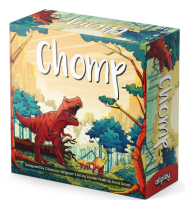
Titles: I mentioned Chomp in our “Getting Starting with Tile-Laying Games” (you can check out that write-up here); Chomp is an excellent game. Sequoia is another great title. Ghosts of Christmas may be a good thematic game for the season. And I’ve heard great things about Mountain Goats.

Store Link: (https://www.allplay.com/board-games/) All Play Games. Look for the square-shaped game boxes.

2: Button Shy Games

Board game rockstar Elizabeth Hargrave (Wingspan) got her start with Button Shy Games’s Wallet Game line. To date, she has more than one game in the Wallet Game line. As the name suggests, these games fit inside a wallet, so they will definitely fit inside a stocking.

Price: $12 each. Another cheap option with some great games on offer.

Quality: Like All Play’s small box line, most games in Button Shy Games’s Wallet Game line are good. But there are some standouts.

Variety: Most, if not all, of the games in this line use 18-card decks. Each game does something different with its 18-cards but it can get repetitive if you pick up too many at once.

Size: The size of a slim wallet, roughly 5-inches by 3-inches. You won’t have an issue fitting any of these games into your stockings.

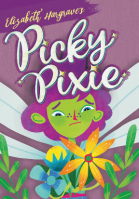
Titles: Hargrave’s first published game Tussie Mussie is not in stock before Christmas 2024, but you can pre-order the next printing set for an April 2025 release. But she does have another great game named Picky PixieMysticana uses a nice twist on rock-paper-scissors, and it has plenty of expansion should you enjoy the core gameplay. Sprawlopolis is a great city-building game. It’s sold out, but its stand-alone sequel Agropolis is available.

Store Link: Button Shy Games Wallet Games line

1: Oink Games

Oink Games have a lot of quirky little games in their line. They have plenty of games that come from East Asia.  More than a few of those will get a mention in the Titles section.

Price: Most are $23, but there are a few that can be a little higher or lower in price.

Quality: Another company that has baseline good games with some standouts.

Variety: Except for All Play’s small box line, Oink Games may have the most variety of any game company (or line) on this list.

Size: The boxes are about 3.5 inches by 2.5 inches. Bigger than most other lines on this list except All Play’s.

Titles: I covered Deep Sea Adventure some time ago with our “Getting Started with Pickup and Delivery Games” writeup (here’s a link); it’s a great title. Scout earned the 2022 Spiel Des Jahres; I may have to check out that one. A Fake Artist Goes to New York is a ton of fun; everyone draws a picture together, but one person (the fake artist) doesn’t know what the group is drawing.

Store Link: Oink Games

That concludes our list. There are a lot of games worth trying. There may even be some that I may have to purchase…as a gift. A gift that’s TOTALLY for someone else.

Did we get the list right? Let us know which companies you would add in the comments. And wherever you are, I hope you’re having a great day.

Top 5 Underrated DC Villains

Hey, hey! Kyra Kyle here. We’re doing something very different this week and posting a much older post by our resident Star Trek Geek, Jim Plath. He shared his Top 5 Underrated DC Villains years ago, and I just found the copy. Sorry about that, Jim. Without further ado, here is the Top 5 Underrated DC Villains.

This one ended up being trickier than I expected. When you start digging, you can make a case for just about any villain of Batman’s not named Joker, Ra’s, Deathstroke, or Superman’s not named Lex, Doomsday, Darkseid, or Brainiac. Here’s my list though.

5) Cheetah:

You could make a case for just about any DC female villain not named Harley Quinn these days, but given that she’s really an anti-hero now, she might not make the list anyway. Cheetah’s history with Wonder Woman is pretty front-and-center in Wonder Woman’s current arc, and it’s doing wonders for drawing attention to her sympathetic qualities. As a character, she’s tragic, and as a villain, she’s got Wonder Woman’s durability and the speed of, well, a cheetah. That makes her a worthy adversary for a good portion of the Justice League.

4) Brother Eye

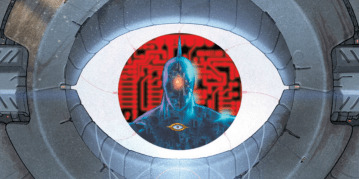
The OMACs/Brother MK1/Brother Eye have been used similarly to Marvel’s Sentinels. They’ve been involved in some great Justice League stories over the years, played a pivotal role in Infinite Crisis and Final Crisis, and always generate hefty stakes.

3) Mongul

Mongul is something of an ersatz Darkseid. In fact, that’s most likely why he’s underrated. Like a lot of characters, his backstory changes slightly here and there, but he’s proven himself a threat to each member of the Justice League individually, and given them a run for their money as a group. He even once destroyed Hal Jordan’s hometown of Coast City.

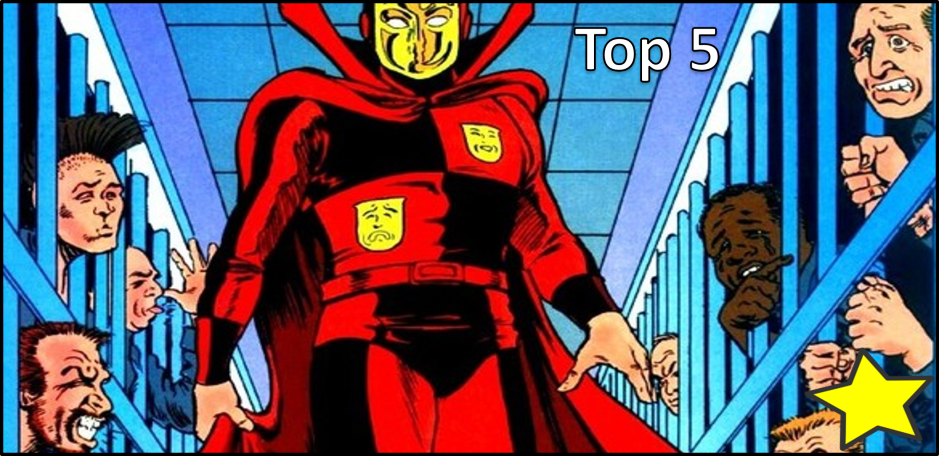
2) Psycho Pirate

With the power to affect people’s states of mind, he probably gets passed over too often for villains like Scarecrow, but Psycho Pirate’s powers are broader. He’s been shown to mollify hostile characters, even pacify Bruce Wayne and Jim Gordon. It isn’t always about fear with the Psycho Pirate.

1) Vandal Savage

When it comes to men made untouchable to father time, the bulk of the spotlight goes to Ra’s al Ghul these days. Some of that is the influence of the Arkham video game franchise, and the Christopher Nolan Dark Knight trilogy, but another factor is Savage is far more powerful. There just aren’t many DC heroes who can make a match for him, so he doesn’t get as many shots at the bigtime.

Do you agree with Jim’s list? Who would you add or remove? Let us know in the comments. And wherever you are, I hope you’re having a great day.
Top 5 Marvel United Expansions to Buy

Hey, hey! Kyra Kyle here. We discussed Marvel United, a cooperative board game designed by Eric Lang, less than a week ago. If you want to see our review of the core set box, here’s a link to that review (link to the review). We also started a guide to Marvel United; you can check that out here (link to the guide page). But today, let’s discuss which Marvel United Expansions are best to purchase first. Think of this as a Marvel United Purchase Guide.

Marvel United has a ton of expansions, so we need to narrow down which ones—in general—are the expansions you should look for. Disclaimer: Eric Lang is one of my favorite designers, and he did a brilliant thing with this game. (I may be biased, so sue me.) Lang put more of his design focus on the villains and not the heroes. That must’ve made the design and iteration process easier. He worked smarter, not harder: brilliant. This isn’t to say that the heroes don’t have personality, they do, but the villains add more wrinkles to Marvel United’s gameplay and with that said…

1) Expansions with more villains feature more prominently on this list. The more villains, the more unique ways to play Marvel United.

2) Boxes with unique gameplay (outside of more villains) will also rate high on this list.

3) I won’t include core sets. These aren’t expansions; they are base games needed to play Marvel United. With that said, you need at least one core set to play Marvel United. Pick the one that looks the most interesting. I like the original Core Set and the X-Men Core Set.

4) If you have a favorite Marvel character, get the box with that character. It doesn’t matter which boxes I say are the best to have. If your collection isn’t complete without your favorite character, get your favorite character.

5) If CMON Games releases another Marvel United campaign on Kickstarter or Gamefound (which is unlikely because they began DC Heroes United, which will be compatible with Marvel United, so crossover battles!), you should be able to get past Kickstarter exclusives. Fingers crossed that CMON will run a second print run for any of the campaigns. That’s more of a possibility than a fourth Marvel United set.

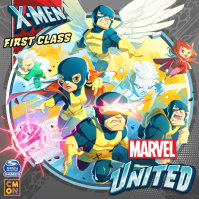
5: X-Men First Class

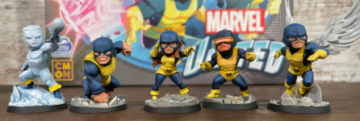
Spoiler Alert: We’ll see more than one Marvel United X-Men expansion on this list. Many of the runners-up come from the X-Men; that’s what you get when you add the Fantastic Four to the X-Men campaign (the Fantastic Four just missed the list). X-Men First Class has a whopping five heroes, which is rare for an expansion. It also features a double boss in Quicksilver and Scarlet Witch. And it even includes Danger Room Challenges to spice up the gameplay even further.

X-Men First Class has a little bit of everything. Its only downside is that it’s a Kickstarter exclusive. This will be a theme for the list. It’ll be difficult to find X-Men First Class for cheap, but well worth the purchase if you can find it. Or you could wait for a second print run. Again, fingers crossed.

4: Days of Future Past

Another X-Men expansion makes the list. Days of Future Past brings the classic X-Men story of the same name to life. (In case you missed it, here’s our list of X-Men Starter Stories; “Days of Future Past” made the list.) Days of Future Past adds sentinels. And these sentinels (three large ones sporting different poses) are almost to scale. This marks the first time Marvel United attempted a larger model type. Ahem. The largest model shows up later on this list.

Add in Nimrod, a futuristic and enhanced Sentinel model, as the main villain and you have the recipe for another great Marvel United expansion. Again, Days of Future Past is a Kickstarter exclusive. Why does CMON keep locking this great content behind Kickstarter exclusivity? C’mon, CMON. I know why they do it: money. I just wanted to say C’mon, CMON.

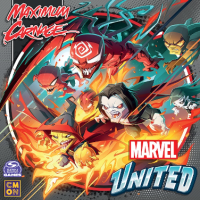
3: Maximum Carnage

Maximum Carnage has the most villains in an expansion, not including the promo boxes of Kickstarter exclusives. It includes a staggering seven villains (with one of those villains, Morbius, who’s also playable as a hero). Yikes! And Maximum Carnage isn’t a Kickstarter exclusive. Maximum Carnage builds on a playstyle that will show up again on this list; it introduces a New Sinister Six.

If you have the Kickstarter exclusive (there is a difference between the retail and Kickstarter versions of Maximum Carnage), you can interchange the various members of the Sinister Six. If you don’t have the Kickstarter-exclusive Maximum Carnage expansion and you have everything else need, you could print off the New Sinister Six cards from the Marvel United Wiki and add them to your game. I’m not condoning that behavior. I’m just saying you can. Wink.

You could just have a core set and most of the Spider-Man expansions and have a game of Marvel United that you could play for decades. The Sinister Six Module is fantastic.

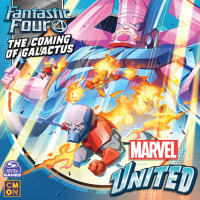
2: The Coming of Galactus

Galactus is the largest Marvel United model to date, and The Coming of Galactus adds a new threat to the game. Namely, Galactus. But Galactus does have heralds, and The Coming of Galactus includes four of these heralds: Nova (Frankie Raye), Terrax, Firelord, and Air-Walker. Silver Surfer was released in the Fantastic Four expansion, which again, barely missed this list. If you have Silver Surfer, he can be added as one of Galactus’s heralds. Yay!

Since Galactus is a world-level threat, the gameplay surrounding him is on a global scale. The heroes don’t defeat Galactus. Not many can defeat Galactus. Instead, the heroes convince Galactus not to consume Earth. The Coming of Galactus is thematic and worth the buy, even if you just want a massive Galactus standing on the moon.

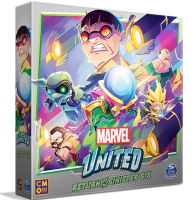
1: Return of the Sinister Six

Return of the Sinister Six includes the original members of the Spider-Man’s Sinister Six. Six villains are always a nice addition. Add in a new way to play, the villains are on a team, and this easily makes Return of the Sinister Six the best of the original Marvel United campaign’s expansions. While I could’ve moved any number of the expansions higher on this list and one of the expansions (Maximum Carnage) improves upon this gameplay style, Return of the Sinister Six deserves the top honors.

Unironically, Vulture may be one of the most difficult villains to defeat, whether a part of the Sinister Six or on his own. He gives me nightmares. And this is such a great expansion.

So, did we get the list right? Which expansions would you include in your Top 5 Marvel United Expansions? Let us know in the comments. And wherever you are, I hope you’re having a great day.
Top 5 Tabletop Games from 1982-1983

Hey, hey! Kyra Kyle here. Back with another Top 5 Tabletop Games. 1982 and 1983 may not have the same heavy hitters as the previous two years, but there are still has some gems. You know the drill by now, let’s talk about some games.

But first, in case you’ve forgotten our criteria for the Top 5 Tabletop Games, let’s reiterate the ground rules again before we get started.

1: Cultural relevance plays as much of a factor as overall quality. A game might make a list that doesn’t hold up to others of its type, but you must admit the game is everywhere.

2: Only one game from a franchise makes the list. This will become more of an issue the closer we get to games with expansions.

3: Longevity plays a role, too. A game doesn’t have to fly off the shelves today, but it had to have some widespread appeal for a decent time.

5: Take It Easy (1983)

You could describe Take It Easy (designed by Peter Burley) as a strategic Bingo. Each player gets a board with 19 hexagonal cells and a set of 27 tiles which have different combinations of colored/numbered paths. The paths cross each other, and players try to continue the colored paths from one end of their boards to the next. The longer the paths go without being interrupted, the more points the player scores at the end of the game.

What makes Take It Easy a strategic Bingo, is that one player is the caller. They draw a tile randomly from a bag. Players will place the same tile simultaneously on their boards. Once a tile is placed, it can’t be moved. Take It Easy has a simple concept but challenges each player to place their tiles in the most optimal configuration. There’s even a Take It Easy app you can download.

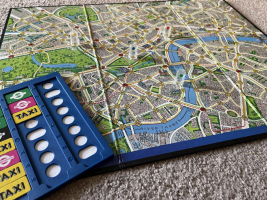
4: Scotland Yard (1983)

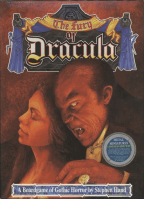
Like Ogre a few lists ago, Scotland Yard uses asymmetric play. One player is Mr. X, who tries to escape London without being caught, while the rest of the players play as the police who try to capture Mr. X. So many games use this setup. 2006’s Mr. Jack casts one player as Jack the Ripper and the other player as the detective trying to deduce his identity. I haven’t yet made the 1987 list, but there’s a good chance The Fury of Dracula will make that list.

In short, Scotland Yard has influenced several board games. It may be an older game, but Scotland Yard does a great job of simplifying secret movement. And I like games that use secret movement. We may be seeing a lot more games of this type in the future.

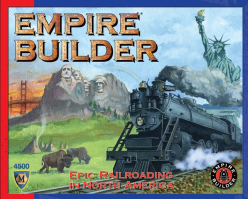
3: Empire Builder (1982)

I wanted to put Empire Builder much higher on this list, but two other games edge it out because of their cultural impact. Empire Builder (designed by Darwin Bromley and Bill Fawcett) is THE crayon rails game. A crayon rails game is a board game that has players draw train tracks on a map with erasable markers. Empire Builder features a map of the 48 contiguous United States drawn to scale. There is a lot of strategic depth to Empire Builder. Players gain benefits by connecting their lines to specific locations. Do you want to dominate the trade of oranges? Canvas Florida with your train tracks. Do you want access to oil? You may want to build a route to Texas.

Gary Gygax (co-creator of Dungeons & Dragons) may have said it best in his review from Dragon Issue 65 (September 1982): “In my opinion (Empire Builder) is the best (board game) available, being more complex and challenging than the simpler sort and not as tedious and complicated as those at the other end of the spectrum.”

Empire Builder may be simpler than a lot of other heavy strategy games at the time, but it takes a while to play. You will dedicate hours to finish a game. But it’s worth it.

2: Talisman (1983)

If you ever wondered what game the cast of The Big Bang Theory had on their coffee table with the miniatures running around a track, chances are it was Talisman. Designer Robert Harris made Talisman to amuse himself and his friends. The game originally had a boys’ school theme, and the players wanted to become the school’s prefect.

Thankfully, the game was recast as fantasy and renamed Talisman. Players move about the board, trying to be the last hero standing. The spaces a player lands on dictate what action they can take for their turn. Like Empire Builder, Talisman is another longer game. And like Monopoly and Clue, Talisman has a lot of intellectual properties that have their version of Talisman. I may have to try the Kingdom Hearts variant.

1: Warhammer (1983)

Warhammer started a miniatures revolution. Before Warhammer’s release, most games used cardboard chits to indicate their combat units. I have fond memories of my family playing some World War II or American Civil War games; its map would stretch across a large dinner table. Anyway, there were a handful of miniature games that were released before Warhammer, but Warhammer began a craze.

Let’s be honest. Of all the names of games on this list, Warhammer must be the most well-known. Plenty of video games and novels have set their stories in Warhammer’s dark and gritty world. I never got into miniature games because they can get costly. Someone can easily drop hundreds of dollars on a set of minis and then spend another mint getting those minis painted. I marvel at some of the artwork.

Even though I’ve never paid for a miniatures army, I have played my fair share of miniature games. Most people in the hobby are happy to share their minis with people interested in the hobby. You can search for a game shop or café near you and see if they have a miniatures game night. They can be a lot of fun. You can’t beat chucking a heap of dice. I love dice.

Did we get the list right, for the most part? Let us know in the comments. And wherever you are, I hope you’re having a great day.
Check out the other lists in this series:
Top 5 Tabletop Games Prior to the 1930s
Top 5 Tabletop Games of the 1930s
Top 5 Tabletop Games of the 1940s-50s
Top 5 Tabletop Games from the Early 1960s
Top 5 Tabletop Games from the Late 1960s
Top 5 Tabletop Games from the Early 1970s
Top 5 Tabletop Games from 1980-1981
Top 5 Tabletop Games from 1984-1985
Top 5 Tabletop Games from 1986-1987
Top 5 Tabletop Games from 1988-1989
Top 5 Tabletop Games from 1990-1991

All Friends Thanksgiving Episodes Ranked

Hey, hey! Kyra Kyle here. Happy Thanksgiving, to everyone who celebrates the holiday. For everyone else, Happy Thursday!

Whenever Thanksgiving rolls around, I think of the sitcom Friends. The show had a tradition of Thanksgiving episodes. What started as a network mandate became a labor of love. Friends Thanksgiving episodes were some of the best, but I’ve never ranked them before. I never thought about doing that before. It’s Thanksgiving. Let’s give it a whirl.

10: Season 1, Episode 9 “The One Where Underdog Got Away”

Season One’s Thanksgiving episode is low-hanging fruit. It’s the ninth-ever episode of Friends. The actors haven’t settled into their characters yet. The writers and directors haven’t either. And the studio demanded a Thanksgiving episode. The cast and crew still turn out a solid episode with “The One Where Underdog Got Away.”

Monica’s plans for a quiet Thanksgiving quickly fall apart as all the characters end up at her apartment. Each of the friends wanted a different type of potato, and Monica didn’t want to cook Thanksgiving dinner in the first place. Monica’s headspace parallels the writers and directors. The episode earns its title when the Underdog float breaks free during the parade, and the gang accidentally locks themselves out of their apartment.

Best Moment: I feel Monica’s growing frustration in this episode and appreciate Chandler’s speech in the episode’s closing moments: “I’m thankful that all your Thanksgivings sucked.” The moment is earned and finally lets Monica off the hook for a ruined Thanksgiving dinner.

9: Season 7, Episode 8 “The One Where Chandler Doesn’t Like Dogs”

“The One Where Chandler Doesn’t Like Dogs” falls flat. I don’t know if it’s because the guest at the table—outside the core six characters—mostly shows up in only Season Seven (Rachel’s assistant Tag). Or it could be that Rachel only invited Tag to Thanksgiving dinner because she wanted to hook up with her subordinate; that’s not a good look. It might even be the reason why “Chandler Doesn’t Like Dogs.” He’s afraid of them?

That could work but the reasoning Chandler gives doesn’t make a lot of sense. They’re jumpy and needy and you don’t know what they want most of the time. I was expecting that a dog attacked him when he was younger. Ross’s reason for not liking ice cream makes more sense. It’s too cold. Fair. Weird but fair.

Best Moment: Chandler wearing the pink fuzzy sweater Monica bought for him. The guy in the catalog may have pulled off the look; Chandler did not.

8: Season 2, Episode 8 “The One with the List”

I forgot “The One with the List” was a Thanksgiving episode. Season Two is early enough in Friends’ existence to claim that Thanksgiving episodes were a studio request and not yet a labor of love. The gang doesn’t even sit down for Thanksgiving dinner. That may be why I forget this episode’s status as a Thanksgiving episode. More likely, it’s the A Story. The main plotline (A Story) centers around a list of pros and cons Ross wrote about Rachel and Ross’s then-girlfriend Julie. This episode steers heavily into melodrama territory. Friends does a good job of skirting melodrama most of the time, but “The One with the List” gets a little too heavy, especially for a Thanksgiving episode.

Ironically, it’s the B Story that feels more at home in a Thanksgiving episode. Monica attempts to incorporate “Mockloate,” a synthetic chocolate, into Thanksgiving recipes. The B Story does all it can to lighten the A Story’s high drama. It doesn’t quite work.

Best Moment: The roll credits scene. The same company that wanted Monica to make Mockloate recipes has created another unholy food alternative, Fishaschios. They’re like pistachios. Michael McKean (as the sleazy corporate exec) is brilliant.

McKean (as he hands Monica a Fishaschio): You aren’t allergic to anything?
Monica: Just cat hair.
McKean: Oh. You shouldn’t eat that.

7: Season 4, Episode 8 “The One with Chandler in a Box”

“The One with Chandler in a Box” is another Friends Thanksgiving episode that tries to balance drama and comedy. The story’s titular Chandler in a Box comes from Chandler kissing Joey’s then-girlfriend Kathy. The drama with this storyline doesn’t hurt the episode as much as the Ross and Rachel one from Season Two. Ross and Rachel had a way of sucking out all the oxygen in early Friends episodes. And you knew Chandler and Joey would make up in the end. They were the ones who instigated the term bromance.

The issue this time comes with the B Story. Monica injures her eye while preparing dinner. She meets her eye doctor Timothy, who happens to be the son of her ex, Richard. Monica invites Timothy to Thanksgiving dinner, and the two share a kiss. Unfortunately, the kiss reminds Monica of Richard, and she doesn’t want to pursue the relationship. That’s understandable; this even puts a nice bow on Monica and Richard’s relationship. Good stuff. The headscratcher happens when Timothy says that Monica’s kiss reminds him of his mom. What? I repeat. WHAT?!

Best Moment: Another roll credits scene. The gang sits on the couch. Monica remembers the kiss she shared with Timothy, and she shivers. I’m with you, Monica.

6: Season 8, Episode 9 “The One with the Rumor”

This one will be controversial. So many people rank “The One with the Rumor” as the best Friends Thanksgiving episode. There’s one reason for this: Brad Pitt guest stars. Clearly, Pitt has fun on the set as do the rest of the cast. But Pitt is out of his element. He can’t keep it together. It’s almost like watching Jimmy Fallon cracking up on every skit during his stint on Saturday Night Live.

The A Story revolves around Pitt’s character, Will Colbert. It works well enough. Colbert used to be overweight in high school, and Rachel (Jennifer Aniston’s character) bullied him. Come to think of it, Aniston didn’t keep her composure in any of her scenes with her then-husband Brad Pitt either. Strangely enough, Pitt has better moments with Joey, who features in the B Story. Joey single-handedly eats a 19-pound turkey.

Best Moment: Any time Joey talks about his Mount Everest of a turkey. I especially like the introduction of the turkey. Joey: How big is that? Monica: Nineteen pounds. Joey: That’s like me when I was born.

5: Season 3, Episode 9 “The One with the Football”

“The One with the Football” is problematic. Most of this comes from the B Story. Chandler and Joey trying to woo the same woman. Many of these jokes haven’t aged well.

The A Story works and generates a lot of unforgettable moments. The group plays a not-so-friendly football game, which brings up memories of the Geller Bowl for Monica and Ross. The sibling rivalry overtakes the game, and the two continue to wrestle over the ball long after the rest of the gang leaves to eat dinner. That all works. I especially like the inclusion of Monica’s competitive nature.

Up to this point, Friends played with Monica’s competitive streak. “The One with the Football” removes all doubt. It even makes her competitive nature a family trait. Ross is no better.

Best Moment: The Geller Bowl had a trophy named the Geller Cup, and I love the reveal.

Chandler: Is everyone else seeing a Troll doll nailed to a 2×4?

4: Season 10, Episode 8 “The One with the Late Thanksgiving”

“The One with the Late Thanksgiving,” like many of these Friends’ Thanksgiving episodes, is difficult to rank. I didn’t care for it for the longest time because I knew the show was coming to an end. But it’s a solid episode that has 3 storylines. To be fair, two smaller plotlines branch from the main one, but Friends usually goes with two plotlines, not one. The main plot centers around Monica and Chandler getting furious with the rest of the group for showing up late to Thanksgiving dinner.

Ross and Joey go to a Rangers game, while Phoebe and Rachel enter Emma (Rachel and Ross’s child) in a baby beauty contest. I prefer the Phoebe and Rachel story arc more, but the Ross and Joey has its moments, too. The episode comes to a head when Ross, Joey, Phoebe, and Rachel show up 45 minutes late for dinner. A rapid-fire exchange ensues. Eventually, Joey crashes into the dinner. But, Monica and Chandler’s mood quickly changes when they receive the news they’ve been selected to adopt a baby.

So, you could say there’s a hidden fourth storyline added to “The One with the Late Thanksgiving.”

Best Moment: Phoebe, Rachel, Ross, and Joey sticking their heads in the door as far as the chain will allow. Classic!

3: Season 9, Episode 8 “The One with Rachel’s Other Sister”

The final two seasons of Friends had stellar Thanksgiving episodes. I don’t typically like guest stars (unless they’re recurring characters; we’ll see a couple in the next entry), but Christina Applegate as Amy Green is a delight. She starts a fight over who gets Emma if anything happens to Rachel and Ross. The crux of the fight stems from Ross and Rachel being willing to give Emma to Monica, even if Chandler was no longer in the picture, but refusing to do so if Chandler was around but Monica wasn’t. Applegate adds a great dynamic to the group. Amy Green shows who Rachel Green used to be before almost a decade of living on her own. Amy Green shows Rachel’s growth.

Best Moment: Chandler breaking Monica’s good china and saying, “Well, what do you know, I guess, I’ll be the one who dies first.” Still a great line. But I’ve got to admit, the quote hits differently now. Rest in peace, Matthey Perry. Thank you for the laughs.

2: Season 6, Episode 9 “The One Where Ross Got High”

Christine Pickles and Elliott Gould as Jack and Judy Geller join the group for Thanksgiving in “The One Where Ross Got High.” The Gellers don’t know that Monica and Chandler are dating. Monica’s parents don’t like Chandler. Chandler attempts to impress the Gellers but finds out they think he’s a pothead based on Ross’s lie in college. That’s the first of the silliness, but “The One Where Ross Got High” doesn’t stop there.

Ross and Joey want to go to a second Thanksgiving dinner with Joey’s new dancer roommate and her friends, Phoebe had a sex dream with Jack Geller the night before, and Rachel makes a questionable trifle with a layer of beef. All of this comes to a head with the episode’s best moment.

Best Moment: Everyone blurts out their inner secrets/desires at the Gellers. Monica spills the beans about Ross smoking pot, and Ross comes clean.

Monica: Dad, do you know that mailman you got fired? He didn’t steal your Playboys. Ross did.
Ross: Yeah, well Hurricane Gloria didn’t break the porch swing. Monica did.
Monica: Ross hasn’t worked at the museum for a year.
Ross: Monica and Chandler are living together.
Monica: Ross married Rachel in Vegas and got divorced. Again!
Phoebe: I love Jacques Custeau. (She switched crushes from Jack to Custeau, because Jack dream cheated on her.)
Rachel: I wasn’t supposed to put beef in the trifle.
Joey: I want to go.
Judy Geller: That’s a lot of information to get in 30 seconds.

1: Season 5, Episode 8 “The One with All the Thanksgivings”

The only Friends Thanksgiving episode that can dethrone the previous one is “The One with All the Thanksgivings.” Ross complains about his divorce and eviction and that prompts the others to tell their stories of their worst Thanksgivings. Chandler reminds everyone of the Thanksgiving when his parents told him they were getting a divorce. Phoebe tops his story by recounting a past life where she lost an arm, and Ross disqualifies her story. “In this life, Phoebe.” Rachel claims that she knows Monica’s worst Thanksgiving. The rest of the episode has everyone guessing which Thanksgiving was Monica’s worst.

The stories include one absurd twist after another. Joey has a turkey stuck on his head, and Chandler has his toe severed when Monica accidentally drops a kitchen knife on his wicker shoe. Monica and Chandler take turns getting upset with each other, but it all ends well with what I believe is this episode’s best moment.

Best Moment: Monica puts a turkey on her head and dances for Chandler to cheer him up. The ruse works, and Chandler tells Monica for the first time that he loves her.

Thank you for reading this far. Since it’s Thanksgiving, I’d like to send out a few thank yous:

Happy Thanksgiving

I’m thankful for my family first and foremost. I’m also thankful for tabletop games and the return of JK Geekly. We are so back. I’m thankful for the Omaha Writers League (OWLs); they’re a local writing group. And I’m almost done with the first draft of this year’s National Novel Writing Month (NaNoWriMo) novel. So, thank you, NaNoWriMo. Even though the organization behind NaNoWriMo hasn’t done the best this past year. Again, thank you so much, my fellow OWLs.

I’m also thankful for getting further than I’ve ever gone before with my literary agent submissions and the submissions to publishers with my tabletop games. If I haven’t heard from them yet, it doesn’t matter. I’m enjoying every part of this writing and board game design journey. I should hear back soon. Fingers crossed.

I’ll cut off the list here because I could go on for paragraphs. Getting back to the list of Friends Thanksgiving episodes, did we get the list right? Let us know in the comments. I hope you’re having a great day even if you don’t celebrate Thanksgiving. And if you do, Happy Thanksgiving!

Top 5 Tabletop Games from 1980-1981

Hey, hey! Kyra Kyle here. Back with another Top 5 Tabletop Games. As you can see from this post’s title, we’re doing things a little differently with this list. These upcoming lists will lump two years today, rather than splitting the decade in half. The 1980s saw an increase in board game production. A lot of new games hit shelves in this decade, and with the introduction of the Spiel des Jahres (Germany’s game of the year) award, the quality of board games also increased.

In case you’ve forgotten our criteria for the Top 5 Tabletop Games, let’s reiterate the ground rules again before we get started.

1: Cultural relevance plays as much of a factor as overall quality. A game might make a list that doesn’t hold up to others of its type, but you must admit the game is everywhere.

2: Only one game from a franchise makes the list. This will become more of an issue the closer we get to games with expansions.

3: Longevity plays a role, too. A game doesn’t have to fly off the shelves today, but it had to have some widespread appeal for a decent time.

We have an honorable mention for this list: Dark Tower (1981) by Roger Burten, Alan Coleman, and Vincent Erato. Dark Tower deserves a mention because it uses an amazing tower as its centerpiece and incorporates a lot of innovative electronic elements. A sequel released in 2022, Return to Dark Tower, brought the original back to prominence.

I almost split 1980 and 1981 into two different lists; if I did, Dark Tower would’ve made a 1981-only list. There’s even a television commercial featuring Orson Welles for the board game. Yikes!

Here’s a link to that Orson Welles Dark Tower commercial.

5: Upwords (1981)

Upwords originally played on an 8×8 square board with 64 letter tiles. The board expanded to a 10×10 board to accommodate languages with longer words like German and Dutch. Eventually, the game shifted exclusively to the 10×10 board. Upwords plays similar to Scrabble. The big difference is that the letter tiles can stack on top of the ones previously used. All words must read horizontally from left to right, or vertically from top to bottom.

I like the twist Upwords made to Scrabble. It doesn’t change the core rules too much, but the inclusion of elevation leads to interesting plays.

4: Civilization (1980)

Not to be confused with the Sid Meier video game of the same name, the original 1980 Civilization board game (designed by Hartland Trefoil) introduces the concept of a technology tree (or tech tree). This tech tree is the centerpiece of the video game Civilization that released over a decade later. Sid Meier’s Civilization isn’t the only board game or video game to use a tech tree. Any game that uses that concept owes a debt to Trefoil’s Civilization. And there are a lot of games that use tech trees.

I find it interesting that a game designed in 1980 has a streamlined yet strategically satisfying tech tree. Is it any wonder that Civilization was chosen for inclusion in the 2007 book Hobby Games: The 100 Best? There is little luck involved in Civilization. This is one of the first crunchy—and lengthy—strategy games. And it won’t be the last.

3: Axis & Allies (1981)

We didn’t have to wait long for another lengthy strategy game on this list. Axis & Allies (designed by Larry Harris) casts players as the major belligerents of World War II: Germany, Japan, the Soviet Union, the United Kingdom, and the United States. The Axis & Allies Anniversary Edition (released in 2008) included Italy as the third Axis power and China as the fourth Allied power.

The combat could get convoluted and intense. Players would roll dice to hit and if a unit scores a hit, the opponent chooses which unit gets destroyed. I like the idea of a unit performing a retaliation before death. It took the sting out of losing a piece. Combat resolves when either side loses all their units or the attacker retreats. I enjoyed this one growing up, but my family never finished a game. Axis & Allies was one of those games where you needed a table just for the game, so you could keep it set up for future plays.

2: Can’t Stop (1980)

Can’t Stop is yet another Sid Sackson design. What can I say, the man deserves to be in the Academy of Adventure Gaming Arts & Design’s Hall of Fame. Can’t Stop has a wonderful press-your-luck mechanism. Players roll four dice on their turn and then group the dice however they see fit. If you were to roll a 1, 2, 3, and 6, you could group them as 5 and 7, 4 and 8, or 3 and 9. Once the player makes their decision of which pairs they want, they move their marker up columns on the board for those numbers. The press-your-luck comes into play with a potential second roll. If at any time you can’t move your markers any higher on a column, you bust and lose all your progress that round.

As soon as a player claims the top space in a column, no one can claim that number again. The game ends when one player has claimed the top spot for three numbers. Can’t Stop is such a great game. And Sid Sackson is a board game legend.

1: Trivial Pursuit (1981)

I struggled with which game should claim the top spot, but ultimately, Trivial Pursuit was the biggest cultural phenomenon from 1980 and 1981. Trivial Pursuit is the grandfather of all trivia-style board games. Heck, it’s the grandfather of all trivia games.

Each of the Trivial Pursuit playing pieces has spaces for six wedges. Players compete by answering trivia questions from six different categories, matched with a different color. In the classic version, Blue is Geography, Pink is Entertainment, Yellow is History, Brown is Arts & Literature, Green is Science & Nature, and Orange is Sports.

To this day, trivia games—even trivia video games—will assign similar colors to the same categories. I’m looking at you, Trivia Crack. Trivial Pursuit has spawned numerous copycats and more than one game show. It’s the one game on this list that most people will know. I had to make it number one. My hands were tied.

Did we get the list right, for the most part? Let us know in the comments. And wherever you are, I hope you’re having a great day.

Check out the other lists in this series:
Top 5 Tabletop Games Prior to the 1930s
Top 5 Tabletop Games of the 1930s
Top 5 Tabletop Games of the 1940s-50s
Top 5 Tabletop Games from the Early 1960s
Top 5 Tabletop Games from the Late 1960s
Top 5 Tabletop Games from the Early 1970s
Top 5 Tabletop Games from 1982-1983
Top 5 Tabletop Games from 1984-1985
Top 5 Tabletop Games from 1986-1987
Top 5 Tabletop Games from 1988-1989
Top 5 Tabletop Games from 1990-1991

Top 5 Superman Villains

Hey, hey! Kyra Kyle here. We’re back with another Top 5 Villains List. This time we’re covering Superman’s rogues gallery. We mentioned Supe’s rogues in a previous Top 5, the Top 5 Most Powerful Rogues Gallery. But Superman’s villains are getting their list today. Let’s see who made the list.
5: Darkseid

You may think that Darkseid is way too low on this list, but I view him more as a Justice League villain if not a DC universe-wide villain. But Darkseid needs to make the list. I struggled with that. I wanted to include Parasite or Cyborg Superman or even Toy Man or Mister Mxyzptlk. Consider them the honorable mentions. Oh. Spoiler alert: those villains didn’t quite make the list. Getting back to Darkseid, he inspired Marvel’s Thanos. So, Darkseid is a heavy hitter. Unless the writer powers down the villain, Superman often needs help when dealing with Darkseid.

4: Doomsday

What more can be said of the villain who killed Superman? He belongs on the list; he may even be too low like Darkseid. Next.

Just kidding. We’ll discuss Doomsday a bit more. Doomsday is an engineered being from the depths of prehistoric Krypton. Is everyone still on board with genetic experiments? Doomsday’s creator imbued him with few feelings, mostly hate and a desire for destruction, which led to him destroying worlds and eventually finding Earth. Doomsday can’t die. He adapts every time he gets defeated. He can’t be reasoned with. Of Superman’s mindless foes (or his foes who are forces of nature), Doomsday tops them all and makes this list.

3: General Zod

Since he’s a Kryptonian, General Zod has powers comparable to Superman. And as his name suggests, he’s a general. So, he has military training. That makes General Zod a Superman-powered general who desires to subjugate humanity and turn Earth into a New Krypton. Yep. He’s terrifying.

General Zod may even be my choice for Superman’s first major villain if I were to reboot the character. He ties in perfectly with Supe’s past. General Zod knew Kal-El’s birth parents after all. And he hated them. It made sense that Man of Steel featured General Zod as its main antagonist. Too bad the movie wasn’t better.

2: Brainiac

There have been many Brainiacs and with that several origins for the character. No matter the origins or version, Brainiac is often considered Superman’s second-greatest villain. You can probably guess who takes the top spot. Usually, writers depict Brainiac as a superintelligent android or cyborg from the planet Colu who is obsessed with collecting all knowledge in the known universe. He even goes so far as to shrink cities like Kandor, the capital of Superman’s home planet Krypton, and Brainiac has destroyed countless civilizations.

If his body ever gets destroyed, Brainiac uploads his artificial consciousness into a new body and begins anew. This makes Brainiac pseudo-immortal and a major threat to Superman. One of my favorite versions of Brainiac comes from the Superman Animated Series. Brainiac was an AI present when Krypton exploded. We learn that Brainiac destroyed Krypton so he and he alone would have the knowledge that Krypton ever existed. This put him at odds immediately with Superman. And the reveal was fantastic. Sorry. Spoilers for an almost thirty-year-old cartoon series.


1: Lex Luthor

What more can I say about the man who would be Superman? Most people know Lex Luthor. He’s one of Comicbook’s greatest villains, let alone Superman’s greatest villain. CEO of LexCorp, Lex Luthor as I mentioned in the Most Powerful Rogues Gallery Top 5 is DC Comics’s version of Tony Stark if Iron Man decided to go a different path. Lex hates how much the world loves Superman. He doesn’t trust all that power belonging to an alien. While I could mention several large-scale, DC Comics affecting schemes, my favorite Lex Luthor story, the one that shows how evil he can be, comes from a much smaller story.

Lex visits a diner outside Metropolis. He offers a waitress at the diner a large sum of money to sleep with him. The waitress knows who Lex is, everyone knows him and what he’s done, and she’d rather not sleep with the devil. But the money Lex offered was too good to pass. As soon as she decides to sleep with Lex, he leaves the diner. Lex’s chauffeur asks why he left before completing the “transaction,” and Lex said—and I’m paraphrasing—She will always know that she would’ve slept with me. Now she hasn’t a penny to show for it.

Like Outkast once said, what’s cooler than being cool? Ice cold. That sums up Lex Luthor.

Did we get the list right? Let us know who you would add or remove in the comments. And wherever you are, I hope you’re having a great day.