Ten Common Board Game Mechanisms

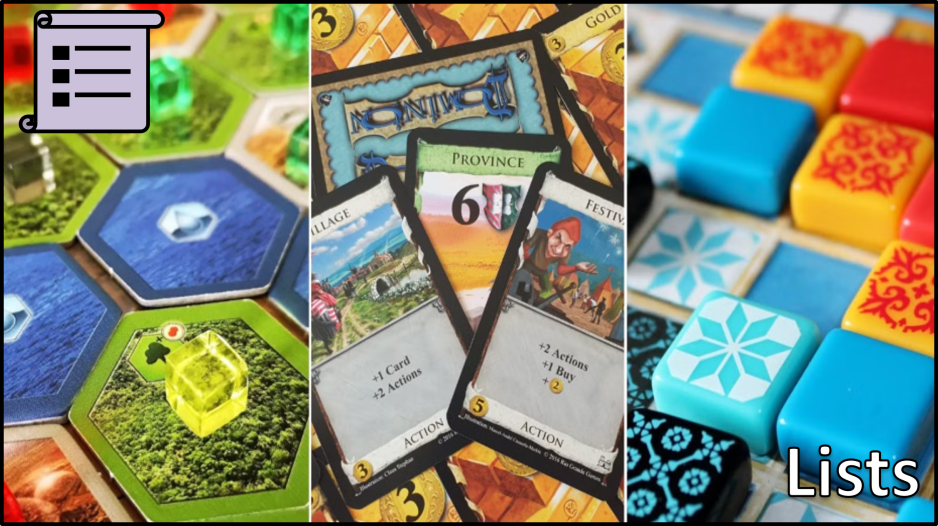
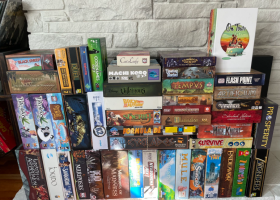
Board gamers tend to see the same game mechanisms from one game to another, so it made us wonder which board game mechanisms are the most common. Knowing this will allow new players (and older players) the kinds of game mechanisms they can expect to find in board games. Fortunately, the data required for this list is a lot easier to obtain and compile than our most common fantasy creatures post last year. Thank you, Board Game Geek.

Hey, hey! Kyra Kyle here. I checked the hundreds—and I mean hundreds—of game mechanisms listed on Board Game Geek and ran quick searches to see how many games are listed on the site with each mechanism. At the time of this post (early 2025), Board Game Geek caps its search results to the top 5,000 games that fit a search’s criteria. Almost thirty of the hundreds of game mechanisms searched yielded 5,000 results, which means each of these mechanisms could be in hundreds, if not thousands, of more games. Yikes!

Some mechanisms found in at least 5,000 games are movement-based or mundane, like “it uses paper and pencil” or “dice rolling,” which means that the game includes dice. We won’t bother covering those game mechanisms. But that still leaves dozens of interesting game mechanisms for multiple posts like this. We’ll cap this first post to ten of the most used game mechanisms. This doesn’t include mechanisms with over 3500 games like worker placement. I think this means that we need more worker placement games. I like worker placement games, so it’ll probably make the next list. But which board game mechanisms made this list? Let’s find out.
Action Points

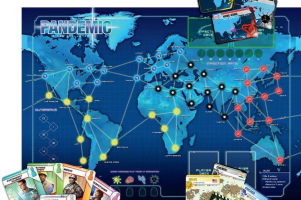
Board games that use action points grant players a supply of action points each turn. Players may choose to use these action points in a variety of ways, typically there’s a list of options. Usually, players can spend their points any way they please. You could take the same action multiple times (or even take the same action for their entire turn) or mix and match actions from the player’s options. The options may cost the same number of action points, or their point value can differ.

Thoughts

Action points give players agency. Your turn can look completely different than your opponent/teammate. I mention “teammate” here because I’ve seen several cooperative board games use action points. The agency (giving players a meaningful choice, which affords those players power) granted by the action points game mechanism is why this game mechanism is so popular in board games. Everyone likes to feel as if they have some control.

Games that use this mechanism

Pandemic, Takenoko, Horrified, Dinosaur Island, and Sleeping Gods

Deck, Bag, and Pool Building

Usually, games that include deck/bag/pool building begin with each player owning a similar deck of cards (if the game uses cards) or a similar number and type of chits or dice (if the game uses a bag or pool). Over time, players will acquire new cards (or the like) and add them to their deck, bag, or pool. Eventually, each player will own a deck or bag unique to them. Each player will use their deck to pursue their path toward victory.

Deck building differs from deck construction (another popular game mechanism) because players build their deck during the game, while decks within a deck construction game have players build their decks before playing.

Thoughts

When done well, deck, bag, and pool building games offer endless replays, due to the countless ways players can build their decks. The best players are the ones who can adapt. They’re the ones who can see patterns form with the cards and what may counter an opponent’s deck. Because of this, veteran players of specific deck building games can exploit their knowledge to gain an edge, but there is a hint of randomness. You must draw into what you need. This randomness evens the playing field a touch.

Games that use this mechanism

Dominion, Orleans, Challengers!, Thunderstone, and Aeon’s End
Hand Management

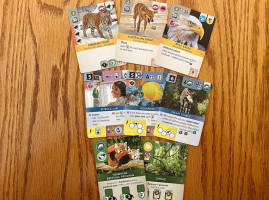
Games that use hand management reward players for playing their cards in certain sequences or groups. The optimal sequence may vary depending on board position, cards held, and cards played by opponents. Managing your hand means that you gain the most value out of available cards given your current circumstance. Often, these cards have multiple purposes, so this further complicates an “optimal” sequence.

Thoughts

Hand management could’ve been dismissed as a mundane game mechanism. Any game that includes a hand of cards will innately have hand management. But hand management is unique from this subset of board game mechanisms. Other mechanisms like dice rolling and paper and pencil mean that these physical elements exist within a game. Hand management suggests that players must take an active role in this game mechanism. And as the description says, this game mechanism is rewarding when players find the perfect sequence for their circumstances. Hand management also happens to show up the most on Board Game Geek’s Top 10-ranked games.

Games that use this mechanism

Brass: Birmingham, Ark Nova, Gloomhaven, Terraforming Mars, and Twilight Struggle
Open Drafting

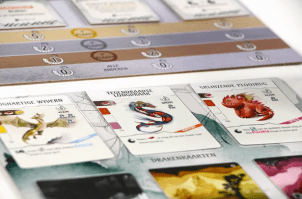
Board games using open drafting have players pick (or purchase) cards (or tiles, dice, etc.) from a common pool to gain an advantage or assemble collections that meet objectives. Since the drafting occurs in the open, the identity of these cards (or other similar item) is known to other players. Drafting gives players a choice and the ability to gain a card another player may want, denying them something they wanted.

Open drafting differs from closed drafting, which is also known as “select and pass.” Everyone can see the item you gain as you obtain it.

Thoughts

Open drafting provides an immediate back-and-forth between players. Since you know what your opponents select each turn, and your opponents know what you select, a meta-game (or game within the game) takes shape. Like the two previous game mechanisms, players must adapt to what options are available during their turns and what they believe their opponents are planning to do. This back-and-forth can lead to table talk (talking between players at the table about the game they’re playing) and builds tension.

Games that use this mechanism

The Castle of Burgundy, Everdell, Wingspan, Blood Rage, and Splendor
Pattern Building

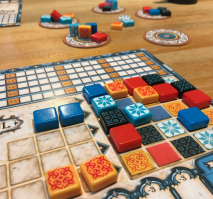
Games that use pattern building task players with configuring game components to achieve sophisticated patterns. These patterns can score points or trigger actions. Unlike most other game mechanisms on this list, pattern building is synonymous with another game mechanism on this list (tile placement), which we’ll cover later. Often, players want to link similar component types together or as mentioned above, create elaborate patterns.

Thoughts

Pattern building is the most puzzle-based mechanism on this list. The shifting tiles (and sometimes cards) lead to tasty combinations. So many games that fall into this category can be visually stunning. If you must build a pattern, the pattern should be easy on the eyes. This leads to why a lot of modern games use pattern building. Puzzle + Beautiful Patterns = Popular Game.

Games that use this mechanism

Azul, Cascadia, The Isle of Cats, Harmonies, and Welcome To…

Push Your Luck

With push your luck games, players decide between settling for existing gains or risking them all for further rewards. Games of this type feature an amount of output randomness or luck. We mention the two types of luck in a previous post (link to the two types of luck, input and output luck here). Players focus on progressing and maximizing their results. But typically, the stakes rise. If things go wrong, you lose it all.

Thoughts

Push your luck can add spice to an otherwise dull series of mechanisms. Double or quit, keep going or stop, cash your gains or bet them. This isn’t a new idea. Plenty of gambling games, like Blackjack, make use of the push your luck mechanism. Heck. Many of you may have read the description and immediately thought of Blackjack. Gambling games aren’t the only games that use the push your luck mechanisms. In fact, board games that use the push your luck mechanism can be good for gamers who want the feeling of gambling without involving any real-world money. These games can create a similar rush.

Games that use this mechanism

Heat: Pedal to the Metal, King of Tokyo, The Quacks of Quedlinburg, Lost Cities, and Return to Dark Tower
Roll/Spin and Move

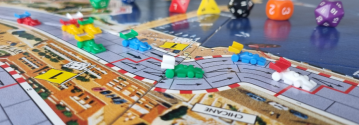
Roll/spin and move games deploy the use of dice (rolling) or spinners (spin) and then move in some capacity. Historically, players roll or spin and move their playing pieces per the number (or other result) rolled (or spun). Countless classic board games have used the roll/spin and move mechanism as a key ingredient. Most people outside the board game community may expect roll/spin and move within all board games. A roll/spin and move game is what most people outside the board game community think of when they think of board games. Board games like Monopoly and The Game of Life popularized roll/spin and move.

Thoughts

People within the board game community often use “roll/spin and move” as a derogatory term. People who do this imply that there is no thought involved with this mechanism. While this is the case for a lot of older games (there are some exceptions like Backgammon), modern board games have taken the roll/spin and move mechanism into new territory. I agree that players lose their agency (power and ability to make meaningful choices) if they must roll or spin and move the spaces indicated on a die (or spinner) with no additional input. But some newer games add other forms of movement to this formula. Other newer games allow players to manipulate the results. Even more modern board games have players roll dice ahead of a turn and then assign the dice results to an array of actions.

Roll/spin and move isn’t an inherently poor mechanism. How a designer uses roll/spin and move makes all the difference. The key to making roll/spin and move work is maintaining a player’s agency.

Games that use this mechanism (well)

Jamaica, Camel Up, Formula D, Stuffed Fables, and Colosseum

Set Collection

Board games that use the set collection mechanism often make the set worth points. The value of the items is dependent on being part of a set. These sets can either be the quantity of a specific item type or a type’s variety. In some cases, board games can use contracts that urge players to pick up certain items to fulfill the contract.

Thoughts

The set collection mechanism breeds external tension between players. One may pick up a resource or item to prevent an opponent from fulfilling a contract or gaining more points by having more of a resource (or item) than anyone else. Or two players may fight each other for the ability to pick up these items because they both want to accomplish the same goal.

The set collection mechanism by itself may fall flat, but set collection seldom shows up on its own. Set collection complements a host of other board game mechanisms. It can give a built-in reason for players to choose a course of action or a sudden gain of a lot of one item or an array (variety) of items can tempt players to change their strategy or tactics. Board gamers often overlook the value of the set collection mechanism, but several popular games use set collection.

Games that use this mechanism

Great Western Trail, Ticket to Ride, 7 Wonders, Lords of Waterdeep, and Tokaido
Tile Placement

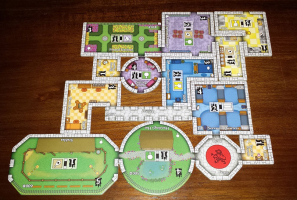
Tile placement games feature placing a piece (or tile) to score victory points or trigger actions. Usually, adjacent pieces or pieces in the same group/cluster or keying off non-spatial properties like color, a feature’s completion, and cluster size trigger the action or scoring. Pattern building often accompanies tile placement, but there are some notable exceptions, specifically, games that use modular boards and exploration.

Thoughts

While some tile placement games (like 1986’s Labyrinth and Dominos) existed before the modern board game boom (the mid-1990s and beyond), tile placement (and a few other mechanisms like worker placement and deck building) have taken the place of the roll/spin and move mechanism as modern board games’ dominant game mechanism. Just because the tile placement mechanism can be found in countless modern board games doesn’t mean that each game uses the mechanism the same way. Some games have a shared space for players to place tiles. Other games give each player a private building space. And several games do a little bit of both. Despite tile placement’s explosion after Carcassonne popularized it as a central game mechanism in 2000, tile placement remains a vibrant board game mechanism.

Games that use this mechanism

Carcassonne, A Feast for Odin, Galaxy Trucker, Betrayal on House on the Hill, and Castles of Mad King Ludwig

Variable Player Powers

The variable player powers game mechanism grants different abilities or paths to victory to each player. Each player has a unique power. Games that use variable player powers reward players who exploit their unique abilities while compensating for their abilities’ shortcomings.

Thoughts

The variable player powers game mechanism is perfect for any player who wants to stand out from their opponents. Because each character (or faction) within the game plays differently from each other, games that use variable player powers have a lot of replay opportunities. On a similar note, players may gel with a specific power over another one so playing a second game and trying a different player power could lead to better results.

Unlike other game mechanisms on this list (except for deck building and Dominion), variable player powers haven’t been around as long. Games that use the variable player powers mechanism also dominate Board Game Geek’s Top 10 ranked board games.

Games that use this mechanism

Gloomhaven, Twilight Imperium: Fourth Edition, Dune: Imperium, Pandemic Legacy: Season 1, and Cosmic Encounter
Closing Thoughts

This was a longer list than I expected. It would be even longer if I didn’t cut the list of common board game mechanisms in half or into thirds. Let me know if you’d like to see more lists like this in the future.

Looking at the board game mechanisms listed on Board Game Geek allows for a macro view of the board game hobby. We can see trends. We can examine what makes a board game mechanism popular. A lot of these board game mechanisms grant some form of player choice or player empowerment. But that’s what I think. What do you think? Let us know in the comments.

Geekly may have another series in the offing. We’ll craft another set of surveys and reach out to board game designers to discover their thoughts about each of these game mechanisms (and game mechanisms that may find themselves on a future list like this one). I hope you found something useful in the post. And wherever you are, I hope you’re having a great day.

Top 5 Flash Villains

I can’t believe Geekly has been doing Top 5 Villains lists for superheroes and we haven’t covered Flash’s rogues gallery. Flash has one of the most extensive rogues galleries in comic book history. He may not have villains with the same name recognition as Spider-Man or Batman, but his rogues gallery is one of the best.

Hey, hey! Kyra Kyle here. We’re back with another Top 5 Villains list. Many of the Flash’s most iconic villains have superspeed, so we’ll be limiting this list to the top speedster. Let us know if you’d like a Top 5 List of Villainous Speedsters. In the meantime, here’s our list of the Top 5 Flash Villains.

Top 5 Ice Powered Comic Book Characters Killer Frost

5: Killer Frost

Flash’s top 4 villains were a breeze to compile. I knew who they were the instant I sat down. His fifth villain could go in several directions. I may have said that about more than one superhero, but that’s the truth. Killer Frost beats out the rest of the would-be Top 5 Flash villains if for no other reason than she used to be a Flash ally. She spends part of her time as an anti-hero, having spent stints with the Suicide Squad and Justice League. But whenever Caitlin Snow decides to turn evil, it spells doom for the Flash. Her connections with Flash and Firestorm add to her lethality. Cold powers prove effective against the Flash; cold can slow the speedster. Killer Frost’s freezing ability, as we’ll see with another Flash villain on this list, makes her dangerous.

4: Mirror Master

Mirror Master fills a similar role in Flash’s Rogues that Mysterio does in Spider-Man’s Rogues, and Mysterio ended up as Spider-Man’s fourth-placed villain. Hmm. Looks like the fourth spot is the perfect place for a villain designed to confuse their nemesis. Unlike Mysterio, Mirror Master possesses powers. His mirrors can hypnotize, turn him invisible, generate holograms, change his physical form, and travel into other dimensions. That final ability separates Mirror Master from Mysterio. One of my favorite recent stories Mirror Master showed him trap Flash within a parallel dimension of his creation.

Don’t let the high-speed fool you. Flash is one of DC Comics’ most powerful heroes. He can turn back time and alter the past. Brute strength doesn’t often work against the Flash. Mirror Master takes a different route. And I’m a sucker for a villain with a mischievous streak.

3: Gorilla Grodd

Gorilla Grodd is one of my favorite Flash villains. I wanted to place him at the one or the two spot, but two other villains narrowly beat him. Gorilla Grodd has superhuman strength, telekinesis, telepathy, a super genius-level intellect, and has a connection to the Speed Force. As his name suggests, he’s a gorilla. He hails from Gorilla City and is the sometimes leader of the metropolis led by super-intelligent gorillas. Gorilla Grodd not only has a laundry list of abilities, he has an army at his disposal.

Marry all of this up with Grodd’s connections with most of DC Comics’ supervillain organizations like the Legion of Doom, the Secret Society of Super Villains, and the Injustice League, and Gorilla Grodd has a plethora of allies he can summon. Grodd is one of Flash’s most formidable enemies.

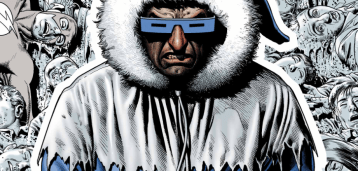
2: Captain Cold

You can take everything I said about Killer Frost and her freezing powers and apply it to Captain Cold. But instead of Captain Cold being a personal friend of the Flash’s, he’s the man he instituted the Flash’s Rogues, Flash’s version of the Sinister Six, and serves as their leader. I had to put Captain Cold above Grodd because Grodd can get distracted by other heroes, and Captain Cold keeps his animosity toward the Flash. He knows which buttons to press and isn’t afraid to press them. His freezing abilities are only matched by his intellect. In short, Captain Cold knows how to use the Flash’s strength against him and that makes him deadly.

1: Reverse-Flash

Eobard Thawne (also known as Reverse-Flash and Professor Zoom) takes the top spot. He’s another speedster, so if we were to create a list of Top 5 Villainous Flash Speedsters, he’d be the top spot there as well. Thawne is one of the few characters in the DC Comics Universe who can travel back in time with little to no ill effects, and he uses this to his advantage. He’s erased characters to torment and destroy the Flash’s life. He even went back in time to kill Barry Allen’s mother. Reverse-Flash is plain evil.

He too has connections with the Legion of Doom, the Injustice League, and the Rogues. He had to take the top spot. Despite others’ attempts, no one has tortured the Flash more than Reverse-Flash. He does what his name says, he is the Flash’s antithesis.

Did we get the list right? Let us know who you would add or remove in the comments. And wherever you are, I hope you’re having a great day.

Top 5 Daredevil Villains

While Daredevil: Born Again is ongoing, let’s discuss the best villains the Man Without Fear has ever had. Hey, hey! Kyra Kyle here. We’re back with the first Top 5 Villains List. Daredevil doesn’t have the most robust rogues gallery, but he does have a handful of standout villains. Here’s our list of the Top 5 Daredevil Villains.

5: Mr. Fear

Frankly, the top four Daredevil villains are set in stone—for the most part. The only variable I could find was at the fifth spot. I’ve said it a lot in previous Top 5s, but I could’ve gone in several directions. I almost feel like the bottom villain in a hero’s Top 5 villains must bring something a little different. Mr. Fear does that. You’d think that a villain whose gimmick involves fear would be no issue for Daredevil: The Man Without Fear, but Mr. Fear has posed a threat on more than one occasion. My favorite version of the Mr. Fear must be Matt Murdock’s old classmate, Larry Cranston. Cranston once gave Matt’s ex-wife Mia Donovan an overdose of a fear-inhibiting drug that led her to take an innocent’s life. Mr. Fear does more than hold his own with Daredevil’s typical martial arts-savvy characters.

4: Typhoid Mary

Ann Nocenti created Typhoid Mary. She’s a deadly and intriguing villain. Mary’s a mutant with telekinetic abilities and suffers from dissociative identity disorder, which gives her three different identities, a soft-spirited one (Mary), a violent one (Typhoid), and a sadistic one (Bloody Mary). Mary was once a soap opera actress and briefly in a relationship with Matt Murdock. One doesn’t know which one of Typhoid Mary’s personas is in control. Mary’s condition makes her unpredictable. Her mutant powers coupled with her innate mutant abilities make her a force. Season three of the Netflix Daredevil series included a version of Typhoid Mary. Typhoid Mary could make for an interesting foil with the MCU heading toward a Mutant Saga.

3: Elektra

Elektra Natchios is arguably the love of Matt Murdock’s life. Daredevil may have had a lot of girlfriends throughout the years—including the previous entry Typhoid Mary—but Elektra stands alone as Matt Murdock’s most iconic lover. Elektra’s the Catwoman to Matt’s Batman. As the daughter of a Greek ambassador to the United States, Elektra could’ve been anything. She chooses to be a villain for hire. Like Catwoman, Elektra always seems on the cusp of redemption, before showing Daredevil her ruthless nature. Elektra constantly switches sides. And her death at the hands of Bullseye remains one of the most iconic moments in Daredevil comics history.

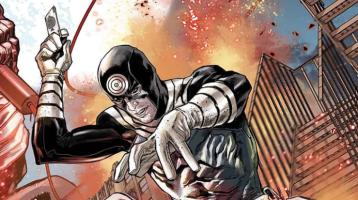
2: Bullseye

No villain may have caused more pain and suffering for Matt Murdock than the contract killer Bullseye. This is the man that Daredevil tortured by playing Russian Roulette with an empty gun. Bullseye’s hands make anything a lethal weapon. He’s built his reputation on his perfect aim, throwing knives and other sharp objects with insane accuracy. He also helps that Bullseye’s skeleton is coated in adamantium, like Wolverine’s. Despite his physical prowess, Bullseye strives to inflict emotional pain. He’s taken away two of the loves of Matt Murdock’s life, Elektra and Karen Page, and joked about it afterward. Bullseye is the worst kind of villain. He takes pleasure in what he does, and what he does can be sickening.

1: Kingpin

Kingpin started as a Spider-Man villain, but Frank Miller’s run on Daredevil changed the course of the villain’s life. Since Miller’s run on Daredevil, the pair love to hate each other. In the “Born Again” comic book series, Fisk learns Daredevil’s identity and dismantles every aspect of his life, stripping Matt of his law license and even blowing up his apartment. Kingpin’s actions drove Matt Murdock to the brink of insanity. But Fisk has always managed to outsmart and maneuver his way around Daredevil. During the “Return of the King” storyline, he weasels his way into an alliance with Daredevil. He does so intending to betray the Man Without Fear at the most opportune moment. Kingpin may be one of Marvel’s greatest villains, but over the past several decades, he’s been a thorn in Daredevil’s side and worthy of the top spot.

Did we get the list right? Let us know who you would add or remove in the comments. And wherever you are, I hope you’re having a great day.

Top 5 Tabletop Games from 1990-1991

Plenty of top-notch board games were released in the nineties. This decade is the first where I could list a Top 5 Board Games for each year, and that will happen—closer to 1992 or 1994. But we will keep to 1990 and 1991 for this list of Top Tabletop Games.

Hey, hey! Kyra Kyle here. Back with another Top 5 Tabletop Games. Board games begin heating up in 1990 and 1991. We’ll talk about board games soon, but first, if you’ve forgotten our criteria for the Top 5 Tabletop Games, let’s reiterate the ground rules before we start.

1: Cultural relevance plays as much of a factor as overall quality. A game might make a list that doesn’t hold up to others of its type, but you must admit the game is everywhere.

2: Only one game from a franchise makes the list. This will become more of an issue the closer we get to games with expansions.

3: Longevity plays a role, too. A game doesn’t have to fly off the shelves today, but it had to have some widespread appeal for a decent time.

5: Crocodile Dentist (1990)

Crocodile Dentist was on and off this list. Ultimately, it makes this list of top board games of 1990 and 1991 because it was the best-selling toy of the 1991 Christmas season. Not just a bestselling game, but a bestselling toy. The toy factor for Crocodile Dentist is overwhelming.

The toy factor makes sense. Crocodile Dentist is a children’s game. In early versions of Crocodile Dentist, players take turns removing a crocodile’s teeth and eventually, the crocodile would snap its jaw shut. Whoever made the titular crocodile shut its jaw was the loser. Crocodile Dentist has a simple premise that makes serious adults groan or guffaw. The York Daily Record’s Mike Argento included Crocodile Dentist in his 1992 Bizarre Toy Awards. However, twelve years later, Argento admitted that the game had “passed into classic status.” And that’s what Crocodile Dentist is, a classic.

4: Tichu (1991)

Real talk. I’ve never played Tichu. It’s the one game on this last that I’ve never played. I would like to; Tichu makes this list because so many board gamers swear by this game. Tichu has a cult following if you will. What I know of Tichu is that it’s a shedding game, meaning that you’re trying to rid your hand of its cards. But Tichu is also a team-based game, so you and your partner are trying to shed your hands before your opponents.

I’ve never had the chance to play Tichu. Tichu is a four-player-only game. If you don’t have four players, you can’t play. And from what I’ve heard, a veteran Tichu player will destroy a noob, and since Tichu is a cult card game, it becomes one of those games where people either don’t play or they’ll only find enjoyment with other accomplished Tichu players. Still, Tichu remains one of the most endearing games on this list, and this list has nothing but endearing games. I’d like to play at least one game of Tichu before long. If anyone plays and you’re going to a board game convention that I’m going to, I’d be happy to learn Tichu.

3: Vampire: The Masquerade (1991)

I can’t remember if I included Dungeons & Dragons in an earlier list. If I didn’t, that was an oversight. But while D&D dominated early tabletop roleplaying games (and still does), the Nineties saw a ton of worthy competitors. Tabletop Roleplaying games saw a boom in the Nineties. The early Nineties only had ten major TTRPG releases. Vampire: The Masquerade is the most famed of these Dungeons & Dragons competitors. In short, Vampire: The Masquerade simulates the afterlife of a vampire.

The developers deliberately didn’t read Anne Rice’s Vampire Chronicles until late in their development process but admit that Rice most likely influenced the vampire films that inspire the game. Rice’s Vampire Chronicles and Vampire: The Masquerade ushered in a new era for vampire fiction and the vampire mythos. The Underworld film series borrows a lot from Vampire: The Masquerade. And the game’s influence was felt in the Nineties. The Goth underground scene flourished with the help of Vampire: The Masquerade and Rice’s Vampire Chronicles.

I still have my original copy and will often pour over the full-page artwork. Artist Tim Bradstreet’s artwork from Vampire: The Masquerade was the concept art for the Blade film series. Vampire: The Masquerade was the height of cool in the early Nineties.

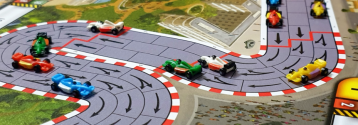
2: Formula D (1991)

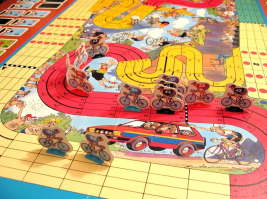
Formula D is a strong second on this list. Until some recent games (games from the 2010s and 2020), Formula D does the best job of simulating a race. Heck, Formula D measures up well against newer racing games. It uses specialized dice (d4, d6, d8, d12, d20, and d30) that represent different gears of a vehicle. Formula D uses an additional d20 for collisions and other course events (like weather). With each turn, players must roll a die that simulates which gear their car is in and must move the number of spaces they roll on that die. The core concept is simple. You’re trying to reach the finish line before anyone else. It would make sense to stay in the highest gear you can. The problem comes when calculating car damage.

Each player takes a “dashboard” for their car. This dashboard will track damage to the various parts of their car. Each track—and there are plenty of bonus tracks you can use for Formula D—will have twists and turns that you must navigate. Taking a turn at a higher speed will most likely cause players to accept damage. A little damage is no big deal. But you could take so much damage that your vehicle crashes.

I like Formula D’s addition of “Rules for Beginners.” It allows players to learn the basics of the game and only when they get accustomed to the base rules, can they then take on more complex rules. Formula D—like the game that claims our top spot—continues to see play, even though it’s over thirty years old.

1: Hoity Toity (1990)

Hoity Toity has gone by several names. Originally, it was released in Germany by the name Adel Verpflichtet or Noblesse Oblige. It was distributed in the United Kingdom under the name Fair Means or Foul and in the United States as By Hook or Crook. It wasn’t until its 2008 reprint that it became Hoity Toity. I’ll refer to it as Hoity Toity from this point forward. Hoity Toity tasks players as members of a pretentious Antique Club who wager which one of them can acquire—by purchase or theft—the most expensive collection of objets d’art in one day.

Hoity Toity deploys a nice combination of bluffing and silent auction. The game’s movement (there is a track players must navigate) feels unique, especially for the time it was released. There shouldn’t be any wonder that Hoity Toity won the 1990 Spiel des Jahres. Klaus Teuber had a dominant early Nineties. I earned another Spiel des Jahres in 1991—back-to-back awards—for Drunter und Drüber, which just missed this list and another Spiel des Jahres in 1995 for Catan. We haven’t gotten to 1995’s list yet, but Catan will make that list. Hoity Toity gets the nod over Drunter und Drüber because it stands the test of time. Most gamers would place Hoity Toity as the second-best board game of Teuber’s career. Hoity Toity earns that distinction.

Did we get the list right, for the most part? Let us know which games you’d add in the comments. And wherever you are, I hope you’re having a great day.

Check out the other lists in this series:
Top 5 Tabletop Games Prior to the 1930s
Top 5 Tabletop Games of the 1930s
Top 5 Tabletop Games of the 1940s-50s
Top 5 Tabletop Games from the Early 1960s
Top 5 Tabletop Games from the Late 1960s
Top 5 Tabletop Games from the Early 1970s
Top 5 Tabletop Games from 1980-1981
Top 5 Tabletop Games from 1982-1983
Top 5 Tabletop Games from 1984-1985
Top 5 Tabletop Games from 1986-1987
Top 5 Tabletop Games from 1988-1989

Top 5 Captain America Villains

Hey, hey! Kyra Kyle here. We’re preparing for the upcoming Captain America: Brave New World with another Top 5 Villains List. Captain America has an interesting group of villains, to say the least.

We’ll have two official honorable mentions, but I’m going to cheat a bit and add a few in this introduction: MODOK, Batroc, and Adolph Hitler. MODOK stands for Mental Organism Designed Only for Killing. I’d shorten it to MODOK, too. MODOK is a floating head. Batroc’s full name is Batroc the Leaper. He leaps. And Adolph Hitler needs no introduction. Cap spent most of his early days punching Adolph Hitler in the face. With those villains out of the way, let’s get to our official honorable mentions.

Honorable Mention 2: Winter Soldier

Spoiler Alert for one of the MCU’s best films Captain America: The Winter Soldier. Steve Rodgers’ old friend Bucky Barnes is the Winter Soldier. He didn’t make the top villains list properly because even though he was the title villain in one of the greatest Captain America stories and recontextualized Captain America’s past, he became a hero. And he’s stayed a hero for the most part. The Winter Soldier even became Captain America in the comics for a time.

Honorable Mention 1: Serpent Society

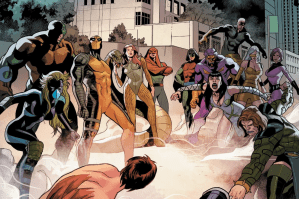
The Serpent Society is a supervillain group rather than one villain, but they deserve a mention, especially since they’ll receive their MCU introduction in Captain America: Brave New World. Several factions exist within the Serpent Society. That’s to be expected since the group consists of dozens of snake-themed villains. Sidewinder, Princess Python, Anaconda, Constrictor, Fer de Lance, Puff Adder, Death Adder, Bushmaster, Asp, Cottonmouth, Rattler, and many, many more are part of the Serpent Society. We’ll have to see what the Serpent Society’s plot will be in the upcoming movie, but I wager it won’t be poisoning Washington DC’s water supply to turn everyone into Snake-People. That happened in the comics once. It took Diamondback rebelling against Madame Hydra’s rule to put an end to the plot.

5: Crossbones

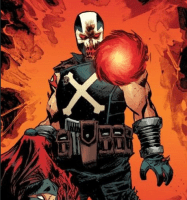
Crossbones is often viewed as a Red Skull henchman—another spoiler, Red Skull will make the list—and he often gets attributed as a Sharon Carter villain. But Crossbones instigated Captain America’s assassination in the comics. Crossbones takes pleasure in murder. He even laughs when the Winter Soldier and Falcon take him down following Cap’s death. In the MCU, Crossbones (Brock Rumlow) was the one who hinted that HYDRA may have infiltrated S.H.I.E.L.D. Near the beginning of Captain America: Civil War, he laughs about the torture he put Bucky through when Captain America apprehends him. Crossbones wears a suicide vest, and Scarlet Witch hurls him toward a building filled with Wakandan relief workers, which causes a rift within the Avengers. Crossbones is more than your average henchman.

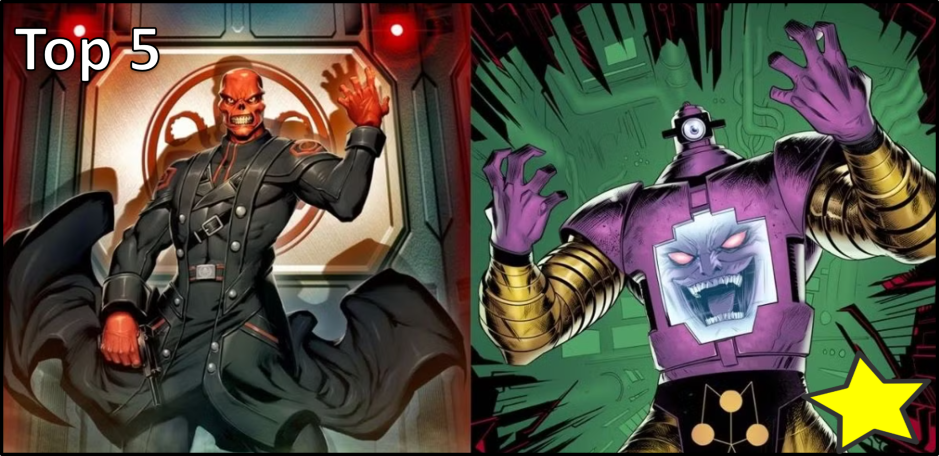
4: Arnim Zola

Originally a HYDRA scientist, Arnim Zola conducted numerous biochemical experiments. He messed around with the genes of human subjects and even brought back Adolph Hitler. Zola has a mean streak. He doesn’t care who he teams up with so long as he can continue his experiments. Most of what Zola does is in service of these experiments. He even uploaded his mind into a robot body, granting himself a type of immortality. Don’t let Zola’s goofy appearance of a giant TV screen with arms and legs fool you. Zola is one the deadliest villains in comic book history.

3: Baron Strucker

It was Baron Strucker all along. Baron Wolfgang von Strucker founded Hydra in the 1800s. He fought for Germany during World War I and brought the Red Skull into the fold during World War II. It was Strucker who recruited Arnim Zola. Following the end of World War II, Strucker became near-immortal by obtaining the Satan Claw, a strength-enhancing gauntlet. Strucker infiltrated S.H.I.E.L.D. with HYDRA agents. For years S.H.I.E.L.D. fell under HYDRA’s corruption, feeding the villainous group all its information. Decade after decade, Baron von Strucker earned his place as one of the greatest criminal masterminds in comics.

2: Baron Zemo

Two characters have taken the name Baron Zemo, a father-son tandem of Heinrich (father) and Helmut (son). I’m cheating—a little—by combining the two characters for this entry. Father Heinrich Zemo was one of the most despicable figures of the Third Reich. He, like Zola earlier on this list, loved testing inventions like ray cannons and disintegration guns on innocent people. He founded the Master of Evil, a thorn in the side of the early Avengers, and eventually killed—or at least we believed he killed—Steve Rodgers’ best friend Bucky Barnes. Following Bucky’s “death,” Captain America kills Heinrich Zemo. Heinrich’s son Helmut Zemo swears vengeance on Captain America. Where Captain America wants to make the world better for everyone, Zemo strives to ruin it because of his vendetta against one man. Helmut Zemo formed the original Thunderbolts, which were villains masquerading as heroes.

1: Red Skull

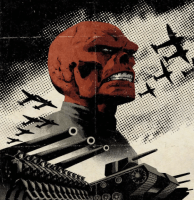
Red Skull appeared in the first-ever Captain America comic book. No other villain has come close to capturing the menace and imagination as Johann Schmidt, the Red Skull. The Red Skull is the antithesis of Captain America. He’s the super soldier experiment gone wrong. His imagery of a bloody skull dressed in a black coat contrasts the symbology of Captain America’s outfit. While Captain America represents the American ideal, the Red Skull did the same for Nazi Germany. Post World War II, the Red Skull has joined forces with HYDRA, a Nazi stand-in, and he continues to clash with one of the oldest comic book characters. No Captain America villain has ever reached the Red Skull’s status and malice.

Who is your favorite Captain America villain? Let us know who you would add or remove in the comments. And wherever you are, I hope you’re having a great day.

Five Video Games for Couples

Hey, hey! Kyra Kyle here. Valentine’s Day is a couple of days away, so I figured we would talk about video games for couples. Technically, any multiplayer game could work as a video game for couples. Plenty of shooters would work here. I even thought about adding Mario Kart; it just missed my list. And it also seems odd to rank any of these games, so I decided not to number them this time.

Cat Quest 2 (iOS, PS4, Xbox One, Nintendo Switch)

I want to include a game that doesn’t get as much attention, so I added Cat Quest 2. I hear that Cat Quest 3 has been released; I’m sure it’s good too, but I haven’t had the chance to play it yet. Cat Quest 2 is an adorable open-world action RPG. Couples join forces as royalty of the cat and dog kingdoms to save Felingard from evil forces. The premise screams lots of heart-pounding action and high fantasy, but Cat Quest 2 has the feel of a cozy game.  Cat Quest 2 has plenty of battles and puzzles to appeal to several different players.

Snipperclips (Nintendo Switch)

We needed at least one straight-up puzzle game for this list, and Snipperclips is that selection. Snipperclips is a physics game. Players must work together in creative and unique ways. You play as paper characters Snip and Clip and cut each other up to solve wacky puzzles by forming shapes out of each other. Snipperclips has a short runtime, the shortest of this list at about 4 hours, but it’s a fun diversion and can build communication skills in a goofy way.

Animal Crossing: New Horizons (Nintendo Switch)

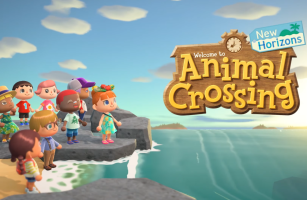
You’ll need two Switches to turn Animal Crossing: New Horizons into a multiplayer game but it’s ideal for long-distance couples. Heck. You don’t even need to be a couple. My family celebrated New Year’s Eve and other holidays on Animal Crossing: New Horizons while my oldest daughter was in Japan. I’ve even heard of some people getting married in the game during the pandemic. Animal Crossing: New Horizons has a relaxing pace, and its creative elements make it a great way to unwind and bond.

I could’ve added so many other cozy games like Animal Crossing: New Horizons. Stardew Valley just missed the list. If you want more romantic options, Sims 4 could work.

Overcooked 1 & 2 (PS4, PS5, Xbox One, Xbox Series X/S, Nintendo Switch)

Ah! Who doesn’t love a little cooking chaos? Overcooked will test every couple’s ability to handle stressful situations, while wrapping it in the goofiest virtual kitchen imaginable. Overcooked includes levels where players must hop between two food trucks on the move, bake pizzas in a haunted house, and grill burgers in a fast-food joint ripped apart by an earthquake. Overcooked’s scenarios can become stressful but the over-the-top nature prevents anyone from taking it too seriously.

This is another game type where I struggled to keep the number of games to just one. I’ll mention the Moving Out series here; it’s filled with similar cheeky humor and puns and challenges players to help a family move out of a home.

It Takes Two (PS4, PS5, Xbox One, Xbox Series X/S, Nintendo Switch)

I couldn’t omit the only game that tends to make its way to the top of every list of this type: It Takes Two. There’s a good reason for It Takes Two taking most lists like this top spot. The game’s central conflict is with a couple whose relationship is on the rocks and they need to communicate better.

Players take on the roles of wife May and husband Cody. The pair are on the verge of divorce and a little bit of magic (that I won’t spoil here) turns the family upside down at the beginning of It Takes Two. May and Cody shrink to a few inches tall. They’re made of clay, yarn, and other crafting supplies. Both characters have differing abilities so even if you make it through the challenging obstacles once, there’s a reason to play It Takes Two twice. It Takes Two was specifically designed for two players and it shows.

Those are the five games we have for this list, but there are plenty more video games that can be great for couples. I almost added Lover in a Dangerous Spacetime to the list too. Which video games do you play with your significant other? Let us know who you would add or remove in the comments. And wherever you are, I hope you’re having a great day.
Top 5 Tabletop Games from 1988-1989

Hey, hey! Kyra Kyle here. Back with another Top 5 Tabletop Games. 1988 and 1989 may not have as many top-notch games as our previous list, but there are plenty of culturally relevant games from these two years. We’ll talk about board games soon, but first, if you’ve forgotten our criteria for the Top 5 Tabletop Games, let’s reiterate the ground rules before we start.

1: Cultural relevance plays as much of a factor as overall quality. A game might make a list that doesn’t hold up to others of its type, but you must admit the game is everywhere.

2: Only one game from a franchise makes the list. This will become more of an issue the closer we get to games with expansions.

3: Longevity plays a role, too. A game doesn’t have to fly off the shelves today, but it had to have some widespread appeal for a decent time.

5: Merchant of Venus (1988)

Merchant of Venus is a pun on the Shakespeare play Merchant of Venice. Despite the name, the planet Venus doesn’t appear in the game. Merchant of Venus is set in an unexplored part of the galaxy. Players take on the roles of galactic traders. They move around the board, buying and selling goods. The game begins with players discovering the identity of the cultures in fourteen solar systems available for trade. They often find valuable artifacts from an earlier period of civilization. Once the board has been revealed, the game focuses on moving goods from cultures that build to other races that demand goods.

Merchant of Venus’s turn from exploration to commerce can be a satisfying volta. It reminds me of other games like 2004’s Betrayal on House on the Hill and 2007’s Galaxy Trucker. Both games might also make their year’s respective lists. While it can run a little long (2 to 6 hours), Merchant of Venus can be a lot of fun.

4: Taboo (1989)

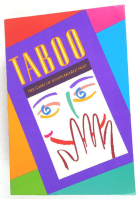
Taboo works a lot like a team-based version of the Ten Thousand Dollar Pyramid game show. It’s played by two even-numbered teams from four to ten. Players sit in alternating teams, forming a circle. One player takes the role of “giver,” who gives their teammates clue words. The “giver” attempts to get their teammates to guess the word printed on the card, but there are “taboo” words. These are words the “giver” can’t say.

While the “giver” can’t say those taboo words, their teammates can make as many guesses as they want with no penalties for wrong guesses. Once the team correctly guesses the word exactly as written on the card, the “giver” moves on to the next word. Teams try to get as many words on a card before time runs out. The playing team gets one point for each correct guess and loses a point each time the “giver” says a “taboo” word. I never liked the buzzer for Taboo. The other team hovers over the “giver” with the buzzer in hand and the obnoxious buzzer they wielded gives me nightmares. Nightmares!

3: Mall Madness (1988)

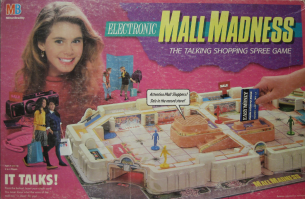
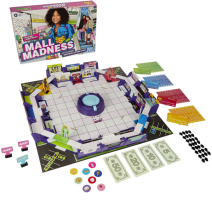
Mall Madness has a simple but fun concept: finish your shopping spree before anyone else. It doesn’t hurt that the game has a 3D board, and the original (back in 1988) had a computer that would dole out player movement and could even keep track of money. The 80s game even came with four different credit cards in addition to traditional paper money.

Players didn’t have to move by exact count to enter each shop, and once you bought something from a shop, you couldn’t reenter the same shop. Mark off the items on our list using plastic pegs in a punch board, and as soon as you’ve bought your six items, race to your parking space. I didn’t play too much of Mall Madness when it was first released. My parents didn’t care for the premise (they didn’t want us kids learning too soon about credit cards), but Mall Madness has left an indelible mark on the board game industry. It’s been in print steadily since its release and has had plenty of themed variants like Hannah Montana and Littlest Pet Shop.

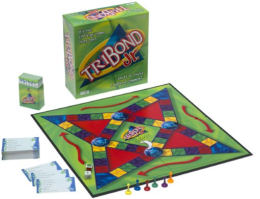
2: TriBond (1989)

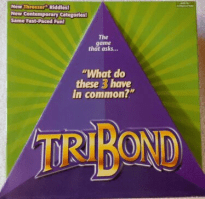
We have a second word game for this list, TriBond. But TriBond does something a little different. The game’s main feature is the TriBond “Threezer,” an invented word by the producer to describe the three-word clues players must analyze and determine what all three clues have in common. So, you may get a set of three clues like “Olive, Forest, and Kelly.” They’re all shades of green. Or you may get another set of clues like “Tootsie, Hook, and Rain Man.” All Dustin Hoffman movies.

TriBond adds a little bit of lateral thinking to the classic word game. While I think the word “Threezer” is a bit much, the concept is a great one. And I like the idea that a player can “challenge” another player ahead of them in one of the board’s three tracks. TriBond uses dice, one to determine how far you’ll move on one of three tracks and another to determine your questions category (Entertainment, Sports and Recreation, Academics, and Miscellaneous). The “challenge” allows players to take some of the random luck out of the classic rolls, spin, and move.

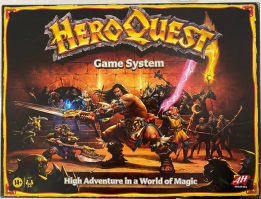
1: HeroQuest (1989)

I have so many fond memories of HeroQuest. HeroQuest plays like a stripped-down version of Dungeons & Dragons. One player assumes the role of the evil wizard Zargon/Morcar. They use the map taken from the game’s quest book to run the game. The remaining players select their character from the four available.

I was a tween when HeroQuest was first released, and since I read the rules, I ran the game as Zargon. That was my first taste of being a dungeon master and D&D. Even though I have great memories of HeroQuest, it is a game for newcomers. Its adventures are pre-programmed and lack the creative impulses of a D&D game, but HeroQuest has a massive toy factor and does an amazing job of distilling the essence of D&D into a digestible, approachable game for younger players. HeroQuest serves as a great gateway into tabletop role-playing games. Fortunately, it’s received a received a reprint.

Did we get the list right, for the most part? Let us know which games you’d add in the comments. And wherever you are, I hope you’re having a great day.

Check out the other lists in this series:
Top 5 Tabletop Games Prior to the 1930s
Top 5 Tabletop Games of the 1930s
Top 5 Tabletop Games of the 1940s-50s
Top 5 Tabletop Games from the Early 1960s
Top 5 Tabletop Games from the Late 1960s
Top 5 Tabletop Games from the Early 1970s
Top 5 Tabletop Games from 1980-1981
Top 5 Tabletop Games from 1982-1983
Top 5 Tabletop Games from 1984-1985
Top 5 Tabletop Games from 1986-1987
Top 5 Tabletop Games from 1990-1991

Top 5 Spider-Man Villains

Hey, hey! Kyra Kyle here. We’re back with the first Top 5 Villains List of the new year. I can’t believe we lasted this long before mentioning Spider-Man’s top villains. Let’s rectify that. Here’s our list of the Top 5 Spider-Man Villains.

5: Carnage

We could’ve gone several different directions here. I wanted to put a classic Spider-Man at the fifth spot, someone like Electro, Sandman, Kraven, or even Vulture, but Carnage trumps each of them. The alien symbiote that merged with Cletus Kasady Carnage may be the offspring of another character on this list (spoilers, I guess), but Carnage is a formidable Spider-Man villain and worthy of this list. If we were to discuss Spider-Man’s most violent villains, Carnage would be atop that list.

Carnage has had some stellar storylines, some of the best Spider-Man stories in the past three decades or so since his first appearance: Absolute Carnage, Maximum Carnage, and Carnage, U.S.A. to name a few. Carnage rampages his way near the top of Spider-Man’s rogues.

4: Mysterio

I always liked Mysterio as a villain. Quentin Beck’s penchant for the dramatic and choosing to manipulate and confuse Spider-Man instead of trying to out science or beat Spidey to a pulp made Mysterio unique. Beck spent years on Spidey’s back catalog of villains. Wearing a fishbowl as a helmet couldn’t help.

Even with a ridiculous outfit—or perhaps because of a ridiculous outfit—Mysterio has been in some great Spider-Man stories. The five-issue mini-series Symbiote Spider-Man rescued Mysterio from obscurity. He even returned from the dead in “Mysterioso” (Amazing Spider-Man #618). This story bridged the gap from the goofy Silver Age version of Mysterio to the more sinister character in “Guardian Devil.” And the 2019 MCU film Spider-Man: Far From Home did a lot to improve Mysterio’s image to non-diehard Spidey fans.

3: Doctor Octopus

There was a time when Doctor Octopus would’ve dominated this list, or he’d at least be second to another character we’ll see later, but Otto Octavius finds himself in the third spot. Many comic book characters have changed their looks and even their backstory, but Doctor Octopus may be the king of makeovers. He’s been an Atlantean, an octopus-like monster, and he’s even been Spider-Man before in the storyline Superior Spider-Man.

Many of Spider-Man’s villains may know his identity as Peter Parker, but Doctor Octopus was one of the first. And he used that knowledge to torture Peter. Add in the fact that Doc Ock assembled the original Sinister Six and that makes him a no-brainer for this list.

2: Venom

Venom got teased in the Carnage write-up. When an alien symbiote merged with Eddie Brock to form Venom, it shook up the Spider-Man mythos. Since Spidey has such a great rogues gallery, Venom is the only modern Spider-Man villain who can sneak into the top three. One could argue that Venom is equal parts hero and villain, and many of Venom’s best stories cast them as a hero. Venom Vs. Carnage and Maximum Carnage pit them against their offspring Carnage. I especially liked Venom’s turn as a hero in the latter story because it forced Venom to join forces with their hated enemy Spider-Man. But I always thought Venom worked best as a villain.

Since Venom is a symbiote, more than one character has formed an alliance with the alien. Famously, Peter Parker was Venom’s first host. Other hosts include Mac Gargan (Scorpion), Flash Thompson, and even Mysterio. And since the symbiote has merged with Peter Parker Spider-Man in the past, Venom typically knows Spider-Man’s identity, which makes them even deadlier. Throw in the fact that Spidey’s spider-sense can’t detect Venom, and they’re easily a top villain.

1: Green Goblin

Could it be anyone else? Green Goblin takes a lot of what makes the villains on this list formidable and combines them into one character. Norman Osborn knows Peter’s identity. He isn’t afraid to use his knowledge of Spider-Man’s identity to his advantage and has leveraged Spider-Man’s identity on multiple occasions. He has a personal connection with Spider-Man through his son Harry Osborn being one of Peter’s friends. He can manipulate, out-science, and even overpower Spider-Man physically. Green Goblin even killed Peter Parker’s first girlfriend Gwen Stacy.

I could go into numerous Green Goblin stories here, but that may need a future list. Simply put, Green Goblin was the obvious choice for the first Spider-Man big-screen adaptation.

Did we get the list right? Let us know who you would add or remove in the comments. And wherever you are, I hope you’re having a great day.
Top 5 Video Game Pets

8Hey, hey! Kyra Kyle here. We haven’t covered video games for some time, and I figured we would start with a top 5. This week’s top 5: video game pets. Cuteness overload is incoming. Limiting video game pets to just five is difficult, so we’ll have a couple of honorable mentions. I also didn’t want to include only dogs and horses; video game dogs and horses could fill an entire list each (future list idea). But we will see at least one (sort of) dog on this list.

Honorable Mention 1: Palicos (Monster Hunter Series)

I never know if palicos count as pets or not; I love them as characters, but they may be less pets and more of a species of humanoids. The Monster Hunter series muddies the waters with palicos. Some palicos are your faithful servants and present little more than their servitude to the player character. Other palicos have jobs (like the Meowscular Chef in Monster Hunter World, he must have a wife and kids at home to support) and the Monster Hunter Stories series shows palicos as having a culture separate from humans. Many people still classify palicos as pets, but their ambiguity makes them just miss this list.

Honorable Mention 2: Pokémon (Pokémon Series)

Pokémon, like horses and dogs, can fill a list by themselves. And which Pokémon should I pick? Pikachu is the obvious representative Pokémon. He has his own Macy’s Thanksgiving Day Parade balloon. But that’s reductive. I’ll include Pokémon as a video game pet type, but these critters deserve a list for themselves. Maybe even a Top 10 Iconic Pokémon list.

With Pokémon, horses, and palicos eliminated (and dogs for the most part excluded), how many video game pets are we left with? A lot. So many that I could make a Top 10 if I wanted, but these are the ones that made the Top 5.

5: Rammy (Castle Crashers)

Cheater! I can hear some of you Castle Crashers players now, you’re a cheater if you use Rammy. I say, you still have to unlock him after the bear boss. And he’s a cute orb-shaped ram. And who doesn’t like a ram charging through a side-scroller beat ‘em up game, knocking down every monster they meet? If Rammy is cheating, then I don’t want to play honorably. Charge away, Rammy. Charge away.

4: Munchie (Dragon Quest VIII)

This one is esoteric. It took me a while to think of Munchie from Dragon Quest VIII. I vaguely recalled a pet mouse who rode in the main character’s coat pocket, and the only thing I could remember was that Munchie had a mohawk and liked to eat cheese and certain cheeses gave him special abilities. All of that is true (to be precise, Munchie is a pig rat), but Munchie was central to advancing Dragon Quest VIII’s plot. The game has several moments where the player controls Munchie as he conducts reconnaissance.

Munchie often procured keys to enter or exit rooms, gathered intelligence to better interact with NPCs, and even scouted ahead before major battles. Munchie may also be a little of a cheat for this list. While he spends most of the game as your pig rat pet, he’s much more than that. I won’t spoil any of the story here—Dragon Quest VIII is well worth the play and it’s available on plenty of platforms—but there’s a lot more to Munchie.

3: Blob (A Boy and His Blob)

A Boy and His Blob uses a common 1980s movie trope of a boy befriending an alien (like E.T. the Extra-Terrestrial and The Last Starfighter), but that doesn’t discount the titular blob as a pet. And it’s one heck of a pet. I’m sensing a theme here with these video game pets: they’re useful. Rammy helps you cheat and Munchie progresses Dragon Quest VIII’s story. The Blob from A Boy and His Blob can transform into various objects (to help the player solve puzzles) by eating different flavored jellybeans.

The original A Boy and His Blob is at best unbalanced, but the concept is neat. I like the idea of a blob morphing into a ladder if fed a licorice jellybean or a parachute if it eats a pear jellybean. The other combinations are fun: tangerine (trampoline), berry (balloon), and punch (hole). But my favorite had to be apple and jack. I see what you did there, A Boy and His Blob. And of course, coconut transforms the blob into a coconut. Were you expecting anything else?

A Boy and His Blob got a sequel in 2009, but I wouldn’t mind some more time with this property. Not going to lie, I ate more jellybeans after playing this game. What would a Buttered Popcorn Jelly Belly turn me into?

2: Rush (Mega Man Series)

Rush from the Mega Man Series is our one dog-like pet on this list. I could’ve gone a different direction here, but I don’t think Rush gets enough love. So, what if Rush makes another list in the future? He’ll make a future Top 5 video game dogs list. He’s Mega Man’s best buddy.

Rush continues our trend of pets who have multiple uses. Throughout the Mega Man Series, Rush has been a coil (trampoline), a jet to cross long pits, a submarine, a spaceship, a flashlight of sorts (with its “Search” function in Mega Man 7), and a motorbike to name a few. Mega Man’s Rush bridges the gap between a pet that can help in a fight or solve a puzzle and one that aids with pushing the story further. The first two Mega Man games are two of my favorite games from that era of video games, but those two games have a lack of Rush.

1: Yoshi (Nintendo)

Could it be anyone else? Even if I included Pokémon, horses, and all video game dogs, Yoshi from the Super Mario Bros. series would still take the top spot. Heck, I named my dog after Yoshi the dinosaur. And who wouldn’t want a dinosaur as a pet?

Yoshi may be the one character on this list who doesn’t need an introduction. Most people know them and their abilities. Like Rush, Yoshi has done it all. They’re even one of the few characters on this list that have had their own video game series. They’ve had more than one.

You’re probably wondering why I keep referring to Yoshi as they; Yoshi is a sapient species of dinosaur-like creatures. They can lay eggs, which suggests that they’re female, but most people refer to the Yoshi one finds in Super Mario World as he. Yoshis (or Yoshisaurs) blur the line between male and female. They can be both or neither.

I also loved playing as Yoshi in the original Super Mario Kart. I got pretty good at managing their fast acceleration and the fact that they couldn’t take too much damage without getting knocked off course. Yoshis come in different colors. Some of these colors depict different abilities, but usually, these colors are cosmetic. Whatever their color, Yoshi rules.

Which Yoshi is your favorite? Did we miss any video game pets that aren’t dogs, horses, or Pokémon? Let us know in the comments. And wherever you are, I hope you’re having a great day.
Top 5 Tabletop Games from 1986-1987

Hey, hey! Kyra Kyle here. Back with another Top 5 Tabletop Games. 1986 and 1987 have a lot more games for us to choose from. These two years may have too many games to talk about. Why couldn’t some of these games be released over the previous two years? Ugh! This is a good problem to have. I may have at least one honorable mention this year. Let’s talk board games.

But first, in case you’ve forgotten our criteria for the Top 5 Tabletop Games, let’s reiterate the ground rules again before we get started.

1: Cultural relevance plays as much of a factor as overall quality. A game might make a list that doesn’t hold up to others of its type, but you must admit the game is everywhere.

2: Only one game from a franchise makes the list. This will become more of an issue the closer we get to games with expansions.

3: Longevity plays a role, too. A game doesn’t have to fly off the shelves today, but it had to have some widespread appeal for a decent time.

5: Outburst (1986)

Outburst plays a bit like Family Feud. Two teams compete over multiple rounds to reach 60 points by guessing items listed on a Topic Card within a time limit. Outburst’s simple concept puts it firmly in the party game category, and games like this bring people into the hobby of tabletop games. And they can just be fun.

Outburst was featured in Games magazine’s Best Games of 1988. Scott Marley praised Outburst for its clever topics and team-based gameplay. Marley concluded that “Though Outburst is easy to learn, many topics are too hard—and occasionally too spicy—for children.” This may have prompted 1989’s Outburst Junior.

Fireball Island Tabletop Game

4: Fireball Island (1986)

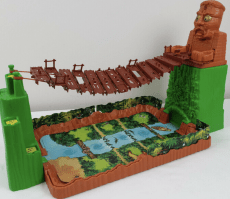
I remember getting the original Fireball Island for Christmas in 1986. The box is ginormous. The plastic game board had undulating paths where the titular fireballs (marbles) would travel down and knock players down, causing the player to lose any items. The object of Fireball Island is to escape the island with the jewel, which players must steal from the top of the Vul-Kar’s mountain. Fireball Island only has one jewel, so once a player grabs it, they become the target of others. And boy, do they become a target.

Fireball Island Tabletop Game Board Close up

Players are incentivized to knock the jewel out of the hands of the player who possesses it. The reimagining of Fireball Island by Restoration Games in 2018 doesn’t place as much emphasis on the jewel. Players can win by other means. Unsponsored quick plug: Restoration Games does great work. They’ve brought back many games on this list and even a couple of honorable mentions like Dark Tower (from the 1980-1981 list) and Thunder Road (which just missed this list).

3: The Fury of Dracula (1987)

I mentioned a few lists ago (1983-1984) that Scotland Yard inspired many asymmetric games with hidden movement; The Fury of Dracula is one of the most prominent. I like the theme, but the name “Fury” is a bit of a misnomer. Dracula travels on a hidden board while the hunters move across the game board openly and try to deduce where Dracula is, all the while collecting the means with which to slay Dracula (stakes, garlic, and holy water). The Fury of Dracula ends with an epic showdown.

The Fury of Dracula has been updated multiple times. The second edition changes a lot of the gameplay, while the third edition streamlines the rules to make it easier to play and get into. 2019’s Fourth Edition of The Fury of Dracula gave the game a facelift; it didn’t change much in the way of gameplay. I recommend either the third or fourth editions.

2: Labyrinth (1986)

Not to be confused with the 1946 marble game, Labyrinth, which was originally stylized as THE aMAZEing LABYRINTH, uses a 7×7 grid where tiles get placed on one end of a column or row and displaces the tile on the opposite side of the column or row, hence the German name for the game Das verrückte Labyrinth, which is a pun on the German words errücken” (displace) and “verrückt” (crazy).

Players move their pieces along the ever-shifting path. Many of the tiles will have treasures printed on them. These treasures will match the cards dealt to players at the beginning of the game. The first player to obtain all the treasures in their deck wins. Labyrinth looks simple at first, but it gets puzzlely real fast. It’s a great problem-solving game for children, but when played by adults, the game can become more strategic and cutthroat. Labyrinth’s shifting tiles is one of the most unique game mechanisms from this era.

Returning to the naming, I wonder if Labyrinth avoided calling itself that in 1986 to avoid a lawsuit or confusion with Jim Henson’s Labyrinth movie that was released the same year. I remember a Labyrinth marble game variant tying into the movie that year.

1: Arkham Horror (1987)

I didn’t realize how old Arkham Horror was until I started compiling this list. Designer Richard Launius originally submitted the concept as Call of Cthulhu: The Board Game. This won’t be the first time Launius will make a game based on H.P. Lovecraft. He made a faster-pace, dice version of Arkham Horror in Elder Sign. Launius may be the person most responsible for making H.P. Lovecraft so popular in tabletop gaming. Arkham Horror is an early, thematic cooperative board game. Before Arkham Horror, I don’t recall seeing too many popular cooperative board games.

Because of this, Arkham Horror introduced a lot of staple cooperative board game concepts. Not the least of which is a “Doom Track.” Players work against the clock before the Ancient One breaks through its plane and into Arkham. Come to think of it, a game clock—of one persuasion or another—exists in most cooperative board games. Launius reinvented Arkham Horror into a Living Card Game in 2005.

Did we get the list right, for the most part? I didn’t mention Blood Bowl (1987); I’ll mention it here as another honorable mention. Let us know which games you’d add in the comments. And wherever you are, I hope you’re having a great day.

Check out the other lists in this series:
Top 5 Tabletop Games Prior to the 1930s
Top 5 Tabletop Games of the 1930s
Top 5 Tabletop Games of the 1940s-50s
Top 5 Tabletop Games from the Early 1960s
Top 5 Tabletop Games from the Late 1960s
Top 5 Tabletop Games from the Early 1970s
Top 5 Tabletop Games from 1980-1981
Top 5 Tabletop Games from 1982-1983
Top 5 Tabletop Games from 1984-1985
Top 5 Tabletop Games from 1988-1989
Top 5 Tabletop Games from 1990-1991