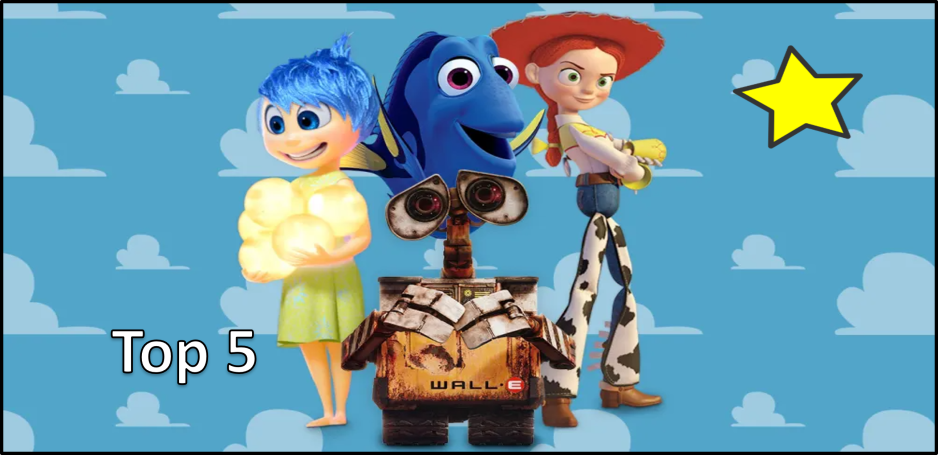
Top 5 Pixar Movies

Happy August, Geekly Gang! My bi-monthly movie posts are usually based on a holiday or awareness event. With August, I have no clue what would work, so I decided to make August a wildcard. Instead of holiday or “Month of Honor” movies, I’d like to take this time to talk about one of my most beloved animation studios, Pixar.

I’ve mentioned my preference for Pixar films over Disney films on my movie blog (TGIMovies), just not with the Geekly Gang. I still enjoy classic Disney, but if I had to choose which studio has more personal, relatable, and adult themes in their films, it’d be Pixar. To this day, many of Pixar’s films are household names and have raised a generation of film lovers. Me included. I’d like to honor my favorites in the post. I hope you enjoy!

5) Toy Story

It’s hard not to include a Toy Story film. While I enjoyed Toy Story 2 and Toy Story 3, the original has always been my favorite. Despite the now-outdated (yet charming) animation, the magic of childhood is what keeps me coming back to the first Toy Story. When I first saw Toy Story as a kid, it ignited my love for toys and my imagination. The filmmakers knew what it felt like to have a friend you could hold in your hand. Not only that, but the first Toy Story encouraged me to analyze films for deeper meanings.

After countless viewings in my childhood, I started thinking about why I enjoyed Toy Story so much. I broke down the situations, how effective Sid was as an antagonist, and how the toys are really a reflection of their owners. I started doing this with Toy Story at the age of 10. I couldn’t help but include Toy Story on this list. And Pixar wouldn’t be what it is today without Toy Story. Toy Story easily claims the fifth spot, but over time, I’ve grown to love other Pixar films a bit more.

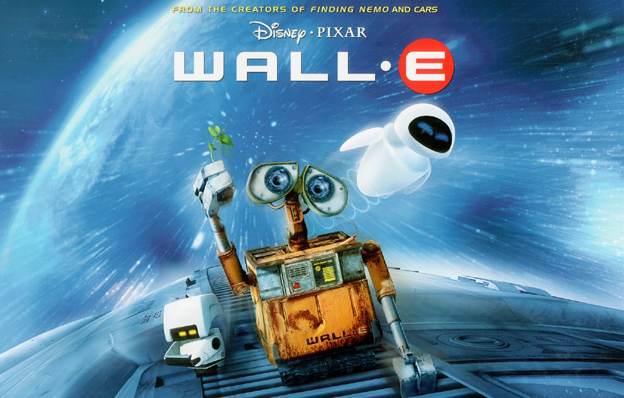
4) WALL-E

I adore WALL-E. The idea, the execution, the visuals, and the experience are unlike anything else in Pixar’s library. Given the lack of dialogue, the characters’ actions and the visuals tell the story. I respect WALL-E for its dedication to visual storytelling while still being a mainstream, big-budget children’s movie. This shows the filmmakers have deep respect for children by letting them draw their own conclusions.

As an adult, my favorite aspect of WALL-E is its message. WALL-E is unequivocally an environmental movie, but it’s unlike any other environmental film. Most others look at the issue from a pessimistic perspective, but WALL-E is (as far as I know) the only optimistic one I’ve seen. WALL-E addresses the issue realistically while urging us to make a change and focusing on the good we can do if we just try. I’ve already reviewed WALL-E at length on my blog; you can check it out here if you’d like to see my more detailed thoughts.

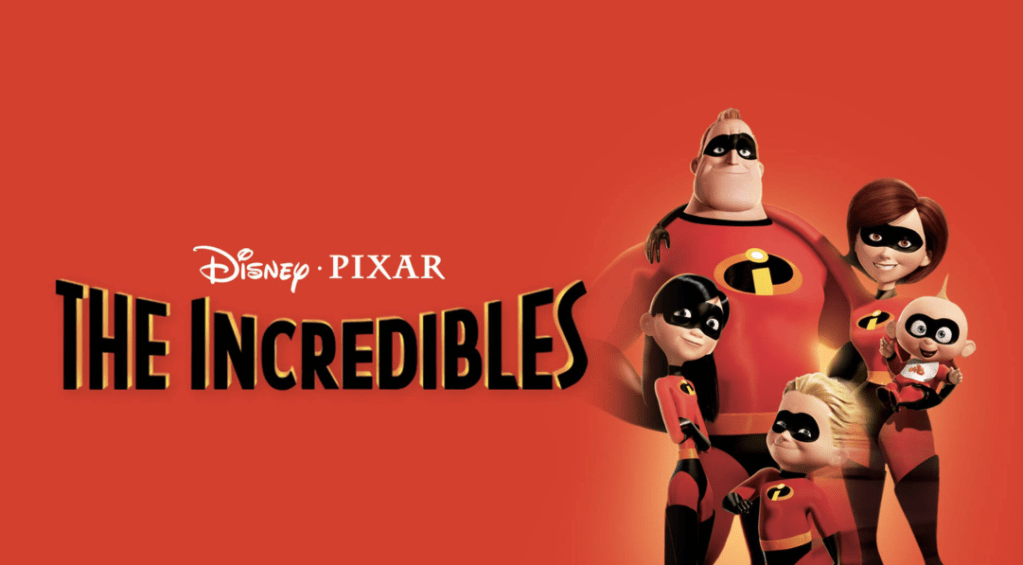
3) The Incredibles

The Incredibles is a movie that pops into my head without warning. I remember watching The Incredibles as a kid, getting engaged in the action, drawing comparisons between the Parrs and my own family, and loving the comedic beats. What sets The Incredibles apart from other superhero films is how it wasn’t based on a comic, and it preceded the comic-book film boom of today. Part of me can’t help but wonder if the success of The Incredibles paved the way for the reintroduction of superhero movies.

Much like other classic Pixar films, The Incredibles is chock-full of things that went over my head as a child. It still appeals to my inner child, but it challenges me in my adulthood by discussing mature topics. I never noticed it before, but The Incredibles deals with concepts like suicide, targeted legal/government actions, civil rights, big business, socio-economic divides, and cultural genocide. When I was young, all I remembered was “No capes,” but now I know what a difficult place the world is. Thanks, Incredibles.

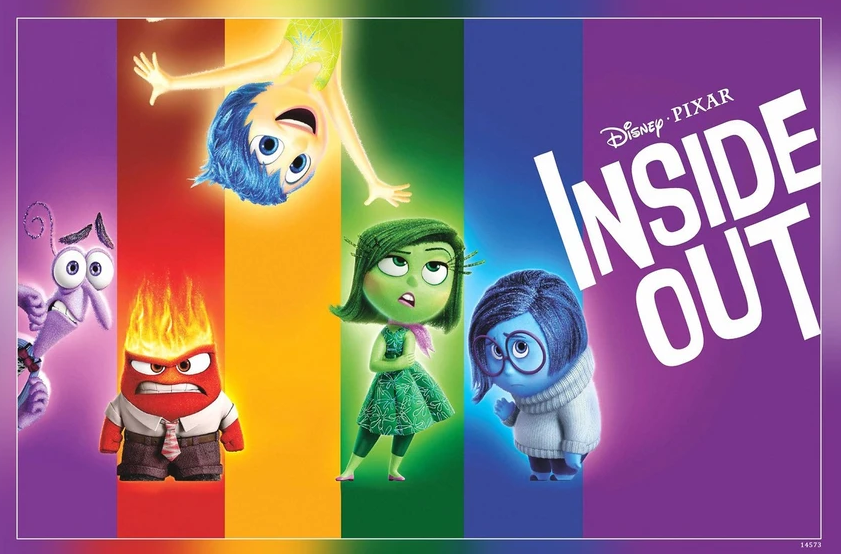
2) Inside Out

Inside Out has a simplistic premise of emotions controlling your actions. I first saw Inside Out when I was approaching my teenage years, and Inside Out managed to put life in perspective. Inside Out’s greatest strength is its realistic depiction of emotions, but my favorite aspect is how it manages to be both one and two stories at the same time. Inside Out is technically a movie about emotions inside the head of Riley Andersen, but it’s really about Riley herself.

We see what Riley’s emotions go through to keep her on track, and the effects of those actions on Riley in the real world. In the process, Inside Out paints a nearly perfect picture of what it feels like as a real-life girl going through a crisis. When I first saw Inside Out, I saw myself in Riley. I felt her inner turmoil. As I’ve gotten older, Inside Out continues to help me work through difficult past experiences while trying to be the best person I can. What a movie.

1) Finding Nemo

A major part of why Finding Nemo claims the top spot is its story and characters. The characters endeared themselves to me, and the situation they found themselves in was engaging. Each character’s distinct personality, relatable goals, and identifiable flaws make them real. I’ve always preferred Marlin’s story over Nemo’s. In fact, Finding Nemo is the movie that taught me how my own parents are more complex than I first thought.

Before I saw Finding Nemo, I thought my parents were benevolent beings who mercifully gave me life and could do no wrong. I was kinda dumb. Finding Nemo showed me how difficult a parent’s life could be. My parents were more like me, and they have significantly more problems. Granted, a not insignificant part of me wanted to put myself in danger so they could “prove” that to me, so I may have originally misunderstood that point in Finding Nemo. This movie holds a special place in my heart. Finding Nemo features fabulous animation, spot-on pacing, timeless characters, and its story is unforgettable. Without a doubt, Finding Nemo is my favorite Pixar movie.

There are plenty of Pixar films that didn’t make this list. This list was difficult to make because there are so many great Pixar films to choose from. Maybe this post can help y’all decide your favorite Pixar films. Do you agree with my picks? What would you change? Are there any Pixar movies you’re excited about? Feel free to leave a comment; we always love hearing from y’all. Also, why not give your parents a hug? I’m sure they miss you. Take care and keep watching movies!

Top 5 Tabletop Games from 1996

1996 was a weaker year for board games than the past handful of years, but a banner year for collectible card games. As a result, we’re lifting the CCG embargo for the 1996 list. There will be more than one CCG entry for the top 5 tabletop games from 1996, and it’s a doozy of a collectible card game. Woo hoo!

Hey, hey! Kyra Kyle here. We’re back with another Top 5 Tabletop Games. We’ll talk about 1996’s board game list soon, but let’s recap the ground rules for which games make these lists before we start.

1: Cultural relevance plays as much of a factor as overall quality. A game might make a list that doesn’t hold up to others of its type, but you must admit the game is everywhere.

2: Only one game from a franchise makes the list. This will become more of an issue the closer we get to games with expansions.

3: Longevity plays a role, too. A game doesn’t have to fly off the shelves today, but it had to have some widespread appeal for a decent time.

5: Mythos Collectible Card Game (1996)

We begin this list with an interesting collectible card game, Mythos. Based on the Cthulhu Mythos stories of horror author H.P. Lovecraft, Mythos is also an adaptation of the Call of Cthulhu role-playing game. Mythos combines elements of some traditional card games like Rummy and borrows other concepts from previous CCGs. While the game is playable by two players, the intent is for Mythos to be played by a larger number of players. The main objective of Mythos is to collect points by completing adventures. Adventures are cards that include keywords derived from different card names and types. Once the required cards are in the player’s story deck or on the table, the player can play the adventure and receive its points.

Mythos differs from many collectible card games because of its lack of a combat focus. This is a CCG that attempts to tell a story. Unfortunately, Mythos faltered after its initial release. Later expansions, most notably the non-collectible Standard Game Set, confused consumers and forced the publisher Chaosium to discontinue Mythos only one year after the game’s original release. Still, Mythos shows what collectible card games can achieve. It earned its distinction as one of Pyramid magazine’s The Millennium’s Best Card Games.

4: Mad Gab (1996)

Lately, we haven’t included too many mass-market board games in these lists. Mad Gab bucks this trend. It does so, not just because 1996 was a weaker year for board games like I mentioned, but because it was a cultural cornerstone. Mad Gab uses puzzles known as mondegreens (misheard words that could mean something else) and contain small words that, when put together, make a word or a phrase. For example, “These If Hill Wore” when pronounced quickly sounds like “The Civil War.” Mad Gab had two levels, easy and hard. The faster players solve the puzzles, the more points they score.

Mad Gab uses phonetics. It tests players’ ability to process sounds based on simpler English-written sounds into a meaningful word or phrase. Players must read the words aloud. Reading the phrases silently won’t allow someone to decode the puzzles’ meaning because the sounds need to be decoded.

3: Kill Doctor Lucky (1996)

We covered Mystery of the Abbey on our last week, and that game revamped Cluedo (or Clue for the United States). Kill Doctor Lucky flips the idea of Clue on its head. Kill Doctor Lucky features a sprawling mansion filled with a variety of dangerous weapons. Cluedo begins after the murder has been committed, and players compete to solve it; Kill Doctor Lucky ends with the murder, and players attempt to kill the titular character, Doctor Lucky.

Players must find a secluded room before slaying Doctor Lucky. You can even gain extra points if you pair a weapon with a specific room. For example, if you kill Doctor Lucky in the wine cellar with a trowel, you’ll gain extra points, alluding to Poe’s short story “The Cask of Amontillado.” As soon as I heard that Clue: The Movie could receive a remake, I wondered why Hollywood didn’t choose to go with a Kill Doctor Lucky movie. Why not lean into the silliness?

2: Netrunner (1996)

We have yet another Richard Garfield collectible card games that make one of these lists. Garfield has a knack for stretching the boundaries of collectible card games. That makes sense. He did create this form of game. Like Mythos, Netrunner doesn’t have a focus on combat. It takes place in the Cyberpunk 2020 role-playing game universe (which is also the basis for Cyberpunk 2077) and pits players against each other in asymmetric roles. One player assumes the role of a runner, who tries to break through and steal hidden plans (hacking) of the mega-corporations (the Corp) that run the world. The other player assumes the role of the Corp and attempts to catch the runner.

Beyond its focus on non-combat, Netrunner was unique because most collectible card games are framed as a battle between peers. Netrunner has two very different sides facing off against each other. While the collectible card game only ran for a few years, in 2012, Fantasy Flight Games adapted Netrunner into Android: Netrunner, which is a living card game that ran until 2019. Netrunner has a long and storied history. Its fans are fierce. But it doesn’t claim our top spot on this list. A different collectible card game has that honor.

1: Pokémon Trading Card Game (1996)

Pokémon had to claim the top spot for 1996. It’s the second-longest-running collectible card game in history. When Pokémon first released, it sold out so fast that all the trading card manufacturers in the world postponed their other orders (like baseball, football, and basketball cards) to fill the demand for new Pokémon cards. Releasing later the same year as Pokémon Red, Blue, and Yellow (the original Pokémon video games on the Game Boy) helped catapult Pokémon to legendary status.

Play alternates between players who take several actions during their turn, including playing Basic Pokémon, evolving Pokémon, attaching an Energy card, playing Trainer cards, and using Pokémon abilities and attacks. The first Pokémon Trading Card Game sets played like simplified Magic: The Gathering decks. This helped Pokémon and built a pipeline for Magic. Wizards of the Coast, the producer of Magic: The Gathering, didn’t mind because the Pokémon Company licensed the Pokémon Trading Card Game to Wizards of the Coast, who published eight expansion sets between 1998 and 2003, after which the licensing transferred back to The Pokémon Company. The Pokémon Trading Card Game is one of the few games of this type from the original trading card boom that has stayed in continuous production. I haven’t played Pokémon in years, but I have fond memories. This game’s legacy demands that it takes our top spot.

Did we get the list mostly correct? Let us know which games you’d add in the comments. Thank you for reading, and wherever you are, I hope you’re having a great day.

Check out the other lists in this series:
Top 5 Tabletop Games Prior to the 1930s
Top 5 Tabletop Games of the 1930s
Top 5 Tabletop Games of the 1940s-50s
Top 5 Tabletop Games from the Early 1960s
Top 5 Tabletop Games from the Late 1960s
Top 5 Tabletop Games from the Early 1970s
Top 5 Tabletop Games from 1980-1981
Top 5 Tabletop Games from 1982-1983
Top 5 Tabletop Games from 1984-1985
Top 5 Tabletop Games from 1986-1987
Top 5 Tabletop Games from 1988-1989
Top 5 Tabletop Games from 1990-1991
Top 5 Tabletop Games from 1992
Top 5 Tabletop Games from 1993
Top 5 Tabletop Games from 1994
Top 5 Tabletop Games from 1995

5 Famous Indigenous Video Game Characters

Happy Indigenous Peoples’ Day! Geekly is marking the occasion by listing some of our favorite indigenous video game characters. Hey, hey! Kyra Kyle here. This list was a little more difficult to compile than one would first expect. There are plenty of indigenous people in video games. Unfortunately, many of them lean into cultural stereotypes. We’ll do our best to avoid stereotypical indigenous video game characters. With that disclaimer in place, let’s get to our list of 5 famous indigenous video game characters.

Honorable Mention: Poundmaker (Civilization 6)

Pîhtokahanapiwiyi, better known by the title of “Poundmaker,” doesn’t quite make our list because he was an actual Cree leader during the late 19th Century. Poundmaker advocated the rights of indigenous people at a time when the Canadian government was starving them and encroaching on their land. Though he didn’t hold his position for long, Poundmaker would be arrested for alleged treason. He was exonerated in 2019. Poundmaker earned the respect of the indigenous community. When Civilization 6 added the Cree as a playable civilization, they gave the honor of Cree leader to Poundmaker, a real-life Cree hero.

5) Connor (Assassin’s Creed Franchise)

Ubisoft didn’t play it safe when they moved the Assassin’s Creed story to the American Revolution. Instead of glorifying the colonists, Assassin’s Creed 3 shifted the focus toward how indigenous people were affected by a morally ambiguous war that had nothing to do with them. Ratonhnhaké:ton (aka Connor) is an assassin who worked tirelessly to defend his people from colonial oppression. Connor is divided between two worlds, which provides an interesting and unexplored perspective in video games for one of the most significant wars in American history.

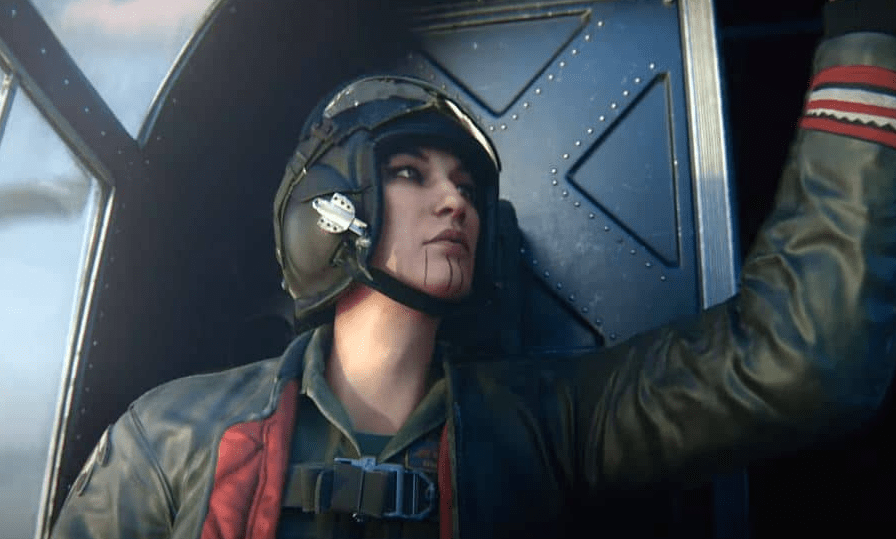
4) Mina “Thunderbird” Sky (Rainbow Six Siege)

Video games don’t tend to feature indigenous characters. This trend goes double for indigenous women, so Rainbow Six Siege‘s introduction of Mina “Thunderbird” Sky was a boon. Mina Sky is a Canadian Air Force pilot originally from the Nakota tribe of Saskatchewan. She proudly wears traditional facial tattoos of her people. Her codename “Thunderbird” derives from an old legend about a powerful bird that often protected the Nakota people. Thunderbird is a fitting name for an operator who protects her Nakota and Rainbow Six families.

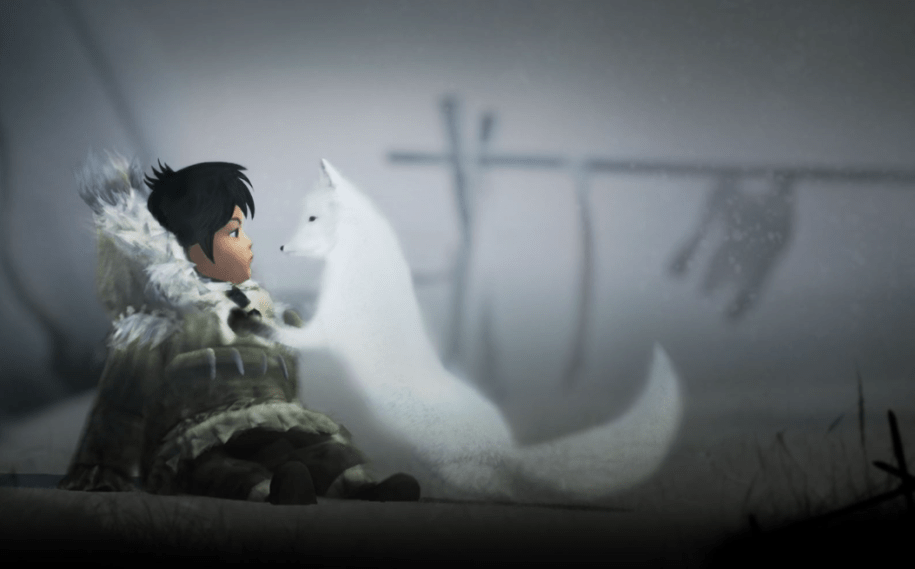
3) Nuna (Never Alone)

Upper One Games’ Never Alone takes inspiration from a famous Inuit legend. The hero seeks an end to perpetual winter. While traditionally the hero is portrayed as a man, Never Alone casts the role to a young girl. Nuna has to face harsh Arctic weather with only a white fox for company. She faces trials from puzzles to combat, but proves resilient. Rather than using skill points, Never Alone doles out progression through the telling of Inuit stories. This is fitting with the game’s theme of keeping cultural stories alive.

2) Thunderbird (Thunderbird Strike)

The Thunderbird is a mythological creature for various indigenous cultures. Often portrayed as an eagle-like creature, the thunderbird has immense power and serves as a guardian of the natural order. Game designer Elizabeth LaPensée takes this setup for her game Thunderbird Strike, where players control the legendary bird as it defends the land from the oil industry and restores life. Thunderbird Strike modernizes a famous legend and addresses real-life issues of industrial encroachment on indigenous land.

1) Tommy Towadi (Prey)

The original Prey (2006)–not Bethesda’s 2017 spiritual successor, also called Prey–had a story built around an odd mix of indigenous spiritual beliefs and science fiction. It shouldn’t come as a surprise that the game has an indigenous protagonist. “Tommy” Towaldi can spiritually reach places others can’t. He often uses this skill to evade death and outwit his alien captors. Interestingly, a game in 2006 featured an indigenous protagonist. Most games that included indigenous characters in 2006 would’ve put them in stereotypical clothes. Tommy wears a leather jacket and jeans. He happens to be indigenous, and Prey (2006) explores his culture well. Almost two decades later, and Tommy still resonates with gamers.

So, what do you think? Who are your favorite indigenous video game characters? Are there any games that feature indigenous characters we should try? Let us know in the comments. Thank you for reading, and wherever you are, I hope you’re having a great day.
Top 5 Fantastic Four Villains

Last month Geekly discussed the X-Men’s top 5 villains. Marvel’s first family, the Fantastic Four, has as many contenders for their top five as Marvel’s merry mutants. Hey, hey! Kyra Kyle here. We’re back with another Top 5 Villains List. With Fantastic Four: First Steps releasing later this week, let’s discuss the Fantastic Four’s top five villains. We know one that one of these villains will make an appearance in Fantastic Four: Four Steps. Who knows? More than one of these villains will make their MCU debut soon.

Honorable Mention: The Frightful Four

The Frightful Four is a cheat; they’re a supervillain group. Supervillain groups began with Spider-Man’s Sinister Six in 1964. The Frightful Four debuted the following year. Members of the Frightful Four have also served in the Masters of Evil (who made the Avengers Top 5 Villains list) and the Sinister Six. In fact, Sandman is an original member of the Frightful Four and the Sinister Six. The Frightful Four have had a rotating roster, but Wizard (the team’s founder) has stayed the team’s one constant.

The Frightful Four takes its lead from its founder, the Wizard. Dr. Bentley Wittman is a twisted version of Reed Richards. But while Doctor Doom (another twisted version of Reed Richards) combines arcane knowledge with technology, the Wizard combines technology with smoke and mirrors. Think of the Wizard as a beefed-up Mysterio.

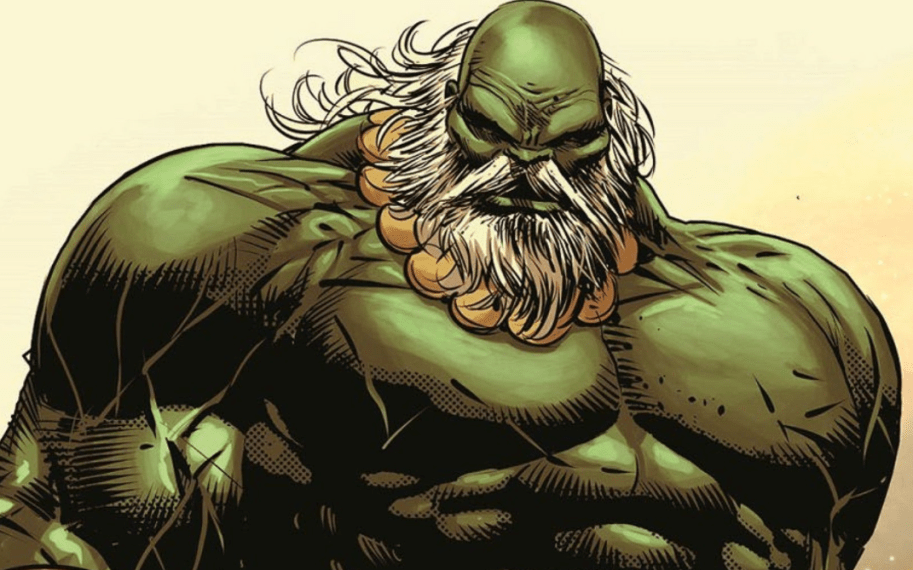
5: Maker

Our first Fantastic Four villain is another twisted version of Reed Richards. Maker is the Mr. Fantastic of the Marvel Ultimate Universe. In this universe, Reed proposes to Sue after Sue’s father dies. This universe’s Sue rejects Reed. While somewhat sympathetic (the Ultimate Universe’s Reed Richards witnesses the family he and Sue could’ve had while visiting the main Marvel timeline), Reed gives in fully to his selfish tendencies. He turns his anger on his would-be family by torturing Sue. Subsequently, the Human Torch attacked Reed with his hottest flame, which permanently scarred Reed’s face. After a brief exile in the Negative Zone, Reed emerged as the Maker.

Maker vows to mold the world in his image of perfection. The helmet he wears isn’t just for show. It adjusts to his head. Maker will stretch his brain, learning as much as he can of the universe’s secrets. Maker serves as a warning to Reed Richards. He must not give in fully to his self-centered nature.

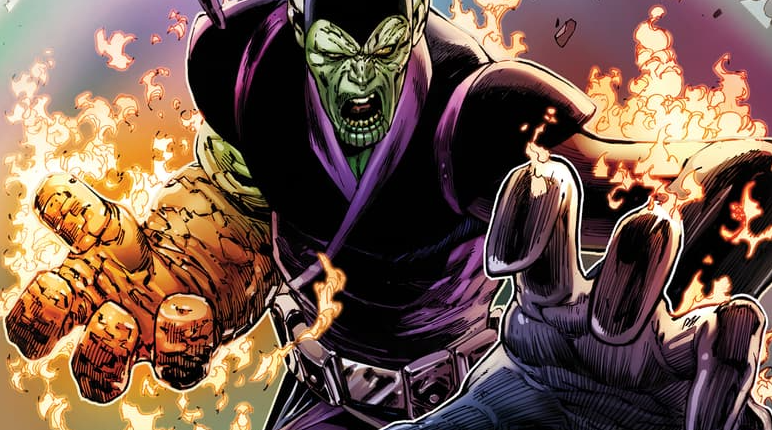
4: Super-Skrull

Super-Skrull is an alias used by multiple Marvel comics characters. Essentially, Super-Skrull can refer to any enhanced member of the Skrull race. But when comic book fans refer to “Super-Skrull,” they typically mean Kl’rt, who appeared in Fantastic Four #18, and Kl’rt is the “Super-Skrull” who takes this spot. The Skrulls imbued Kl’rt with the Fantastic Four’s powers. Kl’rt possesses all the Fantastic Four’s powers. He’s an obvious threat.

But Kl’rt’s dominance runs deeper. Typically, he has better control over his powers, and his powers are improved versions of the Fantastic Four’s. Since he’s a Skrull, Kl’rt has natural shapeshifting abilities. Throw in hypnosis, and one can see why Super-Skrull Kl’rt was chosen to pave the way for a new Skrull Empire invasion. While Super-Skrull poses a threat to the Marvel universe as a whole, Kl’rt was designed to take on the Fantastic Four and has been a constant thorn in the side of Marvel’s first family.

3: Annihilus

Annihilus is another villain who poses a threat to the entire Marvel universe. Spoiler alert: The same can be said of the remaining villains on this list. Annihilus is an interdimensional insectoid conqueror and tyrant hailing from the Negative Zone, a pocket dimension located within Marvel’s main timeline. He attempted to take over the Negative Zone by wielding the Cosmic Control Rod. In classic Reed Richards fashion, he postulated that he needed the Cosmic Control Rod to treat Susan Richards during her pregnancy, and instead of asking for the rod, he stole it from Annihilus. The team intended to return the rod when they were done using it, but Annihilus took exception to the theft. Leave it to Reed to kick a hornet’s nest.

Since their first meeting, Annihilus and the Fantastic Four have been uneasy allies and foes on various occasions. Annihilus works best as an irritant to the Fantastic Four. The animosity has led to some stellar storylines that get personal.

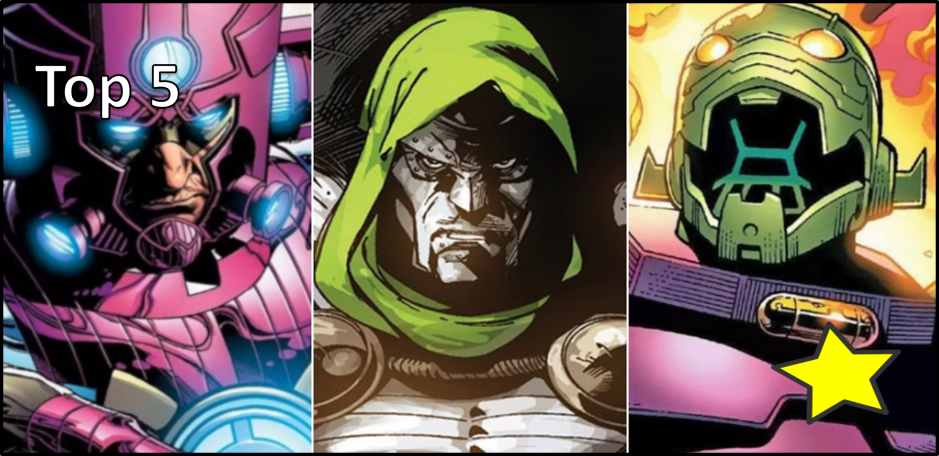
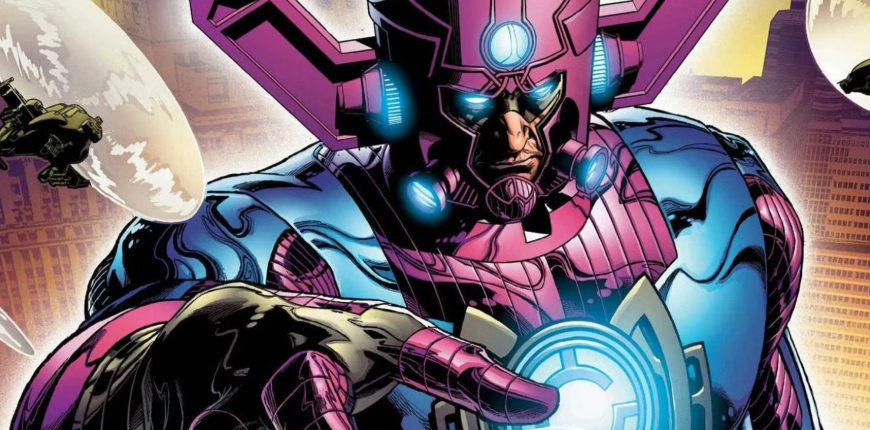
2: Galactus

Galactus needs little introduction. He’s the big guy in blue and purple. Even if Galactus needed an introduction, he has countless heralds to do that for him. Galactus is more of a force of nature. He needs to feed on a planet’s essence to survive. Earth and Galactus happen to collide, and when they do, the Fantastic Four serve as Earth’s guardians.

But Galactus’s link to the Fantastic Four (and the Marvel universe) runs deeper than the surface. Galactus wields the power cosmic; the Fantastic Four were transformed by cosmic rays, originating from the power cosmic. Galactus also happens to be the last surviving member of the previous multiverse, the Sixth Cosmos. Due to a plague named the Black Winter, the universe began dying, and Galan (Galactus before he became Galactus) searched the cosmos to find a cure. He failed. Galan proposed to the remaining survivors that they die with glory by piloting one of their starships into the heart of the Cosmic Egg. Everyone aboard the vessel died, except for Galan. He fused with the Sentience of the Sixth Cosmos to become Galactus, the Devourer of Worlds.

I love Galactus’s origin. It humanizes him. He’d easily take the top spot if it weren’t for one Fantastic Four villain.

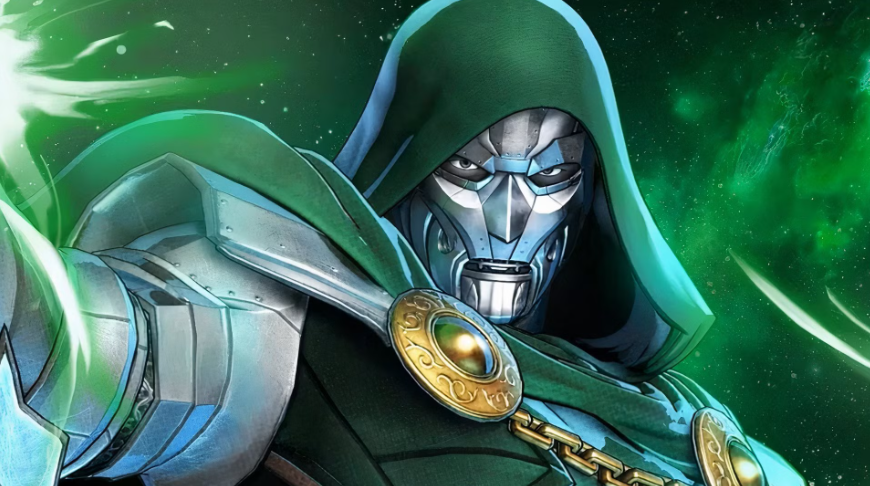
1: Doctor Doom

Obviously, Doctor Doom takes the top spot. As mentioned before, Victor von Doom blends magic and science to become one of the Marvel universe’s greatest threats. He rules Latveria with a literal and figurative iron fist and intends to do the same with the rest of the world. Doom believes the world/universe needs a ruler smart and cunning enough to lead. He happens to be the best person for the job.

Even though Doctor Doom threatens the universe, he’s the perfect Fantastic Four villain because of his ties to Reed Richards. The two were college rivals. Doom blames Reed for the accident that cost him his face and drove him to the far reaches of the earth, where he studied magic to coincide with his brilliant scientific mind. Doctor Doom is forever linked to the Fantastic Four. He’s iconic. He’s a threat as big—if not bigger—than Thanos, and I can’t wait to see what the MCU has in store for this character.

Did we get the list right? Let us know who your favorite Fantastic Four villains are in the comments. Thank you for reading, and wherever you are, I hope you’re having a great day.

Top 5 Tabletop Games from 1995

1995 saw plenty of strong board game releases. It’s a shame we must limit this list to a Top 5, but debate is the benefit of a Top 5 versus a Top 10. A Top 10 could include many games of note from a calendar year. And 1995 had plenty of those. We also limited ourselves to one—just one—collectible card game. CCGs were going strong in 1995, too. One of our just-missed-the-list games is Marvel Overpower. I always liked Overpower’s straightforward gameplay and scalability. Star Wars Customizable Card Game is another CCG that just missed our list. Like its counterpart, the Star Trek Customizable Card Game on our previous list, it continues to be played. I’ve always liked its Dark and Light side of the Force; Star Wars Customizable Card Game is one of the rare collectible card games with a two-sided aspect.

Hey, hey! Kyra Kyle here. We’re back with another Top 5 Tabletop Games. We’ll talk about 1995’s board game list soon, but let’s recap the ground rules for which games make these lists before we start.

1: Cultural relevance plays as much of a factor as overall quality. A game might make a list that doesn’t hold up to others of its type, but you must admit the game is everywhere.

2: Only one game from a franchise makes the list. This will become more of an issue the closer we get to games with expansions.

3: Longevity plays a role, too. A game doesn’t have to fly off the shelves today, but it had to have some widespread appeal for a decent time.

5: Legend of the Five Rings (1995)

Legend of the Five Rings (L5R) collectible card game lasted for two decades, and even then, it was announced that the game would have a successor in Fantasy Flight Games’ Living Card Game line. So, in a sense, Legend of the Five Rings continues to this day. L5R shares similarities with Magic: The Gathering, but has game mechanisms with flavor and allows “passive” win conditions like the Enlightenment Victory. Games can be very long, with some matches lasting hours.

L5R features a storyline. New fiction pieces (short stories, novels, and comics) would advance the story of Rokugan (the fictional empire where Legend of the Five Rings takes place) every week. After Alderac Entertainment Group (AEG) purchased the rights outright in 2000, they reintroduced an accompanying tabletop role-playing game of the same name. Frequently, AEG would adapt Rokugan’s timeline to reflect who won specific CCG tournaments. The Spider Clan would have its own Emperor take the throne after an L5R world champion won with a Spider Clan deck. This unique and living game element has yet to be duplicated in tabletop games, making Legend of the Five Rings a singular experience.

4: Mystery of the Abbey (1995)

Republished by Days of Wonder during their golden years almost a decade later, Mystery of the Abbey is a sign of what’s to come. Mystery of the Abbey is a clever update to the classic board game Cluedo (or Clue). Based on the novel The Name of the Rose, players assume the identity of a detective, trying to identify a murderer in a monastery by process of elimination, moving from room to room, and asking questions of other players to order them to reveal information that will disqualify potential suspects.

Unlike Cluedo, during their turn, a player can ask any question to any player provided the response wouldn’t include a suspect’s name. The person being asked the question may choose to answer or refuse by placing a finger to their lips (taking a vow of silence). This is so thematic and can be used strategically. All players will see the asked player’s refusal to answer. Why did they do that? If the player elects to answer the question, they then have the right to immediately ask a question of the active player. Mystery of the Abbey was one of the earliest publications for Days of Wonder, which started with interesting twists to classic games.

3: Medici (1995)

Dr. Reiner Knizia makes one of these lists again, and Knizia’s former employment as a quantitative analyst (one who manages and attempts to price risk for banks) comes in handy with Medici. Players take on the roles of the House of Medici, who were an Italian banking family and political dynasty. Medici is based on the pricing of risk. Each lot of commodities has an uncertain future based on how cards are drawn from the deck and what other players buy. To play Medici well, players must judge and price the risk attached to each lot of cards. Medici is a classic example of “buy low, sell high.”

I don’t play Medici particularly well, but I enjoy it every time I play. I downloaded it for my tablet and sneak in a few games against an AI opponent. The game takes place over three days (or rounds). Players draw random goods (units of different types and amounts) to make up lots, and then these lots are bid upon. The player who wins the bid then adds these goods to their ship. Each player’s ship can hold five goods. Once each ship has been filled, the round is over, and the ships score points in florins. The player with the most florins at the end of three days is the winner.

Medici is a simple auction game with a ton of open information. It’ll take a few playthroughs to figure out the true value of certain lots, but this clever design by Knizia is well worth the time.

2: El Grande (1995)

El Grande is Wolfang Kramer’s first entry on one of these lists. 1994’s 6 nimmit! is one of my favorite card games from this period and narrowly missed out on making our previous list, while Auf Achse won the Spiel des Jahres in 1987. It was only a matter of time before Kramer made one of these lists. El Grande combines several simple mechanisms. It’s the interlocking of these mechanisms and how they play off of each other that gives El Grande its depth.

Players begin the game with a hand of identical cards (numbered 1-13). Players bid for turn order using these cards. The person who played the highest card chooses their action card first, but each player may use each card only once during the game. Each turn, players take Caballeros and execute an action card, which includes two actions, a special action, and placing Caballeros. Scoring occurs in three of the nine rounds. Players must keep track of the many factors that determine the balance of power in the regions and the score track. If it wasn’t for another game on this list, El Grande would’ve been the runaway Spiel des Jahres winner this year.

1: Catan (1995)

Could it be any other game? Catan (originally Settlers of Catan) revitalized the board game industry. Catan shaped the modern board game. It opened doors and spawned numerous expansions and spin-offs. While many gamers have moved on from Catan, there are still plenty more who swear by Catan. The ideas this game presents are still used to this day.

The game board is composed of hexagonal tiles of different land types, which are laid out randomly at the start of each game. Players build settlements on a fictional island of Catan. They connect their settlements with roads placed on the edges of the hexes. Each hex has a number that needs to be rolled (on two standard six-sided dice) for the hex to generate resources. Any player with a settlement touching the hex gains the resource indicated. Players gain victory points as their settlements grow, and the first to reach a set number of victory points (usually 10) wins.

I’ve played countless games of Catan in the late 90s and early 2000s. While many of the mechanisms have been improved on in some way in newer games, I haven’t found a game that scratches the same itch of bartering. Some games get close, but nothing compares to Catan. It’s deserving of the 1995 Spiel des Jahres (German game of the year).

Did we get the list mostly correct? Let us know which games you’d add in the comments. Thank you for reading, and wherever you are, I hope you’re having a great day.

Check out the other lists in this series:
Top 5 Tabletop Games Prior to the 1930s
Top 5 Tabletop Games of the 1930s
Top 5 Tabletop Games of the 1940s-50s
Top 5 Tabletop Games from the Early 1960s
Top 5 Tabletop Games from the Late 1960s
Top 5 Tabletop Games from the Early 1970s
Top 5 Tabletop Games from 1980-1981
Top 5 Tabletop Games from 1982-1983
Top 5 Tabletop Games from 1984-1985
Top 5 Tabletop Games from 1986-1987
Top 5 Tabletop Games from 1988-1989
Top 5 Tabletop Games from 1990-1991
Top 5 Tabletop Games from 1992
Top 5 Tabletop Games from 1993
Top 5 Tabletop Games from 1994

Top 5 Sharks in Video Games

Today is Shark Awareness Day. Geekly’s celebrating by listing the top five sharks that originated in video games. Things are about to get fishy.

Hey, hey! Kyra Kyle here. With today’s list, we won’t include all sharks in video games. These are the sharks that originated in video games. So, we won’t include King Shark, Jeff the Land Shark, or Jaws, because they started in comic books or in the movies and then made their way over into video games. We’re talking straight video game sharks.

Honorable Mention) Sharks from Hungry Shark World

None of the sharks in Hungry Shark World have names, but this game may be one of the highest-rated games where gamers play as sharks. The game features numerous fun maps and 30 species of sharks that players can customize into their own cuddly predator. Hungry Shark World just misses our list because there isn’t one specific shark to feature. Instead, Hungry Shark World pits gamers’ shark creations against unique enemies.

5) Gran Bruce (Viewtiful Joe)

Gran Bruce is one of the many bosses Viewtiful Joe faces. This shark enemy pays homage to the world’s most famous movie shark, Jaws. Steven Spielberg’s crew gave the prop sharks on the set of Jaws the nickname Bruce. Players can even trigger an explosion in Gran Bruce’s mouth, which was how Jaws was defeated at the end of the first film. Gran Bruce may be little more than a dim-witted boss for Joe to slap down in the first game, but he also had a role in the Viewtiful Joe anime, which makes him one of the few gaming sharks to crossover into other media.

4) Megalodon (Battlefield)

What started as a joke in the Battlefield series became a random appearance of a Megalodon shark in the game. The Megalodon is one of the largest creatures to ever prowl the seas, so of course, this ancient beast lurked in one of Battlefield’s maps. It didn’t help that gamers photoshopped a large shark in some of the gameplay. The gag became reality when Battlefield 1 included a Megalodon in its mission “They Shall Not Pass.” The rest is history. Or prehistory.

3) Lurker Shark (Jak and Daxter)

Many video games during the early 2000s would prevent heroes from swimming beyond the limits of the game world with an invisible wall. Jak and Daxter decided to ward off would-be cross-game-world swimmers by having a shark eat them alive. While the Lurker Shark made its biggest impact in the first game of the Jak and Daxter series, it would return in Daxter in a variety of shapes and sizes. It even has a brief cameo in Jak 2.

2) Snacker the Shark (Banjo-Kazooie)

Snacker the Shark serves the same purpose as Lurker Shark in Jak and Daxter. Snacker is a clever way to keep Banjo and Kazooie within the limits of their game world. Snacker makes two appearances in the original Banjo-Kazooie, but he made his debut in the Treasure Trove stage, spouting one-liners and taunting players before he eats them. Like Gran Bruce, Snacker also pays homage to Jaws with his Jaws-inspired theme song. He’s cute even while he devours you.

1) Tiny (Batman: Arkham City)

While investigating the Penguin’s lair, Batman runs into a great white shark ironically named Tiny. This encounter is one of the most blood-pumping moments in Batman: Arkham City. Batman must carefully cross a body of water without being eaten alive by Tiny. Looks like Bats forgot the shark repellent. Never leave home without it. Despite a brief appearance in Batman: Arkham City, Tiny made an impact. The series brought him back with a jump-scare sequence in Batman: Arkham Knight.

I may have listened to the Jaws theme song while putting together this list. Which video game shark is your favorite? Let us know in the comments. Thank you for reading, and wherever you are, I hope you’re having a great day.
Top 5 Red, White, and Blue Video Game Characters

U-S-A! U-S-A! U-S-A! The United States of America celebrated its Independence Day yesterday, so we’re celebrating belatedly by listing our picks of the top 5 video game characters that use a red, white, and blue color palette.

Hey, hey! Kyra Kyle here. We’re doing something a little different with today’s Top 5. It’s no longer the United States’ Independence Day, but who are we kidding? Someone will be lighting fireworks tonight. We can set off a few of our own with these top 5 red, white, and blue video game characters.

5) King Dedede

Video game designers may have ulterior motives when selecting their characters’ color palettes. Nintendo certainly did with King Dedede when they introduced him to the Kirby franchise. Visually, he combines Santa Claus’s outfit, a bald eagle’s beak, and John Henry’s hammer. Personality-wise, King Dedede is a glutton, selfish, and hostile toward the color pink. In short, he’s all American.

Take that, you pesky amoeba. King Dedede won’t be the only video game villain who wears red, white, and blue. ‘Murica!

4) Blinky (a.k.a. Shadow)

Blinky (from 1980’s Pac-Man) may not be the first character you think of when discussing red, white, and blue video game characters, but he is classic. Shadow is the leader of the team of ghosts (they’re actually monsters) who chase Pac-Man. While Pinky (Pink) and Inky (Cyan) attempt to ambush Pac-Man by taking routes the player doesn’t choose, Blinky chases our protagonist and applies pressure.

Shadow is the most aggressive of all the ghosts (monsters) and the most dangerous. When players get caught, they’re usually caught by Blinky. He has true American vigor. He races to chop down Pac-Man like George Washington chopped down a cherry tree.

3) Dr. Wily

Wow! Are there any video game heroes who use a red, white, and blue color scheme? Yes. They’re next on our list, but we have one final video game villain before we reach them: Mega Man’s Dr. Wily. Before Dark Souls, Dr. Wily pushed gamers to “get gud.” I don’t know how many times I attempted a Mega Man level, only to leave my palms sweaty after countless hours. Thank you for making me a better gamer, Dr. Wily. I salute you.

Dr. Wily also happens to have an advanced degree, adding to a long line of PhDs with nefarious plans. You’d think universities would weed out these bad eggs before they graduate. Oh well. If Wily’s university had expelled him, we may not have gotten a killer robot dragon in Mega Man II.

2) Sonic

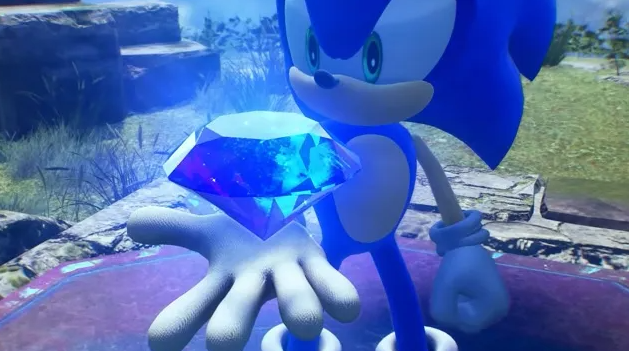
Sonic is Sega’s mascot. Ever since the speedy hedgehog raced onto game consoles in 1991, he’s worn red and white shoes, white gloves, and he has blue fur. Very patriotic of you, Sonic. Sonic is ubiquitous with Sega. He’s the first character–and possibly only character–one would think of with Sega Games.

It also doesn’t hurt that Americans are an impatient bunch. Sonic’s speed gets you those rings now. Not later. Now! Hot dogs, muscle cars, and Sonic the Hedgehog. Is there anything more American?

1) Mario

Yeah. We couldn’t go with any other video game character than Mario. You probably read this list and already knew the fictional plumber would top this list. Mario has always featured red and blue. Even in his short stint as “Jumpman” in his Donkey Kong debut (1981), he was always pictured on the video game cabinet to be wearing white gloves, even if the hardware at the time couldn’t effectively render those pixels.

You know you’re a big deal if people know you mononymously. If you utter Mario, most people will picture a plump plumber, wearing a red shirt and hat with blue overalls. Since Mario wears red, white, and blue, he tops this list. It also doesn’t hurt that Mario is often seen with stars. Talk about a Star Spangled hero.

Did we get the list right? Which red, white, and blue color palette video game characters should make this list? Let us know in the comments. Thank you for reading, and wherever you are, I hope you’re having a great day.
Top 5 X-Men Villains

Geekly hasn’t covered a superhero team’s rogues gallery since the Avengers, and there’s no better place to continue that trend than with the X-Men. The X-Men topped our list of Most Powerful Rogues Galleries. If you missed that post, you can check it out here. No one messes with X-Men villains.

Hey, hey! Kyra Kyle here. We’re back with another Top 5 Villains List. Marvel’s merry band of mutants has no shortage of enemies. Here’s our list of the Top 5 X-Men Villains.

Emma Frost X-Men

5: Emma Frost

The fifth spot on most Top 5 Villains lists could go in several directions. While the X-Men are no different, Emma Frost was an easier selection than many fifth spots. No disrespect, Juggernaut.

Like most great X-Men villains Emma Frost spends as much time as a hero as she does a villain. As a villain, Frost typically serves as the Hellfire Club’s White Queen. We had to include at least one classic member of the Hellfire Club; they’re a frequent thorn in the X-Men’s side. This alone could explain Emma Frost’s inclusion on this list, but Frost opposes Charles Xavier like no other X-Men villain. She teaches young mutants and twists them into doing her bidding.

The Hellions are the most famous of Emma Frost’s disciples. They were a rival class of young mutants. One by one, Frost manipulated the Hellions. She took advantage of Thunderbird’s grief (because of his brother’s death) and coaxed him into taking revenge against the X-Men. At Frost’s request, Empath used his abilities to force Firestar to love him and join the plot. Emma Frost is a powerful mutant telepath. She’s used these powers to control more than just the Hellions. Kitty Pryde, members of the New Mutants and the New Warriors has at some point been one of Frost’s victims.

4: Mystique

Raven Darkhölme or Mystique (even Raven’s an assumed name, so we don’t know Mystique’s real name) has one of the wildest backstories of any X-Men villain. Again, she’s had her fair share of heroic stints, but Mystique is at her best when she shapeshifts, deceives, and infiltrates.

Nearly immortal, Mystique has done it all. In 1895 (or earlier), she took up the identity of consulting detective Sherlock Holmes. She convinced a time-traveling Kitty Pryde to not assassinate Adolf Hitler during the start of World War II. She’s been a member of the Brotherhood of (Evil) Mutants, organizing the third incarnation of the team. During this time, she adopted a young girl named Anna Marie (Rogue) and manipulated her into stealing Carol Danvers’s powers.

Mystique is the biological mother of a couple of prominent figures in the X-Men universe: Nightcrawler and Graydon Creed. While Nightcrawler is another popular X-Man, Graydon Creed is the leader of the mutant-hating organization Friends of Humanity. Creed would later become a politician and after he became too much of a problem, he was assassinated. Mystique was the gunman. Ruthless and conniving, Mystique will do whatever it takes to accomplish her goal.

Mister Sinister X-Men

3: Mister Sinister

Mister Sinister is the figure in the shadows. A world-renowned geneticist, Mister Sinister treats humans and mutants as his playthings. He’s cloned (even himself), created new life, and manipulated mutant DNA for enhancing powers (again, he did this to himself). The original Nathaniel Essex (Mister Sinister) was transformed into his current form by the mutant known as Apocalypse, and his clone has spent most of his life scheming ways to break free from Apocalypse. To achieve this end, Mister Sinister has manipulated the lives of critical members of the mutant race. Cyclops, Jean Grey, Gambit, Havok, and even Professor X have been Mister Sinister victims.

Madelyne Pryor may be Mister Sinister’s greatest creation. She posed as Jean Grey, married Scott Summers (Cyclops), and gave birth to a child Nathan Summers (Cable). Yeah. Mister Sinister is all up in the Summers’ family tree. Cable’s given name Nathan is a nod to Mister Sinister’s original name Nathaniel. You could view Cable as having the family name of two families.

Beyond Sinister’s family skullduggery, he was the one responsible for wiping out the Morlocks. Unknowingly, Sinister was the one who unleashed the Legacy Virus, a mutant-specific pandemic that decimated the mutant populous. Despite multiple lifetimes of villainy, Professor X appointed Mister Sinister a seat on the mutant island nation Krakoa’s Quiet Council. His life’s work aided with the re-establishment of the country after the Krakoa Massacre.

Apocalypse X-Men

2: Apocalypse

We go from Mister Sinister to the mutant who created him, Apocalypse. En Sabah Nur, translated as “The Seven Lights,” has lived for generations. Born in ancient Egypt, Apocalypse began life as a slave, and over time, he became a conqueror. His laundry list of abilities was crucial in Apocalypse’s Road to Conquest. Here’s a brief list of Apocalypse’s powers: self-resurrection, psychic-link, self-atomic manipulation, biomorphing, size alteration, superhuman strength, superhuman durability, superhuman stamina and endurance, telepathy, force fields, and telekinesis. The previous list was a third of Apocalypse’s powers.

Is it any wonder that Apocalypse has taken the guise of a god of destruction and the end times? Like all the other villains on this list, Apocalypse has a massive history with the X-Men. One of Nur’s standout storylines is the Age of Apocalypse. In this alternate future, Apocalypse sees his “Survival of the Fittest” philosophy to a logical conclusion. The mutants who survive are the ones able to adapt to Apocalypse’s extreme worldview.

No one aspect of Apocalypse showcases his extreme worldview than his Horsemen. Numerous X-Men have served as one of the Horsemen of Apocalypse, but Warren Worthington III may still be the most iconic. Nur transformed Worthington from the natural, angelic wings of Angel to the twisted techno-organic wings of Archangel. Archangel served as Death. War, Famine, and Pestilence round out the remaining members. The entire universe is at stake whenever the Horsemen arrive. The same can be said of Apocalypse. En Sabah Nur lives for destruction.

Magneto X-Men

1: Magneto

Magneto is one of the most iconic comic book villains of all time. He had to take the top spot. His origin story is legendary. After suffering atrocities at the hand of the Nazis while interred in Auschwitz, Erik Lehnsherr (known by multiple other names like Max Eisenhardt) vowed never to let anything like the holocaust happen to the people he loves. This trauma formed Magneto’s worldview, and when humanity began lashing out against mutants, Magneto fought back. He wants to live in a world where mutants are humanity’s masters, and this puts him at odds with X-Men founder Professor Charles Xavier who dreams of peaceful mutant-human coexistence.

No other villain typifies an X-Men antagonist more than Professor X’s friend Magneto. We could discuss why Magneto takes the top spot for days, but ultimately, anyone who knows of the X-Men knows about Magneto. Most readers expected to see Magneto take the top spot. Magneto is iconic.

Did we get the list right? Let us know who you would add or remove in the comments. And wherever you are, I hope you’re having a great day.

Skye’s 5 Pride Month Movies

Happy Pride, Geekly Gang! What better way to celebrate Pride Month than with movies? Being a member of the LGBTQ+ Community myself, it was fun to curate this list for y’all. My favorite part was seeing how film evolved in its coverage of LGBTQ+ themes. Sometimes heartwarming. Sometimes depressing. Sometimes downright cringeworthy. But what’re you gonna do? Regardless of content, these movies serve as great time capsules for how far we’ve come with discussing LGBTQ+ concepts. We still have a long way to go, but these movies are still cool.

I’d like to clear one thing up real quick. I don’t mean to imply that, as a member of the LGBTQ+ Community, only I can determine the best LGBTQ+ movies. Not at all. I’m one person, and these are some of my favorites I watched this month. There are also several other movies I saw and didn’t mention. Feel free to mention them in the comments. As always, thanks for your understanding. With that said, these are my picks for 5 LGBTQ+ movies for Pride Month.

The Birdcage

I’ll start with a goofy one. That’s mostly what The Birdcage is: goofy. Even with The Birdcage‘s simple premise, it managed to get some good laughs out of me. If you haven’t seen The Birdcage, here’s the run-down. A young man with gay fathers is getting married to a woman whose parents are deeply conservative. So, the whole movie is trying to convince the girl’s parents that the boy has straight parents. With a star-studded cast including Robin Williams, Nathan Lane, Gene Hackman, and Christine Baranski, how could I not recommend The Birdcage?

Also, I truly underestimated the comedic potential with Hank Azaria in The Birdcage. His role as Agador Spartacus had me rolling on multiple occasions.

The Kids Are All Right

Let’s take it down a bit. We go from off-the-wall humor to a more heartfelt premise in The Kids Are All Right. Two children with lesbian parents discover their sperm-donor father and try to connect with him. Another simple yet effective premise. The Kids Are All Right results in some complicated emotions and difficult relationship questions being raised. The mothers are worried about the sperm donor, Paul, taking their children away from them. Meanwhile, with the kids getting older, they’re already having conflicting feelings about their parents. It’s a cute coming-of-age film wrapped in an LGBT blanket.

If you’re in the mood for something more realistic and personal, I recommend The Kids Are All Right, if for no other reason than to remind yourself that Mia Wasikowska has emotions. I was shocked, too.

The Adventures of Priscilla, Queen of the Desert

Here’s where it gets more complicated. While I really enjoyed The Adventures of Priscilla, it elicited a wide variety of emotions from me. As three drag queens make their way across the Australian Outback, they have several misadventures along the way. That doesn’t seem like much on its face, but it results in all sorts of interactions. The upsides, downsides, and everything else that comes with being a drag queen in the 90s are put on display here, and it’s not always easy to watch. However, y’all may know that movies like that are the kind that attract me.

Sure, The Adventures of Priscilla can be difficult to get through, but I recommend it only for Terence Stamp. Yeah, it’s fun seeing General Zod as a drag queen.

Paris is Burning

Paris is Burning is a classic. While the creation of the film raises some ethical questions, what’s detailed in it is unlike anything else I’ve seen. Paris is Burning outlines the intricacies of Ballroom culture in New York City at the height of the AIDS crisis. This month was my first time watching it, and it raised several difficult emotions. I found myself reflected in each of the folks on-screen and relating to their struggles to an unhealthy degree. We will survive, and Paris is Burning shows us how they do it in “Gay World.”

Paris is Burning also does a fantastic job of highlighting the difficulties of combining LGBTQ+ issues with race issues. This is still an issue today, but if we don’t talk about it, it’ll never change.

Disclosure

Of the movies on this list, the ones I would consider “must-watches” in today’s climate are Paris is Burning and Disclosure. While Paris is Burning has proven to maintain relevance after 35 years, Disclosure was released 5 years ago, and its importance is already striking. Disclosure takes an elaborate and detailed look at the coverage of transgender people in the public eye over the years. From as far back as the 1910s, Disclosure shows us how transgender people have been humiliated from the start. As the world continues to grow and evolve, especially now, we need movies like Disclosure.

Even thinking about Disclosure now, I can’t help but feel emotional. For me, Disclosure hits too close to home, but that’s also why it’s important.

So those are my 5 movies for Pride Month this year. What do y’all think? Are there any movies I mi – Yes. I couldn’t even finish that sentence, but yes, share your favorite LGBTQ+ movies in the comments with us. We always love to hear from you! Now go out there and show the world how you’re not afraid to live your life on your terms. 😉

Top 5 Tabletop Games from 1994

Magic: The Gathering dominated 1993 and in 1994, dozens of new collectible card games hit the market. Even though 1994 produced more than one collectible card game on its list, we still have one honorable mention collectible card game, Illuminati: New World Order. I always loved Illuminati’s sense of humor; it’s a shame that neither the original game (released in the early 1980s) nor the CCG made the cut. That just shows these lists’ competition.

Hey, hey! Kyra Kyle here. Back with another Top 5 Tabletop Games. We’ll talk about the board games that this year’s list soon, but let’s recap the ground rules for which games make these lists before we start.

1: Cultural relevance plays as much of a factor as overall quality. A game might make a list that doesn’t hold up to others of its type, but you must admit the game is everywhere.

2: Only one game from a franchise makes the list. This will become more of an issue the closer we get to games with expansions.

3: Longevity plays a role, too. A game doesn’t have to fly off the shelves today, but it had to have some widespread appeal for a decent time.

5: Star Trek Customizable Card Game (1994)

Illuminati: New World Order’s lack of staying power contributed to its absence from this list. The Star Trek Customizable Card Game doesn’t have that issue. I never knew The Star Trek Customizable Card Game stayed in print for over a decade. The game may have gone out of print in 2007, but a group of dedicated fans still play.  Peter Ludwig was crowned the 2023 Star Trek Customizable Card Game World Champion.

The Star Trek Customizable Card Game pitted players against each other to assemble a team, a ship, and equipment to complete missions. The first player to complete 100 points worth of missions/objectives wins. The 1st Edition, which ran from 1994-2001, only had the option of a two-player game, just like Magic. 2002 saw the Star Trek Customizable Card Game’s second edition. This version allowed for more players to join in the fun.

On a personal note, I knew one of the original designers of the Star Trek Customizable Card Game. Rest in peace, Rollie.

4: I’m the Boss! (1994)

I struggled with placing the 2-4 ranked games on this list. Honestly, you can shuffle these games in any order, and I wouldn’t fight you. The first game we’ll cover comes from a familiar face, Sid Sackson. We haven’t seen Sackson on one of these lists in a while, but he was productive during this period. I’m the Boss! is a negotiation game where players compete and cooperate to put together profitable business deals. Gameplaywise, I’m the Boss! splits the difference between luck and skill. One must be able to negotiate and needle their way into the best deals.

Not going to lie, I’m not the best at I’m the Boss! But if you like games where you can pull the wool over someone else’s eyes and rob them blind through a one-way deal. I’m the Boss! can give you those moments. Sackson has a knack for business games. His most famous creation was Acquire, which featured on our Top Tabletop Games from the Early Sixties. (Check out the link here.)

3: Vampire: The Eternal Struggle (1994)

Richard Garfield wasn’t done with collectible card games after 1993. Vampire: The Eternal Struggle, which was originally published as Jyhad (changed to distance the game’s name from the Islamic term jihad), puts players in the role of Methuselah (ancient) vampires, controlling lesser vampires to complete machinations and wrest control of the Camarilla, the society of vampires featured in the role-playing game Vampire: The Masquerade. Garfield wanted to show the versatility of collectible card games as a genre, and he succeeded in doing so with Vampire: The Eternal Struggle.

Magic games are quick. Vampire: The Eternal Struggle games can take up to two hours. Magic forces players to play lands from their deck to cast spells. Vampire: The Eternal Struggle allows players, who are Methuselah vampires, to spend their blood points to play cards, but be careful, your blood points are also your life and if you run out, you lose. Magic has players draw one card at the beginning of a player’s turn (you can have cards that allow you to draw more). Vampire allows players to draw cards as soon as they play cards. Magic started as a two-player game. Vampire was always a 2-5-player game. The two games couldn’t be more different.

Despite their differences, or maybe because of them, both games found a wide audience. Depending on how one views it, Vampire is the second longest-running CCG, only to Magic, if you include the five or so years when the game was transformed into a living card game. Or Pokémon, which (Spoiler Alert) will make a future list, takes the second spot, and Vampire takes the spot for the third longest-running CCG. Either way, Vampire: The Eternal Struggle has staying power.

2: Manhattan (1994)

Manhattan received the 1994 Spiel des Jahres award, so I gave it the nod over the previous two games. The concept is simple. Players construct and control Manhattan skyscrapers that will award points. Manhattan benefits from 3-D components. When you’re constructing skyscrapers, they will stretch vertically. This gives Manhattan table presence.

Manhattan may have a game concept based on a New York City borough, but it took Mayfair Games two years to make the game accessible to the United States. Manhattan was designed by Andreas Seyfarth. At the time, Seyfarth was an unknown game designer, but eventually, he’d add several more board game gems: Puerto Rico, San Juan, and Thurn and Taxis (which he codesigned with his Karen). This may not be the last time we’ll see Andreas Seyfarth’s name on one of these lists.

Despite earning the Spiel des Jahres, Manhattan has received mixed reviews. Previous critics have questioned the game’s components and scalability. Others claim that the game’s mechanisms are dated and too abstract, chaotic, and luck-driven. But still, others insist that Manhattan has broad appeal and praise the game’s engagement and accessibility. What does this tell us? Gamers can’t agree on anything, and one likes what one likes. If you like the idea of building skyscrapers, you may want to give Manhattan a try.

1: RoboRally (1994)

I promised that Richard Garfield would make this list again, and he claims the second number-one spot in consecutive years. Richard Garfield started a tabletop revolution with Magic: The Gathering in 1993 and kept busy in 1994. RoboRally is a robot demolition derby. Players attempt to guide their robots through a dangerous widget factory filled with moving gears, course-altering conveyor belts, metal-melting laser beams, bottomless pits, crushers, and more obstacles.

I say that players attempt to guide their robots because RoboRally is notorious for how chaotic the races get. The more players, the more mayhem ensues. The box reads that RoboRally plays for up to two hours. That’s generous. It may play longer than that, but RoboRally is another modern classic and shows Garfield, like the game type he invented (the collectible card game), is no one-trick pony. Richard Garfield has one of the most diverse board game catalogs and isn’t afraid to take chances.

Did we get the list mostly correct? Let us know which games you’d add in the comments. Thank you for reading, and wherever you are, I hope you’re having a great day.

Check out the other lists in this series:
Top 5 Tabletop Games Prior to the 1930s
Top 5 Tabletop Games of the 1930s
Top 5 Tabletop Games of the 1940s-50s
Top 5 Tabletop Games from the Early 1960s
Top 5 Tabletop Games from the Late 1960s
Top 5 Tabletop Games from the Early 1970s
Top 5 Tabletop Games from 1980-1981
Top 5 Tabletop Games from 1982-1983
Top 5 Tabletop Games from 1984-1985
Top 5 Tabletop Games from 1986-1987
Top 5 Tabletop Games from 1988-1989
Top 5 Tabletop Games from 1990-1991
Top 5 Tabletop Games from 1992
Top 5 Tabletop Games from 1993