
Geekly News: October 12, 2025, Will Halo Receive a Third Season?

Happy Sunday, Geekly Gang! Kyra Kyle here with another week of Geek News. Plenty of board games and video games released this past week, but we’ll kick off this past week’s Geek News with an update about the Halo television series.

Halo Crashes Netflix’s Top 10. Will there be a Season 3?

Halo is the most expensive television series ever produced in Paramount+’s short history, so it made sense for the streaming service to cancel the show after a couple of seasons (17 episodes in total), and it also made sense for Paramount+ to sell the rights to stream Halo on Netflix. Earlier this month, Halo debuted on Netflix. Its reception was immediate as Halo reached number 4 on Netflix’s United States Top 10, outperforming almost all licensed programming, with the exception of popular original shows like Monster: The Ed Gein Story. Halo even held similar numbers internationally. This shows a demand beyond hardcore gamers.
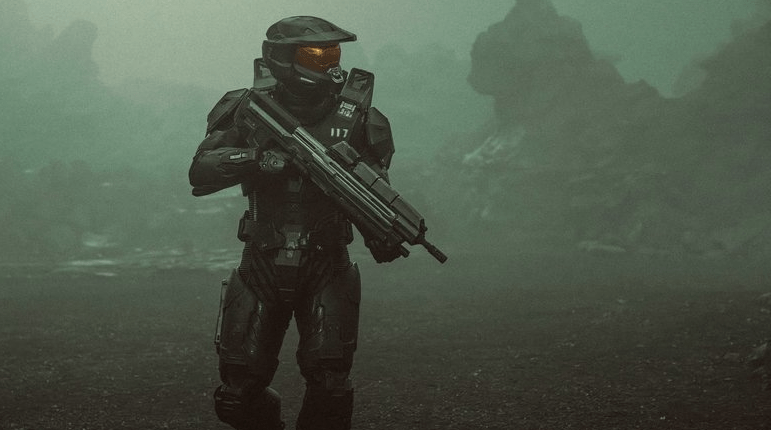
Netflix has a track record of reviving shows like Longmire and Lucifer after a strong streaming performance. Halo’s global numbers and fan campaigns, like the ones found on Change.org, may sway the streamer to green-light a third season. There’s a chance. But there are a few loopholes, Halo must navigate. Netflix only has a year-long streaming agreement for Halo. For a third season to be possible, Netflix must secure a long-term streaming agreement. And Halo has steep production costs. Season 1 was estimated to cost between $90-200 million. Yikes!
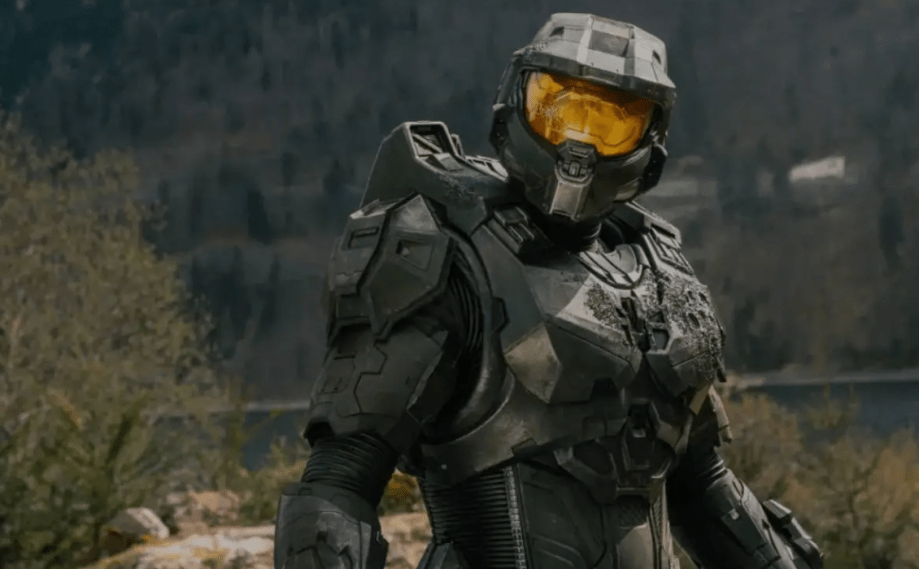
But I wouldn’t count out a third season for Halo. Critics gave Halo a 70% on Rotten Tomatoes–does anyone still use Rotten Tomatoes when looking for reviews–with many appreciating Halo’s production values, while questioning narrative choices like an odd romantic subplot and unmasking Master Chief. Still, #SaveHalo has trended on various social media platforms, and if Halo’s numbers hold strong, Netflix may need to consider a third season, regardless of the cost.
Rolling in Wonderland Launches on KickStarter

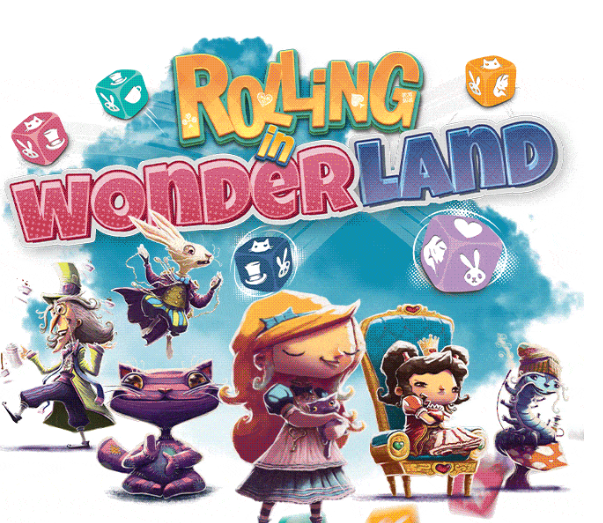
This week has seen a lot of dice drafting games (games where players pay to add dice to their dice pool), and Rolling in Wonderland is a great place to begin with board game new releases. Channeling the whimsy of Alice in Wonderland, Rolling in Wonderland features quirky art and vibrant colors.

The game suggests that players may adapt the game’s play how they want. You may play a light and breezy or tight and tense game of Rolling in Wonderland. I don’t know exactly how Rolling in Wonderland attempts to do this (undoubtedly two sets of rules for both playstyles), but I’m intrigued. Rolling in Wonderland offers an affordable $39 entry-level pledge, but players may spend $79 for the deluxe version or add various expansions a la carte. If you’re interested in Rolling in Wonderland, check out its KickStarter page.

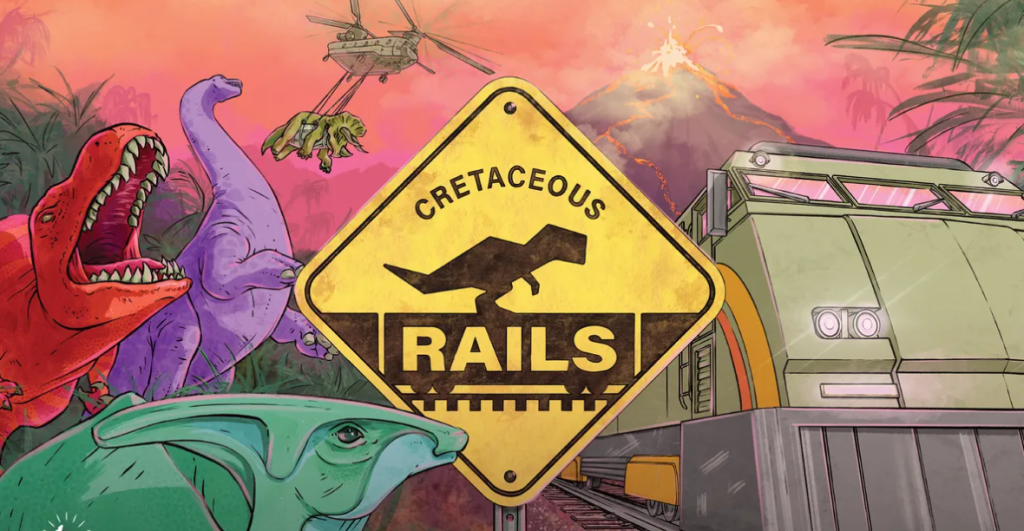
Cretaceous Rails Reprint Lands on Gamefound

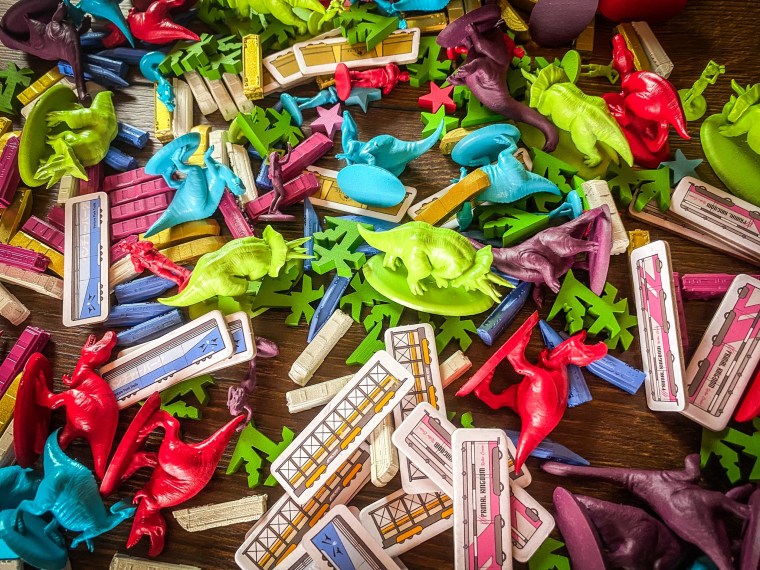
In preparation for Gen Con, we reviewed Cretaceous Rails a few months ago. If you want to see an extended look at our thoughts, check them out here. Dinosaurs and trains together at last. If you’ve ever wanted a game that combined these two elements (or think this mash-up sounds awesome), then you should consider backing Cretaceous Rails.

The core game is amazing. I love Cretaceous Rails’s dual-action selection mechanism. I even tried my hand at designing a game that did something similar (I mentioned this in the most recent game design brain dump). Cretaceous Rails’s reprint will include the first expansion, Cretaceous Skies, which I’m not too fond of, but it adds the second expansion, Cretaceous Seas, and I’ve enjoyed every iteration of Cretaceous Seas. I can’t wait to see the final version.
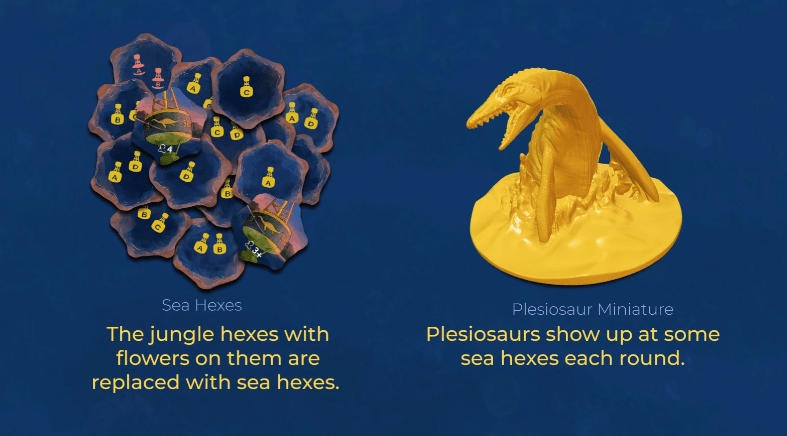
Bring on the sea hexes and plesiosaurs. You can pick and choose which rewards you want a la carte. Since I have the base Cretaceous Rails, I’ll most likely pick up Cretaceous Seas for $30 (plus shipping). The project launches in two days. If you’re interested in Cretaceous Rails, check out its GameFound page.

Raas Dances Onto GameFound

Raas adapts the dazzling folk dance of Gujarat to a vibrant dice-drafting, tableau-building game. Players recruit dancers, represented by colorful dice, where each color and pip shows off their style and rhythm. Collect stunning dress swatches, give them dandiya sticks, and match the style of the song to create shining performances.
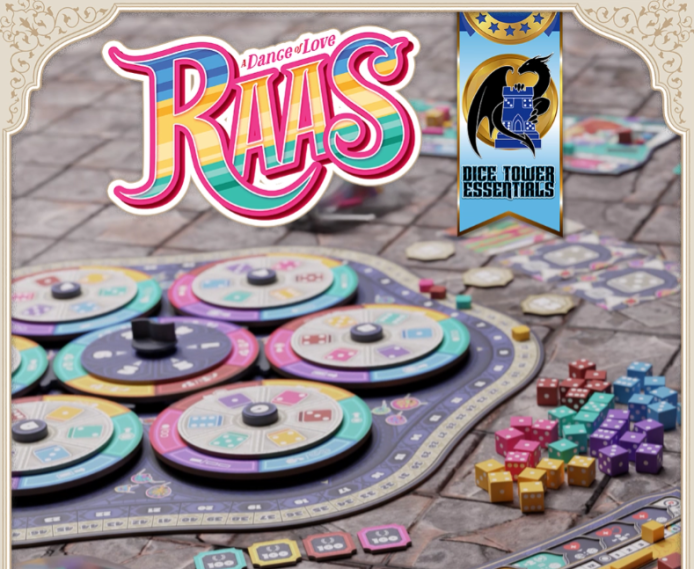
Raas’s moving dials remind me of the interlocking gears of my design Rustbucket Riots. I may need to keep an eye on this title; I do like that it’s competitive instead of cooperative. I love Raas’s theme. The tight board looks amazing, and I’m always down for splashes of color. Raas looks as if it captures the vibe of its subject matter. As of this write-up, we don’t yet know Raas’s price points. If you’re interested in Raas, check out its GameFound page.

Vampire: The Masquerade, Palermo Conspiracies, Lands on GameFound

The theme Vampire: The Masquerade piqued my interest (I’ve always enjoyed this IP’s mythos), but the statement that Teburu may be the future of tabletop gaming places Vampire: The Masquerade, Palermo Conspiracies in my sights. Per its description, the Teburu system integrates physical and digital gaming, while keeping players focused on the board and its components. Evidently, players won’t need a rulebook. What? You may save your game progress and continue later. Vampire: The Masquerade, Palermo Conspiracies offers immersive storytelling and audio support. You may save player data with smart-technology miniatures.

This all sounds fantastic, and it could be “the future of board games,” but I’m cautious. The Teburu system will most likely be patented and only be available from the company of the same name. As of this write-up, we don’t know the cost of this game, and Palermo Conspiracies sounds as if it will be at least $100 at its cheapest price point. Since it’s launching on GameFound, which offers payment plans, I wouldn’t be surprised if Vampire: The Masquerade, Palermo Conspiracies is upwards of $150-$200 or more (board game meets video game pricing) before shipping. I’m also leery of a game playing itself; I like to know why NPCs take specific actions in tabletop games. But this game looks and sounds amazing.
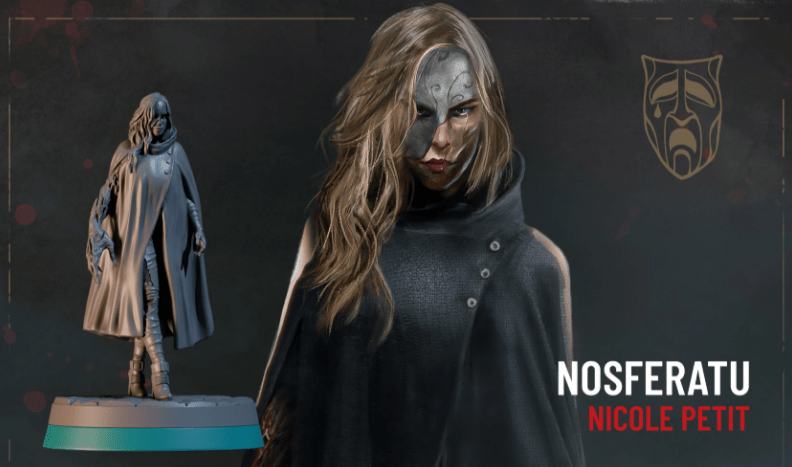
The miniatures are stunning. And there’s tech in those bases. Yowza! If you’re interested in Vampire: The Masquerade, Palermo Conspiracies, check out its GameFound page.

Battlefield 6 Released

I’ve never been into the Battlefield series. Later titles have leaned into online only, player-versus-player brawls. I have to admit that I’m interested in Battlefield 6 because of the return of campaign mode. It’s been some time since Battlefield has featured a robust campaign mode, and judging from Battlefield 6’s early reviews, it looks as if the game delivers.
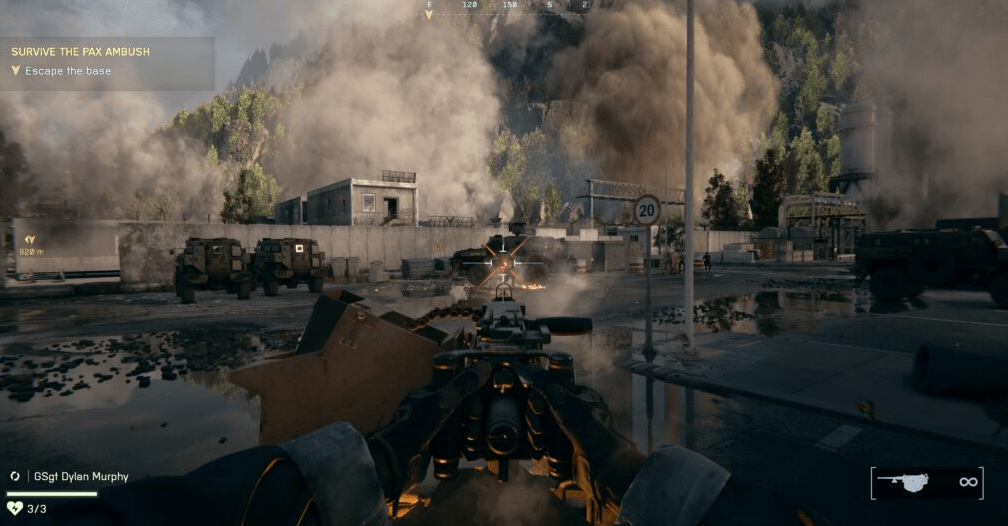
I may wait another week or two, or even for the first price decline, before venturing into this highly touted first-person shooter. Battlefield 6 is available on PC, PlayStation 5, and Xbox Series X/S.
Little Nightmares III Releases

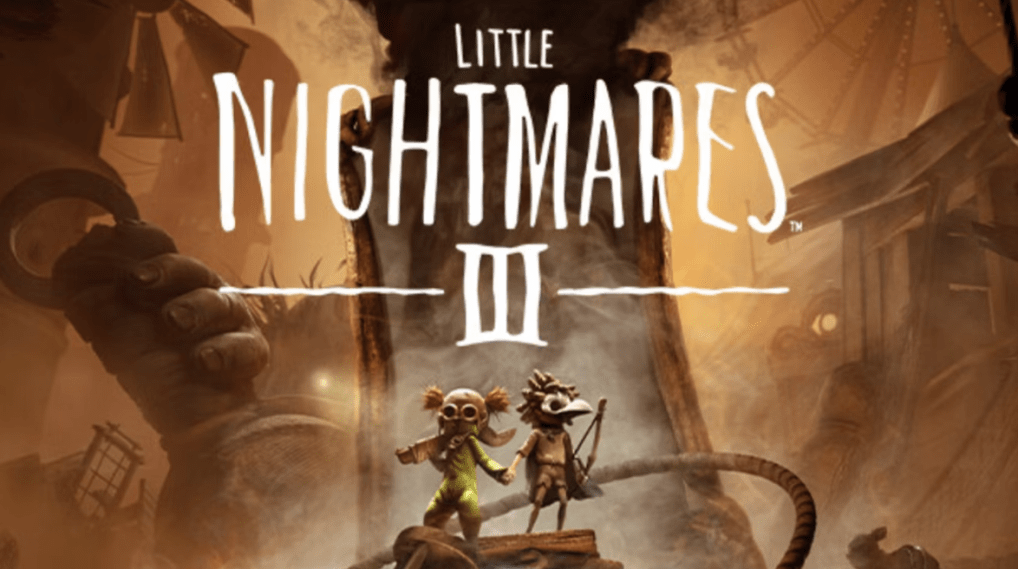
Popular puzzle-platform horror adventure game series Little Nightmares returns just in time for Halloween. I see what you did there, Supermassive Games. Little Nightmares III follows two new child protagonists, Low and Alone, as they navigate through The Nowhere and escape from a looming threat.
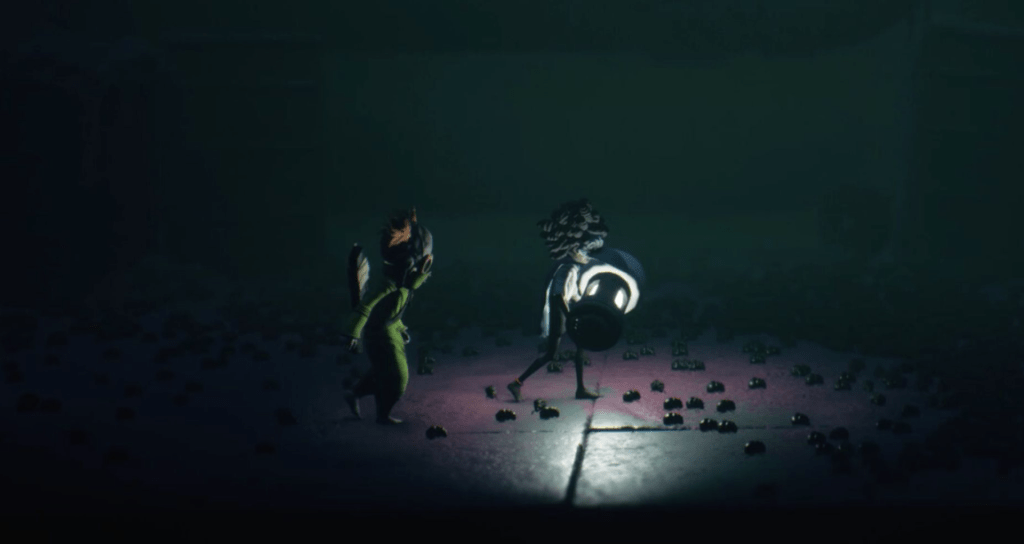
While I am more interested in the Little Nightmare series than I am in Battlefield, Little Nightmares III has received mixed to average reviews so far. I may wait on Little Nightmares III for a very different reason than Battlefield 6. I’m waiting on Battlefield 6 for the hype to die down a bit. But Little Nightmares III may need an update or two. Still, I’m all for another journey into Nowhere. Little Nightmares III is available on PC, PlayStation 4, PlayStation 5, Nintendo Switch, Nintendo Switch 2, Xbox One, and Xbox Series X/S. Fingers crossed for cross-play and cross-saving between platforms.

That’s all the Geek News we have for this week. Thank you for reading, and wherever you are, I hope you’re having a great day.
Game Design Brain Dump: October 10, 2025

Hey, hey, Geekly Gang! Kyra Kyle here. Last week, we began a series called–for the time being–Writing Brain Dump, and this week is the time to roll out Game Design Brain Dump. The title is a work in progress. Let’s hope I can express my board game design process with this series. Fingers crossed for a cogent thought or two. Strap in for a Board Game Design Brain Dump.

Rustbucket Riots Origins

I’m going a different route from last week’s writing brain dump. Recently, I attended a panel about board game design at Nuke-Con (Omaha’s board game convention) and figured we could begin with what prompted me to begin designing Rustbucket Riots.

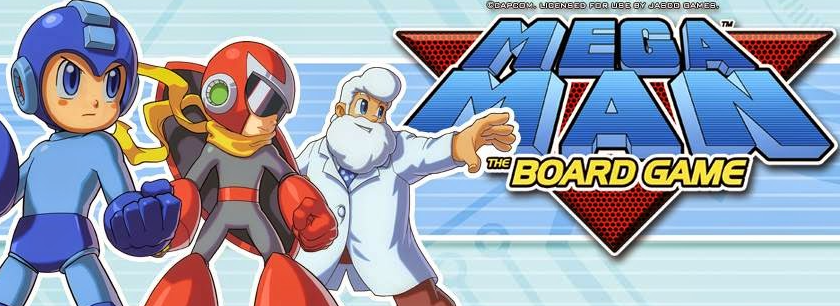
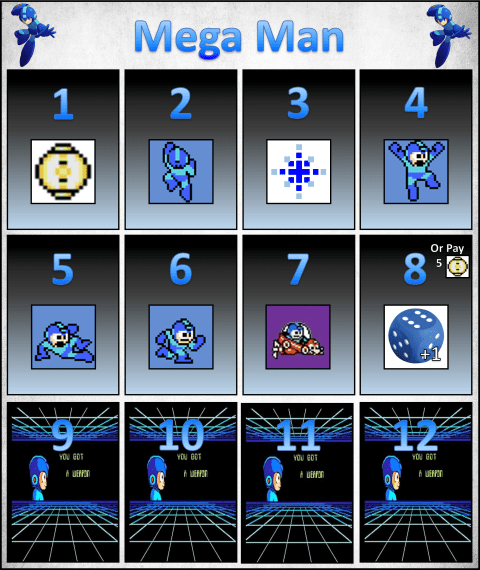
I knew Mega Man: The Board Game by Jasco Games wasn’t the best when I purchased it at a severe discount. Honestly, I wanted the bits. Jasco Games did an amazing job with Mega Man’s miniatures and the look of the game. But good luck finishing a game of Mega Man in under 10 hours. Each robot stage plays like five games of Munchkin played back-to-back, with every other player doing their best to prevent you from completing the stage. And you need to complete multiple boss stages. 10 hours may be too few hours to complete this game. You may need to dedicate a table to preserve your month-long game of Mega Man.

I hope I won’t get copyright claimed for any images. Eek! I began with a simple dice chucker of a game. Players would roll standard six-sided dice (I don’t recall the exact number, but it was likely around four or five) and then place the dice on their player boards. Each space on the player board would grant different abilities, with the final four slots variable for powers obtained by defeating robot bosses. Players could place multiple dice in a single space to combine the rolled result. A six may be played with a single die showing a six or with a two and a four or any other combination of six.

I chose dice chucking because rolling dice and placing them with predetermined spaces made for quick turns. Quick turns lead to a game that one can finish within ten hours. This game worked well. Heck, I even tried it as a real-time game, and it worked extremely well. Games lasted less than 15 minutes. I even saw this Mega Man variant as a game that could be played in tournaments of speed runs. Now that I think about it, I may revisit this variant in the future and give it a reskin. Sorry, the ADHD took the wheel for a second.

For some reason, I abandoned the above game concept and went in a different direction. I love Cretaceous Rails. Unlike Jasco’s Mega Man, there isn’t much I’d change with this title. Cretaceous Rails makes this list because I wanted to try using one of its core game mechanisms: dual action selection. I even asked Cretaceous Rails’ designer, Ann Journey, if it’d be okay if I borrowed this game mechanism before trying the next Mega Man remix iteration. The result was a game I nicknamed Rondelande.

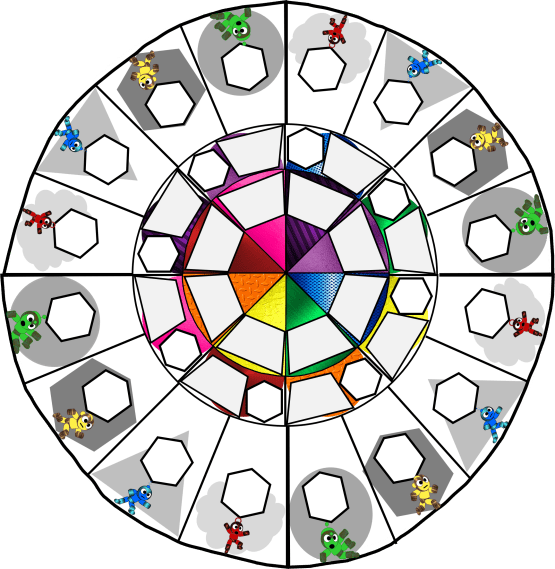
Oh my goodness. This game wasn’t just a different direction from my first Mega Man remix; it was different in every possible way. I didn’t keep any of Rondelande’s hardcopy versions. I only have the digital files, and it’s difficult to recreate what the game looked like without a physical copy. But I’ll try my best.

That’s a lot of color going on. Those are supposed to be three rondels (a circular game mechanism with pie wedges representing which actions one may take) stacked on top of one another. Each turn, players would place their gear tokens on one of the hexagon-shaped spaces and take the actions indicated. But before placing gears, players could play up to two cards (depicting one of the actions run, slide, jump, shoot, or climb) underneath the spaces on the outer edge. Players would then be able to take all the actions, including actions on cards, during their turn.

Note: The trapezoid spaces had different actions like draw cards or oil cans (that functioned as wild actions) or even rotating one of the top two rondels, so the action selection could vary.

Rondelande was a lot of fun. It ventured far from what I had originally intended to make. That’s the ADHD brain taking the wheel again. Unfortunately, Rondelande was a space hog. The image above is at least a twentieth of the size of the original game. Despite its size, Rondelande may have been a great game if I had stuck with it. I liked how players could build up the board as they went, benefiting themselves for a turn, but also allowing an opponent to take the same action in a future turn. Players could even refresh (take back their gear tokens) or choose not to refresh for a turn to prevent someone from taking an action their token is currently occupying. Rondelande was great. But something felt off. I wanted interlocking gears for the board because it made sense for a robot theme. I had chosen rondels because they were easier to build. And then I found gears that would work.

I found a file that could work for interlocking gears. Yay! As an aside, I was working on making this file work while producing my Mega Man variant and Rondelande, so a lot of what we’re about to discuss happened concurrently with the previous two games.

At first, I was using a lot of memory foam. Rondelande’s rondels were comprised of foam. I’d print out the digital files (of that rainbow nightmare above) onto full sheet labels and then sticker them over the foam and cut them out. I tried the same concept with the gear pictured above. And it worked…for like one playthrough of the game. Foam likes to shred under friction. Who knew? So, I put the interlocking gears aside until I found a set of wooden gears on Amazon.

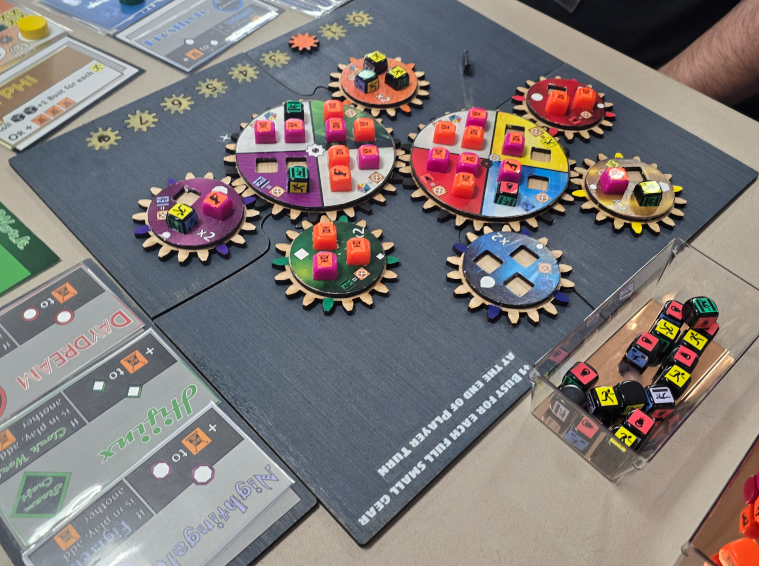
Yes! I was in business. I could continue with Rustbucket Riots. The picture above is a modern version of the game; the first version still used foam for its board (the gears haven’t changed too much). I still have a version of the first game and will include a picture of it in a future post. Rustbucket Riots combines multiple ideas. I brought back dice chucking from Mega Man, only this time, I used specialty dice that included run, slide, climb, shoot, and jump. And I always thought Tzolk’in’s gears didn’t move enough. I could fix two issues I saw in other games. Jasco’s Mega Man took too long, and Tzolk’in (Tzolk’in is an amazing game that earns its spot in BGG; I’m nitpicking) could have gears that frequently turn.

The name Rustbucket Riots came swiftly. Originally, I wanted to make a better Mega Man board game, but I couldn’t copy Mega Man exactly. So, I wondered if I could make the player characters villainous. The Boss Robots attempt to free themselves from an oppressive corporocracy and the humans using them as cheap labor, while the players assume the role of corporate robots tasked with bringing the rogue robots under control. Even though the Boss Robots would view what’s happening as a revolution, we’re playing this game from the viewpoint of corporate robots, and they’d see it as riots. Throw in a slur, and you get Rustbucket Riots.

I think that’s everything up to the idea of Rustbucket Riots materialized. We’ll cover early iterations of the game in the next board game design brain dump. If you’ve made it this far through my rambling, you’re awesome. You know it. Thank you for reading, and wherever you are, I hope you’re having a great day.
Tabletop Game Review: Cretaceous Rails

Cretaceous Rails combines trains and dinosaurs in one board game. Holy Fish Heads! That may or may not be a direct quote from the Cretaceous Rails game designer. Hey, hey! Kyra Kyle here. I’m doing something a little different with today’s board game review. As you might be able to tell, I know Cretaceous Rails’ game designer, Ann Journey, and the publisher Spielcraft Games. I’ll attempt to stay unbiased, but I wanted to be upfront about that relationship. In Cretaceous Rails, people have learned that dinosaur parks built in the modern world are too deadly. Instead, they send people back in time to witness dinosaurs in their natural habitat. Players compete to create the best dino safari resort experience. We’ll get to the game, but first, let’s discuss some disclaimers.

The Fiddly Bits

Designer: Ann Journey
Publisher: Spielcraft Games
Date Released: 2025
Number of Players: 1-4
Age Range: 14 and up
Setup Time: 10-15 minutes
Play Time: 45-120 minutes (depending on the number of players)

Game Mechanisms

Modular Board
Network and Route Building
Pick-up and Deliver
Worker Placement

Game Setup

Cretaceous Rails’ rulebook has a streamlined setup section, so I’ll be using the rulebook as the basis for this section.

Action Tiles

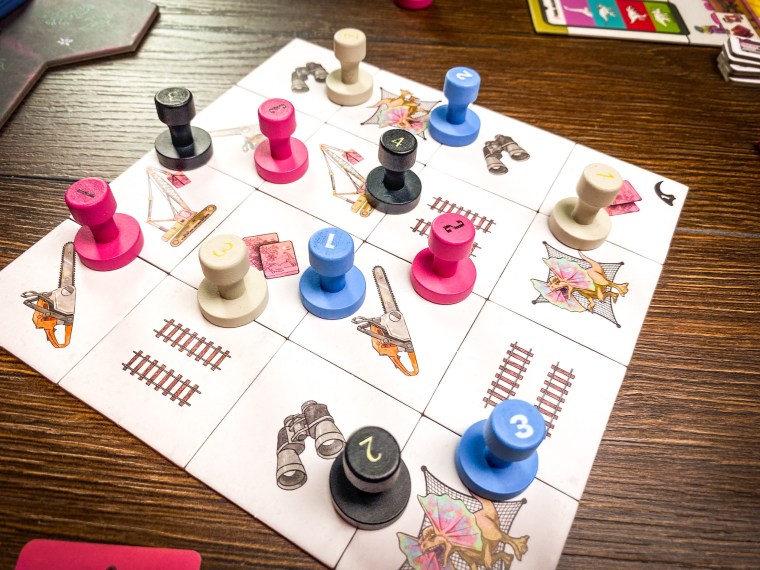
* Shuffle all 16 action tiles and randomly place them face up in a 4×4 grid within reach of all players to create the action grid.

* Place the first player marker on the Draw Cards action tile with the first player marker icon (shaped like a raptor claw).

Resort Card Display

* Place the resort card display board within reach of all players.

* Shuffle all 84 resort cards and place them face down in the resort card deck space near the resort card display board.

* Deal eight cards from the deck face up onto the eight spaces of the resort card display board.

* Place the round tracker on the dinosaur footprint labeled “1.”

Player Setup

Each player chooses a company. The only difference among the companies is the starting dinosaur, the beginning point value of dinosaurs, and aesthetics. None of these differences significantly affect the gameplay, so pick the company that looks cool or begins the game with your favorite dinosaur.

Each company gets:
* 1 Player board (all other items must match your company’s color and design)
* 4 Executives
* 30 Rails
* 1 Train Engine Tile
* 8 Train Car Tiles

* Place your Train Engine in front of your player board. This begins your train, but doesn’t count as storage.

* Place 2 Train Car Tiles behind your Train Engine Tile to form your starting train.

* Draw 1 card at random from the resort card deck and add it to your hand.

* Place the remaining Train Car Tiles, 30 Rails, and 4 Executives off to one side within reach.

* Take the tourist, dinosaur, and jungle token indicated by the icons on your player board and place them on their respective icons on your player board.

* Place the remaining tourists in the tourist sack.

Map Setup

* Place the starting map tile for the appropriate player count in the center of the table within reach of all players.

* Place 1 randomly-selected jungle map tile per player beside the starting map tile to form the map.

* Place one jungle token on each hex marked with a jungle token icon.

* Place a matching dinosaur miniature on each hex marked with a dinosaur icon. Each tile has two of Tyrannosaurus Rex, Triceratops, Titanosaurus, and Parasaurolophus.

* Randomly place 4 tourists from the Tourist Sack on each cabin hex and each player’s home hex.

Starting Positions

* Randomly select who goes first. Play will proceed clockwise from the first player.

* In reverse turn order, starting with the last player, select home hexes on the starting map tile.

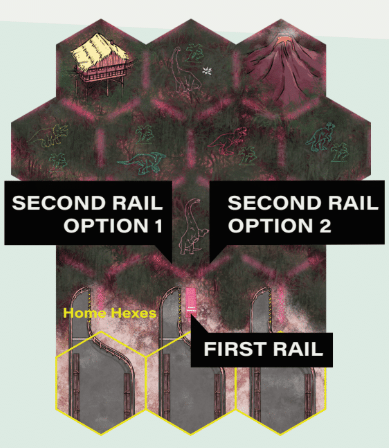
* When you select a home hex, place two Rails on the starting map tile. Place the first Rail on the line pointing out of your chosen home hex, and the second Rail on the line going to the left or right in front of the first rail.

HINT: Choose your home hex based on the dinosaurs and volcanoes near it, the tourists on it, and your plans for building your rail network into the jungle.

Game Flow

Cretaceous Rails is played over four rounds. Each player receives four turns per round.

Each turn, players will place an Executive on a vacant action space between two action tiles. Players will take both actions adjacent to the Executive they just placed. You may choose the order in which to take your two actions each turn. You can also forgo one of your actions and unload your Train Cars onto your player board.

Outside of unloading your Train Cars, there are six actions depicted on the Action cards: Lay Rails, Draw Resort Cards, Build Resort Cards, Clear Jungle, Safari, and Capture Dinosaur.

Lay Rails allows players to place two Rails (train minis) on the map, extending their company’s rail network.

Draw Resort Cards lets players draw Resort cards from the Resort Card Display Board.

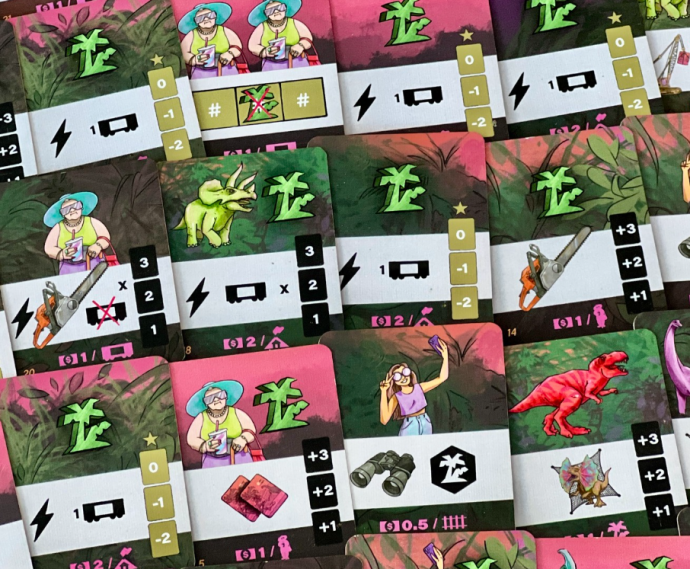
If you meet any number of Resort Card requirements and take the Build Resort Cards action, you may build any number of Resort Cards in your hand that you can legally place. The third (top) row can only hold as many Resort Cards as the number of Resort Cards in the second row. The second (middle) row can only have as many Resort Cards placed in it as the number of Resort Cards in the first (bottom) row. The bottom row has no restrictions. Go nuts! But most Resort Cards receive bigger boosts in higher rows.

The remaining three actions will add items to your Train Car Tiles that you will then have to unload in your player boards. These actions may cause you to replace one of your adjacent actions with empty Train Cars.

Clear Jungle has the player take a jungle token from any hex adjacent to their rail network. You must place the jungle token on one of your empty Train Cars. Jungle tokens aren’t refilled throughout the game. Once they’re gone, they’re gone. You cannot take the Clear Jungle action if you don’t have at least one empty Train Car.

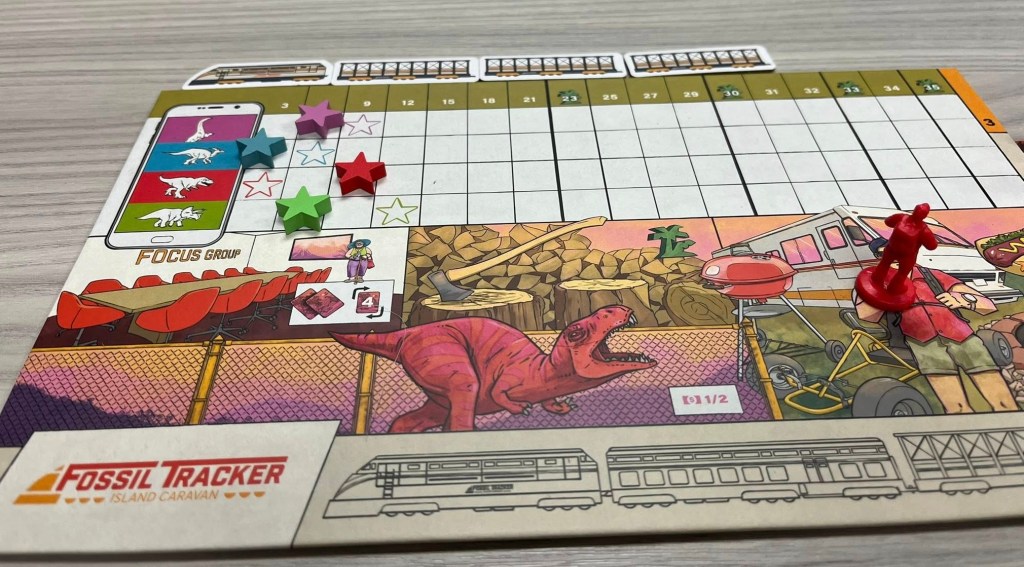
The Safari action has a couple of steps. Take a tourist from any hex adjacent to your network and place it in one of your empty Train Cars. Again, if you don’t have at least one empty Train Car, you cannot take the Safari action. You may not take a tourist from another player’s home hex. When you take a tourist, add up the number of dinosaurs adjacent to your rail network of the color and type that corresponds to the tourist you picked. Only count dinosaurs in hexes with no jungle tokens (your tourists can’t see through dense jungle). Each volcano adjacent to your rail network counts as a dinosaur of that type. Move the rating marker on your player board for that dinosaur color/type up the rating track that number of spaces. This number determines the value of each dinosaur in your resort.

Capture Dinosaur allows players to take a dinosaur from any hex adjacent to their rail network with no jungle token and place it in one of their empty Train Cars. Again, you cannot take the Capture Dinosaur action if you don’t have at least one empty Train Car.

End of Round

A round ends after all players have taken four turns each.

At the end of each round, perform these steps, in this order (skip these steps in the final round):
* Each player performs the Unload Train Cars action.

* Each player takes back all four of their Executives.

* Discard all eight Resort Cards in the display.
* Refill the display with eight new Resort Cards from the deck.
* Pick up all of the Action Tiles, shuffle them, and randomly distribute them into a new action grid.
* The player who took the First Player Marker this round places it back on its draw cards Action Tile. That player will go first next round.

End of Game

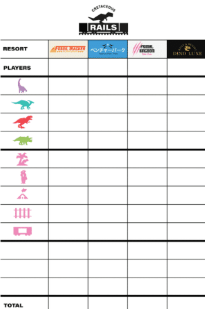
Each player performs the Unload Train Cars action one final time. Then, each player tallies their score. There are two sources of victory points: Captured Dinosaurs and Resort Card Scoring Multipliers. Players can use the scoring guide and pad to keep track of each player’s victory points. Whoever has the most victory points at the end of the game wins.

Review

Cretaceous Rails has two standout elements: the Action Grid and Resort Cards. Ann Journey says that she got the idea of the Action Grid from another game, but I haven’t seen this version of worker placement. It’s quick. The Action Grid gets shuffled and reformed, resulting in varied gameplay from round to round. What may be a good tactic in an early round may not be that good of a tactic in later rounds. The actions themselves are balanced and provide a lot of strategic possibilities. I can lessen someone’s safari bonus by capturing dinosaurs. I can play keep away by taking resources from the main map, while reserving my home hex’s tourists. And all of these actions work well with the Resort Card system.

I love how Resort Cards are placed. The bottom rows needing to be larger than the ones above them makes thematic sense if one thinks of the player board as one’s resort, which it is. You can’t have a top-heavy structure. The Resort Cards themselves are multi-use, and that’s one of my favorite game mechanisms, and a trend I like continued in more board games. Each Resort Card has three rows. The top shows what the player needs to place on the Resort Card to construct it. Any Dinosaurs placed on Resort Cards are worth their full value, while Dinos left on Player Boards are worth half points, rounded down. This does enough to entice players to build Resort Cards, even if they don’t stand to gain as much from the Resort Card’s effect.

The Resort Card’s effect is indicated in the middle row of each card. Many of these effects have levels that are determined based on which row you build the card. This adds even more tactical choices to each game of Cretaceous Rails. I don’t know how many times I took a penalty (like lowering a dinosaur’s rating) because I needed the effect of a Resort Card. And each Resort Card has endgame scoring modifiers at the bottom. Again, I’ve spent plenty of Cretaceous Rails games building Resort Cards that I only wanted for the endgame scoring. Players only score the Resort Cards they managed to build. This is the magic of multi-use cards. Love, love, love.

My main critique of Cretaceous Rails is that the game can run a little long. While individual player turns don’t take long, analysis paralysis can be an issue. I tend to plan my turns in advance and then adapt if someone takes the set of actions I want, but other players don’t play that way, and certain players—you know the type—can take extremely long turns. Cretaceous Rails is one of those games (specifically at higher player counts) where the board state can change a lot before you receive another turn, and I have second-guessed my decision on several turns.

The Cretaceous Rails box lists the game’s runtime as 30 minutes per player. However, it’s more like 45 minutes at the lowest player count and 30 minutes for each additional player after the first. Upkeep between rounds can take a hot minute. Typically, I have one player handle one part of the setup (like shuffling Action Tiles and resetting the Action Grid), while another player handles another part of the in-between round setup (like wiping the Resort Card Board and setting up the new round’s Resort Card Board). While Cretaceous Rails doesn’t have a lot of setup between rounds, it does slow down gameplay.

Despite the occasional gameplay slowdown, Cretaceous Rails does a wonderful job combining trains and dinosaurs, and that’s what the game sets out to do. Trains and dinosaurs together at last! The Rails (train minis) play out like a fusion of Ticket to Ride and Catan. Experienced gamers will have an idea of how they work; players new to the board game hobby may struggle. I also like how the trains are two-fold. While the network plays like Ticket to Ride, the Train Car Tiles provide a tasty dollop of resource management. Since every player unloads their Cars at the end of each round (even the last one), you’ll want to time when you unload your Train Cars in the middle of each round. So, time is a hidden secondary resource one must manage. I love it.

One final note: Cretaceous Rails’ production value is phenomenal. That’s something you can expect from Spielcraft Games. I know. I have a relationship with Spielcraft Games’ owner, but it’s true. Alex Wolf puts in a lot of work to ensure his games look top-notch. Getting back to Cretaceous Rails, if you’ve ever wanted to play a combination of trains and dinosaurs, Cretaceous Rails is your game.

Too Long; Didn’t Read

Cretaceous Rails captures its theme of gamers running a dino safari resort experience. While the game mechanisms interestingly converge, the multi-use Resort Cards and the Action Grid stand out. Cretaceous Rails offers plenty of ways to win, but that can also cause analysis paralysis and may not be the best for gamers who are new to the board game hobby.

Whatcha Playing, Geekly: July 2025

Happy Wednesday, Geekly Gang! The Geekly writers have another month of video games and board games to discuss, but we’d like to hear about the games you’ve been playing, too. Whatcha been playing, Geekly Gang?

Kyra’s Games

Kyra’s Video Games

I haven’t played many new video games this past month, but I have gotten into a decade-old mobile game, Clicker Heroes. Yes, this is a hella old mobile game, but it’s new to me. The monsters remind me of the monsters from My Singing Monsters. I’m guessing that’s on purpose. Oh! I may have to redownload My Singing Monsters. Clicker Heroes is a standard idle game. The idea of the game playing itself while you’re gone isn’t new (it’s at least a ten-year-old concept at this point), but Clicker Heroes does a good job of executing the gameplay. I wonder if I can level up my heroes enough to break the game.

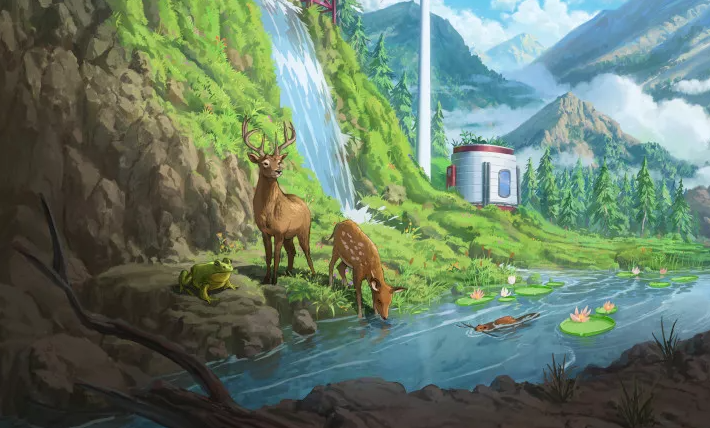
Just because I haven’t played many “new” video games doesn’t mean that haven’t been replaying games. Terra Nil and Dorfromantik have dominated my video game hours this past month. I’m writing reviews for both of these cozy games. These reviews should be posted in September. That let’s you in on how far into the future these reviews are. Terra Nil is an anti-city builder (you’re trying to reclaim the earth for wildlife), while Dorfromantik is tile tile-laying video game, where you’re building a pastoral landscape. Both are chill games. I love playing them for the vibes.

Kyra’s Board Games

My gaming group has played even more Flip 7 over the past several weeks. Flip 7 is one of those games we play as a warm-up or as a quick change of pace game. Essentially, Flip 7 is a large group game of Black Jack with specialty cards. The game’s easy to pick up, scales really well, and is a great way to bring in people who aren’t already board game enthusiasts. My Monday gaming group meets at the public library, so we get a lot of random people who walk up to the table. Flip 7 works as an introductory game. It combines just enough new elements with a classic card game.

Prior to joining my gaming group, I hadn’t played many Set Enterprises card games. But we’ve been playing Quiddler, which is a quick and fun word-building game, and Karma, where players try to empty their hands, but they have three cards face-down that they don’t know what they are until they’re played. I’m a bigger fan of Quiddler than Karma, but I appreciate what Karma’s trying to do. The face-down cards cause enough chaos that they even the playing field of a standard card-shedding game. Still, there’s a little too much luck involved (for my tastes) with the Set Enterprises card games I’ve played. But I do really like Quiddler. It’s short enough that I don’t mind the heightened aspect of luck.

I could talk about a handful of other board games, but I’m certain Season and Skye may mention them in their write-ups. I won’t swoop in with any of their entries. Speaking of which, let’s see which games Season and Skye have played over the last month.

Skye’s Games

Skye’s Board Games

I’ve heard good things about Cretaceous Rails for a while–mainly from Kyra and Season–but I haven’t played it until now. I had fun. Cretaceous Rails is a simple board game about creating a dinosaur tourist resort by time-traveling to the past. While I didn’t do so well my first time, I rarely do, I still enjoyed Cretaceous Rails enough to want to play again. Cretaceous Rails is one of those games that has several interesting elements that can only be properly explored across multiple playthroughs. I intend to “git gud.” Also, it’s trains and dinosaurs. Together at last! What’s not to love?

Skye’s Video Games

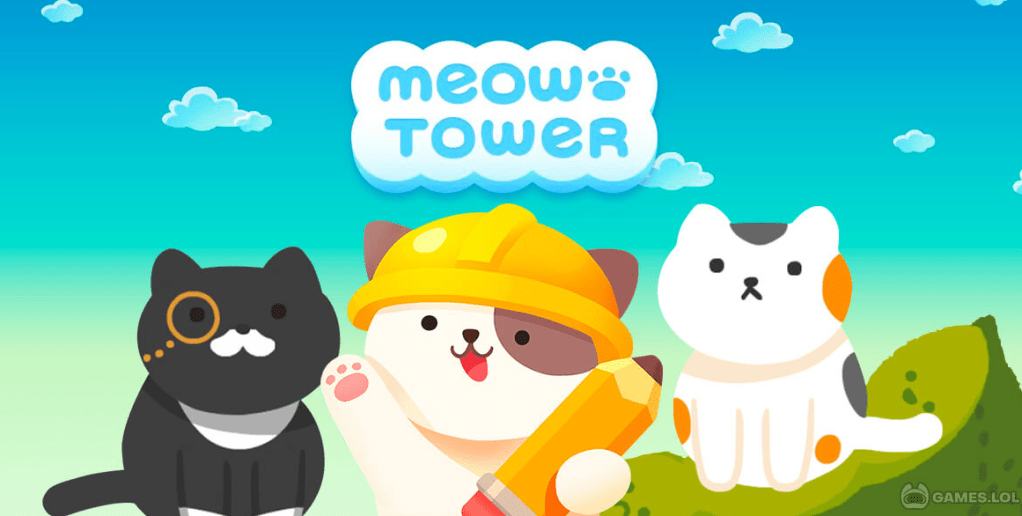
Over the past month, I’ve migrated back to mobile games. Meow Tower is one of the phone games I’ve discovered. In Meow Tower, you’re a human making an apartment building for cats. That’s pretty much it. You get to know each of the cats individually; you design each of their rooms to their liking. You progress through Meow Tower by solving puzzles, specifically Nonogram puzzles. If you’re unfamiliar, Nonograms are spatial puzzles that force you to uncover hidden images given the available clues. If you like brainteasers and cute cats, Meow Tower is a great leisure game.

Last Stronghold is another phone game. I know, I lost a good amount of gamer-cred this past month. Last Stronghold is a basic zombie survival game. What appeals to me about Last Stronghold is its focus on building up your base, exploring the world around you, saving other survivors, and shooting zombies in the face. I just described every zombie game in existence. Dang it. My favorite thing about Last Stronghold is its art style. Call me petty, but that’s pretty much it. With it being an offline phone game, Last Stronghold also has a significant element of leisure to it, which allows you to go at your own pace. Last Stronghold is by far the most benign zombie apocalypse I’ve ever seen.

Season’s Games

season’s board games

Wingspan is technically a board game, but I’ve played the Steam variant. I’m still counting it since I have physical copies of Wyrmspan and Finspan. It’s like the same thing. The interface on Wingspan is easy to follow. Players can tab between different zones, and the game will remind them in which order to take actions. It’s definitely easier to learn how to play Wingspan through the Steam version since there’s a tutorial. My only nitpick with this version is that players must remember which birds are holding eggs whenever they need to spend eggs. Players can click on the zone where said bird is, but there isn’t a separate interface.

season’s video games

I completely forgot a Persona 5 gacha game was getting released on June 26th. I got an ad for it on YouTube the other day and was like, “Oh. Yeah. I forgot that was a thing.” I’ve gotten a decent way through the story so far, and it’s definitely made me nostalgic for the original Persona 5. The combat hasn’t changed, except that it can be sped up, and they’ve included auto-battles. Some other minor differences include synergy between characters instead of confidants, and, as far as I know, there isn’t a finite amount of time to complete the story.

Persona 5 The Phantom X has players progress the story similarly to the original Persona 5. You must complete the first Palace and learn mechanics. Story-wise, it’s better than other gacha games. I wouldn’t expect anything less from a Persona game, even if it’s a free-to-play gacha game. I’m also digging the character designs. Unlike most gacha games, there are an even number of men and women characters, and they’re adequately dressed. I’m not a fan of boobs in my face. Just saying.

Side note: I pulled for Joker and got him on my first ten pulls. I’m a huge Joker simp lol.

Hey, hey, Geekly Gang! Kyra Kyle here again. Those are all the games our writers have played over the past month. Feel free to share the games you’re playing. Thank you for reading, and wherever you are, I hope you’re having a great day.
Whatcha Playing, Geekly? June 2025

Hey, hey, Geekly Gang! Kyra Kyle here. We have a new month and a new Wednesday, so it’s time for Whatcha Playing. The Geekly writers and I will share the games (video games and tabletop games) we’ve been playing over the past month. Feel free to share which games you’ve been playing, because we’re all part of the Geekly Gang.

Kyra’s Games

As always, I won’t include any of the gacha games I typically play. If I ever stop playing Wuthering Waves or Honkai: Star Rail, I’ll let you know. I also don’t include prototypes of tabletop games I’m developing, like Rustbucket Riots, Whirligig Pets, No Jack, Weeds, or Spill the Beans. Of course, I played those. With that disclaimer out of the way, let’s get to the games.

Board Games

I finally got Sky Team to the table, and it’s excellent. This two-player only game features a fast back-and-forth between one player as the pilot and the other as the co-pilot while they attempt to land a plane. Technically, players aren’t supposed to speak during rounds, but I allow minimal communication. Sky Team is a cooperative game, after all. Players simultaneously roll dice and then place them in their designated spaces, blue for the pilot and orange for the co-pilot. Both roles have specific duties.

Naturally, I chose Skye to be part of my first play of Sky Team. You can’t have a Sky Team without Skye. We played the tutorial and narrowly lost. Skye immediately wanted to play again, and we were able to land the plane on our second try. Sky Team includes numerous scenarios, and I can’t wait to try more.

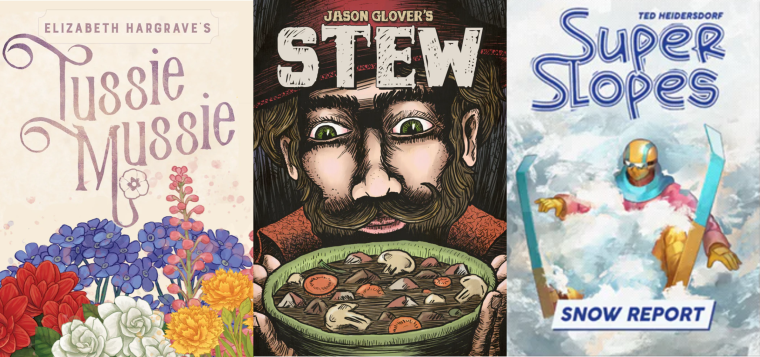
I’ve played many Button Shy Games over the last month, and the above three games are standout titles. Elizabeth Hargrave’s Tussie Mussie has a great push pull of which flower do I want to show my opponent and which to keep secret. Your opponent will choose between the two flowers: known and unknown. Jason Glover’s Stew takes a similar concept of having partial knowledge of what’s in the Stew because you know which cards you’ve played and not the ones your opponents played. If you think there are enough points in the stew, you call stew and count up points; players gain points if they guess correctly, but their opponents gain points if they guess incorrectly. And Ted Heidersdorf’s Super Slopes is a crazy game of branching slaloms down snow-capped mountains.

I’m hooked on Button Shy Games. This company packs a lot of game into a small package, a wallet to be exact. I mentioned Button Shy Games in our Stocking Stuffer Games list in December. These games are great options for that, but for $12 apiece, Button Shy Games are good any month of the year. I love their portability. I can pack twenty to thirty of these in less space than one standard board game.

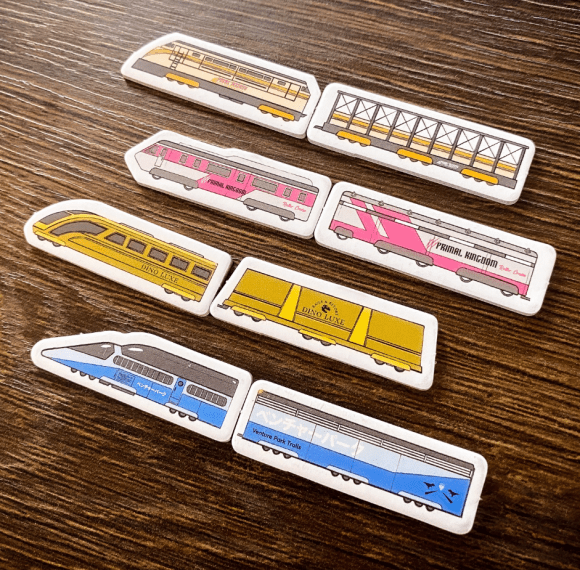
Technically, I haven’t played much Cretaceous Rails over the last month; I demoed the game for countless gaming groups. Dinosaurs and trains together at last! Really? I’m surprised the combination of dinosaurs and trains hasn’t happened before Cretaceous Rails. Anyway, I’ve played plenty of this game in the past. It’s over-the-top in its production value. Who doesn’t love four different train miniatures? Seriously, the train minis aren’t just different colors, they’re different train models.

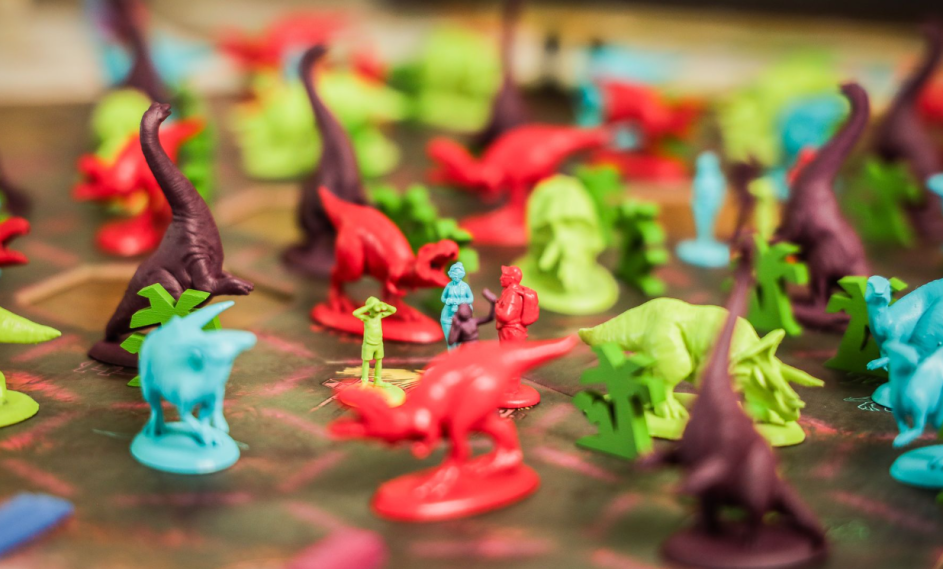
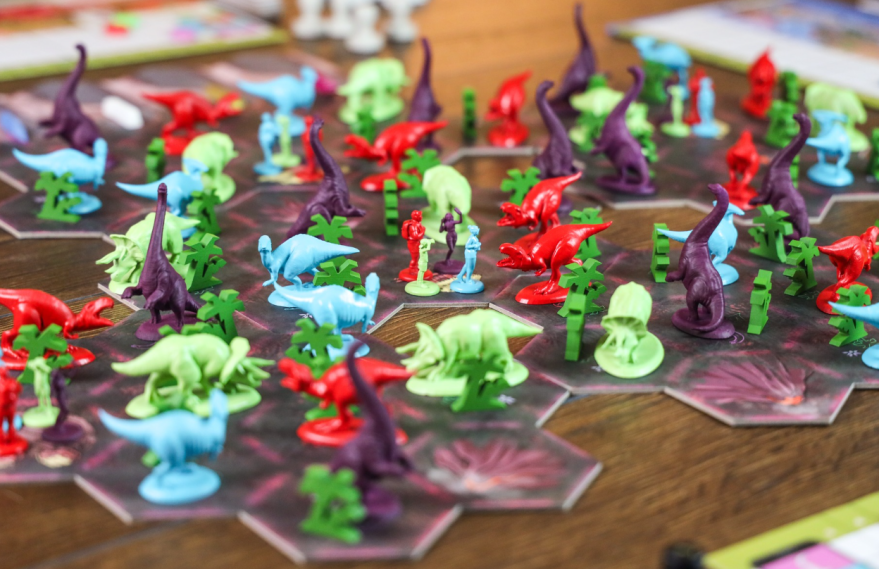
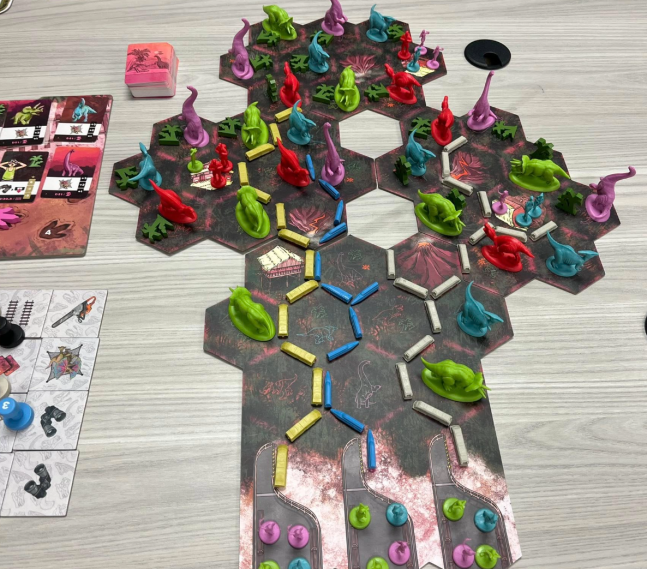
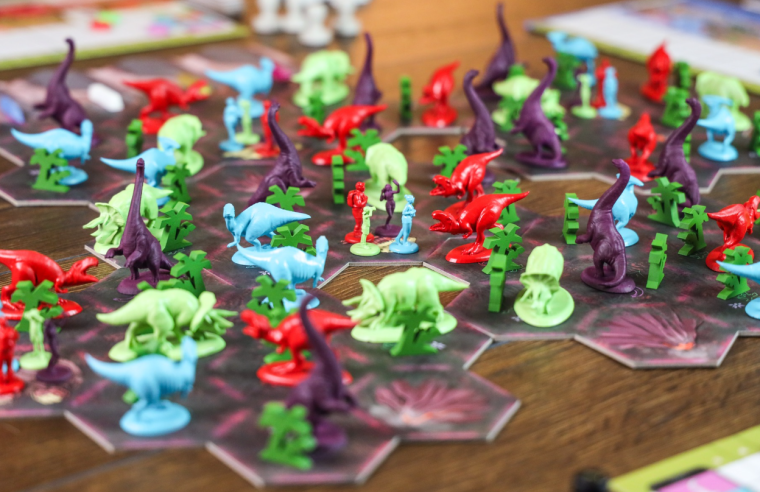
Cretaceous Rails features dinosaur miniatures. Simply put, it has table presence. You’ll hear this game roar from across the room.

Video Games

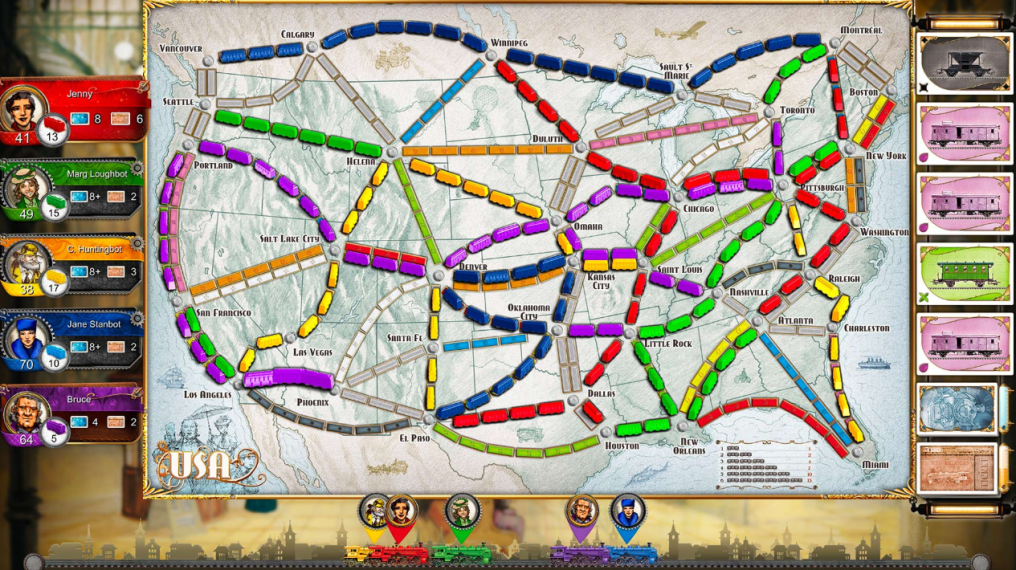
I know. I know. Ticket to Ride is another board game, but I played the version ported to the PlayStation 4, so it counts as a video game. I always loved the simplicity of Ticket to Ride. Collect enough train cards of a single color, match them to routes (between two cities), and connect cities on the ticket cards you have in your hand in a continuous route. Ticket to Ride modernized Rummy for the modern board game community. The PlayStation 4 version of Ticket to Ride is a great port of the game.

While I prefer the physical version of Ticket to Ride to a digital one, the production value is great. The base game includes the classic United States map and the Europe map. I’ve played Ticket to Ride: Europe a few times before last month, but picking up this copy (on the cheap) has led to more plays on the Europe map. I like the USA map more, but that’s because I don’t know if I quite understand how stations work. Whoops!

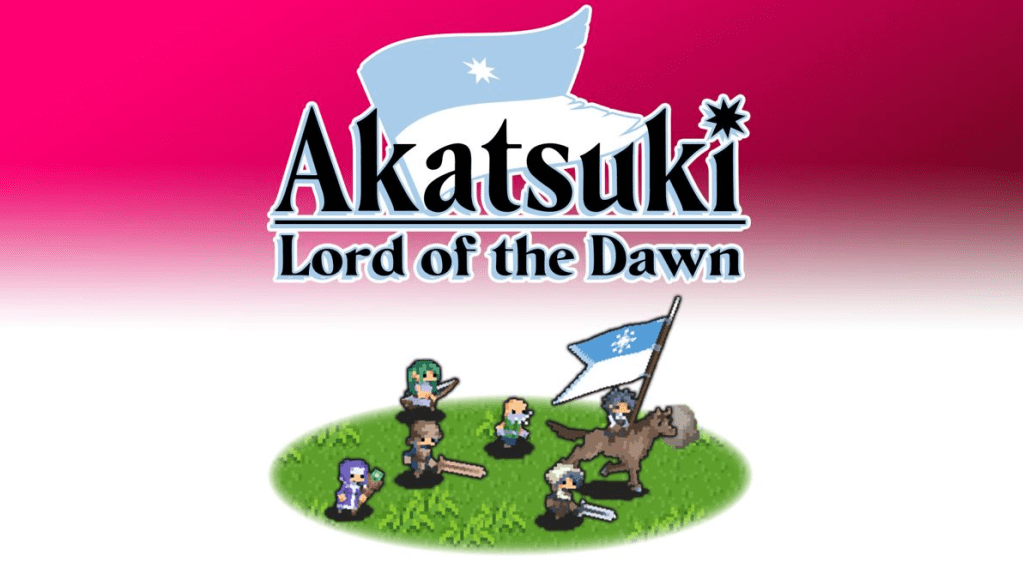
Akatsuki: Lord of the Dawn has a silly name. Akatsuki means dawn in Japanese, so the game’s title is Dawn: Lord of the Dawn. Tee hee! Anyway, Akatsuki: Lord of the Dawn is an army RPG. The story didn’t hold my interest. The game mechanisms were interesting–especially Akatsuki: Lord of the Dawn’s method of combining building an army and a country–but the game overstays its welcome by one island. By the time I finished the penultimate island, I had done all the game had to offer. The final island is four times the size of the previous island, and my final hour or two of gameplay was mindlessly autobattling a hundred or so territory tiles.

On a personal note, I saw a screenshot similar to the one above and thought Akatsuki: Lord of the Dawn used a card-driven combat system and got excited. The bottom left-hand corner looks like it could be a hand of cards, but no, it’s a head’s up display made to look like a hand of cards. Oh, well. Akatsuki: Lord of the Dawn was on sale for super cheap, I picked it up, and aside from the final island, I enjoyed my time with this indie game. Akatsuki: Lord of the Dawn took about twenty hours to finish.

That’s what I played this past month. Let’s check in with Season and Skye.

Skye’s Games

I have good news and bad news. The bad news is that I haven’t played many new video games this month to report to y’all. I got super addicted to Ghost of Tsushima and ended up playing non-stop. At least I have a platinum PlayStation trophy to show for it. The good news is that I spent this past weekend at Protospiel Twin Cities.

I typically don’t play board games unless I’m with my friends or family. Honestly, it doesn’t happen as often as it should. Last weekend, I had a unique opportunity to drive up to Minneapolis with our very own Kyra Kyle and play a host of different prototype board games. Behind these games were several different and talented designers.

Protospiel was an amazing experience. Kyra Kyle has been developing games of their own (which they’ve mentioned before), and I got to play them. I love playing Rustbucket Riots and Whirligig Pets. I even got to demo these games more than once. Co-op dice placement and programming adorable robot dogs and kittens. What’s not to love?

But I also had the pleasure of playtesting countless others. Most of these games have working titles or may not be ready to advertise, so most will be unnamed. Among the board game standouts were a simple and effective airline management game, a goofy cooking show contest game, an international travel game, and Spielcraft’s upcoming Primacy (a resource management/conquest game set in a dystopian future).

One of my favorite prototype games centered on becoming the “Master of the Seasons.” I liked its straightforward gameplay, fast-paced turn system, unique artistic design, and emphasis on strategy/point cultivation. If I ever see that game in stores, you bet I’ll be picking it up.

Season’s Games

board games

Woo-hoo! I was able to get some board game time under my belt. Elizabeth Hargrave’s Finspan got review-bombed before it even hit the shelves. I enjoyed Wyrmspan and have 3D printed resources I bought from someone in my hometown. I decided I’d collect everything in the Span series. Finspan is more streamlined than Wyrmspan and features an open hand mechanic. Players dive into the water, gather resources, and complete objectives. There are a finite number of turns each round (or week), so the game doesn’t drag.

One of my favorite things about Finspan is the attention to detail. The designers tried to be as scientifically accurate as possible to the real-world fish featured in the game. There are some artistic liberties, but you can find all of the fish in Finspan in our oceans today.

Video games

My Pokémon addiction returned when I spotted Pokémon Shining Pearl at my local GameStop. I don’t always keep up with the latest Pokémon games, but I’ll play a new one (well, new to me) every few years. Pokémon Shining Pearl is similar to previous games in the Pokémon franchise, but it features a location called the Grand Underground. After players complete the main game and unlock the National Pokédex, they may access a wider variety of Pokémon. There are way more legendary Pokémon to catch in Pokémon Shining Pearl than I’m used to in previous games, so that’s been a blast.

Kyra Kyle again. That does it for this month’s Whatcha Playing. What games have you been playing? Let us know in the comments. Thank you for reading, and wherever you are, I hope you’re having a great day.