Quarriors!

Designer: Mike Elliott and Eric M. Lang
Publisher: WizKids Games
Date Released: 2011

Number of Players: 2-4
Age Range: 12 and up (14+ on the box)
Setup Time: About 10 minutes
Play Time: 30 minutes or less

Game Mechanics:
Deck/Pool Building
Dice Rolling

Game Flow and Review:
Take one of the hottest game mechanics, deck building, and add the random mayhem and speed of dice rolling, and you get one exciting game: Quarriors. Or should I add the title’s exclamation point: Quarriors!?

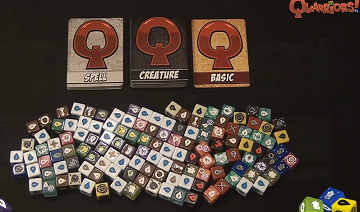
Like the deck building games that came before it, a game of Quarriors! starts with each player owning a pool of basic dice. These basic dice even the playing field, giving each player the same quantity of Quiditity (dice used for currency with which to purchase other dice, cast spells and summon creatures) and Assistants (the pawn-like creatures of Quarriors!). The players take turns, purchasing dice from the wilds a communal set of dice where players can add to and upgrade the dice in their personal dice pool, and dealing damage to their opponents with their spells and creatures.
Quarriors03

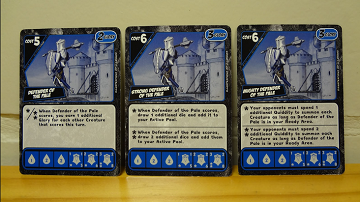
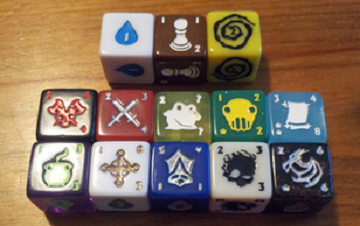
Each die you can claim from the wilds has variable statistics and abilities depending on which face of the die you roll. The wilds are composed of three types of dice: basic, spell, and creature dice. The basic dice include more of the ones you start the game with and portal dice that allow players to grab more dice out of their dice bag per turn. Very helpful. The spell and creature dice complicate the Quarriors! gameplay further because each one of these come with four corresponding cards of different power levels. These cards explain what special effects the dice have, and the twist on gameplay provided by these cards assures a different gaming experience every time you roll the dice. There are thousands of combinations.

Quarriors02

Players win the game by scoring glory points, and players score glory points at the beginning of each turn, and the glory a player scores is dependent on the number and type of creatures they have in play. Stronger creatures, like the dragon, net you more glory points, can take more damage, and deal more damage to opposing creatures, so these dice are desirable, but these bigger creatures also have a higher price tag than their weaker counterparts.

Conversely, the smaller creatures, like the goblin, can be purchased and summoned for a lot less and they—sometimes because of the variable abilities printed on the four cards associated with the goblin dice—receive defensive and offensive bonuses based on the number of goblin dice in play. This makes for some fast-paced, sharp decision making.

As if this wasn’t enough, Quarriors! has levels on most of their creature dies, so you may not roll into the side of a goblin die that will give you a bonus. If this is the case, you have to make a decision whether to keep the weaker goblin with no effect or return the goblin die to your bag in the hopes of rolling a better goblin in the future.
Quarriors06

Spell dice are little more straightforward. Players only pay for them once (creatures have an initial cost to purchase the die and a summoning cost). Spells only have whatever effect is written on their corresponding card, and some of these abilities can cut down a large creature. The death spell—sometimes because of the various cards for the dice—can instantly kill an opponent’s creature die. There’s more than one way to slay a dragon.

Other spells can boost the amount of glory points you earn per turn, heal your creatures, or allow you to purchase more than one die from the wilds. It takes gaming experience to see a winning combination of dice and their abilities at the onset of a game, and even then you may lose to another tactic.

But there are certain dice you’ll want to have if you can purchase them before your opponents. The weakest dragon is still better than most other creature dies. The death spell that instantly kills is a great die to pick up, too, but the other versions of the spell leave a little to be desired. The goblin works well, but you have to have a boosting mechanic.

Then, there are dice like the wizard, who must be more of an alchemist because he’s giving his owner fool’s gold. He’s almost as expensive as a dragon and his abilities look amazing on paper until you try to pulling off his power in the middle of a game. But I’ve seen people win games with the wizard. That’s a testament to Quarriors! balance.
Quarriors05

Games can get lopsided. The winner may be determined within minutes of gameplay, but this is a bearable problem. Quarriors! is so fast, you’ll be playing another game in fifteen minutes or so. And there’s no way you’ll play the same game twice.

Verdict:
Some creatures and spells are usually better than others, but the inclusion of dice rolling, levels to the creature dice, and the variable powers dictated by the die’s associated cards create a singular gaming experience each time you play Quarriors!. This deck/pool building game isn’t a one trick pony. You’ll find multiple ways to win any given play through of this shot of adrenaline.


Say What Quiz: Week of September 22, 2014

There are plenty of quotable comic book characters. Here are some more of their colorful sayings. Can you match the quote with the comic book character who said it?

Quotes:

1) It’s how you get the mysteries of the Universe to fit on a bumper sticker.

2) Truth is a subjective concept, one to be accepted or rejected depending on the viewer’s prejudices.

3) We paid our fare just like anyone else!

4) What you say is reasonable, logical, justifiable. But does that make it right?

5) Thing is, just because it’s me saying it doesn’t make it wrong.

6) Not even in the face of Armageddon. Never compromise.

Characters:

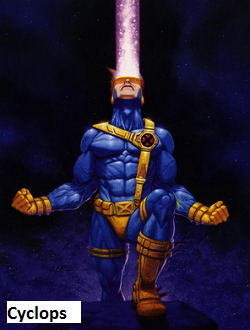
A) Cyclops

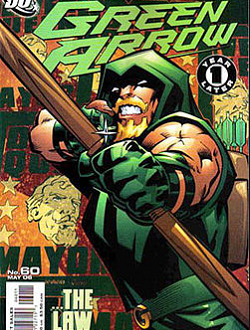
B) Green Arrow

C) Howard the Duck

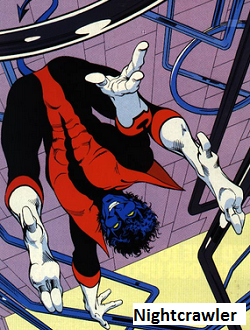
D) Nightcrawler

E) Rorschach (Watchmen)

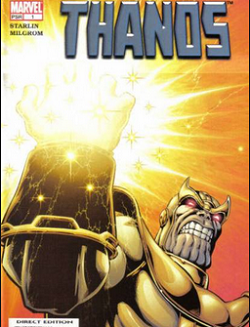
F) Thanos

GeeklyAnswers

Quiz Answers: Say What Week of September 22, 2014

1: C (Howard the Duck); 2: F (Thanos); 3: A (Cyclops); 4: D (Nightcrawler); 5: B (Green Arrow); 6: E (Rorschach, Watchmen)

HowardTheDuck01

It’s how you get the mysteries of the Universe to fit on a bumper sticker.

Thanos01

Truth is a subjective concept, one to be accepted or rejected depending on the viewer’s prejudices.

Cyclops01

We paid our fare just like anyone else!

Nightcrawler01

What you say is reasonable, logical, justifiable. But does that make it right?

GreenArrow01

Thing is, just because it’s me saying it doesn’t make it wrong.

Rorschach01

Not even in the face of Armageddon. Never compromise.


Spotlight: Legacy

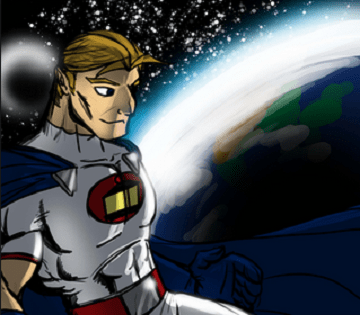
SotM_Legacy05First Appearance: Sentinels of the Multiverse: Base Game
Who he is: Leader of the Freedom Five, Sentinels of the Multiverse’s main superhero group
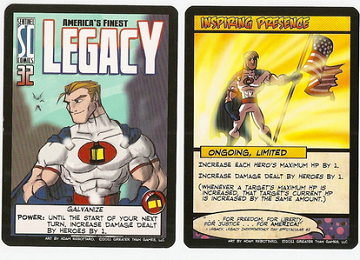
Innate Power: Galvanize: Until the start of your next turn, increase damage dealt by heroes by 1.
Primary Damage Type: Melee
Secondary Damage Type: None
Nemesis: Baron Blade


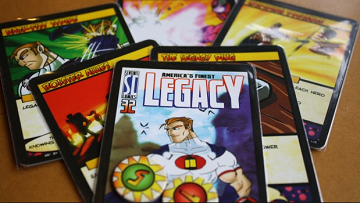
Deck Concept: Legacy is the lovechild of Captain America and Superman, and his deck reflects those two influences. His Captain America side supports his teammates, while his Superman side can overpower his foes with a bevy of superpowers and allows him to function as the team’s tank, redirecting damage dealt to his teammates to himself.
Deck Strength: The Legacy deck is straightforward but can morph from support to dealing damage. Players can use this versatility to match the game’s flow.

SotM_Legacy02
Best Team Support Card: Inspiring Presence: Increase each hero’s maximum HP by 1/Increase damage dealt by heroes by 1.
Best Personal Support Card: Danger Sense: Prevent damage that would be dealt to Legacy by environment cards.
Best Attack: Flying Smash: Legacy deals up to 3 targets 3 melee damage each.
Deck Weakness: Most games Legacy should focus on helping others, he’s the Lebron James of the Sentinels of the Multiverse, but sometimes he should take the shot. It can be difficult to know when he needs to assume a particular role.

SotM_Legacy03
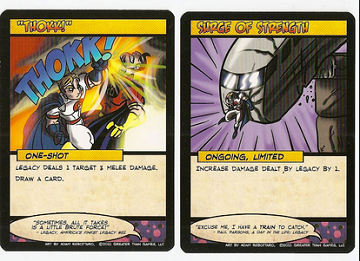
Worst Card: Surge of Strength: Increase damage dealt by Legacy by 1.
Ultimate Team-up: Legacy’s the leader of the team. He works well with just about anybody with his boosts to damage, health increases and card draw. Tempest, Fanatic, and Tachyon benefit a lot from Legacy’s power boosts as they have cards in their decks that deal small amounts of damage to a lot of targets. Players of Tachyon and the Wraith also enjoy the extra card draw as this game mechanic feeds into their decks. Any hero with a low HP loves Legacy’s tank ability. But Absolute Zero is the most interesting team-up. He doubles any damage boost he receives which means Legacy’s damage boosts are doubly delicious.

SotM_Legacy01

Geekly TV: September 18, 2014

The Awesomes

TheAwesomes01

The Awesomes turned on a fire hose of character introductions, ensuring that we couldn’t possibly latch on to any of them. This latest episode introduces two new villains and the titular superhero team’s European counterparts.

A grand total of nine new characters (that’s two-fifths of a character every minute of the show, including the intro and closing credits) were introduced and discarded like empty candy wrappers. What’s worse is that most of the story was an elaborate cheat to reunite Hot Wire, the Awesome’s estranged team member, with Prock the team’s leader. Even worse than that is when the only meaningful new character for this season receives similar treatment to the ones we’ve known for five minutes.

The writing saw Prock’s new girlfriend turn uncharacteristically psychotic and reveal a latent power—there was never a hint that anyone in her family had even met a superhero prior to Prock—that seems tied to her mental break. To be fair Prock’s girlfriend has dropped hints up to this point that she could pull an Annie Wilkes (Kathy Bates’s character from Misery), but this doesn’t support the sudden power surge.

Maybe I’m just bitter that one of the most annoying members of the cast, Perfect Man, receives another lengthy story arc. Like most of Perfect Man’s story arc’s this season he mimics a movie franchise or movie trope, and his story has nothing to do with any of the other action. So you can up the ratio to almost a one character introduced in every watchable minute of the show.

There were some bright spots in this episode. Impresario sweet talking a comely, French hunchback is good for some chuckles, and while we don’t get to know any of the new characters well, most of their powers are hilarious since they have no practical application: crotch puncher (he has an extra-large left hand with which he uses to punch people in the crotch, perfectly every time). Or the European Awesomes take a classic superpower and make it ridiculous: the Flying Dutchman sprouts windmill blades out of his back, and the blades work like a helicopter’s rotors.

There’s another silver lining. We should have all the introductions out of the way. Let’s hope the show gets back to the core group of characters, and a lot of these issues are resolved in the two part season finale.

Comic Book Reviews for the Week of 9/17/2014

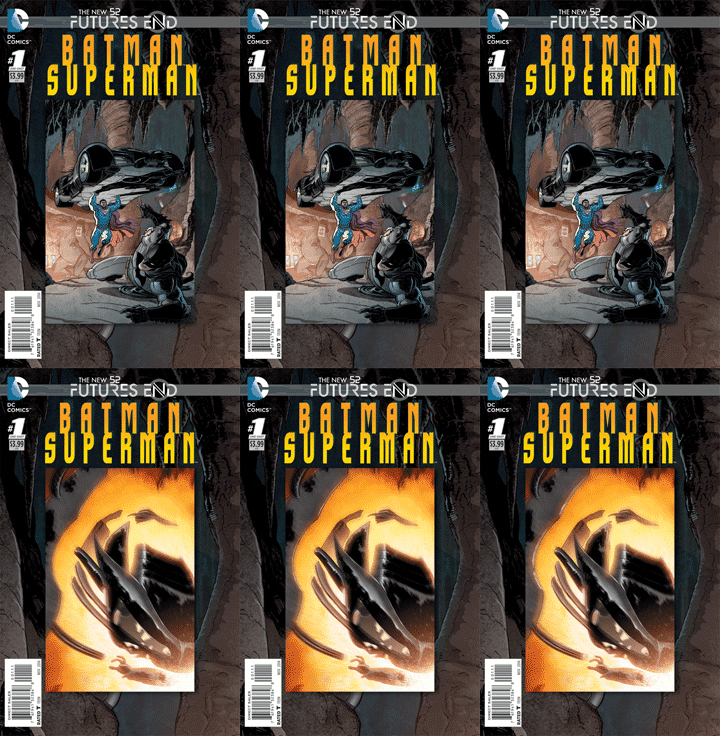
Batman/Superman: Future’s End #1


Batman_Superman_Futures_End_1

DC Comics

Pak/Richards/Herbert & Cifuentes


It’s hard to do a Batman/Superman book with Superman out of commission, but Gregory Pak manages to explore the characters largely through their relationship. It’s done from Batman’s point of view, and it succeeds more than it doesn’t.


The artwork in the piece looks sharp throughout, but as is the case with any book that uses several artists, the shift between the different styles can be jarring. As with last week’s books, I have to clarify that I’m not on board with the main Future’s End title, but as far as the tie-ins go, this is one of the better reads I’ve encountered.


Verdict: Not bad


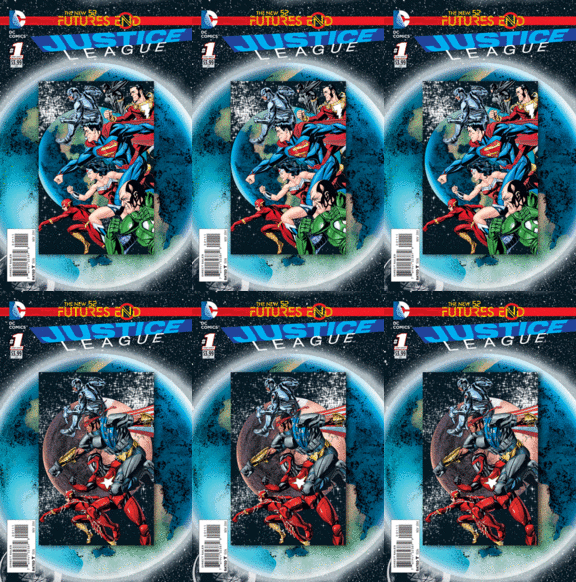
Justice Leage: Future’s End #1


Justice_League_Futures_End_1

DC Comics

Lemire/Dougherty


As much as I hate to do this, I have to climb on my soap box with this one. The reason being that this is not truly a Justice League book. It’s actually a tie-in to a Justice League United storyline, and I don’t read United. Naturally, I was lost for most of this book, and I felt a bit betrayed by DC. It may be my own fault, since I should have noticed Jeff Lemire (of Justice League United) penned this issue, but I struggled to find my footing for at least the first half of the book. There’s something to like about it. There’s an enticing team-up involved in this leg of the story, and the artwork is up to expected standards, but unless you’re following Justice League United, I can’t recommend this in good conscience.
 

Verdict: Skip it


The Superior Spider-man: Edge of the Spiderverse #33


SuperiorSpider-man33

Marvel Comics

Gage/Camuncoli


Going back into the realm of the Superior Spider-man can be a bit of a shock to the senses after readjusting to the return of Peter Parker, but if you enjoyed Otto as Spidey, you get a lot of what made that run successful in this issue. As a whole, Edge of the Spiderverse has been a bit tricky for me to keep a grasp on. The story sometimes feels convoluted, but where this issue succeeds is in its demonstration of character development.
 

Verdict: Worth a look.


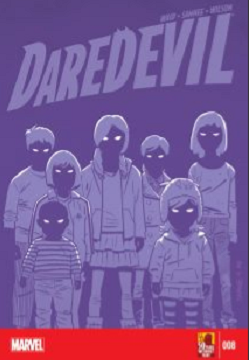
Daredevil #8


Daredevil8

Marvel Comics

Waid/Samnee


This issue begins a new leg of the story. There’s still a lot more of Matt than Daredevil in this issue, but the time is spent developing his new love interest, and it’s done well enough to hold interest. We see Matt deal somewhat with celebrity, and even get some interaction with the San Francisco Police Department. In this respect, there feels like there’s some fleshing-out of the new setting with this book, and that makes it a rewarding read. My only complaint is once we do get a little action in this issue, the layouts and artwork make it slightly difficult to follow.


Verdict: Worth a look

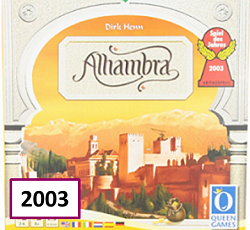
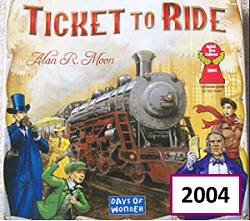
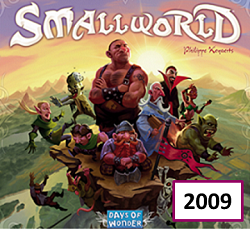
Timeline: Modern Board Games

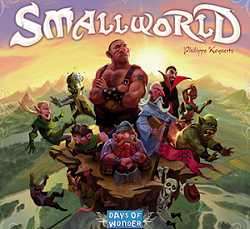
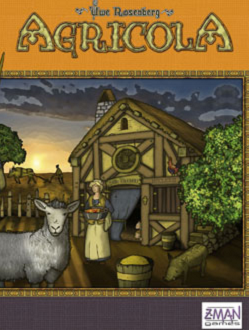
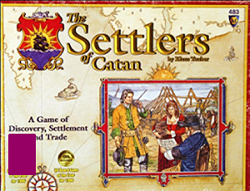
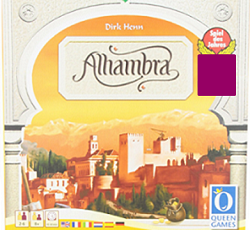
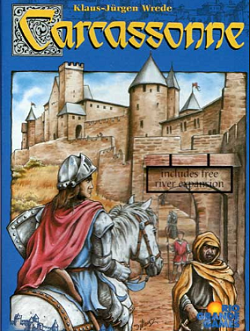
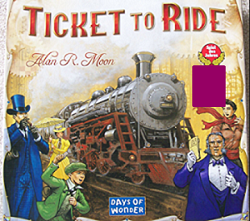
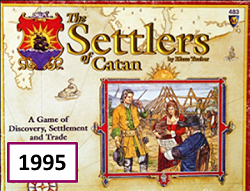
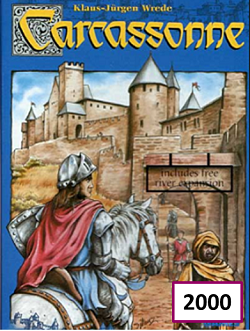
Now that we’ve done a couple of timelines for the golden age of comics, it’s time for us to switch gears to games. Board games in particular. The following games have become modern classics. We put them in a random order. Can you name these games in the order in which they were released?

SmallWorld01   Agricola04  Settlers01

Alhambra01  Carcassonne01  TicketToRide01

GeeklyAnswers


Quiz Answers: Modern Board Games Timeline

Settlers02  Carcassonne02  Alhambra02

TicketToRide02  Agricola05  SmallWorld02

Happy tenth anniversary, Ticket to Ride. Were you able to guess the age of the other five games in this group? Let’s see how we did.

All 6 correct) You built the longest route by taking the rail from New Orleans to Houston. The player to your right cursed you as you blocked them from the western half of the United States. You don’t say a word. You just smirk.

4-5 correct) You aren’t on top at the moment, but that’s nothing a horde of alchemist ghouls couldn’t fix.

2-3 correct) You’ve got meeple to meet and animeeple to brand. What are you doing playing our silly game?

0-1 correct) You’re offering wood for sheep. Anybody? Wood for sheep. You’ve got wood. You need sheep.

Sentinels of the Multiverse

Designer: Christopher Badell, Paul Bender, and Adam Rebottaro
Publisher: Greater Than Games, LLC
Date Released: 2011

Number of Players: 1-5
Age Range: 10 and up (8+ on the box)
Setup Time: About 10 minutes
Play Time: 10-90 minutes

Game Mechanics:
Cooperative Play
Hand Management
Variable Player Powers/Abilities

Game Flow and Review:
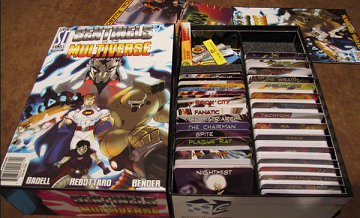
Assemble your friends and play as a team of super heroes. If you’ve ever wanted to be a member of the Justice League or the Avengers, Sentinels of the Multiverse comes close to fulfilling that dream. Really. Team members of the Sentinels are quirky amalgams of Avengers and Justice League members. But no, nothing comes close to having your own superpowers, but Sentinels comes as close as you can get to having powers without getting pelted with cosmic rays.

Sentinels03

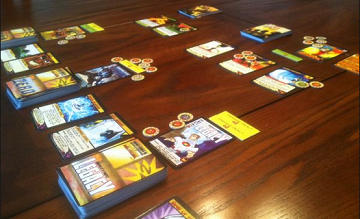
Sentinels takes the variable player power mechanic (where each player has their own hand of cards and powers) found in games like Munchkin and adds a co-operative element. To be fair, Sentinels acts a little like a Bridge version of Munchkin, where players have their own deck and team up to play against two dummy decks (the villain and environment decks: more on these two decks in a moment). But who knew that helping your buddies can be more fun than stabbing them in the back?

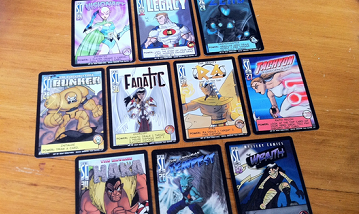
Players choose a hero. Each hero deck tweaks the basic rules and flow of the game, so you should try each hero to tell which style of play you prefer. These decks have different twists to them, so it doesn’t feel like everyone’s playing the exact same hero, but there is some overlap in powers.

Sentinels05

Some of the heroes have a natural rapport: Wraith and Tachyon need draw power to get the most out of their decks, and The Visionary’s ability grants draw power to other players. Other heroes don’t work as well together. There are so many possible poor combinations, but the most glaring one would be having Fanatic—who should be renamed Martyr—in play and not have another hero who soaks up or redistributes some of the damage dealt by the villain. Speaking of which, there are a few heroes that can dictate who receives damage: Bunker, Legacy and Haka can act as bullet shields and re-directors, while The Visionary can generate decoys and even take herself out of battle until you draw into a better hand. But almost all of the heroes can deal massive damage to the villain given the proper circumstances. It’s finding the right conditions to meet these circumstances that can be frustrating and leads to the single concern of the game.

As I mentioned in the data above, games range between 10-90 minutes. That’s a huge window of time. Some games are over before they begin with the heroes or heaven help you, the villain with the decided advantage, while other games can slog on for close to two hours. Most games clock in between thirty minutes to just under an hour, so it’s rare that a game ends too quickly or drags, but it does happen.

Sentinels02

Then there’s the added spice of the villain and environment decks. Both the villain and environment have turns and at the beginning of each of their respective turns you must play the top card of the corresponding deck. Each in play villain card resolves every villain turn, while the same is true of environment cards during the environment turn. Environment decks, based on locations like Metropolis and Jurassic Park, are for the most part neutral. Some environments favor the heroes, but if an environment does favor one side, it’s usually the villains.

Just like the superhero team, villains win if all the heroes are knocked out of the game, but some villains have win conditions separate from total domination, and that’s where hero abilities become important. Baron Blade (a mad scientist type) can win the game if he has 15 cards in his discard pile. (This win condition is explained as Blade’s villain trash fueling his tractor beam which causes the moon to collide with Earth.) But every time a hero defeats one of Blade’s minions, the minion’s card is placed in the trash, so you either have to take a lot of damage from Blade’s lackeys, focusing all the heroes’ damage on Baron Blade or someone has to play as The Visionary and use one of her abilities to shuffle the villain trash into the villain deck to avoid the villain’s win condition.

Sentinels04

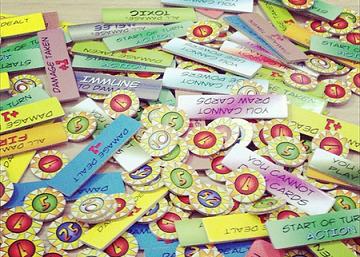
The publisher Greater Than Games adds new twists to the Sentinels of the Multiverse gameplay on a regular basis. They released an iOS app to keep track of hit points which is a godsend. Without this app you’ll clutter your table with several dice or counters. But my favorite addition to this game is the accomplishments page which mimics trophies for video games. I played a game with some friends on the Insula Primalis environment (the Jurassic Park look-a-like), and our team was getting owned by whatever villain we were playing, but then a hungry T-Rex from the environment deck was played and dealt the killing blow to the villain. We were upset that we didn’t actually win the game outright until we found out that “Let the T-Rex win” was an accomplishment, and we marked it on our accomplishment sheet as being completed.

Verdict: Yes. The gameplay can be unbalanced from time to time, and you’re flying blind when you first start this game (we’ll start a new blog series of which heroes work best together and against certain villains in the near future), but Sentinels is a blast to play with friends or by yourself if you’re hard up for other players. Besides, you get to have superpowers.

Quiz Answers: Say What Week of September 15, 2014

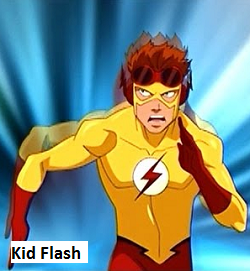
1: E (Superman); 2: D (The Falcon); 3: A (Man-Thing); 4: C (Kid Flash); 5: B (Batman); 6: F (Nite Owl)

Superman02

Every time a man raises his hand against his neighbor in the name of his faith, he renounces his faith.

TheFalcon01

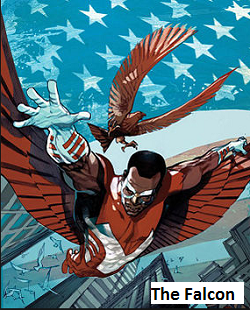
Nobody’s got so many friends that he can afford to start losin’ ‘em.

ManThing01

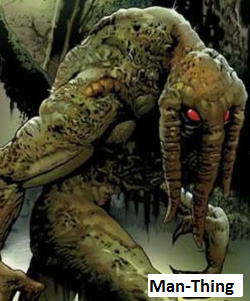
If rich guys like you can’t be happy in this world, what chance have the rest of us got?

KidFlash01

The real proof of a man is not how he treats his friends…but his enemies.

Batman02

Nothing turns my stomach more than a “man” who tries to prove he is one by striking a woman!

NightOwl01

You know how hard it is, being your friend?