Top 5 Horror-Themed Board Games

Happy Spooky Season, Geekly Gang! Kyra Kyle here. We’re celebrating the season with our list of the top five horror-themed board games. There are way more horror-themed board games than you might think. Heck, there were way more horror-themed board games than I thought there were. I left a lot of great games and some former favorites off this list. So, you know we’ll have at least one honorable mention. Yay! Let’s see the game that just missed this list, before we get to the ones that made our Top 5 Horror-Themed Board Games List.
Honorable Mention: The Night Cage (2021)

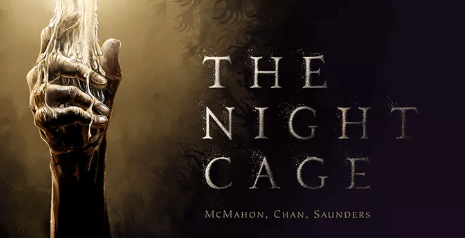
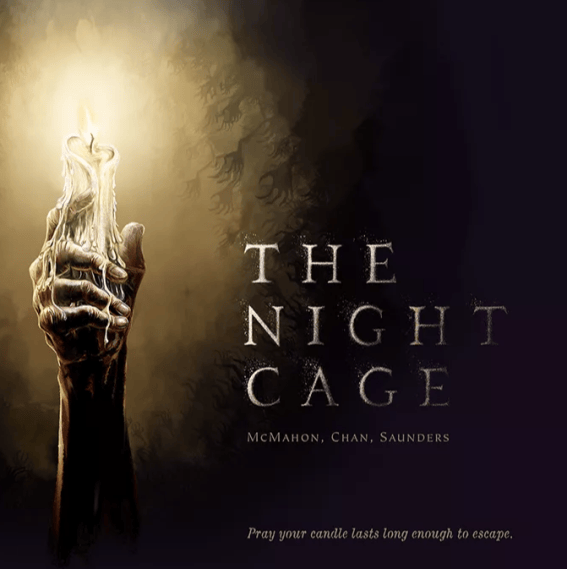
The Night Cage just misses this list because I may not have played it enough. Plain and simple. I have yet to play enough of this title, and I’d love to see it hit the table more. The board doesn’t look like much (without the tiles it’s a simple grid), but pulling tiles from the candle-shaped draw pile is so thematic.
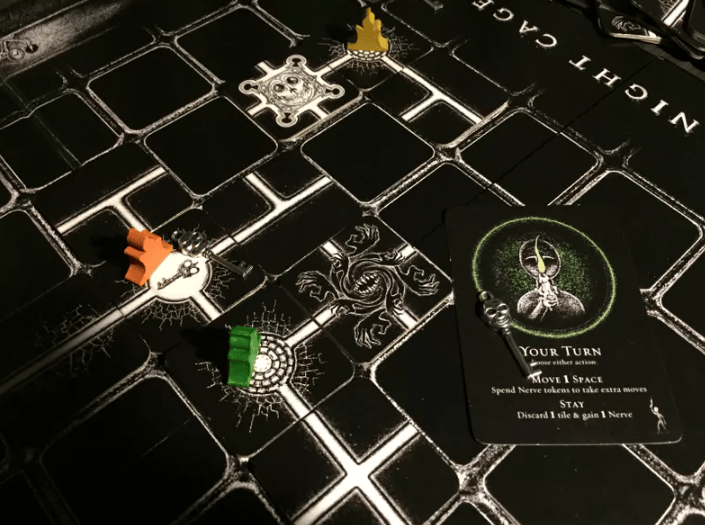
Building out The Night Cage’s labyrinth is a lot of fun, too. And it doesn’t hurt that Smirk and Dagger Games produced an accompanying soundtrack for The Night Cage. Talk about going above and beyond with creating a mood. The Night Cage leans heavily into atmosphere. Each game is a tense prison break. You’ll need to keep your wits to survive.

This list was super tough to make. There are a lot of games that could’ve claimed the sole honorable mention spot: Kingdom Death Monster, Abomination, and Dead of Winter are just a few. We could make another list of the Top 5 Cthulhu-themed games. There are so many great horror-themed board games.
5: Cthulhu: Death May Die (2019)

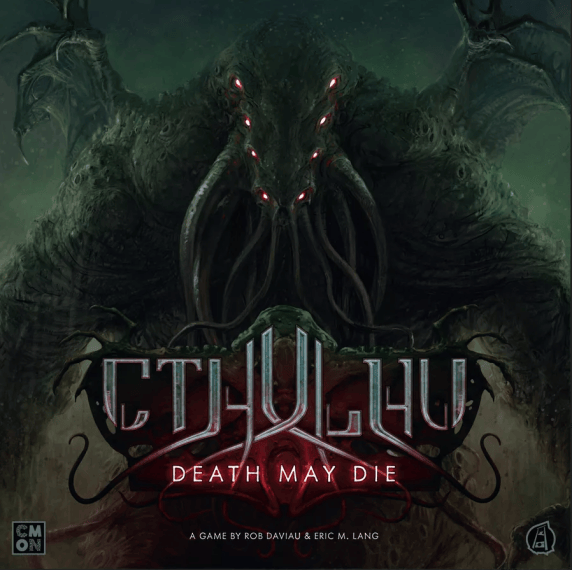
Yes. I’m a Rob Daviau and Eric M. Lang fan. And yes, several other games can scratch the same itch as Cthulhu: Death May Die. Kingdom Death Monster comes to mind; Kingdom Death Monster is another game one could consider an honorable mention for this list. But I prefer Cthulhu: Death May Die. It would be higher on this list if I had played more than a handful of times.
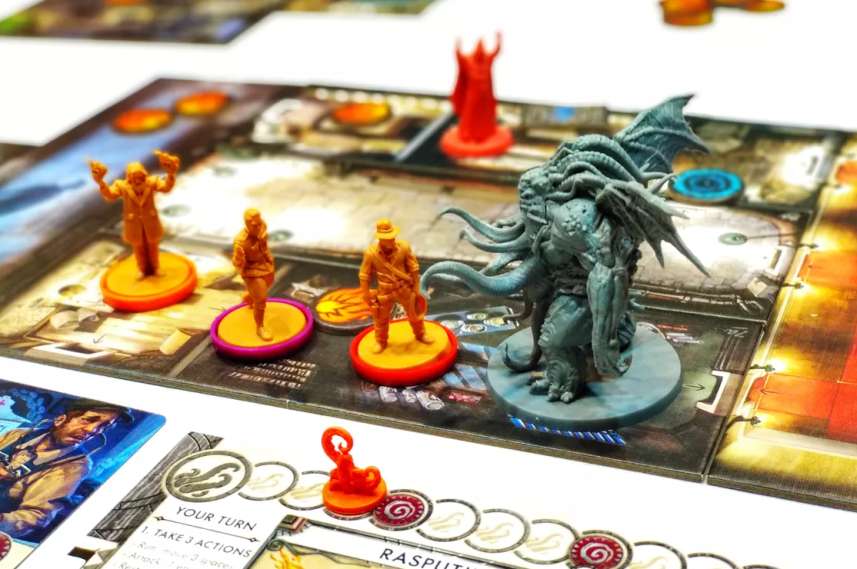
Unique player powers and an ever-changing narrative that seldom plays out the same way twice. Cthulhu: Death May Die adds a bombastic sense of humor to a sometimes overly serious intellectual property. I appreciate that, too. This game needs to hit my table more often. Maybe then it’ll climb the ranks on a list like this.
4: Betrayal at House on the Hill (2004)

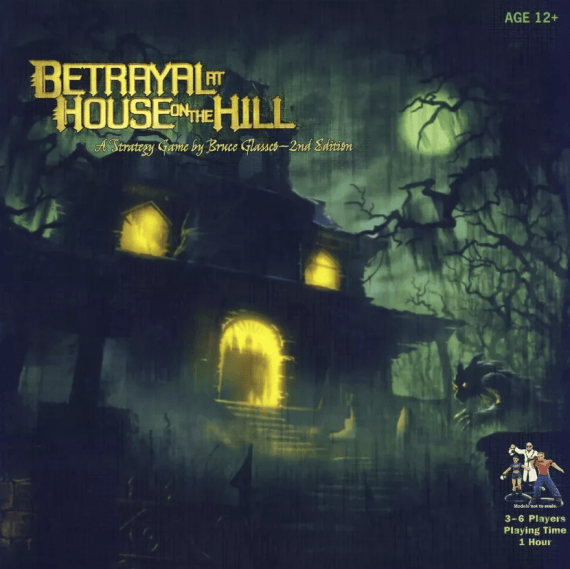
I love Betrayal at House on the Hill. It’s one of the first horror-themed board games I ever picked up after returning to the board game hobby. Again, I had plenty of great horror-themed board games to choose from for this list. Betrayal at House on the Hill (Betrayal for short) plays out like the movie Cabin in the Woods. Players search the titular house, a mansion players build as they play the game. Whenever an Omen card is drawn, the player who drew the card makes a haunt roll. If the roll fails, the haunt begins. Typically, one player works on behalf of the house, and the rest fight against the traitor.
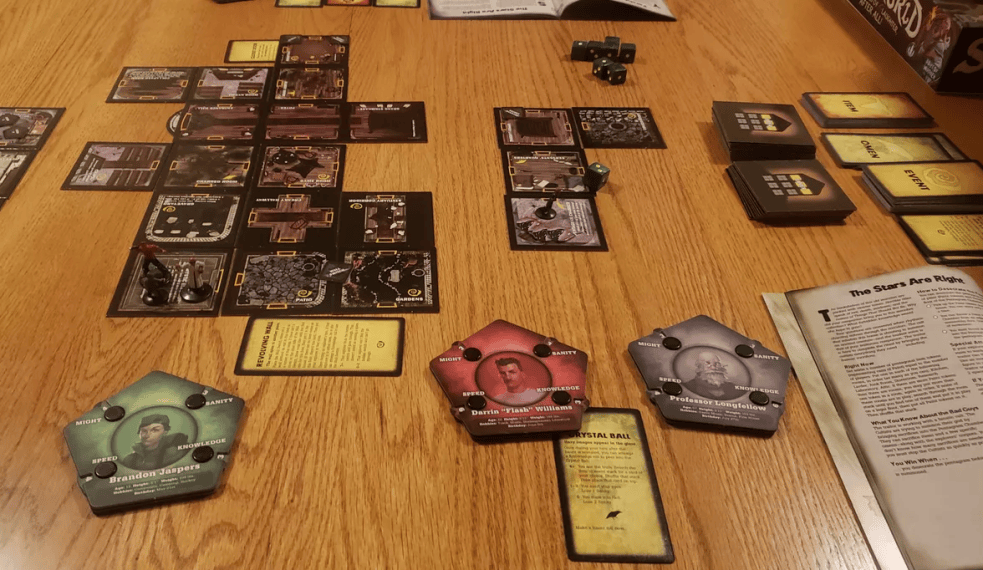
Word of caution: Betrayal can crumble under the weight of the haunt. Some haunts prove difficult to understand, and gamers can misplay numerous aspects of the haunt. I played one where I was the traitor, my former teammates attacked me, but my character wanted to perish. The other players played into my win condition. No two haunts are the same, so just because players understand one, it doesn’t mean they’ll comprehend the next one. And many of the haunts are unbalanced. Some favor the explorers, while others favor the traitor. Still, my family plays Betrayal at House on the Hill at least once every Spooky Season. If you want a story and exploration, it’s an excellent pick.
3: Final Girl (2021)

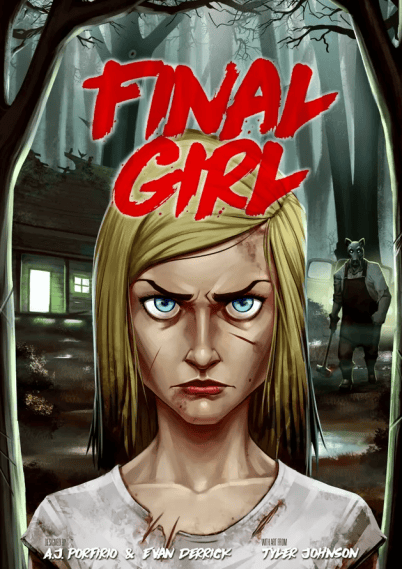
I knew Final Girl would make this list, but placing the game would be difficult. I went with the classic three-spot for a game that fits this bill. Whenever I craft one of these Top 5 lists and have one odd entry in the list, not knowing where to place the game (or insert element here), that’s the one I place at three. Final Girl may be the best solo-only board game on the market. It’s definitely the most famous solo-only board game out there. I’ve played it a few times, and I’m hooked.
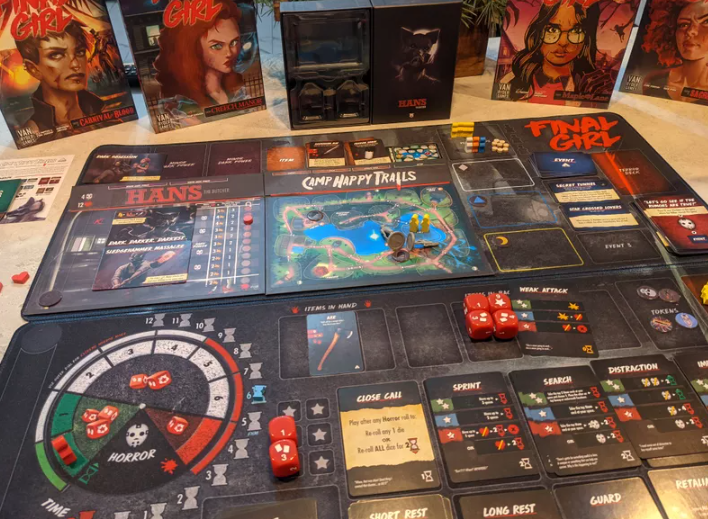
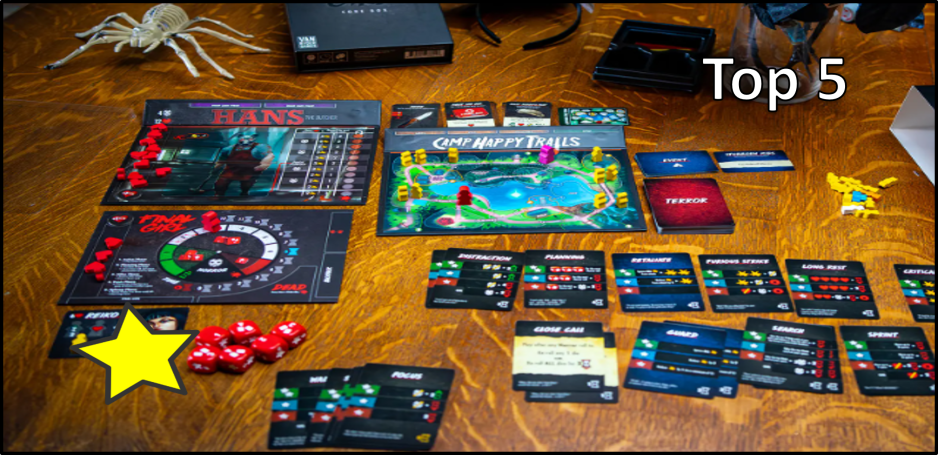
I can hear some of you complain that Final Girl has a lot of game for a solo board game. Just look at the picture above. You’d think this game facilitated four or five players. Nope. It’s a solo board game. Yowza! That’s a lot of table space for a solo-gaming experience. I’m getting off-topic, but I’ll just say that massive solo games are good for the hobby. Not everyone has enough friends to play games, or they struggle to find times that work to play with their game group. Quick rant over. If you’re going to play a solo board game, you can’t go wrong with Final Girl. It captures its theme brilliantly. You are a final girl trying to survive until the end of a horror movie. Final Girl may look complicated, but the elements work so well together that you can’t help but pick up the rules quickly.

Plus, Final Girl is the only solo board game to make BoardGameGeek’s Top 100 Games. I know that BoardGameGeek has its flaws, but Top 100 for a solo board game is impressive.
2: Mansions of Madness: Second Edition (2016)

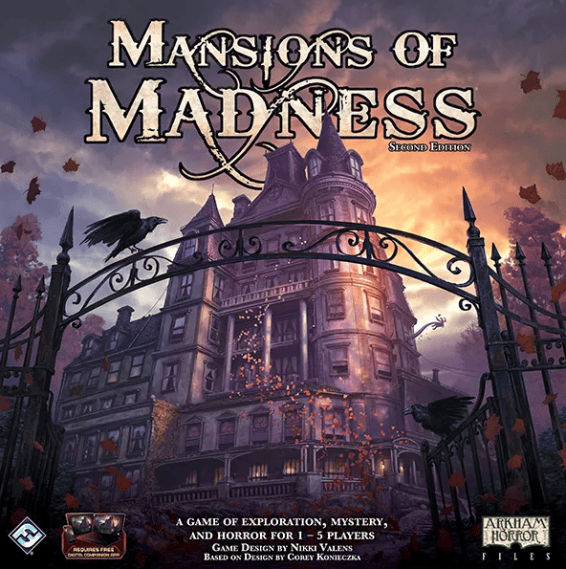
Mansions of Madness: Second Edition does a great job of incorporating an app with a board game. I know. I know. This is yet another controversial pick. Two in a row. Some board gamers are purists. They don’t want to own a game that has an app you’ll need to download to a smart device. But Mansions of Madness: Second Edition is so worth it. The game does accommodate solo play, but part of the joy is teaming up with players to solve various puzzles and unearthing what the followers of Cthulhu have planned.
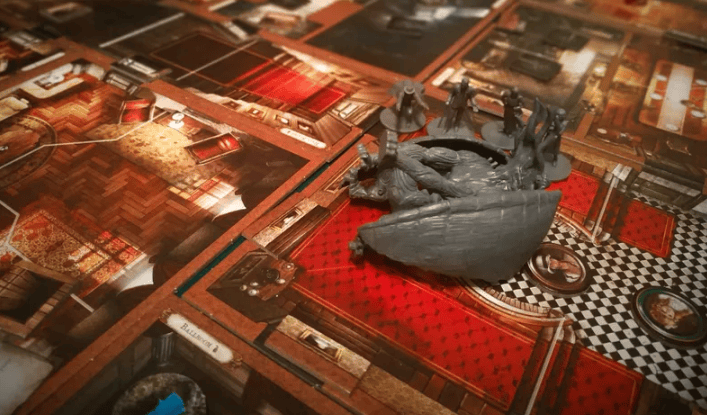
The Mansions of Madness app will also change details for each scenario between different plays. I played the exact same scenario twice in a row, figured I knew who the cultists were, and attacked those characters, only to realize that the details had changed, and they pointed the finger at different characters. My bad. We lost that game miserably. But the fact this can happen validates Mansions of Madness: Second Edition’s app. I don’t always have the time to invest in a scenario of Mansions of Madness, but whenever I do, it never fails to add a touch of cinema.
1: Horrified (2019)

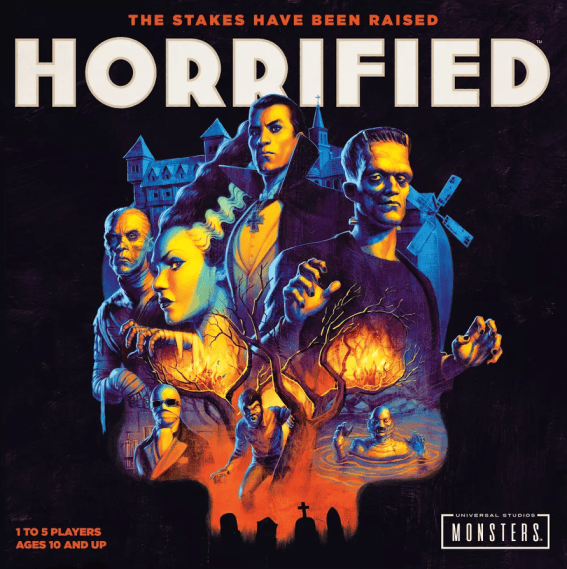
Horrified has dominated the horror-themed board game category ever since it released in 2019. I have all the variants of this game, and we play every Horrified variant each Spooky Season. Ironically, I’ve played the original Horrified the least. I’ve enjoyed every play of the original, but we prefer American Monsters, Greek Monsters, and the Dungeons & Dragons variants best. Speaking of the Dungeons & Dragons Horrified game, I’m writing this post early and before the next variant, Horrified: Ravenloft, another Horrified game set in the Dungeons & Dragons universe, releases. I can’t wait to add the new one to our yearly rounds of plays.
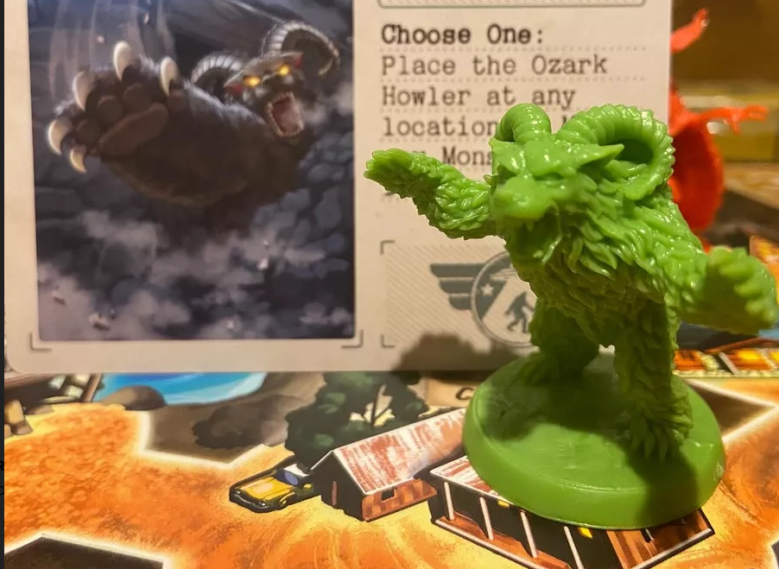
Each Horrified monster behaves differently. Some will openly attack players. Others, like Big Foot, will actively avoid players. Heck, you’ll have to prove Big Foot even exists. The original Horrified has a good mix of various difficulty-setting monsters. American Monsters and Greek Monsters up the ante. World of Monsters gets a little too tough with some monsters. And the Dungeons & Dragons Horrified adds D&D elements. What’s not to love?

Ultimately, pick a genre of monster you would like to face and throw down with that version of Horrified. Prospero Hall does a great job of capturing the essence of most of these monsters. The fact that players take on two or more of these monsters at a time means that you’ll seldom get the same game twice.

By the time you’re reading this, I’ll probably have played all or most of the titles on this list. Like I said, there are so many fantastic horror-themed board games. What are some of yours? Let us know in the comments. Thank you for reading, and wherever you are, I hope you’re having a great day.

Whatcha Playing, Geekly? August 2025

Happy Wednesday, Geekly Gang! Kyra Kyle here. Since it’s Wednesday, we have another post from our Whatcha series. Today’s topic is games, both video games and board games. We’ll hear from Season and Skye soon, but I’ll kick things off this post with the games I’ve been playing over the past month.

Kyra’s Board Games

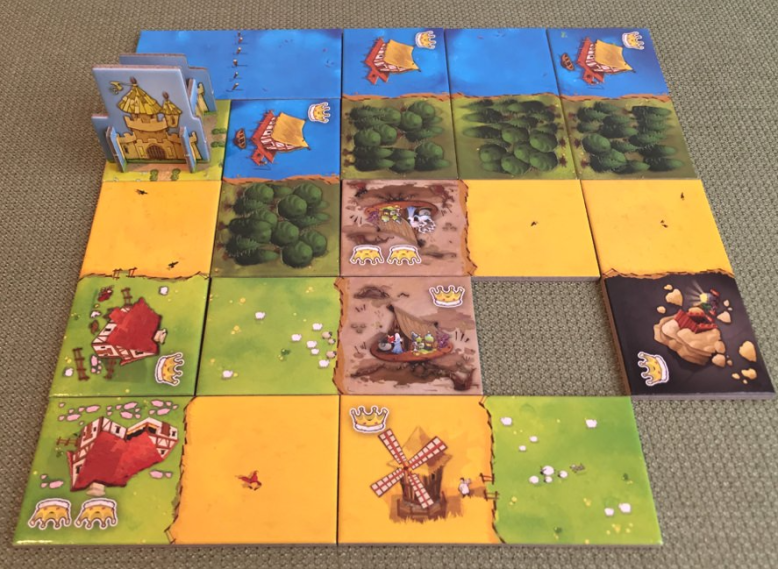
Bruno Cathala’s Kingdomino takes the simple mechanism of laying dominoes beside a starting castle (domino piece) and allows players to build their own scoring tableau. Each domino has two sides. Each side will belong to a terrain type, and players attempt to connect like terrain types, chaining as many crowns (which will be printed on some dominoes and determine how much each terrain scores) as they can to their largest collection of each terrain type. Kingdomino has restrictions on how far out from a player’s starting castle they can build, and this is where the game gets tricky.

I don’t know how many times I’ve ended up with dead corners (corners that I can’t legally add another domino), but it’s satisfying every time I can put down my full complement of dominoes. Kingdomino is a quick game. The 15-30 minutes printed on the box is accurate. I love Kingdomino’s selection system. Each player has two royal meeples. One will claim the current round’s domino, but the domino you select in the current round will affect when you can select a tile in the next round. Each tile’s backing has a number. Typically, the more valuable tiles have higher numbers, and if you pick a higher value tile, you’ll pick later in the following round. Brilliant!

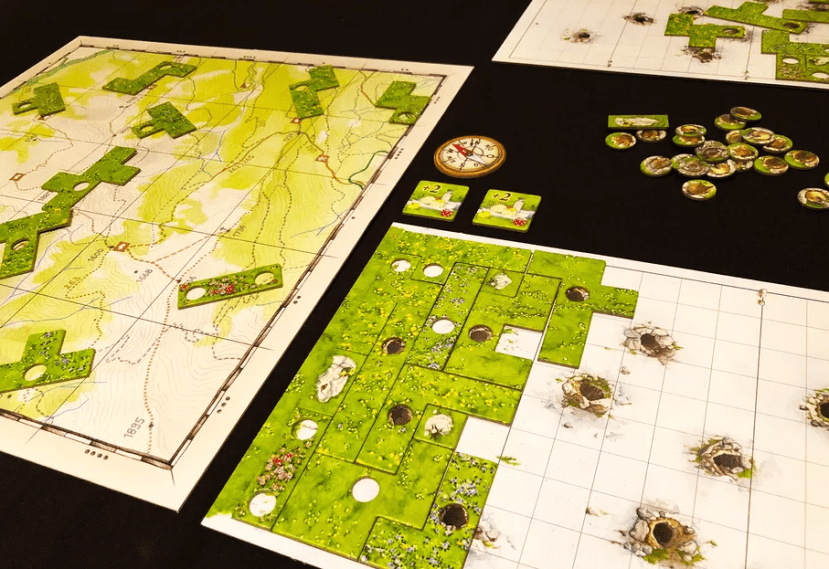
While many board games grant an advantage to seasoned players, Uwe Rosenberg’s Spring Meadow almost requires players to have a similar experience. The person who taught me and a couple of other noobs how to play Spring Meadow skunked us. Spring Meadow has an intriguing mechanism of players choosing a polyomino from a communal display and then placing the polyomino on their player board filled with holes. You’re trying to fill each row or column (depending on your board’s orientation), scoring points for each filled row or column with some added bonus points.

There are tricks involved, a dash of luck, and not all of the polyominoes are created equal. But you won’t know the best plays during your first playthrough, and if you’re playing against a seasoned Spring Meadow player, they will easily beat you. Despite my utter failure of a first play, I enjoyed Spring Meadow. I’ve since rematched the person who taught me how to play, and I managed to eek out a victory during our third, two-player play. Spring Meadow is fantastic as a two-player game against players who know how best to place their polyominoes.

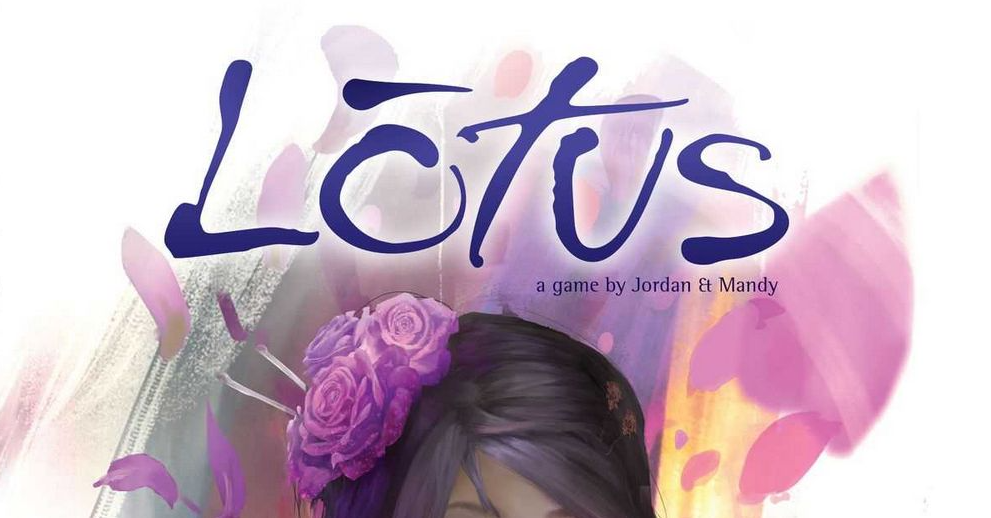
I’d include Lotus in the group of games where it’s best played when all players involved have similar experience. The same person who taught me Spring Meadow also taught me Lotus, and the result was similar. I have yet to replay them at Lotus, but I plan on it.

Players compete to complete flowers. Seriously, the image above is what most Lotus cards look like. Lotus is a stunning game. It’s quick to teach, but knowing when to add pedals or use an ability makes all the difference. Usually, new players will misuse their abilities, unlock the wrong ones first, or add too many pedals to make a flower easy to complete and leaving themselves open for another player to take advantage of an opening. Lotus is the definition of a game that’s easy to learn but difficult to master. It doesn’t have a lot of moving parts, but the parts that are there are chef’s kiss.

Kyra’s Video Games

I gave Bleach: Brave Souls a try this past month. Notice how I didn’t say I played Bleach: Brave Souls. Bleach: Brave Souls offers an autobattle function. I did more watching Bleach: Brave Souls play itself than playing the game. To be fair, Bleach: Brave Souls is a ten-year-old gacha game. During boss battles, players borrow the featured character from a random player (chosen from the tens, if not hundreds of thousands, of players). Typically, I’d borrow a character from a player who had maxed out their character five or six years ago. Most boss battles had a cutscene. I would skip the cutscene, and the borrowed character will have already beaten the boss. Did I really play Bleach: Brave Souls?

Bleach: Brave Souls was a nice trip down memory lane. I wish the game had tightened the story a little bit. Each scene from the manga received its own level, so there are hundreds, if not thousands, of story levels. I gave up on Bleach: Brave Souls after a few days, but I could see the game being fun years ago, when it first released. I like the chibi character designs.

Those are the game highlights for me this past month. Let’s see what Season and Skye have been playing.

Skye’s Board Games

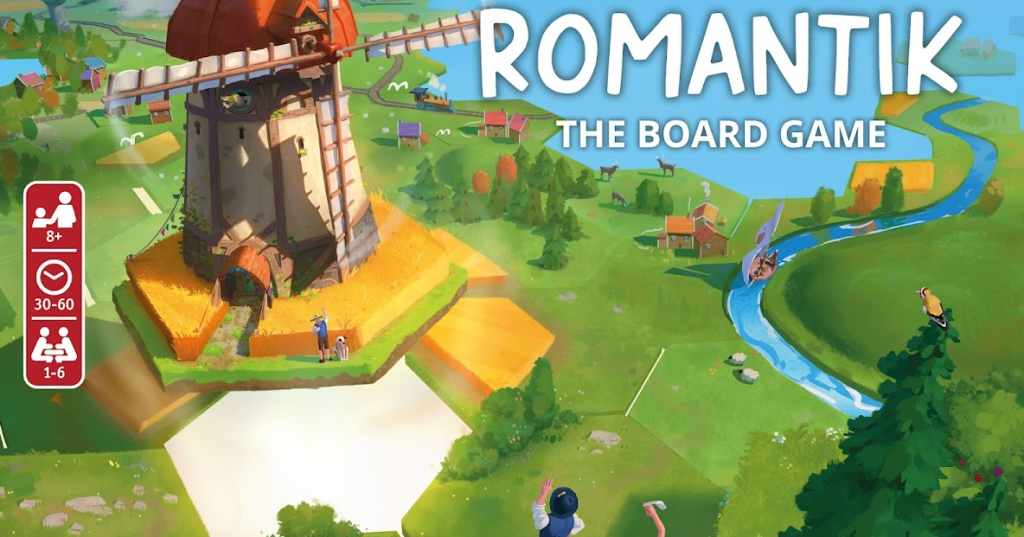
The fabulous Kyra Kyle has done it again. While Dorf Romantik was not a game they created, they were the ones who introduced me to it. Props to them, because I thoroughly enjoyed it! Dorf Romantik takes concepts from games like Catan and Carcassonne, but manages to be a special kind of fun. With the help of your fellow players, y’all gotta build the best town you can. It’s Sim City without financial stress. What can I say?

The Night Cage is a game that’s right up my alley. As a big fan of cooperative games, horror, and eldritch themes, The Night Cage is perfect for a dark game night with your friends. In a Lovecraftian setting, you find yourselves in a place of eternal darkness. You’re trapped in the Night Cage, and you must escape. The corridors shift and change direction. You only have a candle, and monsters hunt you at every turn. Good luck.

Skye’s Video Games

Lately I’ve been into casual phone games. Tap Gallery is a simple game about tapping arrow blocks to reveal a hidden image underneath. That’s pretty much it. While not the most complex, what appeals to me about Tap Gallery is its premise. It’s satisfying to watch every block slowly disappear from the screen. Sometimes that’s all you need in a game, and Tap Gallery has me hooked.

Cryptogram, while still a casual phone game, requires its players to use their brains. As you can likely tell from the title, Cryptogram is all about decoding a hidden message by following the clues given to you. Cryptogram helps stretch your brain while not being too difficult. Many of Cryptogram’s hidden messages are famous quotes from historical figures. Wait, you can solve puzzles and learn history? Sign me up!

Season’s Video Games

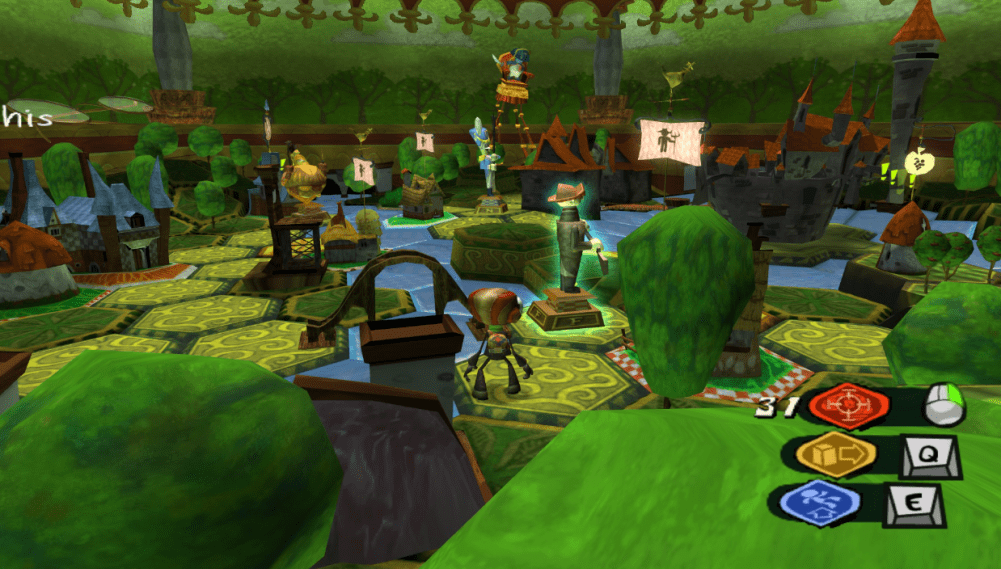
I’m kicking things off with a classic platformer. Psychonauts was released back in 2005 and is one of the more unique platformers I’ve played. Each level takes place inside people’s minds, so the player learns about each character by playing through their level. The level itself represents the character’s cognition of the world, but there are collectibles called “memory vaults” within each level. These memory vaults allow the player to sneak a peek into each character’s past through pictorial storytelling.

Players also spend a fair amount of time roaming the campgrounds in the overworld. I spent several minutes chatting with my fellow campers, collecting arrowheads to upgrade my gear and scavenger hunt items. Most objects/creatures in Psychonauts allow players to interact with them in some form, so there’s never a shortage of things to discover. I used clairvoyance on everything. Everything.

Fallout 4 has been out for ten years, but this is my first time playing it. Dead serious. I’ve never been crazy about open-world RPGs. In the past, I’d try them for twenty minutes before wanting to play something else. I tried playing Fallout: New Vegas on Steam many years ago, and it crashed every few minutes. I got frustrated and gave up on it. That said, I’ve enjoyed Fallout 4 so far. I like to stop tracking quests periodically so I can explore the world. I’m a digital hoarder, so picking up everything and being over-encumbered is my way of life.

I have one question for you, Geekly Gang. Why do radscorpions burrow under toilets?

Hey, hey! Kyra Kyle here again. That’s all our writers have for what they’ve been playing this past month. Feel free to share what you’ve been playing, Geekly Gang. Thank you for reading, wherever you are, I hope you’re having a great day.