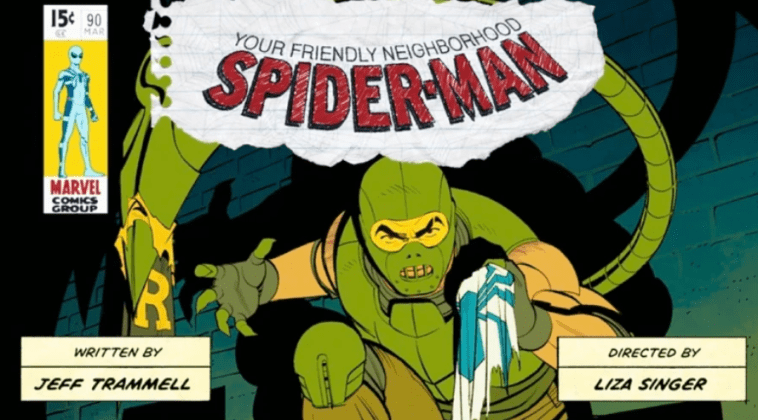
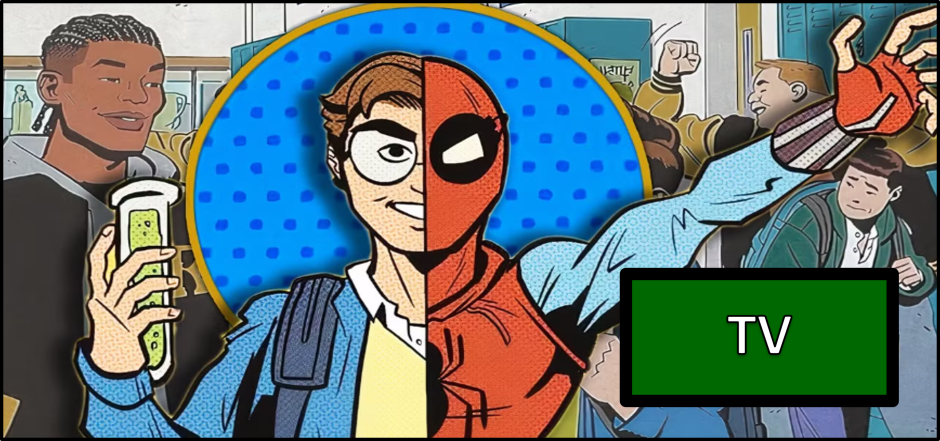
Your Friendly Neighborhood Spider-Man: “The Parker Luck” Review

Season’s Thoughts

Two episodes in one day? Did I win the lottery? Disney decided to give us big bucks this week. Joking aside, “The Parker Luck” kept the momentum of “Amazing Fantasy” and catapulted the story forward.

There was a recap at the beginning of “The Parker Luck,” which I normally wouldn’t mind if I knew the episodes were aired one week after the other. “The Parker Luck” and “Amazing Fantasy” dropped on the same day, so the recap felt unnecessary. It also needlessly padded the runtime (which is three minutes shorter than “Amazing Fantasy”) with this addition. That said, I’m digging the intro. I refuse to skip that intro.

Since he was introduced at the end of Episode 1, I’ll name drop him here. I’m loving the arc of Norman Osborn approaching Peter to offer him an internship, followed by another turn at the end of the episode. Once again, they wasted no time in propelling the story forward. However, I wasn’t a fan of Peter making plans with Nico then not showing up because of his other obligations. It’s overdone and trope-y. This is a kids’ show, so I won’t nitpick too much, but that trope gets old real fast.

I’m expecting to see Norman Osborn as the Green Goblin within the next few episodes, if not Episode 3 next week. We may see the counterparts of other characters during that time, too.

Skye’s Take

While the pilot episode proved to be a solid opening, this second episode got more mixed feelings out of me. “The Parker Luck” does have good things in it, but it left me asking “What’s the goal of this show?”

Since the episode ended with one of the main characters discovering Peter’s identity, I’m not sure where else this show can go from here. Sure, Spider-Man: No Way Home also dealt with Peter living with his identity going public, but at least that Spider-Man had been established for some time. Once again, I’m still not sure if I like this Spider-Man yet. It seems to me that the show is throwing a lot of major plot developments in the first few episodes to encourage viewers to keep watching. Given the show is still in its infancy, it’s moving way too fast.

However, I still feel satisfied with the relationship between Peter and his friends. Despite my other complaints, I enjoy seeing Peter hang out with Nico and Lonnie. This is also why it was so frustrating when he didn’t make it to the party in the episode. Believe it or not, this Spider-Man show is hooking me with its Peter Parker content more than its Spider-Man content. There were a few characters that appeared in the episode which are clearly being set up for future episodes. Dr. Connors and, of course, Norman Osborn who’re soon to be The Lizard and The Green Goblin respectively, but there’re undoubtedly more to come. As a Spider-Man fan, I can’t deny that there’s a novel feeling to seeing these characters appear knowing what they’ll eventually become.

Despite some reservations, I’m excited for this show and look forward to more surprises.

Thank you for reading. If you’d like to dive deeper into Your Friendly Neighborhood Spider-Man, here’s a link to the Secrets (Easter Eggs) page for the first two episodes.

Your Friendly Neighborhood Spider-Man: “Amazing Fantasy” Review

Season’s Thoughts

Whoa! Spider-Man got aged down again in his new show on Disney+. Not going to lie, the thirty-one minute runtime intimidated me at first. Despite this, the episode didn’t feel like a thirty-one minute long pilot. Grab your web shooters and let’s swing through Episode 1 of Your Friendly Neighborhood Spider-Man.

First impression: the art style. This was jarring for me when I looked at promotional materials for the show. I don’t dislike it, but it does take some getting used to. There were a few scenes at the beginning of the show depicting Peter getting ready through animated comic book panels, which was cute. I hope they do more of this in future episodes.

In the opening paragraph, I mentioned the runtime. I anticipated the spider bite scene to be at the end of the episode, but they wasted no time getting into it. The opening sequence of Peter getting ready/being late on his first day of school dragged a bit. He spent a lot of time telling Aunt May how much he appreciated her, which was heartwarming, but I don’t think it warranted two separate scenes within the first ten minutes. There were several characters who got introduced right off the bat, some of whom will likely become villains later on down the line. I won’t name drop, but there is a major Spider-Man villain who gets introduced at the end of “Amazing Fantasy.”

One last thing before I let Skye take the wheel—toward the end of “Amazing Fantasy,” real-world problems were showcased. The most notable examples are Lonnie getting followed by a cop on his walk home and someone who stole cash after losing their job. I won’t hang on this for long, I appreciated the inclusion of these moments. It makes the show more grounded.

Skye’s Take

Thank you for the stirring introduction, Season. I must say, after watching the first episode of this new Spider-Man series, I was pleasantly entertained. For the most part, it seemed to combine both old and new concepts we’ve seen in Spider-Man stories before. In the process, it created a world that looks familiar yet still feels fresh.

Regarding Season’s comment on the animation, I thought it was good with some noticeable imperfections. Overall, it’s pleasing to the eye, but it isn’t as good as Into or Across the Spider Verse. Part of me wonders if the animators were attempting to imitate that style by blending hand-drawn and CG animation similar to what those films did.

Despite that, this show proved to me that it was on the right track. The action was energetic and well-paced. We were introduced to a bunch of characters, but each of them seems likable with room to grow. Even the voice acting was pretty solid. There were some notable exceptions with some of the extraneous characters, but what can you do? If I were to harp on anything: the jokes aren’t that funny. The jokes got no more than a chuckle out of me, but comedy is subjective.

I’ll piggyback off another of Season’s comments. While I’m not opposed to including a moment like Lonnie getting racially profiled in a kid’s show, the moment comes out of nowhere. Suddenly, we’re supposed to feel bad for a character we barely know, and it comes across as Disney just trying to earn brownie points with minorities. Disney has a history of pandering to minorities on-screen, while behind closed doors, it’s a different story. If this story beat returns, I may have different thoughts.

Ultimately, this was a good start to a (potentially) good series.

Thank you for reading. If you’d like to dive deeper into Your Friendly Neighborhood Spider-Man, here’s a link to the Secrets (Easter Eggs) page for the first two episodes.

Harley Quinn: “Back to School” Review

Season’s Thoughts

Last week’s episode had some darker moments, but was fairly lighthearted. This week’s episode got gritty, gory, and introduced another new adversary in the final scene. Contrary to “The Big Apricot,” “Back to School” didn’t have as many slice-of-life moments. It either swung into the dark details of Poison Ivy’s origin or went full goofball with Harley and the baby sharks.

I didn’t mind the extreme shifts in “Back to School” since it was engaging and had good pacing. Ivy not telling Harley about her day will probably come back to bite her later given what we learn at the end of the episode. So far, Harley Quinn has had good continuity.

“Back to School” introduced more new characters, but I count the baby sharks (aside from Shaun) as one entity. Harley Quinn has introduced several new characters consecutively in the past, but not all of them stick around. I’m curious to see which characters they decide to keep for Season Five. Harley Quinn isn’t shy about killing off characters.

Speaking of characters, this is the first time we see King Shark in Season Five. He’s moved to Metropolis. I had a feeling they’d find a way to incorporate him in Metropolis since he’s featured in the artwork for Season Five. However, his appearance with his kids on Harley and Ivy’s doorstep did feel a bit forced. Since it’s the only thing that slightly annoyed me in this episode, I’ll give it a pass.

Kyra’s Take

This week’s episode of Harley Quinn, “Back to School,” added some deep cuts into DC Comics lore and Harley Quinn’s spin-off series Kite Man: Hell Yeah!. While these inclusions can be a lot as Season mentioned, they work within the fabric of Harley Quinn and the greater DC Comics. I like that about Harley Quinn. It reinterprets DC Comics characters while staying true to their roots.

Bane and Goldilocks return from Kite Man: Hell Yeah!. I just finished watching Harley Quinn’s spin-off series. It doesn’t hold up as well, but Bane was one of the show’s standout characters and it’s nice seeing him return to Harley Quinn. I could do without Goldilocks. There’s a reason Queen of Fables doesn’t like her. The third thing of a set one gives Goldilocks will usually be “just right.” Ugh! You don’t need to know much more about the character (or watch Kite Man: Hell Yeah! before watching this episode), and you can imagine the long-suffering Bane having to please this petulant child.

This next section could be considered spoilers. Season avoided mentioning this character. If you’d like to see the episode yourself before reading this take, skip to “end of spoilers.” You’ve been warned.

It didn’t don on me that Harley Quinn has gone four seasons without mentioning Dr. Woodrue until I heard his name. Floronic Man (Dr. Woodrue) frequently serves as a foil to Poison Ivy. “Back to School” casts him as Ivy’s college professor and that works. Woodrue attempting to steal Ivy’s life’s work (namely her plant-sidekick Frank) and claim it as his own has plenty of dark undertones. Harley Quinn doesn’t play it off for laughs either. That’s why these scenes get cut by kid shark antics. As soon as I heard Dr. Woodrue’s name, I got excited. “Back to School” does the character justice.

End of spoilers. I agree with Season that “Back to School” had a lot of severe shifts in tone, but these shifts worked. Harley’s kid shark antics undercut the Ivy’s brooding narrative. “Back to School” does a good job of weaving old Harley Quinn characters into the Metropolis setting while setting up a juicy antagonist for the season.

Free-To-Play Video Game Review: Marvel Rivals

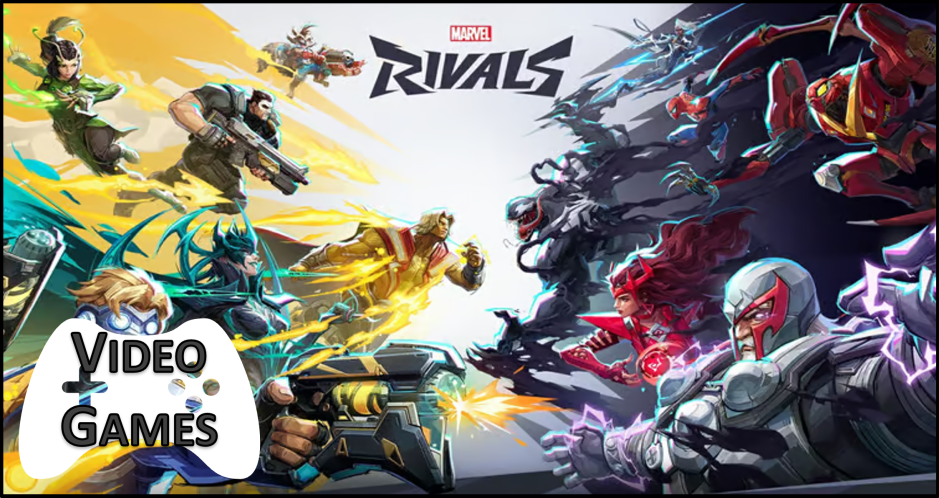
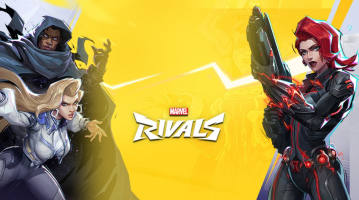
Marvel Rivals takes the Overwatch experience and gives it a Marvel coat of paint. Sure, the developers make a few changes, most notably to the battle pass, but the game remains largely the same. It’s a fun experience. It’s a familiar experience. That’s not always a bad thing. I’m just wondering if Marvel Rivals will get sued by Blizzard.

Hey, hey! Kyra Kyle here. We haven’t done a video game review in some time. We’re taking a break from gacha games and reviewing the 6-player hero shooter Marvel Rivals. A Marvel video game is on-brand for Geekly. It takes a while to play enough of a free-to-play game to get an accurate depiction of how much time it takes to finish a ubiquitous battle pass. Marvel Rivals is no different. Unlike the gachas we’ve covered, Marvel Rivals has little to no story, so we’ll be replacing our two story segments (Narrative and Storytelling) with Connectivity and Online Experience. Here we go.

Mechanisms

Mechanisms: 0/10

Originally, I gave Marvel Rivals a four and then a three. Who am I kidding? Marvel Rivals mimics Overwatch in almost every way. Our Mechanisms score measures how much a game pushes the boundaries of a game’s playstyle. In short, have we seen this gameplay before? Yes. Marvel Rivals copies Overwatch’s homework. I settled on a mechanisms score of zero. Even with this poor score, the game’s team-up mechanism single-handedly raises this score. If you choose a character like Thor, Thor can supercharge Captain America’s abilities, and Thor’s powers can also amplify Storm’s. Team-up abilities are not without their drawbacks (more on that in our Online Experience section) but the various team-ups add enough spice to return to Marvel Rivals every so often. It’ll take a long time to play each one. Each character has multiple possible team-up powers.

Marvel Rivals is the first hero shooter to include team-up powers. Many games of this type have synergies between characters but not a direct power. Marvel Rivals adds multiple abilities to each character. I can see this getting overwhelming with a larger roster of characters, but for now, team-up powers are a welcome addition. The rest of the mechanisms are almost exactly like Overwatch.

Hulk—technically named Bruce Banner—plays so similar to D.Va that I already know how to play him. Star-Lord is Soldier 76. Black Widow is Widowmaker; they almost have the same name anyway. Even the hero classifications are the same: Damage (Duelists), Tanks (Vanguards), and Support (Strategists). A well-constructed team will have an even number of all three. I do believe that Overwatch 2 also suggests this team comp, but Marvel Rivals has a higher level of consistency of character roles. Every Support (Strategist) will have the ability to heal. Or at least each Marvel Rivals Strategist has a reliable heal that makes the role easier to play.
Gameplay Loop

Gameplay Loop: 8/10

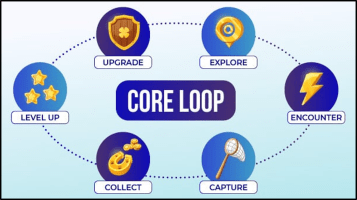
Above Image from GameDesigning.Org

Overwatch always had a fun gameplay loop; Marvel Rivals is no different. Drop in and play a few matches. You could try various game modes—I did for the purpose of this review—but you can play several rounds of quick play and then call it a day. Most casual players will most likely only play quick play.

And it’s this catering to casual players that raises this score. I’ve seldom played with a pre-constructed team, and the game can still be enjoyable. There are some issues with doing this that I’ll discuss more in the Online Experience section. I can see people who are disengaged with Overwatch (because of its change in monetization and Blizzard’s about-face with canning Overwatch’s story) switching to the new kid Marvel Rivals, but Marvel Rivals uses a similar monetization scheme as Overwatch 2, and I doubt Marvel Rivals will add a story mode. I do like Marvel Rivals’ references to the Marvel comic characters. The game has more references to comics than the MCU. That’s why I don’t think the game will add a story. You can just read the comics.
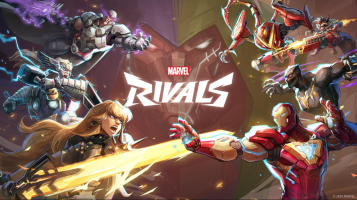
Marvel Rivals’ arcade modes mirror Overwatch’s. I don’t know how much mileage Marvel Rivals’ competitive scene will get. The team-up abilities can screw up the game’s balance, and Marvel Rivals’ initial thirty-three characters (yeah, there are a ton of launch characters) are—for the most part—balanced for now, but what will happen when Marvel Rivals adds a character ability not already featured in Overwatch? Seriously, Marvel Rivals may have one or two Overwatch character abilities that it hasn’t yet “borrowed.” The devs knew the character abilities were balanced because the characters’ abilities already existed. We’ll have to see what happens in the future.

The Gameplay Loop’s score depends on how satisfying a game is. Overwatch has an addictive gameplay loop, and so does Marvel Rivals. Eight may be a little low.

Respectful of a Player's Time

Respecting Time: 8/10

Marvel Rivals gets right into the fun. Click play, load into a game in less than five seconds, choose your character, and jump into the action. It’s addictive. From the sound of it, Marvel Rivals should get a ten out of ten for Respecting Time. Marvel Rivals just misses a perfect score for one reason: you can’t choose your map or gameplay type in its quick-play mode. This point dovetails into our next section (Battle Pass) but some of the Battle Pass missions require players to defeat enemies as a specific character on a particular map. Ugh!
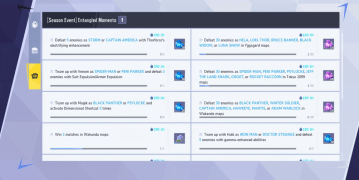
From a game design and development perspective, I understand why choosing a map or game mode in quick-play isn’t an option. It’ll thin the player pool and make load times longer. But why force me to defeat enemies on a specific map? I had one such mission for Wakanda, and I didn’t get a game based in Wakanda for twenty games. Yikes!

Technically, I didn’t need to complete the mission, but one earns in-game currency for beating Battle Pass missions. This currency allows you to unlock things in the Battle Pass and purchase certain bundles if you don’t choose to buy the Battle Pass. Who doesn’t want to unlock things in a game? And if I see a “mission,” something to work toward, I’m going to try and complete the mission. I believe a lot of gamers are the same way. Either eliminate the stipulation of a specific map for these missions or allow players to choose a map. Choosing maps may make load times slightly longer, but I’d accept a few extra seconds.
Battle Pass: 5/10

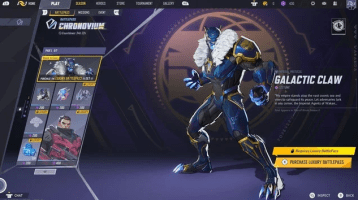
I mentioned before that Marvel Rivals doles out Battle Pass currency and after obtaining this currency, players can purchase rewards within the Battle Pass. This in-game currency is called Chrono Tokens. Chrono Tokens—I’ll interchange this term with “purple stuff” because Chrono Tokens are purple coins—can be earned by completing Battle Pass missions. I mentioned this earlier in the Respecting Time segment. As of Season One, the purple stuff will not carry over from one battle pass to the next. It will reset.

Marvel Rivals’ Battle Pass is set up like a comic book. Very thematic. You unlock the ability to purchase from the next page of the Battle Pass by earning enough of the purple stuff—er, Chrono Tokens. You don’t need to spend any of the purple stuff to unlock each page. This gives Marvel Rivals’ Battle Pass a unique, non-linear path for unlocking Battle Pass rewards. Most Battle Passes divvy out a predetermined reward at each level. Marvel Rivals empowers its players by allowing them to pick and choose which rewards they want. There is one huge caveat. Before unlocking the comic book page’s featured skin, you must unlock every other comic book panel’s reward.
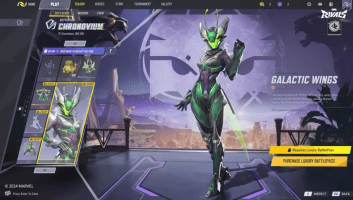
Marvel Rivals saw me, and undoubtedly countless other gamers, coming. I intended to unlock the in-game currency and the skin of each page and skip things like sprays, nameplates, and emotes. But most gamers would choose a skin and in-game currency over sprays, nameplates, and the like. Marvel Rivals put the kibosh on that. That’s a bummer. Even so, Marvel Rivals themes each Battle Pass page. The initial Battle Pass’s first page features the Punisher. I don’t play The Punisher that much, so I can skip that page and go to the next one. You can do this with each page that doesn’t strike your fancy. This is a huge plus.

The only reason why I rate Marvel Rivals’ Battle Pass a seven is that I don’t think the battle pass has enough juice. The rewards are lackluster. But that may just be me. Sprays don’t do much for me. You don’t permanently change the landscape. Who cares? Emotes don’t work in this game. If you use them, you don’t intend to play (you’re throwing the game). Victory poses might work better.

Season One doubled the rewards and duration of Season Zero’s battle pass while increasing the purple stuff needed to unlock pages by a small percentage. I was able to complete all pages of Season Zero in four gameplay hours a week. For Season One this may be increased to five hours a week. But with no carryover for the purple stuff from one season to the next, there’s no reason to play more than five hours or so a week. Marvel Rivals is aiming at that casual audience.

Video Game's True Cost

True Cost: 7/10

I waffled with this score, but Marvel Rivals deserves a high True Cost. I mentioned two other currencies: Lattice and Units. Lattice is the only in-game Marvel Rivals currency that you can buy with real-world money.

The Battle Pass costs 1000 Lattice (100 Lattice costs $1, so that equates to $10). You can earn 600 Lattice (which is the “gold stuff”) per Battle Pass, so if you don’t spend Lattice on any other in-game purchases, you could buy a Battle Pass with the gold stuff you’ve earned but that’s a little better than every other Battle Pass being free. I don’t care for that. I like the idea of buying one’s first Battle Pass and having the option of unlocking your next one for free if you unlock everything and don’t spend the purchasable currency. That’s a ding to Marvel Rivals’ True Cost score.
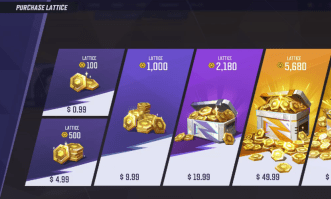
A bigger ding comes from Marvel Rivals’ other in-game currency, Units (or the “blue stuff.”) Players can exchange Lattice for Units at a one-to-one rate. This is where Marvel Rivals makes its money. The game offers plenty of bundles but most of them cost around 2000 Units. You could “earn” the blue stuff but a player’s ability to earn the blue stuff is even worse than a player’s ability to earn the purple stuff; you could be waiting several months to build up enough for 2000 Units. As of this write-up, I have just over 1000, and I unlocked everything that granted Units. That’d be months of waiting for a single bundle. This forces players who want to get a limited-time bundle to invest in the gold stuff. So, you could drop $20 on each of these bundles, and this is Marvel, so there are a ton of bundles.
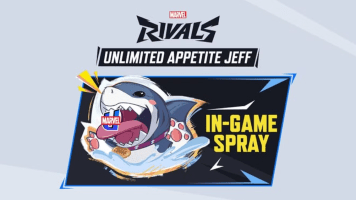
Fortunately, I don’t see much in the way of pay-to-win skins in Marvel Rivals. You can ignore Units or the Lattice to Units conversion, but many players won’t. Children may be the most susceptible. Be careful. Don’t fall down the rabbit hole of “I ‘NEED’ that specialty Spider-Man skin and the Wolverine one and the Hulk one…and the.”

Still, Marvel Rivals receives an above-average True Cost score because you don’t need to buy any cosmetics to be competitive. You don’t even need to purchase any heroes or villains, and that’s rare for a hero shooter. Marvel Rivals may be the only hero shooter to have all its thirty-three launch characters (and two newly released characters, Mr. Fantastic and the Invisible Woman) available to anyone who logs in the first time. That could be why most of the skins are $20; Marvel Rivals doesn’t charge for unlocking characters.

Connectivity: 7/10

I didn’t experience too many issues logging into and staying logged into Marvel Rivals. I don’t know if it matters, but I played primarily on Playstation5. Note: I appreciate the ability to checkmark if I want to be loaded in with PC players or not and I believe the option exists on the other side for PC players not pairing with console players. But even if I didn’t have connectivity issues, I noticed that many of my teammates did. Every third or fourth game, I’d see a notification that a player lost connectivity. So, this is a known issue with Marvel Rivals, even if I didn’t personally experience it. Every third or fourth game is common enough to lower Marvel Rivals’ Connectivity score a tad.

Online Experience: 2/10

Marvel Rivals’ online experience will also mirror Overwatch’s. You’ll have quitters (most people refuse to leave the game because they’ll get penalized, but they stand there doing nothing, so you’re one player short). You’ll have people who insist on playing Wolverine because they just bought a $20 skin for him and refuse to switch characters, even though we already have four other Duelists on the squad, and I can’t play a tank and a healer at the same time. And then if you’re like me and you tend to play support of some persuasion, you’ll get yelled at because you aren’t healing people fast enough and they’ll call you trash if you remind them that healing would go a lot faster with a second healer. So, Marvel Rivals becomes the usual online multiplayer game cesspool.

Marvel Rivals is your usual online multiplayer shooter. These games breed toxic players, and yet the Marvel Rivals devs have learned nothing from previous games. There’s no means (yet) of reporting toxic players. There isn’t an ignore list either, meaning you could block yourself from playing with a certain player in the future. And the devs put way too much trust in their AI. That inactivity that I mentioned (where players will, for the most part stand there) gets tracked by AI. It doesn’t take long for a player to stand perfectly still before receiving a warning and get booted. I received a warning when I grabbed a soda in between rounds once. It’s that fast. But technically, all you must do is move your character a little bit. Players figure this out quickly. AI doesn’t work. There needs to be a reporting system. Nothing beats flesh-and-blood monitoring.

But wait, there’s more. Remember those team-up abilities I mentioned earlier? Yeah. They’re fun in concept but not in practice. Your teammates will demand you play a specific character, even if you’re unfamiliar with the one character they want you to play with from the thirty-three launch characters because they picked another specific character. I don’t know how many times I would pick someone like Mantis, and then someone would yell at me because I picked the wrong healer. Idiot! You should pick Cloak and Dagger as a healer because they have a special ability with Moon Knight, who I picked. I’ll tell them that I’m unfamiliar with Cloak and Dagger’s play style. Then, they refuse to change who they’re playing to match Mantis. I must change. They’re the main character. Yeah, Marvel Rivals can get an extra layer of toxicity.
User Interface: 5/10

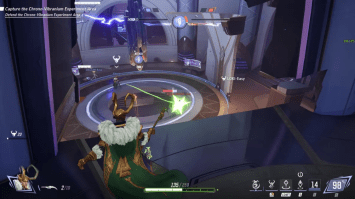
Marvel Rivals’ user interface works well enough in-game. It looks like Overwatch’s. I know I say that a lot, but it’s true. I can’t stress enough that Marvel Rivals is Overwatch with a Marvel coat of paint. I dock Marvel Rivals a few points in the user interface score because the out-of-game menus are difficult to navigate.

Again, like Overwatch, Marvel Rivals has a robust statistics page. These pages are more difficult to find, and the information is more convoluted to parse than Overwatch’s. There’s also a lot going on with the game menus. Because Marvel Rivals “borrows” so much from Overwatch, it integrates a lot of the systems that were developed over what’s almost a decade ago and then adds enough tweaks to throw off anyone who would know Overwatch’s menu system. Players unfamiliar with Overwatch’s menu may need a tutorial of Marvel Rivals’ menus.
Graphics and Audio: 4/10

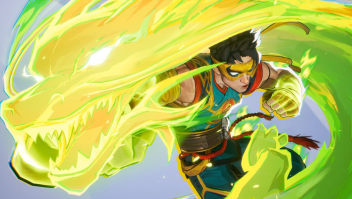
I feel like I’ve been here before. Many of Marvel Rivals’ maps are eerily similar to Overwatch’s. I know. I know. You’ve made a game out of how many times I’ve mentioned Overwatch by now. I lost count. I didn’t know where to mention the maps, so I added them here. Graphics and Audio works because I believe some of the set pieces look identical to Overwatch. At least with some of the other game elements, you may see the occasional difference. The map layouts feel the same.

A Graphics and Audio score isn’t going to fare well when you—let’s say it together—take Overwatch and add a Marvel coat of paint. Overwatch is an eight-year-old game.  While nice enough to look at, Marvel Rivals uses an art style that’s eight years old. The graphics get an average score at best.

And the announcer’s voice (Galacta) is the three-way lovechild of nails on a chalkboard, a yelp, and a yodel. I don’t care for escorting the payload matches in Overwatch, but Galacta wailing, “Better stop that vehicle” makes me want to jam a number two pencil in my ears. The rest of the voice actors work well enough, so this score ends up being average.
Aggregated Score: 5.11

Despite its obvious inspiration—ahem, Overwatch, ahem (got another mention in there)—Marvel Rivals does a lot for the progression of Battle Passes. I like how you can pick and choose which rewards you want from its Battle Pass instead of a Battle Pass’s usual linear progression. The game’s use of the comic history over the MCU is another nice touch. The team-up abilities, while overblown and could lead to future balancing issues, work well and shake up the Overwatch formula.

Marvel Rivals doesn’t force players to buy characters. So much of a hero shooter’s commerce comes from buying characters. Instead, Marvel Rivals milks players if they want a cool skin. And they offer an avalanche of cool skins.

Tabletop Game Review: Sushi Boat

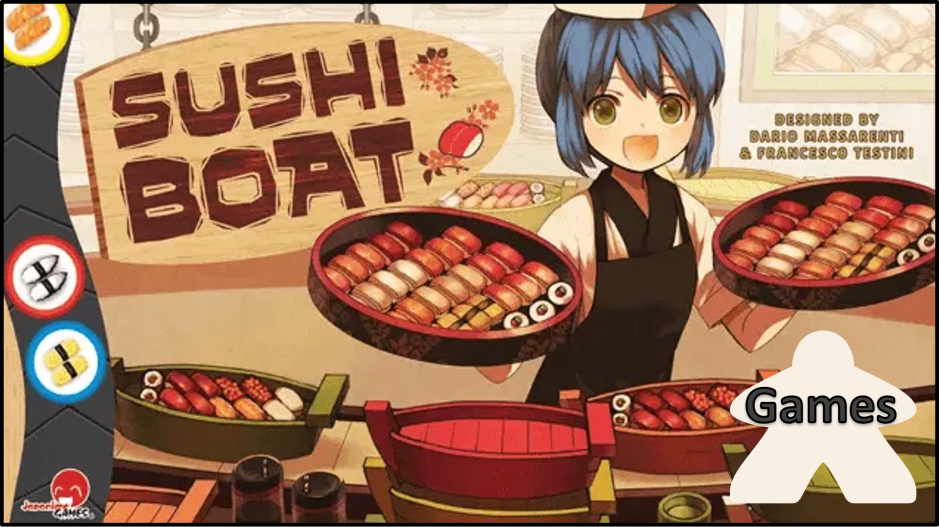
Hey, hey! Kyra Kyle here. It might be a little early for another tabletop game review, but we’re catching up on some of the backlog. Today’s review is one with a high toy factor (a board game with plenty of toy-like features): Sushi Boat.

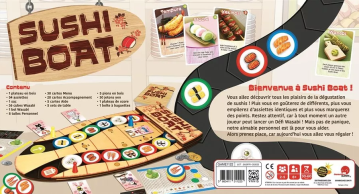
Sushi Boat leans into its theme; the board is a sushi conveyor belt. Each turn, players perform their choice of actions, including taking plates of sushi off the revolving belt on the board, paying staff tiles for special effects, or buying side dishes. As they eat, players stack plates in front of them. Players score points by eating off matching (color) plates and for eating a variety of sushi types (set collection). The Wasabi Challenge shakes things up by adding a memory component that can swing the victory.

Before we get any further, we’ll set the table and discuss Sushi Boat details.

The Fiddly Bits

Designer: Dario Massarenti, Francesco Testini
Publisher: Japanime Games
Date Released: 2023
Number of Players: 2-5
Age Range: 9 and up
Setup Time: 15-20 minutes
Play Time: 30-75 minutes

Game Mechanisms
Memory
Set Collection
Worker Placement

Game Setup

Place the wooden sushi boat board (with a built-in “conveyor belt”); this board is the central visual element and will draw a crowd when placed on the board.

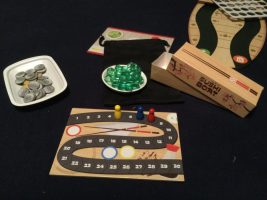
Mix the Staff tiles and randomly place 1 on each Staff space (these are pictured in the rulebook). Place all of the Wasabi cubes in the Wasabi Bowl (Sushi Boat includes ceramic bowls; the production value is insane). Each player chooses a color and takes the matching pawn and player mat. Place all of the Yen in the change tray (again, a ceramic tray), this is the bank. Give each player 2 Yen; players place their Yen on their player mats.

Put all the colored Plates in the bag and mix them well, leaving the white plates to the side for now. Then, randomly draw Plates and add them to the conveyor belt area of the board one at a time until the board is full. Then, draw 3 more plates and add them to the Trash beside the board. After filling the game board, add the white Sushi Plates to the bag and mix them in.

Separate the 4 Wasabi cards from the Side Dish cards and set them aside for the moment. Shuffle the Side cards. Then, depending on the number of players in the game, you will discard cards at random from this deck. Then, set aside a number of Side Dish cards equal to the number of players. Add the Wasabi cards to the Side Dish cards and shuffle them well. Create a face-down draw deck near the game board, and finally, place the Side Dish cards you set aside (not the discarded ones) and add them to the top of the face-down draw deck.

Game Flow

Beginning with the starting player, you’ll take turns going to the left. On your turn, you do the following steps in order:

1) You must turn over the top card of the Side Dish deck and refill the Sushi Boat
2) You must move your pawn to an empty seat
3) You may perform one action (from a selection of 3)
4) You must eat sushi

Let’s talk about the different steps in detail.

1) “You must turn over the top card of the Side Dish deck and refill the Sushi Boat.”

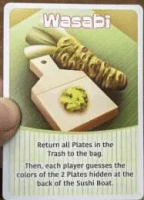
We’ll set the Wasabi card aside for the time being; they’re their own beast. Every other Side Dish card will have a symbol in the top right-hand corner. This will tell you how many sushi plates you’ll need to add to the belt. At the bottom, you’ll find effect text; this will give you a special ability if you choose to purchase the card (in a later step) and then use the card.

Wasabi Challenge:
The game stops temporarily. Each player tries to guess the color of the 2 plates hidden in the tunnel at the back of the Sushi Boat. First, take all of the Plates in the Trash and return them to the bag, mixing them well.

Then, each player takes 2 Wasabi Cubes from the bowl and secretly places them on their player mat to mark the colors they think match the hidden Plates. You may place both Wasabi Cubes on the same color if you think both Plates are that color. Finally, add Plates to the board until the two hidden Plates are fully revealed (this will most likely push some Plates into the Trash).

Each player compares their guess to the 2 Plates that were revealed. For each color you guessed correctly, you keep that Wasabi Cube. Any Wasabi Cubes on incorrect guesses get returned to the Wasabi Bowl.

2) “You must move your pawn to an empty seat”

You must move your pawn every turn. You can move it to any seat on the board that isn’t already occupied. But you could pay another player 1 Yen to return their pawn to their player board, so you can claim their seat.

3) “You may perform one action” (from a selection of 3)

A) Visit the Staff: If you’re on a space with a staff member, you can pay 1 Yen to perform their special ability.
B) Buy the top Side Dish: Pay 1 Yen to buy the top card of the Side Dish deck; this will most likely be the card you revealed at the beginning of your turn. Note: Players cannot buy Wasabi Challenge cards.
C) Take 1 Yen from the bank.

4) “You must eat sushi”

Take the Plate from the conveyor belt space that is next to the seat your pawn is on. Typically, you will add these plates to the top of your stack of Sushi Plates. (Some Side Dish Cards allow you to break this rule.)

Play continues like this until the Side Dish Deck runs out. When this happens, the game ends. Players score points for the number of consecutive-colored plates in a row, minus 1. So, a stack of 4 red plates would be worth 3 points. You may have multiple stacks of colored plates. (White plates don’t count for or against a consecutive-colored plate stack.) Then, you add up the sets of sushi you claimed (the unique sushi dishes depicted on the plate; there are 7 sushi types). After that, players get bonuses for playing the most Side Dish cards and some Side Dish cards add a victory point. Finally, each Wasabi Cube is worth 1 point each.

Whoever has the most points wins.

Review

Sushi Boat is a great game with an immense toy factor. This game’s production value is over the top. It may even be too nice—if there is such a thing. Ceramic bowls? Are you kidding me? My oldest daughter just returned from Japan and had plenty of real Yen to replace the punchboard Yen included with the game. Even without that, Sushi Boat has fantastic components.

Sushi Boat balances its elements well. I didn’t think memory and worker placement would work, but it does. I’ve found that younger players (ahem, children, ahem) have an advantage during Wasabi Challenges. I tend to focus on the mechanical aspects of the game like special abilities (through the staff and Side Dish cards) and forget to keep track of which plates have slid under the tunnel. This is the one aspect I’ve found most children gravitating toward. This typically gives a child player an extra three or four points.

Speaking of the tunnel and the titular sushi boat, the sushi boat looks fantastic. Sliding Sushi Plates across the “conveyor belt” feels great. I’ve even visited a sushi boat restaurant since playing this game. They use colored plates to tally your bill. Ingenious. And that’s what Sushi Boat’s central board is, too. Ingenious.

The one negative I’ve found is the setup and rules explanation. I’m not lying when I cited the setup time in “Fiddly Bits” as “15-20 minutes.” That’s a little long for Sushi Boat’s weight and game length. I almost feel compelled to play more than one game at a time. The rules explanation for new players can also take a little extra time than what I’d like for a game of Sushi Boat’s length, too. But retaining the rules from one play to the next is easy. Barely an inconvenience. The actions that players perform in Sushi Boat are so thematic that it makes it easier to relearn the game, even if you haven’t played in months.

Verdict

Setup and initial rules explanation can be on the long side, but the effort is well worth it for a game this thematic. While an odd combination, the game’s mechanisms work well together and level the playing field for children. And the board. Look at the board!

Tabletop Game Review: SiXeS

Hey, hey! Kyra Kyle here. We haven’t done too many tabletop game reviews over the past several years—before our Marvel United review last month (here’s the link for that review if you missed it). Today’s review is a much shorter game, but one that packs a punch: SiXeS.

Played over six rounds, SiXeS is a party game where players predict what their opponents will write that will match—or not match—depending on whether you’re in a “match” round or a “unique” round. The player with the most points after six rounds, wins.

Before we proceed, we’ll prep the party and discuss SiXeS’s details.

The Fiddly Bits

Designer: Steven Poelzing and Rick Soued
Publisher: Eagle-Gryphon Games and Hobby World
Date Released: 2016
Number of Players: 3-8
Age Range: 12 and up
Setup Time: Less than a minute
Play Time: 15-20 minutes

Game Mechanisms

Party Game
Card Game
Word Game

Sixes Tabletop Game

Game Setup

SiXeS consists of three decks of cards: “Match,” “Unique,” and “Lightning” decks and a scoring pad. Each player gets a sheet from the scoring pad and a writing utensil. Shuffle all three decks. Each card is double-sided with one side easier than the other. SiXeS’s rulebook shows which side to use for each round.

You’ll also need a means to keep time; you can use a minute-long sand timer (SiXeS doesn’t include one) or set your phone’s timer for a minute. Some of the rest of “Game Setup” can fall under “Game Flow,” so let’s continue with the next section.

Game Flow

On the scorecard, you’ll find rounds 1-6 marked. Each round has spaces for six answers. Play begins with a “Match” card. After the timer starts, players will think of things that fit the category’s criteria (this will be the word or words printed on the card). For instance, a category like “Sandwiches” can yield answers like “Peanut Butter and Jelly,” “Hero,” or even “Knuckle.” You’re going to have to match at least one other person’s answer at the table, so you may not want to get fancy with which words you use during a “Match” round.

Players find out if they matched anyone else at the table by sharing their answers. You receive a point for each answer that matches another player. If all six of your answers have at least one match, you receive a “Crooked Six.” That’s a seven. You get seven points if you match all six answers. I guess the designers wanted to maintain SiXeS’s theme by calling a seven a “Crooked Six.”

The objective changes with “Unique” rounds. “Unique” rounds play a lot like Scattergories, but you aren’t forced to begin each of your answers with the same letter. In “Unique” rounds, you receive points for each answer that matches no one at the table. You can also earn a “Crooked Six” if no one else puts down your valid answer.

The final card type, “Lightning” has six different categories. You will answer each category in the order in which they appear on the card, and players will try to match answers with at least one other player at the table.

The player with the most points at the end of six rounds wins.

Review

SiXeS resembles Scattegories but with a twist. I like how the rounds vary. As a result, I find it easier to continue playing multiple rounds of SiXeS over Scattegories.

I have yet to play a game of SiXeS that doesn’t include someone getting miffed that no one else chose their cromulent answer or at least one round ending with multiple people unable to fill in all six spots on their scorecard. SiXeS can be frustrating at times but also engages a group of gamers. It’s a great ice-breaker game. It fits into the party game category and a “getting-to-know-you” game. I can see companies using SiXeS as a morale-building tool.

SiXeS’s box says you can play 3-8 players. I wouldn’t recommend three players. Four and five players can be a lot of fun, but SiXeS’s works the best at higher player counts. There’s nothing preventing someone from playing SiXeS with more than eight players. No one’s stopping you from handing out extra scorecards and writing utensils.

That said, beyond the eight-player mark is where SiXeS either becomes super easy and super hard, depending on the round. Matching one out of ten or eleven players would be easy—too easy—but coming up with a unique answer among ten or eleven players can be nearly impossible. I’d stick to as close to eight players as I can. You could convince me into a nine or ten-player game of SiXeS, but the game begins to crumble under the weight of eleven or more players.

Verdict

Easy to learn and fast to play with great replayability, SiXeS gives Scattegories a much-needed twist. It’s also highly portable. I won’t mind taking SiXeS with me on future trips.

Tabletop Game Review: Marvel United

Hey, hey! Kyra Kyle here. We haven’t done a tabletop game review in quite some time. We’ll rectify that with a board game review of a game we began writing a guide for Marvel United. Excelsior!

Players act as iconic Marvel heroes who work together to stop the master plan of a powerful villain controlled by the game. Each villain has a unique master plan, cards that trigger various effects, and threats that make clearing locations difficult. Heroes clear missions, making the villain vulnerable, and finally take on the big bad villain before they complete their dastardly plan. Can you save the day in time? Let’s find out with Marvel United.

Before we get any further, we’ll take a side quest and discuss Marvel United’s less heroic details.

The Fiddly Bits

Designer: Andrea Chiarvesio and Eric M. Lang
Publisher: CMON Global Limited and Spin Master Ltd.
Date Released: 2020
Number of Players: 1-4
Age Range: 8 and up
Setup Time: 5-10 minutes
Play Time: 30-40 minutes

Game Mechanisms:

Cooperative Play
Hand Management
Modular Board
Solo / Solitaire Game
Variable Player Powers

Game Flow:

The villain begins the game with a turn. A villain plays their turn by drawing the top card of their master plan deck.

1) The villain moves the number of spaces indicated.
2) Resolve any BAM! Effects (if any) and these effects will be printed on a space within the villain’s dashboard and vary from villain to villain.
3) Then, place the civilian/thug tokens (if any) indicated at the bottom of the card. The target symbol signifies the location where the villain ended their move. Villains usually place tokens on their location or locations adjacent to them.

After all these effects are resolved, the heroes get their turn.

Heroes pick who goes first, and hero turns will continue around the table clockwise. At the beginning of each game, Heroes will get three turns before the villain receives another turn. During their turn, heroes play one card from their hand.

Hero cards are simple.

1) Some cards (three cards in each of the core set hero decks) may have an effect that will exist in a box overlapping the hero’s picture.
2) But all cards have an arrow-shaped box pointing to the right on the bottom. The symbols on the bottom box depict the actions the hero can take that turn.

The reason the arrow points to the right is that the next player will play their card to the right of the first player and so on, and the next player gains the symbols/actions on the bottom of the card they played that turn and the previously played card. Marvel United is a cooperative game through in through.

Move Marvel United

So, what do the symbols mean? The Green Arrows are Move actions; the Hero can Move one space for each arrow.

Heroics Marvel United

The Yellow Stars are Heroics actions; Heroics allow Heroes to rescue civilians (if there are any in their location) or help clear Threat cards.

Attack Marvel United

Red Fists give the Hero one Attack, which deals one damage and can be used against the main villain (after they become vulnerable to damage—more on that in a minute), any henchmen like “Bob Agent of Hydra,” or defeat thugs (again if there are any thugs in their location).

Wild Token Marvel United

The final symbol with all three colors is a Wild action; Wild actions can be used for Move, Heroics, or Attack. Heroes may resolve the effect (if they played the card on their turn) and any symbols in any order they choose.

Heroes will use these actions to complete missions. The game begins with three missions in play: Defeat Thugs, Rescue Civilians, and Clear Threats. Each mission card will have spaces for the tokens they require to complete. As soon as these spaces are filled, the card is discarded, and the mission is considered complete. Mission cards can be completed in any order.

After the heroes complete the first mission, the villain panics and will act (play a card) every two hero cards instead of every three hero cards. After the heroes complete the second mission, the villain becomes vulnerable to damage. The heroes can complete the third mission, but it isn’t necessary. If the heroes do complete the third mission, each hero immediately draws 1 card, increasing each player’s hand size by one.

Play continues back and forth until either the villain wins (by completing their unique master plan or anyone, heroes or villains, runs out of cards) or the heroes win by dealing enough damage to the villain after the villain becomes vulnerable to damage.

Marvel United Core Set

Review:

Marvel United scratches a similar itch as a game like X-Men: Under Siege. We covered X-Men: Under Siege in a previous review a decade ago (link to the review). Unlike X-Men: Under Siege, Marvel United functions as a board game system rather than a stand-alone game. Any number of intellectual properties can use this same system, which allows for plenty of crossovers. Case in point, CMON ran a DC Heroes United campaign earlier this year. I can see Teenage Mutant Ninja Turtles, Masters of the Universe, Star Wars, and any number of other IPs in the United System’s future.

The system has intuitive rules that allow for quick teaching times. Since Marvel United is a cooperative game, it benefits from even shorter rules explanation. I always feel like I need to teach everyone everything about a competitive game, otherwise I may have an unfair advantage. Players work together in a cooperative game. New players can learn as they go. And I’ve found Marvel United simple to pick up and relearn. The relearn feature becomes more important the older I get. I have so many games that seldom make it off my shelf because I don’t want to relearn the game. Marvel United makes that easy.

The gameplay itself can be a joy. The first time I played with my oldest daughter, she insisted that we play for hours until we defeated Red Skull. I don’t know why, but Red Skull eeked out a victory time after time. Red Skull is Marvel United’s choice for the first villain new players face first.

Marvel United’s heroes have just enough flavor to let people know who they’re playing, but Marvel United’s villains are the game’s showstoppers. Each villain has a unique flair. Kraven will actively hunt you. That makes sense, he’s a hunter. Ultron tries to win by flooding the field with civilians and thugs, putting these people’s lives in danger. That tracks for Ultron. Green Goblin will do a little bit of kidnapping, toss out dangerous henchmen, and try to throw out more Threats than the heroes can clear. Again, that feels a lot like Green Goblin. Each villain presents a unique challenge.

Marvel United incentivizes players to clear Threats. Doing so unlocks “End of Turn” abilities, which can further boost a hero’s power. I like this inclusion. Most expansions will add locations that can help with defeating the villains included in that expansion. Great choice.

The missions work well, too. Depending on the board state and the villain you’re facing, you may want to “Rescue Civilians” and “Clear Threats” or “Clear Threats” and “Defeat Thugs.” This adds to the puzzle of each villain. Some villains will add more civilians than thugs or vice versa and steer the gameplay in that direction. This furthers the uniqueness of each villain. Another great choice.

The one minor gripe I have is that not all the villains scale at every player count. Green Goblin is easier to play at 1-2 players and becomes increasingly more difficult the more heroes who join the fight. This should be expected. Marvel United boasts a massive line-up of characters. Hundreds! And even though Green Goblin becomes more difficult at higher player counts, he doesn’t break the game. You’re just less likely to defeat him.

Each Marvel United box includes challenges to spice up the gameplay if it ever becomes a little stale. The core set boxes have generic challenges, but if you pick up any expansion, you’ll find some great alternative ways to play the game. My favorite from the original launch comes from the Tales of Asgard expansion, where players deal out Loyalty Cards, with one of the cards being Traitor. Essentially, one of the players is Loki in disguise. Fantastic and very thematic.

Return of the Sinister Six Marvel United

Finally, we come to the issue of expansions. This may be yet another small gripe of mine. CMON hid a lot of the better expansions within Kickstarter Exclusives. That means that you must add them to your pledge on Kickstarter instead of being able to buy the expansion via retail (Amazon, Game Nerdz, Target/Wal-Mart, or your local board game shop). Marvel United started the trend with The Return of the Sinister Six, which was easily the best expansion from the first wave. Marvel United continued that trend with Marvel United: X-Men. X-Men: First Class, Days of Future Past, and Fantastic Four were all Kickstarter Exclusives. CMON has a knack for inducing FOMO (fear of missing out).

That said, you don’t need everything to enjoy Marvel United. You could buy one of the core sets (Original, X-Men, or the newest one Multiverse) and add a few expansions that you can find at retail and have a game you can play for decades. I may or may not have started a spreadsheet of all my games. And I started a guide for Marvel United. You can check out the link here.

Marvel United Tabletop Game Set Up

Verdict:

Easy to learn, teach, and recall, Marvel United introduces a board game system that will facilitate countless fantastic and future crossovers. The heroes have just enough personality, but the villains steal the show. Each villain feels unique and well worth their puzzle.

Gacha Game Review: Honkai: Star Rail

Hey, hey! Kyra Kyle here. I return with another Gacha game review. This week’s review will cover Hoyoverse’s Honkai: Star Rail (HSR).

HSR improves upon Genshin Impact’s graphics (if you want to read our review on Genshin Impact, follow this link) and merges elements of older Gacha games with the improved production quality found in modern Gacha games. How does Honkai: Star Rail hold up against our updated video game criteria? (If you’d like to see the Gacha game review criteria, you can follow this link.) Let’s see how Honkai: Star Rail fairs.

Mechanisms

Mechanisms: 7/10

Honkai: Star Rail is a turn-based JRPG (Japanese Role-Playing Game) at its core. It doesn’t deviate too much from the formula set by games like classic Final Fantasy titles, Dragon Quest, Octopath Traveler, and the Pokemon series. Turn-based JRPGs inspired many of the first Gacha game titles, so again, HSR doesn’t stray too far from its roots, but it does a couple of things that elevate its Mechanisms score beyond an average five.

Like Pokemon, all enemies have an elemental Weakness. Using a character with an element that matches an enemy’s weakness will result in extra damage. Nothing out of the ordinary yet. Honkai: Star Rail shakes this up just a bit by adding a Weakness bar to each enemy. If a player lowers the Weakness bar (which functions like a second health bar), the enemy becomes vulnerable and won’t attack for at least one round.

Honkai: Star Rail characters not only have an element, but they also have a path they follow. These paths aid players in building teams. Abundance path characters heal. Preservation characters shield themselves/teammates. Path of Harmony characters buff teammates, while Nihility characters debuff enemies. The remaining three paths (Destruction, The Hunt, and Erudition) feature HSR’s main damage dealers. Honkai: Star Rail explores what each one of these paths means, so it gets more convoluted than this. Overall, the path system works.

Gameplay Loop

Image from GameDesigning.Org

Gameplay Loop: 7/10

Honkai: Star Rail’s region-based map (as opposed to an open-world map) does mean that players can run out of things to do faster than in Genshin Impact. But I appreciate that. I’ll go more into that in the next segment. Getting back to HSR’s gameplay loop, it uses a lot of the same tricks as classic turn-based JRPGs. You’ll need to grind, but the grinding gets time-gated, meaning that you can only do so much grinding each day. Honkai: Star Rail includes an auto-battle system, which improves the grinding experience even more. Again, I’ll discuss that in “Respecting Time.”

I enjoy the events and timed content in Honkai: Star Rail more than Genshin Impact or even Wuthering Waves. HSR reduces the element of FOMO (fear of missing out) by allowing players to play older and major timed events. You can even play an event, not finish it, and return to it months later. This is a game-changer. I can duck out from Honkai: Star Rail and return to it not feeling like I missed too much. Some older Gacha games included a catalog of older events. I don’t know why Gachas like Genshin Impact and Wuthering Waves insist that their player base will play every event or suffer the consequences.

Respectful of a Player's Time

Respecting Time: 8/10

In this first group of Gacha games I covered, Honkai: Star Rail does the most to respect a player’s time. The auto-battle system I mentioned before is a godsend. I can set up a battle and let the game play itself. There’s little to no need for me to do actual grinding. This system reminds me of auto-battling in the original Final Fantasy Tactics. I let my Playstation run overnight and ended up with a powerful team the next morning. Honkai: Star Rail’s system doesn’t allow for that, but it’s close enough.

I like the auto-battle system a lot, but I would prefer a system more like Punishing: Gray Raven’s (part of the second set of Gachas I’ll cover), which allows players to clear a domain once and then auto-clear the domain again, multiple times in seconds. But an auto-battle system is better than forcing gamers to play the same domain over and over like Genshin or Wuthering Waves. I’ll take it. But the lack of an auto-clear function lowers Honkai: Star Rail’s “Respecting Time” score.

Honkai: Star Rail also has a better character-build suggestion system than Genshin Impact or even Wuthering Waves. Gamers can see suggestions for the equipment they should use for each character at a glance. Genshin added this function years later, but HSR included this system at launch and HSR’s system is more robust. Again, I’d like to see HSR adopt another Punishing: Gray Raven function, which allows gamers to see which team compositions other players use. This wouldn’t stop me from looking up guides online, but it would immediately after picking up a new character. I like having a brief roadmap.

Then, there are a few smaller things that add up. Honkai: Star Rail uses an assignment system like Genshin. The assignment system has gamers sending their characters out on expeditions once daily. After the time elapses, gamers receive the items the characters went out on assignment for. Unlike, Genshin, gamers receive more items they’ll want Honkai. Things like character upgrade materials. Items from chests, breakable items, and enemies are automatically collected by the gamer. No need to run around a mountain face collecting treasure. Players can set their playable character as sprinting, so they will run faster consistently, instead of sprinting for a second and forcing the player to constantly press sprint.

While there is at least one other Gacha that respects its player’s time more, Honkai: Star Rail does a great job at minimizing the tedium. HSR deserves a high “Respecting Time” rating.

Battle Pass: 4/10

Hoyoverse, Honkai: Star Rail’s publisher, doesn’t do the best with battle passes. I gave Genshin Impact an identical score. I could’ve given HSR a five instead because they did include self-modeling resin (which allows players to craft equipment with specific main stats), but the battle pass weapons (light cones in this case) leave a lot to be desired, and Hoyoverse hasn’t changed Honkai: Star Rail’s battle pass since its launch a little over a year ago. I hold little hope that Hoyoverse will improve HSR’s battle pass.

That said, it’s far more difficult to complete HSR’s battle pass than it is Genshin’s. That’s because Genshin’s BP can be completed in a couple of weeks. Another element that lowers Honkai: Star Rail’s battle pass score is that gamers receive the same reward for the last twenty or so levels of the battle pass. Wuthering Waves does a similar thing. This does make finishing the battle pass less stressful. I don’t feel like I’m missing out if I don’t finish the battle pass because I’m just getting the same thing. But it does feel worse when you complete HSR’s battle pass. There must be a good middle ground.

Video Game's True Cost

True Cost: 6/10

While not as generous as other games (I’m looking at you, Wuthering Waves), Honkai: Star Rail does a great job of keeping the Gacha costs lower. HSR beats the pants off Genshin. That’s not saying much. The character banner stays mostly unchanged from Genshin to Honkai: Star Rail. I never had too much of a problem with Genshin’s character banner. A 50-50 chance of getting a banner character followed by a guaranteed banner character after failing to win the 50-50 is fair. The game needs to make money.

Genshin’s issue stems from its weapon banner. Honkai: Star Rail reduces the number of times a gamer needs to lose the featured light cone from twice to once. Furthermore, HSR increases the likelihood of gaining a featured light cone from the banner from 50-50 to 75-25. Players are almost guaranteed the banner weapon the first time. Again, Wuthering Waves ups the ante by making it a guarantee, but we’ll get to our Wuthering Waves review. I promise.

Honkai: Star Rail also provides enough stellar jade (the currency needed for Gacha turns) to get at least one five-star character or light cone. The five-star may not be the one featured on the banner, but each player is almost guaranteed one five-star each patch. Genshin players sport less. Couple the fact that Honkai: Star Rail gave away Dr. Ratio, a stellar five-star damage unit, and the rumor that they intend to do something similar on HSR’s next anniversary and can’t deny that HSR is above average for “True Cost.”

Keeping the needed Gacha turns to guarantee a five-star on a banner at 100 prevents Honkai: Star Rail from getting an even better score. I don’t see this changing. Hoyoverse is married to 100 Gacha turns.

Story or Narrative

Narrative: 6/10

I like the Genshin storyline slightly more than the Honkai: Star Rail story. That doesn’t mean that HSR’s story is horrible. It’s quite good. I may also need to play more of the story. Genshin has a few more years of storytelling on Honkai: Star Rail. What exists in the story is great. It even facilitates the flow of a Gacha better than Genshin.

In Genshin, gamers search for their missing sibling. The sibling story gets lost when exploring new regions. In HSR, the player’s character gets a mysterious object named a Stellaron placed inside their body. Stellarons function like planetary cancers. Each planet the player visits will have a Stellaron wreaking havoc on it, so each planet links the player character’s story with what’s happening during that specific planet’s story. Gachas release their stories slowly and over time, almost like serial storytelling. Honkai: Star Rail’s premise works better with a serial story.

That said, Hoyoverse doesn’t deliver the best stories in gaming. I may grade HSR harsher because it follows a turn-based JRPG lineage. Turn-base JRPGs are known for better stories.

Storytelling

Storytelling: 5/10

I mentioned this in the previous segment: Honkai: Star Rail has a better setup for serialized storytelling. Hoyoverse still manages the story, and Hoyoverse exhibits horrible storytelling tendencies. Honkai: Star Rail doesn’t have a single character as annoying as Paimon. A few over-the-top characters like March 7th, Bailu, and Yunli do pick up the annoying slack. And you still can’t skip any of the dialogue.

Also like Genshin, HSR does a great job with character stories. I get more out of individual characters than I do from the main storyline. And the storytelling tends to get chopped into pieces and thrown around. But not as much as Genshin’s. I can keep up with the story by watching HSR’s official YouTube channel. That’s a huge plus. Still, I’d like to have gotten more of Acheron and Black Swan’s meeting in Honkai: Star Rail’s gameplay. There are fewer places to search for HSR’s story. But I shouldn’t have to search for Honkai: Star Rail’s story.

The most recent couple of patches (2.4 and 2.5 as of me writing this) concern me in terms of HSR’s storytelling going forward. One patch started a filler storyline of a villain escaping their jail cell. Our main cast is stuck in prison with this villain at the prison’s entrance, and the story stops. To be continued flashed across the screen. I don’t like that. It took me out of the story as I could play these characters outside of the prison. There’s no way a story chopped up like that can keep gamers immersed.

The funny thing is that I don’t recall the main storyline having that hard of a break from one patch to the next. Honkai: Star Rail did a good enough job of leaving the main party in a precarious spot, keeping me wanting more, but also giving me an out for continued play until the next patch release. Why do something like this for a filler patch’s story?

Presentation; User Interface: 8/10

Honkai: Star Rail continues the example set by Genshin Impact. HSR has a clean interface that’s easy to read and comprehend. It still has a few too many sub-subcategories, but not as many Genshin Impact. HSR does a good job of showing the most pertinent information. The quick-select menu is where Honkai: Star Rail puts in the most innovation.

Full disclosure: I play HSR primarily on PlayStation 5. The quick-select menu may work a bit differently on another platform, but Honkai: Star Rail allows me to hold down one button and rotate a joystick around to select what I want from a circular menu. Genshin tries this but I prefer moving a cursor as opposed to pressing two buttons at once. With Genshin’s quick select menu, I must read what each button does. HSR’s quick select menu is far more intuitive.

Presentation; Graphics and Audio: 10/10

Honkai: Star Rail’s graphics improve upon Genshin’s graphics. But graphics aren’t the reason why HSR receives a perfect score. The audio can’t be beat. Honkai: Star Rail’s soundtrack does double duty. It’s memorable but also adds to HSR’s storytelling. I struggled with adding HSR’s soundtrack to its storytelling score. Music theory YouTuber Jonathan Barouch does a great job of breaking down what makes Jarilo VI’s soundtrack so amazing. You should check out his deep dive with this link. So good!

Spoiler alert for Jonathan’s video: he shows the viewer how Honkai: Star Rail music reflects the story’s characters. No fooling. So much thought and care went into the making of HSR’s music. This won’t be the last time you’ll hear from me that Hoyoverse invests a lot into their audio production. Also, make sure you check out Jonathan Barouch’s channel. Hoyoverse soundtracks feature a lot in his work, but he covers more than Hoyoverse games. I like his videos about the NieR series, too.

Aggregated Score: 6.78

Honkai: Star Rail suffers from many of the same shortcomings as Genshin. Storytelling and battle pass issues persist. But HSR takes several steps in the right direction (not wasting as much time) to make me think that future Hoyoverse projects can and will get better. HSR even manages to improve upon one of Genshin’s strengths, the user interface.

Hoyoverse tends to shift its assets and focus to newer projects, but Honkai: Star Rail is new enough that it’ll take some time before it begins to suffer from brain drain. I’ll enjoy the ride while HSR continues delivering the goods.

Deadpool and the Future of the MCU

Hey, hey! Kyra here. I’m still figuring out what kind of content a rebooted JK Geekly should include. If you have any suggestions, let me know in the comments. I’m also working my through older content, but we’ll run out of that soon enough. Lastly, I’m late with a reaction to Deadpool and Wolverine. Instead of writing a review (I’d rather not get back into traditional reviews), I’m doing more of a reaction and what I think of the Marvel Cinematic Universe’s future.

Deadpool 3 and Its Place in the MCU

I enjoyed Deadpool and Wolverine. Was it perfect? No. It dragged in parts and that’s something with which the MCU during the Multiverse Saga has struggled, but Deadpool and Wolverine did what a Deadpool movie was meant to do. It made fun of the MCU, particularly the maligned Multiverse Saga. Deadpool and Wolverine served as a good penultimate film for the Multiverse. The Multiverse isn’t yet finished but there aren’t that many movies/TV shows remaining before it wraps. So, I’m calling it a penultimate movie. Deadpool 3 also acted like a Monty Python’s “this is getting too silly” and signaled an abrupt turn that the MCU intends to make: the Mutant Saga.

Right. Before we get too much further, I’m going to try and avoid spoilers. But the nature of posts like this makes that impossible. Consider this a spoiler warning.

Wow! I took this long to say spoiler alert. I am rusty.

Not only was Deadpool and Wolverine the penultimate Multiverse Saga film, it also said farewell to the 20th Century Fox Era X-Men and the Fantastic Four (to a lesser extent). I’ll echo other critics and express concern about Disney/Marvel relying on nostalgia to make a quick buck. I dislike the idea of the MCU using nostalgia as much as it has lately. Disney has worn out their nostalgia button. Did anyone ask for live-action versions of every Disney animated classic?

It’s true that Spider-Man: No Way Home tapped into nostalgia big time, but not necessarily in a bad way. With its proximity to the latest Spider-Man film, one could view Deadpool and Wolverine as nostalgia porn. But Deadpool and Wolverine hits different.

Legally, Disney/Marvel cannot cast their own X-Men actors until 2025. Most of the X-Men, including Hugh Jackman (Wolverine) and Ryan Reynolds (Deadpool) are under contract to play these characters until the end of 2024. It makes sense for Disney/Marvel to say “Bye, Bye, Bye” to these actors before the end of their contracts.

That said, I hope Disney/Marvel does something new with these characters. They had best cast their own actors for these roles after these contracts expire. I’d also like to see the MCU cover different X-Men stories. The world doesn’t need three Dark Phoenix Sagas in two decades. I’d love it if Disney/Marvel puts that storyline to rest for a good decade or more and concentrate on other great X-Men stories. It’s not like the X-Men have decades of great stories.

We’ll get into some of these potential storylines with the Wolverine montage. Oops! We’re heading into definite spoilers for Deadpool and Wolverine. Anyone who hasn’t yet watched the movie should turn away for the next section. You can pick back up in the MCU’s future section.

Wolverine Montage

The Wolverine montage at the beginning of Deadpool and Wolverine was not only fun but showcased the various worlds in which Wolverine/Logan existed. Most of the scenes depicted during this montage could make for a good movie or movie series. Let’s cover each one as quickly as possible and in the order in which they first appeared.

Short Wolvie
This is the 5′ 3″ Hugh Jackman Wolverine. There isn’t much to say except this Wolverine is the most accurate to the comics, and he was the most eager of the bunch to join Deadpool. Too bad Deadpool went in a different direction.

Brown And Tan Wolvie
Deadpool references John Byrne (X-Men artist during the late 70s and early 80s) and Wolverine’s classic brown and tan outfit that Byrne designed. The scene they chose for this one comes from Incredible Hulk #340 (drawn by Seth MacFarlane) where Wolverine and the Hulk throw down. There have been plenty of instances of this happening. In fact, Wolverine was first introduced in an Incredible Hulk comic (#180 in a cameo and #181 in full), where the two fought each other. This may not be the only time the MCU will depict this fight.

One-Handed Wolvie
The one-handed Wolverine in the dilapidated city comes from Age of Apocalypse. I don’t think the MCU will dive headfirst into this storyline but if they did choose to cover it, I’d like to see Marvel characters not mentioned in this world. The original Age of Apocalypse run mostly affected the X-Men. Other characters were mentioned and a few made appearances, but it could be fun watching alternate versions of The Avengers. But we’ve had enough of the Multiverse and this could be more of the same.

In case you’re wondering, this reality’s Cyclops severed Wolverine’s missing hand.

Old Man Logan
The Wolverine who looks like he’s cosplaying as Joe from the Dollars Trilogy comes from the Old Man Logan storyline. This is another post-apocalyptic story, and I doubt the MCU will go in this direction.

Oddly enough, Deadpool and Wolverine borrows a major set piece from Old Man Logan.  Giant Man’s skeletal remains–the ones in which Cassandra Nova has established a lair–makes an appearance in this comic book story. And technically, we’ve already seen a variation of the Old Man Logan story in the movie Logan.

Crucified Wolvie
The Uncanny X-Men #251’s famous comic book cover features Wolverine on an X-shaped crucifix. I don’t think the MCU will go in this direction, because the Siege Perilous (a crystal that opens doors to other dimensions) features heavily. The MCU won’t want to go back into the Multiverse too soon. However, this Siege Perilous could be one of the many ways the MCU could “fix” the Multiverse and catapult the MCU into the Mutant Saga.

I won’t go into too much detail because there’s a lot going on, but the people who placed Wolverine on the crucifix were the Reavers. The Reavers were the main antagonists in the movie Logan. Reavers have cybernetic implants but in this universe, most Reavers have them because Wolverine cut off their biological limbs. The Reavers hate all mutants, but especially Wolverine, which is why they placed Wolvie on a crucifix.

Patch
This one could easily happen, and there are two prominent storylines with Patch Wolverine. The above with Hulk’s alternate identity Joe Fixit pits Patch Wolverine as a casino bouncer. This could happen, but it might be a bit silly and would most likely be a cameo like we saw during Deadpool and Wolverine. If Patch Wolverine made an extended appearance in the MCU, the story they’d most likely use would come from the 2022 Patch Wolverine mini series.

This Patch is an alternate Wolverine who hides his mutant identity. He has a knack for gambling and espionage. He even teams up with Nick Fury; two patches for the price of one. This could be another way the MCU could bridge the current timeline with a mutant heavy one. They’d have to change a lot of the story, but that wouldn’t be the first time the MCU did so. Age of Ultron didn’t resemble its comic book counterpart.

The Cavillrine
One might think, this is just Henry Cavill as Wolverine, and one would be correct. It is just Henry Cavill as Wolverine, but let’s add a little context. Cavill portrayed Superman in the DC Extended Universe and Geralt in the Witcher Netflix series. Many comic fans love him. Cavill is the leading fan-casting for the next Wolverine, and many ardent fans of this casting insist that Cavill IS the Wolverine of Earth-199999, also known as Earth-616, which is the world in which the MCU takes place. Who knows? These fans could be right. Deadpool and Wolverine could’ve introduced the next actor to portray Wolverine.

The MCU’s Future

We’ve discussed some of the directions in which the X-Men could go or more specifically Wolverine. The above Wolverine Montage by no means covers all stories for Marvel’s mutants, but it’s a good start.

I’ll reiterate, wherever Disney/Marvel goes with these characters, I hope they go in a direction not yet explored. And they should cast their own actors in these roles. Channing Tatum as Gambit is fine; he never had the chance to portray Gambit in a full-length feature before his cameo, and he’s meme gold. Wesley Snipes as Blade might be fun, but he can’t play the character until he’s 90. Can he?

The next thing the MCU should do is contract the number of shows and movies they release; they’re already doing this to some extent, so that’s good. Additionally, they should reduce the number of characters in their active slate of characters. What do I mean? The Infinity Saga focused on the core six Avengers: Captain America, Iron Man, Thor, Hulk, Black Widow, and Hawkeye. It added a few here and there over time like Falcon, Doctor Strange, Black Panther, Scarlet Witch, Ant-Man, and Vision, but the core six were in most–if not all– the team-up films, and prominent members Captain America, Iron Man, and Thor received a trilogy of films in a short timeframe. Go back to that.

It’s difficult to grow attached to a character when you haven’t seen said character in half a decade. I’m looking at you, Shang-Chi (his first movie released in 2021 and 2026 may be the soonest he’ll get a follow-up–the soonest is 2026, yikes!). There have been issues outside the MCU’s control. The pandemic didn’t help. I still get choked up over Chadwick Bosman’s passing. Jonathan (Kang) Majors’ domestic assault and harassment case derailed the Multiverse’s story. And navigating the Spider-Man license and other licenses haven’t been easy.

A lot has happened outside Disney/Marvel’s control, but the MCU hasn’t helped itself by making some questionable choices. It concerns me that the two highest grossing films during the Multiverse Saga are the two (Spider-Man: No Way Home and Deadpool and Wolverine) that lean heavily on nostalgia. It’s too easy to learn the wrong lesson.

Those two movies succeeded because one didn’t need to do as much homework (watching a gagillion hours of content before watching the movies) and both films were the third part of movie trilogies that took five years (for Spider-Man) and eight years (for Deadpool) to complete. These two factors may have done more for these movies’ success than nostalgia alone. But hey, hit the nostalgia button.

Okay. I’m done ranting about Disney’s overuse of nostalgia. For now. Let’s discuss some other developments, beginning with everyone’s favorite Marvel character trapped in license hell.

Spider-Man and His Villains

There’s a tentative agreement between Sony and Disney/Marvel for Peter Parker Spider-Man . The Spider-Verse films may prevent Disney/Marvel from using Miles Morales. I haven’t read the terms of the contract as it pertains to Sony animation, but another series of talks may need to be had for Miles entering the MCU. I’d imagine that will come to fruition. Eventually. It’s going to take a fleet of Brink’s truck cash.

Spider-Man Noir will not appear in the MCU because Nicholas Cage will portray him in a live-action TV series. I’m okay with that. I’ll be watching the show after it drops on Amazon Prime. Any Spider-Man character who receives a Sony-led live-action movie or TV series is ineligible to be included in the MCU. That’s why we’ve seen a Venom trilogy (that includes characters like Carnage and Rhino), Morbius, Madame Web (with at least a half dozen other Spider-Man characters), and the upcoming Kraven films. Sony is playing keep away from Disney/Marvel.

I don’t blame Sony too much. Disney/Marvel has countless intellectual properties and makes several movies annually. Sony produces far fewer movies and their largest IP is Spider-Man. Spidey and Spidey related films account for over half of Sony’s major film releases each year. They’re forced to make Spider-Man content, even if that content isn’t the best. And with the exception of the Spider-Verse franchise, Sony Spidey content hasn’t been good.

The Incredible Hulk

But Spidey isn’t the only character who’s had licensing issues. Universal’s deal with the Hulk concluded this year (2024 if you happen to be reading this after the new year; happy new year btw). According to the previous deal, the Hulk could be in MCU films but only as a supporting character. Thor: Ragnarok touched on Planet Hulk themes (namely Gladiator Hulk), and She-Hulk: Attorney at Law laid the ground work for a potential full-fledged Planet Hulk movie (Hulk traveled the cosmos and found his son Skaar). I don’t know if we’ll ever see another movie with Hulk as the title character, but it’s a possibility. I wouldn’t mind at least one with Mark Ruffalo.

Robert Downey Jr. as Doctor Doom

Is this casting odd? Yes. But Downey Jr. as Doom could’ve been the plan from the beginning, but only as a cameo. The MCU could easily combine Earth-11029’s Doom (who mind swapped with Tony Stark) and the Doctor Doom from Secret Wars. The MCU was always headed toward Secret Wars, and toward the end of that story, Doom assumed the Beyonder’s powers and ruled Battleworld. The MCU probably intended an homage to the source material with a quick look at an alternate Doom (perhaps Downey), much like the alternate Reed Richards (John Krasinski) in Doctor Strange in the Multiverse of Madness.

Kang was the original big bad for the MCU’s Secret Wars, but Majors’ legal troubles thrusted Doom to the forefront. Will it work? I’m unsure. We’ll have to wait and see. A Downey Doom would’ve worked better as a cameo or teaser for the next leg of the Fantastic Four’s story. But the MCU is trying to salvage what’s left of the Multiverse Saga. I guess it’s worth a shot, but this reeks of desperation and hitting the nostalgia button. Remember when RDJ was in Avengers movies? Here he is again. Wait. We haven’t had an Avengers movie without RDJ yet. He’s got to maintain his Avengers streak.

Fantastic Four and X-Men

The MCU is barreling toward the Fantastic Four and the X-Men. These two teams will feature heavily in the upcoming MCU. That’s a great thing and a bad thing. The MCU already has a bloated roster and now it’s adding two massive teams. These two teams could delay the third film of major MCU characters.

Going back to my point that the MCU should return to a tighter character roster, the three main Avengers during the Infinity Saga had a small window for their film trilogies. Cap’s original trilogy took five years in total. Iron Man’s also took five years. And Thor’s original trilogy took six years. Six years passed between Doctor Strange and Doctor Strange in the Multiverse of Madness. Strange continues to wait for the third movie in his trilogy. That’s way too long. There’s also the aforementioned Shang-Chi and his five year wait for a second film. And is Captain Marvel getting a third movie? Rewatching older films in a film series becomes part of an MCU movie’s homework.

What were talking about? Deadpool. Right.

Deadpool needed eight years to conclude its trilogy. That’s impressive considering that Fox was bought out between the second and third films. A tighter release window for movies in a series and a smaller cast of recurring characters are the lessons Disney/Marvel should take from Deadpool and Wolverine’s success. That and R rated films can rake in money. We’ll have to see which lessons the MCU takes to heart.

That’s all I have for now. Let me know your thoughts on what the MCU should do going forward. See you soon. Bye, bye, bye.

~ Kyra