Skye’s Halloween Favorite Movies

Hooray! It’s that day again. Happy Halloween! To honor Spooky Season, I’d like to discuss my favorite movies to watch for Halloween. We all have our go-tos for holiday movies. What are some of your favorite Halloween movies? You may find some of your favorites among my list. With all that said, let me walk you through my favorite Halloween movies.

5) Coraline (2009)

While Coraline doesn’t take place during Spooky Season, the themes and tone are a perfect fit. This’ll be a common thread among many of my picks. I first saw Coraline as a kid with my family soon after it was released, and I didn’t fully understand it. In fact, my main takeaway was “Huh…that was weird.” Despite being a chronically terrified child (so much so, I couldn’t bear to look at horror movie DVD covers), Coraline didn’t scare me. Now that I’m older–and a very weird person–Coraline is one of my ideal Halloween movies. Given my love of stop-motion animation and the freakish imagery its creepy movement creates, Coraline remains a solid Spooky Season film.

4) Beetlejuice (1988)

I’m glad I didn’t have Beetlejuice growing up. Considering how impressionable I was as a kid and the adult content it contains, Beetlejuice would’ve rubbed off on me in all the wrong ways. I first watched it 3 years ago when I was feeling desperate to find a new classic Halloween film. As you can see, I found one. Beetlejuice scratched all the right itches, and now, I’m happy to say it’s joined the list of movies I watch during Halloween. Beetlejuice is a beautiful blend of contradictions. It doesn’t always make sense, but I forgive it since that’s part of the joke. While Beetlejuice is funny, it can also be dramatic, heartfelt, and creepy. Some of the effects are outstanding while others are laughably terrible, and I’d expect nothing less from Tim Burton.

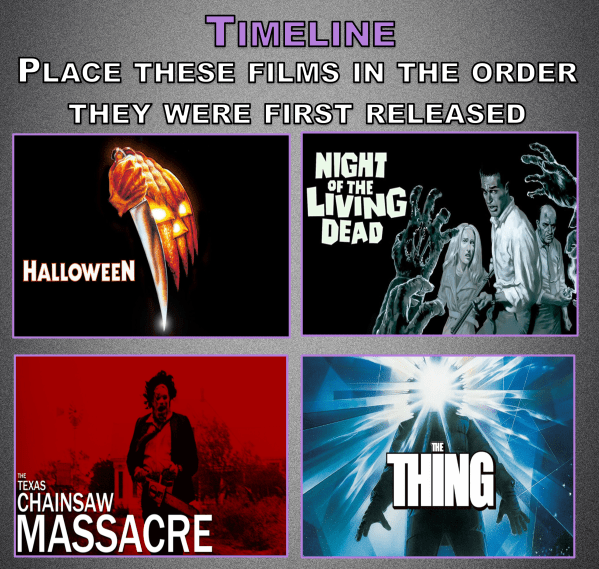
3) The Thing (1982)

I love monster movies. Just check out my Halloween movie post from last year. I’m also a die-hard practical effects lover. Enter The Thing. The Thing is one of the quintessential monster films for any monster fan. It gives us outstanding scenes of ooey-gooey transformations, while not boring us with slow moments. Like other classic sci-fi monster flicks (like Alien), it’s the slow, quiet moments that add to the scare factor. The Thing is, first and foremost, a survival film. Each of the men at the Antarctic research base is well-qualified and competent, unlike several other horror film protagonists. You want to see them make it out alive. Unfortunately, they’re dealing with something that’s way beyond their understanding.

2) Trick ‘r Treat (1986)

Trick ‘r’ Treat is a favorite of mine, given how much it’s covered in Halloween. It has a lot of personality, but I enjoy how it respects Halloween. Despite being an adult film, Trick ‘r’ Treat manages to speak to my inner child with its aesthetic and emphasis on classic Halloween traditions. While watching Trick ‘r’ Treat, I can’t help but look back on the years I walked door-to-door in a costume and getting wasted on candy. Ah, those were the days. Also, the protagonist, Sam, reflects my attitude towards folks who don’t enjoy Halloween. You’d better watch out.
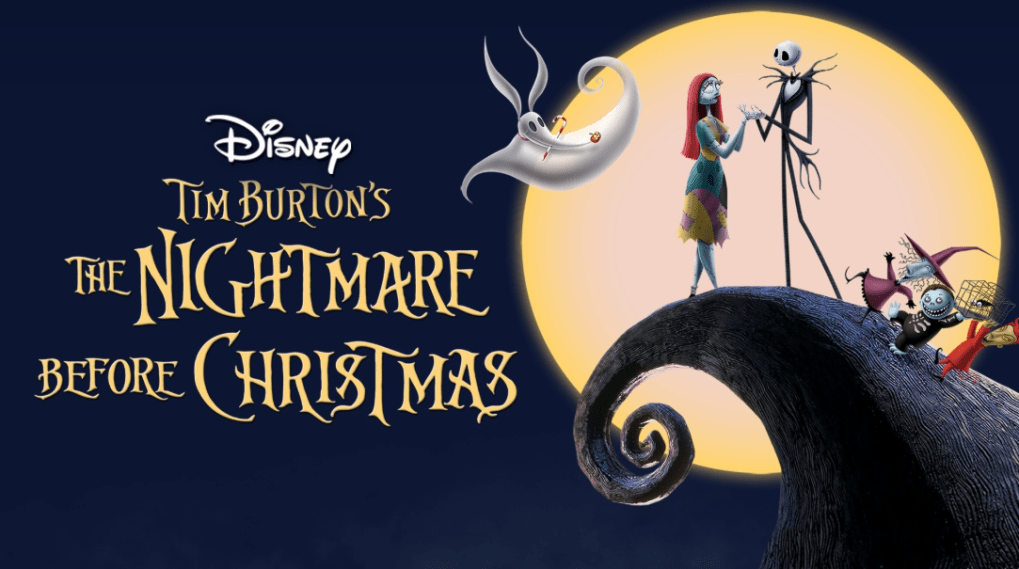
1) The Nightmare Before Christmas (1993)

Could any other movie claim the top spot? The Nightmare Before Christmas has long been my #1 Halloween movie. In fact, it’s the movie I always watch on Halloween itself. While I was lukewarm towards Nightmare Before Christmas as a kid, as I’ve gotten older, I absolutely love it. Nightmare Before Christmas was the movie that got me interested in the art of stop-motion and fascinated me with its fantastic yet relatable story and characters. By now, I’ve seen this movie so many times that I can practically recite it from memory. Sometimes I feel like Jack and am desperate to find a new Halloween movie to add to my Spooky Season tradition (like I mentioned earlier with Beetlejuice). But I’ll never stop watching The Nightmare Before Christmas around Halloween. It was and remains my #1 Spooky Season movie.

Those are my picks for Halloween movies. I hope you had as much fun as I did on this road of spooks, nostalgia, and holiday cheer. What are your favorite movies to watch around Spooky Season? I can’t wait to hear from y’all in the comments, and I hope you have a fabulous Halloween.

Quirky Video Game Review: Organ Trail

Organ Trail gives a zombie apocalypse twist to the classic Oregon Trail. Not to be confused with the 2023 film of the same name, Organ Trail was developed by Men Who Wear Many Hats in 2010. 2010! That makes this game a decade and a half old. Yikes! Organ Trail began as a web game before a 2012 Kickstarter campaign expanded its release to Steam and iOS. Organ Trail has gone on to sell over half a million copies.

Hey, hey, Geekly Gang! Kyra Kyle here. Today, we’re reviewing the 2013 Organ Trail: Director’s Cut. The developer claims that this version moves past the original’s pure parody of Oregon Trail to become a game in its own right. Trade in your Conestoga wagon for a station wagon. It’s time to see how Organ Trail rates against our criteria.

Mechanisms

Game Mechanisms: 8/10

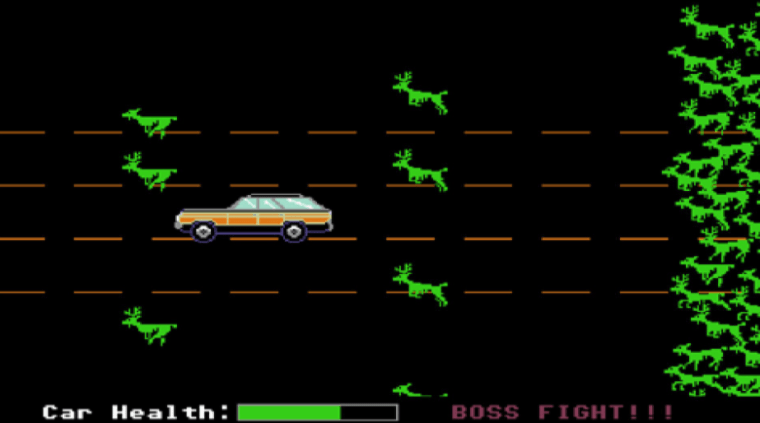
Organ Trail follows its inspiration’s lead (Oregon Trail) with its game mechanisms, but it differs enough to warrant a higher than average score. The Director’s Cut adds Choose Your Own Adventure aspects to the original’s release. Fighting off biker gangs and avoiding zombie deer stampedes are nice touches. But the bulk of the game (at least for me) was with scavenging. Honestly, I spent most of Oregon Trail hunting, so spending a lot of time scavenging (Organ Trail’s version of hunting) makes sense.

Despite being essentially the same mini-game, scavenging (in Organ Trail) feels far different from hunting (in Oregon Trail). First, the zombies are heading toward you. While you may find the occasional wild animal that will attack you (like a bear), animals like deer in (Oregon Trail) run away from you. Organ Trail even references the bear by having a bear be a boss fight, so there is a tip of the cap there. Second, killing zombies doesn’t give you any resources. Instead, you must pick up randomly generated items in the wilderness. While this makes thematic sense, I kind of miss the push and pull of do I use bullets to kill animals for food, trading one resource for another. But ultimately, the zombies are fun.

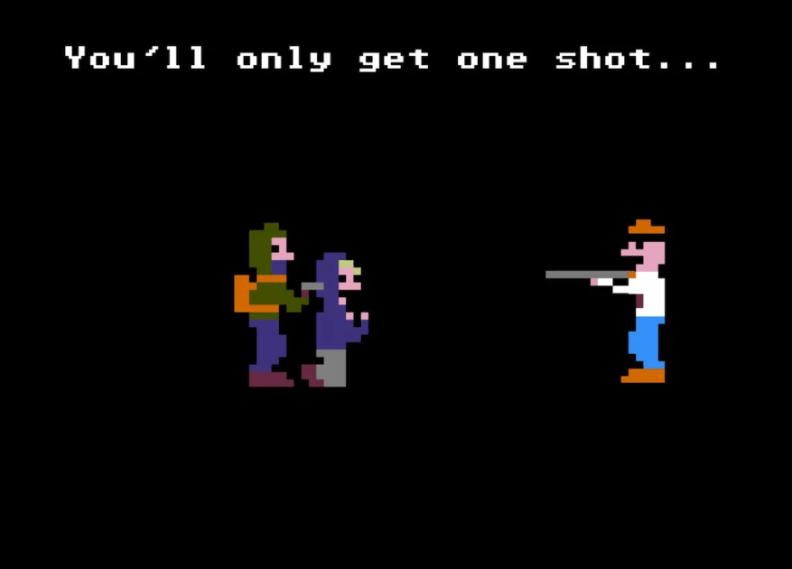
I do my best to dodge zombies, which is easy to do if you don’t face a horde. Zombies in the scavenging mini-game will follow your movements, so you can trap them behind fences, walls, trees, and other obstacles. The other mini-games, like avoiding a zombie deer stampede, shake up the doldrums, but repairing your station wagon is the most pervasive mini-game outside of scavenging. Repairing your car is a timing mini-game, and I stink at it. Looks like I’ll have to carry plenty of extra scrap. Even so, the trickiest mini-game to master is the one where a bandit randomly picks one of your friends/family members to kidnap. You’ll only get one shot to shoot the bandit in the head. Don’t miss.

There are 20 stops before you reach your destination, Safe Haven (in the Pacific Northwest), and each stop has some combination of an Auto Shop, Combat Training, and supplies for you to purchase, but every stop has a Job Board. Jobs add even more mini-games. These jobs become more important at higher difficulty settings. If you begin on “Easy” mode, you won’t need to do them beyond the halfway point on your trip. Player choice is paramount in Organ Trail.

Note: I’ve played the PlayStation4 and Steam versions. The PlayStation version is better than Steam’s. Unfortunately, players have fewer options if they play on Steam, so I’d lower the rating by a point for the Steam version.

Gameplay Loop: 9/10

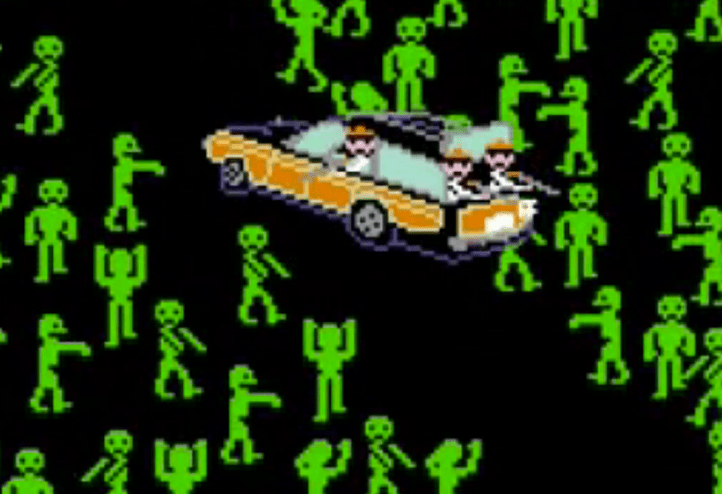
Organ Trail’s core gameplay loop of scavenge, repair, shop, rest, and travel is a satisfying one, especially when you throw in the day/night cycle. You may want to rest or repair during the evening, when zombie activity is higher. This is a consideration when leaving a stop. There’s a percentage chance you’ll encounter a zombie horde, but player choice comes into play. You can sneak past the horde, floor the gas and try to speed past them, or bust out your shotguns and shoot while you drive. Even with a set gameplay, Organ Trail offers micro choices that have a profound impact.

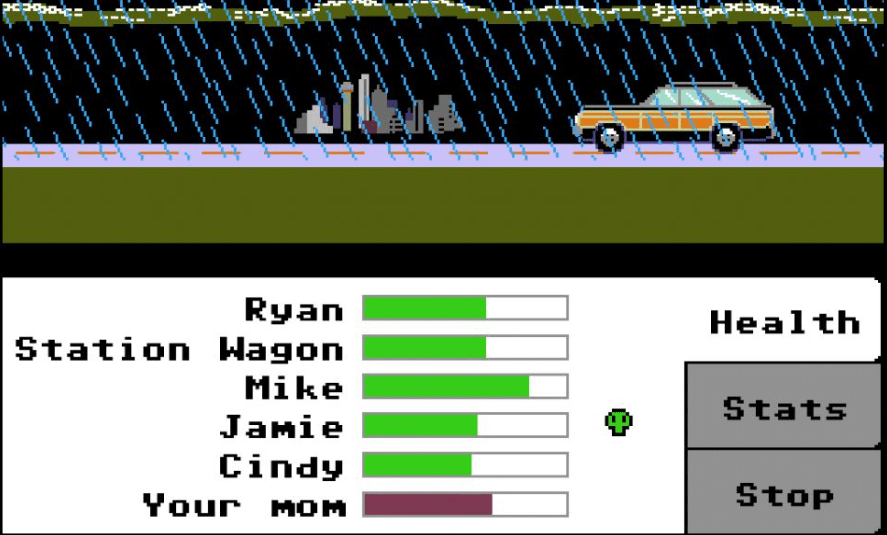
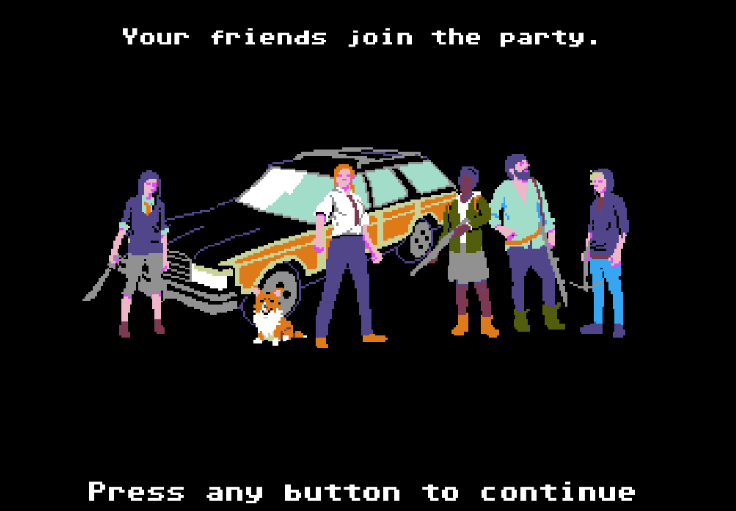
Just like Oregon Trail, random events occur while you drive. Some are silly, like “Mike gets bored and starts making an annoying noise.” Others are more serious, like “Your mom has dysentery,” and you may need to stop and rest or risk her dying. And since Organ Trail is set in a zombie apocalypse, someone, like Jamie, could be bitten by a zombie (which is indicated by a green skull). So long as you keep them healthy with med packs, which aren’t cheap, they won’t turn. I hear there’s a weirdo at Safe Haven who pays for someone who’s infected.

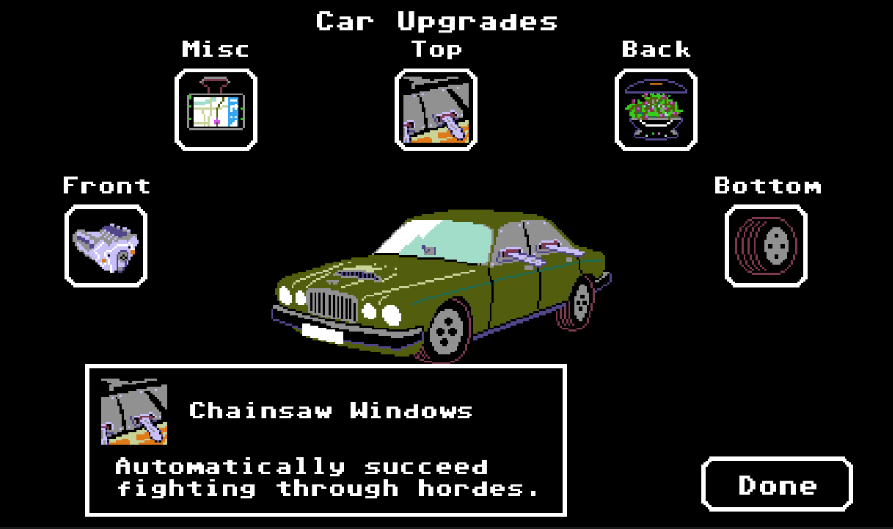
Add in some combat upgrades for yourself and some car upgrades, and Organ Trail has plenty of options for you to explore. This improves Organ Trail’s already stellar gameplay loop.

Story or Narrative

Narrative/Storytelling: 8/10

Organ Trail has a simple but effective narrative. You’re traveling from one side of the United States to the other. The game uses liminal space to tell its story. I could see plenty of gamers missing Organ Trail’s story. To get the most out of Organ Trail (from a narrative perspective), it’s best to talk to strangers at each stop. They fill in the gaps by asking why the government thought nuking its people would “solve” the zombie crisis.

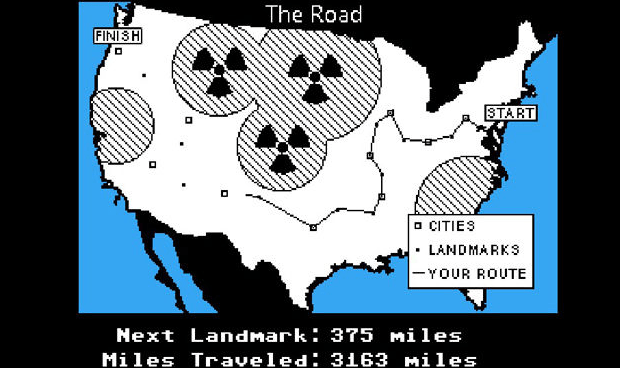
Nuclear strikes are the reason why you must take an indirect route to make it from Washington DC to Safe Haven. Other tidbits of information are sprinkled during these interactions. Organ Trail manages to add in a few more with merchants and the random bandits who abduct your passengers. Organ Trail has an interesting world. How did the disease (if zombism is a disease) cross over from humans to deer and bears?

User Interface: 8/10

While clunky (or outdated) at times, Organ Trail has a simple-to-understand and navigate user interface. If you’ve ever played Oregon Trail, you’ll know how to play Organ Trail. The game keeps players informed with specific details about their party. You can check the map and see how many stops you have remaining, and if you know anything about geography, you can plan when you may need certain upgrades like snow tires. Hint: most likely when you’re traveling through the Rockies.

Notifications will pop up on the main screen if any major issues occur. The tabs work and are self-explanatory. I have few issues with Organ Trail’s user interface.

Graphics: 6/10

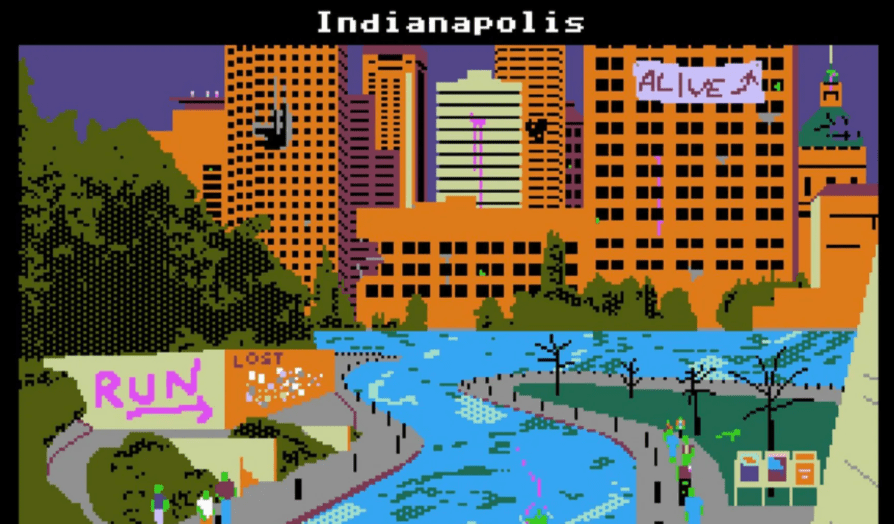
I struggled with scoring Organ Trail’s graphics. Yes. The graphics aren’t the best, but they’re not meant to be the best. Organ Trail is a retro game, parodying a video game released in the mid-80s. And yet, Organ Trail finds ways to make its graphics unsettling. This works to steep the game in atmosphere.

Audio: 8/10

Organ Trail has a good mix of sound effects meant to mimic Oregon Trail (like clinks and bloops after a stage is complete) and others that subtly suggest a game with a darker subject matter (like splattering brains and cocking a gun). Organ Trail’s soundtrack, by Ben Crossbones, does a lot of heavy lifting. I often play video games on mute; I didn’t with Organ Trail. Crossbones does a great job of capturing the game’s mood and theme without going too over the top. Organ Trail’s soundtrack is the right level of creepy.

Replay Factor: 7/10

Organ Trail plays quickly, no less than five hours, so it’s easy to replay this title. It offers multiple difficulty settings, and the higher ones offer a good challenge. There’s even a leaderboard (Organ Trail grades your accomplishments during each playthrough). I even like the addition of finding your tombstone from a previous playthrough. All of this is fantastic, but I don’t see gamers playing Organ Trail more than a handful of times. I could see replaying it after several years. I sure have. I can only give this game a slightly above-average replay factor.

Organ Trail is typically sold for $5-10. That’s a steal for the amount of game you get. I recommend giving it a try, especially if you like zombie apocalypses and the original Oregon Trail.

Aggregated Score: 7.9

Top 5 Horror Tropes

Hello, Geekly Community! My name is Skye, and I love movies and TV. You could call me a “Screen Geek.” I make deep dives on TV shows and movies on TGIMovies (here’s the link to my website). Everyone who clicks the link gets a free year-long Netflix subscription (JK, just kidding). I’m excited to write for this site and get to know you all. Thank you for inviting me to this platform, it means a lot to be here. Without further ado, let’s begin my very first post. Woo-hoo!

Happy Halloween! Since it’s that time of year, let’s talk about something scary. But not too scary. (͡° ͜ʖ ͡°). While I view myself as a refined connoisseur of visual media (don’t we all?), I’m drawn to certain tropes (whether they’re good or not). Sure, I love killers and dumb idiots dying as much as the next person, but there are other tropes in horror that I just can’t resist. With that said, these are my 5 favorite horror tropes.

5. Creepy/Evil Children

The Evil Children trope has been done to death. Sometimes, literally. Creepy Children show up a lot in horror because children are supposed to be innocent and non-threatening, and this trope flips that expectation on its head. It can be jarring when done well. Unfortunately, I’ve seen far too many poor implementations of Evil Children to put it higher on the list. But let’s focus on good Creepy Children.

4. “Final Girls”

While mostly associated with slasher films, the “Final Girl” trope has experienced an expansion in recent horror media. In the past she was the most moral character of the movie, typically a virgin—and usually white—she suffers more hardship than any other character. She’s always the last to survive, hence the term “Final Girl.” Since Sally Hardesty from The Texas Chainsaw Massacre, this was the purpose of “Final Girls.” Look pretty, be nice/modest, and maintain innocence throughout her ordeal.

3. The Slow-Burn

The type of horror that scares me the most is the kind that takes its time. Too many movies are desperate to get reactions out of people and blow their load in over-the-top jump scares which only exist to create the illusion of fear. In case you were wondering, jump scares didn‘t make the list. When it comes to legitimate horror, you must get your audience invested in your characters, story, atmosphere, and of course, pacing.

2. Monsters/Practical Effects

Monsters are awesome! I love a good creature feature, and that’s because you can do so much with monsters. My personal favorites are the ones created through practical effects and shot in front of the camera. It makes them more real and horrifying. I’m not entirely against computer-generated effects but considering Hollywood’s overuse of these kinds of effects in the past 30 years, you can’t deny that CGI has become easy to spot. If I had to choose between a bad practical effect and a bad digital effect, I’d choose the former 10 times out of 10.

1. Music/Sound Design

This one is a cheat. Music and sound design are less a trope and more an essential part of filmmaking. But I believe music and sound design are the most important parts of filmmaking when it comes to Horror. Music instills emotions. Horror needs to create specific emotions to get its audience on edge. It’s been scientifically proven that jump scares almost entirely lose their power without the assistance of sound.


Top 5 Horror Tropes Creepy Children

-Skye


3 Lists of 3 Anime: Take 3

This is one of the last older posts that I haven’t yet published. Up to this point, we’ve been sprinkling in some newer stuff, but it may be mostly new stuff from this point forward. This is the third and possibly final 3 Lists of 3 for anime.

Just in case you’ve forgotten how these posts work, I’ll break down some of the more popular anime genres and list a few anime for new viewers to dip their toes into. This series differs from our typical starters writeups because we won’t spend too much time on each anime—usually—and it’ll function more as an “if you like this story, you may like this other one.” Let’s get started.

Mystery

When one hears mystery as a genre, one thinks about stories that feature detectives and gumshoes. The same holds for anime—for the most part—but there are some anime that go a little off that tried and true formula.

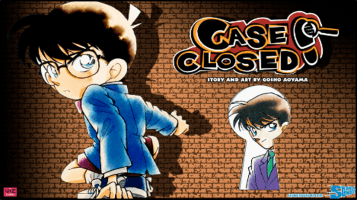
Detective Conan

We’ll start with the one that’s the most familiar for westerners. Detective Conan (also known as Case Closed) features a precocious teen detective Jimmy Kudo who solves the police’s most difficult cases. He gets poisoned by a secret organization, but the poison doesn’t kill him, it turns Jimmy into a short pants kid.

To keep his identity a secret, Jimmy adopts the alias Conan Edogawa (he names himself Conan after his favorite author Sir Arthur Conan Doyle). Detective Conan continues to solve crimes, while unearthing who reversed his aging into a child. Detective Conan plays out a little like Inspector Gadget with Conan solving crimes for an inept adult detective, but while Detective Conan has its comedic moments, it’s a classic detective series.

Hyouka

Here comes another young gumshoe—or a group of gumshoes. The Hyouka anime is based on the manga, which was in turn based on the novel series Classic Literature Club by Honobu Yonezawa. It’s set in Kamiyama High School where the members of the Classic Literature Club help others out by solving crimes. If you liked series like the Hardy Boys or the Babysitters Club, you might want to give Hyouka a try.

Eden of the East

Eden of the East is the one anime on this list that journeys the furthest from a traditional detective story. This gets a little convoluted. Eden of the East behaves a little like the cloak and dagger elements of 100 Bullets, so there are plenty of twists and turns.

Essentially, the two main protagonists are given 8.2 billion yen that’s supposed to be used to “save” Japan in some way. They must use their money to pay a group named The Seleção, but if they use the money for selfish reasons, they fail, and Japan is destroyed. There’s a lot more to it than that—a lot more—but Eden of the East builds on a series of terrorist attacks and who’s behind them. It asks moral questions like if you could sell out your home country for a small fortune, would you?

Horror

As you can see, I’m going with more traditional subgenres with this list—for now. Horror anime ranges from ghosts and goblins to myths or just the plain creepy. Get ready for a few chills.

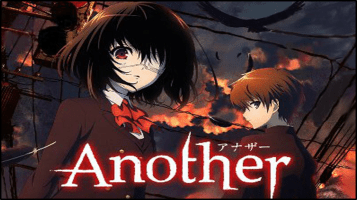
Another

We’ll start with a horror anime that could classify as a pseudo mystery. Another is set in a high school where a student died in 1972 and in the wake of that death, everyone denied that it happened. As a result, a curse befalls the school, and students, faculty, and their family members are at risk of gruesome deaths like the ones you might see in a Final Destination film.

We’re talking plenty of blood and gore. But there may be something or someone behind these murders and that’s where Another blends mystery and horror. Expect plenty of red herrings in this short, twelve-episode series. You may also want a change of pants.

When They Cry

When They Cry is adapted from the video game series of the same name. Set in June of 1983 and in a quiet rural village Hinamizawa, protagonist Keiichi Maebara leaves his hometown for Hinamizawa after a series of unfortunate events. He makes friends in this sleepy town, but soon finds out that there’s more to the town than he first believed. A series of murders and other gruesome events occur in Hinamizawa, and the friends Keiichi has made may not be all they seem. Who needs enemies when you have lunatics for friends?

Parasyte

I could’ve gone with Corpse Parade here—another great, short series—but it’s another spooky school anime and I wanted to branch out. Parasyte, based on a manga that ran from 1988-1995, has plenty of stunning visuals, gore for those of you who like gore-fests, and aliens. That’s right. Let’s give some aliens a little love. The titular aliens enter orifices and transform humans into monsters.

Main character Shinichi encounters such an alien, but the alien can’t overtake him and only manages to turn him into a human with one alien arm. Shinichi maintains control of the parts of him that aren’t an alien arm, but the alien arm has a mind of its own. Parasyte explores many issues of what it means to be human, and it’s a much watch for horror fans who like scares like Alien.

Josei

I’m venturing a little off the beaten path here with Josei, but just a little. Josei is more of a demographic than an anime genre. It targets female viewers around the ages 18-40 and depicts life and romance in a more mature light. Romance doesn’t have to factor into the story all the time; a Josei anime needs to cater to women of this age range (essentially not teens or children) and feature more grounded characters, instead of idealistic fantasies.

Princess Jellyfish

The crux of Princess Jellyfish rests with a group of otaku (geek) women who happen to be flat mates. They bond with each other and no men are allowed in their club. Protagonist Tsukimi, one of the otaku women, hopes to become an illustrator and loves jellyfish because they remind her of her mother who took her to the aquarium to see them.

Enter Kuranosuke, the illegitimate son of a politician, who cross-dresses to rebel against his father and feel closer to his mother. Tsukimi befriends Kuranosuke and allows Kuranosuke to join her band of otaku, hiding Kuranosuke’s gender from her flat mates. Princes Jellyfish addresses gender identity and challenges one’s preconceptions. It also makes for a non-conforming romantic-comedy as Kuranosuke develops feelings for Tsukimi.

Nana

Nana’s title derives from its two main characters, both of whom are named Nana. Nana Komatsu has a habit of falling in love at first site. The other Nana, Nana Osaki, is the lead vocalist of a band called Black Stones (BLAST for short). Osaki’s boyfriend, the band’s bassist, leaves BLAST for a better gig, but Osaki continues with BLAST. Nana centers on these two Nanas as Komatsu seeks love and happiness, and Osaki pursues fame and recognition. Neither Nana finds what they want at first and perhaps what they want isn’t what they need.

Whenever I get enough of the Nana manga, I may have to place eight of them on the shelf with a Batman graphic novel after them, that way anyone who looks at the books in my library will get the 1960s Batman theme stuck in their head. If you’ve heard the song, you have it in your head right now. Mwah-ha-ha!

Seriously, Nana is a great read.

Shouwa Genroku Rakugo Shinjuu

Shouwa Genroku is a shot of fresh air for anime. Set against the art form Rakugo, a traditional form of Japanese entertainment where a storyteller must sit and convey a tale with only a paper fan and small cloth, Shouwa Genroku unveils the story of two friends.

One begins his path as a Rakugo performer after being released from prison, the other takes a different path and both have disparate performance styles. Shouwa Genroku may be the most intimate of all the anime on these lists and one of the most character-driven stories.

Final Thoughts

I hope there are plenty of anime in these lists for you try out. I’m sure I got something wrong. Let me know in the comments.

And wherever you are, I hope you’re having a great day.