
Happy Wednesday, Geekly Gang! Today, our writers share the games they’ve been playing over the last month. Feel free to share what you’ve been playing, because we’re all part of the Geekly Gang. I’ll get things started.
Kyra’s Games
Kyra’s Video Games
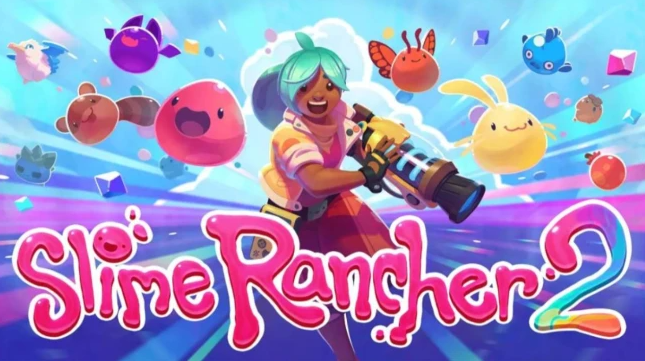
Slime Rancher 2 received a full release this past week, so I’ve returned to Rainbow Island. First, I’m overjoyed with the return of drones. This must be a relatively new addition to Slime Rancher 2. While I appreciate the ability to quickly accrue more drones in the original Slime Rancher, even the smaller number of drones makes managing your ranch a lot easier. I started a new game and refuse to build up a second or third location (even though I’ve purchased them) before I have enough resources to build another drone to help me manage my cutie slimes. Slime Rancher 2 is addictive.
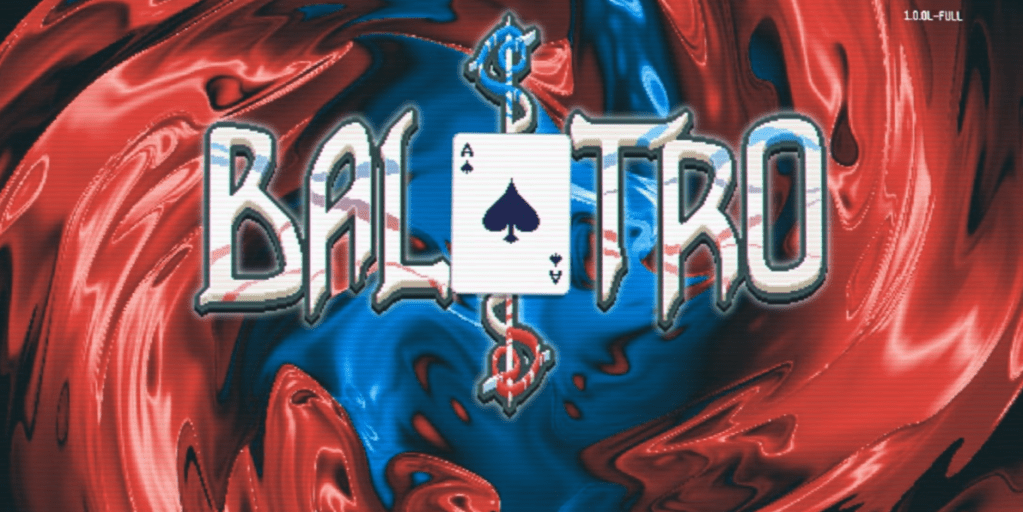
Balatro is a fabulous rogue-like poker deck-building game akin to Slay of the Spire. It has all the trappings of an addictive game, and I sunk plenty of hours into Balatro this past month. In short, there’s a reason Balatro is one of the highest-rated games on Steam. But I do have one gripe. There may be too many options. Balatro shares this issue with Auto Chess. Balatro requires players to balance Planet cards (upgrading the point value for Poker hands), Joker cards (giving a constant point-value boost), and the cards in the deck. Certain combos require specific cards, and Balatro’s staggering number of options means you may never see the cards you need for a combo. Despite this minor issue, I love Balatro.

Speaking of Auto Chess, I’ve played plenty of Auto Chess over the past month, too. The issue I listed in my Balatro write-up rears its head here, but certain game modes (like Solo mode) in Auto Chess allow players to limit the type of units they will receive from the bank. Unfortunately, I don’t care for Solo mode. It’s too slow for my taste. Auto Chess has players buy units, upgrade those units by purchasing three of the same unit, and combo units together with like species (like elves, dwarves, and undead) and classes (like Hunter, Warrior, and Mage). And this last feature introduces yet another issue: balance.
Not all combos are created equal. You can have up to 10 units (if you buy experience to increase your unit count) on the field at one time. Some of the synergies (combos) can be as high as 9 units of the same type. These 9-unit synergies can be overpowered, specifically undead (named Egersis in Auto Chess). A 9-unit undead synergy has an opponent’s dead units resurrect into zombies of the same level. This can double your unit count during battle. It’s unfair and unfun. I’ve played as Egersis, and it’s unfun to play with these unit types. Despite this added issue, Auto Chess is a lot of fun, so long as no one in the lobby plays Egersis. I love setting up my army, leaving for a while to do something else, and then managing my team in between rounds. Heck, I’ll read while my units take care of business.

Kyra’s Board Games
Skye’s going to mention Raccoon Tycoon in her write-up; I’ll let her go into more detail about the game. I love Raccoon Tycoon’s variable market, dual-purpose cards, and auction system. Each card a player uses will increase a resource’s value (or resources’ values) and allow the player to produce resources. Whenever a player sells a resource, they do so at the resource’s current value, and then the player lowers the resource’s value by the amount of those resources sold. And the auction system is simple but great. You can drive up the price of a railroad your opponent wants, but if you raise the price too much, you may get stuck with the railroad. Raccoon Tycoon is a ton of fun.

I’ll be running Raccoon Tycoon and Flamecraft for a charity event during Nuke-Con in two days, so I played both to remind myself how to play so I can teach each game. If you’re in the Omaha area this weekend, feel free to stop by my table. Anyway, Flamecraft is a game Season will mention in her write-up this week, but I’m including it. It’s a great gateway game. Flamecraft features enough common game mechanisms in modern board gaming, while introducing them in a lighthearted, easy-to-understand manner. And the art is adorable. Who doesn’t want to make artisanal crafts with cute dragons?

And yes, I will be playtesting and demoing my prototypes at Nuke-Con as well. Rustbucket Riots and Whirligig Pets are on the official schedule, but I’ll bring a few other board and card games I’m working on. If you’re going to Nuke-Con, make sure you stop by the Extra Life tables and say hi. We’ll have badge ribbons and prizes.
That’s all I have for the games I’ve played this past month. Let’s see what Skye has been playing.
Skye’s Games

Skye’s Board Games
Who wants to be an entrepreneur, trash panda? I do. Now you can live out your dream with your friends and family in Racoon Tycoon. I played Racoon Tycoon for the first time and really enjoyed it. The straightforward mechanics, simple gameplay and charming theme make Racoon Tycoon a game that I’d happily return to. Like most games I play for the first time, I sucked, but that doesn’t matter. I may have lost the battle, but the animal economy war has only just begun. Walrus St. isn’t ready for this determined ring-tailed faux cat.
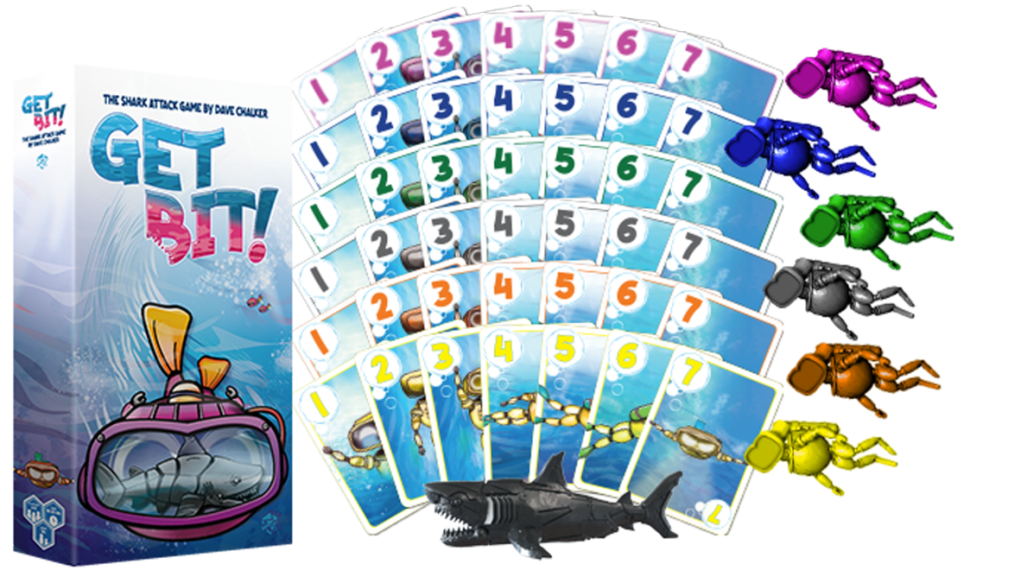
Ah, the wonders of being eaten by a shark. That’s Get Bit’s scenario. Get Bit is easy enough to understand. Don’t get eaten, and you win. The gameplay itself is different than what I was expecting. The goal is to stay as far away from the shark as possible (duh), but you accomplish this by playing cards that are numbered 1 through 7. The person who played the lowest card gets to move the farthest away first, followed by the next lowest card, and so on. Get Bit is a bit odd, but there are fair amounts of strategy and luck involved to keep you on the edge of your seat. Just make sure you sort out your least-favorite limbs ahead of time.
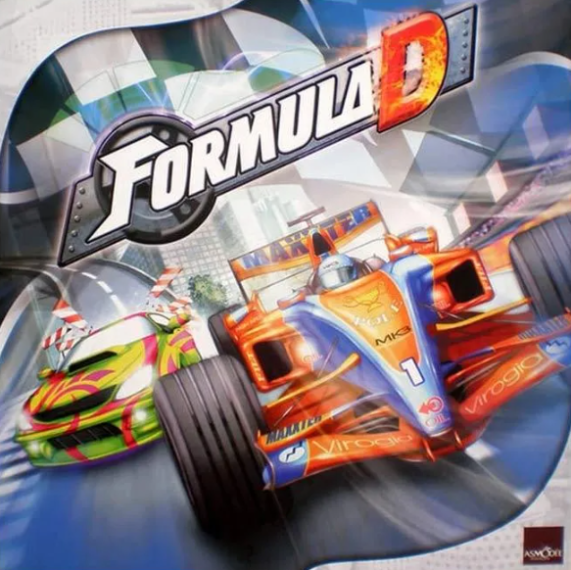
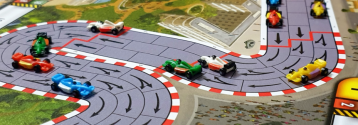
This month was the most fun I’ve had with Formula D in a while. We played Formula D with a large group of people, and it was a completely different experience. When I’ve played Formula D in the past, I’ve only played with 2 or 3 other people at most. With 8 players, we were cracking jokes, being ridiculous, and generally having a good time. The only downside was that the game took much longer than usual because of the number of players. I was so into Formula D, my car and I went to sleep with the fish. It was relaxing.
Skye’s Video Game
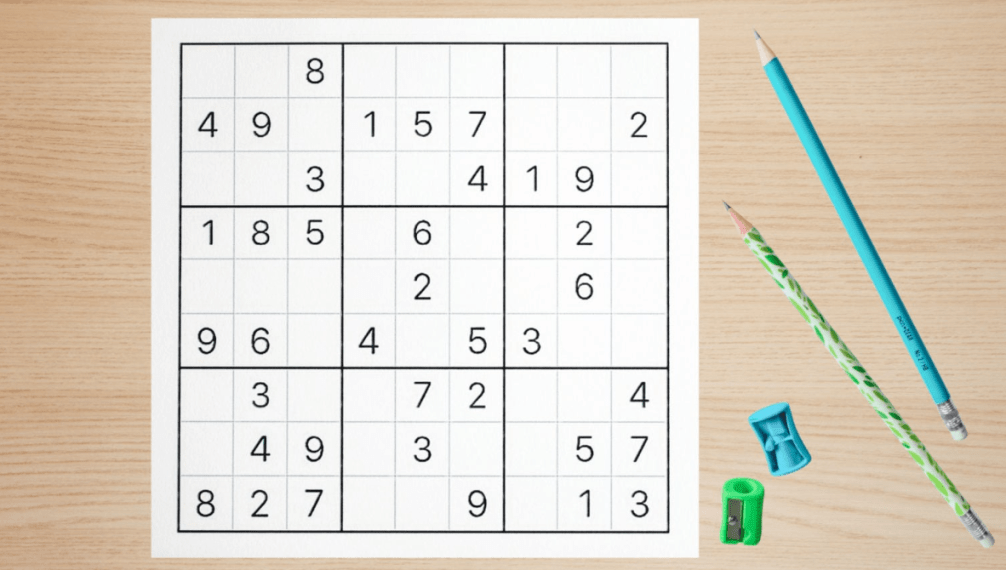
Speaking of relaxing, Sudoku never fails to make me chill out and vibe. I don’t always play Sudoku regularly; I came across a puzzle in my local library that I’ve felt compelled to play online puzzles again. Sometimes I’ll get the urge to test my brain power, and Sudoku has been my go-to. Honestly, there isn’t much to say about it. It’s Sudoku. Y’all know what I mean.
Season’s Games
season’s board games
Of course, I’m mentioning Flamecraft. I won’t go into too much detail, so here’s a quick overview. Your goal is to fill shops with dragons who produce resources. You use the resources to create enchantments and gain reputation. Many different dragon effects affect your score, and the game ends when you’ve run out of dragons. I’d forgotten how much I enjoyed this game until it hit the table last Monday.
I’m a certified dragon lover, and the small dragons in Flamecraft are adorable. ‘Nuff said.
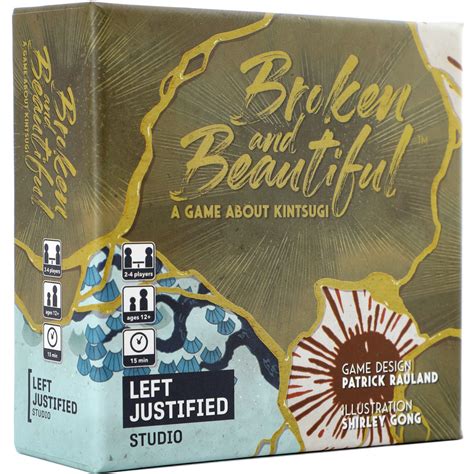
Broken and Beautiful is a set collection game. However, it has a unique way of increasing your score–if you play it correctly. Broken and Beautiful’s theme is based on kintsugi, a Japanese art form of repairing broken pottery with lacquer mixed with gold, silver, or platinum. It makes the object useful again while highlighting its imperfections to celebrate them. In Broken and Beautiful, players draft cards from a tableau using the snake draft method (starting with the first player and reversing player order after the last player). They try to collect sets of pottery based on type (sometimes pattern). The remaining card that doesn’t get drafted and the card on the top of the deck dictate which types of pottery break at the end of the round. Players can spend gold to fix their broken pottery and generate more points.
Normally, I’m not a huge fan of card drafting set collection games since I rarely feel the theme of the game. As in, if I play Sushi Go!, I don’t feel like I’m making a plate of sushi. In Broken and Beautiful, the theme of kintsugi is more evident to me. I also enjoyed the extra layer of strategy in Broken and Beautiful.

season’s video games
I’ve been playing a lot of Cell to Singularity on my phone. I love learning, and I enjoy idle games. That’s exactly what Cell to Singularity is. You start with discovering amino acids and work your way through evolution. The premise revolves around the game being a simulation of evolution, so some what-ifs about evolution crop up the further you progress. There are also offshoot simulations. The two permanent ones are Mesozoic Valley (dinosaurs) and Beyond (outer space). Every few days, limited simulations are available to play, too. I’ve just finished learning way more about mushrooms than I ever planned to learn. Worth it.

I go in and out of playing Ark: Survival Evolved. No. I don’t have Ark: Survival Ascended. I don’t think my PC can run it. Eh-heh. I enjoy taming my favorite creatures and building different bases every time I play. I have a few mods to spice things up. There are many fun, player-made maps to play on, and unique creatures, too. There are also mods that improve quality-of-life and let players build things that aren’t part of vanilla Ark: Survival Evolved. There’s no better feeling in Ark: Survival Evolved than starting a new game and seeing what happens.
Don’t forget to swing by Nuke-Con this weekend at the Mid-America Center in Council Bluffs, IA, and visit Kyra at the Extra Life booth. They’d love to meet you. What are you playing this week, Geekly Gang? Let us know in the comments.







 jkgeekly.com