

1997 was another stellar year for tabletop games. There were so many games to choose from that we have an honorable mention for the first time in a couple of yearly lists. Hey, hey, Geekly Gang! Kyra Kyle here. We’re back with another Top 5 Tabletop Games throughout the years; today’s list is the top five board games of 1997. We’ll talk about 1997’s board game list soon, but let’s review the ground rules for which games make these lists before we begin.
1: Cultural relevance plays as much of a factor as overall quality. A game might make a list that doesn’t hold up to others of its type, but you must admit the game is everywhere.
2: Only one game from a franchise makes the list. This will become more of an issue the closer we get to games with expansions.
3: Longevity plays a role, too. A game doesn’t have to fly off the shelves today, but it had to have some widespread appeal for a decent time.
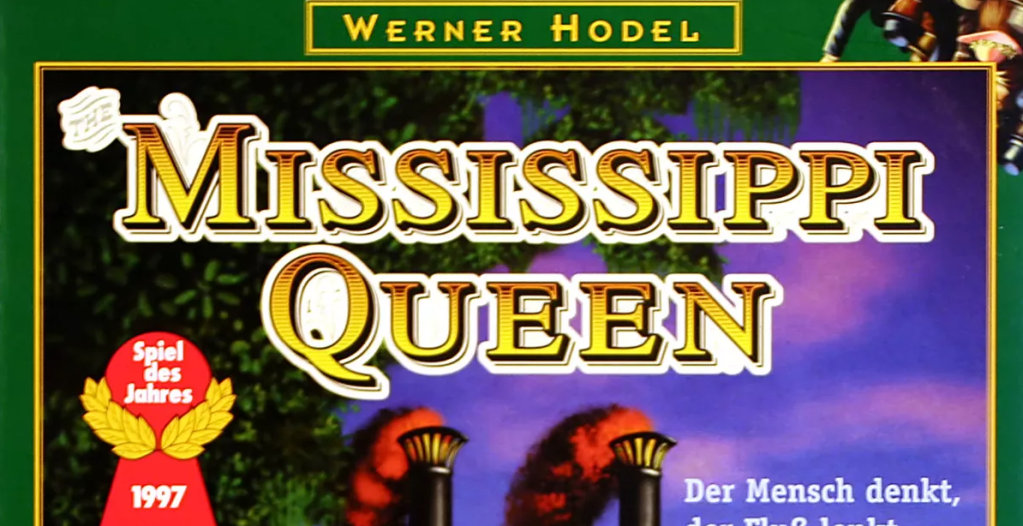
Honorable Mention: Mississippi Queen (1997)
Yep. 1997’s winner of the Spiel des Jahres (German Game of the Year) just misses our list. Mississippi Queen puts gamers in the role of a paddlewheeler captain in a race down the Mississippi River in 1871. Mississippi Queen won numerous awards, not just the Spiel, and it’s a stellar game, but the other games that made this list have had longer staying power. Still, Mississippi Queen is a satisfying racing game.

5: Tigris and Euphrates (1997)
The incomparable Reiner Knizia makes another one of these lists with Tigris and Euphrates. Many gamers may balk at this game being this low. Tigris and Euphrates is often dubbed a “gamer’s game.” It centers on a clash between neighboring dynasties along the Tigris and Euphrates Rivers. Funny, both of the first games we’re talking about are named after famous rivers. Anyway, Tigris and Euphrates offers tactical and strategic objectives, where immediate (tactical) goals are more realistic at larger but smaller player counts allow for long-term planning.

Tigris and Euphrates features drawing tiles from a bag. Players may redraw tiles if they don’t like the ones they drew by spending an action point (players have two action points per turn). After drawing tiles, players will place tiles and leaders onto the board, creating and expanding regions and kingdoms. During the game, players collect points in each of the four tile colors, prompting players to balance the tile types they play. Tigris and Euphrates has a lot more conflict than most German games during this time. It’s a classic.
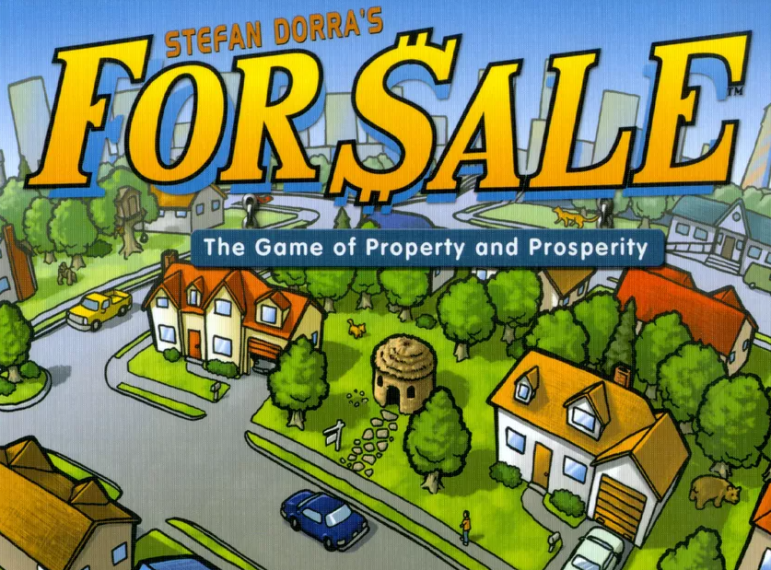
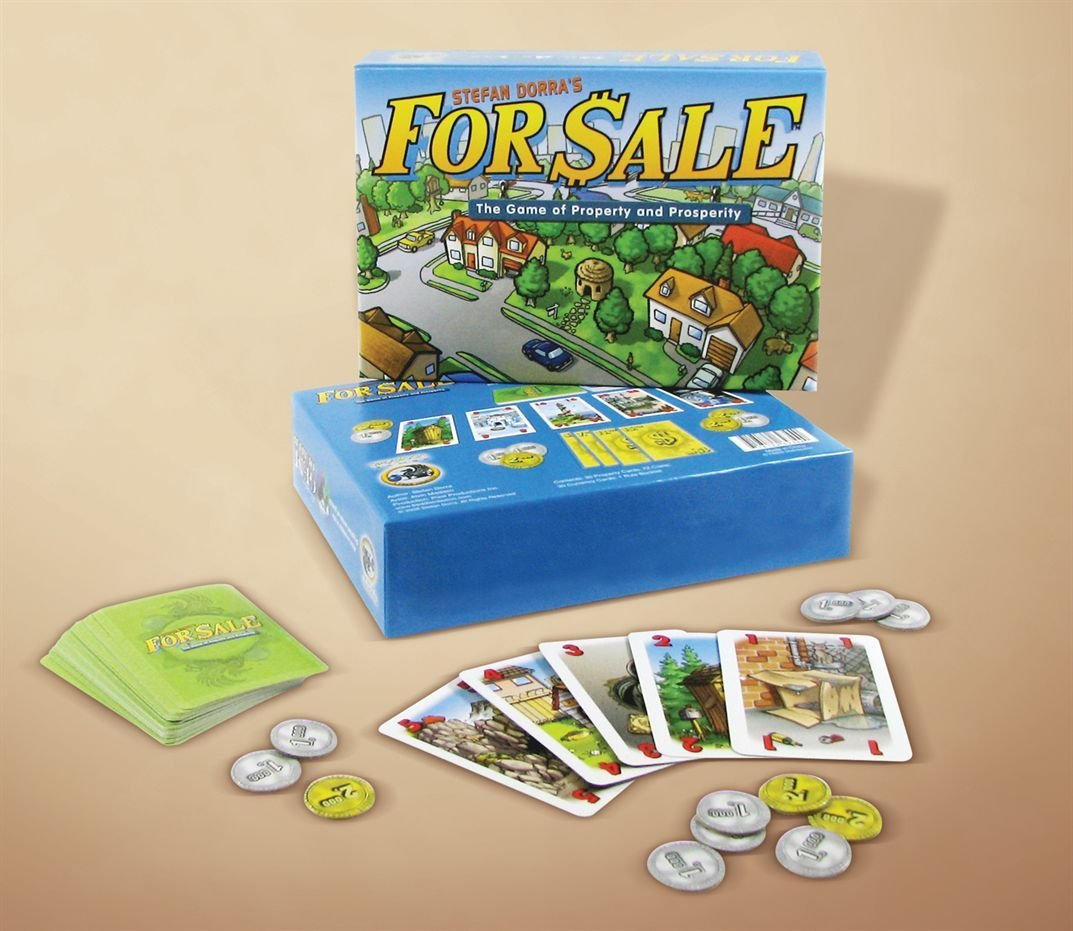
4: For Sale (1997)
For Sale is a fast-paced auction card game about real estate. It’s played in two phases. During the first phase, players bid for several buildings. After all the properties are purchased, the second phase begins, and players sell their buildings for the highest profit. For Sale is one of those easy-to-teach, easy-to-learn, and difficult-to-master card games.
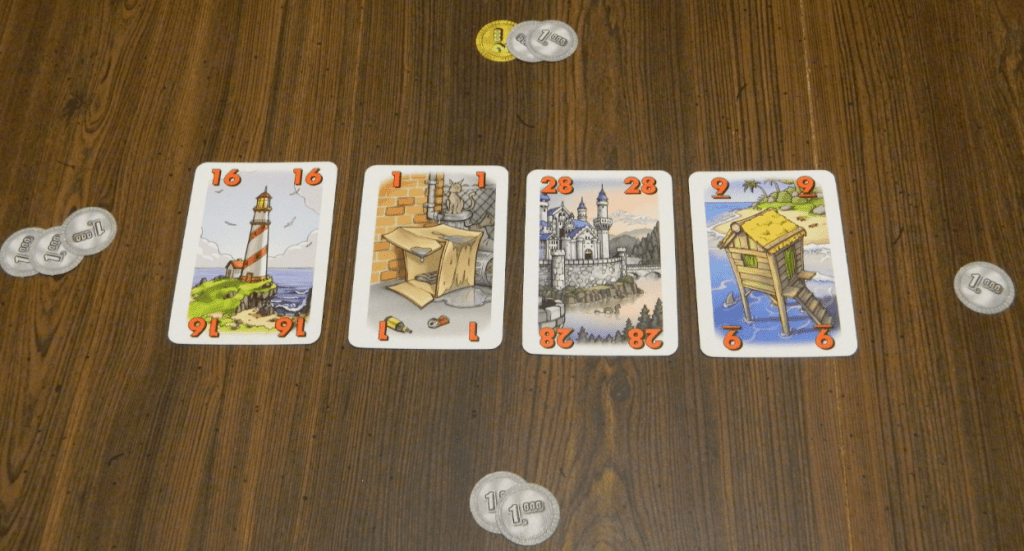
In short, For Sale may be the opposite of Tigris and Euphrates. Both are stellar games, but I’m giving For Sale the slight nod for its accessibility.

3: GIPF (1997)
GIPF is the first abstract strategy game to make one of these lists in several posts. GIPF was recommended for the Spiel des Jahres in 1998. It has plenty of accolades, but GIPF makes this list because it began a series of abstract strategy board games by designer Kris Burm named the GIPF Project. TZAAR, ZERTZ, DVONN, YINSH, PUNCT, LYNGK, and MATRX GIPF are great games that use various game mechanisms. But we’re talking about GIPF, the game of pushing.

GIPF takes a board that looks like it could belong in Chinese Checkers. Players introduce a new piece (disc) on the hexagonal game board and push their piece in a straight line. GIPF involves no luck. It’s a straight-up brain burner, and it reintroduced the gaming community to abstract strategy games akin to Go or Othello.

2: Bohnanza (1997)
Uwe Rosenberg makes his first appearance on one of these lists with Bohnanza. The game’s title is a pun on the German word Bohne (for bean) and the English word bonanza (for an exceptionally large and rich mineral deposit). Players plant bean cards and then harvest them to earn coins. Each player begins with a random hand of bean cards, and each card has a number on it corresponding to the number of that type of beans in the deck. Modern card game darling, Flip 7, may have borrowed that idea from Bohnanza. Cards with fewer copies in the deck are more difficult to collect, but players don’t need as many copies of the cards to harvest (or make a set).

Bohnanza features trading and can get political. Get ready to make your case. More so than any other game on this list—so far—I’ve seen Bohnanza played in game shops and board game cafés.

1: Twilight Imperium (1997)
Twilight Imperium is a board game space opera. Twilight Imperium is the closest thing to a board game version of Star Wars. Twilight Imperium is a classic 4X board game: explore, expand, exploit, and exterminate. You choose how your civilization will settle the cosmos. Twilight Imperium is not for the faint of heart. Games run a minimum of five hours. This is one of the reasons why I’ve only observed games of Twilight Imperium. There’s a lot going on, but if you want to control every move of an intergalactic kingdom, few games do as good a job of capturing that vibe as Twilight Imperium.
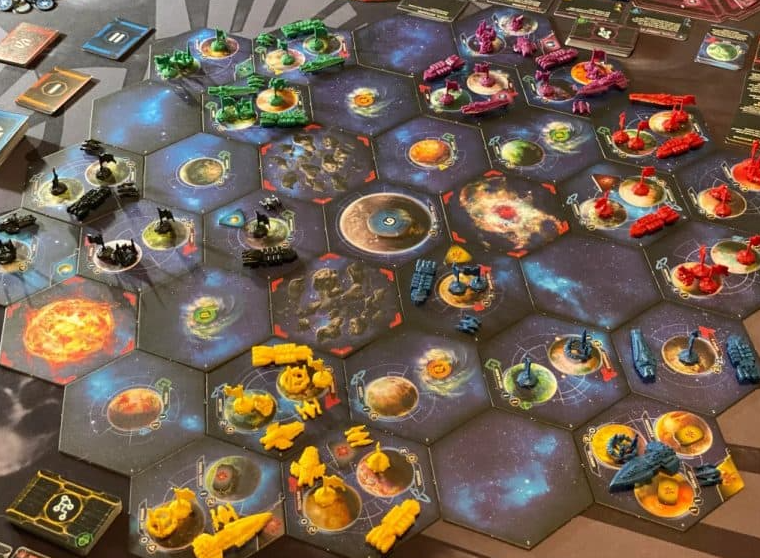
You can even dive into Twilight Imperium’s world with its novel series published by Aconyte Books or play the tabletop role-playing game spinoff. Twilight Imperium is a game that some board gamers play exclusively. And there may be a good reason for that. As recently as last year (2024), Nerdist and Polygon dubbed Twilight Imperium as one of the greatest board games ever made. Twilight Imperium easily tops our 1997 list of tabletop games.
Did we get the list mostly correct? Let us know which games you’d add in the comments. Thank you for reading, and wherever you are, I hope you’re having a great day.
Check out the other lists in this series:
Top 5 Tabletop Games Prior to the 1930s
Top 5 Tabletop Games of the 1930s
Top 5 Tabletop Games of the 1940s-50s
Top 5 Tabletop Games from the Early 1960s
Top 5 Tabletop Games from the Late 1960s
Top 5 Tabletop Games from the Early 1970s
Top 5 Tabletop Games from 1980-1981
Top 5 Tabletop Games from 1982-1983
Top 5 Tabletop Games from 1984-1985
Top 5 Tabletop Games from 1986-1987
Top 5 Tabletop Games from 1988-1989
Top 5 Tabletop Games from 1990-1991
Top 5 Tabletop Games from 1992
Top 5 Tabletop Games from 1993
Top 5 Tabletop Games from 1994
Top 5 Tabletop Games from 1995
Top 5 Tabletop Games from 1996



 jkgeekly.com