We’ve hit the third episode in a row this week. More revelations come to light at the end of the episode in addition to some friendship woes. Let’s go!
“The Unicorn Unleashed!” features four Russian criminals working together. They outright say what their villain counterparts are (except for Dmitri, the Chameleon). This episode centers on Mila Masaryk as The Unicorn through Otto Octavius’s gear. She busts her friends out of jail but gets power-hungry. There already wasn’t much of a sense of camaraderie among the four in “Hitting the Big Time,” so this wasn’t unexpected. I’m unsure if Mikhail’s son is going to be the Rhino in future episodes or if they’ll have Mikhail be the Rhino. I’m leaning toward the latter.
Peter’s friendship with Nico is suffering as he’s making less time for her and being dismissive. This could lead into her origin story and I’m hoping it does. This uneasiness was sprinkled throughout this episode more than it was in “Hitting the Big Time,” so I’m hoping they explore it more in future episodes. That brings me to Lonnie.
We got a lot of Lonnie in Episode 4. They kept that momentum going with Episode 5. Lonnie gets called into a gang fight against the Scorpions and saves Big Donovan’s life. I half-expected him to ask for his freedom from the gang as a reward. Instead, he asked Big Donovan to stop calling him “Superstar.” Tombstone is born.
Skye’s Take
Lonnie continues to be my favorite character. Despite not being the focus of this episode or the previous, he steals the screen every time he’s on it. Especially now that he’s officially “Tombstone.”
Even though Lonnie’s transition is good, the Peter/Spider-Man stuff is still cool. Things move forward in his story: his new relationship with Harry (after discovering his identity), his current relationship with Nico, and crime fighting. Weirdly, I’m more interested in Lonnie’s story. Don’t get me wrong, I like Spider-Man as much as the next person, but now that Lonnie’s story is popping off, Spider-Man feels like a side story. Maybe it’s because I’ve seen Spider-Man done so many times before. Some of the general crime-fighting fare is a bit old to me now. Heck, even Peter struggling with his social life is a bit overplayed.
While more villains were established, mostly with Doc Ock in the opening and the gender-swapped Unicorn, it still doesn’t seem like much is being done with them yet. I can respect the creators biding their time and waiting for the opportune moment to release them, but it feels like cliffhanging for viewers. If you promise enough villains for seasoned fans, eventually you’ll hook them whether or not you deliver.
Lonnie’s story alone is enough to keep me coming back to this show. Although, if they unveil a big-name Spider-Man villain soon, that’d help spice up the Peter stuff.
Last episode, Peter waffled back and forth between partnering up with Norman Osborn. This episode, they go full swing into a partnership—with a twist ending.
“Hitting the Big Time” had quite a bit of Lonnie. We get to see his encounter with the Scorpions. Lonnie didn’t seem to fully understand the gravity of his situation until his chat with Big Donovan after this encounter. I’m thinking he’ll take down Big Donovan in the coming episodes then continue to run the gang as the ringleader if we’re to go by his comic book counterparts.
We get to see Spidey go through a myriad of costume changes. We won’t talk about the individual suits here, but this segment provided a pseudo identity crisis for Spidey. I say “pseudo” because Osborn pressured him into trying the different suits that didn’t fit. Spidey knew who he was from the beginning. Getting to see the different suits in action was a goofy treat.
Toward the end, Spidey’s identity gets revealed to Harry Osborn by mistake. Oops. On the plus side, Harry seems to think it’s cool. Spoilers, we also catch a glimpse of Otto Octavius. End of spoilers.
Skye’s Take
This episode was entertaining despite not having too much bearing on the story. The biggest additions in this installment involved Lonnie while Peter worked with Norman.
Lonnie deals with gang life and he’s not ready. Things get real when Lonnie meets a rival gang, led by none other than Mac Gargan. Lonnie’s reaction to this shift is believable. At first, he treats gang life as an excuse to get some study time in. After learning that belonging to a gang puts a target on his back, he reluctantly continues doing jobs for them to protect his family. Clearly, the wheels are turning for him to become what we all know who he’ll become, and it’s legit riveting. At this point, Lonnie’s my favorite character.
Back with Peter and Norman, they try out a series of different suits to see what works. It’s pretty funny. While it’s not essential to the plot, it is fun to watch and is much funnier than the humor in earlier episodes.
While I like where this series is going, I still have one problem. A lot of future villains are being teased right now. Newly added villain teasers are The Scorpion and Doc Ock, but when are they going to, you know, do something? By this point, several future villains are set up, but nothing is being done with them.
Although maybe that’s to come in the next episode. I can only hope. And I’m excited to find out. 😉
I said last week I expected to see Norman Osborn as Green Goblin within the next few episodes. Now, I’m kind of hoping that’ll be the Season 1 finale. Without watching Episodes 4 and 5 prior to this review, let’s swing into “Secret Identity Crisis.”
We didn’t linger too long on Peter’s mental crisis after Norman revealed that he knew of Peter’s identity as Spider-Man. Normally, I’d like to explore this a bit more but, for this show, it would feel out of place. That said, we got to learn a bit about Nico’s situation during this segment. She’s in foster care. If they’re going to lean into a variant of the Runaways narrative, I’m digging this backstory.
I’m not sure I cared too much for Lonnie’s kid brother joining a gang. He seemed disgruntled but, overall, a good kid. It wasn’t entirely unexpected since we saw how Lonnie was followed by the cops (among other things) in “Amazing Fantasy.” This felt a bit forced. However, Lonnie turning himself over to the gang to save his brother does make sense for his character. I’m curious to see how he’ll become Tombstone later.
One last thing. I thought it was endearing to see Peter save Uncle Ben’s camera. The camera backstory isn’t something I’ve seen much of. I found myself saying, “Aw.”
Skye’s Take
While I started having doubts in the last episode, the show is back on track with this one. At first, I thought the show was moving too fast and I couldn’t tell where they wanted to take the show. Their intentions are now clear. In fact, this episode was kinda cute.
I latched onto each character. Not gonna lie, I was surprised to see how caring and positive each character is, especially Norman Osborn. Considering how the previous episode ended, I expected him to go into full Goblin mode real soon. However, he’s far from that. Norman seems genuinely pleasant and willing to help Spider-Man after learning his identity, and that’s a nice spin on the idea. The Spider-Man stuff is getting more interesting as Spider-Man’s “Guy in the Chair” is literally the Green Goblin.
I agree with Season on the Lonnie stuff. His brother Andre joining a gang was out of left field, but the show needed to get Lonnie into a gang somehow. It also makes Lonnie a more complex character. Knowing his future as Tombstone, seeing him vulnerable around his family sets him up as a tragic character. I’m looking forward to the episode when they rip my heart out with him becoming Tombstone.
With minimal gripes on this episode, and prior to watching the other two, I’m back on board. Let’s keep this Spider-Train a rollin’ with more great episodes.
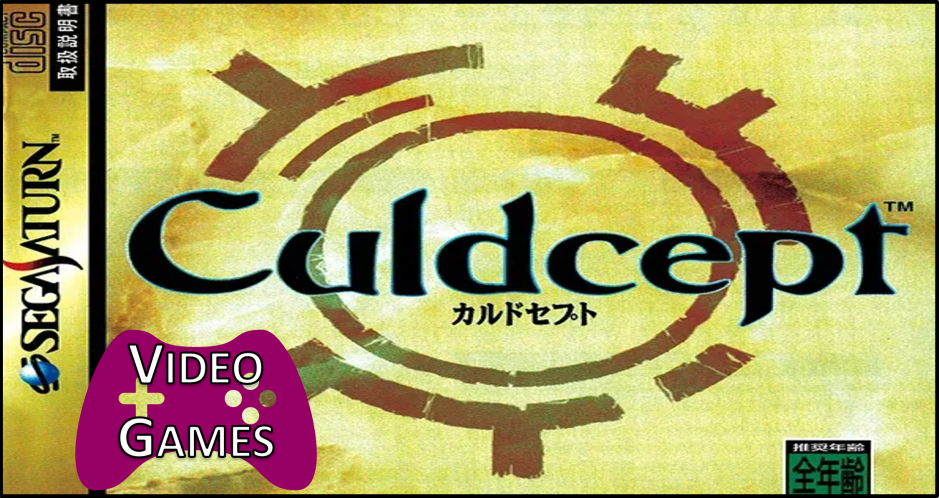
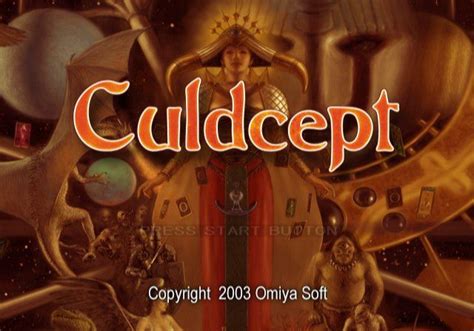
Culdcept has titles spanning nearly two decades. It has a manga series. It’s difficult to find Western copies. Discard your card and let’s play a round of Culdcept.
Hey, everyone! Season here. We’re trying something new this week with Video Game Cult Classics. This week, we’re focusing on Culdcept (or Karudoseputo in Japanese). The basic premise of Culdcept is Monopoly meets Magic: The Gathering in video game form. The first installment was developed in 1997 by Omiya Soft. For a video game to make this series, we’re going to consider its reception, relevance, and accessibility. Since Culdcept is predominantly a deck construction game, we’ll start with the different types of cards before jumping into gameplay.
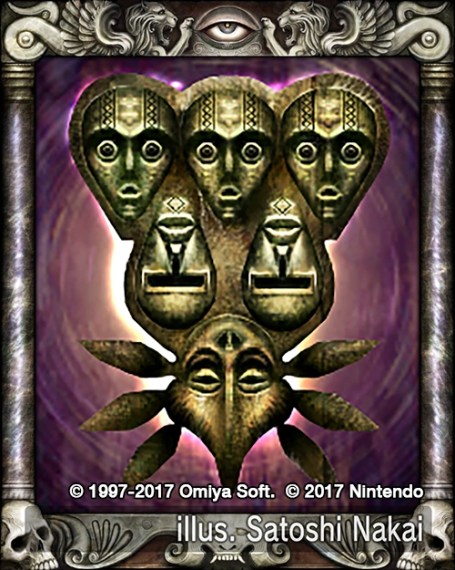
Note: Most of the images are from the Culdcept Revolt wiki, but some will be from Culdcept Second (which will be labeled).
Card Types
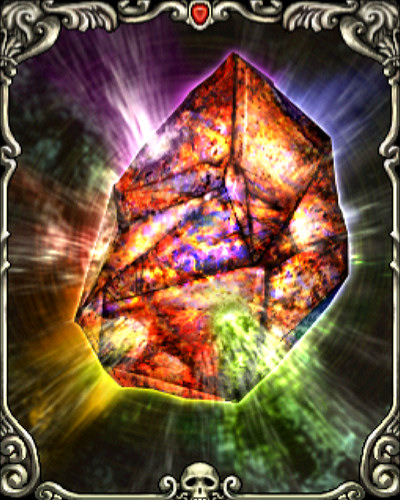
Before we jump into card types, Culdcept has a card rating system (how easy cards are to obtain). After a match, cepters (players) receive “card packs.” The number of cards contained in each pack varies depending on whether the cepter won or lost. In Culdcept Revolt, cepters may also purchase card packs outside of matches. The different ratings a card can have are normal (common), strange (uncommon), rare, and extra (ultra rare). Extra cards are powerful and may only be obtained after meeting certain conditions within the game.
Below, we have “Rainbow Piece,” an extra item card obtained after defeating a specific cepter in story mode of Culdcept Second.
Now that we’ve got obtaining cards and their rarities down pat, let’s take a look at the categories of cards. Culdcept has three basic categories of cards: creatures, spells, and items. We’ll start with creature cards.
Creature Cards
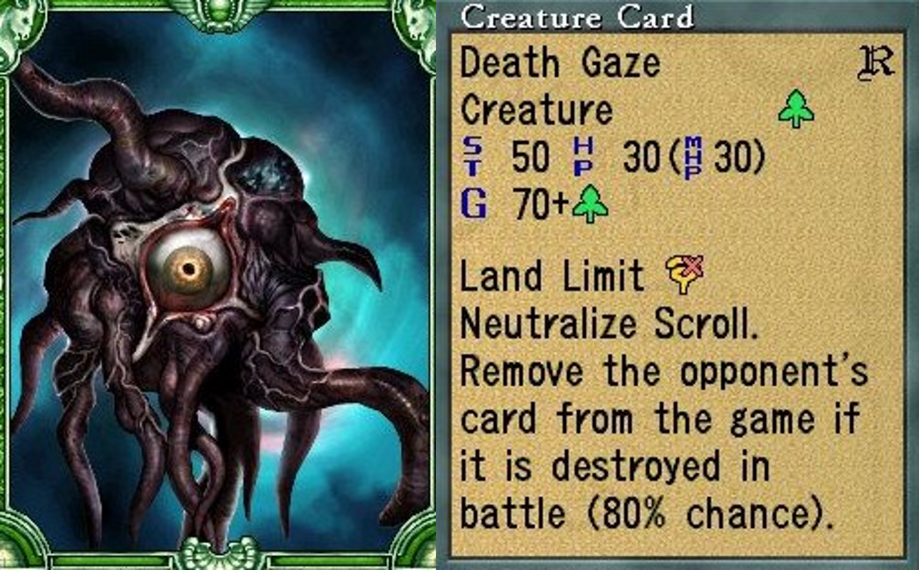
Creatures claim/defend land and attack/defend against other players. They’re essential for collecting tolls and fending off your opponents. Each creature card will have ST (strength), HP (health), MHP (max health), and G (cost). Some creatures will also have an element symbol or card symbol as part of their G. This means you must own the number of required land and/or discard a card from your hand to place that creature.
Some creatures will have “land limits” (types of lands they can’t be placed on) and “item limits” (items they’re unable to use in battle). Each creature card will have a different colored border, denoting their element. If the cepter places a creature on a land of their element, they’ll receive a land effect, meaning they’ll get bonus HP and ST from that land during battle. This excludes neutral (gray) creatures unless they have an effect that states otherwise.
Below, we have a “Death Gaze.” It’s a rare earth creature. It has ST: 50, HP: 30, MHP: 30, and G: 70+ you must own at least one more earth land to place “Death Gaze.” The printed “Land Limit” shows that “Death Gaze” cannot be placed on a wind land. The “Neutralize Scroll” effect means that it’s impervious to scroll attacks.
Credit: gamerinfo.net, Culdcept Second
Spell Cards
Spells can either help or harm the casting cepter. They can be used offensively to steal magic (more on magic during “Gameplay”) from other cepters and harm their creatures or defensively to protect the casting cepter and their creatures from their opponents. Some spells have area effects, alter lands, and affect movement. Spells may have different symbols that denote which aspects of the game they affect. In Culdcept Revolt, there are “secret” spells, which aren’t revealed until they’re played. More on that later.
The spell below is “Holy Word 6,” which allows a cepter of the caster’s choice to have a fixed die roll of 6 on their next roll phase.
Item Cards
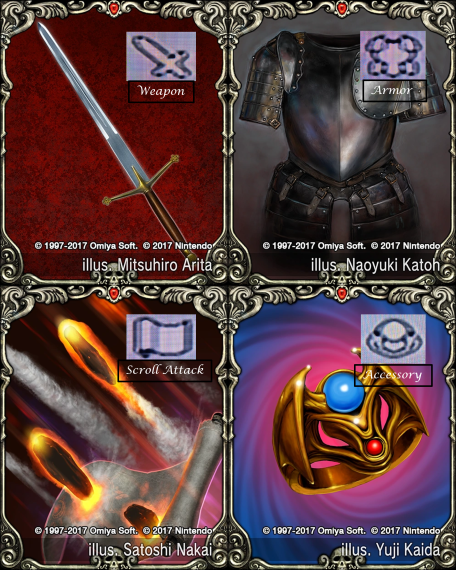
Items can be broken down into four types: weapons, armor, scroll attacks, and tools/accessories. Weapons and armor can both affect a creature’s ST and HP stat. Weapons tend to provide more strength and armor tends to provide more HP. Scroll attacks give a creature a fixed strength and can have different effects, such as critical hits to certain types of creatures and can ignore items that neutralize attacks. Tools/accessories can do a variety of things. They can neutralize attacks, penetrate (remove land effect buffs from creatures), give a creature first attack, and destroy/steal the opponent’s item. There are probably more effects we’re forgetting. Some creatures may also double as items, which is described in their effect text.
Gameplay Overview
Cepters (players) draw a card, roll two 6-sided dice, and move around a board, placing creatures and paying/collecting tolls as they go. Each installment of Culdcept has different variations and add new mechanics. For this write-up, we’re going to focus on Culdcept Revolt (2016), since it’s the most recent installment.
At the beginning of a cepter’s turn, they draw one card from their book (deck). Each cepter can hold a maximum of six cards in their hand and must discard down if they draw a seventh. If they are holding any spell cards in their hand, they may play one per turn if they have enough G (cost). Culdcept is played with player hands revealed except for “secret” spells, which aren’t revealed until they’re played.
Credit: videochums.com
Next, the cepter rolls the dice and moves the number of spaces on the dice. If the cepter rolls a symbol on one of the dice, it equals zero. Rolling symbols on both dice equals twelve. Land tiles are elemental and may be either vacant or occupied. The different types of land tiles are air (yellow), fire (red), earth (green), water (blue), morph, and multi-elemental. The former four are more common and provide land effects to creatures corresponding with their matching element. Morph is a neutral land tile that transforms into the element of whichever creature is placed there. In Culdcept Second, these are neutral tiles and remain neutral even after a creature is placed there. Multi-elemental provides land effects to creatures of any type but won’t provide a chain effect. More on chain effects later.
Credit: videogamesuncovered.com
Special Tiles
There are also many types of special tiles cepters may land on. We won’t go in depth here, but we will give a brief overview of them.
Gates are represented by N, S, E, and W. They must be passed to collect magic to win the game.
Warp and Bridge tiles are similar since they send cepters to another location on the map.
Fortune Teller lets cepters choose creature, item, or spell, and gives the cepter one of the selected options at random from their book.
Spell Circle allows cepters to choose one of two spells presented, which is cast instantly, free of charge.
Card Shop allows cepters to purchase one of four cards for 20G.
Path Switch alters the path on the board for cepters, like a mine cart junction.
Magic Trap with either steal magic from cepters or give cepters all of the magic it has depending on what the cepter who landed on the tile rolls (1-6).
Siege Tower allows cepters to invade any land or occupy any vacant land with a creature from their hand.
Gem Store allows cepters to sell, buy, or steal Element Gems from one another, which can be used to enhance the element they’re assigned to. This increases the value of an element for a player. Cepters choose one element for the Element Gem’s rival (this element’s value decreases) and one element for the Element Gem’s ally (this element’s value increases). Element Gems are one of the more complex aspects of Culdcept Revolt and could be an article on their own.
Metro Bridge Map, Culdcept Revolt
Once a cepter lands on a tile, they will either perform the effect of the special tile, place a creature on the land tile if it’s vacant, summon a creature to battle on the land tile if it’s occupied, or use territory commands.
Chaining
If a cepter places a creature on a vacant land of an element they already own, a chain happens. Chaining raises the toll of that cepter’s lands if the lands occupied are the same element. So, if a cepter has two water lands and one fire land, the two water lands will be chained, raising the toll fee of that cepter’s water lands. The fire land will not be affected until that cepter places a creature on another vacant fire land. Chains don’t apply to multi-element lands.
Battles
Battles are fairly straightforward. If a cepter lands on a land tile occupied by another cepter, they may summon a creature to invade the opposing cepter’s land. The creature chosen must have its requirements met before being summoned, such as G, discarding a card, the number of adequate lands are occupied by the summoning cepter, and land limits.
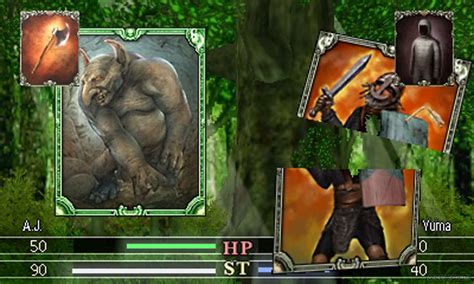
The invading creature attacks first (unless the defending creature has the “first attack” effect), dealing damage equal to its ST to the defending creature’s HP. Each cepter has the option to choose an item to use in battle. Even if an item isn’t used the backside of a blank card will lay in the upper left or right-hand corner of either creature card until the battle commences.
Credit: hak271828, YouTube, Culdcept Second
If an item is used it will remain in the upper left or right-hand corner of its respective creature card and its effect will occur. If a creature has a pre-battle effect, such as critical hit, that will go into effect. If a creature survives the battle and has an effect post-battle, that will go into effect before exiting the battle screen and returning to the board. If the invading creature wins, the land will be taken over. If the defending creature wins, the cepter who landed on the land will pay the toll. If both creatures get destroyed, the land becomes vacant.
Credit: videochums.com
Territory Commands
Territory commands can range from leveling up lands to doing a myriad of things with creatures. They may only be available for territories the cepter has passed during their move phase. All may be accessed if the cepter lands on a gate. Lands can be level one through five—five being the highest. Cepters must pay the appropriate cost in G before a land can be leveled up. Cepters may also exchange the creature currently occupying a land with one from their hand or move a creature to an adjacent land (except for defense creatures that can’t be moved). If the adjacent land is occupied, a battle ensues. Otherwise, the creature occupies a new land. If a creature has a territory ability, the ability may be used. The game ends when whichever cepter collects the required magic power first.
Phew! That wasn’t nearly as in depth as it could have gotten, but I’ll spare you the nitty gritty. The game itself teaches new players more slowly, so it’s not nearly as much of an info dump as my breakdown.
Reception
Culdcept was more of a hit in Japan than in Western countries. The original Culdcept doesn’t have an official translation. However, Culdcept did get released as Culdcept DS in 2008. Culdcept also released during the middle of the collectible card game (CCG) boom of the ‘90s. It came out one year after the Pokémon Trading Card Game (1996) and two years before the Yu-Gi-Oh! Trading Card Game (1999). CuldceptSecond got an official translation and was released in North America in 2003 for PS2. This is the iteration of Culdcept I’m most familiar with. However, Culdcept Second still wasn’t very popular and sold roughly around sixty-five thousand copies globally. Culdcept 3DS released in 2012 in Japan, but this is similar to Culdcept Second.Culdcept Revolt incorporated an online element. This garnered Culdcept Revolt more popularity than its predecessors and it included elements to streamline the game.
Credit: Vysethedetermined2, YouTube, Culdcept Second
Relevance
Since Culdcept released as a video game hybrid of popular tabletop games, you’d think it’d have a wider fanbase. I’m not sure why it’s an obscure series, but I can hazard a guess. OmiyaSoft wanted to jump on the CCG bandwagon with a video game resembling a CCG. Culdcept got sandwiched between two popular titles during that time. Yu-Gi-Oh! (the manga) began serializing in 1996 and Pokémon (the anime) started airing in 1997. Culdcept likely got overshadowed by these two titans and faded into obscurity.
The publisher, Omiya Soft, is a small, not well-known publisher outside of Culdcept. To their credit, Culdcept lasted for almost twenty years. They had enough dedicated fans to continue producing games. On their website, they advertise themselves as a variety publisher. They haven’t released anything since Clash! Hani World in 2017, which is only available in Japan.
Credit: mobygames.com, Culdcept Second
I mentioned the manga at the beginning of this write-up, so I’ll cover the manga’s reception here. The Culdcept manga was serialized from 2004-2006, between the releases of Culdcept Second and Culdcept Saga, shortly after Culdcept Second became available in North America. I didn’t know it had a manga even though it was published in English by Tokyopop, which is a well-known English manga publishing company. Regardless, even the manga had a short shelf life.
Accessibility
If you’ve read this far and are thinking about picking up a copy of Culdcept, you’re probably asking, “Where can I find it?” Your local used video game store likely won’t have it unless you luck out. Folks sell used copies of various Culdcept titles on eBay and Amazon. The downside to getting these titles online is that they could be damaged, and you’d have to take the disc to get refurbished. Culdcept Revolt still has some new copies on the market, but their numbers are dwindling. If you want to get your hands on the original Culdcept, I recommend having a Japanese PS1 or PS2 to go with it if you’re able to find one. These aren’t the easiest games to find and the prices for English copies vary between $25-$200 USD. Maybe more, depending on where you look.
Credit: listal.com, Culdcept Second
Final Thoughts
If you’re a fan of strategy and card games, I highly recommend Culdcept. I find the game charming and enjoy the different playstyles of each CPU within the game. That’s right. Unlike games like Yu-Gi-Oh! Duel Links, where each CPU has different decks, but employs a similar playstyle, CPU cepters have their unique playstyles that match their personalities and deck type. Some of them take over every land they see while others invade when they’re certain they can win. They can be predictable if you’re used to facing the same cepter, but they’ll sometimes leave you scratching your head.
Much of the information regarding Culdcept Revolt was found on Culdcept Central. If you want more in-depth guides for each game and deck strategies, please check them out.
What’s your favorite deck/strategy in Culdcept? If there are any cult classics you’d like to see covered in future posts, let us know in the comments. Thanks for reading and have an amazing rest of your day.
Hey, hey! Kyra Kyle here. I didn’t realize that I hadn’t reviewed today’s game, so we’ll fix that. Today’s review is another party game: Don’t Mess with Cthulhu.
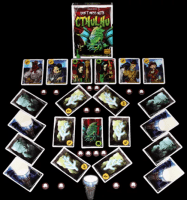
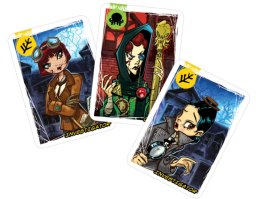
Don’t Mess with Cthulhu is a social deduction game with secret identities. Players assume the role of investigators or cultists. The investigators must uncover all the Elder Signs to win, while the Cultists win when Cthulhu is revealed or if the game ends before all the Elder Signs are discovered.
Before we venture further into madness, let’s discuss Don’t Mess with Cthulhu’s details.
The Fiddly Bits
Designer: Yusuke Sato Publisher: Indie Boards & Cards Date Released: 2014 Number of Players: 4-6 Age Range: 10 and up Setup Time: Less than a minute Play Time: 1-30 minutes
You’ll have a different number of investigators and cultists, and various numbers of futile investigation and Elder Sign cards based on the number of players. Consult the charts in the rulebook to determine how many of each needs to be in the game.
Shuffle the appropriate number of Character tokens, dealing one to each player face down. Each player secretly looks at the role assigned to them on the Character token. Place any unused tokens out of play without revealing them.
Then, shuffle the appropriate number of Investigation cards, dealing five to each player face down. Beginning with the starting player (who will have the starter player token, which is a flashlight), each player secretly looks at their Investigation cards and declares (truthfully or not) the number of Elder Sign and Cthulhu cards they were dealt. (Note: there’s only one Cthulhu card in the deck, but that doesn’t mean that more than one player can “claim” to have a Cthulhu card.)
Everyone shuffles their Investigation cards and places them in front of themselves, face down.
Game Flow
Each turn consists of the Active player selecting any Investigation card in front of any player other than themselves. They place the flashlight token on the card they wish to reveal. Other players should feed the player information, keeping in mind that players with the Investigator role want to find Elder Signs, while Cultists want to reveal Cthulhu.
The chosen card is revealed and placed in the center of the play area so everyone can see it. Check to see if the game ends (all the Elder Signs are revealed or if Cthulhu makes an appearance). Play continues with the player whose card was just revealed. They take their turn the same way and this continues until the round comes to an end.
The round ends after the number of actions taken in that round equals the number of players in the game. After the round ends, the remaining Investigation cards are shuffled together and dealt evenly between the players. Again, the players secretly look at their Investigation cards and place them in front of themselves face down.
The game ends immediately if the Cthulhu card is revealed or if all Elder Sign cards are revealed. If neither condition is met, the game ends after four rounds.
If all Elder Sign cards are revealed, the Investigators win. If Cthulhu is revealed or four rounds are played without all Elder Sign cards being revealed, the Cultists win.
Review
Like most party games, Don’t Mess with Cthulhu has a quick setup and playtime. I’ve played this game quite a bit over the years and found that you don’t always need to bluff when playing—but it helps. And it’s fun when more than one person claims that they have Cthulhu. I’ve played a round where three people at the table said they had Cthulhu and then the next round, everyone said they had Cthulhu. It’s a goofy game that doesn’t take long.
And the reason why I say that you don’t have to bluff if you don’t want to is that chance plays a huge role in Don’t Mess with Cthulhu. Even if everyone tells the truth, you still must select the right card, or the game ends and the game can end in the way you don’t want. My family struggles with bluffing in games. Don’t Mess with Cthulhu gives players an option to bluff or not bluff. This leads to some great metagaming. I’ve heard many players say, you never tend to bluff but you did this time and fooled everyone. I’ve also seen the opposite. Don’t Mess with Cthulhu may get better the more games you play with a group.
The stakes are low with Don’t Mess with Cthulhu. Most games last about fifteen minutes with some games going as short as less than one minute. I’ve seen plenty of games where the first or second card the active player chooses is the Cthulhu card. It doesn’t matter. Laugh it off, shuffle the cards, and play again.
Too Long; Didn’t Read
Don’t Mess with Cthulhu is a great change-of-pace game for most gaming groups. It won’t be a group’s main game, but I’ve seen many game nights where this game caps off the session. It’s endlessly replayable and has low stakes. Don’t Mess with Cthulhu’s goofy fun doesn’t force you to bluff—but bluffing doesn’t hurt.
Last week, I thought Ivy’s secrecy would come back to bite her. Boy. It really came back to bite her this week. Ready to enter the Green?
As denoted by the title, Dr. Woodrue (Floronic Man), chose to enact his revenge on Poison Ivy. This was foreshadowed at the end of “Back to School,” but I wasn’t sure if they were going to focus on a different story in Episode 3 and circle back to Floronic Man. This episode also incorporated dramatic shifts from the darker parts of the story with Ivy and ridiculousness with Clayface.
Clayface going to Metropolis after getting a negative review from the Daily Planet made the episode for me. I enjoy Ivy’s edgy backstory, but, like, it’s Clayface. Harley Quinn does a good job of shifting the narrative drastically throughout an episode while keeping the audience engaged. I try to avoid spoilers, but I do have one here. Harley “killed” Floronic Man at the end of the episode. I say “killed” in quotes because Ivy thought she killed him at the end of “Back to School.” I feel like he’d need to be burned or something. Then again, Scarecrow didn’t make it past Season 1. End of spoilers.
We’ve gotten some more foreshadowing for the next episode. Will the big baddie who made an appearance at the end of “The Big Apricot” be featured or will we have to wait a bit longer? Personally, I’d like to see him at the season finale.
Kyra’s Take
While I could also wait a bit longer for this season’s big bad to make a full appearance, I don’t think Harley Quinn will stay in Metropolis for more than one season. And this season’s big bad makes little sense outside of Metropolis. I’ll stop avoiding spoilers and just name the season’s big bad: Brainiac. Brainiac needs Metropolis, and Superman must feature in the story.
Harley Quinn has taken its time to move characters from Gotham to Metropolis. I love a good Clayface B Story, and this week’s Clayface B Story delivered. It doesn’t hurt that Bane joined in on the Clayface goofiness. This story thread does more than offer the laughs, while Ivy’s story grew dark. Clayface promotes his career. He does so in the most Clayface way possible, over-the-top. He kidnaps the Daily Planet’s editor-in-chief Perry White, and infiltrates the newspaper disguised as White. This was a clever way for Harley Quinn to introduce larger story elements. The big bad makes moves in Metropolis. We learn about some of these machinations through pitched Daily Planet headlines, but Clayface only cares about his review. Love this. It’s brilliant.
Ivy’s backstory gets a satisfying end. Floronic Man may be little more than a villain of the week. I got Arrowverse vibes from how Harley Quinn treated him, but that works in an animated series like Harley Quinn. As Season said, Harley Quinn killed off Scarecrow in Season 1. It did the same to multiple major Batman villains. I like how no one’s safe, not even someone who usually factors into one of the main cast’s origins.
The show does a good job of maintaining forward momentum and giving the impression that there’s a satisfying ending for this season’s story while keeping the audience guessing. I like how the show could go in multiple directions. Heck, Harley Quinn could stay in Metropolis for a second season. There are plenty of Superman villains to explore.
Two episodes in one day? Did I win the lottery? Disney decided to give us big bucks this week. Joking aside, “The Parker Luck” kept the momentum of “Amazing Fantasy” and catapulted the story forward.
There was a recap at the beginning of “The Parker Luck,” which I normally wouldn’t mind if I knew the episodes were aired one week after the other. “The Parker Luck” and “Amazing Fantasy” dropped on the same day, so the recap felt unnecessary. It also needlessly padded the runtime (which is three minutes shorter than “Amazing Fantasy”) with this addition. That said, I’m digging the intro. I refuse to skip that intro.
Since he was introduced at the end of Episode 1, I’ll name drop him here. I’m loving the arc of Norman Osborn approaching Peter to offer him an internship, followed by another turn at the end of the episode. Once again, they wasted no time in propelling the story forward. However, I wasn’t a fan of Peter making plans with Nico then not showing up because of his other obligations. It’s overdone and trope-y. This is a kids’ show, so I won’t nitpick too much, but that trope gets old real fast.
I’m expecting to see Norman Osborn as the Green Goblin within the next few episodes, if not Episode 3 next week. We may see the counterparts of other characters during that time, too.
Skye’s Take
While the pilot episode proved to be a solid opening, this second episode got more mixed feelings out of me. “The Parker Luck” does have good things in it, but it left me asking “What’s the goal of this show?”
Since the episode ended with one of the main characters discovering Peter’s identity, I’m not sure where else this show can go from here. Sure, Spider-Man: No Way Home also dealt with Peter living with his identity going public, but at least that Spider-Man had been established for some time. Once again, I’m still not sure if I like this Spider-Man yet. It seems to me that the show is throwing a lot of major plot developments in the first few episodes to encourage viewers to keep watching. Given the show is still in its infancy, it’s moving way too fast.
However, I still feel satisfied with the relationship between Peter and his friends. Despite my other complaints, I enjoy seeing Peter hang out with Nico and Lonnie. This is also why it was so frustrating when he didn’t make it to the party in the episode. Believe it or not, this Spider-Man show is hooking me with its Peter Parker content more than its Spider-Man content. There were a few characters that appeared in the episode which are clearly being set up for future episodes. Dr. Connors and, of course, Norman Osborn who’re soon to be The Lizard and The Green Goblin respectively, but there’re undoubtedly more to come. As a Spider-Man fan, I can’t deny that there’s a novel feeling to seeing these characters appear knowing what they’ll eventually become.
Despite some reservations, I’m excited for this show and look forward to more surprises.
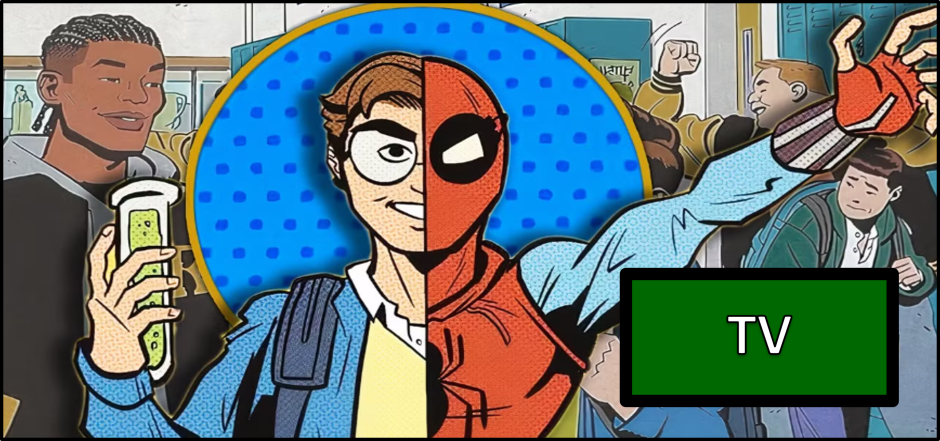
Whoa! Spider-Man got aged down again in his new show on Disney+. Not going to lie, the thirty-one minute runtime intimidated me at first. Despite this, the episode didn’t feel like a thirty-one minute long pilot. Grab your web shooters and let’s swing through Episode 1 of Your Friendly Neighborhood Spider-Man.
First impression: the art style. This was jarring for me when I looked at promotional materials for the show. I don’t dislike it, but it does take some getting used to. There were a few scenes at the beginning of the show depicting Peter getting ready through animated comic book panels, which was cute. I hope they do more of this in future episodes.
In the opening paragraph, I mentioned the runtime. I anticipated the spider bite scene to be at the end of the episode, but they wasted no time getting into it. The opening sequence of Peter getting ready/being late on his first day of school dragged a bit. He spent a lot of time telling Aunt May how much he appreciated her, which was heartwarming, but I don’t think it warranted two separate scenes within the first ten minutes. There were several characters who got introduced right off the bat, some of whom will likely become villains later on down the line. I won’t name drop, but there is a major Spider-Man villain who gets introduced at the end of “Amazing Fantasy.”
One last thing before I let Skye take the wheel—toward the end of “Amazing Fantasy,” real-world problems were showcased. The most notable examples are Lonnie getting followed by a cop on his walk home and someone who stole cash after losing their job. I won’t hang on this for long, I appreciated the inclusion of these moments. It makes the show more grounded.
Skye’s Take
Thank you for the stirring introduction, Season. I must say, after watching the first episode of this new Spider-Man series, I was pleasantly entertained. For the most part, it seemed to combine both old and new concepts we’ve seen in Spider-Man stories before. In the process, it created a world that looks familiar yet still feels fresh.
Regarding Season’s comment on the animation, I thought it was good with some noticeable imperfections. Overall, it’s pleasing to the eye, but it isn’t as good as Into or Across the Spider Verse. Part of me wonders if the animators were attempting to imitate that style by blending hand-drawn and CG animation similar to what those films did.
Despite that, this show proved to me that it was on the right track. The action was energetic and well-paced. We were introduced to a bunch of characters, but each of them seems likable with room to grow. Even the voice acting was pretty solid. There were some notable exceptions with some of the extraneous characters, but what can you do? If I were to harp on anything: the jokes aren’t that funny. The jokes got no more than a chuckle out of me, but comedy is subjective.
I’ll piggyback off another of Season’s comments. While I’m not opposed to including a moment like Lonnie getting racially profiled in a kid’s show, the moment comes out of nowhere. Suddenly, we’re supposed to feel bad for a character we barely know, and it comes across as Disney just trying to earn brownie points with minorities. Disney has a history of pandering to minorities on-screen, while behind closed doors, it’s a different story. If this story beat returns, I may have different thoughts.
Ultimately, this was a good start to a (potentially) good series.
Hey, hey! Kyra Kyle here. We covered the DCU earlier this month because we didn’t know when Harley Quinn Season 5 would be released. Who knows? Perhaps I finally broke down and purchased Max and I’m binge-watching DC Comics movies and television shows right now. But we know that the MCU’s 2025 will kick off in a couple of days. We’re getting our preview of the upcoming year’s MCU movies and television shows in the nick of time.
Marvel didn’t release too many projects in 2024, but the ones it did release were well received. Echo, the X-Men ’97 cartoon series, Deadpool and Wolverine, Agatha All Along, and What If? Season 3 were at least fun. You can let us know which one of these 2024 MCU projects was your favorite. 2024 was a good year for Marvel, a recovery year of sorts. 2025 has a much larger slate of projects. Almost double last year’s projects. Looks like I’ll be busy. Real busy.
This will be a big year for Marvel and not only because the MCU has nine projects that will be released in 2025. The fate of the MCU’s future rests in the hands of two specific projects: Daredevil: Born Again and Fantastic Four. Like Superman: Legacy for the DCU, these two projects must succeed. We’ll get to both projects soon enough, but let’s discuss each project in release date order.
Your Friendly Neighborhood Spider-Man (On Disney+ Starting January 29, 2025)
I’ll be honest. I don’t care for Your Friendly Neighborhood Spider-Man’s animation, but I’m glad the showrunners are going in a different artistic direction. Your Friendly Neighborhood Spider-Man doesn’t copy the Spider-Verse’s homework. It also doesn’t mimic the art style of the 1990s Spider-Man cartoon, even though X-Men ’97 was a triumph; that would’ve been an easy path to take. Nope. Your Friendly Neighborhood Spider-Man forges its own path, and that deserves respect.
Your Friendly Neighborhood Spider-Man will focus on Spidey’s origin story and early days as a crimefighter. I’m not a huge fan of retelling Spider-Man’s origin story—most people know Spidey’s origin by this point—but this should only take up an episode. I’m more forgiving of this with a series. Charlie Cox voicing Daredevil is my big highlight in Your Friendly Neighborhood Spider-Man. We don’t know if the new Marvel Animated Multiverse will tie into the greater MCU, but anything to link these two properties together is fantastic. Cox’s appearance as Daredevil could also raise interest in the upcoming Daredevil: Born Again.
Captain America: Brave New World (In Theaters February 14, 2025)
Some may say that Captain America: Brave New World is the third Marvel project that must succeed this year. I can see their perspective; Captain America films grounded the first few phases of the MCU. Respectfully, I disagree.
The MCU is pivoting to other characters—too many characters, in my opinion—and the new Captain America is one of several potential “anchor characters,” if you will. There are plenty of other Marvel projects this year. Captain America: Brave New World is the first of three films and the second of nine—that’s NINE—Marvel projects for 2025.
Plenty of issues have plagued Captain America: Brave New World. Test audiences have seen the film and disliked it. Reportedly, these audiences believed Brave New World was too boring. That’s not good. After the test screenings, reshoot after reshoot occurred. That doesn’t mean that the final movie will stink. Not all reshot movies end up like the original Suicide Squad. I’m still trying to block out that one.
Captain America movies don’t have the same cache they did with the first three Marvel phases. The big threat of the Multiverse Saga may be Doctor Doom, and he’s a Fantastic Four villain. And this Captain America film isn’t a huge crossover film—that we know of yet—or a glorified Avengers film like Civil War. I’ll let them cook with the new Cap.
General Thaddeus “Thunderbolt” Ross as President of the United States is an interesting choice. Thunderbolt Ross would fit better with the upcoming Thunderbolts* movie. Ross is a member of the Thunderbolts in the comics. Harrison Ford’s Ross may make an appearance in that film, too. Tim Blake Nelson reprises his role as The Leader over a decade and a half after The Incredible Hulk (2008). Liv Tyler returns as Bruce Banner’s love interest Betty Ross after the same hiatus. It might be best Hulk doesn’t show up in the one; he may have some explaining to do after his romance with Natasha Romanov. Is that canon?
The Leader and Ross are usually Hulk villains, so there’s another connection with Hulk. Throw in Giancarlo Esposito as Sidewinder (the leader of the Serpent Society) and Shira Haas as a former Black Widow and high-ranking US government official Ruth Bat-Seraph (who is also the mutant Sabra in the comics), and there are plenty of directions Captain America: Brave New World could go. And that’s where the movie may have lost test audiences; there may be too much going on at once. But I trust the team trimmed down the final project to a point where Captain America: Brave New World will be good. It could even be a sleeper hit. Let ‘em cook.
Daredevil: Born Again (On Disney+ Starting March 4, 2025)
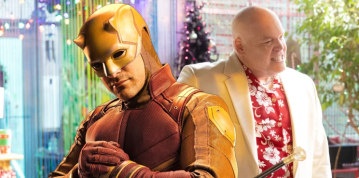
In my opinion, Daredevil: Born Again must succeed. The Netflix Daredevil series has a built-in audience. Several fans claim it to be the best Marvel television show, and Daredevil: Born Again brings back most of the original cast. They brought in the showrunner Dario Scardapane from the original Daredevil spin-off series The Punisher to head the Born Again project. And the series title “Born Again” references a classic Daredevil comic book story arc of the 1980s that the third season of the Daredevil Netflix MCU television series loosely adapted. Daredevil: Born Again is also the first Disney+ Marvel television show that uses their new method of producing shows (a leaner and more focused production plan). Yeah. Daredevil: Born Again has a lot to live up to and sets the tone for future Marvel shows. It must be good.
But many of those elements I mentioned above are also reasons why Daredevil: Born Again has an advantage. Returning more than 75% of the original Daredevil cast is a boon. Bringing in a showrunner with Marvel Netflix experience is another feather in Daredevil: Born Again’s cap. And I’ve heard that we’ll see more of the courtroom in this series. That makes sense as Matt Murdock (Daredevil) and Wilson Fisk (Kingpin) barrel toward an inevitable showdown both legally and on the street. I can’t wait.
Thunderbolts* (In Theaters May 2, 2025)
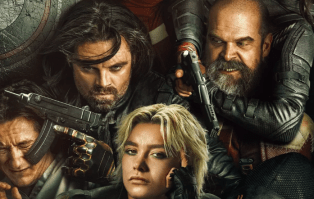
Thunderbolts* doesn’t have the same colorful cast as the comic book team of the same name. Even Winter Soldier’s variant of the team had its Moonstone and MACH-X and Kobik, who is a Cosmic Cube (the MCU renamed the Cosmic Cube to the Tesseract) shard in human form. What? The asterisk may make sense. This may not be the first iteration of the Thunderbolts. There have been numerous variants in the comics. Interestingly, Bucky’s Thunderbolts take place between Thunderbolt Ross’s and Mayor Wilson (Kingpin) Fisk’s iterations. Given the previous two projects on this list, is that a coincidence?
Wild speculation aside, the Thunderbolts in Thunderbolts* are a combination of super soldiers and assassins. These characters are mostly cast-offs.
Here’s a quick breakdown of each of them:
Yelena Belova (from Black Widow and Natasha’s sister and a Black Widow herself) needed another vehicle; Florence Pugh is too electric as the character.
David Harbour’s Red Guardian (Black Widow) is funny.
Olga Kurylenko’s Taskmaster (Black Widow) will no longer be under her father Dreykov’s control, so she’s a blank slate. I wonder what the writers/director will do with her.
Sebastian Stan is good as Bucky/Winter Soldier.
Wyatt Russell’s John Walker/U.S. Agent (from The Falcon and the Winter Soldier) lives a disgraced life as the man who tarnished Captain America’s name; that has some depth.
And Hannah John-Kamen’s Ghost was the best thing from Ant-Man and the Wasp; I’m glad she’s getting more to do in Thunderbolts*.
Phew! That’s a large cast. And it still ends up as a list of B-list heroes.
Still, Thunderbolts* could deliver more than just a superhero movie. Pugh’s Yelena (through a voice-over) in the second trailer shares that there’s something wrong with her, an emptiness. She’s just drifting. She doesn’t have purpose, so she throws herself into her work. This may be the most human and relatable a superhero has sounded in years.
And then I saw that the director was Jake Schreier and one of the writers was Lee Sung Jin; both worked on the Netflix series Beef, and that makes sense. Thunderbolts* may have the least pressure of any of the three Marvel movies. It can also be a surprise hit.
The premise: The Thunderbolts run into Bob at a secret facility. Turns out this “Bob” is Sentry. I won’t spoil it here, but Sentry can be a lot of fun, especially with the prospect of him entering the MCU. And he should be more than what a team of super soldiers and assassins can handle. Me thinks someone will die.
Ironheart (On Disney+ Starting June 4, 2025)
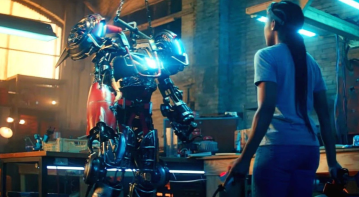
Dominique Thorne reprises her role as Riri Williams/Ironheart from the film Black Panther: Wakanda Forever. Ironheart has been on the schedule and then off the schedule and for a time, folks thought the idea had been scrapped. Nope. Marvel returned to Ironheart after the writers’ strike. From what I’ve heard, the series got reworked.
I don’t know much about Ironheart as I was writing this post. Many of the actors assigned to the project have undisclosed roles and given the premise, I can see why. Following the events of Black Panther: Wakanda Forever, Williams returns home to Chicago where she becomes entangled with the enigmatic Parker Robbins/The Hood, discovering secrets that pit technology against magic. The Hood, which is short for neighborhood (he doesn’t wear a hood, but I think he should), has often been linked to one of two mystical beings: Loki and Dormammu. He also controls a massive Crime Syndicate. Confirmed actors with unconfirmed roles (like Shakira Berrera, Paul Calderon, Cree Summer, and Sacha Baron Cohen to name a few) could play any number of colorful characters. I’d love to see Cohen portray Armadillo. Armadillo is a guy dressed in a massive Armadillo costume. Think of the LOLs.
The special effects for Ironheart intrigue me, too. For those of you who think the MCU’s painted-on CGI armor was getting stale, Ironheart’s armor may be what the doctor ordered. Riri doesn’t have the resources Tony Stark has. Most of her armor looks more lived-in and low-tech. Ironheart’s use of more practical effects, its premise, and its varied cast pique my interest.
The Fantastic Four: First Steps (In Theaters July 25, 2025)
The Fantastic Four: First Steps is another big one. This film must succeed. You don’t have to take my word for it. Look at what Marvel has done with this movie. Most—if not all—of the main cast have won Academy Awards or Emmys or Golden Globes or have been nominated for one. The main antagonist for the upcoming Avengers movie, Doctor Doom, is the archenemy of the Fantastic Four; there should be a Robert Downey Jr. post-credit scene as Doom, so that’s another Academy Award-nominated actor in the cast. Marvel brought in Matt Shakman, the showrunner of WandaVision, one of the MCU’s better projects of the last phase, to direct. And TheFantastic Four: First Steps marks the first film and the beginning of the MCU’s Phase Six. Marvel knows a lot is riding on this movie.
All that said, I don’t know too much about the film at the time of writing this post. Marvel’s playing this one close to the vest, and I don’t blame them. What I do know is that The Fantastic Four: First Steps will be a 1960s-inspired retro-futuristic Earth, and the Fantastic Four will go up against Galactus and the Silver Surfer. I also sense a little montage as we may get vignettes of the Fantastic Four’s previous exploits. This will be a Fantastic Four that has had many adventures. I prefer that to the Fantastic Four’s origin story. Again.
I don’t know what more there is to say except I hope this Fantastic Four movie lives up to the name. We haven’t had a “fantastic” Fantastic Four movie. When the idea of Marvel making a Fantastic Four movie was still theoretical, folks kept saying to wait until Marvel made its own Fantastic Four movie. Well. That time is now.
Eyes of Wakanda (On Disney+ Starting August 6, 2025)
Eyes of Wakanda is another Marvel project that I didn’t know too much about at the time of writing this post. Black Panther and Black Panther: Wakanda Forever director Ryan Coogler will direct this animated television miniseries. That’s a great start. Many cast members from the Black Panther film franchise will reprise their roles as voice actors. This show sounds phenomenal.
Initially, the series was supposed to have eight episodes, but it got pared down to four. This could be another sign of the MCU tightening its releases. And Eyes of Wakanda will explore the various people who have donned the Black Panther mantle. There’s even an Iron Fist sighting. Hopefully, we’ll get a better interpretation of the character.
I’ve seen Eyes of Wakanda’s sizzle reel several times. It looks fabulous. I imagine we won’t get much more than this reel for some months. There’s a chance Marvel intends to see how well-received Eyes of Wakanda will be. That’s part of why I watched the sizzle reel several times. If you like what Eyes of Wakanda offers, watch it several times. Perhaps we’ll get the other four episodes.
Marvel Zombies (On Disney+ Starting October 3, 2025)
Marvel Zombies functions as a sequel to the What If? animated series of sorts. I didn’t know there was enough story for Marvel Zombies to have its own series, so I always thought a couple of episodes of What If? made sense for that story. Marvel Zombies will release in October 2025, just in time for Spooky Season.
Disney/Marvel has been good about releasing a horror-adjacent project in October most years. Werewolf by Night was released in October 2022 and Agatha All Along hit Disney+ in October 2024. I’ll probably give Marvel Zombies a watch.
Wonder Man (On Disney+ Starting December 2025)
Yahya Abdul-Mateen II portrays Simon Williams in Wonder Man. Like so much of Marvel’s later slate of 2025 releases, I don’t know much about Wonder Man. Williams auditions for the lead role in a superhero television series—most likely named Wonder Man—but I don’t know if Simon Williams already has powers or if he’s faking that he has superpowers. Either way, Wonder Man should be hilarious.
Andrew Guest show runs Wonder Man, and he’s written some of the greatest Community episodes (“Advanced Dungeons & Dragons” and “A Fistful of Paintballs,” to name a couple). Wonder Man is in great hands. And the character Simon Williams has done a lot of things in the Marvel Universe. He’s even been an actor for more than one stint in the comics, so this premise works for the character. Wonder Man is also Vision’s brain brother. Wasn’t VisionQuest releasing soon, too? There might be a reason Marvel wants to introduce Simon Williams.
Wonder Man’s supporting cast includes Ben Kingsley as Trevor Slattery, the man who pretended he was the Mandarin in Iron Man 3. Slattery will serve as Williams’ acting coach. That should be good. Demetrius Grosse will portray Simon’s brother Eric, who becomes Grim Reaper, Wonder Man’s archnemesis and persistent thorn in the side of the Avengers. So, there may be more going on in Wonder Man than a goofy comedy. But I wouldn’t mind a goofy comedy.
That’s all I have for now. Let us know which Marvel Cinematic Universe has you the most excited this year. See you soon. And wherever you are, I hope you’re having a great day.
The Marvel Cinematic Universe Phase 7 won’t happen for years (we have two main-line Avengers films Doomsday and Secret Wars before the MCU’s Phase 7) but that doesn’t mean that we don’t have news on this front. There is a lot of smoke and where there’s smoke, there’s often fire.
Hey, hey! Kyra Kyle here. We’re back with another Geekly News. This entry (our third of the year) beats our number of Geekly News posts from last year. Yay!
Let’s get into the news. We’ll start with what we know and what is speculation. We have a lot of time between now and when the Mutant Saga begins. As I said, there are two main-line Avengers films (Doomsday and Secret Wars) and at least five years’ worth of content (movies and television series) before we reach the Mutant Saga. Heck! Another major superhero team will be introduced this year: The Fantastic Four. Thank goodness. I can’t wait for the Fantastic Four’s inclusion in the MCU. Even with so much to look forward to in the MCU, I’m an X-Men fan, and the Mutant Saga piques my interest.
What We Know
The only concrete thing we know about the Marvel Cinematic Universe’s Phase 7 (the Mutant Saga) is that the Russo Brothers (Joe and Anthony Russo) will oversee the entire phase. The Russo Brothers directed Captain America: The Winter Soldier, often regarded as the best (or one of the best) Marvel Cinematic Universe film. Does this mean the Russo Brothers will direct every project during the Mutant Saga? Heck no! That’s too much work. Does that mean the Russo Brothers will direct a future X-Men film? Probably, but that’s not guaranteed.
What is guaranteed is that a highly regarded directing tandem has returned to the MCU, and they will serve as a guiding light for the MCU’s Phase 7. The one thing the MCU has needed for the past few years is a guiding light. The Russo Brothers’ return is welcome news.
The Smoke
Speculation will be a much larger portion of this post. Some of this will be educated guesses, but the majority of this section will fall under the classification of rumor, albeit rumors from trusted industry sources like RPK News. There’s a lot of smoke coming from the MCU. Marvel has spent over a decade and billions of dollars—that’s a capital B, billions of dollars—building up the Avengers as a brand. The film studio wants to cash in on the Avengers name. But the Mutant Saga will feature the X-Men. The X-Men are another established brand. Marvel will want to capitalize on both brands, so the most likely name for the crossover movie that will complete the Mutant Saga is Avengers Versus X-Men.
I could see Marvel going with X-Men Versus Avengers. I don’t have any idea of what that story might look like. Most likely, the MCU will loosely adapt the comic book crossover story arc of the same name as they did with Civil War. We don’t know who the Avengers will look like, let alone which X-Men will make the MCU. We speculated further on which X-Men Geekly would like to see in the MCU’s X-Men film. (You can follow this link to that article if you’d like.) The Avengers could look very different from what they do now (for example, Hercules instead of Thor and Clea instead of Doctor Strange), or Marvel could recast Steve Rogers, Tony Stark, and all the rest to give the universe a soft reboot after the Multiverse Saga. Both directions make sense.
It would also make sense for Marvel to make good on its teasing of Hulk versus Wolverine (in 2024’s Deadpool and Wolverine). Professor Hulk versus Wolverine doesn’t have the same juice as a Savage Hulk versus Wolverine. If this fight were to happen, Marvel would most likely revert Hulk to his savage self. That could happen in an upcoming Hulk movie. Is World War Hulk still happening? If it does, Captain America: Brave New World may do a lot with setting up a World War Hulk film or series. The Leader and Red Hulk will appear in Brave New World. Those same antagonists should feature in a World War Hulk project. Universal still holds the distribution rights to the Hulk. And that’s another can of worms.
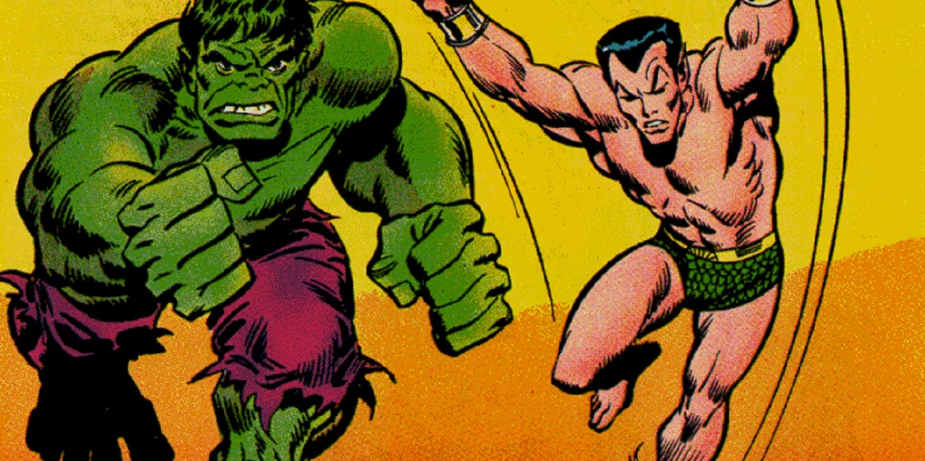
Universal holds the distribution rights to the Hulk and Namor. That means that if Marvel or anyone else makes a project with either character, Universal gains the majority of the profits. This is why Universal hasn’t done anything with the Hulk or Namor. They don’t need to do so. They let other people make content with these characters and gain the bulk of the proceeds. This is also why Marvel hasn’t made a solo Hulk or Namor project. Negotiations have been ongoing for over half a decade. As of the time of this post, no word of a new agreement has taken place. Marvel could cave. Doubtful. Or Universal could soften its distribution rights like Sony did with Spider-Man last year. This seems more likely. What we do know is that a World War Hulk project has been in the works for years, if only in the planning stages.
Closing Thoughts
As I said, there’s a lot of speculation and only one piece of concrete news. The Russo Brothers rejoining the MCU is a step in the right direction, even if they don’t direct a single Mutant Saga project. X-Men Versus Avengers or Avengers Versus X-Men will likely happen at some point, capping the MCU’s Phase Seven. Universal and Disney may be the closest they’ve ever been to a new Hulk/Namor distribution agreement. Technically, Namor is the first mutant. It makes sense for Disney to strike a deal for Namor, and by extension the Hulk, before the Mutant Saga begins. But it will be a new deal.
What are your thoughts? Which X-Men characters would you like to see in the MCU? Which upcoming Marvel project has you the most hyped? Let us know in the comments. And wherever you are, I hope you’re having a great day.



































 jkgeekly.com