Happy, Wednesday, Geekly Gang! Kyra Kyle here. Today, our writers share what they’ve been watching over the past month. Feel free to share what you’ve been watching, because we’re all part of the Geekly Gang. I’ll get things started with what I’ve been watching over the past month.
Kyra’s Movie
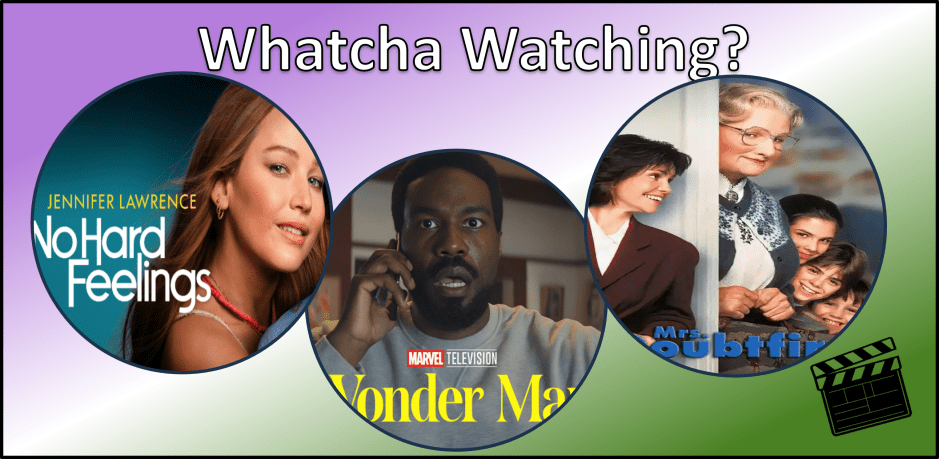
No Hard Feelings surprised me. Sure. It’s a raunchy comedy in the style of Judd Apatow circa 2005 but with fewer–if any–improvised scenes. First, this keeps No Hard Feelings to a tight hour and a half runtime, instead of the bloated two-hour-plus Apatow films. Second, No Hard Feelings contains fewer homophobic jokes (I’m looking at that scene in 40-Year-Old Virgin where Rudd and Rogan dis each other with “I know you’re gay because” jokes). In fact, No Hard Feelings’ lead, Jennifer Lawrence, gets called out for a wisecrack that could be viewed as homophobic, which is an obvious nod to 2000s Apatow movies. Great work.
And I loved Lawrence’s performance in No Hard Feelings. Before No Hard Feelings, Lawrence hadn’t acted much in a few years, and since this is a raunchy comedy, I expected her to put in the bare minimum and collect an easy paycheck. Nope. She goes all in. It helps that Lawrence is also a producer for this film. Lawrence’s performances in No Hard Feelings (2023) and Causeway (2022) mark a triumphant return. If you like sexy and raunchy comedies, you should check out No Hard Feelings. Lawrence’s fight scene on the beach is iconic. If you know, you know.
Kyra’s Shows
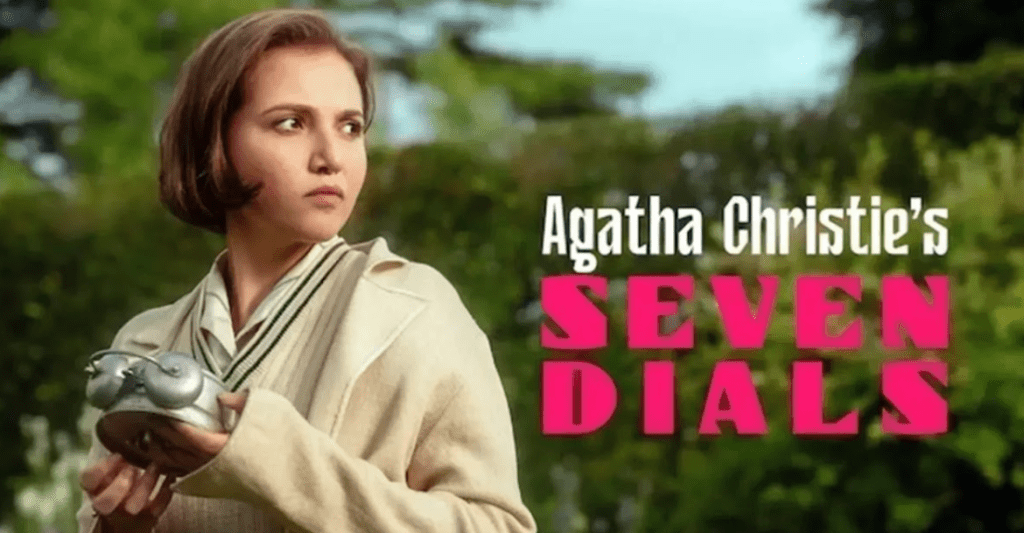
Agatha Christie’s Seven Dials was a good diversion. I’ve never read the novel. I may have to after watching this series, because the Netflix limited series doesn’t do the best job as a mystery. I knew who was behind most things from the start. Seven Dials choreographs everything to a fault. The obvious red herrings turned out to be red herrings. The “trusted” friend who would know enough to pull off the murders ends up being the one who pulled off the murders. Well, not exactly. I won’t “spoil” Seven Dials’ reveal. And I do appreciate the character reasons why the “secret” big bad does what they do.
Despite not being the most puzzling of mysteries, Seven Dials serves as a great origin story for an adventure/espionage series. The final fifteen minutes pivot hard into what could be an engaging Mission Impossible set in the 1920s United Kingdom. That’s why I say Seven Dials may not work as a mystery, but it remains entertaining. That end-of-series pivot is the most shocking, and I may have just spoiled Seven Dials’ greatest twist. I can’t see myself rewatching Seven Dials. But I wouldn’t say no to a follow-up series or spin-off series that fully embraces adventure and espionage. Yes, please.
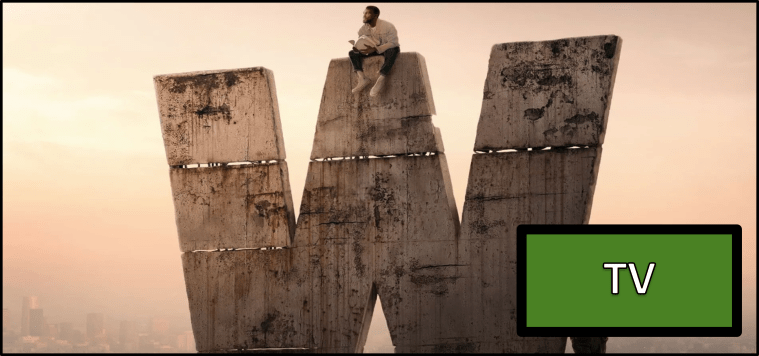
I’ll give a quick shout-out to the shows I’ve reviewed over the past month: Fallout and Wonder Man. I’m writing this segment early–really early–so I haven’t yet watched the Fallout finale, but the penultimate episode was pitch perfect. I trust what the showrunners have in store for us with Season 2, Episode 8. Wonder Man took me by surprise. If you want my full thoughts, here’s a link to my reaction after watching Wonder Man. In short, Wonder Man is one of the best Marvel shows I’ve seen in some time. I can’t wait to watch the next Marvel Spotlight project. Wonder Man is less about superpowers and more about friendship. Endearing.
That’s all I have for now. Let’s check in with Season.
Season’s Movie
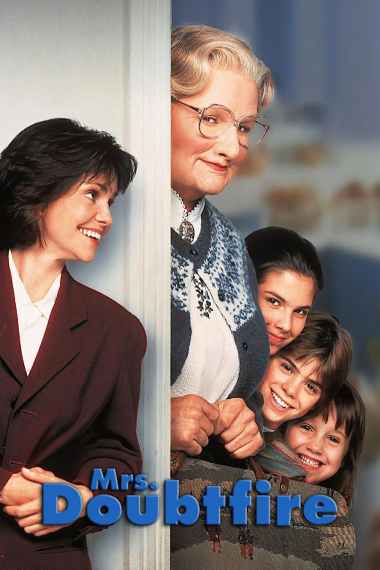
I’d never seen Mrs. Doubtfire until recently, and I’ve watched many Robin Williams films. I expected Mrs. Doubtfire to be over-the-top and campy (because Robin Williams). It definitely delivered. Mrs. Doubtfire did way better at expressing turmoil and mixed feelings between Daniel and Miranda than one would expect from a comedy. I was more interested in the relationship between the parents than the kids. The kids didn’t have as much depth and were used as a plot device to create friction between the parents. Then again, if they were more complex, that would have either created a longer movie or shortchanged the dynamic between the parents. If you’re looking for a comedy with a divorce story and an ambiguous ending, I’d recommend Mrs. Doubtfire.
Those are all the movies and television shows our writers watched this past month. What’ve you been watching? Let us know in the comments. Thank you for reading, and wherever you are, I hope you’re having a great day.
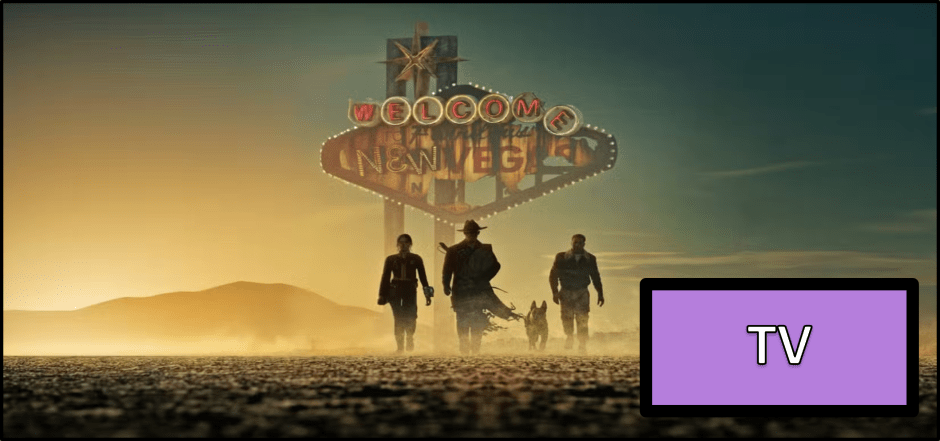
Happy Saturday, Geekly Gang! Kyra Kyle here with a reaction to Fallout Season Two’s Finale, “The Strip.” Before we get into any spoilers, I’ll set the table for this reaction/review. Fallout Season One played out similarly to Star Wars: A New Hope. The creatives behind the show didn’t know they were getting renewed for a second season, so they teased New Vegas as the setting for a potential Fallout Season Two. Conversely, the creatives behind the show knew they had been renewed for a third season before Season Two finished filming. So, Fallout Season Two’s finale plays out similarly to Star Wars: The Empire Strikes Back. Major plot points get introduced during the episode’s final ten minutes. Heck. There’s a rather large complication teased during Fallout Season Two’s end-credit scene.
Last week, I lauded Fallout season two’s penultimate episode for doing everything the next-to-last episode should do. It answers some questions, but held back elements for the season finale to explore. “The Strip” does a good job of answering some of these questions, but since season three is on the way, it asks almost as many questions as it answers.
I’ve kept this reaction spoiler-free for about as long as I can. We’re about to enter spoiler territory. You’ve been warned.
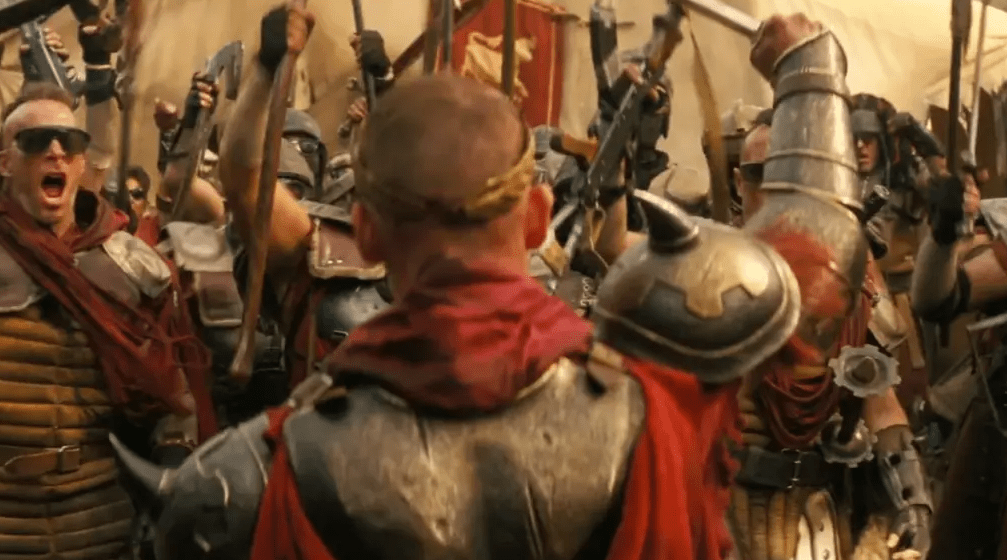
I’ll begin with Caesar’s Legion because it needs the least amount of explanation and receives the smallest airtime. Macauley Culkin’s character recovers Caesar’s corpse and reads the former leader’s last will. Basically, Caesar named himself his successor. Culkin’s Legate character doesn’t accept this answer and takes the crown for himself. He also eats Caesar’s message. Ew! Dude, that was on someone’s corpse, and it was decaying. Nastiness aside, Culkin’s character becomes the new Caesar and galvanizes the Legion toward the Holy Land, New Vegas, to build a palace. Caesar’s Palace. How many takes do you think it took Culkin to say that line without laughing? Watching the Legion march on New Vegas was a sight. I can’t wait for the impending battle.
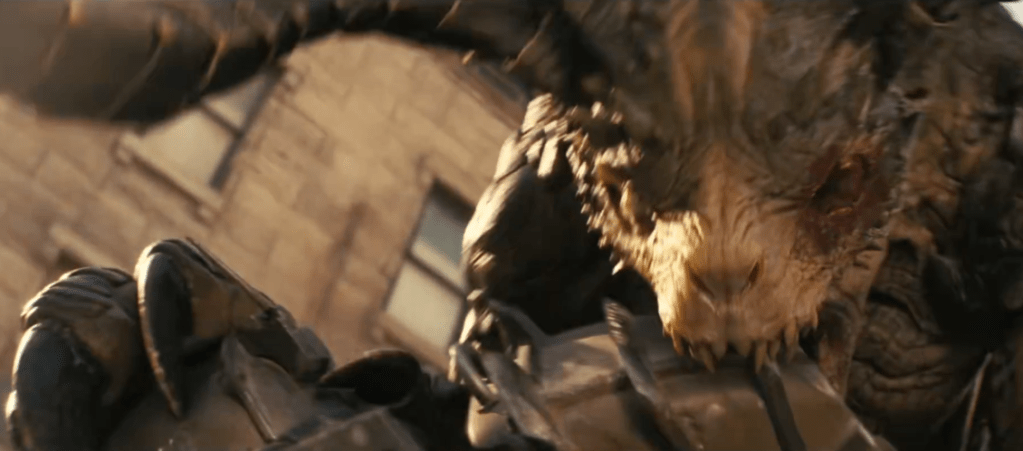
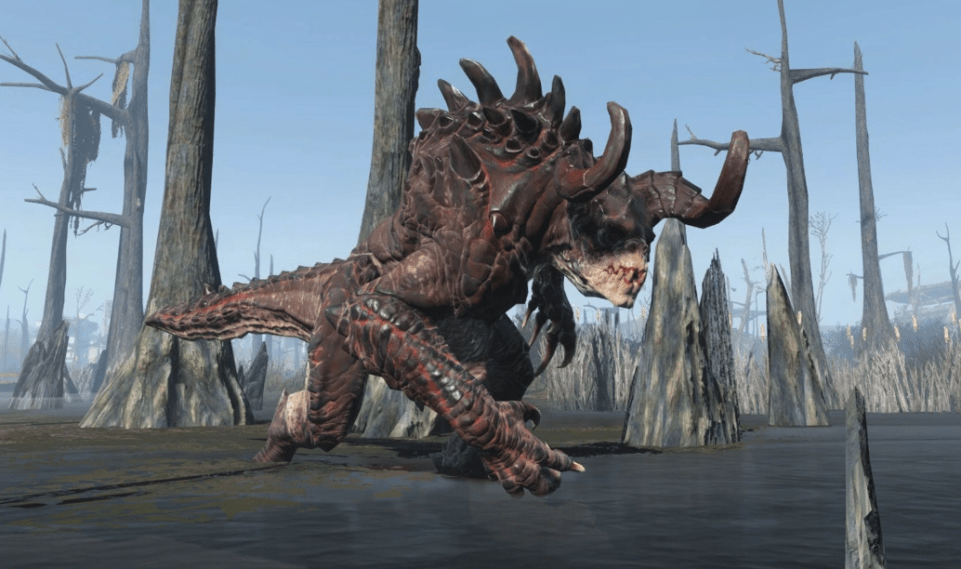
Inside the Strip, Maximus fights off the horde of deathclaws. The action sequence ventures into the unrealistic. Deathclaws may be less deadly than radroaches. More on that in a minute. The scenes with Maximus and the deathclaws contain the most fan service. That’s much appreciated. Still no confirmation on what Thadeus is transforming into, but he manages to lead Freeside’s residents into a shop, where they promptly bet on how long Maximus can survive against the deathclaws. This is a nice callback to The Thorn (in Fallout: New Vegas). Combatants battled various wasteland creatures, like deathclaws, and observers would place bets. Nice!
The battle concludes when the New California Republic marches into town and takes over the deathclaw fight. While the moment when the NCR sniper kills a deathclaw brought a smile to my face, it was undercut by Lucy doing something similar a few episodes earlier. Why did Lucy need to mimic the NCR shot from the game? She was on Buffout. That was already cool and hilarious. I would’ve preferred Fallout to reserve that shot for the NCR. That’s a nitpick. The moment still rocked
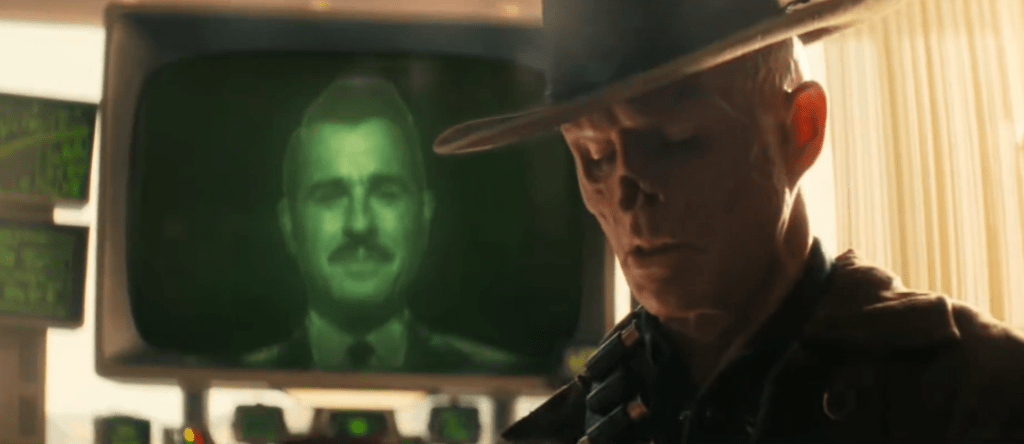
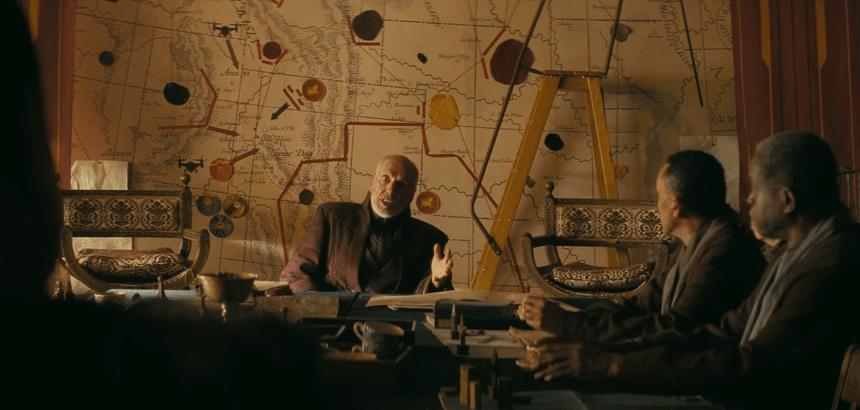
Accompanied by Mr. House (via a Pip-Boy), The Ghoul searches the Vegas Executive Vault for his family. We receive a lot more of The Ghoul’s backstory, but I was left with even more questions. This is part of what I mean by Fallout Season 2 functioning like The Empire Strikes Back. The Enclave is behind most things, including the bombs falling, but we still don’t know who’s behind the Enclave. Someone’s behind it all, but we’ll get to that more while discussing Steph’s storyarc. There are a lot of storyarcs during “The Strip.”
Surprise! The Ghoul’s family is not in the Vegas Executive Vault. Their cryogenic chambers are empty, but in Barb’s place was a postcard from Colorado. This is a callback to a Ghoul flashback. It looks like The Ghoul’s family is in Colorado. The Ghoul is at least on his way to Colorado. And this separates The Ghoul and Lucy.
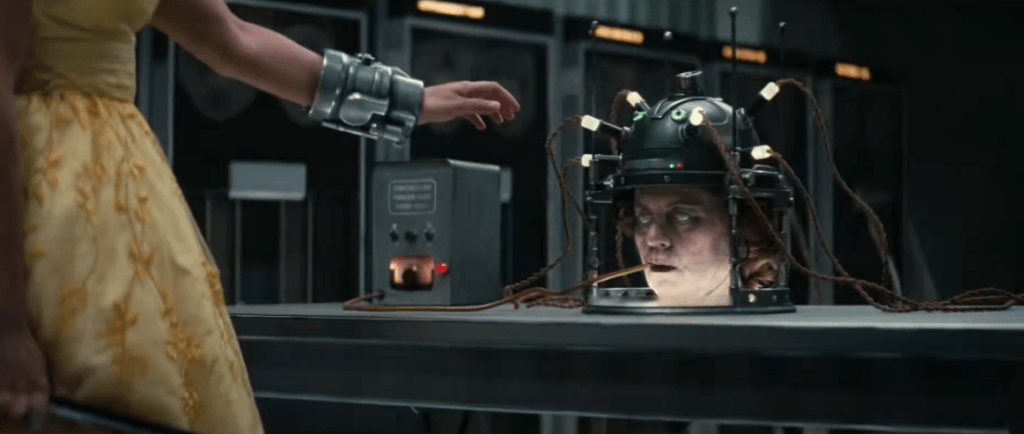
Speaking of Lucy, she destroys the mainframe. Rather, at Diane Welch’s request, Lucy kills Welch’s severed head. Yeesh! I’m with Lucy in this scene. Why does everyone want her to kill them? While she ponders her next move, Lucy discovers her dad, Hank, escaped, and he wants to put a mind control chip on her, forcing her to obey. Dude, Hank just went total supervillain. Hank orders the brainwashed legionnaire to subdue Lucy, but The Ghoul shows up in the nick of time, shooting the legionnaire dead, and Hank in the buttocks. You could almost see the pop-up message, “Lucy Liked That.” Lucy turns the tables, placing a chip on Daddy Dearest. Before she hits the button, she wants answers. Of course, she doesn’t get them because Hank has his own button and resets his brain. This was a stellar moment.
Hank and Lucy’s story goes so hard. Both stay true to each other. We were never going to get a straight answer from Hank, and his action at the end solidified this fact. Loved this. We only have a few more threads to discuss: Steph, Norm, and the impending Enclave.
Surprise again! Steph and Hank are married. What? And the little time we get with Steph, we see her enact Phase Two, whatever that means. Steph contacts the Enclave, who have been listening to all the radio relays up to this point. A computer updates Phase One as completed, but Phase Two’s details are redacted. Because of course they are. My guess, and this is a guess, is that Phase Two has something to do with the Forced Evolutionary Virus. And that gets me back to Thaddeus. He may or may not become a Centaur, but he definitely got some variant of the Forced Evolutionary Virus.
We catch a glimpse of the Enclave, who have a base in the mountains. My guess, again a guess, is that the Enclave are based in Colorado, because that’s where The Ghoul is headed. We know the Super Mutants, who don’t make an appearance in this episode, have a vendetta against the Enclave. See what I mean about Fallout Season Two holding back most of its deck of cards? I have no idea where any of this will lead. “The Strip” gives us enough information to keep the audience engaged but dangles plenty of loose threads.
We have a couple more threads, I promise. The Vault-Tec goons unlock the radroaches from their farm. They wreak havoc. Seriously, the radroaches deal more damage than the deathclaws. Norm manages to rescue his would-be girlfriend, Claudia, from the wreckage. Funny how Norm and Claudia are the only ones left alive after the radroaches go ham. I’m not complaining. I don’t mind a Norm/Claudia side story for Fallout Season Three. So, that leaves us with at least four groups we’re following next season: Lucy, Maximus, and Thaddeus; The Ghoul and Dogmeat; Norm and Claudia; Vault 32 and 33. Oh. And the Brotherhood of Steel; they factor into the post-credit scene.
Elder Quintus has left his Unification stage and entered his Destruction stage. I’m unsure how the Brotherhood of Steel has hidden Liberty Prime Alpha, but I’m all for a kaiju battle in Fallout Season Three. There are so many places Fallout Season Three can go, and I’m pumped. Too bad we need to wait another year for the next episode.
So, what do you think? What was your favorite part about Fallout “The Strip?” Let us know in the comments. Thank you for reading, and wherever you are, I hope you’re having a great day.
Happy Saturday, Geekly Gang! Kyra Kyle here. Today will be a busy review Saturday. I’ll share my reaction to Fallout Season 2, Episode 7, “The Handoff” this morning before diving into the first half of the Wonder Man miniseries. Ah! But that’s for later. This post is dedicated to the most recent episode of Fallout. And my, was “The Handoff” a loaded episode. It does a great job accelerating the plot threads and themes Fallout Season 2 has developed. And there’s plenty of fan service.
I’d be tap dancing a lot if I tried to avoid spoilers here, so I may drop the occasional spoiler. I apologize in advance. Consider yourself warned of future spoilers. “The Handoff” begins with pre-war Steph–that’d be the same Steph who serves as Vault 32’s current overseer–escaping a Canadian detention center with her mother. Spoiler: her mom dies, but she tells her to do what she must to survive. Yes. This is another flashback, and I have mentioned this season of Fallout has teetered toward too many flashbacks, but the flashbacks during “The Handoff” felt earned, filled in some details, and played off the current actions. I love this motivation for Steph. She’s been creeptacular since last season. This episode does a great job exploring why.
And I like Fallout’s inclusion of Canada as the “51st State” or “Little America” during the closing credits. Fallout took that straight from the games. I mean, there’s no way a sitting United States President would want to annex Canada in the real world, right? Right? That’s only in fiction. And the fact that Chet uses Steph’s Canadian identity, the vault chases her into the Overseer’s Headquarters, and history appears to repeat itself (the previous Vault 32 Overseer appeared to have suffered a similar fate) is fantastic. Even better, Steph has control of the secret box she knew Hank MacLean had before the bombs dropped. “The Handoff” does a good job of paying off some questions, while posing more. What’s in the box, Steph? What’s in the box?
We get a little bit more time with Norm. He has enough time to use the radio to attempt to contact his father and sister. And we know Hank turned on the radio on his side. How many are connected to this line? And who was Hank trying to contact at the beginning of the season? All great build ups, but I would’ve liked a little more Norm screentime.
At the Vault-Tec facility, Lucy appears to support her father’s method of “peace,” but betrays him and races to sabotage the mind-erasing device. But the mainframe isn’t what she expects. It’s run by the preserved head of Congresswoman Diane Welch. Again, “The Handoff” does a great job weaving so many of the threads together, both present timeline and the past. We caught glimpses of The Ghoul’s past where he thinks he’s delivering Cold Fusion to someone who can help (namely, the same Congresswoman Diane Welch, who protested the billionaires club meeting a couple of episodes prior), only to be two-timed by who knows how many people. We’ll get to pre-Ghoul Cooper soon enough, but these glimpses show that Lucy and The Ghoul are–as The Ghoul once said–the same, only he’s her in the future. Ah! Yet another great payoff.
And I like Lucy’s story beats in “The Handoff.” I questioned if she was turning toward her father’s viewpoint or saw some value in it, and even when she showed disdain for her father’s methods, I still wondered if she would punish him. Or how would she punish him? Or how did she intend to stop him? All great questions that kept me watching. Many of them receive answers, but I’m still unsure if she powered down Welch’s head. Even if she did, what chaos would doing so bring?
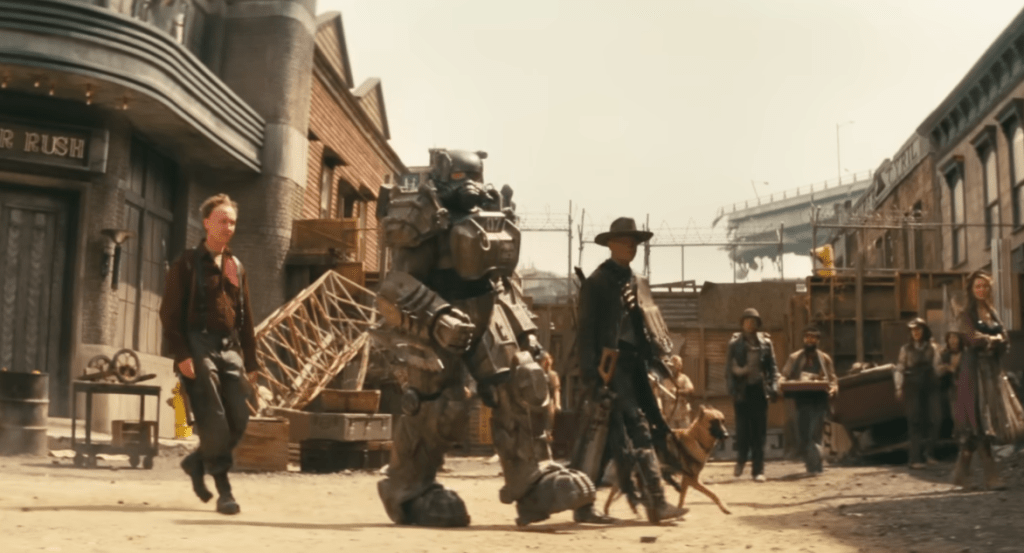
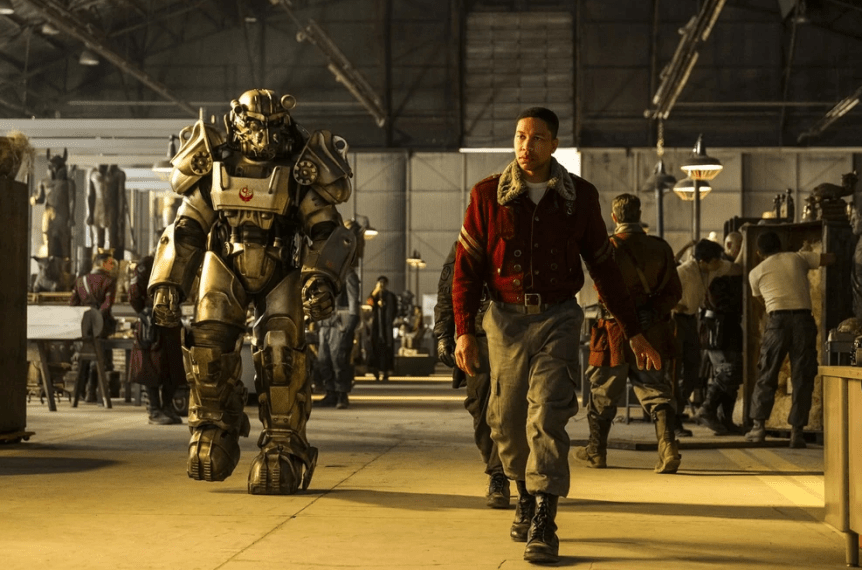
And then we return to The Ghoul, Maximus, Thaddeus, and Dogmeat. I can’t overstate how well “The Handoff” calls back imagery from past episodes. Donning power armor reminiscent of the Courier’s armor in Fallout: New Vegas, Maximus strides down Freeside. A young child looks up at him in a similar fashion as Maximus looking up at a Brotherhood of Steel Knight. A quick slow clap for Fallout. Freeside’s residents applauded the New California Republic’s return to New Vegas; I’ll do the same for these references and callbacks. It won’t be long until the quartet rumble with the pack of deathclaws, but before the gang can reach the rickety wall, Thaddeus’s arm falls off. Yeah. That’s not good. Not only was Thaddeus supposed to serve as a sniper, he’s exhibiting signs counter to a ghoul. Earlier in the episode, Thaddeus revealed he has a mouth growing near his clavicle. That, mixed with his fallen arm, makes me believe Thaddeus may be turning into a centaur (from Fallout 3). But he could be some other mutation.
The deathclaw fight scene was relatively short but eventful. I won’t give a blow-by-blow, but it was fun. Maximus does enough to help The Ghoul reach the Lucky 38, and the fight will get even more intense with next week’s finale. I can’t wait. And speaking of that finale, The Ghoul uses cold fusion to power up an old friend: Mr. House. Yes! Like I’ve been saying, we saw plenty of huge reveals during “The Handoff,” while the episode does a stellar job raising the stakes for this season’s climax.
So, what did you think about this week’s episode of Fallout? Let us know in the comments. Thank you for reading, and wherever you are, I hope you’re having a great day.
Happy Monday, Geekly Gang! Kyra Kyle here with Geekly’s first-ever video game history post, where we discuss a video game company’s history. Today’s video game publisher/developer is the indie darling, inXile Entertainment. It took me a while to realize that inXile is pronounced “In Exile.” That phrase will factor into the game’s history, and wow, do founder Brian Fargo and inXile Entertainment have a long and bumpy history, complete with plenty of stellar games. Before we get to the formation of inXile, we must first talk about Brian Fargo’s first video game publishing company, Interplay.
Brian Fargo Pre-inXile Entertainment
Brian Fargo began developing video games while he was still in high school. Per a 2017 interview with Stay Awhile and Listen, Fargo’s first semi-widely distributed game (he had an earlier game that sold five copies) was Demon’s Forge. The title Demon’s Forge will return, but not until much later. A handful of years later, Brian Fargo would co-found Interplay Entertainment in 1983 with fellow developers Jay Patel, Troy Worrell, and Rebecca Heineman. Fargo was 20 years old at the time.
In 2022, inXile Entertainment released a 20th Anniversary Documentary. I will draw from this documentary often, but since it was released by inXile Entertainment, it glosses over some details, so I’ll be providing some context from other sources. If you have a chance, and hopefully after reading this post (wink), you should watch inXile Entertainment’s 20th Anniversary Documentary. It runs about 20 minutes. According to Fargo in the documentary, (he was so young), his vice president had to buy him beer if he wanted it. Fargo tries his best to hide a smirk. I, Kyra Kyle, have never participated in underage drinking. (Wink.)
Brian Fargo’s Time at Interplay
We won’t spend too much time on Interplay’s history — that could be its own video game history post — but we will need to cover Brian Fargo’s time with Interplay Entertainment, as it provides context for inXile Entertainment. Fargo hit the ground running with a trio of hits between 1985 and 1988. Fargo led the Interplay team with the original The Bard’s Tale (1985), Battle Chess (1988), and the RPG classic Wasteland (1988), which would later inspire the Fallout series.
When the Eighties transitioned into the Nineties, Fargo ceased to develop games directly with Interplay. The last game I could find Fargo co-developed for Interplay Productions was 1991’s Track Meet for the Game Boy. Instead of designing games, Fargo served as Interplay’s CEO. The business may have started small, but with Interplay amassing numerous intellectual properties like Dungeons & Dragons (leading to the Baldur’s Gate series), Wasteland undergoing a title change to Fallout (and thriving as Fallout), Earthworm Jim, and Alone in the Dark, the company became a major force in video games. At this time, Interplay was easily one of the best video game developers.
Fargo has a knack for spotting video game development talent. During the early 1990s, Fargo advised Silicon & Synapse. In exchange for 10% equity in the company, Fargo and Interplay contracted Silicon & Synapse to port games developed by Interplay into other consoles, which gave Silicon & Synapse the capital it needed to transition into making original games (and eventually becoming Blizzard Entertainment).
Despite a great track record and hits like 1997’s Fallout, 1998’s Fallout 2, and 1998’s Baldur’s Gate, Interplay experienced financial difficulties. To avoid bankruptcy, Interplay went public on the NASDAQ. According to a Bit Gamer article, Brian Fargo admitted that further losses (because of increased competition, an underwhelming sports division, and a lack of console titles) forced Interplay to look to a third party. That third party would be French software developer Titus Interactive S.A.. Per a Los Angeles Times article, Titus bought 6 million of Interplay shares for $25 million, giving Titus a controlling stake in Interplay. Fargo and Titus’s relationship was strained.
Fargo would claim (in a Gamespot interview) that he and Titus have a “very different ideology of management that was not compatible.” Fargo always loved video games, and Interplay grew into a huge company of over 500 people with offices all around the world. He had to deal with shareholders. He grew distant from his first love, video games. Fargo no longer got to make games; he didn’t want to be a CEO. Ripples of this pattern will emerge in the future.
So, Fargo stepped down as Interplay’s CEO. He was a CEO without a company for several months, when he’d attend an industry convention.
Founding inXile
Fargo recounts his experience at E3 in an interview found on RPG Codex: Right after Interplay, I was going to E3 in May. I needed a quick name to get a badge. I chose the “Workshop,” and as a joke, I gave my title “CEO in exile.” It got such a funny response that we figured there was something to it.
“InExile” was already taken, so “inXile” was chosen as the newly formed company’s name. Fargo’s experience with finding talent during his days at Interplay served him well as he recruited the best team for inXile. According to the YT inXile Documentary, Fargo called Matt Findley (New Orleans, Louisiana Chief) to join the newly minted inXile. Unlike what Interplay had become, inXile would work on only one game. (Vice President of People) Elene Campbell received a phone call from Fargo to go to lunch, and she quickly joined. Max Kaufman (inXile’s former art director) also joined.
My favorite anecdote during these early days of inXile came from Elene Campbell. Campbell said, “inXile Entertainment’s office had a great location. We were right across the beach. We would purchase a surfboard for an employee if they wanted to surf.” Sounds like you couldn’t beat inXile’s location.
The Bard’s Tale (October 26, 2004)
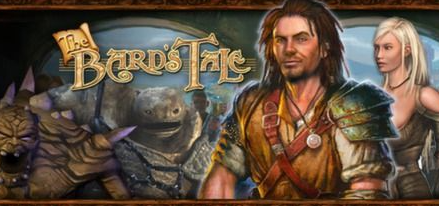
The one video game inXile Entertainment chose to develop first just happened to be its first hit. 2004’s The Bard’s Tale couldn’t continue the story of the original trilogy because Interplay/Electronic Arts still owned the copyright. 2004’s The Bard’s Tale was neither a remake nor a sequel. It had to be something different, and it certainly was. According to Findley (in the inXile Documentary), we wanted to make some sort of cliché-busting, fourth-wall-breaking game. Former art director Kaufman added, We wanted The Bard’s Tale to be irreverent, looking back at the tropes of RPGs and making fun of them.
Fargo noted the difficulty of including comedy in video games. Humor is a subjective thing, Fargo said, but typically, people rate your game on certain criteria: graphics, gameplay, sounds, (control) responsiveness. When you add humor, you’ve added another category for people to criticize you for. You could hit on all the other categories, but someone could think the jokes are not funny. It’s very tricky doing humor.
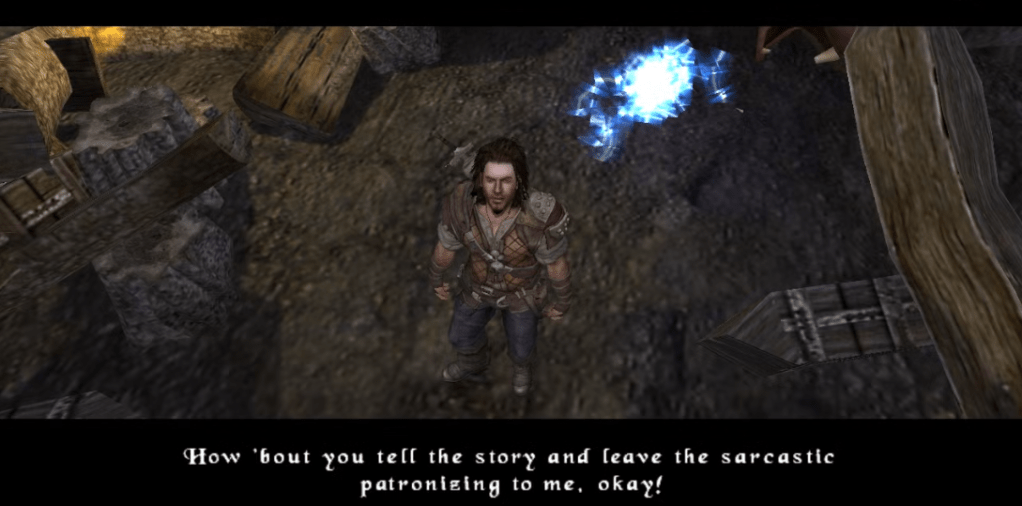
Adding humor to The Bard’s Tale was risky, but the risk paid off. The Bard’s Tale became a classic because of its sarcastic humor. While the classic Bard’s Tale trilogy used a first-person view, 2004’s The Bard’s Tale had a 3D environment with the player watching in third-person. The player controlled “The Bard,” who never received a name. Dialogue followed a “snarky” or “nice” option system. While the player wouldn’t know exactly what The Bard would say, the player can set the tone for how the game’s world perceives The Bard.
The first dialogue decision is with a barmaid in The Drunken Rat. Being nice to her gives the barmaid the impression The Bard is a gentleman, and she leaves him alone, while being snarky results in the barmaid spending the night with The Bard. The Bard’s Tale gets into some adult themes. Nudge-nudge. Wink-wink.
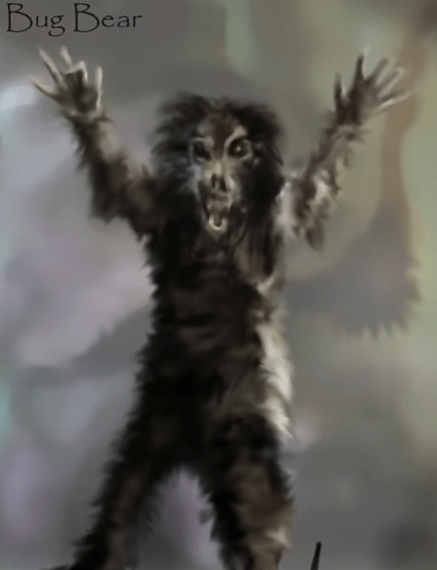
inXile always intended The Bard’s Tale to be a comedy, but Findley shares (in the Documentary) the moment The Bard’s Tale became a “silly” comedy was when Art Director Maxx Kaufman turned in a drawing of a Bug Bear. Findley told Kaufman the bug bear looked like a guy wearing a terrible Bug Bear costume.
Kaufman admitted he rushed the Bug Bear character concept. He was doing a character concept a day, maybe even two a day. When he made the Bug Bear, he was being serious with the character. His intent was not to make a funny character, but that’s what ended up happening.
I have to agree with Findley. One of The Bard’s Tale’s most enduring legacies must be its use of music within the game. One of The Bard’s Tale’s biggest innovations was the original music that they wrote that had lyrics, Findley said (in the documentary). The songs weren’t just a soundtrack; they were being performed by characters in the game. This cornerstone survived all the way up to Wasteland 3 and The Bard’s Tale IV. inXile loves using original music to tell a story.
I always liked “The Blood of the Lamb” song that plays when dealing with a crazed cult in Wasteland 3. So creepy. And I appreciate inXile’s use of original music to tell a story. It also doesn’t hurt to have stellar voice actors for a video game. Tony Jay narrates The Bard’s Tale, while Cary Elwes earned a nomination for Outstanding Character Performance — Male from the Academy of Interactive Arts & Sciences.
With one hit under their belt, inXile looked poised for a long run of hits (much like Interplay a couple of decades prior), but inXile immediately hit a snag.
HEI$T
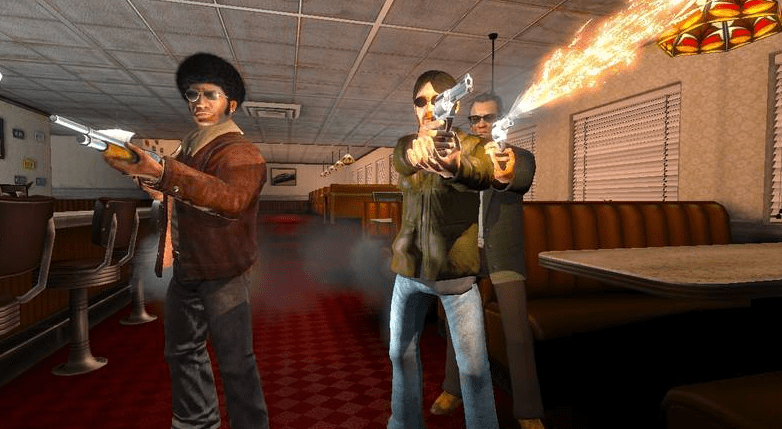
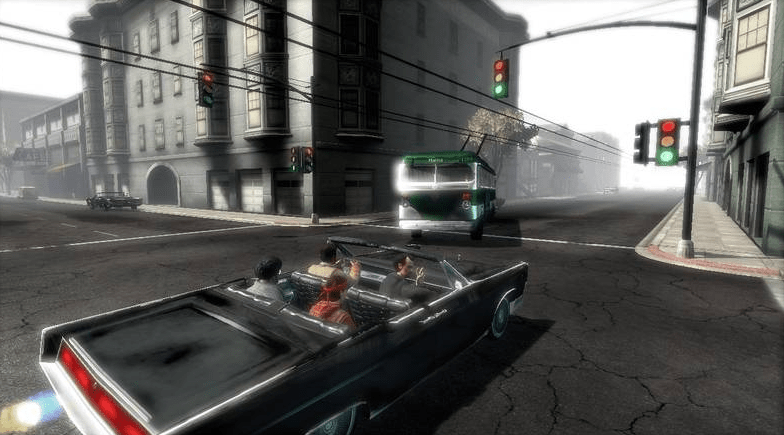
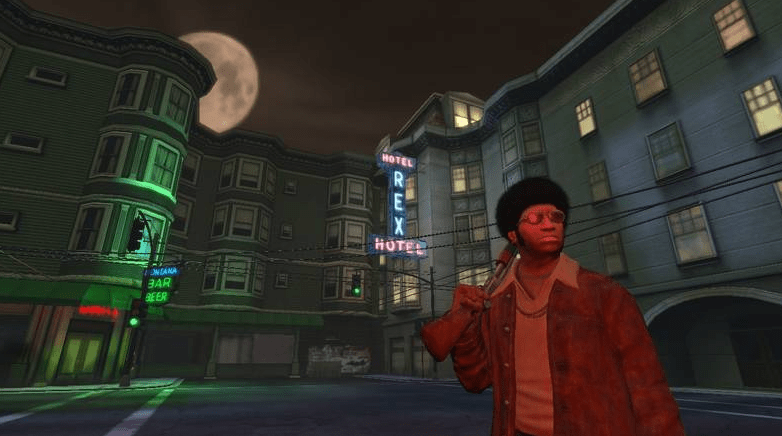
Heist (stylized as HEI$T) is a cancelled action-adventure video game developed by inXile for publisher Codemasters (known for the video game peripheral Game Genie). Set in 1969 San Francisco, Heist follows a group of criminals as they perform various thefts.
Heist features plenty of high-speed chases in what could’ve been an immersive open-world. In a Gamespy article, Lead Heist Designer Sean Patton, cites Need for Speed: Most Wanted and its virtual cops as one influence in the general flow of the getaway chase in Heist. The game sounded amazing. inXile sunk tens–if not hundreds–of thousands of dollars and countless design hours into making Heist the best they could, and then, Codemasters canceled the project.
“Heist is probably my favorite title I ever worked on that never made it to the end,” Findley said in the documentary. “We had an inspired concept of doing something that was supposed to feel like Quentin Tarantino. We had Bruce Campbell as the main character. Ed Asner, Rutger Hauer, Vinnie Jones, Christian Slater, and we had recorded the entire script from beginning to end before the project was shut down.”
Fargo added, “It (Heist) was the closest I’ve ever come to finishing a game–it was finished–and not coming out, but we just couldn’t. Unreal Engine, at the time, to do a true open world wasn’t working for us. Our publisher (Codemasters) really wanted a true open world, but we would have had to make it sort of modularized. Our publisher canceled it.”
There are conflicting reports as to why Heist was canceled. In an interview with Video Games 24-7 (VG247) about Wasteland 2, Fargo said, inXile had an agreement with Codemasters to create an open-world using Unreal Engine on the PS3–but the specs didn’t yet exist for the PS3. They (inXile) found a way to make Heist run great on PC and Xbox, but Codemasters wanted PS3. I gather that Heist worked on every system besides the PS3. Based on the wording, I’m unsure if Heist could’ve been an open-world on the other two systems (PC and Xbox) and needed to be a hub-world on PS3, or if Heist only worked as a hub-world on the other two systems and didn’t work at all on the PS3. Either way, Codemasters canceled Heist.
Heist was a massive blow. It certainly left a bad taste in Fargo’s mouth. He said in the documentary that he couldn’t wait to get back to making games he loves. He disliked making games other people wanted him to make. Well over a decade later, Heist still haunts inXile. They had created a great game in their minds, but their publisher wanted something different. And you don’t need to take my word for it. Heist gets a full segment dedicated to it in inXile’s 20th Anniversary Documentary. Fargo even lists various games, like Payday: Heist, that resemble what Heist attempted to do, but they didn’t have Bruce Campbell, Ed Asner, Rutger Hauer, and Christian Slater in their cast. Fargo insists Heist could’ve done well on the market.
Mobile and Web-Based Games
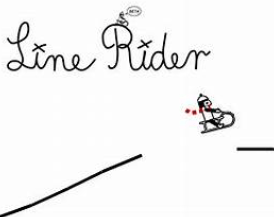
While one half of inXile developed games like The Bard’s Tale and Heist, the other half developed mobile and web-based games. This half of inXile yielded mixed results. In 2006, inXile acquired the rights to Line Rider, and later on, Fantastic Contraption. inXile ported these indie games to a wider market. They also created a series named Super Stacker. You can still play Super Stacker 2 for free as a web-based game.
Baby Pals Controversy
Fargo discusses inXile’s early days and why they chose to create two branches of the company. “We were trying to find a sustainable business model,” Fargo said (in the Documentary), “but the (video game) world was shifting underneath our feet. We just had to be plucky entrepreneurs and find something. We had the rights to Line Rider. Nintendogs had come out, and we said, let’s do cats (Purr Pals), and we sold three-quarters of a million copies. Dogs are done. What could we do next? People like babies.”
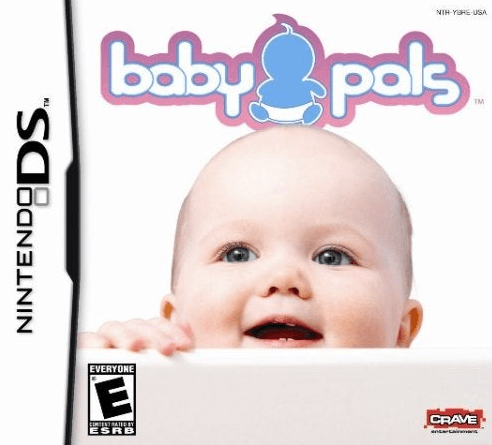
Enter Baby Pals. inXile had licensed the same sound library as the one Mattel was using for their upcoming dolls, so the company thought it was safe. But the next thing Fargo and company knew, inXile was in the news. If you listen carefully, one of the babies says, “Islam is the Light.”
During the documentary, Campbell says, “It was just a baby babbling. There were no hidden references, and it caused so much trouble.”
I like how Findley contextualized these small titles. “I have nothing but warm thoughts for Baby Pals, Purr Pals, Super Stacker, and Line Rider,” Findley said in the documentary. “All of those small and mobile titles we did during those periods…allowed us to do crazy things like Heist and the early stages of Hunted: Demon’s Forge.”
While I thought Findley had a slight smirk when he discussed inXile’s smaller titles during the 20th Anniversary Documentary, his inclusion of these smaller titles financing larger ones rings true.
Hunted: The Demon’s Forge
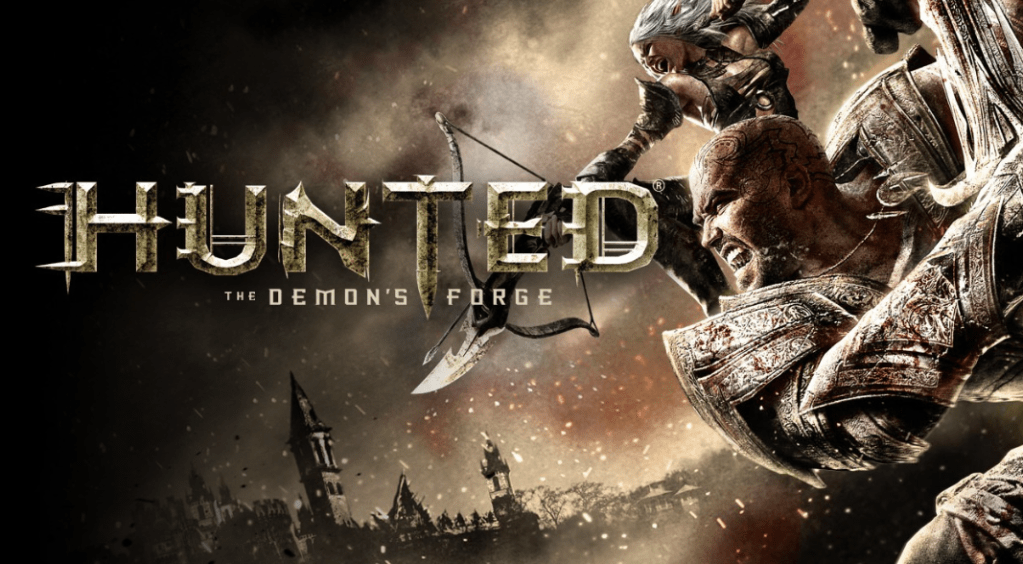
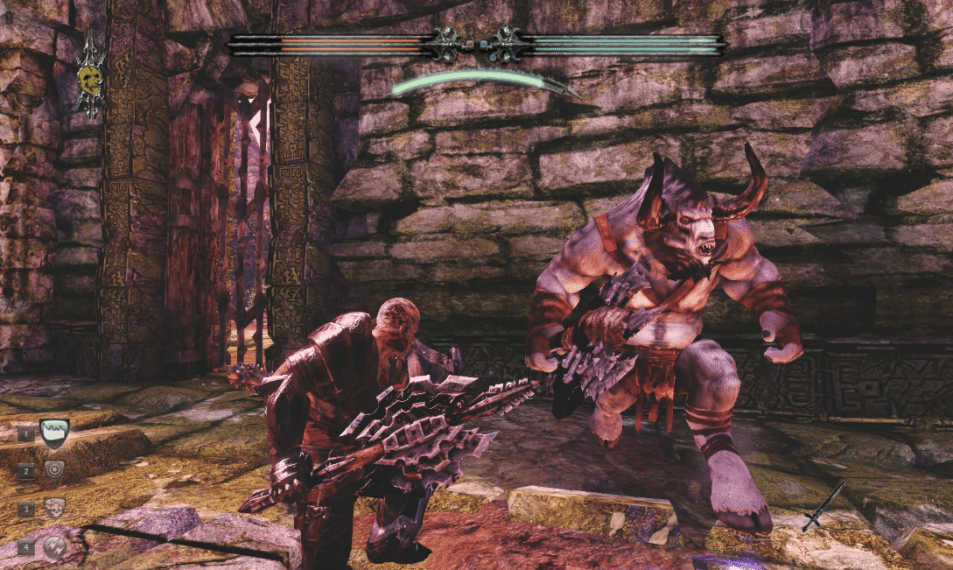
I promised the title of Fargo’s first semi-widely distributed game, Demon’s Forge, would return. With Heist in their rearview mirror, Hunted: The Demon’s Forge allowed inXile to return to their role-playing roots. But they added a cooperative gameplay twist. Hunted: The Demon’s Forge was an ambitious title. According to Findley in a Game Sauce article, Most co-op games are two guys with the same guns running through the world, so we really like the concept of teamwork…We’ve built these arenas with different heights and areas for players to really get out. They get to use their skills and still be able to help out their partners.
Based on Findley’s description, Hunted: The Demon’s Forge sounds something akin to an early hero shooter. The only other hero shooter available at this time would’ve been Team Fortress 2. But Hunted: Demon’s Forge only allowed couch cooperative play. With World of Warcraft going strong for seven years by 2011, and first-person shooters like Battlefield 3 (also released in 2011), and trying to capture the budding online cooperative wave, couch cooperative games were fading in popularity, and Hunted: Demon’s Forge underperformed.
Competition in the role-playing space was fierce during 2011. It didn’t help that many critics viewed Hunted: Demon’s Forge as a Gears of War clone. Hunted: Demon’s Forge may have fared better if it had been released in a different year. RPG juggernauts Mass Effect 2 and The Legend of Zelda: Skyward Sword were released the same year. Bethesda, Hunted: Demon’s Forge’s publisher, even released Skyrim that year. Yikes! Bethesda may not have given Hunted: Demon’s Forge much of a chance.
Choplifter HD
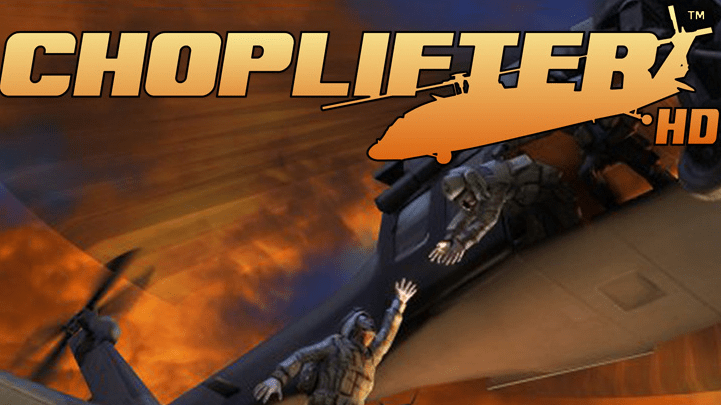
A little over seven months later, inXile released its 3D polygonal remake of the classic 1982 game Choplifter by Dan Gorlin. inXile even hired Gorlin as a design consultant for Choplifter HD. Despite Choplifter HD remaining true to the original, it was the second game in a row by inXile that received mixed reviews. Some critics appreciated how faithful the remake was to the original, while others criticized the game’s difficulty. Ryan Winterhalter of 1Up.com, compared Choplifter HD to that of a bullet hell shooter. I love Winterhalter’s title: Choplifter Appeals to Your Inner-Masochist. Yowza! That’s good copy.
For those keeping score, that’s a canceled game (Heist) that cost countless hours of development to make, a controversy (Baby Pals) that eventually led inXile to halt production on smaller games, and back-to-back near misses with Hunted: Demon’s Forge and Choplifter HD. inXile was at a crossroads.
A Comet Almost Hits the Earth
Fargo shared in the inXile Documentary, “I’ve had so many near-death events in this industry, where the comet almost hits the Earth. If Battle Chess wasn’t a hit…If Castles wasn’t a hit. I can go through ones where if that didn’t work, we’re out of business. Hunted didn’t work, so we had to scale back to a very small group of people.”
Up to this point, Brian Fargo had seen his share of misses and near-misses. inXile’s history began to mirror Interplay’s over a decade earlier. Interplay started as a focused team working on a couple of titles and then swelled to a company of 500 working on dozens of projects. Findley says (in the Documentary), “The years between The Bard’s Tale (2004) and Wasteland (2) was a roller coaster. We got smaller again, then we got bigger, and we got smaller. We went from being a focused team working on one title to 120 people working on four or five titles at once. We were all over the place.”
Interplay made itself a “public” company, entering NASDAQ. inXile would also go “public” but in a different manner. Only this version of “going public” involved inXile’s and Wasteland 2’s historic KickStarter campaign. Like Fargo said, “We threw it all in with our KickStarter and that changed everything.”
Wasteland 2’s KickStarter Campaign
“We were able to pitch the games we want to make,” Findley said (inXile Documentary), instead of pitching the game you know you can sell, which is a much more fun place to be.” This mindset changed everything for inXile. Heist and Hunted were financed by another company. Codemasters wanted a game in Heist inXile couldn’t deliver, while Bethesda released Hunted a few months before Skyrim. KickStarter showed inXile what their fans wanted to play.
For years, gamers asked for a follow-up to 1988’s Wasteland, but the rights to Wasteland proved tricky. Before inXile could begin work on Wasteland 2, they needed to obtain the rights to Wasteland from Electronic Arts. The original publisher, EA, had let the rights lapse. The last time Electronic Arts had worked on a project connected with Wasteland was Fountain of Dreams. “Originally, Interplay (and Brian Fargo) were supposed to be involved with Fountain of Dreams (1990), but EA took control of the project and produced it themselves,” said Fargo in a Wired interview. “By 2003, Electronic Arts dropped all claims that Fountain of Dreams had any connection to Wasteland.” This opened the legal door for Wasteland 2 to become a reality.
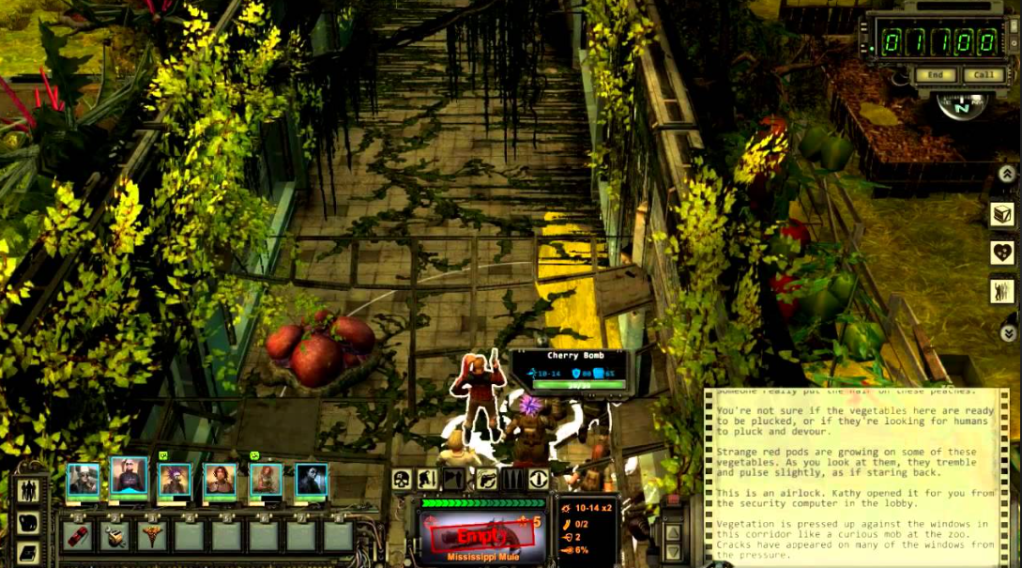
Wasteland 2 was a sequel to 1988’s Wasteland. To be fair, Wasteland 2 is a fusion of a sequel and an update to the original. The stories of both games share many similarities. Wasteland 2 is a joy to play. I highly recommend playing it. Wasteland 2 delivers on Fargo’s idea of a “hardcore role-playing game.” There is no one way to play through Wasteland 2. Your choices affect the world.
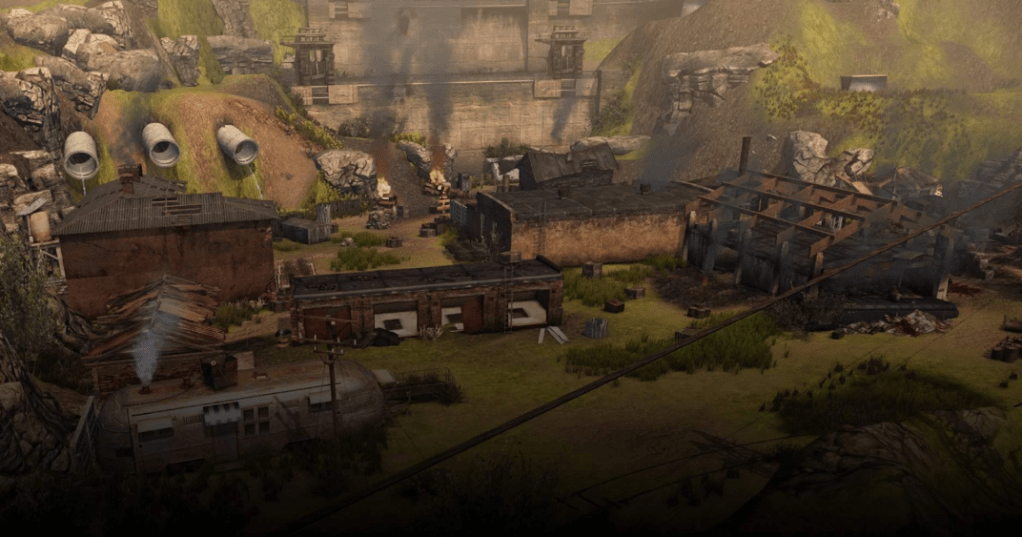
There are moments where it’s obvious how your choice will affect the world, especially the game’s first choice of saving Highpool (a community based around a local dam that provides water to the region) or the Ag Center (which grows genetically modified vegetables to feed the locals). You can’t respond to both distress signals. Other moments are more subtle in how your choices will affect the world.
But why KickStarter? inXile had never used a crowd-sourced platform before, in fact, Fargo had never heard of KickStarter. Fargo shares the moment he decided to Kickstart Wasteland 2 (in the inXile Documentary), “Tim Schaefer launches his KickStarter (Double Fine Adventures). The first day, it makes half a million dollars. I was like, this is it. I called Matt the next day, drop everything. This is what we’re gonna do. We went from what’s KickStarter? to launching within 30 days.”
Wasteland 2’s KickStarter did not end up beating Double Fine Adventures (per an inXile community post), but it was, at the time, the second-largest video game KickStarter campaign, closing in at just over $2.9 million. Add in PayPal donations of over $100,000, and Wasteland 2’s total funds equaled over $3 million.
To this day, Wasteland 2’s KickStarter campaign sports the third-highest total on KickStarter. I’ll admit, KickStarter is better known for board games than video games, but this fact may make Wasteland 2’s success on KickStarter all the more impressive. Wasteland 2’s success goes a long way to show how much the video game community appreciates inXile, and more specifically, Brian Fargo’s work.
Torment, The Mage’s Tale, and The Bard’s Tale IV
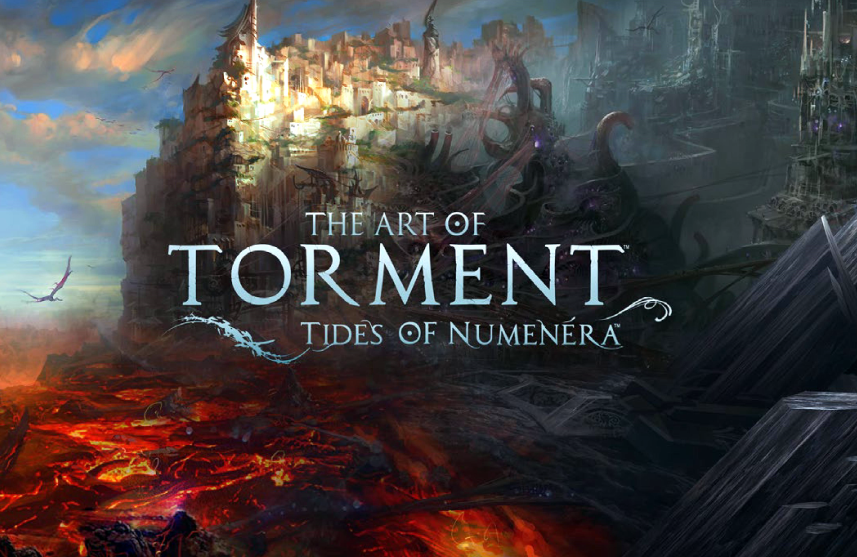
Torment: Tide of Numenara was released in 2017 after another successful KickStarter campaign. inXile learned plenty of lessons from their first crowdfunding campaign. Torment: Tides of Numenara was written by Monte Cook, who also wrote the rules to the tabletop role-playing game Numenara where Torment is set, but Torment: Tides of Numenara is also a spiritual successor of a former Interplay game, Planescape: Torment. Torment: Tides of Numenara received favorable reviews, continuing inXile’s hot streak. It also honors inXile’s past.
We won’t go into too much detail with the remaining titles in this segment. The Mage’s Tale was developed in parallel with The Bard’s Tale IV. The two projects share some assets. Both games received average or mixed reviews. Regardless of reviews, both games had ambition. While The Mage’s Tale brought the world of The Bard’s Tale to the new medium of virtual reality, The Bard’s Tale IV: Barrows Deep attempted to fuse elements of the original 1980s Bard’s Tale trilogy with the 2004 spin-off The Bard’s Tale.
After a shaky decade, inXile had found a sustainable business model. But nothing stays the same for long.
Joining Xbox
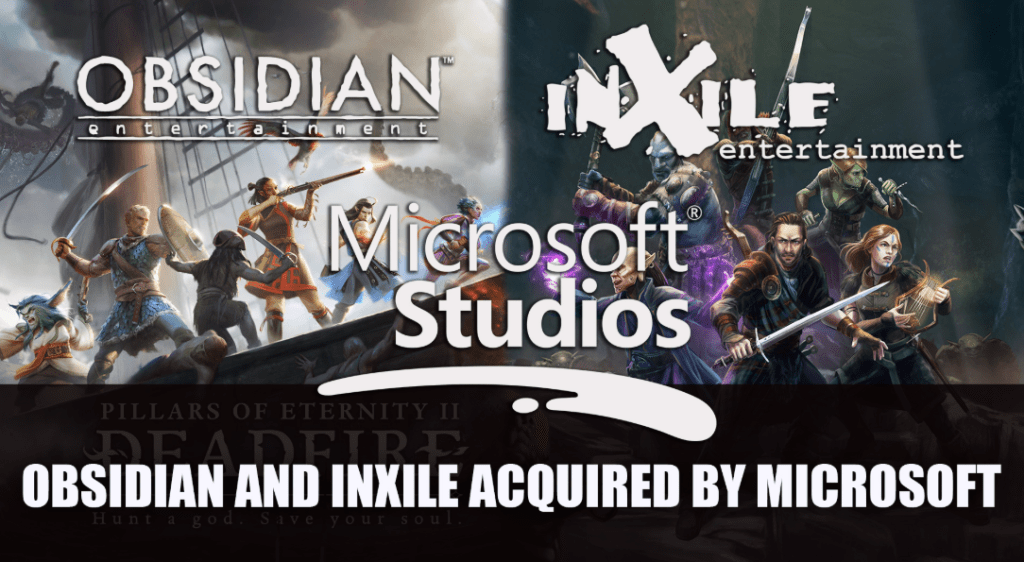
In November 2018, Microsoft Studios acquired inXile Entertainment and Obsidian Entertainment on the same day. Eurogamer made the announcement, stating, “The two independent studios who had fought against each other would now be under the Xbox umbrella. This announcement led to Fargo staying as head of inXile, because in March 2017 (also on Eurogamer), Fargo had announced his plans to retire from inXile following the release of Wasteland 3.
Fargo has said in the past that he doesn’t enjoy being a CEO. He may have wanted to leave on a high note (with Wasteland 3). Microsoft Studios’ absorption of inXile as a subsidiary allows Fargo to stick to his passion, developing video games. Microsoft’s near limitless resources mean that inXile won’t need to rely on crowdsourcing to make the games it wants to make.
Clockwork Revolution
This video game history post is one of the final pieces I wrote in preparation for my end-of-year novel writing/editing break, so I’m writing this post in 2025. Clockwork Revolution is slated for a 2026 release. Who knows? Clockwork Revolution may already be released by the time you’re reading this. I am stoked for this title. What I’ve seen looks amazing, and since Clockwork Revolution is categorized as an action-RPG, I’m anticipating it having gameplay similar to The Bard’s Tale (rather than Wasteland). Regardless, I have Clockwork Revolution wishlisted and will be playing it soon after it releases.
inXile and Brian Fargo had a crazy ride, filled with hits, misses, and near-misses. I’m glad Fargo and his team had those Wasteland 2 KickStarter moments. In the inXile Documentary, Fargo said, “They (fans) valued the work we’ve done before. It felt good. I can say that when we hit our funding goal, it was one of the highlights of my whole career.”
Thank you for reading. Let us know what other video game companies you want us to write a history for, and wherever you are, I hope you’re having a great day.
Happy Saturday, Geekly Gang! Kyra Kyle here. We made it to the weekend. Woo hoo! Today, I’ll share my reaction to the latest Fallout Season Two episode. “The Other Player” confirms who pulled the strings behind the scenes before the bombs fell.
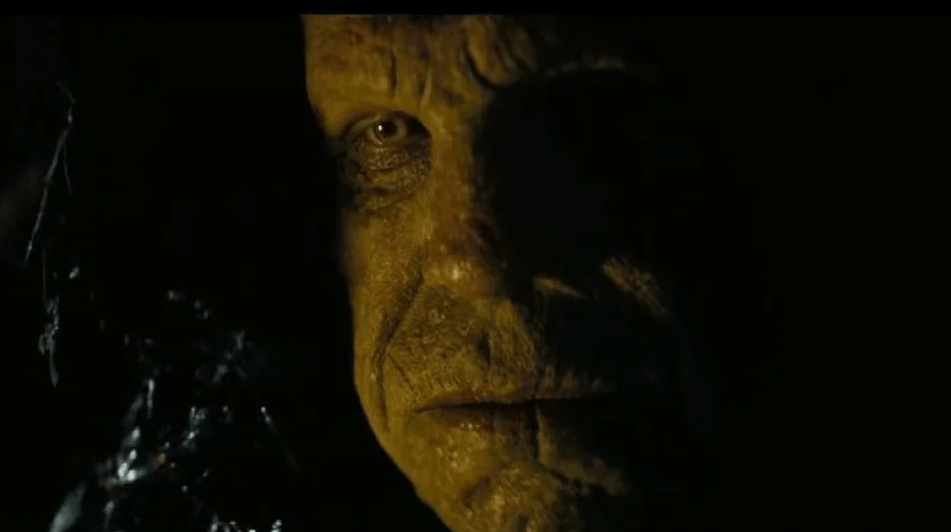
“The Other Player” doesn’t harbor too many spoilers besides our first glimpse at a super mutant, portrayed by none other than Ron Perlman. It’s about time Perlman got screen time in Fallout. He’s been the narrator for most of the Fallout games. Nope. He doesn’t deliver his iconic line of “War, war never changes,” but it was great seeing him as a super mutant, and the small screen time Perlman received carried a ton of world-building.
I wondered why we hadn’t seen a super mutant before the seventh episode of Fallout season two. You can’t sneeze in a Fallout game without encountering at least one super mutant. According to Perlman’s character, humans have hunted them to near extinction. And no, we don’t know who Perlman is supposed to be. Is he The Master from Fallout: New Vegas? Marcus? Or someone else entirely. One thing’s for certain, Perlman’s super mutant isn’t a nightkin.
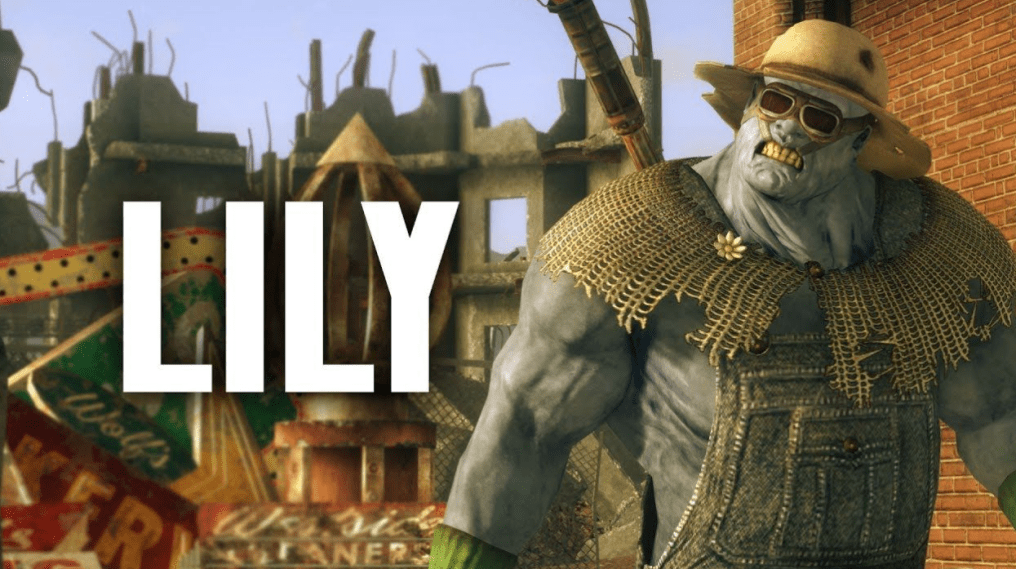
Too bad. Perlman could pull off Lily Bowen. “Oh, pumpkin, Grandma’s sorry about that. Sometimes she gets mad and listens to Leo when she really shouldn’t.”
We get even more of The Ghoul’s backstory in “The Other Player.” Fallout season two tiptoes toward too many flashbacks, especially in the past two episodes, but I liked Barb’s scenes. And the idea that The Enclave could predate the bombs dropping is a nice touch. The impression I got from the games made it look like The Enclave became active after the bombs dropped. Michael Emerson’s Dr. Wilzig also shares a good scene with Barb. And I like how Season 2 calls back to how Cold Fusion was transported. All of this is good, but a second flashback-heavy episode made “The Other Player” feel like it marked time in moments.
And what was up with The Ghoul waiting until sundown before trying to pull himself off the pole? He may have made it to the top if he didn’t wait for at least four hours. The Ghoul spending time on the pole gave Fallout an excuse for more flashbacks. That’s the only reason he wouldn’t try and free himself.
“The Other Player” made me care about what happens in Vaults 32 and 33. That’s no small feat. Honestly, Norm’s storyline–we need more Norm–set up potential stakes in the Vaults. According to the records we saw last week, Vault-Tec still intends to use the Forced Evolutionary Virus on the Vaults. That’s the same virus that created super mutants. What happens when Vault 33 runs out of water? Will they consume unfiltered water that could transform them? We’ll have to wait and see.
And I’m loving Hank MacLean’s villain arc. His worldview suggests that order without autonomy is preferable to conflict. Interesting. Hank and Lucy’s dynamic is great. I can’t wait to see where Fallout takes their relationship.
Overall, “The Other Player” is a good episode. It just misses the great label because it spends too much time in the past. Granted, everything we discover in the past intrigues me. But I didn’t care for two consecutive episodes, spending half their runtime in flashbacks. It’s excessive.
What are your thoughts on Fallout “The Other Player?” Let us know in the comments. Thank you for reading, and wherever you are, I hope you’re having a great day.
Happy Saturday, Geekly Gang! Kyra Kyle here. We moved our review day from Friday to Saturday this week, and during today’s review/reaction, I’ll share my thoughts on the most recent Fallout episode, “The Wrangler.”
I’ll begin with a sentiment I’ve shared multiple times before: Fallout has an amazing soundtrack. I’ve always liked The Mills Brothers’ “You Always Hurt the One You Love,” but to be fair, the first time I heard the song was a Spike Jones and His City Slickers’ cover. There was a lot of belching and gunshots during that version. Needless to say, I’ve been listening to The Mills Brothers’ “You Always Hurt the One You Love” on repeat ever since I finished watching “The Wrangler.” Fallout is to early 20th Century music what Guardians of the Galaxy is to 60s and 70s tunes. Ah! It’s so good.
If you haven’t noticed, I’m stalling with my “The Wrangler” reaction. I don’t know how to discuss the episode without spoilers, big and small. I’ll try my best to avoid them. If I include spoilers, I’ll warn you and try to keep them to a single paragraph that you can skip. Here it goes. “The Wrangler” answers several questions while posing new ones. Fallout Season 2 has done a great job with cliffhangers.
Speaking of cliffhangers, “The Wrangler” doesn’t pay off the previous deathclaw cliffhanger. But that isn’t too big of an issue. All The Ghoul and Lucy can do is run. It makes sense that they don’t engage with any deathclaws at this stage. The opening scene gives a nod to Fallout: New Vegas (no spoilers yet as to what), but it made me smile. And I suspect this won’t be the last time we’ll see these deathclaws. I don’t know how the deathclaws will factor into future episodes, but I’m certain they’ll return. The remainder of “The Wrangler” splits the difference among exploring The Ghoul’s past and how it mirrors what occurs in the Wasteland, progressing Norm’s Vault-Tec storyline, and throwing in some Lucy and Hank MacLean mayhem.
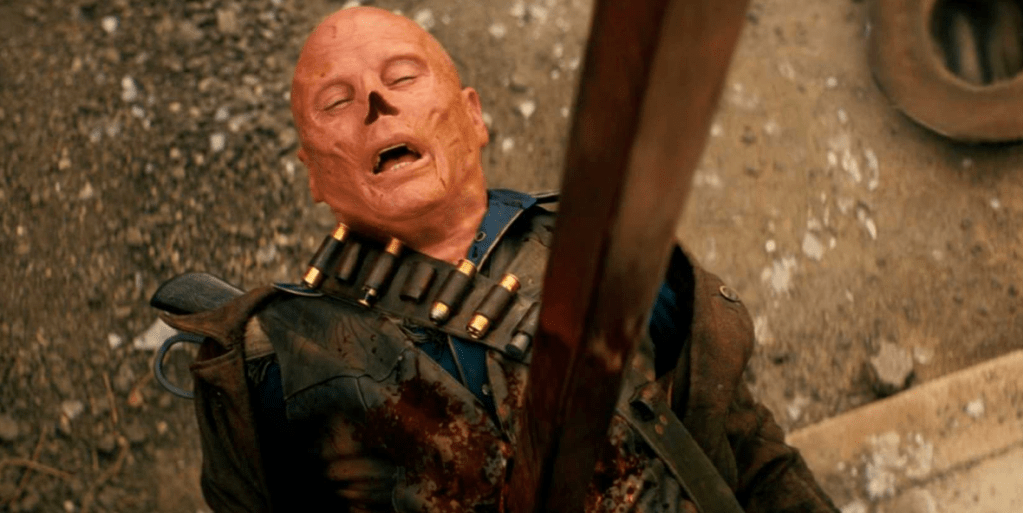
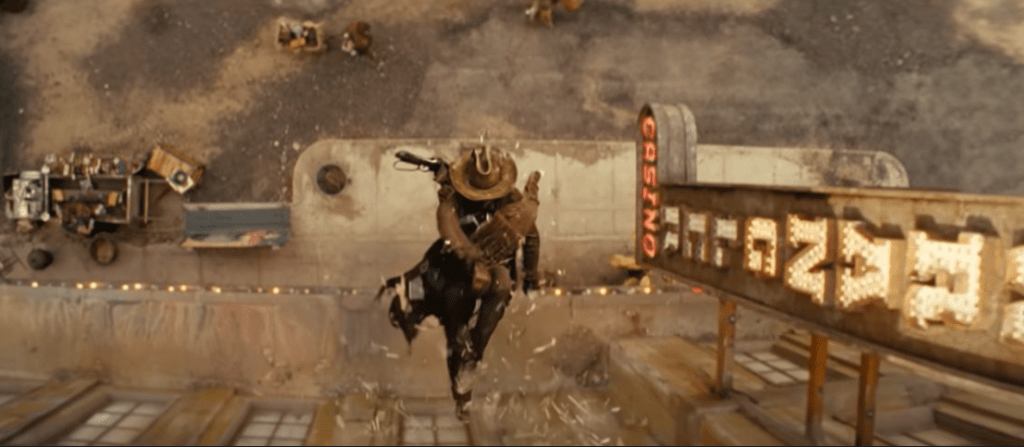
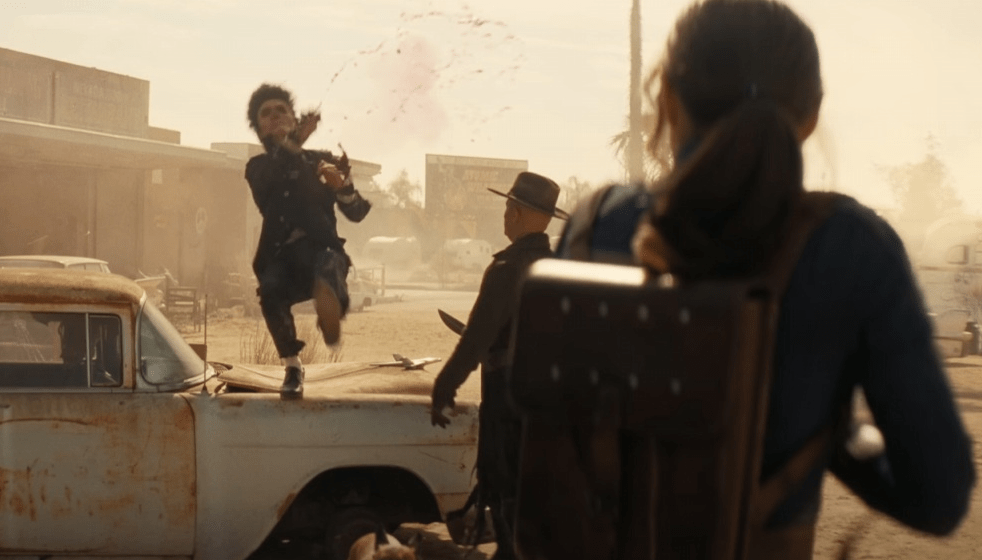
The episode’s name derives from the Atomic Wrangler Casino, introduced in Fallout: New Vegas. You can see someone in the picture above falling from one of the building’s high stories. Ah! It’s so easy to spoil the episode. Moving on, Fallout has done a good job switching between storylines. While jarring at first, the season has found a good rhythm of when to shift from one set of characters to the next. We don’t see Vault 32, Vault 33, or the Brotherhood in “The Wrangler,” and that’s fine. I’m sure episode six will weave in one or more of these elements into its narrative.
Okay. I’m done with spoiler-free stuff for now. Here comes the spoiler-filled paragraph. You’ve been warned. The deathclaws trapped inside New Vegas are none other than the ones players can find at Quarry Junction in Fallout: New Vegas. Yay! I don’t know how the deathclaws migrated from Quarry Junction, but I trust we’ll learn more later. I chuckled when the snake oil salesman met with Fully Integrated Security Technetronic Officer (FISTO from Fallout: New Vegas) and apologized for cheating on them. And I winced when the camera panned after the snake oil salesman was fitted for a mind control device (that blew off heads in the past). Great payoff. And while observant viewers would’ve caught the initials of Future Enterprises Ventures as being FEV, meaning something else, “The Wrangler” let everyone in on FEV’s true definition: Forced Evolutionary Virus. Bring on the Super Mutants.
Oh. And I’m sure The Ghoul will find a way to pry himself from being impaled. Yikes!
End of spoilers. Overall, “The Wrangler” does a lot of heavy lifting while allowing for emotional weight. “You Always Hurt the Ones You Love” is a fitting song for this episode. I can’t wait for next week’s release. What are your thoughts on Fallout “The Wrangler?” Let us know in the comments. Thank you for reading, and wherever you are, I hope you’re having a great day.
Hey, hey, Geekly Gang! Kyra Kyle here. I’m late to the action, mostly because I didn’t know if we would retain Amazon Prime Video long enough for me to watch the end of Fallout Season 2 (scheduled for the beginning of February 2026). But hey, turns out we will keep Prime Video just long enough to watch Fallout Season 2, so I have some catching up to do. Let’s begin with my reaction (or review) of the first episode, “The Innovator.”
Fallout Season 2, “The Innovator”
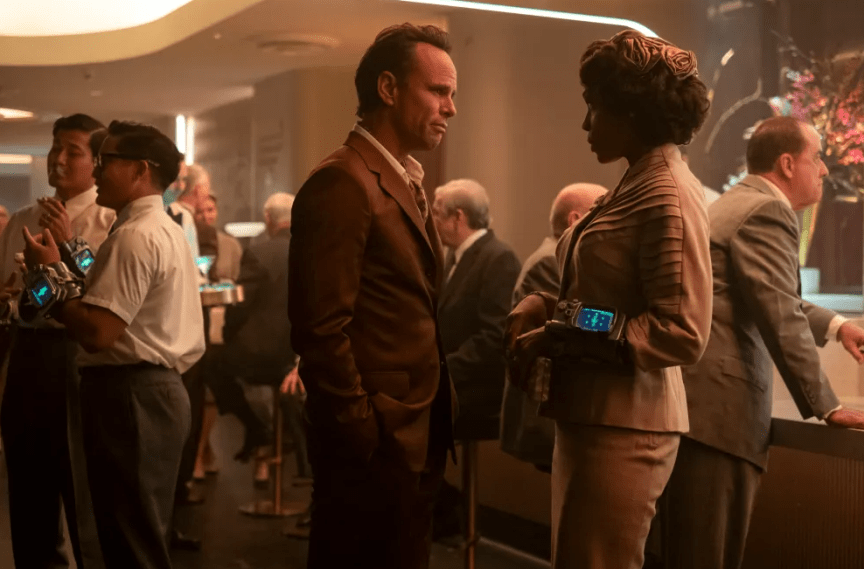
Thank you, Todd Howard, for making an announcement everyone knew before Fallout Season 2 dropped: the Fallout series is canon and will affect future games in the franchise. Did the sarcasm come across? I don’t much care for Todd Howard. Why does he still helm Bethesda? Anyway, I love it when the Fallout series builds on the video game’s lore, and episode one, “The Innovator,” does just that. It opens with a bang. A bar airs a news report with Mr. House, but there’s another Mr. House (who doesn’t quite look like the television Mr. House) in the bar. Could there be more than one?
Before I answer that, I need to address one amazing line, “Every dollar spent is a vote cast.” Chef’s kiss, fantastic. Canonically, there is more than one Mr. House. Robert House has a brother, Anthony, who ran H&H Tools Company, which gets a shout-out in this opening scene. There is a chance Anthony is somehow involved, and what we see in this opening scene, where “Mr. House” injects a construction worker with a mind-control device, could play into a missable storyline (via journal entries one can read) in Fallout: New Vegas. In the game New Vegas, Anthony appears to have schizophrenia or paranoia. He’s worried his brother intends to use mind control on him and constantly wears foil hats. The device used in this scene would make me paranoid, too.
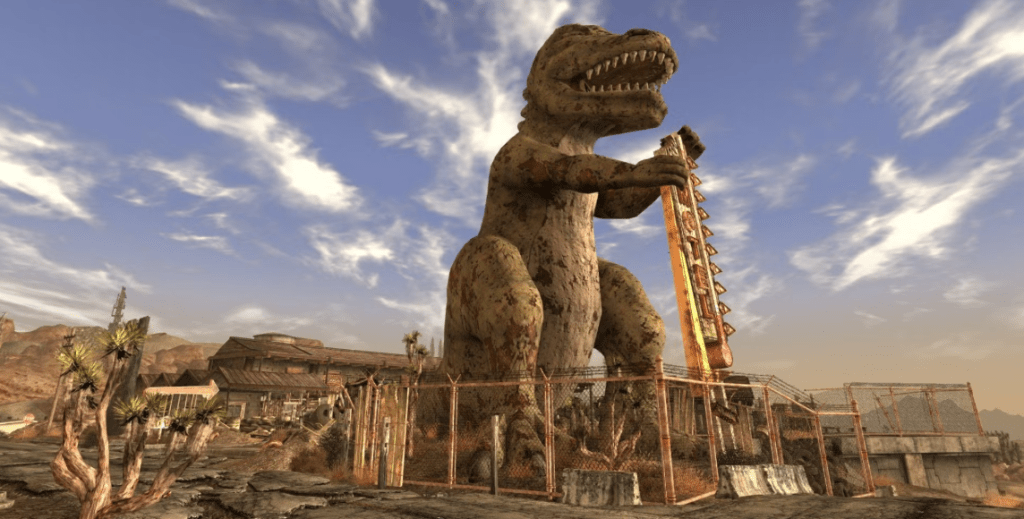
The Novac scene with the Khans serves as a great callback to Fallout: New Vegas. It’s a testament to how much has changed since the video game. The Khans were nowhere near Novac. Yikes! And the Fallout series does a great job of reestablishing two of its main characters, Lucy and The Ghoul, during this scene. The Ghoul devised a plan to kill all the Khans, while Lucy breaks away from the plan and attempts to persuade the Khans to let them go. Perfect! I almost wouldn’t need to watch the recap to gain my bearings. And again, I love how Fallout incorporates the game’s lore into the show. The Ghoul makes a comment about a store that used to exist in Novac about 25 years back. Evidently, The Ghoul bought a soda pop from the Dino Bite gift shop. I wonder what Cliff Briscoe is doing. Wait. He’s probably dead.
The Ghoul also mentions a woman named Darla behind the counter. There is a Darla in Fallout 4. She’s a gun lover and gun moll of Triggerman boss Skinny Malone. It’s possible she could’ve been in New Vegas at the same time as The Ghoul. And I smiled when Marty Robbins’s “Big Iron” played. Oh, and how The Ghoul healed his rope burn (by hanging) with radiation. Nice nods.
I don’t want to go into too much detail with each scene. We have three other episodes to get through, so I’ll pick up the pace.
“The Innovator” continues to do a great job of weaving in threads from last season’s flashbacks and recontextualizing them. Seriously, I’m unsure if a recap was necessary. We get a lot of the same information sprinkled through the narrative of this first episode. I like the mind control device throughline and Lucy’s quest to find her father, which is a very Bethesda-flavored Fallout storyline to showcase. How many people are searching for a family member in Bethesda Fallout games? Lol.
Anyway, I am concerned with the number of storylines Fallout attempts to juggle at once. Brotherhood of Steel Knight Maximus doesn’t even make an appearance during the first episode. I can’t imagine Fallout sporting too many episodes where every character gets time to shine. It’s not a problem yet. Since most characters reside in vastly different locations (similar to Game of Thrones), it is easier to keep track of who’s doing what. But some characters could become lost in the shuffle. Ultimately, “The Innovator” is a solid opening episode for Fallout season two. I can’t wait to see what Hank MacLean does with Mr. House’s experiments.
Fallout Season 2, “The Golden Rule”
Aw! I’ve always loved Jo Stafford’s “You Belong to Me.” The Fallout series (television and video games) features amazing music. And I love the glimpse we get of Maximus’s life before the bombs fell.
Not going to lie. Maximus falls short of his parents’ example in “The Golden Rule’s” opening scene. I don’t have an issue with Maximus joining the Brotherhood and following Elder Cleric Quintus. This season’s Brotherhood doesn’t land the same in this episode. They’re less like a military operation and more like a gussied-up raider gang. The showrunners/screenwriters threw in too many jokes. I chuckled the first time or two I saw the Brotherhood make a goof, but there were so many included (especially when the Brotherhood discovers Area 51) that it undermined the organization’s stature. The pelvic thrusts were a step too far.
The scene from Maximus’s past is fantastic and heartbreaking. I don’t want to spoil it here, but it’s well worth the watch, and the way Hank MacLean’s backstory ties into Maximus’s past is amazing. Fallout Season Two’s first two episodes have some banger cold opens. As far as the Brotherhood of Steel is concerned, I have hope their interpretation improves deeper into the season. I like the idea of a potential Brotherhood of Steel civil war. That can drive Maximus’s story and should affect the Mojave Wasteland.
We get our first glimpse of radscorpions in the Fallout TV show. Yay! Note: I watched with subtitles on and found they called bark scorpions “baby radscorpions.” Ah. No. We see two different species of radscorpions. Bark scorpions and radscorpions seldom play nice together in Fallout: New Vegas. It was a fun nod when the radscorpion eats the bark scorpion. Nice!
Overall, “The Golden Rule” makes for another strong entry. Hank MacLean furthers his “scientific” research, we catch our first glimpse of Caesar’s Legion, and I like where Norm’s storyline is headed. And “The Golden Rule” does a great job of juggling its various plotlines. It balances heart-wrenching storylines with lighthearted ones. The pacing is on point. And while I may not care for the current portrayal of the Brotherhood of Steel, there’s time for improvement.
Fallout Season 2, “The Profligate”
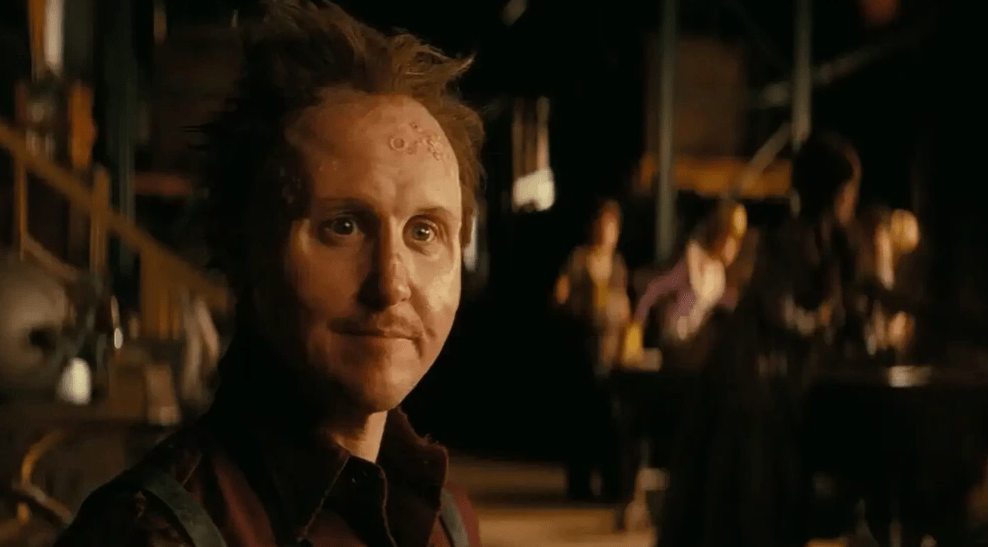
Thaddeus (pictured above) is a nice guy, but he’s running a sweatshop. Sam Cooke’s “Chain Gang” fits for “The Profligate’s” opening. I love the one kid asking Thaddeus for water, and Thaddeus replying with just drink the soda. And I squeed when I saw Sunset Sarsaparilla.
I’ll briefly mention the number of POV characters. Again, this could become a problem. It’s not one yet. Some major characters won’t feature for an episode or two, but if a major character disappears for five or more episodes, that could become a problem. And at the risk of small spoilers, I did like how Thaddeus and Maximus’s stories merged.
I also like the use of “The Profligate” as a title. The word occurred in the previous episode, and Macauley Culkin’s Legate drops the episode’s title after we meet him. Profligate is a perfect antiquated term Caesar’s Legion would use. I love how New Vegas is a mess. The Legion has splintered. That makes sense, especially in the manner the Fallout series suggests. The New California Republic (NCR) is all but gone. Even Victor (Mr. House’s pet Mr. House’s pet Securitron) has gathered dust. Throw in some Brotherhood of Steel shenanigans, and you’ve got yourself a party.
Overall, I like how most factions are depicted. I still think the Brotherhood isn’t the same one we got from the previous season. Lucy and The Ghoul taking jabs at The Legion made me guffaw more than once: Lucy with her knowledge of history books (Caesar’s Legion doesn’t adhere to the Ancient Romans), and The Ghoul’s line that the Legion dislikes soft Cs. And I love The Ghoul’s backstory and how it interplays with what occurs in the present day. Fallout has done a great job fleshing out most of its characters.
Fallout Season 2: “The Demon in the Snow”
I don’t believe I mentioned this in the previous episode’s write-up, but Maximus has redeemed himself. I had few doubts. But the past two episodes are a return to form, and the Brotherhood of Steel thread within “The Demon in the Snow” drives this episode. Minor spoiler: I worried that the scene of the Brotherhood airship crashing into the Mojave Desert wouldn’t be earned; “The Demon in the Snow” assuaged my worries. While I’ll miss Scribe Dane (they really grounded Maximus), they get a great send-off, and I love the scene they share with Maximus.
I’m glad we lost Knights Bevis and Butthead. Seriously. The two unnamed Brotherhood Knights playing with grenades made little sense. Like I said above (for episode two), they were funny the first time or two, but it got old. Conversely, Lucy makes for better comedic relief. We’re going into spoiler territory again. You’ve been warned. Lucy gets addicted to Buffout, and she’s equal parts PSA and junkie. Hilarious. This works because Lucy has no experience with any wasteland drug. I wonder how The Kings (a gang of Elvis impersonators in Fallout: New Vegas) transformed into ghouls (pictured above). But the Fallout series does take place twenty years into the future. A lot can happen in twenty years. Watching Lucy headshot each of The Kings was fun.
The Ghoul does little to help her. I loved how he laughed at her handiwork and how that contrasts with the pair running across their first living Deathclaw by the episode’s end. Lucy doesn’t think much of whatever is making the growling from within a casino (Buffout brain), and The Ghoul (who experienced a Deathclaw before the bombs fell) knew to fear the beast. Lucy even sobered up a little after the Deathclaw emerged. What is it with Fallout sticking Deathclaws inside buildings? This issue persists within the video games. I didn’t buy the Salem museum still standing in Fallout 4, and I don’t buy this building remaining intact during “The Demon in the Snow.” Deathclaw don’t turn doorknobs.
Finally, we see some progression with the vaults. Norm will find out more about Vault-Tec’s pre-war plans. He won’t discover anything pleasant. Vaults 32 and 33 are about to go to war. Yes! Bring on the chaos. “The Demon in the Snow” has a knack for ending each story thread on a good to phenomenal cliffhanger.
That’s all I have for the first four episodes of Fallout Season Two. From this week forward, we should be keeping up with the series weekly, but these reviews/reactions should be released on Saturdays instead of Fridays. I need to get back to my writing and game design diaries on Fridays. Our next Fallout episode review should occur on January 17, 2026. See you there. Thank you for reading, and wherever you are, I hope you’re having a great day.
Happy Wednesday, Geekly Gang! Kyra Kyle here! Today, our writers share the games (video games and board games) they’ve been playing over the past month. Feel free to share which games you’ve been playing this past month, because we’re all part of the Geekly Gang. I’ll start off this post with what I’ve been playing this past month.
Kyra’s Video Games
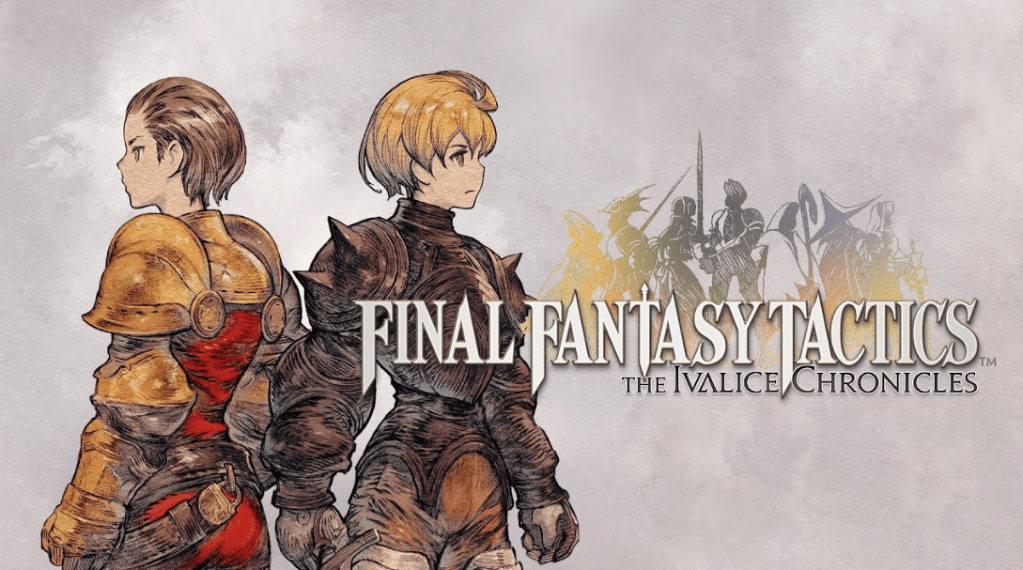
I received Final Fantasy Tactics: The Ivalice Chronicles two weeks ago. Thank you, Season. And it didn’t take me long to finish the game and earn the platinum PlayStation trophy. Oh, yeah!
I’ve played most–if not every–rendition of Final Fantasy Tactics. It’s one of my favorite video games of all time, and Final Fantasy Tactics: The Ivalice Chronicles does a fantastic job of updating this classic. Let’s begin with some of Final Fantasy Tactics: The Ivalice Chronicles’ best new additions.
It’s easier than ever to see turn order during combat. Character portraits line the left-hand side. Numbers show whose turn is coming next. When you choose an action that requires any charge time, like a spell or jumping as a Dragoon or aiming as an Archer, you’ll see where your action would fall in turn order, should you choose to pick it. I love this update. In an instant, I can see if I want to commit to an action or not. While many of the charge times have been reduced (making some classes like Dragoon and its jump viable and borderline overpowered), the Archer’s aim ability still takes too long. Better luck next time, Archers.
I went into Final Fantasy Tactics: The Ivalice Chronicles knowing I would enjoy the game’s combat (and mix-matching job abilities, like dual-wielding monks), but I didn’t anticipate how this version would step up the game’s story. I always liked Final Fantasy Tactics’ story, but with The Ivalice Chronicles’ “State of the Realm” interactive map, I can better follow the story. If you’ve ever struggled to keep Final Fantasy Tactics’ political intrigue clear, The Ivalice Chronicles may be the perfect edition. Throw in some great voice acting–by whom my spouse dubs as out-of-work Shakespearean actors–and Final Fantasy Tactics: The Ivalice Chronicles elevates a story that may resonate more today than when the original was first released in 1997.
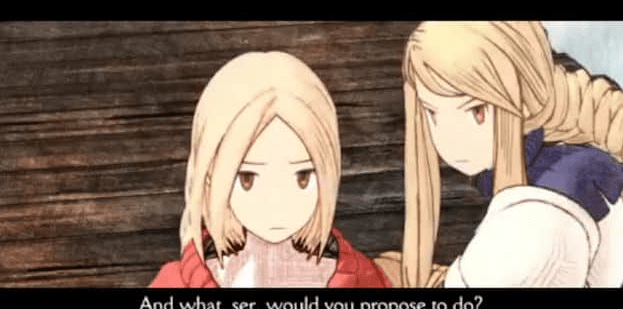
Even with all the great additions Final Fantasy Tactics: The Ivalice Chronicles brings to the table, I do have some gripes. I loved the War of the Lions’ cutscenes. The art is unique and has an ethereal quality. These cutscenes are available in Final Fantasy Tactics: The Ivalice Chronicles, but gamers need to surf submenus to find them. I don’t think many gamers will do this. I would prefer an option to insert these cutscenes during my playthrough. This could be included in a simple update. Speaking of simple updates, Final Fantasy Tactics: The Ivalice Chronicles brings back all original unlockable characters and jobs. I’d like the game to include all the unlockable characters and jobs from every version, making Final Fantasy Tactics: The Ivalice Chronicles a definitive version.
I could go on with other nitpicks. I love the fast-forward option, but I’d like it as a toggle button, not as something I need to press and hold down, and there are a handful more, but Final Fantasy Tactics: The Ivalice Chronicles does more things right than things wrong. If you’ve been holding off playing this classic, Final Fantasy Tactics: The Ivalice Chronicles is the closest to a definitive version of the game. And I’ve heard that Square Enix may release a sequel if Final Fantasy Tactics: The Ivalice Chronicles does well. Fingers crossed!
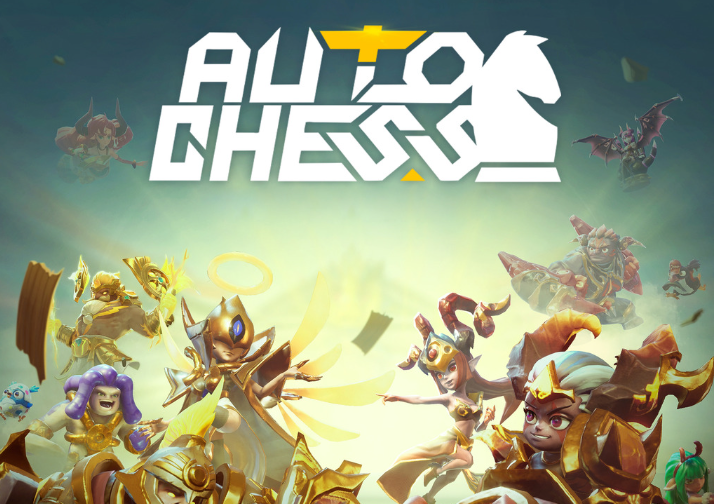
Auto Chess just had a major update (November 30, 2025, literally a few days ago). When this update posts, I’ll still be trying to understand all the balance changes. In short, I’m not enjoying this new update. Egersis is eliminated from the normal unit pool, but you can still gain Egersis units through a relic. That’s kind of good. Unfortunately, a couple of unit types have gained similar abilities to Egersis, so effectively, Auto Chess has quadrupled down on the game mechanism I hate. Great!
Certain units (like the Hill Clan Swordsman or the God of War) would dominate Auto Chess lobbies in the early to mid-game before this patch. After the patch, these units may have gained more power. Again, I haven’t had much time to play this new major patch, but there are far too many match-ups where I don’t know why I lost. That’s bad. I should at least know why I’m losing. Maybe I have inferior units or poor synergies or fewer units in general. But during the early stages of this latest patch, I’ve lost to opponents who had no synergies (poor or not), cheaper units, and fewer units. Evidently, my seven great units with six good synergies can’t defeat a team of four weenies with no synergies. I’m left scratching my head with Auto Chess.
Maybe I didn’t add the correct weenie.
Kyra’s Board Games
This past month, I’ve played board/card games I forgot I enjoyed. I rediscovered some favorites. The first of these favorites is Rüdiger Dorn’s Las Vegas. I remembered shockingly little about Las Vegas’s scoring rules. Lol! Players roll standard six-sided dice, take turns placing all the dice of one number on one of six casinos (numbered 1-6, corresponding to the numbers players can roll). Whoever has the most dice in a casino wins the pot. The player with the most money after four rounds wins.
And that’s how to play–for the most part. Las Vegas has simple to learn rules but offers plenty of strategy. After playing Las Vegas for the first time in years, I remembered why I love it so much. It’s a game I love bringing on road trips. In fact, I believe I brought Las Vegas to my Vegas trip almost ten years ago. Who needs to gamble when you can play Las Vegas?
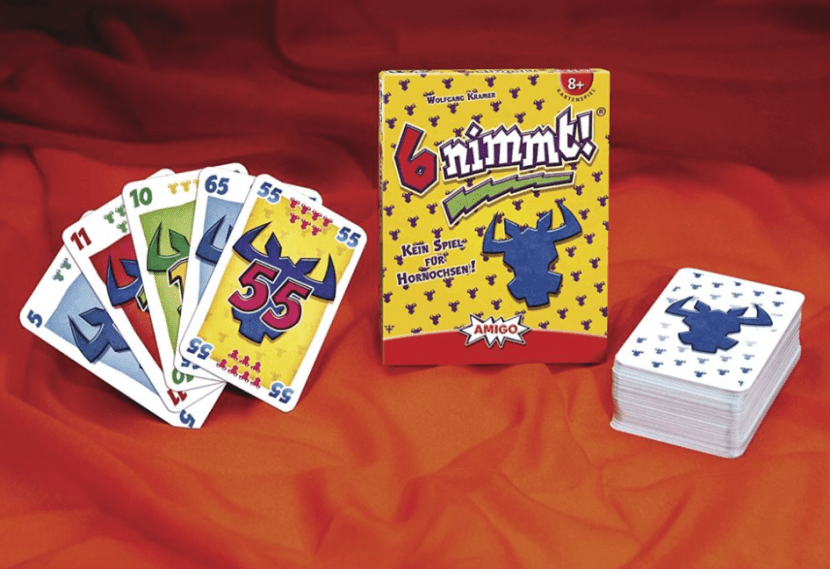
Wolfgang Kramer’s 6 nimmt! is another classic I played this past month. I’m going to take this moment to thank one of our game night regulars (Kenneth) for remembering how to play Las Vegas and 6 nimmt!. 6 nimmt! was another game where I could remember how the game was played but forgot to explain specific rules or edge cases. In 6 nimmt!, points are bad. You want the fewest points. Small bullheads (shown in the middle of the top and bottom of each card) score players points at the end of each round. Every round, players are dealt 10 cards. You will be playing all cards. Players simultaneously pick one card to play and then, in number order, play those cards to rows. If a row gets filled (has five cards and you would then play a sixth card), you claim all five cards in that row and start a new row with the sixth card you played.
6 nimmt! is another easy to learn game with plenty of strategy. Who am I kidding? 6 nimmt! is pure chaos. You may attempt to play a card, squeezing it into a tight window of numbers, only to find someone else played a card that torpedoed your plans. And that’s the fun.
There are equal parts strategy and luck with 6 nimmt!. Are you the least bullheaded?
Those are the games I played this past month. Let’s see what Season has been playing.
Season’s Video Games
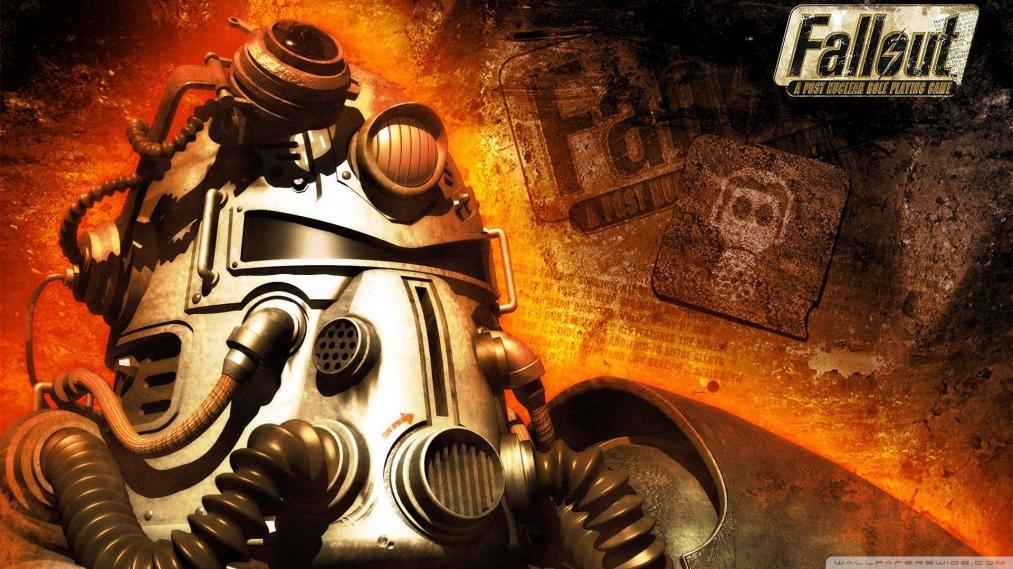
I’ve been getting into Fallout lore lately, so I decided to try the first Fallout game. I know Wasteland came before Fallout, but I’ve yet to check it out.
Fallout was a different experience from other games of the franchise after Bethesda took over. I like the isometric movement. It’s definitely reminiscent of earlier computer games. I get distracted easily in video games, so side questing and taking my time to explore the world is what I’m used to. I wasn’t anticipating being put on a timer to find the water chip. I think this adds to Fallout’s replayability. If I don’t get to everything, I’ll definitely play again.
What have you been playing, Skye?
Skye’s Video Games
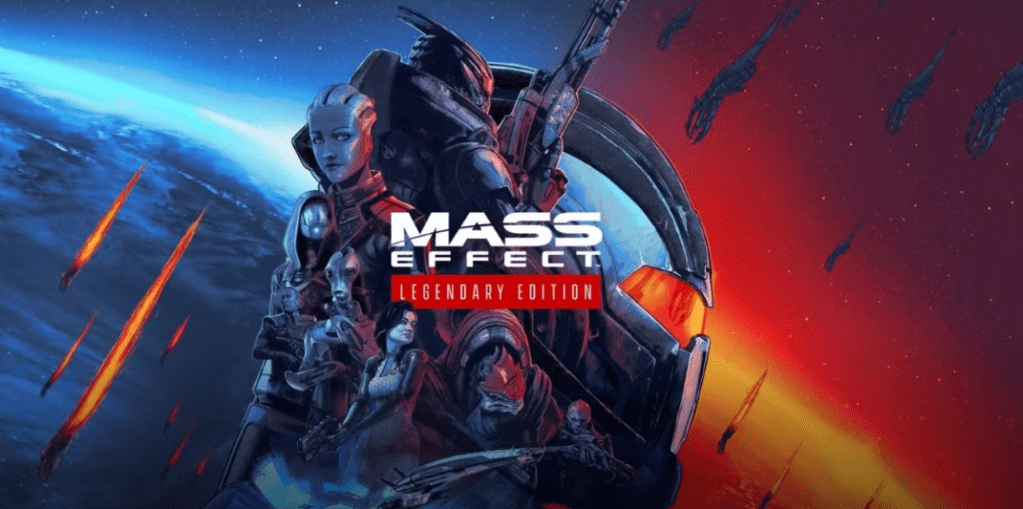
Mass Effect is my newest video game obsession. “Obsession” is the right term. Mass Effect suddenly fell into my lap. I’m lucky enough to have a copy of the Legendary Edition, which contains the three games from the original Mass Effect trilogy. I’m fully submerged in the Mass Effect rabbit hole, and I don’t expect to be out until mid-2026. Especially since, if I really like a game, I’ll grind until I get all three Platinum Trophies. Wish me luck!
Skye’s Board Games
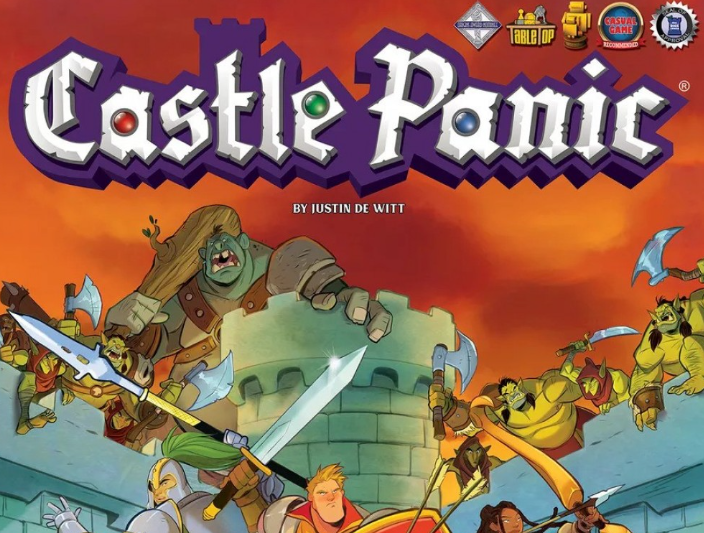
I played Castle Panic during this week’s game night, and it was a fun and engaging experience. I enjoyed the amount of planning and collaboration involved, which made each of our team members feel important. A lot of what happens in Castle Panic is discussion about which threats are the most pressing and how to deal with them. In a way, Castle Panic felt like we were all military commanders deliberating in the war room. Despite the good experience I had with Castle Panic, I can see how the game can turn sour. Castle Panic could suffer from Alpha Gamer Syndrome (one player making decisions for everyone). Remember to stay calm, work together, and get rid of those monsters. The kingdom is at stake!
And I’m hungry now. Pizza Roles is a party game that leans hard into its premise. The game is quick and entertaining. While I don’t see myself regularly playing Pizza Roles, I’d be happy to argue with a large group of friends about which toppings do and don’t belong on pizza. In a lighthearted way, of course. Since Pizza Roles can be played competitively or cooperatively, one can tailor the game to almost any friend group. Just make sure you order pizza.
Hey, hey! Kyra Kyle here again! Those are the games (video games and board games) our writers have played over the past month. Let us know what you’ve been playing in the comments, Geekly Gang. Thank you for reading, and wherever you are, I hope you’re having a great day.
August 2nd just happens to be International Beer Day. Who knew? Hey, hey! Kyra Kyle here. To celebrate this holiday (or observance) that I just found out about, we’ll be breaking down the Top 5 fictional beers in video games.
Quick content warning: We’ve noticed that video games that name fictional beers often travel into crude territory. We tried to tone down the gross-out humor and sexual content, but there may be a few mentions in this post.
After applying the restriction of one fictional beer per video game franchise, I found this list difficult to compile. Numerous video games include beer, but they often give it the generic name “beer” or have a sponsorship with a real-world beer brand. The games that create their own beer brands typically have more than one fictional beer brand, and then there are near beers. Nuka-Cola Dark is the Fallout universe’s favorite soft drink, blended with rum. That’s not exactly a beer. With that said, we were able to find five of the tastiest fictional beers in video games.
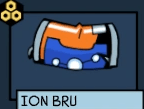
5) Ion Bru (Void Bastards)
Void Bastards is a well-received sci-fi first-person shooter inspired by BioShock. If nothing else, I may be finding more video games to put on my to-be-played list. Void Bastards has some interesting game mechanisms I’d like to try. Ion Bru pokes fun at Scotland’s second national beverage (second only to Scotch), Irn-Bru.
Unfortunately, I don’t believe anyone drinks Ion Bru within Void Bastards. The can pictured before this entry is used as an upgrade material. Ion Bru is included in the following recipes: air freshener, colon cleanser, and germspiker. Germspiker and colon cleanser? Are we sure we should be drinking Ion Bru?
4) Mazte (Elder Scrolls Series)
Typically, the Elder Scrolls series calls its beers by a generic name, or it replaces beer with mead. But the Elder Scrolls does have a beer from Morrowind: Mazte. I know. I know. Mazte may be the Dunmer name for beer, but it’s unique enough to make this list. And we’re striking out on beer brands for this list. Ion Bru may not be a drink people consume, matze may not be a brand, and I don’t know about the next entry. I love Morrowind, so mazte takes the fourth spot.
According to its entry in the Morrowind guide, Mazte is a local beer brewed from fermented saltrice. Cheap, plentiful, and invigorating, this beverage is popular, despite its dulling effect of wit and judgement. For the price, folks are willing to feel dumb and weak-willed, so long as they feel strong. Sounds like beer to me, but fermented saltrice? I don’t know about that. It might raise my blood pressure.
3) Pißwasser (Grand Theft Auto Series)
Grand Theft Auto is one of those video game series with plenty of beer brands. Even Sprunk Cola has its own alcohol variant, which may venture into Nuka-Cola Dark territory. So, we decided to go with Pißwasser. I know. I promised tasty fictional beers. Pißwasser may not fit that bill.
Pißwasser (or Pisswasser) made its first appearance in Grand Theft Auto IV and has been a staple in the series ever since. The German import lager is advertised everywhere. You’ll hear about it on the in-game radio and see it on television or billboards (many of which have suggestive themes; I didn’t include one billboard that may show a woman recycling what she drank–ew). The name suggests that Pisswasser doesn’t taste great, but everyone in the GTA universe loves it. You can even purchase stocks of the brand and try to get rich.
You may be in for a good time. Whoops! I butchered the tagline. You’re in for a good time with Pisswasser. Yuck. Just make sure you don’t drink too much, or else you’ll stumble and lose your bearings and maybe worse.
2) Gamma Gulp Beer (Fallout Series)
While Gwinnett has an entire line of beers in Fallout 4, they don’t capture the imagination as much as Gamma Gulp Beer from Fallout 2 and Fallout Tactics. This beer hasn’t been seen much in the series since, but that could change. I would love to see an updated Gamma Gulp in Fallout 5 or even Fallout 76. Make it happen, Bethesda.
Just look at the happy ghoul in the picture above. How can you resist a sip of Gamma Gulp? Come to think of it, the Fallout universe must’ve started brewing Gamma Gulp after the bombs fell. That or they predicted ghouls. Interesting.
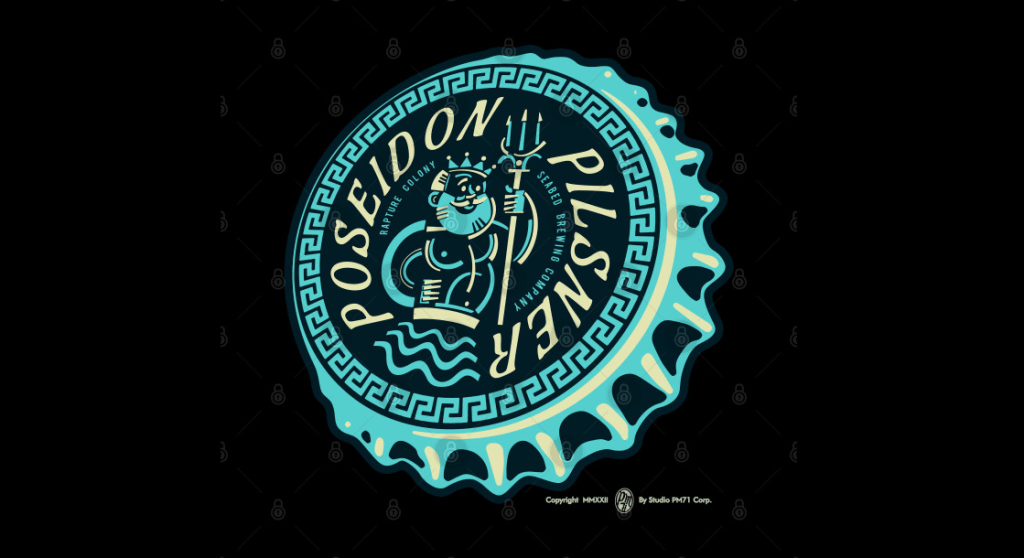
1) Poseidon Pilsner (BioShock Series)
Poseidon Pilsner had to take the top spot because it inspired a brewery in California of the same name. Poseidon Pilsner made its first appearance in BioShock. Most of Rapture’s bars sports the pils; there are even bars named after the beer.
I like how BioShock layered the above Poseidon poster over an advertisement for 123 Beer, which is another beer that could’ve made this list if we didn’t have our pesky one beer per franchise. Poseidon gets the nod because it’s the only beer on this list–so far–that has inspired a real-world brewery. I’m going to be honest. If a Pisswasser becomes a thing, I may have to try a sip.
That’s our list. Which video game fictional beers would you include on this list? Let us know in the comments. Thank you for reading, and wherever you are, I hope you’re having a great day.


















 jkgeekly.com