Sentinels of the Multiverse: Shattered Timelines

Designer: Christopher Badell, Paul Bender, Alex Franklin, Bryan Graham, and Adam Rebottaro
Publisher: Greater Than Games, LLC
Date Released: 2013

Number of Players: 2-5
Age Range: 13 and up
Setup Time: Less than 10 minutes
Play Time: 10-90 minutes

Game Mechanics:
Cooperative Play
Hand Management
Variable Player Powers

Game flow:
Sentinels of the Multiverse: Shattered Timelines is the third expansion for the popular comic book themed card game. I won’t go into detail with the base game flow. If you didn’t catch our Sentinels of the Multiverse: Base Game review, you can read it here. In short, Sentinels of the Multiverse is a cooperative card game, where players team up with each other to beat the stuffing out of a super villain—which has a dummy hand similar to Bridge. Now let’s get to the new stuff in this expansion.
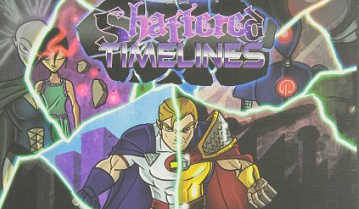
ShatteredTimelines01Review:
Shattered Timelines adds a couple of strong heroes to the Sentinels canon. Omnitron X tends to get overpowered. It has a lot of global effects and can negate damage of every type (plating cards). Chrono-Ranger takes a little longer to set up, but he too can get overpowered once he gets going, and he offers a little bit of everything. A little specialization would help set Chrono-Ranger apart. After we picked up this expansion, everyone gravitated to one of these two heroes, so that’s a good sign that the heroes have a lot of firepower, but the game’s balance may be skewed.
ShatteredTimelines04You also get an interesting mix of villains in Shattered Timelines. La Capitan and Kismet are forgettable, but that may be due to the fact that Iron Legacy and The Dreamer get introduced in this expansion, too. The Dreamer introduces a new game mechanic in that you don’t want to take her down. She’s an eight-year-old girl whose dreams become a reality. The only problem is that she’s having a nightmare. This changes the flow of combat just enough to keep the game fresh. And then there’s Iron Legacy, who doesn’t look like much at first with his relatively low HP, but don’t let that fool you. He packs a huge punch early in the game, and you’ll have to play for a comeback.
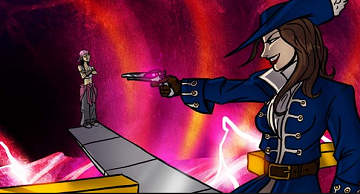
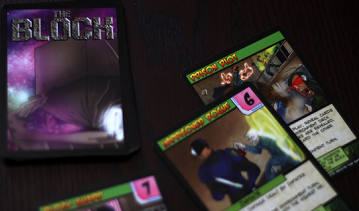
ShatteredTimelines02Time Cataclysm and The Block are a great addition to Sentinels of the Multiverse gameplay, too. Time Cataclysm is one of the most even handed environments to date. I’ve both won and lost because of it. The Block feels like a secondary battle takes place – between prison inmates and prison guard – and the heroes and villains on this environment are in the crossfire.
ShatteredTimelines03Shattered Timelines is better than Rook City but doesn’t quite live up to Infernal Relics.

ShatteredTimelines05Verdict: Shattered Timelines shakes up Sentinels of the Multiverse gameplay to earn a spot as the second best expansion to date—just behind Infernal Relics.

Monopoly

Designer: Charles Darrow
Publisher: Parker Brothers
Date Released: 1933

Number of Players: 2-8
Age Range: 8 and up
Setup Time: 10-15 minutes
Play Time: Up to 180 minutes (if you’re lucky)

Game Mechanics:
Auction/Bidding
Player Elimination
Roll/Spin and Move
Set Collection
Stock Holding
Trading

Game flow:
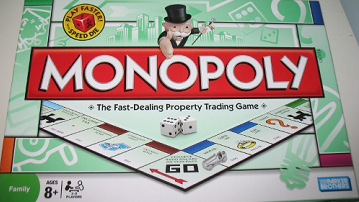
Players take on the role of land owners, buying and then developing land. Each player earns income from other players visiting their properties.
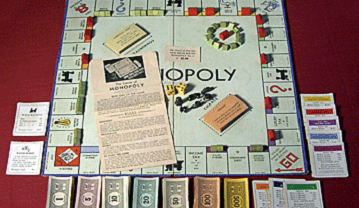
Monopoly01On their turn, a player rolls two six-sided dice and moves that number of spaces around the board. If the player lands on an unowned property, they have the opportunity to buy the property and add it to their portfolio or allow the bank to auction the property to the highest bidder. If a player owns all the spaces within a color group, they may then build houses and hotels on these properties, generating even more income from opponents who land there. If a player lands on a property owned by another player, they must pay that player rent according to the value of the land and any buildings on it.
Monopoly06If a player can’t pay rent for a property, they can mortgage a property they own to broker money. If a player can’t pay rent or mortgage a property to pay rent, they’re eliminated. The last player standing wins.

Review:
Let’s face it. If Monopoly was released today, it wouldn’t do well.

Monopoly04Roll/Spin and Move mechanics don’t fare well in today’s tabletop game market. Player Elimination is too austere, potentially wiping out hours of game time, when most games engage all players for the duration of the gaming session. It also takes a long time to play. Sure. Professional Monopoly players – yes, there are professional Monopoly players – can end a game in next to no time, but most of us will use three hours or so to finish a game.

Monopoly05But even so, Monopoly holds a special place in cultural history. It harkened the modern board game, and it’s unusual in that most people don’t learn how to play the game by reading the official rules as much as learning from other players. This leads to the cultivation of house rules. The best of these house rules reduce the playing time, and you earn money from landing on “Free Parking.”

Monopoly02Most people don’t even play the traditional version of the game because there are countless Monopoly tie-ins. You’re bound to find an entire shelf of licensed Monopoly or Monopolyeque games at a store. And some of these versions – like Star Wars Monopoly – have become popular in their own right.

Verdict: While deserving of its evergreen status, Monopoly wouldn’t be as popular today if it was first released in the modern tabletop game market.

Small World

Designer: Philippe Keyaerts
Publisher: Days of Wonder
Date Released: 2009

Number of Players: 2-5
Age Range: 8 and up
Setup Time: 5-10 minutes
Play Time: About 60 minutes

Game Mechanics:
Area Control/Area Influence
Area Movement
Dice Rolling
Variable Player Powers

Game flow:
Designer Philippe Keyaerts developed Small World as the fantasy follow-up to his award-winning Vinci. Players take turns controlling fantasy creatures with various powers to gain control of the world. The only problem is that the world isn’t very big, and there’s constant war.

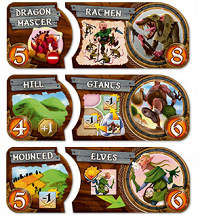
Smallworld01You begin the game by revealing – in a column – five of the 14 different species of fantasy creatures. Each creature has its own tile, and next to each creature tile is one of 20 special power tiles. The creatures showing should have powers next to them, and then the remaining tiles (both creatures and powers) are kept in a shuffled pile. All the creatures have their own innate powers. For example, magicians gain extra victory points (or coins) for occupying zones with crystals, while Dwarves do the same with zones containing mines. But the accompanying special power tiles increase these creatures’ abilities as in the “Flying” power that allows a creature to overtake land that isn’t adjacent to land you already own. On their first turn, players pick the race they want to play.

Smallworld03On each turn, you either use the multiple tiles of your creatures to conquer land, or you give up your race – and the rest of your turn – to send it “into decline.” A race’s “in decline” side is the black-and-white side of the tile. Most games will have you send at least one race into decline because you will extend yourself too far on the board, so you’ll have to choose the most opportune time to do this because as you can guess, a race in decline isn’t usually as strong as an active race.

At the end of each of your turns, you score one victory point (or coin) for each territory your races occupy. You can control one active race and one in decline race (you do gain points for this race, too) unless a special ability says otherwise. The player with the most coins after the final round wins.

Review:
Small World was released with a ton of fanfare and expectations, and it lived up to them for the most part. But one thing separates Small World from its predecessor Vinci: the whimsical artwork and setting cause some people to not want to give up the race they’re playing.

Smallworld04This flaw leads to some poor to no strategy by some players. As I mentioned in the game flow, you have to place at least one race into decline because you will overextend your race. So people who fall in love with their Elves with Flying and don’t want to get rid of them, have already lost the game. This in turn leads to hard feelings.

Smallworld02These hard feelings are magnified when paired with the small game world – hence the name Small World – and each player encounter a battle each turn. I haven’t found that constant battle is as big an issue as the not wanting to get rid of a race, but it can be a turn off to some gaming groups.

There are some gameplay balance issues, too. Some special powers a lot better than others as are some of the innate abilities for the different races. If you get the perfect special power to go with an overpowered race, you can browbeat your opponents for a round or two and then coast to victory.

But despite these issues, Small World offers enough strategy and varied gameplay to prove Days of Wonder’s tabletop giant status.

Verdict: Whimsical characters – perhaps too whimsical – help make this a great area control game.

Space Alert

Designer: Vlaada Chvatil
Publisher: Czech Games Edition
Date Released: 2008

Number of Players: 1-5
Age Range: 12 and up
Setup Time: less than 15 minutes
Play Time: up to 30 minutes

Game Mechanics:
Action/Movement Programming
Area Movement
Cooperative Play
Hand Management
Simultaneous Action Selection

Game flow:
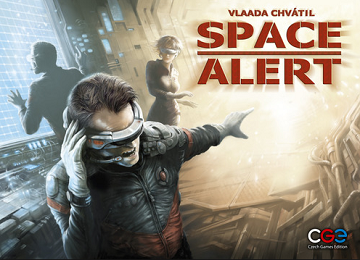
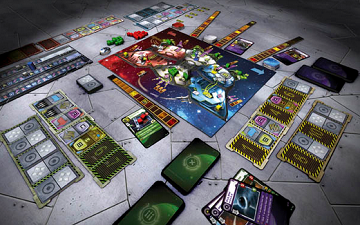
To say Space Alert is an odd duck of a game is an understatement. Players become crew members of a space ship—not unlike the Starship Enterprise—and ward off danger. You all get action boards where you can program your actions and movements on the ship with action cards during each moment of flight.

SpaceAlert01The movements are simple one area shifts on the board: left, right, or up/down (using an elevator). The actions range from a selection of A, B or C. The actual action you perform when you play the card depends on which area of the ship you’re character resides when they perform the action. And every crewmember starts the game on the bridge.

SpaceAlert05It sounds easy enough, except that all of this is done in ten minutes of real-time. The game comes with a CD, but you can download an app to your smartphone or tablet. You hear a computerized voice warn you of impending danger, and you and your crew have to keep your cool and come up with a plan to deal with each threat on the fly.

SpaceAlert04Remember how I said that each player takes on the role of a crew member? Well, one player has to be the Captain. Whatever they say goes. Another player’s the Communications Officer, and they handle placing the threats on the board where they need to go and remind teammates if they have an incoming transmission (or player card swap) or anything else of note in the offing. Then, you have to have an Engineer, who can scream at the Captain, “We can’t do it, Captain. We don’t have the power.”

The funny thing is that you only plan your moves while the audio file runs. As soon as the audio ends, you perform your actions (and your enemies’ actions) step by step. Your ship is derelict if you receive enough damage in one third of your ship, otherwise you survived the onslaught, and your crew wins.

Review:
What else can I say about a game that created its own category in the Spiel des Jahres except that it’s a singular gaming experience?

Seriously, it’s the Snow White and the Seven Dwarves of gaming. There’s nothing else like Space Alert on the market right now, but I’m sure there’ll be some copycats soon. The frantic pace of planning your actions/movements in real-time is the closest thing you can get from actually being on a spaceship during a photon fight.

SpaceAlert02That said. You need someone who can take criticism as the Captain because if anything goes wrong, it’s their fault. That takes the onus off the other crewmembers, so if you want a more laid back gaming experience, one of the other positions would suit you. I’ve played as both a normal crewmember and as Captain, and when I was the Captain I had one of my crewmembers fire a photon torpedo that wasn’t loaded.

My son was the crewmember in question. When he got to his action of hitting the fire button, he said “click,” and everyone laughed. I was off a turn with my daughter’s action of loading the photon torpedo. When she got to that action yelled to my son, “the photon’s ready.” We all had another laugh before the enemy trashed our ship.

SpaceAlert03That was with the training mission, and you have to start with the training mission—or as I like to call it the Kobayashi Maru—before you try anything advanced. But even the training mission will get your blood pumping.

Verdict: An intense, unique gaming experience that puts you into role of a starship crew member.

Ticket to Ride Map Collection: Asia

Designer: Alan R. Moon and Francois Valentyne
Publisher: Days of Wonder
Date Released: 2011

Number of Players: 2-6
Age Range: 8 and up
Setup Time: less than 5 minutes
Play Time: up to 45 minutes

Game Mechanics:
Card Drafting
Hand Management
Partnerships
Route/Network Building
Set Collection

Game flow:
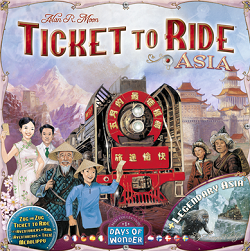
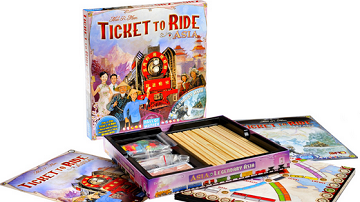
Ticket to Ride Map Collection: Asia is the first map collection, an expansion that’s not a full game and needs a base game of Ticket to Ride to play, for the Ticket to Ride family of games. I won’t go into much detail with the game flow, but if you want to read more about Ticket to Ride, you can check out our review of the original game.

TicketToRideAsia03Let’s go over the basics real quick. Each player is given their own pool of train cars to place on the board, and Ticket to Ride has players draw train cards with colors corresponding to the routes on the board (or map). You have to turn in enough train cards as the color and length of route you want to complete (for example, Portland, OR to Seattle, WA is one pink route away, so you have to turn in one pink card to finish the route and place your train car on the board). You’re also given destination tickets that give you points if you connect two cities on the map with one consecutive route. You’re given three options on your turn: draw train cards (to finish your routes), build a route, and draw new destination tickets.

TicketToRideAsia05Once someone has two or fewer train cars in their pool, everyone—including the person with only two cars or fewer in their pool—gets one last turn. Then, you tally your points (earned by completing routes throughout the game, completing destination tickets, and the longest continuous route) to see who wins.

Review:
We’ll find that Ticket to Ride’s Map Collection will add a new game element with each map. Some of these elements are great. Others don’t fare as well. Ticket to Ride Map Collection: Asia takes the award winning game mechanics of Ticket to Ride and adds a cooperative element to it. Players now have the option to work as a team to complete routes across Asia.

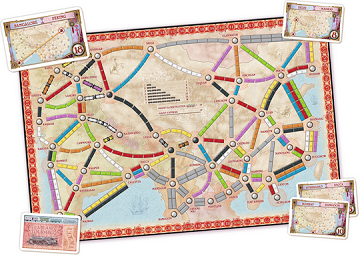
TicketToRideAsia02Each team of two players keeps their train cards secret from each other, but they share the destination tickets, displaying them on a card tray. Game play doesn’t change as much as you would think by adding the team element, but some poor communication between teammates can lead to disastrous results.

I’ve found the team element cumbersome. You can’t talk too loudly because the other team or teams are sitting at the same table, so you either whisper, grunt, or point to a card. Once you have your form of communication down, nothing else really changes and the most disappointing part is that the team map doesn’t feel much different than the base game’s map.

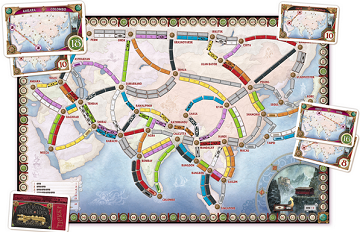
TicketToRideAsia01Fortunately, the every man (or woman) for themselves map on the flip side of the board has a unique feel to it. The southern half of the board gets claustrophobic, while the northern half is more open. This setup causes the two halves to function differently. If you’re shut off from your goal in the south, you’ll probably have an alternative means to get where you need to go, but if someone claims the north, you’re out of luck.

TicketToRideAsia04This map also adds ferry and mountain routes. Mountain routes have Xs on some of the spaces, and you have to discard a number of train cars equal to the number of Xs in the route. Ferry routes require you to pay with a locomotive card (which are wild, rarer and usually harder to get) in order to claim the route. The number of locomotives you need is equal to the number of locomotive silhouettes in the route.

Verdict: While I like the attempt at a team Ticket to Ride game, and it works for the most part, Ticket to Ride: Asia shines with its every person for themselves board.

Quarriors! Quarmageddon

Designer: Mike Elliott and Eric M. Lang
Publisher: WizKids Games
Date Released: 2012

Number of Players: 2-4
Age Range: 14 and up
Setup Time: less than 10 minutes
Play Time: 15-25 minutes

Game Mechanics:
Deck/Pool Building
Dice Rolling
Variable Player Powers

Game flow:
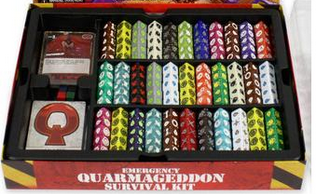
The first expansion to the popular dice pool building game Quarriors!. I won’t go into too much detail with the game flow, but if you want to read more about Quarriors!, here’s our review.

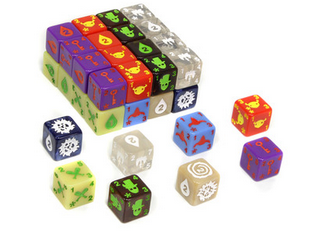
Quarmageddon01In short, players start off with a small pool of basic dice which begin the game in their dice bag. On your turn, you blindly pull six dice from your dice bag and roll the dice you pulled. Some die faces give you quiddity (currency), while others allow you to play creatures or cast spells. You score a certain amount of glory (indicated on the creature’s card) at the beginning of your turn. The first person to the glory requirement (different for how many players are playing in a game) wins.

Review:
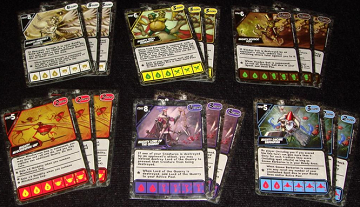
Quarriors! Quarmageddon adds to the list of overpowered creatures from the base game, and that’s a good thing. There were far too many creatures that dominated the base game and the spells were standard issue that the game needed some fresh blood.

Quarmageddon05The two spells are lovely. Oblation earns you glory fast, but it usually does it at a price, while the Discriminating line of spells has some wild and wonderful effects. You can control your dice pool or even capture a new die for free. Free is always good.

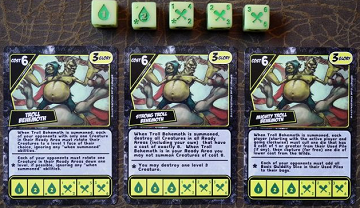
Quarmageddon03As for the creatures, you have a lot of dragon and wizard killers. The Troll can target upper level creatures and can reduce the effectiveness of your opponents’ creatures. But the Lord dice can counter the troll and other heavy hitting creatures and spells—like the death spell. The Gnome’s a nice mid-level creature, but his abilities are usually difficult to execute, while the Imp mid-level that uses the seldom used cull ability. I can see players using this to get rid of the chaff in their dice pool. However, I like the Seraph almost as much as the Troll. She feeds into the Oblation and Discriminating group of spells to double their effect.

Quarmageddon02The only problem I see is that there’s a focus on upper level creatures in this set. Sure, the base game had a shortage of upper level creatures, but I would’ve liked to have seen at least one nice addition to the low-level creature pool. You can win by collecting a lot of little guys, but it looks like the creative team forgot that when adding creatures to Quarmageddon.

Quarmageddon04Verdict: Quarmageddon is a nice addition to the Quarriors! line overall (especially, with the new spells, the Seraph, and the Troll), but the game needs a little more variety with its low-level creatures.

Marvel Dice Masters: Avengers vs X-Men

Designer: Mike Elliott and Eric M. Lang
Publisher: WizKids Games
Date Released: 2014

Number of Players: 2
Age Range: 14 and up
Setup Time: less than 5 minutes
Play Time: about 15 minutes

Game Mechanics:
Deck/Pool Building
Dice Rolling
Variable Player Powers

Game flow:
Take the popular dice pool building mechanic of Quarriors! and marry it with a collectible game. I won’t go into too much detail with the game flow as Marvel Dice Masters reimplements the game mechanics of Quarriors!. If you want to read more about Quarriors!, here’s our review.

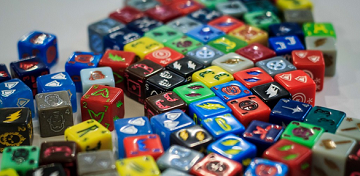
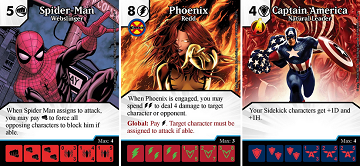
MarvelDice01In short, players start off with a small pool of basic dice which begin the game in their dice bag. On your turn, you blindly pull six dice from your dice bag and roll the dice you pulled. Some die faces give you energy (currency), while others allow you to play heroes or perform heroic actions. Your heroes deal damage to your opponent’s heroes on your turn (there are variable attack and health numbers for each hero), and then you can purchase a new hero from a group of heroes at your disposal (in the case of Marvel Dice Masters, these unique heroes are ones you pull from expansion packs).

But Marvel Dice Masters differs from Quarriors! because each player has a health of ten. You can block attacks with your in-play heroes (hero dice), but if you don’t have in-play heroes, you accept any damage your opponent throws at you. You win if you get your opponent to zero health.

Review:
I’m on the fence with Marvel Dice Masters: Avengers vs X-Men. It uses the game mechanics of Quarriors! well. In fact, I enjoy the small tweaks they made so the game would work as a collectible game, but I’m not sure if I’m up for a collectible dice experience when Quarriors! delivers the same game for a set cost. Quarriors! costs you twenty to thirty dollars once or twice a year. Collectible games cost a lot more than that if you want to be competitive.

MarvelDice04You also use the same dice for each version of a hero, so if you picked up one rare Wolverine and four common Wolverines, you can use the one rare card that came with the rare Wolverine for all five dice regardless of dice’s rarity. While I see the practicality in having all the dice of a character look alike, it defeats the purpose of a collectible game. With a collectible card game, you’d have to pull five copies of the rare Wolverine.

Then there’s a small issue of some heroes having abilities that don’t match their comic book counterparts. Mr. Fantastic has mad defensive skills, but it’s Invisible Woman who can project force fields. I can see Stretcho as a defensive hero, but he’d work better as a tactician who gets you more dice draw, mimicking his high intelligence.

MarvelDice03And it’s the Fantastic Four who prove the most problematic team. There are four teams that dice belong to: Avengers, X-Men, Fantastic Four, and Villains. Currently, there’s no bonus for playing with members of the same team, but I could see that as an upcoming feature. Why would you assign heroes and villains to groups if you didn’t have bonuses for having teammate heroes and villains in your dice pool? The first release focuses on the Avengers and X-Men, so there aren’t a lot of Fantastic Four dice. Fair enough. But the next release is called “X-Men” and the one after that is “Age of Ultron.” At this pace, there won’t be any significant Fantastic Four dice until November or December of 2015.

MarvelDice02I know I’ve had a lot of negatives about this game, but it is fun and shows promise.

Verdict: A shaky start to a fun game that’s a happy marriage of Magic and Quarriors!.

Guillotine

Designer: Paul Peterson
Publisher: Hasbro
Date Released: 1998

Number of Players: 2-5
Age Range: 10 and up
Setup Time: less than 5 minutes
Play Time: 20-30 minutes

Game Mechanics:
Hand Management

Game flow:
Guillotine takes place during the French Revolution, and you’re an executioner. You goal is to post a more impressive score of royal heads than your opponents.

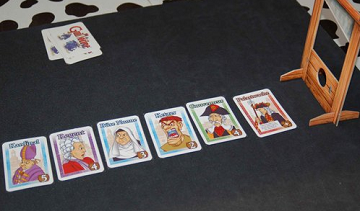
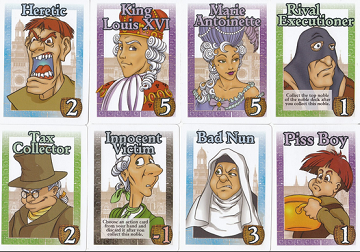
Guillotine02There are three rounds to Guillotine because there were three days of execution by means of the guillotine during the French Revolution. There are 50 noble cards, each one has its own point value and belongs to one of five different groups of nobles (Royals, Clergy, Military, Government, and the Wrongly Accused). At the beginning of each round, you deal 13 nobles in a line. The noble on the far right is at the head of the line.

Guillotine03Each player is dealt four action cards with which they can manipulate scoring (based on which group a noble belongs to) or doctor the line of royals. On a turn, a player can play an action card (optional), they take the noble at the head of the line whether they played a card or not, and then they draw one action card from the deck (unless another card tells them otherwise).

Guillotine01Play continues until there are no nobles left in the line. You draw for the next day, or if the round in question was the third day, the game’s over, and then you tally points.

Review:
With such a morbid premise, Guillotine has to use comic devises to lighten up the game. It does this well. You’ll find yourself laughing at the funny cartoons adorning each card. The action cards work well, and what they do matches the off-beat comedy. You gotta love “Let Them Eat Cake” which moves Marie Antoinette, the royal sporting the highest point value, to the head of the line.

Guillotine04But like most card games, Guillotine relies on luck, and as a result, there isn’t a lot of strategy involved. Even so, there are opportune times with which to play an action card, so Guillotine does reward experience and some skill.

Verdict: A quirky, thematic card game with a wicked sense of humor, Guillotine lets you get your hands dirty and heads rolling, and while there isn’t much in the way of strategy, you still have to have some skill.

X-Men: Under Siege

Designer: Richard Borg
Publisher: Pressman Toy Corp.
Date Released: 1994

Number of Players: 2-4
Age Range: 10 and up
Setup Time: 10-15 minutes
Play Time: 60-90 minutes

Game Mechanics:
Cooperative Play
Dice Rolling
Variable Player Powers

Game flow:
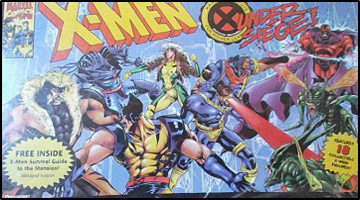
Evil mutants have invaded the X Mansion, and you have to clear the school of all danger. You assume control of two X-Men and during a turn, search up to two rooms. You have variable hand sizes, based on how intelligent your smartest mutant is, and the cards in your hand dictate which rooms you can search.

X-Men04There are two types of cards: room cards and X-tra special cards. Room cards represent the room you can search. X-tra special cards can allow you to quick response (move an X-Man you control from one room to a room where another X-Man you control is fighting), add another X-Man to your team, heal your X-Men, or even deal damage to every X-Man on a given level.

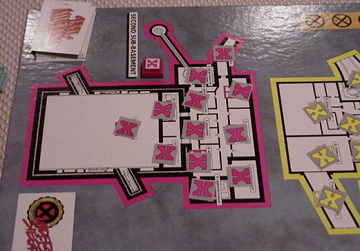
You search the X Mansion and all its six floors (or levels): the Attic, Second Story, Ground Level, Basement, First Sub-Basement, and Second Sub-Basement. Each level is color-coded, and each room starts the game with a token (matching the floor level’s color). If the token you draw is blank on the other side, you clear the room. If the token has something printed on the back of it, you have to deal with whatever’s printed.

X-MenUnderSiege01Most tokens have “Evil Mutant” on their back, but a few have “X-Men” printed on them. If you find an “X-Men” tile, you can add another X-Man to your team and clear the room. If you find an “Evil Mutant,” you’re going to have to defeat the villain in order to clear the room by rolling special six-sided dice.

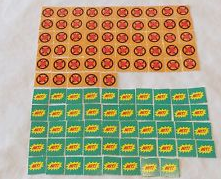
These dice have four possible outcomes: X-Men, Marvel, Evil Mutant, and blank. If you roll an X-Men, you deal one damage to the evil mutant. Marvel deals two damage to Evil Mutants. Results of Evil Mutant damage the X-Man rolling the dice. And naturally, nothing happens when you roll a blank.

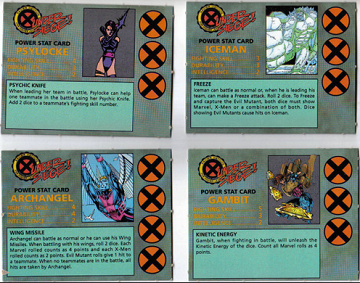
X-MenUnderSiege02Each X-Man has a fighting ability, endurance, and a special effect. Fighting ability shows how many dice the X-Man rolls in combat, while endurance is how many hits they can take before they get knocked out. Special effects further separate the powerful X-Men from the not so powerful.

The game’s over when all the rooms are cleared. Then, you count up your points with a point given for every room cleared, evil mutant defeated, level earned (you cleared enough rooms in a given level), and blood blots (special chips earned in combat).

Review:
X-Men: Under Siege is special to me because I played it a lot with my family when I was young, but I’ll try to be fair. There aren’t too many strategic elements in this game. The only true choice you have is how you control your X-Men each turn. Do you split them up and search two rooms? Or do you not trust them on their own and only search one room?

X-MenUnderSiege03You may not have two room cards in your hand. Most X-Men have an intelligence of two and that’s your hand size. So, it pays to have an X-Man with a high intelligence. You’ll have a lot more options and with that being the case, intelligence is an overpowered stat.

Blood blots are too fluky to depend on for consistent scoring. Longshot’s special effect allows you to reroll blank dice—and this helps with getting blood blots—but it could just as easily get him hurt.

Despite its shortcomings, X-Men: Under Siege mimics the feel of the X Mansion, and you get to kick Magneto’s tail—hopefully.

Verdict: A faithful representation of the X Mansion and each X-Man’s ability (for the most part), but there isn’t too much strategy involved and the set up and play time hurt too.

Galaxy Trucker

Designer: Vlaada Chvatil
Publisher: Czech Games Edition
Date Released: 2007

Number of Players: 2-4
Age Range: 10 and up
Setup Time: 10-15 minutes
Play Time: about 60 minutes

Game Mechanics:
Dice Rolling
Pick-up and Deliver
Real-Time
Tile Placement

Game flow:
Galaxy Trucker is split into three rounds. So, if you want to abbreviate the duration of the game, you can play one or two rounds instead of the full three. During each round, you build a space craft out of space junk. You’re on a mission to pick up and deliver the most cargo while warding off pirates, navigating asteroid fields, and traveling the most distance.

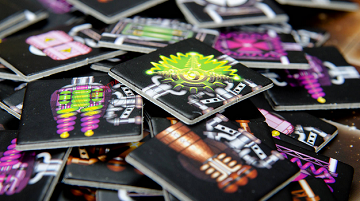
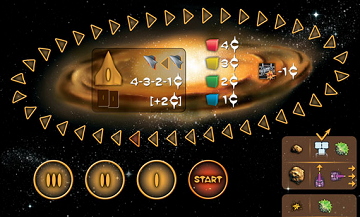
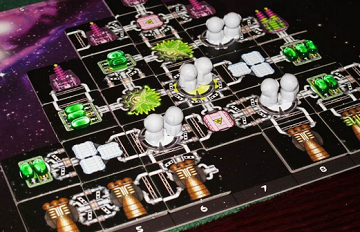
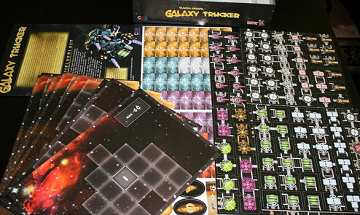
GalaxyTrucker01Each round, in turn, is split into two very different phases: building and traveling. The building phase of a round has each player race in real-time to build the best junker spaceship out of the available pile of components that are placed face down and shuffled. Once the first person finishes their ship, they take the first player token (you get a head start on the track) and flip over the timer. The remaining players only have until the timer runs out to finish their ships.

GalaxyTrucker04All ships have to work logically. You have to connect single pipe connections to other single pipe connections or universal connectors, and double pipe connectors fit with double pipe and universal connectors. If at any time your ship ceases to make sense on a construction level, you must discard enough tiles of your ship to make the connectors work. (For example, you get hit by a laser beam and lose a construction tile, but that construction tile was the only thing keeping two sections of your ship connected—you’ll have to decide which half of your ship you want to keep.) Once everyone’s ships are in order, proceed to the travel phase.

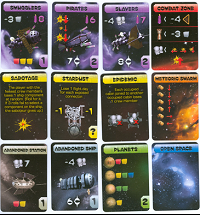
GalaxyTrucker03The travel phase diverges from the first by a large measure. Players pull from a deck of cards (the galaxy deck) that represent the galaxy you’re traversing. You deal with any obstacle—if this is any—or if you come across a planet, you can pick up cargo to score points. The galaxy deck isn’t too big, and once you play the last card of the deck, you finish the round. Then, you tally up your points and go to the next round.

GalaxyTrucker02Review:
Galaxy Trucker isn’t forgiving for new players. If this is your first time playing the game, you should play the first round by itself so you get the hang of the game. If you’re playing with someone who’s playing for the first time, be kind and play a test round.

I didn’t mention this in the game flow, but there is one very important strategic element to this game. While you’re building your ship, you have access to three piles of cards that represent three quarters of the galaxy cards during the next phase. You’re given the option to look at these cards so you’ll have an idea of what to expect during your upcoming journey. The only problem with this is that you’re sacrificing build time for planning.

GalaxyTrucker05The first time I played Galaxy Trucker I didn’t look at the galaxy cards. I’ve since added this mechanic to my play style, and it’s invaluable. You’d be surprised how the addition of a simple game mechanic like this makes for very good strategy.

GalaxyTrucker06No two games of Galaxy Trucker play the same and this leads to a game that’s infinitely replayable.

Verdict: A fun game that comes off as a simple real-time, building game but has one strategic wrinkle to it that adds replayability and enjoyment.