Top 5 Horror Tropes

Hello, Geekly Community! My name is Skye, and I love movies and TV. You could call me a “Screen Geek.” I make deep dives on TV shows and movies on TGIMovies (here’s the link to my website). Everyone who clicks the link gets a free year-long Netflix subscription (JK, just kidding). I’m excited to write for this site and get to know you all. Thank you for inviting me to this platform, it means a lot to be here. Without further ado, let’s begin my very first post. Woo-hoo!

Happy Halloween! Since it’s that time of year, let’s talk about something scary. But not too scary. (͡° ͜ʖ ͡°). While I view myself as a refined connoisseur of visual media (don’t we all?), I’m drawn to certain tropes (whether they’re good or not). Sure, I love killers and dumb idiots dying as much as the next person, but there are other tropes in horror that I just can’t resist. With that said, these are my 5 favorite horror tropes.

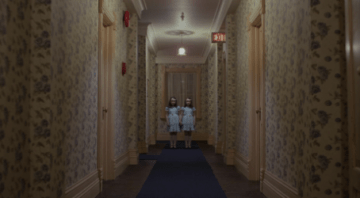
5. Creepy/Evil Children

The Evil Children trope has been done to death. Sometimes, literally. Creepy Children show up a lot in horror because children are supposed to be innocent and non-threatening, and this trope flips that expectation on its head. It can be jarring when done well. Unfortunately, I’ve seen far too many poor implementations of Evil Children to put it higher on the list. But let’s focus on good Creepy Children.

4. “Final Girls”

While mostly associated with slasher films, the “Final Girl” trope has experienced an expansion in recent horror media. In the past she was the most moral character of the movie, typically a virgin—and usually white—she suffers more hardship than any other character. She’s always the last to survive, hence the term “Final Girl.” Since Sally Hardesty from The Texas Chainsaw Massacre, this was the purpose of “Final Girls.” Look pretty, be nice/modest, and maintain innocence throughout her ordeal.

3. The Slow-Burn

The type of horror that scares me the most is the kind that takes its time. Too many movies are desperate to get reactions out of people and blow their load in over-the-top jump scares which only exist to create the illusion of fear. In case you were wondering, jump scares didn‘t make the list. When it comes to legitimate horror, you must get your audience invested in your characters, story, atmosphere, and of course, pacing.

2. Monsters/Practical Effects

Monsters are awesome! I love a good creature feature, and that’s because you can do so much with monsters. My personal favorites are the ones created through practical effects and shot in front of the camera. It makes them more real and horrifying. I’m not entirely against computer-generated effects but considering Hollywood’s overuse of these kinds of effects in the past 30 years, you can’t deny that CGI has become easy to spot. If I had to choose between a bad practical effect and a bad digital effect, I’d choose the former 10 times out of 10.

1. Music/Sound Design

This one is a cheat. Music and sound design are less a trope and more an essential part of filmmaking. But I believe music and sound design are the most important parts of filmmaking when it comes to Horror. Music instills emotions. Horror needs to create specific emotions to get its audience on edge. It’s been scientifically proven that jump scares almost entirely lose their power without the assistance of sound.


Top 5 Horror Tropes Creepy Children

-Skye


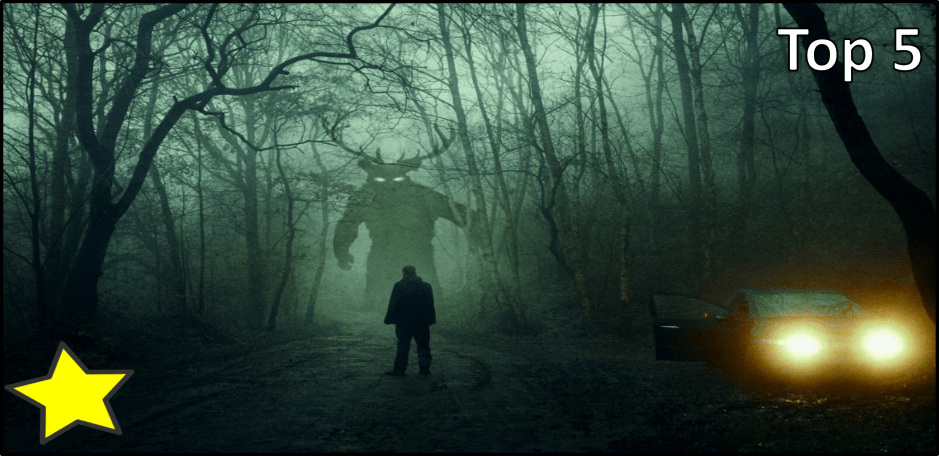
Top 5 Recently Spotted Cryptids

Hey, hey! Kyra Kyle here. It’s still spooky season, so I figured I share another Top 5 that fits that theme. This week’s Top 5 is recently spotted cryptids. Cryptids are animals that cryptozoologists believe may exist but whose present existence is disputed or unsubstantiated by science. We’re talking the Loch Ness Monster and Bigfoot. I don’t buy into cryptids. But they can be fun to speculate and since it’s still spooky season, let’s talk about the Top 5 recently spotted cryptids.

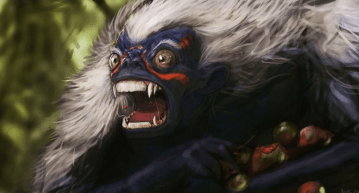
5: Nantinaq

What if Bigfoot (or Sasquatch) turned man killer? If you’ve ever asked yourself that question, you don’t have to look much further than Nantinaq. In fact, the Nantinaq is blamed for the abandonment of the Alaskan fishing village Portlock. The killings become so plentiful that people fled for their lives.

Nantinaq sightings began in the 1700s when Europeans conducted expeditions, and Native Alaskans began encountering the mysterious creature. The Nantinaq is believed to rip out trees from their roots and plant them back into the ground upside down. I don’t know how accurate these images are, and I don’t know if there may be another natural explanation for this, but that sounds weird.

The Nantinaq has also been known to kill huge moose and carry the moose on their back several yards. Discovery+ filmed a reality television series in Portlock. The series, Alaskan Killer Bigfoot, follows a team exploring the abandoned village. It aired at the end of 2021 and recorded the most recent sighting of the Nantinaq.

I may have to watch the Alaskan Killer Bigfoot. It’s most likely a trash docuseries, but a trash docuseries can be fun.

4: Dobhar-chu

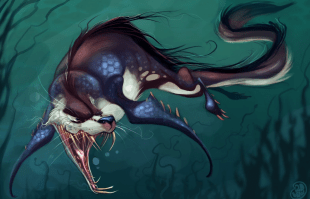
The Dobhar-chu is a giant carnivorous lake monster that lives in Ireland. It most closely resembles a large otter. That can’t be too intimidating. Only its alternate name is Irish-Crocodile. The Dobhar-chu attacks in pairs and they are known to get aggressive with humans and dogs. And because the Dobhar-chu is a huge, nightmare fuel otter, it can chase its prey on land and in the water. Great.

There haven’t been as many sightings of the Dobhar-chu as there had been in previous decades. The most recent reports came from 2003 by an Irish artist and his wife on Omey Island, Connemara. The couple saw a giant creature with dark coloring and membranes on the feet to swim.

The Dobhar-chu sounds goofy but these artist renderings make them more formidable. I wouldn’t want to run into one of these things. Yikes!

3: Orang Gadang

We have another Bigfoot like creature, but Orang Gadang comes from Indonesia. Orang means person and gadang means giant. Since Orang Gadang are giant people, they stand between 7.5-12 feet tall and are covered with bushy dark hair. They’ve been spotted for centuries in Sumatra and Malaya. They can also be named Orang Tinggi (Tinggi meaning tall), so Tall Person and sometimes Hantu Tinggi or tall ghost.

The most recent sighting of the Orang Gadang occurred in 2013. Seven people were injured and sent to the hospital. One was in critical condition. The group had been attacked by 10 monkeys. The monkeys in question stood upright like gorillas and stood between four to five feet. Monkeys exist in Indonesia, but none of them grow to that height. The group described the creature as having “stub noses and glaring eyes.”

Who knows? This one could be true. A lot of primates, both extinct and living, have been found in Indonesia. Even hobbits. Yes. Hobbits were real and found in Sumatra, which happens to be where the Orang Gadang originate. Oh no!

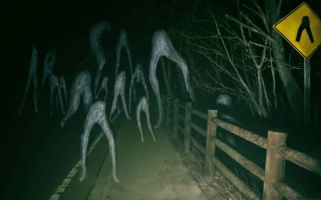
2: Fresno Nightcrawler

Fresno nightcrawlers may be the oddest creature on this list. They only grow to about five feet with most of their heigh made up of their legs. In fact, they look like a walking pair of pants. The Fresno nightcrawler is also the youngest creature on this list. The first sighting occurred in 2007 with the most recent on April 25th, 2020.

The earlier sightings happened around Fresno, California, hence the name, but the most recent happened in two distant locations. The first occurred in Poland of all places. A man caught the creature on a handheld camera. But the most recent sighting happened in Billings, Montana. A home surveillance system spotted the creature at 9:45 PM in April, 2020.

Okay. This one is silly and sounds like it came from an old Dr. Seuss story “What Was I Scared Of?” where the main character repeatedly meets an empty pair of pale-green pants. “I said, ‘I do not fear those pants with nobody inside them.’ I said, and said, and said those words. I said them. But I lied them.” I kind of want this one to be true because it’s too silly. Shout out to Dr. Seuss.

1: J’ba FoFi

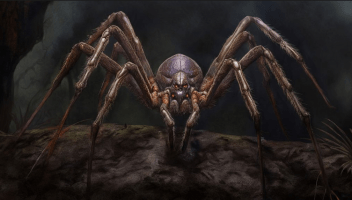
I had to include a large spider; my wife hates spiders. Love you. The J’ba FoFi, pronounced CHOO-Bah Foo Fee, has been spotted in the Congo. It weaves a trap-door like web to catch its prey. There are plenty of spiders in Africa that hunt this way, so that doesn’t raise eyebrows. What does is that the trap-door this spider weaves must be gigantic. The J’ba FoFi can grow as long as four feet.

J’ba FoFi sightings began in 1850 and remained plentiful until recent years. Many of the natives blame the lack of sightings on the J’ba FoFi becoming a vanishing species. Encroaching civilization and the rain forest being converted into farmland have driven the spiders from their natural habitats.

Some have posted pictures of a massive web system. I don’t know if this is photoshopped, AI, or another creature building this web system. Again, J’ba FoFi is supposed to be a trap-door spider, so webs like these, while impressive and large, must be the work of some other animal.

The most recent sighting occurred in March 2013. A video surfaced on YouTube of an alleged J’ba Fofi caught on night vision camera near a waterhole in Mozambique. The J’ba FoFi appears out of the darkness for a moment and scurries into the darkness on the far-right side of the screen.

I don’t know. Giant spiders, like the goliath birdeater, exist, but they only grow to a foot long. There may be a reason for this. Ahem, a spider’s body construct cannot maintain a body larger than about a foot. But a large spider could exist in Africa. That isn’t far-fetched.

So, which one of these cryptids do you wish are true? Heck, which ones do you think are true? And should I plan a trip to try and spot one? Let us know in the comments. And wherever you are, I hope you’re having a great day.

Top 5 Most Powerful Rogues Galleries

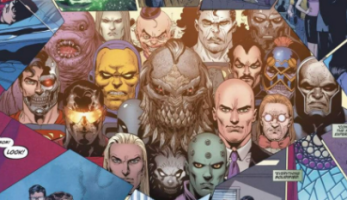
Hey, hey! Kyra Kyle here. It’s still Spooky Season, but I’m going in a different direction with this week’s Top 5. What’s more horrifying than a strong series of villains? In this list, we’ll discuss the 5 most powerful rogues galleries in comic books. This differs from the most popular rogues galleries. If we did the most popular rogues galleries, Batman and Spider-Man’s rogues would certainly make the list. But most of Batman and Spider-Man’s rogues are street-level villains. And not as powerful.

So, who made the list? Let’s find out.

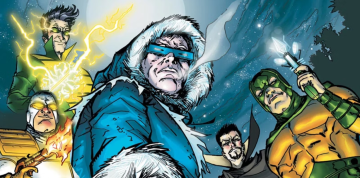
5: The Flash

Flash has an underrated rogues gallery. I may be showing my bias here; I don’t know. Flash begins with a lot of great street-level villains or villains slightly above street-level with Captain Cold, Mirror Master, Weather Wizard, and Captain Boomerang. But then you get into Gorilla Grodd who has brains and brawn, and the Thinker who is the most intelligent being in the DC Universe.

And then Flash’s rogues reach a new height with evil speedsters. Speed is a given in a Flash story, but each of these evil speedsters can reverse time and change events. That’s Reverse-Flash’s MO. He went back in time to kill Barry Allen’s mother. Our next hero may be able to claim a more powerful set of rogues, but that level of pettiness raises the Flash’s rogues.

4: Thor

This one’s a cheat. Most of Thor’s rogues are god-tier villains, so they can get powerful. Perhaps too powerful. Mangog is the physical manifestation and sum of the hatred of a billion beings. Mangog is a threat to the entire universe. Then, there’s Surtur, the king of the fire giants. Surtur possesses a sword that can destroy universes. And there’s Gorr the God Butcher. The Marvel Cinematic Universe (MCU) may have done Gorr dirty in Thor: Love and Thunder. He’s far more menacing in the comics; he has killed hundreds of gods with All-Black, his sword that gets more powerful with each god Gorr kills. Oh, wait, I didn’t mention Loki. Yikes!

3: Superman

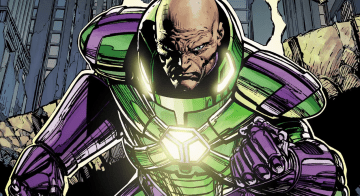
Most people think of Lex Luthor first when thinking of Superman’s rogues and with good reason. But there are quite a few people who may think Lex is a normal human. He’s not a threat. Lex happens to be DC Comics’ version of Tony Stark/Iron Man. Both Lex and Tony have money to burn, a power suit, and super genius intellects. Lex Luthor is Iron Man if Iron Man decided to break bad.

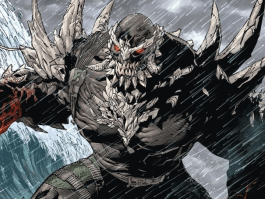
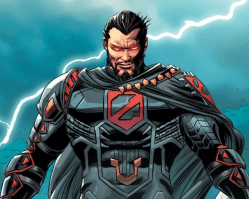
Then you add all the evil Supermen, and there are a lot. Bizzaro, Cyborg Superman, and General Zod lead the charge here. General Zod is Superman with military training. Supes may be in trouble. Brainiac is another universe-level threat. Darkseid who is a DC-wide villain can also be a solo Superman villain, and Darkseid inspired the creation of Thanos. And that’s all before we get to Doomsday who literally killed Superman. Throw in the imp from the fifth dimension, Mister Mxyzptlk, who can warp reality itself, and you can’t deny that Superman’s rogues contain a lot of heavy hitters.

2: Fantastic Four

Galactus. This being literally eats planets like Pac-Man gobbles power pellets. Galactus alone makes the Fantastic Four’s rogues gallery ridiculously powerful. But it doesn’t stop there. Doctor Doom may be one of the deadliest villains in comic book history. He has taken the Beyonder’s powers more than once. The Beyonder is an otherworldly being with universe altering abilities. Kang keeps trophies of the hundreds of heroes he’s killed while time jumping. And there’s Annihilus, ruler of the Negative Zone.

The Fantastic Four are unique in the world of comics. They tend to act than react and bump into many of their enemies on their adventures, and their adventures take them to some crazy locales like the Negative Zone. I can’t wait to see which version of the Fantastic Four the MCU will give us.

1: X-Men

But our number one spot must be the X-Men. The Fantastic Four may have Galactus, and Galactus may be more powerful than any one X-Men villain, but the X-Men have a power classification system. This makes it easy to figure out who can destroy or severely alter the world. The X-Men have at least eight Omega-level evil mutants. Madelyne Pryor (evil clone of Jean Gray), Dark Phoenix, Apocalypse, Exodus, Cassandra Nova, Stryfe, Proteus, and of course Magneto.

That short list doesn’t even include Mr. Sinister who cloned Jean Gray and has caused havoc. Sentinels and the upgrade Nimrod. Or even Bastion who is part mutant-part Sentinel. It doesn’t include Shadow King and the Adversary who can haunt people psychically. I think I forgot to mention the Brood in there. And so, so many more ridiculously powered villains who would be at home facing off against the Fantastic Four or Superman or the Justice League or the Avengers. The X-Men’s rogues gallery tops just about any comic book rogues gallery in terms of sheer power.

Did we get the list right? Let us know who you would add or remove in the comments. And wherever you are, I hope you’re having a great day.

Top 5 Hulk Villains

Hey, hey! Kyra Kyle here. We’re sticking with the Spooky Season theme or at least Spooky Season adjacent with the Top 5 Hulk Villains. Hulk has an odd array of villains because he spends a large portion of his time as a monster.

But the Green Goliath has his fair share of villains. Let’s see who made the list.

5: Absorbing Man

Absorbing Man could’ve been higher on this list. He has one of the most intriguing powers in Hulk’s rogue’s gallery; he can absorb any material he touches. Think of it like a physical version of the X-Men’s Rogue’s power. But Absorbing Man functions just as much as a Marvel Universe villain as he does a Hulk villain. His origins come from a classic Thor comic and has a link with Loki. And his most notable partner Titiania has a connection with She-Hulk, so Absorbing Man could be just as much of a She-Hulk villain.

Even so, he deserves a mention on this list. After fighting Thor for several rounds, Absorbing Man gets banished into outer space. Upon his return on a comet, Absorbing Man battles the Hulk. And the two became on again, off again rivals ever since.

4: Abomination

The Abomination is a classic Hulk villain. Had this been a decade or two ago, the Abomination could’ve landed much higher on this list, maybe even number one. But a few villains have taken his spot as the Hulk’s big bad. Emil Blonsky’s villainous origin plays out similarly to his Marvel Cinematic Universe (MCU) counterpart. He started as a KGB agent and spy; he was switched to a British Royal Marine for the MCU. Blonsky subjected himself to a ton of gamma radiation and turned into scaly and larger version of the Hulk.

The Abomination is the oldest evil Hulk, but there have been other “evil Hulks” who have taken over higher spots.

3: Maestro

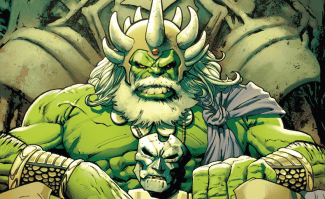
Okay. Maestro is just a future version of the Hulk. But he’s one evil son of a gun. This version of the Hulk comes from the Future Imperfect timeline where the world has been rocked by nuclear weapons. Hulk is uniquely qualified to survive such a future and the horrors he’s seen have driven him mad. Maestro may no longer be as strong as his younger counterpart, but his healing factor makes him virtually immortal.

It also doesn’t hurt that the legendary comic book writer Peter David and equally legendary artist George Perez co-created Maestro and gave the character a phenomenal run in the early 1990s.

2: Red Hulk

Red Hulk is yet another evil version of the Hulk, but he’s more than that. Red Hulk started as General Thaddeus E. “Thunderbolt” Ross. Red Hulk may have debuted in 2008, making him the “newest” character on this list. But Thunderbolt Ross has been around since the very beginning. He was the father of Hulk’s long-time love interest and eventual wife Betty Ross. Thunderbolt hated the Hulk and led the military’s charge to subdue him.

Thunderbolt Ross turned himself into the Red Hulk to go toe-to-toe with the Green Giant. The Red Hulk retained Ross’s intellect and more importantly his military training, making him a force. Ross has yet to become the Red Hulk in the Marvel Cinematic Universe. William Hurt played the character until his passing. Harrison Ford will portray the character in the upcoming Captain America: Brave New World. It should be a matter of time before Red Hulk makes his MCU debut.

1: Leader

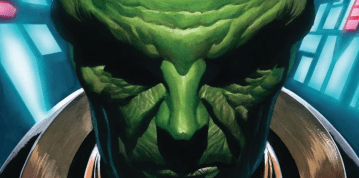
I may be biased, but the Leader remains the ultimate foil for the Hulk. Janitor Samuel Sterns gets turned into the ultra-intelligent Leader after exposure to gamma radiation. He develops telekinesis, telepathy, gamma ray manipulation, and can self-resurrect. He’s been a part of several major Hulk storylines, including the creation of the Red Hulk, our number two villain on this list.

The Leader is also one of the founding members of Intelligencia, a group of the greatest criminal minds on Earth. This group can affect the Marvel Universe as a whole. But the Leader works best when he squares off against the Hulk. He is the yin to the Hulk’s yang. The only villain who comes close to besting the Leader as the Hulk’s greatest enemy may be the Hulk himself.

Did we get the list right? Let us know who you would add or remove in the comments. And wherever you are, I hope you’re having a great day.

Top 5 Batman Villains

Hey, hey! Kyra Kyle here. We’re kicking off spooky season a little late with a Top 5. The Top 5 Batman Villains to be exact. I struggled with whether to include The Joker and call it the Top 5 Batman Villains Not Named The Joker. But I decided to keep the Joker and add a sixth, honorable mention villain. The best of both worlds? This sixth villain is someone who wouldn’t have made the list. Eek! Batman has so many great villains. Let’s get started.

6: The Riddler

Yep. The Riddler almost didn’t make the list. This doesn’t mean that he’s a poor villain. It doesn’t mean that any of the villains you don’t see on this list are poor villains. I may have to make a Top 5 Underrated Batman Villains at some point. Let me know yours in the comments. Batman has a stacked rogues gallery.

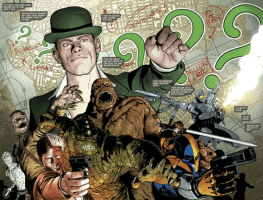
Back to the Riddler. The Riddler began as a joke villain. TV executives even modeled the vibe of the 1960s Batman series starring Adam West from a Batman comic book cover that featured the Riddler. He’s been reimagined so many times that the Riddler has become a formidable foe. He got a little drip from the Batman: The Animated Series. He’s still one of my favorite villains from that cartoon series. “The War of Jokes and Riddles” is a must read if you’d like to see the Riddler portrayed as Joker’s equal. But the Riddler’s best story may come from Batman: Earth One, Volume Two.

Batman: Earth One shows a newer Batman navigating Gotham’s underbelly. The Riddler from Volume Two does a lot of Riddler schtick. He asks riddles of Batman and states that if Batman doesn’t solve the riddle in time, he’ll detonate a bomb killing hundreds. Batman solves the riddle in time because he’s Batman. But the Riddler detonates the bomb anyway. This isn’t your typical Riddler.

5: Two-Face

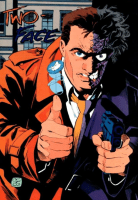
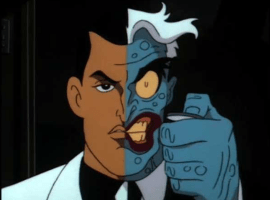
Two-Face has always been a layered Batman villain. He started as one of Bruce Wayne’s good friends and lost touch with reality after a criminal threw acid on the left side of his face. He’s another great villain from the Batman: The Animated Series. His two-part origin story in that series was fantastic and worth a watch. Aaron Eckhart’s portrayal of Harvey Dent was one of the most underrated elements of 2008’s The Dark Knight. But I’d have to go with the source material and 1990’s “The Eye of the Beholder.”

“The Eye of the Beholder” may sound familiar to fans of Batman: TAS. Commissioner Gordon and Harvey Dent form an alliance with Batman to rid Gotham of crime. Little do Gordon and Batman know, Harvey suppresses a second personality. “The Eye of the Beholder” does a great job of diving into Dent’s psychology and is well worth the read.

4: Mr. Freeze

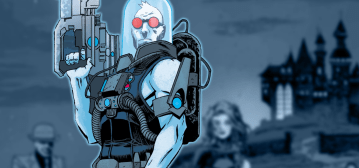
Like the Riddler, Mr. Freeze began as a gag character. He used the name Mr. Zero at first and the 1960s TV show portrayed him like he appeared in the comics. Wild! It took Batman: The Animated Series to reimagine into the Mr. Freeze we know today. Mr. Freeze differs from most Batman villains. He isn’t crazy. He just wants to save his cryogenically frozen wife and will do so by any means. Tim Hill had a great Mr. Freeze story that took a different turn for the villain; he was a victim of Batman’s abuse. But I’d go back to the Batman: TAS classic episode “Heart of Ice” as a go-to Mr. Freeze story.

“Heart of Ice” earned a well-deserved Emmy. It’s the story that transformed Mr. Freeze from a gag villain into the tragic one we know today.

3: Bane

Bane not only matches Batman in brawn, but he can also go toe-to-toe with Batman on an intellectual level. That makes Bane’s inclusion in 1997’s shlocky Batman & Robin even more reprehensible. Tom Hardy’s turn as the villain in 2012’s The Dark Knight Rises gets closer to who the villain is. In the comics, Bane grew up in a prison, atoning for the crimes his father had committed. While in prison, he honed his body and mind. Tim Hill’s run on the Batman featured Bane as the main villain, but I’d go with the classic Batman: Knightfall story as starting point for Bane.

Batman: Knightfall features the moment that Bane “broke the bat.” He raises Batman up and breaks him over one knee, leaving Batman a paraplegic. This story will sound familiar to anyone who’s seen The Dark Knight Rises. This story element appears prominently in the film.

2: Ra’s Al Ghul

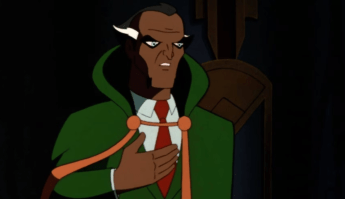
Ra’s Al Ghul translates to “Head of the Demon.” He’s another Batman villain who differs from most of the rest in that he believes his actions are just. Ra’s wants to save the planet and attain a perfect environmental balance by eliminating most of humanity. Marvel’s Thanos would borrow more than a little of this mentality. The Lazarus Pits he uses keeps him virtually immortal. Yet again, Batman: The Animated Series does a great job showcasing Ra’s Al Ghul’s origin. But I would turn again to the source material.

Ra’s Al Ghul first appeared in Batman #232 “Daughter of the Demon” and the story plays out almost exactly as Batman: TAS. So, never mind. I guess you could watch the show instead.

1: The Joker

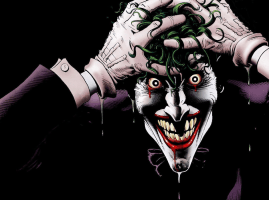
I spoiled this one. I can’t see a world without the Joker as Batman’s ultimate villain. The Joker may be the greatest villain in all of comics. He needs no introduction. There have been numerous actors who have given powerful performances as the Joker. Joaquin Phoenix and Mark Hamill embodied the Joker in one way or another. I’ll always have a soft spot for Jack Nickolson’s Joker, even if he did venture from the characters a bit. John DiMaggio took the Joker to a gritty place with his vocal performances. But Heath Ledger’s Joker still takes the cake.

The Joker has too many great comic book stories to mention here. I could do a Top 5 of these stories. I’ll rattle off a few: “A Death in the Family,” “The Laughing Fish,” “Joker’s Five-Way Revenge,” “Batman: The Man Who Laughs,” and of course, “The Killing Joke.” The Clown Prince of Crime reigns supreme for a reason.

Did we get the list right? Let us know in the comments. And wherever you are, I hope you’re having a great day.

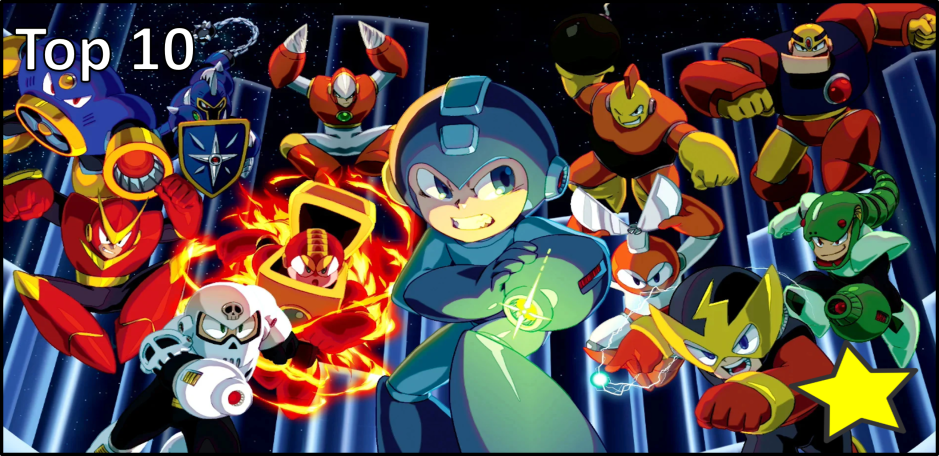
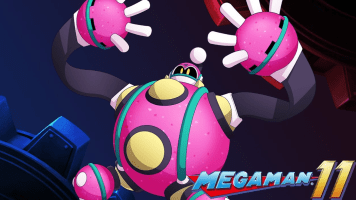
Top 10 Worst Origins for Mega Man Robot Bosses

Hey, hey! Kyra Kyle here. We’re taking a break with the Top 5 Tabletop Games through the years and decades and taking a detour with Mega Man. This list will try to pin down the ten worst Mega Man Robot Boss origins.

Some of these origins will be humorous or downright silly. Others may be tragic. Mega Man robot boss origins run the gamut of both origin types. So, let’s start with the sometimes sad, sometimes weird origins of Mega Man Robot Bosses.

Pirate Man Mega Man

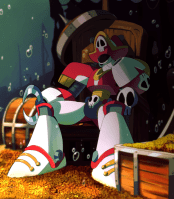
10: Pirate Man

Companies made most if not all Mega Man Boss Robots to serve functions one might need like snow rescue (snow-themed robots like Ice Man) or construction robots (like Guts Man). Why did a company manufacture a robot specifically for piracy? Furthermore, why did that company name him Pirate Man? And why didn’t another company call them out on making a robot named Pirate Man?

Pirate Man? I’m sure that’s legit.

Bright Man Mega Man

9: Bright Man

Scientists created Bright Man so he could illuminate dark places. He’s a flashlight, a sentient flashlight.

Magic Man Mega Man

8: Magic Man

Magic Man was a traveling magician. Unlike most of the Mega Man Robot Bosses, Magic Man wasn’t turned evil. He chose to join the dark side so he could show off. Never trust a magician.

Blade Man Mega Man

6: Blade Man

Blade Man was a tour guide. A shocking number of Mega Man Robot Bosses started off as tour guides. Blade Man guided people through a castle filled with swords and he himself was a sword.

No one saw Blade Man turning evil. They didn’t see him as a threat, even though he’s a literal weapon.

Time Man Mega Man

5: Time Man

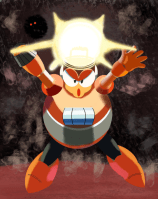
Time Man is a time machine. That always goes well. No further notes.

Magma Man Mega Man

4: Magma Man

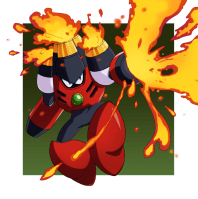
Magma Man was a production plant safety inspector. My father had an adjacent job, but the last I checked, he wasn’t made of molten lava like Magma Man.

Shade Man Mega Man

4: Shade Man

Someone saw a creepy animatronic ghost in the corner of an amusement park and thought, that creepy ghost should have sentience. What could go wrong?

Clown Man Mega Man

3: Clown Man

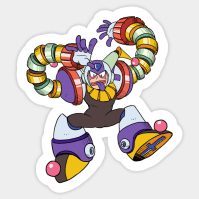
Clown Man runs around, acts a fool, and never tires. Kids cry whenever Clown Man works a birthday party. What could possibly go wrong? Turns out. Everything. This is a Joker who can live forever. Great.

Torch Man Mega Man

2: Torch Man

Torch Man was another tour guide, and he gave tours in national forests. Torch Man was the Mega Man universe’s version of Smoky the Bear, only he’s on fire. He’s constantly on fire. I assume his slogan was, Only I can cause forest fires.

Bounce Man Mega Man

1: Bounce Man

Bounce Man’s first job was as a Crash Test Dummy. That may not sound bad, he’s a robot after all, but all Mega Man Robot Bosses are sentient. Which means these robots feel pain. Some jerk scientist thought why not make a robot used for smashing into things at hundreds of miles per hour capable of feeling pain.

You know what. I could see someone creating a robot like Bounce Man. Humans can be the worst.

Did we get the list right? Let us know in the comments. And wherever you are, I hope you’re having a great day.

Top 5 Tabletop Games from the late 1960s

Hey, hey! Kyra Kyle here. Back with another Top 5 Tabletop Games of an era and we’re also back with the second half of the 1960s (1965-1969). If you want to see our picks for the first half of the decade, you can follow this link.

We’re getting back into the swing of things, so let’s reiterate the ground rules again before we get started.

1: Cultural relevance plays as much of a factor as overall quality. A game might make a list that doesn’t hold up to others of its type, but you must admit the game is everywhere.

2: Only one game from a franchise makes the list. This will become more of an issue the closer we get to games with expansions.

3: Longevity plays a role, too. A game doesn’t have to fly off the shelves today, but it had to have some widespread appeal for a decent time.
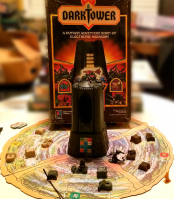
Feudal board game Top 5 Games from 1960s

5: Feudal (1967)

The 1960s had a lot of Chess-like board games—and I do mean a lot—but none of the Chess variants reached the heights of Fred Beustchler’s Feudal. A part of the 3M Bookshelf Series (3M also produced a lot of Sid Sackson and Alex Randloph’s early work), Feudal tasks players with occupying an opponent’s castle or capturing all an opponent’s royalty. The play area consists of four plastic peg boards depicting empty, rough, and mountainous terrain.

Feudal tabletop game Top games from 1960s

Feudal has a unique set-up. Players place their pieces on their peg boards in secret and reveal how they deployed their units simultaneously. This leads to different strategic problems each game and every game plays out differently. We had to include one Chess-like board game. Feudal is the best of the bunch.

Triominoes board game Top 5 games from 1960s

4: Triominoes (1965)

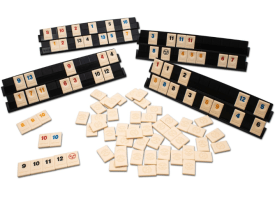
Simply put, Triominoes is a variation of dominoes that uses triangular tiles. The tiles are equilateral triangles so they fit in neatly with each other. Players can play a Triomino if they have matching numbers with the six potential values 0-5.

Triominoes tabletop game Top 5 Games from 1960

I’ll be honest. Triominoes intimidated me while I was growing up. So many numbers close together looked confusing. But there’s no doubt that the game has a legacy.

Kerplunk tabletop game Top 5 game from 1960s

3: Kerplunk (1967)

Sometimes the simplest concepts make the best games. Kerplunk consists of a transparent plastic tube, plastic rods called straws (26-30 of various colors), and several dozen marbles. Players take turns removing a single straw from the tube while trying to minimize the number of marbles that fall though the web and into their trays.

kerplunk board game Top 5 game from 1960s

Kerplunk beget several similar games in the future, specifically Jenga. This family of games has built-in tension. Remove the wrong straw and the marbles pour out.

Twister tabletop game Top 5 game from 1960s

2: Twister (1966)

The tail end of the 60s saw a lot of simple games or new twists on older games. Speaking of twists, our next game is Twister.

Each version of the game comes with a spinner. And each spinner is divided into four labeled sections: left foot, right foot, left hand, and right hand. And each of those four sections are divided further into the colors red, yellow, green, and blue. After spinning, the combination is called (right hand red) and players must move their matching hand or foot to a circle of the correct color. Last player standing wins.

Twister board game Top 5 game from 1960s

Simple enough. And we’ll see a lot of other simple designs that have stood the test of time on this list.

Operation board game Top 5 game from 1960s

1: Operation (1965)

We go from moving one’s body in weird ways to a game featuring someone with a weird body. Operation challenges players with extracting silly body parts from a hapless patient. During the game, you acquire cards which dictate body parts you must remove. The body parts rest inside a hole and if you erroneously touch one of the hole’s metal sides, a sudden buzzer and light-up nose indicates the patient’s pain. Players want as little pain as possible in Operation. Successful extractions give the player money and the player with the most cash at the end of the game wins.

There have been countless versions of Operation. I believe my kids had a Spongebob themed one. Maybe it was Shrek. Regardless, Operation has never been out of print since its release. And I don’t see that happening in the next 60 years either.

Did we get the list right, for the most part? Let us know in the comments. And wherever you are, I hope you’re having a great day.

Check out the other lists in this series:
Top 5 Games prior to the 1930s
Top 5 Games of the 1930s
Top 5 Games of the 1940s-50s
Top 5 Games of the early 1960s
Top 5 Games of the early 1970s
Top 5 Games of the late 1970s
Top 5 Games from 1980-1981
Top 5 Games from 1982-1983
Top 5 Games from 1984-1985
Top 5 Games from 1986-1987
Top 5 Games from 1988-1989
Top 5 Games from 1990-1991

Top 5 Tabletop Games from the Early 1960s

Hey, hey! Kyra Kyle here. We’re bringing back an old series: Top 5 Tabletop Games. The lists prior to this one (the 30s and 40s-50s) had fewer titles to choose from during their time periods and served as the best board games of that decade instead of a year. But the 1960s produced so many popular and great games that we split it into two Top 5 lists. One for the beginning of the decade (1960-1964) and another for the end of the decade (1965-1969). We’ll publish the second list next week.

So much time has passed since our last Top 5 Tabletop Games that we may need to reiterate the ground rules before we get started.

1: Cultural relevance plays as much of a factor as overall quality. A game might make a list that doesn’t hold up to others of its type, but you must admit the game is everywhere.

2: Only one game from a franchise makes the list. This will become more of an issue the closer we get to games with expansions.

3: Longevity plays a role, too. A game doesn’t have to fly off the shelves today, but it had to have some widespread appeal for a decent time.

5: Hi Ho! Cherry-O (1960)

Woo! Hi Ho! Cherry-O just barely made this list. Perhaps I should run a survey and see which tabletop games were people’s first games. Hi Ho! Cherry-O may be near the top of that list.

Each player begins with an empty basket and 10 cherries on their tree. Players take turns spinning the spinner and performing the actions they spin. The first player to collect all the cherries from their tree and yell “Hi Ho! Cherry-O” wins. Simple premise. Easy rules to explain and understand.

And yet, mathematicians used a Markov chain to determine how long a game of Hi Ho! Cherry-O would last. Who knew that picking cherries could get so intense?

4: Focus (1963)

Focus is the first and not the last Sid Sackson game that will make these lists. It’s an abstract strategy game where players move stacks around a checkerboard with the three squares in each corner removed. Stacks may move as many spaces as there are pieces in the stack. Players may only move a stack if the topmost piece in the stack is one of their pieces. When a stack lands on another stack, the two stacks merge. Basically, one tries cornering their opponent(s) into no longer having moves.

Focus also happens to be an early recipient of the Spiel des Jahres, the German Game of the Year (1981). This award elevated the quality of board games that came from Germany after its inception. Sackson did the same for the board game industry prior to this award, which is why, in part, Focus earned this honor. That and Focus is a great game that has inspired countless tabletop game designers.

3: Mouse Trap (1963)

How many of you have built the Rube Goldberg-like mouse trap for this game and never played it? Show of hands. Mouse Trap has players building the least efficient trap to catch a mouse. But the game doesn’t play anything like it did back in 1963. The original Mouse Trap required an opponent to land on the “cheese” space by exact count and the player to land on the “turn crank” space by exact count for a chance that the clunky Mouse Trap might work and eliminate a player.

Fast forward 12 years and the game play surrounding the trap was retooled by Sid Sackson. Hey, there’s that name again. Sackson added the cheese-shaped tokens that allowed players to move themselves or other players or turn the crank of the machine. Sackson streamlined a game that could take several hours into one that can be played in under an hour.

Mouse Trap may lean heavily on a gimmick, but one can’t question its staying power.

2: TwixT (1961)

TwixT began as a paper and pencil game in 1957 by Alex Randolph. And in 1961 Randolph was commissioned along with Sid Sackson (Hey, there’s that name again) to start a games division. TwixT was one of Randolph’s first produced games. It was even short-listed for the first Spiel des Jahres (Hey, we know that award, too) in 1979.

Players take turns placing pegs of their color into a 24×24 square grid of holes. One tries to move from one end of the board to another, connecting one’s pegs by making knight moves (in Chess). You cannot cross two connected pegs, so it’s possible to block your opponent’s progression and that’s what you’ll want to do. TwixT has a bunch of strategy but is easy enough that young children can play. No wonder it was inducted into the Academy of Adventure Gaming Arts & Design’s Hall of Fame along with Randolph.

1: Acquire (1964)

I wonder who designed Acquire. Wait! It’s Sid Sackson. Again. In Acquire, players attempt to earn the most money by developing and merging hotel chains. When a hotel chain that a player owns stock is acquired by a larger chain, players earn money based on the size of the acquired chain. Player will liquidate all their stock at the end of the game and whoever has the most money wins.

Acquire was also short-listed for the first Spiel des Jahres in 1979 and was inducted into the Academy of Adventure Gaming Arts & Design’s Hall of Fame along with Sid Sackson. The tabletop gaming community owes a lot to both of these incredible game designers.

My aunt Erma had a copy of Acquire but lost the rulebook, so I made up my own rules to this game. So, Acquire holds a special place for me personally. I may be a little biased with this number 1.

But did we get the list right, for the most part? Let us know in the comments. And wherever you are, I hope you’re having a great day.

Check out the other lists from this series:
Top 5 Games prior to the 1930s
Top 5 Games from the 1930s
Top 5 Games from the 1940s-50s
Top 5 Games from the Late 1960s
Top 5 Games from the Early 1970s
Top 5 Games from the Late 1970s
Top 5 Games from 1980-1981
Top 5 Games from 1982-1983
Top 5 Games from 1984-1985
Top 5 Games from 1986-1987
Top 5 Games from 1988-1989
Top 5 Games from 1990-1991
Top Fantasy Creatures

Hey, hey! Kyra Kyle here. I adapted this post from a scrapped video script. Who knows? This could still become a video at some point in the future. Let’s find out which fantasy creatures are the most common. Or another way of phrasing it, which fantasy creatures are the most popular?

By knowing the most common fantasy creatures, we can avoid using them or at least tweak them in interesting ways. I may even sprinkle in some trends that I’ve found along the way.

A short video a friend of mine shared on Facebook inspired this post. That would’ve been at least two years ago by now. I have a good idea of who posted the video, but I don’t want to get their identity wrong. Sorry about that. Anyway, he proposed that fantasy has been trapped in amber post Lord of the Rings. He argued that fantasy still uses Tolkien’s creatures, and I agreed with him.

As someone who has played plenty of Dungeons and Dragons (which ripped their character classes from Lord of the Rings and perpetuated the hierarchy of elves, dwarves, orcs, and even hobbits, modern D&D refers to them as halflings), why would I not? But then I wondered which creatures appear the most in fantasy?

Fantasy is a broad genre. A lot broader than I originally thought. I researched—as best I could—for fantasy novels and movies (and other media) and the kinds of creatures, monsters, and species they use. I’ll have to get a major disclaimer or two out of the way and show how I compiled the data before we get into the list.

But if you don’t care for the background info, feel free to scroll down to the creatures which will begin in reverse order from nine to one. There are a ton of ties and near ties that swell the list to a top twelve, but you’ll see in just a bit.

Disclaimers and Compilation

I searched for the top selling and rated fantasy novels and movies on various sites like Goodreads, Rotten Tomatoes, Amazon, and Penguin/Random House. Immediately, I found that epic fantasy, like the ones Tolkien wrote, may have been what my friend referenced. Perhaps epic fantasy uses most of Tolkien’s creatures.

The Twilight series is classified as fantasy. In my opinion vampires, werewolves, ghosts, and zombies or ghouls belong more to horror, but these creatures make up a large chunk of urban fantasy, which is fantasy set in a cityscape.

I can break down the various types of fantasy if anyone is interested (I still have the data) but for now, let’s stick with fantasy as an overall genre. As you can guess, I ended up with hundreds—if not tens of thousands—of books. I wasn’t going to read all of them, even if there were some interesting ones like the Meowing Medium Books that features a cat who solves crimes by communicating with ghosts. That sounds super cute. You can find that series on Amazon.

As a result, I narrowed my search to novels, movies, and series that had synopses. That still left me with over a hundred synopses and that’s still a lot of reading. I could have easily missed something. And we’ll quickly see that writers don’t classify or name their fantasy creatures or species consistently.

Finally, I didn’t include games. D&D alone has countless titles, and plenty of other video game and tabletop role playing game franchises borrow heavily from D&D—here’s looking at you, Elder Scrolls—so the data would become D&D skewed. Games also deserve their own post.

Needless to say, I got lost down several rabbit holes. Seriously, you may have to send a search party. I easily get lost.

9) Zombies/Ghouls

Zombies and ghouls are the only creatures that straddle the horror and fantasy genres that scored high enough to make the list. They’re tied with three other fantasy creatures; I classified ties as anything within a half of a percentage point.

Why zombies?

There’s a lot of zombie fiction and a lot of that can be classified as urban fantasy. Consider this a Walking Dead boost. Their inclusion isn’t surprising. What is surprising is that zombie/ghouls show up more in epic fantasy than non-epic fantasy, such as urban fantasy.

And before you say, Kyra, you misclassified some of these stories, which I undoubtedly did to some degree, remember that A Song of Ice and Fire has White Walkers. Technically, White Walkers aren’t zombies or ghouls, but they may as well be. So, there may also be a Game of Thrones bump for zombies, too.

9) Harpies

Harpies?

Did centaurs make the list? No. Did minotaurs? Nope.  Of all the half-animal, half-human fantasy species, I didn’t expect harpies to have the largest footprint. They show up slightly more often in epic fantasy than they do in non-epic fantasy and that makes sense.

Why harpies?

While centaurs and minotaurs can be viewed as good, evil or neutral, harpies tend to be antagonists and usually evil. And they also happen to look like women most of the time. Yeah. Fantasy has a type. We’ll see a lot more evil feminine types on this list.

But harpies? The only reason I can think why harpies are more prevalent than other half-human fantasy species is that flying beings dominate this list, especially when they’re cast as antagonists. We’ll see more flying creatures and beings soon enough.

If you have any other suggestions as to why harpies made the top ten, feel free to leave them in the comments.

9) Dwarves

Dwarves don’t surprise me. They aren’t as common as elves, so I would have guessed that they were tied for a few spots below elves. Spoiler alert, we’ll see elves on this list. But you already knew that. Don’t act like you didn’t scroll down to see the entire list.

Like harpies, dwarves show up more in epic fantasy than non-epic fantasy. That’s also to be expected. But the two fantasy types are closer than I would’ve thought. I didn’t know dwarves showed up that often in urban fantasy.

Why dwarves?

It’s the Tolkien/D&D boost. Did you need someone to gulp ale? Dwarf. Do you want to explore a cave? Dwarf. Do you want to try your hand at an Irish brogue or Scottish accent? Dwarf.

Yeah. Dwarves may be overdone, but fantasy fans may want to see dwarves in their fantasy. Sometimes one has to give the people what they want. By that logic, shouldn’t dwarves be higher on this list?

9) Angels

This is the last creature/being tied at the ninth spot. From what I’ve seen angels can be nerfed (or powered down) and recast as fairies. Another spoiler: fairies are on this list, too.

Because the line between angel and fairy or fae gets blurred, they show up at similar rates in epic and non-epic fantasies.

Why angels?

I expected angels to show up more in non-epic fantasy because of urban fantasy. Consider this the Neil Gaiman boost (American Gods and Good Omens). The ratio was a lot closer than I originally thought but again, that could be because stories can recast fairies as angels and vice versa.

The power sets between angels and fairies tend to overlap. Fairies can often heal. So can angels. Fairies often wield powerful balls of light. I may be showing my video gamer here, but that’s often classified as holy damage. And angels are holy beings.

The only physical difference between these two beings would be their wings. Angels have bird wings, while fairies have insect wings. But most fantasy stories that include angels and fairies don’t depict them with wings at all. So, without the distinction of wings, the only thing separating these two beings is one is a spiritual being (angel) while the other is a mythical being (fairy).

If you’re writing a spiritually or religiously based fantasy, you’ll often feature angels. If you’re not writing that type of fantasy, you’ll most likely use fairies. Context matters.

5) Elves

Wait. We jumped from 9 to 5. What happened? Yes. We have another four-way tie for the fifth spot. These creature types were within a few tenths or even hundredths of a percentage point from each other. I promised elves and here are the elves.

Elves, like their dwarf counterparts, show up more in epic fantasy than they do in non-epic fantasy.

Why Elves?

Again, this is the Tolkien/D&D boost. Many fantasy fans expect elves, so fantasy writers include them in their stories.

Before I dive deeper into why I believe elves made this list, I must include that Tolkien deserves credit for popularizing elves and dwarves and maybe a few more fantasy creatures/beings on this list. But Tolkien didn’t invent dwarves or elves. His interpretation of dwarves and elves is what matters in this context. Plenty of fantasy stories have taken elves and dwarves to their folklore roots and put their own spin on these beings. There’s nothing saying that a prospective fantasy writer can’t do that too.

Getting back to elves, they’re human enough for readers to see more of themselves within the characters, yet they aren’t human. But it goes a little deeper. Dwarves and elves can represent either bygone days of humanity or what humanity could’ve become had we taken another path. The two species are a fun way to speculate what humanity would look like if it developed underground or in a forest’s canopy.

That and pointy ears and magic.

5) Spiders

How many fantasy themed video games must one slay a giant spider or rat as their first opponent?

Fantasy movies, TV shows, and novels pit their protagonists against similar beasties in the early going. There have been plenty of prominent fantasy spiders: Aragog in Harry Potter, A Song of Ice and Fire’s Manticore which was described as a venomous species of spider, and Shelob from Lord of the Rings, who was also a demon, so that’s a two for one beast.

That’s another Tolkien sighting, but I don’t think Tolkien fans can claim that he defined spiders as fantasy antagonists because spiders have been folklore antagonists for centuries. Spiders appear in just over 21 percent of both epic and non-epic fantasy stories.
Why Spiders?

Simple: arachnophobia is one of the most common animal-based fears. Snakes are the only other creature that strikes a similar chord, and we will see a snake-like creature later in this list. Surprise!

If a character says that they have arachnophobia, you can bet the story will include spiders. A spider’s inclusion can be shorthand for a character overcoming a fear. We all need character growth.

5) Trolls

Goblins and Orcs and Trolls, oh my.

These three were difficult to differentiate. While the modern look of orcs can be attributed to Tolkien, he repopularized the term with The Lord of the Rings, goblins and trolls can vary in shape and size and appearance, and they don’t have a clear vision of what they look like, like orcs. You’re letting me down, Tolkien. You were supposed to define all three of these creatures. You gave fantasy writers work.

Anyway, I decided to take each writer at their word with these creatures. If a writer called something a goblin, I marked it down as a goblin. The same went with orcs and trolls.

As a result, the trolls came out on top. It wasn’t that close. It may be the troll’s versatility that makes them the clear winner of these three, but we’ll get to that in a bit. Trolls appear far more frequently in epic fantasy as opposed to non-epic fantasy and that isn’t a surprise.

Why Trolls?

Like I said, Trolls are versatile. While goblins and orcs are always grotesque (mostly varying in size: goblins shorter; orcs taller), trolls can look like humans. Just like those internet trolls who’ll make some snide comment below. You know who you are.

I’m kidding about internet trolls (kind of, be gentle), but internet trolls may be closer to the original Nordic myth of trolls than one might think. Several stories—including original Nordic myths—describe trolls as larger humans or humans with exaggerated features. So, much like elves and dwarves, trolls show up more often because readers/viewers can see more of themselves in trolls than they can in goblins and orcs.

Perhaps it’s because a troll looks more human that caused us to call them internet trolls and not internet orcs. One wouldn’t want to dehumanize someone too much, even if they’re being a goblin.

5) Unicorns

This must be the biggest shock of the bunch. I like unicorns a lot, but I didn’t realize that they showed up in this many fantasy stories. Unicorns appear far more often in epic fantasy than non-epic fantasy.

Why Unicorns?

Unicorns have seen a resurgence through themed food and drinks. Starbucks had a viral Unicorn Frappuccino in 2017. Since then, unicorns have shown up in countless edible and inedible products like cakes, bath bombs, and cereal. Anything rainbow could fall under the unicorn label. Some writers wanted to capitalize on the unicorn craze. I noticed an uptick in unicorn usage since 2017. What have you done, Starbucks?

Even with the upswing, unicorns have always been somewhat popular. That could be because of The Last Unicorn. That began my love of the mythical creature. It’s also one of the first books my wife and I gave to our kids. My Little Pony also features quite a few unicorns, and Friendship is Magic predates the Unicorn Frappuccino by seven years. Perhaps, Bronies pushed unicorns to the forefront.

But not exactly. Very few fantasy stories, epic or non-epic, cast unicorns as prominent characters. They’re typically part of a hunt or are hunted by a villain (like in the Harry Potter series) and as such, they tend to be used as a McGuffin. So, despite being present in a lot of stories, unicorns tend to get overused as narrative devices. I’d like to read more unicorn stories that don’t use them as plot devices. #FreeUnicorns

4) Gods and Demons


I considered making gods and demons separate entries, but let’s be real, they showed up in the same titles. If one has gods, one includes demons. I did a similar thing with another creature/character type later in the list. More on them in a few spots.

Gods and demons appear in just over 30 percent of all fantasy reviewed; they almost have an even split between epic and non-epic fantasies.

Why Gods and Demons?

It’s the Neil Gaiman effect for urban fantasy. American Gods, Good Omens, and the like have inspired a lot of writers. Mythological gods show up in other titles like the Percy Jackson series. Mythology itself has inspired countless storytellers. Even comic books have drawn inspiration from mythology. Thor, Wonder Woman, Hawkgirl, and Moon Knight all have origins based in mythology. They’d also be considered urban fantasy for the most part.

But epic fantasy isn’t devoid of its own gods. So much of Dungeons and Dragons is creating one’s own pantheon of gods. That may be one of the first things a dungeon master does. What new god or demon can I add to this world?

Like I said before, demons tend to follow gods. Sometimes demons take the form of a devil. They can also take the form of evil or fallen angels. Others can even be destructive gods. Like so many of the other terms on this list, the lines get blurred between gods and demons. For fantasy, it tends to be a matter of motivation or the being’s purpose.

3) Fairies

Yes! Finally, we’ve reached fairies. They show up in non-epic fantasy far more frequently than epic fantasy, but they still appear in epic fantasy often enough. That’s why they’re third on this list.

Why Fairies?

I mentioned before that sometimes in folklore, fairies can be demoted angels or demons. I’ll try not to repeat what I said in the Angels write-up here. Everything I said in the Angels write-up still applies.

Instead, let’s go a different route with fairies. I saw a small uptick in fairy usage after Pan’s Labyrinth, but that’s nowhere near as severe as unicorns after their Frappuccino release. No. Fae and fairies show up far more often in urban fantasies and other non-epic fantasies as sex symbols. In short, fae are hot.

Highlanders? They’re akin to fairies. The wildly popular erotic fantasy series A Court of Thorns and Roses has a faerie love interest and is set in the world of faerie. Even Sookie Stackhouse from The Southern Vampire Mysteries series is a half-human, half-fairy, and that series gets more than a little steamy.

If you want a little romance or erotica with your fantasy, you’re probably going to include fairies. And plenty of fantasy writers add a dash of erotica and romance. Romantasies are very popular.

Just Missed the List

I’m prolonging the reveal of the not-so-surprising top spots with honorable mentions. Quick! Comment which creatures/character types you think will be in the top two.

The following creatures or character types didn’t quite make the list. There was almost an eight-way tie for the ninth spot, but I had to cut off the list somewhere.

13) Gnomes
14) Werewolves
15) Vampires
16) Centaurs
17) Big Cats
18) Goblins
19) Basilisks
20) Giants
21) Chimeras
22) Sphinxes

I had to keep going until I reached the sphinx, because that’s the name of one of my daughter’s cats. Okay. I’ve delayed the inevitable. Here are the final two entries.

1) Wizards and Witches

We have another tie. This time for the top spot. Both creature/character types at the top of this list show up in 42% of all fantasy stories. 42 is the answer to everything.

Let’s begin with another two character types that are too difficult to differentiate: wizards and witches. It should come as no surprise that wizards and witches make the list. Wizards and witches show up far more in non-epic fantasy than they do in epic fantasy. The inverse will be true with the next entry, but first…

Why Wizards and Witches?

I’ve mentioned a few times before this entry that people like to see creatures and character types with which they can relate. People want to see themselves in the characters they read or watch. What’s more relatable than a human? Well, humans with magic.

Most writers—there are exceptions to everything—cast wizards and witches as similar character types, so I ended up lumping them together. These two character types are often treated as two sides of the same coin such as wizards are men, and witches are women. Or wizards are good, and witches are evil. Or what The Magicians series did and categorized wizards as college trained magic users, while hedge witches dropped out of school or never attended.

What did I say about fantasy writers and evil women? Fantasy writers may be expressing some unconscious sentiment by linking women with witches and then witches with evil or uneducated. Women tend to get thrown into the less flattering side of this dyad. I’m not going to dig too much deeper into this issue, that could be another post unto itself. But if you’re interested, you could argue in the comments.

Who wouldn’t want magical powers? It’s no wonder wizards and witches dominate fantasy stories. Stories with magical humans is a power fantasy. It’s the same draw with superhero fiction.

With a few exceptions where there were wizards and no witches and vice versa, the two were similar enough to include as a single entry, so they both can claim the tie at number one. But we have another number one, so this may be a tie within a tie.

1) Dragons

How many of you were waiting for dragons? How many of you would’ve fought me if dragons didn’t make the list? I should’ve said something else here and watched the deluge of angry comments.

Of course, dragons share the top spot with wizards and witches. Dragons dominate epic fantasy, but they’re less common in non-epic fantasy stories.

Why Dragons?

Dragons are the snake-like creature I mentioned earlier in the Spiders entry, but they’re more than just snakes. Multiple cultures have created their own version of dragons, and they did so separate from each other. Ancient civilizations didn’t share dragon notes, yet we can find dragons from Asian, Native American, and European traditions. Why is that?

A human’s first predators would’ve been serpents, big cats, and raptors. Dragons are an amalgam of all three. While several people have a fear of spiders, dragons are fear personified. They are one of the most powerful creatures a human can conjure. We can see that throughout history.

You can learn a lot about a culture or a writer by how they describe their dragons. Will you enhance the serpentine, feline, or avian features? Why did you choose that feature? Do you fear that animal the most? Would you like to experience what it’s like as that animal? Is that animal friend or foe?

Dragons will always pervade fantasy stories. So many fantasy readers expect to see dragons. Can a fantasy be called epic if it doesn’t contain a dragon? Apparently not. Dragons show up in 63% of epic fantasies. Yikes!

Final Thoughts

That’s the list. Phew! That was a lot. I could’ve included more—a lot more. But what does this tell us?

My friend might be right, epic fantasy may be trapped in Tolkien amber. Non-epic fantasy differs quite a bit, but they have their own preferences like hot fairies. Perhaps, aspiring fantasy writers should think about shaking up this hierarchy of characters and creatures. Don’t be afraid to take a creature type back to its folklore or mythological roots and take them in a different direction.

If you see a creature that you like that’s further down the list (or not on the list at all) and you’d like to see them climb up in popularity, write a story about them.

It might be time to end the wizard and witch binary. Or at least stop placing women in the less desirable side of a binary. That’s cliché.

Speaking of cliché, if you’re writing about unicorns, maybe you don’t make them a narrative device.

I hope you found something useful in this post. And I hope that wherever you are you’re having a great day.

~ Kyra