Fantastic Four Starter Stories

Fantastic Four began the Marvel Age of Comics, but that doesn’t mean that it’s had as much luck with its movies as other Marvel properties. The ugliness brought on by less-than-stellar films and the fallout from contract disputes led to the comic book getting cancelled before 2015’s Fant4stic. The FF’s omission spread to other projects like Marvel: Dice Masters. I’m still waiting for the Fantastic Four set we were supposed to get shortly after launch.

Anyway. With Disney buying out Fox that should all change. Heck, the Fantastic Four comic book was relaunched in August 2018, so positive things have already happened. This is only the beginning.

Your uncle Geekly’s sure Marvel’s first family will make its Marvel Cinematic Universe debut in the not-so-distant future, and it may be a good time to catch up with some of the stories new fans will want to read to get to know Reed, Sue, Ben, and Johnny better. These are good stories for new fans.

fantastic_four_vol_1_49

The Galactus Trilogy Fantastic Four Vol. 1 #48-50 (written by Stan Lee/art by Jack Kirby; 1966)

Uncle Geekly could’ve started with the Fantastic Four’s origin story, and that would be a good enough place to begin, but it’s been covered in film and cartoon a lot. Fantastic Four Vol. 1 #1 is as good as any of the reboots and relaunches, but I talk about origins all the time with these starter stories. Let’s start with something different. Let’s begin with the ultimate in Fantastic Four required reading: Galactus.

First, the Galactus story came out in the middle of Lee and Kirby’s collaboration, so they’re at the height of their storytelling powers. You’ll see more of this in the next entry.

Second, the peerless pair didn’t hit the brakes once after this story got started. Silver Surfer arrives. Uatu warns the family. Galactus looms large above Earth, preparing to eat it. It was loud and bombastic. This story was one of the longest comic book stories at the time. The pacing worked, and it led to comic books adopting longer story arcs.

Finally, the legend of how this story came about is telling of the pair’s storytelling technique and of Galactus. Kirby asked Lee “What if the Fantastic Four met God?” I’m not sure if this conversation ever happened, but presumably Lee responded with a “yes, and.” One would get the ball rolling and the other would always add to original idea, and the original idea of Galactus was an enemy that was above good and evil: a force of nature.

The idea of a villain that was neither good or evil was novel, and “The Galactus Trilogy” remains one of the best Fantastic Four stories.

fantastic_four_this man this monster

This Man, This Monster! Fantastic Four Vol. 1 #51 (written by Stan Lee/art by Jack Kirby; June 1966)

Just in case you missed the details of the last entry and this one, you’ll notice that Galactus was followed up immediately with “This Man, This Monster!.” Like the story it followed, “This Man, This Monster!” introduced more elements to superhero storytelling: focusing on a character’s humanity and interpersonal relationships.

The Thing’s powers are a blessing and a curse and no story by Lee and Kirby does a better job of illustrating that than this one. It’s a single-issue story that explores what happens when Ben Grimm loses his powers and culminates with him making a tragic personal sacrifice. It’s one of Lee and Kirby’s best and shows the pair’s range.
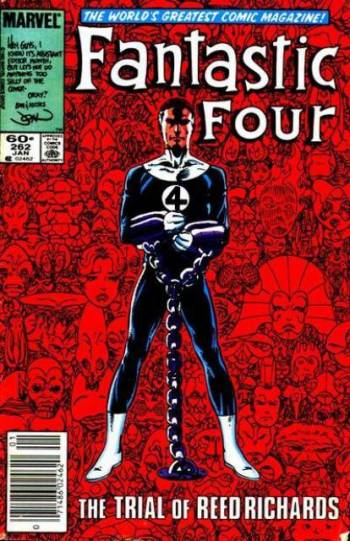
fantastic_four the trial of reed richards

The Trial of Reed Richards Fantastic Four Vol. 1 #262 (story and art by John Byrne; June 1984)

I’m not going to sugar coat this. The 1970s weren’t a good decade for Fantastic Four stories. John Byrne did a lot to reinvent and reinvigorate the team. “The Trial of Reed Richards” represents the best Byrne had to offer.

Reed must stand trial for allowing Galactus to live and devour more planets. This single-issue tale does a great job of exploring morality, catches readers up on what Galactus was doing for the past decade, and questions what the universe would be like without a force of nature that can eat entire planets. Byrne does a great job of defending Galactus’s right to exist.
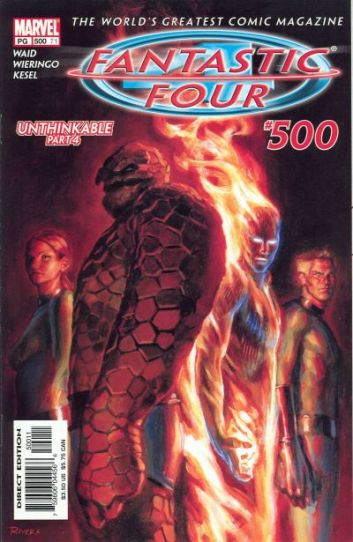
fantastic_four unthinkable

Fantastic Four: Unthinkable (written by Mark Waid/art by Mike Wieringo; 1998)

I’ve gone long enough without a Doctor Doom story, and that’s because I wanted to wait for the best Doctor Doom story “Unthinkable.”

Waid and Wieringo’s run on Fantastic Four captured the boundary pushing adventures of the FF’s past and is considered one of the best runs on the series. “Unthinkable” does a lot to solidify that claim. Unable to beat Reed as a scientist, Doom turns to the one “science” Reed was never able to comprehend: magic.

“Unthinkable” forced the Fantastic Four, and especially Reed, to stretch their capabilities. Doom reached new levels of villainy here that included dark arcane powers, a suit made of flesh. Despite Reed’s efforts, Doom still magically disfigured Reed and set him on a path that would lead to Ben’s death.

If a reader wants to know the depth of Doom’s hatred for Reed and the rest of the FF, look no further than “Unthinkable.”

fantastic_four hereafter

Fantastic Four: Hereafter (written by Mark Waid/art by Mike Wieringo; 2004)

I did it with Lee and Kirby and here I go again—sort of—with Waid and Wieringo. “Hereafter” follows “Authoritative Action” which happened because of “Unthinkable.” Let’s just say that Reed didn’t handle Ben’s death well, and it led to some ugliness in Latvaria. Reed decides to put his trust in something greater than himself in “Hereafter.” The surviving members of the Fantastic Four storm the gates of Heaven to rescue Ben. This story doesn’t question existence as much as exploring one’s consequences.

Reed, Sue, Johnny, and Ben don’t save the world in “Hereafter.” They don’t battle a huge villain or overcome a cosmic threat. This story focuses on love, friendship, and hope.
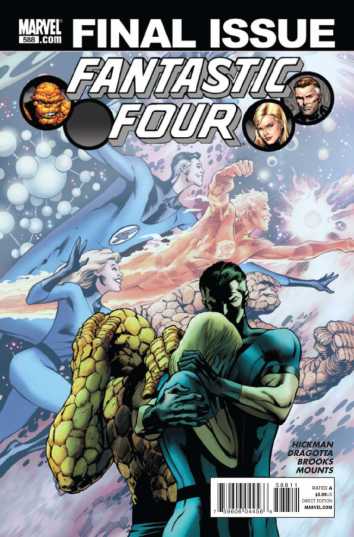
fantastic_four three

Fantastic Four: Three (written by Jonathan Hickman/art by Steve Epting; 2010-2011)

What is with the Fantastic Four and wanting to be a trio? Hickman had a great run with Fantastic Four in the 2000s, and “Three” might be the best of his stories. Annihilus—an often-overlooked FF villain—poses the threat here, but the crux of the story comes in the form of Ben losing his powers and not being able to help his best friend Johnny during an invasion from the Negative Zone.

Johnny gets overrun by the Annihilation Wave as Ben seals the portal from the outside. Ben gets his wish of being normal, but he struggles with losing Johnny. If readers want to learn more about Johnny and Ben’s unique bond, give “Three” a read.

fantastic_four 1234

Fantastic Four: 1234 (written by Grant Morrison/art by Jae Lee; 2011)

Grant Morrison likes to bend reality with his stories, so a Fantastic Four mini-series was inevitable. “1234” splits the family with four individual stories. Each member must suffer through a series of personal misfortunes and many of the team’s greatest enemies make appearances.

All the madness in “1234” leads to the team’s greatest adversary Doctor Doom. “1234” is a great showdown between two of the smartest men in the Marvel Universe. This is a battle of will, wits, and intelligence.
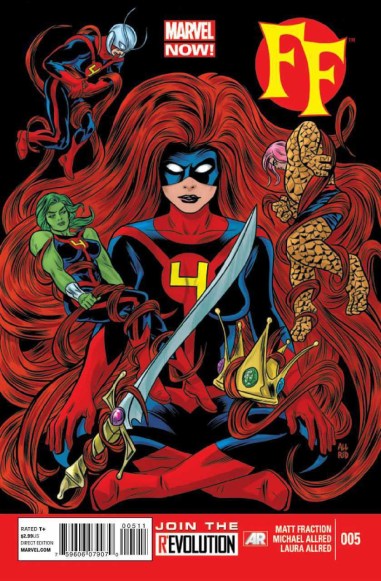
fantastic_faux

Fantastic Faux (written by Matt Fraction/art by Mike Allred; 2012-2014)

It may not look like it, but many heroes have donned the Fantastic Four uniform. The oddest group to wear Fantastic Four tights must be the team of Fantastic Faux.

Following Jonathan Hickman’s great run on Fantastic Four, Fraction took over both Fantastic Four and its sister title FF. The results were the team being sent through space and time, which left a vacancy in the Baxter Building for a substitute team to fill.

Ant-Man, Medusa, She-Hulk, and the newly introduced Ms. Thing (Johnny’s pop-star girlfriend Darla Deering who wore a mechanical Thing suit) were left in charge of the Future Foundation’s group of advanced science students. As Allred and Fraction are wont to do, they dial the sci-fi bizzarroness up to 50. A Voltron-style Doc Doom/Annihilus/Kang mash-up villain named Kang the Annihilating Conqueror, a one-eyed future Johnny, and the odd alien Foundation’s students graced this 16-issue run.

But like most great FF runs, “Fantastic Faux” challenges the idea of family. Not only are we born into a family, we have family that we choose.

That’s my list for readers who are new to Fantastic Four comics. If I didn’t get the list right, I’m sure it’s right in some alternate reality. I’ll have to ask Reed which one or you could let me know in comments.
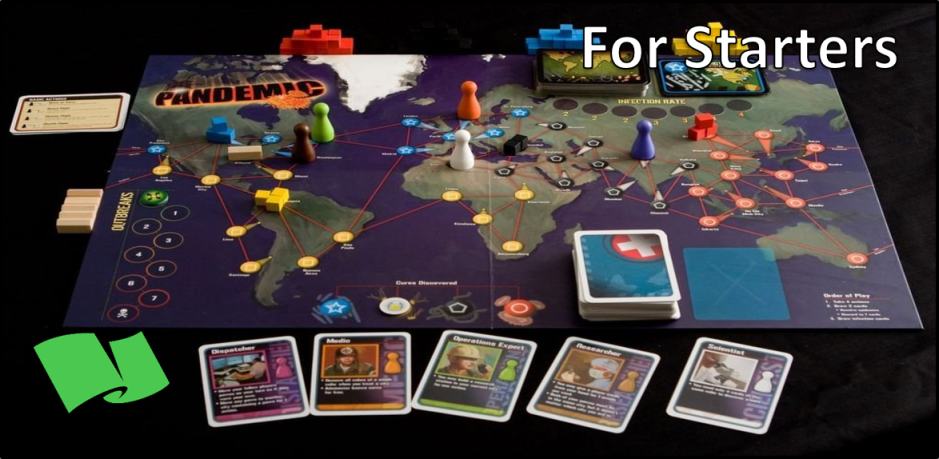
Getting Started with Cooperative Board Games

Let’s talk about cooperative board games—cause you’ve gotta have friends. These are games where the players compete against the game, not the other players seated at the table. It also happens to be one of your uncle Geekly’s family’s favorite gaming types. That could be due to a lineage of sore losers.

They’re sore losers, not me. No, really. They’re terrible. I have no idea what you’re talking about. No, you’re a stupid, doodoo face, and I don’t want to play with you anymore because you cheat. Cheater!

You don’t have to worry about cheaters as much with cooperative board games, and there are plenty of these games out there. The problem is that some of these games aren’t that good and others are too difficult to get into. Don’t worry. Your uncle Geekly will point you in the right direction of some good beginner cooperative board games.

pandemic

Pandemic

I almost didn’t put this one on the list, but I’m sure tabletop game purists would cry foul if I didn’t. You made a list of great starter cooperative games and you didn’t include Pandemic? Shame!

Calm down. It’s on the list.

Players assume the roles of people trying to stop a global pandemic. The diseases behave like you’d think diseases may behave and that makes sense, since the game’s designer Matt Leacock happens to be a medical doctor. Come to think of it, I could use a physical. There’s a growth I’ve been meaning to have examined. I should give him a call.

Anyway. The game scales extremely well, meaning that it plays just as well at two players as it does at five, and there are varying levels of difficulty. You’ll see this in other Leacock games—spoiler alert: one will show up later on this list—and the inclusion of easier difficulties allows players to start small and go for something more challenging later. The theme is also one people can get behind. I don’t know how many times I’ve seen players name the various diseases, even though these diseases are represented by little more than cubes.

The one gripe I may have about Pandemic is that there can be a tendency for an alpha gamer (a player who tells other players what to do) but give them a few kicks to the cubes and they’ll stop. Pandemic is one of the games that put cooperative games on the map, and it’s easy enough to learn for new gamers.

hanabi

Hanabi

Hanabi is the odd game on this list. It’s a simple card game for folks who don’t want a more complicated game, so it’s easily the most streamlined game here. It also encourages non-verbal communication. It’s like Freddie Mercury once said, give me your body.

Well, maybe not, but body language and positioning cards a certain way in your hand does come into play here. Hanabi uses a deck of cards numbered 1 through 5 in various colors or suits. Players must place these cards in order by suit, but the catch is that each player’s hand of cards is facing away from them, and the other players must give their teammates clues as to what’s in their hand.

Hanabi forces players to create their own language as they’re only able to give simple clues like “this is a 5” or “this card is yellow.” It’s up to the player receiving the information to figure out what was intended. While “this card is a 5” usually means don’t discard it, idiot, because there’s only one 5 of each color in the deck, “this card is yellow” could mean that the card in question plays on the communal play pile or if yellow is already finished (as in the 5 has already been played), “these cards are yellow” could mean that you need to discard those cards and get new ones.

No one can say anything besides short clues about cards in other players hands. I’ve never seen a more tense game where little is said.

forbiddendesert

Forbidden Desert

Yep, Forbidden Desert is the other Matt Leacock game. I also could’ve gone with Forbidden Island here, but it’s kind of a Pandemic light. Forbidden Island is worth the play if Pandemic or Forbidden Desert sound too complicated. Did I mention that Matt Leacock is the king of cooperative board games? Well, if he isn’t, he’s close.

Forbidden Desert adds moving location tiles and sand tiles to bring home the theme of a desert and its shifting sands. Players can lose four or five ways but can only win if they find the parts to an ancient, Jules Verne style flying contraption and escape. Anything is better when you add a steam punk.

Players also have variable powers like they do in Pandemic and these powers are based on occupation, and the flying contraption is one of the best implementations of a toy piece in a board game. I don’t know the last time I placed one of the pieces in the flying contraption. I usually have the task of dismantling. Your uncle Geekly’s a little salty about that.

Like Pandemic, Forbidden Desert is clever and finds a way to make the desert its own character. That’s always a strong point for a game. I can’t wait to see what Leacock’s third game in the trilogy Forbidden Sky will bring. It just came out at GenCon 2018.

Final Thoughts

Even if a cooperative game is more complicated than the ones on this list, it’s easy to teach new players because players join forces to beat the game. Players want their teammates to succeed so a cooperative game is a great place to begin for a new gamer, but the games on this list are very assessible. If you don’t think so, I’ll dump a bucket of cold water on Jim.

Know of any other great beginner cooperative games? Let us know in the comments.

Thor Starter Stories

Doth mine eyes deceive me? T’would be folly to journey the path of Asgardian tales alone.

Okay. I can’t do that for more than two sentences. Hi, it’s your uncle Geekly, and if you can’t tell, this week’s starter comic book stories will feature the Avenger who sounds as if he belongs to an oafish Shakespearean acting troupe. Thor!

Many comic fans wouldn’t place Thor as one of the most important Marvel creations, but I’d argue that the Jack “The King” Kirby and Stan “The Man” Lee character did as much for Marvel’s universe as the Fantastic Four or at least his tales gave context to the Fantastic Four’s. The dysfunctional, loving family may have introduced readers to the Marvel universe’s greatest reaches due to their exploits, but Thor is a citizen of one of these far reaches. He gives readers a different perspective.

It should come as no surprise that when the Marvel Cinematic Universe needs an alien perspective, it often turns to Thor or another Asgardian. Speaking of the movies and television shows, I’ll be focusing more on Thor stories for new readers who have been introduced to the character by the MCU and that means that there will be a notable omission: Kirby and Lee’s series run.

Boo! Hiss! Uncle Geekly isn’t a true believer.

Okay, I may not include it in the main list, but I’ll give Kirby and Lee’s run an honorable mention here because it’s some of their best work and does a great job of setting up most of the series’ regulars. Thor Epic Collection: The God of Thunder is a great place to find one of the best mixes of sci-fi and mythology. It’s like Thor and the other Norse gods were meant to be reinvented by Lee and Kirby.

With that out of the way let’s get to the stories that may remind readers of the movies.

thor the mighty avenger vol 1

Thor: The Mighty Avenger Vol 1 (written by Roger Langridge/art by Chris Samnee; 2010-2011)

We’ll start with a short read. Thor: The Mighty Avenger didn’t last long enough, but it does a great job building the relationship between Thor and Jane Foster. Don’t worry. Readers can find some action, but it often takes a backseat to Thor’s personal life and that’s a major point in a lot of Thor books and a focus for the first Thor movie.

thor j michael straczynski

Thor (written by J. Michael Straczynski/art by Olivier Coipel; 2007-2011)

Thor had disappeared from the Marvel Universe for many years before Straczynski and Coipel brought him back in a big way. He and the rest of the Asgardian gods were reborn in this run. Lady Loki—you’ll see plenty of people dressed as her at Comic Con—made her first appearance in this storyline as did changing the thunder god’s base of operations west of the Mississippi (specifically Broxton, Oklahoma), which helped combine elements of the fantastic and mundane.

The Marvel Cinematic Universe may have changed where Thor landed to New Mexico, but the earthly elements in this story are the basis for the earthly ones in Thor.

avengers disassembled thor

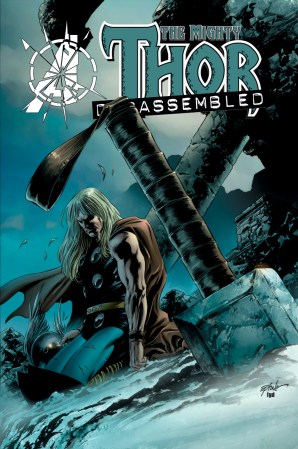
Avengers Disassembled: Thor (written by Michael Oeming/art by Andrea Di Vito; 2004)

There’s a reason Thor vanished from the Marvel universe for several years before Straczynski and Coipel brought him back, and Avengers Disassembled: Thor is it. Ragnarok has been explored in the Marvel universe before, but the basis for Thor’s part of Thor: Ragnarok comes from this section of the crossover event.

This comic felt like a movie waiting to happen, but if you’re thinking that it’ll be as light-hearted as Thor: Ragnarok, think again. This is a much somber tale.

thor god of thunder

Thor: God of Thunder (written by Jason Aaron/art by Esad Ribic; 2013-2014)

In deference to Jim I won’t include Jane Foster as Thor when I discuss Thor: God of Thunder. He may have to write an unpopular opinion or another article of that ilk explaining why he doesn’t care for different characters donning the costumes of classic superheroes in the future. But before Jane took the mantel, Thor: God of Thunder was epic.

It made Thor a rock star. It showcased the character’s raw power and with stories that explored Thor as a brazen youth, it reminds readers of the immaturity Thor sometimes displays in the movies.

the mighty thor walt simonson

The Mighty Thor (stories and art by Walter Simonson; 1983-1986)

It’s hard to find a place for Walter Simonson’s run on Thor. Many fans would dub his series run as the definitive Thor.

Simonson built on what Lee and Kirby started. The fusion of sci-fi and mythology grew. Classic battles with villains like Hela and a version of Loki similar to the movies can be found here. Even the—shudder—villain of Thor: The Dark World Malekith comes from Simonson’s run. If you want a better Malekith tale, check him out in the original comics.

Simonson is the one Thor creator who had the stones to transform the main character into a frog and make it amazing. These stories remain arguably the character’s highest point.

That’s my list for readers who are new to Thor comics. Great Jim Plath’s beard those were terrible choices. Unleash hate mail on the writer from Broxton. Or you can leave a comment. If you’d like access to the Bifrost, subscribe for new content.

Wolverine Starter Stories

Uncle Geekly may be a little rusty with getting back into the swing of things, so I’ll kick off this year’s starter list with someone who’s the best at what he does, but what he does isn’t nice.

Wolverine invades the Marvel’s comic book universe. He may not have as long of a history in the comics or in films as characters like Spider-Man or even the Hulk (I’m including made-for-TV movies here), but Logan’s adventures bring droves of fans to comic book shops. It can get tricky with where new readers should start with the Canucklehead—for the newbie, that’s a fusion of the word Canuck or Canadian (Wolverine’s homeland) and knucklehead—but your uncle Geekly will set you on a good path to get to know Marvel’s number one furball.

Wolvie got his start in the Incredible Hulk #181 (1974), and he famously joined the X-Men with Giant-Size X-Men #1 in 1975, but I won’t focus too much on Logan’s X-Men stories. I’ll try and stick with his solo adventures as he’s become a comic book superstar in his own right.

I’ll also try and suggest a reading series that goes with the character’s timeline, instead of the dates in which the stories were released. This can get sticky as Marvel writers like to jump back and forth through time and space. I’ll do my best at navigating.

wolverineorigin

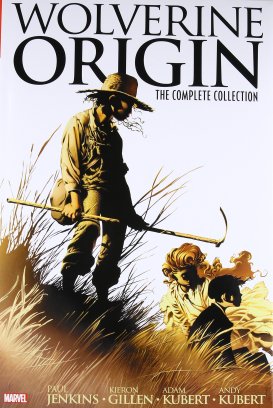
Origin #1-6 (written by Bill Jemas, Paul Jenkins, and Joe Quesada/art by Andy Kubert and Richard Isanove; 2001-2002)

For decades Marvel refused to reveal little about Logan’s past prior to the Weapon X Program, but that all changed after Hugh Jackson made Wolverine a household name in the X-Men movies. Marvel realized if they didn’t give Logan an origin, the movies might beat them to the punch. So, the mini-series Origin was born.

Origin goes back to Logan’s childhood in the 19th century. That’s right, he’s that old. I won’t go into too many details, but Origin shows most of the character’s ancient past: Wolverine’s real name, his parents, his first berserker rage, and how he became the mononymous Logan.

marvelcomicspresentsweaponx

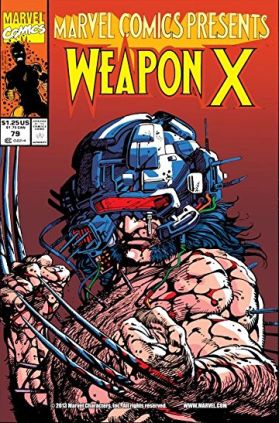
Marvel Comics Presents #72-91: Weapon X (story and art by Barry Windsor-Smith; 1991)

Origin may have been Logan’s true origin story, but most of the character is defined by his time as Weapon X.

Only the prologue and part of the final chapter in this story are told from Wolverine’s perspective. The bulk of Weapon X follows three members of the Weapon X team and much of the story plays out like a slasher film, featuring the bladed berserker.

If you’ve seen the movies, but haven’t read the comics, you’ll notice references in X-Men 2 and X-Men Origins: Wolverine.

wolverinemini-series

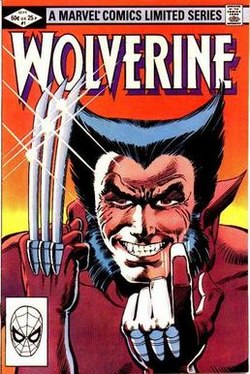
Wolverine Original 4-Part Mini-Series (written by Chris Claremont/art by Frank Miller; 1982)

When the X-Men was revamped in 1975 Wolverine wasn’t supposed to be the series’ star—heck, he wouldn’t show up on covers for months at a time—but Chris Claremont’s portrayal of the character made him a fan favorite. 1982’s Wolverine limited series marked the first time Marvel ever made a limited series—it’s a comic book industry standard now—and it’s the first time that Claremont used the words I mentioned in the beginning of this post to describe Logan: “I’m the best there is at what I do, but what I do isn’t very nice.”

In this series Logan travels to Japan. The story plays out like a samurai redemption, and many familiar elements find there way here. Logan’s love interest Mariko will appear several times in various timelines and universes. Frank Miller included The Hand in Wolverine, and they’ve been in numerous episodes from the Marvel/Netflix series of shows. The second Wolverine film (simply titled The Wolverine) also pulled a lot from this classic.

kittyprydeandwolverine

Kitty Pryde and Wolverine #1-6 (written by Chris Claremont/art by Al Milgrom; 1984-85)

Wolverine has a thing for taking young, female members of the X-Men and becoming their mentors—in a non-creeper way, I swear. He mentored Jubilee in the comics and 1990s cartoon. He mentored Rogue in the first X-Men film. He would mentor Armor in the late 2000s. But Wolverine’s first mentee was Kitty Pryde in this mini-series.

There are several modern comic book fans who wouldn’t get why Kitty Pryde was that popular. Kitty Pryde and Wolverine brought her notoriety. Prior to this series, Kitty was little more than a spoiled, rich kid, but she grows up fast here as she’s torn down and built back up with the help of Logan. This is the moment Kitty Pryde became Shadowcat. It’s also the first time fans saw Logan’s “softer side.” Sure, he’s a killer, but he’s a killer with a heart of gold.

wolverinenotdeadyet

Wolverine: Not Dead Yet (written by Warren Ellis/art by Leinil Francis Yu; 1998)

If you can’t tell, Logan is the king of Marvel mini-series, and Wolverine: Not Dead Yet is another example. I included this one mostly because there aren’t that many good Wolverine stories where Logan has bone claws and Logan’s bone claws added a leather-toughness to the character that goes missing whenever his claws have their adamantium.

Wolverine: Not Dead Yet takes place in a time after Fatal Attractions where Magneto sucks the adamantium out of Logan. This mini-series can be a little uneven at times, but it’s one of the best bone-claw Wolverine stories, and bone-claw Wolverine always had a more animal nature that made him more susceptible to his berserker rages. It’s a Wolverine that lives more on the edge.

oldmanlogan

Old Man Logan from Wolverine #66-72 and Wolverine: Giant Size Old Man Logan #1 (written by Mark Millar/art by Steve McNiven; 2009)

Mark Millar may be one of comics most prominent creators this century, but his work is either a classic like The Ultimates and Kick-Ass, or it devolves into childish shock value. Old Man Logan can be characterized as both.

It’s set in an alternate, dystopian future where most superheroes are dead, and the United States has been conquered and divided up among the world’s supervillains. Wolvie gave up superhero work long ago, but he’s convinced by former Avenger Hawkeye to embark on a road trip and collect an item that could save humanity.

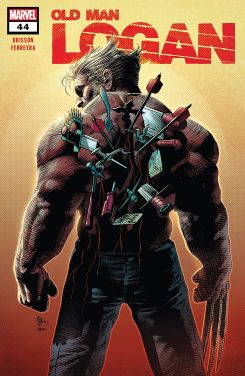
Yeah, this story can be bonkers and a mess, but it’s a great read. It also doesn’t hurt that the movie Logan borrows just enough from this story with its “road trip” and dystopian future. Old Man Logan just happens to be the current (current as of this write-up) version of Wolverine. This series is where this version of the character began.

That’s my list for readers who are new to Wolverine comics. Did I get the list right or did I pull a Canucklehead? Let me know in comments.
Superman Starter Stories

Standard Issue Comic Book Geek Jim—that’s SICBG Jim to you—is back for another Starter Stories article. He rambled on about “truth, justice and the Geekly way,” and I told him he could commandeer the site if he didn’t preach Superman to me. Okay. Superman—the Standard Issue Comic Book Superhero—doesn’t get enough love. Shine on, you Crazy Kryptonian.

Superman is my favorite superhero. It’s hard to come up with a starters list for him, though, because so many of his best books are retellings of his origins, or Elseworlds stories that can’t be considered canon. With that in mind, here are the titles I recommend for approaching the character and better understanding where he is today.

Superman_Birthright

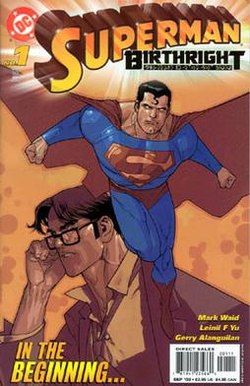
Birthright (written by Mark Waid/art by Leinil Yu; 2003-2004)

 Superman: Birthright is a good place to start with Superman. It’s a reimagining of Superman’s origin that includes a lot of what’s part of canon today. Maybe most notably, the idea that the “S” on his chest isn’t an “S,” as “Man of Steel” famously told us. Birthright sets the stage for Krypton to be used as more than a passing point of interest in Superman books. Mark Waid is always a good bet.

Superman_What's So Funny About Truth, Justice, and the American Way

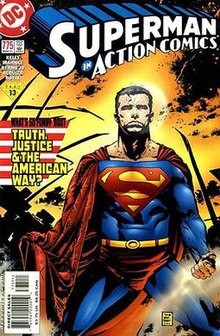
What’s So Funny About Truth, Justice, and the American Way? (written by Joe Kelly/art by Doug Mahnke and Lee Bermejo; 2001)

I love this one because it wrestles directly with so much of what people say is wrong with Superman. It’s a defense of his optimism and an example of how his real powers aren’t in his strength, speed, or invulnerability, but in what he has the power to show humanity about itself. It’s not an attempt to retrofit the character to make him more interesting to modern audiences, but an exploration of what everyone seems to overlook about him now. Lee Bermejo is also one of my favorite creators, so that doesn’t hurt.

Superman_Kingdom Come

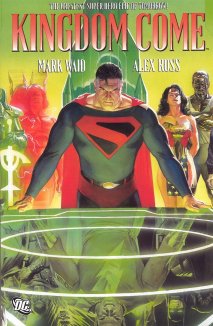
Kingdom Come (written by Mark Waid/art by Alex Ross; 1996)

This book builds on what I’ve said about our second entry. Kingdom Come contrasts Superman with a lot of the more edgy characters in recent comics and makes a case for why Superman is not only relevant, but necessary. Mark Waid does what he does, rendering a faithful depiction of the character, and Alex Ross offers some of the definitive Superman art in recent history.

Superman_Whatever Happened to the Man of Tomorrow

Whatever Happened to the Man of Tomorrow? (written by Alan Moore/art by Curt Swan; 1986)

This book is meant to put a cap on the story of Superman. It’s told by Lois Lane ten years after the supposed death of the hero. It’s gloomy, especially by the standards of Superman comics, but there’s a bittersweet quality in seeing the character’s legacy laid out on the page.

The Death of Superman

The Death of Superman (written by various/ art by various; 1992-1993)

This arc was written and drawn by various creators, as it encapsulates a pretty long arc. I’ll be honest here and say it isn’t one of my favorite stories in Superman lore, but it’s on this list because it’s iconic, and it’s too important to comics history to leave off. This is the story of how Superman died defeating Doomsday. The image of Lois cradling Superman’s broken body, Jimmy Olsen in the background pleading for him to be okay is one of comics’ great panels. Of course, this was the moment that broke death in comics, as the resurrection of Superman set a trend and lowered the stakes moving forward.

All-Star Superman

All-Star Superman (written by Grant Morrison/art by Frank Quitely; 2005-2008)

This is my personal favorite. The story that gets to the heart of what makes Superman so special, that even in the face of his own mortality, he protects the people of Metropolis. He stops to comfort a troubled teen on the verge of suicide in another of recent comics’ great panels. Quitely’s art is serene, and Grant Morrison’s affection for the character comes through without making the story saccharine.

SICBG Jim has given your uncle Geekly the honor of writing a closing statement. I hope I can live up to the great example he set. Here it goes.

Superman’s portrayal in the DC Extended Universe—and I blame the writing and directing more than Henry Cavill—leaves a lot to be desired. The DCEU may be one of the largest targets Jim thought of when he said that creators “retrofit the character (Superman) to make him more interesting to modern audiences.”

The stories above, and especially All-Star Superman, do a great job of showing that the Man of Steel is more than a super-powered Batman in gunmetal blue tights. He represents hope, and the original comic book superhero is still one of the best. Do agree with SICBG Jim’s story selections? Let us know either way. I’ll just be in the corner doing my best Mister Mxyzptlk impersonation.

Getting Started with Area Control or Influence Games

Uncle Geekly ran a search on a popular game type, area control, and found more results than he thought. These games range from simple who controls the most regions to more complex games where area control is an aspect of the game. We’re talking starting area control or the similar mechanism area influence games, so we’ll keep it simple and easy to learn, but most of all, an area control game at its core.

Most area control or influence games employ a great build to the game, where players begin with small gains that they hope to build upon through game play. These games, more than many others, have a natural progression to them, and gamers can see why someone won. Usually, this is a game type for players who like to see the wheels turn or have a little more agency in a game’s outcome.

As usual, good old Geekly has some starter games for someone interested in this gaming genre. Let’s get to some of these smaller games and work our way up to one’s that are more complex.

Hanamikoji

Hanamikoji

We’re starting with an odd choice: Hanamikoji. It’s classified as more area influence as players compete for the attention of geishas. Hanamikoji also happens to be a two-player game, which is a little unusual as well. A group of seven geishas is placed between both players and they range in point value from 2 to 5. The first player to gain the favor of 4 or more geishas or has 11 points or more of geishas wins. This is what makes Hanamikoji area influence instead of area control. One must gain the attention of the most geishas. The game play is fast—a typical game lasts ten to fifteen minutes which is lightning quick for an area control or influence game—and it’s intriguing.

Each player is dealt cards that correspond with each geisha (for example, green twos are used to gain the attention of the green two geisha). They’ll use these cards to gain favor. The players also have four action tokens, and this is where things get interesting. Both players alternate turns using all their actions tokens. One action locks down one card from a player’s hand. A second action removes three cards from play that turn from a player’s hand. The third and fourth actions have some combination of handing your opponent some of your cards and they choose one or two of the cards handed them, and the player using these actions keep the rest. This is an excellent way of mitigating a bad draw. It also makes for a surprising amount of choices for a short and simple game.

Carcasonne

Carcassonne

Sometimes the oldies are the goodies. 2000’s Carcassonne—along with El Grande—all but popularized area control games. The two wrinkles Carcassonne adds are tile placement and worker placement. Bear with me as a quickly discuss tile placement; it does factor into area control. Each turn a player draws a land tile and places it adjacent to a tile already in the play area. These tiles will have roads, farms, cities, and/or cloisters depicted on them. When placing a tile, it must match the pre-existing tiles in the play area. Sides of tiles that show a farm can only be placed next to another tile side with a farm. So, random tiles dictate what constitutes an area. This was revolutionary at the time.

Once a tile is placed, the player may place a follower—or worker. Players gain control of areas by placing their workers on these spaces, and these workers can perform several jobs, depending on where they’re placed. Farmers work farms, monks live in cloisters, and so forth. The player with the most followers in an area when it scores gains the most points for that area. The game ends when the last land tile is played, and the player with the most points wins.

This combination of game mechanisms works well. So many other designers have used some combination of worker placement, tile placement, and area control because of how accessible Carcassonne is and these mechanisms’ inherent strategic flexibility. Carcassonne works as a great introductory game for all three game types. I’ll try not to add it to another list. No promises.

smallworldgame

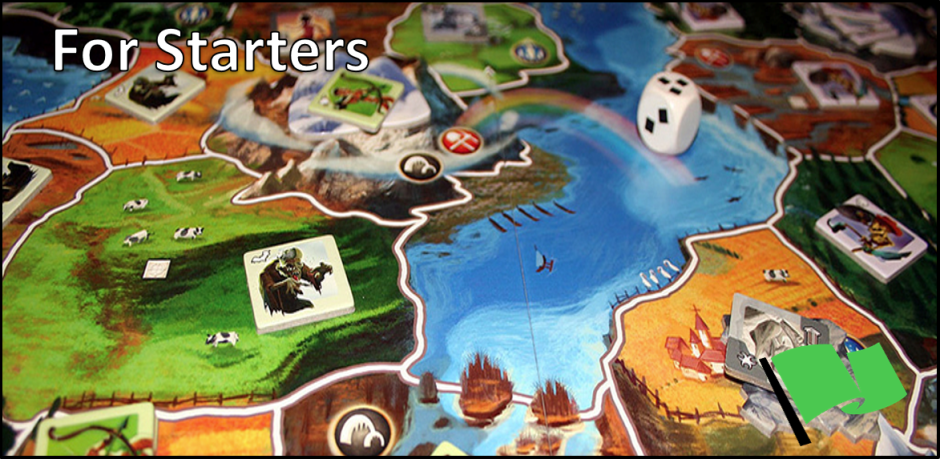
Small World

Sometimes gamers just want to conquer things. Small World takes place in a small world, where zany fantasy characters vie for control. There a lot of bells and whistles added to Small World. Each fantasy race like elves, trolls, and skeletons have their own race power, but each of these fantasy races are given one of 20 unique special powers like flying or ghostly that will make each playthrough different.

The concept is simple enough. When placing creature tokens, players start on the edge of the map. To conquer a land, they must use as many tokens as tokens in an area. If a player has enough tokens, they may conquer an adjacent land using the same method, so it’s likely that players will gain more than one area in a turn. In future turns, a player may choose to put their active race in decline (flipping their tokens upside down) and choose a new race. Players score points each turn for every area their races occupy; that’s for their active race and the race they have in decline.

At the end of the game, the player with the most points wins. That’s a common thread these games and a lot of other area control games share.

Small World does a great job of simulating combat without getting too in the weeds with it. It’s an area control game at its core with some nice window dressing, especially the use of variable player powers. Those race and special powers can be fun. Small World can also be the meanest game on this list. Players must know when to bail on a race and when to keep one. There will be a lot of hostile takeovers. It’s a small world after all.

Final Thoughts

So many of the best games on the market today use area control or area influence: Twilight Struggle, Star Wars: Rebellion, Scythe, Terra Mystica, Blood Rage, Twilight Imperium, and countless others. The games I just mentioned didn’t make this list because they get a little too complicated or they add more elements to the game than just area control.


The games I did include in this list will get new board game hobbyists the background they need to take on more complex games. Which games do you like to use as beginner area control games? You could place a worker to claim influence or it might make more sense to leave a comment.

Flash Starter Stories

Let’s face it. Many new fans of The Flash were most likely introduced to the character with the CW show. Even if you weren’t, the concepts presented in the television show—at least the first two or three season—are a good place to get to know The Flash and more specifically Barry Allen.

Your uncle Geekly may have grown up leaning more Marvel than DC, but he dabbles with DC Comics. This week I hope to show you where to beginning reading The Flash comic books, starting with an emphasis on stories that may look and sound familiar for CW fans and moving toward other great tales of the Scarlet Speedster.

FlashRebirth

Flash Rebirth (written by Geoff Johns/art by Ethan Van Sciver; 2009)

Barry Allen returned to the DC Universe after years of being thought dead with Flash Rebirth. Readers are treated to an updated origin story, the history of the Speedforce, and Professor Zoom’s backstory.

It also happens to be the chief inspiration of the CW show as writer Geoff Johns is also one of the show’s producers. Rebirth is a great place to start for any new Flash reader and fantastic for The Flash TV fans.

The_Flash_The_Dastardly_Death_of_the_Rogues

Flash: The Dastardly Death of the Rogues (written by Geoff Johns/art by Various; 2010)

This entry is a little off when compared to the rest of the ones on this list. Bear with me, and I promise that it makes sense as a starter Flash story.

The Dastardly Death of the Rogues gives new readers a crash-course on the time-jumping nature of The Flash. Yes, characters often go back and forth through time to varying effect and this time it’s a future rogue warning Barry of another rogue’s plans for domination. And this is the first way the story turns odd.

Barry is also accused of killing rogues in the future and may have to answer for his future crimes—I smell a Minority Report—but it’s the focus of Barry as a CSI that has this story make the list. Previous Flash tales cast Barry Allen as a forensic scientist or cop but few capture Barry’s job aside superheroing like this one.

FlashFlashpoint

Flashpoint (written by Geoff Johns/art by Andy Kubert; 2011)

If you haven’t noticed, you’re going to see a lot of Geoff Johns’ work here because he defined The Flash of the 2000s and continues to do so with the TV show. Like the title before it on this list, Flashpoint has a character time travel. This time it’s Barry Allen going back in time to save his mother from being murdered.

The consequences are dire as the DC Universe is flipped upside down. It’d take a lot of time to explain everything that happened, but her are some highlights: Bruce Wayne dies instead of his parents and his parents become Batman and The Joker, Captain Cold is Central City’s greatest hero, the Justice League was never established, and Superman doesn’t exist. All this because Barry wanted to save his mom. Flashpoint does a great job of showing why a hero can’t be selfish. It’s also one of the watershed crossover events in recent DC Comics history and reshaped the comic giant’s status quo for the publisher’s 2011 relaunch, the New 52.

TheFlashNew52.jpg

Flash New 52 Volumes 1-3 (story and art by Francis Manapul and Brian Buccellato; 2011-2014)

The artwork here is amazing. No other artist captures the feel and look of The Flash running at top speed than Manapul. Barry Allen gets reintroduced here—so it’s another good place to get started for fans of the TV show—and most of his greatest enemies make an appearance in the first few volumes. You’ll meet plenty of the rogues and get to know Gorilla Grodd, too.

FlashCrisisOnInfiniteEarths

Crisis on Infinite Earths (written by Marv Wolfman/art by George Perez; 1985-1986)

This one’s a big one. The Flash isn’t the main character, but he factors into this crossover event and the odd thing is that Crisis on Infinite Earths was conceived to get rid of the multiverse, which is something The Flash instigated.

It’s a must read for anyone who wants to know more about Barry Allen as a character, because he makes the ultimate sacrifice. In an iconic scene, he literally runs himself to death and becomes one with the Speedforce. New readers could say spoilers were in order, but even being armed with that knowledge won’t prepare you for watching happen. This is Barry showing how and why he’s a hero.

FlashChroniclesVolume1

The Flash Chronicles Volume 1 (written by various/art by various; 1956-1959)

I’m going with a collection of older comics here because it’s nice to see where everything began. Barry Allen’s Flash harkened comic book’s Silver Age. If it wasn’t for Barry streaking across the page, DC may not have ever brought back other great heroes from its Golden Age and Marvel may have never gotten back into the superhero business. These stories had to make the list and fortunately, the first several years are collected in a single volume of The Flash Chronicles.

All these stories hold a special place in comic history, but here are some highlights:

Showcase #4 marks Barry Allen’s first appearance and the first instance of the ongoing gag where Iris complains that Barry is always late because he moves so slowly.

Flash #110 Iris’s nephew Wally West happens to be The Flash’s biggest fan, and this happens to be his first appearance.

Flash #123 is where the multiverse is first introduced when Barry inadvertently travels to a parallel Earth and teams up with his Golden Age counterpart Jay Garrick. It’s a simple team-up story here, but the multiverse is an essential part of many Flash stories.

Flash #139 showcases The Flash’s greatest foe Eobard Thawne (aka Professor Zoom/Reverse Flash). Thawne goes down quickly in this story, but he’ll be a thorn in Barry’s side for many decades.

TheFlashMarkWaidBookOne

The Flash by Mark Waid Book One (written by Mark Waid/art by Greg LaRocque; 1987)

I’ve focused primarily on Barry Allen up to this point, so it’s time to talk about Wally West as The Flash. Waid does an excellent job of showing how the two Flashes differ. Wally doesn’t take to the Speedforce like his predecessor. He’s as scared of his powers as he is the enemies he fights. This book reads like The Flash: Year One.

Readers will also see Barry as he trains his protégé—much like he does in the TV show—and catch a glimpse of one of DC’s greatest friendships.

TheFlashTheReturnOfBarryAllen.png

The Flash: The Return of Barry Allen (written by Mark Waid/art by Greg LaRocque; 1996)

Oddly enough, Waid does more to establish Wally as the Flash by having Barry Allen return from the dead. Comic book characters return from the dead more often than my dog poops on the floor—which is to say every other day—but Waid finds a way to turn this trope on its ear. I won’t explain how he does it here, but it’s well worth the read and an excellent case study on how to subvert a reader’s expectation.

TheFlashDeadHeat

The Flash: Dead Heat (written by Mark Waid/art by Oscar Jimenez; 2000)

No Flash story tackles the Speedforce, delves into the Flash’s sci-fi roots and explores the numerous characters who have ever had super speed than Dead Heat. A “God of Speed,” “Speed Ninjas” and all other manner of speedsters make their way in this story. It does a lot to set up the Flash’s mythos. It’s also a lot of fun.

Flash_Blitz

The Flash: Blitz (written by Geoff Johns/art by Scott Kolins; 2003)

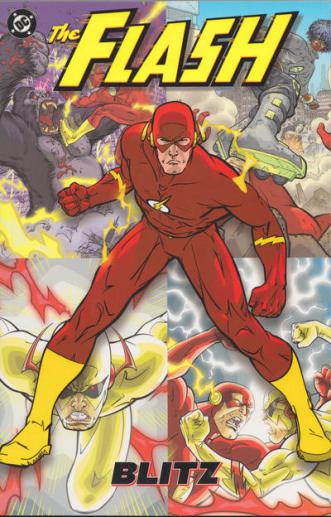
Even though several of the Flash’s rogues make an appearance, Blitz is the definitive Professor Zoom story. Wally is completely outclassed, but Zoom’s speed isn’t his greatest threat. Zoom doesn’t hesitate to put Wally’s family and friends in danger to get to him. If fans of The Flash TV show liked the twisted and menacing nature of the main antagonists in seasons 1 and 2, you owe it to yourself to read Blitz.

I think that covers it for Barry and Wally as The Flash. There are other versions of the character—not the least of which is the Golden Age’s Jay Garrick—but that may have to wait for another time. If you don’t agree with any of my selections, feel free to challenge me to a race or you could leave a comment.

Getting Started with Deck Building Games

I enjoy deck building games a lot. Deck builders are games with simple, identical, starter decks for each player, and players must build and customize their decks over the course of the game.

Deck builders can get convoluted fast and many of them are text heavy—we’re talking levels of text just below War and Peace. There are so many types of deck building games, so many that there are games that fall under pool building (not included here) that use dice and cubes instead of cards, that it can be overwhelming in terms of where to start.

Fortunately, your good old uncle Geekly is here to point you in the direction of less complicated deck builders to get going.

starrealms

Star Realms

I’ve talked about Star Realms in the past—for a full review check it out here—but it’s still one of the better, beginner games for a traditional deck builder. I could’ve gone with the base Dominion game, but I like the theme better with Star Realms, even though the space theme is barely there, and Dominion fans tend to want to add as many expansions as possible. Trust me. There are more expansions for Dominion than leaves on the ground.

Star Realms is balanced. If I’d have one major gripe, it may be that Star Realms is too balanced (the cost of cards are spot on, just buy the most expensive one you can afford each turn), but key elements like buying cards from the supply by paying specific costs for each card, culling (removing weak cards from your deck), forcing another player to discard a card from a future hand, and the concept of building a full deck and drawing a new hand from said deck instead of building a hand are all present in Star Realms.

It also doesn’t hurt that Star Realms has a free to download app.

Steam

Android

iOS

All someone would have to do to learn the basics for a deck building game is to download and play the tutorial. It doesn’t get much easier to learn than that.

CenturySpiceRoad

Century Spice Road

The hottest, newest game on this list may just be one of the least complicated deck building games and has the least text. Century Spice Road also has a couple of stand-alone expansions—games that can be played on their own as full games or that can be added to the original to make different combinations—so look out for Golem Edition and Eastern Wonders. Golems don’t get enough play in games. I may have to drive to the nearest adventurer’s pub and pick up a golem or two.

The base game’s theme isn’t that interesting—tabletop gamers have seen hundreds of spice trading games—but Century Spice Road not only boils down the deck builder to the point where it’s a bit of a hand builder, it adds elements like resource and space management to the genre. It also includes an interesting approach to one of my other favorite mechanisms: card drafting.

Cards in the supply are laid out from left to right, and players add action cards to their hand, starting with the card on the far left. If a player wants to skip a card in the supply, they must place a spice (or cube) on the card(s) skipped. Any player who picks up a card with a spice on it adds that spice to their supply. This simple addition adds so much strategy. Do I want to give my opponent a free spice by skipping a card? An action card I might not otherwise want may have spices I do want. Do those free spices make it worth adding the card to my hand?

All of these elements come together in a satisfying way. No wonder Century Spice Road earned the 2017 Golden Geek for best card game. Note: don’t play with real spices. That gets messy.

PaperbackCardGame

Paperback

I had to include Paperback because it has a great combination: deck building and word game. It’s a game combination that people wouldn’t think would work, but it does. A player can be adept at one of the two game types, and not the other, and still excel.

The same concepts one can find in Star Realms can be found in Paperback. There are more variants to Paperback so replay value is increased, but it’s the combination of deck builder and word game that makes this game sing.

The theme of struggling writers getting their paperback books published—to be fair, this theme may hit closer to home than I’d like to admit—also comes through. Paperback is easily the most thematic game on this list, but it’s not for everyone. If someone is dead set against word games, this game might rub them the wrong way. If someone likes word games or is willing to give a word game a shot, Paperback is excellent.

Final Thoughts

The above games are all great if you’re just getting into tabletop games and wondering how to play deck building games. Star Realms, Century Spice Road, and Paperback have a lot of replay value too.

Know of any other great starter deck builders? Let us know in the comments.

Iron Man Starter Stories

Iron Man doesn’t get the due that other Marvel characters receive. Heck, he’s the character who kicked off the Marvel Cinematic Universe. Show some respect, people. He’s also had a checkered past when it comes to the quality of his storytelling.

Some Iron Man moments are some of the best in the business. Others leave readers shaking their heads. It’s a rollercoaster of a ride for Iron Man readers, but fortunately, your uncle Geekly’s here to point you in the right direction of some of the better Iron Man titles that serve as great jumping off places for new Iron Man readers.

Tales_of_Suspense_Vol_1_39.jpg

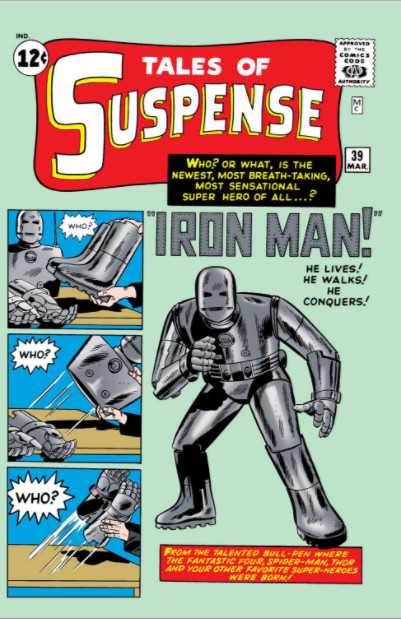
Tales of Suspense #39 “Iron Man’s Origin” (written by Stan Lee/art by Steve Ditko; 1963)

What better place to start than with Iron Man’s origin? What new readers may be surprised when they first read this story is the reflective nature toward communism that it takes—in 1963. We’re in the height of the Cold War. This is a story originally based in Vietnam that was published a year before the Vietnam War started in earnest.

It’s no wonder the Iron Man film obliquely addressed the War on Terror. Iron Man has a history of taking on current events and international conflict. You could spend thousands of dollars to get your hands on an original comic, but Uncle Geekly suggests that you pick up the anthology Essential Iron Man.

IronManExtermis

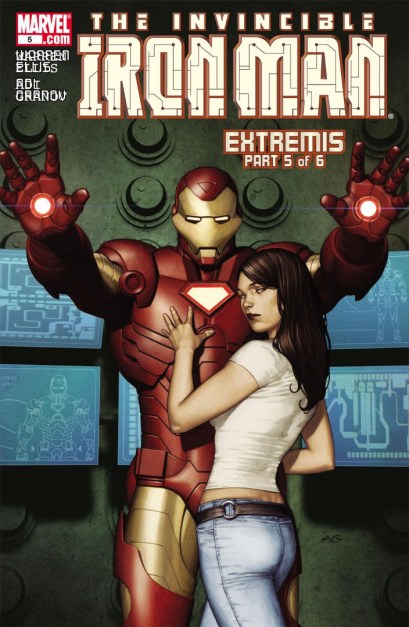
Iron Man: Extremis (written by Warren Ellis/art by Adi Granov; 2005-2006)

We’re going to jump several decades to this essential Iron Man story. Extremis updates Iron Man’s origin—something that’ll look familiar if you’ve seen the first Iron Man movie—and serves as the primary source material for Iron Man 3.

This story handles Aldrich Killian (the main antagonist in Iron Man 3) a lot differently than the movie, but the key story elements are present. It also updated Tony’s suit and his relationship with it that one can see in later Marvel Universe movies. Extremis is one of the best Iron Man stories and well worth the read.

IronManDemonInABottle04

Demon in a Bottle (written by David Michelinie and Bob Layton/art by John Romita Jr., Bob Layton, and Carmine Infantino; 1979)

Sorry, but we’re going back in time with this one. “Demon in a Bottle” introduces Tony Stark/Iron Man’s struggles with alcoholism. This addiction remains one of Tony’s defining characteristics.

The Marvel Cinematic Universe glossed over Tony’s alcoholism (there was a moment in Iron Man 2 where he got drunk at a party while wearing his armor), but any collection of Iron Man stories must include “Demon in a Bottle.”

Whether he struggles with his addiction or comforts someone else with an addiction, Tony Stark gained some needed personality and depth with this story, and this story happened almost by accident.

IronManTheEnemyWithin.jpg

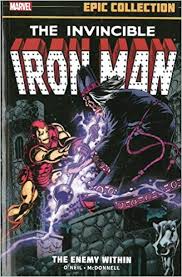
The Enemy Within (written by John Byrne/art by John Romita Jr.; 1990)

Tony’s alcoholism continues to gnaw at him. When he’s pushed over the edge with AIM, the Serpent Squad, and Diablo while fighting a corporate takeover by Obadiah Stane (main villain of the first Iron Man movie), he turns to the bottle and after several drinks, it’s obvious that Tony is in no shape to fight.

James Rhodes fills in for Tony for the first time in this story and this leads to his transformation as War Machine. Fans of War Machine will love this story. Others will find “The Enemy Within” as a fantastic character study for Tony.

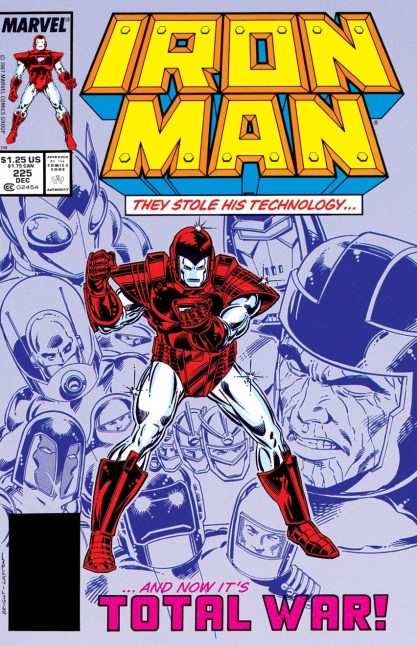
IronManArmorWars

Armor Wars (written by David Michelinie and Bob Layton/art by Mark D. Bright and Barry Windsor-Smith; 1987-1988)

Armor Wars has more action than most of the other titles on this list so far. It also features some of Iron Man’s greatest foes like Titanium Man and Crimson Dynamo. Tony travels to his Vault as he battles the government and infiltrates SHIELD.

But this story is more than just action. It shows how Tony can be careless, aggressive, and out of control with his armor. It’s a story about relationship—specifically ones Tony destroys—as well as who he beats up, and it’s well worth the read.

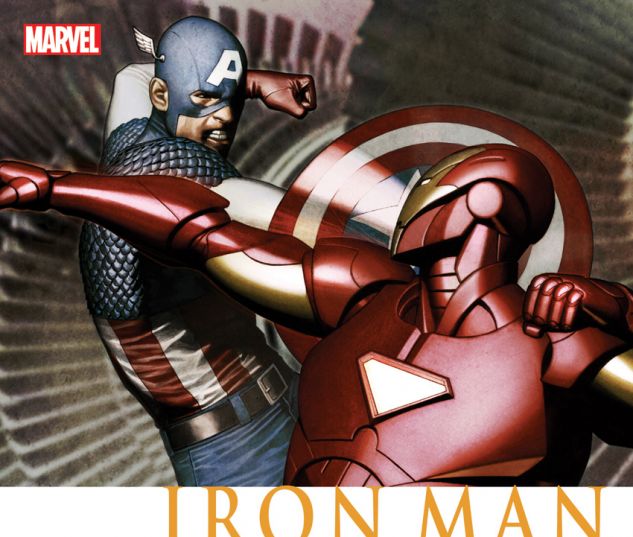
IronManCivilWar

Civil War (written by Mark Millar/art by Steve McNiven; 2006-2007)

This one is by no means a great Iron Man story (I have plenty of issues with it), but it’s a massive tale for the greater Marvel Universe and Tony is in the middle of it.

Like the movie Captain America: Civil War, Tony fights for power registration in his attempt to make the world safer for civilians—or normies. Oddly enough, the movie does a somewhat better job of making the story a little more even keel, but the comic book Civil War is biased in Cap’s favor and that mostly comes from the fact that Tony would never want power registration.

Still, there was a movie that uses Civil War as its source material and this event is one of Marvel’s largest. Just make sure to read the stories centered on Iron Man.

IronManWorldsMostWanted

World’s Most Wanted (written by Matt Fraction/art by Salvador Larroca; 2009)

I couldn’t end this list with Civil War, so I added one extra story. World’s Most Wanted picks up the pieces of the events after Civil War—sort of.

It was a tall order to return Iron Man to his former glory after he betrayed his friends, but Fraction was up to the task and softly reboots the character. Norman Osborne has taken over HAMMER (which movie fans will remember as a huge player in Iron Man 2), and Osborne wants Tony’s knowledge of the superhero community. Tony erases his memories, so he can’t betray his friends.

This returns Tony to person we know even if he had to lobotomize himself to do it.

That’s my list for beginning Iron Man readers. I’m sure there are some omissions. You can let me know what you’d pick by message raven or just leave a comment.

Getting Started with Auction and Bidding Games

Have you ever been roped into a bad board game like Monopoly? Well, your uncle Geekly may have some auction and bidding tabletop games that don’t cost as many hours or friendships as the Hasbro giant. These games introduce new gamers to the idea of getting properties or items for the best price and in some cases, selling them for more money. Who doesn’t like to make money-money, make money-money?

CloseUpForSale.jpg

For Sale

For Sale is the first game that came to my mind when thinking of an easy to get into auction and bidding game. Gameplay is broken into two phases. During the first phase, players bid money on properties (each player begins with the same amount of money; it’s all about how one uses one’s money). The second phase shifts to players selling the properties they acquired in the first phase.

It’s fast—really fast for an auction/bidding game. For Sale teaches the value of buying low and selling high. It doesn’t always boil down to who bought the best property (the properties range from manors to a cardboard box); one must know when to reach for the high value properties and when not to. It’s a great teaching tool for more complicated games that include auctions and bidding, and the concept of requiring players to outbid other players—not just match a bid—got its start with For Sale.

Prior to this game, one player could bid five coins for something and everyone around the table would have the chance to match it, and the last jerk at the table would. Then you’d have another slow round of bids for six coins. It took forever. Ugh!

Thank you, For Sale.

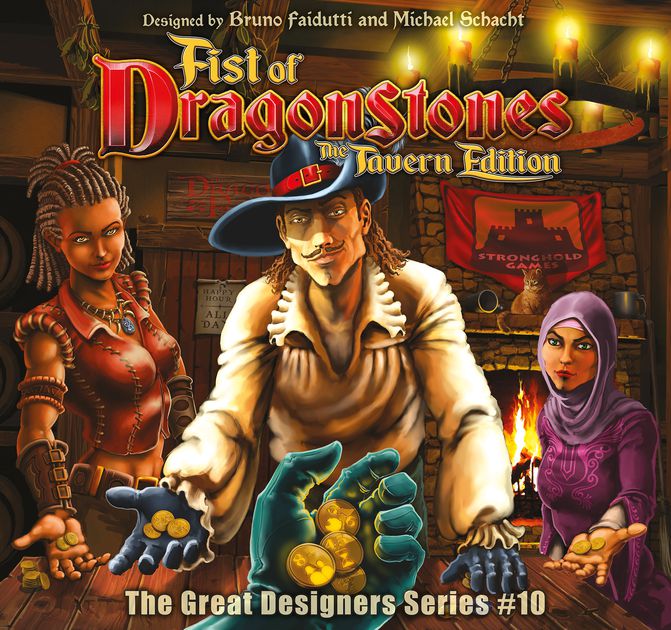
FistOfDragonstones

Fist of Dragonstones

While For Sale eases players into auction and bidding with a different economic layer each phase, Fist of Dragonstones adds a hidden bid mechanism and multiple economic layers. There’s more going on with Fist of Dragonstones, but if someone is looking for an auction/bidding game with more strategic value and still plays quick and easy (it also has a fun fantasy theme), consider Fist of Dragonstones.

Players bid on character cards (with abilities) by using a closed fist method. No. You’re not allowed to punch someone; you’re just holding out a closed fist, hiding your bid.

Players hide their total money (split between regular gold and fairy gold, which is magical) behind a player shield (a piece of cardboard) and when an auction occurs, every player takes the bid they plan to make (regular gold, fairy gold, or a combination of the two), holds their bid in their closed fist and reveal their bids at the same time. The highest bidder wins the auction, and any money used—whether the player won or lost the bid—is returned to the bank.

FistOfDragonstones01

Each character (the cards players are bidding on) has an ability that can help obtain more money or victory points. The first player to 4 victory points, wins.

The various character cards add replay value, and I don’t know of a single auction/bidding game that uses a fantasy theme. Maybe I should make Dragon Tycoon.
The inclusion of a closed fist bidding system is a great choice. Fist of Dragonstones uses the mechanism well and this a common game mechanism used in other tabletop games of various types—not just games that are predominantly auction or bidding.

There’s a reason this game put the juggernaut game publisher Days of Wonder on the map, and I hear it’s getting a reprint this year (2018). Bonus!

Stockpile

Stockpile

Ever wanted to play the stock market? Stockpile puts players in the shoes of a wolf of Wall Street. Well, maybe not, but the game does a good job of giving each player hidden information (about 1 of the game’s 6 stocks) that the other players don’t have to make decisions on whether to buy or sell a stock.

If a stock is about to plummet, ditch it into one of the stockpiles that players bid for during the round. Each player must place one stock face up in one of the stockpiles and one face down. Since there is one stock that is global knowledge (one of the risers and fallers for the round is known to all players), sneaky devils may want to put a stock of that type, face down so other players won’t know it’s there.

Stockpile01

Stockpile’s bidding system is unique from the rest of the games on this list as each stockpile has a corresponding calculator card above it. The numbers (0, 1, 3, 6, 10, 15, 20, 25) on the calculator buttons represent the bids (in thousands) a player can make, and players take turns placing their markers on an available number on one of the calculators. Players can outbid—but not match—a previous bid. If they do, the owner of the lower bid collects their marker and can bid again. As soon as all players have placed their markers, they collect all the cards in the stockpile that their marker is on.

The bidding in Stockpile doesn’t take that long as there are only eight possible bids one can make for each stockpile during a round. New gamers will see this style of bidding in a lot of games like Cyclades. Due to the streamlined bidding, Stockpile gets players involved with trying to predict stocks that will rise or fall over the course of the game.

Stockpile is great for commodity speculation, but it’s also one that I’ve seen an 8-year-old play and enjoy.

Final Thoughts

These games beat the pants off Monopoly. For Sale, Fist of Dragonstones, and Stockpile serve as great entry-level games with some solid replay value. Just make sure you don’t lose your pants in a shady business deal.

Know of any other great beginner auction and bidding games? Let us know in the comments.