Stay Warm, Play a Game

Winter wipes its cold feet on our doorsteps next week, and the arctic chills have already arrived. To me, cold weather conjures thoughts of a particularly nasty Mississippi ice storm in the nineties, one that knocked out my family’s electricity for almost two weeks. We had to stay warm. We had to take our minds off how miserable we were without hot water, light, and heat. So naturally, we played a tabletop game.

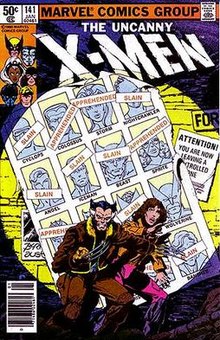
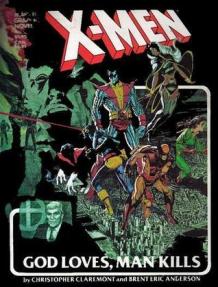
X-Men had a cartoon on Saturday mornings, the comics sold record amounts of copies, and one tabletop game capitalized on the mania: X-Men: Under Siege. So, under the glow of a few flashlights, my parents, my brother, and I would hunker around a card table and play as our favorite mutants and sometimes our not-so-favorite mutants.
We’d play marathons. We’d track statistics for each mutant to see which one was the best. We’d find out later that the stats were skewed because we liked a certain character more than another, and it had nothing to do with who was the better X-Man. We played the game for hours on end until we had to climb into our frigid beds. We may have been cold, but we reconnected as a family.

So what if we didn’t have electricity? You don’t have to plug-in a tabletop game. Lack of electricity may have deprived us of conveniences most of us take for granted, but it also forced us to not watch television ad nauseam. We couldn’t spend all our time playing video games either. We had to sit and talk.

We found out what my brother wanted to study when he went to college. We made plans for summer break, which was the first time my brother or I had any real inputs. Dad told us he feared that he’d lose his job—which did happen the next year—and Mom said that if that happened, she’d go back to work, which she did. We learned more than everyone’s favorite X-Man. We learned more about each other.

If you find yourself needing to get warm, you could do a lot worse than playing a tabletop game.

Get a New One Out

“Get a new one out,” my grandmother—I call her Oma—screams in her thick Dutch accent and slaps the side of my wife Jen’s head. Jen drops her marble and it bounces on the kitchen floor before it rolls beneath my seat. “I’m sorry,” Oma says. She stands behind a seated Jen and her Asiatic eyes barely clear the top of Jen’s head. She pats Jen on the back. “I just get so excited.”

I almost tell Jen, “Welcome to the family. You haven’t been indoctrinated until Oma slaps you while you play Wahoo.” But I think better of it and give her a wink. I hand Jen her missing marble, and she almost puts it back in her starting area. She flinches, expecting Oma to hit her again, and then heeds Oma’s advice and places her marble on the board’s track.

Jen rolls another six and picks up the marble she just placed on the board, but she gets slapped again before she can move it. “No. Kill him!” Oma points to another one of Jen’s marbles that’s farther down the board.

“You don’t have to help her,” I say. “She’s played Sorry and other games like Wahoo. She knows what she’s doing.”

“You’re only saying that because that’s one of your pieces, Kyle,” Oma says. She waddles around the table and stands behind me. “Maybe I should help you.”

My grin turns to a grimace, but Oma’s threat is short-lived. On the next turn, my cousin Corey doesn’t make the best move. Oma slaps the table and yells no, no, no.

We spend the rest of the game watching Oma—an Indonesian woman at least half the size of anyone else at the table—more than the game itself. She helicopters around everyone, shouting out the best plays and usually remembering that she shouldn’t slap people.

Jen was shocked when Oma first hit her. She had to have thought what did I marry into and what kind of demon seed grows in me, but after a few rounds, she joins the laughter, making sure she ducks every time Oma passes her chair. And we love Oma for that. She can turn a board game into a spectator sport, and she wasn’t going to let a new family member stop her from being herself.

That’s something I love about tabletop games too. You can try to hide who you are for a while, but eventually, your true personality shines through. Sure, you might not be as open or as much of a fiery ball of energy like Oma, but games can reveal the way you think, the way you problem solve, and the way you read situations.

I’m sure Oma’s still in Port Arthur, Texas slapping tables—I hope she still is—and my Aunt Sjonneke gave us a homemade Wahoo board for Christmas last year. My kids still slap the table and yell at each other to get a new one out.

Happy Sinterklaas

Well, Happy Sinterklaas Eve to be exact.

Tomorrow is Dutch Christmas or Sinterklaas, named after the traditional figure which is in turn based on Saint Nicholas. Saint Nick’s birthday is tomorrow, December 5th.

My family celebrates Sinterklaas, so we won’t have a Geek Out piece this week, but we hope you have a nice holiday. Make sure you leave plenty of carrots for Sinterklaas’s horse, and you’re sure to get a chocolate letter and a lot of speculaas in your wooden shoes.

Prettige Sinterklaas.

Giving Thanks

Happy Thanksgiving, everyone!

We hope you’re having a great day watching oversized balloons, gobbling down turkey, and spending time with friends and family. Thanksgiving is steeped in family traditions, and one of mine is to site what I’m thankful for this year. So, how ‘bout some quick thanks.
I’m thankful for tabletop games, CW superhero TV shows, Bob’s Burgers, Antoine Bauza, Vlaada Chvatil, Bruno Cathala, and even Richard Garfield. Let’s not forget about Marvel movies, Sentinels of the Multiverse, Ed Brubaker, Neil Gaiman, and how about the original writer. I can’t forget JK Geekly, my bud Jim, the internet, and even the concept of a blog. And I’d be remiss to not thank the people that make all this happen my family. I love you Jen, Season, Tynan, Mom, and Dad.
I’ll cut off the list here because I could go on for paragraphs. I’ll grab a turkey leg, drown it gravy, and return you to your regularly scheduled program. Have a great day, everyone.

Never Judge a Game by Its Cover

Most of us have heard that you shouldn’t judge a book by its cover, but the axiom holds true for tabletop games, too. Let me take it back to the early to mid-Nineties. I went to a Mississippi high school, and my family and I saw every one of the traveling displays at Memphis’s Pink Palace.
One year we took in the Sultans of the Ottoman Empire exhibit. My brother Ben—after much poking and prodding of our mother about how much he’d wear it—convinced our mother to buy him an Ottoman hat. The hat cost $30. I didn’t see anything that I liked at the Pink Palace, so my mother told me I could get something at Waldenbooks (back when there was a Waldenbooks). It didn’t take long before I found a board game for $30. I showed the game to my mother, and she told me that the game looked boring, put it back. I ended up not getting anything, but that’s not important. What’s important is that the game I showed her was Settlers of Catan.

 
Yes. The same Settlers of Catan that introduced a lot of Americans to the German board game industry. The same Settlers of Catan with game mechanics so inspired that it sparked a tabletop game renaissance. Settlers of Catan the game that my aunt—my mother’s sister, Sjonneke—would call her favorite game of all time fifteen years later. Settlers of Catan the name my mother would drop every Christmas time phone call and say, you know your Aunt Sjonneke has played a game that she really likes, and you should try it. It’s called Pioneers of Qatar or something.

 
I wouldn’t mind playing a game titled Pioneers of Qatar, and I don’t judge a game by its cover and neither should you. And you shouldn’t be scared of playing games that have premises that sound boring either. Power Grid may have its players constructing utility poles and laying electric lines, but it’s a heck of a fun game—the same goes for the trains in Ticket to Ride.

 
A tabletop game can look cute but have devilish strategy components like Antoine Bauza’s Takenoko. Don’t let the fluffy panda fool you; it’s a fun game, but it can be tough. And movie or TV show tie-ins like in video games—think of the E.T. the Extra Terrestrial game that almost doomed the industry in 1983—often fall way short of the original source material. If you’re wondering what that fetid smell is, it’s The Walking Dead Board Game.

 
Never judge a game by its cover. A game can look great but stink or look like a snooze, and it’s anything but a bore. You should always leave yourself open to new experiences. When you do, you let the fun in.

What Makes a Great Tabletop Game?

Of course the game needs to be fun and fun is in the eye of the beholder. Or is it in the gut? Anyway, we won’t go too far down that rabbit hole today. Specificity is key, so let’s narrow the question. What makes a great competitive game versus what makes a great cooperative game? Great competitive games need multiple ways for the player to win, while great cooperative games need multiple ways for the players to lose.
Sure. You can find fun in a non-complicated game with only one way to win or lose, and there are many games of this ilk. In fact, I enjoy countless simple, fast, and fun games, but we’re getting real specific with this question. Let’s say you have thirty minutes or more to play a game. You’ll want something with some complexity. In that case, you’ll want your competitive games to have multiple ways—or at least multiple strategies—for you to win.

I’m a fan of the Civilization video game series, and this series boasts the multiple ways to win banner. While Civilization: The Board Game (produced by Fantasy Flight Games) did a great job of converting the video game to the tabletop (perhaps too well as it takes at least three hours to play), I prefer Antoine Bauza’s 7 Wonders. 7 Wonders is a great example of a competitive game with multiple ways to win. You can dominate by means of culture, technology, economy, and military as well as eke out a victory with a combination of some or all four. Since you have so many ways to win the game, each time you play 7 Wonders changes, depending on how you intend to win and how your opponents choose to play.

The first time I played 7 Wonders I tried for a cultural victory. Quickly, I found that I needed a military as my peace-loving city-state was surrounded by Carthage and Sparta. If you’re thinking of the 300 movie just now, so was my son who was playing Sparta. I hemorrhaged victory points as Ty screamed, “This…Is…Sparta!”

It didn’t end well. I was too focused on how I intended to win going into the game than see that Ty was sitting next to me rocking Sparta and Alexander the Great. It really didn’t end well. Almost everyone at the table tripled my score. But that didn’t stop me from enjoying the game. 7 Wonders beats the pants off a game with only one way to win. But what about the competitive games that have one way to win but multiple strategies? These are the games that I tend to describe as deceptively complex.

Another Bauza game, Takenoko, does a great job of giving only one way to win a competitive game but countless strategies to accomplish the one goal. You still get variety in gameplay. I’ve played games of Takenoko where plot tiles went fast but not much of anything else, and other games where the community runs out of irrigation sticks but still has plenty of plot tiles. It works because of its variety. And this need for variety of gameplay extends to cooperative games.

Great cooperative games need multiple ways for the players to lose. How much of an accomplishment is a game where the stakes aren’t high? Not very. If you have more ways for players to lose in a cooperative game, victory tastes a lot sweeter, and you gain more variety in gameplay as you try to avoid the various ways of losing. Bauza has designed plenty of great cooperative games, but let’s concentrate on another great co-op game: Forbidden Desert.

 
Forbidden Desert buys into its theme of a relentless desert, and the players can die in many ways: thirst, massive sand storm, or getting buried by sand. Each player has a variable ability to help mitigate these ways of losing, but almost every game devolves into players adapting to what poses the biggest threat. If the sand dumps on you, start digging. If you don’t have a lot of time before the big sand storm hits, excavate fast. If you start to run out of water, dash to the nearest well. Since there are so many variables, no game plays the same twice, and the many ways to lose the game feed into those variables.
If variety is the spice of life, then multiple win or loss conditions are the spice of tabletop games.

Why Games should Reward instead of Punish Players

Tabletop games reward their players with intricate gameplay, but some games insist on punishing their players for things they don’t do or don’t do well as opposed to rewarding them for things they do or do well. Most people enjoy rewards. Getting rewarded for good deeds is a positive thing, and tabletop games work best when they reward their players instead of dole out punishment.

Often times you can turn a negative into a positive by a simple word change. I’ll use a common occurrence in pencil and paper RPGs as an example:

You’re an archer. You have a bow and arrow that has a max range of let’s say 100 yards (you can’t hit anything beyond 100 yards, so don’t even try—you’ll fail every time), and an optimum range of 20 yards. Now let’s say that you have to roll so many fives or sixes on a standard six-sided die (d6) to hit a target. You could express the effectiveness of your bow and arrow, and your skill by saying that you roll ten d6s if you’re within 20 yards of your target, but you’d lose two dice if you travel beyond 20 yards. Wording the ability this way punishes the player for not being 20 yards from their target.

Now let’s use the same example and make it a reward:

You’re the same archer with the same bow and arrow, and you still have to roll so many fives or sixes on a standard d6 to hit a target. But this time your base attack is eight d6s, and you gain two dice if you move within 20 yards of your target.

You still roll the same number of dice in both scenarios, but you’d be surprised by how many gamers would complain about losing two dice in the first version versus gamers who read the second version and think of it as a challenge. Now I have to sneak toward my target to gain two dice. But it’s the same thing. That’s the power of staying positive.

I’m not saying that there aren’t any good games that use punishment instead of rewards. Agricola comes to mind, and it’s an excellent game. But why do I have to lose points for not having a type of animal on my farm? Can’t you reward me for each type of animal I do have on my farm and give me a zero for each animal I don’t? Give us a pat on the back, not a boot in the rear.

Why I Like Tabletop Games

We stay connected more than ever through the internet and smart phones and other smart gadgets, but we have lost touch with people. Tabletop games are a fun and educational way to get back to human interaction and discovery.
With tabletop games you have to be with the people seated around the table in both body and mind or else you’ll miss an important play or cannonball your team’s chances of meeting their goal. Try texting someone while playing a game of Hanabi. This cooperative game will not go well, and the fact that Hanabi is a cooperative game means that it builds teamwork and allows you to problem solve, fostering cognitive development. Okay. You learn as you play and have fun as a group. And recently, people have found plenty of tabletop games to gather around and play in groups.

We’ve had a smorgasbord of fantastic tabletop games of all shapes and sizes in the past twenty years or so, beginning with Magic: The Gathering (the first collectible card game) and Settlers of Catan (the game that put German or designer games on the map), and we get introduced to an exciting and different game mechanic every few years: the living card game, the variable player power/ability in Hero Clix for miniatures enthusiasts, deck/pool building, and worker placement to name a few. If you don’t care for one game mechanic, you’re sure to find one that suits you. Heck, there’s probably someone working on your new favorite game mechanic right now. But each one of these games trains their players in certain skills.

You have to know or learn algebra for collectible card games—for example: your strength is equal to X, where X is the number of creatures you control times two (and this is a very simple example)—while you tune your mind toward strategy with most designer games, and even manage resources whether those resources are wood, clay, and wheat or they’re soldiers, workers, and time. You can even learn history with tabletop games. Bryce Journey, an Omaha game designer, created Aguirre, a game about the most insane Spanish conquistador who murdered most of his crew looking for the Lost Cities of Gold. You play as one of Aguirre’s crew and try to survive the expedition that’s steeped in historical accuracy. You can learn just about anything with tabletop games and learn more about the people you’re sitting with at the table.

When you play tabletop games, you find out real quick what kind of player someone is and how their mind works. I played a game of Ticket to Ride with my Uncle Paul, and he gobbled up the Eastern seaboard with his trains. Everyone at the table questioned whether or not Uncle Paul even had a ticket for the East Coast. We all thought he just wanted to block everyone else from getting a route, and sure enough when the game ended, Uncle Paul revealed his tickets and the closest ticket he had to the East Coast was Houston to Kansas City. And that was with a designer game with no bidding or bartering.

If you add bidding or bartering to any game, you get plenty of people batting their eyes at other people, asking them pretty please or they start offering real-life favors—like washing dishes for a week, not that other things aren’t offered—for help in a game. All of this is done in good fun, and that’s the main reason why I like tabletop games. They’re fun.

Friday Night Premieres

We’re stoked to have two new shows to review tonight. Grimm starts its third season, and Constantine premieres.
I’m a little more excited about Constantine, but I’m concerned that the studio execs launched the show on Friday night—that’s where you put shows out to pasture. But who knows? NBC could dominate Friday night television, and that could be enough to keep the show afloat. I’m flying blind with the Constantine story and that’s refreshing. I read little of the comic and I vaguely remember the Keanu Reeves movie, so tonight should be fun.

Constantine should pair well with Grimm. Both dabble with the supernatural and detective work, but I fear that Grimm has lost some of its shine, and I hope that doesn’t negatively impact Constantine.

Don’t get me wrong. I enjoyed Grimm during its first couple of seasons, but the third season fell flat. Sure, the cliffhanger proved interesting, but the writers kept dipping into the same well. Nick encounters an odd wesen (pronounced vesen and the term refers to a fairy tale creature for those new to the show), brings it to Monroe’s attention, and Monroe tells him that it sounds like that’s a fill-in-the-blank, but it can’t be that because if it is that, you’re in big trouble.

And the series is in trouble if they don’t shake up the stories from time to time. What happened to misdirection? Or the stories that didn’t rely on a shiny new wesen, and actually involved some detective work based on what we already know of this world? Grimm lost its way in the third season. I’d like to see Nick as more of the detective he was in the first two seasons.

He might just have to do more detective work as he lost his Grimm powers—being able to see wesen—at the end of season three. But I fear that the new girl Grimm—nicknamed Trouble—will cause more trouble for Grimm’s fourth season as she adds to the growing soap opera and she may keep Nick from having to do some actual detective or Grimm work.

Still, I look forward to watching both show and will post a review soon.

Categories TV