



We didn’t release a news post last week. Kyra was sick with the flu. That’s also why our coverage of Captain America: Brave New World has been lacking. We’ll get to it as soon as possible and figure out this news thing quickly.
Hey, hey! Kyra Kyle here, and we’re back with some Geekly News. We have several stories to get through, so let’s get started.

Season and Skye wrapped up their coverage of Your Friendly Neighborhood Spider-Man’s first season, and the final episode had plenty of easter eggs and loose story threads for the next season. You should check out their reviews if you haven’t yet. Your Friendly Neighborhood Spider-Man’s creative team dropped a bombshell the day after the final episodes hit Disney+, Gwen Stacy/Spider-Gwen joins the Your Friendly Neighborhood Spider-Man mayhem in season two.
We don’t yet know if Gwen will be a transplant from another dimension like she was in the Spider-Verse series or if she already exists in Peter’s universe. The spider that bit Peter and gave him his powers crawls into another student’s backpack. Perhaps that student is Gwen.
Who knows? Your Friendly Neighborhood Spider-Man injected some life in the MCU, even if it is an alternate reality and I can’t wait for the second season. Spider-Gwen or Ghost-Spider would be a fantastic sprinkle on top of this sundae.
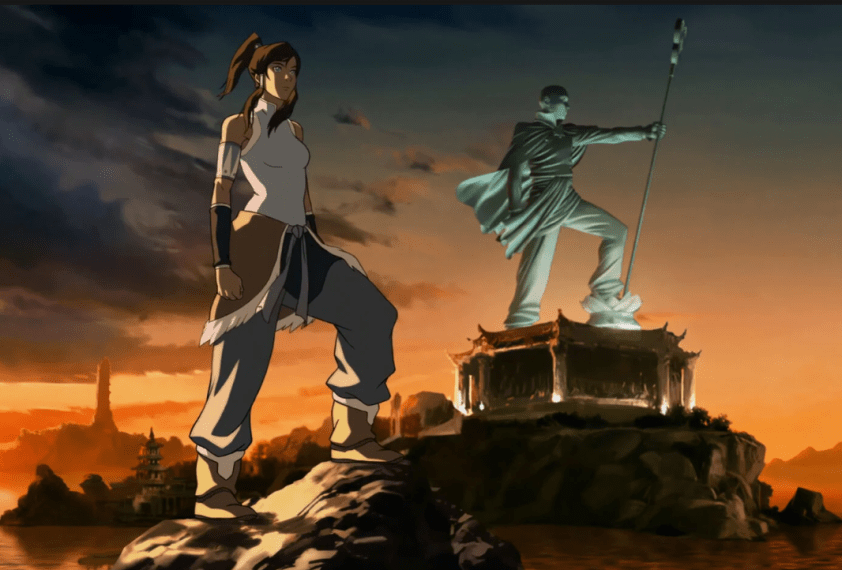
A new Avatar cartoon is coming to Nickelodeon and Avatar Studios. Avatar: The Last Airbender creators Michael DiMartino and Bryan Konietzko celebrated Avatar’s 20th anniversary with the announcement of this new series. Avatar: Seven Havens will be a 26-episode, 2D animated series following a young Earthbender who is the next Avatar following Avatar Korra.
Avatar: Seven Havens will be split into two seasons. Both seasons will consist of 13 episodes and be called “books.” No cast has been announced yet. This is the first mainline TV series from Avatar Studios who are also developing a full-length animated movie based on an adult Aang on a new adventure and set to premiere in theaters on January 30, 2026.

Elon Musk has been busy tinkering with the United States government and tweets hundreds of times daily, but he’s found the time to circle back around to his idea about making an AI-based video game studio. Musk confirmed this past week that he still plans to make an xAI game studio, tweeting, “It’s got to be done. Make video games great again!”
There’s a lot to cover about Musk’s motivations and how he intends to run this new video game studio. Frankly, there’s too much to cover, so I’ll be brief and try to stay neutral. Spoiler alert: I’ll fail. The politics behind Musk starting a completely Artificial Intelligence video game studio stems from an ideology of anti-diversity, anti-equity, and anti-inclusion. I failed already. I wanted to spell out what DEI stands for because it’s easy to dismiss an acronym. The Musk superfan who tweeted his support for an xAI game studio stated that diversity, equity, and inclusion ruined video games. The world’s richest man doesn’t need a reason or encouragement to not pay employees and use artificial intelligence for all aspects of a video game.
I’m done ragging on Musk and his superfan, for the most part. The topic of AI in video games has been hotly debated. Some AI processes that don’t involve GenAI have been deemed useful enough to be used with little controversy. However, that is not true for GenAI being used in artwork, cinematics, script writing, and so on with most developers and studios. If Musk’s idea is to make an entire game based around xAI tech, that raises many questions about how that would work and what the program would produce.
Perhaps this is a coincidence, but video game developers have increased their use of artificial intelligence during the current downturn in video game quality. If anything, AI could be one of the factors in poor video game quality. But it’s not the only one. Work environments have come under fire in recent years. A lack of diversity, equity, and inclusion in video game workspaces has led to hostile work environments. Crunch culture has crushed numerous video game releases. Every studio wanting their share of the live service model has also hurt; not every studio has what it takes or needs to make a live service game. In the current environment, video game publishers have fired talented developers with a smash hit.
In short, video game companies need to show more humanity.

I may not have given Marvel Rivals the highest marks in my review a month ago (you can check out that review by following this link if you want), but the game is a smash hit. The only game that compares to Marvel Rivals’ hundreds of thousands of concurrent Steam players is Fortnite. Marvel Rivals is that popular. And Marvel Rivals’ developer NetEase laid off their entire Seattle office.
NetEase released a statement earlier this week, explaining the layoffs were made as part of “organizational reasons” and to “optimize development efficiency for the game.” This doesn’t make a lot of sense. While developers often bring in extra talent to release a game and then cut ties with contractors after the game releases, Marvel Rivals has the most aggressive release schedule for new characters in a hero shooter. Season 1 has seen the release of the entire Fantastic Four. Overwatch, which Marvel Rivals often gets compared to, releases one character during the same period. Marvel Rivals releases four times as many new characters. Yikes! The video game industry has experienced numerous layoffs in recent years. Even the biggest studios cut the size of their teams or close entirely, but these studios often do that when a game isn’t successful, or the company makes a blunder. NetEase has a runaway hit on their hands and to the best of my knowledge hasn’t made a huge mistake with another title or financial decision, and this still happened. Success doesn’t make one immune from getting fired.
Note: NetEase is a Chinese-owned company. Firing their United States branch may make financial sense if the company worries about international trade uncertainty. Ahem. Tariffs.

Video games aren’t the only entertainment industry that may be affected by new tariffs. Tabletop games have had their issues, too. Food Chain Magnate publisher Splotter says, United States distributor GTS canceled a “large order” for its game Indonesia on short notice, citing uncertainty over further charges to import tariffs in the United States.
US President Donald Trump hiked tariffs on imports from China (where the majority of board games are manufactured) by 10% at the start of February, and last November threatened Chinese goods with 80% tariffs, in addition to a blanket 20% on all imports to the United States. China has responded with a tit-for-tat tariff increase for several types of US products, and Trump’s subsequent threats of further hikes for sectors such as automobiles have made international trade unpredictable.
Splotter, a small Dutch tabletop publisher, said on February 17 that almost all the United States retailers who offered pre-orders for the third edition of Indonesia were having their supplies met through GTS, meaning United States customers would not receive their copies. Designer duo Doumen and Wirsinga (of Splotter) said that a string of United States and Canadian retailers have reached out to secure direct orders from the company, while other distributors and publishers have aided the small business.
Founded in 1997, Splotter specializes in heavy—and I mean heavy—strategy games. Indonesia was first released in 2005 and is the second-highest-rated Splotter game on BoardGameGeek. Second only to Food Chain Magnate.
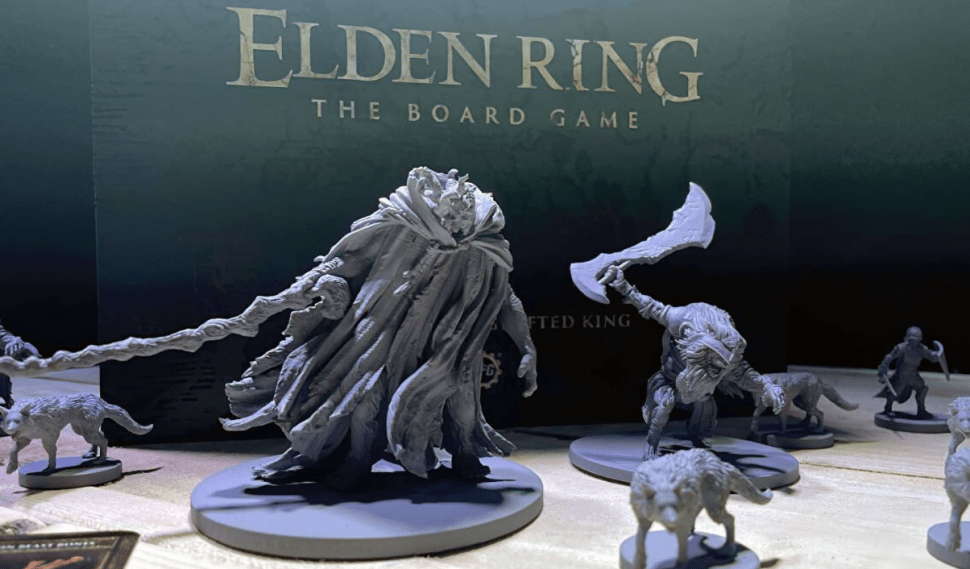
In 2022, Steamforged Games successfully funded a board game based on the smash video game Elden Ring. For years Elden Ring: The Board Game was only available through Gamefound and secondary markets (resale), but the game will become available at most game shops next month. Steamforged Games has a long history of adapting popular video game franchises to board games: Dark Souls, Horizon Zero Dawn, Monster Hunter World, and Resident Evil.
Real talk. I’ve never played a Steamforged Games adaptation of a video game. Their games tend to have high production values and a price tag to match. Many of their base games (specifically the ones I mentioned above) are at least $100. The Realm of the Grafted King is Elden Ring’s official core box. It’s priced at $200. Two expansions function as standalone games. Presumably, one can play the game with either of them. Weeping Penisula costs $120, while Stormveil Castle costs $130. These prices don’t include optional upgrades. So, yes. Steamforged Games can get expensive, extremely expensive, but if you have the money and the inclination, Elden Ring: The Board Game will be available at game stores in March 2025 or on their website https://steamforged.com/collections/elden-ring-board-game.

The original MetaZoo TCG was launched in 2020. Despite the pandemic, MetaZoo found moderate success until the original publisher MetaZoo Games had to file for bankruptcy last year. The card game centers around creatures known as “Beasties” which are inspired by cryptids and other figures from mythology and folklore like Bigfoot, Mothman, and the Jersey Devil. The game’s art style resembled the Pokémon TCG, while its play style felt like Magic: The Gathering. Another company took over the MetaZoo IP and intends to relaunch the game this year. All this is standard fare, but the names involved in MetaZoo’s relaunch have caused the TCG world to buzz.
Rick and Emily Arons, prominent former members of the Pokémon Company, are joining forces with Richard Garfield (creator of Magic: The Gathering) and Skaff Elias (former Senior VP of R&D at Magic: The Gathering). I’m intrigued by these names. But MetaZoo showed promise without these new names. The game had some interesting mechanisms. MetaZoo’s standout feature is its fourth-wall mechanism, where real-world elements, like a player’s seat at the table, can directly influence gameplay and outcomes. I hope MetaZoo brings back some of its original creative team while adding trading card game royalty.
Phew! That was a lot. Thank you for reading, and wherever you are, I hope you’re having a great day.
Hey, hey! Kyra Kyle here. We’re going to do something a little different with this board game list. It’s not a list of starter board games of a specific type. If you want us to continue the starter board game series, let us know. It’s not a top 5 or top 10. Nope. This is a list of 5 great board games with a specific style. Today’s list is 5 Great Word Board Games.
Seeing as this isn’t a top 5 list, the games won’t be in any order. We’re also going to try and stick to different kinds of games within the same style, so this list of great word board games won’t be five different versions of Scrabble…hopefully. Without any further ado, here are the games.

Paperback combines the idea of a traditional word board game (like Scrabble) with a deck-building game. Players must make words with the letter cards they draw (or a combination of letters on a card like “Th” or “Qu”) and they earn money with which to purchase victory point cards or more letter cards to add to their deck for future turns. Paperback balances its two elements well. A player who can slay at word games can dominate that section, but a player who has more experience and can shift their strategy to the cards present in the deck-building array (you’ll have different cards most turns) can use that to their advantage.
Paperback allows multiple paths to victory and that sets it apart from a lot of other board games centered around words.
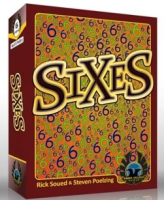
We recently reviewed SiXeS. (If you want to see that review, follow this link.) So, there’s a high probability that SiXeS would make this list. If you don’t want to read the review, that’s okay. We’ll break down the gameplay. SiXeS plays a lot like Scattergories with a twist. Players alternate turns where they want to match the answers to specific questions with their opponents with turns where they want to give unique answers. Unlike other games like Scattergories, SiXeS keeps the gameplay fresh by varying its gameplay each round.

Like Paperback, Letter Go! combines a word game with another game type. But Letter Go! goes in a completely different direction. It combines a word game with a pseudo-dexterity game. While Paperback’s turns can be slow and methodical, Letter Go! is a real-time race to see who can spell a word using the cards at their disposal while following a rule on their dry-erase board. Some of these rules dictate that you must use your non-dominant hand. Others may say the word’s letters need to be wavy or look like flowers. Even more say that you must repeat all consonants you use but not the vowels.
Letter Go! shakes up the common word game. Just because you can think of a word quickly doesn’t mean that you’ll be able to also obey whatever rule card you draw. Talk about leveling the playing field.

I know. I know. Codenames was everywhere for a few years. It’s the gamer’s word game, but there’s a good reason for that. Codenames melds several elements in a fun way. It combines the lateral thinking of TriBond. As the clue-giver, a series of cards with words printed on them stand before you. You can only give a single-word clue accompanied by a number (the number of the cards that match the clue you gave). Your teammates must guess which cards they believe match the clue you gave. But beware, there’s an assassin card. If your teammates choose that card, your team automatically loses.
Codenames has a nice push-your-luck element. As the clue-giver, do you add an extra word or two and make your clue broader? As the guessers, do you continue picking words you think fit the clue or stop after getting one correct? The other team is racing against yours to guess their words. Ultimately, the choice is yours. Choose wisely.
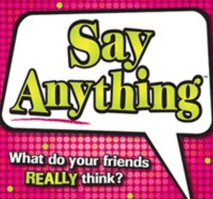
Say Anything is for those who like games like Apples to Apples or Cards Against Humanity. I don’t care for Cards Against Humanity that much, and I got as much out of Apples to Apples without needing to play it any longer. Both Apples to Apples and Cards Against Humanity use pre-printed question and answer cards. There are only so many word combinations you can come up with, but what if you could fill in the blank and provide your own answers? That’s exactly what Say Anything does. You no longer need to find the perfect joke answer for a question. You can write your own joke.
When you’re tired of the same old answers or you don’t want to buy expansion decks for Cards Against Humanity, try buying one copy of Say Anything. The only downside is that you may need to be sober—or at least coherent—to answer the questions.
Say Anything wraps up our collection of great word board games. I’m sure that there are plenty of your favorites that didn’t make the list. Be sure to let us know about them in the comments. And wherever you are, I hope you’re having a great day.




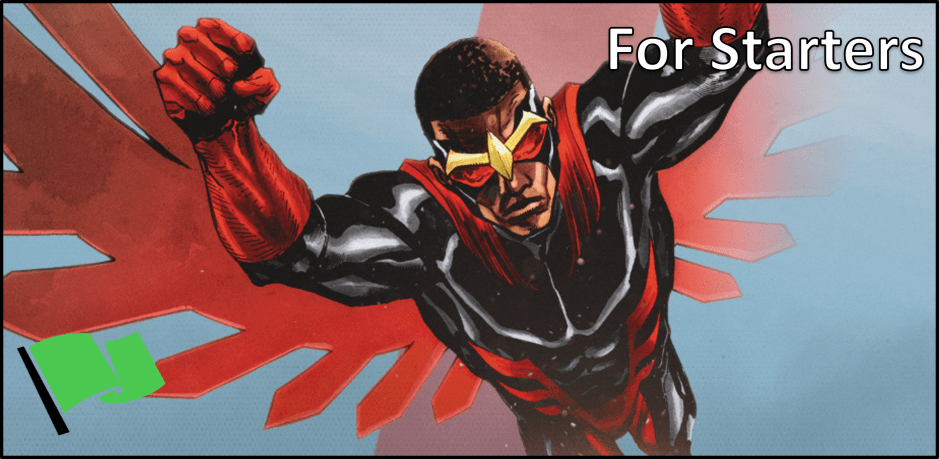
Hey, hey! Kyra Kyle here. Captain America: Brave New World was released yesterday, so we figured we would compile a list of Sam Wilson (Falcon and Captain America) starter stories if you were interested in getting to know Sam better as a character. Today’s post will feature one story with a single comic book issue. The rest will be story arcs composed of multiple comic books. Enjoy!

The events of Sight Unseen mostly take place in Avengers #64. Falcon has recently been drafted into the Avengers. Sam Wilson serves as a diversity hire—the rest of the Avengers more or less make him feel this way—so Sam never truly feels like he’s part of the team. Sight Unseen shows Sam finding his voice and cementing himself as a member of the Avengers. He gains a lot of respect, and this becomes a defining moment in his Avengers career. I don’t want to spoil too much of the plot, but let’s say that Henry Gyrich and Scarecrow make an appearance.

The Coming of…The Falcon technically starts in Captain America #115, but Falcon doesn’t make his first appearance until #117. Before Falcon steps into the action, there are some Cosmic Cube shenanigans where Captain America and Red Skull have a Freaky Friday situation and swap bodies. Sam Wilson sees beyond the exterior and teams up with the Red Skull body-trapped Captain America. Cap teaches Sam some fighting skills and encourages Sam to take on a hero identity. Sam impresses Captain America enough that he becomes Cap’s new sidekick Falcon.

The Falcon Miniseries marks the first time Falcon stepped out of the sidekick role. Sam Wilson returns home. He witnesses a peaceful march resulting in protestors dying. Incensed, Sam shows the world that he is a hero to everyone, even those the government and police refuse to protect. Though written in the 1980s, the Falcon Miniseries remains culturally relevant.
Relationships aren’t the only thing that breaks in the wake of Civil War. Despite surrendering, a gunman kills Steve Rodgers before he can stand trial. Afterwards, Sam Wilson registers his identity per the Superhuman Registration Act, but that’s immediately followed by a new Captain America program, and the person tasked to fill this role is Bucky Barnes. But no one knows where Barnes is; Wilson must find him. When he does, he finds the Winter Soldier in the grip of the Red Skull and Doctor Faustus. It’s up to Falcon to rescue Bucky.

Sam Wilson usually assumes the role of a hero in Marvel Comics, but in 2005’s American Psycho, his loyalty gets called into question. During much of this series, Sam gets involved in criminal activities when something happens that reverts him back to his pre-hero way of life. As one of Captain America’s greatest allies, Steve tries to stop Sam but can’t. When someone shoots Falcon, he snaps out of his trance. The damage has been done, and Sam begins a redemption arc.
Not My Captain America is the first storyline that features Sam Wilson as the new Captain America. Much like the end of Avengers: End Game, Steve Rodgers rapidly ages and can no longer continue as Captain America. Sam Wilson is the obvious choice to replace Steve as Cap. Throughout the story, fewer and fewer people accept Sam, adopting the slogan, “Not My Captain America.” Like many other great Sam Wilson stories, Not My Captain America didn’t flinch when addressing racism in America.

The Falcon and Winter Soldier Miniseries was released in 2019 to prepare fans for the 2021 Disney+ series of the same name. It serves as a fun buddy cop series. While Falcon and Bucky don’t tend to click as well as Bucky and Hawkeye, the Falcon and Winter Miniseries provides a great look at the odd couple. An assassination attempt on Winter Soldier prompts Bucky to call Sam Wilson for help. The two seek out the new leader of HYDRA before the organization can regroup.
I’m sure I missed a story or two on this list. Let me know which Sam Wilson stories you’d choose instead and make sure you note whether the Sam stories are ones of him as Cap or Falcon. And wherever you are, I hope you’re having a great day.
Hey, hey! Kyra Kyle here. We’re preparing for the upcoming Captain America: Brave New World with another Top 5 Villains List. Captain America has an interesting group of villains, to say the least.
We’ll have two official honorable mentions, but I’m going to cheat a bit and add a few in this introduction: MODOK, Batroc, and Adolph Hitler. MODOK stands for Mental Organism Designed Only for Killing. I’d shorten it to MODOK, too. MODOK is a floating head. Batroc’s full name is Batroc the Leaper. He leaps. And Adolph Hitler needs no introduction. Cap spent most of his early days punching Adolph Hitler in the face. With those villains out of the way, let’s get to our official honorable mentions.

Spoiler Alert for one of the MCU’s best films Captain America: The Winter Soldier. Steve Rodgers’ old friend Bucky Barnes is the Winter Soldier. He didn’t make the top villains list properly because even though he was the title villain in one of the greatest Captain America stories and recontextualized Captain America’s past, he became a hero. And he’s stayed a hero for the most part. The Winter Soldier even became Captain America in the comics for a time.
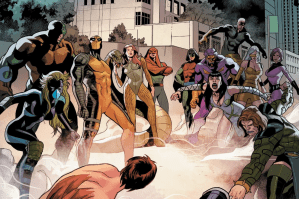
The Serpent Society is a supervillain group rather than one villain, but they deserve a mention, especially since they’ll receive their MCU introduction in Captain America: Brave New World. Several factions exist within the Serpent Society. That’s to be expected since the group consists of dozens of snake-themed villains. Sidewinder, Princess Python, Anaconda, Constrictor, Fer de Lance, Puff Adder, Death Adder, Bushmaster, Asp, Cottonmouth, Rattler, and many, many more are part of the Serpent Society. We’ll have to see what the Serpent Society’s plot will be in the upcoming movie, but I wager it won’t be poisoning Washington DC’s water supply to turn everyone into Snake-People. That happened in the comics once. It took Diamondback rebelling against Madame Hydra’s rule to put an end to the plot.
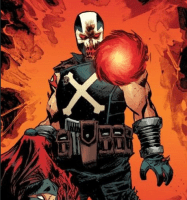
Crossbones is often viewed as a Red Skull henchman—another spoiler, Red Skull will make the list—and he often gets attributed as a Sharon Carter villain. But Crossbones instigated Captain America’s assassination in the comics. Crossbones takes pleasure in murder. He even laughs when the Winter Soldier and Falcon take him down following Cap’s death. In the MCU, Crossbones (Brock Rumlow) was the one who hinted that HYDRA may have infiltrated S.H.I.E.L.D. Near the beginning of Captain America: Civil War, he laughs about the torture he put Bucky through when Captain America apprehends him. Crossbones wears a suicide vest, and Scarlet Witch hurls him toward a building filled with Wakandan relief workers, which causes a rift within the Avengers. Crossbones is more than your average henchman.

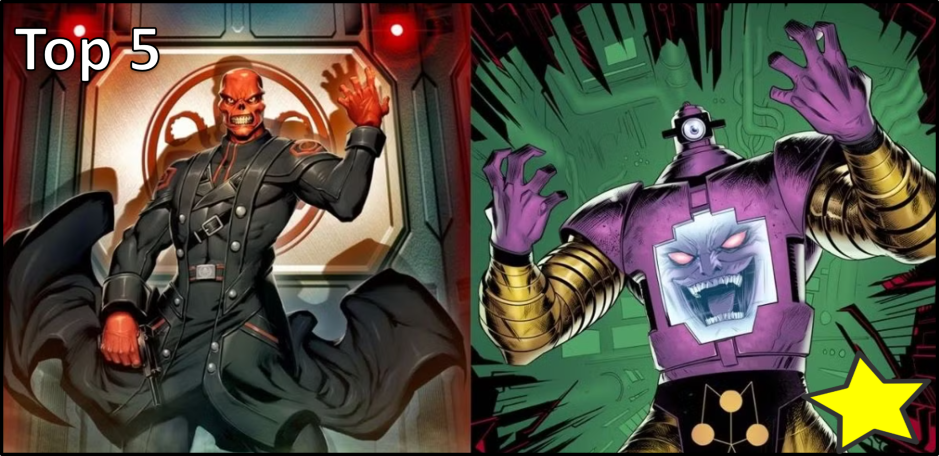
Originally a HYDRA scientist, Arnim Zola conducted numerous biochemical experiments. He messed around with the genes of human subjects and even brought back Adolph Hitler. Zola has a mean streak. He doesn’t care who he teams up with so long as he can continue his experiments. Most of what Zola does is in service of these experiments. He even uploaded his mind into a robot body, granting himself a type of immortality. Don’t let Zola’s goofy appearance of a giant TV screen with arms and legs fool you. Zola is one the deadliest villains in comic book history.

It was Baron Strucker all along. Baron Wolfgang von Strucker founded Hydra in the 1800s. He fought for Germany during World War I and brought the Red Skull into the fold during World War II. It was Strucker who recruited Arnim Zola. Following the end of World War II, Strucker became near-immortal by obtaining the Satan Claw, a strength-enhancing gauntlet. Strucker infiltrated S.H.I.E.L.D. with HYDRA agents. For years S.H.I.E.L.D. fell under HYDRA’s corruption, feeding the villainous group all its information. Decade after decade, Baron von Strucker earned his place as one of the greatest criminal masterminds in comics.
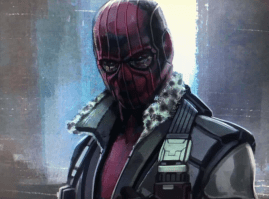
Two characters have taken the name Baron Zemo, a father-son tandem of Heinrich (father) and Helmut (son). I’m cheating—a little—by combining the two characters for this entry. Father Heinrich Zemo was one of the most despicable figures of the Third Reich. He, like Zola earlier on this list, loved testing inventions like ray cannons and disintegration guns on innocent people. He founded the Master of Evil, a thorn in the side of the early Avengers, and eventually killed—or at least we believed he killed—Steve Rodgers’ best friend Bucky Barnes. Following Bucky’s “death,” Captain America kills Heinrich Zemo. Heinrich’s son Helmut Zemo swears vengeance on Captain America. Where Captain America wants to make the world better for everyone, Zemo strives to ruin it because of his vendetta against one man. Helmut Zemo formed the original Thunderbolts, which were villains masquerading as heroes.
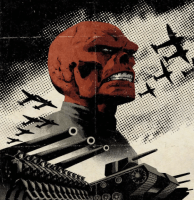
Red Skull appeared in the first-ever Captain America comic book. No other villain has come close to capturing the menace and imagination as Johann Schmidt, the Red Skull. The Red Skull is the antithesis of Captain America. He’s the super soldier experiment gone wrong. His imagery of a bloody skull dressed in a black coat contrasts the symbology of Captain America’s outfit. While Captain America represents the American ideal, the Red Skull did the same for Nazi Germany. Post World War II, the Red Skull has joined forces with HYDRA, a Nazi stand-in, and he continues to clash with one of the oldest comic book characters. No Captain America villain has ever reached the Red Skull’s status and malice.
Who is your favorite Captain America villain? Let us know who you would add or remove in the comments. And wherever you are, I hope you’re having a great day.




 jkgeekly.com