
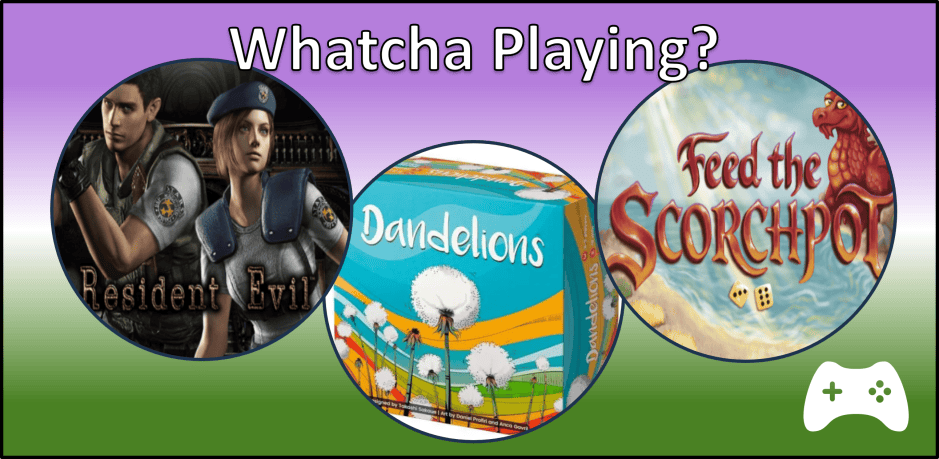
Happy Wednesday, Geekly Gang! Kyra Kyle here. Today, our writers share what they’ve been playing over the past month. Feel free to share what you’ve been playing, because we’re all part of the Geekly Gang. I’ll get things started with what I’ve been playing over the past month.

Kyra’s Video Games
I’ve been playing a lot of games for next year’s indie video game reviews, so many of the games I mention this month will most likely get a review in the not-so-distant future. Feed the Scorchpot officially released a couple of months ago. I played the heck out of the free demo (which is still available on Steam if you want to try out the game). Feed the Scorchpot’s full release suffers from a common problem of roguelike games: too much variability.
Variability may be the most overrated thing in gaming (for board games and video games). Note: variability and replay value are not the same thing. Feed the Scorchpot can offer so many possibilities with each run, that you can end up with an unplayable combination of recipes, board set up, possible buildings, and dice offerings. I prefer the demo to the full release, but the full release is growing on me. The one element that brings me back for more is the dragons themselves. Each dragon has its own set of rules and behavior (the way they punish the player). I know. I know. That’s another level of variability. But the dragons may be the best form of variability that Feed the Scorchpot offers.
I’m not saying games should have “no variability.” Far from it. But pick and choose the best forms of variability. If the game reduced the number of specialty dice, buildings, board layouts, recipes, and perhaps one less ingredient type, while keeping the number of unique dragons, Feed the Scorchpot would easily be a top three candidate for indie game of the year. It still may be a strong candidate for indie game of the year. Catan meets Balatro. What’s not to love?
I’ve also played Balatro a lot this past month. Everything I said about Feed the Scorchpot can be said for Balatro. You can end up with a combination that just doesn’t work. Balatro doesn’t have nearly as many variables as Feed the Scorchpot, nor does it include as much luck. Players need to roll dice in Feed the Scorchpot. Who knows if you’ll get the right die face? Balatro allows players to optimize their decks. Several of my Balatro plays had me drawing into the Joker that makes all red cards and black cards the same suit (clubs = spades and hearts = diamonds and vice versa). I bought that Joker and every copy of Jupiter, loading up my Flush score.
While this strategy was effective, it made the game boring. I wonder which Poker hand I intend to play. Flush again. Wow! (Was that sarcastic enough?) And most of the time, Balatro threw a curveball at me toward the end of the run, and I still lost. Argh!
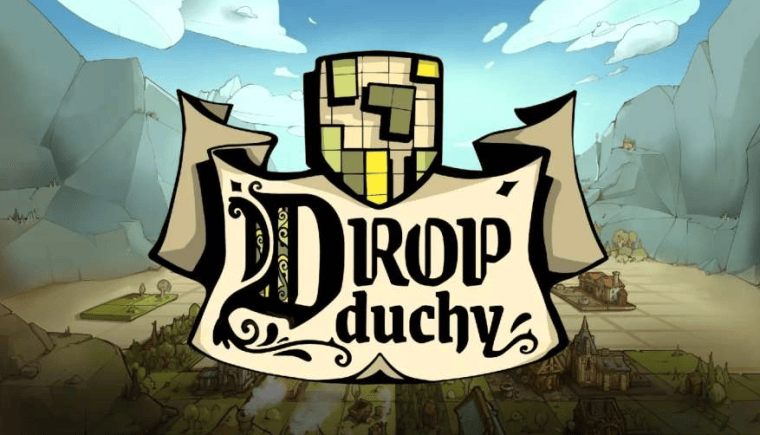
This month is sponsored by roguelikes. Roguelikes: Do you like random number generators? Drop Duchy differs from the previous two games on this list, because I have more control. Or at least, I have the perception of control in Drop Duchy. As the game banner above suggests, Drop Duchy is a take on Tetris. Players are given so many Tetrominoes per round. Depending on the direction you take on your journey (Slay the Spire-style), each region you play has a different distribution of tile types you’ll find. Travel to the forest, and you’ll find more woods. Go to the swamp, and you’ll find marsh. The devious part of Drop Duchy’s design is that you play for yourself and your enemy.
In addition to terrain tiles, you’ll find building (as in structures like castle and barricade) tiles for you and your opponent. Winning the game means placing your tiles in advantageous locations, while minimizing your opponent’s tiles placement. That’s right. If you lose, you gave your opponent what they needed to win. And remember, Drop Duchy is a roguelike. While you can bank one tile to place later (typically, I chose an opponent structure), you may draw into countless enemy buildings before finding one of your own. Yowza!
I love the gameplay of all three of these games, but some runs, it feels like I’m a glutton for torture.

Finally, a game that isn’t a roguelike. I’ve mentioned Apex Legends in the past, so I won’t talk about it too much here. The Geekly Writers have been hopping online in a three stack. It’s a good bonding experience. The gun play holds up years later. Apex Legends was designed from the superb Titanfall video game series (I hope Respawn eventually releases a Titanfall 3). And like the other games on this list, we should have an Apex Legends review sometime early 2027.

Kyra’s Board Games
I haven’t talked about River Valley Glassworks since Scroogecon (in February 2026). Oof! I may need to write a review on this game, too. River Valley Glassworks shows that you don’t need too much variability to have replay value. The components seldom change, but there are plenty of possibilities.
In River Valley Glassworks, players collect river glass by placing glass they have in their pans to the river. Placing a piece of glass by matching the glass shape a river tile requires allows players to take all the glass from an adjacent river tile. The river tile that had its glass removed, shifts to the beginning of the river, and the rest of the river shifts forward. This simulates a river flowing. So clever!
Players place the glass they collected from a river tile on their boards. Each board has seven columns and five rows. Only one color of glass can occupy a column, and since there are eight glass colors, you’ll need to be careful which glass you collect. If you can’t place a glass piece on your board, it counts as negative points. When a player (any player) collects 17 pieces of glass, the game ends, and players score their boards. Filled rows and the two tallest columns score.
River Valley Glassworks plays in a flash. I played a ton of two-player games and most ended in less than twenty minutes. This game also scales extremely well. Even a full compliment of five players takes just over half an hour. The artwork is adorable, the river mechanism is amazing, and the acrylic glass pieces add a lot of toy factor. River Valley Glassworks is easily one of my most played board games of 2026. And it received a sequel: River Valley Jewelcraft. Yay!

I’ve been writing a lot this past month; trying to finish a novel-length manuscript by the end of November. So, I’ve played a lot of games I know by heart. Sixes is another game that often hits the table. Players receive a category, and you’re either trying to match other players’ answers or come up with unique answers. Sixes plays similar to Jinx-O, which I mentioned last month. I like Jinx-O’s ridiculous categories (like name an animal that looks like it’s drunk), but you’re always trying to match other players’ answers. I like how Sixes switches what you’re trying to do each round. Simple, but fun.
Those are the games I’ve been playing this past month. Let’s see what Season and Skye have been playing.
Season’s Board Game
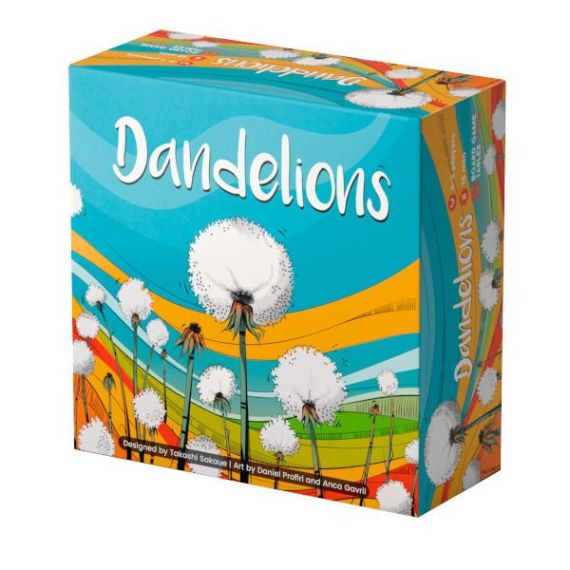
Hey, Geekly Gang! I haven’t been on the game scene much lately. I spend way too much time daydreaming. However, I played Dandelions for the first time during Nuke-Con this past weekend. It’s so cute I want my own copy.
In Dandelions, you play as a floating dandelion trying to spread your seeds. There are five tiles set up in a circle that you drift around based off dice rolls. If you land on an opponent, you float off them and move double your die roll. These spaces ain’t big enough for two dandelions. Even though Dandelions is a competitive game it’s super cozy. I was happy floating from tile to tile. I definitely felt like a dandelion. Dandelions only plays 2-3 players, so I’d recommend it for a rainy day or date night over some dandelion wine. Tee hee!
Skye’s Video Games
Before I start, you’ll probably notice a “certain theme” with my entries. To put it mildly, I’ve fallen down a Resident Evil rabbit hole for the past month that has been legitimately difficult to escape. I suspect I won’t manage to find my way out until after I’ve beaten (and platinum’e’d) every canonical title in the franchise. At least that’s what my doctor tells me. I hope you enjoy this descent into my latest special interest.
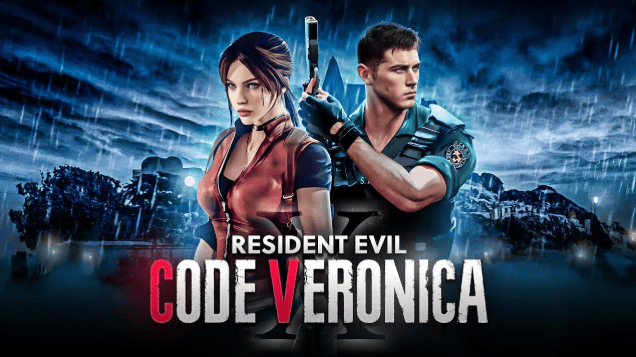
After previously beating both Resident Evil 2 Remake and Resident Evil 3: Nemesis, the next logical step I thought I should take was the game that canonically came next in the timeline: Resident Evil CODE: Veronica. While I enjoyed my time with CODE: Veronica (which isn’t over since I haven’t gotten the Platinum trophy yet), I’ll admit that I underestimated this game. Since I had already beaten two Resident Evil games prior, I thought to myself “I’m starting to get the hang of this; I know what I’m doing.” This would prove to be a big mistake.
I quickly discovered that CODE: Veronica was much more technical and complicated than the games that came before, essentially being Capcom’s idea of a challenge for fans of the franchise. Many of the puzzles I was starting to grow accustomed to were more convoluted, the enemies became stronger, and the resources to defeat them became sporadic. The boss battle formula got turned on its head towards the end, resulting in my repeated agonizing death. Overall, I’m glad I played CODE: Veronica, but it was certainly a humbling experience for me. Side note: Steve can go get burned for all I care.
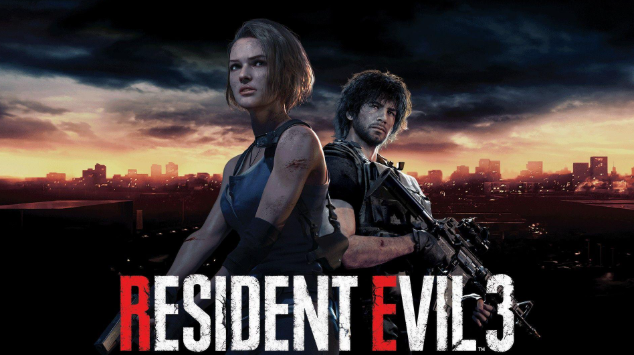
I debated whether I’d even play Resident Evil 3 Remake given what I had heard from RE fans about how insulting it was to the original Resident Evil 3: Nemesis. The most important thing I’ve learned since becoming an RE fan is “Never listen to RE fans,” so I went for it. My verdict: the detractors certainly have a point, but RE 3 Remake is enjoyable as a standalone game.
It stung not seeing things such as the classic black and white decision-making sequences, iconic locations like the Saint Michael’s Clock Tower/Raccoon Park/Dead Factory, and dynamic Nemesis enemy programming. I believe Capcom’s core value in creating this remake was creating a sense of consistency and continuity between this game and the previous: RE 2 Remake. That and if the original RE 3: Nemesis never existed, I’m sure RE 3 Remake would’ve been seen as a weaker yet serviceable follow-up to RE 2 Remake. And when I think about it that way, I can’t be too angry at RE 3 Remake. I can be very angry at it for its bullcrap Stage 3 Nemesis fight on Inferno difficulty followed up by that janky final shot on Nicholai I failed 4 times in a row, but otherwise I can’t be mad at Resident Evil 3 Remake for having a different design philosophy than the original.
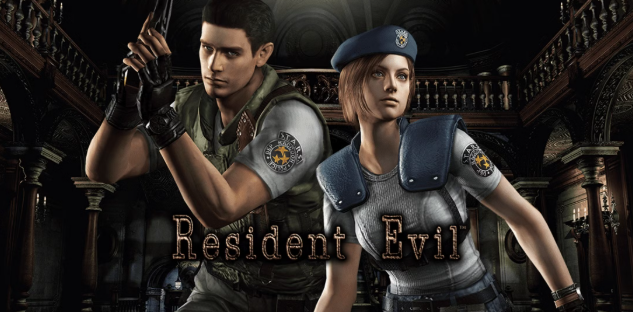
I’m not referring to the Resident Evil HD Remake; I mean the original 1996 classic that started it all. Y’all might think it’s strange how I’d play the first Resident Evil after playing four other Resident Evil games. When I first dipped my toes into Resident Evil, I decided to skip the first game for two reasons. First, I was looking for something that was scary and knew the original Resident Evil was less horror and more of a playable B-movie. Second, I was excited to learn more about the lore of the series and understood that the second game expanded more on the story as the outbreak spread to the rest of Raccoon City
I always knew I would eventually play the original one day. Was it corny? Certainly. Am I going to be quoting my favorite stupid line deliveries from it until I die? Without a doubt. Did I have fun? Of course. Did the twist get me? No, it’s so iconic that I already knew it over a decade ago, but it was still fun to see it play out. Resident Evil is rough around the edges, but the original survival horror experience still got a lot of enjoyment out of me 30 years later.
Hey, hey! Kyra Kyle here again. Those are all the games our writers have been playing over the past month. What’ve you been playing? Let us know in the comments. Thank for reading, and wherever you are, I hope you’re having a great day.

