
Hey, hey, Geekly Gang! Kyra Kyle here with another Top 5 Tabletop Game List throughout the years. 2004 is one of the bigger years for tabletop gaming. If you don’t know now, you’ll learn soon enough. 2004 saw plenty of game-changing titles and at least two evergreens (board games that will sell for decades to come). We’ll get to the board games in a bit, but first, let’s review the criteria for our list.
1: Cultural relevance plays as much of a factor as overall quality. A game might make a list that doesn’t hold up to others of its type, but you must admit the game is everywhere.
2: Only one game from a franchise makes the list. This will become more of an issue the closer we get to games with expansions.
3: Longevity plays a role, too. A game doesn’t have to fly off the shelves today, but it had to have some widespread appeal for a decent time.
Honorable Mention: Saint Petersburg (2004)
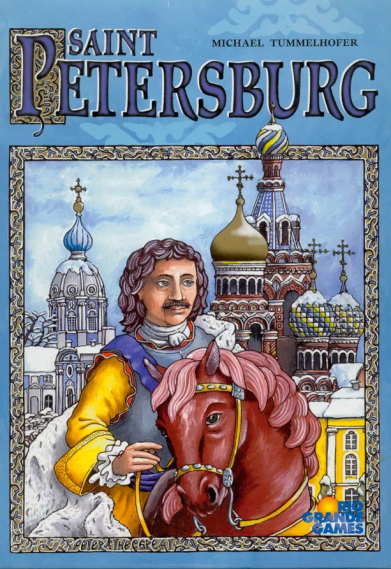
The 2004 list starts strong. Saint Petersburg may not have the most attractive cover art, but it continues Rio Grande Games (publisher of Puerto Rico, Coloretto, and Carcassone) run of fantastic games. In Saint Petersburg, players hire craftsmen, pay for buildings, and snag noblemen as they compete for rubles, glory, and construct the game’s titular city, Saint Petersburg.
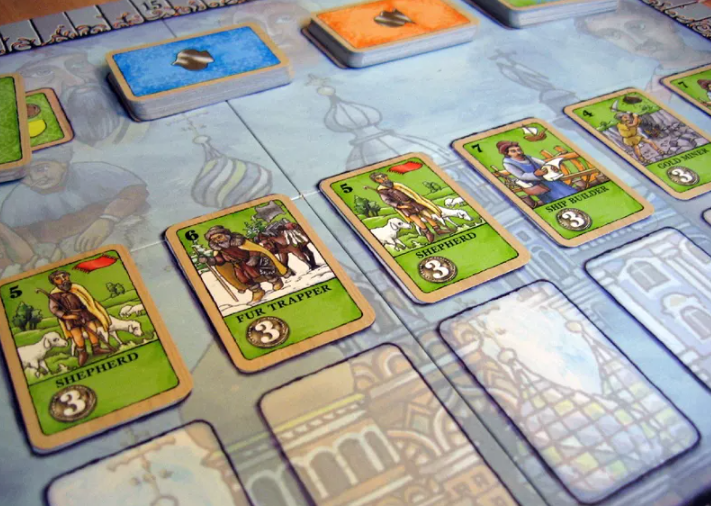
I don’t hear of as many people playing Saint Petersburg as they did when it first released, but it racked up several awards in 2004. Heck, it was a Spiel des Jahres (German game of the year) finalist. This is one of those titles that could benefit from the recent trend of rereleasing former classics with modern, deluxe versions. Who knows? We may see Awaken Realms take on this title in the not-so-distant future.
5: Memoir ‘44 (2004)
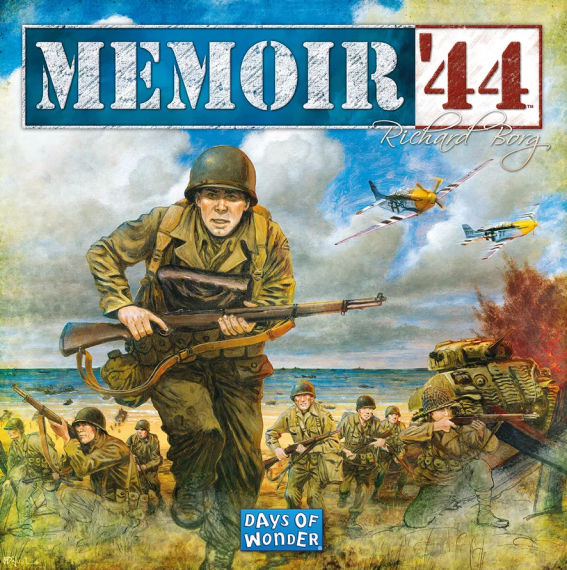
Memoir ’44 claims the fifth spot on this list. Are you kidding me? I try to be as unbiased as I can with these lists. If it were up to my gaming tastes, Memoir ’44 would be much higher, but there are games on this list that have far more cultural relevance. I love Memoir ’44. I don’t even care for “dudes on a map” games or war games, but Memoir ’44 does a fantastic job of making each battle/skirmish in World War II accessible for non-war gamers. I can hear some war game purists balk at this pick, but I don’t care. With background information on each battle, gamers can’t help but learn about World War II intimately and engagingly.
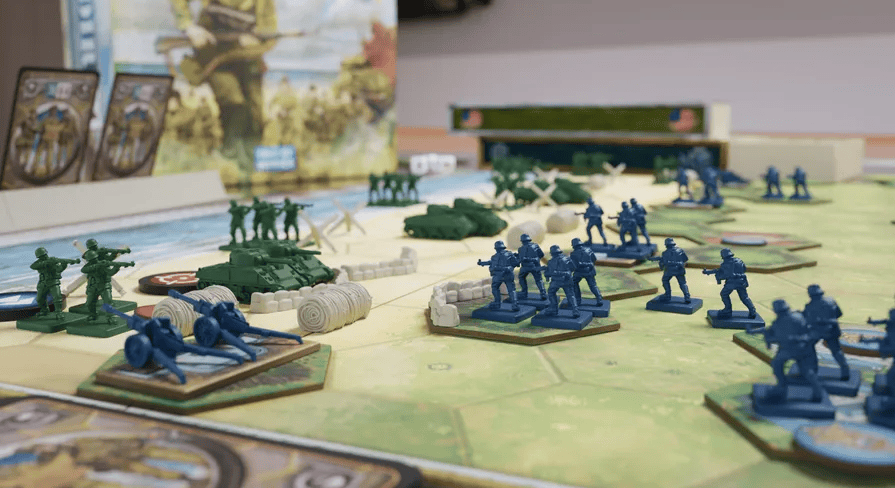
Memoir ’44 is designed for 2 players, and that’s how I play. I’d love to play at least one 8-player game of Memoir ’44 Overlord with a scenario like D-Day (specifically Omaha Beach). Getting back to the main game, since most Memoir ’44 scenarios last around thirty minutes, gamers may take turns playing both sides of each skirmish. Memoir ’44 simulates each skirmish, so if one side won a battle, Memoir ’44 skews the skirmish in that side’s direction. Playing each scenario twice with players swapping sides allows gamers to see who played both sides of the conflict the best. And who wouldn’t want more Memoir ’44 goodness?
4: War of the Ring (2004)
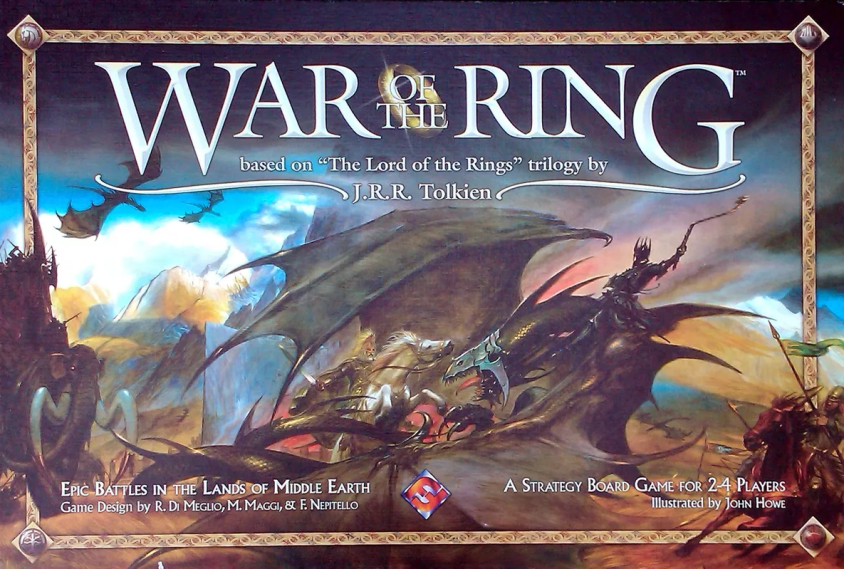
I said in my last entry that I don’t care for “dudes on a map” games, but War of the Ring clearly takes the fourth spot on this list. In War of the Ring, one player controls the Free Peoples, and the other player controls Shadow Armies. If you add a third and fourth player, they join forces with one of the two sides. War of the Ring trumps any other skirmish/war game based on The Lord of the Rings. I’m looking at you, Lord of the Rings Risk. While the original War of the Ring (the 2004 version) was fantastic for its time, this game takes this spot because of its 2011 second edition. War of the Ring: Second Edition still claims a Top 10 spot on BoardGameGeek and easily claims the top spot for that site’s war game category.
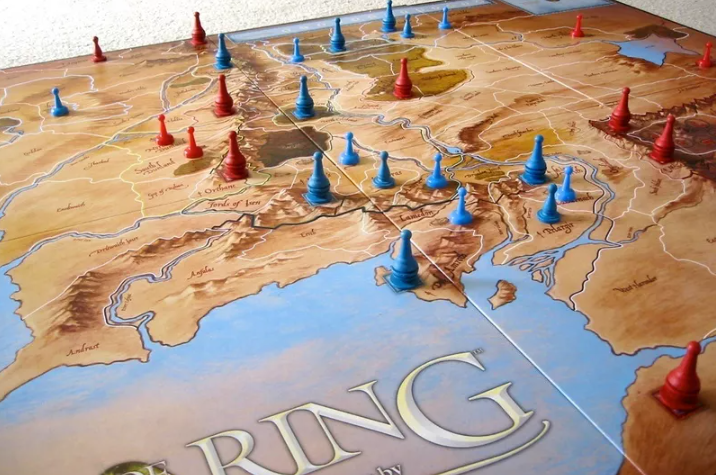
In short, War of the Ring understood the assignment. The game simulates The Lord of the Rings novels. Sure, the game can be won by a military victory. If Sauron conquers a certain number of Free Peoples cities and strongholds or vice-versa, the game can end. But War of the Ring incorporates Frodo’s journey to rid Middle Earth of the One Ring. Brilliant. Simply brilliant.
3: Power Grid (2004)
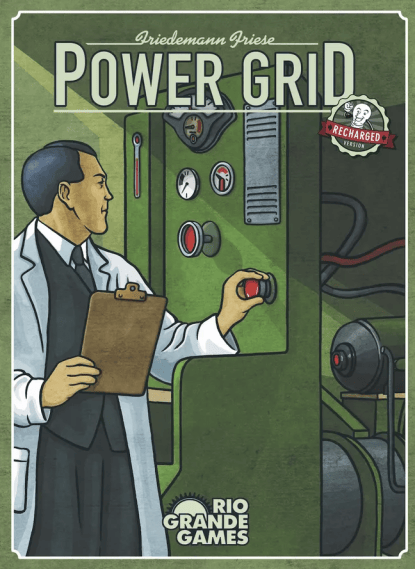
Power Grid is another huge board game release from this year. I can’t believe how stacked 2004 was. I marvel at the game’s fluctuating commodities market to this day. Power Grid was way ahead of its time, and the idea of supplying cities with power through your electric grid in lieu of other players’ grids is neat. Do you go with crude oil? Perhaps nuclear plants. Or even clean energy. Each power plant type presents its own challenges. Each resource that could power a plant has a finite number. If someone hoards coal, you won’t be able to use coal. And then there’s Power Grid’s auction systems. Love ‘em. Absolutely love them.
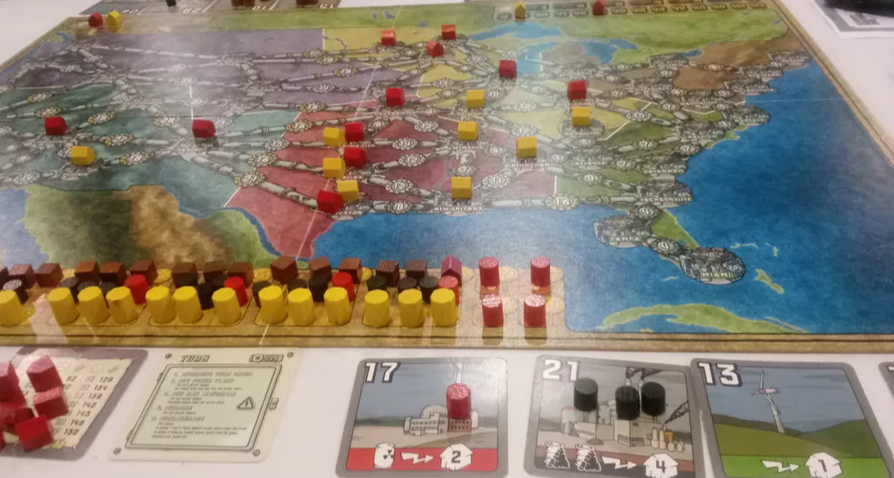
Power Grid’s auction system prevents players from always choosing clean energy, because you’ll need to win the clean energy power plant’s auction. That’s right. Each power plant in Power Grid has a beginning cost, but those costs can skyrocket if players see one player cornering a specific power source. As soon as someone buys their first clean energy power plant, players typically prevent the same player from gaining another. That hypothetical player hoarding all the coal may have issues acquiring a coal-fired plant. Everything works so well in Power Grid. How did it only claim the third spot?
2: Santorini (2004)
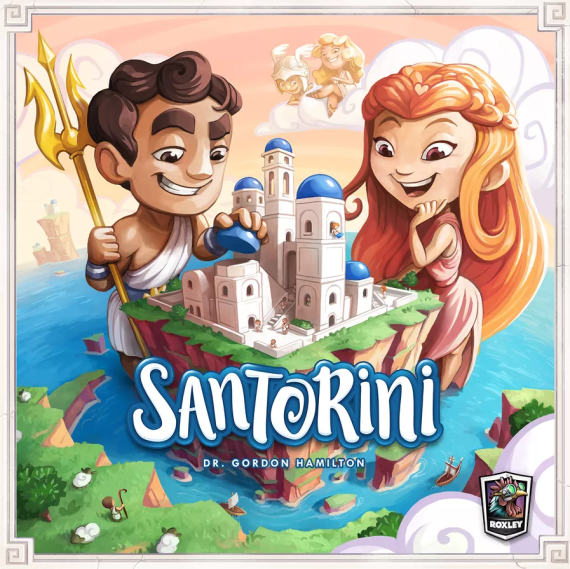
I told you 2004 was stacked with great board games. Santorini is yet another great evergreen, but it was a slow burn. Sure. It sold well in 2004, but didn’t find real success until over a decade later. Remember how I said War of the Ring’s second edition made the title unassailable? Santorini’s second printing in 2016 took the game from a purely abstract game and turbo-charged it with variable player powers and a spiffy new game board.

Look at the gorgeous new Santorini.
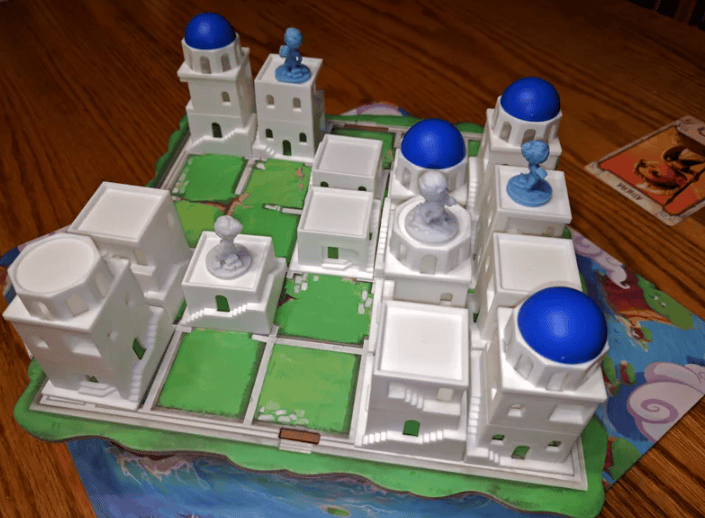
This new version of Santorini took a game with deep gameplay—perfect for hardcore gamers—and made it accessible for an elementary school classroom. Turns are fast. The game doesn’t take long to play. Santorini is one of those easy-to-learn, difficult-to-master board game titles. I’m so glad Roxley updated the title for a wider audience.
1: Ticket to Ride (2004)
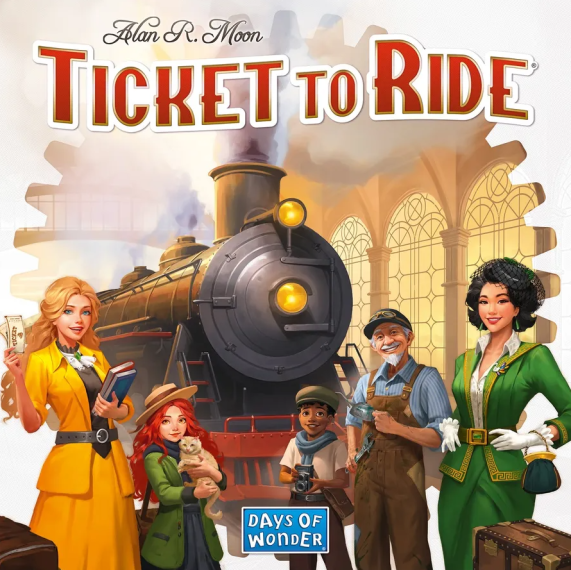
Be honest. Some of you knew Ticket to Ride would claim the 2004 top spot from the beginning. The rest of you knew by the way I described the other games on this list that 2004’s top game must be one of the biggest titles in board game history. Surprise! It is. Like Catan a handful of years before it, Ticket to Ride ushered in a wave of new board game hobbyists.
Ticket to Ride is another game that’s easy to learn but can be difficult to master. Some maps are better than others. The original United States map has some obvious strategies players will use after gamers played the game a handful of times, but that doesn’t mean it isn’t a stunning design. I return to Ticket to Ride often enough, mostly through digital. The idea of a train game using Rummy rules makes Ticket to Ride an easy sell.
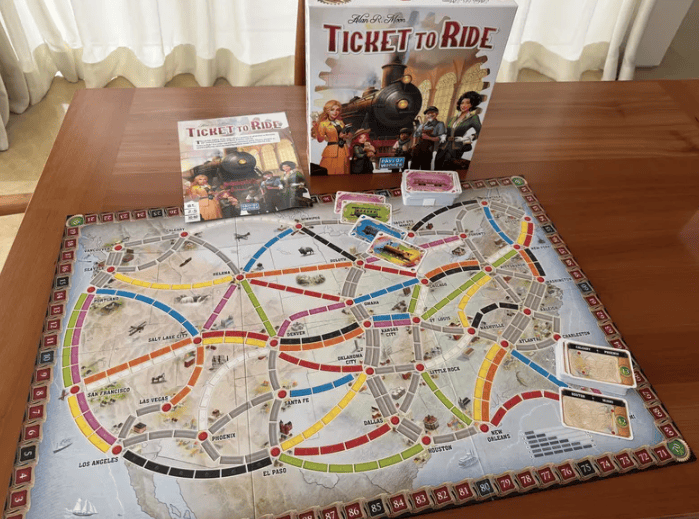
Since its introduction in 2004, Ticket to Ride has become the epitome of a “gateway game,” a game simple enough to be taught in a few minutes, providing enough action and tension to keep new players involved. For many, Ticket to Ride has replaced Monopoly as the game most families have on their game shelf, and for that reason, Ticket to Ride easily claims our top spot on this list.
Did we get the list mostly correct? Let us know which games you’d add in the comments. Thank you for reading, and wherever you are, I hope you’re having a great day.

