Gacha Game Review: Wuthering Waves

Hey, hey! Kyra Kyle here. I’m breaking away from Hoyoverse games with this week’s Gacha game review. Wuthering Waves (WuWa) by Kuro Games is a worthy challenger to Genshin Impact. But how does it stack up against our updated Gacha game review system? If you want to see how came up with the Gacha game review criteria, check out this older post (link here). Let’s see how WuWa fairs.

Mechanisms

Mechanisms: 8/10

Unlike what Genshin Impact did with Zelda: Breath of the Wild, Wuthering Waves does more than just copy Genshin’s mechanisms. Sure, the core gameplay works similarly. A Genshin player won’t be confused moving around WuWa’s world. But movement may be the first improvement Wuthering Waves makes to Genshin’s formula.

Wuthering Waves adds two elements to its movement: a grappling hook and speed running up mountain faces. Genshin Impact has the occasional character that has a grappling hook ability, and Sumeru and the newly added Natlan have the occasional grappling areas. But WuWa gives each player access to a grappling hook. This may not seem like much, but it makes navigating the world a lot easier. And speed running up mountain faces is a blast. Naturally, you run out of stamina faster by running up mountain faces, but I don’t mind. Nothing beats Naruto running up a mountain.

Wuthering Waves even speeds up the glider. I’d like it if the glider were even faster but the fact that Kuro Games, Wuthering Waves’ publisher, listened to fans during their beta test phase and increased the glider’s speed from what it was is a step in the right direction.

Kuro Games has a knack for spicing up combat. Early reviews dubbed Wuthering WavesGenshin Impact meets Dark Souls,” and that’s a bit much. Wuthering Waves has intricate combat, but it’s nowhere near as punishing as Dark Souls. The upper-level content does get close to Dark Souls level. One false move and you lose. Wuthering Waves certainly takes more skill to play than Genshin Impact. The big combat addition Kuro Games makes is intro and outro skills. Each character has one, so team synergy matters.

I’m saving the best for last. Instead of your standard equipment, Wuthering Waves uses an Echo system. Echoes are in-world creatures/entities you can hunt, absorb their essence, and then use them to power up your characters. The Echo system acts like a cross between Pokémon and Final Fantasy VIII’s Guardian Forces. Gotta catch ‘em all.

Gameplay Loop

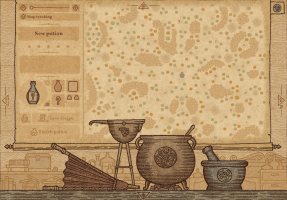
Above Image from GameDesigning.Org

Gameplay Loop: 9/10

The gameplay loop that makes Genshin Impact fun also makes Wuthering Waves fun. It doesn’t hurt that you can play WuWa longer each day than you can Genshin. But I mentioned what makes Wuthering Waves’ gameplay loop better in the previous segment: Gotta catch ‘em all. Echoes are fun to capture. At some point, they do become repetitive. WuWa hasn’t been released very long, so there aren’t as many Echoes to catch as I would like. But as soon as a patch drops, the addictiveness of collecting Pokémon transfers to Wuthering Wave and elevates its baseline gameplay loop.

This simple addition can sometimes make me forget about the grind needed to farm the Echo with the stats and substats I need. And if I get bored, I can hunt for shiny Echoes. Yes. WuWa has shiny Echoes that can spawn occasionally. I want—no need—all the shinies.

Respectful of a Player's Time

Respecting Time: 4/10

The other shoe has dropped. Wuthering Waves improved on some of Genshin’s shortcomings as it pertains to wasting time, but it doesn’t do enough. In other words, WuWa may be too close to Genshin Impact in this category.

The improvements: players auto collect all treasure and loot and faster movement. But players still need to fight domains to use their daily energy and collect leveling materials.  Wuthering Waves has no auto-finish capability. The game assumes a similar stance to Genshin Impact. They created a beautiful world and tasked the player with busy work that could’ve been a click of a button. But, hey, the world looks gorgeous. But I don’t want to fight the same low-level enemy fifty times to gain character upgrades.

Furthermore, some upgrade materials only be obtained by fighting overworld enemies. This becomes tedious. Fast. I also don’t like tracking an enemy to collect those five extra rings I need to ascend Calcharo’s abilities.

Can I include continued slow load times in this category? I will. Wuthering Waves’ launch was mired with crashes and slow load times. Kuro Games has improved WuWa since its launch, but it’s far from perfect. I can still do all my dailies for Honkai: Star Rail while I wait for Wuthering Waves to load its first screen. I’ve tried WuWa on my iPad recently, and I can say that the game still has crashing issues on mobile platforms. Good luck trying to play Wuthering Waves on anything but a PC. Granted, I do believe WuWa plays best on a PC, but I’d like the option.

Battle Pass: 4/10

Most Gacha games have awful battle passes. Sure, you can get some useful items, even some level items that could take you hours to collect in the overworld, but nothing stands out. The battle pass weapons are okay. I have the broadsword equipped to Calcharo. I even like the idea of bonus Echoes. But players get nothing unique from the Wuthering Waves’ battle pass.

Correction: you receive a specialty nameplate the first time you purchase the battle pass. Yeah, that’s not enough. I like getting more stuff, but most of WuWa’s battle pass gives you a reprieve from playing the tedious parts of the game. I’d like it more if Wuthering Waves eliminated more tedious gameplay and added more unique rewards for finishing a battle pass. This would be a great place to add alternate skins. Why don’t any of these AAA Gacha games include skins in their battle passes?

Furthermore, Wuthering Waves’ battle pass inherited Honkai: Star Rail’s battle pass issue. The last dozen or so levels offer the same rewards. Similarly, this makes finishing the battle pass less stressful. I don’t feel like I’m missing out if I don’t finish the final handful of battle pass levels. But it feels worse when you complete WuWa’s battle pass. You’re left with asking, Is that all there is?

Video Game's True Cost

True Cost: 8/10

Wuthering Waves’ Gacha system uses a similar structure to Hoyoverse’s Gacha system. 160 in-game currency gets a player 1 turn of the Gacha crank. But WuWa lowers the turns needed to get a guaranteed 5-Star from 100 to 80. This is a game-changer because Wuthering Waves has a similar flow of in-game currency as a Hoyoverse game, and Kuro Games hands out several free Gacha turns each patch. They’ve even given players a free 5-star, Xiangli Yao.

Furthermore, Wuthering Waves’ weapon banner guarantees the featured weapon on the banner. No more 50-50 chances. Not even a 75-25 chance like Honkai: Star Rail. There’s no need to cross your fingers that you’ll get the weapon on a banner. If you use enough Gacha crank turns (no more than 80), you WILL get the weapon pictured on the banner. WuWa continues this trend with the standard weapon banner. Players choose which weapon they want on the standard banner whenever they get a 5-Star. I’ve used this banner to round out the weapons I have in my inventory, because again, Kuro Games hands out a lot of Gacha turns. Some of these turns can be used for the featured banner, but some can only be used for the standard banners. I’ll use these standard banner turns on the weapons. No question.

Story or Narrative

Narrative: 5/10

No one plays Wuthering Waves for its story. That said, WuWa’s story has improved since the first chapter. That first chapter was brutal. The second chapter, which was also released at launch, elevated Wuthering Waves’ story to about a 3 or 4. Kuro Games has improved the story with each patch, raising the score to average. If things continue this way, WuWa could reach Hoyoverse narrative levels and hopefully beyond.

But that first chapter. I won’t sugarcoat it. You won’t be able to finish it fast enough.

Storytelling

Storytelling: 4/10

Wuthering Waves doesn’t struggle as much as Genshin Impact does with telling their story, but Honkai: Star Rail has a much better setup for a serialized story. WuWa marks time far too long before the story gets off the ground. I had to dock the storytelling quite a bit. The pacing leaves a lot to be desired. I believe there is a skip function; you may want to use that a lot in the early going.

While the story picks up as you get deeper into the narrative, Wuthering Waves hasn’t found its balance between providing beats that progress the story forward, character backstory, and reintroducing characters. I feel like I’m always meeting Chixia, Yangyang, and Baizhi for the first time, and not in a good way. Every time WuWa reintroduces a character, it plays out like an anime recap. Skip!

You could skip a story beat, but you may not know if you’ll miss something important. I tend not to skip, and I shouldn’t have to skip. Wuthering Waves needs to drop their recaps. I also worry that Abby, the potential WuWa mascot, could turn into another Paimon. I like Abby more than Paimon. That’s not hard to do. But I still worry that Wuthering Waves will push a somewhat obnoxious character. We were doing so well without one of these in the game. Note: Abby was introduced in the most recent chapter.

Presentation; User Interface: 8/10

Wuthering Waves continues the trend of good but could be improved user interfaces in Gacha games. It even has a quick radial menu like Honkai: Star Rail’s for its gadgets. It’s too bad WuWa doesn’t continue this with the rest of its menus like HSR does for theirs. I still gave Wuthering Waves an 8 for User Interface because it does a better job than Genshin Impact. The menus have fewer sub-subcategories than Genshin. That’s a huge plus. I’d like to see even fewer sub-subcategories.

I can’t imagine playing Wuthering Waves on a small screen. While the character portraits in the top right-hand corner work, they can get lost in a busy screen. PC players don’t have too much issue with this, and my iPad does well enough. A phone would be impossible—at least for me. I already keep the sound on so I can hear the chime that lets me know my other characters have their intro skills ready.

Presentation; Graphics and Audio: 8/10

Speaking of sound, that brings us to the audio and graphics. Wuthering Waves has superior graphics to Honkai: Star Rail, let alone Genshin Impact. But it scores lower because of its audio. While WuWa’s main theme does get stuck in my head, the rest of the music is mostly forgettable. The music is good, don’t get me wrong. But Kuro Games hasn’t reached the same level with their music storytelling as Hoyoverse either. I don’t think any Gacha game company will reach Hoyoverse’s music storytelling unless that company invests millions of dollars in the music alone. That could be the case for Kuro Games’ next release because Wuthering Waves has made a lot of money.

As I said, Wuthering Waves has superior graphics to Honkai: Star Rail. But the graphics alone don’t make up for Hoyoverse’s audio. And I’m a little weirded out by WuWa’s giggle physics. I get that giggling breasts act as fan service, but some character models like Zhezhi and Baizhi have breasts that never stop moving. What is this, Perpetual Motion Boobs? I can’t stop laughing at the absurdity. Every player obtains Baizhi. I challenge you to click on her character profile as if you were going to upgrade her abilities and start a stopwatch to see how long her breasts move. She’s not even moving. Perpetual Motion Boobs. PMB, y’all.

Aggregated Score: 6.44

Wuthering Waves is a worthy challenge to Genshin Impact. I call it the superior game, but I also get that Genshin has a loyal fanbase of several years. I don’t believe WuWa will ever reach Genshin levels of popularity. But it doesn’t need to. It can cater to the fans who like the flow of Genshin Impact but want more of a challenge.

Kuro Games has proven that they want to give their gamers the best experience they can. Wuthering Waves had a disastrous launch, and Kuro Games did everything they could to improve the game and listen to fans. You can tell Kuro Games cares about Wuthering Waves. And that’s refreshing. I can’t wait to see what Kuro Games plans to do in the future.

Gacha Game Review: Honkai: Star Rail

Hey, hey! Kyra Kyle here. I return with another Gacha game review. This week’s review will cover Hoyoverse’s Honkai: Star Rail (HSR).

HSR improves upon Genshin Impact’s graphics (if you want to read our review on Genshin Impact, follow this link) and merges elements of older Gacha games with the improved production quality found in modern Gacha games. How does Honkai: Star Rail hold up against our updated video game criteria? (If you’d like to see the Gacha game review criteria, you can follow this link.) Let’s see how Honkai: Star Rail fairs.

Mechanisms

Mechanisms: 7/10

Honkai: Star Rail is a turn-based JRPG (Japanese Role-Playing Game) at its core. It doesn’t deviate too much from the formula set by games like classic Final Fantasy titles, Dragon Quest, Octopath Traveler, and the Pokemon series. Turn-based JRPGs inspired many of the first Gacha game titles, so again, HSR doesn’t stray too far from its roots, but it does a couple of things that elevate its Mechanisms score beyond an average five.

Like Pokemon, all enemies have an elemental Weakness. Using a character with an element that matches an enemy’s weakness will result in extra damage. Nothing out of the ordinary yet. Honkai: Star Rail shakes this up just a bit by adding a Weakness bar to each enemy. If a player lowers the Weakness bar (which functions like a second health bar), the enemy becomes vulnerable and won’t attack for at least one round.

Honkai: Star Rail characters not only have an element, but they also have a path they follow. These paths aid players in building teams. Abundance path characters heal. Preservation characters shield themselves/teammates. Path of Harmony characters buff teammates, while Nihility characters debuff enemies. The remaining three paths (Destruction, The Hunt, and Erudition) feature HSR’s main damage dealers. Honkai: Star Rail explores what each one of these paths means, so it gets more convoluted than this. Overall, the path system works.

Gameplay Loop

Image from GameDesigning.Org

Gameplay Loop: 7/10

Honkai: Star Rail’s region-based map (as opposed to an open-world map) does mean that players can run out of things to do faster than in Genshin Impact. But I appreciate that. I’ll go more into that in the next segment. Getting back to HSR’s gameplay loop, it uses a lot of the same tricks as classic turn-based JRPGs. You’ll need to grind, but the grinding gets time-gated, meaning that you can only do so much grinding each day. Honkai: Star Rail includes an auto-battle system, which improves the grinding experience even more. Again, I’ll discuss that in “Respecting Time.”

I enjoy the events and timed content in Honkai: Star Rail more than Genshin Impact or even Wuthering Waves. HSR reduces the element of FOMO (fear of missing out) by allowing players to play older and major timed events. You can even play an event, not finish it, and return to it months later. This is a game-changer. I can duck out from Honkai: Star Rail and return to it not feeling like I missed too much. Some older Gacha games included a catalog of older events. I don’t know why Gachas like Genshin Impact and Wuthering Waves insist that their player base will play every event or suffer the consequences.

Respectful of a Player's Time

Respecting Time: 8/10

In this first group of Gacha games I covered, Honkai: Star Rail does the most to respect a player’s time. The auto-battle system I mentioned before is a godsend. I can set up a battle and let the game play itself. There’s little to no need for me to do actual grinding. This system reminds me of auto-battling in the original Final Fantasy Tactics. I let my Playstation run overnight and ended up with a powerful team the next morning. Honkai: Star Rail’s system doesn’t allow for that, but it’s close enough.

I like the auto-battle system a lot, but I would prefer a system more like Punishing: Gray Raven’s (part of the second set of Gachas I’ll cover), which allows players to clear a domain once and then auto-clear the domain again, multiple times in seconds. But an auto-battle system is better than forcing gamers to play the same domain over and over like Genshin or Wuthering Waves. I’ll take it. But the lack of an auto-clear function lowers Honkai: Star Rail’s “Respecting Time” score.

Honkai: Star Rail also has a better character-build suggestion system than Genshin Impact or even Wuthering Waves. Gamers can see suggestions for the equipment they should use for each character at a glance. Genshin added this function years later, but HSR included this system at launch and HSR’s system is more robust. Again, I’d like to see HSR adopt another Punishing: Gray Raven function, which allows gamers to see which team compositions other players use. This wouldn’t stop me from looking up guides online, but it would immediately after picking up a new character. I like having a brief roadmap.

Then, there are a few smaller things that add up. Honkai: Star Rail uses an assignment system like Genshin. The assignment system has gamers sending their characters out on expeditions once daily. After the time elapses, gamers receive the items the characters went out on assignment for. Unlike, Genshin, gamers receive more items they’ll want Honkai. Things like character upgrade materials. Items from chests, breakable items, and enemies are automatically collected by the gamer. No need to run around a mountain face collecting treasure. Players can set their playable character as sprinting, so they will run faster consistently, instead of sprinting for a second and forcing the player to constantly press sprint.

While there is at least one other Gacha that respects its player’s time more, Honkai: Star Rail does a great job at minimizing the tedium. HSR deserves a high “Respecting Time” rating.

Battle Pass: 4/10

Hoyoverse, Honkai: Star Rail’s publisher, doesn’t do the best with battle passes. I gave Genshin Impact an identical score. I could’ve given HSR a five instead because they did include self-modeling resin (which allows players to craft equipment with specific main stats), but the battle pass weapons (light cones in this case) leave a lot to be desired, and Hoyoverse hasn’t changed Honkai: Star Rail’s battle pass since its launch a little over a year ago. I hold little hope that Hoyoverse will improve HSR’s battle pass.

That said, it’s far more difficult to complete HSR’s battle pass than it is Genshin’s. That’s because Genshin’s BP can be completed in a couple of weeks. Another element that lowers Honkai: Star Rail’s battle pass score is that gamers receive the same reward for the last twenty or so levels of the battle pass. Wuthering Waves does a similar thing. This does make finishing the battle pass less stressful. I don’t feel like I’m missing out if I don’t finish the battle pass because I’m just getting the same thing. But it does feel worse when you complete HSR’s battle pass. There must be a good middle ground.

Video Game's True Cost

True Cost: 6/10

While not as generous as other games (I’m looking at you, Wuthering Waves), Honkai: Star Rail does a great job of keeping the Gacha costs lower. HSR beats the pants off Genshin. That’s not saying much. The character banner stays mostly unchanged from Genshin to Honkai: Star Rail. I never had too much of a problem with Genshin’s character banner. A 50-50 chance of getting a banner character followed by a guaranteed banner character after failing to win the 50-50 is fair. The game needs to make money.

Genshin’s issue stems from its weapon banner. Honkai: Star Rail reduces the number of times a gamer needs to lose the featured light cone from twice to once. Furthermore, HSR increases the likelihood of gaining a featured light cone from the banner from 50-50 to 75-25. Players are almost guaranteed the banner weapon the first time. Again, Wuthering Waves ups the ante by making it a guarantee, but we’ll get to our Wuthering Waves review. I promise.

Honkai: Star Rail also provides enough stellar jade (the currency needed for Gacha turns) to get at least one five-star character or light cone. The five-star may not be the one featured on the banner, but each player is almost guaranteed one five-star each patch. Genshin players sport less. Couple the fact that Honkai: Star Rail gave away Dr. Ratio, a stellar five-star damage unit, and the rumor that they intend to do something similar on HSR’s next anniversary and can’t deny that HSR is above average for “True Cost.”

Keeping the needed Gacha turns to guarantee a five-star on a banner at 100 prevents Honkai: Star Rail from getting an even better score. I don’t see this changing. Hoyoverse is married to 100 Gacha turns.

Story or Narrative

Narrative: 6/10

I like the Genshin storyline slightly more than the Honkai: Star Rail story. That doesn’t mean that HSR’s story is horrible. It’s quite good. I may also need to play more of the story. Genshin has a few more years of storytelling on Honkai: Star Rail. What exists in the story is great. It even facilitates the flow of a Gacha better than Genshin.

In Genshin, gamers search for their missing sibling. The sibling story gets lost when exploring new regions. In HSR, the player’s character gets a mysterious object named a Stellaron placed inside their body. Stellarons function like planetary cancers. Each planet the player visits will have a Stellaron wreaking havoc on it, so each planet links the player character’s story with what’s happening during that specific planet’s story. Gachas release their stories slowly and over time, almost like serial storytelling. Honkai: Star Rail’s premise works better with a serial story.

That said, Hoyoverse doesn’t deliver the best stories in gaming. I may grade HSR harsher because it follows a turn-based JRPG lineage. Turn-base JRPGs are known for better stories.

Storytelling

Storytelling: 5/10

I mentioned this in the previous segment: Honkai: Star Rail has a better setup for serialized storytelling. Hoyoverse still manages the story, and Hoyoverse exhibits horrible storytelling tendencies. Honkai: Star Rail doesn’t have a single character as annoying as Paimon. A few over-the-top characters like March 7th, Bailu, and Yunli do pick up the annoying slack. And you still can’t skip any of the dialogue.

Also like Genshin, HSR does a great job with character stories. I get more out of individual characters than I do from the main storyline. And the storytelling tends to get chopped into pieces and thrown around. But not as much as Genshin’s. I can keep up with the story by watching HSR’s official YouTube channel. That’s a huge plus. Still, I’d like to have gotten more of Acheron and Black Swan’s meeting in Honkai: Star Rail’s gameplay. There are fewer places to search for HSR’s story. But I shouldn’t have to search for Honkai: Star Rail’s story.

The most recent couple of patches (2.4 and 2.5 as of me writing this) concern me in terms of HSR’s storytelling going forward. One patch started a filler storyline of a villain escaping their jail cell. Our main cast is stuck in prison with this villain at the prison’s entrance, and the story stops. To be continued flashed across the screen. I don’t like that. It took me out of the story as I could play these characters outside of the prison. There’s no way a story chopped up like that can keep gamers immersed.

The funny thing is that I don’t recall the main storyline having that hard of a break from one patch to the next. Honkai: Star Rail did a good enough job of leaving the main party in a precarious spot, keeping me wanting more, but also giving me an out for continued play until the next patch release. Why do something like this for a filler patch’s story?

Presentation; User Interface: 8/10

Honkai: Star Rail continues the example set by Genshin Impact. HSR has a clean interface that’s easy to read and comprehend. It still has a few too many sub-subcategories, but not as many Genshin Impact. HSR does a good job of showing the most pertinent information. The quick-select menu is where Honkai: Star Rail puts in the most innovation.
Full disclosure: I play HSR primarily on PlayStation 5. The quick-select menu may work a bit differently on another platform, but Honkai: Star Rail allows me to hold down one button and rotate a joystick around to select what I want from a circular menu. Genshin tries this but I prefer moving a cursor as opposed to pressing two buttons at once. With Genshin’s quick select menu, I must read what each button does. HSR’s quick select menu is far more intuitive.

Presentation; Graphics and Audio: 10/10

Honkai: Star Rail’s graphics improve upon Genshin’s graphics. But graphics aren’t the reason why HSR receives a perfect score. The audio can’t be beat. Honkai: Star Rail’s soundtrack does double duty. It’s memorable but also adds to HSR’s storytelling. I struggled with adding HSR’s soundtrack to its storytelling score. Music theory YouTuber Jonathan Barouch does a great job of breaking down what makes Jarilo VI’s soundtrack so amazing. You should check out his deep dive with this link. So good!

Spoiler alert for Jonathan’s video: he shows the viewer how Honkai: Star Rail music reflects the story’s characters. No fooling. So much thought and care went into the making of HSR’s music. This won’t be the last time you’ll hear from me that Hoyoverse invests a lot into their audio production. Also, make sure you check out Jonathan Barouch’s channel. Hoyoverse soundtracks feature a lot in his work, but he covers more than Hoyoverse games. I like his videos about the NieR series, too.

Aggregated Score: 6.78

Honkai: Star Rail suffers from many of the same shortcomings as Genshin. Storytelling and battle pass issues persist. But HSR takes several steps in the right direction (not wasting as much time) to make me think that future Hoyoverse projects can and will get better. HSR even manages to improve upon one of Genshin’s strengths, the user interface.

Hoyoverse tends to shift its assets and focus to newer projects, but Honkai: Star Rail is new enough that it’ll take some time before it begins to suffer from brain drain. I’ll enjoy the ride while HSR continues delivering the goods.

Top 10 Worst Origins for Mega Man Robot Bosses

Hey, hey! Kyra Kyle here. We’re taking a break with the Top 5 Tabletop Games through the years and decades and taking a detour with Mega Man. This list will try to pin down the ten worst Mega Man Robot Boss origins.

Some of these origins will be humorous or downright silly. Others may be tragic. Mega Man robot boss origins run the gamut of both origin types. So, let’s start with the sometimes sad, sometimes weird origins of Mega Man Robot Bosses.

Pirate Man Mega Man

10: Pirate Man

Companies made most if not all Mega Man Boss Robots to serve functions one might need like snow rescue (snow-themed robots like Ice Man) or construction robots (like Guts Man). Why did a company manufacture a robot specifically for piracy? Furthermore, why did that company name him Pirate Man? And why didn’t another company call them out on making a robot named Pirate Man?

Pirate Man? I’m sure that’s legit.

Bright Man Mega Man

9: Bright Man

Scientists created Bright Man so he could illuminate dark places. He’s a flashlight, a sentient flashlight.

Magic Man Mega Man

8: Magic Man

Magic Man was a traveling magician. Unlike most of the Mega Man Robot Bosses, Magic Man wasn’t turned evil. He chose to join the dark side so he could show off. Never trust a magician.

Blade Man Mega Man

6: Blade Man

Blade Man was a tour guide. A shocking number of Mega Man Robot Bosses started off as tour guides. Blade Man guided people through a castle filled with swords and he himself was a sword.

No one saw Blade Man turning evil. They didn’t see him as a threat, even though he’s a literal weapon.

Time Man Mega Man

5: Time Man

Time Man is a time machine. That always goes well. No further notes.

Magma Man Mega Man

4: Magma Man

Magma Man was a production plant safety inspector. My father had an adjacent job, but the last I checked, he wasn’t made of molten lava like Magma Man.

Shade Man Mega Man

4: Shade Man

Someone saw a creepy animatronic ghost in the corner of an amusement park and thought, that creepy ghost should have sentience. What could go wrong?

Clown Man Mega Man

3: Clown Man

Clown Man runs around, acts a fool, and never tires. Kids cry whenever Clown Man works a birthday party. What could possibly go wrong? Turns out. Everything. This is a Joker who can live forever. Great.

Torch Man Mega Man

2: Torch Man

Torch Man was another tour guide, and he gave tours in national forests. Torch Man was the Mega Man universe’s version of Smoky the Bear, only he’s on fire. He’s constantly on fire. I assume his slogan was, Only I can cause forest fires.

Bounce Man Mega Man

1: Bounce Man

Bounce Man’s first job was as a Crash Test Dummy. That may not sound bad, he’s a robot after all, but all Mega Man Robot Bosses are sentient. Which means these robots feel pain. Some jerk scientist thought why not make a robot used for smashing into things at hundreds of miles per hour capable of feeling pain.

You know what. I could see someone creating a robot like Bounce Man. Humans can be the worst.

Did we get the list right? Let us know in the comments. And wherever you are, I hope you’re having a great day.

Gacha Game Review: Genshin Impact

Hey, hey! Kyra Kyle here. I’m kicking off these gacha critiques with Genshin Impact. I have two logins (one for PC and the other Playstation), so I’ve spent plenty of time in Teyvat (the world Genshin is set in). But I’ve only recently revisited the game. The new continent Natlan brought me back. So, what does Genshin look like in over a year? The graphics are dated but not as bad as I would’ve thought. The oversaturated colors bugged me. They’re loud. So loud that I almost grabbed a pair of sunglasses to shield myself from the glare. The music was always great, almost iconic. But these are surface-level viewpoints. How does Genshin Impact hold up to some of these new or updated video game criteria that we talked about in yesterday’s post? As it turns out, not too well.

Mechanisms: 5/10

Genshin conducted a massive copy paste to Zelda: Breath of the Wild’s mechanisms, so you won’t find too many innovative game mechanisms. The mechanisms that are here work well, even if they are dated, but more on that in the following segment. Is there anything left to say than Genshin’s mechanisms whimper banal?

Above Image from GameDesigning.Org

Gameplay Loop: 8/10

It worked in Breath of the Wild, and it works here. The core gameplay loop can keep players engaged for countless hours. That can be a good and bad thing. Elemental reactions play a huge role in Genshin’s combat, so players will often switch characters. Breath of the Wild only has Link. The physical swapping of characters goes a long way to hold a player’s attention, and it doesn’t hurt that players need to build more than one character and that each of these characters have different interactions.

Respecting Time: 2/10

Genshin does little to respect a player’s time. It’s an older game, four-years old at this point, and it shows its age. As I mentioned previously, Genshin borrows most if not all of its gameplay from Zelda: Breath of the Wild and that includes the glacially slow glider and snailing up mountain faces. And there are so many mountain faces. But it goes deeper than that. Repetitive storylines and dialogue with no way of skipping said dialogue can make me want to rage quit. The game time gates upgrade materials. One can only farm materials on certain days of the week. I forgot about this in my year off. Why can I only farm skill scrolls on specific days? It makes no sense.

And speaking of these upgrade materials and skill scrolls, one can’t skip the domains these items can be found. You must defeat the same bosses or mid-level bosses every day. Every. Day. I miss older gachas. They knew they were mobile/timewaster games and allowed players to skip. I’ve beaten this level with a five-star rating before, so I can spend my energy and auto-clear this domain. The trend of disabling auto-clear in gachas began with Genshin. Hoyoverse assumed the attitude of “I created a robust world with better graphics and demand you see this world as much as possible, even if it’s repetitive.” Ugh!

It takes one-two minutes to defeat these domains. That’s not that long but considering you could clear about eight to twelve a day, that’s a good ten-twenty minutes. It’s half that if you use condensed resin (which acts like finishing the domain twice in one go), but you also need to farm the items with which to make condensed resin, and we’re doing the time warp again. And not in the fun Rocky Horror way. These domains don’t sound like they take long, but time adds up fast. Genshin also offers daily tasks which don’t take that long, but they’re daily tasks and they can last up to five minutes. It’s a lot of busy work with not enough pay off.

And it goes even further with minor time wasting inconveniences. Items burst out of things. I don’t know how many times I’m on a mountain face, open a chest, and the treasure spills down the mountain. Really? Auto-collect the treasure. And I can’t interact with things like a waypoint for the first time if an enemy spots me. I don’t have to see the enemy. Half the time I’m scratching my head wondering where the enemy is. Genshin invents new ways to waste time. But it’s super easy to finish the battle pass. That’s a huge plus.

Battle Pass: 4/10

Genshin doesn’t really require a player to purchase its battle pass. I advise purchasing the battle pass once annually because some extra goodies can go a long way, but one can get by without it. And if that was all that mattered, I would’ve given Genshin top marks.

Unfortunately, Genshin has seen few upgrades to its battle pass in four years. There has been one major inclusion: artifact experience items. Genshin Impact is playing with a player’s ability to build their own artifacts with these experience items and that could ease the pain of farming artifacts. I didn’t mention this in the Respecting Time segment, but Genshin’s artifacts are the most time consuming of all items one must farm.

That said, I still can’t give Genshin high marks in Battle Pass because the BP weapons are okay at best, and the ability for players to build their own artifacts is getting tested in this patch. We don’t know if Genshin intends to keep this function, even though it’s been in Honkai: Star Rail from the beginning. Fingers crossed that it stays.

True Cost: 3/10

Genshin is below average in terms of True Cost, but I struggled with how far down it should fall. It originally received an average score years ago, but I have more context with which to stratify Genshin Impact. The release of Wuthering Waves (WuWa) and how much Kuro Games gifts their players with free five-stars and upgrades and convenes (those are WuWa’s version of a gacha turn) leaves Genshin in the dust.

Even so, I can’t crater this score. One doesn’t need that much in terms of primogems (the in-game currency players can buy with real-world money) and only a few characters are needed, specifically anyone who can facilitate hyper bloom. But it’s fun to get new characters and Hoyoverse’s other game Honkai: Star Rail (HSR) is far more generous. Both HSR and WuWa provide more in-game currency for exploration and completing events.

Sure, Genshin has given their playerbase more primogems and free gacha turns in this patch (5.0) than most other patches, but someone smarter (and more dedicated toward number crunching) than me kept track of how many gacha turns a person can make with freemogems and gifts in Genshin versus HSR. Over the years, Genshin has given players 80 turns per patch. To date, HSR gives players at least 100 turns per patch with just finishing in-game content. That means that HSR players are guaranteed a five-star character each patch, while Genshin players must pay for 20 turns of the gacha crank or not get a five-star. Or they need to get lucky. Just be lucky. Simple.

And it doesn’t stop there. Genshin Impact changes for the worse with its weapon banner. You must lose the 33% chance twice before getting a guaranteed weapon. If you miss both times and go to hard pity every time, you could spend hundreds of real-world dollars. Yikes! Genshin’s weapon banner is abysmal. What’s worse is that the current banner is an improvement. I saw a video years ago of someone spending thousands of dollars and never getting the banner weapon.

Narrative: 7/10

I gave Genshin an 8/10 for this category years ago. I would’ve given it 9/10 if I only gauged its story and not the storytelling. Genshin Impact has an engaging story; Hoyoverse stinks at telling stories.

This will be a problem with most gacha games. Gachas tend to dice up a story, toss the segments into the air, and let them fall wherever they will. As a result, I can seldom follow what’s going on in Genshin’s story. I need YouTube creators like Ashikai to compile Genshin’s story from various mediums, to include mangas, short animations, one shots, forums, and even some events that I may have missed because I was AFK. Quick plug, you should check out Ashikai’s YouTube channel; they do amazing work.

Once you know the plot points, Genshin Impact has a great story. The idea that this could be a post-apocalyptic world, and the sky is fake fascinates me. I won’t spoil the whole thing here. You should check out Ashikai’s playlist on World Structure Theory. Great stuff. The narrative itself rocks. I just wish Hoyoverse would elevate their storytelling.

Storytelling: 2/10

Ugh! Genshin hardly makes sense half the time and the times when it does make sense, Paimon repeats what a character just said.

Random NPC: I think the wolf headed east.

Paimon: It sounds like (random NPC) thinks the wolf headed east.

Skip. Skip! Skip!!! I already know that. Why don’t you give me a skip function? Why does Paimon repeat everything? Why doesn’t Paimon recap the parts of the story that I could’ve missed in timed events or the manga or some other media I haven’t seen? Hoyoverse’s team must’ve heard that no one can follow their plot, but they didn’t get the memo that their tossed salad method of storytelling could be the issue. It must be that the player wasn’t paying attention. Let’s repeat the same dialogue five times because the following happens way too often:

Random NPC: That’s right, Paimon! I believe the wolf headed east.

Paimon: Oh! (Random NPC) believes the wolf headed east.

Random NPC: That’s right, Paimon. You should head east in order to find the wolf. Paimon: Paimon thinks that Paimon and the traveler should head east in order to… Stop! Skip! Why?


User Interface: 7/10

Genshin Impact streamlined a lot. So many gachas have cluttered interfaces. Tower of Fantasy (ToF), which was released after Genshin, is a good example of a cluttered interface. I can’t follow half of what ToF is trying to show me. It has too many sub-sub-sub-sub categories. Send a search party.

Genshin does a good job of showing the most pertinent information. But it can be better. I can do with even fewer sub, subcategories. Even so, Genshin has done such a good job at minimizing clutter that Wuthering Waves copied Genshin Impact’s interface as much as Genshin Impact copied Breath of the Wild. That tends to happen when a game does something right. If something works, copy the homework.

Presentation: 9/10

Like I said, the graphics look good but they’re dated, and I could do without Genshin’s oversaturated color palette. But the music catapults this score. Hoyoverse sunk a ton of money into making each region and even specific locations within a region unique. It says something when you can close your eyes, listen to a track, and know exactly where the piece plays.

A high music score will be a common trend for Hoyoverse games. Hoyoverse knows the value of good music. They honed their skills in Honkai Impact 3rd. “Nightglow,” anyone?

Aggregated Score: 5.22

These new scoring metrics lowered Genshin Impact’s overall score. I still have a little hope that Hoyoverse will improve Genshin Impact, but several of the game’s improvements were first tested in Honkai: Star Rail, and it took over a year for those improvements to make their way from HSR to Genshin Impact. It’s the same company.

Hoyoverse has shifted assets and focus to HSR, Honkai Impact 3rd: Part 2, and Zenless Zone Zero. As I said in my review years ago, Hoyoverse may cut their losses and not give Genshin Impact the overhaul it needs. They don’t improve their profit margins if they upgrade the current Genshin Impact. It’s only a matter of time until Hoyoverse releases Genshin Impact 2nd: Give Us More Money. That’s all I have for now. Let me know your thoughts on Genshin Impact. And wherever you are, I hope you’re having a great day.

The State of Video Game Reviews and Free-to-Play Games

Hey, hey! Kyra Kyle here. I haven’t shared a video game review in quite a while. I started by covering a bunch of Gacha games and intended on including them all in this post, but I pared that down to one gacha Genshin Impact, which will post tomorrow. I found that most video game reviews aren’t effective when discussing free-to-play video games. So, let’s give video game reviews the enema it needs.

Video game reviews often cover things that are easy to spot. Visuals? You can see screenshots: unnecessary. Audio? I guess that’s helpful, but again there are video shorts, and one can get the feel of a game’s audio before purchasing. Gameplay might be the most useful and some sites will even include a video game’s replayability. But we’re living in a free-to-play video game world, and there are video game review categories that get overlooked.

Respectful of a Player's Time

Respecting a player’s time may be the biggest omission. Replayability is fine and all, but video gamers are getting older. So many of us are parents and grandparents and even the ones who don’t have kids have other real-world obligations.

Respecting a player’s time has become more important than replayability. I said it. Whenever I see a game boast that it has 100s of hours of replayability, I lose interest. I don’t need another part-time job playing a video game for certain unlockables or item upgrades. That’s good for someone whose job is video games or someone still in grade school. The rest of us have other things we could be doing or other things we need to do.

Video Game's True Cost

True cost. Free-to-play games need a true cost category. Can players effectively play a game without buying the battle pass every patch? Yes. Battle passes should also have their own category, because most free-to-play games include one. Heck! Several paid games include a battle pass in today’s climate.

But Gacha games, which have gained popularity in recent years because of their monetization system, find ways to price-gouge players with drop rates for characters and items. But Kyra, you could play 40 hours a week to—see respecting a player’s time. I guess this one could also be called respecting a player’s money.

Mechanisms

I’d take it further with splitting gameplay into mechanisms and gameplay loop. Mechanisms are what you’re mechanically doing in a game, but what one does in a game only matters if the game mechanisms are unique. And gameplay loop is how satisfying and engaging the mechanisms work together as a whole.

Gameplay combines the two ideas. I guess the combo works, but separate categories may attract different gamers. Some like playing a unique game even if the combination of elements gets clunky. Other gamers look for a cohesive whole.

Storytelling

I’d do a similar thing with story or narrative. Storytelling and a story are not the same thing. John Updike’s A&P has a simple premise, but Updike’s storytelling elevates the story into a classic. On the flip side, Genshin Impact has a great story if you can follow it, but Hoyoverse has done a piss pour job at storytelling. Oops! That may have spoiled the Genshin Impact review.

With all of that said, let’s see if we can pin down a good set of video game review criteria before covering the first of a few larger gacha games. But before we do that, we’ll need to discuss what makes a gacha game for the folks who may not know. For those of you who know what a gacha game is, feel free to scroll past this next section. I’ll try and keep it short.

Gacha Games

Gacha Games

Gacha games have been around for decades. One of the first, MapleStory released in 2003. Yikes! It has been decades. But the polish and larger budget and success of 2020’s Genshin Impact launched gacha games into mainstream popularity.

Gachas have always been popular, especially in eastern Asia, but Genshin’s blend of Zelda: Breath of the Wild’s gameplay and the gacha monetization system brought in new fans. Let’s be real. Genshin is a Breath of the Wild clone. So, the only new thing Genshin really introduced to that formula was the gacha system. So, let’s discuss what makes a Gacha game.

Gacha Machines

Gachas work like collectible card games or like the gacha machines the game type borrows the word. Gacha machines are the machines one can find at the front of a grocery store. Insert a coin (quarter) into the machine, turn the crank, and a plastic ball with a toy inside spits out from a spout. Gacha originates in Japan. The Japanese call it that because they believe that’s the sound a gacha machine makes as one turns the crank. Gacha. Gacha! Gacha!!!

In gacha games, players wish or warp or convene—each game has its own word for what you’re doing, so let’s come up with a universal term “turn”—or takes a turn on a banner. Each banner will feature a character.

Usually, but not always, players take a certain number of turns on the banner before they can receive the featured character (usually about 80-100 turns). I say “can receive” because gachas typically employ a percentage chance of gaining the featured character or item. Often, one needs to lose their percentage chance of gaining a featured item before receiving a guaranteed character/item.

As you can guess, this monetization system is how gacha games make most of their money. And they make a LOT of money. Despite most gacha games using a free-to-play model, one will often find gacha games at the top of the most money earned over any given month. This fact is also why gachas became popular. Video game companies like money.

With those new ways of earning—or syphoning—money from customers, we may need new video game review criteria. So, let’s pin down some free-to-play/gacha video game categories.

Mechanisms

Mechanisms

This will be a category for the folks who like interesting mechanisms in their game. Games that push what can be done with video games from a technical gameplay standpoint will earn good scores.

Gameplay Loop

Above image from GameDesigning.org

Gameplay Loop

This is how the mechanisms work together to make a cohesive product. A formulaic game can score a high Gameplay Loop score, but that doesn’t mean that it doesn’t anything unique.

Respectful of a Player's Time

Respecting Time

This applies more to free-to-play games, but I’ve seen plenty of other games waste a players time. Games that don’t waste a player’s time with busy work will score high in this category.

Genshin Impact Battle Pass

Battle Pass

If a game has a battle pass, it will receive a score in this category. Who are we kidding? Most, if not every, gacha game has a battle pass. Even some paid games boast battle passes. I’ll split this score between the necessity of buying the pass and what one gets for completing it, giving difference to the latter.

Video Game's True Cost

True Cost

How much does the game actually cost? Again, this is more a question for free-to-play games, but players can be asked to purchase add-ons. How much does everything cost?

Story or Narrative

Narrative

I mentioned this prior. This is the story, not the storytelling. Gachas have a nasty habit of chopping up their narratives and tossing them into the wind. I’ll be leaning on YouTubers and other people to help me piecemeal these stories together.

Storytelling

Storytelling

Again, this I mentioned this prior. How well does the game tell its story? These are two very different concepts, especially for gacha games.

Genshin Impact User Interface

User Interface

Gachas are also notorious for having difficult to manage menus. This wouldn’t be that big of an issue for most video games, but free-to-play games have a knack for hiding things within sub-sub-sub-sub menus so gamers can’t find them.

Genshin Impact's Graphics

Presentation

Yes. It’s obvious but still a necessary category. I’ll use this as a catch all for graphics and audio, giving an internal score for both within the segment.

Final Thoughts

And with that, I think we have a good set of parameters. I’ll see you tomorrow. And wherever you are, I hope you’re having a nice day.

3 Lists of 3: Video Games as Art

This 3 Lists of 3 article was written years ago and never posted. I’m unsure why. I decided to edit it a bit before posting. There’s even a link to an old Flash game I included that I had to check and see if it still works. It does. Yay!

Younger Kyra may sound a little different than current day Kyra. Hopefully, this still holds up. If it doesn’t, new content is on its way. Take it away, younger Kyra.

The argument of video games as art has raged for a few decades now, and I’m not sure it’ll end any time soon. Many of you have your own opinion and can’t be swayed one way or another and a little writeup won’t change your mind. Others don’t care if video games are art. But it is something that’s found its way in higher courts of the United States because of video games’ status as freedom of speech, so maybe video games as art is a valid discussion.

I’m unsure. To be fair, I’m unsure of most things but let’s break down the argument against video games as art (to show a counter point) with the first list before going into the next two lists that’ll suggest video games are art. I’ll try to be as fair as I can, but I do stand with one side. Oh well, let’s get to the lists.


1) Arguments Against Video Games as Art


Roger Ebert

Bear with me, folks. This first one will be a long one. Video games as art never had a more adamant opponent than Roger Ebert. Ebert became an unlikely adversary and may never have voiced his opinions on the topic if he wasn’t asked about his thoughts on the video game Doom after he gave the film Doom one star. When asked if Doom received that low of a score because it was based on a video game, Ebert fired back.

“To my knowledge, no one in or out of the field has ever been able to cite a (video) game worthy of comparison with the dramatists, poets, filmmakers, novelists and composers. That a game can aspire to artistic importance as a visual experience, I accept. But for most gamers, video games represent a loss of those precious hours we have available to make ourselves more cultured, civilized, and empathetic.”

The above statement by Ebert doesn’t make any specific points against video games as art. Essentially, it claims that video games aren’t art because they’re a waste of time. It’s telling that Ebert sandwiched filmmakers in the middle of his group of valid artists, so that the medium he dedicated most of his life to wouldn’t be put under the microscope again (there were plenty of people who pushed back against films as art), but Ebert did say once that “hardly any movies are art,” so his reluctance to add video games to art’s canon is consistent. Regardless, Ebert’s major point during a panel discussion a year later in 2006’s “An Epic Debate: Are Video Games an Art Form?” was salient.

Too Malleable to be Art

In a 2006 debate, Ebert claimed that video games were too malleable to be considered art. He posed the idea of a video game version of Romeo and Juliet where players could pick a happy ending. That would ruin the original artist’s vision. For art to exist, an artist’s vision must remain intact, so I’d agree with this. He made an obvious choice with Romeo and Juliet. A happy ending would be terrible. But there are a couple of issues with this point.

First, nothing prevents a movie company from making a Romeo and Juliet film with a happy ending; one may already exist. Second, changing a Shakespeare tragedy so that it has a happy ending is an extreme example and one based on a story that exists outside of video games. Video game stories provide options for players and there’s a case for any of those options as the original artist’s vision.

Like Black Mirror’s Bandersnatch, video game directors can create multiple endings, each as valid as the next (which may be debatable at times). Games have player choice, but many of the better ones have the illusion of choice like Life is Strange or Telltale’s The Walking Dead Season One. There are ways to eschew Ebert’s claim that video games can’t retain a director’s original vision. Still, it’s an interesting position and one with merit.

They’re Objective Based

Ebert’s next thought-provoking claim came in a 2010 essay. “One obvious difference between art and games is that you can win a game. It has rules, points, objectives, and an outcome.” This one is more difficult to call into question. Plenty of people in the video game industry reject the idea of video games as art because they’re objective based. The next year, Brian Moriarty (of “Wishbringer” and “Loom” fame) gave a lecture entitled “An Apology for Roger Ebert.” Moriarty agreed with Ebert and expanded Ebert’s argument with making video games an extension of traditional rule-based games and that there has been no call to declare games like Chess and Go to be art.

Phew! Again, that point is difficult to argue. There must be some objective that drive art, even if it’s subconscious. To paraphrase Ebert, art makes us more cultured, civilized, and empathetic. Perhaps one of these, specifically the one that fosters empathy or seeing the world from another’s perspective, is an objective.

There are even some video games that try and promote empathy, and not all video games have clearly defined objectives. Thatgamecompany, which will show up again, has produced a few games that fit in this category.

I’ll paraphrase Ebert once more and say that hardly any video games that I play are art; most of the games I play are just fun. But some of the following games might qualify as art.

2) Games

Braid

 It’s difficult to cover any of these games without getting into major spoilers, so consider this your first of many spoiler warnings.

Braid has been out for some time, so a few of you may already know what’s in the offing. Braid begins like a typical Super Mario Bros. game. The princess is captured by a monster, and you must rescue her, but Braid uses this trope to throw off gamers. Once you rescue the princess, you realize that she’s been running away from you the entire game and that you were the monster. Braid does a great job of showing that perspective is everything. A villain never believes they’re in the wrong. Everyone is the hero of their own story, but others may not view you as heroic.

Shadow of the Colossus could’ve taken this spot for similar reasons, but so many people include Shadow of the Colossus on lists like this, and I wanted to be different. How long do you think it took me to realize that I just included it on this list anyway? Drat. Everyone thinks they’re the hero of their own writeup.

Brothers: A Tale of Two Sons

Shock: more spoilers. Huge spoilers!

Brothers: A Tale of Two Sons centers on two brothers. Players control the younger brother with the left analog stick and the older brother with the right analog stick. That distinction comes in handy when at some point the older brother dies. Players have spent plenty of time using both analog sticks and suddenly the right one does nothing. It’s gone.

Just like the younger brother losing his sibling, the physical reminder that the right analog stick doesn’t work haunts gamers. There are plenty of moments when gamers want to use the right stick but can’t. It’s a visceral feeling of loss, but that changes when the younger brother encounters a flooding river. The younger brother can’t swim and then he hears the voice of his older brother urging him to try. At this point, the right stick becomes active again and the younger brother can continue. It’s a beautiful moment, and I’m sorry if I ruined it for you by spoiling it, but I said spoilers twice. I’ll take partial blame.

Loneliness

This next one, Loneliness, is short—really short, like five minutes to play the entire thing short—and you can play it right now because it’s a web game.

https://www.necessarygames.com/my-games/loneliness/flash

I’ll wait for you to play it, because I know some of you just skipped right over the link. Here’s the link again. It’s well worth the less than five minutes to play. Trust me.

https://www.necessarygames.com/my-games/loneliness/flash

Alright. That’s long enough. Loneliness does an excellent job of portraying its namesake. It reveals as much about the player as it does the subject matter. Some players will move their square toward the other ones entering the screen. Others like me will move their square away from the other ones, thinking they’ll harm them. At some point, I began moving my square toward the others just to see what might happen if the squares touch. It doesn’t take long to see that the other squares will move away and disappear from the player’s square, leaving them alone. Isolated.

Older Kyra here. This is the Flash game I mentioned at the beginning of this write-up. Years ago (circa 2017 or so), the designer left players who finished the game with the following statement:

“Children and adolescents in Korea are the least satisfied with their lives among 26 member countries of the OECD (Organization for Economic Cooperation and Development). Many report loneliness as a major factor. I taught those kids for a year. This notgame was made for them. And for anyone who has ever felt lonely.”

The squares are inanimate objects and the game simple, but few who play this game will leave it without a sense of loneliness. Loneliness is one of many empathy games, and the empathy video game subgenre is a great argument for video games as art.

 3) Game Companies

Thatgamecompany

Kellee Santiago challenged Roger Ebert’s 2010 essay on multiple occasions and for good reason. Her company, Thatgamecompany, has several games that could be viewed as art. Each one grows on the ideas set by the previous one. Gameplay and creative vision leap from Flow to Flower to Journey. We’re headed for major spoilers for all three games, especially Journey. You’ve been warned.

Flow has players guide a small, multi-segmented worm through an aquatic environment. The game doesn’t have menus. As soon as you load the game, it goes straight to a top-down world where multiple planes are stacked atop each other. The player may choose to have their worm-like creature eat other organisms to go down a plane, but it isn’t necessary. Most creatures one’s worm encounters are non-confrontational, so like Loneliness, the way a player chooses to play Flow reveals something about them.

Flower does something similar with flower petals. Each of Flower’s six main levels focuses on one of the flower’s dream. The player controls the wind as it sends the petals off a city apartment windowsill and across the countryside. There are no enemies, hit points, or time limits. Flower plays like a video game version of Fantasia, where the music and visuals tell a story with speaking no words. It does what designer Jenova Chen intended: create a game that’s intended to arouse positive emotions.

Journey is the perfect name for Thatgamecompany’s third outing. It’s a journey of sound (with its brilliant score). It’s a journey of discovery. It’s a journey of emotions. Players begin the game by flying with their magical scarves until they land abruptly. The gamer may believe they’ve done something wrong. The game doesn’t take you by the hand and tell you what to do, but that’s the way the designer intended the story to go. The world turns dark, then cold, until your magic scarf shrivels. You’re alone, but you’re not alone. Others are there if you need them and that uplifting message—again, without saying much of anything—leads Journey toward the empathy game subgenre and on several critic’s lists for greatest video games of all time.

Giant Sparrow

Giant Sparrow hasn’t been around as long as Thatgamecompany, but their two major releases are just as worthy for inclusion on this list: The Unfinished Swan and What Remains of Edith Finch. Again, there will be spoilers.

The Unfinished Swan centers on a young boy Monroe whose mother has recently died. Monroe’s mother was a painter who was known for never finishing a painting and having over 300 incomplete works. Monroe’s orphanage tells him he can only keep one of his mother’s paintings; he chooses her favorite, a painting of a swan missing its neck. One night, the swan escapes its painting, and Monroe chases it across a mysterious painted world. The Unfinished Swan deals with acceptance. Monroe chases the memory of his mother until he sees his mother in himself and knows that she carries on through him. Eventually, Monroe earns his mother’s magical silver paintbrush and he finishes his mother’s painting and adds a pair of baby swans.

What Remains of Edith Finch also deals with loss and acceptance of that loss, but it tackles the subject in a very different manner. In the present, the player-character, which (spoilers) turns out to be Christopher Finch who is Edith Finch’s son, takes a ferry to Orcas Island off the coast of Washington state with the journal of Edith Finch in tow. The journal reveals that the Finch family is under a curse going back at least five generations with all but one child of each generation dying from unusual causes, leaving a sole child to continue the family. The Finch homestead never repurposes any one room. When a family member dies, their bedroom becomes a shrine. Each room builds or plays off the other in an anthology of remembered catastrophes, resulting in a tale that’s equal parts Twilight Zone and One Hundred Years of Solitude and neither at the same time. What Remains of Edith Finch, like many other games on these lists, isn’t long, but the images and story last much longer than its playtime.

Dontnod

Dontnod—or Don’t Nod or even DONTИOD—owes its inclusion on this list for its Life is Strange series of games. It’s yet to be seen if they’ll build more franchises off the success of this title, but Life is Strange is a great character-driven game that does multiple endings well.

Life is Strange is set in the fictional town of Arcadia Bay, Oregon and follows Maxine “Max” Caulfield as she navigates the twelfth grade at Blackwell Academy (an art-centric high school). The town of Arcadia Bay is doomed to experience a tornado in the future, which Max catches a glimpse of in photography class, but Max can use her newly developed ability of rewinding time to change the future. Life is Strange delves into bullying, abuse, memory, and identity. Unlike many other triple A video games, the bulk of Life is Strange’s budget went toward writing and voice actors, and it shows.

There are only two possible endings and the best way to describe them is choosing the least objectionable option of the two, but like most things in life, that choice is subjective and whichever one the player chooses reveals something about the player. Both end-game choices are valid and stay true to the designer’s vision.

Conclusion?


Older Kyra is here again. While revisiting this article, I may have unearthed the three reasons why I never posted this 3 Lists of 3 several years ago. One, it’s a long post. Two, young Kyra even said that this article wouldn’t change people’s perspectives; you’re in one camp or the other. Three, some could say that it paints Roger Ebert in a bad light. Perhaps. I have a lot of respect for Ebert. Was he perfect? No. No one is. I’m sure many of you spotted plenty of flaws in my arguments and the occasional typo or three or nine thousand. They’re over nine thousand!

Ultimately, art is subjective. Art changes over time. Some of these games weren’t available during Ebert’s lifetime. Others were ones Ebert wouldn’t have known. I’m still tickled that he placed “filmmakers” in the middle of his “real artists” list. I see what you did there, Ebert. Tee hee!


I’m sure I missed more than a few things, or you’ll see things differently. Let me know your thoughts in the comments.

Video Games with a Lot of Mods

I like a lot of mods for my video games. I can’t win half of the games in my library without them. Okay, I’m not that bad, but who wants to figure out the exact pressure point for a locked door when a mod with show you a color wheel with where you should place your bobby pin? Yep. That’s a Bethesda game or two, and they’ll make this list, but there are so many other modding communities out there. Which games have the most mods?

There are some your uncle Geekly likes more than most, so he decided to make a list of them. Here goes nothing.

Fallout3_FalloutNewVegas

Fallout 3 / Fallout New Vegas

I could’ve put either one of these games or both on this list by themselves. Modders have made tons of mods for each of these games (unique weapons, new content, better graphics, show me where to place my lockpicks), but I put them together because of one ambitious mod: A Tale of Two Wastelands.

As the name implies, A Tale of Two Wastelands stitches the two games together into a single experience. Holy coconuts!

This means you can create a character for one of these games and ride a train from the Capital Wasteland to the Mojave Desert and back again. Imagine playing both games with the same character. You can.

Minecraft

Minecraft

What? Minecraft’s on this list, but players can build anything they can imagine. Why would you need to mod a game like that?

Because it’s awesome.

Sometimes thousands of options for textures aren’t good enough, you need millions. What’s it to you if I loaded Minecraft, and a game of Pokemon broke out on my computer? It’s my prerogative.

And gamers have as many options in this game as grains of sand in my shorts after I visit the beach, and there’s nothing wrong with that.

Warcraft 3

Warcraft III

Other games may have passed Warcraft III with sheer number of mods, but the original video game—the OVG if you will—that introduced many gamers to modding is Warcraft III.

Defense of the Ancients (DotA) and perhaps multiplayer online battle arenas (MOBAs) genre wouldn’t exist without someone modifying a map from Warcraft III: Reign of Chaos and The Frozen Throne. There’s also a lot more modding that happened with the expansions.

Just about any intellectual property can be found in the Warcraft III modding community: anime, comic books, Lord of the Rings, Mass Effect, and Star Wars to name a few. If you can think of it, there’s a good chance something like what you thought of exists.

CivilizationV

Sid Meier’s Civilization V

The Civilization franchise may have progressed beyond its heyday, but Civilization V’s modding community makes it memorable. I’ve lost count of how many cheats and historically accurate civs and specific scenarios I’ve downloaded. It’s in the hundreds.

And that’s if you don’t count video game character, comic book, and other sci-fi fantasy civilizations. Who wouldn’t like to play as Princess Peach and stomp Mario, Luigi, and Bowser? I’ve played at least a few dozen DC Comics versus Marvel Comics campaigns.

Civilization VI hasn’t been out as long, and some of the mods don’t work as well as Civ V, but I trust there will be tweaks made and more modders moving to the new game. If not, I’m okay with going back in time to Civ V.

Skyrim10

Skyrim

I could’ve added more Bethesda games but decided to stick with two franchises. Skyrim makes the list because of the volume of mods it has. One of 2017’s Skyrim the definitive edition’s biggest claims was that console players could use the thousands of mods available for PC gamers.

Additional content like side quests, companions, and houses are a nice touch, but the greatest mod may never come to fruition. One mod group is attempting to convert Elder Scrolls III: Morrowind to Skyrim’s graphic engine. It’s unlikely this mod will be released before Elder Scrolls VI and fans may not want it then, but a Morrowind add-on would be an incredible addition to an already stellar lineup of content.

There are so many games with so many mods. If you can think of one, reprogram me into a fire-breathing dragon. Or you can leave a comment. If you’d like to read more of our content, you can modify your email by subscribing.

My Favorite Element: Nier Automata

Uncle Geekly finished one of 2017’s best role-playing games Nier: Automata. Come to think of it 2017 was a great year for Japanese Role-Playing Games with Persona 5 also becoming available worldwide six months after its initial release. But we’re going to discuss Nier: Automata in this writeup and how it takes a novel approach to storytelling that I haven’t seen too many video games attempt.

To say Nier: Automata is off kilter would be an understatement. I enjoy that every weapon has its own unique backstory that players can dip their toes into. Weapon Stories are a recurring element in the Nier and Drakengard series as are multiple plays of the game revealing new potential endings. Nier: Automata takes the latter element and makes it work—alternate endings don’t always pan out that well in Nier and the Drakengard series—by showing the game through the eyes of its two protagonists.

NieRAutomata01.jpg

Nier: Automata is broken into two parts and two main characters: 2B and 9S. There are moments through the first playthrough where 9S disappears for long periods of time. He explains most of his absences but showing what 9S goes through offers a lot to the overall experience. As soon as I saw that I’d play as 9S during a second playthrough I shuddered. There are moments that I’d rather not experience first-hand, but at the same time, I played on because I wanted to see them out of morbid curiosity.

Not every story can be enhanced by a second telling by another character, but Nier: Automata makes a great choice in showing 2B’s and 9S’s story. It’s obvious that they’re co-protagonists and it would’ve been a falsehood to not show 9S’s journey.

What are your favorite elements of Nier: Automata? Are there any other video games that do a great job of showing two protagonists’ stories. Let us know your thoughts in the comments.

Video Game Players Only Want Multiplayer Games

I’m not sure if this has come up or not in the past several years Uncle Geekly’s been doing this blog, but your uncle dislikes absolutes, so I’m being facetious with this writeup’s title. Okay. Maybe video games and what players want isn’t serious enough of a topic to warrant me calling it facetious, but it’s an important topic for geeks.

Anyway. Any absolute like this title is inherently flawed. One can’t make a blanket statement about a large group of people or things, because there are many exceptions to the norm. The title derives from video game publisher Electronic Arts (EA) insisting that video game fans only want multiplayer experiences, but they’re doing so by saying that players don’t want games with a linear story, and if one looks at their recent track record, EA seldom publishes single-player games with linear stories.

Electronic Arts has been making games for decades. They’ve seen the video game climate change over the course of those years, and the comment EA makes every time they cancel a Star Wars game with a linear story or character driven game in the past decade or so is that players don’t want a single-player experience.

EA’s Patrick Soderlund illustrates the company’s attitude by stating in his blog “Our Visceral Studio has been developing an action-adventure title set in the Star Wars universe. In its current form, it was shaping up to be a story-based, linear adventure game. Throughout the development process, we have been testing the game concept with players, listening to the feedback about what and how they want to play, and closely tracking fundamental shifts in the marketplace. It has become clear that to deliver an experience that players will want to come back to and enjoy for a long time to come. We needed to pivot the design.”

VisceralGames

Let’s look beyond the fact that some Visceral Studio employees lost their jobs—Soderlund also stated that EA would shift as many Visceral Studio employees over to other projects as they could, which means that they didn’t do that for all their employees—and get to what Soderlund, speaking for EA, is saying. On the surface, it may sound to players as if EA wants to make games that resonate with players and grant players years of replay value but consider the source. Soderlund is a video game executive. He’s talking about monetization and making games that run like a service.

Do you think that I’m making a little bit of a leap there? Maybe, but EA has a long history of making great single-player, linear story games (Mass Effect, Dragon Age, and Deep Space). They even have a long history of producing great linear story Star Wars games that are single-player like Knights of the Old Republic and the Jedi Knight series, so EA has plenty of research to suggest the contrary to what Soderlund said. Players do want linear story, character-driven games, especially ones set in the Star Wars universe.

AWayOutVideoGame.jpg

EA’s 2018 release A Way Out reinforces that players want single-player, linear story, character-driven games. A Way Out sold as many copies (200,000 for about $1 million) in one week as EA thought it would sell in the entire fiscal year. The truth is that EA wants players to only want multiplayer games. A single-player linear story game needs to have a finite ending to be satisfying. If that’s the case, players won’t purchase skins or weapons for a character when they’ve already beaten the game, unless they plan to play the game a second time.

I get it on some level. AAA games cost a lot of money to make, so publishers want to watch their bottom line and produce games that can bring in consistent money over a long period of time, games like the ones Soderlund mentioned in his blog “experiences that players will want to come back to and enjoy for a long time to come.” But let’s cut EA a break—sort of—and say that they don’t understand that there is more than one video game audience.

ApexLegends

If EA knew there was more than one video game audience, they may not have released Apex Legends at the beginning of February 2019 when Anthem was scheduled for release later the same month. They’re both solely online games that will attract a similar audience. Video game companies can’t predict what another studio will do, but they can space out similar releases from their own stable of games. That’s why video game companies need single-player games as much as they do multiplayer games.

Some players like multiplayer games, almost exclusively; others prefer single-player games. I dig both game types, but I lean toward single-player experiences. Variety is paramount. EA can, and should, offer great multiplayer and single-player games. I’d hate to see the publisher behind classics like Mass Effect and Star Wars: Knight of the Old Republic never make another single-player, linear story, character-driven game. It’s single-player games like the ones EA has produced in the past that lead some to accept video games as art, or at the very least, examples of incredible storytelling.

Do you agree or disagree that gamers still want single-player experiences with linear stories? Do you think EA and other companies like it are off-base with their assessment of the video game market? Let us know in the comments.

3 Lists of 3 Skyrim Mods

Hello, folks, Uncle Geekly here. Skyrim Special Edition has been out for a few years and that means that console players have the same joy of Skyrim mods as those of us who play on PC. Your uncle Geekly has played Skyrim Special Edition a lot on both PC and console, so I’ve found some mods that I like to play with whenever I fire up this almost eight-year-old game.

Sounds like a good time for a Skyrim Mod 3 Lists of 3. There are a few mods that come standard in Skyrim Special Edition like realistic weather effects and improved graphics–I’ll have to remember which ones I don’t have to load for Special Ed—and I’ll try not to include any of those. The other hard part will be determining how to split up each mod type. Let’s see if Geekly’s up for the challenge.

Role Playing

OrdinatorMod

Ordinator and Apocalypse Magic

It’s our first mod in the first section of this write up, and I’m cheating by combining two mods. For shame!

It’s my list; I do what I want.

Ordinator and Apocalypse Magic come courtesy of the same modder Enai Siaion, and they’re available in a download bundle, so I’m putting them together because I seldom play Skyrim without both and I see them as two branches of the same limb. Ordinator increases the perk pool by over 400, while Apocalypse Magic adds 155 spells across all magic families.

With 400+ new perks gamers can customize their play style to a point where no two Skyrim builds are the same. One of my favorite builds is a dream master where I unlock as many Illusion perks in that branch of the magic tree as I can, but there’s more than the “dream master” branch within Illusion. There are so many paths to take that gamers can find their character’s story within the story and craft their own journey. Why is my hero drawn to dreams instead of creating pandemonium?

And that’s just one magic school. The magic schools have as many branches and the other perk trees specialize gameplay. Now it matters which one-handed weapon a player chooses. One may gain bonuses and special attacks for maces and not axes.

Apocalypse Magic Mod

Apocalypse Magic further differentiates the magic families. I don’t know how many times I used to begin Skyrim with every intention to play a pure magic user only to have the game devolve into a spellsword—emphasis on the sword—but Apocalypse Magic adds so many play options and cleans up many issues with Skyrim’s magic system that a pure magic user is an option, and a fun one at that. I can be a Thalmor who only cares to explore the reaches of the magic school Alteration.

I picked Alteration in this example because the added spells for this school in this mod are amazing. I can control the weather. I can sap armor from my attackers and give it to me and my companions. I can entomb one character and free them when I want. Yep. I am a Thalmor wanting to learn everything I can for a few schools of magic.

Imperious Race Mod

Imperious Races

Let’s face it. Race specific abilities have gone downhill in recent Elder Scrolls games. Fortunately, Imperious Races aims to make each Tamriel race unique.

Wow! I just realized that this is another mod by Enai Siaion. If you’ve liked what you’ve read so far, you may want to check out some of their other mods. I could make a list of just Enai Siaion’s mods, but I’d like to share the love—after Imperious Races of course.

Imperious Races adds race specific quests, bonuses, and powers. The quests play into the game’s lore. For example, Bosmer (Wood Elves) go on a great hunt to unlock their bonuses and power, while Altmer (High Elves) pluck the wings off butterflies—there’s a whole transformation or rebirth belief for High Elves that I won’t get into here, but butterflies play a key role. Each race has their own specific requirements or quest that adds another layer to character creation and world/lore immersion.

The race bonuses kick Elder Scrolls back to an age where it mattered to which race your character belonged. Altmer are naturally gifted mages, Redguard are fantastic warriors, and so on.

The race powers can, at times, play well with Elder Scroll lore as in Dunmer (Dark Elves) calling on their ancestors or Bosmer converting wild animals into allies, and other times these race powers create wrinkles for the different races. Anyone who’s played Skyrim knows that Nords can be xenophobic—to put it kindly—or downright racist. Their “Purge” ability allows them to choose a race at levels 10, 20, and 30 and deal bonus damage to members of that race. I don’t usually play human characters in Elder Scrolls games, but I’d consider playing an elf-hating Nord.

Again, this plays into character building as there may be a reason why my Nord is an elf-hater. There are so many new roleplaying options with each race.

LiveAnotherLifeMod

Live Another Life

Finally, we come to a mod by a different creator Arthmoor. Live Another Life does exactly what the title states: players can change their past as a wrongfully accused prisoner awaiting execution and skip the lengthy intro sequence at Helgen. With this mod players can start the game as a landowner or a marooned sailor or a highway robbery victim. Heck, players can begin the game already a member of one of the guilds or as a bandit.

Most of these new beginnings come with small bonuses and/or disadvantages (bandits begin the game with a bounty), but the true bonus of Live Another Life comes in the form of roleplaying. Players can literally rewrite their past. Live Another Life, like other mods in this section, add character and player choice to Skyrim.

One note: Live Another Life may have some minor compatibility issues that the previous two mods, or three mods, don’t.

Added Story and/or Content

ProjectAHO Mod

Project AHO

Most, if not all, the mods in this section will center around new areas to explore and/or new stories to experience. Let’s begin this section with a relatively new mod (released in late March 2018) by Haem Projects, Project AHO.

The content for this mod pans out to a medium-sized DLC, so a little less than Dragonborn or Dawnguard, but significantly more than Hearthfire. Players are treated to a hidden, Telvanni settlement Sadrith Kegran that’s built from the ruins of a Dwarven city. The player characters start as indentured servants and must uncover the area’s secrets as well as determine the fate of this closed off society. I won’t spoil the story here, but there are many ways for players to resolve Sadrith Kegran’s conflicts, based on character build and personality.

Project AHO comes close to full-fledged Skyrim DLC. Over 20 fully voiced NPCs have unique problems and quirks, each character acts out a daily routine, the quests and locations work and stay lore-friendly, and the DLC even has its own music by German composer Forhir. There are even reactions from these new characters that derive from the player’s choices in the main game and DLC. Project AHO does a great job of showing how some Dark Elves have carved out their own corner of Morrowind.

BeyondSkyrimBrumaMod

Beyond Skyrim: Bruma

I couldn’t leave out Beyond Skyrim: Bruma from this section. If Project AHO is a medium-sized DLC, Beyond Skyrim: Bruma is living large, about the size of Dragonborn or Dawnguard.

Players can travel to Cyrodiil’s northernmost county Bruma that borders Skyrim. Similar features to Project AHO await as NPCs have their own voice actors with dialogue options, quirks and routines, and the player character can meddle in the affairs of Bruminians (or is it Brumans?). If you’re an Elder Scrolls fan and you miss Cyrodiil or want to know what happened to Bruma’s residents after the events of Oblivion, give Beyond Skyrim: Bruma a try.

Beyond Skyrim may not be as prolific a modder as the others I’ve mentioned so far, but they do great work and have some plans for future Skyrim content. With Elder Scrolls VI years away from release Elder Scroll fans won’t say no to future mods of this caliber.

ToolsOfKagrenacMod

The Tools of Kagrenac

While Beyond Skyrim: Burma went large, The Tools of Kagrenac is a much smaller mod (perhaps even smaller than the Hearthfire DLC), but it’s a rewarding experience that’s done as well as any other in this section. The titular Dwemer Lord Kagrenac crafted three enchanted artifacts: Keening, Sunder, and Wraithguard. If those names sound familiar to Elder Scroll fans, they should. All three played a key role in the events of Morrowind.

So, The Tools of Kagrenac is lore-friendly—perhaps the most lore-friendly of all the mods in this write up so far—and it even suggests a cause for the Dwemers’ disappearance. In short, it’s a must play.

Beautiful Little Extras

ImmersiveWorldEncountersMod

Immersive World Encounters

We’ll start this section with a mod that’s almost a necessity. Immersive World Encounters makes all those random encounters players experience in vanilla Skyrim worthwhile.

The following scenario may sound familiar to Skyrim veterans. You run into a random thief, he hands you something to hold onto for them (something they stole), and then you make a choice to turn him in or throw his pursuers off his trail. But what if that character had more of a past or the encounter changes depending on who they are or there are multiple outcomes depending on what the characters chooses?

Immersive World Encounters adds a lot of that to Skyrim. It functions like “Wild Wasteland”, but the encounters are more unpredictable than wacky. Just because you’ve picked the same option before during one of these encounters, doesn’t mean you’ll get the same result. I’ve encountered an injured bear in the road and had the option to help it. The first time I helped a bear, I ticked off a hunter who then attacked me because I robbed him of his kill. The second time I helped a bear, it ran off and attacked another person; I had to kill the bear because it was headed toward a town. Maybe I should stop helping bears.

Regardless, kudos to Sette Lisette for this great mod.

LucienFullyVoicedFollowerMod

Lucien: Fully Voiced Follower

I don’t usually care for follower mods and I’m not the biggest fan of Imperials, but Lucien must be one of the best follower mods, and he happens to be an Imperial. He owns so many unique strands of fully voiced dialogue that he has an opinion on just about everything in Skyrim. The fact that Lucien is an Imperial is important too. He provides the player with an Imperial’s viewpoint.

Even better, Lucien has a dynamic personality system where he adapts to the player character’s choices; just because he’s your follower doesn’t mean that he agrees with everything you do. Players can alter how he fights, so he can complement the main character and Lucien’s training system can be adjusted as well. He has his own quest and storyline and can interact with other follower mods like Inigo, Hoth, and Auri. I almost want to play with these additional followers just to hear them banter with Lucien.

A small point, but one that makes me smile, is that Lucien has a small pool of in game books that he can read aloud to the main character, so long as the book is in the player’s inventory. I don’t know how long it took Joseph Russell to create Lucien, but this follower is well done. Wow!

HolidaysSkyrimMod

Holidays

As the name suggests, Holidays adds Tamriel holidays to Skyrim. If the player character walks into a town on the holiday in question, the villagers will be celebrating the appropriate holiday in a manner according to Elder Scroll lore.

I feel like I’ve said this a lot during these three lists, but Holidays is another mod I can’t see playing Skyrim without. Isoku has a done an excellent job of getting these celebrations right. Small details like Saturalia decorations won’t appear on Whiterun’s Gildergreen unless it’s fully grown and healthy, and Winterhold not celebrating any holidays due to the state of their town are nice touches.

There are so many other mods I could’ve included like Andromeda or Wild World or Open Civil War that nine—or technically ten—Skyrim mods don’t do the subject justice. There’s a reason Skyrim is a relevant game eight years after its release; it owes its prominence to some phenomenal modders. What are some of your favorite Skyrim mods? Let us know in the comments.