Tabletop Game Review: Robin of Locksley

Hey, hey, Geekly Gang! Kyra Kyle here with another board game review. Full disclosure: Today’s game is one of my go-to 2-player board games, Robin of Locksley by Uwe Rosenberg. I’ll try to stay as neutral as possible, but it’ll be difficult. I love this game that functions as a race between two players. You control two pawns, Robin and a Bard. While Robin steals Loot from the rich, that Loot is used to move the Bard on a Race Track. The first player to finish the race wins. We’ll get to the daring do soon, but first, let’s discuss some of the less swashbuckling aspects of Robin of Locksley.

The Fiddly Bits

Designer: Uwe Rosenberg
Publisher: Funforge, Rio Grande Games, Wyrmgold GmbH
Date Released: 2019
Number of Players: 2
Age Range: 8 and up
Setup Time: 5-10 minutes
Play Time: 20-30 minutes

Game Mechanisms

Modular Board
Set Collection

Game Setup

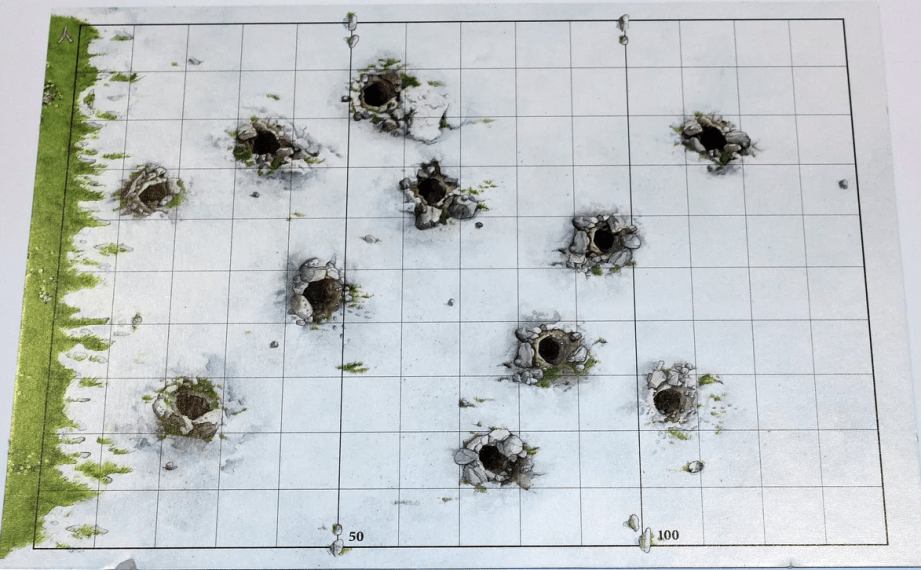
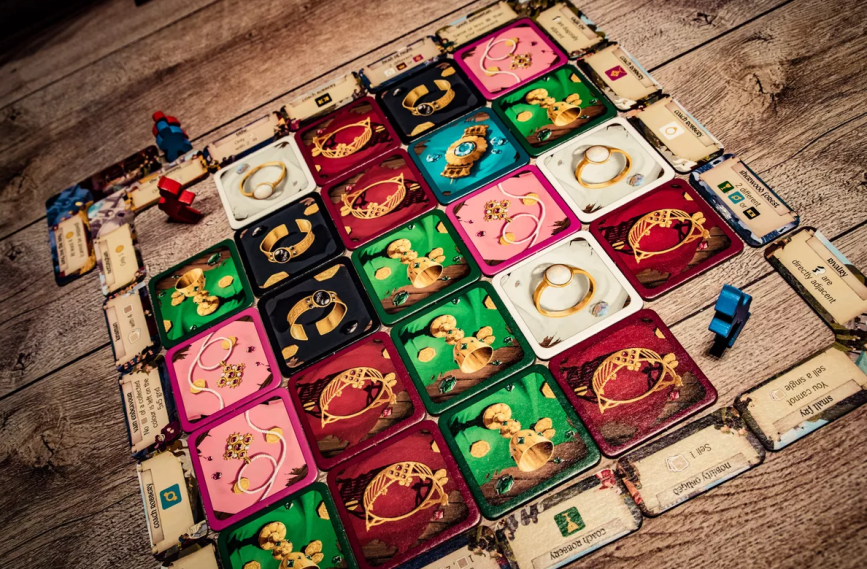
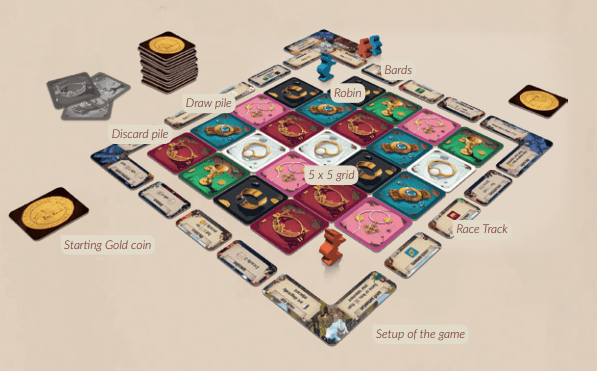
We’ll use Robin of Locksley’s rulebook for this section. I don’t know if words can express how to set up the game. We’ll include the picture the rulebook provides. I always use it when building the board.

* Shuffle all Loot tiles (gold coin side up) and build a 5×5 grid.

* Choose a player to go first. The first player takes one loot tile from any corner of the board. The second player takes the tile from the opposite corner. Each player flips the tile they chose back over to the side showing the gold coin and forms their personal supply.

* The players put their Robins in the now empty corners.

* Place the remaining loot tiles with the gold coin side up in a draw pile.

* Find the corner pieces labelled “The Beginning” (start) and “Long Live the King” (end). Put them together in one of the corners. Place “The Beginning” piece (as shown above) in the inner corner.

* Shuffle the remaining corner pieces, draw three, and put them in the remaining corners.

* The players put their Bards in their color next to the start tile.

* Shuffle the small fame tiles and put three of them between the corners.

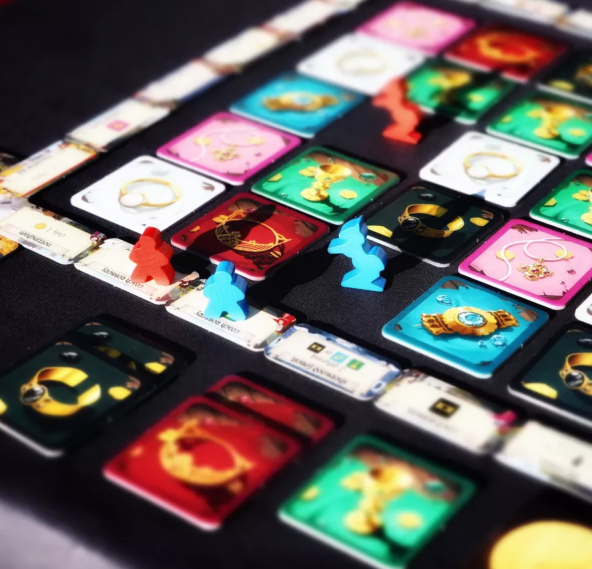
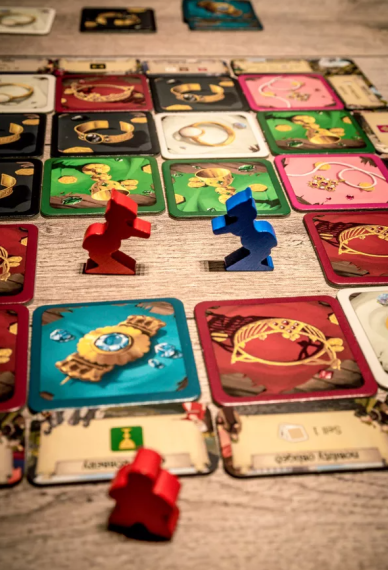
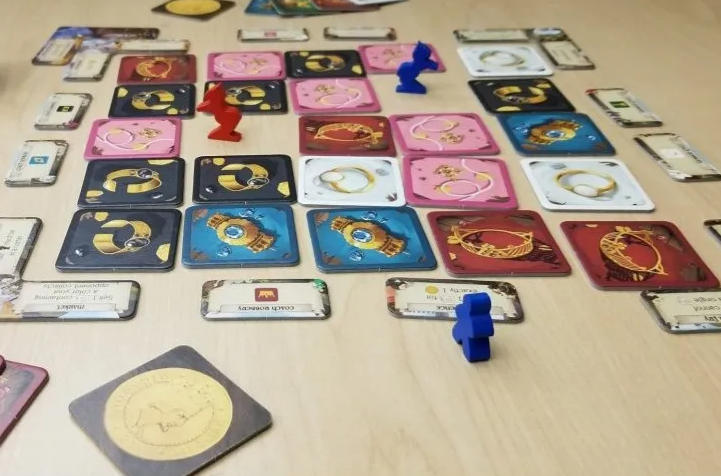
* When complete, the game layout should look similar to the picture above.

Game Flow

Moving Robin

* Players alternate turns. The start player begins the game.
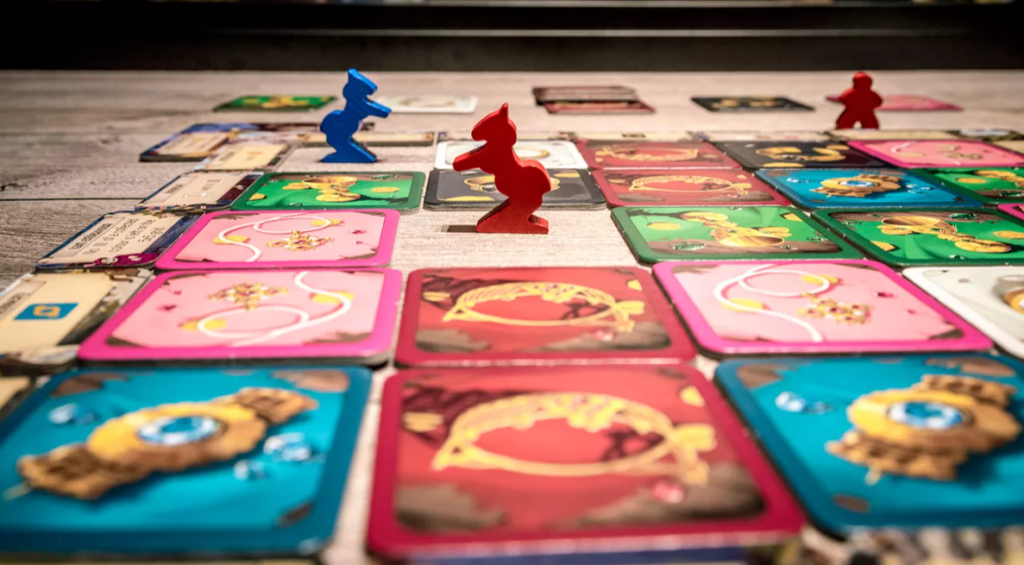
* Players move their Robin in the shape of an “L” composed of three tiles (just like the knight’s move in Chess).

* The player takes the tile they landed on into their personal supply.

* At the end of their turn, the player fills the now empty space (the space their Robin left) with a Loot tile from the general supply. Do not fill the square occupied by a Robin.

The Racing Track

Players win the game by moving their Bard along the Racing track (the one surrounding the loot tiles). There are two ways to move with your Bard.

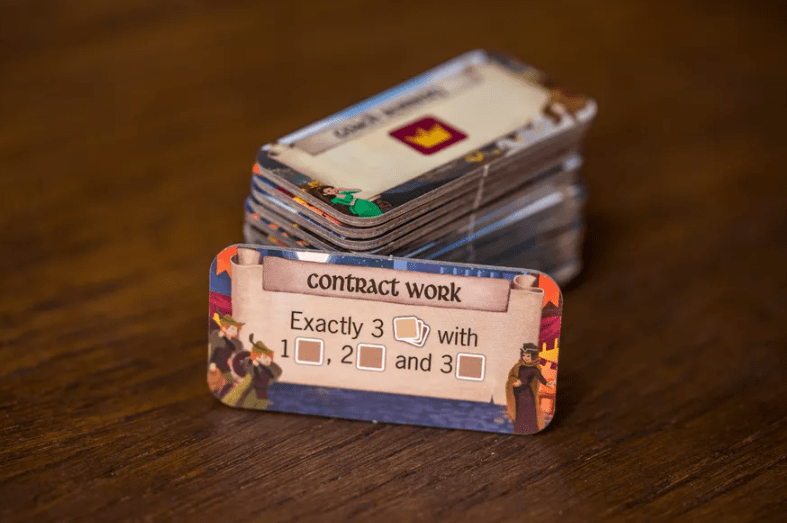
1) Every Fame tile (the ones that compose the Racing Track) shows one task. If the player is able to fulfill the task indicated on the Fame tile, they may move their Bard 1 tile forward on the Race Track. These tasks range from possessing a specific color of Loot or having your Robin in the corner of the 5×5 Loot tile grid.

2) The player may spend 1 Gold coin (and discard it to the open discard pile with the Loot side up) to move their Bard 1 tile forward (clockwise) on the Race Track. The player may continue to move their Bard forward as long as they can meet the requirement or pay the bribe for each tile they encounter.

Loot Collection

A Loot collection is a set of 1 or more Loot tiles of the same color. Loot collections may never be split into smaller collections.

Selling a Loot Collection

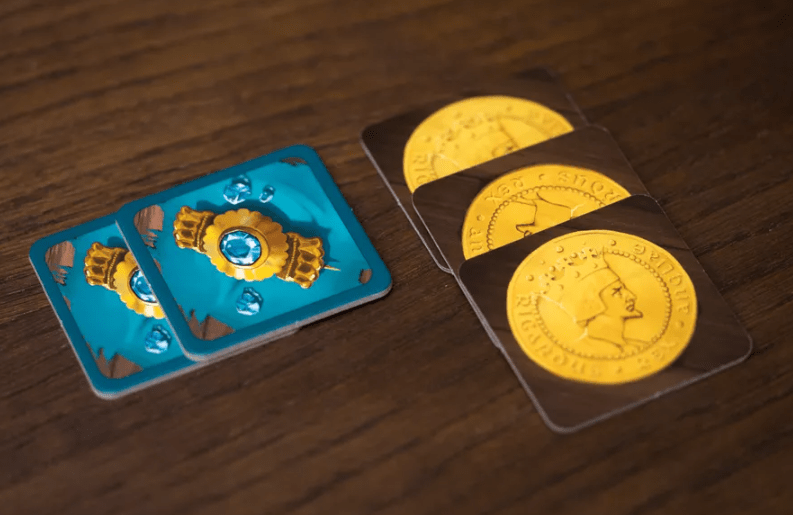
Anytime during their turn, players may sell a Loot collection which consists of 3 or more Loot tiles of the same type.

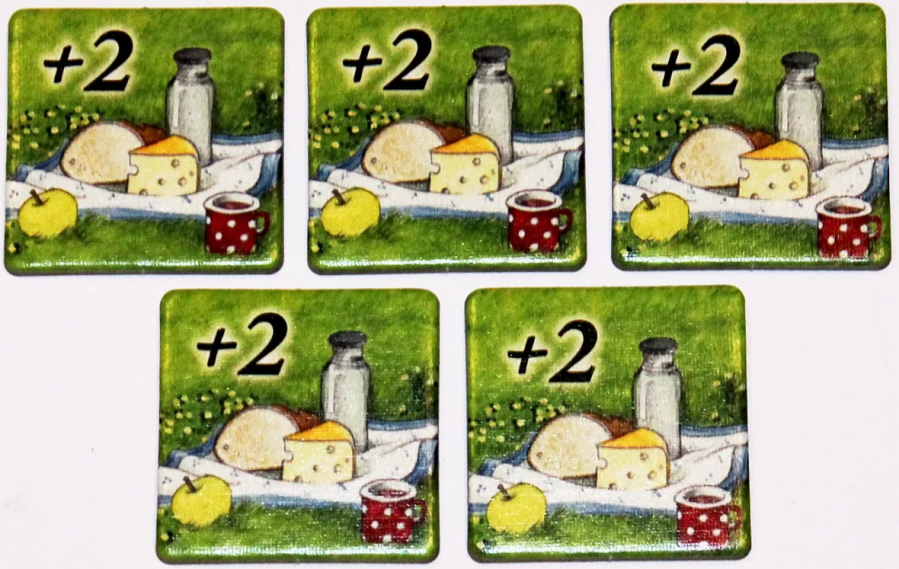
Discard two of the Loot tiles on the open discard pile and collect the remaining ones as Gold coins by turning them over.

Game End and Winning

There are two ways the game can end, and a player can win.

1) The game ends immediately if one player’s Bard “laps” the other player’s Bard on the race track. To “lap” the other player, one player’s Bard must have made a full extra lap around the track thus passing the other player’s Bard a second time. The player whose Bard has passed the other is the winner. If both Bards are on the same spot on the Race Track, the game does not end.

2) The player who first completes two full laps of the Race Track and fulfils the challenge on the goal tile is the winner.

Review

I love the way the Robins move. Robin of Locksley’s new players will have an easier time picking up the move mechanisms, but the way knights in Chess move isn’t straightforward. The Robins have familiarity, and each move functions as a spatial puzzle. One of the Fame tiles (the spaces on the Race Track) requires a player’s Robin to be one move away from their opponent. I don’t know how many times I’ve spent a Coin to skip this requirement, but I get a rush every time I can meet that requirement naturally. Then, it becomes a race, so my opponent can’t finish that Fame tile during their next turn.

The Fame tiles have varied requirements. Robin of Locksley’s modular board ensures no two games will ever be the same. And planning spaces ahead is fun, making each turn meaningful, even if your move this turn won’t help you progress right away. Robin of Locksley also has that volta, a turn where the game shifts, and it’s usually during the mid-point. Players bide their time, collecting Loot, meeting easier requirements, and accruing enough Coins to skip five or six spaces on the Race Track during a single turn. I love this volta (turn). As soon as this happens, the race is on. The other player will pop off a five or six spaces of their own, and Robin of Locksley begins in earnest. Typically, this momentum continues until the game ends.

And games of Robin of Locksley don’t take too long. BoardGameGeek and the rules list games as lasting up to 40 minutes. This hasn’t been my experience. My first game of Robin of Locksley may have taken close to 40 minutes (with the teach), but as soon as you have two players who know what they’re doing, turns take no time at all. Sometimes, I must call time and raise my hand if I want to move those five or six spaces in a turn, because it’s easy to get into a rhythm. The game’s rhythm getting interrupted raises the stakes during the volta. It’s so good.

Looking up a Fame tile’s requirement is one of the few ways a game of Robin of Locksley slows. None of the Fame tiles has any text; they’re all conveyed through icons. The Robin of Locksley rulebook contains a glossary of what each icon means, but it will slow down the game to look up that information during your first lap around the Race Track. Despite this occasional slowdown, I like how both game elements work with each other in Robin of Locksley. It’s a healthy balance of figuring out how best to maximize your Loot with your Robin piece and looking ahead on the Race Track to see what you may need.

Robin of Locksley is my go-to 2-player only game. My spouse and I have played a ton of 2-player games lately, but Robin of Locksley is one of the few competitive 2-player-only games that consistently make our rotation.

Too Long; Didn’t Read

Robin of Locksley has short, punchy turns that lead to a satisfying race to meet Loot (or spatial) requirements. With its modular board, each game is unique, but one thing stays constant: the volta (turn). Each game will have an exciting turn where one player moves multiple spaces, and then the race is on.

3 Lists of 3 Tabletop Game Designers

Uncle Geekly here. We’ve covered tabletop games more than once on 3 Lists of 3, but it may be time to discuss the people behind the games. I smell a few lists of game designers.

Think of these game designers as authors of books and many tabletop game enthusiasts follow them as if they were authors releasing their latest novel, so the following 3 lists may be a good place to start if you’re looking for a designer or two to follow. Let’s get to them.

Designers Who Seldom make the Same Game Twice

Friedemann_Friese

Friedemann Friese

504 may not have landed with fans as well as Friese had hoped, but a game system that has 504 possible combinations of games is a testament to this designer’s versatility. Funkenschlag or Power Grid is an electrifying network building game–pun intended–that may have led to the more streamlined and widespread Ticket to Ride. Friday takes the deck building genre and turns in a story-driven solo experience. I love how the cards you use in the deck can get shuffled back in and have a different effect later in the game. I don’t know how many times I’d eat something that would eventually give me diarrhea. Your uncle Geekly has a weak stomach, so that’s almost like real life.

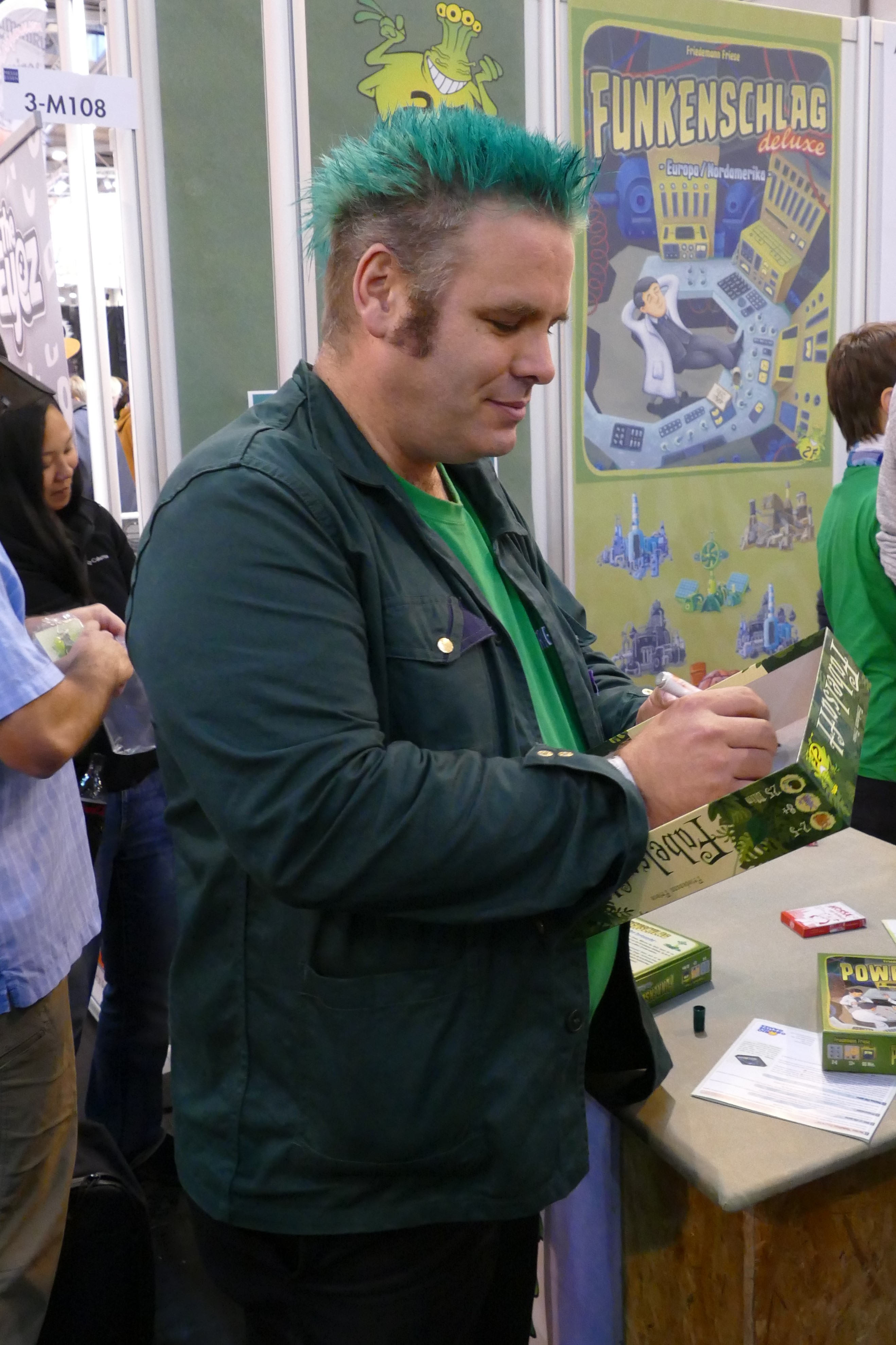
Fauna and Terra are some of the better takes on trivia games. I don’t care for trivia games as much as I used to—Trivial Pursuit may have ruined me on the genre—but I’ll gladly play either of these two games. Fabled Fruit is a simplified worker placement, legacy game, and that’s an accomplishment. I haven’t heard of too many worker placement games one could explain in under fifteen minutes, let only one that includes a legacy component. Friese is on fire. If his hair is any indication, it’s green fire.

AntoineBauza

Antoine Bauza

We go from a German to a Frenchman. Antoine Bauza may use a similar aesthetic in his game’s artwork and their themes (strong Japanese influences), but his games have no shortage of story, mechanisms, and scope. Ghost Stories and Samurai Spirit are both cooperative games, but one pits Shaolin Monks against nightmare fuel, while the other, despite some balance issues, is a faithful recreation of Kurosawa’s Seven Samurai. If you’ve never seen the film, it doesn’t end well for the samurai. It also doesn’t usually end well for players of Samurai Spirit.

Bauza’s most celebrated works—the ones that have received the most awards—are card games: Hanabi and 7 Wonders. Hanabi is an interesting 50-card, cooperative game where players can see others’ cards, but not their own. 7 Wonders and its excellent spin-off 7 Wonders Duel popularized card drafting. I’d place Duel slightly ahead of base 7 Wonders because of its use of a pyramid set-up and speed of play, but I couldn’t deny the appeal of 7 Wonders. Grumpy Uncle Geekly wanted to dislike it but didn’t.

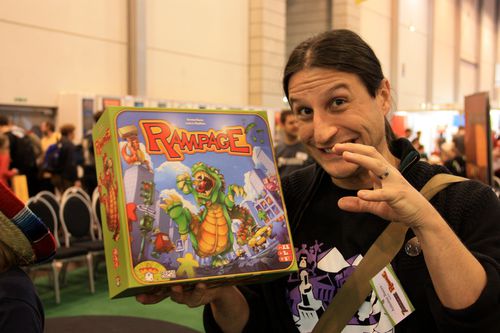
There are just too many game types from Bauza: Takenoko (a deceptively strategic game about a Chibi panda eating bamboo), Tokaido (a gorgeous timeline game about a Japanese vacation), and Rampage (like it’s video game namesake, players destroy a city with wooden monsters).

I could’ve gone with several other French game designers here too. Bruno Cathala and Ludovic Maublanc are not only frequent co-designers of Bauza’s, they too seldom use the same mechanism twice.

EricMLang

Eric M. Lang

If you noticed trends with Bauza’s games, you’ll see some form with Canada’s favorite game designer Eric Lang. But Lang delivers the goods and his games are eclectic. I’m a huge Lang fan-boy. I see his name on a game and I’m already interested.

Miniatures? Yeah, he’s made some of those games. Anything from Cool Mini or Not (CMON games) is a safe bet: Blood Rage (half strategy Euro, half kickass Vikings), Arcadia Quest (Chibi fantasy dungeon dive), The Godfather: Corleone’s Empire (yeah, it’s a mafia game), and Rising Sun (the second game of the Blood Rage trilogy).

Card games? Yes. He has plenty of those too: Star Wars: The Card Game (this is a great living card game update to the earlier collectible one), Warhammer: Invasion (another living card game update), A Game of Thrones: The Card Game (Same), and Call of Cthulhu: The Card Game (yeah, he does a ton of  these, but he’s great at them).

Dice games? Lang has made some of my favorite dice games. Quarriors! introduced dice to the deck building mechanism. Dice Masters added a collectible layer to Quarriors!, creating the first successful dice collection game that has since been mimicked. Yeah, I’d play a new version of Trivial Pursuit or Monopoly if it had Eric Lang’s name on it.

Designers Who Tend to make the Same Game

MattLeacock

Matt Leacock

This may be sacrilege. I can hear boos from my computer screen, but just because a designer makes a lot of similar games doesn’t mean that they’re poor game designers. I started with Matt Leacock because he’s such a great designer—one of my favorites—but he tends to make a lot of cooperative games. If there was a gaming dictionary, you’d see his face beside the word cooperative.

Pandemic, Pandemic Legacy (seasons 1 and 2), Pandemic: The Cure, Forbidden Island, Forbidden Desert, Forbidden Sky, and Thunderbirds: the Co-operative Board Game are all cooperative games. I think it’s safe to say that Leacock has a type.

UweRosenberg

Uwe Rosenberg

Rosenberg’s career is split by two games: Agricola and Patchwork. Prior to Agricola, Rosenberg experimented with various game types, but after Agricola, he made mostly worker placement games with brutal feed your workers mechanisms. What is with feeding workers? There must be some designers who went hungry one time too many.

Le Havre, and Caverna were—admittedly better—variations of Agricola. Then, Rosenberg released Patchwork (a game that added Tetris-style mechanisms to board games). A Feast for Odin combined elements of Agricola with Patchwork, and future Rosenberg games began taking Patchwork in different directions.

Rosenberg’s games are usually good to excellent, but sometimes, I have the urge to report them to the department of redundancy department.

StefanFeld

Stefan Feld

If Leacock’s picture would be next to cooperative, Stefan Feld’s picture would be next to point salad. A point salad game is one that’s heavy on strategy, there are various methods of playing and each method yields points, and the player at the end of the game who has the most points, wins. The reason it’s called a point salad is that players can—and often should—choose multiple methods of play and the resulting points to win. It’s like a big, crunchy, board game salad. You know you’re doing well when you’re eating all the game’s roughage.

Feld is the king of balance. I’m not sure if I’ve played a single game of his that wasn’t balanced and that’s fantastic, but you don’t even need to see the box or know much about the game to tell when a game is designed by Feld.

Up and Coming Designers

IsaacChildres

Isaac Childres

The designer of the current number one rated game on boardgamegeek (BGG) Gloomhaven must be on any list of newer game designers. Childres has released a handful of games prior to the dungeon crawl, but no game before or since has been as large in scope as Gloomhaven.

While I’ve heard mixed reviews surrounding Founders of Gloomhaven (a Euro strategy game based in the world of Gloomhaven), I have no doubt Childres will have plenty of other great projects in the future.

CallinFlores

Callin Flores

Callin Flores’s path to board game design is an odd one. He began as a podcast creator for Plaid Hat Games and slowly became a designer in his own right. Plaid Hat has some of the best designers in the business, so Flores had plenty of guidance for his new release Guardians. I haven’t had the chance to play Guardians, but it looks as if it’ll be another hit for the company.

LudovicRoudy

Ludovic Roudy

The only game that comes close to Gloomhaven’s scope, may be Ludovic Roudy’s 7th Continent. This game puts players in the role of shipwreck survivors, stranded on a deserted island. It’s a character and story driven game that has a unique brand of exploration. I can’t wait to see what’s next from Roudy.

Who are your favorite new game designers? Who are the best designers that have a preferred game type or choose more eclectic mechanisms? Let us know in the comments.