

Geekly hasn’t covered a superhero team’s rogues gallery since the Avengers, and there’s no better place to continue that trend than with the X-Men. The X-Men topped our list of Most Powerful Rogues Galleries. If you missed that post, you can check it out here. No one messes with X-Men villains.
Hey, hey! Kyra Kyle here. We’re back with another Top 5 Villains List. Marvel’s merry band of mutants has no shortage of enemies. Here’s our list of the Top 5 X-Men Villains.
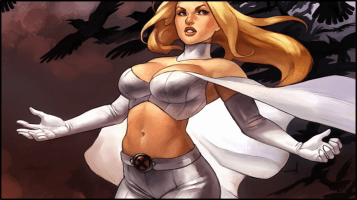
5: Emma Frost
The fifth spot on most Top 5 Villains lists could go in several directions. While the X-Men are no different, Emma Frost was an easier selection than many fifth spots. No disrespect, Juggernaut.
Like most great X-Men villains Emma Frost spends as much time as a hero as she does a villain. As a villain, Frost typically serves as the Hellfire Club’s White Queen. We had to include at least one classic member of the Hellfire Club; they’re a frequent thorn in the X-Men’s side. This alone could explain Emma Frost’s inclusion on this list, but Frost opposes Charles Xavier like no other X-Men villain. She teaches young mutants and twists them into doing her bidding.
The Hellions are the most famous of Emma Frost’s disciples. They were a rival class of young mutants. One by one, Frost manipulated the Hellions. She took advantage of Thunderbird’s grief (because of his brother’s death) and coaxed him into taking revenge against the X-Men. At Frost’s request, Empath used his abilities to force Firestar to love him and join the plot. Emma Frost is a powerful mutant telepath. She’s used these powers to control more than just the Hellions. Kitty Pryde, members of the New Mutants and the New Warriors has at some point been one of Frost’s victims.
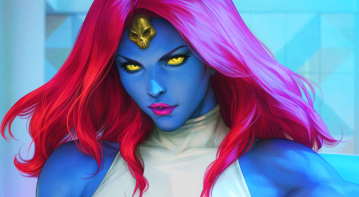
4: Mystique
Raven Darkhölme or Mystique (even Raven’s an assumed name, so we don’t know Mystique’s real name) has one of the wildest backstories of any X-Men villain. Again, she’s had her fair share of heroic stints, but Mystique is at her best when she shapeshifts, deceives, and infiltrates.
Nearly immortal, Mystique has done it all. In 1895 (or earlier), she took up the identity of consulting detective Sherlock Holmes. She convinced a time-traveling Kitty Pryde to not assassinate Adolf Hitler during the start of World War II. She’s been a member of the Brotherhood of (Evil) Mutants, organizing the third incarnation of the team. During this time, she adopted a young girl named Anna Marie (Rogue) and manipulated her into stealing Carol Danvers’s powers.
Mystique is the biological mother of a couple of prominent figures in the X-Men universe: Nightcrawler and Graydon Creed. While Nightcrawler is another popular X-Man, Graydon Creed is the leader of the mutant-hating organization Friends of Humanity. Creed would later become a politician and after he became too much of a problem, he was assassinated. Mystique was the gunman. Ruthless and conniving, Mystique will do whatever it takes to accomplish her goal.

3: Mister Sinister
Mister Sinister is the figure in the shadows. A world-renowned geneticist, Mister Sinister treats humans and mutants as his playthings. He’s cloned (even himself), created new life, and manipulated mutant DNA for enhancing powers (again, he did this to himself). The original Nathaniel Essex (Mister Sinister) was transformed into his current form by the mutant known as Apocalypse, and his clone has spent most of his life scheming ways to break free from Apocalypse. To achieve this end, Mister Sinister has manipulated the lives of critical members of the mutant race. Cyclops, Jean Grey, Gambit, Havok, and even Professor X have been Mister Sinister victims.
Madelyne Pryor may be Mister Sinister’s greatest creation. She posed as Jean Grey, married Scott Summers (Cyclops), and gave birth to a child Nathan Summers (Cable). Yeah. Mister Sinister is all up in the Summers’ family tree. Cable’s given name Nathan is a nod to Mister Sinister’s original name Nathaniel. You could view Cable as having the family name of two families.
Beyond Sinister’s family skullduggery, he was the one responsible for wiping out the Morlocks. Unknowingly, Sinister was the one who unleashed the Legacy Virus, a mutant-specific pandemic that decimated the mutant populous. Despite multiple lifetimes of villainy, Professor X appointed Mister Sinister a seat on the mutant island nation Krakoa’s Quiet Council. His life’s work aided with the re-establishment of the country after the Krakoa Massacre.
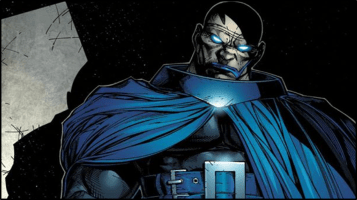
2: Apocalypse
We go from Mister Sinister to the mutant who created him, Apocalypse. En Sabah Nur, translated as “The Seven Lights,” has lived for generations. Born in ancient Egypt, Apocalypse began life as a slave, and over time, he became a conqueror. His laundry list of abilities was crucial in Apocalypse’s Road to Conquest. Here’s a brief list of Apocalypse’s powers: self-resurrection, psychic-link, self-atomic manipulation, biomorphing, size alteration, superhuman strength, superhuman durability, superhuman stamina and endurance, telepathy, force fields, and telekinesis. The previous list was a third of Apocalypse’s powers.
Is it any wonder that Apocalypse has taken the guise of a god of destruction and the end times? Like all the other villains on this list, Apocalypse has a massive history with the X-Men. One of Nur’s standout storylines is the Age of Apocalypse. In this alternate future, Apocalypse sees his “Survival of the Fittest” philosophy to a logical conclusion. The mutants who survive are the ones able to adapt to Apocalypse’s extreme worldview.
No one aspect of Apocalypse showcases his extreme worldview than his Horsemen. Numerous X-Men have served as one of the Horsemen of Apocalypse, but Warren Worthington III may still be the most iconic. Nur transformed Worthington from the natural, angelic wings of Angel to the twisted techno-organic wings of Archangel. Archangel served as Death. War, Famine, and Pestilence round out the remaining members. The entire universe is at stake whenever the Horsemen arrive. The same can be said of Apocalypse. En Sabah Nur lives for destruction.
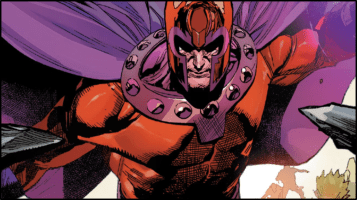
1: Magneto
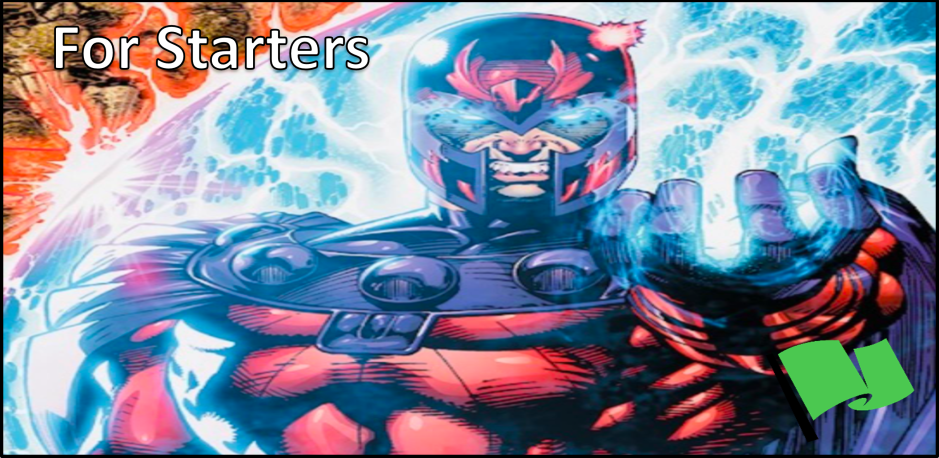
Magneto is one of the most iconic comic book villains of all time. He had to take the top spot. His origin story is legendary. After suffering atrocities at the hand of the Nazis while interred in Auschwitz, Erik Lehnsherr (known by multiple other names like Max Eisenhardt) vowed never to let anything like the holocaust happen to the people he loves. This trauma formed Magneto’s worldview, and when humanity began lashing out against mutants, Magneto fought back. He wants to live in a world where mutants are humanity’s masters, and this puts him at odds with X-Men founder Professor Charles Xavier who dreams of peaceful mutant-human coexistence.
No other villain typifies an X-Men antagonist more than Professor X’s friend Magneto. We could discuss why Magneto takes the top spot for days, but ultimately, anyone who knows of the X-Men knows about Magneto. Most readers expected to see Magneto take the top spot. Magneto is iconic.
Did we get the list right? Let us know who you would add or remove in the comments. And wherever you are, I hope you’re having a great day.


 jkgeekly.com