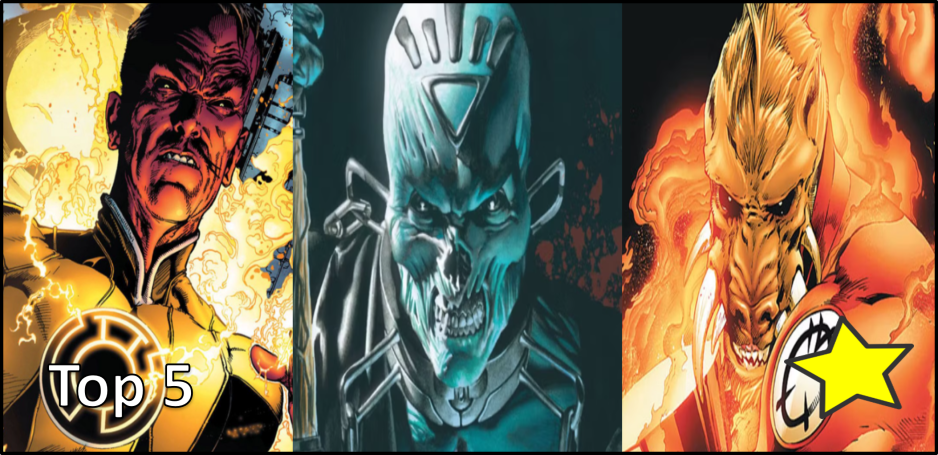
Happy Saturday, Geekly Gang! We haven’t done a Top 5 Villains list for a superhero or superhero group since Black Panther late August of last year. Looks like we’re overdue for another list, and since Lanterns is releasing on HBO Max, let’s count down the Top 5 Green Lantern Villains. Green Lantern is almost on Superman’s level in his number of overpowered villains. Heck, some of these Green Lantern villains have their own Corps of Henchmen ready to take down the Emerald Knight. Let’s see who made our list of Top 5 Green Lantern Villains.
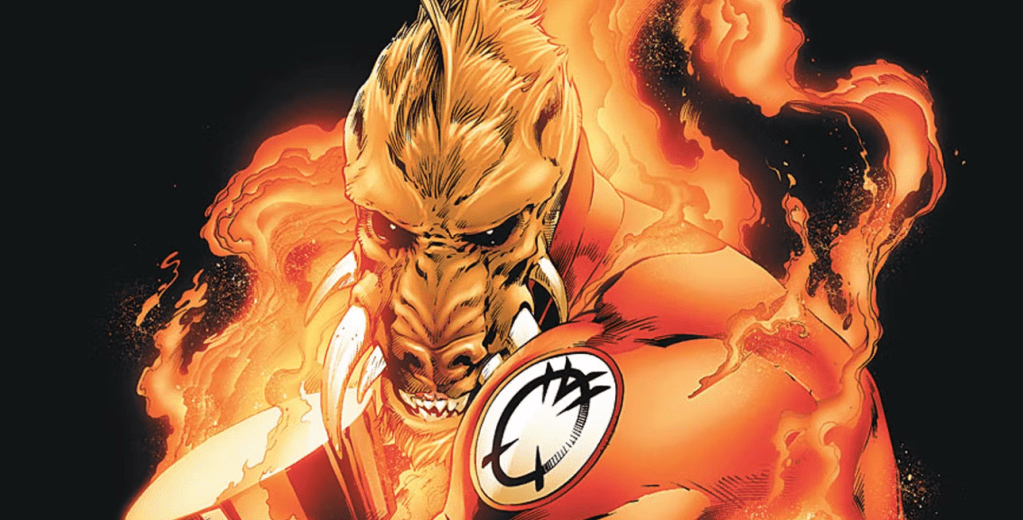
5) Larfleeze
Larfleeze might not make a lot of people’s lists of Top 5 Green Lantern Villains because he’s often depicted as comic relief, but Larfleeze’s origin is anything but comical. Deep within the Vega System, Larfleeze of Okaara protects the DC Universe’s only Orange Lantern Power Battery. Fueled by greed, Larfleeze has a desire to take as much power as he can. Larfleeze would kill anyone he believed was trying to steal his Power Batter, and then copy his victims’ image, stealing their identities and have them join his Orange Corps as construct ghosts.
Larfleeze is the embodiment of greed, the emotional power that feeds orange. Under the Orange Light of Greed’s sway, Larfleeze is driven to possess everything.
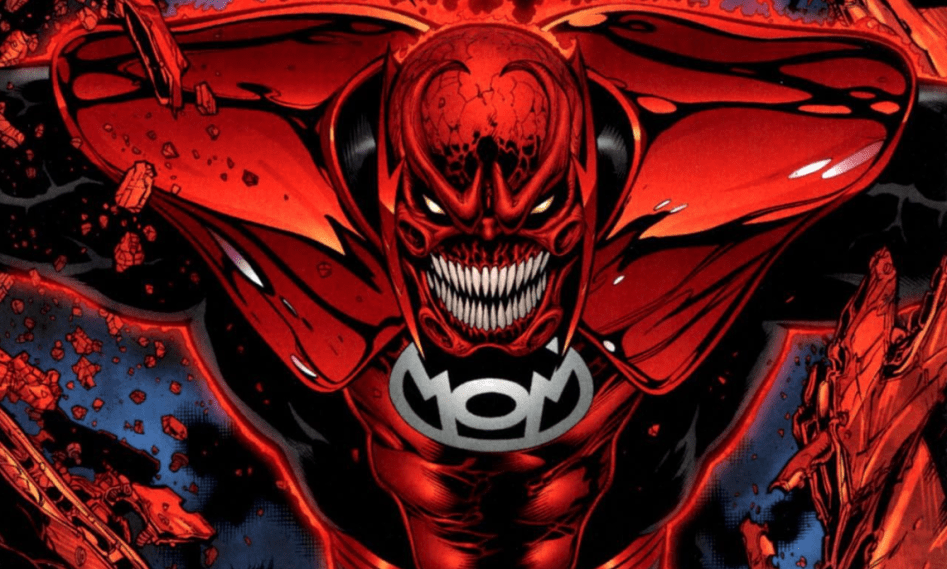
4) Atrocitus
Another one of Geoff Johns’s creations, Atrocitus represents a different Lantern Corps Spectrum: Red’s Wrath. The murderous Atrocitus and his Red Lantern Corps may be the most feared force in the known, extraterrestrial DC Universe.
The Manhunters killed everyone Atrocitus knew. He became an intergalactic terrorist, wanting to kill the Guardians of the Universe. After numerous bloodthirsty missions, Atrocitus formed his Red Lantern Corps to go toe to toe with the Green Lantern Corps. At his core, Atrocitus executes an extreme form of justice. Too bad his form of justice comes with enough blood to paint the universe.
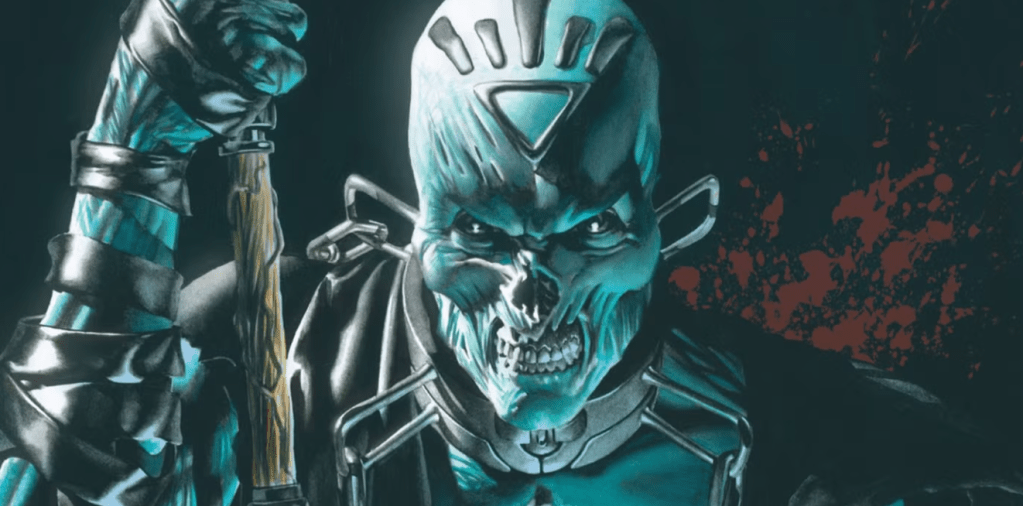
3) Nekron
Nekron is a demon who is DC Comic’s embodiment of Death. Nekron has power over the souls of everyone who has ever died. He uses these souls to perform godlike abilities like strength, durability, and energy projection. Never content with his deathly realm, Nekron seeks control over the rest of the DC Universe.
Nekron’s right-hand agent, Black Hand, almost made this list, too. Consider Black an honorable mention for Green Lantern’s Top 5 Villains. The two of them concocted the events of “Blackest Night.” They co-created the Black Lantern Corps of death. Using the bodies of formerly dead heroes like Superman and Wonder Woman, Nekron attempted to eliminate all life.
2) Parallax
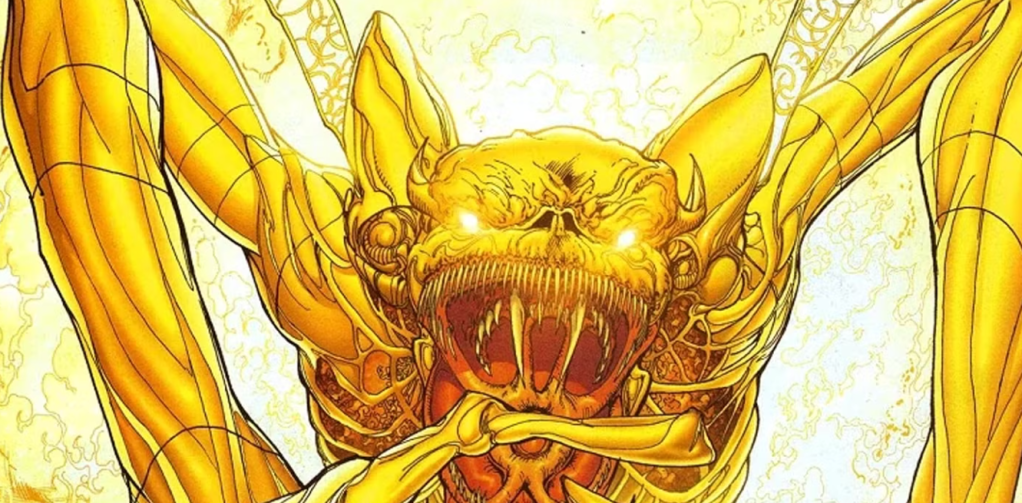
Yellow’s fear runs counter to Green’s will, so spoiler alert, our top two spots belong to Yellow’s portion of the Emotional Spectrum. Parallax is the embodiment of terror. It derives its power from the yellow light of fear, typically presenting itself as a serpentine creature that acts as a parasite in a host’s mind. The most famous instance of a Parallax infection was Hal Jordan.
That’s right. Parallax turned Hal Jordan into a villain. Jordan adopted Parallax as his villainous persona. While under Parallax’s control, Hal Jordan massacred the rest of the Green Lantern Corps and destroyed his home, Coast City. But Jordan is far from Parallax’s only vessels. It’s taken possession of heroes like Kyle Rayner and The Flash. Whenever Parallax takes control of a hero, its malevolent spirit and power turn the poor soul into one of the DC Universe’s most powerful villains.
1) Sinestro
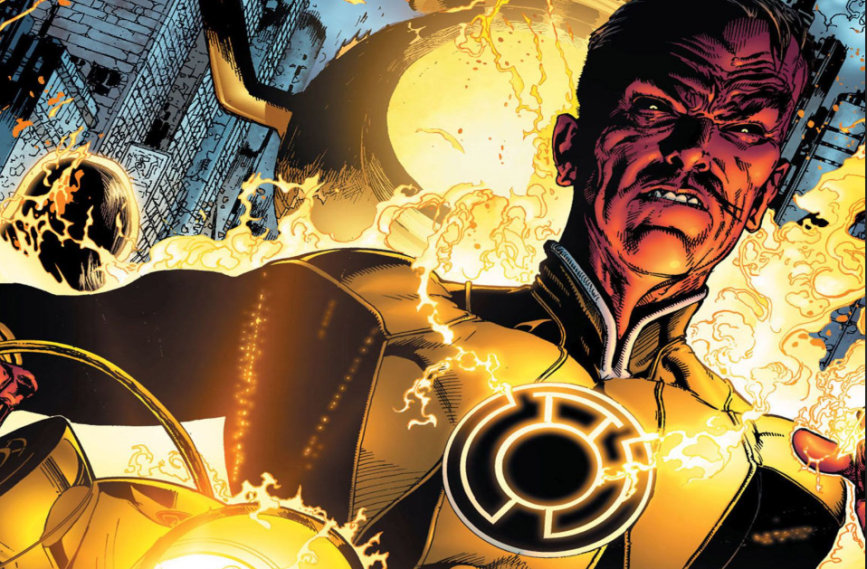
While Parallax takes temporary control over its host, Sinestro shows how the yellow light of fear can corrupt even the greatest Green Lanterns, completely and forever. When Hal Jordan first joined the Green Lantern Corps, Thaal Sinestro was his mentor. The two developed a bond, but that bond was shattered when Hal discovered Sinestro kept his sector (of the universe) in line through tyranny.
Jordan got Sinestro booted from the Green Lantern, and the Korugarian never forgave Hal, the Green Lantern Corps, or the Guardians of the Universe. Since his dismissal, Sinestro has been one of the DC Universe’s most enduring antagonists. He’s a card-carrying member of the Legion of Doom and the founder of the Sinestro Corps, who also harnesses the yellow light of fear. While he may occasionally commit acts of valor, Sinestro’s hatred, anger, and desire for power define him. We had to go with Sinestro for the top spot. Sometimes one of a character’s original villains are the best.
There are plenty of other Green Lantern Villains we could’ve added to this list. Who would you include? Let us know in the comments. Thank you for reading, and wherever you are, I hope you’re having a great day.
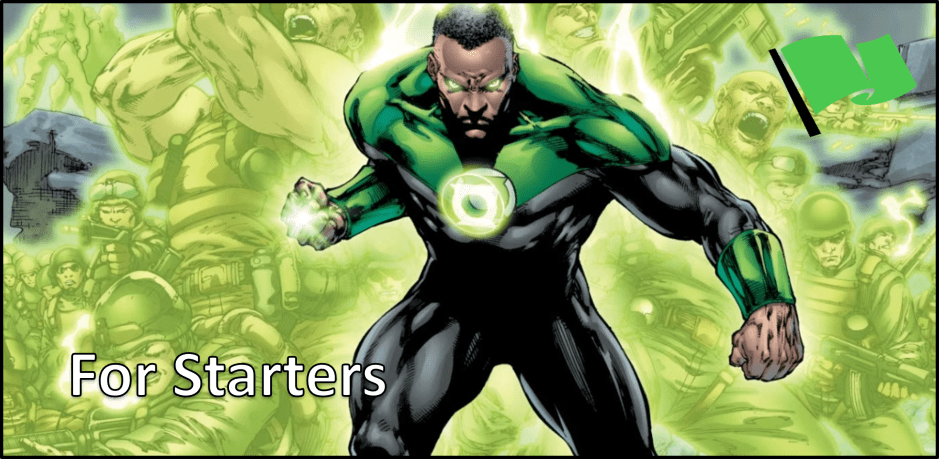
Hey, hey, Geekly Gang! Kyra Kyle here. I’m still writing posts months in advance (in preparation for writing/editing novels during the final months of 2025), and we don’t yet know when Lanterns will release on HBO Max. We only have a release date of First Quarter 2026. We do know that Lanterns will feature at least three Green Lanterns (Hal Jordan, John Stewart, and Guy Gardner), so we’re releasing Green Lantern Starter Stories for all three characters over the next few months, just in case you want to get started reading Green Lantern comics. Our next Green Lantern in this series is John Stewart.
Typically, I like to include numerous storylines for people to begin reading a character, but John Stewart bounced around a lot before he became a standard DC Comics character. And John Stewart has a bunch of single-issue stories. We haven’t had too many single-issue stories in recent Getting Into Comics installments, but many of these John Stewart issues are collected in various John Stewart Green Lantern anthologies, and they’re available online. Buckle up. We’re in for a wild ride.
Single Issues
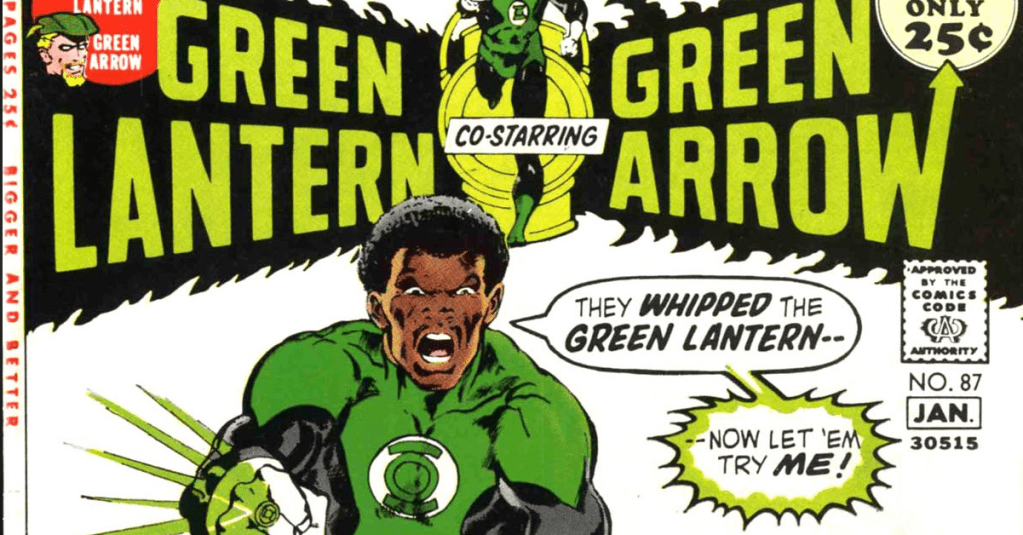
“Beware My Power!” (Green Lantern Vol 2 #87; written by Dennis O’Neil/art by Neal Adams; January 1972)
While “Beware My Power’s” politics may be dated and cause a little cringe, you can see where the creative team behind Green Lantern/Green Arrow (Dennis O’Neil and Neal Adams) were going with John Stewart during his first outing. As a Green Lantern rookie, John Stewart must prove his worth to a skeptical Hal Jordan by showing he can protect a racist politician from assassination. Things go haywire, but in the end, Stewart proves himself worthy of Green Lantern’s light.
“Beware My Power” proved John Stewart to be a character worthy of exploration over the years. He would evolve into an iconic DC Comics hero.
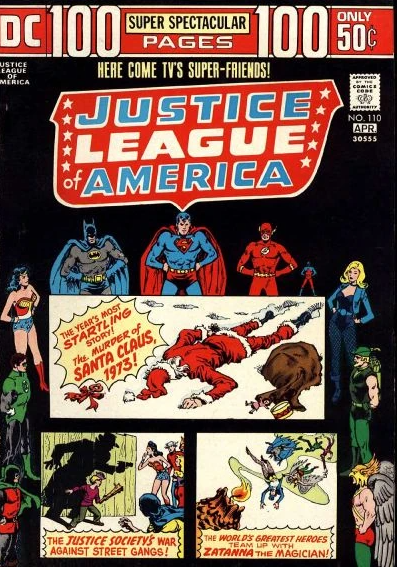
“The Man Who Murdered Santa Claus!” (Justice League of America Vol 1 #110; written by Len Wein/art by Dick Dillin; December 1973 or April 1974)
Justice League of America Vol 1 #110 is a comic book oddity. “The Man Who Murdered Santa Claus!” story makes sense for a comic released during December, and the comic book states it’s “The Year’s Most Startling Story! The Murder of Santa Claus, 1973!,” but the cover also has a date of April 1974. What? I included both December 1973 and April 1974 as the dates for this comic.
Date screw-up aside, “The Man Who Murdered Santa Claus!” is the second time John Stewart donned the Green Lantern costume. Even if this story’s original date was December 1973, John Stewart had to wait almost two years to reappear. DC Comics didn’t know what to do with John Stewart. The story is straightforward. A villain named The Key murdered a department store Santa, and the Justice League investigates.
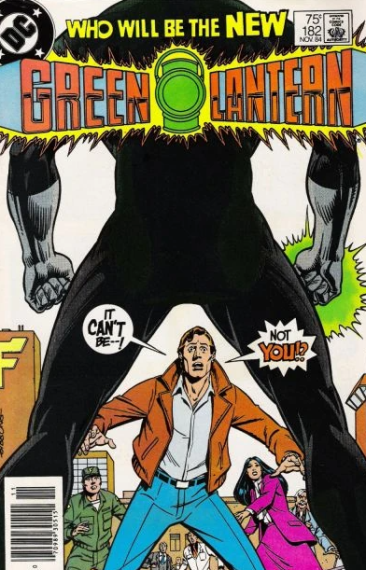
“It’s a Dirty Job, But…!” (Green Lantern Vol 2 #182; written by Len Wein/art by Dave Gibbons; November, 1984)
Villain Major Disaster began as a Captain Atom nemesis before turning into a Hal Jordan Green Lantern foe. By 1984, Jordan had given up being Green Lantern. Jordan doesn’t even know who took over for him as Green Lantern of Sector 2814 (which includes Earth). Jordan invites his long-time friend John Stewart to a drink when the duo watches Major Disaster cause havoc in Jordan’s home city of Coast City. Major Disaster intends to draw out Hal Jordan, and Hal takes the bait. He calls his superhero friends at the Justice League, as John Stewart flies off as the new, full-time Green Lantern.
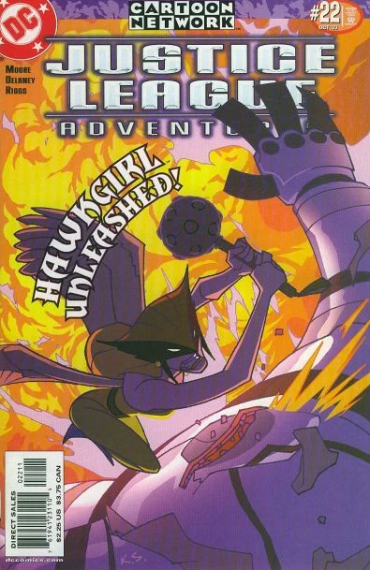
“Second Contact” (Justice League Adventures Vol 1 #22; written by Stuart Moore; art by John Delaney; October 2003)
The Justice League and Justice League Unlimited animated series played a huge role in building John Stewart’s popularity. These cartoons had a comic book counterpart, named Justice League Adventures, which continued the same John Stewart from the comics. In “Second Contact,” John recounts the last time he battled the villain Shayol; three of Stewart’s Green Lantern Corps allies were killed. “Second Contact” is John Stewart’s first time commanding a Green Lantern Corps mission, which just happens to include battling Shayol. He warns his young Green Lantern colleagues of the danger.
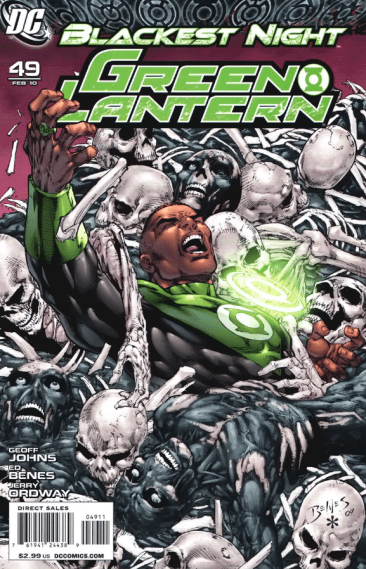
“Semper Fi” (Green Lantern Vol 4 #49; written by Geoff Johns; art by Ed Benes and Marcos Marz; February 2010)
“Semper Fi” is part of the major Blackest Night crossover event. While many stories revolve around Hal Jordan, “Semper Fi” shows John Stewart in action. The Blackest Night event featured a reimagined Nekron, the embodiment of death. Nekron, with the help of his right-hand man, Black Hand, resurrects numerous people in the DC Universe. The pair converts these undead into a Black Lantern Corps.
In Green Lantern Vol 4 #49, John fights an army of Black Lanterns. One of these Black Lanterns is John’s dead wife, Katma Tui. “Semper Fi” doesn’t pull punches. John was responsible for the planet Xanshi’s destruction (where John’s wife died), and the Black Lantern Corps did what he couldn’t. It saved the victims of Xanshi.
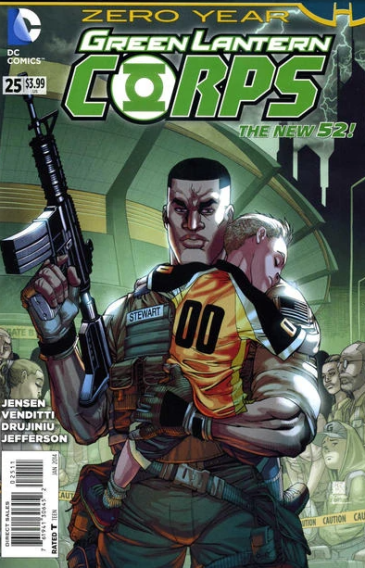
“Powers That Be” (Green Lantern Corps Vol 3 #25, written by Van Jansen and Robert Venditti; art by Victor Drujiniu, Ivan Fernandez, and Allan Jefferson; 2014)
“Powers That Be” functions as a prequel story. It revisits a day in the life of John Stewart before he became Green Lantern. During his days as a Marine, John is sent to Gotham City to help civilians during a blackout, only to discover an anarchist revolt threatening to tear the city apart. We gain insight into John’s character without his Power Ring. While maintaining John’s origin story’s morality, “Powers That Be” manages to avoid the original’s heavy-handed message.
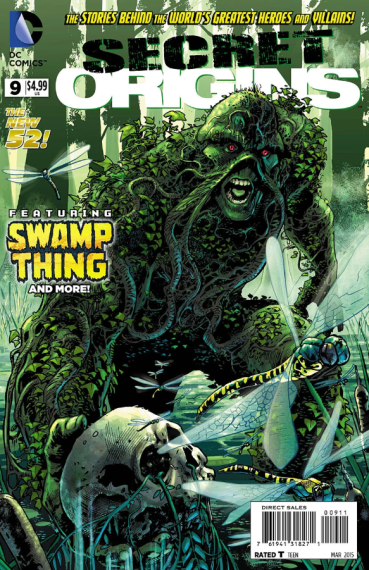
“The Architect” (Secret Origins Vol 3 #9; written by Chrles Soule; art by Alessandro Vitti; 2015)
The New 52 retold numerous DC Comics’ origins. Because they wanted to finish these origins quickly, the New 52 universe loaded comic book issues with the origins of multiple characters. So, don’t be alarmed that Swamp Thing is on the cover of Secret Origins Vol 3 #9.
In John Stewart’s story, he recently retired as a marine and now works as an architect. Stewart is suddenly attacked by a Manhunter who wants the blood of a Green Lantern. John’s courage in the face of an emotionless killing machine earns him a power ring, but the New 52’s Guardians may not be as benevolent as other iterations. The little blue creeps sent the Manhunter to Earth, risking the lives of hundreds (if not thousands) of innocents, to test John’s mettle.
Storylines
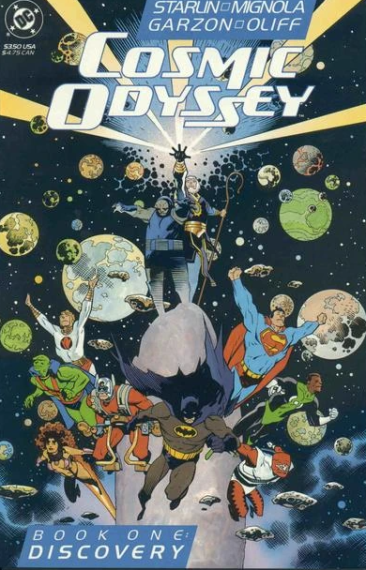
“Cosmic Odyssey” (Cosmic Odyssey #1-4; written by Jim Starlin; art by Mike Mignola; 1988)
“Cosmic Odyssey” may be the one story that does the most to define John Stewart. In this Batman, Superman, Martian Manhunter, and New Gods crossover, the team battles a being made of Anti-Life itself. John Stewart and Martian Manhunter find the planet Xanshi infected by the Anti-Life Aspect. After evading a volcanic eruption, John arrogantly blames Martian Manhunter for holding him back, restraining him in a construct bubble.
John’s actions directly led to the planet Xanshi exploding. This tragic failure leaves a deep emotional scar that John Stewart never forgets. It also turns out that Xanshi has a sole survivor, Fatality, who makes it her mission to eradicate all Green Lanterns. “Cosmic Odyssey” is a must-read for any John Stewart Green Lantern fan.
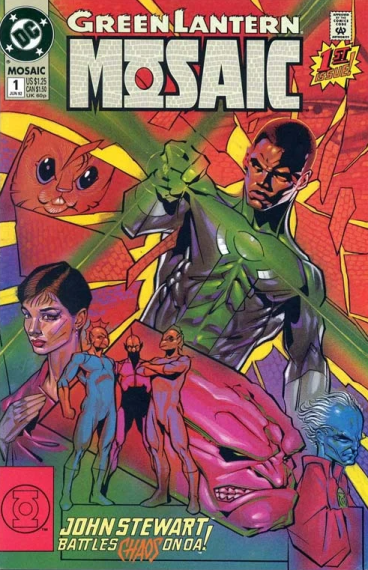
“Green Lantern: Mosaic” (Green Lantern: Mosaic #1-18; written by Gerald Jones and Joe Filice/art by Cully Hamner, Trevor Scott, Chris Wozniak, Jim Balent, Mark Beachum, Mitch Byrd, Luke McDonnell, and Chris Hunter; June 1992-November 1993)
We go from one of John Stewart’s most poignant stories (in “Cosmic Odyssey”) to one of his wildest in “Green Lantern: Mosaic.” One of the Guardians of Oa merges together a city comprised of cities from disparate alien worlds. John Stewart is tasked to keep this patchwork “mosaic” of worlds in one piece.
“Green Lantern: Mosaic” shows the most alien of DC Comics’ cosmic residents. It’s a joy watching John Stewart attempt to keep the peace with this group of unique, diverse, and fascinating alien cultures. “Mosaic” explores where Green Lantern stories could go. Not only does “Green Lantern: Mosaic” help define John Stewart as an expert mediator, but it also serves as a window to DC Comics’ alien populations.
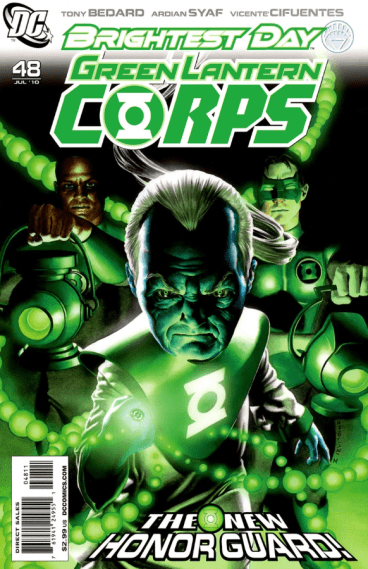
“Revolt of the Alpha-Lanterns” (Green Lantern Corps Vol 2 #48-52; written by Tony Bedard; art by Ardian Syaf; 2010)
In the wake of the Justice League cartoons, John Stewart received some amazing stories in the 2010s, beginning with the “Revolt of the Alpha-Lanterns.” This story resurrects Cyborg Superman as he manipulates the Alpha Corps to do his bidding. The Alpha Lanterns begin “requisitioning” unwilling Green Lanterns to join their emotionless ranks. While Ganthet, Kyle Rayner, and other Green Lanterns resist, John Stewart leads the charge.
“Alpha War” (Green Lantern Corps Vol 3 #8-12; written by Peter Tomasi; art by Fernando Pasarin; 2012)
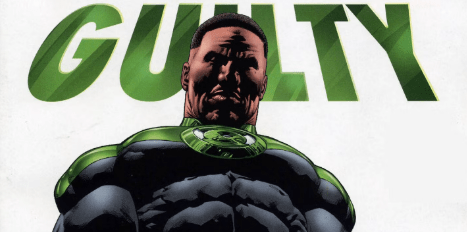
While the Green Lantern Corps serves as a galactic police force (of sorts), the Alpha Lanterns are Internal Affairs, meant to keep them in check. In “Alpha War,” John Stewart is accused of murder and incarcerated by the Alpha Lanterns. The allegations are based on incomplete evidence, and a guilty verdict means execution. Guy Gardner and the other Green Lanterns band together to break Stewart out of prison and prove his innocence. After “Alpha War,” the Alpha Lanterns will never be the same.
Those are the John Stewart Green Lantern stories that made our list. We covered Hal Jordan starter stories last month, and will be covering Guy Gardner’s starter stories next month. Are there any John Stewart Green Lantern stories you would add to this list? Let us know in the comments, Geekly Gang. Thank you for reading, and wherever you are, I hope you’re having a great day.
Hey, hey, Geekly Gang! Kyra Kyle here. I’m writing this post months in advance (in preparation for writing/editing novels during the final months of 2025), and Geekly doesn’t yet know when Lanterns will release on HBO Max. We only have a release date of First Quarter 2026. It doesn’t matter. Lanterns will feature at least three Green Lanterns (Hal Jordan, John Stewart, and Guy Gardner), so we’re releasing Green Lantern Starter Stories for all three characters over the next few months, just in case you want to get started reading Green Lantern comics. We’re starting with Hal Jordan.
Green Lantern is somewhat of a special case. We’ll be seeing Geoff Johns’s name show up a lot on this list. Johns did a lot for Hal Jordan as a character, but other writers contributed to Jordan’s mythos, so I listed a handful of Johns’s storylines, and then did my best to show some of the other amazing writers who have worked on the character. The result is an extra-long list of Green Lantern (Hal Jordan) starter stories. If you’re lucky, you can find the 2020 Green Lantern one-shot 80th anniversary, Green Lantern: Will. It collects a lot of incredible Green Lantern stories that may or may not have made this list. Let’s get to the stories that did make this list.
Single Issue
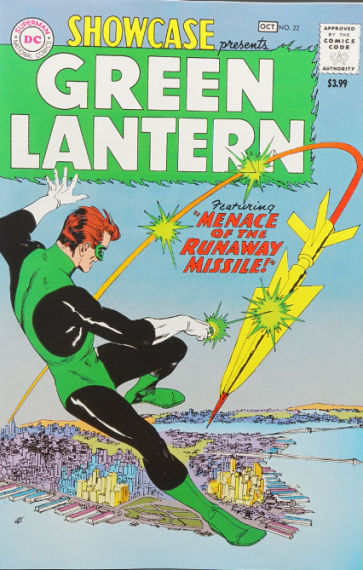
“S.O.S. Green Lantern” (Showcase #22; written by John Broome/art by Gil Kane; October 1959)
Per usual, we begin with Hal Jordan’s first appearance in “S.O.S. Green Lantern.” It’s a simple story. Abin Sur lands on Earth. As the alien lies dying, he commands his Green Lantern ring to find a worthy successor (one who is fearless and strong-willed). The ring finds Hal Jordan. It transports Hal to Abin, and Abin Sur grants Hal Jordan his power as the Green Lantern.
Not going to lie, “S.O.S. Green Lantern” could refer to Hal Jordan’s problematic relationship with Carol Ferris. She rejects his advances (because she needs to prove herself as a worthy successor to her father Carl Ferris, and that she can run Ferris Aircraft), but Hal pushes the issue. You’re coming on a little strong, Hal. Still, “S.O.S. Green Lantern” sets up Hal Jordan as a character, and this origin story has seen few tweaks over the decades. Maybe with less misogyny.
Storyline
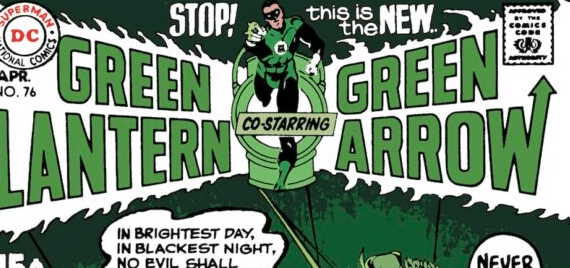
“Green Lantern/Green Arrow” (Green Lantern/Green Arrow #76-89; written by Denny O’Neal and Neal Adams; 1970-1972)
“Green Lantern/Green Arrow” was my first introduction to Hal Jordan as a character. Denny O’Neal’s team-up story revolves around Hal Jordan losing any concept of what being an Earthling is. As a Green Lantern, Hal serves as an intergalactic cop (something we’ll see with Grant Morrison’s take on the character later). Green Arrow serves as a pseudo-Robin Hood. It makes sense, both characters use a bow and arrow. “Green Lantern/Green Arrow” may have done the most to show me the world is nuanced.
The first issue in our collection shows Green Lantern stopping poor people protesting outside a slum lord’s mansion. Green Lantern breaks up the demonstration, only to have Green Arrow tell him he’s misguided. The world isn’t black and white. My favorite moment must be the iconic panel where a poor black man approaches Green Lantern. He says, “I been readin’ about you how you work for the blue skins, and how on a planet someplace you helped out the orange skins, and you done considerable for the purple skins! Only there’s skins you never bothered with, the black skins! I want to know how come? Answer me that, Mr. Green Lantern!”
Hal can’t, but he spends the rest of this series figuring out how he can help the Earth become more equitable.
“Emerald Twilight” (Green Lantern Vol 3 #48-50; written by Ron Marz/art by Bill Willingham, Fred Haynes, and Darryl Banks; 1994)
We go from one iconic Green Lantern storyline to another. “Emerald Twilight” is the storyline where Parallax possesses Hal Jordan and turns him into an ultimate super villain. Hal destroys his home, Coastal City, with a smile on his face. He single-handedly dismantles the Green Lantern Corps. Dozens of familiar faces perish in Hal’s rampage through the universe.
“Emerald Twilight” introduces us to Kyle Raynor as the new Green Lantern. Kyle picks up the pieces and brings honor to the Green Lantern name. After Hal’s actions, can you blame anyone for not trusting anyone with a Green Lantern ring? DC Comics intended to uphold Ron Marz’s vision. Hal snapped. But fan backlash forced the creative team to retcon Hal Jordan being possessed by a separate entity named Parallax, instead of naming himself Parallax. Despite losing some of the story’s original bite, “Emerald Twilight” showed a different side of Hal Jordan, and ultimately, introduced one of Green Lantern’s greatest villains, Parallax.
“Rebirth” (Green Lantern: Rebirth #1-6 and Green Lantern Vol 4 #1-4; written by Geoff Johns; art by Ethan Van Sciver, Jesus Merino, and Carlos Pacheco; 2004-2005)
“Rebirth” is where Geoff Johns made his mark on Green Lantern. The Green Lantern Corps is in a state of disrepair, but Johns fixes Hal Jordan’s backstory. Johns is the one who retconned Parallax as one of the Green Lantern Corps’ greatest enemies. Ironically, Green Lantern: Rebirth did as much to rewrite Hal’s history and keep all the remaining Green Lanterns relevant. Without this story, the Lanterns television show wouldn’t be possible.
Before “Rebirth,” only one Green Lantern was allowed to exist at one time. “Rebirth” changed that. This story turned the Green Lantern character into the Green Lantern Corps.
“Secret Origin” (Green Lantern Vol 4 #29-35; written by Geoff Johns; art by Ivan Reis; 2008)
As the name may suggest, “Secret Origin” recontextualizes Hal Jordan’s origin. You may even decide to skip reading the 1959 issue and read “Secret Origin” instead. “Secret Origins” features one of Hal Jordan’s earliest starts as a Green Lantern. Abin Sur and (modern classic Green Lantern villain) Atrocitus play a role in turning Hal Jordan into the hero we know today.
Not only does “Secret Origin” manage to say something new with Hal’s origin, it sets up the next story on our list, “Blackest Night.” Geoff Johns was on a roll with Hal Jordan and the Green Lantern Corps as characters. This almost decade-long run may be the best Green Lantern run.
“Blackest Night” (Blackest Night Vol 1 #0-8; written by Geoff Johns; art by Ivan Reis; 2009-2010)
“Blackest Night” resurrects Nekron, the Lord of the Unliving, and watches him create the Black Lantern Corps. During Johns’s run of Green Lantern, he established the Emotional Spectrum of the DC Universe. The emotional spectrum, based on colors of the rainbow, added a unique twist. The Black Lantern Corps is an extension of the Emotional Spectrum. The Black Lantern Corps resurrects heroes and villains across the galaxy and consumes their still-beating hearts.
“Blackest Night” combines zombie elements with the Green Lantern mythos. This storyline brought an underused DC Comics villain, Nekron, back into the spotlight. This DC Comics crossover event was epic. It may be one of the greatest crossover events DC Comics has ever seen, and Hal Jordan is at its center.
“Green Lantern: Earth One” (Green Lantern: Earth One #1-2; written by Gabriel Hardman and Corinna Bechko; art by Hardman; 2018-2020)
In a world where humans have made their way to space, Hal Jordan is a space miner for Ferris Industries when he runs across a spaceship that changes his life forever. “Green Lantern: Earth One” is a major departure from what we think of Green Lantern. I struggled with including this story in this list, but “Green Lantern: Earth One” is a phenomenal stand-alone story. DC Comics offers plenty of Elseworlds stories (stories that diverge from the main storyline), and “Green Lantern: Earth One” is a must-read. It may be one of the best.
“Green Lantern: Earth One” recasts the Green Lantern Corps in the role of freedom fighters, battling against the more powerful Manhunters (the same ones who would slaughter Atrocitus’s people, leading him to a path of mayhem). The Manhunters have all but conquered the universe. “Green Lantern: Earth One” is a gripping tale from beginning to end. While I can only see elements of this story used in the DCU, it’s worth the read, and with any luck, DC Studios will give us a version of this story.
“Intergalactic Lawmen” (The Green Lantern #1-12; written by Grant Morrison; art by Liam Sharp; 2019-2020)
Writer Grant Morrison has a knack for taking characters in bizarre directions. Handing him the reins of Green Lantern could only lead to some of the craziest Hal Jordan stories. “Intergalactic Lawmen” brings Hal Jordan back to his roots. Jordan travels from case to case (like a space cop), across the multiverse as he takes down criminals, fighting against conspiracies, and taking powerful cosmic threats head-on. Composed of two volumes and an interquel miniseries (of the main Green Lantern line of comics), “Intergalactic Lawmen” is for Green Lantern fans who want cosmic fun.
This Green Lantern universe feels strange in the best ways. “Intergalactic Lawmen” reinvents Hal’s adventures, the Green Lantern Corps, and the planet Oa. Yes, few of the storylines on this list tackle the idea of the Planet Oa (home world and base of operations of the Guardians of the Universe). “Intergalactic Lawmen” pulls away from the rigid rules of the Geoff Johns era. The Green Lantern ring was once again capable of the impossible, like storing an entire universe.
Those are the Hal Jordan Green Lantern stories that made our list. We’ll be covering John Stewart and Guy Gardner’s starter stories in the next two months. Are there any Hal Jordan Green Lantern stories you would add to this list? Let us know in the comments, Geekly Gang. Thank you for reading, and wherever you are, I hope you’re having a great day.




 jkgeekly.com