Whatcha Playing, Geekly: October 2025

Happy Wednesday, Geekly Gang! Today, our writers share the games they’ve been playing over the last month. Feel free to share what you’ve been playing, because we’re all part of the Geekly Gang. I’ll get things started.

Kyra’s Games
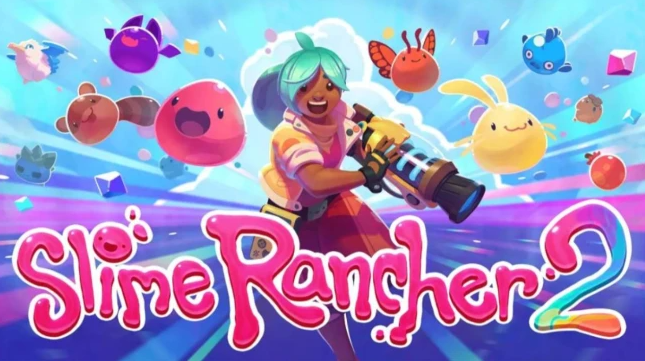
Kyra’s Video Games

Slime Rancher 2 received a full release this past week, so I’ve returned to Rainbow Island. First, I’m overjoyed with the return of drones. This must be a relatively new addition to Slime Rancher 2. While I appreciate the ability to quickly accrue more drones in the original Slime Rancher, even the smaller number of drones makes managing your ranch a lot easier. I started a new game and refuse to build up a second or third location (even though I’ve purchased them) before I have enough resources to build another drone to help me manage my cutie slimes. Slime Rancher 2 is addictive.
Balatro is a fabulous rogue-like poker deck-building game akin to Slay of the Spire. It has all the trappings of an addictive game, and I sunk plenty of hours into Balatro this past month. In short, there’s a reason Balatro is one of the highest-rated games on Steam. But I do have one gripe. There may be too many options. Balatro shares this issue with Auto Chess. Balatro requires players to balance Planet cards (upgrading the point value for Poker hands), Joker cards (giving a constant point-value boost), and the cards in the deck. Certain combos require specific cards, and Balatro’s staggering number of options means you may never see the cards you need for a combo. Despite this minor issue, I love Balatro.

Speaking of Auto Chess, I’ve played plenty of Auto Chess over the past month, too. The issue I listed in my Balatro write-up rears its head here, but certain game modes (like Solo mode) in Auto Chess allow players to limit the type of units they will receive from the bank. Unfortunately, I don’t care for Solo mode. It’s too slow for my taste. Auto Chess has players buy units, upgrade those units by purchasing three of the same unit, and combo units together with like species (like elves, dwarves, and undead) and classes (like Hunter, Warrior, and Mage). And this last feature introduces yet another issue: balance.

Not all combos are created equal. You can have up to 10 units (if you buy experience to increase your unit count) on the field at one time. Some of the synergies (combos) can be as high as 9 units of the same type. These 9-unit synergies can be overpowered, specifically undead (named Egersis in Auto Chess). A 9-unit undead synergy has an opponent’s dead units resurrect into zombies of the same level. This can double your unit count during battle. It’s unfair and unfun. I’ve played as Egersis, and it’s unfun to play with these unit types. Despite this added issue, Auto Chess is a lot of fun, so long as no one in the lobby plays Egersis. I love setting up my army, leaving for a while to do something else, and then managing my team in between rounds. Heck, I’ll read while my units take care of business.

Kyra’s Board Games

Skye’s going to mention Raccoon Tycoon in her write-up; I’ll let her go into more detail about the game. I love Raccoon Tycoon’s variable market, dual-purpose cards, and auction system. Each card a player uses will increase a resource’s value (or resources’ values) and allow the player to produce resources. Whenever a player sells a resource, they do so at the resource’s current value, and then the player lowers the resource’s value by the amount of those resources sold. And the auction system is simple but great. You can drive up the price of a railroad your opponent wants, but if you raise the price too much, you may get stuck with the railroad. Raccoon Tycoon is a ton of fun.

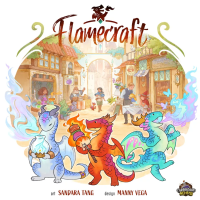
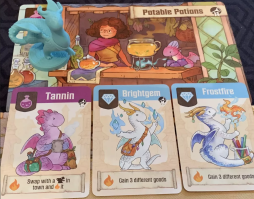
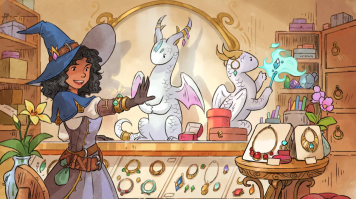
I’ll be running Raccoon Tycoon and Flamecraft for a charity event during Nuke-Con in two days, so I played both to remind myself how to play so I can teach each game. If you’re in the Omaha area this weekend, feel free to stop by my table. Anyway, Flamecraft is a game Season will mention in her write-up this week, but I’m including it. It’s a great gateway game. Flamecraft features enough common game mechanisms in modern board gaming, while introducing them in a lighthearted, easy-to-understand manner. And the art is adorable. Who doesn’t want to make artisanal crafts with cute dragons?

And yes, I will be playtesting and demoing my prototypes at Nuke-Con as well. Rustbucket Riots and Whirligig Pets are on the official schedule, but I’ll bring a few other board and card games I’m working on. If you’re going to Nuke-Con, make sure you stop by the Extra Life tables and say hi. We’ll have badge ribbons and prizes.

That’s all I have for the games I’ve played this past month. Let’s see what Skye has been playing.

Skye’s Games

Skye’s Board Games

Who wants to be an entrepreneur, trash panda? I do. Now you can live out your dream with your friends and family in Racoon Tycoon. I played Racoon Tycoon for the first time and really enjoyed it. The straightforward mechanics, simple gameplay and charming theme make Racoon Tycoon a game that I’d happily return to. Like most games I play for the first time, I sucked, but that doesn’t matter. I may have lost the battle, but the animal economy war has only just begun. Walrus St. isn’t ready for this determined ring-tailed faux cat.
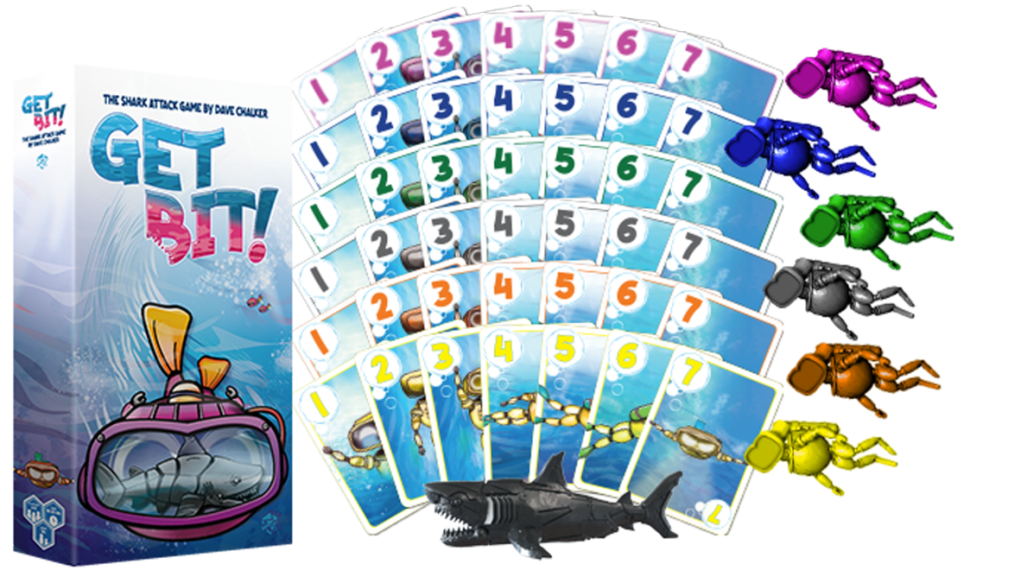
Ah, the wonders of being eaten by a shark. That’s Get Bit’s scenario. Get Bit is easy enough to understand. Don’t get eaten, and you win. The gameplay itself is different than what I was expecting. The goal is to stay as far away from the shark as possible (duh), but you accomplish this by playing cards that are numbered 1 through 7. The person who played the lowest card gets to move the farthest away first, followed by the next lowest card, and so on. Get Bit is a bit odd, but there are fair amounts of strategy and luck involved to keep you on the edge of your seat. Just make sure you sort out your least-favorite limbs ahead of time.
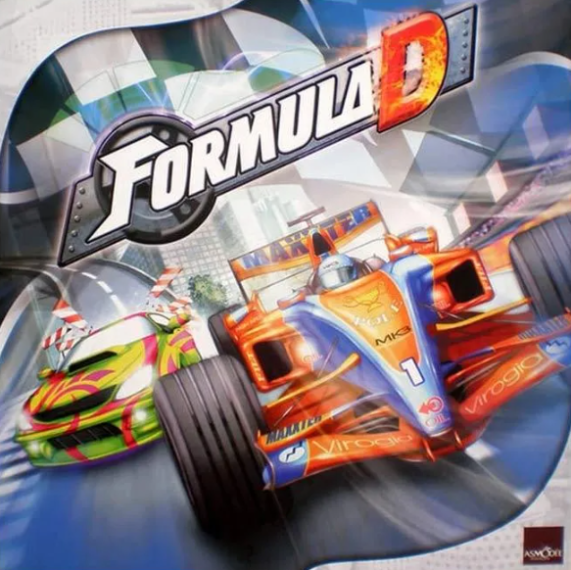
This month was the most fun I’ve had with Formula D in a while. We played Formula D with a large group of people, and it was a completely different experience. When I’ve played Formula D in the past, I’ve only played with 2 or 3 other people at most. With 8 players, we were cracking jokes, being ridiculous, and generally having a good time. The only downside was that the game took much longer than usual because of the number of players. I was so into Formula D, my car and I went to sleep with the fish. It was relaxing.

Skye’s Video Game
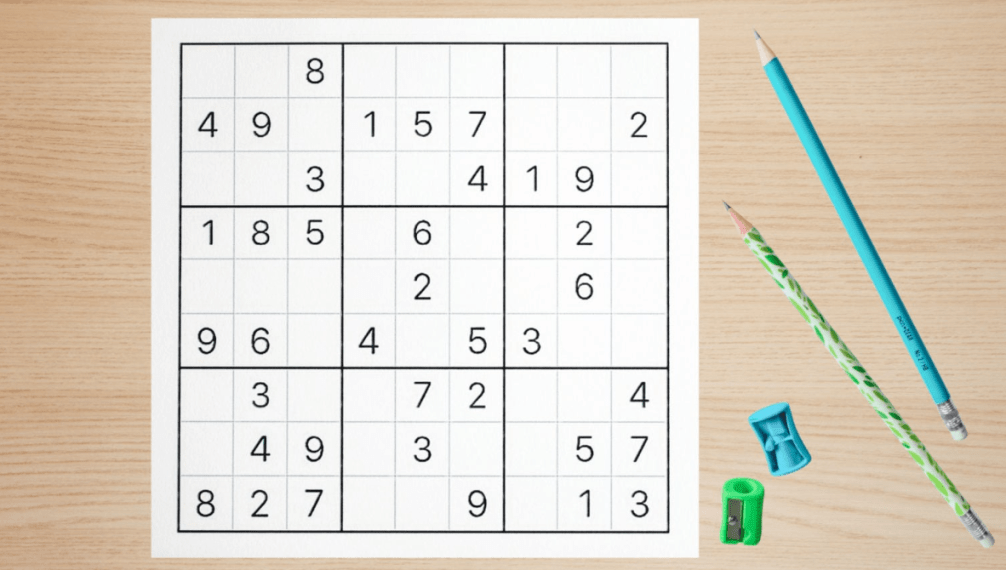
Speaking of relaxing, Sudoku never fails to make me chill out and vibe. I don’t always play Sudoku regularly; I came across a puzzle in my local library that I’ve felt compelled to play online puzzles again. Sometimes I’ll get the urge to test my brain power, and Sudoku has been my go-to. Honestly, there isn’t much to say about it. It’s Sudoku. Y’all know what I mean.

Season’s Games
season’s board games

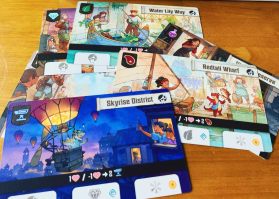
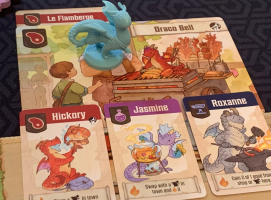
Of course, I’m mentioning Flamecraft. I won’t go into too much detail, so here’s a quick overview. Your goal is to fill shops with dragons who produce resources. You use the resources to create enchantments and gain reputation. Many different dragon effects affect your score, and the game ends when you’ve run out of dragons. I’d forgotten how much I enjoyed this game until it hit the table last Monday.

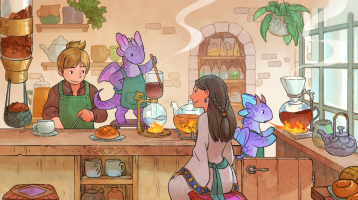
I’m a certified dragon lover, and the small dragons in Flamecraft are adorable. ‘Nuff said.
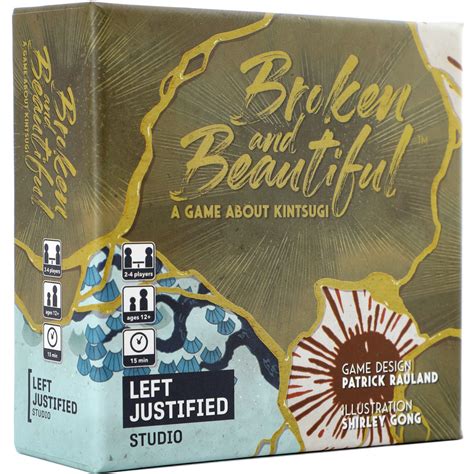
Broken and Beautiful is a set collection game. However, it has a unique way of increasing your score–if you play it correctly. Broken and Beautiful’s theme is based on kintsugi, a Japanese art form of repairing broken pottery with lacquer mixed with gold, silver, or platinum. It makes the object useful again while highlighting its imperfections to celebrate them. In Broken and Beautiful, players draft cards from a tableau using the snake draft method (starting with the first player and reversing player order after the last player). They try to collect sets of pottery based on type (sometimes pattern). The remaining card that doesn’t get drafted and the card on the top of the deck dictate which types of pottery break at the end of the round. Players can spend gold to fix their broken pottery and generate more points.

Normally, I’m not a huge fan of card drafting set collection games since I rarely feel the theme of the game. As in, if I play Sushi Go!, I don’t feel like I’m making a plate of sushi. In Broken and Beautiful, the theme of kintsugi is more evident to me. I also enjoyed the extra layer of strategy in Broken and Beautiful.

season’s video games

I’ve been playing a lot of Cell to Singularity on my phone. I love learning, and I enjoy idle games. That’s exactly what Cell to Singularity is. You start with discovering amino acids and work your way through evolution. The premise revolves around the game being a simulation of evolution, so some what-ifs about evolution crop up the further you progress. There are also offshoot simulations. The two permanent ones are Mesozoic Valley (dinosaurs) and Beyond (outer space). Every few days, limited simulations are available to play, too. I’ve just finished learning way more about mushrooms than I ever planned to learn. Worth it.

I go in and out of playing Ark: Survival Evolved. No. I don’t have Ark: Survival Ascended. I don’t think my PC can run it. Eh-heh. I enjoy taming my favorite creatures and building different bases every time I play. I have a few mods to spice things up. There are many fun, player-made maps to play on, and unique creatures, too. There are also mods that improve quality-of-life and let players build things that aren’t part of vanilla Ark: Survival Evolved. There’s no better feeling in Ark: Survival Evolved than starting a new game and seeing what happens.

Don’t forget to swing by Nuke-Con this weekend at the Mid-America Center in Council Bluffs, IA, and visit Kyra at the Extra Life booth. They’d love to meet you. What are you playing this week, Geekly Gang? Let us know in the comments.
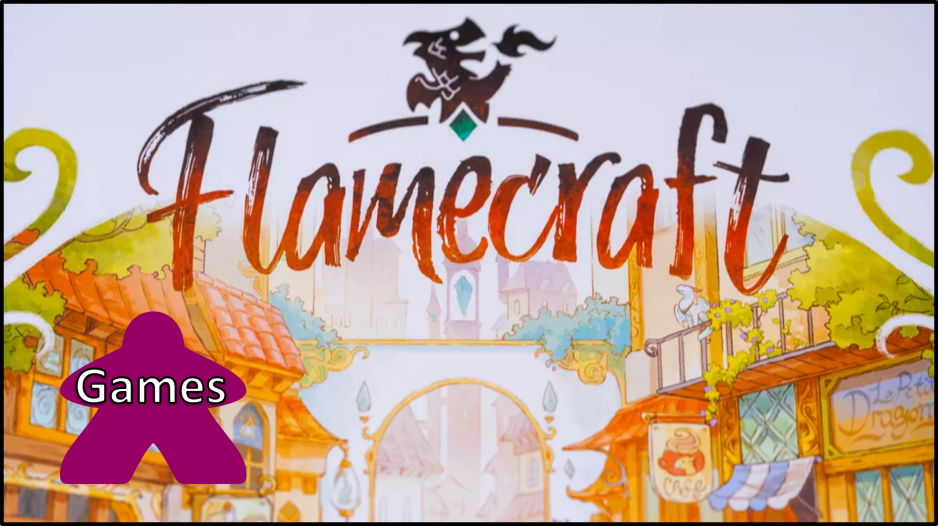
Tabletop Game Review: Flamecraft

In Flamecraft, players take on the role of Flamekeepers, gathering items, placing dragons, and casting enchantments to enhance the town’s shops. Dragons specialize in bread, meat, iron, crystals, plants, and potions, and the Flamekeepers know which shops are the best for each dragon type. Can you build the most reputation and become the Master of Flamecraft?

Hey, hey! Kyra Kyle here. The tabletop game we’re reviewing today has plenty of cute dragons and fantasy puns galore. Flamecraft took home some awards in the past two years, including 2022 Origins Awards Fan Favorite, and was nominated for several more. A world of dragons awaits, but before we explore further, let’s look at Flamecraft’s details.

The Fiddly Bits

Designer: Manny Vega
Publisher: Cardboard Alchemy and Lucky Duck Games
Date Released: 2022
Number of Players: 1-5
Age Range: 8 and up
Setup Time: 10-15 minutes
Play Time: About 60 minutes

Game Mechanisms

Contracts
Hand Management
Modular Board
Set Collection
Solo/Solitaire Game
Worker Placement

Game Setup

Flamecraft’s rulebook has a well-written Game Setup section. It features large, well-marked pictures that help set up the game. All one needs to do is follow the directions, step by step. I began to re-write what was written in the rulebook but thought a “Too Long, Didn’t Read” version was more appropriate here. If you’re interested in the full rulebook, here’s a link.

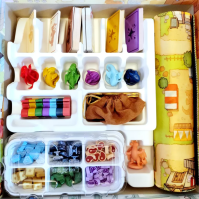
Roll out the Town mat so that it’s in the middle of the table.

Place the Starter Shops (with a bugle symbol on them) faceup on any 6 Shop spaces in Town and do the same with the Starter Artisan Dragons, which have the same symbol.

Place the Goods tokens in a spot (or spots) where all players have access to them and then place the Coin tokens on the fountain.

You’ll have to sort the various shop types into piles based on the icons in the top left corner. Make a pile for each of the 6 Goods icons and a seventh pile for all other icons. Flip all 7 piles facedown and separately shuffle them. Take 1 card from each of the Goods Shops and 4 from the 7th pile to make the Shop deck and then shuffle the Shop deck and place it to the side of the Town mat.

The Artisan Dragon deck has special rules for 2 and 3-player games. Follow those guidelines if you’re playing with fewer than 4 players to make the Artisan Deck. Don’t do anything with a larger player-count game. Shuffle the deck and place it on its designated spot on the Town mat. Reveal the top 5 cards and place them faceup in the Park.

Shuffle the Fancy Dragon cards and place them on the marked space next to the Fountain.

Shuffle the Enchantment deck (use the purple one for new players) and place it on the marked space inside the Reputation track. Reveal the top 5 cards and place them in a faceup row next to the deck.

Give each player a player token (dragon), a Reputation marker (heart), and a player aid card in a matching color. Place all Reputation markers near the start of the Reputation track.

Deal each player 3 Artisan Dragons and 2 Fancy Dragons. Each player chooses 1 Fancy Dragon to keep and returns the Fancy Dragon they didn’t choose to the bottom of the deck.

Game Flow

Flamecraft’s rulebook also does a good job of explaining the game’s flow. I’ll try to be as brief as possible here. Again, you can check out the full rulebook with the link above.

Goal

You want to become the most successful Flamekeeper in town by having the highest Reputation. Visit Shops, place Artisan Dragons, cast Enchantments, and satisfy the goals of your secret Fancy Dragons. The player who is furthest ahead on the Reputation track wins.

Taking a Turn

On your turn, you must visit a Shop. Then choose to either Gather or Enchant there. At the end of your turn, you must check if you need to expand the Town (more on that later), discard down to your Dragons (cards) and Goods (resource) limit, and refresh the faceup Enchantments and Artisan Dragons.

Visiting a Shop

Move your player token onto a Shop card. You must choose a different Shop than the one you visited on your last turn. If another player (or players) are visiting the shop you move to, you must give each player at that shop 1 Good of your choice or 1 Coin from your supply. If you don’t have enough Goods to give 1 to each player, you must choose a different shop to visit.

First Option after Visiting: Gathering from a Shop

If you choose to Gather from the Shop, follow these steps in order:

1) Gather Goods, Coins, and Dragons printed on the shop and from each Artisan Dragon and Enchantment there.
2) (Optional) Place a Dragon: You may place 1 Dragon from your hand into a Dragon slot with a matching icon and then gain the rewards on that slot.
3) (Optional) Fire up a Dragon: You may use the Fire ability of any 1 Artisan Dragon at the Shop.
4) (Optional) Use Shop Ability: You may use the Shop’s ability if it has one.

Second Option after Visiting: Enchanting a Shop

If you decide to Enchant the Shop you visit, follow these steps in order:

1) Cast Enchantment: Choose an Enchantment card from the faceup row that matches the Shop’s icon. Pay its Goods cost to tuck it behind the Shop and gain the rewards printed on the Enchantment.
2) (Optional) Fire Up All Dragons: You may use the Fire abilities of any number of Artisan Dragons at the Shop.

End of Turn

After Gathering or Enchanting, take the following steps to clean up for the next player’s turn:

1) Expand Town: Flip any new Shops you drew during your turn faceup. (Note: If you filled the final spot for an Artisan Dragon on your turn, draw a new Shop.)
2) Dragons & Goods: Return Dragons and Goods until you have no more than 6 Artisan Dragons and 7 Goods of each type. (Note: Fancy Dragons do not have a limit.)
3) Refresh Park & Enchantments: Draw new faceup Artisan Dragons and Enchantments until there are 5 of each.

End of the Game

When the last card in either the Artisan deck or Enchantment deck is drawn or revealed, this triggers the end of the game. Each player gets 1 final turn, including the player who triggered the game’s end.

Once all players have had a final turn, gain end-game Reputation as follows:

1) Leftover Coins: Each player gains one Reputation for each Coin.
2) Fancy Dragons: Each player reveals each Fancy Dragon with a Moon icon whose goals they’ve fulfilled and scores the indicated amount of Reputation.

Whoever has the highest Reputation wins.

Review

As you might tell from the game setup and flow, Flamecraft has a lot going on, but it isn’t too much for younger players and players unfamiliar with tabletop games to understand. The Board Game Geek community lists Flamecraft’s suggested age as 8 and up, while the game box lists the age as 10 and up. I usually side with BGG. This gap doesn’t seem like much, but it depends on how well-versed a child is with tabletop games. Kids familiar with tabletop games can play Flamecraft at 8; I’d go with a year or two older if the child isn’t as familiar with tabletop games. Why do I place so much emphasis on this? Flamecraft is what the tabletop game community calls a gateway game. Gateway games bridge the gap between new and seasoned board game players. In this regard, Flamecraft is fantastic.

Would I pick Flamecraft above all other games of its ilk (middle-weight games that feature worker placement, set collection, hand management, and others)? Maybe. Maybe not. But there aren’t many games of this type that can be classified as middle-weight. A large divide has formed with modern board games. They either skew heavier and more complex for a hardcore audience or go the opposite direction and streamline into simpler games for a mainstream audience. Flamecraft is one of the few recent board games in the middle. Games like Flamecraft are necessary for the hobby.

I also like how Flamecraft’s various game mechanisms work together. You can find these game mechanisms in other games and in similar combinations to Flamecraft, but Flamecraft has found the right balance to introduce a player to these concepts. My favorite twist on an older mechanism is that Flamecraft uses worker placement, but it eliminates action blocking. You can go to a space with other players, but you’ll need to pay a fee. This can lead to an action being functionally blocked, but there isn’t a hard rule of action blocking.

Flamecraft also uses a newer type of game mechanism, and I like the direction that tabletop games are headed. The board is a shared space. Anything you do to improve the game state can help your opponent. This leads to interesting choices. Will this upgrade help me more than my opponent? If so, I’ll do it. If not, I may choose another option. This combination of a kinder version of older game mechanisms (worker placement) and the introduction of a rising game mechanism (the board as a shared space) makes Flamecraft a fabulous example of where board games have been and a glimpse of what could be their future.

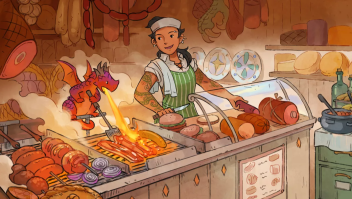
I can’t believe it’s taken me this long to get to the art, but the art is phenomenal. Sandara Tang did a great job of making Flamecraft feel as cozy as the cozier options for older game mechanisms. I like the Neoprene mat more than I would’ve expected. Does it curl at the edges? Sure. Does it struggle to lay flat? Indubitably. However, the mat’s unruliness doesn’t detract from the game and works for its aesthetic; the soft feel of the mat matches the game’s color palette. The mat also makes the game easier to store. And the dragons. Who doesn’t love cute dragons? If you’re a dragon fan, you owe it to yourself to give Flamecraft a try.

Too Long Didn’t Read

Flamecraft occupies a shrinking spot in the tabletop gaming space: middle-weight game. It combines old and new gaming elements with a fun and approachable theme. My favorite elements are the lack of “action blocking” with worker placement (which works well for a younger player demographic) and the idea that the board is a shared space. Any action you choose could help your opponent. This leads to interesting choices.

3 Lists of 3 Tabletop Games for Miss Kitty

Hey, hey! Kyra Kyle here. I promised something different with this post, so let’s give it a try. Today would be my mom’s 74th birthday. Her name was Catharina Beenen Rackley, but her friends called her Kitty. I wanted to make a 3 Lists of 3 in her honor and had some trouble picking the topic. I could’ve picked music, food, or travel. But we don’t cover those topics on Geekly that often. Miss Kitty also enjoyed television and movies, and those would’ve made good choices. But I decided on tabletop games.

Geekly covers tabletop games, and Mom and I played board games together. She even got a kick out of me designing the occasional game. So, let’s do a 3 Lists of 3 Tabletop Games for Miss Kitty.

Games Miss Kitty Played

Miss Kitty played a lot of different games, and typically, she played games depending on who she had as company. She would play certain games with her children and others with her mother and siblings. And I’m sure she played even more games with her friends. I only have my perspective to go off on here and the accounts of others. Also, we may have more than a few honorable mentions. One cannot boil someone down to a handful of anything, not even board games.

Liverpool Rummy

Liverpool Rummy was a prerequisite whenever visiting Miss Kitty’s family, so this one may be more of a Beenen family pick. But I’m going with it. Miss Kitty and I played Liverpool Rummy a lot. I would go into the gameplay here, but I want to keep the entry short. Perhaps I should cover Liverpool Rummy in a post but it’s a card game using a standard deck.

Each round, players either try to collect sets of cards (at least 3 of the same number) or runs of cards (4 cards in the same suit in sequential numbers). If a player has all the requirements for a round, they can go down (which means revealing their cards with the appropriate number of sets/runs). Once down, players can play cards from their hand onto cards that are “down.” The first player out of cards wins the round and everyone else tallies their score. The lowest score at the end of the game wins.

I picked Liverpool Rummy instead of Wahoo (another Beenen family favorite and a good choice for this selection) because of a moment that happened the first time my wife Jen played with Miss Kitty. Miss Kitty kept saying that she didn’t know why I was so competitive in games. Later that same game, Miss Kitty sported a devilish grin and then bragged as she went out concealed. Jen laughed. Miss Kitty asked her why. Jen said, “I can see why they’re so competitive.”

Balderdash

Another game could’ve taken Balderdash’s place here: Scattegories. In fact, Miss Kitty and I played more Scattegories than Balderdash through the years. Both games are word games and while Miss Kitty would come up with strange answers for Scattegories (“Oreo” or “Knuckle” as forms of sandwiches), Balderdash created more memories.

Balderdash is a game of obscure words. Players must create definitions for words seldom used in the dictionary and gain points for guessing the correct definition or having other players select their invented definition. Miss Kitty worked as a surgical technician. She knew a few things about medicine and used that knowledge liberally in any game of Balderdash. If we heard a definition begin with “a medical term meaning…” or “inflammation of the…” or “a doctor’s tool for,” everyone at the table would turn to look at her. She’d turn beet red and try not to smile. And typically failed. If two “medical” definitions got read, we’d curse our bad luck. Which one’s the real one and which one’s the fake one?

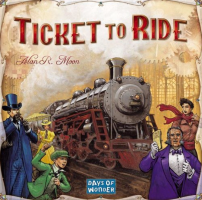
Ticket to Ride

Miss Kitty had a history of set collection games, so of course she’d love Ticket to Ride. The rules are simple to learn and each different flavor of Ticket to Ride would add a wrinkle or two to the core rule set. Ticket to Ride was a perfect game for Miss Kitty. She could play a new game with a few “new rules” and not feel lost. I covered Ticket to Ride some time ago. Here’s a link to the original write-up.

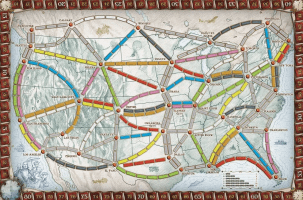
The one game of Ticket to Ride I remember best with Miss Kitty involved her playing with her older brother Paul. Uncle Paul did nothing but build trains on the eastern seaboard. He didn’t complete any tickets. He didn’t do much of anything except block everyone else from building on the eastern coast of the United States. Miss Kitty growled at Uncle Paul. “You’re playing it wrong. Stop playing the game wrong!” I fell out of my seat laughing. It was a window into Miss Kitty’s childhood. This wasn’t the first time she had told off her older brother.

My family and I are currently playing a game of Ticket to Ride Legacy: Legends of the West. This version of Ticket to Ride has a story. Each player assumes the role of a railroad tycoon. The board grows as the railroad gets built from the east coast to the west coast. Hey, Uncle Paul wouldn’t have been playing the game wrong with this version. Anyway, there are four of us playing Ticket to Ride Legacy. When we finish, I intend on dealing out the fifth player stickers (you can place stickers claiming routes and cities for different players and we plan to use the fifth player) for Miss Kitty.

Games Miss Kitty Didn’t Play

This next list is of games are ones Miss Kitty never had the chance to play for one reason or another, but I know she would’ve loved to play them.

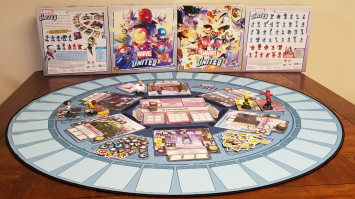
Marvel United

I wouldn’t have thought it possible if I didn’t hear this from her myself, but Miss Kitty was more into the Marvel Cinematic Universe than me. Marvel United is a cooperative tabletop game where players assume the role of superheroes in the Marvel universe as they try to stop a supervillain. Like Ticket to Ride, the rules are simple to learn with each hero and villain adding a small wrinkle or two. Since it’s cooperative, Marvel United eliminates competitiveness and players are encouraged to help each other. I just know Miss Kitty would’ve wanted to play out a few of her favorite movies.

And there’s some precedent for this. Miss Kitty and I played X-Men: Under Siege. My father and I played more of this game, but Miss Kitty liked this game, too. Marvel United would’ve scratched a similar itch. And it doesn’t hurt that the miniatures and art have cute designs. Miss Kitty liked cute things.

I haven’t written a review for Marvel United yet, but I started a guide. You can check out the newly posted Guide to Marvel United here.

Flamecraft

Flamecraft is the most complex game on any of these lists so far, but I’m sure Miss Kitty would’ve struggled through a difficult game or two because it’s so cute. And dragons. One of her granddaughters (my niece) is obsessed with dragons or at least she was at one point. Flamecraft uses a game element popular with recent tabletop games. Whenever you take an action that action has a global effect and can benefit your opponent on future turns. This element also makes Flamecraft feel like it’s a winnable game or at least a board game that has closer outcomes.

And did I mention the puns? I can hear Miss Kitty cackling every time I read one of the dragon shops’ names. Either that or I’m hearing my daughter’s same laugh. Critical Rolls. Bizarre Bazaar. Potable Potions. Outback Drakehouse.

Sixes

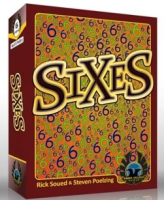
I first played Sixes recently at a party and thought of Miss Kitty. It’s a word game like Scattegories. Sixes plays out in six rounds—naturally. Each round has players making lists of six things that match a category. The twist comes from what players are trying to do each round. Some rounds, you’ll want to have unique answers like Scattegories. Other rounds, you’ll want to match other players. And the third and sixth rounds are lightning rounds where players answer 6 categories with a single answer. The person with the most points wins.

Miss Kitty would’ve loved playing Sixes. It’s a great ice breaker game or a way to reconnect. I found players saying things like “I knew I liked you” or “we think so much alike” whenever they answer a list similarly during a matching round. Of course, there’s the classic Scattegories response whenever you match during a unique round. “We think TOO much alike.” Or “Get out of my head.”

Games that Remind Me of Miss Kitty

This list is more nebulous than the last two. Some may be games Miss Kitty played at one point. Others may be games she would’ve liked to have played but never did. And there are a few games on this list that just remind me of Miss Kitty.

On Tour

During On Tour, Players assume the role of a rock band’s tour manager. Miss Kitty listened to classic rock and pop music. She would’ve loved this premise for a game. But she may have gotten frustrated with the gameplay. On Tour has simple enough rules. The amount of player choice can get overwhelming.

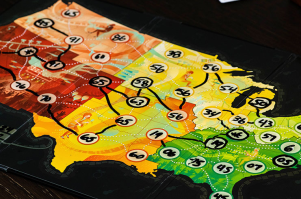
Each turn, a player rolls two ten-sided dice and then each player must simultaneously place the numbers depicted on the dice in a state (if you’re using the United States map) depicted on two of three cards (the cards will have specific states and regions and players may choose whether to use the state or the region). Players do that by drawing on their own game boards with dry erase markers. Once each player’s map is filled, players score points depending on how many states they can travel through starting from lowest to highest number value in sequential order. For example, you can go 5-9-13, but you cannot go 5-13-9.

Players must cut their losses and admit that they will not be able to visit each state (or country on the Europe map). Miss Kitty would’ve struggled with making a route that goes through as many states as possible. She may have frozen before placing each number. But whenever I play On Tour, I’ll name my band (there’s a space for that on the United States side of the map) something that has to do with Rick Springfield. Miss Kitty would listen to Springfield whenever her husband was away and would scramble to hide her teen magazine cutouts whenever he returned home. I may call my next band Working Class Dogs.

Fireball Island: The Curse of Vul-Kar

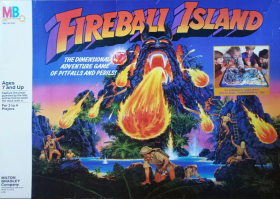
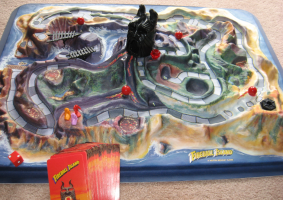
Miss Kitty bought me the original Fireball Island for Christmas one year. I don’t remember if she played the game with me, but she certainly got me the game for the holidays. The original Fireball Island had players race to pick up a gemstone and race back to the finish line with the booty. Fireball Island: The Curse of Vul-Kar improves upon the original. Players take pictures of the island for Instagram (or some other social media), but they can still snag a precious gemstone for extra points.

Fireball Island: The Curse of Vul-Kar reminds me of Miss Kitty, my mom, because I have video of the Christmas when I unwrapped the original Fireball Island. A younger me paced back and forth with the box as Christmas continued. Miss Kitty opened the gift I had bought for her (or I had picked it out for her): Hope perfume. She liked new and unique fragrances, and I had found Hope, which was supposed to change with each person’s body chemistry. It sounded unique. Modern-day Kyra recognizes Hope’s description as a marketing ploy. It was the thought that counts. Anyway, the video shows me geeking out with Fireball Island, while Miss Kitty was geeking out over Hope. Parallel geeking.

The Real Ghostbusters Game

The Real Ghostbusters Game, based on the 80s cartoon series of the same name, reimplements Ghost Castle that released in 1970. It’s a dated game; it doesn’t hold up to modern tabletop game design techniques. But The Real Ghostbusters Game holds a special place.

I brought the game to a kid’s birthday party. Miss Kitty dropped me off at the kid’s house and some time during the drive she shared that my father wondered why I hung out with a loser (the kid whose birthday party I was attending). I told Miss Kitty that even losers needed friends. This was Miss Kitty’s favorite story to share about me and my childhood.

I miss you, Mom. Happy birthday. We’ll play some games for you today.

Let me know of any games that remind you of your loved ones. Or the games you love playing with your loved ones. Or even the games you wish you could’ve played with them. And wherever you are, I hope you’re having a great day.