Top 5 Tabletop Games from 1986-1987

Hey, hey! Kyra Kyle here. Back with another Top 5 Tabletop Games. 1986 and 1987 have a lot more games for us to choose from. These two years may have too many games to talk about. Why couldn’t some of these games be released over the previous two years? Ugh! This is a good problem to have. I may have at least one honorable mention this year. Let’s talk board games.

But first, in case you’ve forgotten our criteria for the Top 5 Tabletop Games, let’s reiterate the ground rules again before we get started.

1: Cultural relevance plays as much of a factor as overall quality. A game might make a list that doesn’t hold up to others of its type, but you must admit the game is everywhere.

2: Only one game from a franchise makes the list. This will become more of an issue the closer we get to games with expansions.

3: Longevity plays a role, too. A game doesn’t have to fly off the shelves today, but it had to have some widespread appeal for a decent time.
5: Outburst (1986)

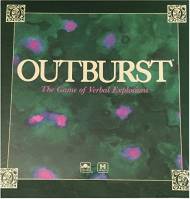
Outburst plays a bit like Family Feud. Two teams compete over multiple rounds to reach 60 points by guessing items listed on a Topic Card within a time limit. Outburst’s simple concept puts it firmly in the party game category, and games like this bring people into the hobby of tabletop games. And they can just be fun.

Outburst was featured in Games magazine’s Best Games of 1988. Scott Marley praised Outburst for its clever topics and team-based gameplay. Marley concluded that “Though Outburst is easy to learn, many topics are too hard—and occasionally too spicy—for children.” This may have prompted 1989’s Outburst Junior.
Fireball Island Tabletop Game

4: Fireball Island (1986)

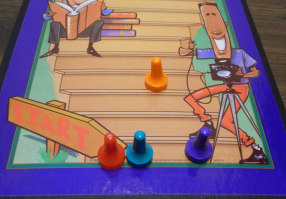
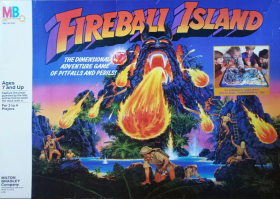
I remember getting the original Fireball Island for Christmas in 1986. The box is ginormous. The plastic game board had undulating paths where the titular fireballs (marbles) would travel down and knock players down, causing the player to lose any items. The object of Fireball Island is to escape the island with the jewel, which players must steal from the top of the Vul-Kar’s mountain. Fireball Island only has one jewel, so once a player grabs it, they become the target of others. And boy, do they become a target.
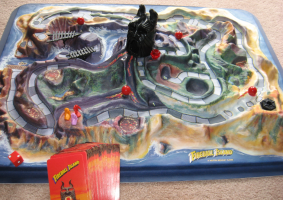
Fireball Island Tabletop Game Board Close up

Players are incentivized to knock the jewel out of the hands of the player who possesses it. The reimagining of Fireball Island by Restoration Games in 2018 doesn’t place as much emphasis on the jewel. Players can win by other means. Unsponsored quick plug: Restoration Games does great work. They’ve brought back many games on this list and even a couple of honorable mentions like Dark Tower (from the 1980-1981 list) and Thunder Road (which just missed this list).
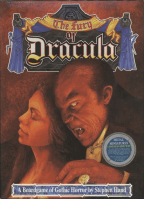
3: The Fury of Dracula (1987)

I mentioned a few lists ago (1983-1984) that Scotland Yard inspired many asymmetric games with hidden movement; The Fury of Dracula is one of the most prominent. I like the theme, but the name “Fury” is a bit of a misnomer. Dracula travels on a hidden board while the hunters move across the game board openly and try to deduce where Dracula is, all the while collecting the means with which to slay Dracula (stakes, garlic, and holy water). The Fury of Dracula ends with an epic showdown.

The Fury of Dracula has been updated multiple times. The second edition changes a lot of the gameplay, while the third edition streamlines the rules to make it easier to play and get into. 2019’s Fourth Edition of The Fury of Dracula gave the game a facelift; it didn’t change much in the way of gameplay. I recommend either the third or fourth editions.

2: Labyrinth (1986)

Not to be confused with the 1946 marble game, Labyrinth, which was originally stylized as THE aMAZEing LABYRINTH, uses a 7×7 grid where tiles get placed on one end of a column or row and displaces the tile on the opposite side of the column or row, hence the German name for the game Das verrückte Labyrinth, which is a pun on the German words errücken” (displace) and “verrückt” (crazy).

Players move their pieces along the ever-shifting path. Many of the tiles will have treasures printed on them. These treasures will match the cards dealt to players at the beginning of the game. The first player to obtain all the treasures in their deck wins. Labyrinth looks simple at first, but it gets puzzlely real fast. It’s a great problem-solving game for children, but when played by adults, the game can become more strategic and cutthroat. Labyrinth’s shifting tiles is one of the most unique game mechanisms from this era.

Returning to the naming, I wonder if Labyrinth avoided calling itself that in 1986 to avoid a lawsuit or confusion with Jim Henson’s Labyrinth movie that was released the same year. I remember a Labyrinth marble game variant tying into the movie that year.

1: Arkham Horror (1987)

I didn’t realize how old Arkham Horror was until I started compiling this list. Designer Richard Launius originally submitted the concept as Call of Cthulhu: The Board Game. This won’t be the first time Launius will make a game based on H.P. Lovecraft. He made a faster-pace, dice version of Arkham Horror in Elder Sign. Launius may be the person most responsible for making H.P. Lovecraft so popular in tabletop gaming. Arkham Horror is an early, thematic cooperative board game. Before Arkham Horror, I don’t recall seeing too many popular cooperative board games.

Because of this, Arkham Horror introduced a lot of staple cooperative board game concepts. Not the least of which is a “Doom Track.” Players work against the clock before the Ancient One breaks through its plane and into Arkham. Come to think of it, a game clock—of one persuasion or another—exists in most cooperative board games. Launius reinvented Arkham Horror into a Living Card Game in 2005.

Did we get the list right, for the most part? I didn’t mention Blood Bowl (1987); I’ll mention it here as another honorable mention. Let us know which games you’d add in the comments. And wherever you are, I hope you’re having a great day.

Check out the other lists in this series:
Top 5 Tabletop Games Prior to the 1930s
Top 5 Tabletop Games of the 1930s
Top 5 Tabletop Games of the 1940s-50s
Top 5 Tabletop Games from the Early 1960s
Top 5 Tabletop Games from the Late 1960s
Top 5 Tabletop Games from the Early 1970s
Top 5 Tabletop Games from 1980-1981
Top 5 Tabletop Games from 1982-1983
Top 5 Tabletop Games from 1984-1985
Top 5 Tabletop Games from 1988-1989
Top 5 Tabletop Games from 1990-1991

3 Lists of 3 Tabletop Games for Miss Kitty

Hey, hey! Kyra Kyle here. I promised something different with this post, so let’s give it a try. Today would be my mom’s 74th birthday. Her name was Catharina Beenen Rackley, but her friends called her Kitty. I wanted to make a 3 Lists of 3 in her honor and had some trouble picking the topic. I could’ve picked music, food, or travel. But we don’t cover those topics on Geekly that often. Miss Kitty also enjoyed television and movies, and those would’ve made good choices. But I decided on tabletop games.

Geekly covers tabletop games, and Mom and I played board games together. She even got a kick out of me designing the occasional game. So, let’s do a 3 Lists of 3 Tabletop Games for Miss Kitty.

Games Miss Kitty Played

Miss Kitty played a lot of different games, and typically, she played games depending on who she had as company. She would play certain games with her children and others with her mother and siblings. And I’m sure she played even more games with her friends. I only have my perspective to go off on here and the accounts of others. Also, we may have more than a few honorable mentions. One cannot boil someone down to a handful of anything, not even board games.

Liverpool Rummy

Liverpool Rummy was a prerequisite whenever visiting Miss Kitty’s family, so this one may be more of a Beenen family pick. But I’m going with it. Miss Kitty and I played Liverpool Rummy a lot. I would go into the gameplay here, but I want to keep the entry short. Perhaps I should cover Liverpool Rummy in a post but it’s a card game using a standard deck.

Each round, players either try to collect sets of cards (at least 3 of the same number) or runs of cards (4 cards in the same suit in sequential numbers). If a player has all the requirements for a round, they can go down (which means revealing their cards with the appropriate number of sets/runs). Once down, players can play cards from their hand onto cards that are “down.” The first player out of cards wins the round and everyone else tallies their score. The lowest score at the end of the game wins.

I picked Liverpool Rummy instead of Wahoo (another Beenen family favorite and a good choice for this selection) because of a moment that happened the first time my wife Jen played with Miss Kitty. Miss Kitty kept saying that she didn’t know why I was so competitive in games. Later that same game, Miss Kitty sported a devilish grin and then bragged as she went out concealed. Jen laughed. Miss Kitty asked her why. Jen said, “I can see why they’re so competitive.”

Balderdash

Another game could’ve taken Balderdash’s place here: Scattegories. In fact, Miss Kitty and I played more Scattegories than Balderdash through the years. Both games are word games and while Miss Kitty would come up with strange answers for Scattegories (“Oreo” or “Knuckle” as forms of sandwiches), Balderdash created more memories.

Balderdash is a game of obscure words. Players must create definitions for words seldom used in the dictionary and gain points for guessing the correct definition or having other players select their invented definition. Miss Kitty worked as a surgical technician. She knew a few things about medicine and used that knowledge liberally in any game of Balderdash. If we heard a definition begin with “a medical term meaning…” or “inflammation of the…” or “a doctor’s tool for,” everyone at the table would turn to look at her. She’d turn beet red and try not to smile. And typically failed. If two “medical” definitions got read, we’d curse our bad luck. Which one’s the real one and which one’s the fake one?

Ticket to Ride

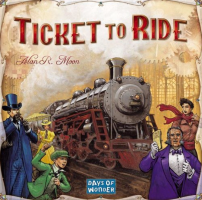
Miss Kitty had a history of set collection games, so of course she’d love Ticket to Ride. The rules are simple to learn and each different flavor of Ticket to Ride would add a wrinkle or two to the core rule set. Ticket to Ride was a perfect game for Miss Kitty. She could play a new game with a few “new rules” and not feel lost. I covered Ticket to Ride some time ago. Here’s a link to the original write-up.

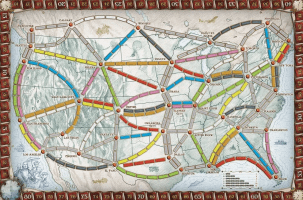
The one game of Ticket to Ride I remember best with Miss Kitty involved her playing with her older brother Paul. Uncle Paul did nothing but build trains on the eastern seaboard. He didn’t complete any tickets. He didn’t do much of anything except block everyone else from building on the eastern coast of the United States. Miss Kitty growled at Uncle Paul. “You’re playing it wrong. Stop playing the game wrong!” I fell out of my seat laughing. It was a window into Miss Kitty’s childhood. This wasn’t the first time she had told off her older brother.

My family and I are currently playing a game of Ticket to Ride Legacy: Legends of the West. This version of Ticket to Ride has a story. Each player assumes the role of a railroad tycoon. The board grows as the railroad gets built from the east coast to the west coast. Hey, Uncle Paul wouldn’t have been playing the game wrong with this version. Anyway, there are four of us playing Ticket to Ride Legacy. When we finish, I intend on dealing out the fifth player stickers (you can place stickers claiming routes and cities for different players and we plan to use the fifth player) for Miss Kitty.

Games Miss Kitty Didn’t Play

This next list is of games are ones Miss Kitty never had the chance to play for one reason or another, but I know she would’ve loved to play them.

Marvel United

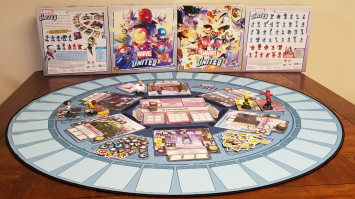
I wouldn’t have thought it possible if I didn’t hear this from her myself, but Miss Kitty was more into the Marvel Cinematic Universe than me. Marvel United is a cooperative tabletop game where players assume the role of superheroes in the Marvel universe as they try to stop a supervillain. Like Ticket to Ride, the rules are simple to learn with each hero and villain adding a small wrinkle or two. Since it’s cooperative, Marvel United eliminates competitiveness and players are encouraged to help each other. I just know Miss Kitty would’ve wanted to play out a few of her favorite movies.

And there’s some precedent for this. Miss Kitty and I played X-Men: Under Siege. My father and I played more of this game, but Miss Kitty liked this game, too. Marvel United would’ve scratched a similar itch. And it doesn’t hurt that the miniatures and art have cute designs. Miss Kitty liked cute things.

I haven’t written a review for Marvel United yet, but I started a guide. You can check out the newly posted Guide to Marvel United here.

Flamecraft

Flamecraft is the most complex game on any of these lists so far, but I’m sure Miss Kitty would’ve struggled through a difficult game or two because it’s so cute. And dragons. One of her granddaughters (my niece) is obsessed with dragons or at least she was at one point. Flamecraft uses a game element popular with recent tabletop games. Whenever you take an action that action has a global effect and can benefit your opponent on future turns. This element also makes Flamecraft feel like it’s a winnable game or at least a board game that has closer outcomes.

And did I mention the puns? I can hear Miss Kitty cackling every time I read one of the dragon shops’ names. Either that or I’m hearing my daughter’s same laugh. Critical Rolls. Bizarre Bazaar. Potable Potions. Outback Drakehouse.

Sixes

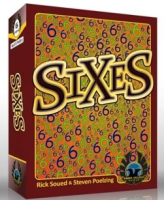
I first played Sixes recently at a party and thought of Miss Kitty. It’s a word game like Scattegories. Sixes plays out in six rounds—naturally. Each round has players making lists of six things that match a category. The twist comes from what players are trying to do each round. Some rounds, you’ll want to have unique answers like Scattegories. Other rounds, you’ll want to match other players. And the third and sixth rounds are lightning rounds where players answer 6 categories with a single answer. The person with the most points wins.

Miss Kitty would’ve loved playing Sixes. It’s a great ice breaker game or a way to reconnect. I found players saying things like “I knew I liked you” or “we think so much alike” whenever they answer a list similarly during a matching round. Of course, there’s the classic Scattegories response whenever you match during a unique round. “We think TOO much alike.” Or “Get out of my head.”

Games that Remind Me of Miss Kitty

This list is more nebulous than the last two. Some may be games Miss Kitty played at one point. Others may be games she would’ve liked to have played but never did. And there are a few games on this list that just remind me of Miss Kitty.

On Tour

During On Tour, Players assume the role of a rock band’s tour manager. Miss Kitty listened to classic rock and pop music. She would’ve loved this premise for a game. But she may have gotten frustrated with the gameplay. On Tour has simple enough rules. The amount of player choice can get overwhelming.

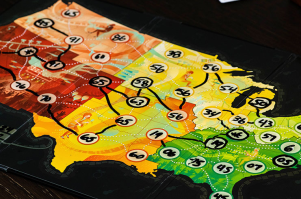
Each turn, a player rolls two ten-sided dice and then each player must simultaneously place the numbers depicted on the dice in a state (if you’re using the United States map) depicted on two of three cards (the cards will have specific states and regions and players may choose whether to use the state or the region). Players do that by drawing on their own game boards with dry erase markers. Once each player’s map is filled, players score points depending on how many states they can travel through starting from lowest to highest number value in sequential order. For example, you can go 5-9-13, but you cannot go 5-13-9.

Players must cut their losses and admit that they will not be able to visit each state (or country on the Europe map). Miss Kitty would’ve struggled with making a route that goes through as many states as possible. She may have frozen before placing each number. But whenever I play On Tour, I’ll name my band (there’s a space for that on the United States side of the map) something that has to do with Rick Springfield. Miss Kitty would listen to Springfield whenever her husband was away and would scramble to hide her teen magazine cutouts whenever he returned home. I may call my next band Working Class Dogs.

Fireball Island: The Curse of Vul-Kar

Miss Kitty bought me the original Fireball Island for Christmas one year. I don’t remember if she played the game with me, but she certainly got me the game for the holidays. The original Fireball Island had players race to pick up a gemstone and race back to the finish line with the booty. Fireball Island: The Curse of Vul-Kar improves upon the original. Players take pictures of the island for Instagram (or some other social media), but they can still snag a precious gemstone for extra points.

Fireball Island: The Curse of Vul-Kar reminds me of Miss Kitty, my mom, because I have video of the Christmas when I unwrapped the original Fireball Island. A younger me paced back and forth with the box as Christmas continued. Miss Kitty opened the gift I had bought for her (or I had picked it out for her): Hope perfume. She liked new and unique fragrances, and I had found Hope, which was supposed to change with each person’s body chemistry. It sounded unique. Modern-day Kyra recognizes Hope’s description as a marketing ploy. It was the thought that counts. Anyway, the video shows me geeking out with Fireball Island, while Miss Kitty was geeking out over Hope. Parallel geeking.

The Real Ghostbusters Game

The Real Ghostbusters Game, based on the 80s cartoon series of the same name, reimplements Ghost Castle that released in 1970. It’s a dated game; it doesn’t hold up to modern tabletop game design techniques. But The Real Ghostbusters Game holds a special place.

I brought the game to a kid’s birthday party. Miss Kitty dropped me off at the kid’s house and some time during the drive she shared that my father wondered why I hung out with a loser (the kid whose birthday party I was attending). I told Miss Kitty that even losers needed friends. This was Miss Kitty’s favorite story to share about me and my childhood.

I miss you, Mom. Happy birthday. We’ll play some games for you today.

Let me know of any games that remind you of your loved ones. Or the games you love playing with your loved ones. Or even the games you wish you could’ve played with them. And wherever you are, I hope you’re having a great day.

Tabletop Games That Would Make a Good Movie

Your uncle Geekly made a list like of tabletop games that would make a good movie three or four years ago, but a lot can happen over the course of years, Uncle Geekly’s a fickle bastard, so the list would’ve changed two weeks after the first one. Hungry, Hungry Hippos? Nah, too scary. Ouija? Ach! Hollywood already made a movie about that since the last list. Maybe the following five games would make a good movie.

And yes, there have been good board game movies. Clue was one, I think. Unfortunately, they’re rebooting it. Ugh!

scythe

Scythe

At first glance, someone may think of Scythe as a war game, but it’s more of a cold war game. It’s set in an alternate sci-fi fantasy version of post-World War I Europe. The technology used to fight The Great War far exceeds our current tech. One look at a gargantuan Mech is a great cue, but despite its vast technology, this world is more of an agrarian continent destabilized by conflict.

Scythe’s story changes depending on how gamers play, but the overall concept has the makings of a political thriller with plenty of espionage. This is a cold war game after all. It’s just a cold war game with Mechs, and that’s awesome.

pandemiclegacyseason2

Pandemic: Legacy

The original Pandemic made the first list of this type, and one could argue that there’s already a Pandemic movie out there (Contagion), but Pandemic: Legacy adds what at first can be viewed as a subtle layer of storytelling that becomes so pronounced toward the middle of the game (gamers play a finite number of games, usually 24, because there is a story that unfolds like a movie or TV show) that you realize you aren’t playing base game Pandemic anymore. I won’t spoil anything here.

But the fact that I could spoil a tabletop game for someone suggests that it could make a great movie or TV show. I’m not that picky.

gloomhaven

Gloomhaven

People have seen high fantasy movies where the heroes join forces to conquer a common evil or foe. Gloomhaven shakes things up by having these “heroes” motivated by selfish endeavors and that needs to happen more in high fantasy stories. The city of Gloomhaven is down on its luck. You can kind of guess that by its name. Its “heroes” or anti-heroes don’t mirror the world in which they live.

This has the potential to be a dark movie, but in the hands of the right people, Gloomhaven could have some of the deepest fantasy characters.

deadofwinter

Dead of Winter

Dead of Winter may come off as a Walking Dead clone, but like Walking Dead, the zombies aren’t the most engaging thing about the story. The survivors take center stage. In Dead of Winter, players don’t know who the traitor is in their midst, they don’t even know if there is a traitor. This set up has the trappings of a good psychological thriller.

The setting of a zombie-apocalypse in the bitter cold adds another layer of tension. Finding out that food rations go missing or there aren’t enough being produced as before or that items like coats and firewood go missing would call into question everyone’s loyalty.

fireballisland

Fireball Island

Sometimes you just want a dumb action movie about grabbing treasure and getting the heck off an island. Hire a resident actor of weird roles like Tim Curry, Johnny Depp, Neil Patrick Harris, or Jim Carrey and add them to the formula of a huge volcano god puking fireballs, and you’ll have yourself a hit. You just need a volcano god puking fireballs.

These five games can’t be the only ones good for a movie adaptation. Slap me upside the head with a VHS tape—those are ancient movie viewing devices for younger readers—or let me know about it in comments. If you like what we do, subscribe to our page to get updates and then you can let me know how wrong I am as soon as possible.