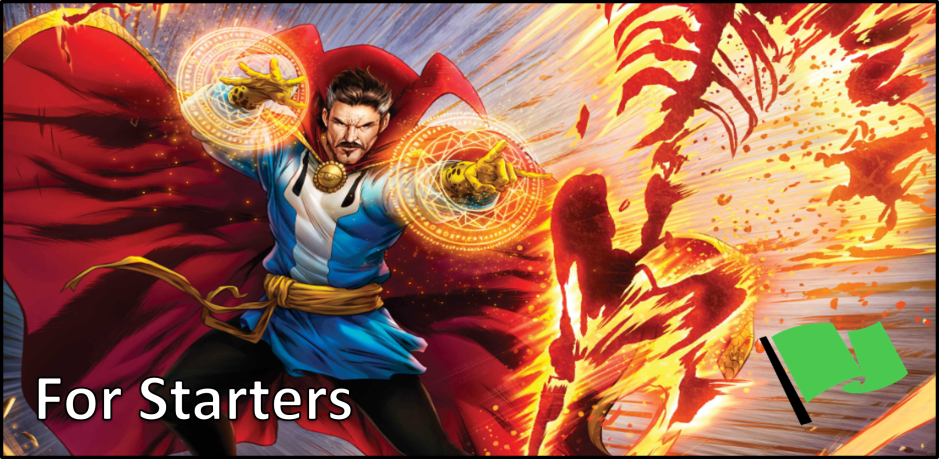
Getting Into Comics: Doctor Strange Starter Stories

Doctor Strange stories venture into the weird and psychedelic. It’s difficult to know where to begin reading Doctor Strange comics. Fortunately, Geekly has you covered.

Hey, hey! Kyra Kyle here. Marvel Comics had its renaissance in the Sixties. No other character screams the Sixties than Stephen Strange. During this decade, mysticism enjoyed a comeback. I’m sure fans attempted some of the spells depicted in Doctor Strange comics. Safety notice: don’t try the spells you find in Doctor Strange comics at home. Artists like Steve Ditko and Barry Windsor-Smith elevated Doctor Strange to another level. Within Doctor Strange, you’ll find some of the most vibrant art in Marvel.

But we’re talking about stories today, and Doctor Strange has had some of the best writers in the business write for him. Like we’ve been doing for the past few entries in this series, we’ll split these stories into single issues and story arcs. This week, we’ll begin with single comic book issues. Enjoy!

Single Issues
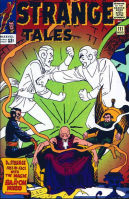
“Face to Face with the Magic of Baron Mordo!” (Strange Tales #111; written by Stan Lee/art by Steve Ditko; 1963)

The follow-up to Strange’s debut in Strange Tales #110, “Face to Face with the Magic of Baron Mordo” pits Doctor Strange against one of his most iconic enemies: Baron Mordo. Mordo is a fellow student of the Ancient One and plans to murder his master and gain the ultimate power. Doctor Strange learns of Mordo’s plan and stops him. Strange and Mordo share a sibling-like rivalry. “Face to Face with the Magic of Baron Mordo” establishes Doctor Strange, the Ancient One, and Mordo as characters. I can’t wait to see what the Marvel Cinematic Universe plans to do with Baron Mordo, portrayed by Chiwetel Ejiofor. Mordo is too good of a character not to see in Doctor Strange’s future.

“The Origin of Doctor Strange” (Strange Tales #115; written by Stan Lee/art by Steve Ditko; 1963)

Doctor Strange’s origin story isn’t the first one on this list because we’ve been listing these starter stories in the order in which they were released. Stan Lee and Steve Ditko “forgot to supply a Doctor Strange origin,” which was Lee’s note at the beginning of this issue. “The Origin of Doctor Strange” marks the first time Marvel retroactively published a backstory. Nice!

The story itself is iconic at this point and a must-read for anyone who wants to get into Doctor Strange comics. Steve Ditko is still finding his groove, but Strange Tales #115 remains a Doctor Strange and Marvel Comics classic. You can see similarities between Doctor Strange and Ditko’s other famous comic book creation, Spider-Man. Both start as selfish and turn selfless after a tragedy.

“To Steal the Sorcerer’s Soul” (Marvel Fanfare #5; written by Chris Claremont/art by Marshall Rogers and P. Craig Russell; 1982)

Chris Claremont avoids Doctor Strange’s psychedelia. Instead, Claremont is at his melodramatic best with “To Steal the Sorcerer’s Soul.” Even though Strange’s romance with sorceress Clea is in full swing, Nicodemus West is the source of drama. After Strange’s accident, West was the colleague who performed the surgery on Strange’s hands. Filled with guilt, Nicodemus tails Strange around the world, where he would obtain magical powers for medical use. “To Steal the Sorcerer’s Soul” shows Nicodemus’s descent into villainhood.

Story Arcs

The Eternity Saga (Strange Tales #130-146; written by Stan Lee/art by Steve Ditko 1965-1966)

While a seventeen-issue comic book story is normal for comics today, The Eternity Saga was one-of-a-kind for its time. Stan Lee may have penned the dialogue, but Steve Ditko’s artwork drives this sprawling epic. The Eternity Saga may appear later in this list, but it may be THE quintessential Doctor Doom story. Strange must battle Baron Mordo and Dormammu before being stripped of his power, rendered blind, and forced to search for the being named Eternity.

Steve Ditko cut his teeth with Spider-Man but kept his most ground-breaking art for Doctor Strange. The Eternity Saga solidifies Doctor Strange’s look, his archenemies, and his mythos. If you’re a fan of Doctor Strange movies, you should read The Eternity Saga. Doctor Strange films borrow from this storyline and there are a few surprises the MCU hasn’t yet introduced. The Eternity Saga is required Doctor Strange reading.

The Shuma-Gorath Saga (Marvel Premiere #3-10; written by Stan Lee and Barry Windsor-Smith/art by Barry Windsor-Smith 1972)

We had to include part of Barry Windsor-Smith’s run on Doctor Strange. After Steve Ditko left, the comic was in good hands. As the name suggests, The Shuma-Gorath Saga borrows a lot from H.P. Lovecraft and his Cthulhu myth. The title character, Shuma-Gorath, is an Elder God who has enthralled a woman Doctor Strange intends to save. Shuma-Gorath sends their minions to stop Doctor Strange, leading to an epic battle.

The Shuma-Gorath Saga is unique because Doctor Strange seldom uses his magic. Instead, he battles Shuma-Gorath with various melee weapons to include a crucifix. If you’ve seen Doctor Strange in the Multiverse of Madness, you may believe that Shuma-Gorath has made their MCU debut when a tentacle beast interrupted a wedding, but that’s not the case. Marvel doesn’t own the rights for Shuma-Gorath. That deal is in the works. There’s no way Shuma-Gorath would only get a cameo.
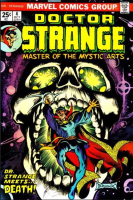
A Separate Reality (Marvel Premiere #9-10 & 12-14 and Doctor Strange #1-2 & 4-5; written by Steve Englehart/art by Frank Brunner 1972-1973)

Steve Englehart is another creative who left an indelible mark on Doctor Strange. A Separate Reality redefined Doctor Strange’s rogues from the 1960s. Dormammu and Nightmare make appearances in A Separate Reality. They challenge Strange while he attempts to save the Marvel Universe from other realms.

A Separate Reality also introduces the sorcerer Clea (played by Charlize Theron at the end of Doctor Strange in the Multiverse of Madness). Clea and Doctor Strange become lovers, which I’m sure will play a role in the Marvel movies, and the journey to save all realities leads to new heights of mind-bending moments. That’s saying something for Doctor Strange.
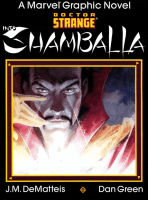
Into Shamballa (written by J.M. DeMatteis and Dan Green/art by Dan Green 1986)

Into Shamballa rids itself of superhero and villain tropes. J.M. DeMatteis and Dan Green wrote Into Shamballa as an introspective story. Doctor Strange returns to The Ancient One’s Himalayan home. Once there, the doctor finds a portal into the Shamballa dimension. Strange is tasked with bringing about an apocalypse that will allow humankind to grow to perfection. Into Shamballa is Doctor Strange at his abstract storytelling best.

Released the same month as Alan Moore and Dave Gibbons’ Watchmen, Into Shamballa asks several of the same ethical questions. But while Moore’s story ends in moral compromise, Into Shamballa finds spiritual enlightenment. If you’ve read Watchmen, you should try Into Shamballa.

Doctor Strange and Doctor Doom: Triumph and Torment (written by Roger Stern/art by Mike Mignola 1989)

Hellboy creator Mike Mignola’s art makes this unlikely pairing work. You heard that right. Doctor Strange and Doctor Doom team up to rescue the soul of Doom’s mother. Triumph and Torment is more of a Doctor Doom story. I almost didn’t include it in this list. But Triumph and Torment is an iconic mini-series and well worth reading.
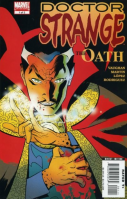
The Oath (Doctor Strange The Oath #1-5; written by Brian K. Vaughan/art by Marcos Martin; 2006-2007)

Brian K. Vaughan (Saga) pens one of the best Doctor Strange stories of the 21st century with The Oath. The miniseries showcases Strange’s patented arrogance, while his brother in Wong grounds him. The Oath is the basis for Wong and Doctor Strange’s relationship in the Marvel movies. The story itself is a mystery with a hint of the mystical.

In The Oath’s story, Wong has cancer. Aided by new love interest Night Nurse (who played a role in the Netflix Daredevil series), Strange follows a trail of clues to save his friend. The Oath has the hallmarks of some of Vaughan’s best work: nonlinear plots, nuanced characters, and thrilling twists. The Oath does a lot to modernize Doctor Strange.

We could’ve included a few other Doctor Strange stories. Let us know which Doctor Strange stories you’d add to this list in the comments. And wherever you are, I hope you’re having a great day.

Top 5 Members of Marvel Comics’ Illuminati

Hey, hey! Kyra Kyle here. The MCU introduced Marvel Comic’s Illuminati in Doctor Strange in the Multiverse of Madness. I don’t know if the Illuminati will continue in the MCU, but they’ve done a lot of work behind the scenes during major Marvel Comics crossovers. The Illuminati’s first appearance (New Avengers #7, July 2005) features each member of the group protecting one of the Infinity Gems. The Illuminati also factor into 2015’s Secret Wars. So, there’s a chance we’ll see more of them on the big screen. Who are the best characters from this group of Marvel Comic’s most powerful beings working in secret, shaping the superhuman world and protecting Earth from catastrophe?

But first, an honorable mention or two. I like Tony Stark/Iron Man a lot as a character. He’s also done a lot with the Illuminati, but he’s not the first name I think of when discussing the Illuminati, even though he’s a founding member. You’ll find another major exclusion on this list: Doctor Strange. His story may have introduced the Illuminati to the MCU, but I think the Illuminati works best when it’s composed of people who represent different demographics, kind of like a Marvel Comics version of the United Nations. And most of the Illuminati’s members fit this bill.

Let’s see who made the list.

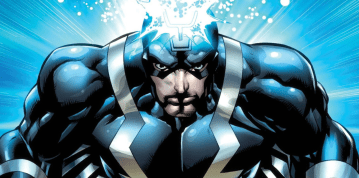
5: Black Bolt

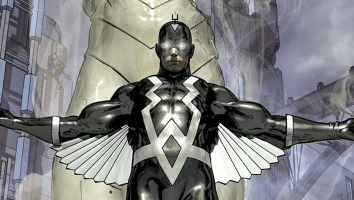
The Inhumans occupy an important part of the Marvel Universe. They may have existed before humanity or at least they had a higher level of intelligence and awareness before humanity during Earth’s earliest history. This history also involved extraterrestrial and cosmic encounters. Enter Black Bolt. He’s the Inhumans’ current monarch and boasts incredible power. Black Bolt was born with a voice so strong that it can obliterate planets. Since this is the case, he seldom speaks, opting to have Medusa, another powerful Inhuman, speak on his behalf.

Fortunately, the Illuminati’s creator, Brian Michael Bendis, shared his reasoning for each of the original member’s inclusion. Here’s what Bendis has to say about Black Bolt (I’m paraphrasing to some extent):

“King of the Inhumans, who are an important part of Marvel history and play an important part in events that have not yet come to pass. He also represents a ruler/king archetype.”

The Inhumans television show didn’t fare well, but let’s hope the Inhumans will find new life in some other form. They’re too important to vanish from the MCU entirely.

4: Namor

Namor is yet another monarch. He rules the underwater nation of Atlantis and adds a different perspective for the Illuminati. The ocean claims more area than land on Earth, and Namor is its unquestioned ruler. He’s a member of another ancient civilization, one featured in Black Panther: Wakanda Forever, but missing from the Illuminati’s brief stint in Doctor Strange in the Multiverse of Madness. Like the Inhumans, I hope we get to see more of Namor in future MCU projects.

Let’s see why Bendis included Namor in the original Illuminati:

“Namor is the King of Atlantis and the Seven Oceans and represents the antihero mindset.”

He certainly does that. Namor is an ally to none. His only wish is to have his people’s voices heard. Namor served on Norman Osborn’s Cabal at the same time as his stint on the Illuminati. His role in the Illuminati mirrors his earlier team-up with the Invaders. The Invaders signaled Atlantis’s desire to be known to the outside world, the world of the land dwellers. The Invaders could be another group that could factor into the MCU’s future.

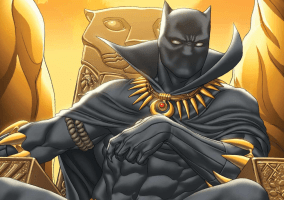
3: Black Panther

Black Panther is the only member of the Illuminati (on this list) who wasn’t in the original roster, but that wasn’t from lack of trying. Tony Stark recruited T’Challa to become an original member and the representative of Wakanda, but T’Challa turned Stark down. Black Panther would later join the Illuminati to face the Incursions.

Wakanda is one of the most prosperous nations on Earth and the main supplier of the world’s Vibranium. Black Panther is calm, fair, and reasonable while boasting no ego. In short, T’Challa differs from most members of the Illuminati. You can call Tony Stark, Mr. Fantastic, and Dr. Strange many things, but ego-less is not one of them.

T’Challa’s relationship with the others in the group can get strained because of the others’ lack of control. Black Panther isn’t easily manipulated. Again, Black Panther is another character I’d like to see more of in the MCU. If that includes a second incarnation of the Illuminati, so be it.

2: Professor X

Professor X needs no introduction. He’s the founder and leader of the X-Men and fights for equal rights for mutant-kind. Charles Xavier boasts a level of intellect and wisdom that’s rarely matched. His ability to read minds, while usually not used against members of the group, proves vital when obtaining intelligence. Because of his role as peacemaker and arbitrator, Professor X often takes a prominent leadership role in the Illuminati.

Eventually, future events in the comics prevent Xavier from participating in the Illuminati, which leads to the group’s gradual demise. Yeah. The comic book version of the Illuminati didn’t dissolve because an omega-powered mutant turned rogue and killed them all in a fit of rage. Spoilers for Doctor Strange in the Multiverse of Madness.

Let’s have Bendis weigh in on why he included Professor X in the Illuminati:

“Leader of the X-Men, Charles Xavier is in the group on behalf of the mutant community.”

Fair enough. And with mutants playing a larger role in the MCU going forward, Professor X’s inclusion in a second Illuminati could prove fruitful.

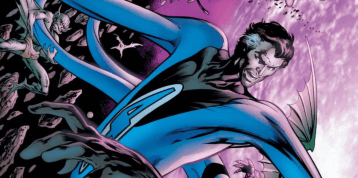
1: Mister Fantastic

Reed Richards (Mister Fantastic) is the one entry that doesn’t represent a group of people, a country, or both. Reed is only one of the smartest minds on the planet and the leader of the Fantastic Four. He has a long history in the Marvel Universe. Richards’s scientific capabilities are almost unmatched and his desire to see a better tomorrow makes him a prominent member within the Illuminati. He meshes well with Tony Stark, but the two can often butt heads because they can’t put aside their egos.

Reed even reasoned with Iron Man’s original proposition for the Illuminati as a “United Nations” of superheroes. Richards argued that the idea presented too many logistical and bureaucratic issues, but he also acknowledged the need for efficient information exchange between the world’s greatest minds. Mister Fantastic represents the scientific community of the Marvel Universe. He knows more about alternate realms and the cosmos than most, usually because he conducts reckless experiments and kicks a hornet’s nest or two. Annihilus wouldn’t know humans or Earth existed if Reed hadn’t bumbled into the Negative Zone. Thanks, Reed.

I can’t wait for the Fantastic Four to make their MCU debut. I wouldn’t mind more Mister Fantastic screen time. A second Illuminati could give us more FF goodness.

Which member of the Illuminati do you think should’ve made the list? Let us know in the comments. And wherever you are, I hope you’re having a great day.
Geekly News: October 19, 2018

Doctor Strange 2

A couple of Marvel Cinematic Universe teasers occurred during conventions last weekend. The first was Director Benedict Wong stating that he started “film stuff” for Doctor Strange sequel and hopes to start filming by the end of the year.

That’s a bit odd because Disney/Marvel hasn’t officially announced Doctor Strange 2. From the sound of it, it’s in at least the pre-production stage. Mr. Wong didn’t specify if “filming by the end of the year” meant 2018 or 2019. That will play into Doctor Strange 2’s release date. If it’s 2018, it may be released around the same time as the third Guardians of the Galaxy installment.

Is Loki Dead?

The second bit of rumor came from Comic Con in Chicago. I won’t get into too many spoilers with Avengers: Infinity War on the off chance that the three or four people who haven’t seen it yet read this, but the way Loki meets his end at the beginning of the film has led to some speculation.

One fan theory calls attention to Loki trying to stab Thanos with a blade in his left hand, instead of his right and that leads to some believing that he was using a projection of himself. Tom Hiddleston must not have heard the theory, because according to Screen Rant, Hiddleston looked visibly surprised when someone asked him about it. Hiddleston’s said, “Your guess is as good as mine.”

That isn’t confirmation one way or the other. In fact, Hiddleston could be getting into the trickster character one last time.

OrangeIsTheNewBlack.png

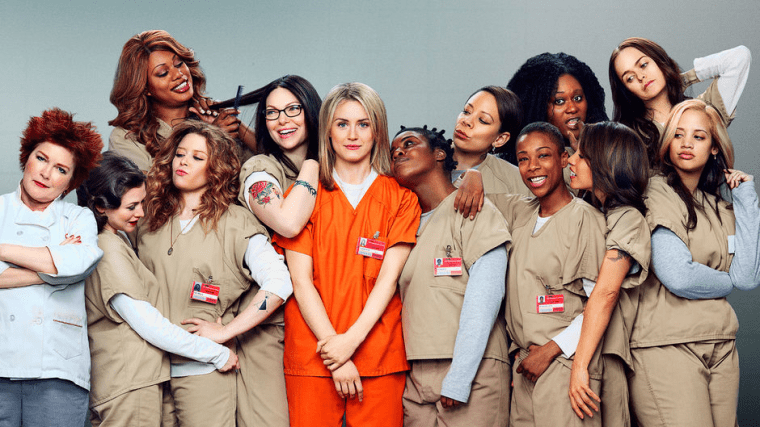
Season 7 will be Orange is the New Black’s Final One

Netflix announced that the seventh season of Orange is the New Black will be the last.

This doesn’t come as a surprise as the hit show was renewed for three seasons in 2016, and the creative team has always hinted at a seven-season run, but Netflix confirmed it this week. Creator Jenji Kohan told Deadline, “After seven seasons, it’s time to be released from prison. I will miss all the badass ladies of Litchfield and the incredible crew we’ve worked with. My heart is orange but fade to black.”

SoulCalibur 6.jpg

Video Games

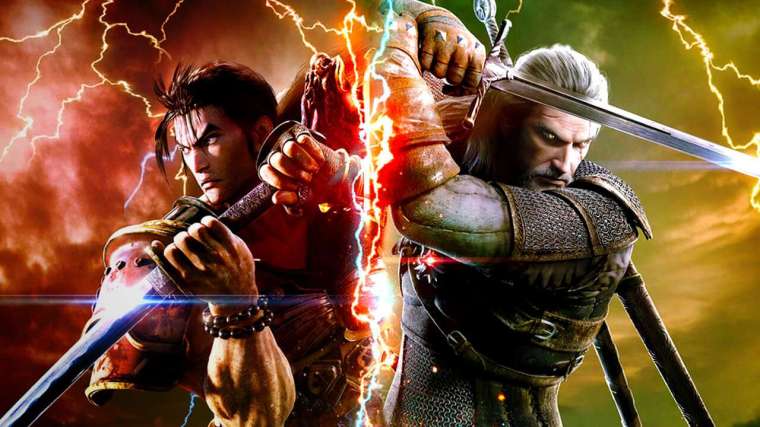
Soulcalibur 6 (PS4, Xbox One, PC)

The Soulcalibur series returns today with a reboot of sorts. A lot of classic characters will join the fray with newcomers Grøh, Azwel, and Geralt of Rivia (of The Witcher fame). The other big addition will be the new mechanic known as the Reversal Edge. Soulcalibur has finally joined the trend in modern fighting games with emphasizing defense.

Halloween2018

Movies

Mid90s

Jonah Hill is another actor making his directorial debut with this coming of age comedy. He also penned Mid90s and if nothing else, this movie will have a great 90s soundtrack.

Halloween

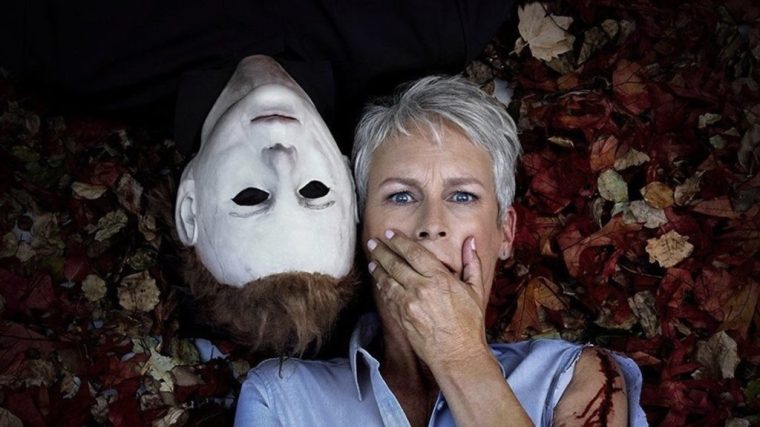
What is with comedic actors branching out into other avenues of film? I’m liking it. Danny McBride cowrote the script to the latest installment of Halloween. Most critics have given the film positive reviews, stating that it’s the best Halloween sequel and marks a return to form for the franchise. It follows the classic slasher formula; I may give it a chance.

Can You Ever Forgive Me?

If the last two entries didn’t clinch this week as the week of comedians spreading their wings, this last one does. Melissa McCarthy stars in this dark biographical comedy about a failing writer who forges letters of famous people to make ends meet. The premise alone makes me interested.

TV

LoreTVShow.jpg

Friday, October 19, 2018

Lore (Amazon)

I watched the first season of Lore and if you can get past the cadence of the narrator’s voice, it’s a joy. Seriously, the narrator sounds like a cross between an automated voice and William Shatner hamming it up. Lore shows the history of popular myths, fables, and urban legends. It gets into the weeds to find the basis of these tales and sometimes, it shows us why they persist today. I’ll definitely watch this one, but I’ll have to take it in waves as I get reacclimated to the narrator.

Wanderlust (Netflix)

The BBC was treated to this Toni Collette vehicle last month and Netflix is airing it for folks outside the UK today. The main characters struggle with a fading sex life, so Collette (who plays a therapist) and her husband (played by Steven Mackintosh) decide to start dating other people.

LegendsOfTomorrowSeason4.jpg

Monday, October 22, 2018

DC’s Legends of Tomorrow (CW)

Another week, yet another Arrowverse TV show. I was never into Legends of Tomorrow. The show acted as a depository of characters the series killed off but wanted to keep the actors employed. I’m also not a huge fan of time-travel and the plot issues it creates.

Native-America

Tuesday, October 23, 2018

Native America (PBS)

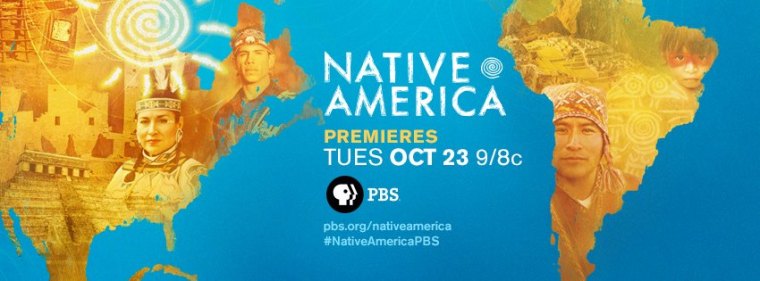
If watching documentaries makes me a nerd, then I’m a nerd. PBS begins its four-part mini-series about the indigenous people of the United States. Native America travels back 15,000 years to show how Native Americans designed cities aligned to stars. It explores their unique systems of science and spirituality, and that’s just the beginning. Yes! I just set my DVR.

LegaciesCW.jpeg

Thursday, October 25, 2018

Legacies (CW)

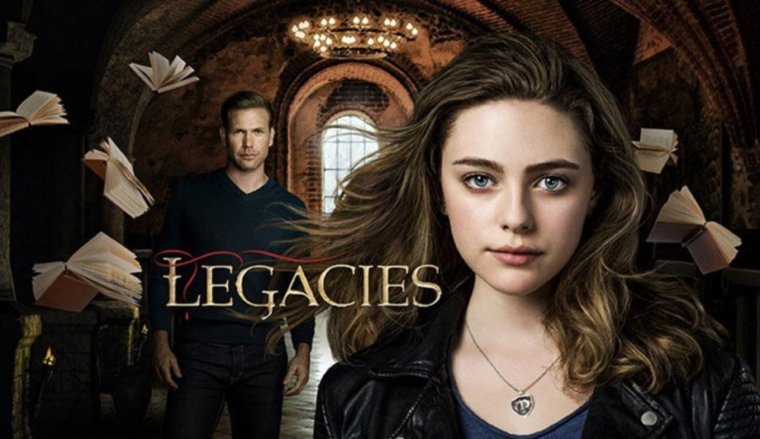
Legacies is a spin-off show of The Originals, which was itself a spin-off show of The Vampire Diaries. Something tells me that Legacies will feature werewolves and vampires. This franchise has a lot of fans, but I may have to start with The Vampire Diaries if I’m able the chain of events that led the series to Legacies. But maybe not.

UnderwaterCities.jpg

Board Games

Impact: Battle of Elements

With Strike off the market, Impact hopes to fill the void. The idea is simple. Players start with so many dice. They chuck their dice into a battle arena (the box) and if other people’s dice match the symbol they rolled, they claim those dice. If none of the dice match what they rolled, they lose all their dice. Last player rolling wins. There’s a little more to it than that, but very little. Still, a lot of people love this game and it lives on with a different skin with Impact: Battle of Elements.

Underwater Cities

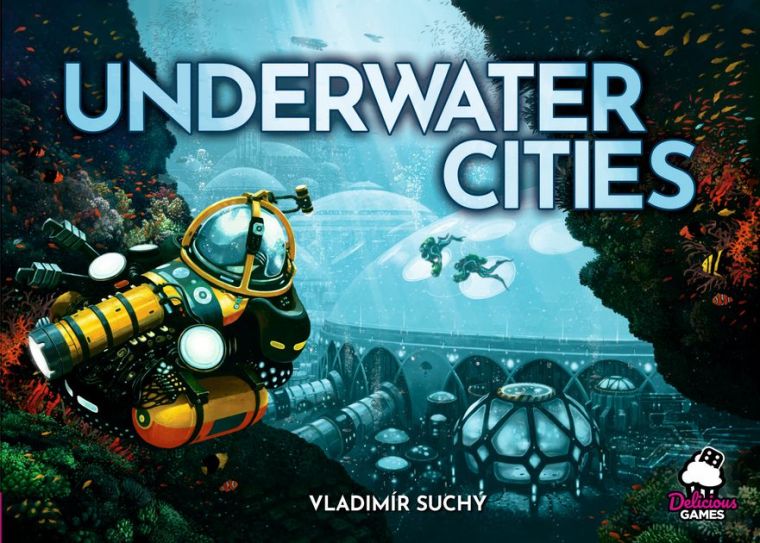
This last entry is an odd but intriguing one. With land coming at a premium, the people of Underwater Cities starting building under the sea. Players try their best to compensate for their citizens adapting to this new lifestyle. I could talk about the worker placement aspect and action point allotment, but the fun in Underwater Cities derives from this near-future sci-fi concept.

That’s all we have for news this week. Be kind to one another and have a geeky week.