



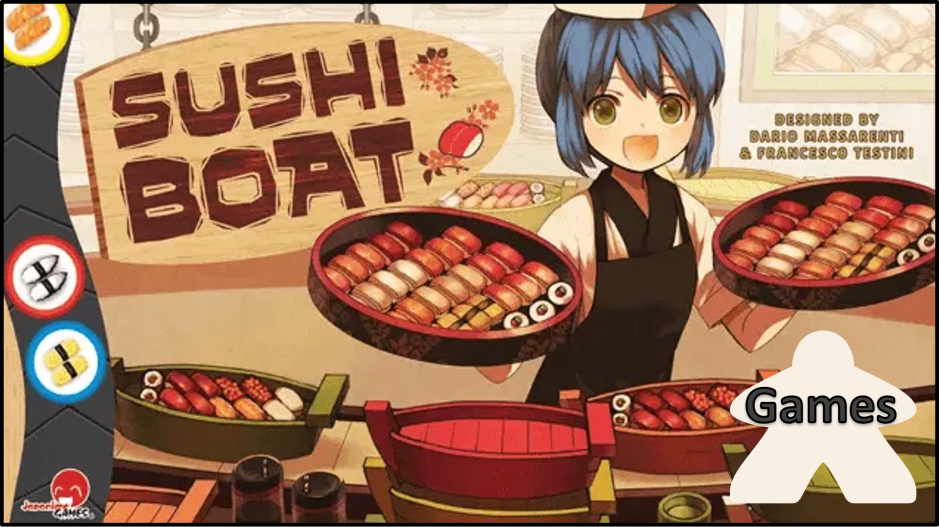
Hey, hey! Kyra Kyle here. It might be a little early for another tabletop game review, but we’re catching up on some of the backlog. Today’s review is one with a high toy factor (a board game with plenty of toy-like features): Sushi Boat.
Sushi Boat leans into its theme; the board is a sushi conveyor belt. Each turn, players perform their choice of actions, including taking plates of sushi off the revolving belt on the board, paying staff tiles for special effects, or buying side dishes. As they eat, players stack plates in front of them. Players score points by eating off matching (color) plates and for eating a variety of sushi types (set collection). The Wasabi Challenge shakes things up by adding a memory component that can swing the victory.
Before we get any further, we’ll set the table and discuss Sushi Boat details.

Designer: Dario Massarenti, Francesco Testini
Publisher: Japanime Games
Date Released: 2023
Number of Players: 2-5
Age Range: 9 and up
Setup Time: 15-20 minutes
Play Time: 30-75 minutes
Game Mechanisms
Memory
Set Collection
Worker Placement
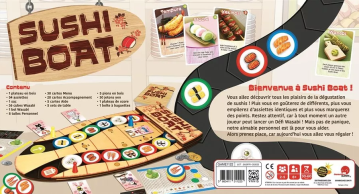
Place the wooden sushi boat board (with a built-in “conveyor belt”); this board is the central visual element and will draw a crowd when placed on the board.
Mix the Staff tiles and randomly place 1 on each Staff space (these are pictured in the rulebook). Place all of the Wasabi cubes in the Wasabi Bowl (Sushi Boat includes ceramic bowls; the production value is insane). Each player chooses a color and takes the matching pawn and player mat. Place all of the Yen in the change tray (again, a ceramic tray), this is the bank. Give each player 2 Yen; players place their Yen on their player mats.

Put all the colored Plates in the bag and mix them well, leaving the white plates to the side for now. Then, randomly draw Plates and add them to the conveyor belt area of the board one at a time until the board is full. Then, draw 3 more plates and add them to the Trash beside the board. After filling the game board, add the white Sushi Plates to the bag and mix them in.
Separate the 4 Wasabi cards from the Side Dish cards and set them aside for the moment. Shuffle the Side cards. Then, depending on the number of players in the game, you will discard cards at random from this deck. Then, set aside a number of Side Dish cards equal to the number of players. Add the Wasabi cards to the Side Dish cards and shuffle them well. Create a face-down draw deck near the game board, and finally, place the Side Dish cards you set aside (not the discarded ones) and add them to the top of the face-down draw deck.
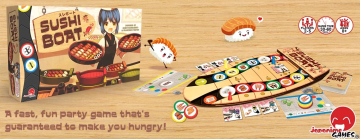
Beginning with the starting player, you’ll take turns going to the left. On your turn, you do the following steps in order:
1) You must turn over the top card of the Side Dish deck and refill the Sushi Boat
2) You must move your pawn to an empty seat
3) You may perform one action (from a selection of 3)
4) You must eat sushi
Let’s talk about the different steps in detail.
1) “You must turn over the top card of the Side Dish deck and refill the Sushi Boat.”
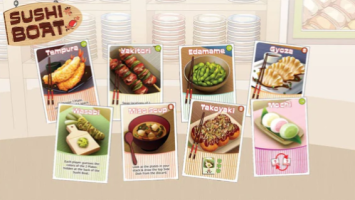
We’ll set the Wasabi card aside for the time being; they’re their own beast. Every other Side Dish card will have a symbol in the top right-hand corner. This will tell you how many sushi plates you’ll need to add to the belt. At the bottom, you’ll find effect text; this will give you a special ability if you choose to purchase the card (in a later step) and then use the card.
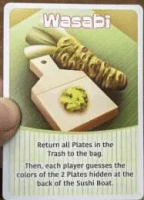
Wasabi Challenge:
The game stops temporarily. Each player tries to guess the color of the 2 plates hidden in the tunnel at the back of the Sushi Boat. First, take all of the Plates in the Trash and return them to the bag, mixing them well.
Then, each player takes 2 Wasabi Cubes from the bowl and secretly places them on their player mat to mark the colors they think match the hidden Plates. You may place both Wasabi Cubes on the same color if you think both Plates are that color. Finally, add Plates to the board until the two hidden Plates are fully revealed (this will most likely push some Plates into the Trash).

Each player compares their guess to the 2 Plates that were revealed. For each color you guessed correctly, you keep that Wasabi Cube. Any Wasabi Cubes on incorrect guesses get returned to the Wasabi Bowl.
2) “You must move your pawn to an empty seat”
You must move your pawn every turn. You can move it to any seat on the board that isn’t already occupied. But you could pay another player 1 Yen to return their pawn to their player board, so you can claim their seat.
3) “You may perform one action” (from a selection of 3)
A) Visit the Staff: If you’re on a space with a staff member, you can pay 1 Yen to perform their special ability.
B) Buy the top Side Dish: Pay 1 Yen to buy the top card of the Side Dish deck; this will most likely be the card you revealed at the beginning of your turn. Note: Players cannot buy Wasabi Challenge cards.
C) Take 1 Yen from the bank.
4) “You must eat sushi”
Take the Plate from the conveyor belt space that is next to the seat your pawn is on. Typically, you will add these plates to the top of your stack of Sushi Plates. (Some Side Dish Cards allow you to break this rule.)

Play continues like this until the Side Dish Deck runs out. When this happens, the game ends. Players score points for the number of consecutive-colored plates in a row, minus 1. So, a stack of 4 red plates would be worth 3 points. You may have multiple stacks of colored plates. (White plates don’t count for or against a consecutive-colored plate stack.) Then, you add up the sets of sushi you claimed (the unique sushi dishes depicted on the plate; there are 7 sushi types). After that, players get bonuses for playing the most Side Dish cards and some Side Dish cards add a victory point. Finally, each Wasabi Cube is worth 1 point each.
Whoever has the most points wins.
Sushi Boat is a great game with an immense toy factor. This game’s production value is over the top. It may even be too nice—if there is such a thing. Ceramic bowls? Are you kidding me? My oldest daughter just returned from Japan and had plenty of real Yen to replace the punchboard Yen included with the game. Even without that, Sushi Boat has fantastic components.
Sushi Boat balances its elements well. I didn’t think memory and worker placement would work, but it does. I’ve found that younger players (ahem, children, ahem) have an advantage during Wasabi Challenges. I tend to focus on the mechanical aspects of the game like special abilities (through the staff and Side Dish cards) and forget to keep track of which plates have slid under the tunnel. This is the one aspect I’ve found most children gravitating toward. This typically gives a child player an extra three or four points.
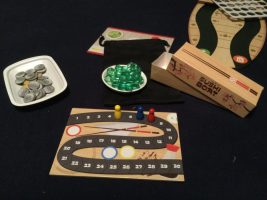
Speaking of the tunnel and the titular sushi boat, the sushi boat looks fantastic. Sliding Sushi Plates across the “conveyor belt” feels great. I’ve even visited a sushi boat restaurant since playing this game. They use colored plates to tally your bill. Ingenious. And that’s what Sushi Boat’s central board is, too. Ingenious.
The one negative I’ve found is the setup and rules explanation. I’m not lying when I cited the setup time in “Fiddly Bits” as “15-20 minutes.” That’s a little long for Sushi Boat’s weight and game length. I almost feel compelled to play more than one game at a time. The rules explanation for new players can also take a little extra time than what I’d like for a game of Sushi Boat’s length, too. But retaining the rules from one play to the next is easy. Barely an inconvenience. The actions that players perform in Sushi Boat are so thematic that it makes it easier to relearn the game, even if you haven’t played in months.
Setup and initial rules explanation can be on the long side, but the effort is well worth it for a game this thematic. While an odd combination, the game’s mechanisms work well together and level the playing field for children. And the board. Look at the board!

Hey, hey, folks! Long time, no upload. I’m Kyra Kyle, and JK Geekly has returned.
A lot has happened since we last updated this website. Some events spanned the globe like the pandemic and the ensuing lockdown. Glad that’s over.
I had a few personal events occur. I’ve been diagnosed as autistic and ADHD. I didn’t know one could have both, but I’m an AuDHDer. Is that how I spell it? The two don’t always play well with each other. I attended the Origins Game Fair last year and was alternately over and under stimulated. Meltdowns are fun. Other times, the two play too well with each other. I paced a trail into the carpet. It’s okay; we needed new carpet.
Pacing aided me to finish writing a novel or two. I’m pitching my first novel, Crooked as a Dogwood, to agents. I’ve gotten further than I’ve ever gone before with this process, so that’s great. I’m unsure if it’ll get picked up but that hasn’t stopped me from editing the next one and writing the one after that. Just keep writing. Just keep writing. Autism loves the routine; ADHD wants some strange. So, I’ll pace in between stories.
Speaking of stories, my short stories and poems have been published in several journals since the last update. I’ll have to look back and see which ones were published in which journals over these past several years. I’m fighting the urge to backtrack these past few years. No. I’ll do it later. Ack! I’m so bad at making shameless promotions for my work. Consider this a generic, hopefully modified soon plug.
On a somber note, my mom passed away last year. I’m still processing the loss over a year later, but I’ll do something in her memory, perhaps a top five tabletop games that she liked to play on her birthday in November. Or a list of games that I play that remind me of her. There may be at least a few games that have been released around or since her passing that Mom would’ve enjoyed.
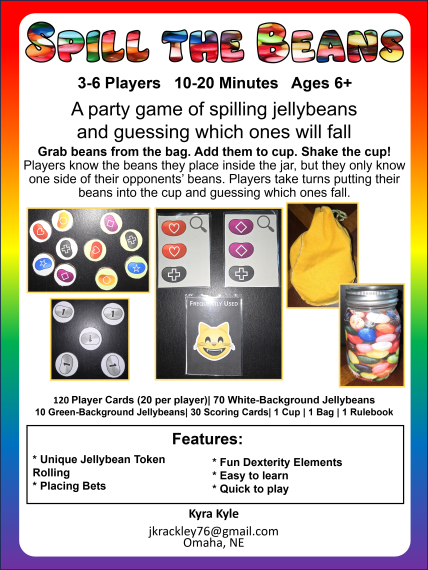
Mom also liked that I design tabletop games, and it turns out that I’m also pitching multiple games. I’m less familiar with this medium’s pitch process, but I’ll learn. One company has already expressed interest in Spill the Beans, but as of this post, I have yet to sign a contract, so I’m still pitching until a deal is reached. Here’s an initial Spill the Beans sell sheet.
And here’s the sell sheet for a second game I’m pitching to board game companies, Whistlestop Pets.
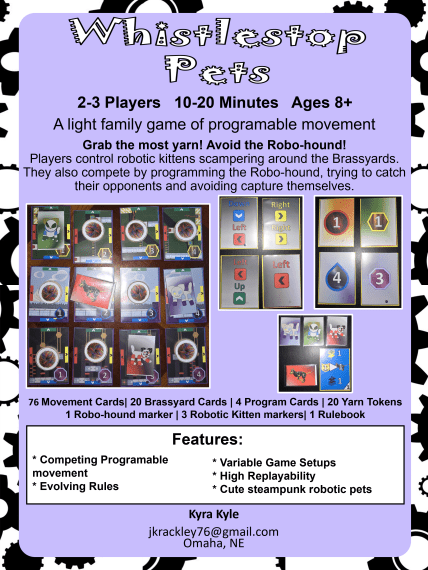
Whistlestop Pets factors into one of the books I’m working on as well. There may be some crossover possibilities.
I have several other projects (both game designs and writing) that aren’t as far along or I’m not at a stage where I’m comfortable talking about them here, but I’ll keep you updated. Hopefully.
And that brings me to the last point: What will happen to JK Geekly? In short, I don’t know. The site can go in many directions. I have one article I want to upload this November (love you, Mom), but aside from that I don’t know. I’ll probably try several things. If anyone has any suggestions, leave them in the comments.
I hope that wherever you are, you’re having a great day.
~ Kyra
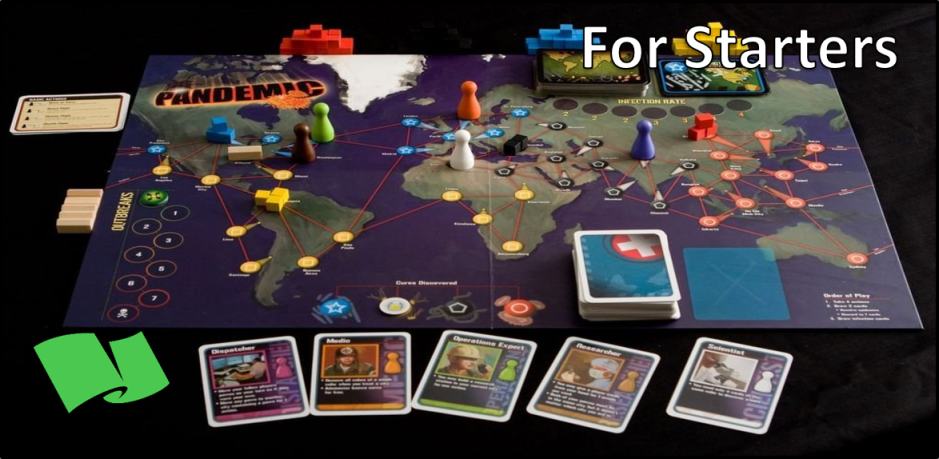
Let’s talk about cooperative board games—cause you’ve gotta have friends. These are games where the players compete against the game, not the other players seated at the table. It also happens to be one of your uncle Geekly’s family’s favorite gaming types. That could be due to a lineage of sore losers.
They’re sore losers, not me. No, really. They’re terrible. I have no idea what you’re talking about. No, you’re a stupid, doodoo face, and I don’t want to play with you anymore because you cheat. Cheater!
You don’t have to worry about cheaters as much with cooperative board games, and there are plenty of these games out there. The problem is that some of these games aren’t that good and others are too difficult to get into. Don’t worry. Your uncle Geekly will point you in the right direction of some good beginner cooperative board games.

Pandemic
I almost didn’t put this one on the list, but I’m sure tabletop game purists would cry foul if I didn’t. You made a list of great starter cooperative games and you didn’t include Pandemic? Shame!
Calm down. It’s on the list.
Players assume the roles of people trying to stop a global pandemic. The diseases behave like you’d think diseases may behave and that makes sense, since the game’s designer Matt Leacock happens to be a medical doctor. Come to think of it, I could use a physical. There’s a growth I’ve been meaning to have examined. I should give him a call.
Anyway. The game scales extremely well, meaning that it plays just as well at two players as it does at five, and there are varying levels of difficulty. You’ll see this in other Leacock games—spoiler alert: one will show up later on this list—and the inclusion of easier difficulties allows players to start small and go for something more challenging later. The theme is also one people can get behind. I don’t know how many times I’ve seen players name the various diseases, even though these diseases are represented by little more than cubes.
The one gripe I may have about Pandemic is that there can be a tendency for an alpha gamer (a player who tells other players what to do) but give them a few kicks to the cubes and they’ll stop. Pandemic is one of the games that put cooperative games on the map, and it’s easy enough to learn for new gamers.
Hanabi
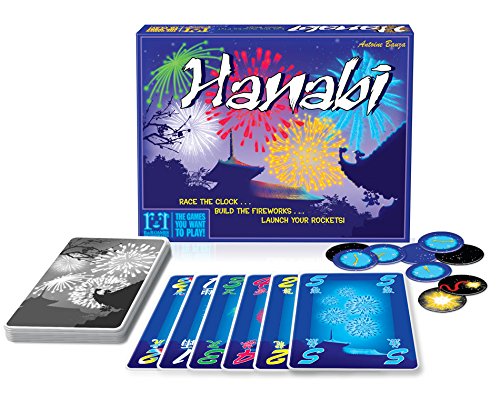
Hanabi is the odd game on this list. It’s a simple card game for folks who don’t want a more complicated game, so it’s easily the most streamlined game here. It also encourages non-verbal communication. It’s like Freddie Mercury once said, give me your body.
Well, maybe not, but body language and positioning cards a certain way in your hand does come into play here. Hanabi uses a deck of cards numbered 1 through 5 in various colors or suits. Players must place these cards in order by suit, but the catch is that each player’s hand of cards is facing away from them, and the other players must give their teammates clues as to what’s in their hand.
Hanabi forces players to create their own language as they’re only able to give simple clues like “this is a 5” or “this card is yellow.” It’s up to the player receiving the information to figure out what was intended. While “this card is a 5” usually means don’t discard it, idiot, because there’s only one 5 of each color in the deck, “this card is yellow” could mean that the card in question plays on the communal play pile or if yellow is already finished (as in the 5 has already been played), “these cards are yellow” could mean that you need to discard those cards and get new ones.
No one can say anything besides short clues about cards in other players hands. I’ve never seen a more tense game where little is said.

Forbidden Desert
Yep, Forbidden Desert is the other Matt Leacock game. I also could’ve gone with Forbidden Island here, but it’s kind of a Pandemic light. Forbidden Island is worth the play if Pandemic or Forbidden Desert sound too complicated. Did I mention that Matt Leacock is the king of cooperative board games? Well, if he isn’t, he’s close.
Forbidden Desert adds moving location tiles and sand tiles to bring home the theme of a desert and its shifting sands. Players can lose four or five ways but can only win if they find the parts to an ancient, Jules Verne style flying contraption and escape. Anything is better when you add a steam punk.
Players also have variable powers like they do in Pandemic and these powers are based on occupation, and the flying contraption is one of the best implementations of a toy piece in a board game. I don’t know the last time I placed one of the pieces in the flying contraption. I usually have the task of dismantling. Your uncle Geekly’s a little salty about that.
Like Pandemic, Forbidden Desert is clever and finds a way to make the desert its own character. That’s always a strong point for a game. I can’t wait to see what Leacock’s third game in the trilogy Forbidden Sky will bring. It just came out at GenCon 2018.
Final Thoughts
Even if a cooperative game is more complicated than the ones on this list, it’s easy to teach new players because players join forces to beat the game. Players want their teammates to succeed so a cooperative game is a great place to begin for a new gamer, but the games on this list are very assessible. If you don’t think so, I’ll dump a bucket of cold water on Jim.
Know of any other great beginner cooperative games? Let us know in the comments.

There aren’t as many big headlines this week in Geekly News, so we’ll go with some short news blurbs followed by new releases. Let’s kickoff this ball game with a New York Comic Con panel and a trailer.
Principal photography on the upcoming Amazon series Good Omens (based on the collaborative novel by Terry Pratchett and Neil Gaiman) began over a year ago, but audiences didn’t catch a glimpse of any video until a panel at last week’s New York Comic Con. This series should be another solid one for Amazon who has slowly garnered a fine collection of native programming.
With American Gods and an upcoming Sandman movie, Neil Gaiman has been on a role with his creations finding their way on the silver and small screens. Is a Books of Magic or a Black Orchid movie far behind?
The CW’s annual crossover event won’t occur until December 9th, but that didn’t stop the network from leaking its first glimpse of Ruby Rose as Batwoman. Like many other heroes in the Arrowverse, Batwoman will make her first appearance this year during the crossover event, but she’s scheduled to have her own series beginning next season.
The Arrowverse has dabbled with an LGBT superhero, Mr. Terrific, in the past, but Batwoman will mark the first take that an LGBT superhero will take center stage.

Friday, October 12, 2018
Call of Duty: Black Ops 4 (PS4, Xbox One, PC)
The latest Call of Duty has picked up a few tricks from the popular Fortnite. Previous installments of Call of Duty had player respawn (or have players’ characters revive) shortly after dying. This led to gun combat being fast paced and devalued long-distance shooting or snippers. We’ll have to see how this latest Call of Duty fares.

Tuesday, October 16, 2018
Starlink: Battle for Atlas (Switch, PS4, Xbox One)
This is another wait and see title. Starlink takes the failing “toys-to-life” video game genre (games like Skylanders that have players buy real-life toys and use them in video games) and makes it new and exciting by adding an open-world—or open-universe—element. The toy spaceships and pilots look interesting, but I prefer the Switch copy for this game, as characters from Nintendo’s Star Fox series will make an appearance. Heck, with Star Fox as part of the cast, I’d do a barrel roll.

First Man
This film has received critical acclaim for Ryan Gosling’s performance of the first man on the moon Neil Armstrong and Clair Foy’s as his wife Janet Shearon. It’s also been at the center of an American flag controversy. First Man looks to be a lightning rod of buzz.
That was bad. First Man does intrigue me, and I’ll probably watch it at some point.
Bad Times at the El Royale
The premise may sound familiar (seven strangers who each hide dark secrets manage to stay at the same shady hotel), but the cast make this neo-noir mystery thriller sound like it’ll be fun if nothing else. Bad Times at the El Royale is another one I wouldn’t mind seeing.
Goosebumps 2: Haunted Halloween
I never watched the first Goosebumps movie, but I heard it was a modest success. Jack Black makes another appearance as R. L. Stine. That’s something, I guess.

Friday, October 12, 2018
Crazy Ex-Girlfriend (CW)
The fourth and final season of this stellar comedy musical begins tonight. Don’t try to text, message, or call me. I’ll be washing my hair—which is code for watching Crazy Ex-Girlfriend.
The Haunting of Hill House (Netflix)
Shirley Jackson knew how to write horror of all kinds. The short story that first garnered her attention and put her on the map was “The Lottery” and it’s a great psychological horror story. “The Haunting of Hill House” is a supernatural horror classic that Stephen King cited as the best horror story written in the 20th century. I’ll go with that and I’ll definitely see if this Netflix offering measures up.
The Romanoffs (Amazon)
I’ve talked about The Romanoffs last week in our 3 Lists of 3. The stellar cast and odd premise (several people believe they’re part of the Russian royal family) has piques my interest.
Titans (DCU)
Titans, as in the adult versions of Teen Titans, was supposed to air on various cable networks before landing on the DCU’s new streaming service. Every company wanting their own streaming service burns my corn, but if DCU streaming can make enough quality programming, I may consider it. I’m most likely to download the app for a free trial and binge everything in a weekend.

Sunday, October 14, 2018
Charmed (CW)
Truth time: I watched the original. I even watched the original Charmed not that long ago and got embarrassed for ever having watched it. Charmed was a CW (then WB) mainstay and a lot of the tropes and clichés one can find in CW shows today pretty much originated with Charmed. I may watch an episode or two and catch a glimpse of this trio of witchy sisters.

Monday, October 15, 2018
Arrow (CW)
Yep, the Arrowverse is still at it. I lost interest in these shows for some time, but like Charmed, I may tune in once or twice for old times’ sake.
Constantine: The Legend Continues (CW Seed)
It feels like yesterday when I lamented NBC cancelling the live-action TV show Constantine. Did it have its issues? Sure, but the series picked up steam and got canned before reaching full strength. Fans of the series were ticked, and the CW has brought back Matt Ryan (who played John Constantine) for this upcoming animated series. I think the CW Seed app offers free streaming for certain episodes. I’ll have to check on Monday or Tuesday. Or I could always wait for another free trial period.
Solenia
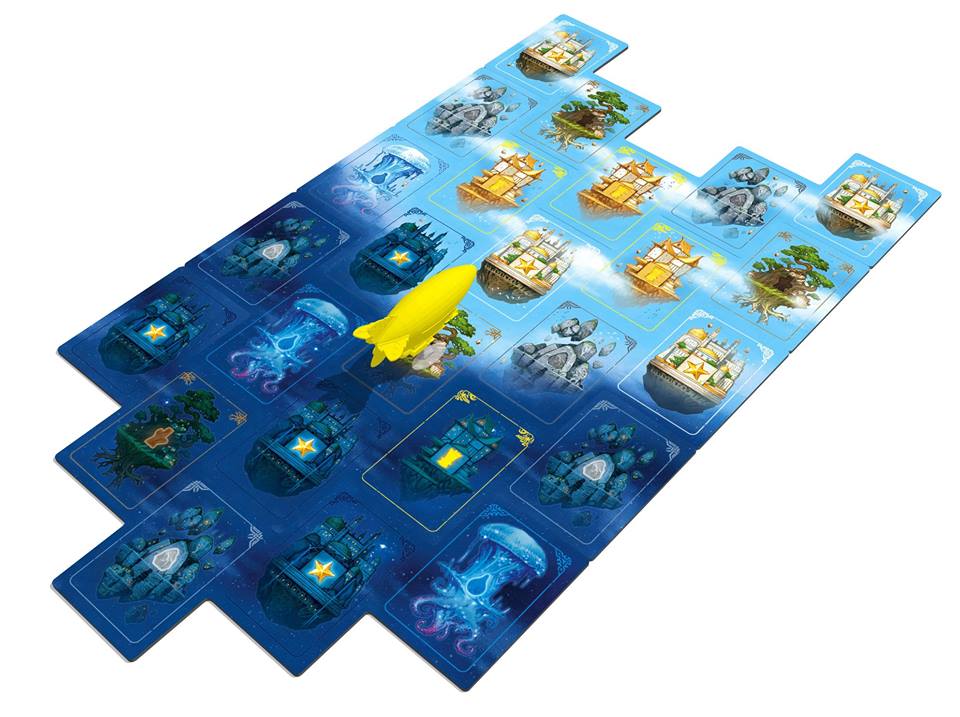
Belgian publisher Pearl Games originally intended to release this game as Sun-Moon but settled on the name Solenia. The game consists of 16 rounds where players play cards with holes in the middle of them onto a modular board. The holes reveal a resource that players are trying to pick up or deliver and players gain points for delivering goods.
All of this is fairly standard for gamers, specifically Euro-style gamers, but the most interesting aspect of Solenia—besides the see-through cards—is its modular board. The tiles are double-sided with day and night scenes. These tiles cycle between day and night throughout the game, so players must plan their moves based on when they can perform actions. I’ll try to demo this game before long.
That’s all we have for this week. Be kind to each other and stay geeky.

 jkgeekly.com