3 Lists of 3 Tabletop Games for Miss Kitty

Hey, hey! Kyra Kyle here. I promised something different with this post, so let’s give it a try. Today would be my mom’s 74th birthday. Her name was Catharina Beenen Rackley, but her friends called her Kitty. I wanted to make a 3 Lists of 3 in her honor and had some trouble picking the topic. I could’ve picked music, food, or travel. But we don’t cover those topics on Geekly that often. Miss Kitty also enjoyed television and movies, and those would’ve made good choices. But I decided on tabletop games.

Geekly covers tabletop games, and Mom and I played board games together. She even got a kick out of me designing the occasional game. So, let’s do a 3 Lists of 3 Tabletop Games for Miss Kitty.

Games Miss Kitty Played

Miss Kitty played a lot of different games, and typically, she played games depending on who she had as company. She would play certain games with her children and others with her mother and siblings. And I’m sure she played even more games with her friends. I only have my perspective to go off on here and the accounts of others. Also, we may have more than a few honorable mentions. One cannot boil someone down to a handful of anything, not even board games.

Liverpool Rummy

Liverpool Rummy was a prerequisite whenever visiting Miss Kitty’s family, so this one may be more of a Beenen family pick. But I’m going with it. Miss Kitty and I played Liverpool Rummy a lot. I would go into the gameplay here, but I want to keep the entry short. Perhaps I should cover Liverpool Rummy in a post but it’s a card game using a standard deck.

Each round, players either try to collect sets of cards (at least 3 of the same number) or runs of cards (4 cards in the same suit in sequential numbers). If a player has all the requirements for a round, they can go down (which means revealing their cards with the appropriate number of sets/runs). Once down, players can play cards from their hand onto cards that are “down.” The first player out of cards wins the round and everyone else tallies their score. The lowest score at the end of the game wins.

I picked Liverpool Rummy instead of Wahoo (another Beenen family favorite and a good choice for this selection) because of a moment that happened the first time my wife Jen played with Miss Kitty. Miss Kitty kept saying that she didn’t know why I was so competitive in games. Later that same game, Miss Kitty sported a devilish grin and then bragged as she went out concealed. Jen laughed. Miss Kitty asked her why. Jen said, “I can see why they’re so competitive.”

Balderdash

Another game could’ve taken Balderdash’s place here: Scattegories. In fact, Miss Kitty and I played more Scattegories than Balderdash through the years. Both games are word games and while Miss Kitty would come up with strange answers for Scattegories (“Oreo” or “Knuckle” as forms of sandwiches), Balderdash created more memories.
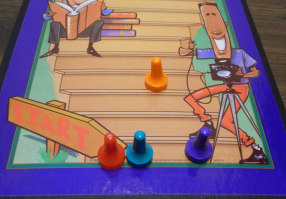
Balderdash is a game of obscure words. Players must create definitions for words seldom used in the dictionary and gain points for guessing the correct definition or having other players select their invented definition. Miss Kitty worked as a surgical technician. She knew a few things about medicine and used that knowledge liberally in any game of Balderdash. If we heard a definition begin with “a medical term meaning…” or “inflammation of the…” or “a doctor’s tool for,” everyone at the table would turn to look at her. She’d turn beet red and try not to smile. And typically failed. If two “medical” definitions got read, we’d curse our bad luck. Which one’s the real one and which one’s the fake one?
Ticket to Ride

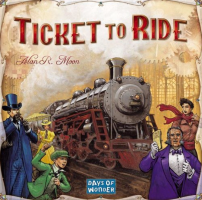
Miss Kitty had a history of set collection games, so of course she’d love Ticket to Ride. The rules are simple to learn and each different flavor of Ticket to Ride would add a wrinkle or two to the core rule set. Ticket to Ride was a perfect game for Miss Kitty. She could play a new game with a few “new rules” and not feel lost. I covered Ticket to Ride some time ago. Here’s a link to the original write-up.

The one game of Ticket to Ride I remember best with Miss Kitty involved her playing with her older brother Paul. Uncle Paul did nothing but build trains on the eastern seaboard. He didn’t complete any tickets. He didn’t do much of anything except block everyone else from building on the eastern coast of the United States. Miss Kitty growled at Uncle Paul. “You’re playing it wrong. Stop playing the game wrong!” I fell out of my seat laughing. It was a window into Miss Kitty’s childhood. This wasn’t the first time she had told off her older brother.
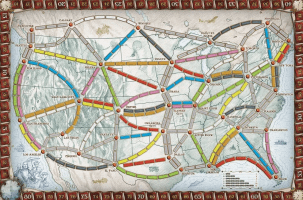
My family and I are currently playing a game of Ticket to Ride Legacy: Legends of the West. This version of Ticket to Ride has a story. Each player assumes the role of a railroad tycoon. The board grows as the railroad gets built from the east coast to the west coast. Hey, Uncle Paul wouldn’t have been playing the game wrong with this version. Anyway, there are four of us playing Ticket to Ride Legacy. When we finish, I intend on dealing out the fifth player stickers (you can place stickers claiming routes and cities for different players and we plan to use the fifth player) for Miss Kitty.

Games Miss Kitty Didn’t Play

This next list is of games are ones Miss Kitty never had the chance to play for one reason or another, but I know she would’ve loved to play them.

Marvel United

I wouldn’t have thought it possible if I didn’t hear this from her myself, but Miss Kitty was more into the Marvel Cinematic Universe than me. Marvel United is a cooperative tabletop game where players assume the role of superheroes in the Marvel universe as they try to stop a supervillain. Like Ticket to Ride, the rules are simple to learn with each hero and villain adding a small wrinkle or two. Since it’s cooperative, Marvel United eliminates competitiveness and players are encouraged to help each other. I just know Miss Kitty would’ve wanted to play out a few of her favorite movies.
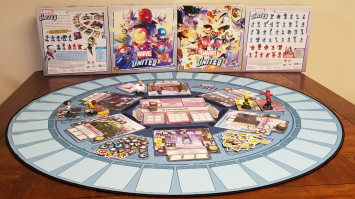
And there’s some precedent for this. Miss Kitty and I played X-Men: Under Siege. My father and I played more of this game, but Miss Kitty liked this game, too. Marvel United would’ve scratched a similar itch. And it doesn’t hurt that the miniatures and art have cute designs. Miss Kitty liked cute things.

I haven’t written a review for Marvel United yet, but I started a guide. You can check out the newly posted Guide to Marvel United here.

Flamecraft

Flamecraft is the most complex game on any of these lists so far, but I’m sure Miss Kitty would’ve struggled through a difficult game or two because it’s so cute. And dragons. One of her granddaughters (my niece) is obsessed with dragons or at least she was at one point. Flamecraft uses a game element popular with recent tabletop games. Whenever you take an action that action has a global effect and can benefit your opponent on future turns. This element also makes Flamecraft feel like it’s a winnable game or at least a board game that has closer outcomes.

And did I mention the puns? I can hear Miss Kitty cackling every time I read one of the dragon shops’ names. Either that or I’m hearing my daughter’s same laugh. Critical Rolls. Bizarre Bazaar. Potable Potions. Outback Drakehouse.
Sixes

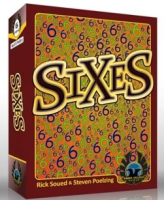
I first played Sixes recently at a party and thought of Miss Kitty. It’s a word game like Scattegories. Sixes plays out in six rounds—naturally. Each round has players making lists of six things that match a category. The twist comes from what players are trying to do each round. Some rounds, you’ll want to have unique answers like Scattegories. Other rounds, you’ll want to match other players. And the third and sixth rounds are lightning rounds where players answer 6 categories with a single answer. The person with the most points wins.

Miss Kitty would’ve loved playing Sixes. It’s a great ice breaker game or a way to reconnect. I found players saying things like “I knew I liked you” or “we think so much alike” whenever they answer a list similarly during a matching round. Of course, there’s the classic Scattegories response whenever you match during a unique round. “We think TOO much alike.” Or “Get out of my head.”

Games that Remind Me of Miss Kitty

This list is more nebulous than the last two. Some may be games Miss Kitty played at one point. Others may be games she would’ve liked to have played but never did. And there are a few games on this list that just remind me of Miss Kitty.

On Tour

During On Tour, Players assume the role of a rock band’s tour manager. Miss Kitty listened to classic rock and pop music. She would’ve loved this premise for a game. But she may have gotten frustrated with the gameplay. On Tour has simple enough rules. The amount of player choice can get overwhelming.

Each turn, a player rolls two ten-sided dice and then each player must simultaneously place the numbers depicted on the dice in a state (if you’re using the United States map) depicted on two of three cards (the cards will have specific states and regions and players may choose whether to use the state or the region). Players do that by drawing on their own game boards with dry erase markers. Once each player’s map is filled, players score points depending on how many states they can travel through starting from lowest to highest number value in sequential order. For example, you can go 5-9-13, but you cannot go 5-13-9.
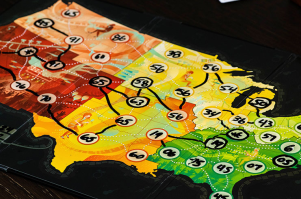
Players must cut their losses and admit that they will not be able to visit each state (or country on the Europe map). Miss Kitty would’ve struggled with making a route that goes through as many states as possible. She may have frozen before placing each number. But whenever I play On Tour, I’ll name my band (there’s a space for that on the United States side of the map) something that has to do with Rick Springfield. Miss Kitty would listen to Springfield whenever her husband was away and would scramble to hide her teen magazine cutouts whenever he returned home. I may call my next band Working Class Dogs.
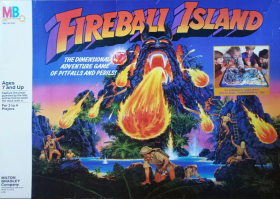
Fireball Island: The Curse of Vul-Kar

Miss Kitty bought me the original Fireball Island for Christmas one year. I don’t remember if she played the game with me, but she certainly got me the game for the holidays. The original Fireball Island had players race to pick up a gemstone and race back to the finish line with the booty. Fireball Island: The Curse of Vul-Kar improves upon the original. Players take pictures of the island for Instagram (or some other social media), but they can still snag a precious gemstone for extra points.
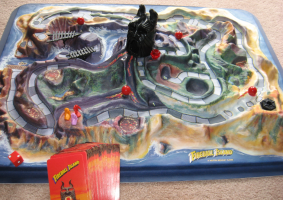
Fireball Island: The Curse of Vul-Kar reminds me of Miss Kitty, my mom, because I have video of the Christmas when I unwrapped the original Fireball Island. A younger me paced back and forth with the box as Christmas continued. Miss Kitty opened the gift I had bought for her (or I had picked it out for her): Hope perfume. She liked new and unique fragrances, and I had found Hope, which was supposed to change with each person’s body chemistry. It sounded unique. Modern-day Kyra recognizes Hope’s description as a marketing ploy. It was the thought that counts. Anyway, the video shows me geeking out with Fireball Island, while Miss Kitty was geeking out over Hope. Parallel geeking.

The Real Ghostbusters Game

The Real Ghostbusters Game, based on the 80s cartoon series of the same name, reimplements Ghost Castle that released in 1970. It’s a dated game; it doesn’t hold up to modern tabletop game design techniques. But The Real Ghostbusters Game holds a special place.

I brought the game to a kid’s birthday party. Miss Kitty dropped me off at the kid’s house and some time during the drive she shared that my father wondered why I hung out with a loser (the kid whose birthday party I was attending). I told Miss Kitty that even losers needed friends. This was Miss Kitty’s favorite story to share about me and my childhood.

I miss you, Mom. Happy birthday. We’ll play some games for you today.

Let me know of any games that remind you of your loved ones. Or the games you love playing with your loved ones. Or even the games you wish you could’ve played with them. And wherever you are, I hope you’re having a great day.

3 Lists of 3 Anime: Take 3

This is one of the last older posts that I haven’t yet published. Up to this point, we’ve been sprinkling in some newer stuff, but it may be mostly new stuff from this point forward. This is the third and possibly final 3 Lists of 3 for anime.

Just in case you’ve forgotten how these posts work, I’ll break down some of the more popular anime genres and list a few anime for new viewers to dip their toes into. This series differs from our typical starters writeups because we won’t spend too much time on each anime—usually—and it’ll function more as an “if you like this story, you may like this other one.” Let’s get started.

Mystery

When one hears mystery as a genre, one thinks about stories that feature detectives and gumshoes. The same holds for anime—for the most part—but there are some anime that go a little off that tried and true formula.

Detective Conan

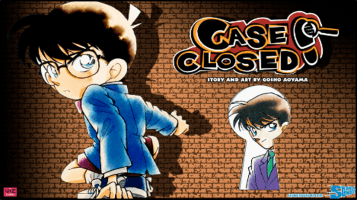
We’ll start with the one that’s the most familiar for westerners. Detective Conan (also known as Case Closed) features a precocious teen detective Jimmy Kudo who solves the police’s most difficult cases. He gets poisoned by a secret organization, but the poison doesn’t kill him, it turns Jimmy into a short pants kid.

To keep his identity a secret, Jimmy adopts the alias Conan Edogawa (he names himself Conan after his favorite author Sir Arthur Conan Doyle). Detective Conan continues to solve crimes, while unearthing who reversed his aging into a child. Detective Conan plays out a little like Inspector Gadget with Conan solving crimes for an inept adult detective, but while Detective Conan has its comedic moments, it’s a classic detective series.

Hyouka

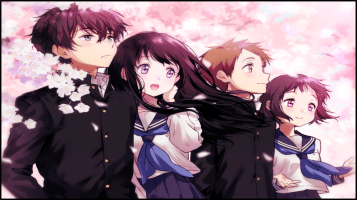
Here comes another young gumshoe—or a group of gumshoes. The Hyouka anime is based on the manga, which was in turn based on the novel series Classic Literature Club by Honobu Yonezawa. It’s set in Kamiyama High School where the members of the Classic Literature Club help others out by solving crimes. If you liked series like the Hardy Boys or the Babysitters Club, you might want to give Hyouka a try.

Eden of the East

Eden of the East is the one anime on this list that journeys the furthest from a traditional detective story. This gets a little convoluted. Eden of the East behaves a little like the cloak and dagger elements of 100 Bullets, so there are plenty of twists and turns.

Essentially, the two main protagonists are given 8.2 billion yen that’s supposed to be used to “save” Japan in some way. They must use their money to pay a group named The Seleção, but if they use the money for selfish reasons, they fail, and Japan is destroyed. There’s a lot more to it than that—a lot more—but Eden of the East builds on a series of terrorist attacks and who’s behind them. It asks moral questions like if you could sell out your home country for a small fortune, would you?

Horror

As you can see, I’m going with more traditional subgenres with this list—for now. Horror anime ranges from ghosts and goblins to myths or just the plain creepy. Get ready for a few chills.

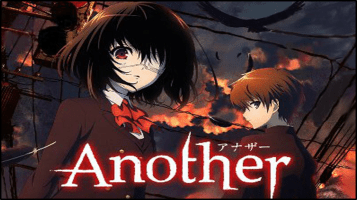
Another

We’ll start with a horror anime that could classify as a pseudo mystery. Another is set in a high school where a student died in 1972 and in the wake of that death, everyone denied that it happened. As a result, a curse befalls the school, and students, faculty, and their family members are at risk of gruesome deaths like the ones you might see in a Final Destination film.

We’re talking plenty of blood and gore. But there may be something or someone behind these murders and that’s where Another blends mystery and horror. Expect plenty of red herrings in this short, twelve-episode series. You may also want a change of pants.

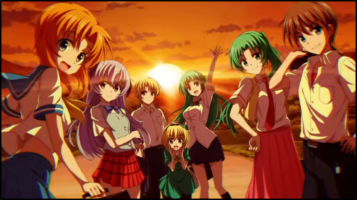
When They Cry

When They Cry is adapted from the video game series of the same name. Set in June of 1983 and in a quiet rural village Hinamizawa, protagonist Keiichi Maebara leaves his hometown for Hinamizawa after a series of unfortunate events. He makes friends in this sleepy town, but soon finds out that there’s more to the town than he first believed. A series of murders and other gruesome events occur in Hinamizawa, and the friends Keiichi has made may not be all they seem. Who needs enemies when you have lunatics for friends?

Parasyte

I could’ve gone with Corpse Parade here—another great, short series—but it’s another spooky school anime and I wanted to branch out. Parasyte, based on a manga that ran from 1988-1995, has plenty of stunning visuals, gore for those of you who like gore-fests, and aliens. That’s right. Let’s give some aliens a little love. The titular aliens enter orifices and transform humans into monsters.

Main character Shinichi encounters such an alien, but the alien can’t overtake him and only manages to turn him into a human with one alien arm. Shinichi maintains control of the parts of him that aren’t an alien arm, but the alien arm has a mind of its own. Parasyte explores many issues of what it means to be human, and it’s a much watch for horror fans who like scares like Alien.

Josei

I’m venturing a little off the beaten path here with Josei, but just a little. Josei is more of a demographic than an anime genre. It targets female viewers around the ages 18-40 and depicts life and romance in a more mature light. Romance doesn’t have to factor into the story all the time; a Josei anime needs to cater to women of this age range (essentially not teens or children) and feature more grounded characters, instead of idealistic fantasies.

Princess Jellyfish

The crux of Princess Jellyfish rests with a group of otaku (geek) women who happen to be flat mates. They bond with each other and no men are allowed in their club. Protagonist Tsukimi, one of the otaku women, hopes to become an illustrator and loves jellyfish because they remind her of her mother who took her to the aquarium to see them.

Enter Kuranosuke, the illegitimate son of a politician, who cross-dresses to rebel against his father and feel closer to his mother. Tsukimi befriends Kuranosuke and allows Kuranosuke to join her band of otaku, hiding Kuranosuke’s gender from her flat mates. Princes Jellyfish addresses gender identity and challenges one’s preconceptions. It also makes for a non-conforming romantic-comedy as Kuranosuke develops feelings for Tsukimi.

Nana

Nana’s title derives from its two main characters, both of whom are named Nana. Nana Komatsu has a habit of falling in love at first site. The other Nana, Nana Osaki, is the lead vocalist of a band called Black Stones (BLAST for short). Osaki’s boyfriend, the band’s bassist, leaves BLAST for a better gig, but Osaki continues with BLAST. Nana centers on these two Nanas as Komatsu seeks love and happiness, and Osaki pursues fame and recognition. Neither Nana finds what they want at first and perhaps what they want isn’t what they need.

Whenever I get enough of the Nana manga, I may have to place eight of them on the shelf with a Batman graphic novel after them, that way anyone who looks at the books in my library will get the 1960s Batman theme stuck in their head. If you’ve heard the song, you have it in your head right now. Mwah-ha-ha!

Seriously, Nana is a great read.

Shouwa Genroku Rakugo Shinjuu

Shouwa Genroku is a shot of fresh air for anime. Set against the art form Rakugo, a traditional form of Japanese entertainment where a storyteller must sit and convey a tale with only a paper fan and small cloth, Shouwa Genroku unveils the story of two friends.

One begins his path as a Rakugo performer after being released from prison, the other takes a different path and both have disparate performance styles. Shouwa Genroku may be the most intimate of all the anime on these lists and one of the most character-driven stories.

Final Thoughts

I hope there are plenty of anime in these lists for you try out. I’m sure I got something wrong. Let me know in the comments.

And wherever you are, I hope you’re having a great day.
3 Lists of 3: Video Games as Art

This 3 Lists of 3 article was written years ago and never posted. I’m unsure why. I decided to edit it a bit before posting. There’s even a link to an old Flash game I included that I had to check and see if it still works. It does. Yay!

Younger Kyra may sound a little different than current day Kyra. Hopefully, this still holds up. If it doesn’t, new content is on its way. Take it away, younger Kyra.
The argument of video games as art has raged for a few decades now, and I’m not sure it’ll end any time soon. Many of you have your own opinion and can’t be swayed one way or another and a little writeup won’t change your mind. Others don’t care if video games are art. But it is something that’s found its way in higher courts of the United States because of video games’ status as freedom of speech, so maybe video games as art is a valid discussion.

I’m unsure. To be fair, I’m unsure of most things but let’s break down the argument against video games as art (to show a counter point) with the first list before going into the next two lists that’ll suggest video games are art. I’ll try to be as fair as I can, but I do stand with one side. Oh well, let’s get to the lists.


1) Arguments Against Video Games as Art


Roger Ebert

Bear with me, folks. This first one will be a long one. Video games as art never had a more adamant opponent than Roger Ebert. Ebert became an unlikely adversary and may never have voiced his opinions on the topic if he wasn’t asked about his thoughts on the video game Doom after he gave the film Doom one star. When asked if Doom received that low of a score because it was based on a video game, Ebert fired back.

“To my knowledge, no one in or out of the field has ever been able to cite a (video) game worthy of comparison with the dramatists, poets, filmmakers, novelists and composers. That a game can aspire to artistic importance as a visual experience, I accept. But for most gamers, video games represent a loss of those precious hours we have available to make ourselves more cultured, civilized, and empathetic.”

The above statement by Ebert doesn’t make any specific points against video games as art. Essentially, it claims that video games aren’t art because they’re a waste of time. It’s telling that Ebert sandwiched filmmakers in the middle of his group of valid artists, so that the medium he dedicated most of his life to wouldn’t be put under the microscope again (there were plenty of people who pushed back against films as art), but Ebert did say once that “hardly any movies are art,” so his reluctance to add video games to art’s canon is consistent. Regardless, Ebert’s major point during a panel discussion a year later in 2006’s “An Epic Debate: Are Video Games an Art Form?” was salient.

Too Malleable to be Art

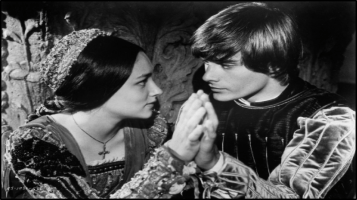
In a 2006 debate, Ebert claimed that video games were too malleable to be considered art. He posed the idea of a video game version of Romeo and Juliet where players could pick a happy ending. That would ruin the original artist’s vision. For art to exist, an artist’s vision must remain intact, so I’d agree with this. He made an obvious choice with Romeo and Juliet. A happy ending would be terrible. But there are a couple of issues with this point.

First, nothing prevents a movie company from making a Romeo and Juliet film with a happy ending; one may already exist. Second, changing a Shakespeare tragedy so that it has a happy ending is an extreme example and one based on a story that exists outside of video games. Video game stories provide options for players and there’s a case for any of those options as the original artist’s vision.

Like Black Mirror’s Bandersnatch, video game directors can create multiple endings, each as valid as the next (which may be debatable at times). Games have player choice, but many of the better ones have the illusion of choice like Life is Strange or Telltale’s The Walking Dead Season One. There are ways to eschew Ebert’s claim that video games can’t retain a director’s original vision. Still, it’s an interesting position and one with merit.

They’re Objective Based

Ebert’s next thought-provoking claim came in a 2010 essay. “One obvious difference between art and games is that you can win a game. It has rules, points, objectives, and an outcome.” This one is more difficult to call into question. Plenty of people in the video game industry reject the idea of video games as art because they’re objective based. The next year, Brian Moriarty (of “Wishbringer” and “Loom” fame) gave a lecture entitled “An Apology for Roger Ebert.” Moriarty agreed with Ebert and expanded Ebert’s argument with making video games an extension of traditional rule-based games and that there has been no call to declare games like Chess and Go to be art.
Phew! Again, that point is difficult to argue. There must be some objective that drive art, even if it’s subconscious. To paraphrase Ebert, art makes us more cultured, civilized, and empathetic. Perhaps one of these, specifically the one that fosters empathy or seeing the world from another’s perspective, is an objective.

There are even some video games that try and promote empathy, and not all video games have clearly defined objectives. Thatgamecompany, which will show up again, has produced a few games that fit in this category.

I’ll paraphrase Ebert once more and say that hardly any video games that I play are art; most of the games I play are just fun. But some of the following games might qualify as art.

2) Games

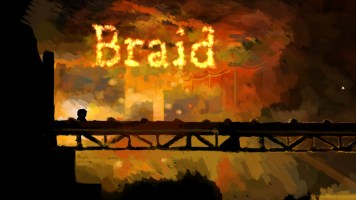
Braid

 It’s difficult to cover any of these games without getting into major spoilers, so consider this your first of many spoiler warnings.

Braid has been out for some time, so a few of you may already know what’s in the offing. Braid begins like a typical Super Mario Bros. game. The princess is captured by a monster, and you must rescue her, but Braid uses this trope to throw off gamers. Once you rescue the princess, you realize that she’s been running away from you the entire game and that you were the monster. Braid does a great job of showing that perspective is everything. A villain never believes they’re in the wrong. Everyone is the hero of their own story, but others may not view you as heroic.

Shadow of the Colossus could’ve taken this spot for similar reasons, but so many people include Shadow of the Colossus on lists like this, and I wanted to be different. How long do you think it took me to realize that I just included it on this list anyway? Drat. Everyone thinks they’re the hero of their own writeup.

Brothers: A Tale of Two Sons

Shock: more spoilers. Huge spoilers!

Brothers: A Tale of Two Sons centers on two brothers. Players control the younger brother with the left analog stick and the older brother with the right analog stick. That distinction comes in handy when at some point the older brother dies. Players have spent plenty of time using both analog sticks and suddenly the right one does nothing. It’s gone.

Just like the younger brother losing his sibling, the physical reminder that the right analog stick doesn’t work haunts gamers. There are plenty of moments when gamers want to use the right stick but can’t. It’s a visceral feeling of loss, but that changes when the younger brother encounters a flooding river. The younger brother can’t swim and then he hears the voice of his older brother urging him to try. At this point, the right stick becomes active again and the younger brother can continue. It’s a beautiful moment, and I’m sorry if I ruined it for you by spoiling it, but I said spoilers twice. I’ll take partial blame.

Loneliness

This next one, Loneliness, is short—really short, like five minutes to play the entire thing short—and you can play it right now because it’s a web game.

https://www.necessarygames.com/my-games/loneliness/flash

I’ll wait for you to play it, because I know some of you just skipped right over the link. Here’s the link again. It’s well worth the less than five minutes to play. Trust me.

https://www.necessarygames.com/my-games/loneliness/flash

Alright. That’s long enough. Loneliness does an excellent job of portraying its namesake. It reveals as much about the player as it does the subject matter. Some players will move their square toward the other ones entering the screen. Others like me will move their square away from the other ones, thinking they’ll harm them. At some point, I began moving my square toward the others just to see what might happen if the squares touch. It doesn’t take long to see that the other squares will move away and disappear from the player’s square, leaving them alone. Isolated.

Older Kyra here. This is the Flash game I mentioned at the beginning of this write-up. Years ago (circa 2017 or so), the designer left players who finished the game with the following statement:

“Children and adolescents in Korea are the least satisfied with their lives among 26 member countries of the OECD (Organization for Economic Cooperation and Development). Many report loneliness as a major factor. I taught those kids for a year. This notgame was made for them. And for anyone who has ever felt lonely.”

The squares are inanimate objects and the game simple, but few who play this game will leave it without a sense of loneliness. Loneliness is one of many empathy games, and the empathy video game subgenre is a great argument for video games as art.

 3) Game Companies

Thatgamecompany

Kellee Santiago challenged Roger Ebert’s 2010 essay on multiple occasions and for good reason. Her company, Thatgamecompany, has several games that could be viewed as art. Each one grows on the ideas set by the previous one. Gameplay and creative vision leap from Flow to Flower to Journey. We’re headed for major spoilers for all three games, especially Journey. You’ve been warned.

Flow has players guide a small, multi-segmented worm through an aquatic environment. The game doesn’t have menus. As soon as you load the game, it goes straight to a top-down world where multiple planes are stacked atop each other. The player may choose to have their worm-like creature eat other organisms to go down a plane, but it isn’t necessary. Most creatures one’s worm encounters are non-confrontational, so like Loneliness, the way a player chooses to play Flow reveals something about them.

Flower does something similar with flower petals. Each of Flower’s six main levels focuses on one of the flower’s dream. The player controls the wind as it sends the petals off a city apartment windowsill and across the countryside. There are no enemies, hit points, or time limits. Flower plays like a video game version of Fantasia, where the music and visuals tell a story with speaking no words. It does what designer Jenova Chen intended: create a game that’s intended to arouse positive emotions.

Journey is the perfect name for Thatgamecompany’s third outing. It’s a journey of sound (with its brilliant score). It’s a journey of discovery. It’s a journey of emotions. Players begin the game by flying with their magical scarves until they land abruptly. The gamer may believe they’ve done something wrong. The game doesn’t take you by the hand and tell you what to do, but that’s the way the designer intended the story to go. The world turns dark, then cold, until your magic scarf shrivels. You’re alone, but you’re not alone. Others are there if you need them and that uplifting message—again, without saying much of anything—leads Journey toward the empathy game subgenre and on several critic’s lists for greatest video games of all time.

Giant Sparrow

Giant Sparrow hasn’t been around as long as Thatgamecompany, but their two major releases are just as worthy for inclusion on this list: The Unfinished Swan and What Remains of Edith Finch. Again, there will be spoilers.

The Unfinished Swan centers on a young boy Monroe whose mother has recently died. Monroe’s mother was a painter who was known for never finishing a painting and having over 300 incomplete works. Monroe’s orphanage tells him he can only keep one of his mother’s paintings; he chooses her favorite, a painting of a swan missing its neck. One night, the swan escapes its painting, and Monroe chases it across a mysterious painted world. The Unfinished Swan deals with acceptance. Monroe chases the memory of his mother until he sees his mother in himself and knows that she carries on through him. Eventually, Monroe earns his mother’s magical silver paintbrush and he finishes his mother’s painting and adds a pair of baby swans.

What Remains of Edith Finch also deals with loss and acceptance of that loss, but it tackles the subject in a very different manner. In the present, the player-character, which (spoilers) turns out to be Christopher Finch who is Edith Finch’s son, takes a ferry to Orcas Island off the coast of Washington state with the journal of Edith Finch in tow. The journal reveals that the Finch family is under a curse going back at least five generations with all but one child of each generation dying from unusual causes, leaving a sole child to continue the family. The Finch homestead never repurposes any one room. When a family member dies, their bedroom becomes a shrine. Each room builds or plays off the other in an anthology of remembered catastrophes, resulting in a tale that’s equal parts Twilight Zone and One Hundred Years of Solitude and neither at the same time. What Remains of Edith Finch, like many other games on these lists, isn’t long, but the images and story last much longer than its playtime.

Dontnod

Dontnod—or Don’t Nod or even DONTИOD—owes its inclusion on this list for its Life is Strange series of games. It’s yet to be seen if they’ll build more franchises off the success of this title, but Life is Strange is a great character-driven game that does multiple endings well.

Life is Strange is set in the fictional town of Arcadia Bay, Oregon and follows Maxine “Max” Caulfield as she navigates the twelfth grade at Blackwell Academy (an art-centric high school). The town of Arcadia Bay is doomed to experience a tornado in the future, which Max catches a glimpse of in photography class, but Max can use her newly developed ability of rewinding time to change the future. Life is Strange delves into bullying, abuse, memory, and identity. Unlike many other triple A video games, the bulk of Life is Strange’s budget went toward writing and voice actors, and it shows.

There are only two possible endings and the best way to describe them is choosing the least objectionable option of the two, but like most things in life, that choice is subjective and whichever one the player chooses reveals something about the player. Both end-game choices are valid and stay true to the designer’s vision.

Conclusion?


Older Kyra is here again. While revisiting this article, I may have unearthed the three reasons why I never posted this 3 Lists of 3 several years ago. One, it’s a long post. Two, young Kyra even said that this article wouldn’t change people’s perspectives; you’re in one camp or the other. Three, some could say that it paints Roger Ebert in a bad light. Perhaps. I have a lot of respect for Ebert. Was he perfect? No. No one is. I’m sure many of you spotted plenty of flaws in my arguments and the occasional typo or three or nine thousand. They’re over nine thousand!

Ultimately, art is subjective. Art changes over time. Some of these games weren’t available during Ebert’s lifetime. Others were ones Ebert wouldn’t have known. I’m still tickled that he placed “filmmakers” in the middle of his “real artists” list. I see what you did there, Ebert. Tee hee!


I’m sure I missed more than a few things, or you’ll see things differently. Let me know your thoughts in the comments.

3 Lists of 3 of Stan Lee

Uncle Geekly was remiss with not publishing a write-up for the late, great Stan Lee a few months ago, but that may be because it’s difficult to boil such an uncanny comic book giant with a small write-up. Ergo, a 3 Lists of 3 may be in order.

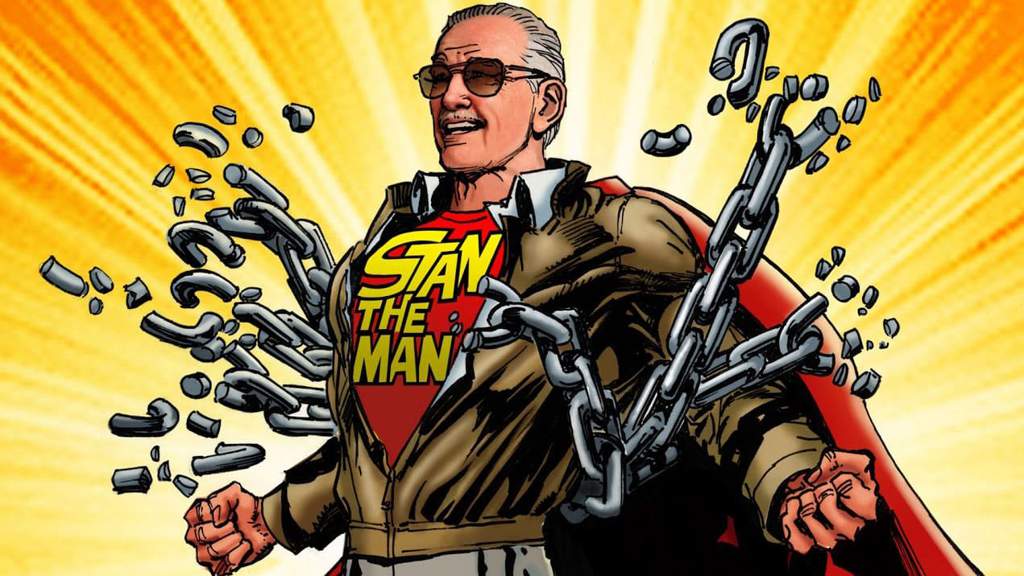
But Stan Lee is only as human as the characters he helped bring to life, so one of the following lists may cite some issues fans had with his work or more specifically, the assigning of credit. Even with his faults, Stan “The Man” did more good than most comic book creators. The world lost a legend.

A Pioneer

StanLee01

Humanizing Superheroes

There’s a tale of Stan Lee’s—it may be a legend by now—that goes like this. Before the dawn of the Marvel Age (when the Fantastic Four first launched) Stan was frustrated with writing the same thing. He told his wife Joan he’d quit, so he could write the stories he wanted to write. Joan responded to Stan that if he wanted to quit, why not write the stories you want to write in comics? If you fail, you wanted to quit anyway, so it doesn’t matter.

Stan did what his wife suggested, and the results were character-driven stories that showed superheroes as flawed people. The Fantastic Four fought like any family. Johnny Storm was a hot-head (I’m sure the pun was intended), Peter Parker struggled with most everything (money, school, and getting picked on), and Hulk has anger issues. What made these heroes great was that they had to overcome their shortcomings.

Some of the great comic book characters of the time dabbled with this concept, but Stan Lee made it a point that all his characters would have flaws. A character’s flaws and the conflicts that ensue are what makes a character interesting. Look no further than “This Man, This Monster” where The Thing must make the choice to be The Thing in order to save his friends and family.

Relatable characters existed in comics before the Marvel Age, but Stan Lee’s storytelling spark thrust them to the forefront.

StanLee04

Interacting with Fans

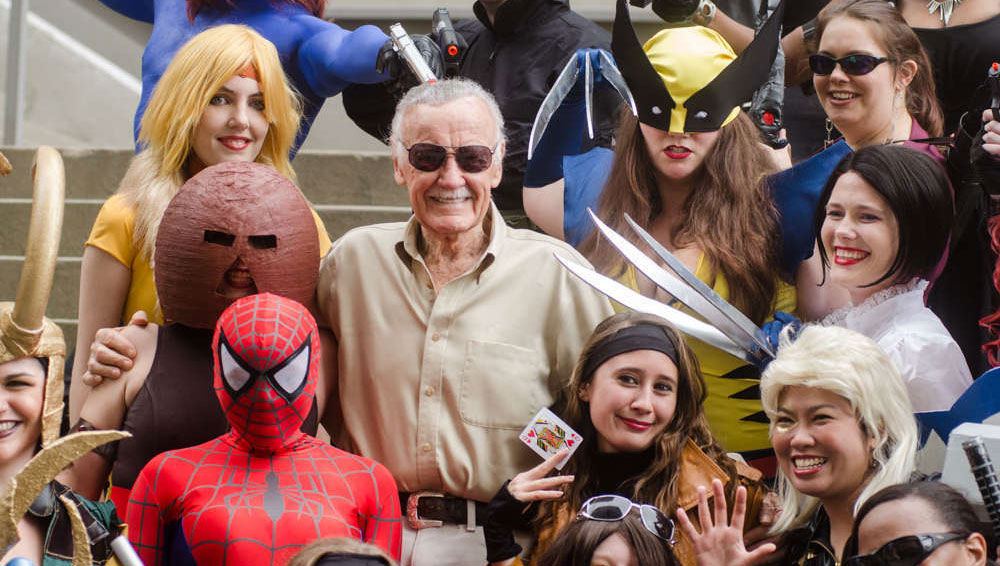
To call Stan Lee charismatic is an understatement. He acted as cheerleader for his characters as well as his fellow comic book creators, but he stood out equally with his interaction with fans. Stan Lee could give a master course in how to communicate with and respond to fanboys and fangirls.

If a fan caught an error on a page, they could write in and let Stan know. He’d write them a personal letter, complimenting their keen eye. The Marvel No Prize offered no monetary reward, but there are some folks who hold onto their letters today and treasure them. Stan also had his “Soapbox” where he’d tackle issues and concerns fans had with their favorite characters or in their personal lives. He comforted those whose family members went to Vietnam. And just two or three weeks before he passed, Stan posted a video about how fans shouldn’t worry about his health. His left hand is doing okay, but he’s worried about his other hand. That’s when he unveils a toy Hulk fist on his right hand.

He was a joy to the end.

StanLee02

An Epic Story

Stan Lee had a great sense of scope and grandeur. Comic book stories rarely went beyond a single issue, but Stan, along with his bullpen, stretched them to multiple issues. I’m not sure if Stan could envision the twelve issue plus story arcs that came decades after the Marvel Age, but he and Jack Kirby were trailblazers with the original story of Galactus.

Fantastic Four’s “Galactus Trilogy” spanned three issues and if it wasn’t for Stan revitalizing the industry, he wouldn’t have been given the latitude to make something that was “supposed” to be a single issue and give it more weight. The “Galactus Trilogy’s” success led to other comic book companies and other mediums to question preconceived notions for their art.

Controversies and Personality Flaws

It’s that time where I cover some of the less tenable things in Stan Lee’s past. There aren’t that many because he’s a legend for a reason, but he did manage to rub some people the wrong way, so I’ll include them here to show another side of Stan Lee.

KirbyAndLee

Credit Where Credit is Due

I hinted at this one already, but Stan Lee often received credit for single-handedly or predominately creating the Marvel Universe. That’s false. Stan Lee had plenty of help. Jack Kirby, Steve Ditko, Marie Severin, Joe Simon, Bill Everett, and even Stan’s brother Larry Lieber did a lot to shape Marvel’s stable of superheroes.

Many fans blamed Stan Lee for taking too much credit and that may hold some truth, but Stan’s fame may have come from needing to be the company’s front man, it’s icon. With Stan Lee as the face of the franchise, Marvel moved a lot of product.

Still, there’s a debate for who had more creative control. When Steve Ditko and Jack Kirby switched the titles they worked on (Ditko with Hulk; Kirby with Fantastic Four), to shake things up, the adventures in which the effected characters embarked changed to resemble the artist’s vision. If Stan Lee was the only one responsible for the stories, that wouldn’t have happened.

StanLee05.jpg

A Shameless Self-Promoter

Have I said how charismatic Stan Lee was and how communicative he was with his fans? Well, he was, and some critics viewed his loquaciousness as shameless self-promotion or even arrogance.

There’s a good chance he was to some degree—aren’t we all at times?—but Stan Lee promoted everyone and everything. He could’ve named Hulk, The Hulk, but he had to be “The Incredible Hulk.” Spider-Man wasn’t just Spider-Man, he was “The Amazing Spider-Man.” So, Jack Kirby wasn’t just Jack Kirby, he was Jack “The King” Kirby because even Stan knew how influential Kirby was, even if some fans didn’t.

Here are some of my other favorite names Stan gave the Marvel Bullpen:

Gil “Sugar” Kane

“Gorgeous” George Perez

“Roisterous” Ralph Reese

“Nefarious” Neal Adams

Steve “The Angry Man” Ditko

“Jocular” John Byrne

“Arachnerd” Jim Salicrup

And yes, Jim Salicrup worked a lot on Spider-Man; I’d love a nickname like “Arachnerd.”

StanLee06.jpg

He Left Comics for Hollywood

To be honest, I don’t qualify this one as a personality flaw or a controversy. I had to include it because when Stan Lee moved to Hollywood in the 1980s to start Marvel’s cinematic wing, many fans questioned his love for the medium that made him famous.

That’s crap. By the 1980s, Stan Lee had been working on comics for around forty years, and most people retire at that point in their careers. Stan Lee didn’t retire. He began what he thought would make Marvel omnipresent: a movie empire. While he didn’t succeed as much as he wanted to then (mostly TV shows, cartoons, and made-for-TV movies), Stan Lee was right in accessing that cinema would eventually make Marvel one of the hottest brands on the planet.

A Legacy

An Ambassador

I’ve used the term icon and giant to describe Stan Lee, but let’s throw in ambassador of comics to mix. Stan Lee promoted comic books his entire life. Even though it may not have been what he wanted to do with his career (he wanted to write novels), he made the art form his own. He empowered others to pursue it as a legitimate career path. He, along with others, put comic books on the map.

StanLee07.jpg

The Movies

Thank goodness we have all those Stan Lee cameos in the Marvel Cinematic Universe. Each one shows how loose, carefree, and fun Stan Lee was. He never took himself too seriously. There may be a lesson there.

StanLee09.jpg

His Stories and Some Quotes

 Here are some of my favorite Stan Lee stories, in no particular order, that may be worth checking out:

“The Galactus Trilogy” Fantastic Four Vol. 1 #48-50

“This Man, This Monster” Fantastic Four Vol. 1 #51

 “If This Be My Destiny” Amazing Spider-Man #31-33

 “How Green Was My Goblin” Amazing Spider-Man #39-40

 “Spider-Man No More” Amazing Spider-Man #50

“Captain America Joins…The Avengers” Avengers #4

The Incredible Hulk Vol. 1 #1-6
This one comes with a caveat; The Hulk didn’t take off as well as Marvel would’ve liked, but one can see Stan Lee and Jack Kirby at the drawing board with each issue, reworking the character so he could work.

“The Eternity Saga” Strange Tales #130-146

And some quotes:

“Forced idleness is a terrible thing.”

“The only advice anybody can give is if you want to be a writer, keep writing. And read all you can, read everything.”

“The pleasure of reading a story and wondering what will come next for the hero is a pleasure that has lasted for centuries and, I think, will always be with us.”

“Face front, true believers.”

“With great power comes great responsibility.”

“Excelsior!”

“Nuff said!”

3 Lists of 3 Anime: Take 2

No. It’s not Anime Season (our resident anime geek). Uncle Geekly’s back with another anime 3 Lists of 3. If you didn’t catch Take 1, this series hopes to provide a starting place for people new to anime. It differs from our typical For Starters series because I won’t go into too much detail with each series—for the most part—and it’ll act more like if you like this genre or subgenre, you may like this title.

Truth time. I’m breaking that mold with the group of lists this week. Uncle Geekly will focus on some of the more popular anime subgenres that aren’t as prevalent in the West. With that said it’s time for 3 Lists of 3 Anime: Take Two.

Psychological Anime

I won’t go into too much detail with how to spot a psychological anime because Arthifis of Anime Shelter does a great job of breaking down the genre with his writeup. For those of you who want to take a deeper dive into what makes an anime psychological you can check out Arthifis’s article. To save time, I’ll skip to a paraphrased bullet point definition that Arthifis unearths:

1) The anime puts its characters in high amounts of psychological distress. We’re talking multiple levels of psychological tension.

2) The anime includes mind games, meaning that the characters win by lying or manipulating others.

3) It focuses on psychological illness.

4) It messes with your psyche by showing the viewer a perspective that greatly differs from the norm.

Few of the following anime use all these four points, but they’ll use at least a couple. Here we go.

DeathNote03

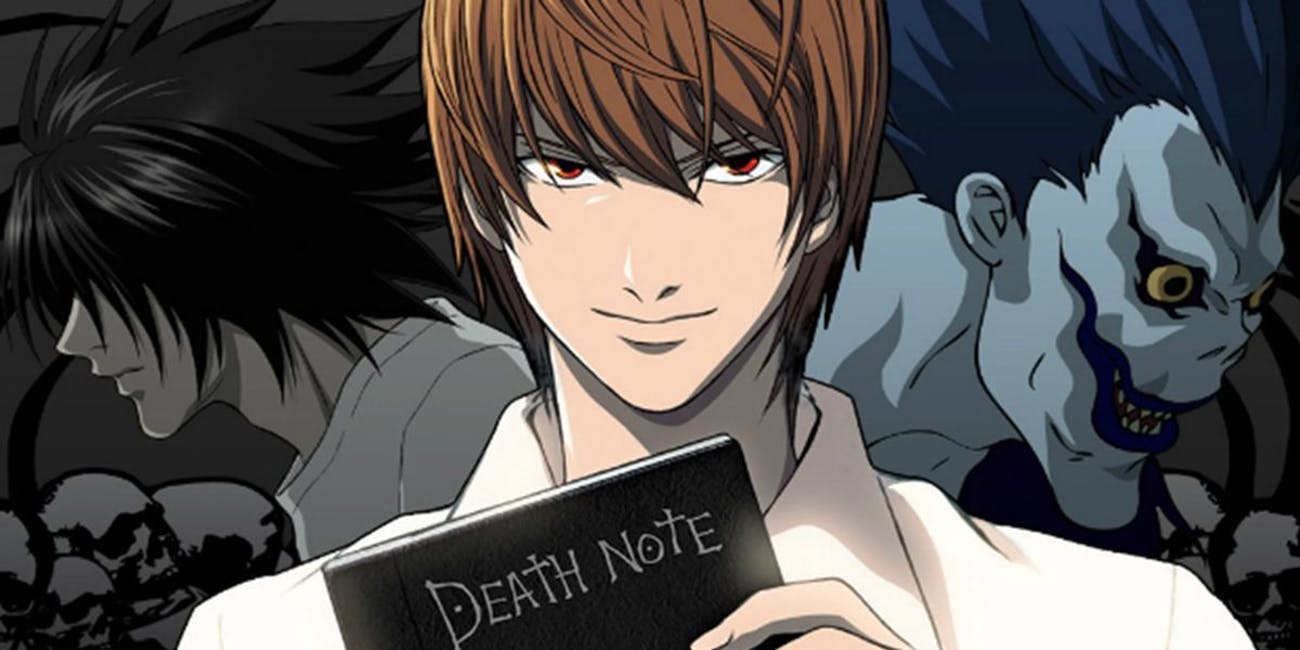
Death Note

The characters of Death Note play mind games. Lots and lots of mind games. A death note, a notebook that allows its owner to kill someone they think of by writing their name in the book while thinking of their face, drops in the lap of precocious high school student Light Yagami. Like most people who receive a gift like this, Light brands himself the god Kira and starts killing criminals worldwide. An enigmatic and equally intelligent detective known as L hunts Kira and so begins the chess match.

There’s a lot to unpack with Death Note. It’s one part murder mystery (in the vein of Columbo because the viewer knows who the killer is, it’s just a matter of how and if they’ll be caught), cosmic fantasy, and philosophical—as well as psychological—thriller. Kira or Light wants to be a bastion of justice and decency, but he has flawed judgement. At one point, L questions Kira’s logic: if all the world’s criminals disappear, then the only murderer left in the world is Kira.

So many moral questions are posed with Death Note, no wonder it’s one of the most popular psychological anime.

ParanoiaAgent01

Paranoia Agent

I went back and forth between two Satoshi Kon titles with this second pick: Paprika and Paranoia Agent. Kon was the grand master of psychological anime and it’s shame we lost him so young. One could pick any number of Kon’s work, but I went with Paranoia Agent because it’s not as familiar to the western world—and it happens to be excellent.

Paranoia Agent centers on a serial killer—or serial baseball bat basher—little slugger and how he terrorizes the town. Well. That’s Paranoia Agent’s hook. The story goes on and off the rails from there, forcing citizens to face their inner demons. I don’t want to say too much, but there’s plenty of trauma and psychological stress/tension in Paranoia Agent and it deserves a little more love.

MarchComesInLikeALion

March Comes in Like a Lion

Some don’t like March Comes in Like a Lion because it may not have as much of a story as they would like, but that’s due—in part—to the fact that it’s character-driven. The series follows the everyday life of a 17-year-old Shogi player Rei who lives by himself after his parents and sister die in an accident.

Rei shuts himself off from his foster family and doesn’t have many friends. His only interactions—at first—are out of obligation. March Comes in Like a Lion deals with psychological trauma, loss, and mental illness in a way few other anime attempt.

Isekai

Isekai loosely translates to stranger in a strange land and like the Robert Heinlein novel of that name (Stranger in a Strange Land), main characters in Isekai are foreigners in a strange land. Sometimes the characters are humans exploring new worlds, but it can be flipped with a fantasy character thrust in the mundane modern world. This may seem like a niche genre but for anime, it’s more prevalent.

SpiritedAway

Spirited Away

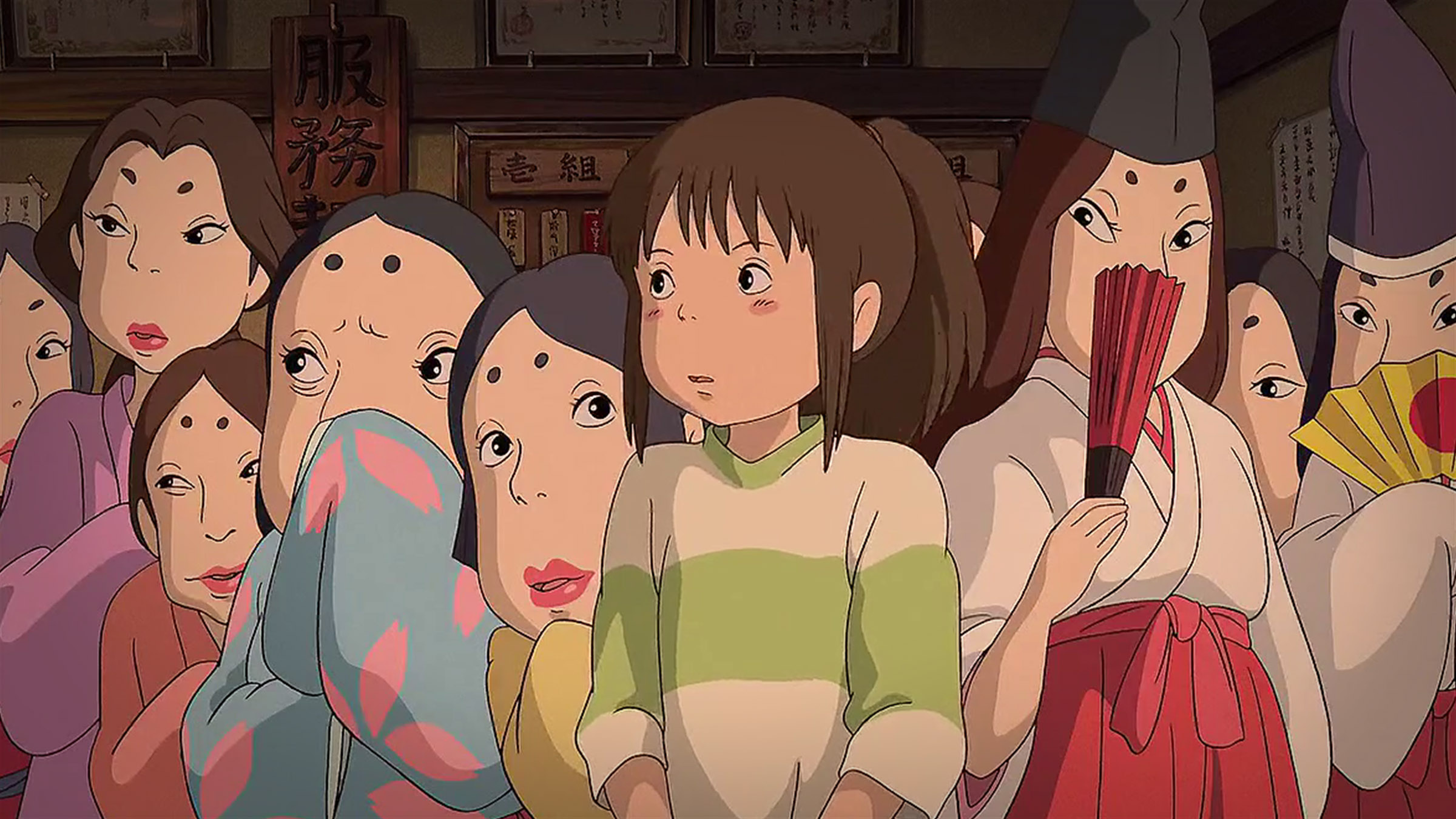
I had to include this one. To date, Spirited Away is the only anime to receive an Academy Award and it happens to be an Isekai. Ten-year-old Chihiro Ogino (later renamed Sen) is trapped in the spirit world, and the spirit world is nothing like our own—to put it mildly. Sen faces discrimination because she’s still alive and not a spirit. She gets lost in this world, but ultimately finds her place in it.

Spirited Away is anime that must be experienced. I could break down each moment, of which there are several classic one, but the journey makes this bildungsroman (coming-of-age story) work.

TheDevilIsAPart-Timer

The Devil is a Part-Timer

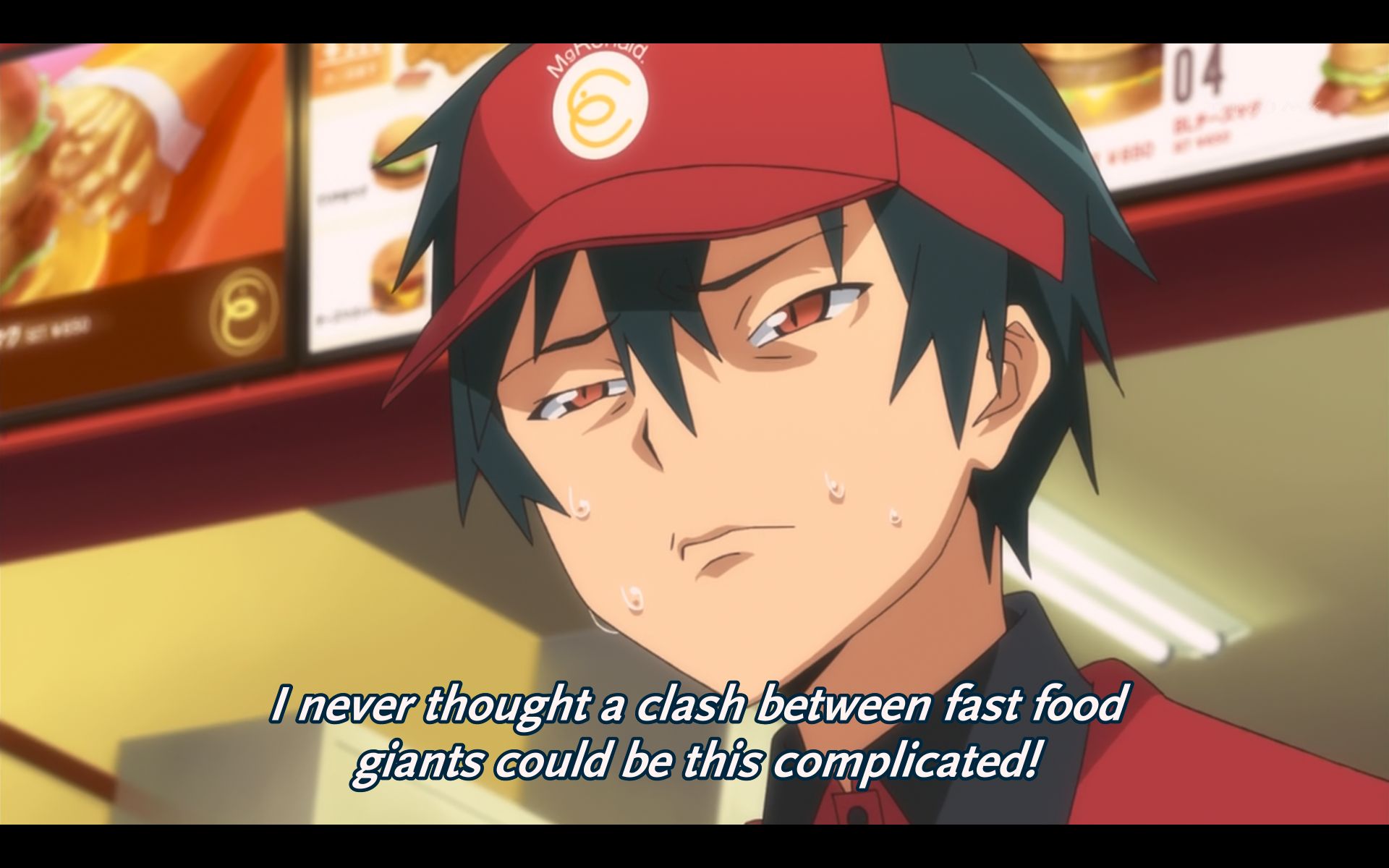
The title The Devil is a Part-Timer is odd, but it works. The Devil is forced into a human suit and he must work a part-time job to sustain himself. Yeah. This is the oddest show on this list—maybe—and the most over-the-top. If the Devil flipping burgers is your brand of comedy, The Devil is a Part-Timer has you covered. You’re bound to find a few chuckles.

NoGameNoLife

No Game No Life

No Game No Life could qualify for the next list of anime too (Game), but I included here because sending famous online gamers to a world in which all they do is play gambling games is more of an Isekai concept. Sora and Shiro are two of the best gamers in the world and when a god from another reality Tet challenges them to a game of Chess and they win, they’re sent to a reality known as Disboard.

No Game No Life is another strange entry, but it wouldn’t be a stranger in a strange land without a little strange.

Game

Yep. I had to include the game anime genre because I’m the tabletop game geek of the group, but game anime are really common as well. Game anime involve a game being played. We’re talking board game, video game, or the most dangerous game. Not joking about that last one. Anything that sends the main characters into a game or follows characters who happen to be a part of a game fits this genre. Let’s get our game on.

SwordArtOnline

Sword Art Online

I’m not the biggest Sword Art Online fan. The premise is okay, virtual reality video game players are stuck in their favorite online game and must win back their freedom, but the story is uneven (the story should’ve started later in the series—around episode nine or ten). Still, Sword Art Online ushered in a wave of game anime.

Sword Art Online instituted a lot of the tropes viewers will see in other game anime, so it’s a great place to start for the genre.

Btooom

Btooom!

If you like Sword Art Online, you may like Btooom!. This time players of a violent video game (one in which players bomb other players) are put on a deserted island where they play the game in real life.

Btooom! explores the difference between video game violence and real-world violence. It asks if video games beget real-world violence. Either that or it’s a blast. Main character Ryota Sakamoto doesn’t want to hurt anyone and wonders why someone would want to make a live-action Btooom! game. Btooom! traverses Truman Show waters to show that all is not what it seems.

IsItWrongToTryToPickUpGirlsInADungeon

Is It Wrong to Try to Pick Up Girls in a Dungeon?

This list has gotten too serious. Let’s go with a series that features a tabletop RPG (like Dungeons and Dragons). Is It Wrong to Try to Pick Up Girls in a Dungeon? Features self-aware RPG characters. Not only do these characters know they’re in an RPG, they know what they’re stats are; their stats are tattooed on their backs. So, it’s not uncommon to see someone read another person’s back to see if they can pull off a feat before asking them to do it.

Can you leap that gorge? No, your dexterity isn’t high enough. Is It Wrong to Try to Pick Up Girls in a Dungeon? may be the least reverent of titles in any of these lists and that’s saying something. I included The Devil is a Part-Timer. Yikes!

I hope there are plenty of anime in these lists for you try out. I’m sure Uncle Geekly got something wrong. Please direct all complaints to Anime Season; she reads the comments—I think.

3 Lists of 3 Cosmic Horror

Uncle Geekly’s trying something a little different with this week’s 3 List of 3. Let’s break down what makes a certain subgenre what it is and then list a few forms of media that do a good to great job of representing the subgenre.

We’ll start with cosmic horror, or Lovecraftian horror, or Cthulhu horror. I prefer the term cosmic horror because it’s not specific to the writer H. P. Lovecraft (who popularized the mode in the early 20th century) or his creation Cthulhu and focuses more on the concept of something larger or greater than mankind. Something that reaches beyond the stars and shows us how small man is and that mankind’s role in the universe is minor one.

There have been many waves of cosmic horror, several that predate Lovecraft, so we’ll cover what makes the horror cosmic.

What is Cosmic Horror?

TheUnnamable

An Unnamable Horror

 I know that I just said that I prefer the term cosmic horror to Lovecraftian horror, but he did write in the mode a lot, and his work has laid the groundwork for future writers and other storytellers, so I’m starting with a quote from one of his short stories.

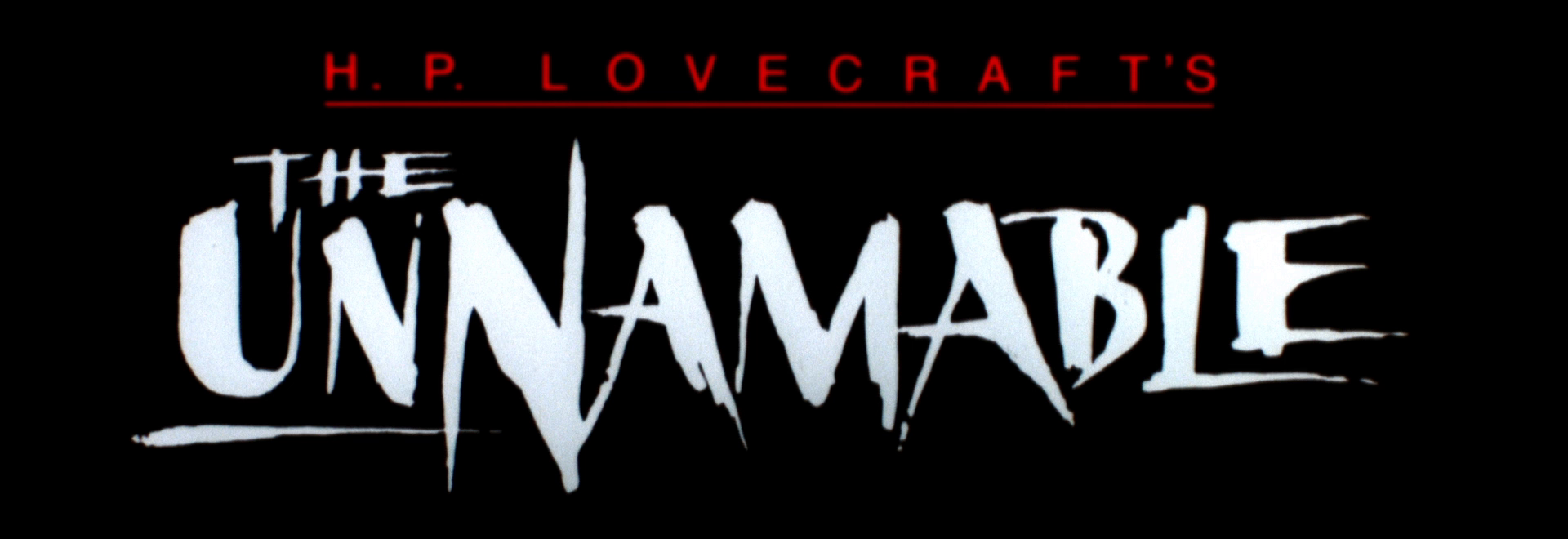
 From H. P. Lovecraft’s “The Unnamable”

“No—it wasn’t that way at all. It was everywhere—a gelatin—a slime—yet it had shapes, a thousand shapes of horror beyond all memory. There were eyes—and a blemish. It was the pit—the maelstrom—the ultimate abomination. Carter, it was the unnamable.”

This description goes in several directions. It starts with some explainable forms “a gelatin, a slime, eyes, and a blemish,” but even these bounce from one aspect to another, never settling on anything for long. Then it shifts to something less tangible. “A thousand shapes of horror beyond all memory. It was the pit—the maelstrom—the ultimate abomination.” And finally, it becomes a concept: the unnamable.

Readers aren’t supposed to know what the being is or what it looks like because the speaker can’t comprehend the being. The unnamable may as well be “the unknowable.” It’s far above humans and could crush them by stepping on them—that is if it had feet—and this feeds into man’s fear of the unknown.

It also feeds into the literary idea of the sublime, or the awe inspiring, and that’s probably why one could place the birth of cosmic horror in the Enlightenment. The Enlightenment is when humanity reordered its place in the cosmos (with its thinking, for example Immanuel Kant); it gave birth to Romantic poetry and Mary Wollstonecraft Shelley’s Frankenstein.

The sublime often ventures into the grotesque and in Frankenstein “The Creature’s” horrific outward appearance gets dwarfed only by how grotesque people treat the outsider. Man is trapped, unable to perceive something other or greater than himself, but at the same time, Dr. Frankenstein plays with things he’s not supposed to, and that’s another tenet of good cosmic horror: explore what man isn’t supposed to know.

Phew. Enough of that. Let’s get back to post 18th century.

IT

Horror, not Fantasy

Horror versus fantasy rests at the center of why I don’t like using the term Lovecraftian horror. Most people use the term Lovecraftian fiction and that ignores a different subgenre branch: cosmic fantasy.

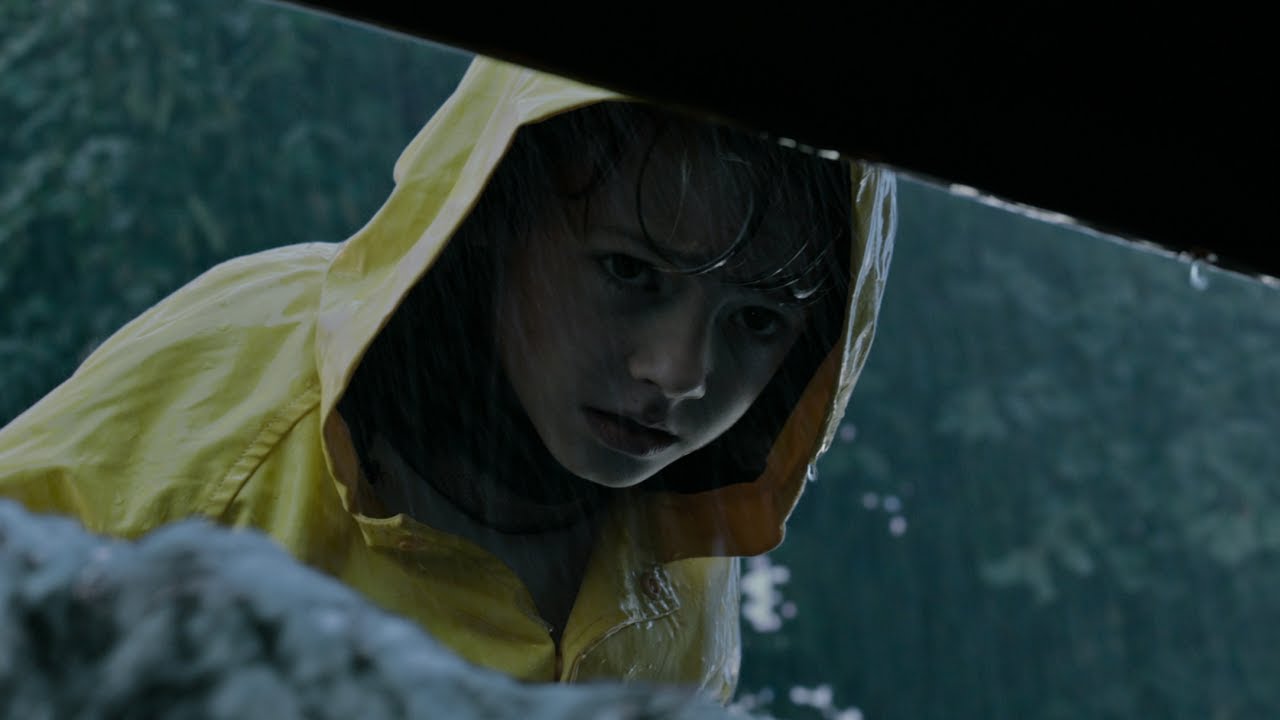
Sure. Cosmic fantasy dabbles with horror elements—the unknowable and powerful is innately scary—but while cosmic fantasy beings like the Endless from Neil Gailman’s Sandman could and may kill you if they wanted, the evil entity that sometimes appears as Pennywise the Dancing Clown from Stephen King’s IT will kill you with a smile on its face.

It’s an issue of malevolence versus benevolence or at least malevolence versus ambiguous or ambivalent. Come to think of it, I may have to do a writeup of cosmic fantasy too. Hmm.

Why Visual Mediums Struggle with Cosmic Horror

Okay. I cheated and included a why instead of a what, but it’s an important why. Movies, comics, and other visual mediums struggle at times depicting cosmic horror because the power of these beings come from the fact that they’re unknowable or unnamable.

As soon as a movie shows what the monster or creature looks like, they lose some—or all—of their power. There are a few modern examples of visual mediums getting it right and I’ll showcase some of them in the coming lists.

Movies

Birdbox

Birdbox

The Netflix original movie Birdbox sidesteps revealing its otherworldly beings by showing what they make people do. When people gaze upon the creatures in this film, they want to commit suicide in the fastest, most brutal way possible. If someone had mental issues before the creatures arrived, they’ll want to show people their true beauty, the awe inspiring, the sublime.

The most viewers see of the creatures in Birdbox comes from drawings by some of the people who want to show others their beauty. Not only does this eschew large production costs, it allows these creatures to retain their power. It’s effective, but not the only way to make this point.

TheThing

The Thing

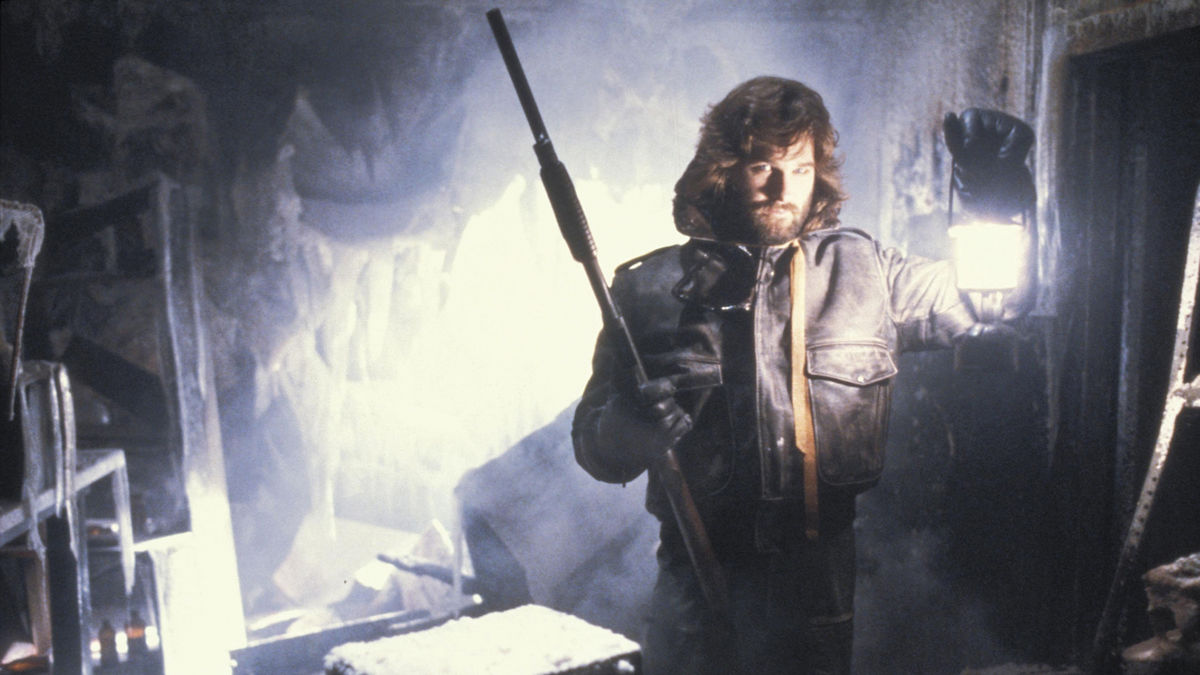
John Carpenter’s The Thing shows movie goers its monster throughout most of its run time, but this being retains its power because it can assume any form: animals, humans, even inanimate objects. If something can have any form, it has no form. This adds to the film’s tension. Is a character talking to their friend, or The Thing?

The practical special effects may bring The Thing to life in gory detail, but the uncertainty it brings gives it its power.

EventHorizon

Event Horizon

Event Horizon may look out of place with the rest of the entries here because its characters don’t face an unknown as much as being thrust into hell. But is the black hole in this movie a scientific anomaly or a gateway to pure evil?

Regardless, the characters can’t understand what’s happening to them or comprehend their fate and they fear the unknown, which again, is at the heart of any good cosmic horror. They suffer their greatest pain and fear and that causes the evil in Event Horizon to take many shapes and forms.

Print Media

TheShining

The Shining

I could go with the aforementioned IT, but I prefer Stephen King’s The Shining. Yes. This story could also be classified as psychological horror, a ghost story, or a Gothic novel, but it also makes a compelling cosmic horror tale. The spirits and what drive them go beyond the mortal plane, even if Jack’s alcoholism and anger feed into his homicidal tendencies. The Shining doesn’t attempt to answer why the Overlook wants to relive past trauma.

King is perhaps the best-known writer of this group and several of his novels and short stories could be classified as cosmic horror.

Uzumaki

Uzumaki

I’ll admit that I’m not the biggest Junji Ito fan, but Uzumaki—as does most of his other work—meets all the criteria of a cosmic horror story. An unforeseen force (similar to a curse) infects the people of Kurōzu-cho (or Black Vortex Town). They become obsessed with spirals or paranoid of them. One citizen even kills himself by bending his body into a spiral. Uzumaki has a knack for the grotesque and many people focus on Ito’s sublime and haunting images, but the pattern that makes it a cosmic horror story is the one where the people of Kurōzu-cho are doomed to repeat a cycle of the town collapsing under the spiral curse, only to be reborn.

It’s fascinating when one thinks of how important and positive many of the images and symbols that Uzumaki (Japanese for spiral) subverts. Spirals appear in comedies and represent warmth in manga. The same cannot be said of Uzumaki.

SongsOfADeadDreamerAndGrimscribe

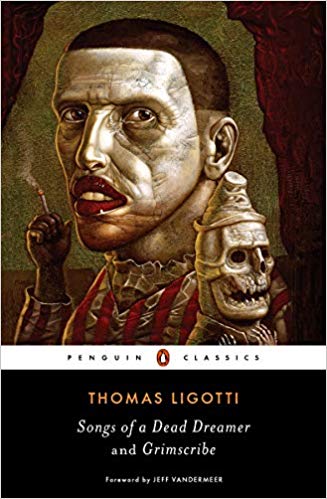
Songs of a Dead Dreamer and Grimscribe

Oh. It’s time to go further down the weird spiral. Some literary critics classify Thomas Ligotti’s work as weird fiction, but his 1986 short story collection Songs of a Dead Dreamer and 1991’s Grimscribe: His Lives and Works are some of the closest we’ll get to true, modern cosmic horror. Penguin books republished these stories as one tome Songs of a Dead Dreamer and Grimscribe and that’s what I’ve included in this list. They’re must reads for people interested in this subgenre.

The force that contaminates a town in “The Shadow at the Bottom of the World” would make Cthulhu smile—if he could smile—and Ligotti references Lovecraft by name in “The Sect of the Idiot.” Unlike many other creative forces on this list, there’s a sense of authority to Ligotti’s work. While others play in a cosmic horror sandbox, he lives it and shares what he finds.

Like so many others of these lists I could keep going. One of our commenters Levi mentioned Jeff VanderMeer’s The Southern Reach Trilogy (which is the basis for the movie Annihilation) and that in part, triggered this 3 List of 3. I have yet to read The Southern Reach Trilogy or watch Annihilation, but a lot of VanderMeer’s other work could qualify as weird fiction (like Ligotti’s work) or cosmic horror. I’m in the middle of reading VanderMeer’s Wonderbook (a writer’s guide); it looks like I may have some more reading in my future and that’s not a bad thing.

What are some of your favorite cosmic horror writers, directors, or artists? I’m okay with you mentioning them in comments but try not to invoke their name more than twice. I don’t want a portal to open on my computer; my ethernet cable isn’t fully insulated.

3 Lists of 3 Skyrim Mods

Hello, folks, Uncle Geekly here. Skyrim Special Edition has been out for a few years and that means that console players have the same joy of Skyrim mods as those of us who play on PC. Your uncle Geekly has played Skyrim Special Edition a lot on both PC and console, so I’ve found some mods that I like to play with whenever I fire up this almost eight-year-old game.

Sounds like a good time for a Skyrim Mod 3 Lists of 3. There are a few mods that come standard in Skyrim Special Edition like realistic weather effects and improved graphics–I’ll have to remember which ones I don’t have to load for Special Ed—and I’ll try not to include any of those. The other hard part will be determining how to split up each mod type. Let’s see if Geekly’s up for the challenge.

Role Playing

OrdinatorMod

Ordinator and Apocalypse Magic

It’s our first mod in the first section of this write up, and I’m cheating by combining two mods. For shame!

It’s my list; I do what I want.

Ordinator and Apocalypse Magic come courtesy of the same modder Enai Siaion, and they’re available in a download bundle, so I’m putting them together because I seldom play Skyrim without both and I see them as two branches of the same limb. Ordinator increases the perk pool by over 400, while Apocalypse Magic adds 155 spells across all magic families.

With 400+ new perks gamers can customize their play style to a point where no two Skyrim builds are the same. One of my favorite builds is a dream master where I unlock as many Illusion perks in that branch of the magic tree as I can, but there’s more than the “dream master” branch within Illusion. There are so many paths to take that gamers can find their character’s story within the story and craft their own journey. Why is my hero drawn to dreams instead of creating pandemonium?

And that’s just one magic school. The magic schools have as many branches and the other perk trees specialize gameplay. Now it matters which one-handed weapon a player chooses. One may gain bonuses and special attacks for maces and not axes.

Apocalypse Magic Mod

Apocalypse Magic further differentiates the magic families. I don’t know how many times I used to begin Skyrim with every intention to play a pure magic user only to have the game devolve into a spellsword—emphasis on the sword—but Apocalypse Magic adds so many play options and cleans up many issues with Skyrim’s magic system that a pure magic user is an option, and a fun one at that. I can be a Thalmor who only cares to explore the reaches of the magic school Alteration.

I picked Alteration in this example because the added spells for this school in this mod are amazing. I can control the weather. I can sap armor from my attackers and give it to me and my companions. I can entomb one character and free them when I want. Yep. I am a Thalmor wanting to learn everything I can for a few schools of magic.

Imperious Race Mod

Imperious Races

Let’s face it. Race specific abilities have gone downhill in recent Elder Scrolls games. Fortunately, Imperious Races aims to make each Tamriel race unique.

Wow! I just realized that this is another mod by Enai Siaion. If you’ve liked what you’ve read so far, you may want to check out some of their other mods. I could make a list of just Enai Siaion’s mods, but I’d like to share the love—after Imperious Races of course.

Imperious Races adds race specific quests, bonuses, and powers. The quests play into the game’s lore. For example, Bosmer (Wood Elves) go on a great hunt to unlock their bonuses and power, while Altmer (High Elves) pluck the wings off butterflies—there’s a whole transformation or rebirth belief for High Elves that I won’t get into here, but butterflies play a key role. Each race has their own specific requirements or quest that adds another layer to character creation and world/lore immersion.

The race bonuses kick Elder Scrolls back to an age where it mattered to which race your character belonged. Altmer are naturally gifted mages, Redguard are fantastic warriors, and so on.

The race powers can, at times, play well with Elder Scroll lore as in Dunmer (Dark Elves) calling on their ancestors or Bosmer converting wild animals into allies, and other times these race powers create wrinkles for the different races. Anyone who’s played Skyrim knows that Nords can be xenophobic—to put it kindly—or downright racist. Their “Purge” ability allows them to choose a race at levels 10, 20, and 30 and deal bonus damage to members of that race. I don’t usually play human characters in Elder Scrolls games, but I’d consider playing an elf-hating Nord.

Again, this plays into character building as there may be a reason why my Nord is an elf-hater. There are so many new roleplaying options with each race.

LiveAnotherLifeMod

Live Another Life

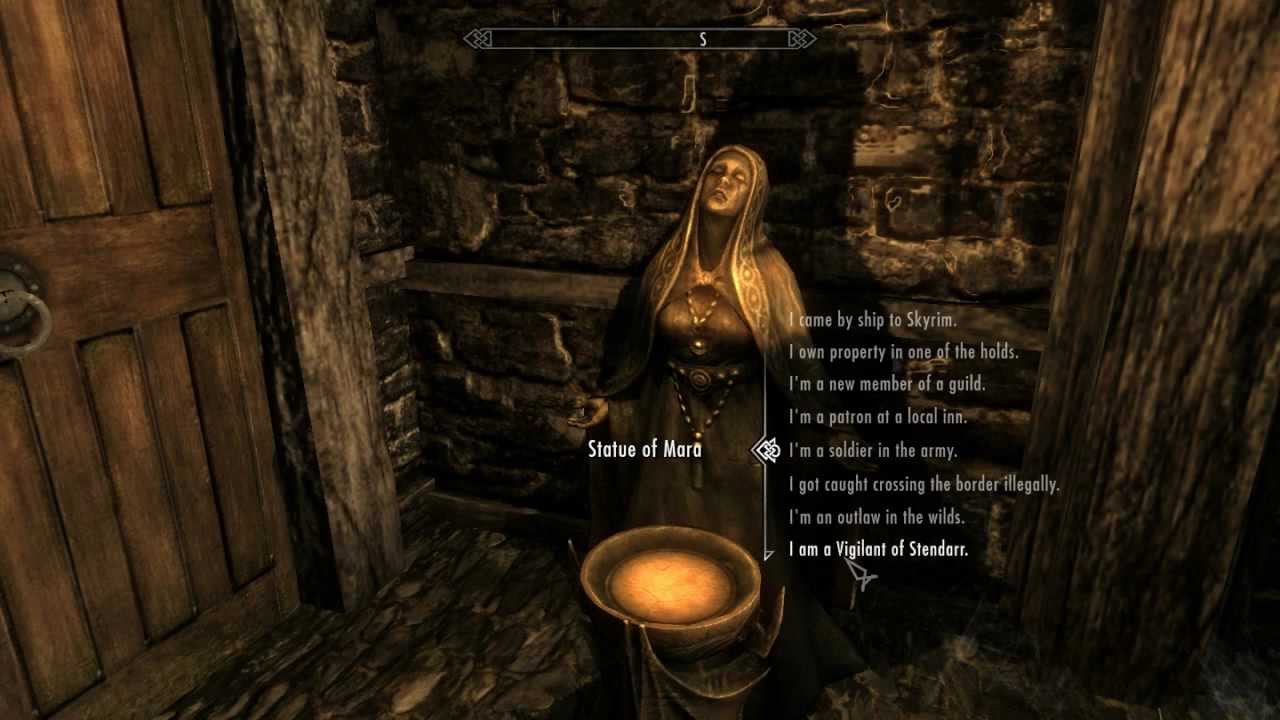
Finally, we come to a mod by a different creator Arthmoor. Live Another Life does exactly what the title states: players can change their past as a wrongfully accused prisoner awaiting execution and skip the lengthy intro sequence at Helgen. With this mod players can start the game as a landowner or a marooned sailor or a highway robbery victim. Heck, players can begin the game already a member of one of the guilds or as a bandit.

Most of these new beginnings come with small bonuses and/or disadvantages (bandits begin the game with a bounty), but the true bonus of Live Another Life comes in the form of roleplaying. Players can literally rewrite their past. Live Another Life, like other mods in this section, add character and player choice to Skyrim.

One note: Live Another Life may have some minor compatibility issues that the previous two mods, or three mods, don’t.

Added Story and/or Content

ProjectAHO Mod

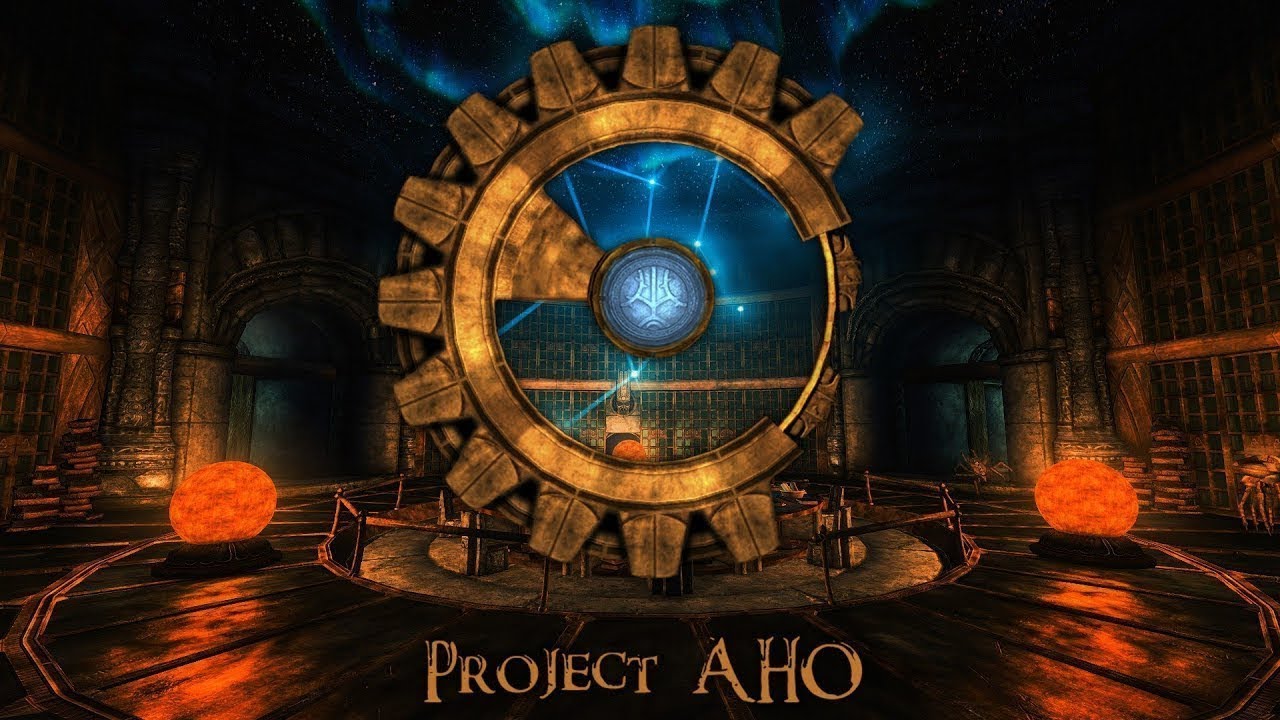
Project AHO

Most, if not all, the mods in this section will center around new areas to explore and/or new stories to experience. Let’s begin this section with a relatively new mod (released in late March 2018) by Haem Projects, Project AHO.

The content for this mod pans out to a medium-sized DLC, so a little less than Dragonborn or Dawnguard, but significantly more than Hearthfire. Players are treated to a hidden, Telvanni settlement Sadrith Kegran that’s built from the ruins of a Dwarven city. The player characters start as indentured servants and must uncover the area’s secrets as well as determine the fate of this closed off society. I won’t spoil the story here, but there are many ways for players to resolve Sadrith Kegran’s conflicts, based on character build and personality.

Project AHO comes close to full-fledged Skyrim DLC. Over 20 fully voiced NPCs have unique problems and quirks, each character acts out a daily routine, the quests and locations work and stay lore-friendly, and the DLC even has its own music by German composer Forhir. There are even reactions from these new characters that derive from the player’s choices in the main game and DLC. Project AHO does a great job of showing how some Dark Elves have carved out their own corner of Morrowind.

BeyondSkyrimBrumaMod

Beyond Skyrim: Bruma

I couldn’t leave out Beyond Skyrim: Bruma from this section. If Project AHO is a medium-sized DLC, Beyond Skyrim: Bruma is living large, about the size of Dragonborn or Dawnguard.

Players can travel to Cyrodiil’s northernmost county Bruma that borders Skyrim. Similar features to Project AHO await as NPCs have their own voice actors with dialogue options, quirks and routines, and the player character can meddle in the affairs of Bruminians (or is it Brumans?). If you’re an Elder Scrolls fan and you miss Cyrodiil or want to know what happened to Bruma’s residents after the events of Oblivion, give Beyond Skyrim: Bruma a try.

Beyond Skyrim may not be as prolific a modder as the others I’ve mentioned so far, but they do great work and have some plans for future Skyrim content. With Elder Scrolls VI years away from release Elder Scroll fans won’t say no to future mods of this caliber.

ToolsOfKagrenacMod

The Tools of Kagrenac

While Beyond Skyrim: Burma went large, The Tools of Kagrenac is a much smaller mod (perhaps even smaller than the Hearthfire DLC), but it’s a rewarding experience that’s done as well as any other in this section. The titular Dwemer Lord Kagrenac crafted three enchanted artifacts: Keening, Sunder, and Wraithguard. If those names sound familiar to Elder Scroll fans, they should. All three played a key role in the events of Morrowind.

So, The Tools of Kagrenac is lore-friendly—perhaps the most lore-friendly of all the mods in this write up so far—and it even suggests a cause for the Dwemers’ disappearance. In short, it’s a must play.

Beautiful Little Extras

ImmersiveWorldEncountersMod

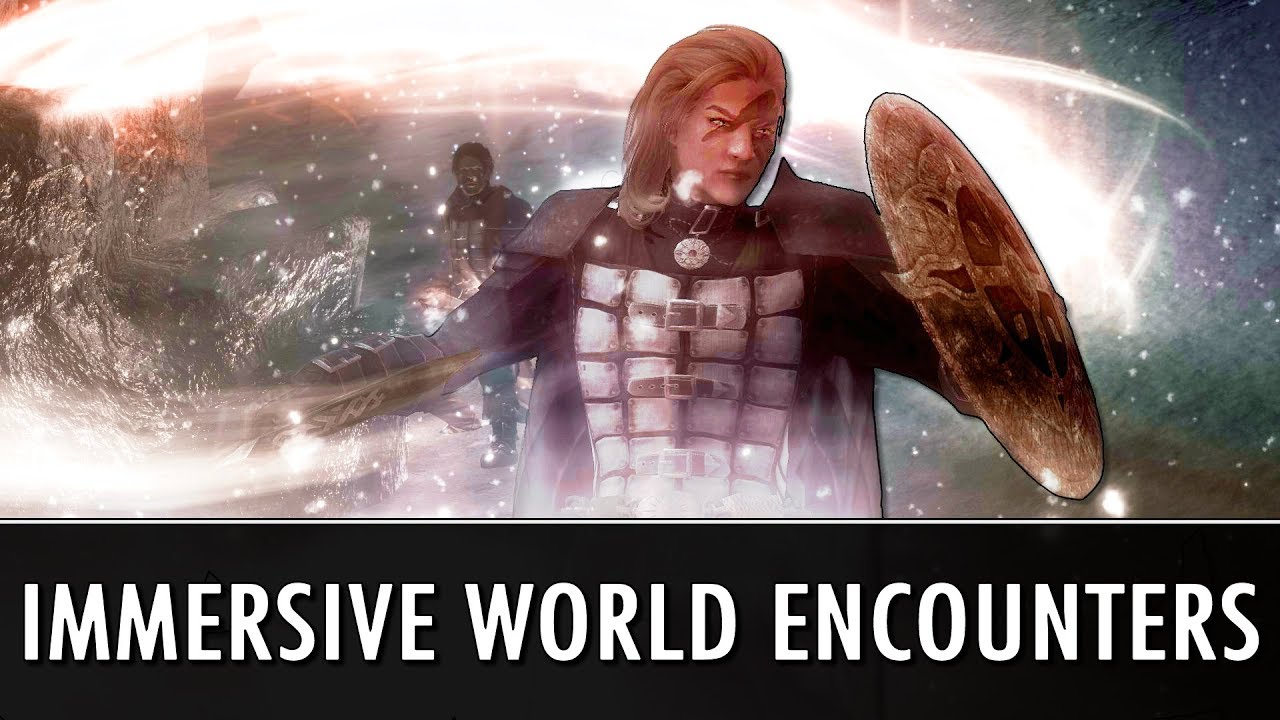
Immersive World Encounters

We’ll start this section with a mod that’s almost a necessity. Immersive World Encounters makes all those random encounters players experience in vanilla Skyrim worthwhile.

The following scenario may sound familiar to Skyrim veterans. You run into a random thief, he hands you something to hold onto for them (something they stole), and then you make a choice to turn him in or throw his pursuers off his trail. But what if that character had more of a past or the encounter changes depending on who they are or there are multiple outcomes depending on what the characters chooses?

Immersive World Encounters adds a lot of that to Skyrim. It functions like “Wild Wasteland”, but the encounters are more unpredictable than wacky. Just because you’ve picked the same option before during one of these encounters, doesn’t mean you’ll get the same result. I’ve encountered an injured bear in the road and had the option to help it. The first time I helped a bear, I ticked off a hunter who then attacked me because I robbed him of his kill. The second time I helped a bear, it ran off and attacked another person; I had to kill the bear because it was headed toward a town. Maybe I should stop helping bears.

Regardless, kudos to Sette Lisette for this great mod.

LucienFullyVoicedFollowerMod

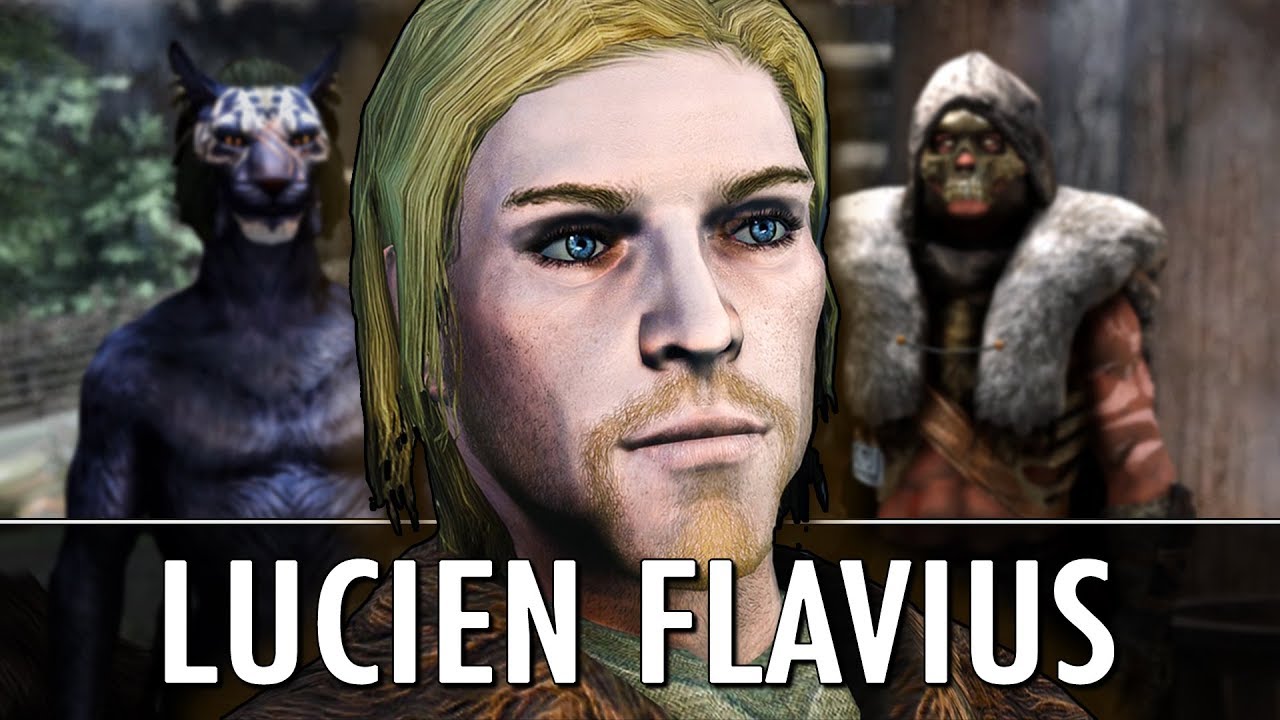
Lucien: Fully Voiced Follower

I don’t usually care for follower mods and I’m not the biggest fan of Imperials, but Lucien must be one of the best follower mods, and he happens to be an Imperial. He owns so many unique strands of fully voiced dialogue that he has an opinion on just about everything in Skyrim. The fact that Lucien is an Imperial is important too. He provides the player with an Imperial’s viewpoint.

Even better, Lucien has a dynamic personality system where he adapts to the player character’s choices; just because he’s your follower doesn’t mean that he agrees with everything you do. Players can alter how he fights, so he can complement the main character and Lucien’s training system can be adjusted as well. He has his own quest and storyline and can interact with other follower mods like Inigo, Hoth, and Auri. I almost want to play with these additional followers just to hear them banter with Lucien.

A small point, but one that makes me smile, is that Lucien has a small pool of in game books that he can read aloud to the main character, so long as the book is in the player’s inventory. I don’t know how long it took Joseph Russell to create Lucien, but this follower is well done. Wow!

HolidaysSkyrimMod

Holidays

As the name suggests, Holidays adds Tamriel holidays to Skyrim. If the player character walks into a town on the holiday in question, the villagers will be celebrating the appropriate holiday in a manner according to Elder Scroll lore.

I feel like I’ve said this a lot during these three lists, but Holidays is another mod I can’t see playing Skyrim without. Isoku has a done an excellent job of getting these celebrations right. Small details like Saturalia decorations won’t appear on Whiterun’s Gildergreen unless it’s fully grown and healthy, and Winterhold not celebrating any holidays due to the state of their town are nice touches.

There are so many other mods I could’ve included like Andromeda or Wild World or Open Civil War that nine—or technically ten—Skyrim mods don’t do the subject justice. There’s a reason Skyrim is a relevant game eight years after its release; it owes its prominence to some phenomenal modders. What are some of your favorite Skyrim mods? Let us know in the comments.

3 Lists of 3 Video Game Characters

Some video game characters get all the love. Some don’t get enough. Your uncle Geekly wants to even things out a bit with this week’s three list of three. I could also use some costume ideas so don’t be surprised if you see me dressed in a primary color jump suit—or two.

Underrated Video Game Characters

Princess_Zelda.png

Zelda

Yes. A famous video game series shares her name, but how many people have you seen point to the guy dressed in a green elf costume and say Zelda? That’s Link. Link gets all the attention, but he’s also the more static of the two characters.

Zelda has been portrayed in so many ways. She even gets in on the action as her alter egos Sheik and Tetra every once and while. She’s been the leader of sages and even a goddess. Link rocks the same kind of outfit game after game, but gamers don’t know what they’re going to get with Zelda. She may even be a ghost.

Ness

Ness

Many gamers would consider EarthBound (1994) or Mother 2 in Japan as one of the best RPGs to come out for the SNES, but many more of them don’t remember who the main character of the game was. Ness is a 13-year-old boy with psychic powers.

Sure, there are other characters gained along the way in EarthBound, but Ness is the players first and strongest, and a lot of the game’s character comes from Ness.

DrRobotnik_Eggman

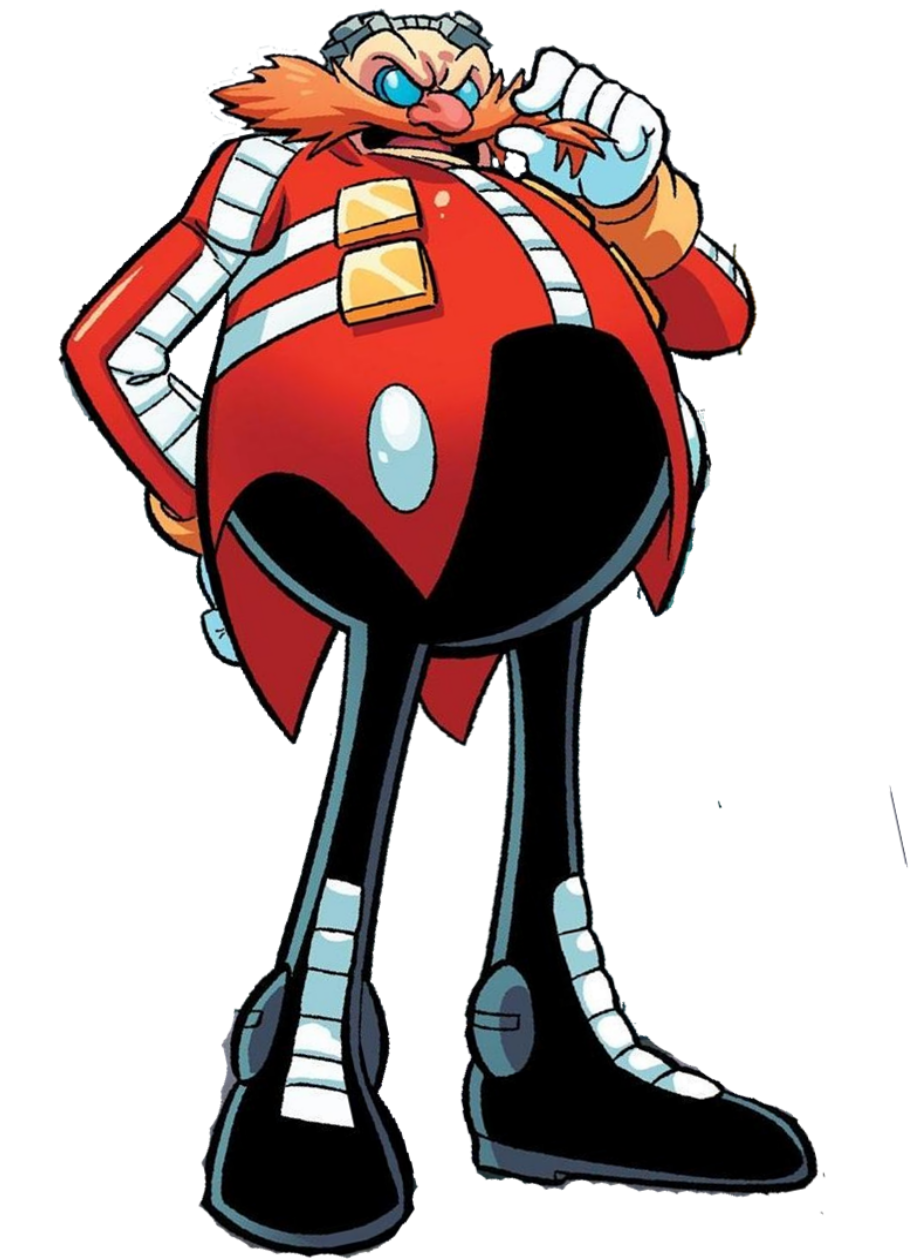
Dr. Ivo “Eggman” Robotnik

Most gamers know of Mario’s Bowzer, but Sonic’s Dr. Eggman goes unheralded. It’s a shame. He may come off as a mad scientist clone, and he is for the most part, but Eggman wants to conquer the world, so he can install his ultimate utopia, the Eggman Empire.

A lot of other mad scientist types have had a similar motivation of wanting to rule the world because they’re the best person for the job—Doctor Doom comes to mind—but that doesn’t mean it isn’t a good motivation. What’s Bowzer trying to do most of the time besides kidnapping a princess?

Overrated Video Game Characters

MasterChiefHalo

Master Chief

First off, Master Chief isn’t a Master Chief in the navy. That’s an enlisted rank (a very high enlisted rank), not an officer’s.

Second, you can take Master Chief out of Halo and no one would miss him. He may as well be Jeff Johnson or John Jeffson. My apologies to any Jeff Johnsons or John Jeffsons who may be reading this.

Halo’s multiplayer mode is what most gamers play this game for. They aren’t looking for story, and Master Chief isn’t much of a character.

HalfLife2_GordonFreeman

Gordon Freeman

The whole point of Half-Life 2’s protagonist is that he’s a blank slate, but if he’s a blank slate, only defined by the suit he wears, he isn’t much of a character. He’s kind of like Master Chief in that sense. Cool suit. Great abilities. What’s your name again?

Iron Man detractors claim that Tony Stark wouldn’t be anything without his suit, but he’d still be rich, a genius, and have plenty of personality. Gordon Freeman is none of those things.

Kratos

Kratos

2018’s God of War notwithstanding, Kratos was a bloody He-Man for the modern era. Gamers knew he’d lost his family—which was explained more in the most recent God of War—and that’s most of what they knew about him. Kratos was an excuse for a muscle-bound, over-sexed man to tear apart some Greek gods.

He received the post-hero treatment in 2018’s God of War and while it was a refreshing take on the character, it could’ve carried more weight if there was more to the character prior to that offering.

Video Game Sidekicks

GarrusMassEffect

Garrus

Yeah, this turian may take offense with being called a sidekick, but he deserves to be on this list. He’s the only squad member available to Shepard in each Mass Effect game, he survives a rocket to the face, and he and Shepard have a special bond.

Get your head out of the gutter. Hmm. They could have a “special bond” if you play the game a certain way, come to think of it. Anyway, one of the most satisfying moments in the Mass Effect series is watching the two pal around and watching their relationship grow.

Luigi_SuperMarioBros

Luigi

He’s always number two to Mario’s top banana, but Luigi doesn’t complain, not even when Nintendo named him Luigi Mario. I guess that would make his brother Mario Mario. Man, that’s a terrible name.

Give him a vacuum to suck up ghosts and he can be a main character. A gamer may want to play as him in Super Mario Bros. 2, and I never minded letting my younger brother take the controller during the original Super Mario Bros., not telling him where any of the shortcuts or secrets were, and then use them after he lost a man. Ah, memories.

Sparx_SpyroTheDragon

Sparx

I had to put Sparx from Spryo the Dragon on here because so many of my family members love that game, and Sparx doesn’t get much love. I also don’t like it when games force a player to run over every little gem or coin or ring. All you’ve gotta do is get close to a gem, and Sparx picks it up for you.

Sparx also represents one of the cleverest ways to denote health in a video game. He changes color, gets dim, as you take damage and disappears when Spyro has one hit point left.

Yep. I’m sure I missed the boat on a lot of these characters. Please direct your complaints to our intern Jeff Johnson—or is it John Jeffson—or let me know which video game characters you’d choose by leaving a comment.

TV for Fall 2018

TV? I know what you’re thinking. The last iteration of JKGeekly devolved into nothing but TV posts. Don’t worry, we’ll get back to other geekery. Today we’re going to warm up  with a new type of post: 3 Lists of 3.

This particular type of post will feature three small, interrelated lists of three. I hope you like the format because I have more than this one planned for Mondays. Here are three lists of three for television that I’m sure will offend someone. I don’t care. Do your worst.

TheMagicians

Underrated or Overlooked TV Series

 The Magicians (7.5 out of 10 on imdb)

This particular list of 3 was difficult to compile. I’m starting with a series that isn’t that lowly rated, but it’s still rated a 7-point-something; it’ll be hard to find something good to say about a 6 or less. The Magicians gets a lot of gratuitous nudity and over-sexed hate that Game of Thrones gets—more on GoT in a bit—but like Game of Thrones that hate may go too far. It also gets saddled as a Harry Potter clone, and again, that’s as unfair of a comparison as GoT and Lord of the Rings. The Magicians is an interesting take on magic in a modern setting and is one of the better, binge-able SyFy shows.

BBC’s Skins (8.2 out of 10 on imdb)

Did I mention how difficult this list was to compile? The BBC version of Skins makes this list despite being rated an 8.2 because fewer people have seen it, and they should. Skins is an odd show. It centers around teenagers making their way in the world and the bizarre things that happen to them. We’re talking a musical number breaking out of nowhere and someone who suffers from anorexia getting phantom text messages to tell her to eat. I received text messages for weeks, telling me to eat more fiber. Those were some angry butt dials.

Anyway, Skins is also an odd show to watch as several of the cast regulars, who were in their late teens or early twenties at the time, have since appeared in major films and television shows.

Crazy Ex-Girlfriend (7.7 out of 10 on imdb)

Yeah, Skins may have two or three sneaky musical numbers in the series run, but Crazy Ex-Girlfriend has two or three musical numbers in each episode. It’s not for everyone. I even pause the show every once and a while because it’s getting too ridiculous. She’s singing about period sex again. Turn on the red light.

It’s also a bit of a cheat having the show on this list because the critics at Rotten Tomatoes rate it in the 90s, but Crazy Ex-Girlfriend is very good and tends to get overlooked.

It’s a CW show that satires other CW shows. At first, it subtly suggests that someone who lives their life according to romances (books, TV shows, and movies) should seek psychiatric help because life doesn’t follow a romance plot. After a while it flat out says, life isn’t a romantic comedy. It’s okay to enjoy them, but don’t expect your life to be one. There is more love in life than romantic love. You can love your family and friends. Sorry. Uncle Geekly has a long, complicated history with CW shows, so this sentiment is refreshing, but Crazy Ex-Girlfriend also does a good job at handling mental illness and behavioral problems without stigma. And some of the musical numbers are catchy and fun—even the ones about period sex.

game-of-thrones_01

Overrated TV Series

Game of Thrones (9.4 out of 10 on imdb)

I’m not saying that Game of Thrones is bad by any means, but 9.4 is a little high. As of this write-up it’s the fourth best TV show of all time according to imdb, edging out Breaking Bad. I’d place Breaking Bad ahead of Game of Thrones and there are plenty of shows further down the list that I’d happily place ahead of the gang from Westeros too. Oddly enough, some of the reasons I’d knock Game of Thrones down a few dozen spots are the same reasons George R. R. Martin believed that it wouldn’t make a good TV show: too many characters, and at times, unfocused storytelling.

Stranger Things (8.9 out of 10 on imdb)

If neuroscience is correct in saying that nostalgia provides a similar chemical brain reaction as methamphetamines, then Stranger Things is TV’s version of crystal meth. Hey, another Breaking Bad reference. Yay! There’s little else to this series than a ton of callbacks that include frame-by-frame recreations of 80s shows and movies. I like plenty of 80s properties, but if I have a hankering for 80s nostalgia, I’ll watch the originals.

House of Cards (8.8 out of 10 on imdb)

House of Cards can be fun to watch. I like seeing how the various traps are set and schemes come to fruition, but the show gets a little too ridiculous at times. Perhaps even random musical number ridiculous. One needs to suspend disbelief to an absurd measure with this title. While I’m okay doing that for the occasional fantasy or science fiction story, it’s a little difficult to do so for shows that are supposed to be more grounded.

It also doesn’t help that Kevin Spacey’s recent sex scandal and subsequent firing from the show make House of Cards difficult to watch.

chilling-adventures-sabrina

Intriguing Upcoming TV Series

The Romanoffs (October 12, 2018)

The Romanoffs is the first TV show from the creator of Mad Men since Mad Men ended in 2015. It also features a great cast of Diane Lane, Aaron Eckhart, and Paul Reiser and centers around various people who believe they’re descendant of the Russian royal family. This could get trippy, and I look forward to watching the Amazon original.

The Chilling Adventures of Sabrina (October 26, 2018)

The reboot of the campy teen series Sabrina the Teenage Witch airs just before Halloween and The Chilling Adventures of Sabrina pits a young witch against the forces of evil that threaten her family and the world. Mad Men star Kiernan Shipka stars as Sabrina, and the reboot shows plenty of promise. But if there’s no talking cat, I might reconsider.

Homecoming (November 2, 2018)

I may need to listen to the hit Gimlet Media podcast of the same name, but the excellent cast (Julia Roberts, Sissy Spacek, and Dermot Mulroney to name a few) and Mr. Robot creator Sam pique my interest.

Are there any shows we missed with our lists? Which shows do you think are overrated or underrated? Which shows do you look forward to this upcoming season? Let us know in the comments.