The Flash Review – “All Star Team Up”

TheFlash

Jim’s Review

This week’s episode of The flash was rough. There’s just no other way to put it. With Iris making a scene during a nice group dinner, she’s actually becoming radically unlikeable.

The team-up between Ray and Felicity and the STAR Labs group made for a couple of fun moments, but ultimately, it felt manufactured. Felicity’s advice to Barry about dealing with Cisco and Caitlyn was a bit obvious. “Trust them” is a little simplistic, and ignores the problem of having trusted Dr. Wells in the first place.

Emily Kinney was completely wasted in the episode. In fact, I’m thinking back on it, and I’m not sure she was ever shown standing up. Her puns were absolutely cringe-worthy, and they never did explain why Barry couldn’t maneuver around her droid-bees.

I’m sorry to say this has been a true stumble in an otherwise very strong season.

Kyle’s Take

The Flash has been stumbling for a while and this week, it couldn’t catch itself before falling flat on its face. At the beginning of the season, we were calling The Flash electric (pun intended), fantastic, and a great inaugural season. Now, we’re calling it a very strong season and I think the villain of the week format contributes the most to its decline.

I’m not as big of a Kinney fan as Jim. I guess I should be a Kinney fan because she’s from Wayne, Nebraska and I should back my fellow cornfed, Great Plains walkers, but she was less wasted as an actor and more cast in a role she had no business portraying. The two characters Kinney’s Queen Bee draws inspiration from are forty-fifty years old. Kenney’s almost thirty but she played a teenager in The Walking Dead because she looks that young. Her Queen Bee in The Flash was supposed to have a PhD and you don’t have a PhD when you’re nineteen unless you’re Sheldon Cooper. What are they supposed to do with her, attach freaking prosthetic crow’s feet? Enough about the villain’s age and the miscast, and let’s get to the actual Queen Bee character. Brie Larvan has the abilities of The Atom villain, The Bug-Eyed Bandit, but she shares a name with HIVE’s leader. If HIVE sounds familiar to Arrow fans, it should. Arrow has name dropped HIVE five times this year (they were the ones who hired Deadshot to kill Diggle’s brother) and this week looked like a golden opportunity to introduce the gang and have a multi-show cross-over, and they blew it. Like so many villains of the week, The Flash flushed her.

Not even an “All Star Team Up” could save this episode. Usually, a superhero team up means a great episode for The Flash or Arrow, but Atom visiting Central City was unmotivated and disrupted Arrow’s timeline. Not to get too into Arrow during a Flash review, but the last time Rickards made an appearance on The Flash as Felicity, she didn’t show up in that week’s Arrow. It’s okay to give the same actors screen time in both shows, during the same week, but the creative team set a precedent with Felicity’s inability to return to Starling City in time for the Arrow’s exploits—heck, she was on a train at the end of the previous crossover episode and still couldn’t make it to Starling on time.

The Wells saga has been marking time for a while and the longer it drags out, the less believable it gets. I believe in Barry’s mistrust of Wells, but The Flash still hasn’t explained how he knows Wells is the Reverse-Flash besides Wells’ slipping up about the speed force. Barry (to Cisco and Caitlin): Here are two flow charts. One is of my mother’s killer and the other one is of Wells. They look somewhat similar, so Wells must be the Reverse-Flash. Okay, Barry. You too, other Barry.

And I don’t know about Jim, but whenever more than half of a table gets upset and simultaneously leaves in the middle of a meal, it’s no longer a nice dinner party. It becomes a tense dinner party. I don’t like how Iris left the table either but with Ray buying out the entire restaurant, making the restaurant empty, you can’t call her freak out much of a scene. My biggest issue with Iris is that everyone’s lying to her but she picks on Eddie. I’m sure her character is channeling her emotions but the writing doesn’t reflect that. She’s oblivious to everyone else lying to her. You’d think she’d know when her father or stepbrother was lying but apparently not.

Verdict:

“All Star Team Up” is the weakest episode of The Flash so far but the next few weeks look promising: Wells might get outed, Grodd makes his official debut, and the Rogues return, hopefully with some other villains in tow.

If you want to know more of our Flash musings, check out our secrets page here.
iZombie Review – “Flight of the Living Dead”

iZombie

Kyle’s Review

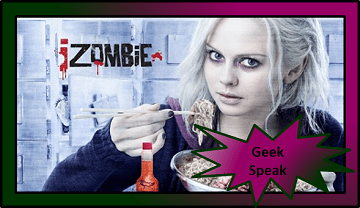
The biggest question from this week’s iZombie, “Flight of the Living Dead,” is how big is this zombie infiltration? These zombies are less of a swarm and more trying to exist amongst the living. That’s an interesting take on zombies.

This week’s police work was more of the same. iZombie tried to add more weight to it by including one of Liv’s college mates but the show didn’t earn the intimacy required to pull off a real connection between Liv and this week’s victim. The real heavyweight was the growing zombie population.

Okay, we may have met Liv’s love interest this week. I was skeptical of including romance with zombies—and iZombie didn’t help its case by mentioning Warm Bodies—but they’re cultivating the romance angle instead of jumping right in and I could get on board with it if they build up to it. This isn’t your typical Romero zombie, so I can suspend disbelief enough for a potential romance. But I’m more interested in how many zombies there are in this world.

The biggest surprise is that there may be more than one zombie in the police department. With so many homeless disappearing, there has to be a larger conspiracy here. I can put my misgivings of a zombie romance aside for the larger picture.

Verdict:

The weekly mystery did little for “Flight of the Living Dead” but we did get plenty of peripheral arcs that should make for some engaging TV.

Powers Review – “Aha Shake Heartbreak”

Powers

Kyle’s Review

After last week’s introduction of a riot torn city, this week’s pull back of Powers went in reverse. That saddens me because the best thing going for Powers the previous week was the stinger at the end of the episode of humans rising against powers and the death of a power. Powers downplayed the riot and reduced the dead power to a police procedural and while I’m sure there’ll be some lasting issues, most of the tension was as dead as the alley’s corpse. Still, there was plenty to like in “Aha Shake Heartbreak.”

There might be a larger outcry against people in tights after this week’s episode. Krispin takes his “Kaotic Chic” message to the public and it causes some problems when a washed up power, named RedHawk, mock attacks Zora. I won’t spoil it here but let’s just say that if Krispin wasn’t messed in the head before, he is now.

Calista’s back in commission—for a while—until she gets caught by the Powers Division. She wanted to be treated like a power and now she’s gotten her wish. I’m tired of Calista but she hits a nerve with Johnny Royalle and when Johnny finds out she’s in lock up, it’ll strain his relationship with Walker.

Johnny Royalle wishes to end Wolfe’s life and this week, he explained why he’d want to do so. The little bits of Wolfe he’s been given people allow Wolfe to sap their powers from anywhere in the world. I wonder why Powers didn’t explore this angle a few weeks ago, when Wolfe was on the loose. Oh well, Wolfe’s potential feeding frenzy can’t be a good thing but it took Walker most of the episode to realize that. Anyway, the boys join forces again and we saw ample flashbacks of their glory days.

The rest of the episode tied the scattered arcs together but left them messy enough to provide wiggle room for another couple of episodes. As the last major power, Retro Girl represents the larger power community and she doesn’t want her abilities. That should turn up the pressure cooker on the struggle between normal humans and powers. But this episode wasn’t all good.

They dropped the Simons arc. That thread questioned if draining powers of their abilities hurt them and I have a sneaky suspicion that we haven’t seen the last of it. Simons was another bright spot last week and I missed him here. And I don’t usually harp on special effects but these are really bad when compared with the other superhero shows out there. These effects wouldn’t stick out as much as they do if Powers didn’t give them center stage. Do they actually think these effects work? They’re hokey at best.
Overall, I liked this episode but I see it as a bridge between two major events and might be reading too much into it. Last week’s episode fired up Krispin’s mob and then we don’t see them at all this week but I have hope that they’ll return next week after the events of “Aha Shake Heartbreak.”

Verdict:

Initially disappointing, Powers’ “Aha Shake Heartbreak” presented enough goods to get me interested for the season finale.

Boss Monster: The Dungeon Building Card Game

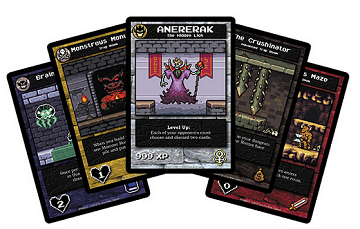
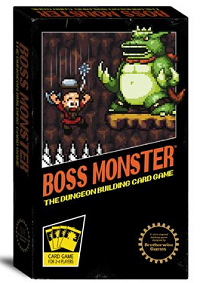
You are the Boss Monster at the end of an 8-pixel video game dungeon. You must construct enough defensive structures to defend yourself and your fortress against those pesky heroes. If you’re successful, you gain the souls of the fallen adventurers. If you aren’t, you’re another Bowser trophy for Mario’s wall.

We’ll get back to the daring do and nefarious plots in a while but here is some bothersome rulebook-like technical jargon first.

The Fiddly Bits
Designer: Johnny O’Neal and Chris O’Neal
Publisher: Brotherwise Games
Date Released: 2013
Number of Players: 2-4
Age Range: 8 and up
Setup Time: Less than 5 minutes
Play Time: 15 minutes or less
Game Mechanisms:
Auction/Bidding
Hand Management
Player Elimination

BossMonster04

Game Flow:

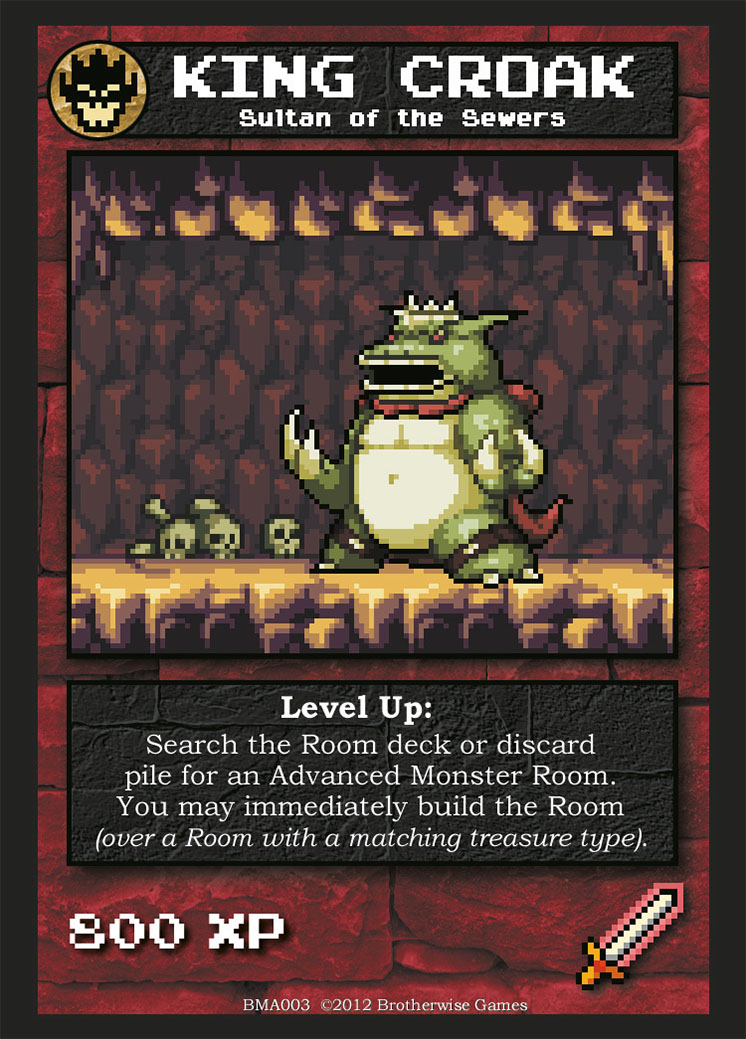
Let’s give the Bosses their much needed close-up. Who better to star with than the Bowser-inspired King Croak?

BossMonster_King_Croak

King Croak’s name is at the top. All Boss “Level Up” effects come into play when their dungeon has five rooms: the max number of visible rooms a dungeon can have (you’ll have to upgrade your Rooms over time). The bottom left figure is King Croak’s experience points or XP, XP determines turn order. And the icon in the bottom right is the type of lure King Croak uses to attract unsuspecting heroes to his dungeon. Since King Croak has a sword, he has one treasure type for the Fighter class of Hero.

BossMonster_FighterTreasureIcon

Fighter Treasure Type Icon

We’ll get to a turn’s anatomy and the other card types in a bit but next, we’ll cover how to set up a game.

Game Set-up

Shuffle all five decks: Boss, Heroes, Epic Heroes, Rooms, and Spells. Before you shuffle the Hero decks, you must adjust the Heroes and Epic Heroes to match your game type. Use all Hero cards for a four-player game, remove all Heroes with a four player icon from the game for a three player game, and remove Heroes with three and four player icons from the game for a two player game.

Once the decks are ready, randomly deal each player one Boss card—that’s your Boss Monster for the game.

Draw five Room cards and two Spell cards, then you discard two cards (any combination of Rooms and Spells): this constitutes your opening hand.

After that’s done, choose one ordinary Room (there are advanced rooms, too, but you can’t use those at this time) and place the Room face-down next to your Boss.

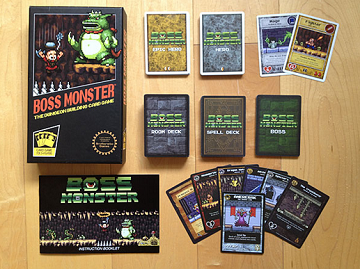
Once all players have placed their Room, simultaneously reveal (“build”) Rooms. So after the game’s all set up, your table should look something like this.

BossMonsterOverviewOfGameSetUp

Anatomy of a Turn

1) Heroes Come to Town

Reveal Heroes from the top of the Hero deck equal to the number of players in the game. (Note: you don’t play Heroes from the Epic Hero deck until all the Heroes from the normal Hero deck are played.) These heroes are placed in a central location and this makes up the “town.” You reveal Heroes every turn, even if other Heroes are still in town. After Heroes come to town, each player draws a new Room card.

2) Build Phase

In XP order, each player may place one Room face-down in his/her dungeon. Ordinary Rooms can be placed to the left of your left-most Room, or on top of any Room.

Advanced Rooms can only be played on a Room with at least one matching Treasure icon.

You can play Build Phase Spells at any point during the Build Phase before Rooms are revealed.

At the end of the Build phase, simultaneously reveal all face-down Room cards. If one or more Bosses would “Level Up” this turn, apply these effects in XP order.

3) Bait Phase

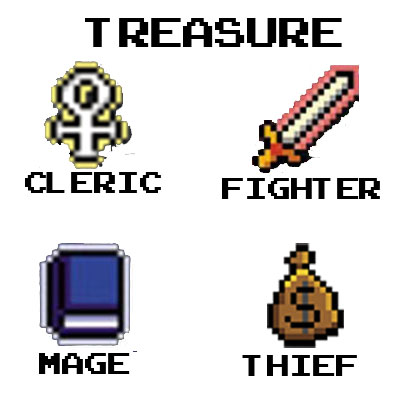
Each Hero moves to the dungeon with the most relevant Treasure icons.

BossMonsterTreasureTypes


Treasure Icons and their Heroes

So, the Boss with the most Mage icons will get all the Mage Heroes and so on for the other three types. If there’s a tie for a treasure type, all the Heroes of the type stay in town. Note: the Bait Phase is the only phase that you can’t play a Spell or use an ability, so you can’t interrupt this process.

4) Adventure Phase

In XP order, Bosses must contend with the Heroes in their dungeons. Each Hero enters the dungeon alone and the effects of each Room are applied in the order the Hero walked in the Room. Each Room has a damage value:

BossMonster_DamageIcon

This damage depletes the Hero’s Health value:

BossMonsterHeroHealth

Once a Hero’s Health reaches zero, place it face-down in your scoring area. If a Hero survives a Room, they enter the next Room. If the Hero survives your entire dungeon, place it face-up in your scorekeeping area.

After the highest-XP Boss processes all Heroes, the next highest-XP Boss becomes the active player. The Adventure Phase doesn’t end until all Bosses have dealt with the Heroes in their dungeon. If you don’t have any Heroes in your dungeon, you won’t have anything to do this phase.

5) End of Turn

Reactivate any Rooms that were deactivated. Check each player’s scorekeeping area. A player with 10 Soul icons wins the game. A player with 5 Wound icons loses the game.

Keep playing until a player has 10 Souls or if there’s only one Boss Monster remaining.

Room Cards

Like Boss cards, Room cards have their names at the top and they have their card type beneath their name.

BossMonsterCentipede-TunnelRoomCard

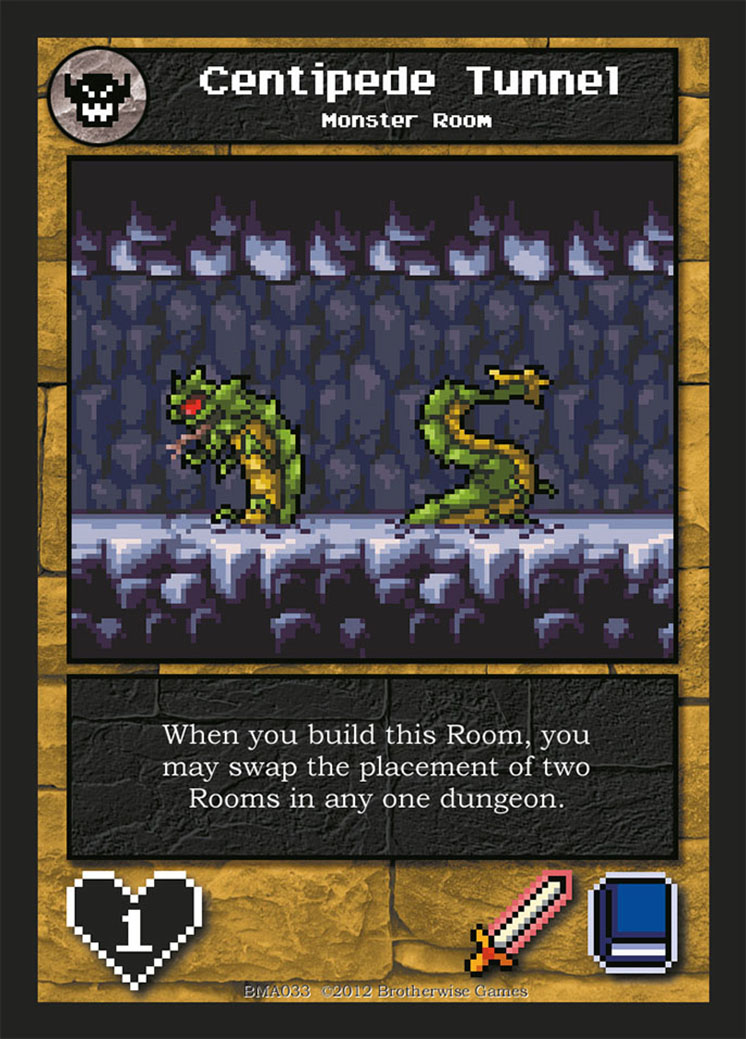
Centipede Tunnel is an ordinary, Monster Room. There’s no difference between a Monster Room like Centipede Tunnel and a Trap Room like Dark Alter.

BossMonster_DarkAlterTrapRoomCard

But there are certain spells and abilities that target one of the two types.

BossMonster_Dracolich_LairRoomCard

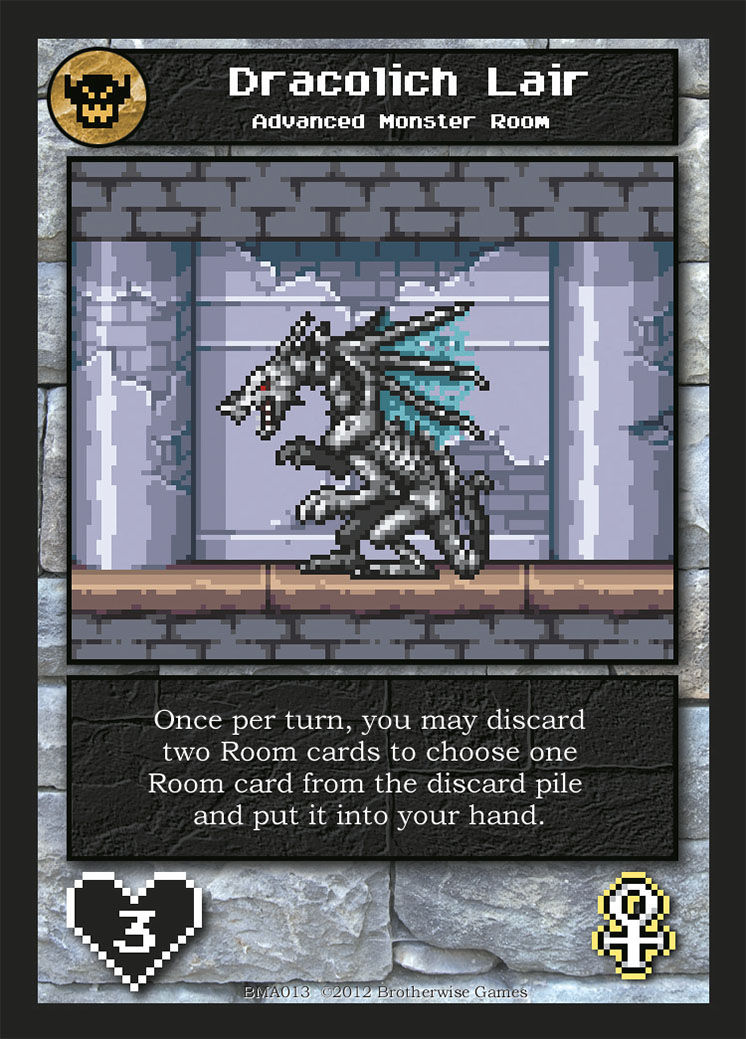
If a Room is “advanced,” it’ll say so beneath its name like this guy, Dracolich Lair.

Advanced Rooms are more powerful than ordinary Rooms, but they must be placed on top of a Room that shares at least one Treasure type with them.

Spell Cards

Spell cards are even less complex than Room cards. They have their name at the top and the only other thing you have to worry about is the icon in the bottom left corner.

BossMonster_Kobold_StrikeSpell

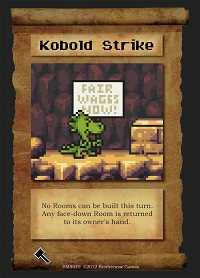
Kobold Strike has a hammer icon and can only be played during the build phase.

BossMonster_TeleportationSampleSpellCard

Teleportation has an axe icon and can only be played during the adventure phase. I have two pictures of this Spell because the game has alternate art for the multiple copies of this card and I like the effect they were going for here.
BossMonsterFreezeSpell

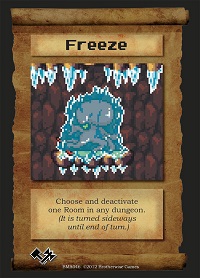
The Freeze Spell has both a hammer and an axe icon and it can be played during the build or adventure phase. Pretty nifty.
Hero Cards

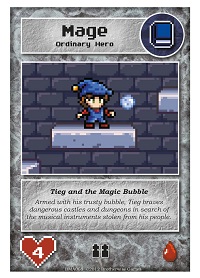
Hero Cards have their name and type at the top with whether or not they’re epic or ordinary and if that wasn’t enough, they have their Hero type icons in the top right, too. The text beneath the picture doesn’t do anything but my kids and I have a soft spot for Tieg and his Magic Bubble.

BossMonster_Tieg_and_the_Magic_BubbleHero

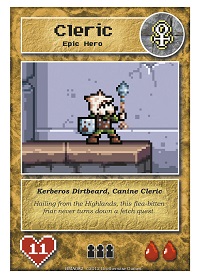
Isn’t he adorable? Anyway, the bottom left corner shows how much damage Tieg can take before he’s defeated. The icon at the bottom center shows the minimum number of players needed to add him to the Hero deck (the fewest number of players needed for Boss Monster is two, so Tieg will always be in the deck). And the icon at the bottom right denotes the number of wounds Tieg deals you if he makes it through your dungeon. Tieg isn’t so strong but Kerberos Dirtbeard is.

BossMonster_Kerberos_Dirtbeard,_Canine_ClericHero

Epic Heroes deal two wounds but if you can defeat them, you earn two souls. It’s all about risk management, baby.

Game Review:

I have to be honest. Boss Monster tugs at my heart strings. The 8-pixel art and inside video game jokes are priceless. A card by the name of Cheat Codes (part of the first expansion Tools of the Heroes) had arrows in the background with the old Konami game cheat—that’s up, up, down, down, left, right, left, right, B, A, start for younger video gamers—and as the Cheat Code card attests, Boss Monster respects classic video game tropes.

BossMonster03


Sample of Cards

The gameplay might look daunting but it’s real easy to pick up and play. The downside to Boss Monster is that it can be unforgiving. Some of the cards are overpowered and unbalanced. There’s a basic room card that deals three damage. You can’t upgrade this room, but why would you want to? Many of the spell cards turn the tide of the game in a blink of an eye. Fortunately, you have more room card draw than spell card draw, but you can generate spell card draw through boss abilities, and these abilities make these bosses more desirable than the others.

BossMonster02


The Boss Monster Box

Speaking of desirable, during the game’s opening stages, you’ll want to attract fewer heroes as your dungeon won’t be that strong. This makes a two player game almost unplayable. Picking a monster that shares a treasure icon similar with the only heroes on the board will have you scrambling to improve your fledgling dungeon.

Verdict:

Boss Monster is a great—and unbalanced—8-pixel romp. While you can play this game with two players, it works best with three or four.

Ghost Stories

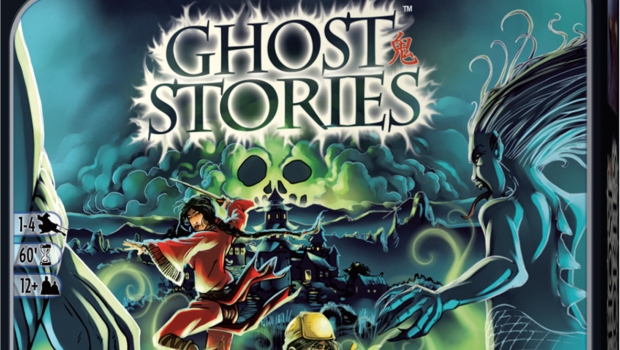
Uh-oh! Wu-Feng, the Lord of the Nine Hells, knows where to find the funeral urn that contains his ashes and he’s sending his demonic minions to retrieve them. It’s your job as a Taoist priest, armed with your own unique ability, to defend the village from Wu-Feng’s army of shadows but you’ll have to use teamwork to rid the world of these malevolent ghosts.

We’ll get back to the haunting after a while, but first, we have to exorcise the game’s technical details.

The Fiddly Bits
Designer: Antoine Bauza
Publisher: Asmodee and Repos Production
Date Released: 2008
Number of Players: 1-4
Age Range: 12 and up
Setup Time: about 10 minutes
Play Time: less than 60 minutes
Game Mechanisms:
Area Movement
Cooperative Play
Dice Rolling
Modular Board
Variable Player Powers

Ghost-Stories-Logo

Game Flow:

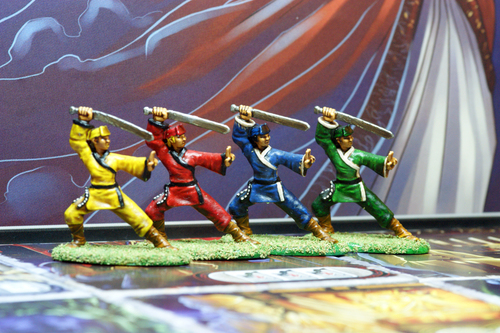
Players select their priests (red, yellow, blue, and green) and everyone starts in the village’s center. The eldest priest at the table (the oldest player) takes their turn first.

TaoistMonkClose-ups
Close Up of Painted Taoist Priests

Before each priest’s turn, the player brings a ghost (from the ghost draw pile) into play and places it on a free spot. (There can be actions and/or abilities that bring more than one ghost in play per turn.) Every priest has their side of the board (color-coded to their priest) and can accept up to three ghost cards.

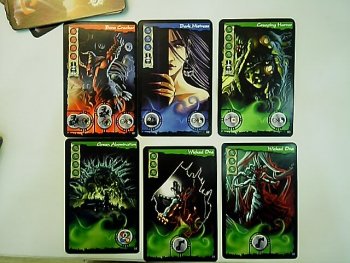
GhostStoriesGhostCardCloseUp
Sample of Ghost Cards with Different Colors

Each ghost has its own color (just like the priest), and they get placed on the priest’s area who matches their color, if possible. If there’s no space available in that priest’s area, the player bringing the ghost into play puts the ghost on any other priest’s area who has space available. If it’s your turn and you have no space available to accept a new ghost, you take one point of damage instead of placing a new ghost.

We’ll talk more about ghosts and get to player areas in a bit too, but let’s finish with what happens on a player’s turn.

OLYMPUS DIGITAL CAMERA
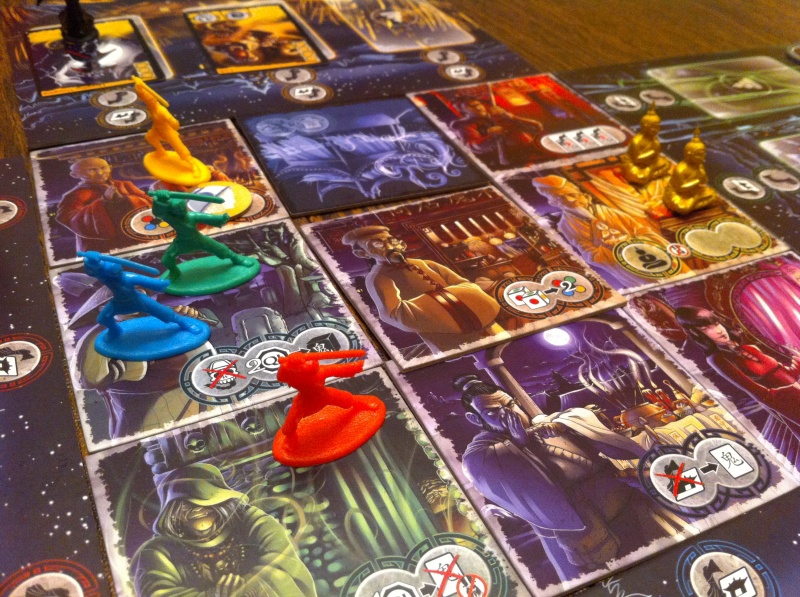
Overview of a Ghost Stories game in progress

On their turn, a priest can move once to any adjacent space on the board and gets one action. The priest has two options for an action. They can choose to exorcise a ghost (located next to the priest’s space) or claim the ability granted by the villager on their space. There are a lot of villager abilities, so I won’t discuss them at length here, but you can do things like place a Buddha statue that will automatically kill a ghost entering a priest’s area or resurrect a fallen priest from the underworld’s embrace.

But usually, you’ll choose to exorcise a ghost by rolling three dice with different colored circles on each side. You have to roll a certain number of a particular color to defeat a ghost and you can add color tokens—that you’ll gain through abilities—to your roll. Once a priest has taken their move and action for their turn, play passes to the priest on their left.

Ghost Spawning and Priest Play Areas

Here’s the red priest’s play area.

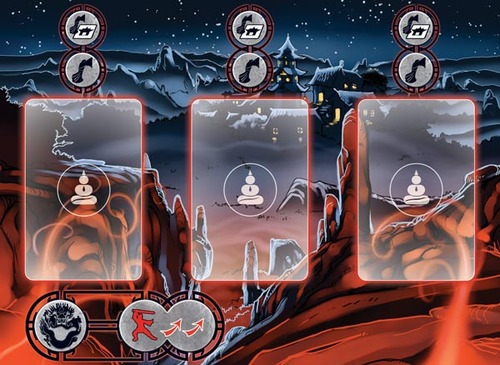
GhostStoriesPlayerBoardCloseUp

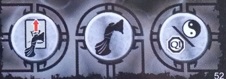
The glowing spaces in the shape of cards are where you can place a ghost card. The circles above the card spaces are where you place ghost pawns and denote how close a ghost is from haunting a village space. The space in the bottom left-hand corner of each priest’s play area holds a dragon space for your yin-yang token, which allows you to exorcise a haunted village space, and to the right of that has a graphic representation of the priest’s special power.

Priest Powers

GhostStoriesYinYangTokenSpaceAndPriestPowerCloseUp

The red priest doesn’t just move one space (as you could guess from his ability icon above), he flies to any movable location on the board. The blue priest moves normally but gets two actions; these actions have to be the same, so no using a villager ability and then exorcising. The green priest doesn’t ever have to roll the curse die (a die that shows up at times that doesn’t have a good outcome) and gets an extra exorcism die, while the yellow priest collects one free color token at the beginning of their turn.

Ghosts

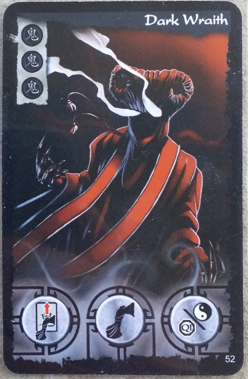
Here’s Dark Wraith for an example of a ghost card.

DarkWraith2GhostStories

The icons in the top, left-hand corner tell you what you need to beat him. You either need to roll three black circles on three dice or hand in some black tokens to supplement your roll. I’m thinking you’re going to turn in at least one token.

The three icons on the bottom of the card show Dark Wraith’s abilities.

CloseUpOfGhostAbilities

The icon on the far left happens when Dark Wrath comes into play. With this particular icon, you draw another ghost card and any ghost pawns on the board move forward one in their areas.

InitialGhostAbility

The icon in the middle triggers before each priest’s turn who has the ghost in their area. In this case, Dark Wraith spawns a ghost pawn on his space on the turn he’s played and then moves farther down the track in his area each subsequent turn until he haunts a village space or gets exorcised. Come on, priests. Do your stuff.

PerTurnGhostAbility

The icon on the far right happens when you defeat Dark Wraith. This particular icon allows you to gain one Qi (health token) or replenishes your yin-yang token—everybody gets one.

DefeatGhostAbility

If there are ever three haunted village spaces, you lose.

Losing the Game

You lose the game in three ways: three haunted village spaces, all priests are dead at the same time, and you don’t beat Wu-Feng in time. Remember Wu-Feng, the big, bad ugly from the introduction? Yeah, he’s placed ten cards from the bottom of the ghost draw deck and you have to defeat him before all the cards in the draw deck are gone. Good luck with that.

Winning the Game

You win the game if you survive the ghost deck—and I do mean survive—and defeat Wu-Feng before time runs out.

Game Review:

Ghost Stories is fun but brutal. I enjoyed the first five or six plays until I realized that I didn’t get any closer to defeating Wu-Feng. Most of the time, I didn’t even see Wu-Feng. It says something when your gaming group starts betting to see how long you’ll last instead of whether or not you’ll win. Still, Antoine Bauza gave this game rock solid mechanics, the art is gorgeous and thematic but creepy, and you feel the anxiety of this pressure cooker.

GhostStoriesCloseUp
Close Up of the three by three game board

I like this game a lot but it’s a bit misleading on a couple of accounts. It has a spooky vibe to it but it’s not scary. When you think Ghost Stories, you expect something to frighten you but your monks are so strong that you can’t possibly be scared. The title is a misnomer for another reason. You’re playing the same story several times. Shouldn’t it be called Ghost Story? The expansions build on this story and could add more options, so I guess that’s where the plural “stories” comes from but not all expansions are created equal.

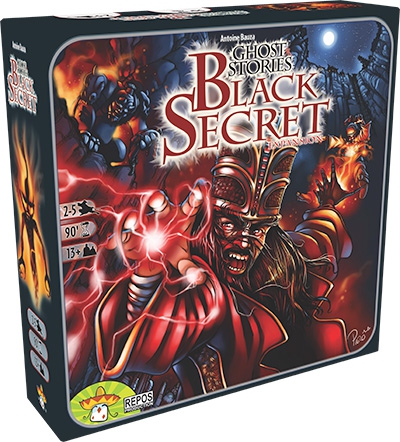
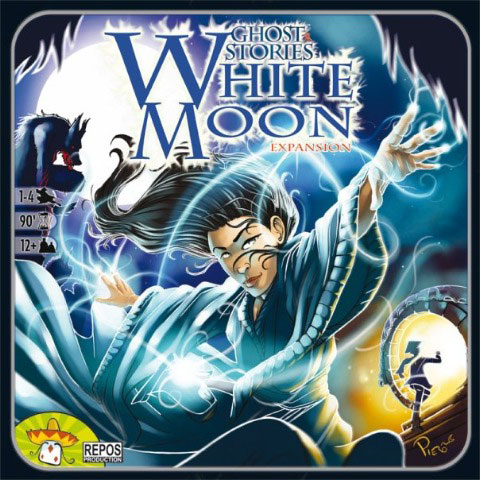
GhostStoriesBlackSecret GhostStoriesTheWhiteMoon
The two Ghost Stories expansions

The Black Secret expansion makes the game more difficult—like it needs to be more difficult—while the White Moon expansion makes Ghost Stories easier. I’m all for easier. Give me the max number of Qi (health) and I’ll still lose. You get five Qi on easy, four on normal difficulty, and only three Qi on hard mode. Hard mode? Are you crazy? I guess if you only want to play for five or ten minutes, you can play on hard mode. See you at your funeral.

Cooperative games have the lion’s share of the tabletop industry. They’re easy to teach and get into because everyone’s working together. You want to help the newbie play well. You also take out the sting of losing; if I lose, we all lose. Ghost Stories captures most of what makes a co-op game fun. I just wish it was a little more forgiving.

Verdict:

If you don’t mind losing (a lot), Ghost Stories is a fun, intense game. If you ever do win (and I’ve played dozens of times without winning), you’ll remember it for months—if not years—to come. Yes, I remember the last time we won Ghost Stories. It was a cold, stormy day last May…

Grimm Review – “Hibernaculum”

Grimm

Kyle’s Review

Grimm had a few major developments in this week’s “Hibernaculum.” Monroe experienced flashbacks from his time as a captive. Team Grimm has gotten lazy this year when the week’s mystery doesn’t involve Octopus Face (in the beginning) or the Wesen purists. There have been some nice spots, but most Wesen have fallen flat. This week’s mystery was a rare okay one, while the ongoing story arcs delivered more punch.

I still don’t buy Juliette’s transportation but this week’s use of flashbacks set some foundation for this arc. I had forgotten Nick’s aunt—on his Grimm side of the family—warned him of his and Juliette’s doomed relationship. The two have stuck together for three and a half years after Nick turned Grimm, so I don’t think this was the plan. Still, it works here. Renard and Juliette getting together had an ick factor and I remembered that the two of them had a thing, but that was a spell, not natural attraction. I hope that there’s more to this and I definitely hope that we’ll see more of Monroe’s struggles.

Grimm has presented enough arcs that could have long-reaching ramifications and should propel them to the season finale. I never thought Nick and Juliette belonged together, so I hope this break-up sticks, the Monroe story has legs, and then we have Adalind’s babies. We’ll have to see how things shake out.

Verdict:

The weekly Wesen added little but the ongoing story arcs did.

iZombie Review – “Liv and Let Clive”

iZombie

Kyle’s Review

iZombie continued with its slow build. Liv gained another fitting ability from a brain she ingested, and the anxiety she got as a result of the gray matter felt earned (as in it fit with the kind of character whose brain she ate) and the episode shined a light on Detective Babineaux’s past. There might be a lot to work with there, but the two things “Liv and Let Clive” did best was show how Liv still has feeling—maybe—for her ex-fiancée and how bad-boy-zombie Blaine—say that three times fast—plans to corner the market on brains.

While I dig Blaine’s flair for zombie capitalism, I don’t agree with his clientele’s willingness to go along with his enterprise. 1) Blaine turns billionaires into zombies. 2) He milks them for money and favors. This poses way too many questions. How does he get close to these well-to-dos; he’s just a street rat? Most of these businessmen and women got to where they were—prior zombie—because they’re ruthless and now, they kowtow to a nobody? I guess one of Blaine’s customers found him attractive before she became a zombie, but she was too eager to rat on Blaine’s competition for my taste. Blaine only mentioned his other clients but iZombie better have a good reason for these other bigwigs to swear fealty.

I did like that Liv got her doctor friend and her ex-fiancée to move in together. Her anxiety-addled brain helped but this development allows Liv to reconcile with her ex over time, if that’s the path iZombie. If that isn’t the goal, this new living arrangement could lead to friendship and wacky character interaction.

Verdict:

iZombie took a step forward but we’ll have to see how it plans to proceed in the coming weeks, and they need to shore up Blaine’s business model.

Powers Review – “You are Not It”

Powers

Kyle’s Review

Powers muddled through another down, in terms of action, episodes. While I thought that was okay for last week, I’m not so sure about this week’s “You are Not It.” Calista may be dead—she’s at least not in a good way. Johnny Royalle was wasted. He merely popped in and out, but of course, that was what everyone says he did when he fought crime, so I guess that tracks. But we’re treated to more awkward screen moments with Walker and Pilgrim.

The action of the third, fourth and fifth episodes masked these two, but these last two weeks made them stick out like a couple of elephants pretending to be poodles. Not even a healthy dose of Michelle Forbes as Retro Girl and her great scenes with Logan Browning’s Zora helped to assuage the pangs of Walker and Pilgrim. And it doesn’t help that the story arc got stuck in will Pilgrim get his powers back or won’t he. I’m not invested in the character enough to care.

Throw in some decent moments with a suicidal Wolfe and one of Simons clones dying and you get some watchable television. I’m not sold that Simons’ clone dying was part of Royalle’s plan to see Wolfe. It felt more like an honest goof and Royalle took advantage of his cronies’ mistake.

Powers also had some mistakes in special effects. These aren’t the same effects we’ve seen in shows like The Flash and Arrow. They look amateurish, but Powers did show some signs of life. I liked how some normal humans fought back against the powers. Krispin has inspired a vocal group to lash out against people with powers. This story thread could have legs and could drive the series to its season finale.

Verdict:

Powers had an uneven episode this week but hopefully, the civic unrest introduced in “You are Not It” will spark something interesting.

Neuroshima Hex

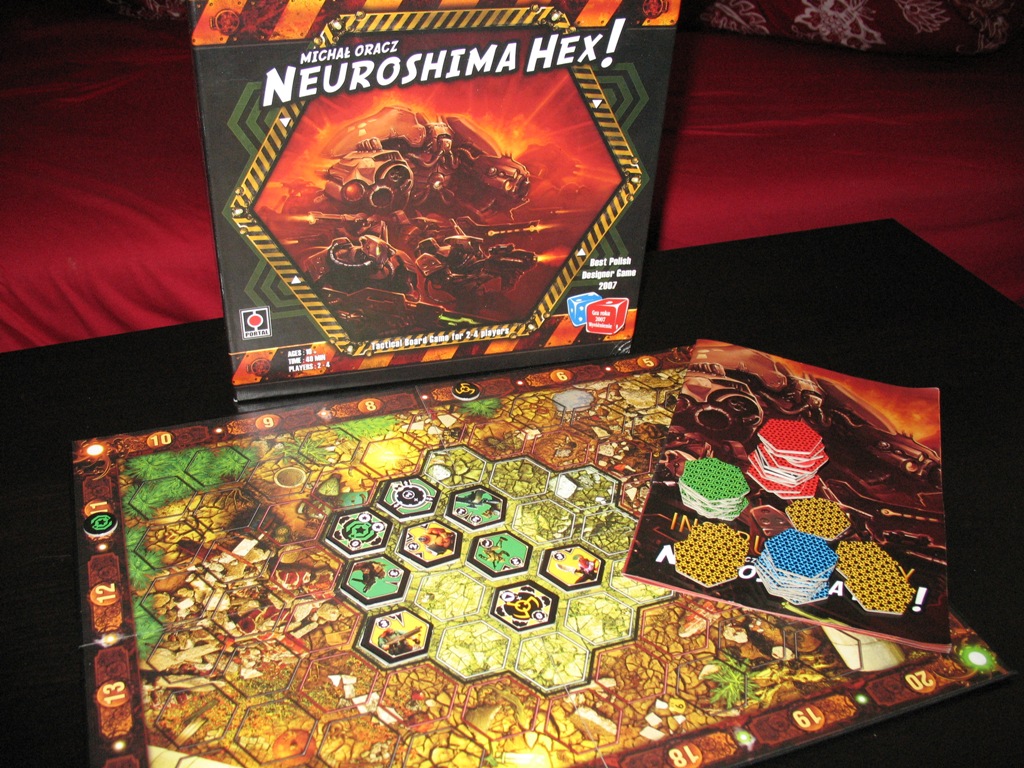
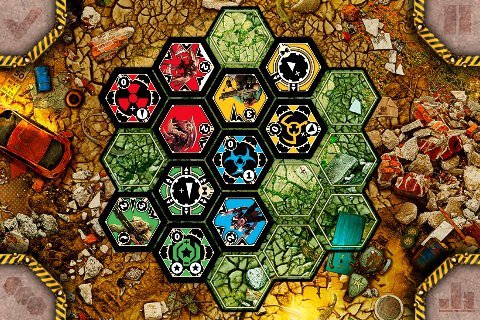
Vie for control of a war-torn, post-apocalyptic world. Use your armies, composed of human and/or machine forces, to dominate the landscape, food, and other resources with this quick, strategy-heavy game. Neuroshima Hex combines the tactics of a classic 50’s or 60’s war game with the speed and accessibility of an abstract game like Chess.

We’ll get back to the wasteland in a bit but first, let’s go over some technical details.

The Fiddly Bits
Designer: Michal Oracz
Publisher: IELLO, Z-Man Games, and Heidelberger Spieleverlag
Date Released: 2006
Number of Players: 2-4
Age Range: 12 and up (10 and up on the box)
Setup Time: less than 5 minutes
Play Time: less than 30 minutes
Game Mechanisms:
Hand Management
Hex-and-Counter

Player Elimination
Tile Placement

Variable Player Powers

NeruoshimaHexOverview

Game Flow:

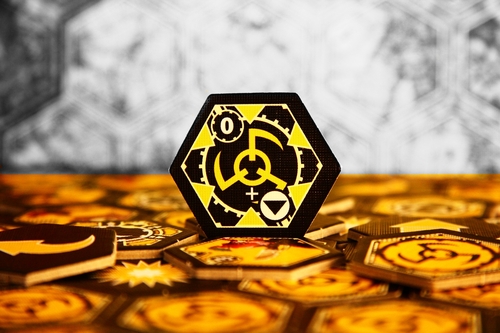
Players select a faction. Each faction has its own advantages/disadvantages and headquarters. On their first turn, players must play their faction’s headquarters tile. Your headquarters has 20 health or hit points and if you reduce your opponent(s) headquarters to zero, you win.

SampleNeuroshimaHexHeadquartersTile2
Example of a faction’s headquarters

After each player has played their headquarters, players take turns and on their turn, players draw at random from their faction’s pool of tiles. There are two main types of tiles: instant actions and board tiles.

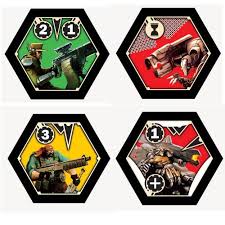
The most common board tile is a unit. Here are some examples.

NeuroshimaHexSampleTiles
Unit tile examples

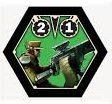
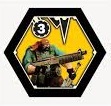
You’ll notice that some of the tiles have long and skinny triangles (ranged attacks) and others have short and squat triangles (close-range attacks). Most of these examples have both. Ranged attacks deal one damage to the first enemy tile in the triangle’s direction, while close-range attacks deal one damage to an enemy tile adjacent to the triangle’s direction.

The numbers denote initiative. When battle begins, tiles with a higher number attack before tiles with a lower number. In the case of this one ranged unit, it attacks twice: once when the two-speed units attack and again when the one speed units attack.

NeuroshimaHexRangedUnit
Ranged unit

If you have more than one triangle on a side, you attack that many times on the tile’s initiative number, so this guy attacks once for a ranged attack and once for a close-range attack on the three speed units’ turn.

NeuroshimaHexFastUnit
Fast unit with both ranged and close-range attacks

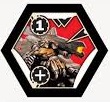
The plus in the lower-left-hand corner of this tile means that it has more than one hit point of damage it can take before it gets discarded. It also has attacks going in more than one direction.

NeuroshimaHexToughUnit
Tough unit

And this curious fellow has two mesh triangles pointed in different directions with no number at all. The nets (mesh triangles) nullify an enemy tile’s attack, so no damage for you.

NeuroshimaHexNetUnit
Net unit

You’ll want to place your tiles in a way that they can deal damage to your opponent, while protecting your own HQ. But fortunately, unit tiles aren’t the only ones at your disposal.

Instant action tiles can do things like push one of your opponent’s tiles away from your HQ.

BumpAnEnemyUnitNeuroshimaHex
Push an enemy’s tile

Or move one of your tiles to an adjacent, empty space.

TurnAFriendlyUnitNeuroshimaHex
Move one of your tiles

With those quick introductions of tiles out of the way, let’s get to combat. Players place their tiles on the board, trying to get the best use of their units, until the board is full or a player plays a battle tile.

StartCombatNeuroshimaHex
A battle tile

Resolve combat by initiative number and then play continues until one player’s HQ is left standing or if someone runs out of tiles. If the latter occurs, one final battle ensues, and the player with the healthiest HQ wins.

Game Review:

I like this game (a lot), but that wasn’t always the case. You need to take your lumps, and as you get better as a player, the game gets more fun.

Neuroshima Hex sounds simple—in theory. The reality is that there are so many strategies to win the game that I’ve seen even the most self-assured gamer take minutes, lost in analysis paralysis (the condition in a tabletop game where you don’t know which play to make, which looks like a computer loading screen on a human face). Try as you might, you can’t predict all of the triggers that can happen during a battle, once the board gets more than half full.

NeuroshimaHexHallFullBoard

A Neuroshima Hex board that’s half full

This triggers that, that triggers this and so forth.

What’s worse is that you like your units and how you placed them and you want to keep them, but a battle’s mayhem will usually wipe out everything you built up in the game up to that point. That makes the game interesting for countless plays.

I wouldn’t suggest a seasoned veteran of Neuroshima Hex to teach a rookie how to play the game. The rook will get their butt handed to them. Instead, download the free app for your smart device and play a few rounds with the computer and you can curse at it as much as you want. I don’t know how many times I’ve restarted a duel.

The game’s short playtime allows for multiple plays. You can learn the basics of the game in no time but it takes a long time to master. I highly recommend Neuroshima Hex if you’d like a streamlined war game (like the classic World War II and Civil War games of the 50’s and 60’s) or if you want a beefed up gamer’s Chess.

I’ve found that Neuroshima Hex plays best with two players. More players than that rewards turtling (players building up strong defenses, so they won’t lose their pieces).

Verdict:

Neuroshima Hex is a great title that delivers a lot of game and strategy in a small amount of time and space.

Here’s a link to download this fun game: http://www.neuroshimahex.com/

Hex-and-Counter

Classic war game mechanic, played with “counters” on a map with a hexagonal grid, allowing to move the counters in more directions (6) as opposed to a square grid with only four directions.

Counters are commonly thick cardboard chit, with printed attributes and identification.